Image: Musée d'Orsay, Paris; via Wikimedia Commons · Public domain · via Wikimedia Commons
Impressionism
La Gare Saint-Lazare
Claude Monet, 1877
La Gare Saint-Lazare is an 1877 painting by Claude Monet of steam locomotives under the great glass roof of the Paris station. The largest and best-known of his station pictures, it is in the Musée d'Orsay.
- Artist
- Claude Monet
- Date
- 1877
- Medium
- Oil on canvas
- Dimensions
- 75 × 104 cm
- Collection
- Musée d'Orsay, Paris, France
- Movement
- Impressionism
- Catalogue
- Wildenstein 438
More at Monet at the Musée d'Orsay
What you are looking at
We stand inside the train shed of the Gare Saint-Lazare in Paris, looking out from under the roof toward the open tracks. The great glass and iron roof forms a wide triangle across the top of the canvas, its two slopes meeting at a central peak, with thin iron columns supporting it on either side. Through the open end of the shed, sunlight floods in.
A dark locomotive stands on the central track, facing us, its funnel just visible in a cloud of its own steam. Clouds of smoke and steam fill the middle of the picture, billowing up under the roof in blues, whites and grays, and spreading against the sky beyond. Through them we glimpse the pale apartment buildings of the Europe district, flat cream and pink facades with rows of windows. On the left, another engine or tender sits in shadow. On the right, small figures of railway workers and travelers stand beside the tracks. The rails in the foreground catch the light in lines of pale yellow and violet.
Where and when it was painted
In January 1877 Monet, still living at Argenteuil, rented a small apartment and studio in the Rue d'Édimbourg near the station, and obtained permission from the railway company to paint inside the Gare Saint-Lazare. The station served Argenteuil and Normandy, and Monet had arrived and departed through it for years. Over about three months he painted twelve canvases of the station, its tracks and the Pont de l'Europe that crosses them.
Monet showed several of these pictures at the third Impressionist exhibition in April 1877, where they hung together as a group. It was one of the first times he presented a set of views of a single motif, an approach that would become the basis of his Gare Saint-Lazare series and, later, the haystacks and cathedrals.
How it was painted
This is the largest of the station pictures and the most carefully composed. The roof provides a strong geometric frame, and Monet sets the engine almost exactly on the central axis below its peak. The architecture is drawn firmly, with dark lines for the iron structure. Everything inside the frame, though, is loose and changing: the smoke is painted with thick, swirling strokes of blue, white and lilac, and the buildings beyond are lost behind it.
The subject is the contrast between solid and vapor, iron and air. Steam had been Monet's way of painting the modern city since The Pont Neuf of 1871, and here he makes it the center of the picture. The blue of the smoke, the yellow of the sunlight on the tracks and the dark shapes of the engines create a palette that is both cool and bright. Look at the lower right: the people on the platform are just a few vertical marks, dwarfed by the machines and the space.
The picture's color is subtler than it first seems. The shadowed underside of the roof is not black but a deep blue-violet, and the iron columns are picked out in dark green. Where the steam passes in front of the sunlit buildings it turns warm and creamy; where it gathers under the roof it is cool blue. Monet has painted not one kind of smoke but several, each reacting differently to the light.
Ownership
The painting was bought by Gustave Caillebotte, Monet's fellow painter and the great early collector of Impressionism, who also lived near the station and painted the Pont de l'Europe himself. Caillebotte left his collection to the French state, and after long negotiations the bequest entered the Musée du Luxembourg in 1896. The painting moved to the Louvre and then, in 1986, to the Musée d'Orsay (RF 2775).
The other station pictures
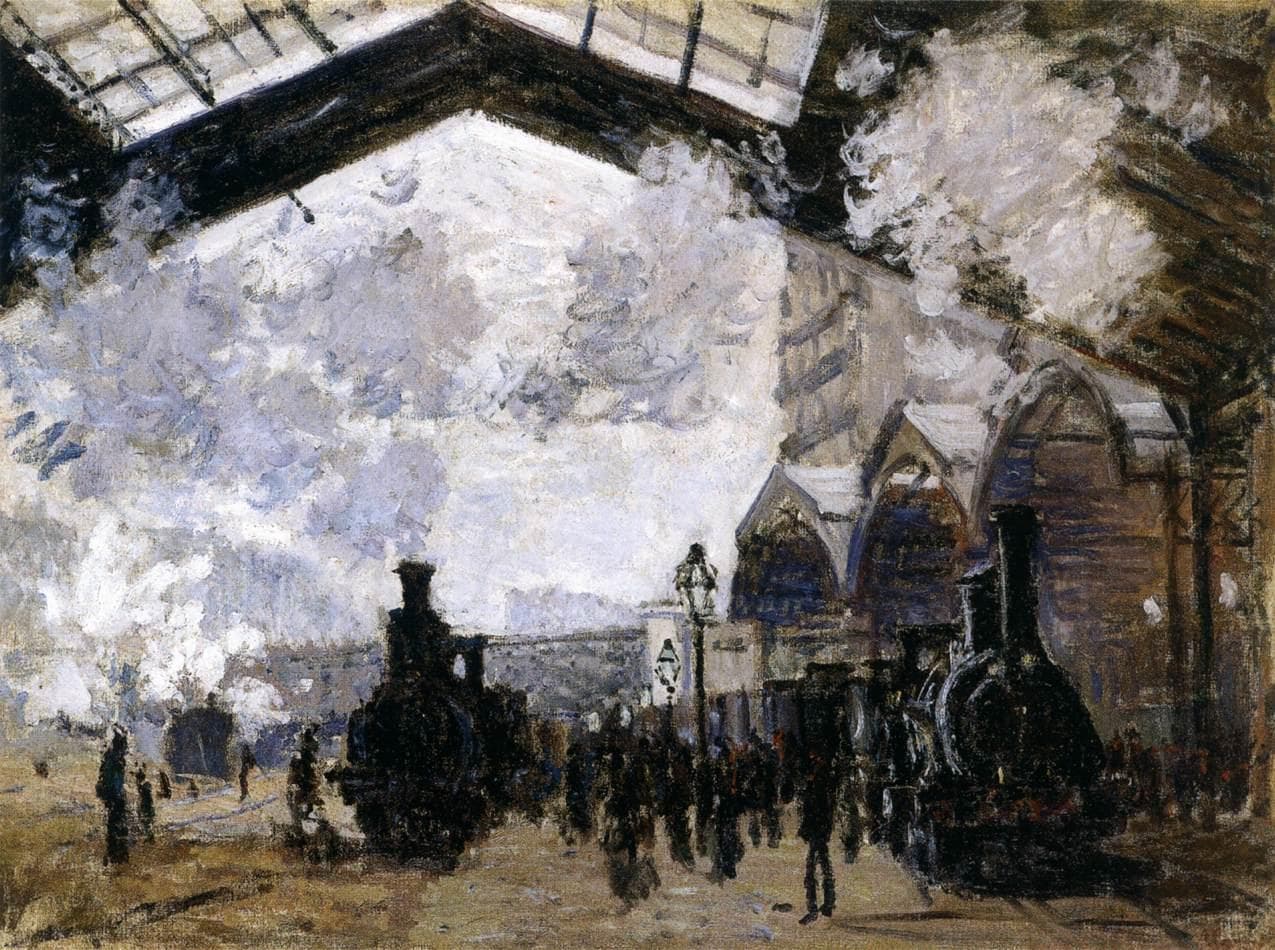
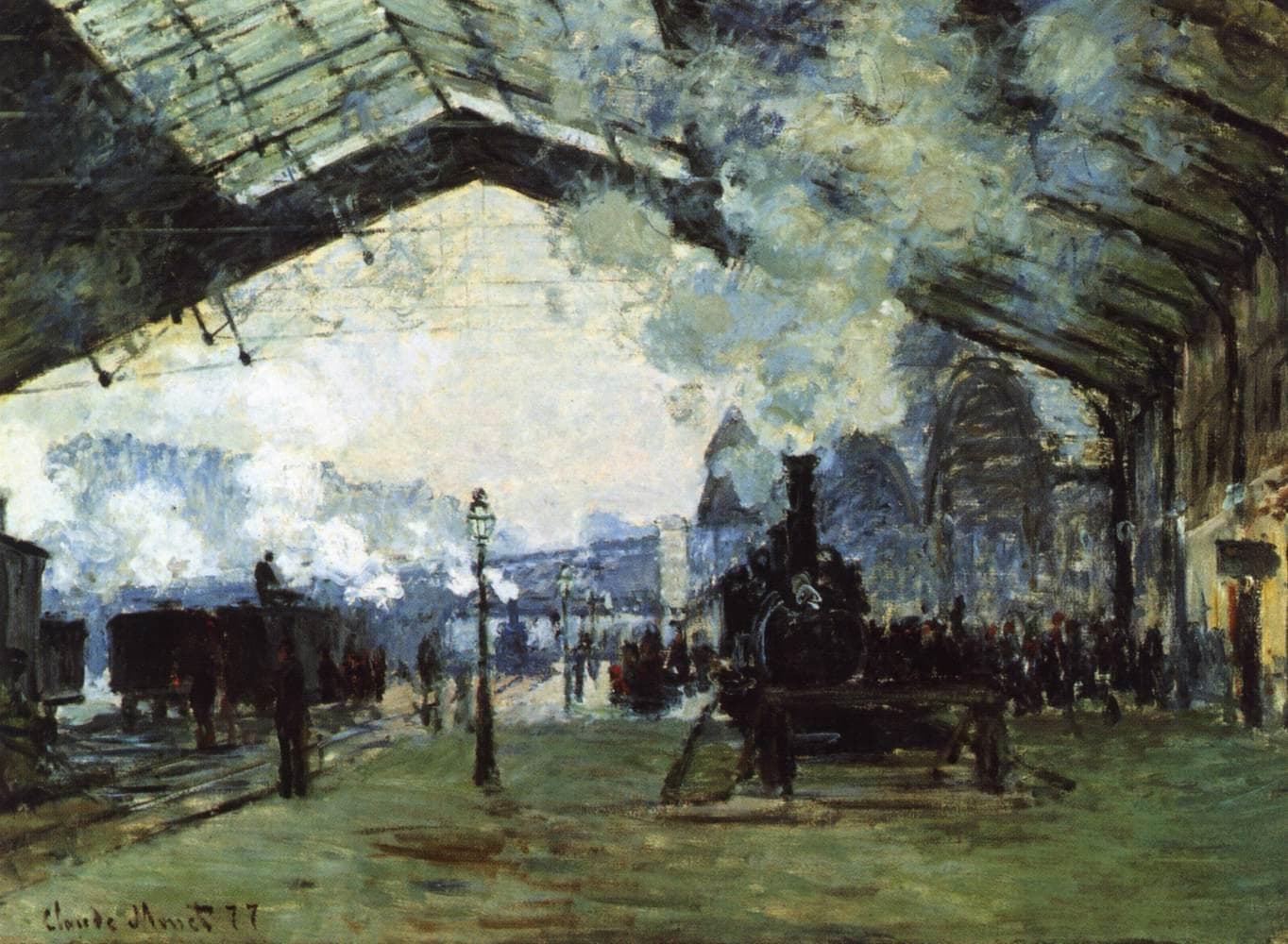
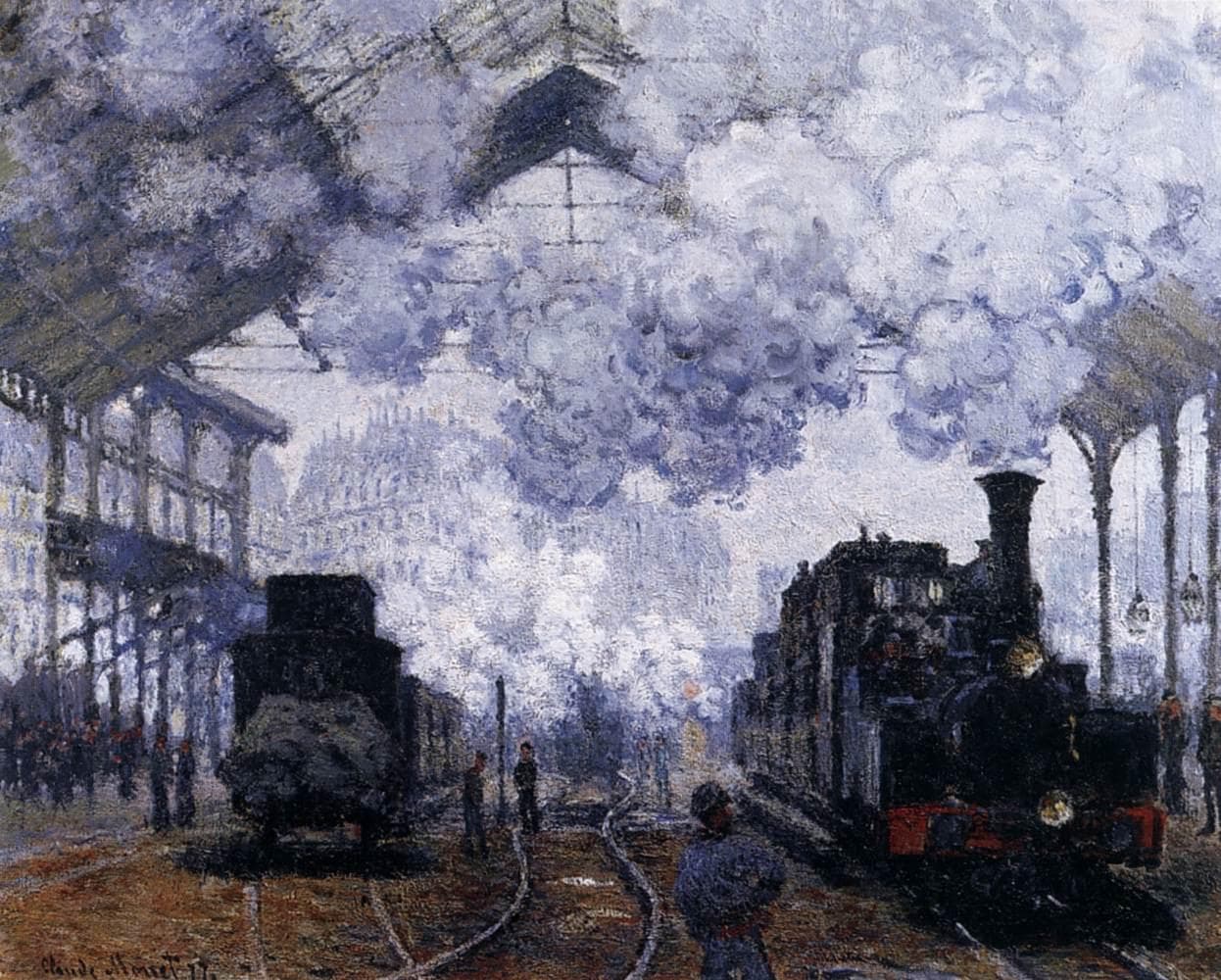
Other canvases from the 1877 campaign are in London, Chicago, Cambridge (Massachusetts) and Paris: The Gare Saint-Lazare at the National Gallery, Arrival of the Normandy Train at the Art Institute of Chicago, Arriving Train at the Harvard Art Museums and The Pont de l'Europe at the Musée Marmottan.
Where to see it
La Gare Saint-Lazare is in the Musée d'Orsay in Paris, itself a former railway station. See Monet at the Musée d'Orsay for the museum's other Monets.
Questions & answers
Where is Monet's La Gare Saint-Lazare?
This version is in the Musée d'Orsay in Paris, inventory RF 2775. It came to the French state through the bequest of Gustave Caillebotte, which entered the national collections in 1896.
When and where was La Gare Saint-Lazare painted?
Monet painted it in early 1877 inside the Gare Saint-Lazare in Paris, the station serving Argenteuil and Normandy. He rented a studio nearby and had permission from the railway company to work in the station.
How many Gare Saint-Lazare paintings did Monet make?
He painted twelve canvases of the station and its surroundings in 1877. They are now in museums including the Orsay, the National Gallery in London, the Art Institute of Chicago, the Harvard Art Museums and the Musée Marmottan.
What does La Gare Saint-Lazare mean?
It is a celebration of modern life: the railway as the great new machine of the age. Monet contrasts the solid iron and glass architecture with the shifting clouds of steam, making vapor and light the real subject.
More by the artist
Claude Monet

Bridge over a Pond of Water Lilies
Claude Monet · 1899

Woman with a Parasol – Madame Monet and Her Son
Claude Monet · 1875

Sunset in Venice
Claude Monet · 1908–12

La Grenouillère
Claude Monet · 1869

Beach in Pourville
Claude Monet · 1882

Springtime
Claude Monet · 1872

Boating on the River Epte
Claude Monet · 1890

The Seine at Asnières (Hermitage)
Claude Monet · 1873
Also painted in 1877
The same year
Kindred works
You may also study
The Gare Saint-Lazare
Claude Monet · 1877
Gare Saint-Lazare: the Train from Normandy
Claude Monet · 1877
The Gare Saint-Lazare: Arrival of a Train
Claude Monet · 1877
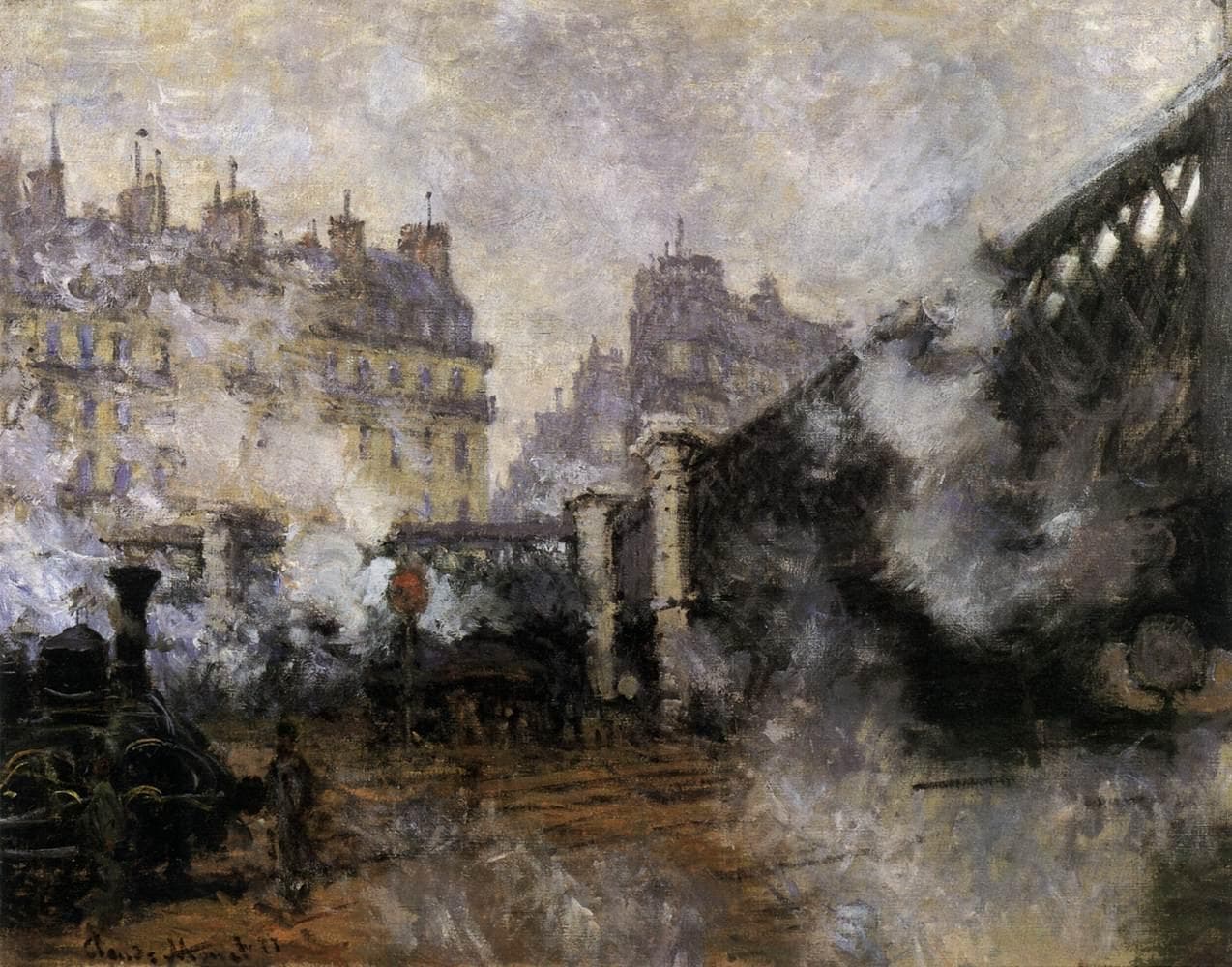
Pont de l'Europe, Gare Saint-Lazare
Claude Monet · 1877
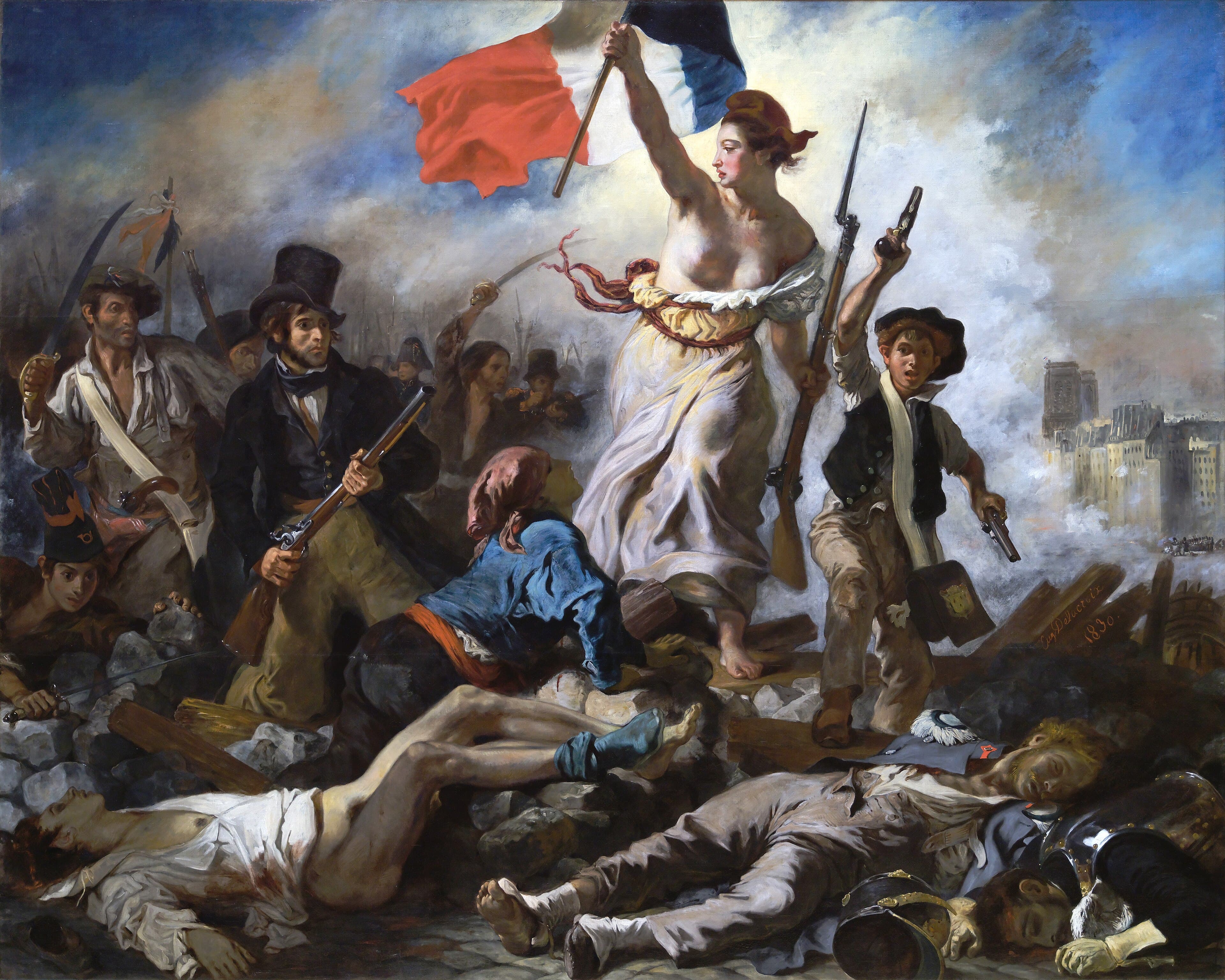
Liberty Leading the People
Eugène Delacroix · 1830
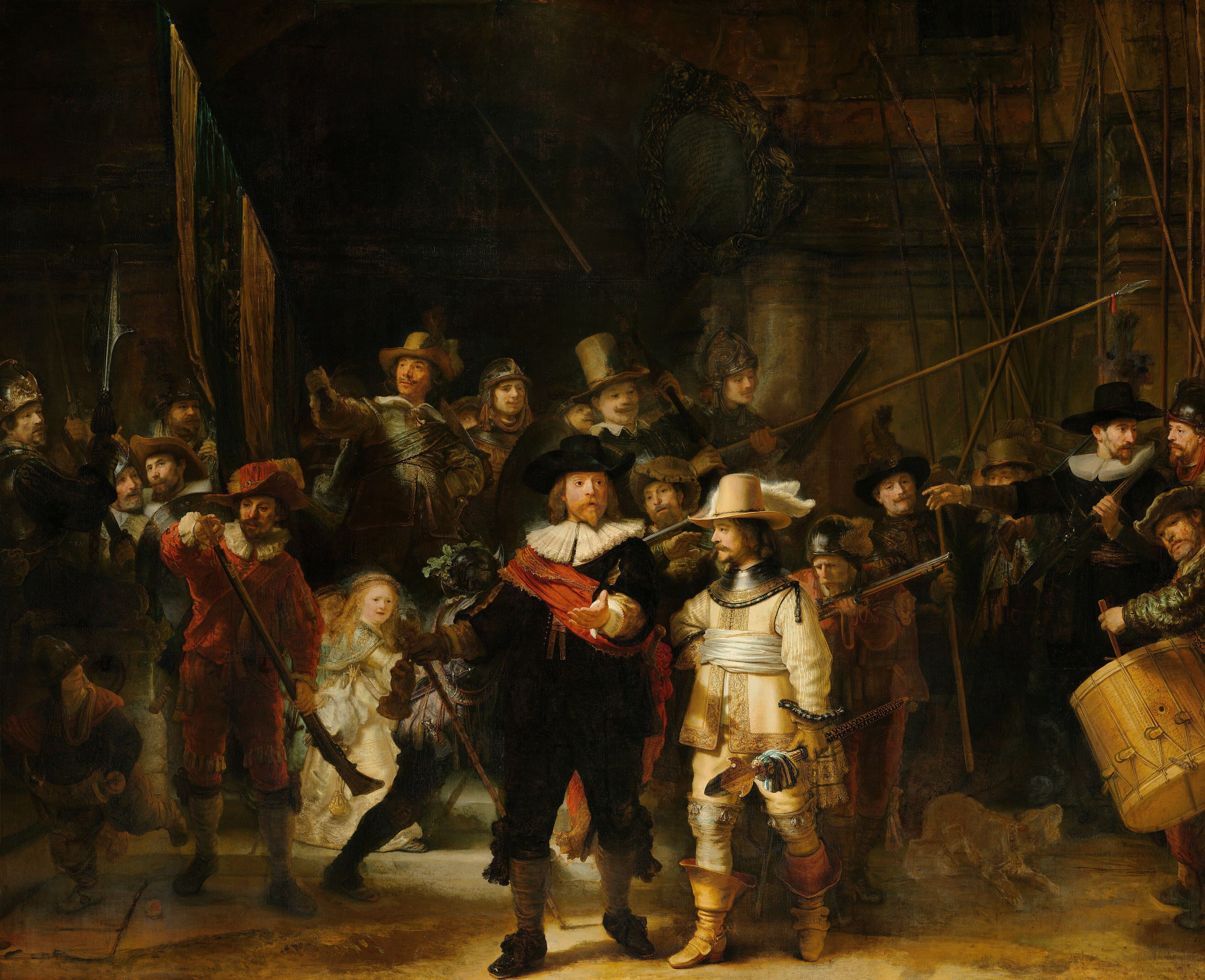
The Night Watch
Rembrandt · 1642
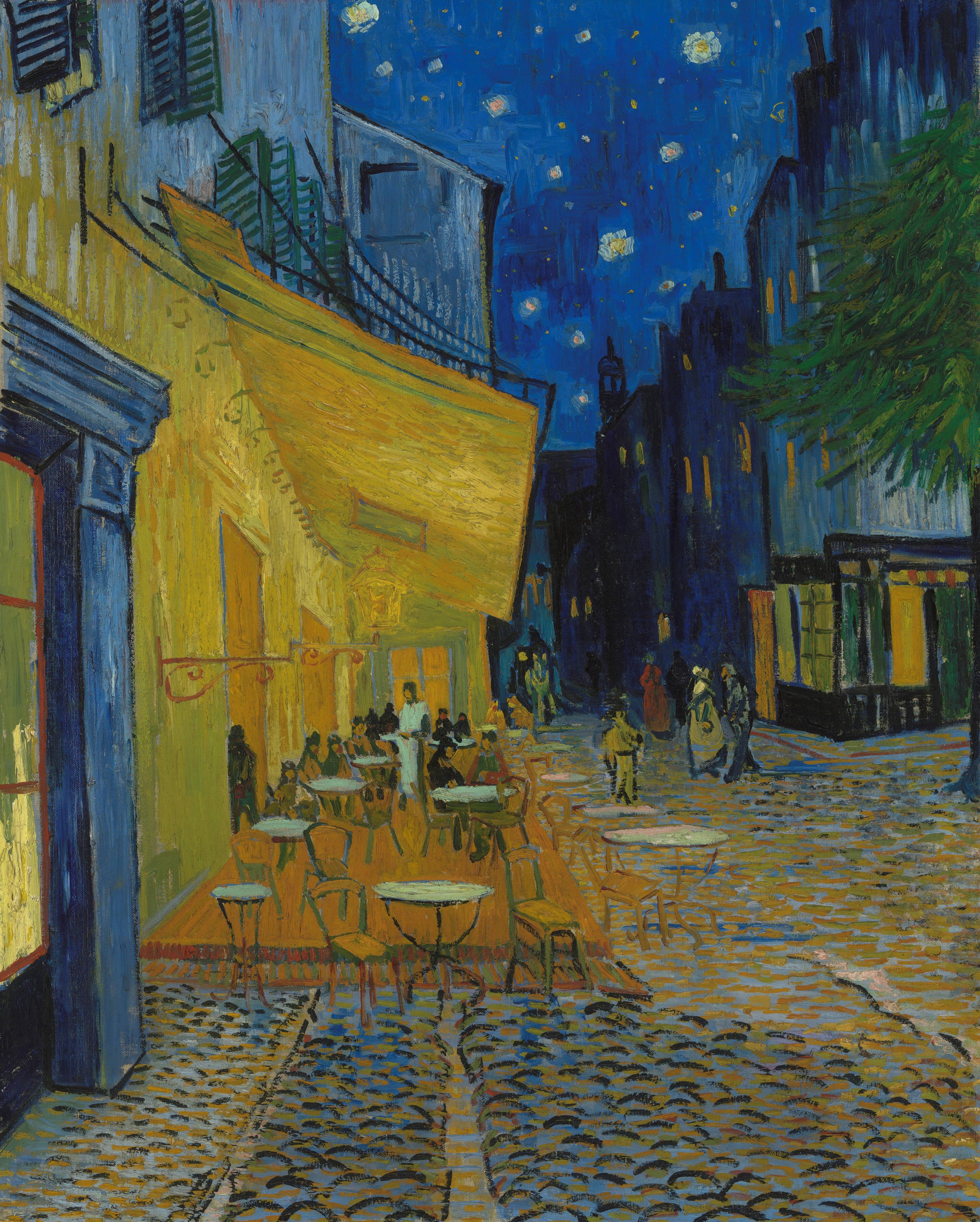
Café Terrace at Night
Vincent van Gogh · September 1888
Snow Scene at Argenteuil
Claude Monet · 1875