Image: Ikmo-ned / Wikimedia Commons · CC BY-SA 3.0 (also GFDL 1.2+) · via Wikimedia Commons
Gothic (Flamboyant), on earlier Romanesque foundations
Church of Saint-Étienne-le-Vieux
The Monks Of Cluny, Founded c. 10th century; recorded c. 1067; rebuilt 15th century
Saint-Étienne-le-Vieux is a partly ruined medieval parish church in Caen, Normandy. Founded around the 10th century and rebuilt in Flamboyant Gothic after the Hundred Years' War, it lost most of its nave to a shell in 1944 and remains closed.
- Artist
- The Monks Of Cluny
- Date
- Founded c. 10th century; recorded c. 1067; rebuilt 15th century
- Medium
- Stone masonry
- Collection
- Old town of Caen (former parish church, now a municipal store), Caen, France
- Movement
- Gothic (Flamboyant), on earlier Romanesque foundations
What you're looking at
Walk along the edge of Caen's old town toward the great Abbaye aux Hommes and you pass a church that looks as if it has been interrupted. Saint-Étienne-le-Vieux ("Old Saint Stephen's") still has its octagonal lantern tower, its transept and its north aisle, but the nave and the south aisle are gone, opened to the sky by a single shell in 1944. What is left is a fragment of a fifteenth-century Gothic church standing on the site of a much older one.
The surviving fabric is late Gothic in character. Above the north door the facade carries the dense, flickering ornament of the Flamboyant style: tracery shaped like flames, crocketed pinnacles and canopied niches that once held statues. The crossing tower rises square through its lower stages, opens into tall paired lancet windows that once lit the crossing as a lantern, and finishes in an octagonal stage under a steep slate spire. From the street, the chevet (the east end) can be seen along the rue Arcisse-de-Caumont, a name that matters to this building's survival.
What most visitors miss is the way the ruin shows its own history in section. To the west, the surviving arcade of the nave stands roofless, its pointed arches framing open sky and the houses beyond. Where the nave has fallen away you can read the walls the way an archaeologist reads a trench: the rebuilt Gothic work, the patching of later centuries, and the scars of the 1944 impact, none of it smoothed over by restoration.
Not the other Saint-Étienne
The name causes endless confusion. Caen has two churches dedicated to Saint Stephen. The famous one is the abbey church of the Abbaye aux Hommes, founded by William the Conqueror and begun in the eleventh century, where William was buried. Saint-Étienne-le-Vieux is the older parish church nearby. Its medieval name, Sanctus Stephanus Vetus, appears in William's charters to Caen's two abbeys around 1067, and the word "old" (vetus, vieux) existed precisely to tell it apart from the new abbey church then rising a short walk away.
How it was built
The church was probably founded in the tenth century, when Caen first grew into a town of any size, and the early building would have been Romanesque. Its site was its misfortune. Saint-Étienne-le-Vieux stood exposed on the line of the town ramparts, and during the Hundred Years' War it was badly damaged, above all in the English siege of Caen in 1417. It was rebuilt during and after the English occupation of Normandy in the fifteenth century, and almost everything that survives above ground, including the lantern tower, belongs to that campaign.
No architect's name is recorded for either the early church or the Gothic rebuilding. Like most medieval parish churches, it was the work of local master masons paid by the parish and its patrons. Attributions of the building to the monks of Cluny, which circulate online, are not supported by the historical record.
Revolution, ruin and rescue
The parish belonged to the deanery of Caen in the old diocese of Bayeux. It was closed in 1793 during the French Revolution, and when worship was restored under the Concordat in 1802, the parish was transferred to the former abbey church of Saint-Étienne instead. Saint-Étienne-le-Vieux was never reopened for services. Without a congregation to maintain it, the building slid into decay.
It was registered as a monument historique in 1840, one of the earliest such listings in France, but its condition was already so poor that it was closed to the public in 1844. It came close to demolition and was saved at the last moment through the efforts of two Caen antiquarians, Arcisse de Caumont and Antoine Charma. The Society of Antiquaries of Normandy hoped to turn it into a museum for its collections; instead the museum went to the nearby former Collège du Mont, and the city used the church as a store for architectural fragments until they were moved to the museum in 1926. It was fully classified as a historic monument on 22 August 1903, and the official heritage register still calls it the "former church of Saint-Étienne-le-Vieux, currently municipal store."
The shell of 1944
During the Battle of Caen in the summer of 1944, a shell meant for German tanks parked nearby struck the church instead and destroyed most of the nave. Caen lost much of its historic center that summer, and Saint-Étienne-le-Vieux was one casualty among many. Unlike the abbey churches, which were repaired, it was never restored, which is why it survives as a ruin rather than a reconstruction.
Why the ruin matters
For the Romantic generation of Caumont and Charma, ruins like this were evidence: proof that Normandy had a medieval architecture worth studying and preserving at a time when much of it was being sold off as building stone. The church's survival is a small chapter in the birth of French heritage protection.
For a modern visitor, its appeal is quieter. It is one of the few places in Caen where war damage has been left visible, and the open nave turns the building into something closer to a memorial than a monument. The same atmosphere draws people to other unfinished or broken Gothic spaces, from the abandoned extension of Siena Cathedral to the cloisters of the Abbaye de Beauport in Brittany. For more buildings in the style, see Gothic Art.
Can you visit Saint-Étienne-le-Vieux?
The church stands in the old center of Caen, a few minutes' walk from the Abbaye aux Hommes and the Hôtel de Ville. It is closed to the public for safety reasons, but the exterior, including the chevet and the Flamboyant north front, can be seen from the street. In December 2023 the City of Caen announced a restoration project, estimated at €1.6 million with about €1 million pledged by a private sponsor, with the aim of reopening the building, so access may change; check the city's announcements before you go.
Questions & answers
Where is Saint-Étienne-le-Vieux?
Saint-Étienne-le-Vieux is in the old center of Caen, in Calvados, Normandy, a short walk from the Abbaye aux Hommes. Its chevet can be seen from the rue Arcisse-de-Caumont. The building is a former parish church, now partly ruined and used as a municipal store.
Is Saint-Étienne-le-Vieux the same as the Abbaye aux Hommes church?
No. Caen's famous Church of Saint-Étienne belongs to the Abbaye aux Hommes, founded by William the Conqueror. Saint-Étienne-le-Vieux ("Old Saint Stephen's") is a separate, older parish church nearby; it was already called "old" around 1067 to distinguish it from the new abbey church.
Why is Saint-Étienne-le-Vieux in ruins?
It was damaged in the Hundred Years' War, rebuilt in the 15th century, then closed in 1793 and never reopened for worship, so it decayed. In 1944 a shell aimed at nearby German tanks destroyed most of the nave, and the church has not been restored since.
Can you go inside Saint-Étienne-le-Vieux?
Not at present. The church has been closed to the public for safety reasons, though the exterior is visible from the street. In December 2023 the City of Caen announced a restoration project intended to allow it to reopen, so check current information before visiting.
How old is Saint-Étienne-le-Vieux?
The church was probably founded in the 10th century and is first recorded around 1067 as Sanctus Stephanus Vetus. Most of what survives, including the octagonal lantern tower, dates from the Gothic rebuilding of the 15th century, after the English siege of Caen in 1417.
Kindred works
You may also study
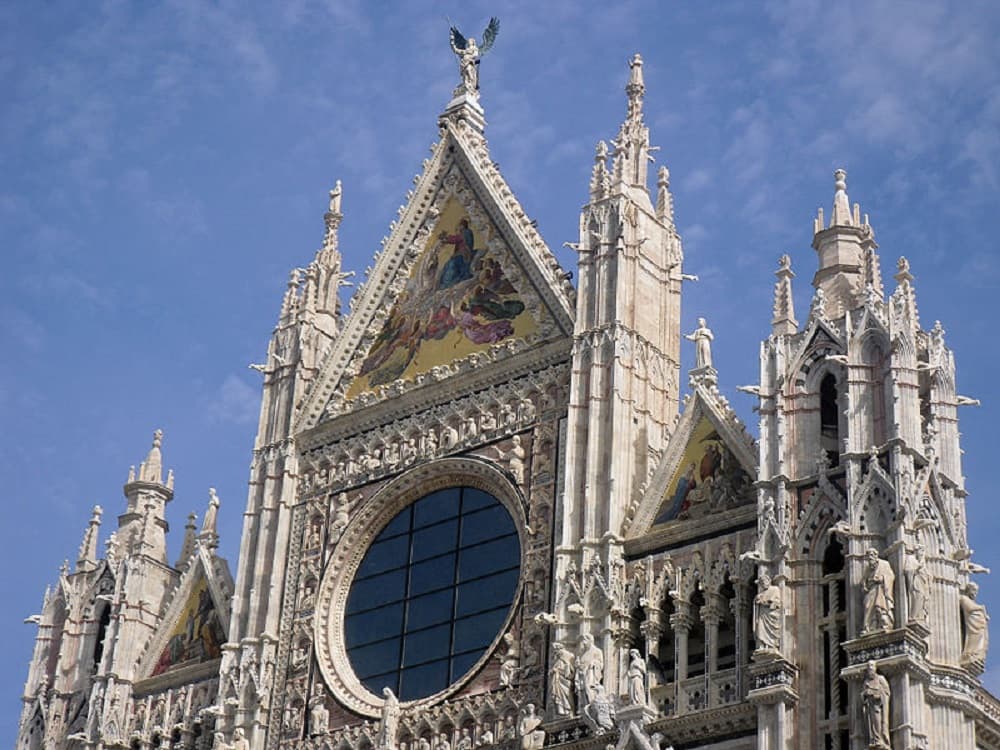
Siena Cathedral (Duomo di Siena)
Giovanni Pisano & Camaino di Crescentino & Giovanni di Agostino & Giovanni di Cecco · c. 1215–1263; facade c. 1284–late 14th century
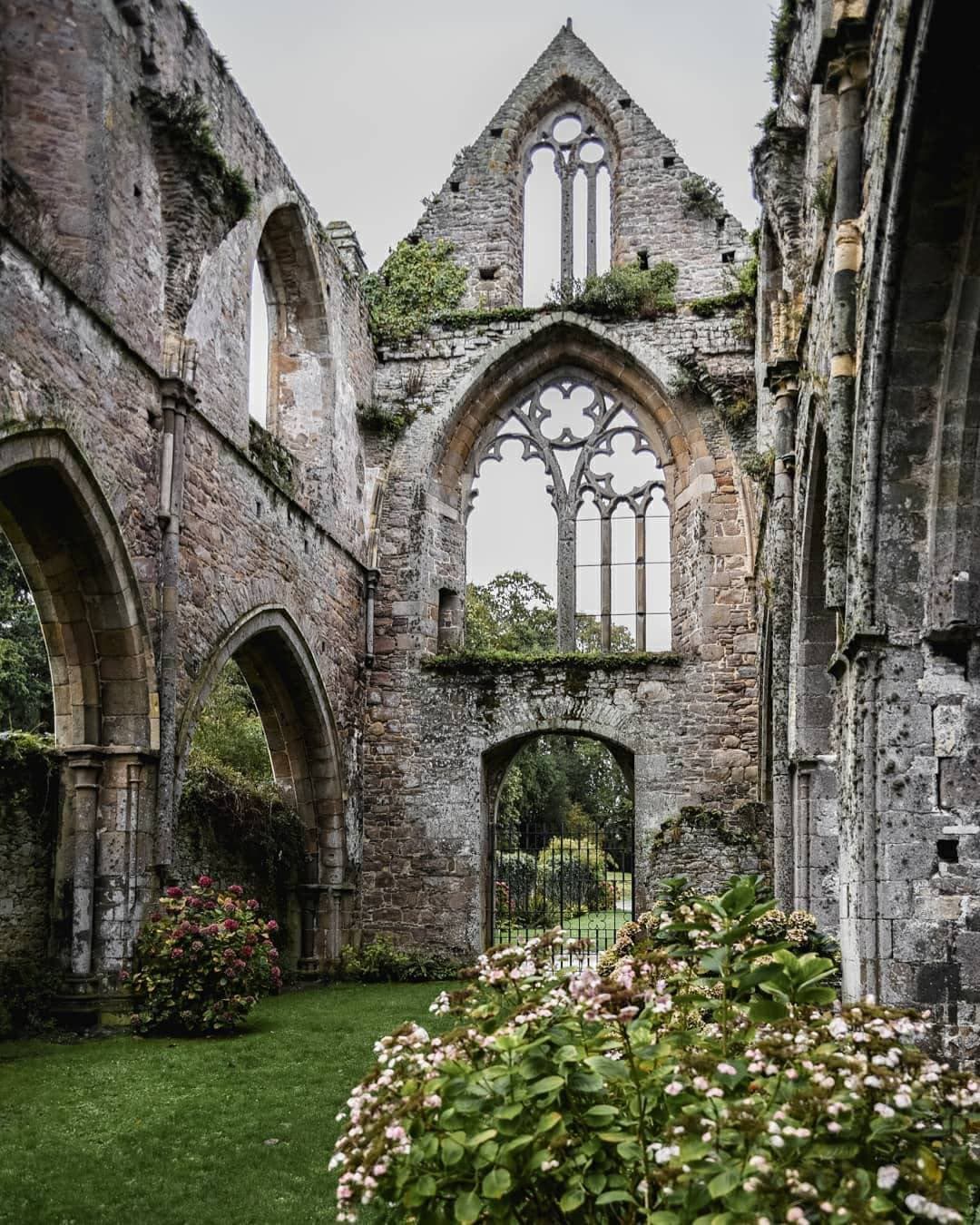
Abbaye de Beauport
Alain I of Avaugour (Alain de Goëlo) · founded 1202; 13th–15th centuries
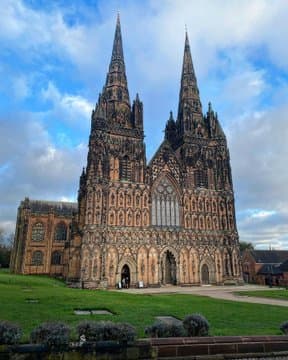
Lichfield Cathedral
Sir George Gilbert Scott · c. 1195–1340; restored 1850s–1900s
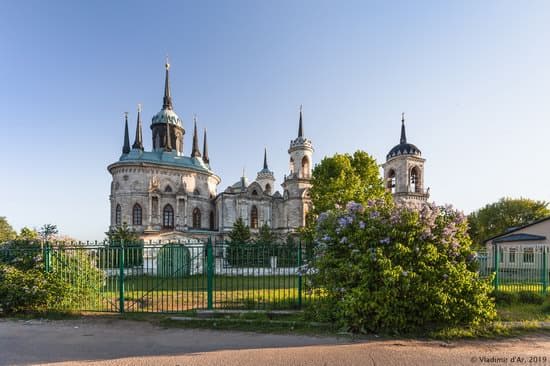
Church of the Vladimir Icon of the Mother of God, Bykovo
Vasily Bazhenov · 1788–89

The Scream
Edvard Munch · 1893

The Thinker
Auguste Rodin · Modeled 1880–82; enlarged 1902–03; this cast 1904

Saturn Devouring His Son
Francisco Goya · c. 1819–1823
The Creation of Adam
Michelangelo · c. 1511–12