Image: National Museum of Western Art, Tokyo (Matsukata Collection), via Google Arts & Culture · Public domain · via Wikimedia Commons
Impressionism
Walk (Road by the Saint-Siméon Farm)
Claude Monet, 1864
Walk (La Route de la ferme Saint-Siméon) is an 1864 painting by Claude Monet of a sunlit country road between tall trees near the Saint-Siméon farm at Honfleur. It is in the Matsukata Collection of the National Museum of Western Art, Tokyo.
- Artist
- Claude Monet
- Date
- 1864
- Medium
- Oil on canvas
- Dimensions
- 81.6 × 46.4 cm
- Collection
- National Museum of Western Art, Tokyo, Japan
- Movement
- Impressionism
- Catalogue
- Wildenstein 29
Walk, known in French as La Route de la ferme Saint-Siméon, is a tall, narrow landscape Claude Monet painted in 1864 of a country road near the Saint-Siméon farm inn above Honfleur, on the Normandy coast. It belongs to the National Museum of Western Art in Tokyo, part of the Matsukata Collection that founded the museum.
What you are looking at
A pale dirt road runs straight away from us between two walls of trees and turns gently out of sight at the far end. It is a summer afternoon. Sunlight falls across the road in broad, uneven patches of cream and buff, broken by the blue-gray shadows of the trees, and wheel ruts curve through the foreground. At left a rough wooden fence and a strip of grass line the road; at right the shade is deep and almost black-green.
The trees take up most of the canvas. On the left a tall, slender tree rises the full height of the picture, its foliage painted in dark clumps against the sky. On the right a denser stand of trunks leans inward, catching light on its edges in quick touches of olive and pale green. Between them the sky opens in a V of blue and white cloud, warm and bright near the horizon. At the end of the road, small and far away, are the red-brown roofs of farm buildings and a single round tree, lit by the sun.
The title the Tokyo museum uses, Walk, fits the picture's mood. Nobody is on the road, but the viewpoint is that of someone strolling down it, and the composition pulls you along toward the bright gap at the far end. The scale is intimate: this is a lane, not a highway, and the trees close in overhead.
Where and when it was painted
The Ferme Saint-Siméon was a farm inn on the wooded slope west of Honfleur, run by the Toutain family, and in the 1860s it was a meeting place for painters. Eugène Boudin, Johan Barthold Jongkind and the young Monet all stayed or ate there, and later Impressionist histories called it a cradle of the movement. Monet, then 23, spent much of 1864 at Honfleur working outdoors, and the roads and orchards around the inn became some of his first serious motifs. Three years later he painted the same road under snow in Road by Saint-Siméon Farm in Winter and The Road in Front of Saint-Siméon Farm in Winter. The coast and its towns are covered on our Normandy coast hub.
How it was painted
The canvas is painted with a darker, heavier palette than Monet's later work, closer to the Barbizon painters he admired: deep greens, browns and slate grays, with the light concentrated on the road and sky. But the way the sunlight is handled is already his own. The patches of light on the road are laid in with flat, square strokes of pale paint, set directly beside the cool shadows rather than blended into them, so the road seems to flicker. The tall vertical format, unusual for a landscape, emphasizes the height of the trees and the depth of the road.
He probably painted much of it on the spot. The composition, a road running into depth between trees, was a standard one in French landscape, and Monet would use it again the following year in the Forest of Fontainebleau, in The Pavé de Chailly and Le Pavé de Chailly.
Ownership and where to see it
The painting was bought in 1922 by the Japanese collector Kōjirō Matsukata, who formed one of the largest collections of French art of the period. Many of his pictures were held in France during and after the Second World War, and the French state transferred this one, with the rest of the returned works, to Japan in 1959, when the National Museum of Western Art opened in Ueno Park. The museum also owns Monet's 1916 Water Lilies. For other collections, see where to see Monet's paintings.
Questions & answers
Where is Monet's Walk (Road by the Saint-Siméon Farm)?
It is in the National Museum of Western Art in Ueno Park, Tokyo, which opened in 1959 to house the Matsukata Collection. The museum holds several Monets, including a large Water Lilies of 1916.
When and where did Monet paint it?
In 1864, near Honfleur on the Normandy coast. The road led to the Ferme Saint-Siméon, a farm inn above the town where Monet, Eugène Boudin and Johan Barthold Jongkind gathered to paint the countryside and the Seine estuary.
What does Walk show?
A straight country road on a summer afternoon, running between tall trees toward a cluster of farm roofs. Patches of sunlight and blue shadow fall across the road, a wooden fence lines the left side, and a V of bright, cloudy sky opens between the trees.
Did Monet paint the Saint-Siméon road more than once?
Yes. He returned to the road in the winter of 1867 and painted it under snow, in Road by Saint-Siméon Farm in Winter and The Road in Front of Saint-Siméon Farm in Winter. The 1864 summer version is darker and more Barbizon-like in palette.
More by the artist
Claude Monet

Bridge over a Pond of Water Lilies
Claude Monet · 1899

Woman with a Parasol – Madame Monet and Her Son
Claude Monet · 1875

Sunset in Venice
Claude Monet · 1908–12

La Grenouillère
Claude Monet · 1869

Beach in Pourville
Claude Monet · 1882

Springtime
Claude Monet · 1872

Boating on the River Epte
Claude Monet · 1890

The Seine at Asnières (Hermitage)
Claude Monet · 1873
Also painted in 1864
The same year
Kindred works
You may also study
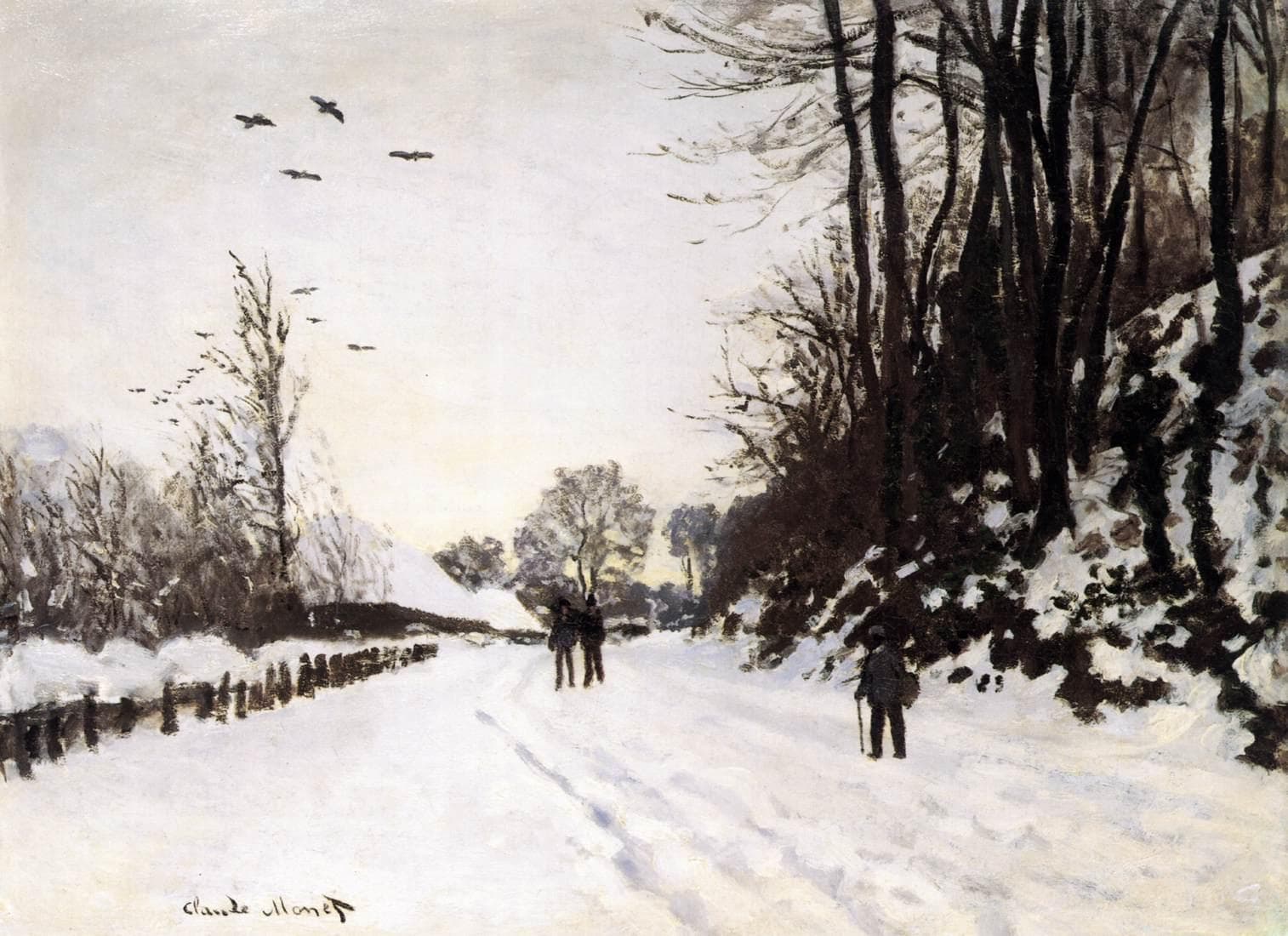
Road by Saint-Siméon Farm in Winter
Claude Monet · 1867
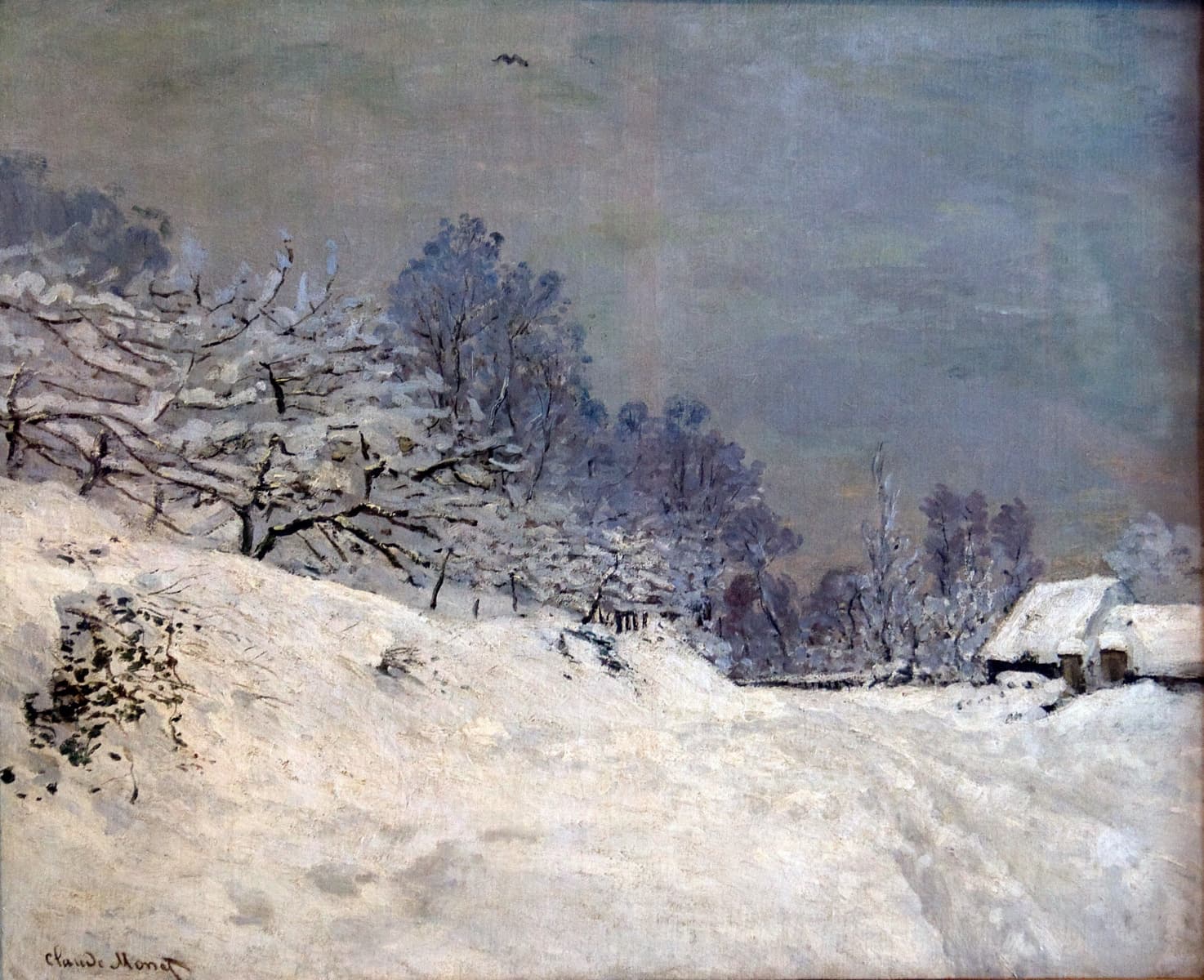
The Road in Front of Saint-Siméon Farm in Winter
Claude Monet · 1867
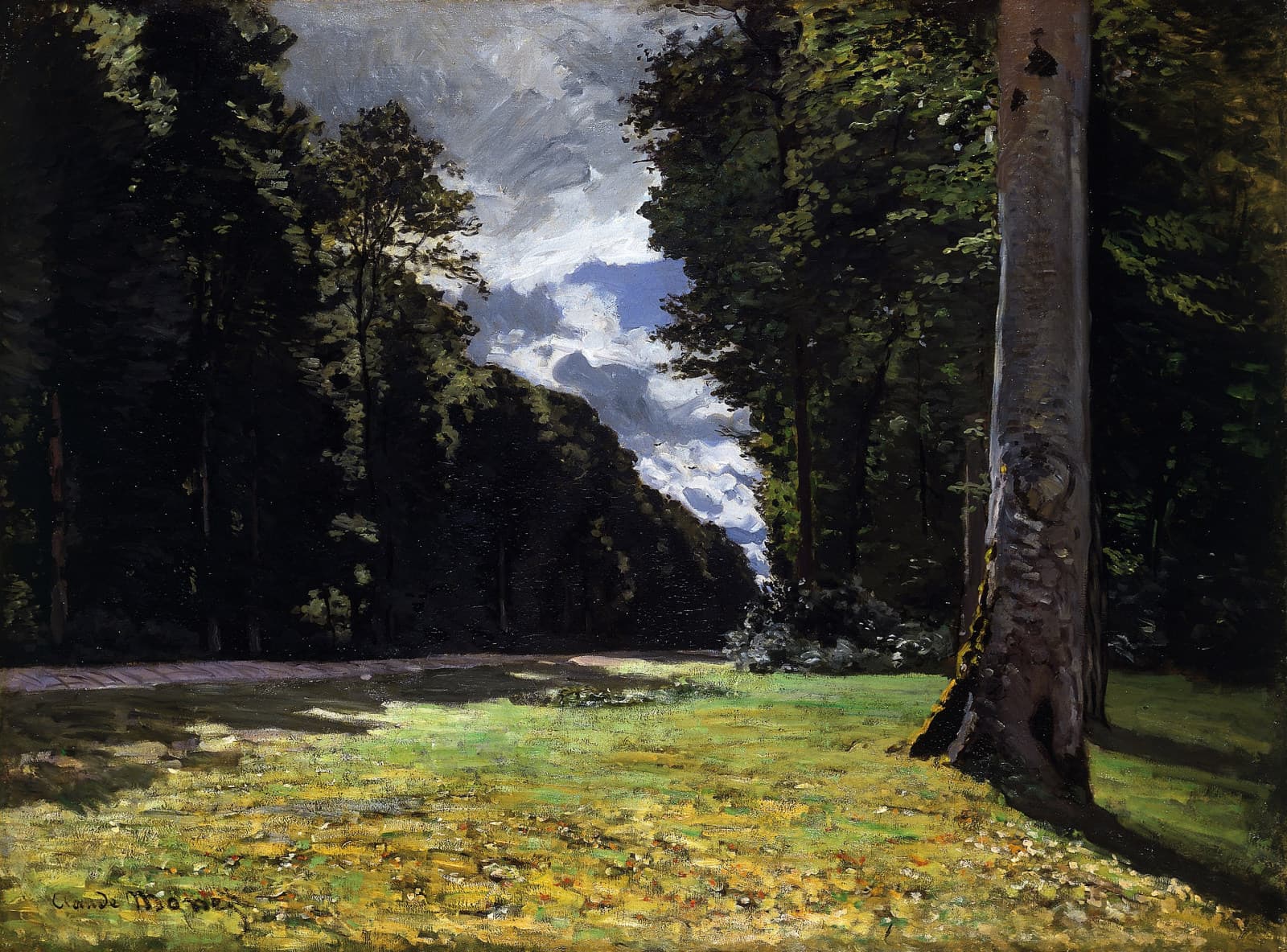
The Pavé de Chailly in the Forest of Fontainebleau
Claude Monet · 1865
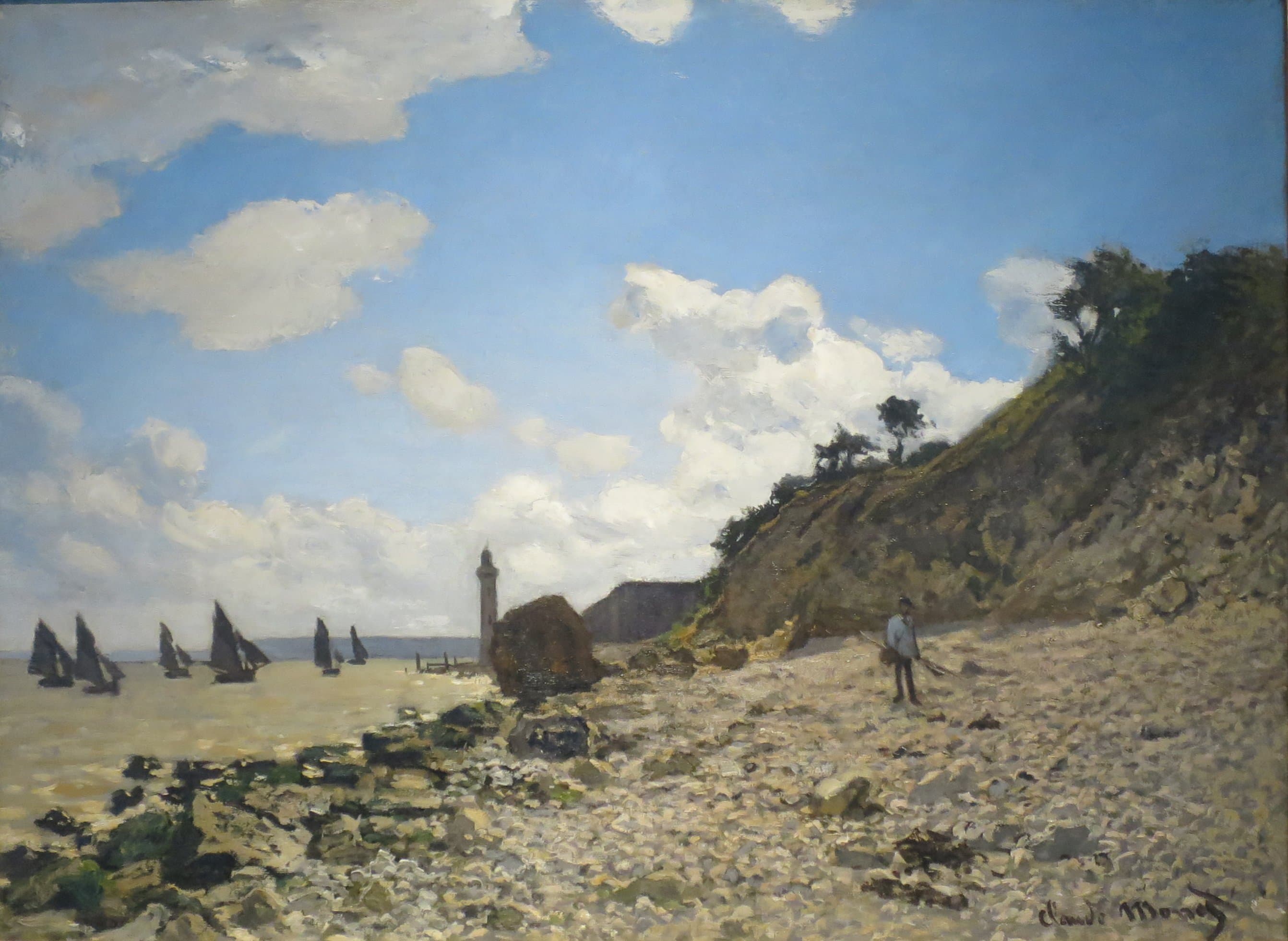
The Beach at Honfleur
Claude Monet · 1864–66
Rue de la Bavolle, Honfleur
Claude Monet · 1864

The Scream
Edvard Munch · 1893

Ophelia
John Everett Millais · 1851–52

The Great Wave off Kanagawa
Katsushika Hokusai · c. 1830–32