Image: Musée d'Orsay, Paris; via Wikimedia Commons · Public domain · via Wikimedia Commons
Realism
Still Life with Meat
Claude Monet, 1864
Still Life with Meat (Le quartier de viande) is a small early still life by Claude Monet of a raw cut of beef, garlic and a stoneware pot, painted in 1864. It is in the Musée d'Orsay, Paris.
- Artist
- Claude Monet
- Date
- 1864
- Medium
- Oil on canvas
- Dimensions
- 24 × 33 cm
- Collection
- Musée d'Orsay, Paris, France
- Movement
- Realism
- Catalogue
- Wildenstein 14
What you are looking at
A large cut of raw beef lies on a wooden table, filling the middle of a small canvas. Its flesh is a deep, glossy red, marbled and edged with a thick band of creamy yellow fat that curls around it like a wrapping. The light falls on it from the left, catching the ridges of fat in thick white and yellow highlights and leaving the underside in shadow.
To the left, half lost in the dark background, stands a brown stoneware pot with a paler band around its rim and something hanging over its edge. At the lower right, two heads or cloves of garlic sit on the table, their papery skins painted in quick white and gray strokes. The background is almost black. The tabletop is a warm, worn brown. In the lower left corner Monet signed with a single letter: "M."
Where and when it was painted
Monet was twenty-three in 1864. He had studied in Paris in the studio of Charles Gleyre alongside Renoir, Sisley and Bazille, and he divided his time between Paris and the Normandy coast, painting landscapes at Honfleur with Boudin and Jongkind. Still life was part of his training and a way to practice handling paint and color indoors, and the small number he made in the mid-1860s, such as Spring Flowers and Jar of Peaches, are some of his most solidly painted early works.
How it was painted
The picture belongs to the Realist tradition and owes a clear debt to Gustave Courbet, then the leading painter of the avant-garde, and behind him to Chardin and the Dutch and Spanish still-life painters. The subject is humble, kitchen food rather than fruit and flowers, and Monet paints it with frankness and weight.
The paint is thick and confident. The meat is built from strokes of crimson, brown and dark red, worked into each other; the fat is laid on in heavy ribbons of cream and yellow, with sharp white highlights where the light catches. The dark background is thinly painted, making the meat look more solid by contrast. The garlic, a few loose touches of white, gray and pink, shows how quickly Monet could suggest a form.
The whole composition is concentrated in a horizontal band across the middle: pot, meat, garlic, in a diagonal from back left to front right. There is no ornament and no story, only a careful study of texture and light on an ordinary object. Raw meat had long been a subject that reminded viewers of mortality, and Rembrandt's flayed ox is the great example. Monet's piece of beef carries little of that weight; it is a painter's exercise in red, white and brown.
The size matters too. At 24 by 33 centimeters the canvas is barely larger than a sheet of writing paper, and the meat is shown almost life-size. That closeness, and the dark that surrounds it, give the small picture a surprising presence.
The young Monet
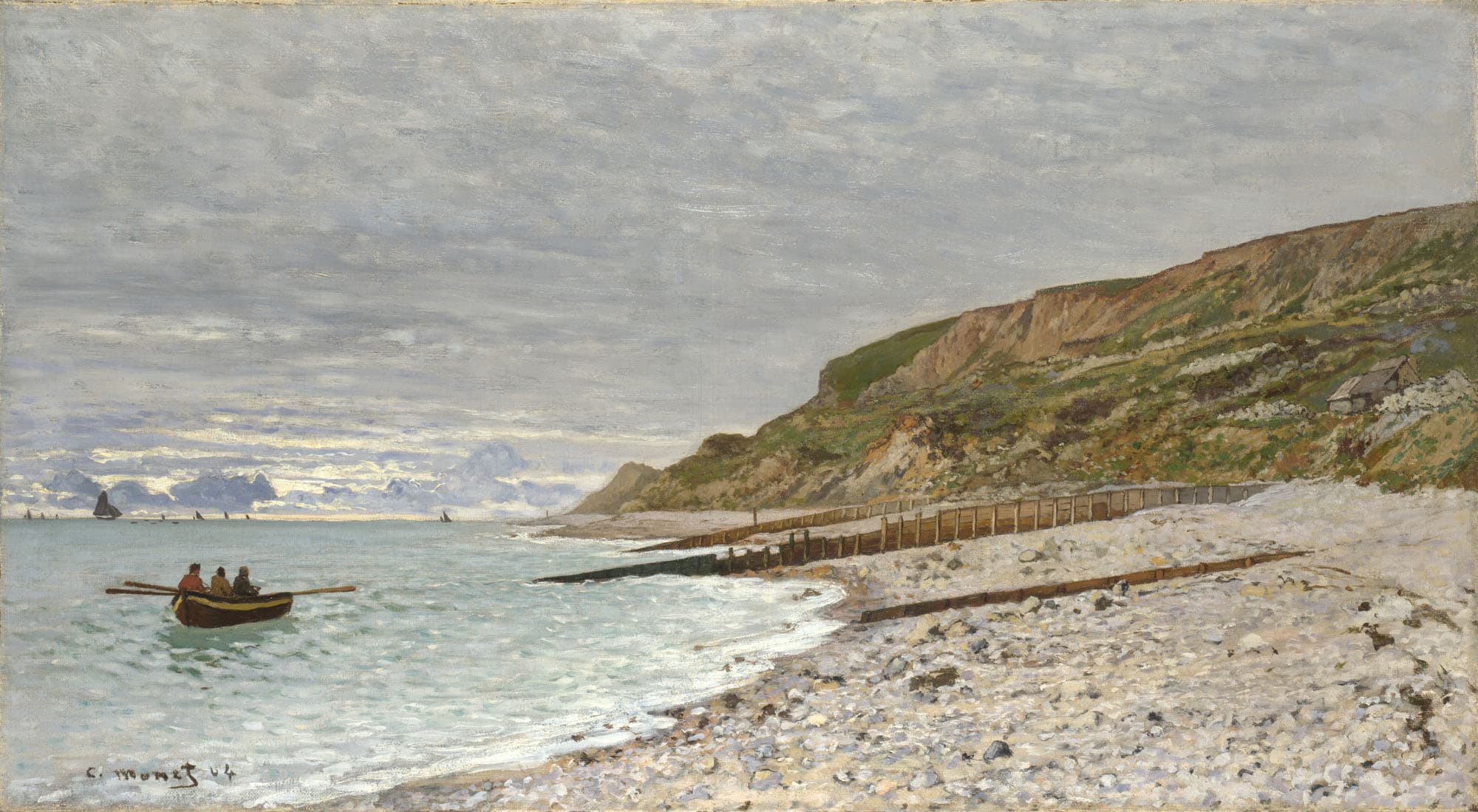
It is worth setting this small, dark canvas beside the seascapes of the same year, such as La Pointe de la Hève, Sainte-Adresse, to see how much range Monet already had. The still lifes of the 1860s fed into the large figure paintings of 1865–67, where the solid handling of objects in The Luncheon or the picnic in the Déjeuner sur l'herbe comes from exactly this practice. He returned to still life in Argenteuil, in The Tea Service of 1872, with a much lighter palette.
Ownership
The painting was owned from 1898 by the painter and collector Étienne Moreau-Nélaton, who gave it to the French state in 1906 together with his whole collection. It was displayed with the Moreau-Nélaton gift at the Louvre and elsewhere before entering the Musée d'Orsay in 1986 (RF 1675).
Where to see it
Still Life with Meat is in the Musée d'Orsay in Paris, which has the largest collection of Monet's early work. See Monet at the Musée d'Orsay.
Questions & answers
Where is Monet's Still Life with Meat?
It is in the Musée d'Orsay in Paris, inventory RF 1675. It came to the French state in 1906 as part of the gift of the collector Étienne Moreau-Nélaton, who had owned it since 1898.
When was Still Life with Meat painted?
Monet painted it in 1864, when he was twenty-three and still developing his style between Paris and the Normandy coast. It is one of a small group of still lifes from the mid-1860s.
What does Still Life with Meat show?
A raw cut of beef edged with fat on a wooden table, with a stoneware pot in the shadows at left and two cloves of garlic at lower right, against a dark background. It is signed with a monogram, M.
Was Monet influenced by Courbet?
Yes. The dark ground, the thick paint and the humble kitchen subject all reflect the Realism of Gustave Courbet, the leading avant-garde painter of the 1860s, whom Monet admired and later knew.
More by the artist
Claude Monet

Bridge over a Pond of Water Lilies
Claude Monet · 1899

Woman with a Parasol – Madame Monet and Her Son
Claude Monet · 1875

Sunset in Venice
Claude Monet · 1908–12

La Grenouillère
Claude Monet · 1869

Beach in Pourville
Claude Monet · 1882

Springtime
Claude Monet · 1872

Boating on the River Epte
Claude Monet · 1890

The Seine at Asnières (Hermitage)
Claude Monet · 1873
Also painted in 1864
The same year
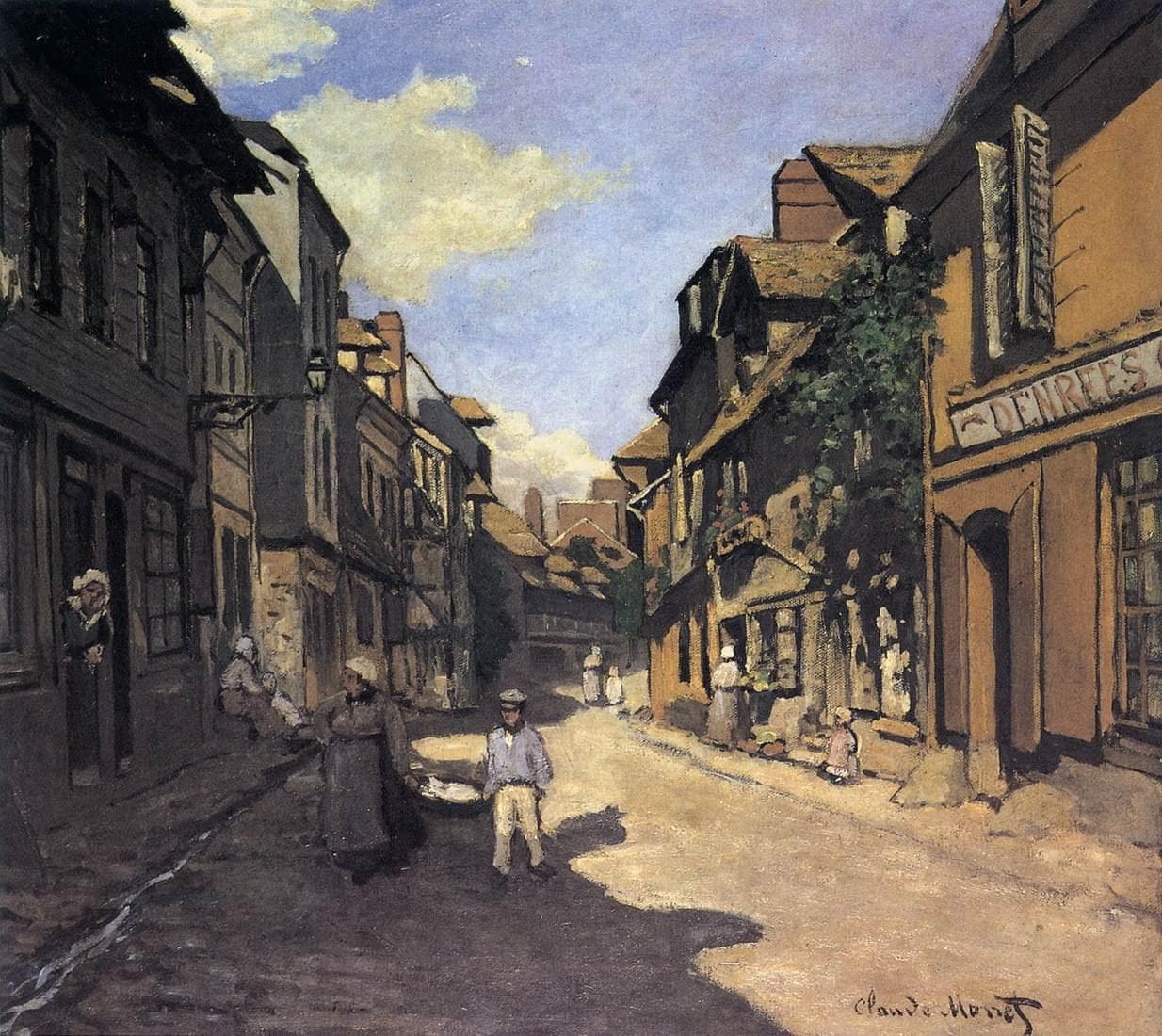
Kindred works
You may also study
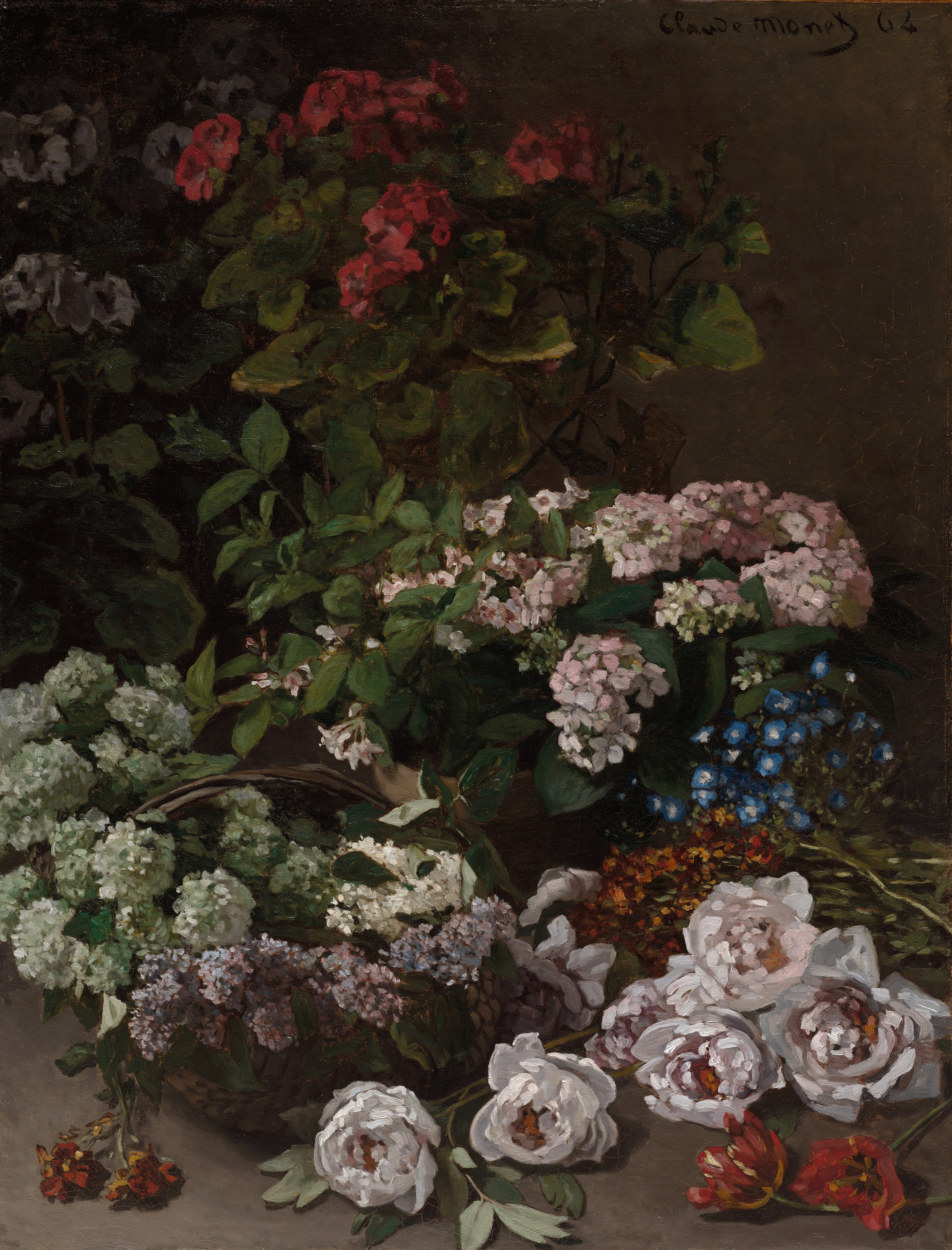
Spring Flowers
Claude Monet · 1864
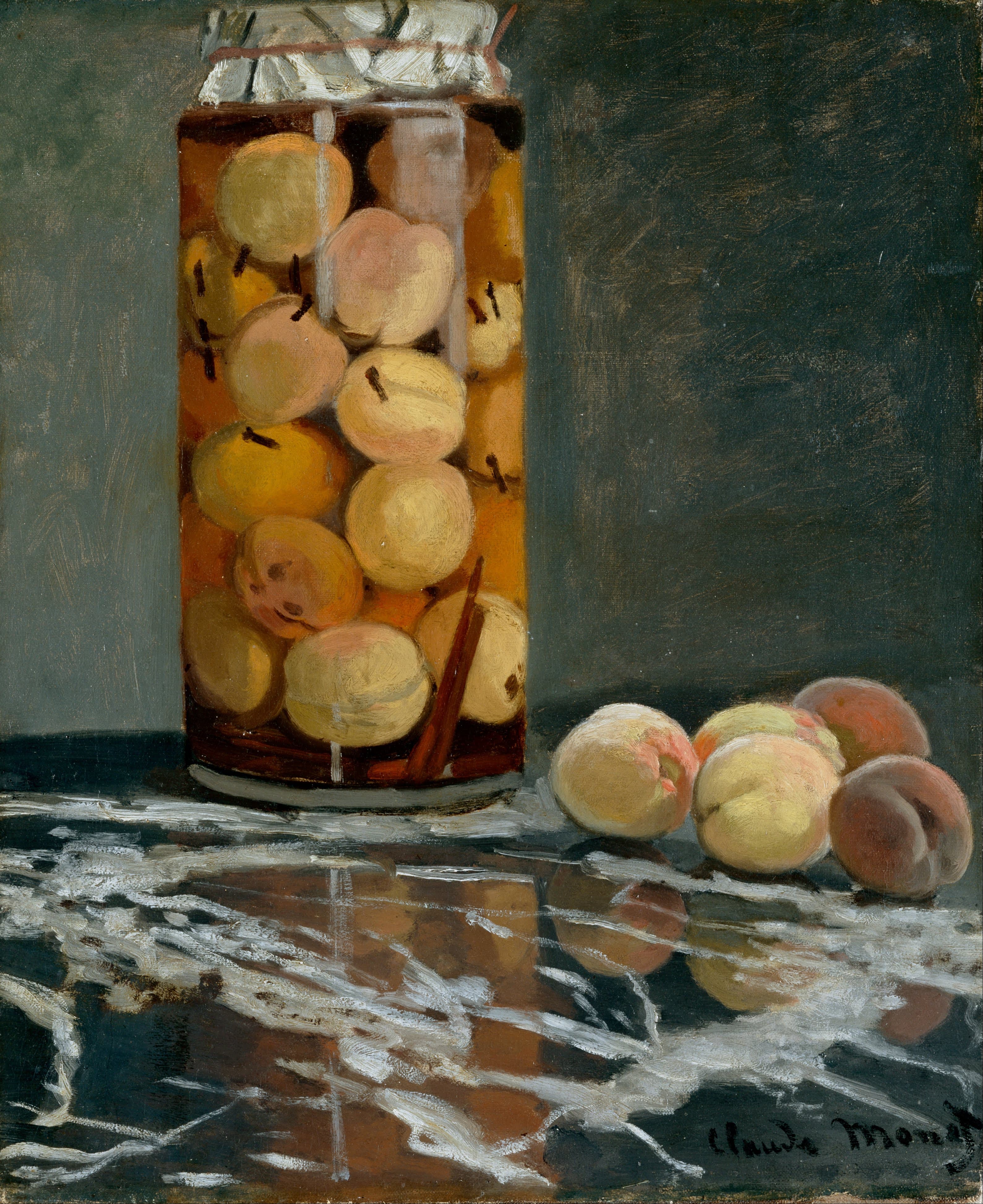
Jar of Peaches
Claude Monet · c. 1866
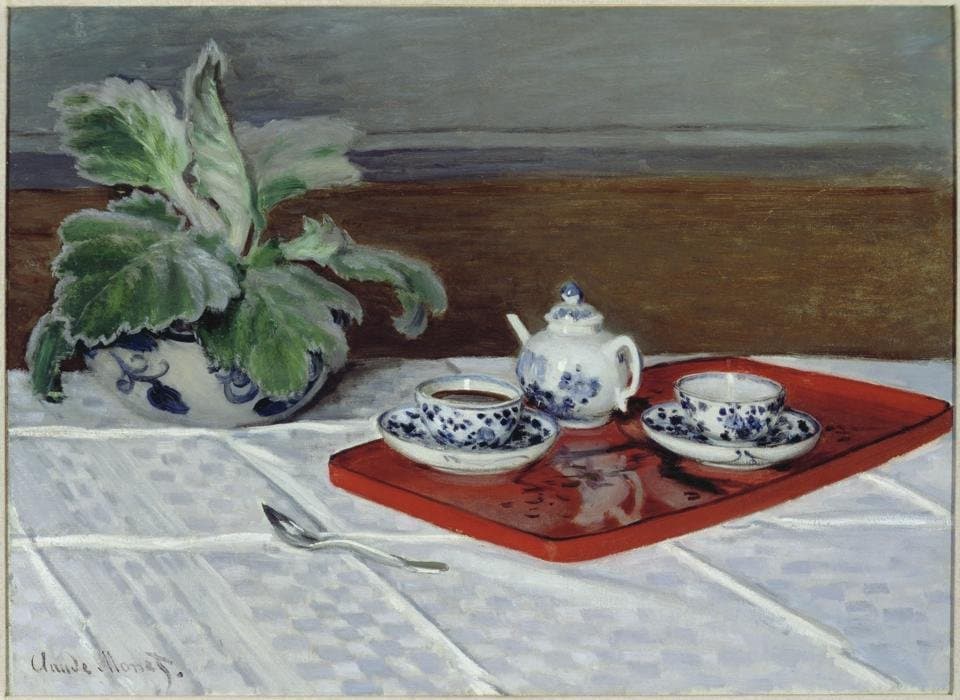
The Tea Service
Claude Monet · 1872
Still-Life with Apples and Grapes
Claude Monet · 1879–80
Corner of the Studio
Claude Monet · 1861

The Scream
Edvard Munch · 1893

Saturn Devouring His Son
Francisco Goya · c. 1819–1823

Ophelia
John Everett Millais · 1851–52