Image: Cleveland Museum of Art (CC0) · Public domain · via Wikimedia Commons
Impressionism
Spring Flowers
Claude Monet, 1864
Spring Flowers is an 1864 still life by Claude Monet: a large, dark-grounded heap of peonies, lilacs, guelder roses, tulips and potted flowers, signed and dated at upper right. It is in the Cleveland Museum of Art.
- Artist
- Claude Monet
- Date
- 1864
- Medium
- Oil on canvas
- Dimensions
- 116.8 × 90.5 cm
- Collection
- Cleveland Museum of Art, Cleveland, United States
- Movement
- Impressionism
- Catalogue
- Wildenstein 20
Spring Flowers is the largest and most ambitious flower painting of Claude Monet's early career, signed and dated Claude Monet 64 at upper right. Over a meter tall, it heaps cut and potted spring flowers on the ground against a dark background. It was probably exhibited in Rouen in 1864 and has been in the Cleveland Museum of Art since 1953.
What you are looking at
The flowers are not arranged in a vase but spread across a low ledge or the ground, as if just brought in from the garden. At lower right lies a pile of big white peonies, their petals shaded in pink and gray, with a couple of red tulips and a scatter of rust-orange wallflowers beside them. At lower left a shallow wicker basket overflows with white guelder roses, the round "snowball" heads of viburnum, and sprays of pale lilac.
Behind them the picture rises in tiers. In the middle stands a potted plant with clusters of pale pink flowers, and next to it a burst of deep blue blossoms. At the top, a tall plant with scarlet geranium-like flowers reaches almost to the upper edge, its leaves picked out in olive and dark green. Everything is set against a deep brown-black ground that makes the whites and reds glow. Single stems and fallen blooms at the bottom edge break the line of the composition and keep it from looking posed.
Where and when it was painted
In 1864 Monet was 23, two years into his training in Paris and spending long periods on the Normandy coast. He was ambitious for official success and was trying out the genres that could earn it, including large still lifes, which sold well and were shown regularly at regional exhibitions. The Cleveland museum notes that the painting was probably shown at the municipal fine arts exhibition in Rouen in 1864, and that it belonged to Monet's elder brother Léon, a chemist who lived in Rouen. It stayed in private hands until Wildenstein & Co. sold it to Cleveland in 1953.
How it was painted
The picture is in the tradition of the great 17th-century Dutch and Flemish flower pieces and of Gustave Courbet, who had painted large flower still lifes in 1862–63 with the same dark grounds and loosely massed blooms. Monet's handling is broad and confident. The peonies are built from thick, curling strokes of white over gray, the guelder roses from small dabs of white and green, the lilac from a scumble of mauve. The light falls from the upper left, picking out the tops of the flowers and leaving the background in shadow.
What already marks it as Monet is his interest in how color changes in light rather than in the identity of each flower. The whites are never pure white: the peonies carry pink and lavender, the guelder roses green and cream. Look at the blue flowers at center right, set against the pink, and you see a painter thinking about contrasting color well before he had a theory of it.
Monet's early still lifes
Monet painted still lifes throughout the 1860s, mostly when weather or money kept him indoors. Compare the meaty, tabletop Still Life with Flesh of the same year, the glowing glass of Jar of Peaches from about 1866, and the earlier, studio-bound Corner of the Studio of 1861. Flowers stayed with him for the rest of his life, from The Gladioli in his garden at Argenteuil to the gardens he planted at Giverny. For the outline of these years, see Monet's life in paintings.
Where to see it
The painting is in the Cleveland Museum of Art (1953.155, Gift of the Hanna Fund), usually in the 19th-century European galleries. It has also traveled, including to the Musée de l'Orangerie in Paris in 2022 and to the Musée d'art moderne André Malraux in Le Havre in 2026. For other public collections, see where to see Monet's paintings.
Questions & answers
Where is Monet's Spring Flowers?
It is in the Cleveland Museum of Art in Ohio, which bought it in 1953 with the Hanna Fund (accession 1953.155). It is usually shown in the museum's 19th-century European galleries but has been lent to exhibitions in France, including Le Havre in 2026.
When did Monet paint Spring Flowers?
He signed and dated it 1864, when he was 23 and still early in his career. It was probably exhibited that year at the municipal fine arts exhibition in Rouen, and it belonged to his elder brother Léon, who lived there.
What flowers are in Monet's Spring Flowers?
White peonies, red tulips and orange wallflowers lie at the front; a basket holds white guelder roses and lilac; behind them are potted plants with pink, blue and scarlet flowers. The mix is of seasonal spring blooms rather than a single bouquet.
Did Monet paint many still lifes?
Mostly in the 1860s and early 1880s. Early examples include Still Life with Flesh (1864) and Jar of Peaches (c. 1866). Spring Flowers is the largest of his early flower pieces and shows the influence of Courbet and Dutch flower painting.
More by the artist
Claude Monet

Bridge over a Pond of Water Lilies
Claude Monet · 1899

Woman with a Parasol – Madame Monet and Her Son
Claude Monet · 1875

Sunset in Venice
Claude Monet · 1908–12

La Grenouillère
Claude Monet · 1869

Beach in Pourville
Claude Monet · 1882

Springtime
Claude Monet · 1872

Boating on the River Epte
Claude Monet · 1890

The Seine at Asnières (Hermitage)
Claude Monet · 1873
Also painted in 1864
The same year
Kindred works
You may also study
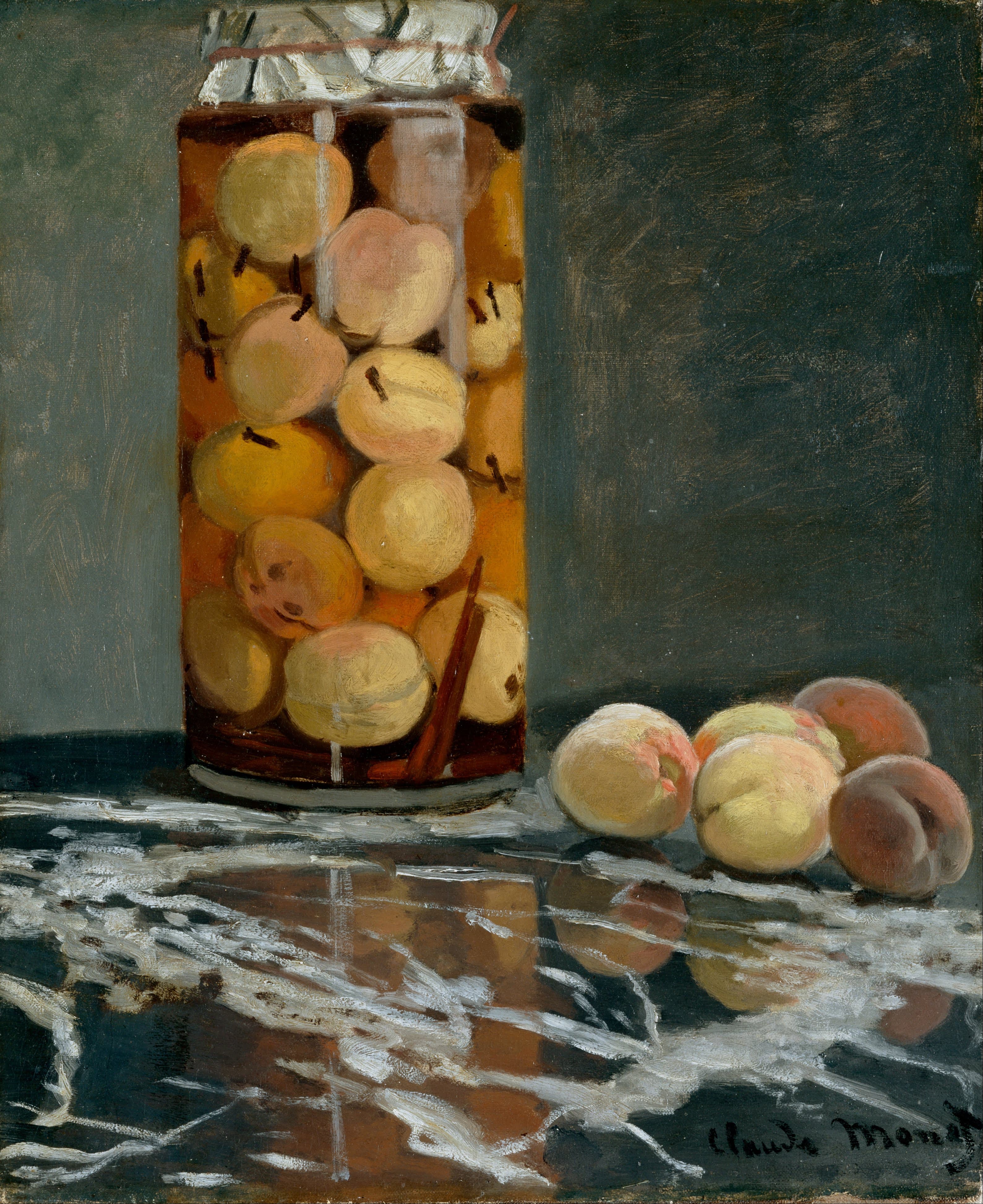
Jar of Peaches
Claude Monet · c. 1866
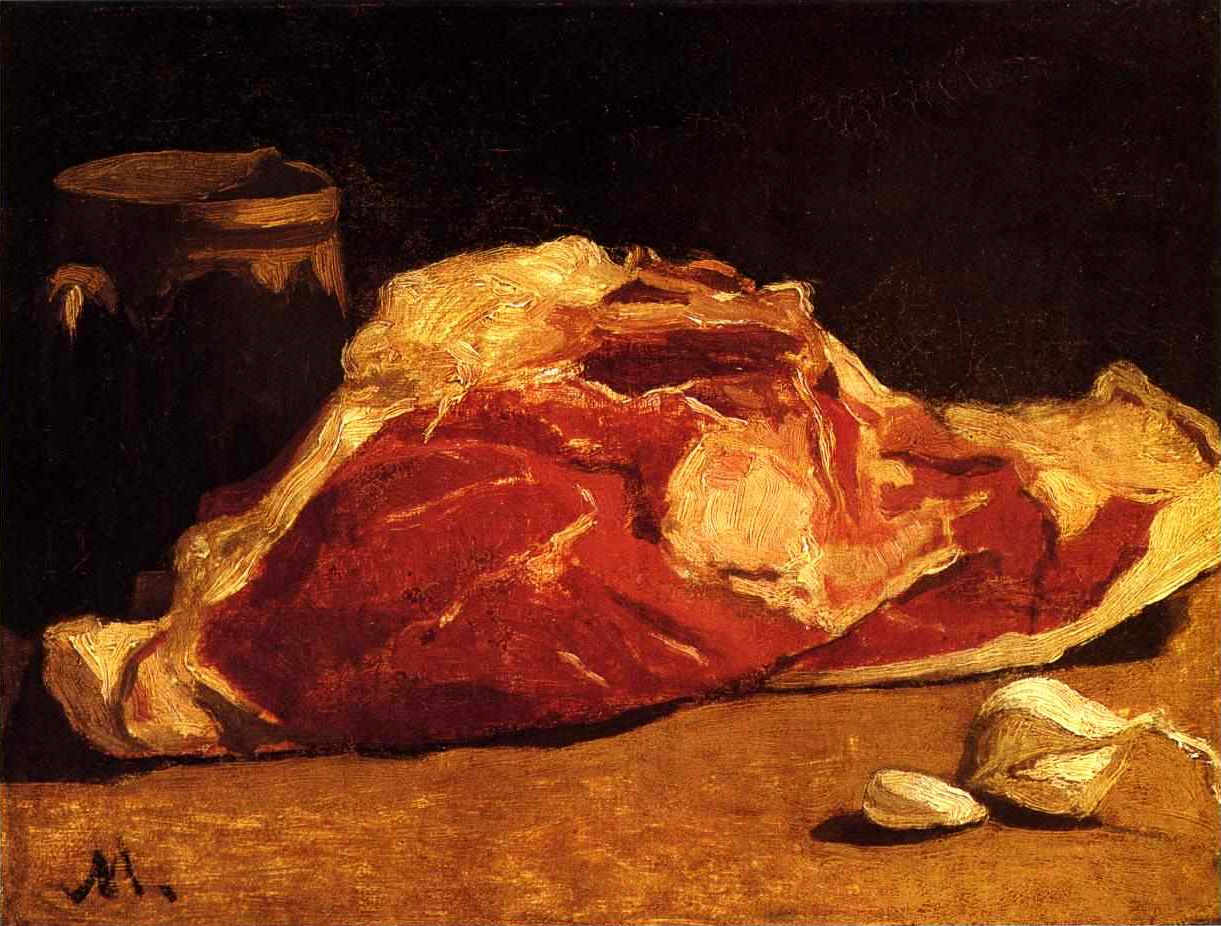
Still Life with Meat
Claude Monet · 1864
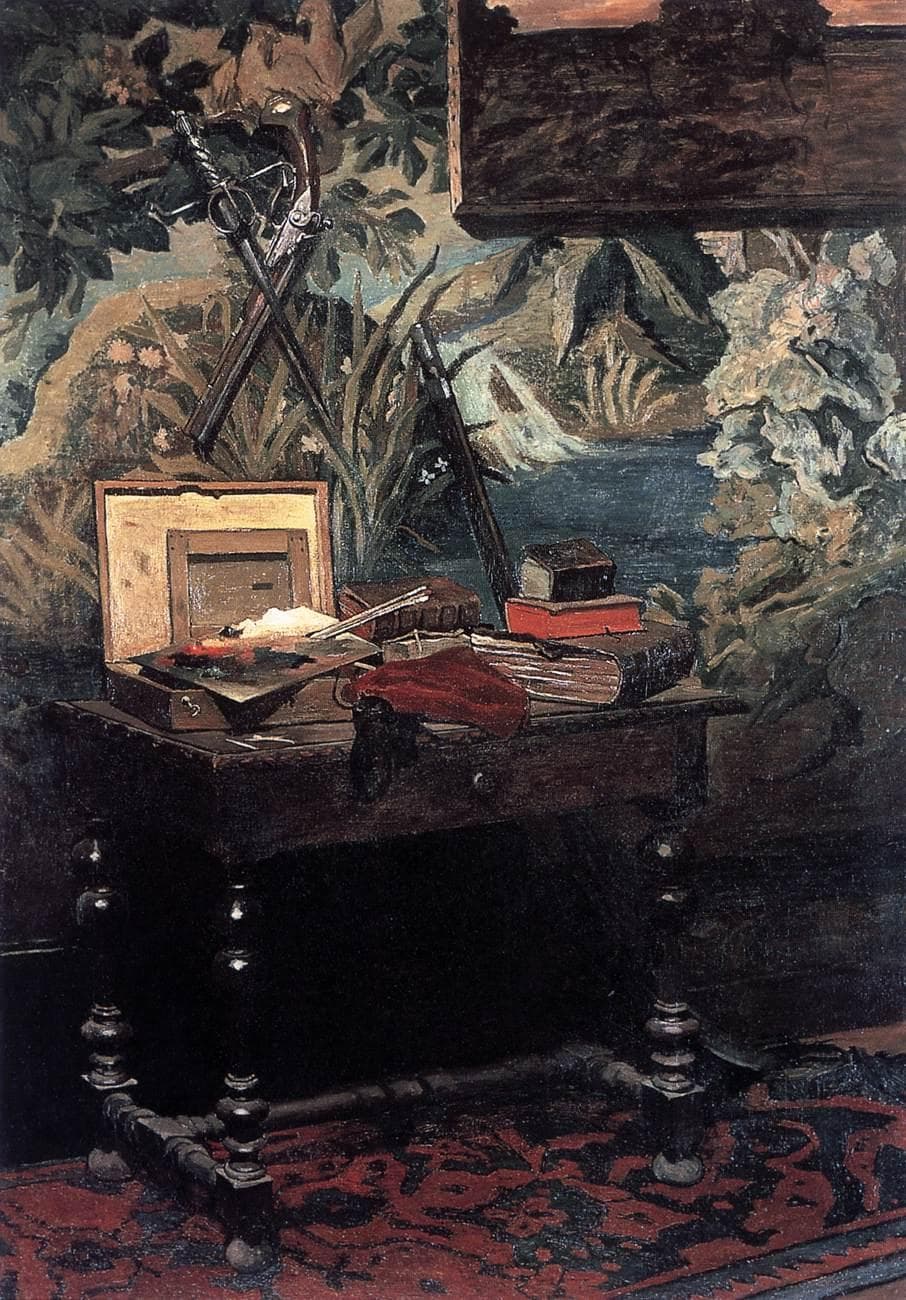
Corner of the Studio
Claude Monet · 1861
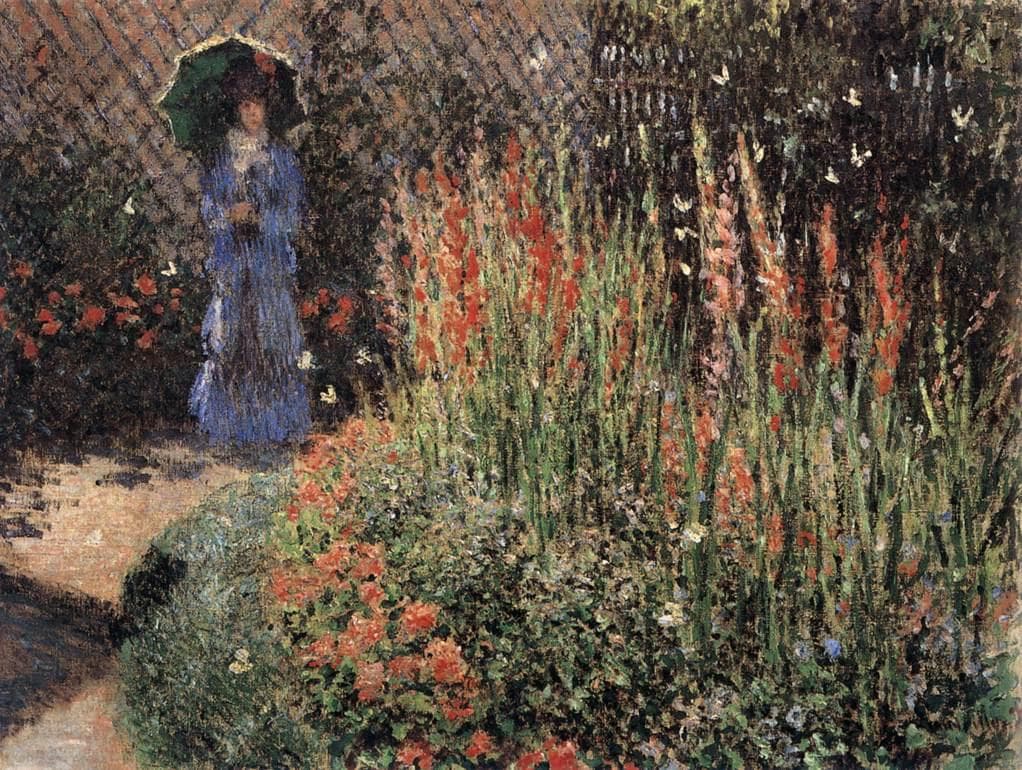
The Gladioli
Claude Monet · c. 1876
Walk (Road by the Saint-Siméon Farm)
Claude Monet · 1864

The Scream
Edvard Munch · 1893

Ophelia
John Everett Millais · 1851–52

The Great Wave off Kanagawa
Katsushika Hokusai · c. 1830–32