Image: Private collection · Public domain · via Wikimedia Commons
Saint-Lazare Station, the Western Region Goods Sheds
Claude Monet, 1877
Saint-Lazare Station, the Western Region Goods Sheds (1877) is Claude Monet's view along a curving track toward the Paris station, with the dark gabled sheds of the Western Railway at right and gas lamps in the steam. It is in a private collection.
- Artist
- Claude Monet
- Date
- 1877
- Medium
- Oil on canvas
- Dimensions
- 60 × 80 cm
- Collection
- Private collection
- Movement
- Impressionism
- Catalogue
- Wildenstein 446
- The City
Saint-Lazare Station, the Western Region Goods Sheds is one of the twelve paintings Claude Monet made at the Gare Saint-Lazare in Paris in 1877. Catalogued in French as La Gare Saint-Lazare, vue extérieure (Wildenstein 446), it looks along a curving track toward the station, with a tall, dark railway building, its gables hung with shield-shaped signs, filling the right side, a locomotive approaching in the middle distance and clouds of steam rising against a mauve sky. It is in a private collection.
What you are looking at
The right third of the canvas is taken up by a big dark building with steep gables, its walls broken by tall lattice windows and a covered gallery at ground level. Two pale shield shapes on the facade, painted in blue and white, look like the emblem of the Chemins de fer de l'Ouest, the Western Railway company that ran the station. Small figures, porters and railwaymen, gather in the shadow of the gallery at far right.
From the lower left, a pair of rails curves into the picture and leads the eye to a dark locomotive in the center, its headlamp a tiny spot of orange and its smoke rising in a column. On the left a row of old-fashioned gas lamps on posts lines the track, with a couple of figures and a dark wagon beside them. Behind everything, huge banks of white, blue and lilac steam pile up, and through them the roofs of the city appear as broken shapes. The sky above is a lively pattern of violet, blue and cream strokes. The signature, Claude Monet, is at lower right.
Where and when it was painted
In January 1877 Monet, then living at Argenteuil, rented a small flat in the rue Moncey near the Gare Saint-Lazare, the terminus of the Western Railway whose trains ran to Argenteuil and Normandy. With permission from the railway company he worked on the platforms, in the yard and under the Pont de l'Europe, the iron bridge where six streets meet above the tracks. In about three months he produced twelve canvases, and seven of them hung at the Third Impressionist Exhibition that April. Our Gare Saint-Lazare series page brings the twelve together.
How it was painted
The contrast between the solid, almost black building and the soft, weightless steam is the engine of the picture. Monet painted the architecture with firm, dark strokes and clear edges, then let the steam spill over everything else in thick, curling touches of white and pale blue. The rails are drawn with a couple of long, confident lines. The sky, built of short, crossing strokes, makes the whole upper half vibrate.
The dark building gives this canvas a stronger value contrast than most of the series, closer to the dramatic interiors than to the pale exterior views.
How this version differs
Two of the twelve canvases share the catalogue title La Gare Saint-Lazare, vue extérieure: this one, with the goods sheds, and the view beneath the Pont de l'Europe. The English title used here distinguishes them by the sheds. Among the exterior views, it is more architectural than the sunlit Sun Effect and more crowded than Train Tracks at the Saint-Lazare Station in Hakone. For the iconic interior, see La Gare Saint-Lazare in the Musée d'Orsay.
A railway world
The Saint-Lazare yard was a working industrial zone in the heart of the city: sheds, workshops, signal boxes, gas lamps and teams of railwaymen. Monet painted it with the same attention he had given to Argenteuil's boats and bridges, treating a place of labor and machinery as a fit subject for landscape painting. It was a radical choice in 1877, and critics noticed; some mocked the smoke, while Émile Zola praised the pictures as the very poetry of modern life.
Where to see it
The painting is in a private collection and not on public view. Museum versions of the Saint-Lazare series are in Paris, London, Chicago, Cambridge (Massachusetts), Hannover and Hakone; see where to see Monet's paintings.
Questions & answers
Where is Monet's Saint-Lazare Station, the Western Region Goods Sheds?
It is in a private collection and not on public view. Other paintings from the 1877 Gare Saint-Lazare series are in the Musée d'Orsay, the Musée Marmottan, the National Gallery in London, the Art Institute of Chicago and other museums.
When was it painted?
In early 1877, when Monet spent about three months painting twelve views in and around the Gare Saint-Lazare in Paris.
What does the painting show?
A curving track leading toward the station, with a locomotive approaching in steam, gas lamps along the track at left and the tall dark gabled sheds of the Western Railway at right, decorated with shield-shaped signs.
Why are there two paintings called La Gare Saint-Lazare, vue extérieure?
The French catalogue title, meaning 'exterior view', is given to two canvases (Wildenstein 446 and 447). This one shows the goods sheds; the other looks out from beneath the iron girders of the Pont de l'Europe.
More by the artist
Claude Monet
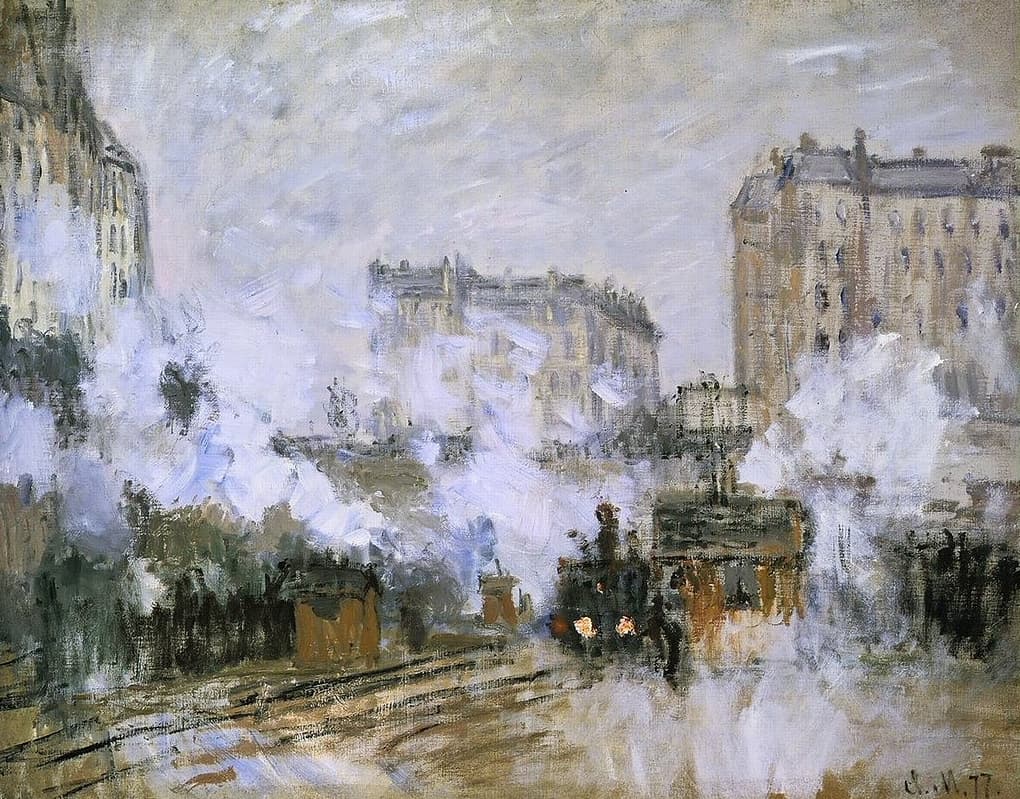
Exterior of Saint-Lazare Station, Arrival of a Train
Claude Monet · 1877
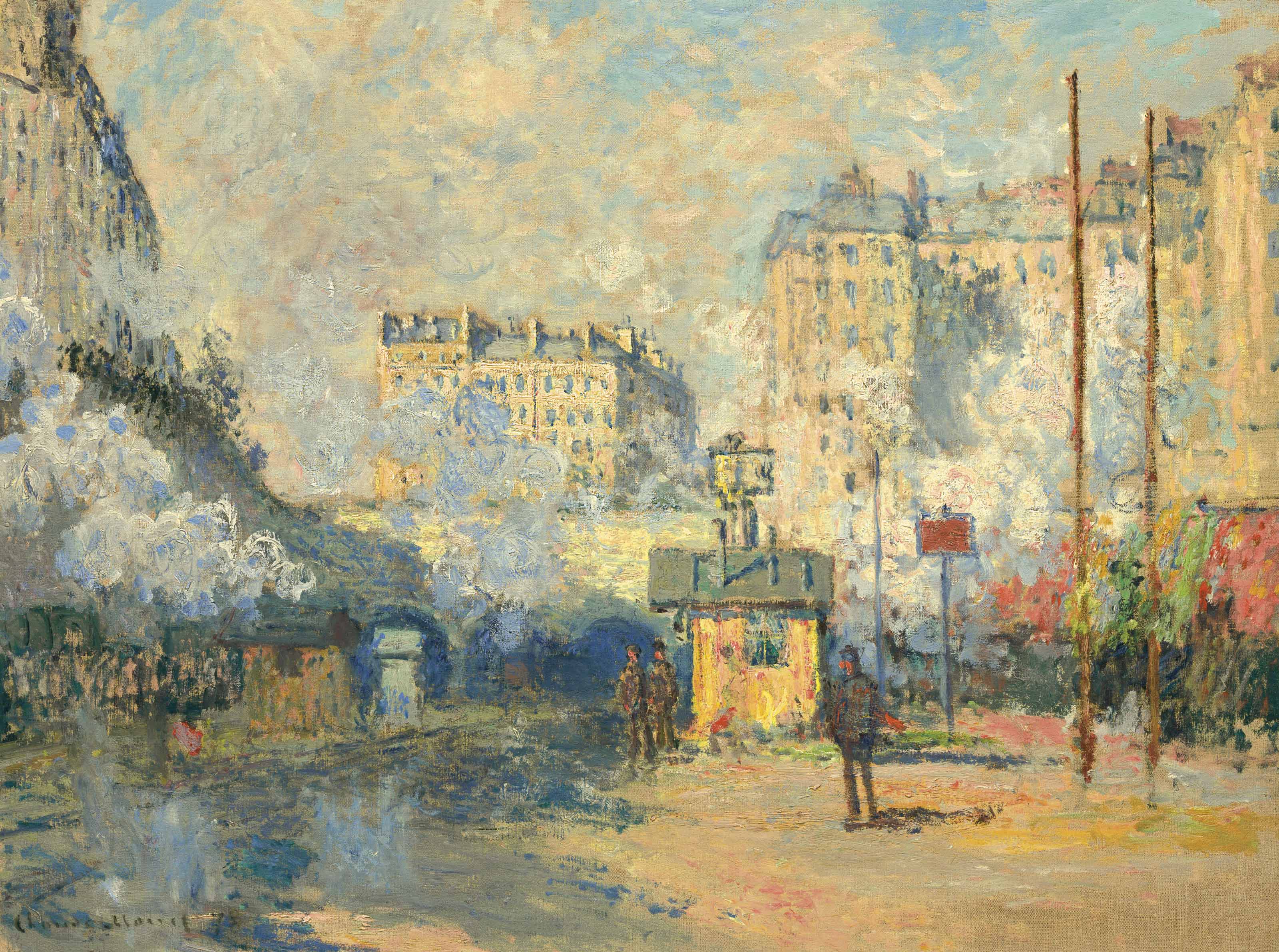
Exterior of Saint-Lazare Station, Sun Effect
Claude Monet · 1877
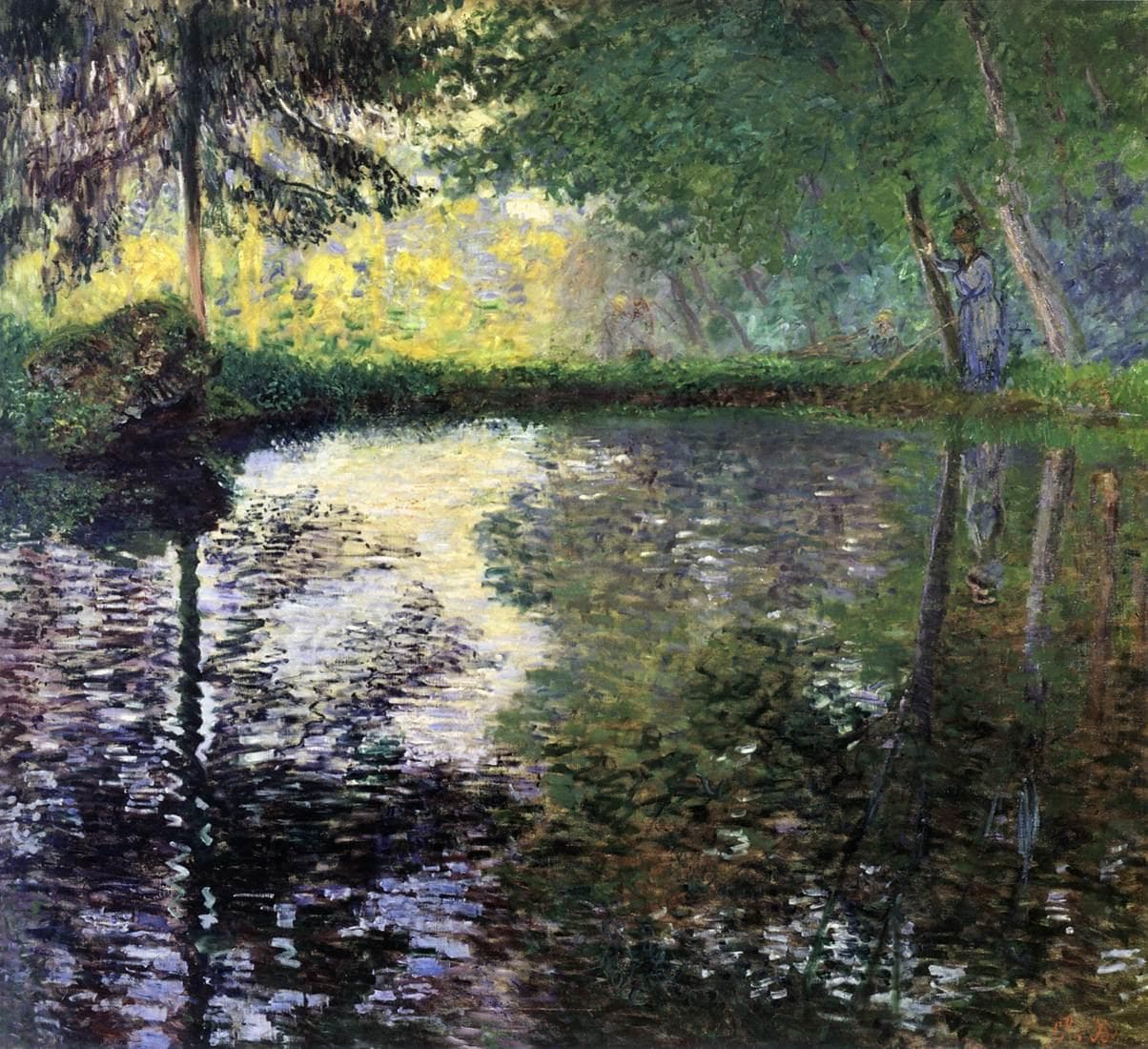
The Pond at Montgeron
Claude Monet · 1876–77
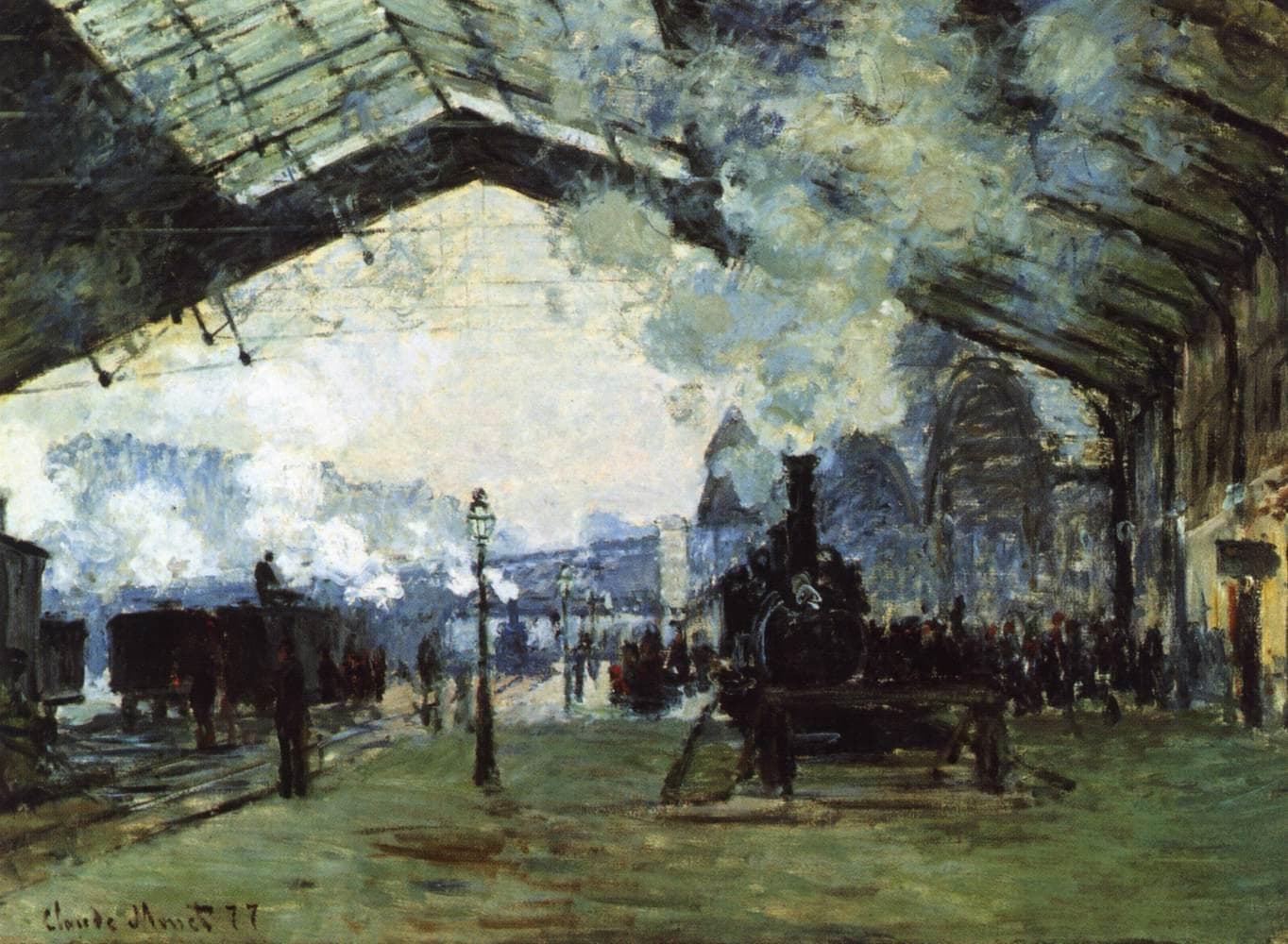
Gare Saint-Lazare: the Train from Normandy
Claude Monet · 1877
The Turkeys
Claude Monet · 1877
Rue Saint-Denis in Paris, Celebration of 30 June 1878
Claude Monet · 1878
Train in the Snow at Argenteuil
Claude Monet · 1875
Vétheuil in the Fog
Claude Monet · 1879
Also painted in 1877
The same year
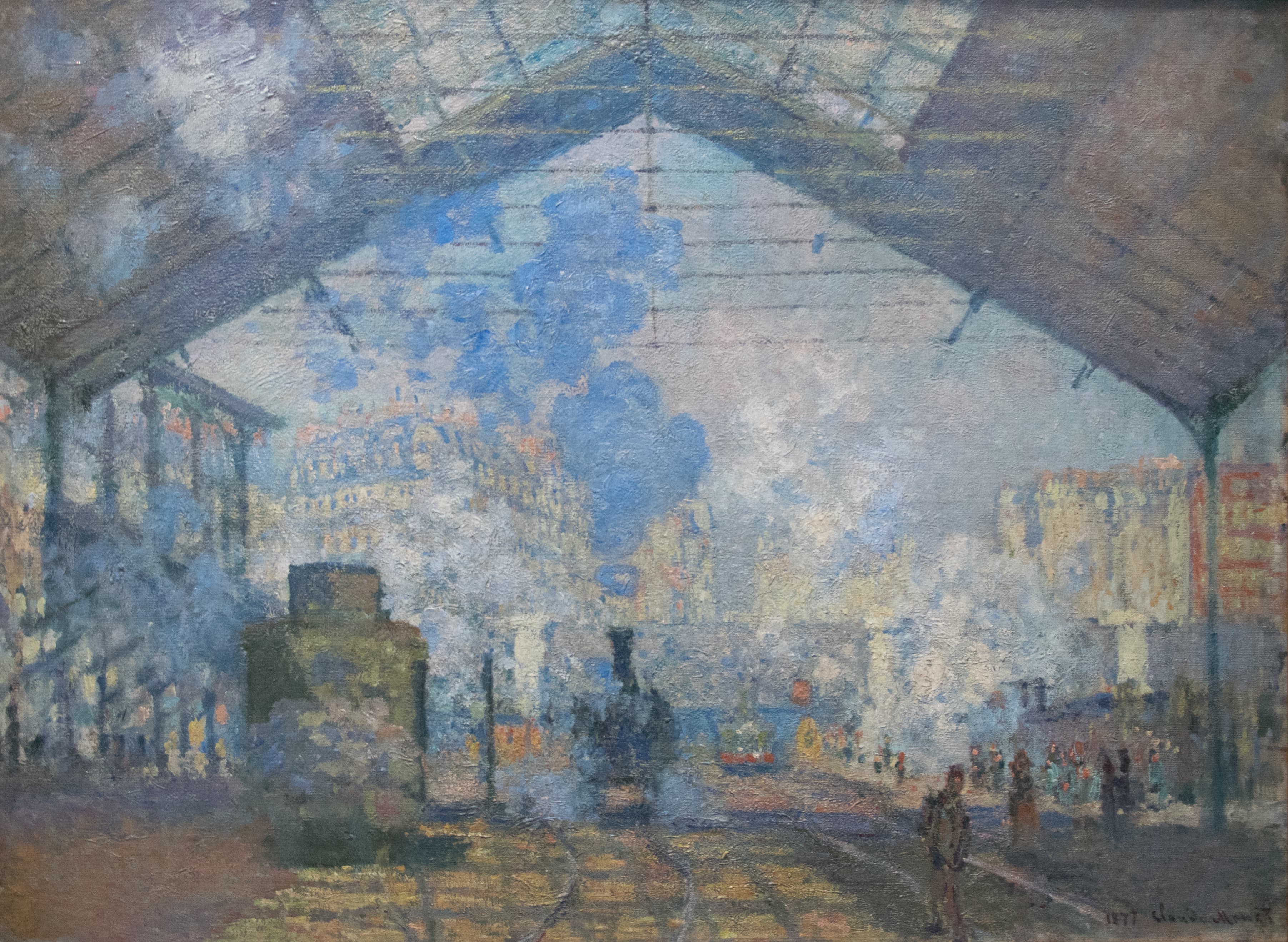
La Gare Saint-Lazare
Claude Monet · 1877
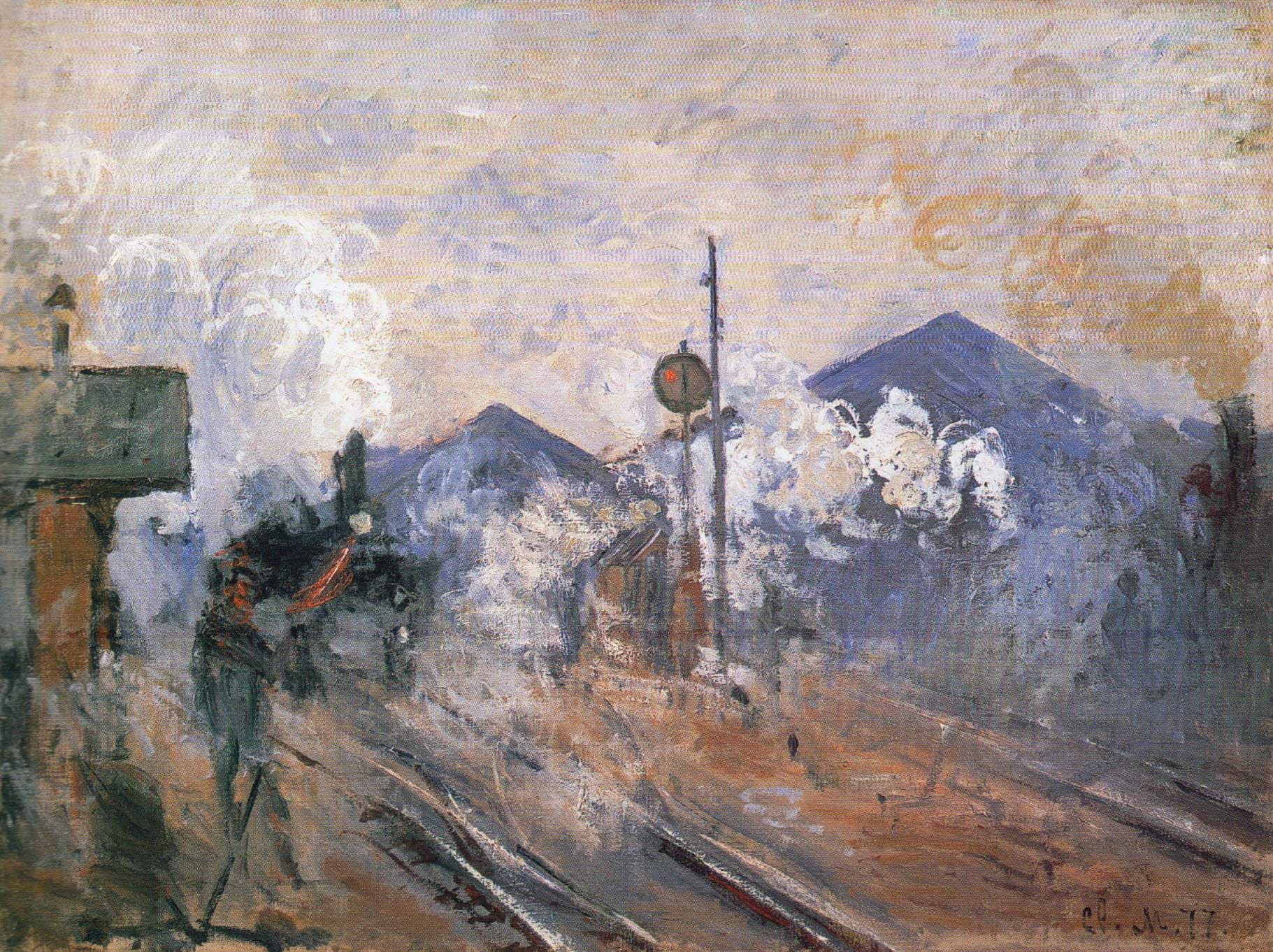
Train Tracks at the Saint-Lazare Station
Claude Monet · 1877
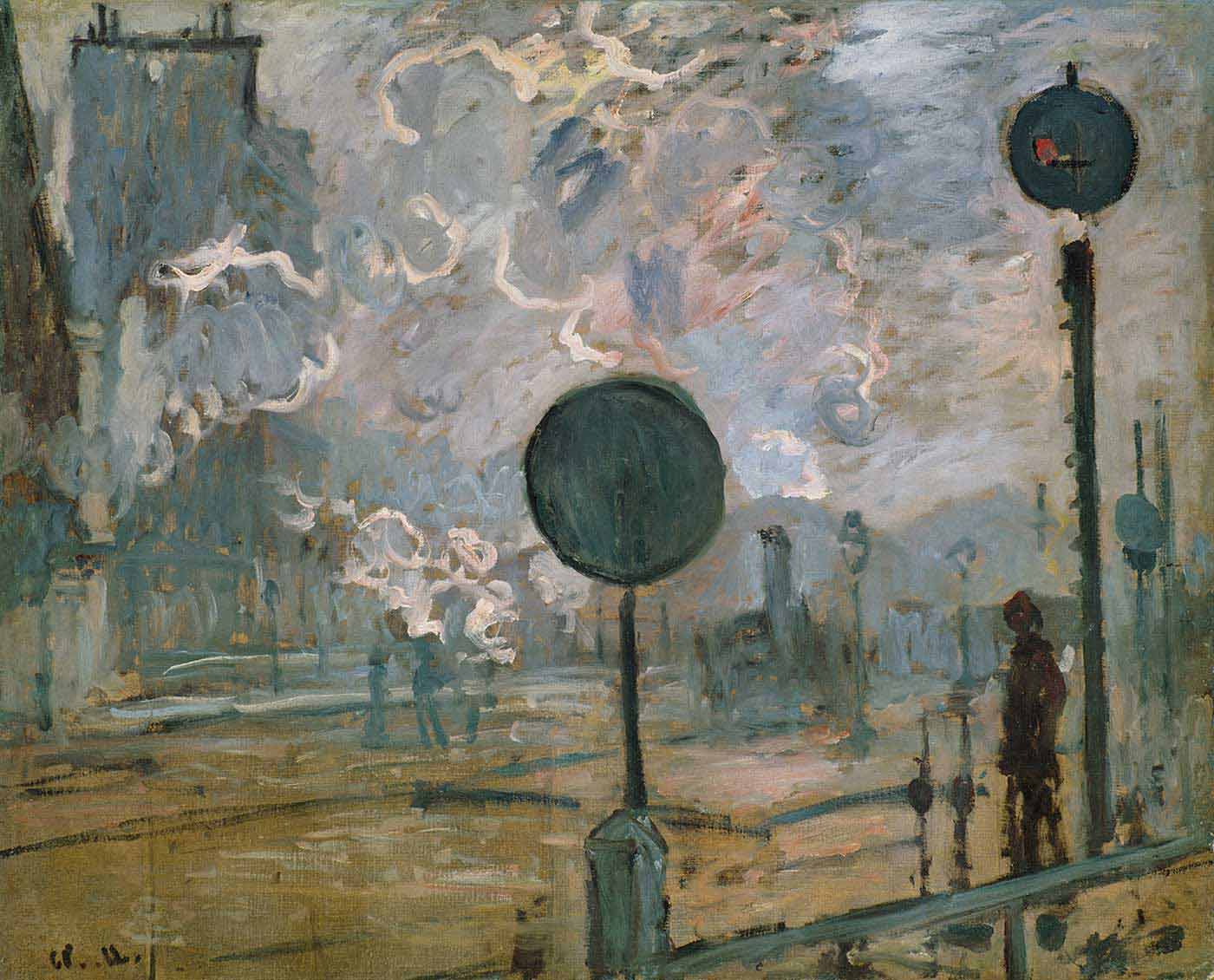
Exterior of Gare Saint-Lazare, The Signal
Claude Monet · 1877
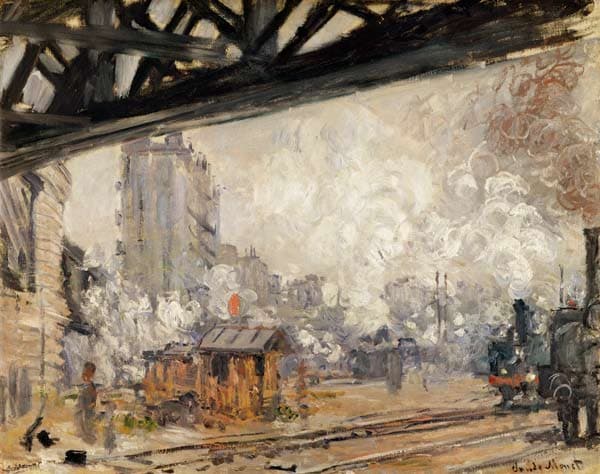
La Gare Saint-Lazare, Exterior View (Under the Pont de l'Europe)
Claude Monet · 1877
The Gare Saint-Lazare: Arrival of a Train
Claude Monet · 1877
The Gare Saint-Lazare
Claude Monet · 1877
Pont de l'Europe, Gare Saint-Lazare
Claude Monet · 1877
Kindred works
You may also study
La Gare Saint-Lazare, Exterior View (Under the Pont de l'Europe)
Claude Monet · 1877
Train Tracks at the Saint-Lazare Station
Claude Monet · 1877
La Gare Saint-Lazare
Claude Monet · 1877
Charing Cross Bridge
Claude Monet · 1899
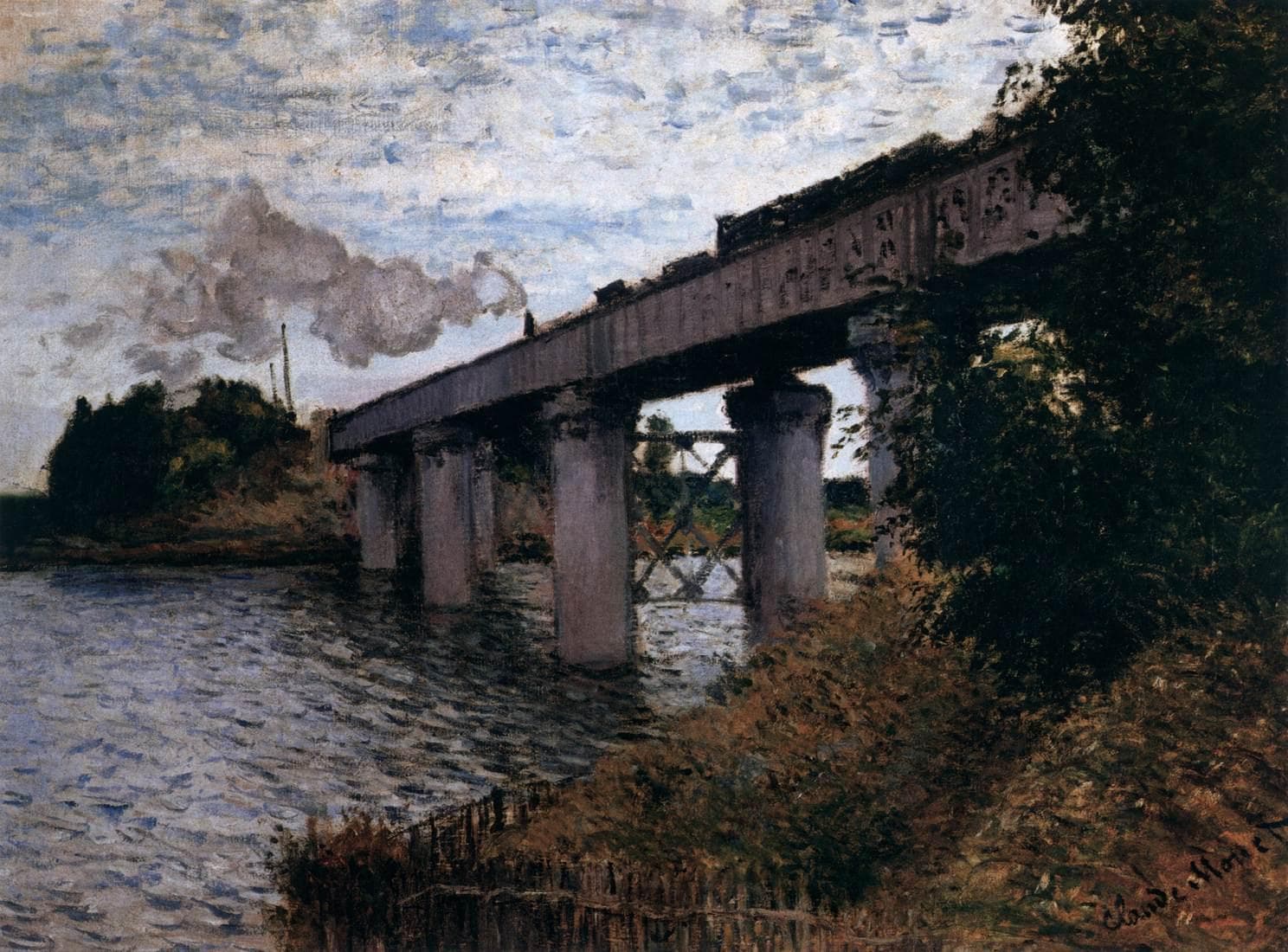
The Railway Bridge at Argenteuil
Claude Monet · c. 1873–74
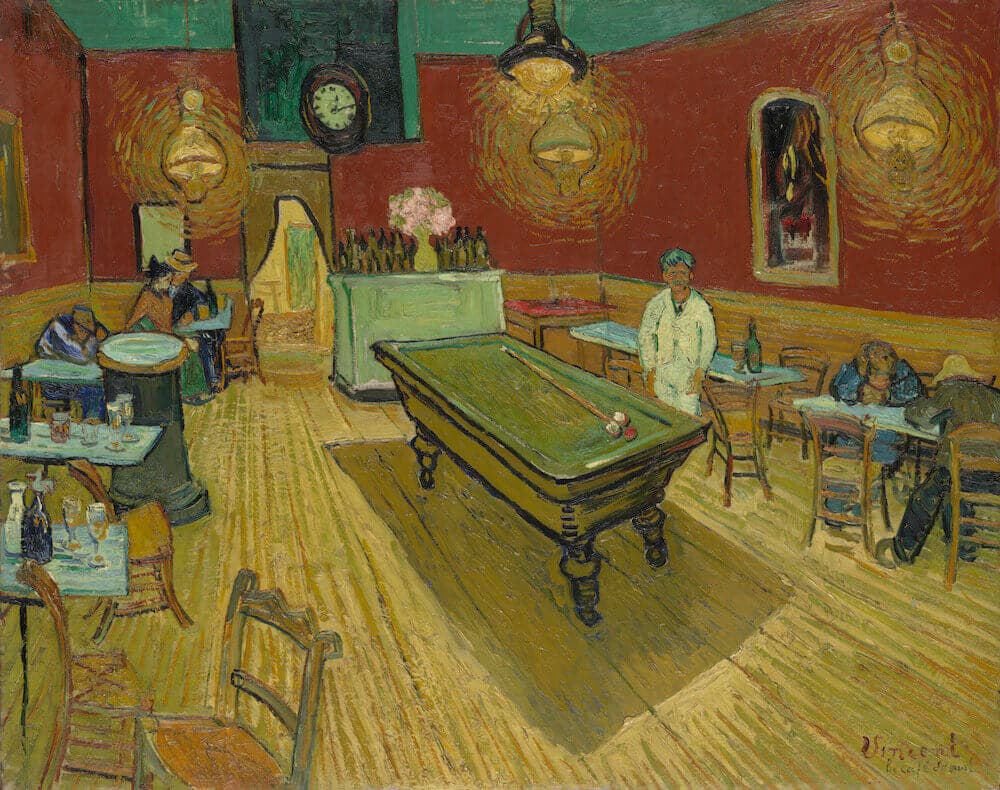
The Night Café
Vincent van Gogh · 1888
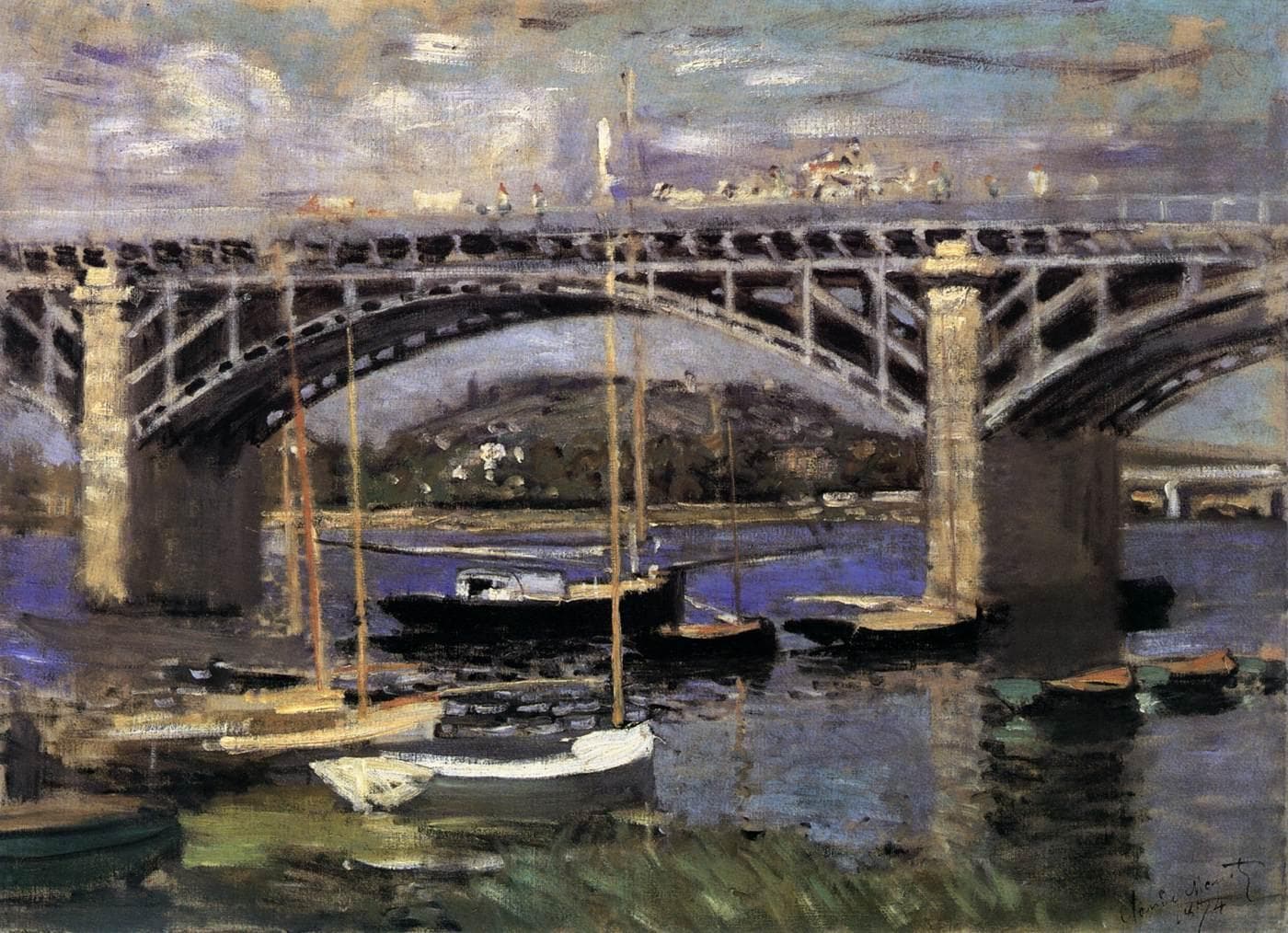
The Bridge at Argenteuil
Claude Monet · 1874
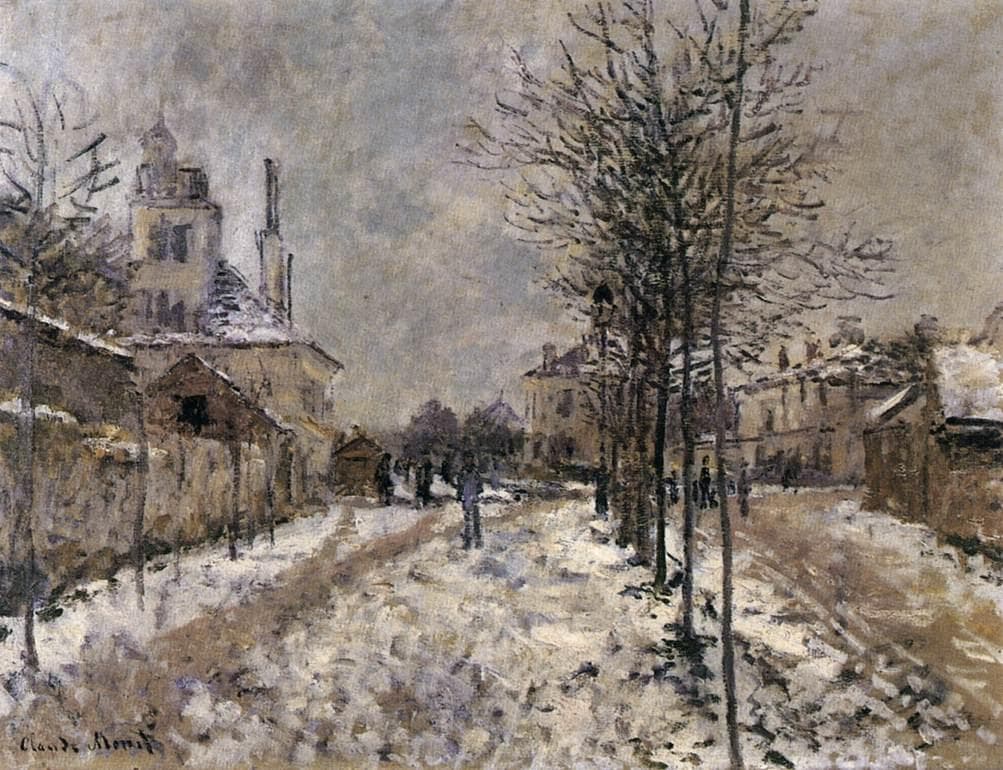
The Boulevard de Pontoise in Argenteuil under Snow
Claude Monet · 1875