Image: Private collection · Public domain · via Wikimedia Commons
La Gare Saint-Lazare, Exterior View (Under the Pont de l'Europe)
Claude Monet, 1877
La Gare Saint-Lazare, vue extérieure (1877) is Claude Monet's view of the Paris railway yard framed by the black iron girders of the Pont de l'Europe overhead, with steam rising around a wooden hut and locomotives. It is in a private collection.
- Artist
- Claude Monet
- Date
- 1877
- Medium
- Oil on canvas
- Dimensions
- 64 × 81 cm
- Collection
- Private collection
- Movement
- Impressionism
- Catalogue
- Wildenstein 447
- The City
- Architecture & Ruins
La Gare Saint-Lazare, vue extérieure (Wildenstein 447) is one of the twelve canvases Claude Monet painted at the Paris railway station in 1877, and one of the few framed by the underside of a bridge. Standing beneath the iron Pont de l'Europe, he looked out across the tracks toward the tall buildings of the rue de Rome: black girders cut across the top of the picture, steam and smoke fill the yard, a small brown hut sits among the rails, and the dark bulk of a locomotive edges in at right. It is in a private collection.
What you are looking at
The top quarter of the canvas is a dark lattice of iron: the beams and crossed struts of the Pont de l'Europe, seen from below and painted in heavy strokes of black and brown. They frame the view like the edge of a stage. At left, a stone wall or abutment of the bridge runs down the side of the picture in pale ocher.
Below and beyond, the yard opens up. A tall, narrow apartment building rises left of center, its pale gray facade dotted with windows, and a lower line of buildings runs to the right. Between them, great clouds of white, cream and pinkish steam swell upward; at upper right, a patch of rust-colored, curling smoke sits against the paler sky. In the middle ground stands a small wooden hut painted in warm brown and orange, with a gray roof, and beside it a bright red spot, perhaps a signal lamp or a flag. Locomotives at right, dark and glinting with red, are partly cut off by the edge. In the foreground the rails run diagonally across a pale, sandy ground, and a dark figure stands at far left. The signature is at lower right.
Where and when it was painted
Monet began working at the Gare Saint-Lazare in January 1877, renting a small flat in the nearby rue Moncey while still living at Argenteuil, whose trains left from this station. The Western Railway company let him set up his easel on the platforms and in the yard, and over about three months he produced twelve canvases. Seven of them were shown at the Third Impressionist Exhibition in April 1877, where they hung together as a group, an early sign of the series method he would develop in the 1890s. The Pont de l'Europe, a vast iron structure where six streets met above the tracks just outside the station, was one of the most modern sights in Paris; Monet painted it head-on in the Musée Marmottan canvas, and here from underneath. See all twelve on our Gare Saint-Lazare series page.
How it was painted
The picture depends on a strong contrast between the dark, heavy iron above and the pale, weightless steam below. Monet painted the girders with thick, opaque strokes and firm edges, then let the steam spill across the middle of the canvas in soft, rounded swirls. The cropping of the bridge at the top edge, cutting the structure off abruptly, recalls Japanese prints and the new framing of photography, both of which interested the Impressionists.
How this version differs
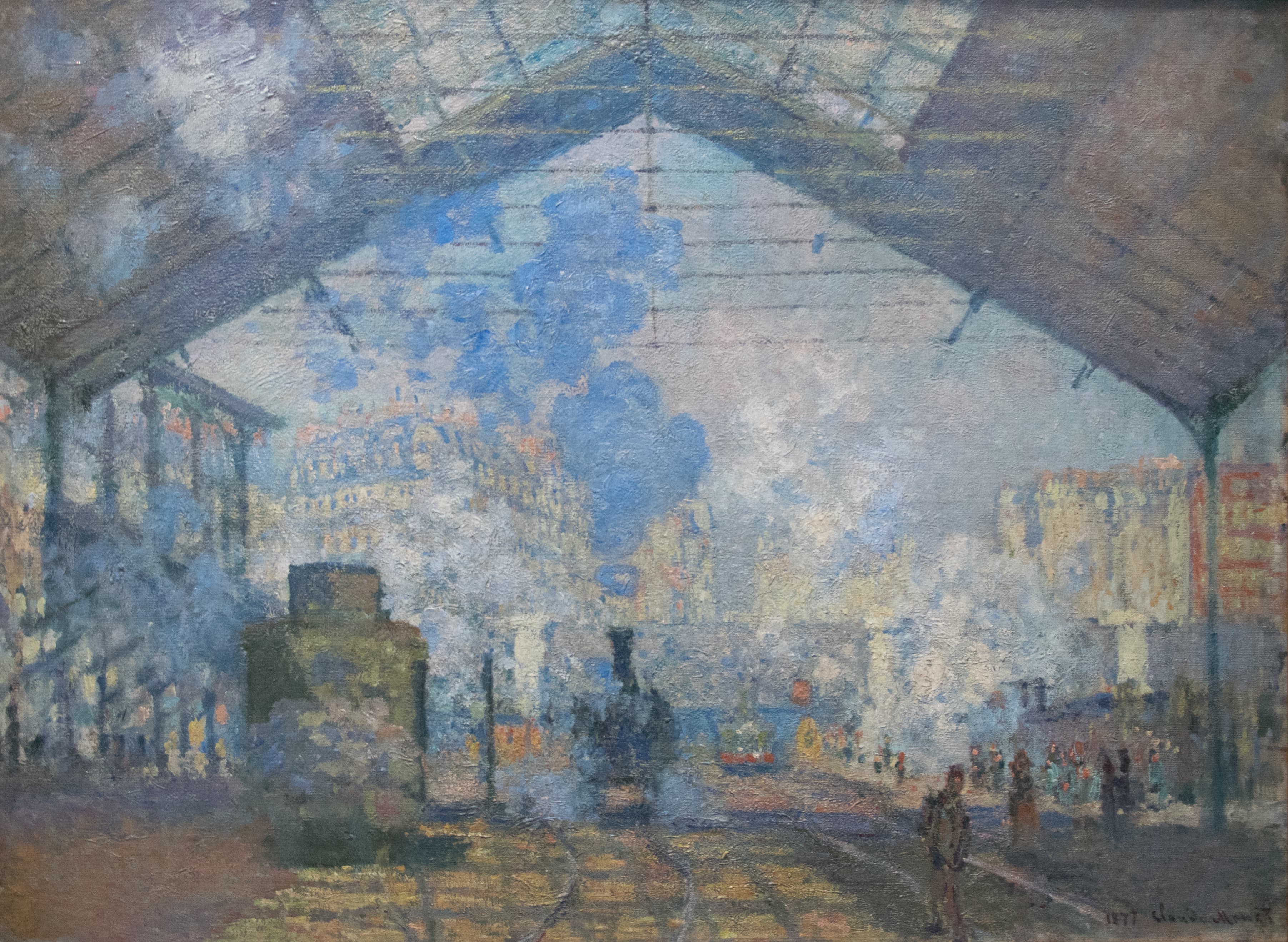
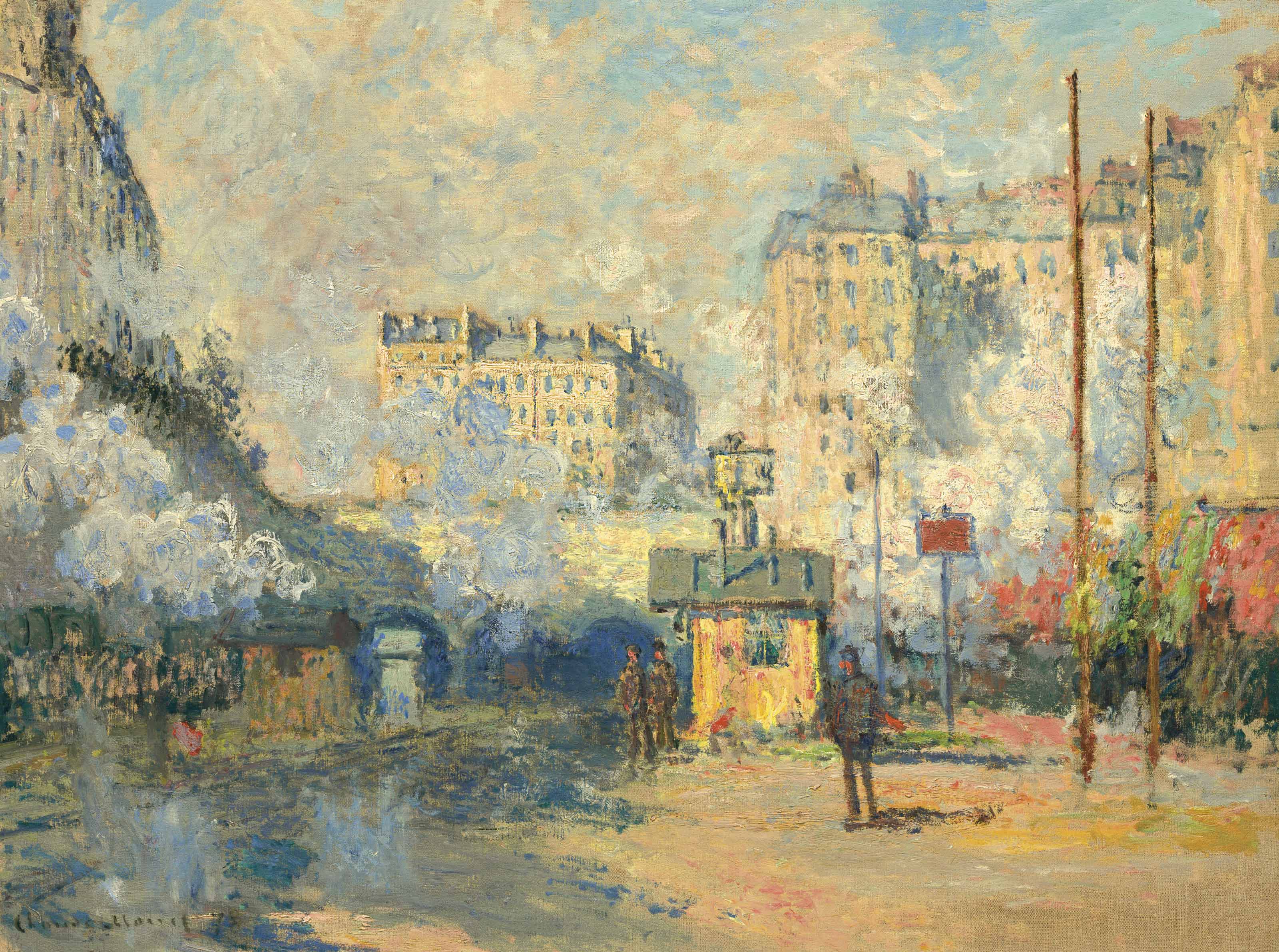
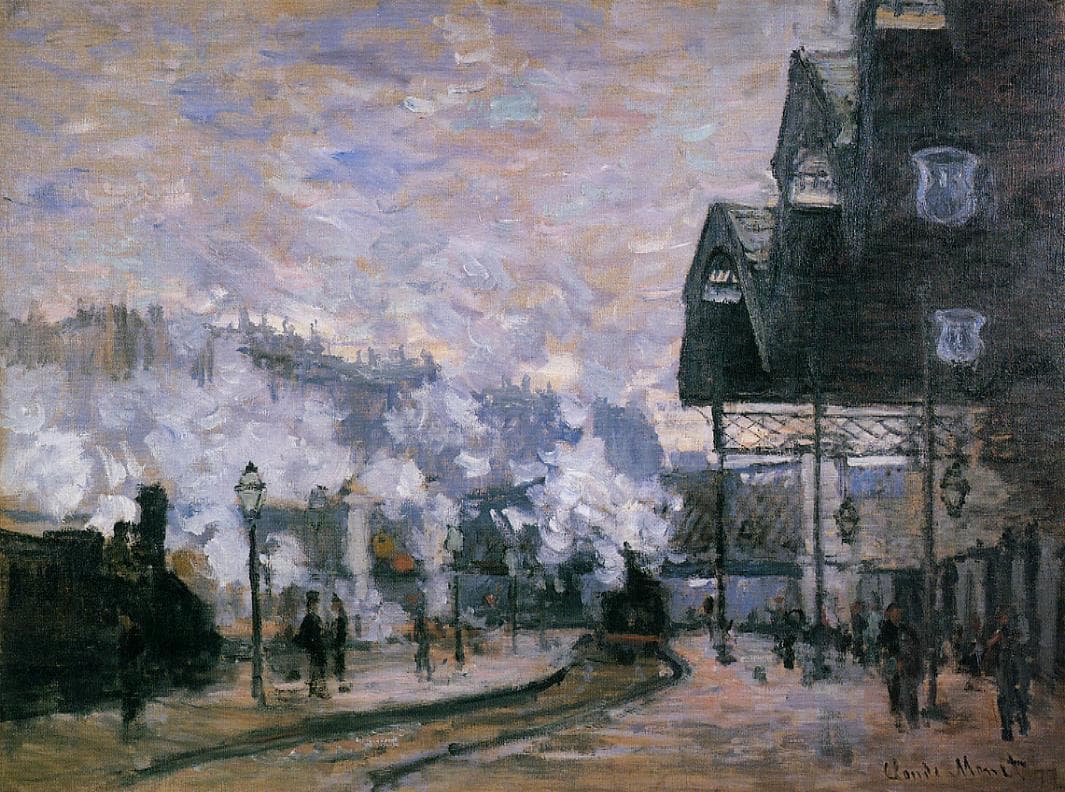
Two of the twelve canvases share the title La Gare Saint-Lazare, vue extérieure: this one, with the bridge overhead, and the view of the goods sheds (Wildenstein 446). This version shows the bridge's ironwork from below, filling the top of the picture. It is related to Gustave Caillebotte's Le Pont de l'Europe of 1876, painted from the deck of the same bridge, and to Monet's own La Gare Saint-Lazare in the Musée d'Orsay, where the iron and glass roof of the train shed frames the view in a similar way. Compare also the open-air Sun Effect.
Where to see it
The painting is in a private collection and not on public view. The museum versions of the series are in Paris, London, Chicago, Cambridge (Massachusetts), Hannover and Hakone; see where to see Monet's paintings.
Questions & answers
Where is Monet's La Gare Saint-Lazare, vue extérieure?
This version, Wildenstein 447, painted from beneath the Pont de l'Europe, is in a private collection and not on public view. Other Saint-Lazare paintings are in the Musée d'Orsay, the Musée Marmottan Monet and museums in London, Chicago, Cambridge, Hannover and Hakone.
When was it painted?
In early 1877, during the roughly three months Monet spent painting twelve views in and around the Gare Saint-Lazare in Paris.
What does the painting show?
The railway yard outside the Gare Saint-Lazare seen from beneath the iron girders of the Pont de l'Europe, with apartment buildings beyond, clouds of steam, a small brown hut among the rails and locomotives at right.
What is the Pont de l'Europe?
A large iron bridge just outside the Gare Saint-Lazare where six Paris streets meet above the railway tracks. Built in the 1860s, it was a symbol of modern Paris and was painted by Monet, Caillebotte and others.
More by the artist
Claude Monet
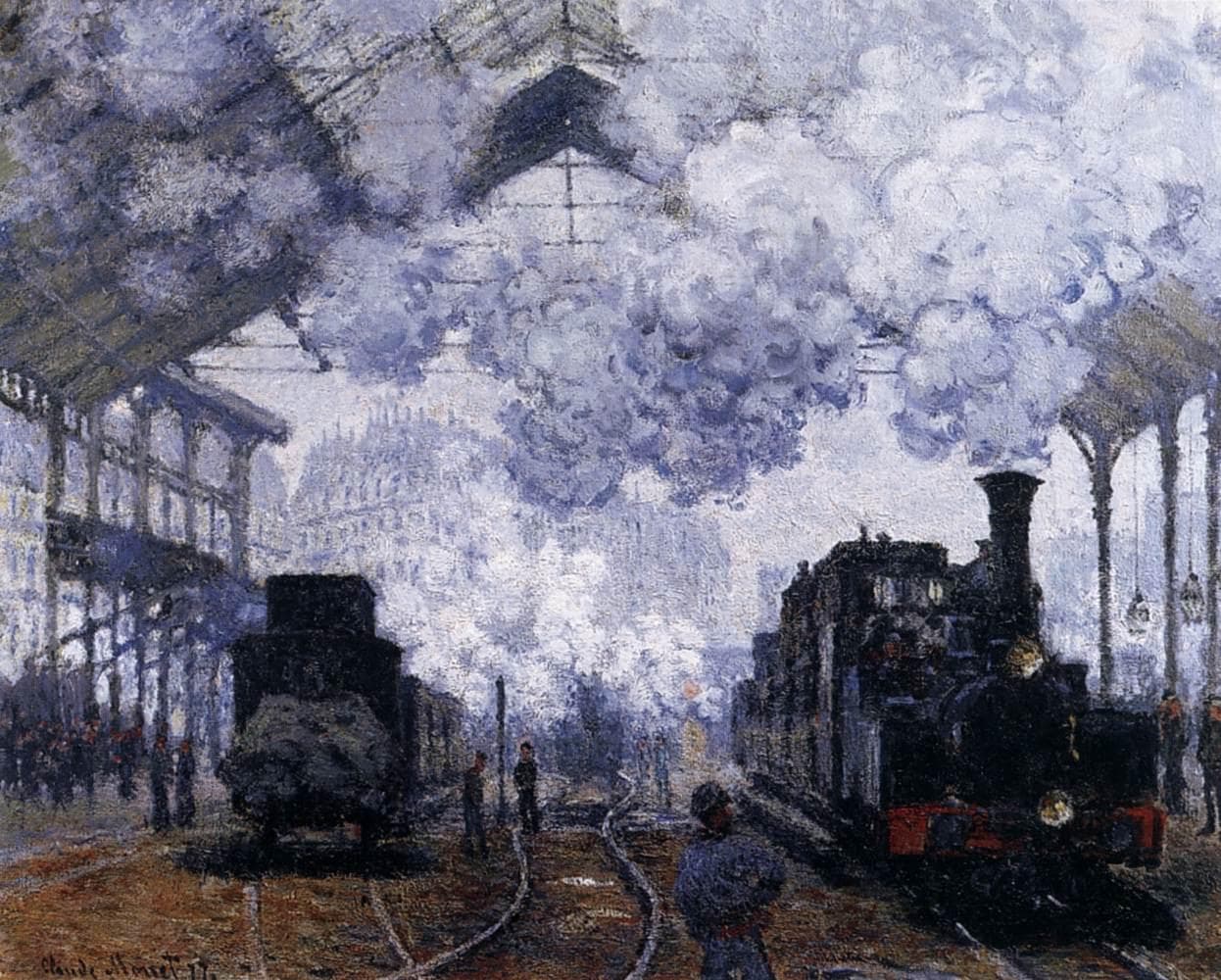
The Gare Saint-Lazare: Arrival of a Train
Claude Monet · 1877
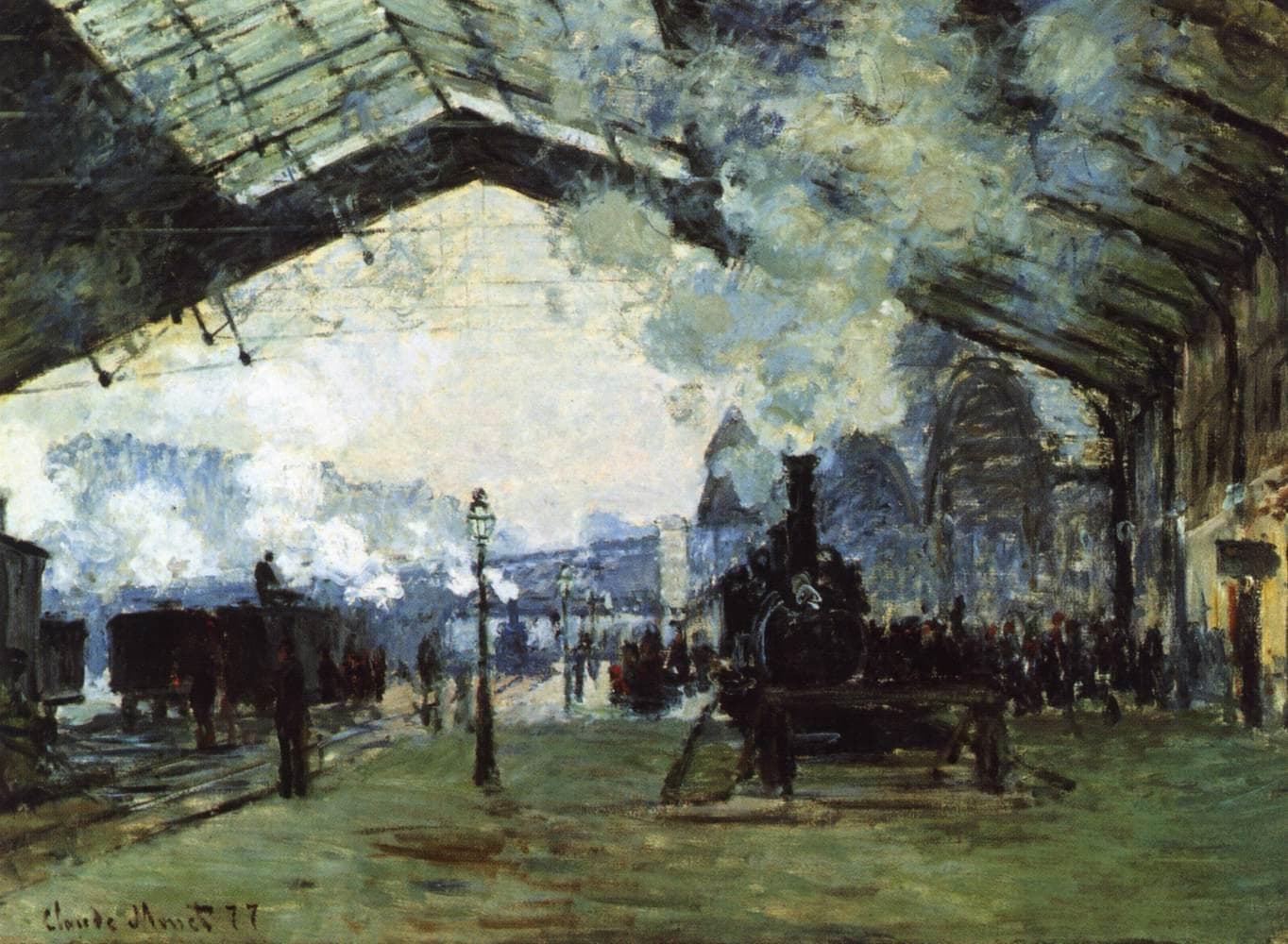
Gare Saint-Lazare: the Train from Normandy
Claude Monet · 1877
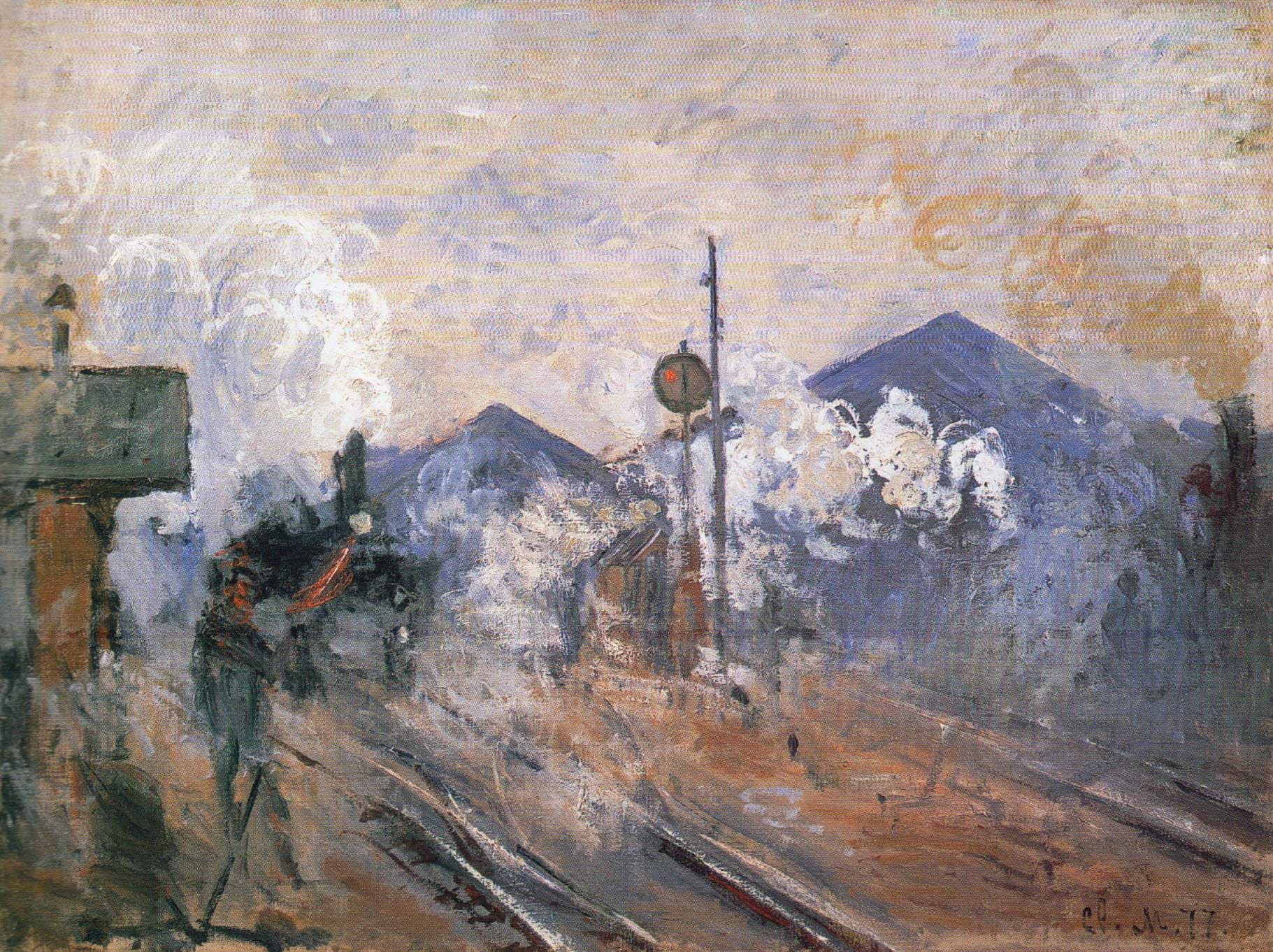
Train Tracks at the Saint-Lazare Station
Claude Monet · 1877
The Studio Boat (Le Bateau-atelier)
Claude Monet · 1876
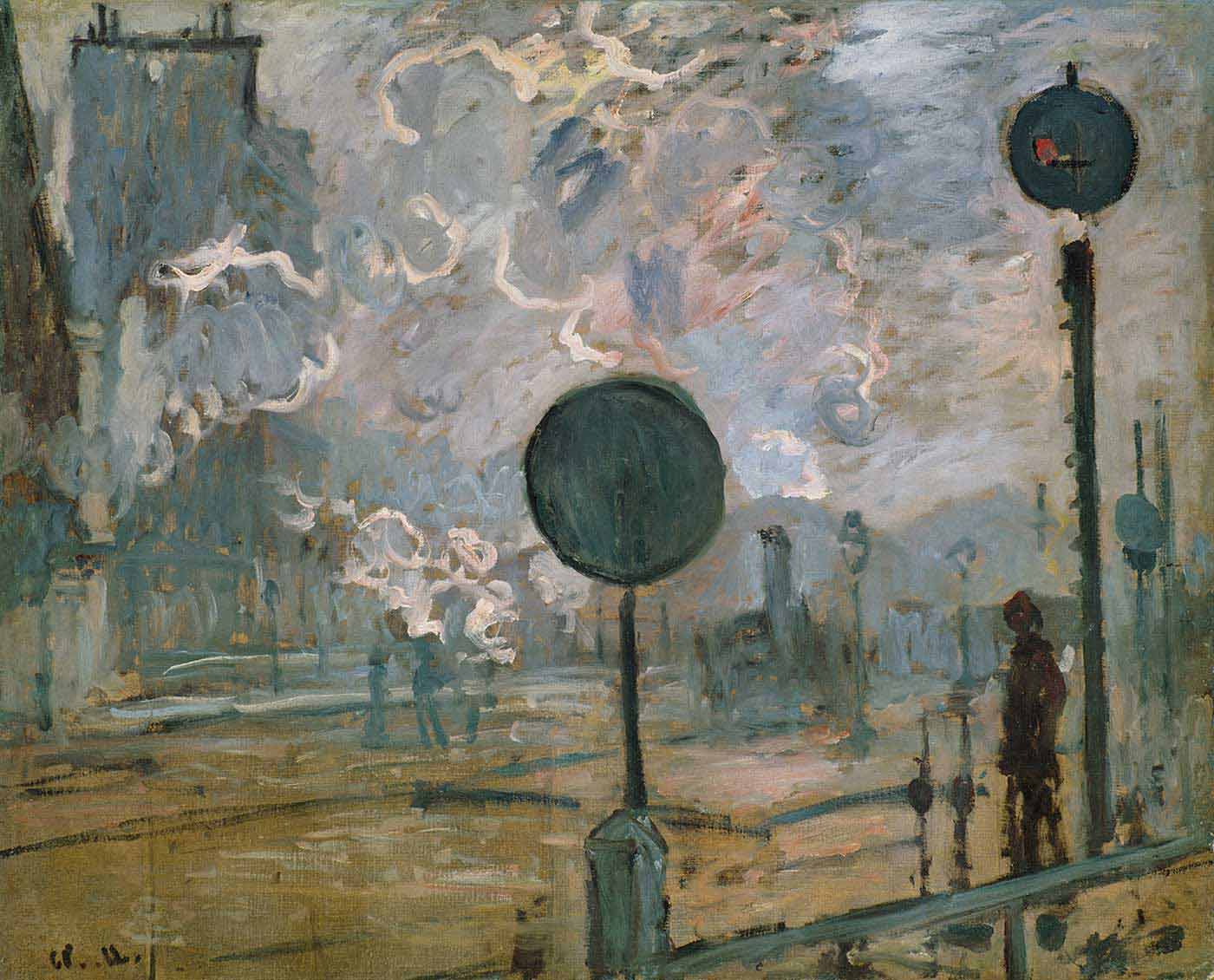
Exterior of Gare Saint-Lazare, The Signal
Claude Monet · 1877
The Pond at Montgeron
Claude Monet · 1876–77
Chrysanthemums
Claude Monet · 1878
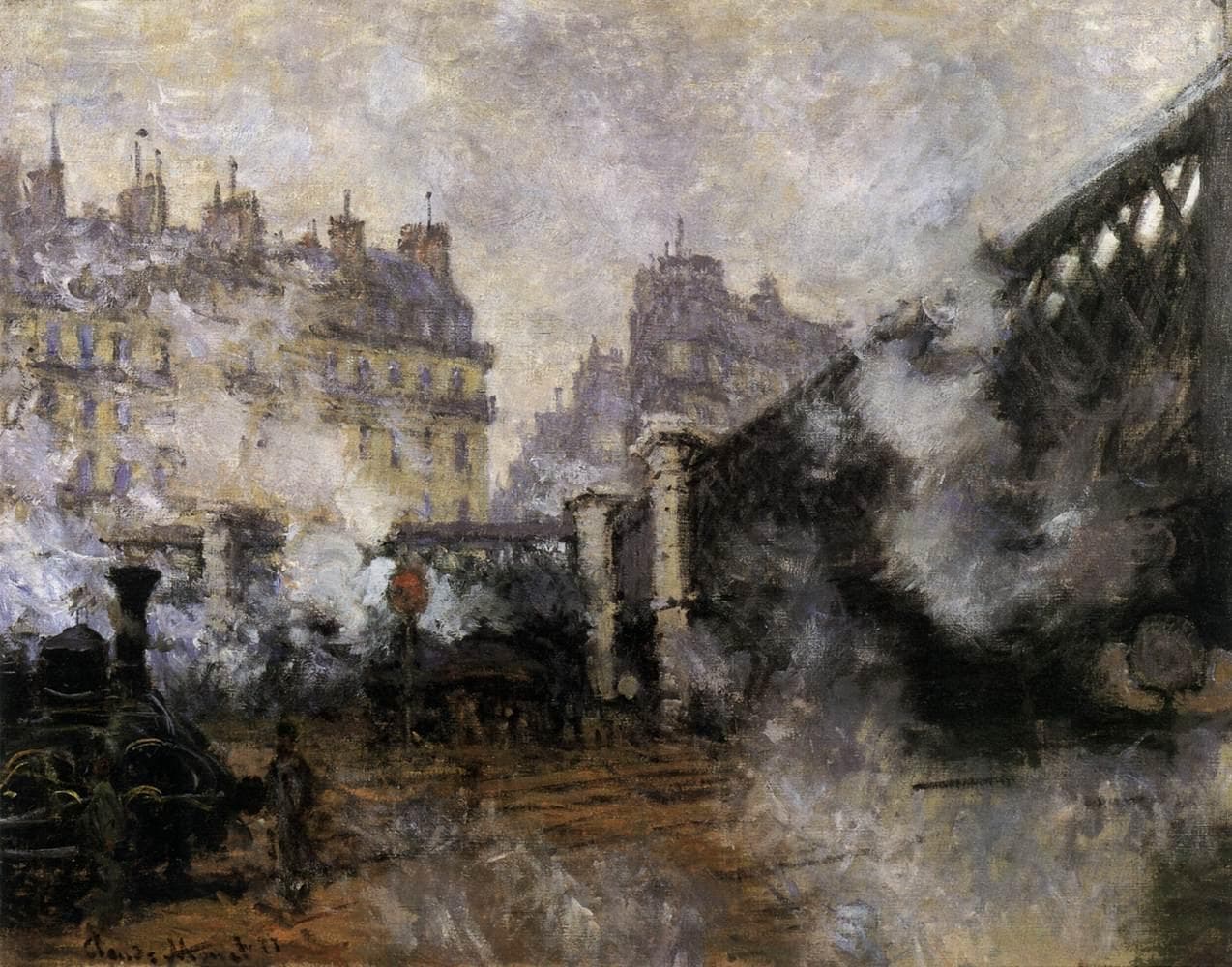
Pont de l'Europe, Gare Saint-Lazare
Claude Monet · 1877
Also painted in 1877
The same year
La Gare Saint-Lazare
Claude Monet · 1877
Exterior of Saint-Lazare Station, Sun Effect
Claude Monet · 1877
Saint-Lazare Station, the Western Region Goods Sheds
Claude Monet · 1877
Exterior of Saint-Lazare Station, Arrival of a Train
Claude Monet · 1877
The Turkeys
Claude Monet · 1877
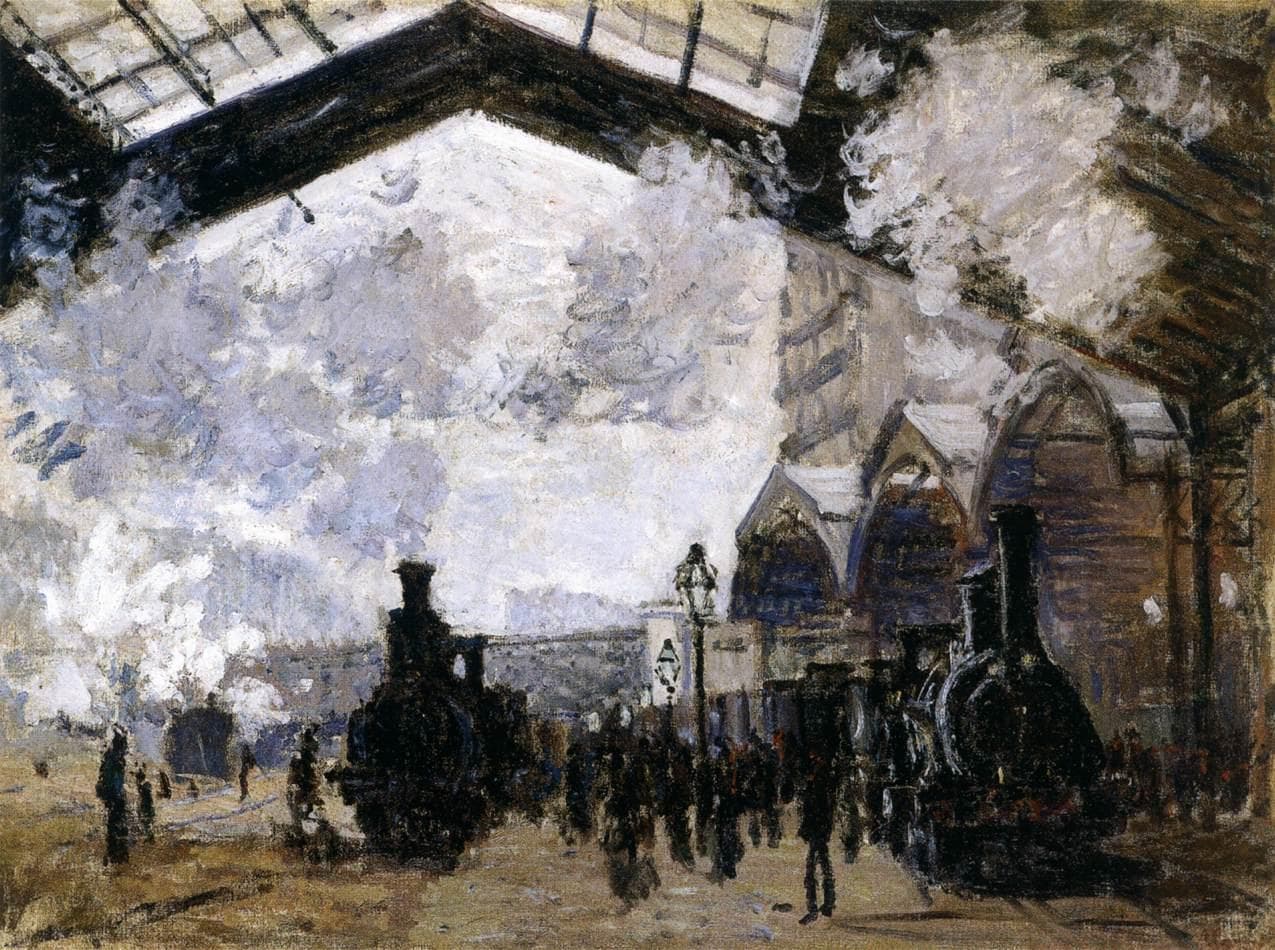
The Gare Saint-Lazare
Claude Monet · 1877
Kindred works
You may also study
Saint-Lazare Station, the Western Region Goods Sheds
Claude Monet · 1877
La Gare Saint-Lazare
Claude Monet · 1877
Exterior of Saint-Lazare Station, Sun Effect
Claude Monet · 1877
The Gare Saint-Lazare
Claude Monet · 1877
La Cour d'Albane, temps gris
Claude Monet · 1892–94
The Thames below Westminster
Claude Monet · c. 1871
La Cour d'Albane, Rouen
Claude Monet · 1892–94
Venice, Palazzo Dario
Claude Monet · 1908