Image: Niedersächsisches Landesmuseum Hannover (image via Städel Museum) · Public domain · via Wikimedia Commons
Exterior of Gare Saint-Lazare, The Signal
Claude Monet, 1877
Exterior of Gare Saint-Lazare, The Signal (1877) is Claude Monet's view of the Paris railway yard dominated by a large round signal disc, with a figure and swirling steam beyond. It is in the Landesmuseum Hannover, Germany.
- Artist
- Claude Monet
- Date
- 1877
- Medium
- Oil on canvas
- Dimensions
- 65.5 × 81.5 cm
- Collection
- Landesmuseum Hannover, Hanover, Germany
- Movement
- Impressionism
- Catalogue
- Wildenstein 448
- The City
Exterior of Gare Saint-Lazare, The Signal (La Gare Saint-Lazare à l'extérieur, le signal) is one of the twelve canvases Claude Monet painted at the Gare Saint-Lazare in 1877, and the boldest in composition. A large, dark round signal disc on a post stands in the very center of the picture, like a full stop, while smoke and steam swirl around it and the city's buildings dissolve behind. It is the only painting from the series in a German public museum, held by the Landesmuseum Hannover (inv. PNM 941).
What you are looking at
The canvas is about 65 by 82 cm. The central disc, painted in dark green-gray with a lighter rim, rests on a thin post that ends at the bottom of the picture in a small boxy base. To the right, a second, taller signal post carries another disc, this one with a red cross on a pale ground, and further right still a third, smaller signal. These railway signals, which told drivers whether the line was clear, are the true subjects of the picture.
Around them, the yard is a haze of ocher ground, crossed by rails painted as thin dark lines. A railway worker in dark clothes stands at right beside the tall signal, and a few smaller figures can be found in the steam at center left. On the left a tall, pale building with chimneys rises through the smoke. The sky is full of movement: Monet painted the steam as looping, ribbon-like strokes of white, pink and cream that curl across a blue-gray ground, among the most calligraphic marks in his work of the 1870s. The initials Cl. M. are at lower left.
Where and when it was painted
In January 1877 Monet, then living at Argenteuil, rented a small flat in the rue Moncey near the Gare Saint-Lazare, the terminus of the Western Railway whose trains ran to Argenteuil and Normandy. With permission from the railway company he worked on the platforms, in the yard and under the Pont de l'Europe, the iron bridge where six streets meet above the tracks. In about three months he produced twelve canvases, and seven of them hung at the Third Impressionist Exhibition that April. Our Gare Saint-Lazare series page collects all twelve.
How it was painted
The design is daringly simple: two flat, round shapes against a field of movement. The disc is painted with thick, opaque color and a hard edge, while everything around it is soft, fluid and loosely brushed. That contrast between the fixed, mechanical signal and the drifting steam gives the picture its charge. Some scholars have seen in the series a picture of modern, standardized time, and here the signal, which controlled the timing of every train, stands for that order in the middle of the chaos.
The flat round motif and the cropped composition also show the influence of Japanese prints, which Monet collected, and of the photography of the period.
How this version differs
No other canvas in the series puts a single object so squarely at its center. The closest is Train Tracks at the Saint-Lazare Station in Hakone, where a smaller signal post stands among the rails. The exterior views Sun Effect and Arrival of a Train take a wider view of the same yard. For the interior of the shed, see The Gare Saint-Lazare: Arrival of a Train at Harvard and La Gare Saint-Lazare in the Musée d'Orsay.
The yard beyond the shed
The tracks outside the Gare Saint-Lazare were a dense network of lines, points and signals, where trains to the western suburbs and Normandy were sorted before entering the station. For a painter, the yard offered what the glass shed did not: open sky, distance and the movement of steam in the wind. In this canvas Monet seems to have stood among the signals themselves, close enough that one fills the center of his view.
Where to see it
The painting is in the Landesmuseum Hannover, the state museum of Lower Saxony, whose Landesgalerie holds European painting from the Middle Ages to the early twentieth century, including a strong group of German and French Impressionists. Check the museum's website for current display, and see where to see Monet's paintings for other collections.
Questions & answers
Where is Monet's The Signal, Gare Saint-Lazare?
In the Landesmuseum Hannover in Hanover, Germany (inv. PNM 941). It is the only painting from Monet's Gare Saint-Lazare series in a German public collection.
When was it painted?
In early 1877, during the roughly three months Monet spent painting twelve views in and around the Gare Saint-Lazare in Paris.
What does the painting show?
The railway yard outside the Gare Saint-Lazare, dominated by a large, dark round signal disc on a post at center. Another signal with a red cross stands at right beside a railway worker, and looping steam and smoke fill the sky.
What does the signal mean in the painting?
On a practical level, railway signals told drivers whether the line was clear. In Monet's picture the fixed, hard-edged disc contrasts with the drifting steam, and scholars have read it as a symbol of the precise timing that ruled the modern railway.
More by the artist
Claude Monet
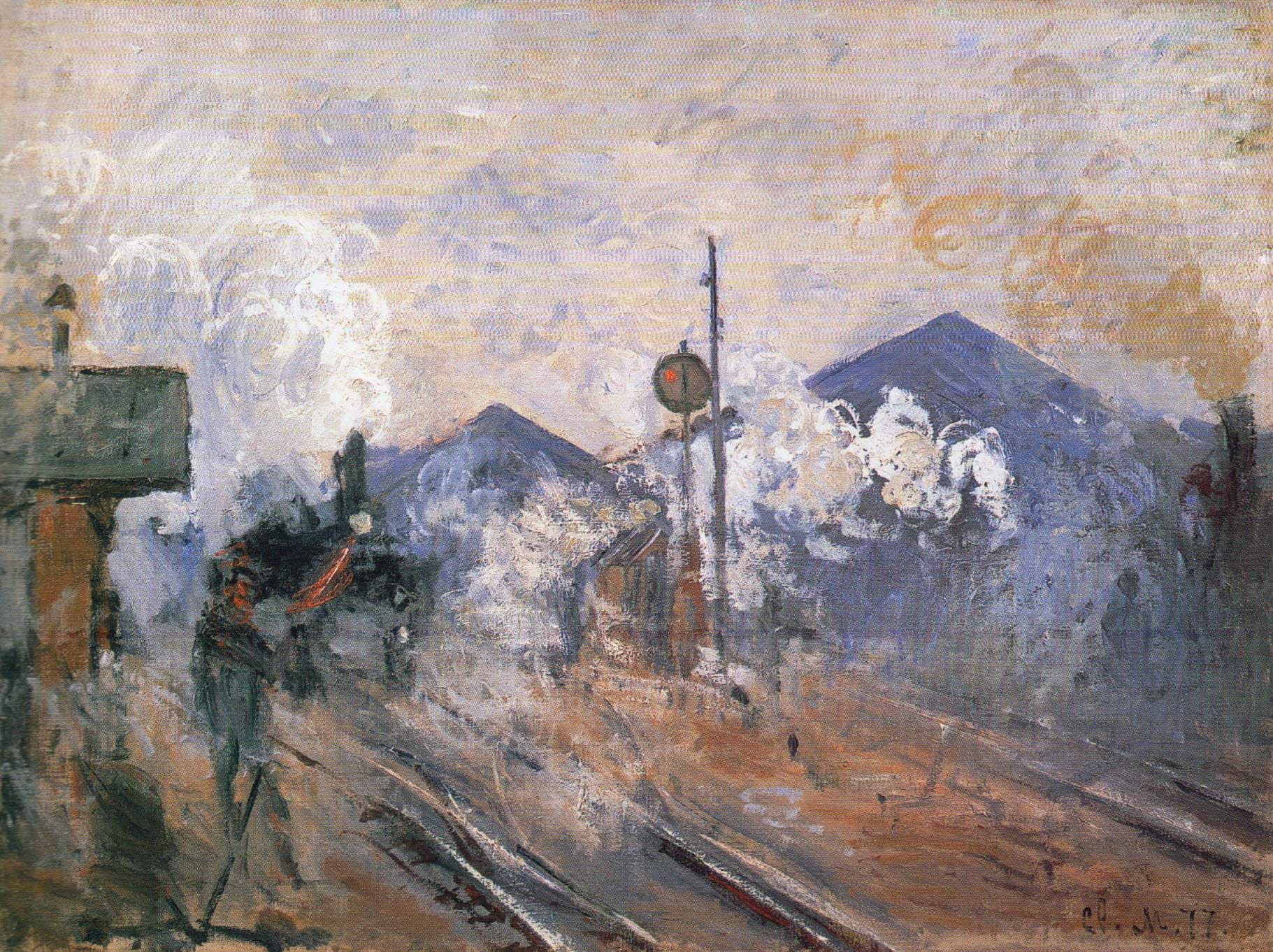
Train Tracks at the Saint-Lazare Station
Claude Monet · 1877
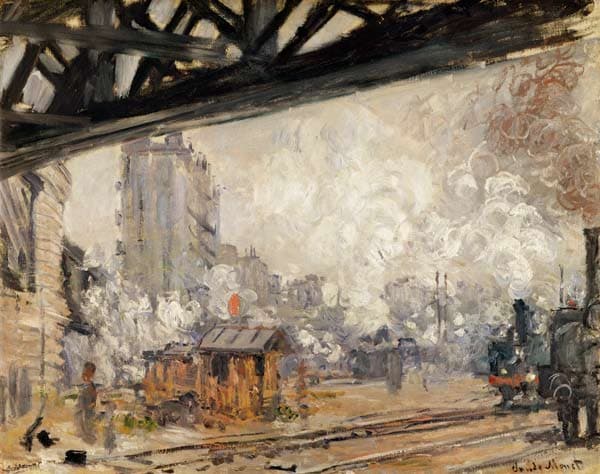
La Gare Saint-Lazare, Exterior View (Under the Pont de l'Europe)
Claude Monet · 1877
The Turkeys
Claude Monet · 1877
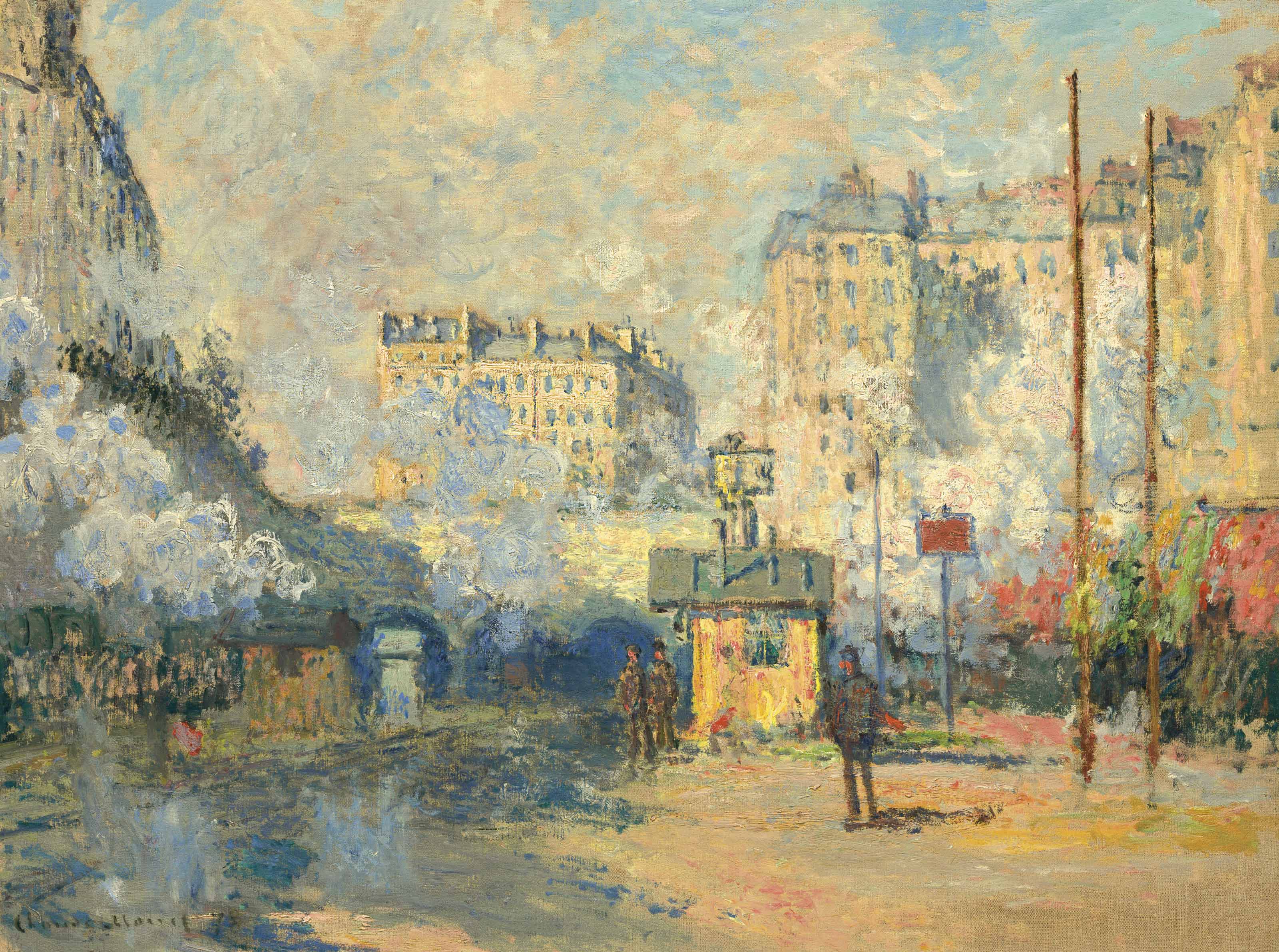
Exterior of Saint-Lazare Station, Sun Effect
Claude Monet · 1877
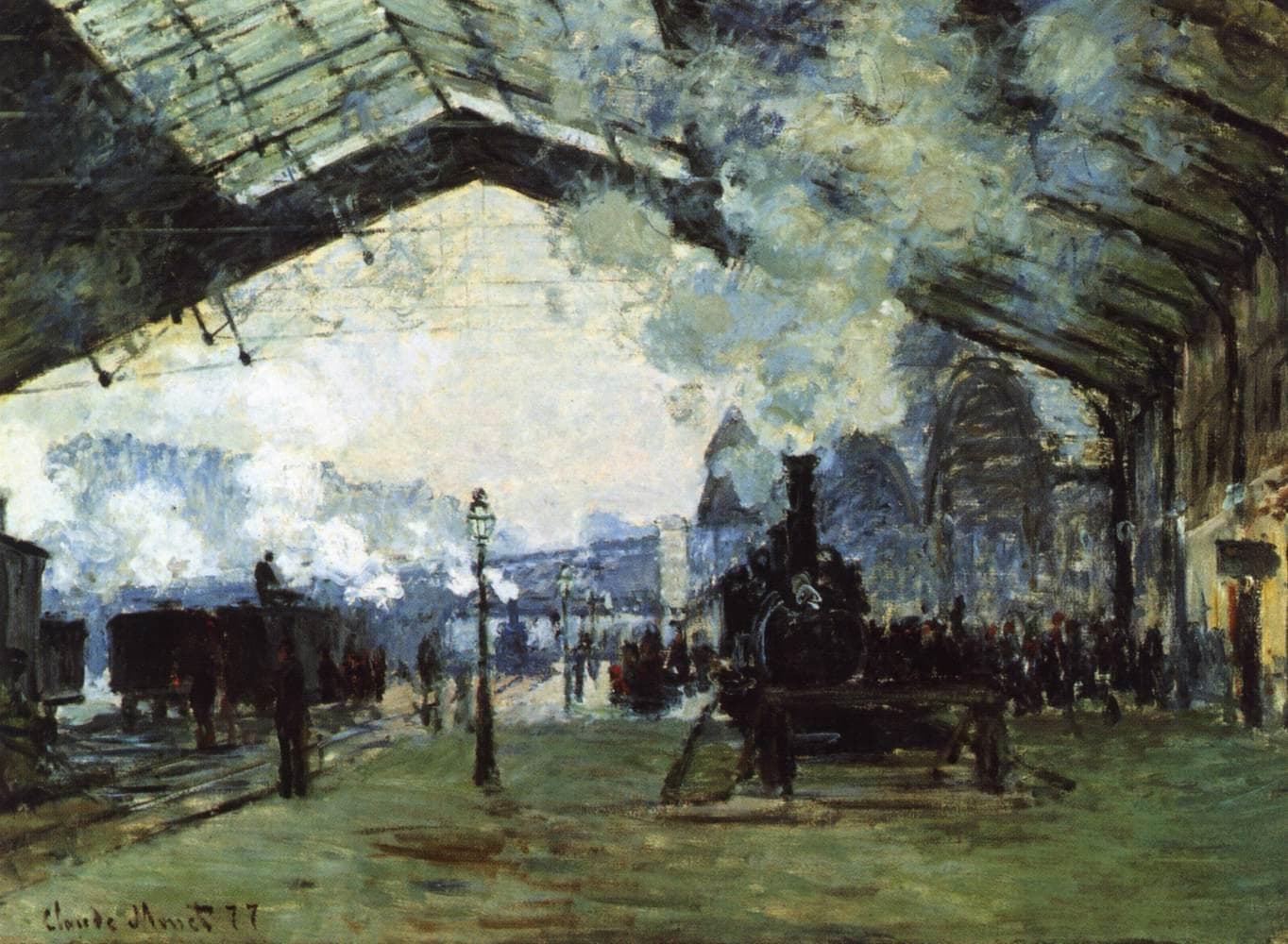
Gare Saint-Lazare: the Train from Normandy
Claude Monet · 1877
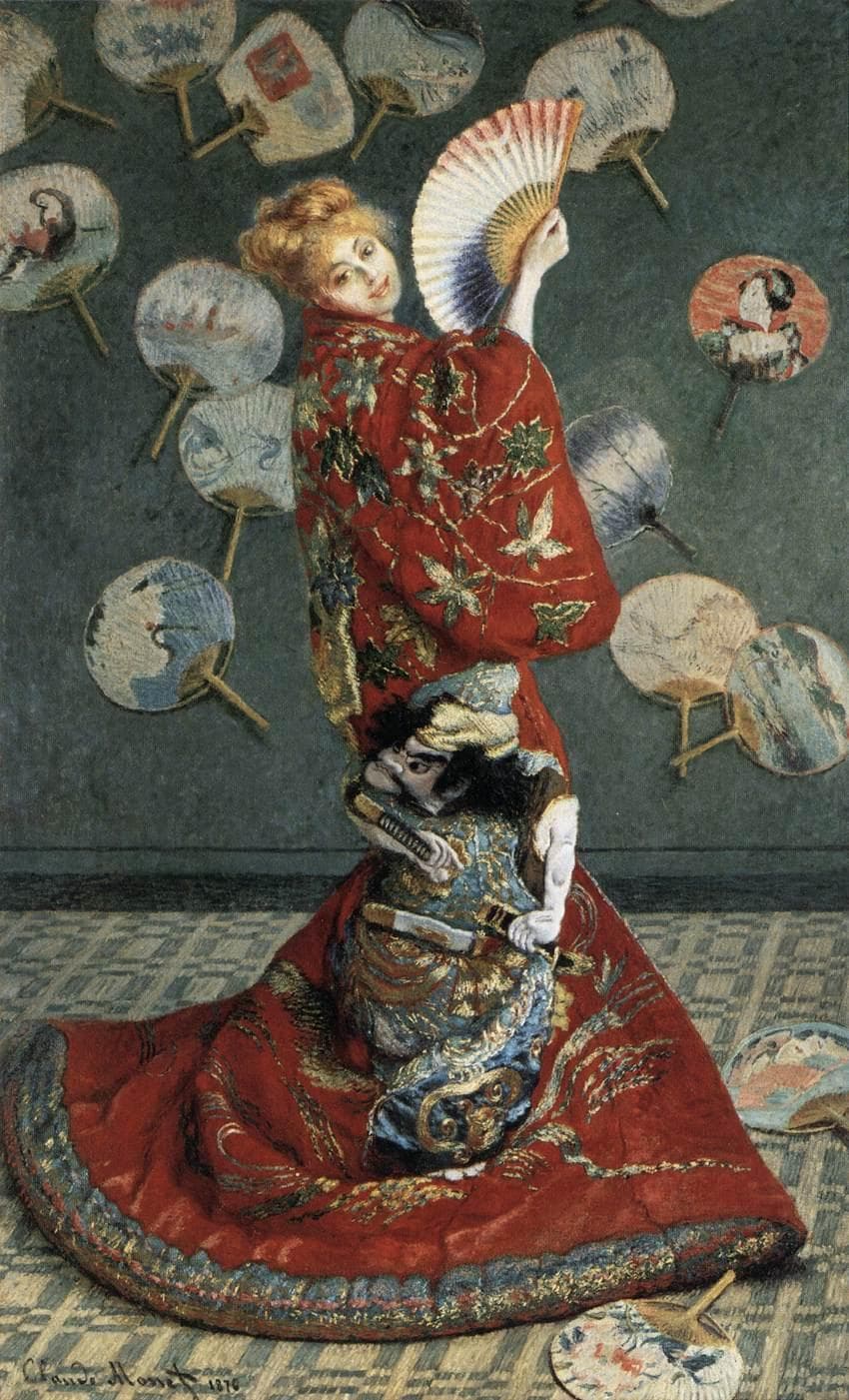
La Japonaise (Camille Monet in Japanese Costume)
Claude Monet · 1876
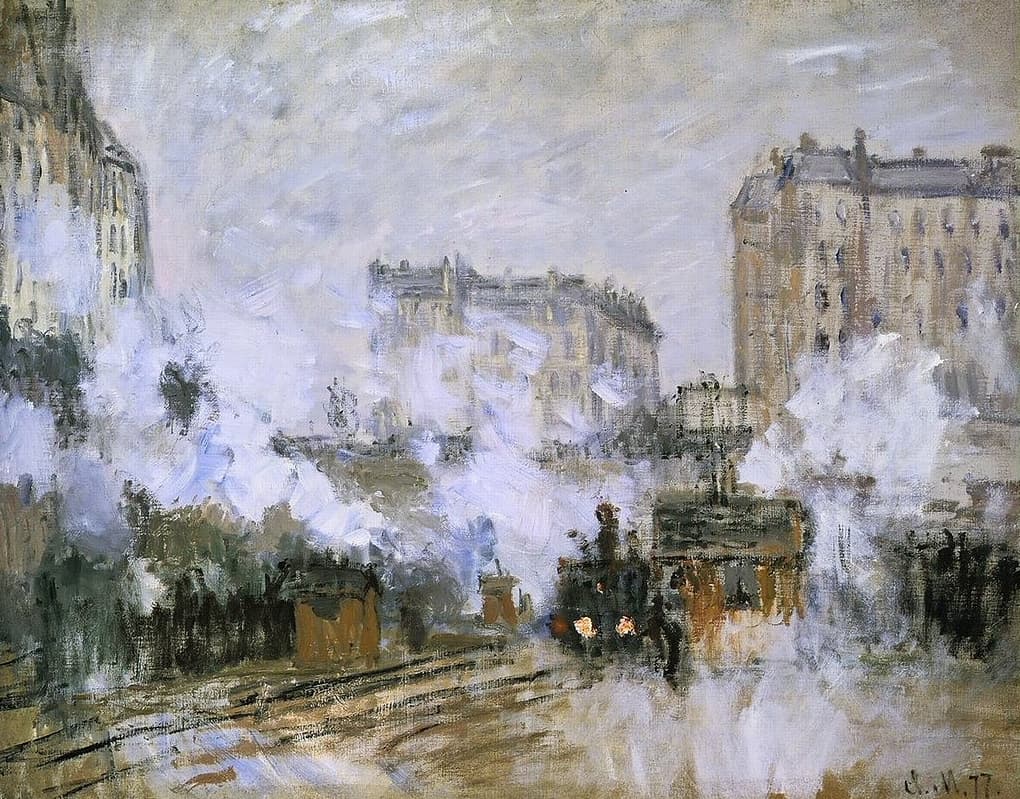
Exterior of Saint-Lazare Station, Arrival of a Train
Claude Monet · 1877
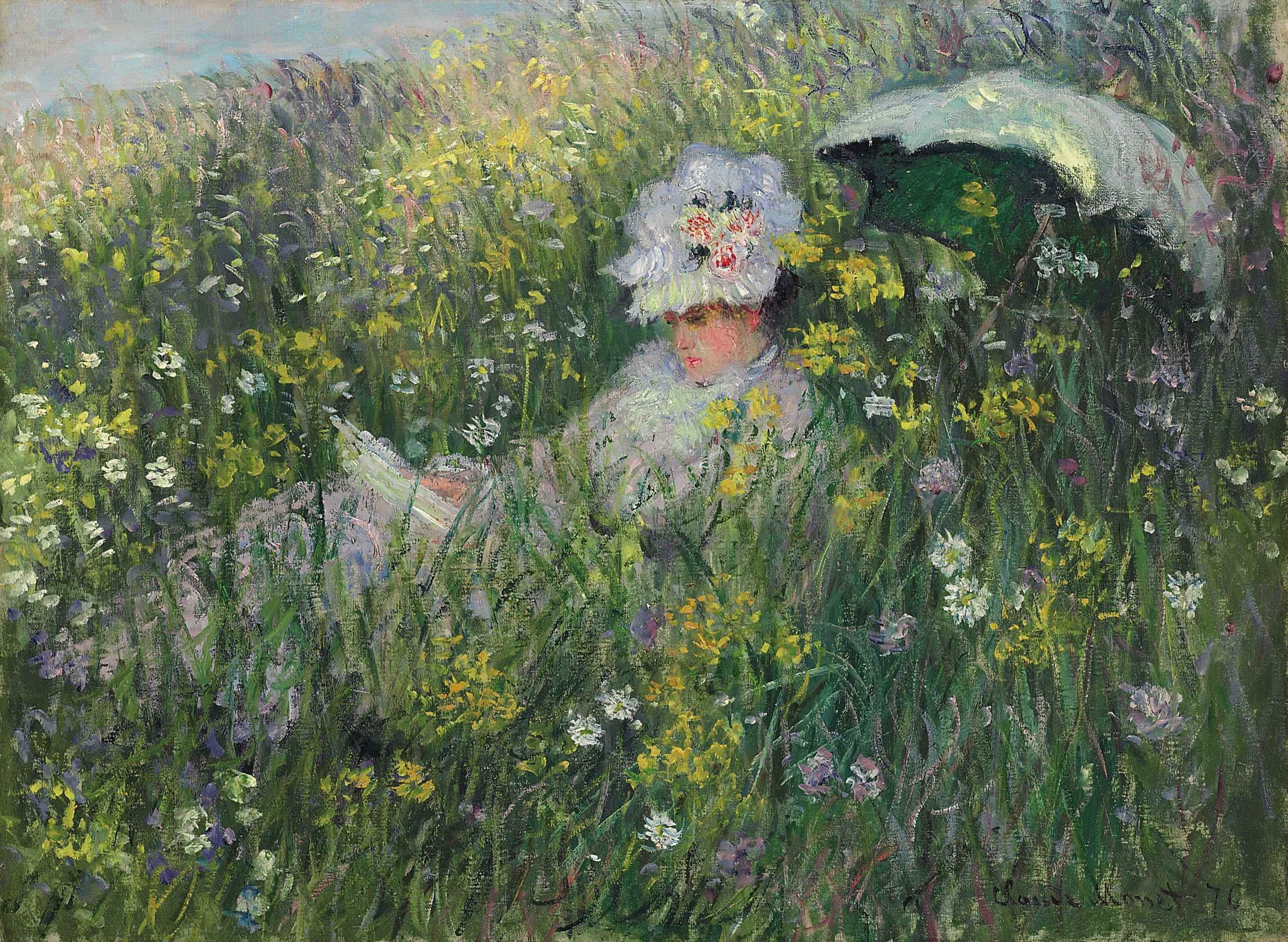
In the Meadow (Dans la prairie)
Claude Monet · 1876
Also painted in 1877
The same year
Kindred works
You may also study
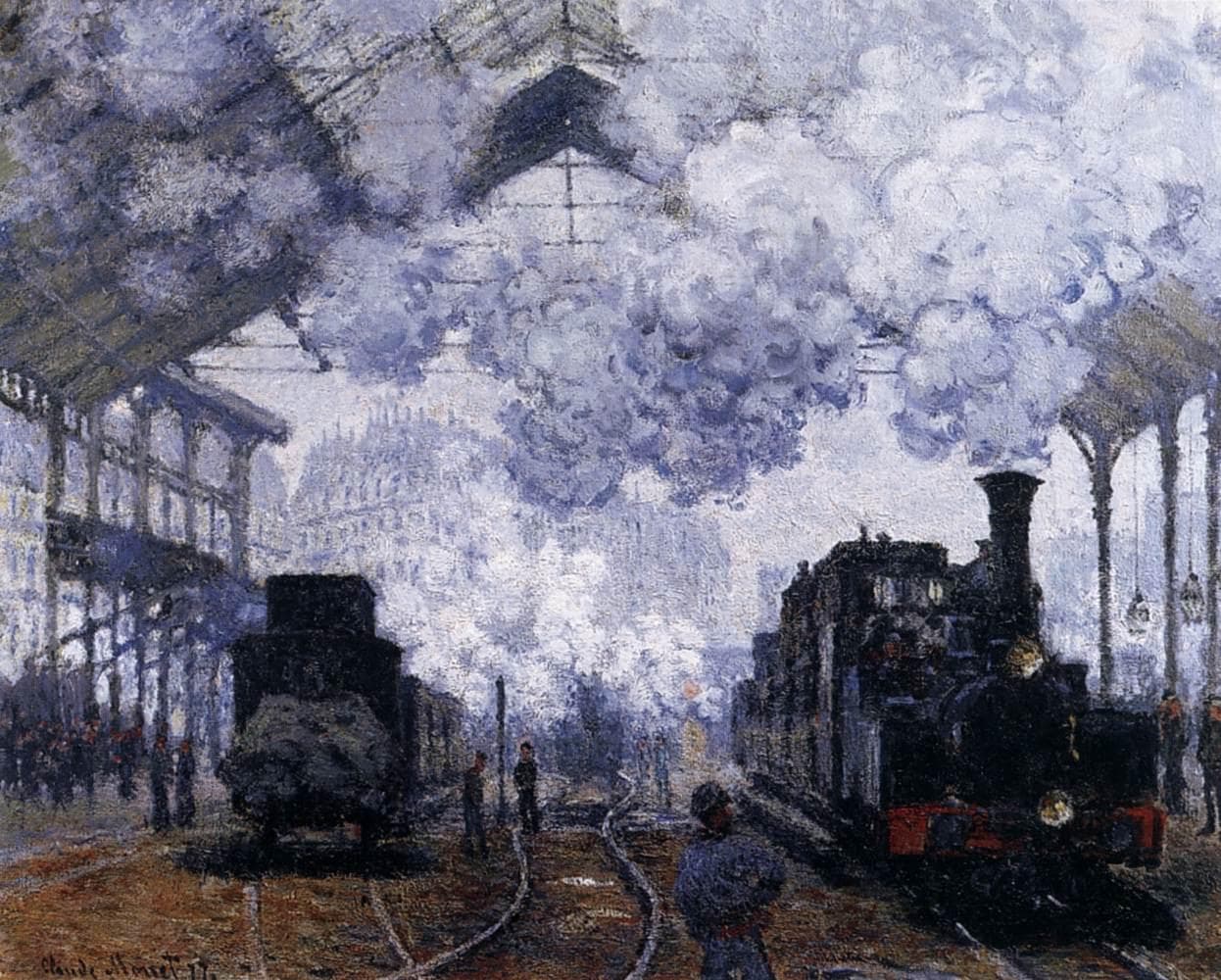
The Gare Saint-Lazare: Arrival of a Train
Claude Monet · 1877
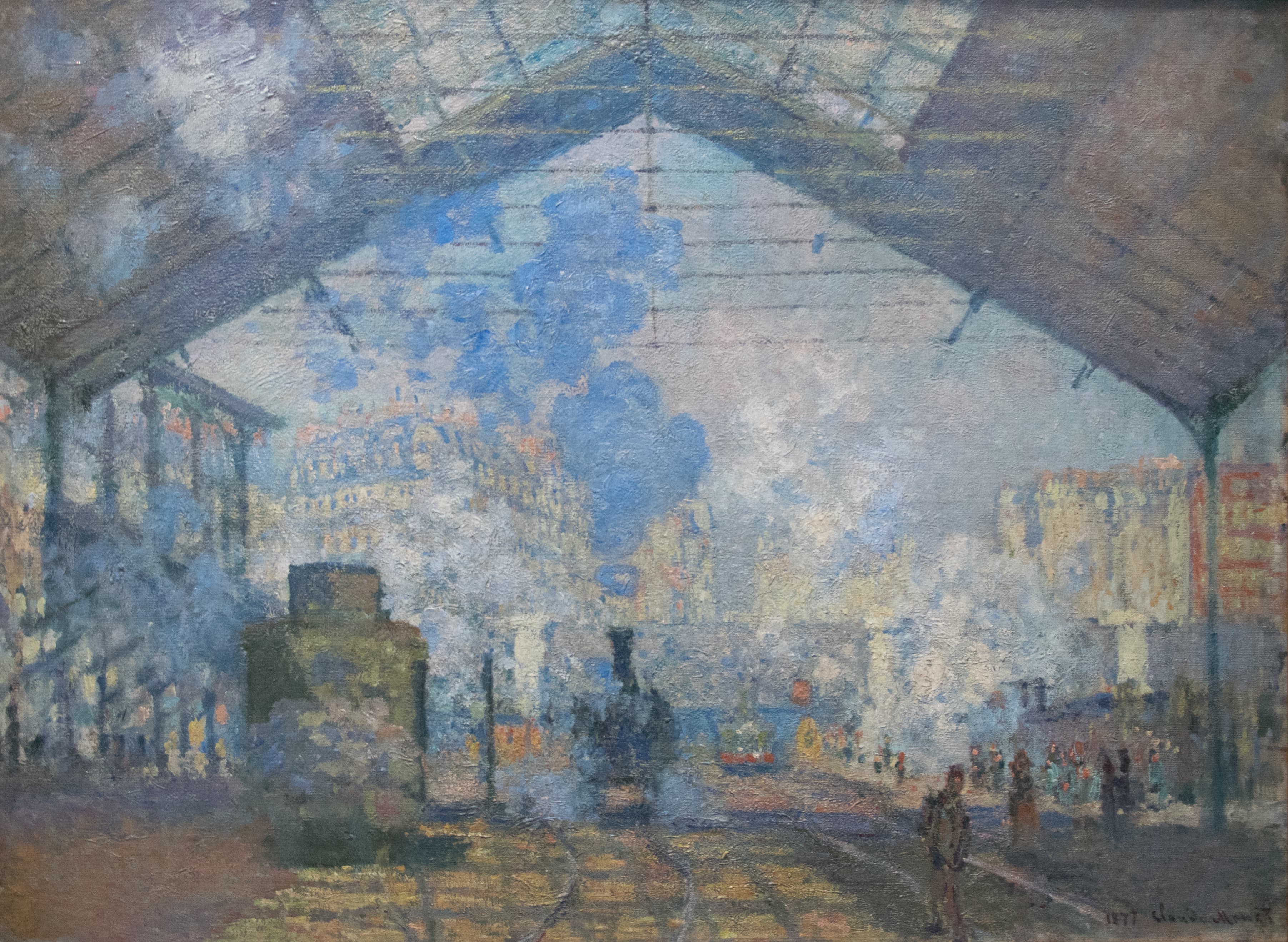
La Gare Saint-Lazare
Claude Monet · 1877
Snow Scene at Argenteuil
Claude Monet · 1875
The Pont Neuf
Claude Monet · 1871
La Cour d'Albane, temps gris
Claude Monet · 1892–94
The Seine at Rouen
Claude Monet · 1872
Rue Montorgueil in Paris, Celebration of 30 June 1878
Claude Monet · 1878
Charing Cross Bridge (Shelburne Museum)
Claude Monet · 1899