Contemporary gothic
Ghost in the Mirror
Michael Locascio, c. 2019
Ghost in the Mirror is a cast-resin wall sculpture by the New Jersey artist Michael Locascio of Dellamorte & Co., showing a translucent Victorian phantom pushing out of an ornate antique-style mirror. It was made in male and female versions and went viral around 2019–20.
- Artist
- Michael Locascio
- Date
- c. 2019
- Medium
- Cast resin, with antiqued frame and mirror
- Collection
- Multiple casts; sold through Dellamorte & Co., United States
- Movement
- Contemporary gothic
What you are looking at
A gentleman from another century is climbing out of a mirror. His upper body has already broken through the glass, which ripples outward around his waist like disturbed water. He wears a high-collared shirt, cravat and buttoned waistcoat; his hair is swept back in untidy waves; his face is gaunt and set in a stern, distracted frown. In his raised right hand he holds a three-branched candelabrum, and his left hand reaches out past the frame, fingers spread, as if feeling for the room he has entered. The whole figure is cast in pale, milky, semi-translucent resin, so the light passes through him. Around him is a dark, elaborately carved frame in the style of a Victorian looking glass.
This is Ghost in the Mirror by Michael Locascio, a sculptor based in New Jersey who runs the studio and shop Dellamorte & Co. It is a small wall piece, made in multiple casts, and it exists in two versions: the male phantom shown here and a female ghost. Press reports describe a glow-in-the-dark edition as well.
Looking closely
The sculpture works by playing with what a mirror is supposed to do. A mirror shows the room in front of it; here the room behind it, the world of the dead, pushes through. Locascio makes the breach physical: the glass is modeled as a liquid surface, rings spreading where the body emerges. The clear resin turns the figure into something half-present, solid in form but insubstantial in color, the way ghosts are described in nineteenth-century fiction.
Details carry the period mood: the candelabrum, a classic prop of the gothic novel and the haunted house; the clothing of the 1830s to 1860s; the frame with its scrolling ornament. The ghost's expression is not menacing but preoccupied, as if he had been interrupted on some errand of his own.
The artist and the tradition
Locascio has said his work is inspired by Victorian horror literature, the world of Sheridan Le Fanu, Wilkie Collins and the ghost stories that filled Christmas magazines. Reports of his training mention work with live models, skeletons and anatomical dissection while studying sculpture, which shows in the sure anatomy of the hand and face. Through Dellamorte & Co. he sells sculptures drawing on catacombs, mythology and the macabre.
In 2019 and 2020, photographs of the piece spread rapidly on social media and design sites, where it was praised as an ideal object for gothic and "dark academia" interiors. It belongs to a long tradition of haunted mirrors in folklore and fiction, from the covering of mirrors in houses of mourning to the stories of reflections that look back. For older images of death and the supernatural, see our Dark Academia collection, Danse Macabre, and works such as Paul Rumsey's Danse Macabre series and Abildgaard's Nightmare.
Where to find it
Ghost in the Mirror is not a unique museum object but an edition of casts, made and sold by Locascio's studio. Availability, size and finishes may vary; the artist's own shop is the best source for current information.
Questions & answers
Who made the Ghost in the Mirror sculpture?
It was made by Michael Locascio, a New Jersey sculptor who runs the studio and online shop Dellamorte & Co. His work draws on Victorian horror literature and macabre subjects such as catacombs, skeletons and mythical creatures.
What is Ghost in the Mirror made of?
The ghost is cast in pale, semi-translucent resin and set into an ornate, antique-style frame with a mirror surface. The sculpture comes in male and female versions, and glow-in-the-dark editions have been reported. Each piece is a cast, not a unique carving.
Why did Ghost in the Mirror go viral?
Around 2019 and 2020, photos of the Victorian phantom climbing out of a mirror were widely shared on social media and design blogs. Its mix of humor, craftsmanship and gothic atmosphere made it popular for dark academia and Halloween interiors.
Kindred works
You may also study
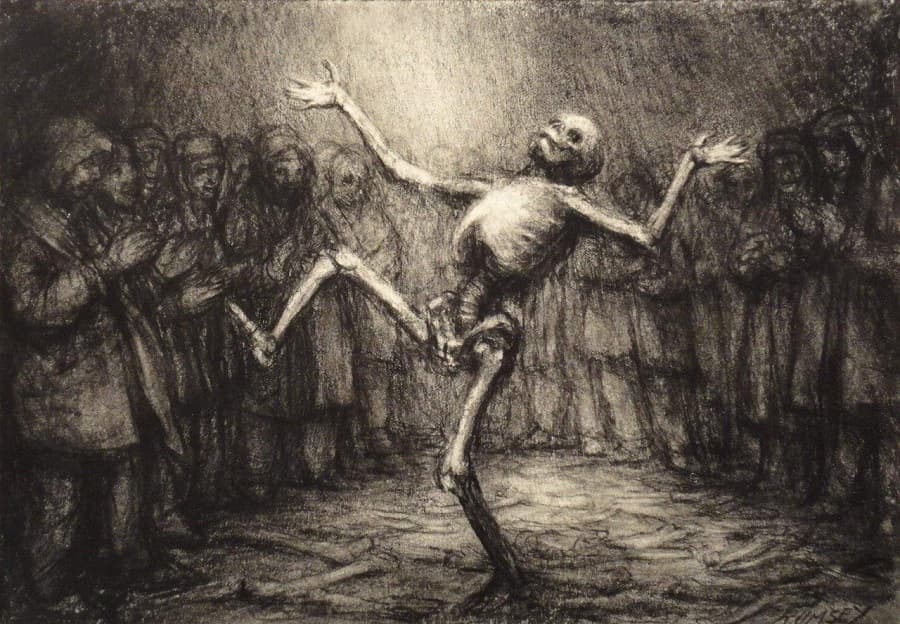
The Danse Macabre Series
Paul Rumsey
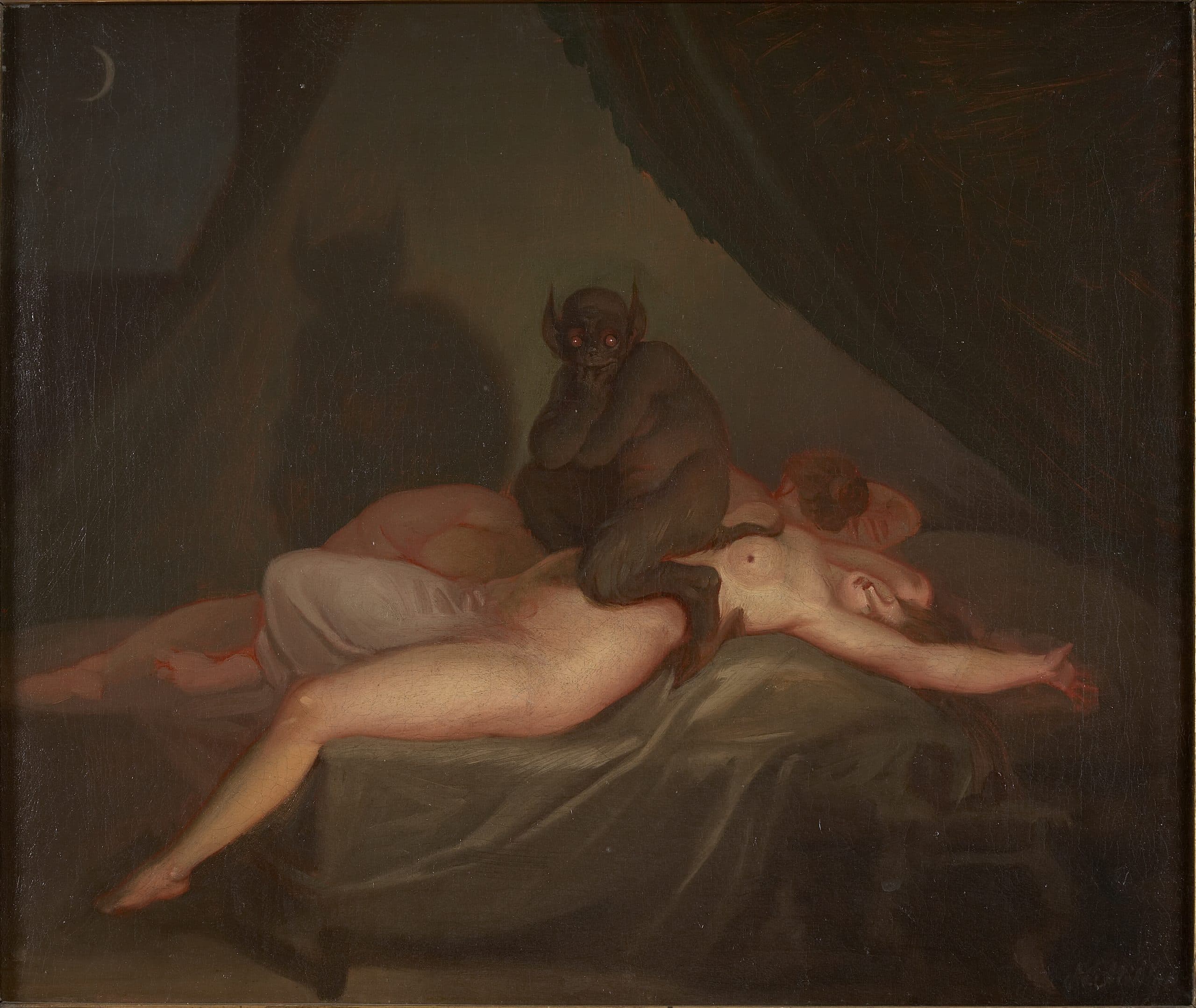
Nightmare
Nicolai Abraham Abildgaard · 1800
Spleen et Idéal
Carlos Schwabe · 1907
The Garden of Death
Hugo Simberg · 1896
Vanitas Sculpture (Hooded Bust with Skull)
Various Artists or Collaborations

Nymphs Dancing to Pan's Flute
Joseph Tomanek

The Scream
Edvard Munch · 1893

The Thinker
Auguste Rodin · Modeled 1880–82; enlarged 1902–03; this cast 1904