Image: Cleveland Museum of Art (Open Access) · Public domain · via Wikimedia Commons
Gardener's House at Antibes
Claude Monet, 1888
Gardener's House at Antibes is an 1888 painting by Claude Monet of a pink-roofed cottage among young spring trees, with the sea and the towers of old Antibes beyond, on the French Riviera. It is in the Cleveland Museum of Art.
- Artist
- Claude Monet
- Date
- 1888
- Medium
- Oil on canvas
- Dimensions
- 66.3 × 93 cm
- Collection
- Cleveland Museum of Art, Cleveland, United States
- Movement
- Impressionism
- Catalogue
- Wildenstein 1165
- Nature & Landscape
- Water & Sea
Claude Monet's Gardener's House at Antibes (Maison de jardinier à Antibes) was painted in the spring of 1888, during his four-month stay on the Riviera. It shows a low cottage under a sloping roof, half hidden by slender trees just coming into leaf, with the sea and the distant towers of Antibes beyond. The canvas, 66.3 by 93 centimeters (Wildenstein 1165), is signed at lower right. It has been in the Cleveland Museum of Art since 1916.
What you are looking at
The foreground is a screen of young trees, their pale, silvery trunks and branches spreading across the canvas like a net. Their leaves are just opening, painted as small flicks of yellow-green and lime, and the Cleveland museum reads them, rightly, as a sign of early spring. At the left a taller tree rises almost to the top edge, its branches thin and wiry.
Behind the trees sits the gardener's house, a long, low building with walls of rose, peach and lilac and a roof of glowing coral and orange tiles. A stubby chimney pokes up at center. The right end of the house is in shade, painted in cool blues and violets, with a small red window. At the lower edge, a strip of bright green grass and a few pink and orange touches suggest a garden bed.
Over the roof you glimpse the Mediterranean, a band of deep blue, and on it, at left, the two square towers of old Antibes, tiny and pale. Behind them, the mountains dissolve in haze. The sky is a soft, streaky blue, washed with pink and white clouds.
The detail to look for is the way the branches cross the roof. Monet paints the twigs over the coral tiles in pale blue and white, so that the house seems seen through lace.
Where and when
Monet stayed at Antibes from January to May 1888, at the Château de la Pinède, a lodging for artists. Despite gusts of wind that, as the museum notes, threatened to knock over his easel, he completed nearly forty canvases. He moved between a handful of motifs: the old town across the bay, pines along the shore, the mountains, and modest garden scenes like this one, where the town appears only as a distant accent.
How this version differs
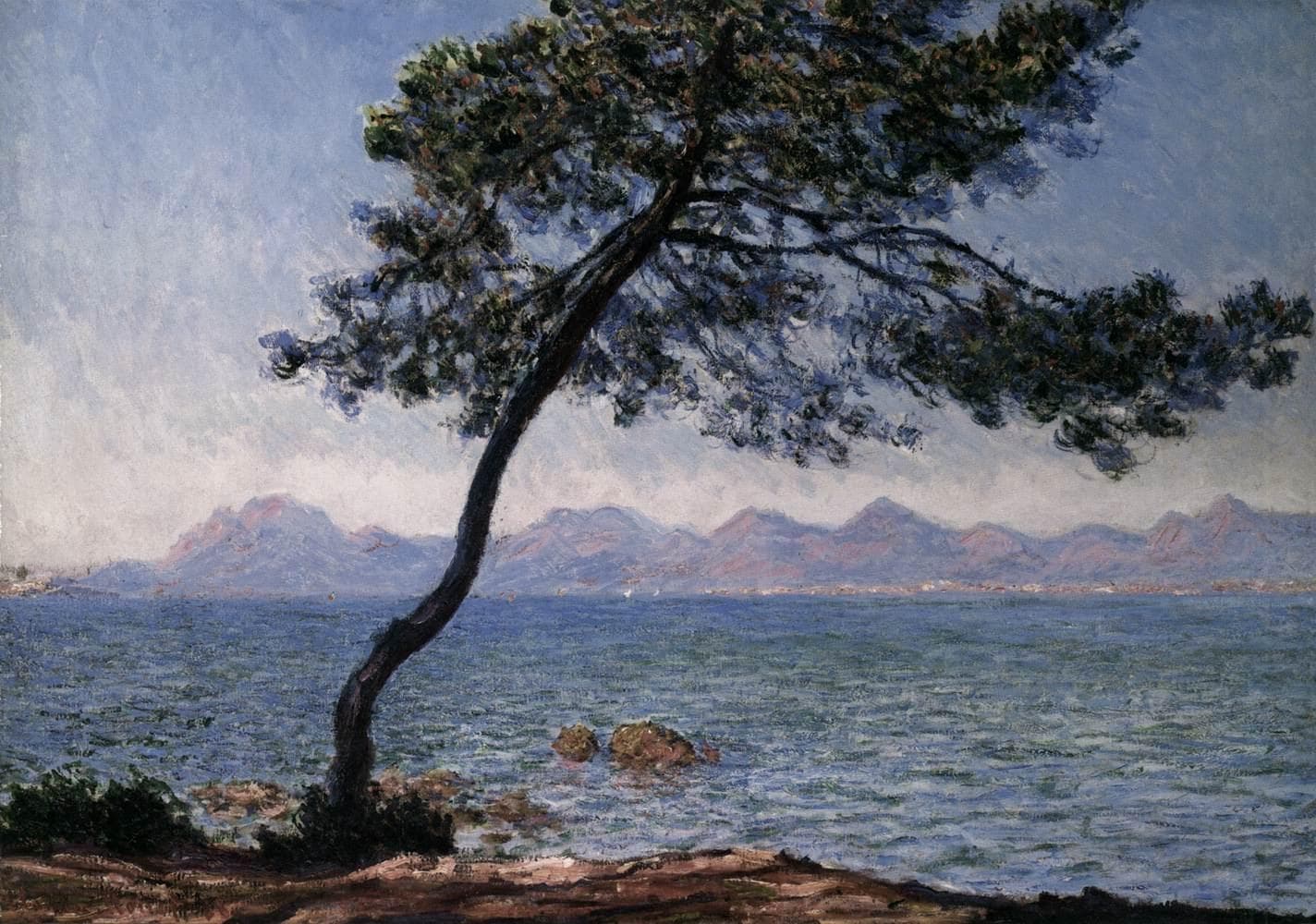
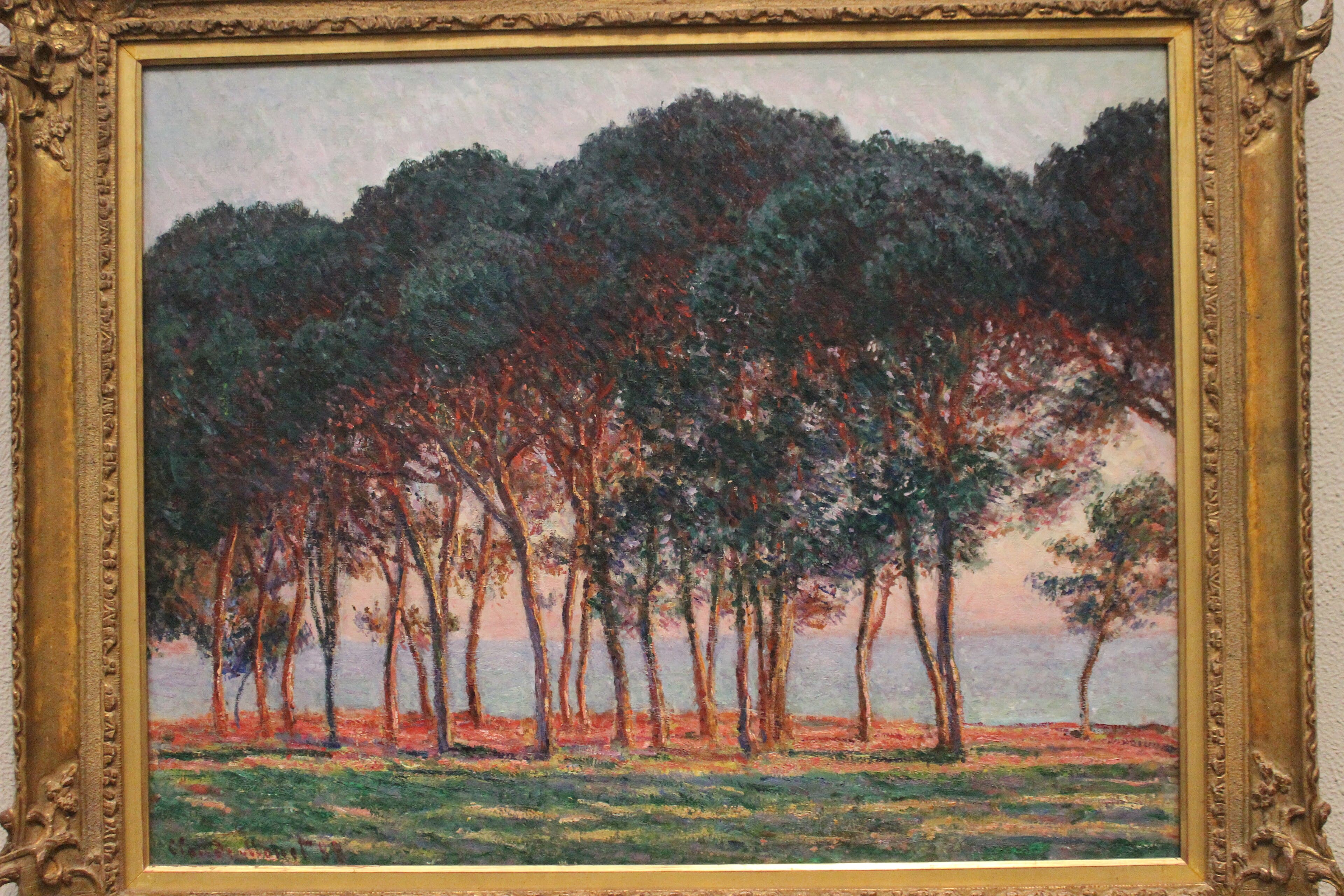
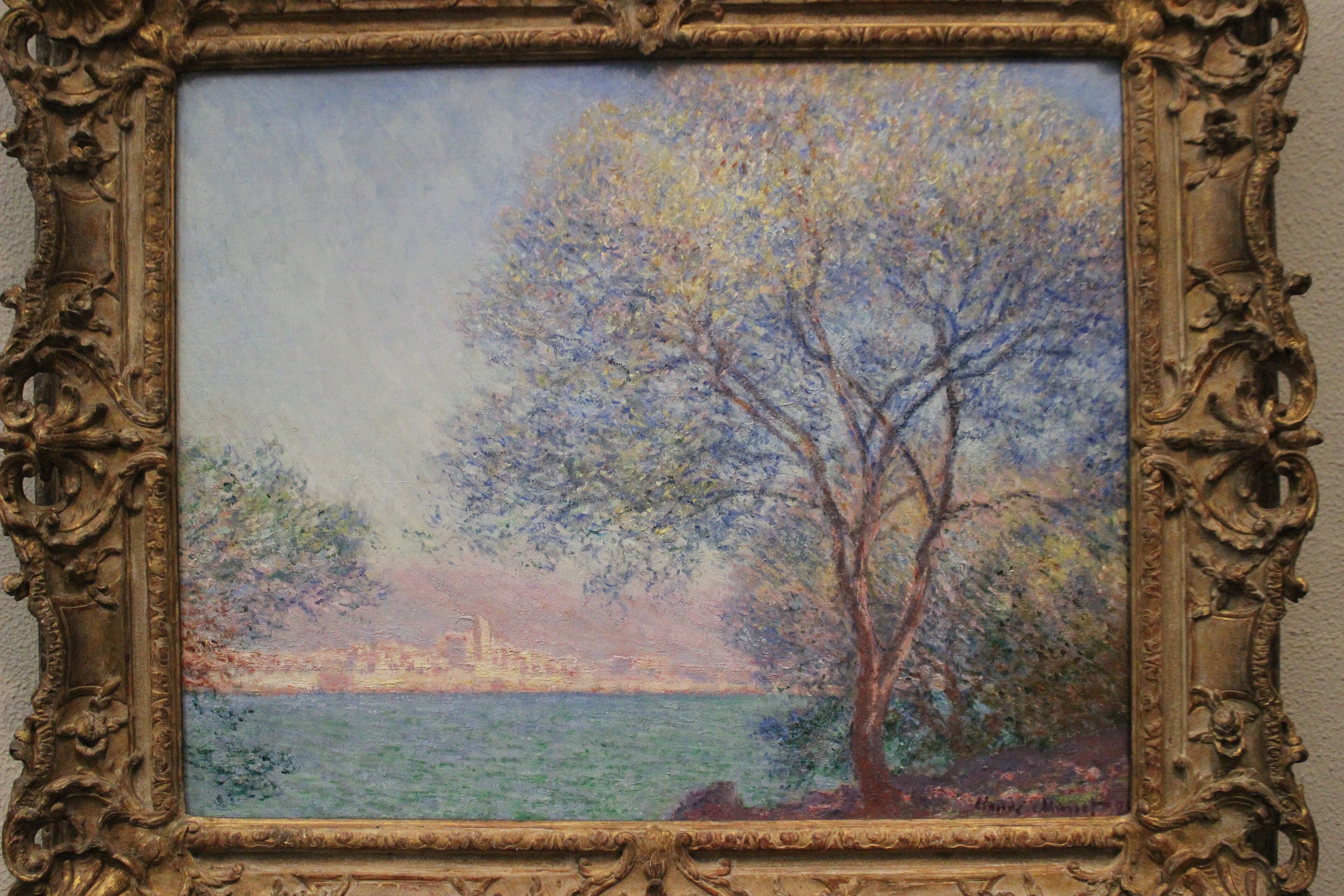
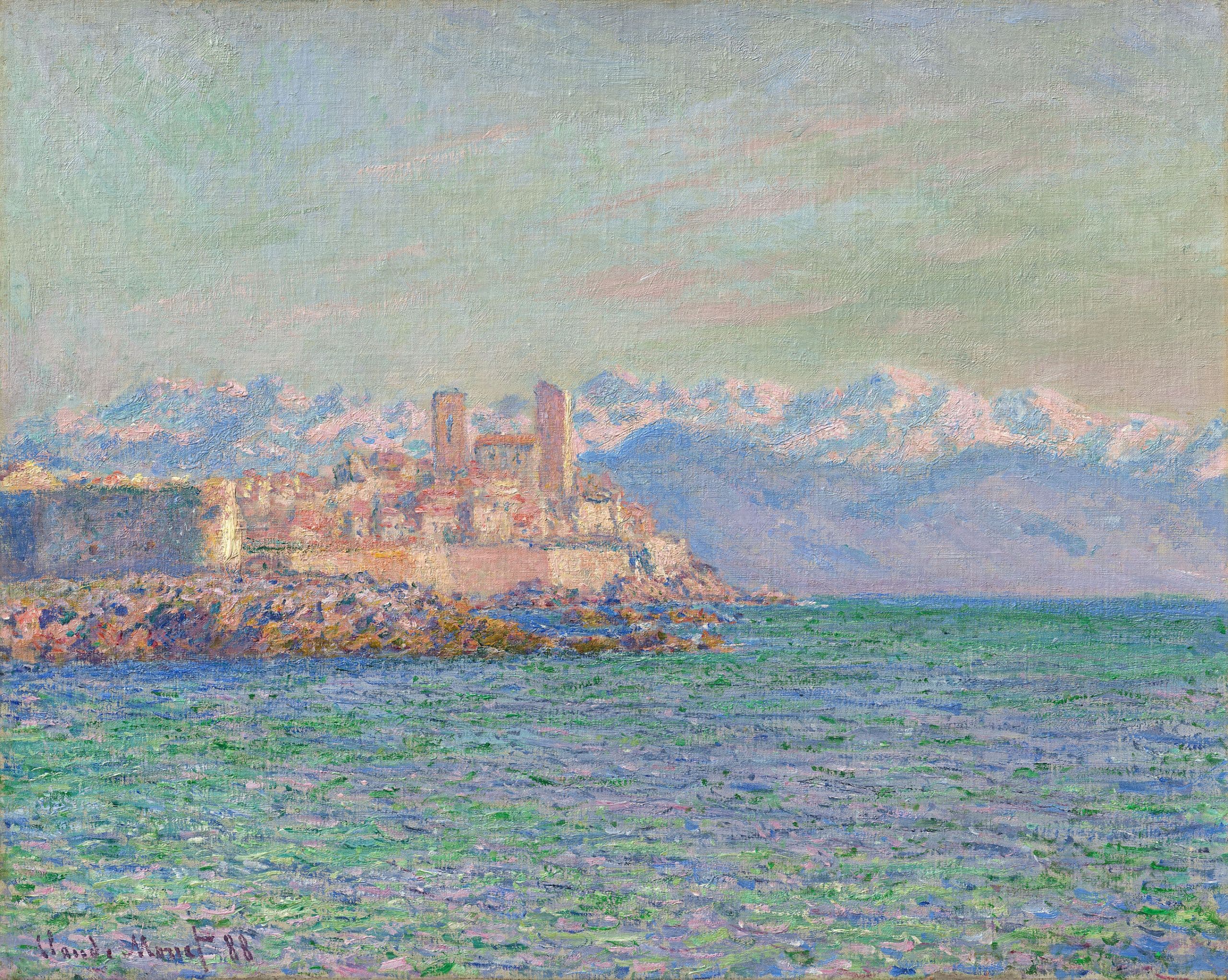
The old town of Antibes is the hero of The Fort of Antibes and appears again, a pale strip far across the water beside a feathery tree, in Morning at Antibes. Here it shrinks to a pair of pale towers glimpsed between branches, and the subject becomes the house, the trees and the season. It is the most domestic of the Antibes pictures and the one in which spring is most visible: compare the lone, leaning pine of the Courtauld's Antibes or the darkening grove of Under the Pines, Evening.
The Cleveland museum describes the canvas as especially vibrant, and the reason is the color: coral roof against blue sea, yellow-green leaves against blue sky, violet shadow against warm pink wall. Monet sets complementary pairs side by side across the whole surface.
How it was painted
The paint is applied thickly, in small, crisp strokes that stand up from the canvas. On the roof they run in short horizontal rows that follow the lines of the tiles; on the walls they are vertical; on the trees they are tiny, separate dabs for the leaves and long, thin strokes for the branches. The thick impasto catches real light in the gallery, adding to the sense of midday sun. Very little of the canvas is left bare, unlike some of Monet's quicker sketches.
For all of Monet's southern work, see Monet on the Mediterranean.
Ownership and where to see it
Durand-Ruel bought the painting from Monet in July 1891. It crossed to New York, was sold in 1892 to the railway magnate William Van Horne of Montreal, who returned it, then to a St. Louis collector, and finally, in March 1893, to the Cleveland industrialist Jeptha H. Wade. Mr. and Mrs. J. H. Wade gave it to the Cleveland Museum of Art in 1916, the year the museum opened. See Where to See Monet's Paintings and Claude Monet.
Questions & answers
Where is Monet's Gardener's House at Antibes?
It is in the Cleveland Museum of Art in Ohio, the gift of Mr. and Mrs. J. H. Wade in 1916, the year the museum opened. Jeptha H. Wade had bought it from Durand-Ruel in New York in 1893.
When and where was Gardener's House at Antibes painted?
Monet painted it in the spring of 1888 at Antibes on the French Riviera, where he stayed from January to May and completed nearly forty canvases despite strong winds.
What does Gardener's House at Antibes show?
It shows a low cottage with a glowing coral roof seen through slender trees just coming into leaf, with the blue sea and the two towers of old Antibes in the distance. The fresh green leaves mark the start of spring.
How is it different from Monet's other Antibes paintings?
In most of the Antibes pictures the old town, the sea or the mountains are the subject. Here the town shrinks to two pale towers in the distance, and the painting focuses on a modest house, young trees and the arrival of spring.
More by the artist
Claude Monet
Antibes
Claude Monet · 1888
Grainstacks at Giverny, Morning Effect
Claude Monet · 1889
Mill at Limetz
Claude Monet · 1888
The Manneporte near Étretat
Claude Monet · 1886
Under the Pines, Evening
Claude Monet · 1888
Spring
Claude Monet · 1886
Rocks at Port-Goulphar, Belle-Île
Claude Monet · 1886
Morning at Antibes
Claude Monet · 1888
Also painted in 1888
The same year
Kindred works
You may also study
The Fort of Antibes
Claude Monet · 1888

La Grenouillère
Claude Monet · 1869
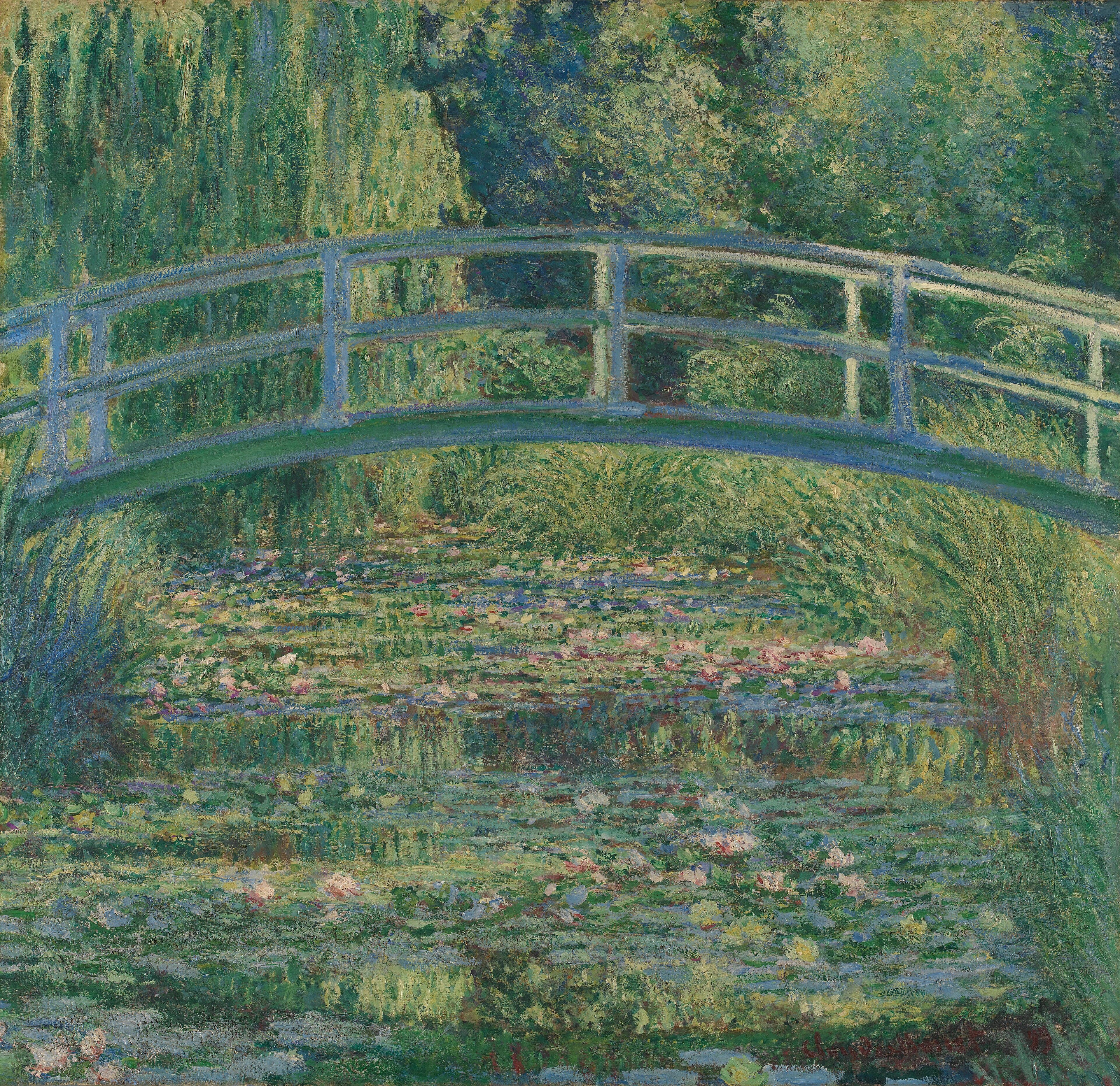
The Water-Lily Pond (National Gallery, London)
Claude Monet · 1899
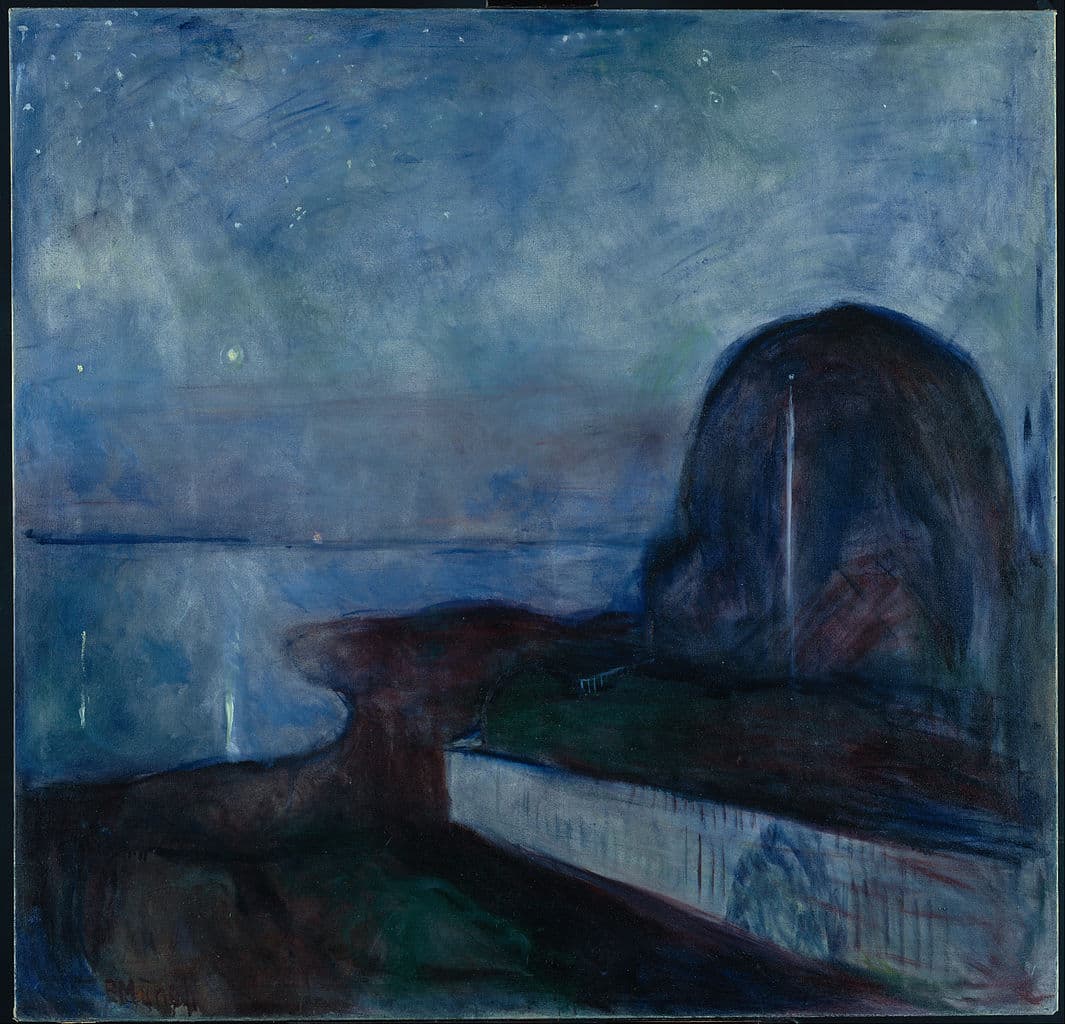
Starry Night (Munch)
Edvard Munch · 1893

Beach in Pourville
Claude Monet · 1882
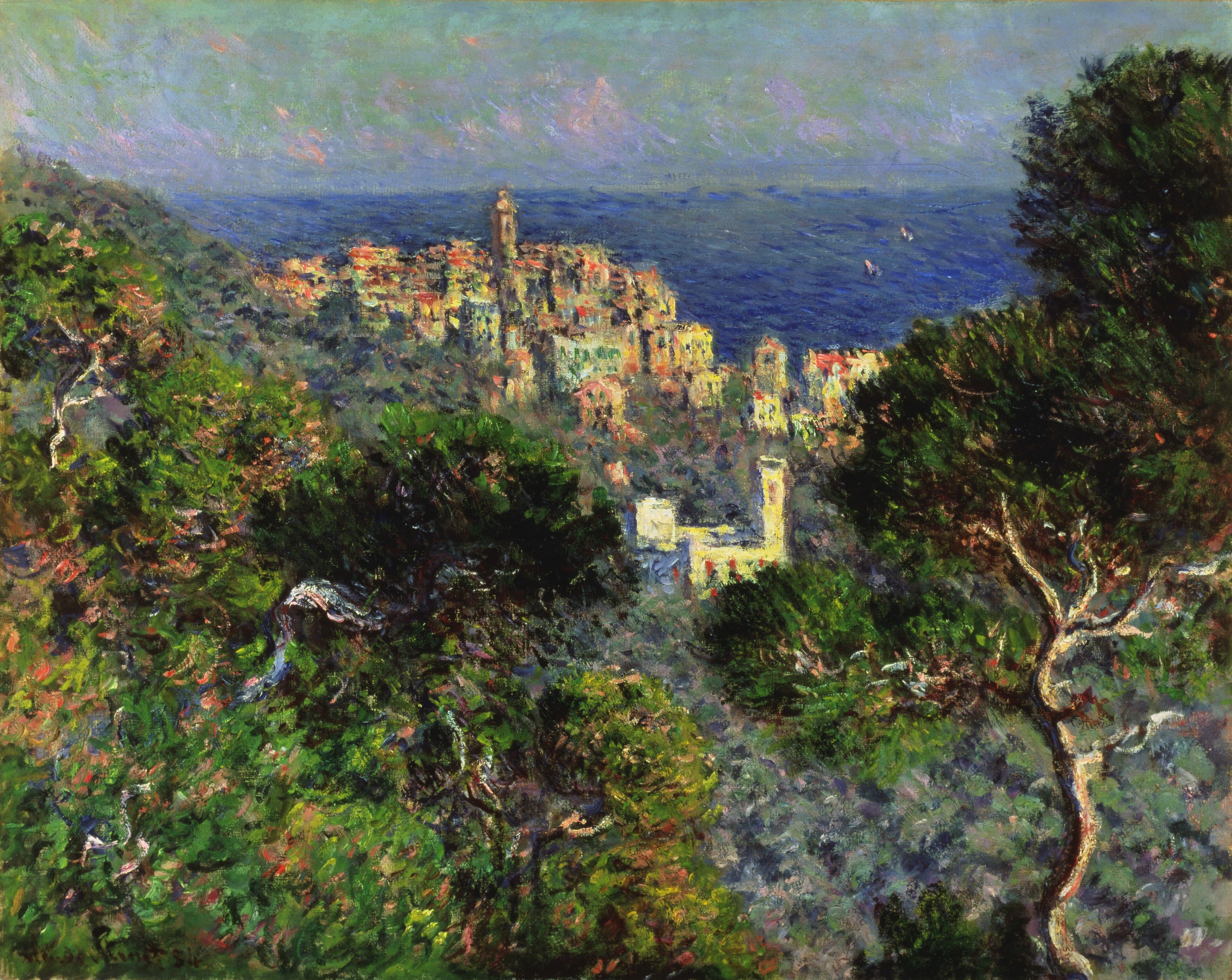
View of Bordighera
Claude Monet · 1884
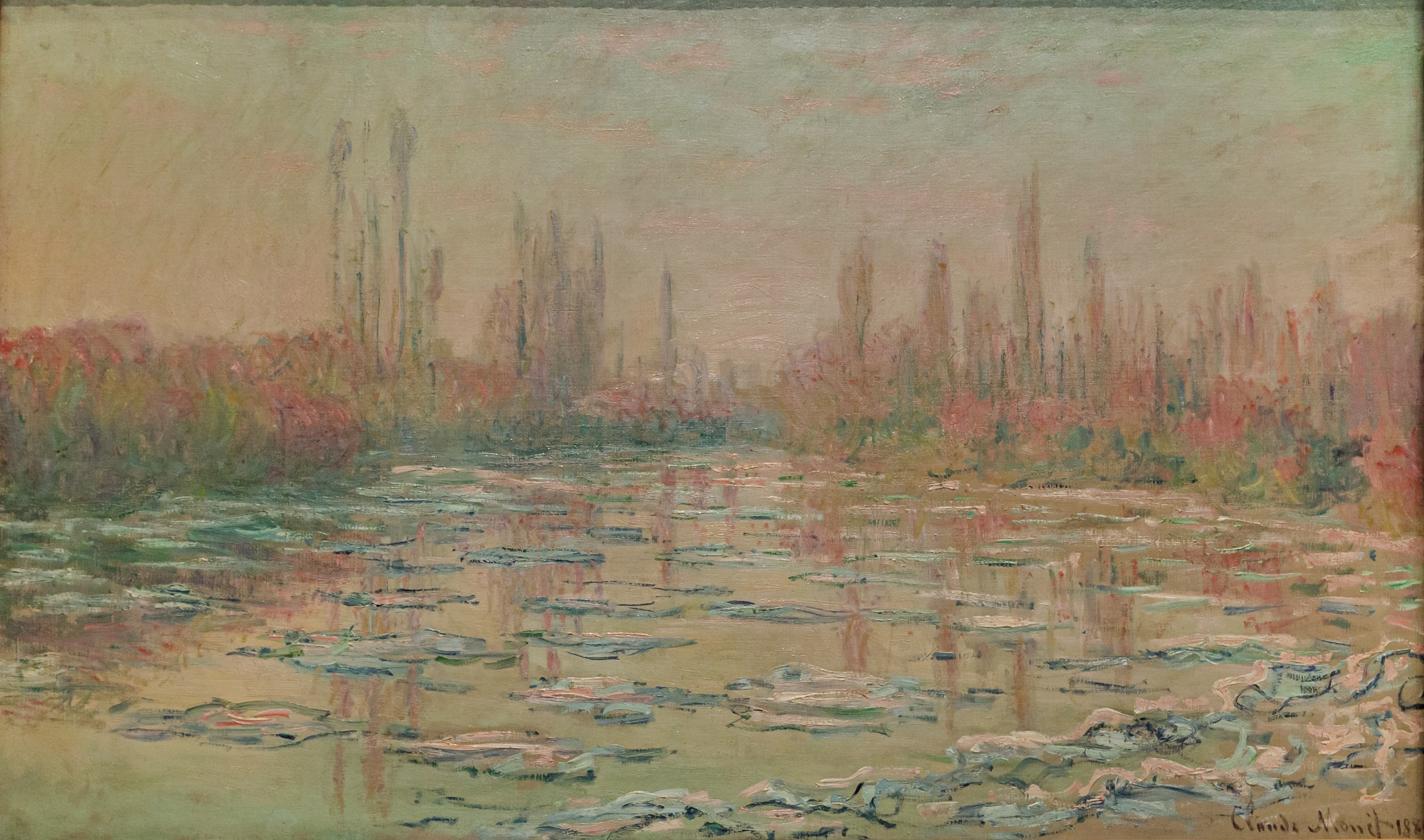
Floating Ice on the Seine (Les Glaçons)
Claude Monet · 1880
View of Vétheuil
Claude Monet · 1880