Image: Musée d'Orsay; reproduction via Wikimedia Commons · Public domain · via Wikimedia Commons
Frost (Le Givre)
Claude Monet, 1880
Frost (Le Givre) is an 1880 painting by Claude Monet of the Seine bank near Vétheuil coated in hoarfrost, poplars and bushes glittering pink and blue in winter haze. It is in the Musée d'Orsay, Paris, from the Caillebotte bequest.
- Artist
- Claude Monet
- Date
- 1880
- Medium
- Oil on canvas
- Dimensions
- 61 × 100 cm
- Collection
- Musée d'Orsay, Paris, France
- Movement
- Impressionism
- Catalogue
- Wildenstein 555
- Nature & Landscape
- Water & Sea
Le Givre (Frost), also titled Le givre, près de Vétheuil, is a winter landscape by Claude Monet of the riverbank near Vétheuil after a night of hard frost, when every twig and blade of grass was furred with ice crystals. Signed and dated 1880 and catalogued by Wildenstein as no. 555, it was exhibited at Monet's one-man show at the gallery of La Vie Moderne in Paris in June 1880, later belonged to Gustave Caillebotte, and is now in the Musée d'Orsay.
What you're looking at
The canvas is a broad horizontal band of white, lilac, pale blue and soft pink, with almost no dark tones. In the background a line of tall poplars and lower trees rises from the far bank, their trunks and branches white with frost and dissolved into a pinkish haze. Below them a long, flat stretch, the frozen river or a snow-covered meadow along it, runs across the whole picture in pale blue-white strokes.
In the foreground, thickets of bare bushes are covered in hoarfrost, painted as scribbles of pink, ocher, white and gray that seem to sparkle. Toward the right, a dark, upturned or beached boat lies half-buried in the snow, its blue-black hull the strongest accent in the picture. At the far right more frosted shrubs climb up the edge of the canvas. The sky is a milky white-pink, brushed in long diagonal strokes. The date and signature, 1880 Claude Monet, are in red at lower right.
Where and when it was painted
Monet had lived at Vétheuil, on a bend of the Seine downstream from Paris, since September 1878. The winter of 1879–80 was one of the coldest on record: in December the river froze solid, and in early January the thaw broke the ice into great floating slabs. Monet, newly widowed after Camille's death in September 1879, painted these conditions day after day, from snow and hoarfrost to the frozen river and the breakup. Frost records the first phase, the still, crystalline cold before the thaw. See Monet at Vétheuil.
How it was painted
Monet works almost entirely in tints, high-keyed colors mixed with white, and lets the warm pinks and the cool blues alternate so that the frost seems to glitter. The frosted bushes are painted in a dense, scribbled web of fine strokes over a pale ground; the snow beneath is laid in longer, smoother strokes. The single dark boat, placed off center, gives the eye somewhere to rest and makes the surrounding whites look brighter.
How it compares
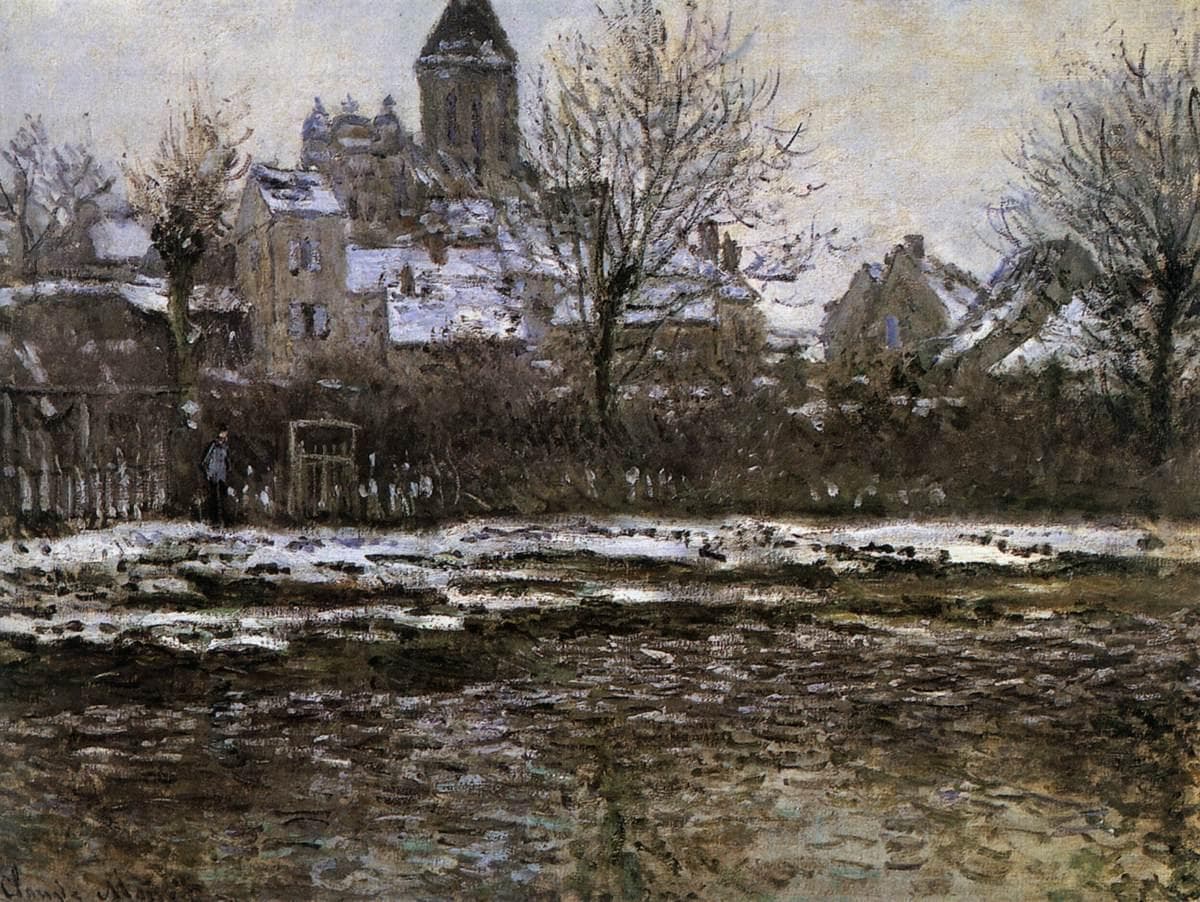
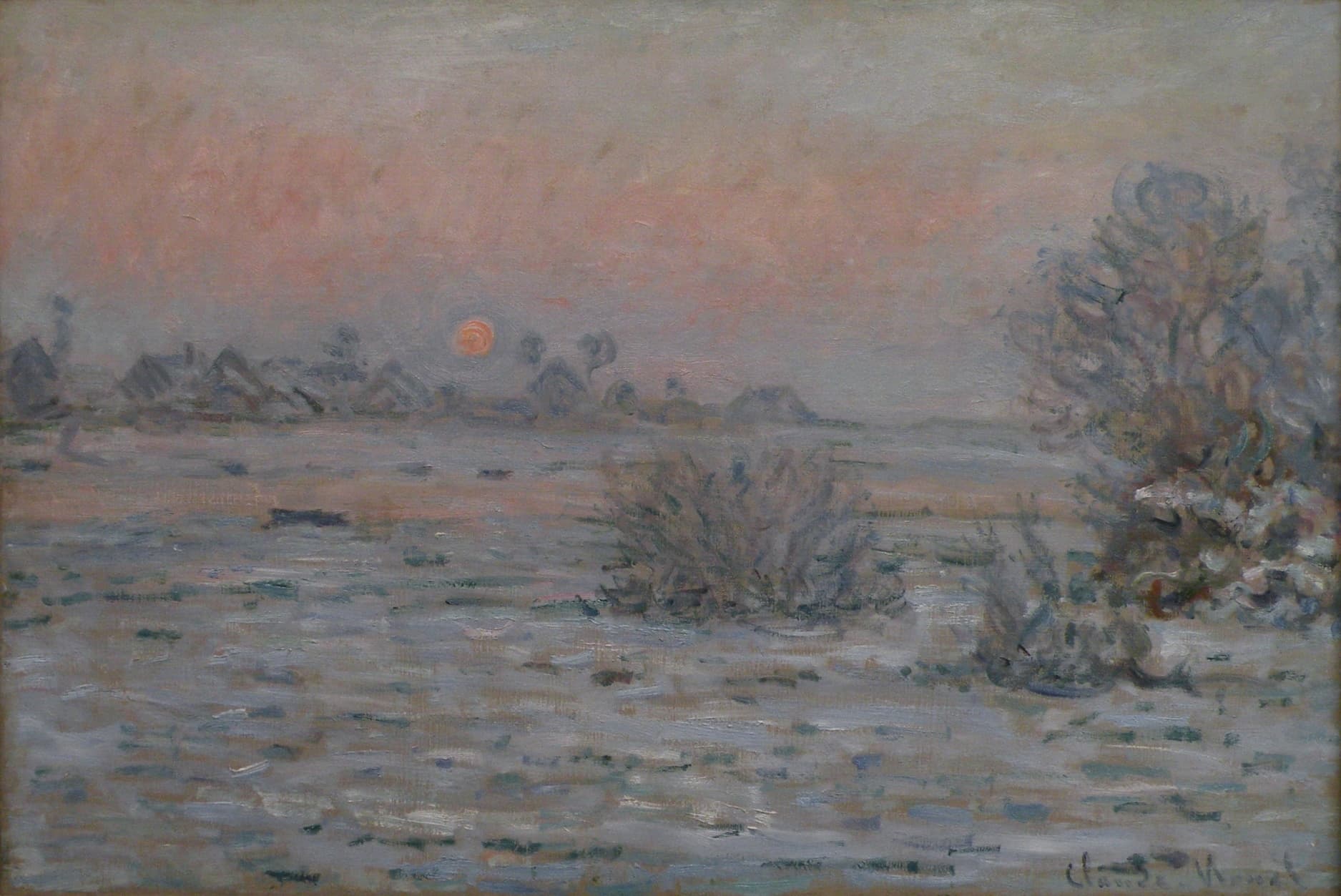
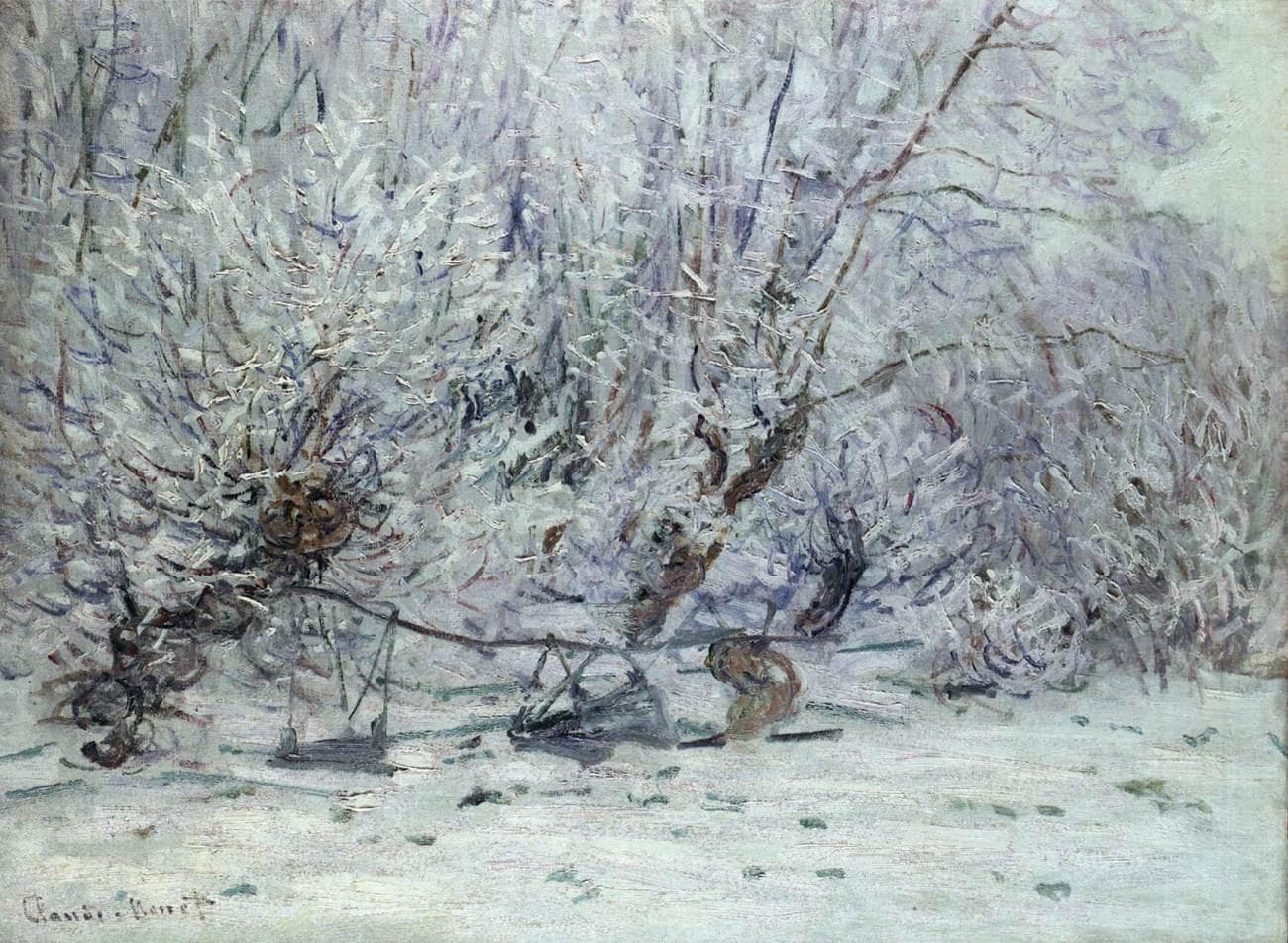
Frost hangs naturally beside Floating Ice on the Seine, also in the Musée d'Orsay and of exactly the same size, which shows the same stretch of river a few weeks later as the ice broke up. Between them they record the two phases of that winter. Compare also The Church at Vétheuil in Winter and Winter Sun at Lavacourt. Monet painted another Frost in 1885 at Giverny, Frost, with a quite different, darker scheme.
The show at La Vie Moderne
In June 1880 Monet held his first one-man exhibition at the gallery of La Vie Moderne, the illustrated weekly founded by the publisher Georges Charpentier. He showed around eighteen paintings, among them several of the winter canvases from Vétheuil, including this one. The same year he submitted a painting to the official Salon for the first time in a decade, a sign that he was trying every route to sell work and recover from his debts.
Ownership and where to see it
After its showing at La Vie Moderne in 1880, the painting entered the collection of Gustave Caillebotte, whose bequest to the French state was accepted in 1894. It went to the Musée du Luxembourg in 1896, later to the Louvre, and in 1986 to the Musée d'Orsay (inventory RF 2706). For other Monet canvases there, see Monet at the Musée d'Orsay.
Questions & answers
Where is Monet's Frost (1880)?
It is in the Musée d'Orsay in Paris (inventory RF 2706). It came to the French state with Gustave Caillebotte's bequest, accepted in 1894.
When and where did Monet paint Frost?
He painted it near Vétheuil on the Seine during the exceptionally cold winter of 1879–80, and dated it 1880. It was shown at his exhibition at La Vie Moderne in Paris in June 1880.
What does Frost show?
It shows bushes and poplars along the Seine covered in white hoarfrost under a pale pinkish sky, a flat snowy stretch along the river, and a dark boat half-buried in snow at lower right.
How is Frost related to Floating Ice on the Seine?
Both are in the Musée d'Orsay, are the same size and show the Seine near Vétheuil in winter 1879–80. Frost shows the hard freeze; Floating Ice shows the thaw a few weeks later, with slabs of ice drifting downstream.
More by the artist
Claude Monet
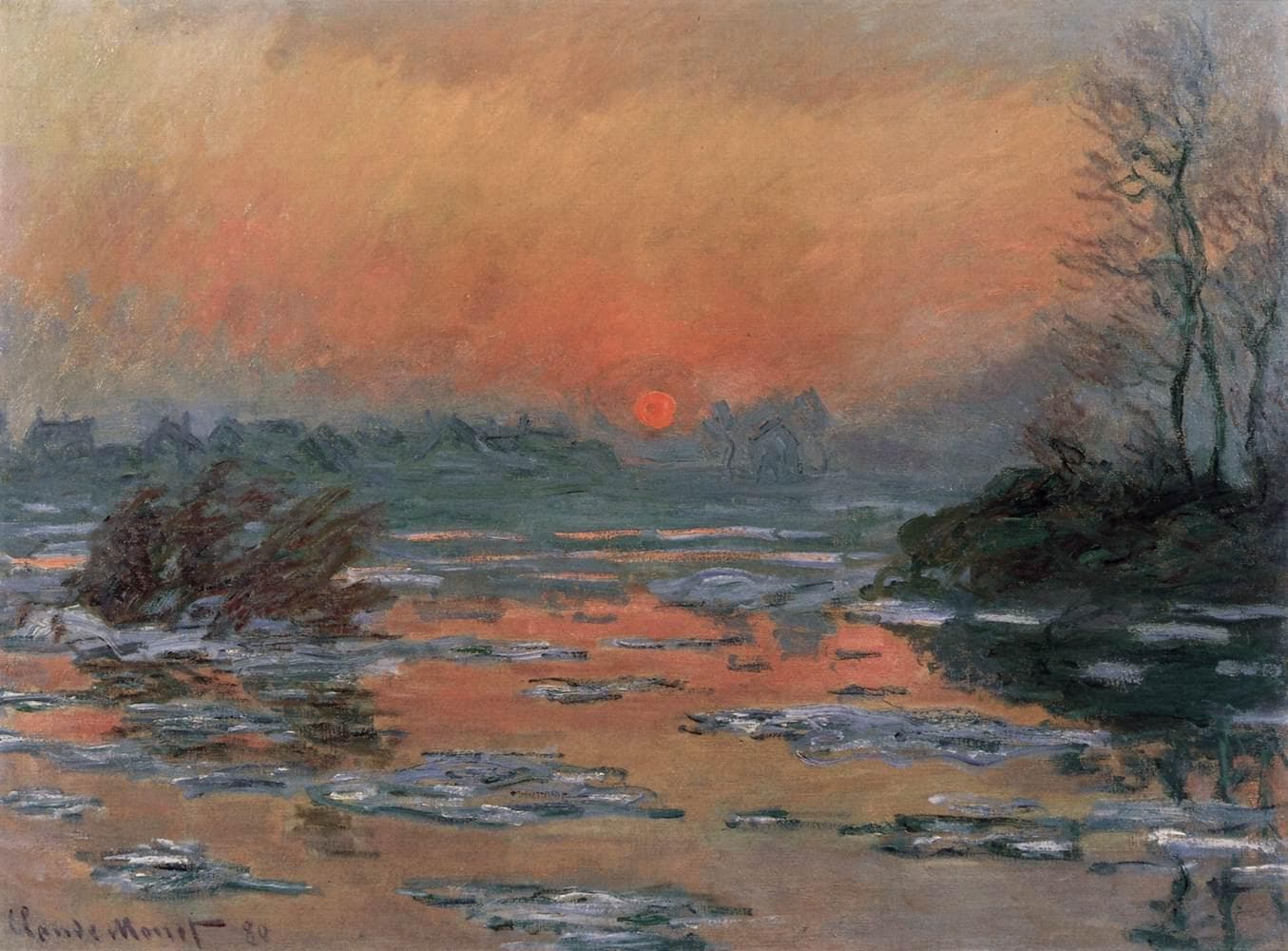
Sunset on the Seine in Winter
Claude Monet · 1880
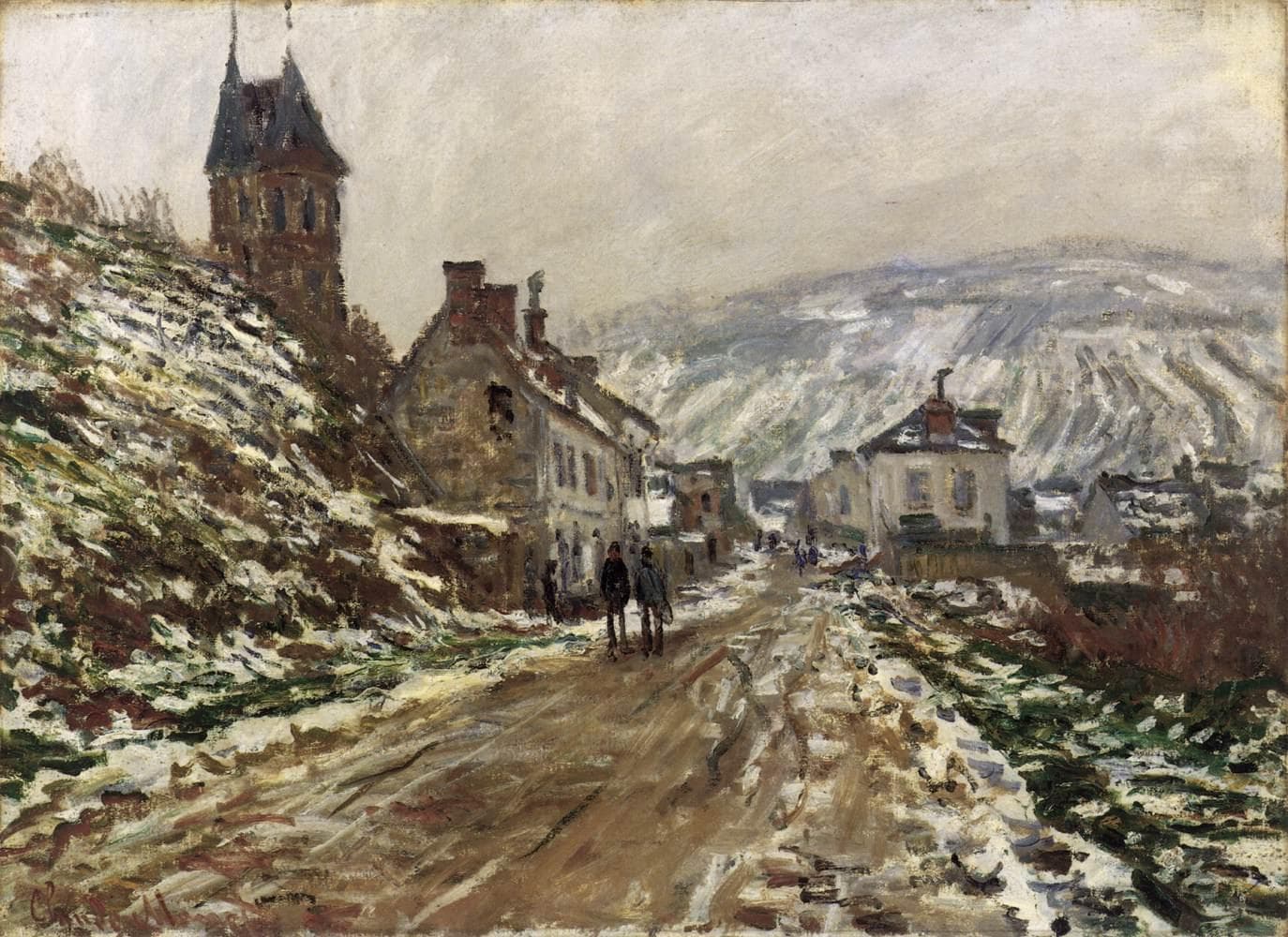
Road into Vétheuil in Winter
Claude Monet · 1879
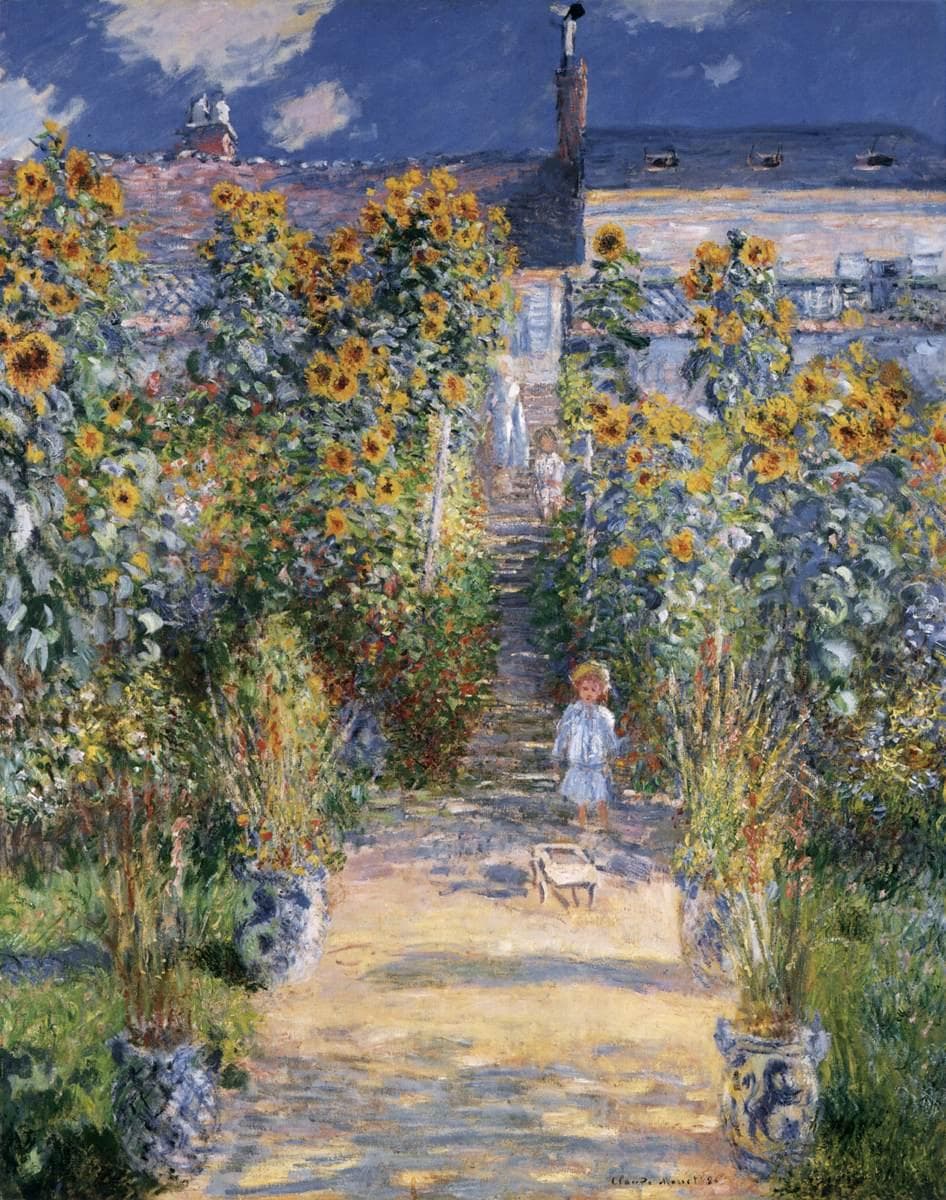
The Artist's Garden at Vétheuil
Claude Monet · 1881
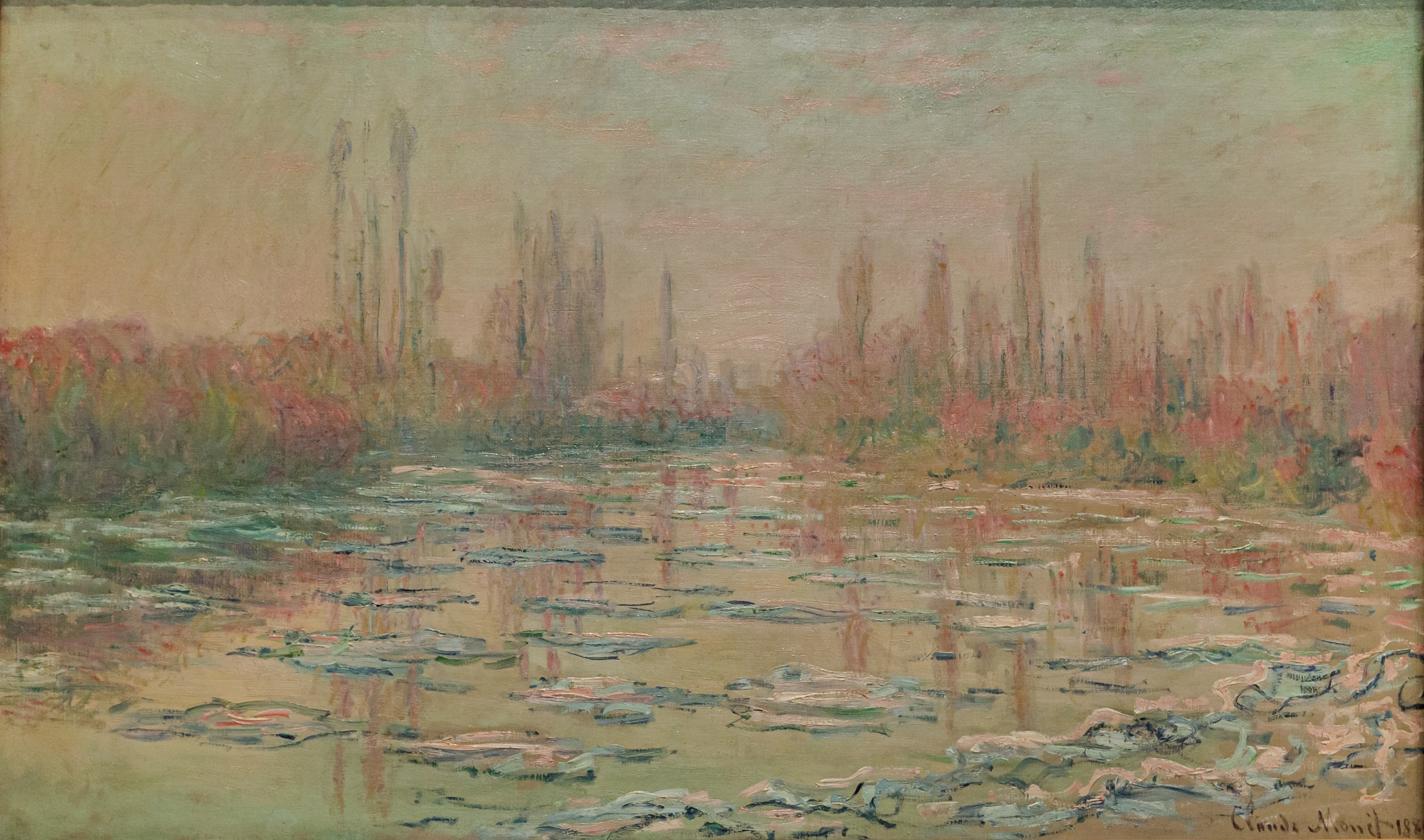
Floating Ice on the Seine (Les Glaçons)
Claude Monet · 1880
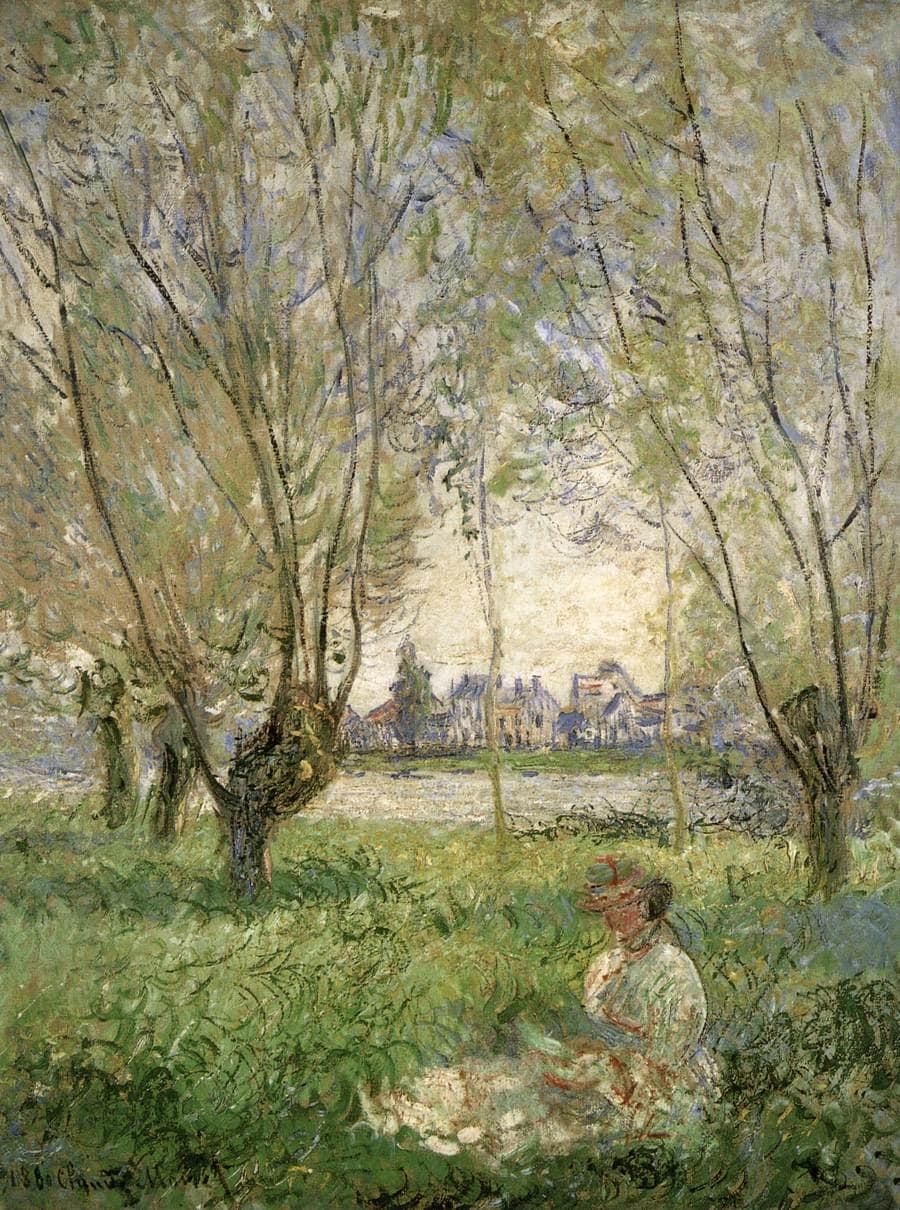
Woman Seated under the Willows
Claude Monet · 1880
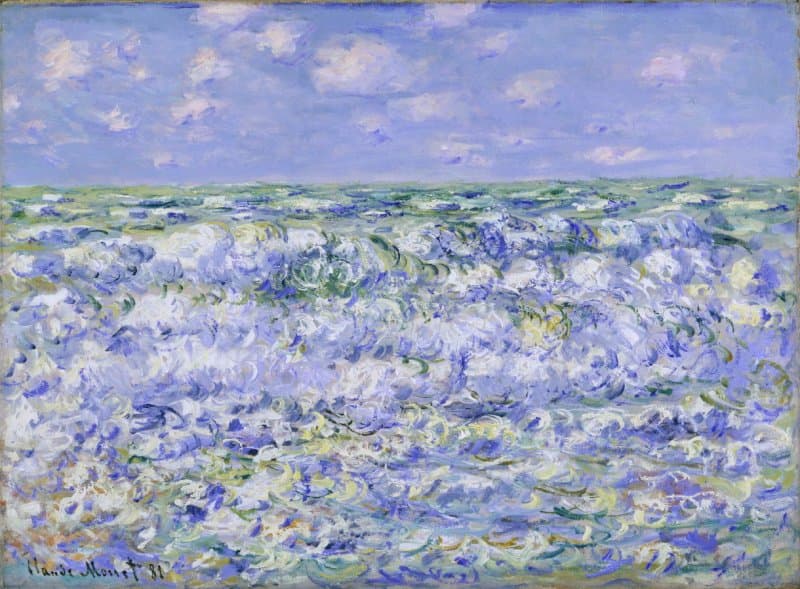
Waves Breaking
Claude Monet · 1881
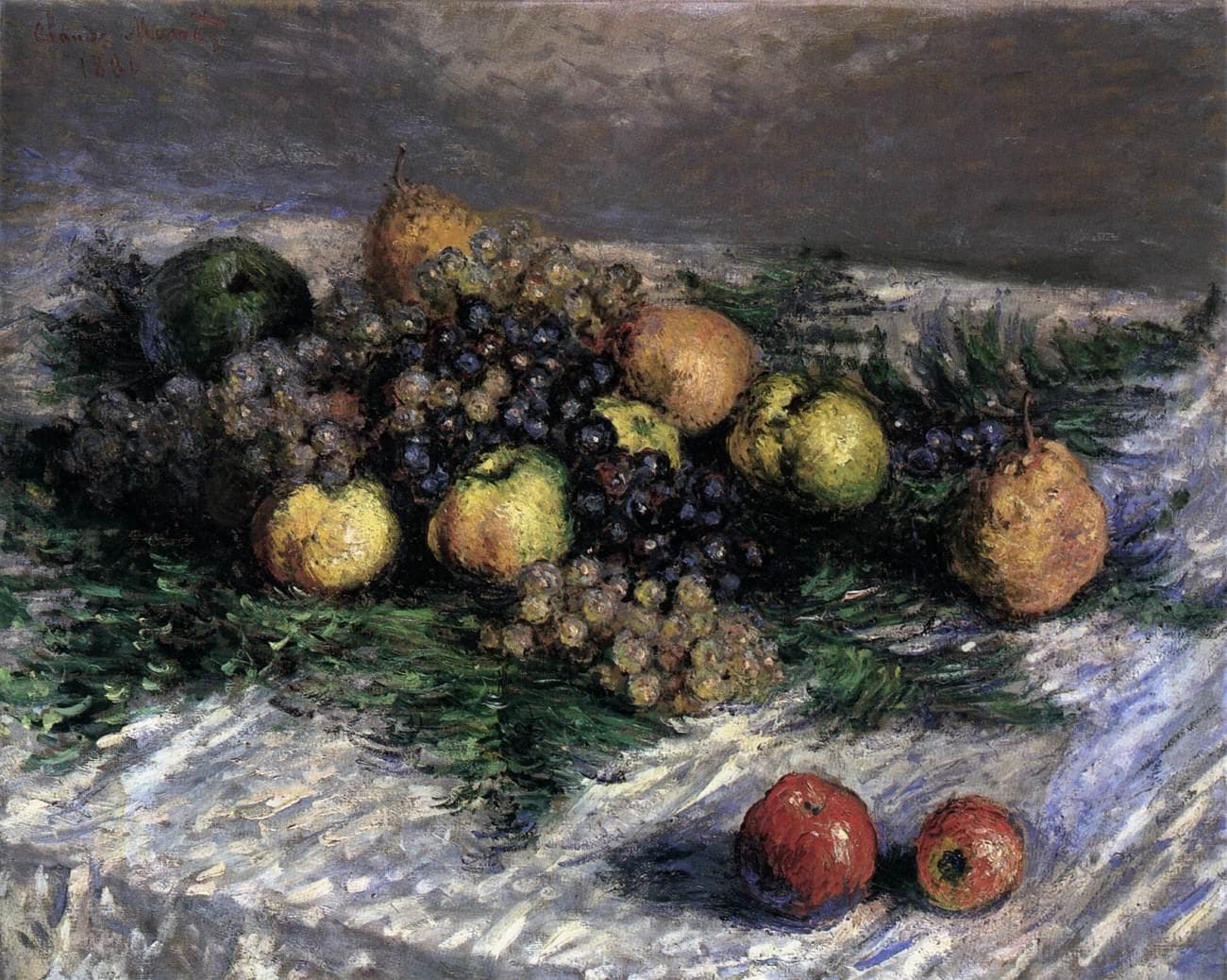
Still-Life with Pears and Grapes
Claude Monet · 1880
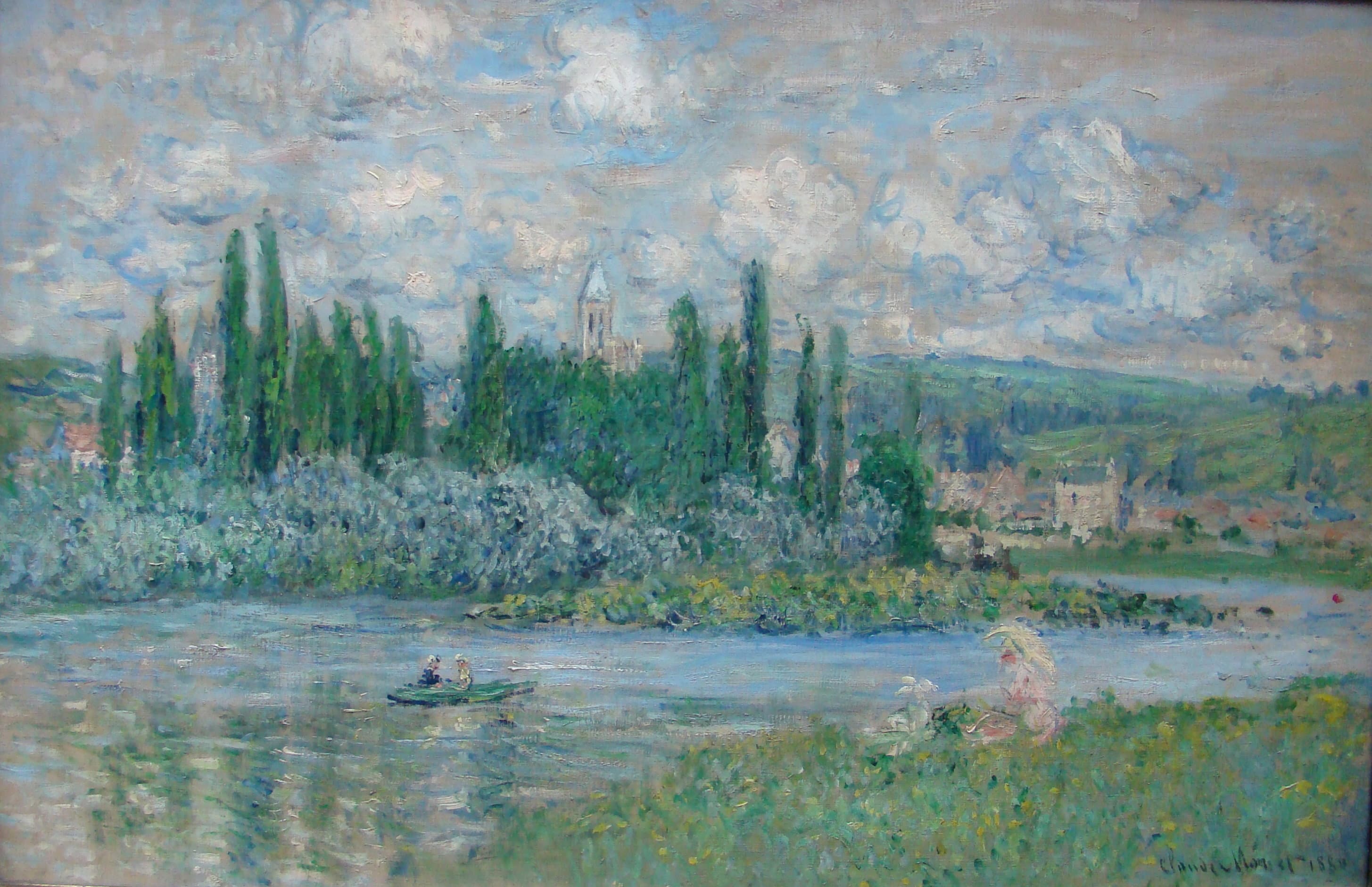
View of Vétheuil
Claude Monet · 1880
Also painted in 1880
The same year
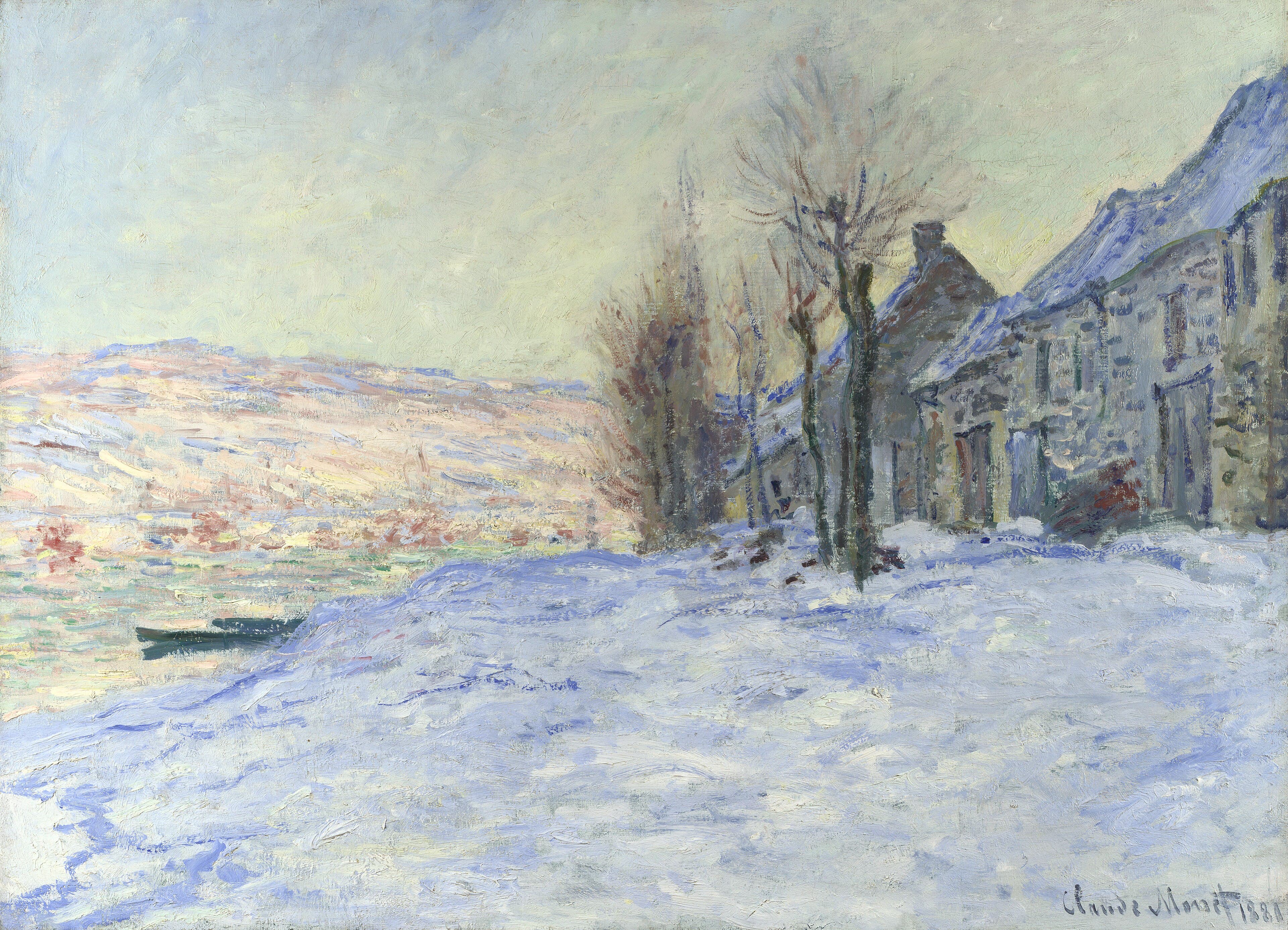
Lavacourt under Snow
Claude Monet · c. 1878–81
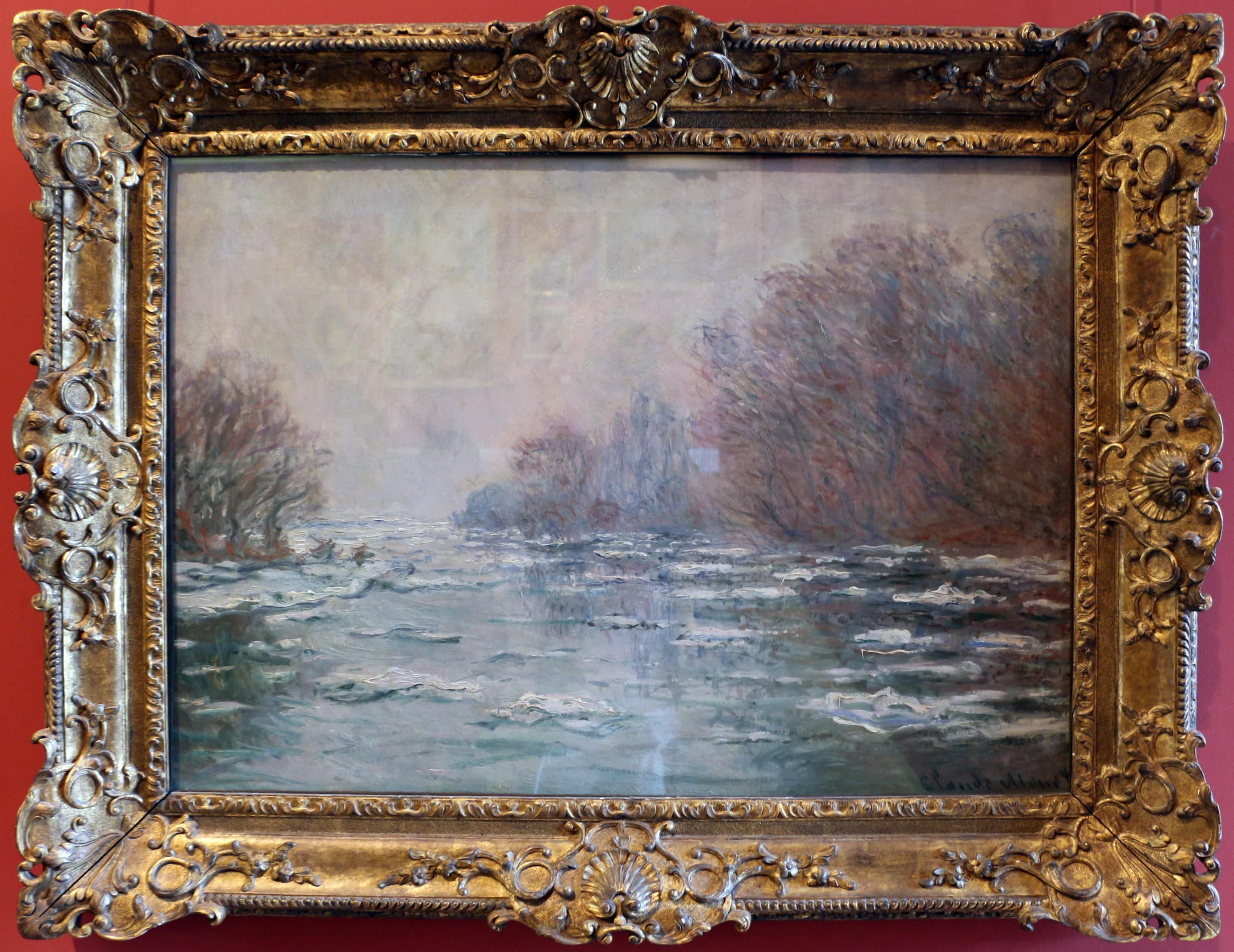
The Breaking Up of the Ice near Vétheuil
Claude Monet · c. 1880
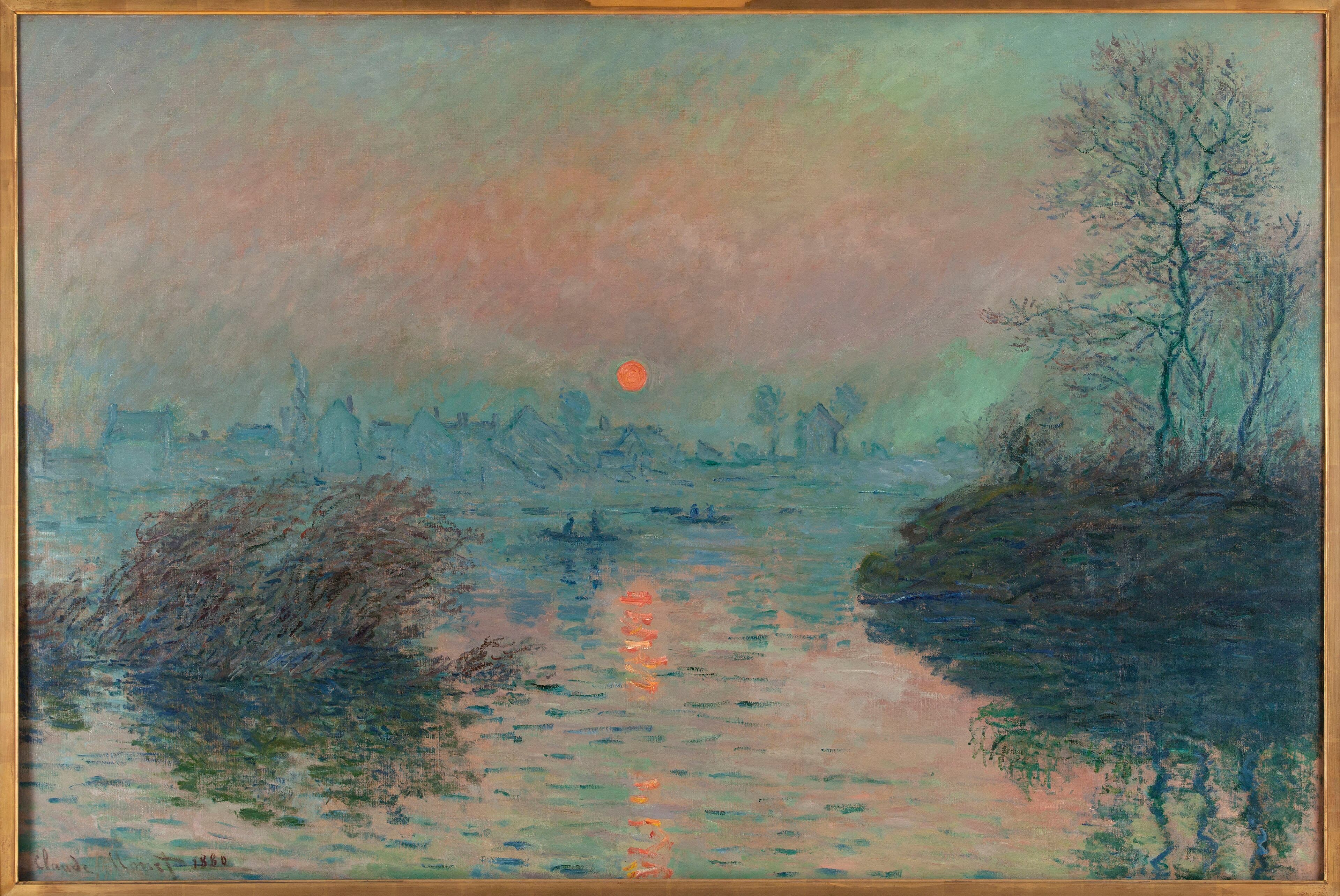
Sunset on the Seine at Lavacourt, Winter Effect
Claude Monet · 1880
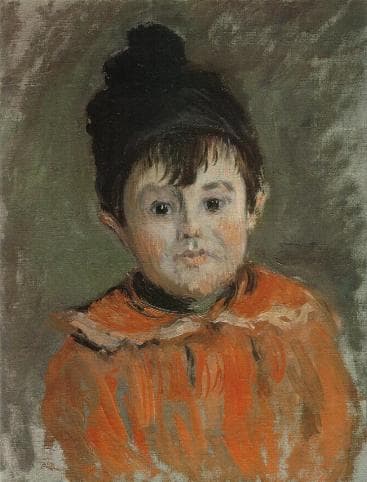
Michel Monet with a Pompon
Claude Monet · 1880
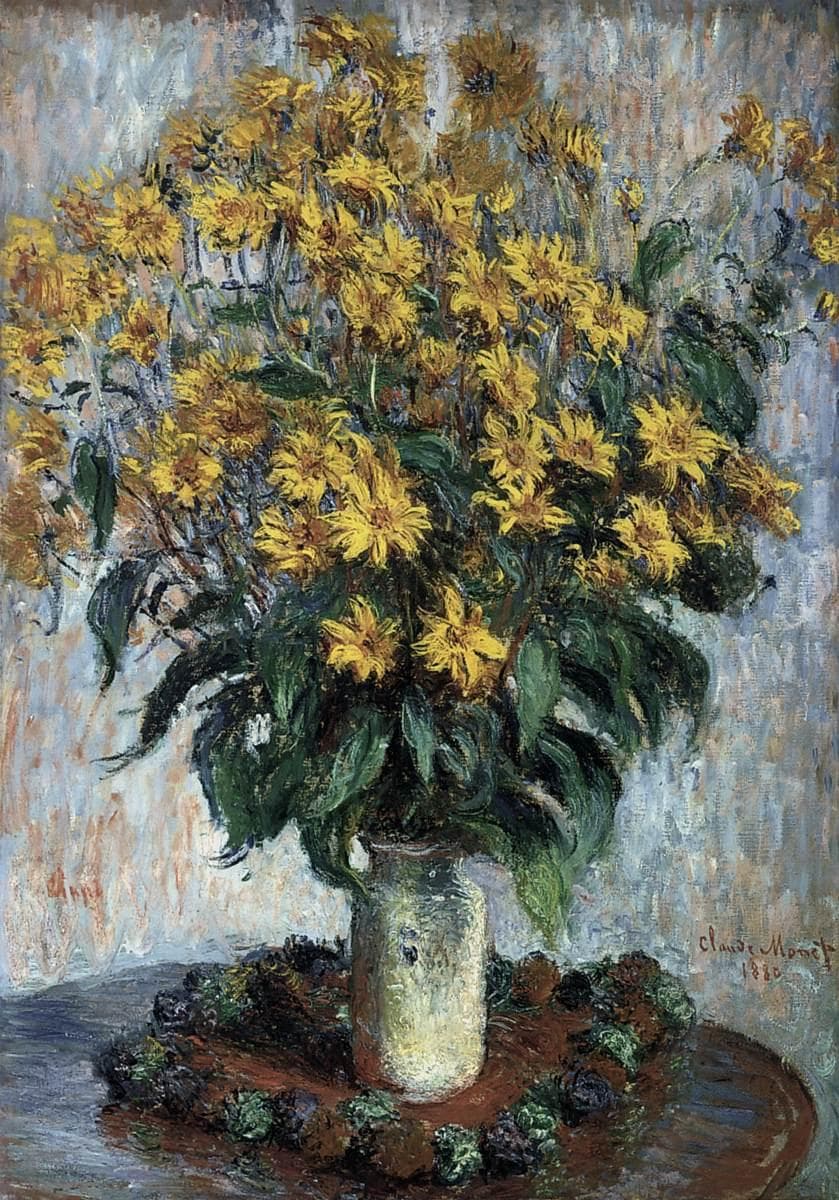
Jerusalem Artichoke Flowers
Claude Monet · 1880
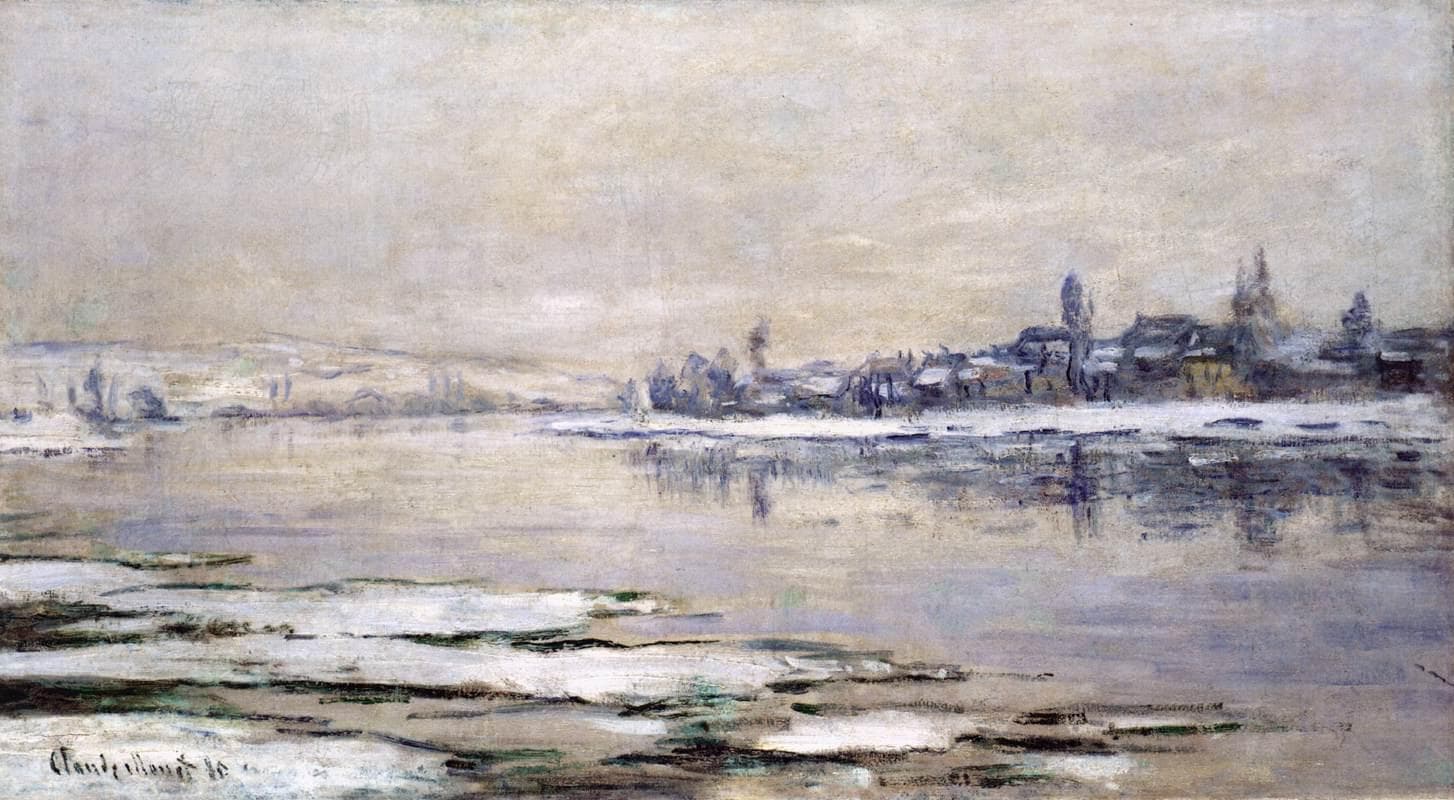
The Breakup of the Ice at Lavacourt
Claude Monet · 1880
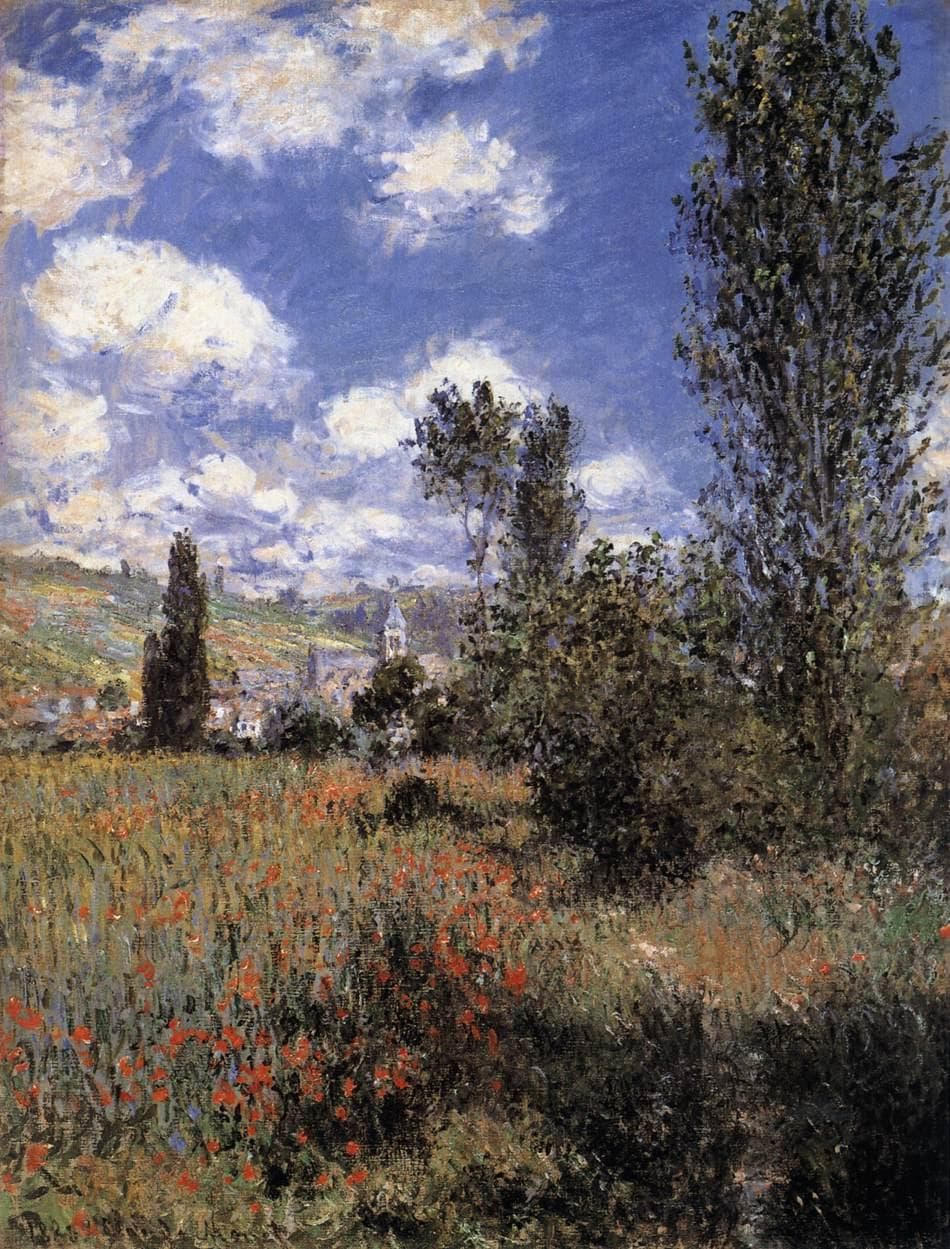
View of Vétheuil
Claude Monet · 1880
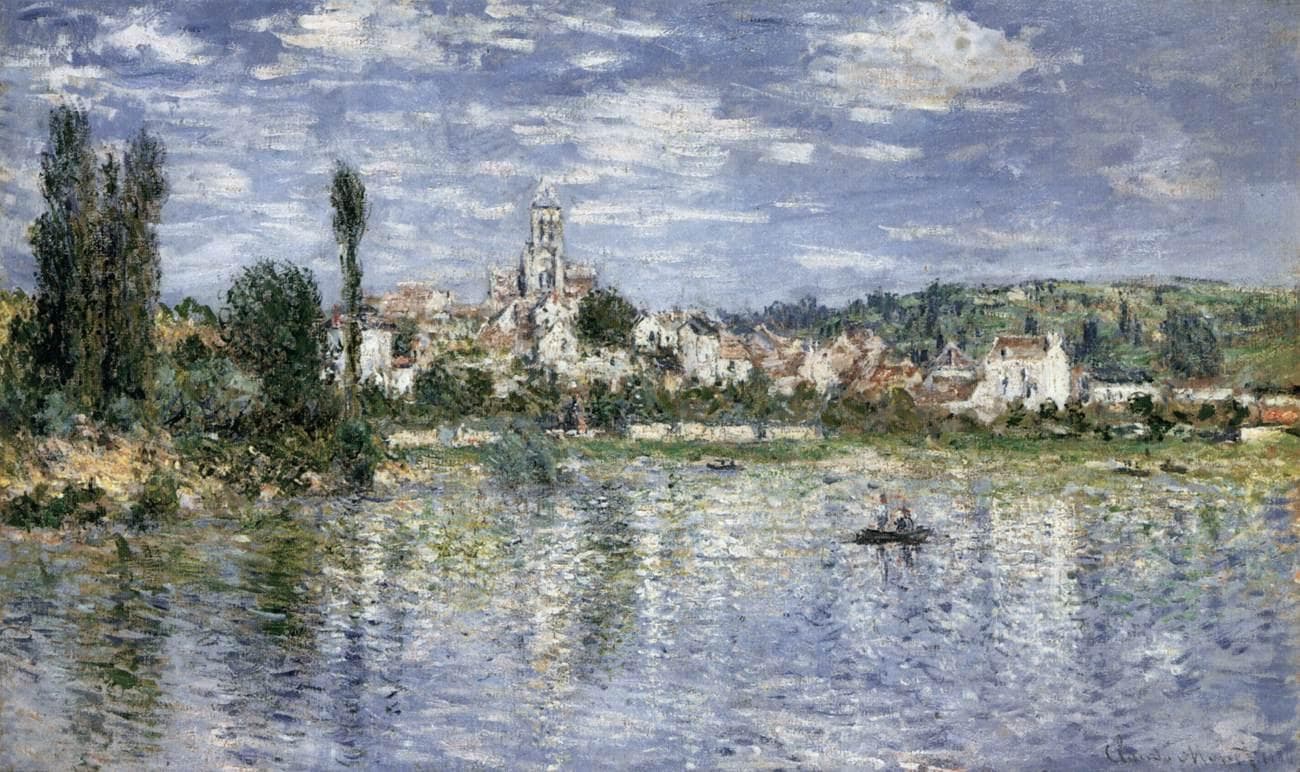
Vétheuil in Summer
Claude Monet · 1880
Kindred works
You may also study
The Church in Vétheuil in Winter
Claude Monet · 1878–79
Winter Sun at Lavacourt
Claude Monet · 1879–80
Vétheuil in the Fog
Claude Monet · 1879
Frost
Claude Monet · 1885
Morning on the Seine, near Giverny (1897)
Claude Monet · 1897
Étretat, the Manneporte, Reflections on the Water
Claude Monet · c. 1885
The Rocks of Belle-Île, the Wild Coast
Claude Monet · 1886
The Hay Wain
John Constable · 1821