Image: Cleveland Museum of Art; reproduction via Wikimedia Commons · Public domain · via Wikimedia Commons
Low Tide at Pourville, near Dieppe
Claude Monet, 1882
Low Tide at Pourville, near Dieppe is an 1882 painting by Claude Monet of calm blue water at low tide below a sunlit chalk cliff, with tiny bathers at its foot. It is in the Cleveland Museum of Art.
- Artist
- Claude Monet
- Date
- 1882
- Medium
- Oil on canvas
- Dimensions
- 59.9 × 81.3 cm
- Collection
- Cleveland Museum of Art, Cleveland, Ohio, United States
- Movement
- Impressionism
- Catalogue
- Wildenstein 716
- Water & Sea
- Nature & Landscape
Low Tide at Pourville, near Dieppe is a seascape by Claude Monet painted in 1882 at Pourville, the small Normandy resort west of Dieppe where he spent most of that year. The tide is out, the water lies calm and blue, and a single sunlit cliff rises on the right. Catalogued by Wildenstein as no. 716, it was given to the Cleveland Museum of Art by Mrs. Henry White Cannon in 1947.
What you're looking at
The canvas is divided almost exactly in half by a low horizon. Above, a deep, clear blue sky, slightly paler near the horizon, is crossed by a few thin wisps of white cloud. Below, the sea is calm and shallow, painted in long horizontal strokes of blue, violet and pale green that ripple across the surface.
On the right, a chalk cliff juts out into the picture, its face lit by the late sun in cream, apricot and pink, its top a green and golden slope. At its foot a strip of beach runs left, and just below the cliff stand a few small houses with dark roofs. The cliff's reflection drops into the water as a broad band of gold and orange broken by the ripples, the warmest passage in the picture. Along the water's edge, beneath the cliff, a row of tiny black strokes stands for bathers or people walking on the sand. On the far left, along the horizon, a low pale line of distant cliffs marks the coast toward Dieppe. The signature and date, 82 Claude Monet, are at lower right.
Where and when it was painted
Monet arrived at Pourville in February 1882 and soon wrote of how close he was to the sea, with the waves beating at the foot of the house where he stayed; the Cleveland museum notes that he lodged in a small hotel much like the buildings at the foot of the cliff in this picture. He found the village itself unremarkable but the landscape inspiring. In June he returned with Alice Hoschedé and the children for the summer. See Étretat and the Normandy Coast.
How it was painted
The picture is built almost entirely from horizontal strokes: long, smooth ones for the sky, shorter, broken ones for the rippling sea. Only the cliff is painted differently, in thicker, vertical touches. Monet keeps the palette to two main families, the cool blues of sea and sky and the warm golds and pinks of the sunlit cliff, and lets the reflection carry the warm color down into the water.
How it compares
The Pourville beach appears in many states of tide and weather. In The Rocks at Pourville, Low Tide in Rochester, Monet focuses on the seaweed-covered rocks of the shore, and in Varengeville, Low Tide in Winterthur the cliff is a towering wall above wet sand. The Cleveland picture is the most open and serene of the group, with a clear sky and a single, lit headland. For the clifftop above, see Path in the Wheat Fields at Pourville.
The light at Pourville
The Channel coast near Dieppe faces north and west, so the cliffs catch the late afternoon and evening sun while the sea darkens in front of them. Monet exploited that again and again, setting a sunlit cliff against blue water, as here. The effect depends on timing: an hour earlier the cliff would be in shadow, an hour later the light would turn red. That attention to a precise moment is what makes the picture feel so calm and so exact.
Where to see it
The painting is in the Cleveland Museum of Art (accession 1947.196), the gift of Mrs. Henry White Cannon. For other works by Monet in American museums, see where to see Monet's paintings.
Questions & answers
Where is Low Tide at Pourville, near Dieppe?
It is in the Cleveland Museum of Art in Ohio (accession 1947.196), the gift of Mrs. Henry White Cannon in 1947.
When was it painted?
Monet painted it in 1882 at Pourville, on the Normandy coast west of Dieppe, where he stayed in the spring and again with his family in the summer. It is signed and dated '82.
What does Low Tide at Pourville show?
It shows a calm blue sea at low tide under a clear sky, a chalk cliff lit gold and pink on the right with small houses at its foot, its warm reflection in the water, and tiny bathers at the water's edge.
What are the black marks at the foot of the cliff?
According to the Cleveland Museum of Art, the narrow black strokes along the water's edge beneath the cliff represent bathers.
More by the artist
Claude Monet
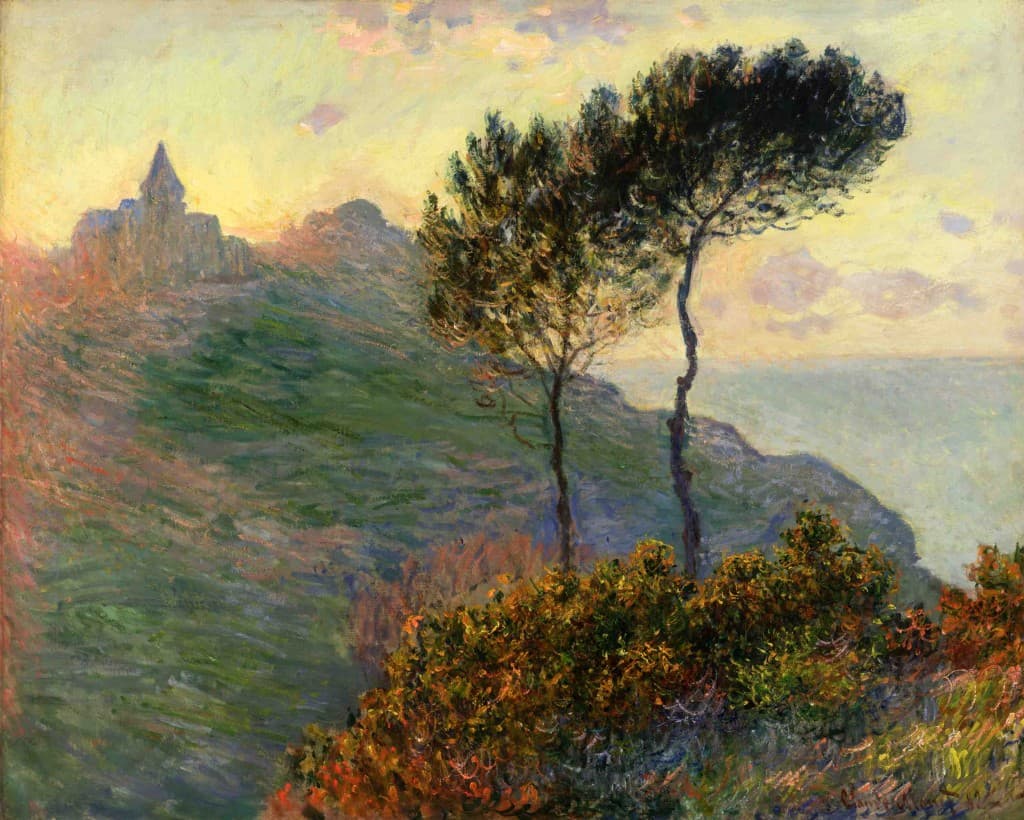
The Church at Varengeville
Claude Monet · 1882
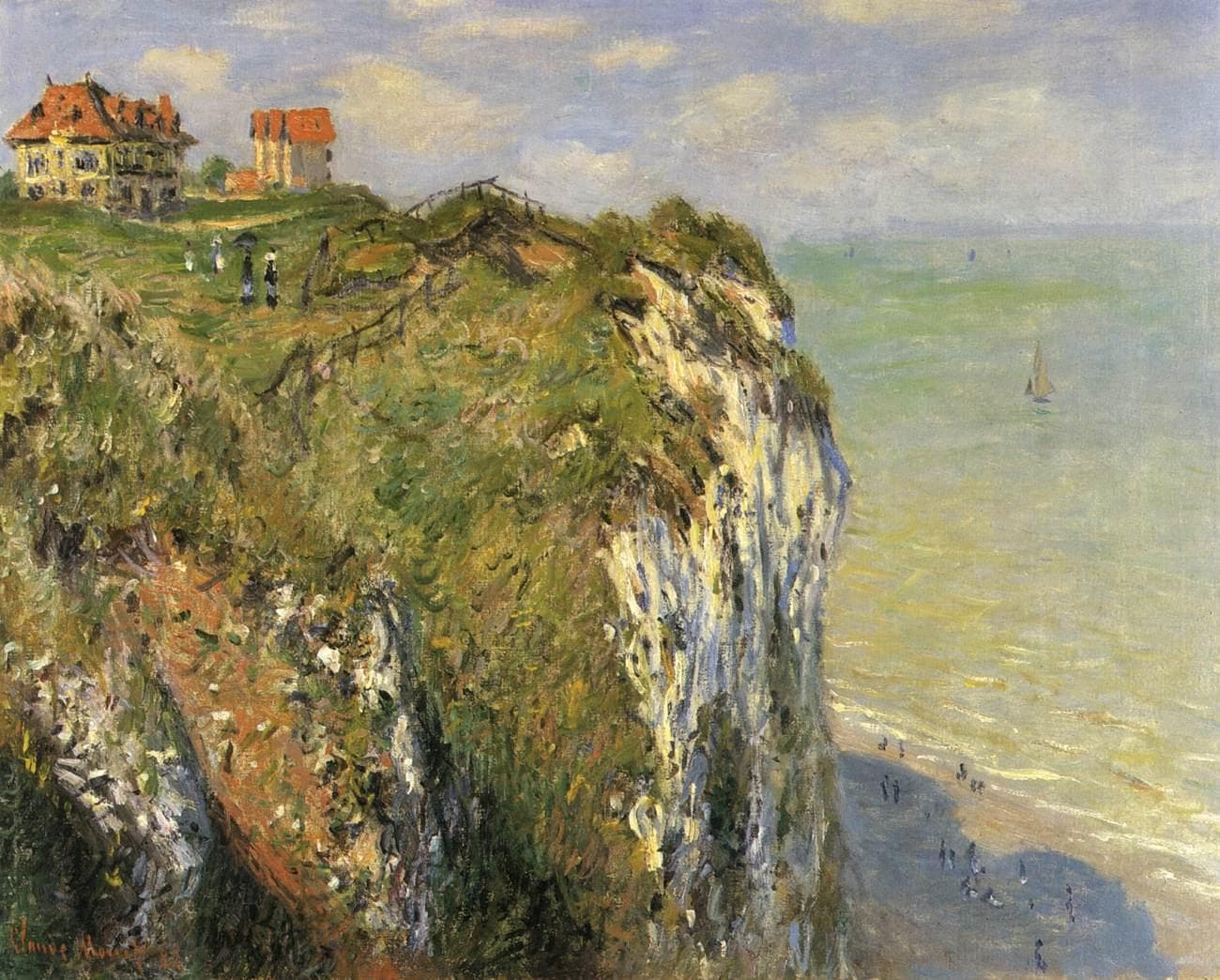
Cliffs near Dieppe
Claude Monet · 1882
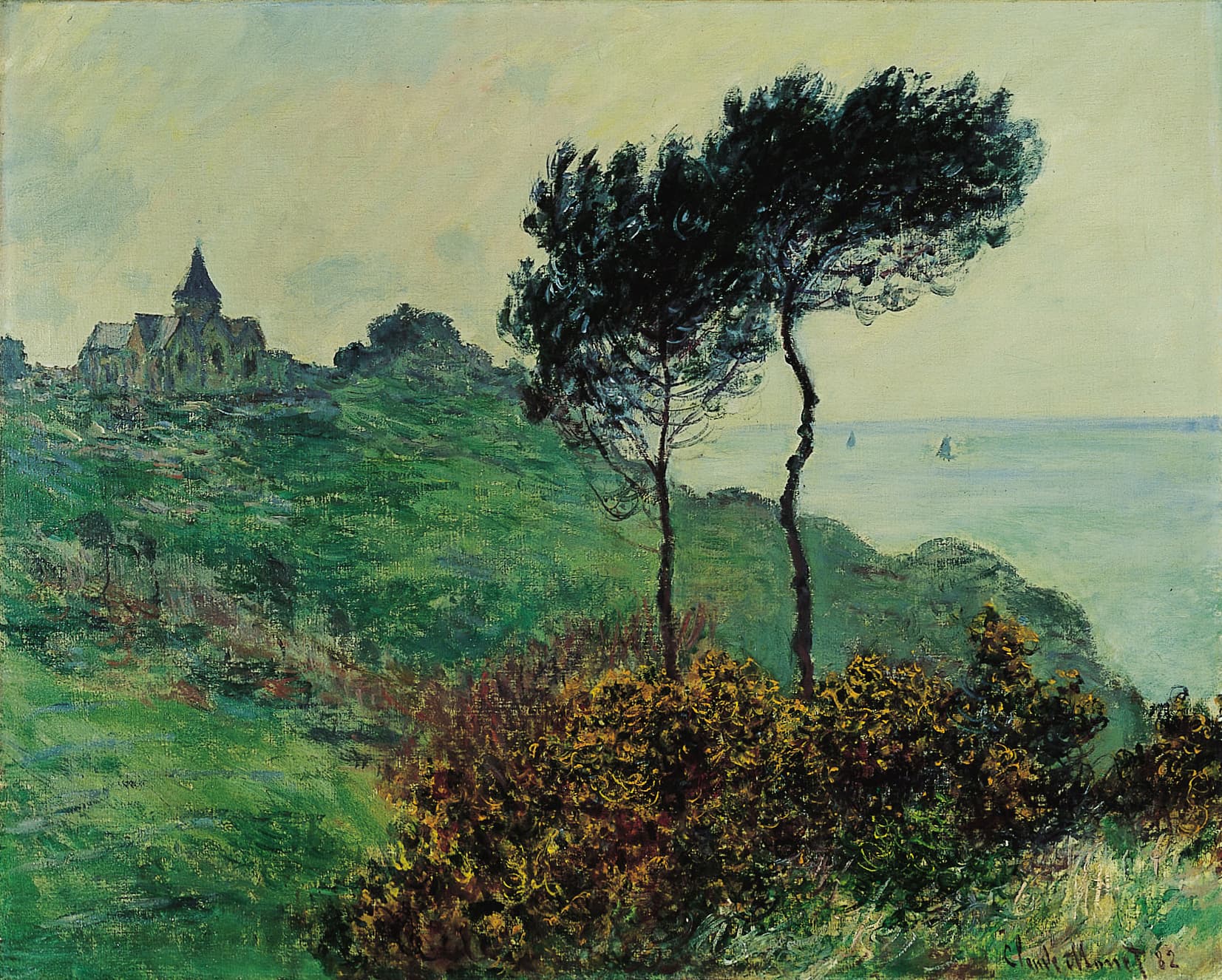
The Church at Varengeville, Grey Weather
Claude Monet · 1882
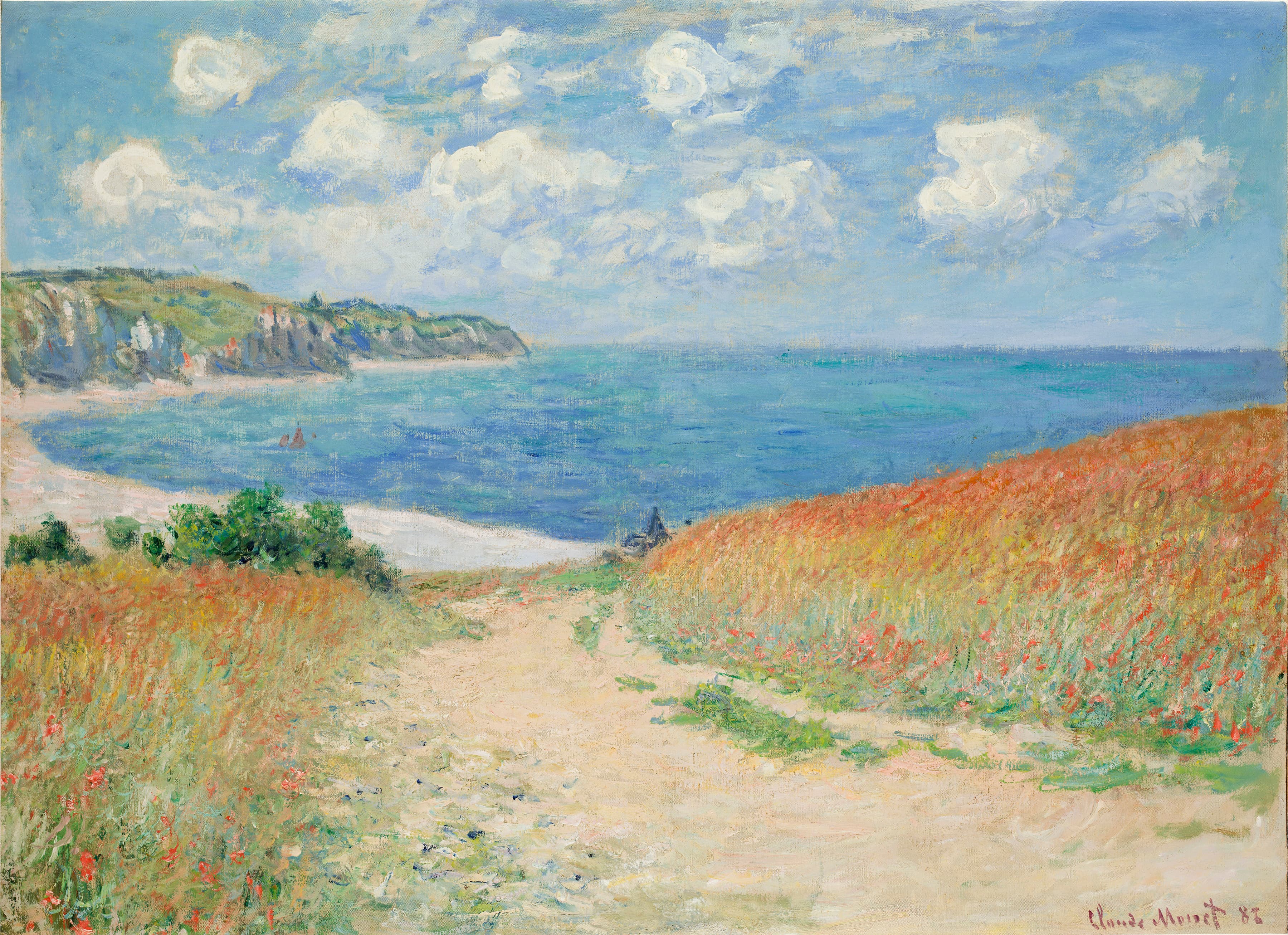
Path in the Wheat Fields at Pourville
Claude Monet · 1882
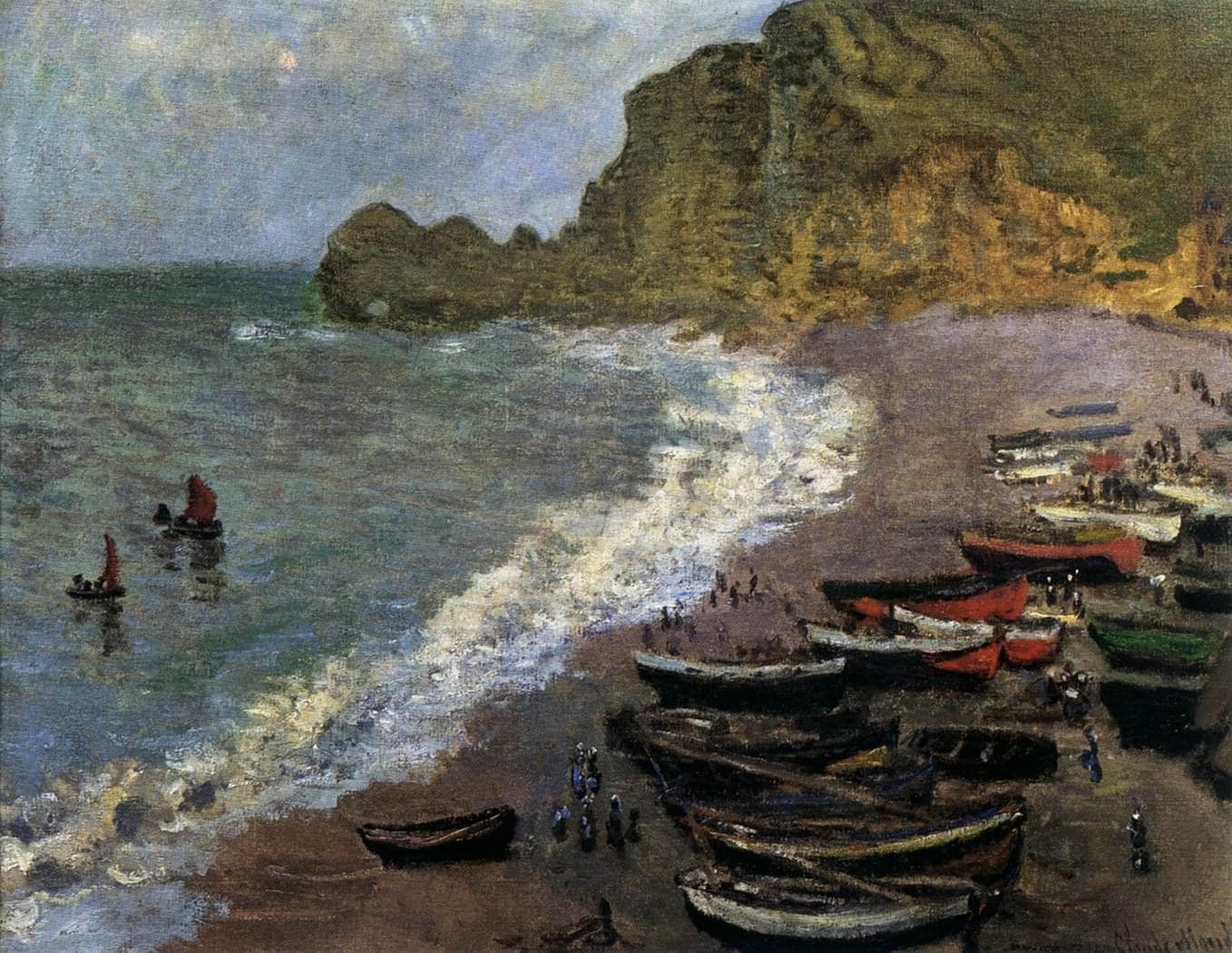
The Beach at Étretat
Claude Monet · 1883
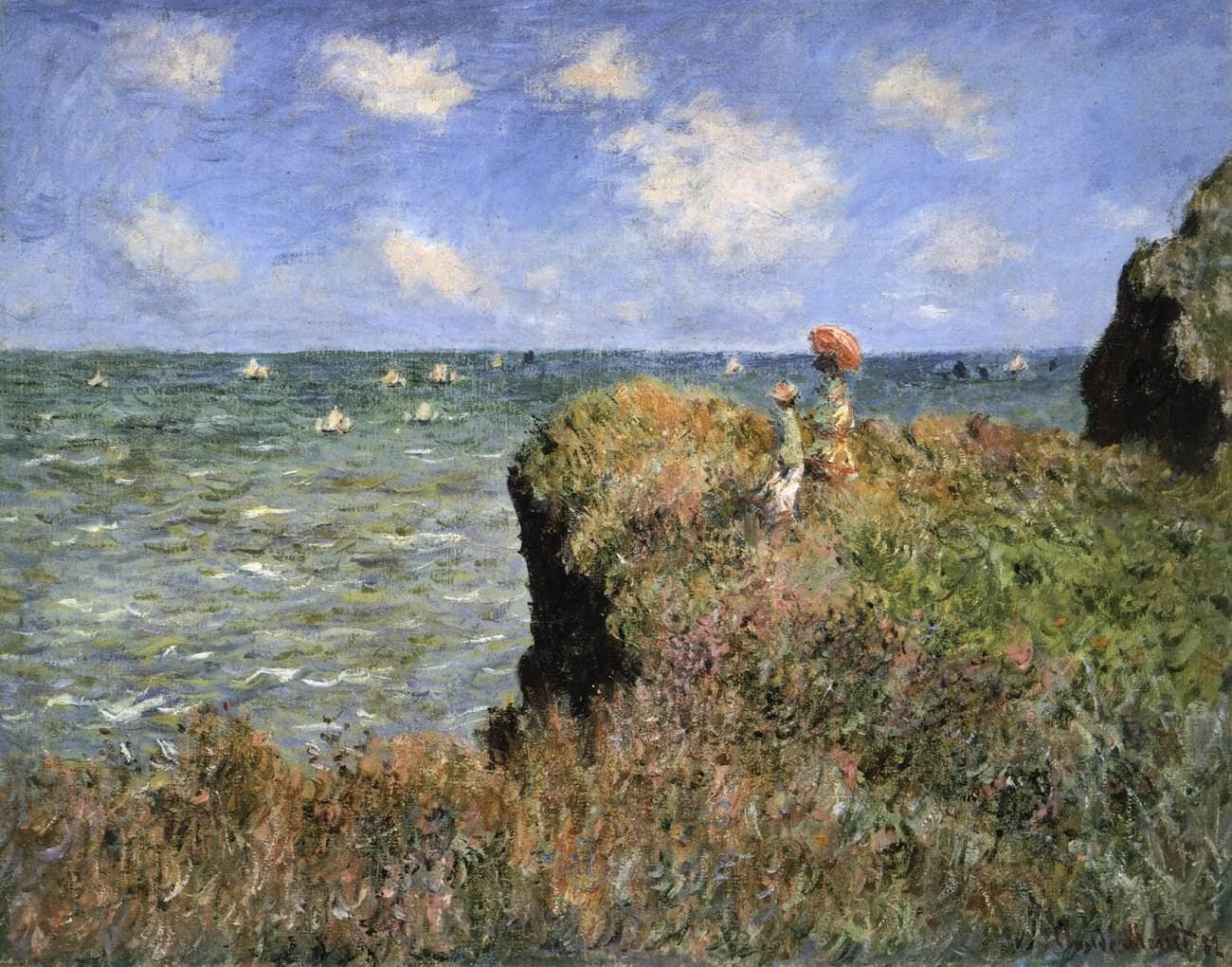
Cliff Walk at Pourville
Claude Monet · 1882
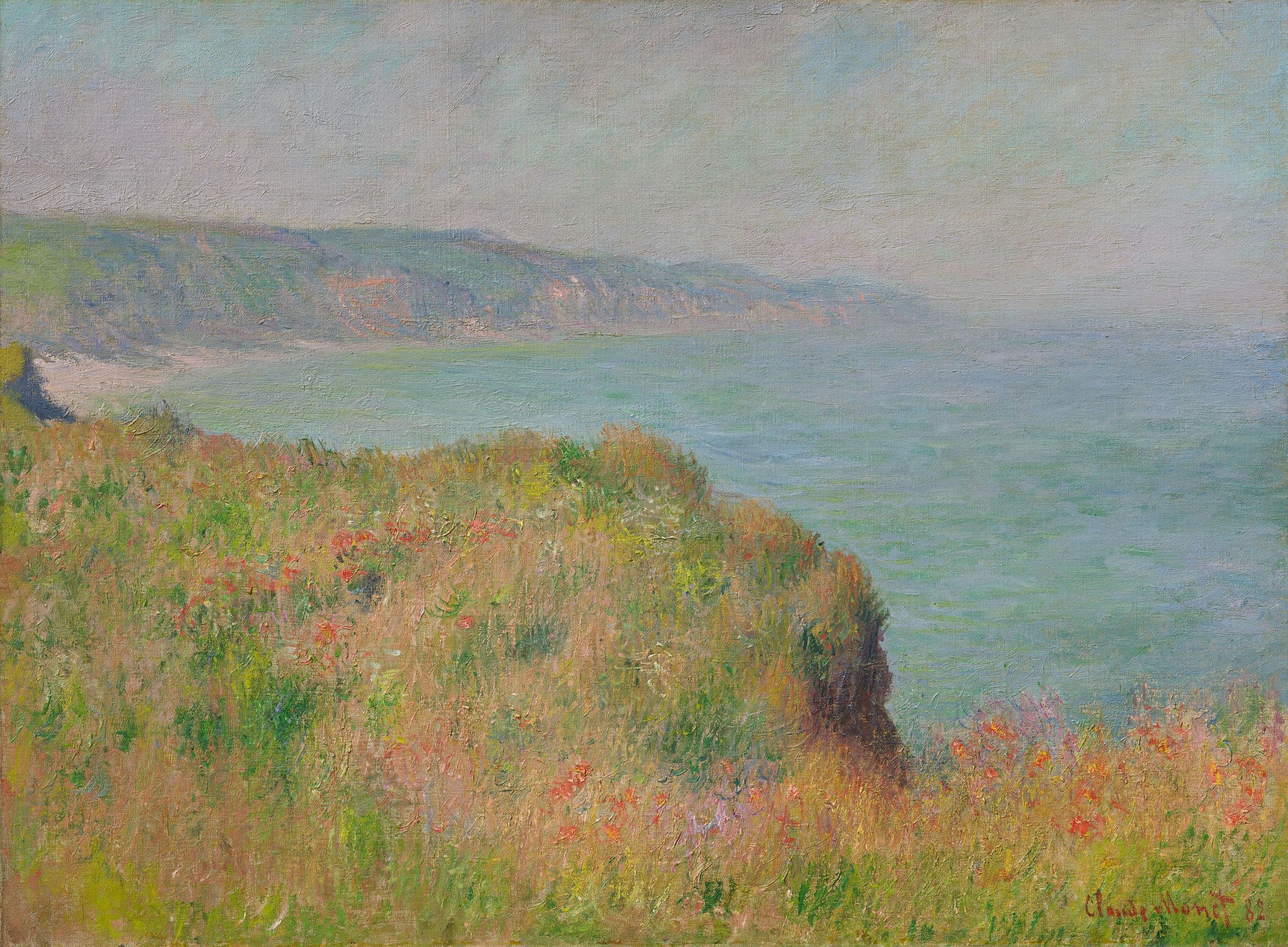
Edge of the Cliff at Pourville
Claude Monet · 1882
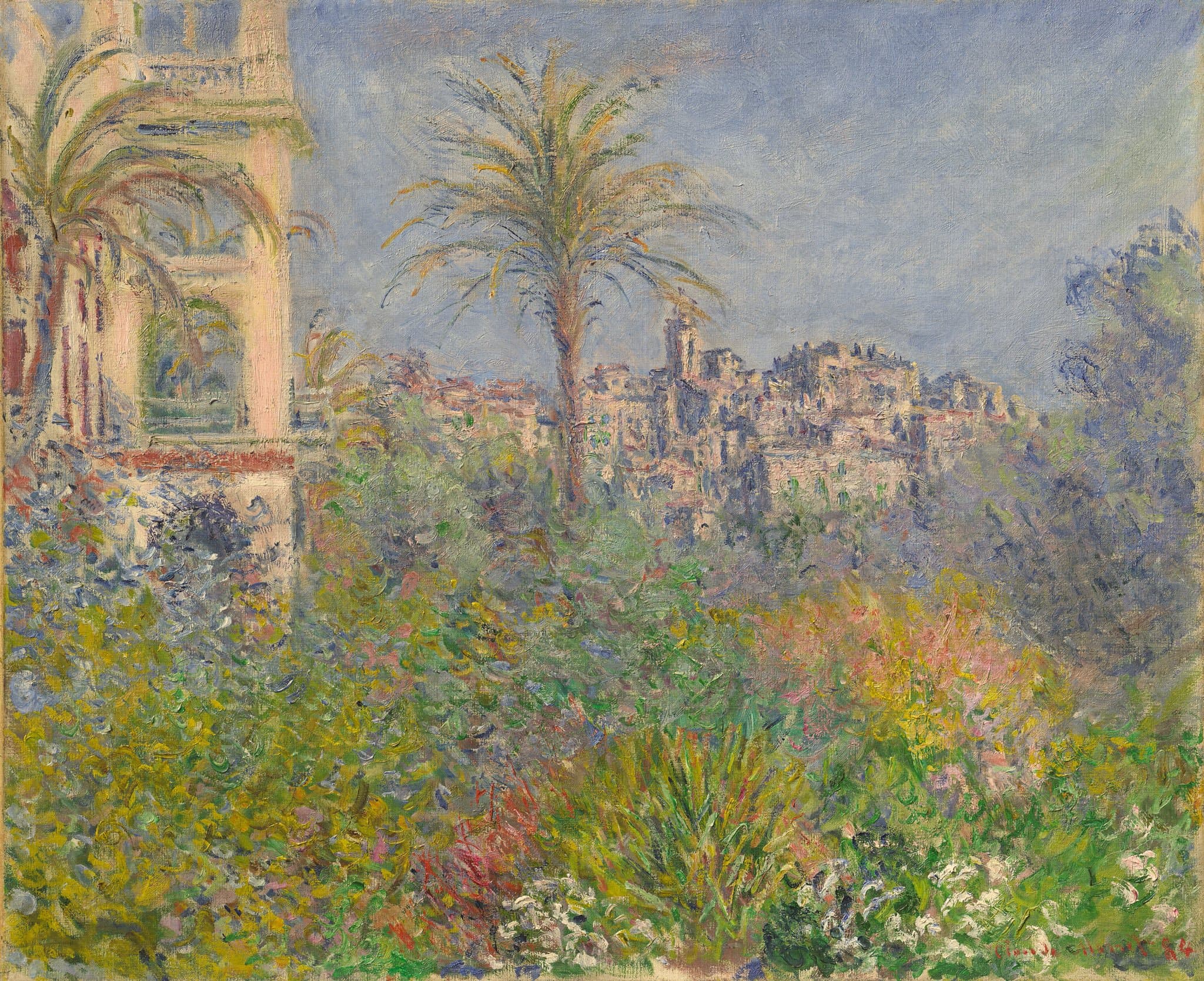
Villas at Bordighera
Claude Monet · 1884
Also painted in 1882
The same year

Beach in Pourville
Claude Monet · 1882
Portrait of Père Paul
Claude Monet · 1882
Anglers on the Seine at Poissy
Claude Monet · 1882
Les Tilleuls à Poissy
Claude Monet · 1882
The Customs House, Afternoon Effect
Claude Monet · 1882
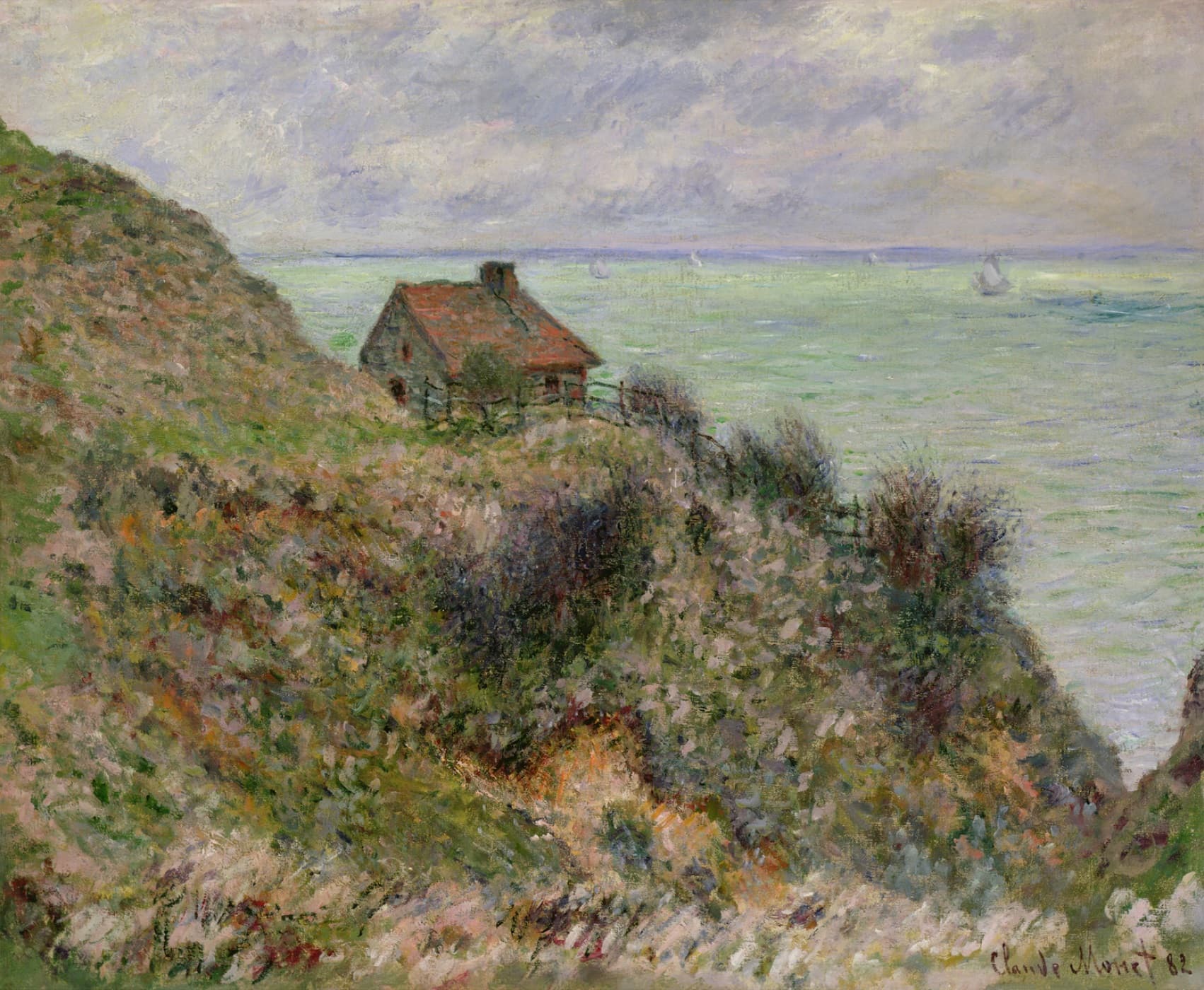
The Fisherman's House, Overcast Weather
Claude Monet · 1882
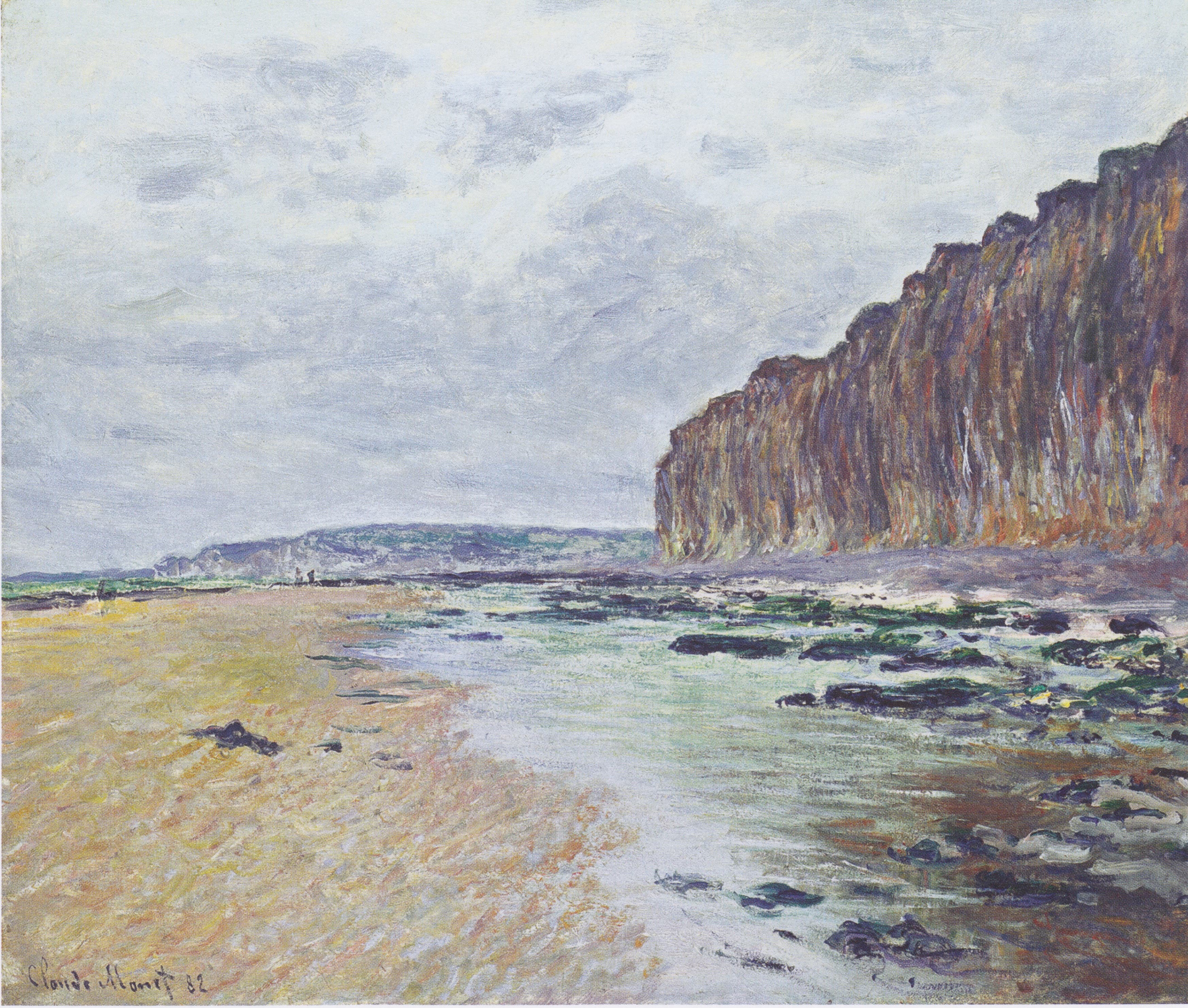
Varengeville, Low Tide
Claude Monet · 1882
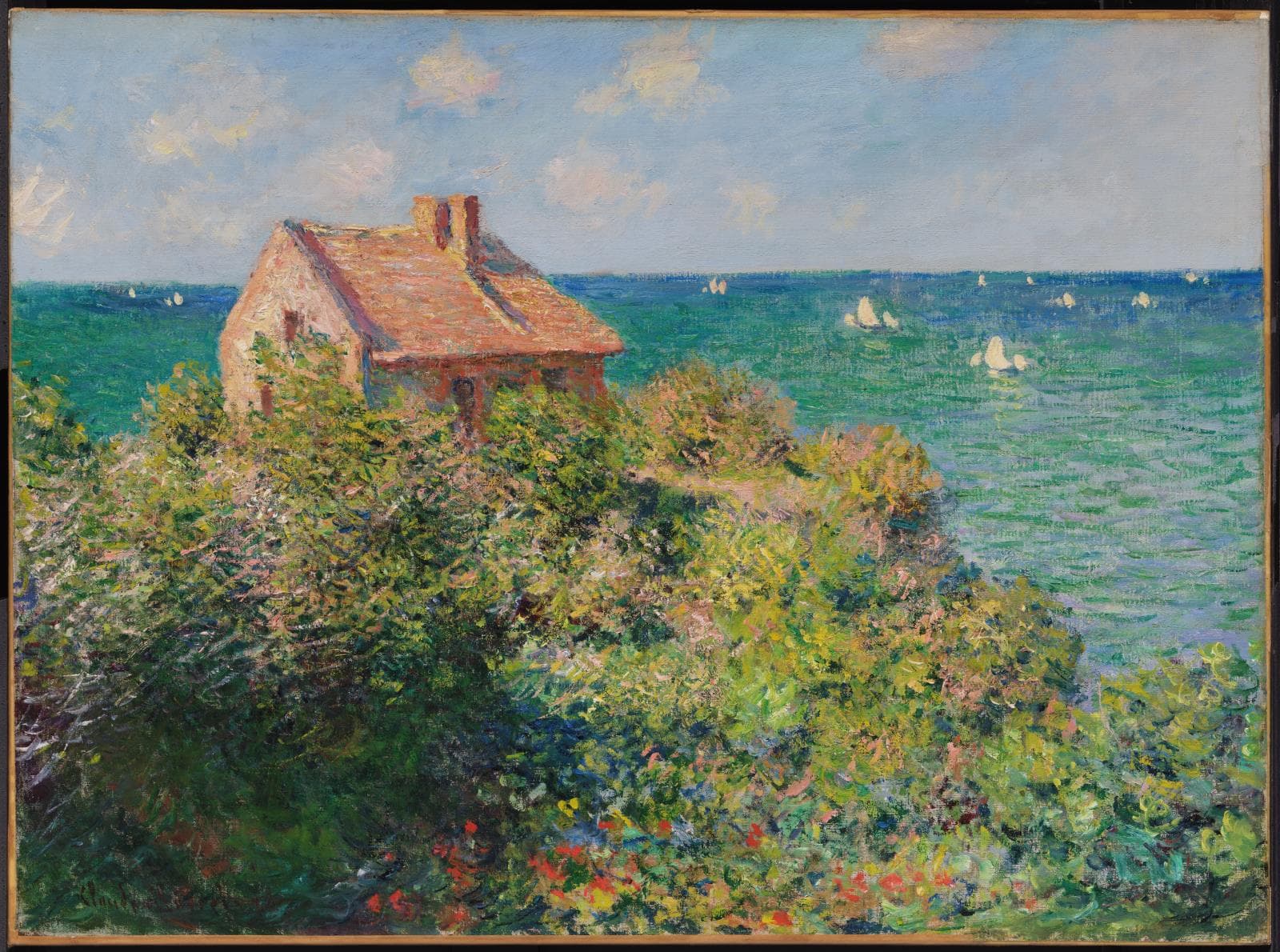
Fisherman's Cottage on the Cliffs at Varengeville
Claude Monet · 1882
Kindred works
You may also study
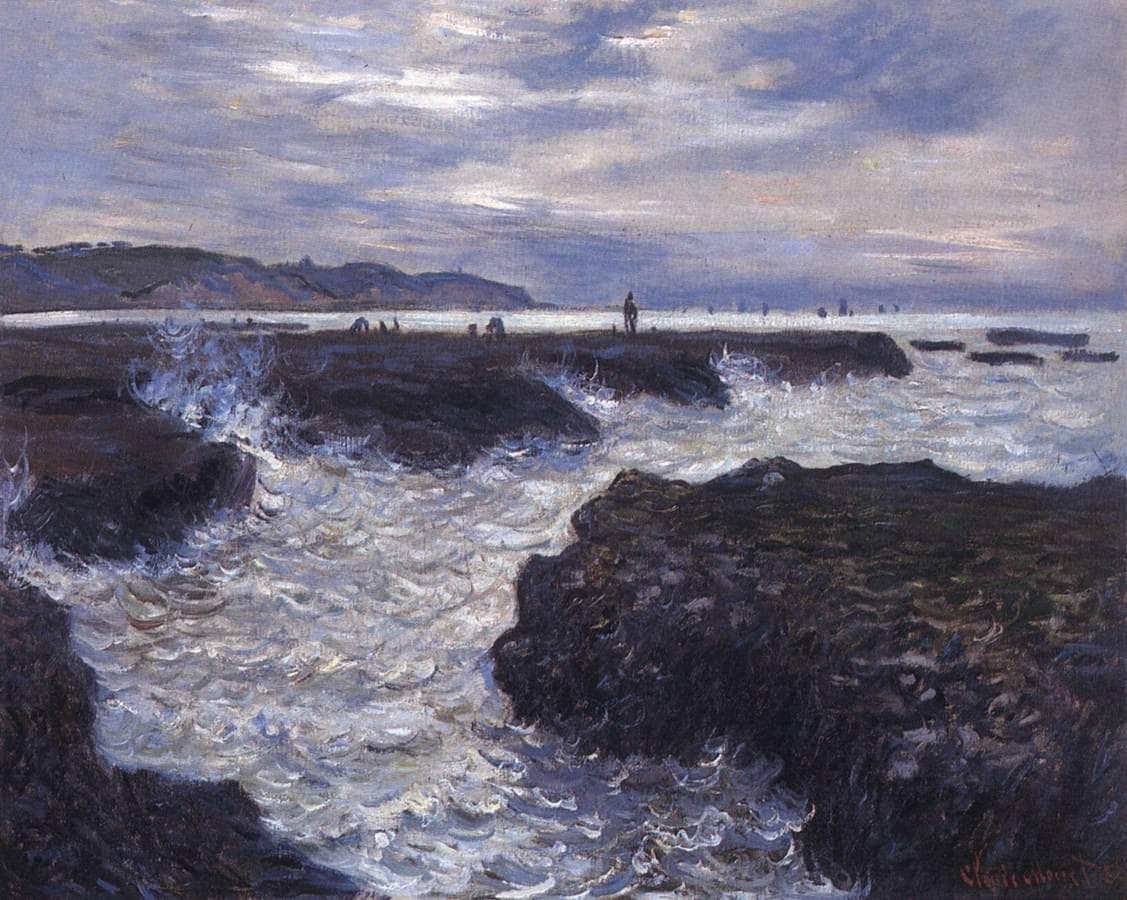
The Rocks at Pourville, Low Tide
Claude Monet · 1882
Varengeville, Low Tide
Claude Monet · 1882
Beach in Pourville
Claude Monet · 1882
Rocks at Port-Coton, the Lion Rock, Belle-Île
Claude Monet · 1886
The Pond at Montgeron
Claude Monet · 1876–77
Low Tide at Les Petites-Dalles
Claude Monet · 1884
The Seine at Rouen
Claude Monet · 1872
Ice Floes at Twilight
Claude Monet · 1893