Image: Speed Art Museum; reproduction via Wikimedia Commons · Public domain · via Wikimedia Commons
The Church at Varengeville, Grey Weather
Claude Monet, 1882
The Church at Varengeville, Grey Weather is an 1882 painting by Claude Monet of the clifftop church of Varengeville beside two wind-bent pines above a pale sea. It is in the Speed Art Museum, Louisville, Kentucky.
- Artist
- Claude Monet
- Date
- 1882
- Medium
- Oil on canvas
- Dimensions
- 65.1 × 81.3 cm
- Collection
- Speed Art Museum, Louisville, Kentucky, United States
- Movement
- Impressionism
- Catalogue
- Wildenstein 725
- Water & Sea
- Nature & Landscape
- Religion & Saints
Église de Varengeville, temps gris (The Church at Varengeville, Grey Weather) is a Claude Monet view of the small church of Saint-Valery at Varengeville-sur-Mer, standing on the cliffs above the English Channel west of Dieppe, painted on an overcast day in 1882. Catalogued by Wildenstein as no. 725, it came to the Speed Art Museum in Louisville, Kentucky, in 1964 as the bequest of Mrs. Blakemore Wheeler.
What you're looking at
The church sits small and far off on the upper left, at the crest of a long green slope: a gray stone building with a pointed slate spire, seen in silhouette against a pale sky, with a clump of trees beside it. The slope runs down from it across the left half of the canvas in broad strokes of emerald, olive and blue-green, flecked with rust and pink where the grass turns.
The right half is held by two tall, thin pines, their trunks leaning and twisting, their crowns spread like dark umbrellas of blue-black and deep green against the sky. The wind has bent them, and their shapes recall the trees in Japanese prints. At their feet a mass of gorse or broom in dark gold, ocher and bronze fills the foreground. Beyond them, at the right, the sea is a band of pale blue-gray reaching to the horizon, with two small sails. The sky is a soft, gray-yellow haze with little contrast, the "grey weather" of the title. The signature and date are at lower right.
Where and when it was painted
In 1882 Monet spent the spring and summer at Pourville, near Dieppe, and walked the cliffs westward to Varengeville. The church, isolated on the cliff edge with the sea below, gave him one of his most memorable motifs. The Speed notes that he painted the church from the hillside in three versions at different times of day. See Étretat and the Normandy Coast.
How it was painted
Monet sets the church far away and puts the near trees and bushes in front, so the composition has a strong foreground and a deep, empty middle. The pines are painted in agitated, curling strokes of very dark color, the slope in long, sweeping ones, and the sky in thin, smooth layers. Before its recent conservation the painting's varnish had yellowed; a Speed-funded treatment restored its cooler, grayer tones, and it was shown again in 2022.
How this version differs
Of the views of the church from below, the Barber Institute's The Church at Varengeville in Birmingham shows it against a golden evening sky, with the church in dark silhouette. The Speed canvas is the gray-day version, cool and muted, with the pines dominating. Compare also the clifftop hut nearby in The Customs House, Afternoon Effect and The Fisherman's House, Overcast Weather, and the shore below in Varengeville, Low Tide.
Japanese echoes
Monet collected Japanese woodblock prints, and their influence is clear in the two pines here: tall, thin, isolated against an empty sky, with their crowns spread flat like brushwork. Hiroshige and Hokusai often framed distant views through such trees. Monet uses the device to divide the picture between the land, with its church, and the open sea, and to give a strong, almost graphic accent to an otherwise misty, low-contrast scene.
Where to see it
The painting is in the Speed Art Museum in Louisville, Kentucky (accession 1964.31.20), the bequest of Mrs. Blakemore Wheeler. It is usually on view in the European galleries. For other places to see Monet, see where to see Monet's paintings.
Questions & answers
Where is The Church at Varengeville, Grey Weather?
It is in the Speed Art Museum in Louisville, Kentucky (accession 1964.31.20), the bequest of Mrs. Blakemore Wheeler in 1964. It was recently conserved and is usually on view.
When did Monet paint the church at Varengeville?
In 1882, while staying at Pourville near Dieppe. He painted the church from the hillside in three versions at different times of day.
What does the painting show?
It shows the small gray church of Varengeville on a green clifftop at upper left, two tall wind-bent pines and golden gorse in the foreground, and a pale gray sea with sails on the right under an overcast sky.
Where is the church of Varengeville?
The church of Saint-Valery stands on the cliff edge at Varengeville-sur-Mer, west of Dieppe in Normandy. The painter Georges Braque is buried in its churchyard.
More by the artist
Claude Monet

Beach in Pourville
Claude Monet · 1882
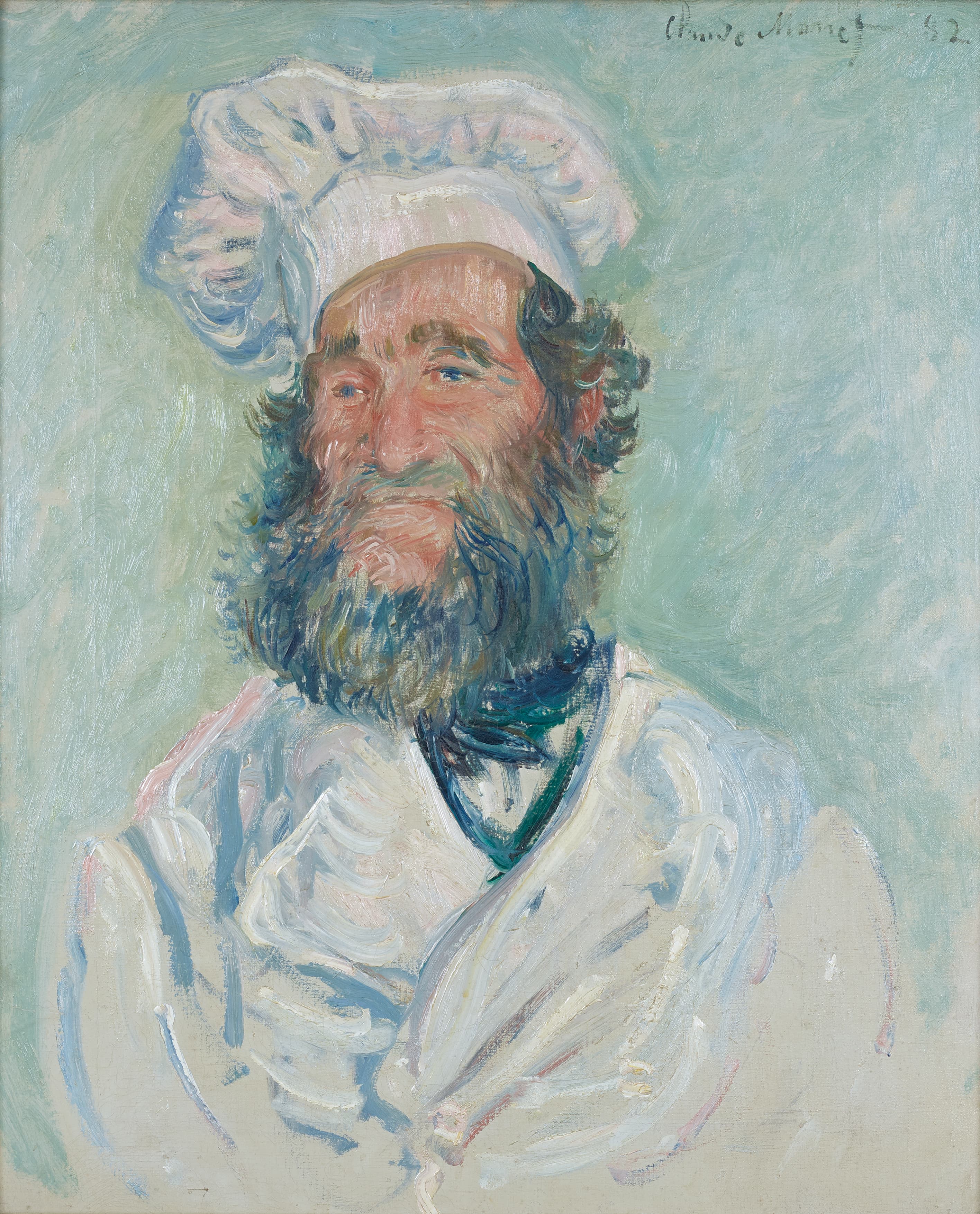
Portrait of Père Paul
Claude Monet · 1882
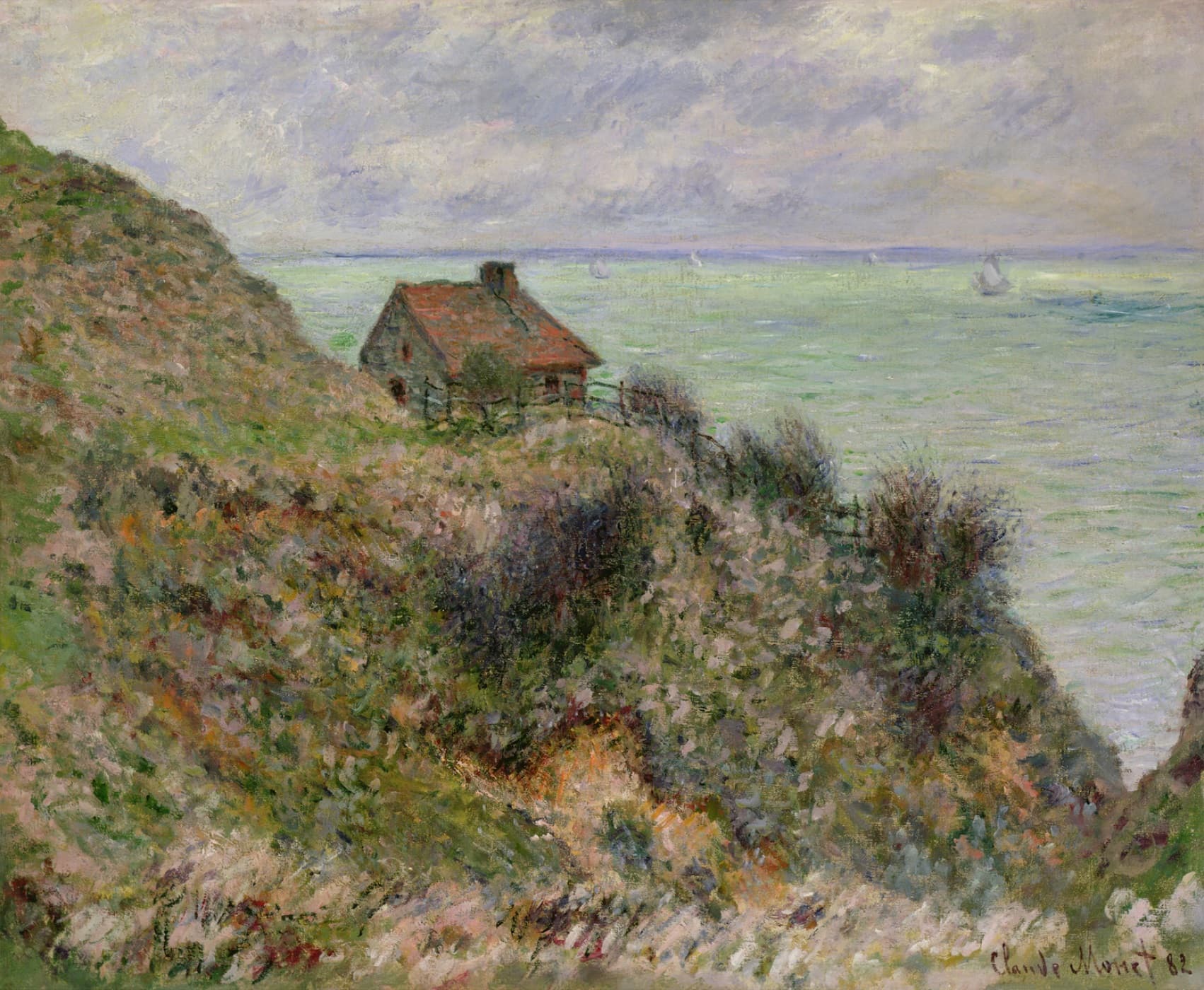
The Fisherman's House, Overcast Weather
Claude Monet · 1882
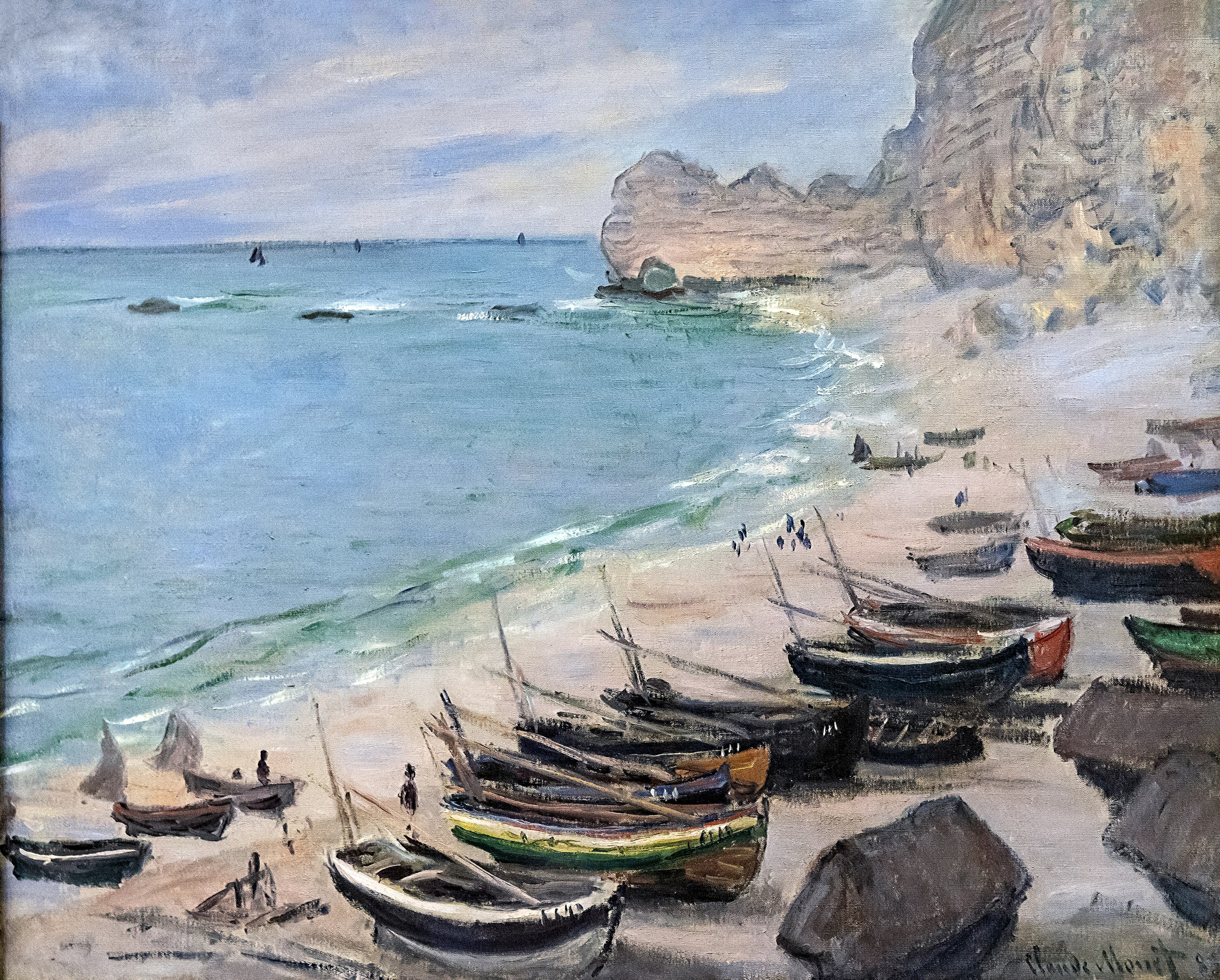
Boats on the Beach at Étretat (1883)
Claude Monet · 1883
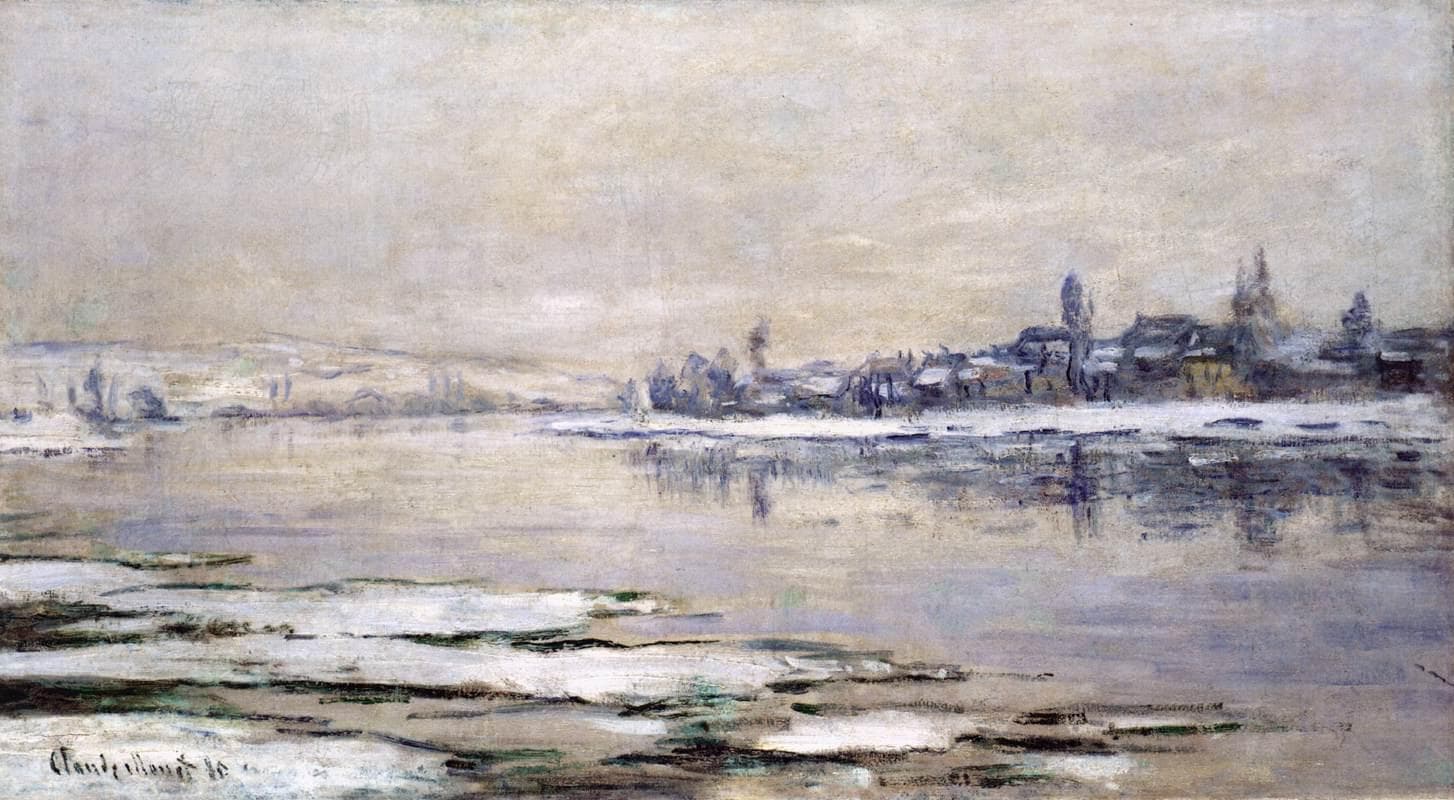
The Breakup of the Ice at Lavacourt
Claude Monet · 1880
Woman Seated under the Willows
Claude Monet · 1880
The Rocks at Pourville, Low Tide
Claude Monet · 1882
Waves Breaking
Claude Monet · 1881
Also painted in 1882
The same year
Anglers on the Seine at Poissy
Claude Monet · 1882
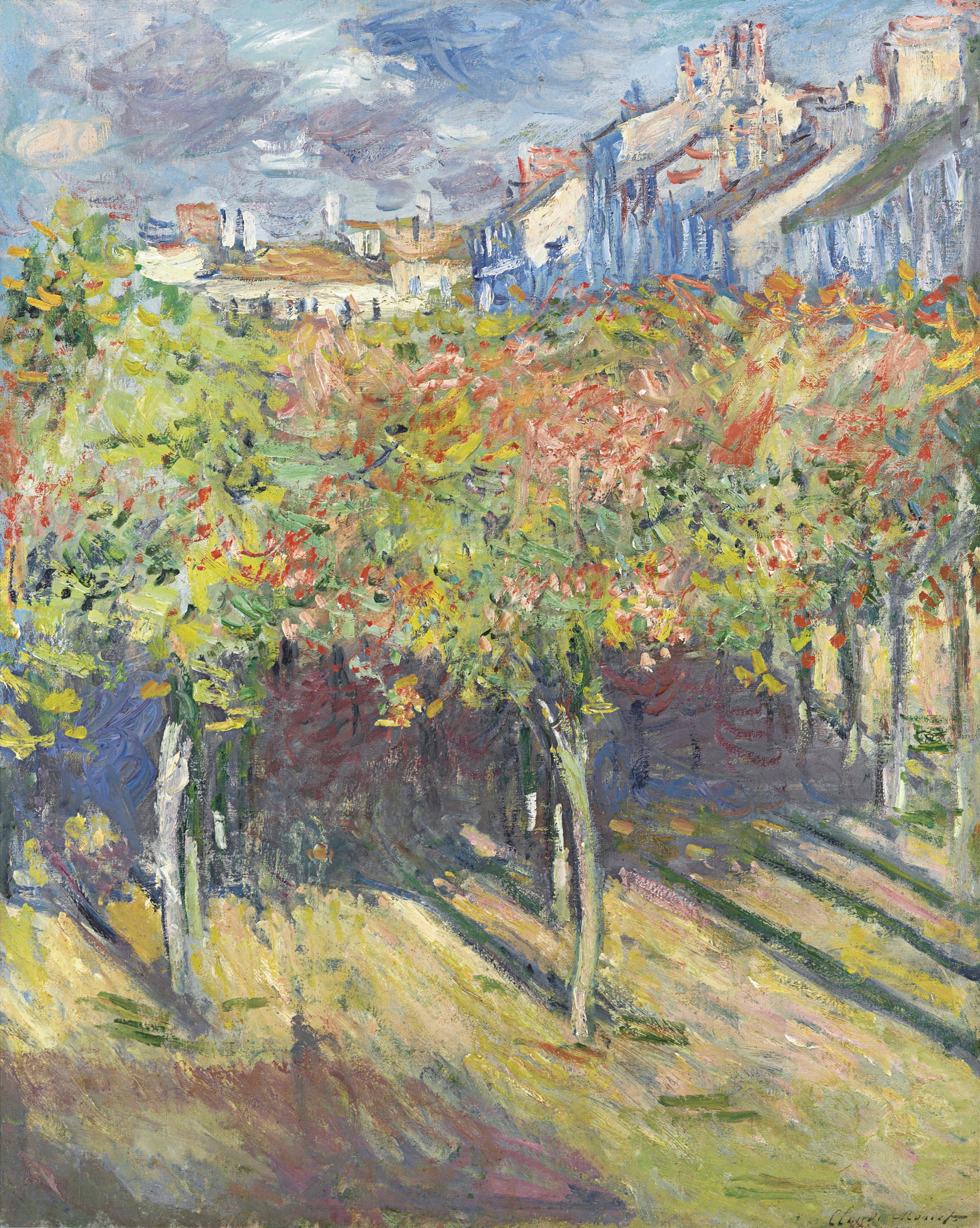
Les Tilleuls à Poissy
Claude Monet · 1882
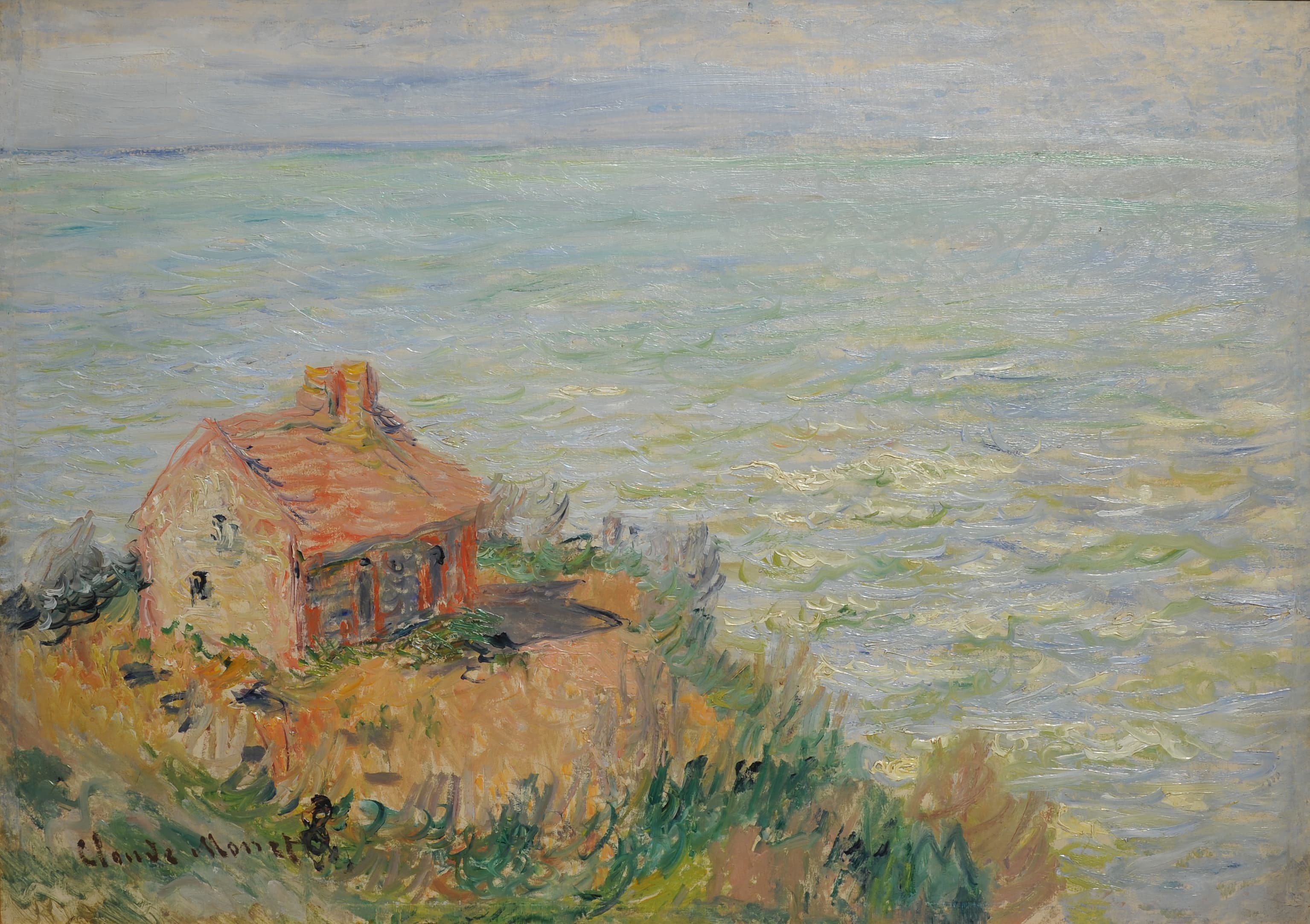
The Customs House, Afternoon Effect
Claude Monet · 1882
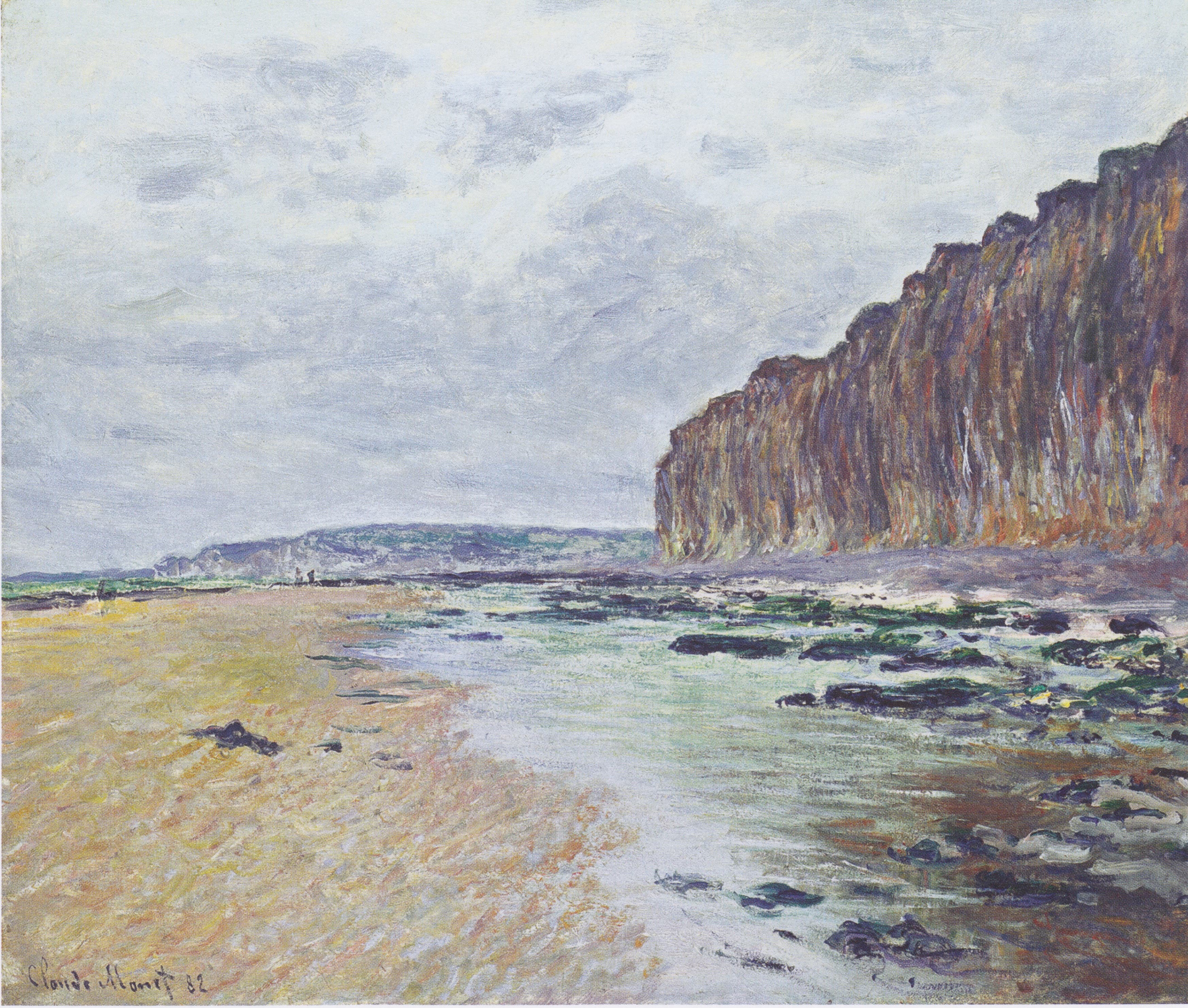
Varengeville, Low Tide
Claude Monet · 1882
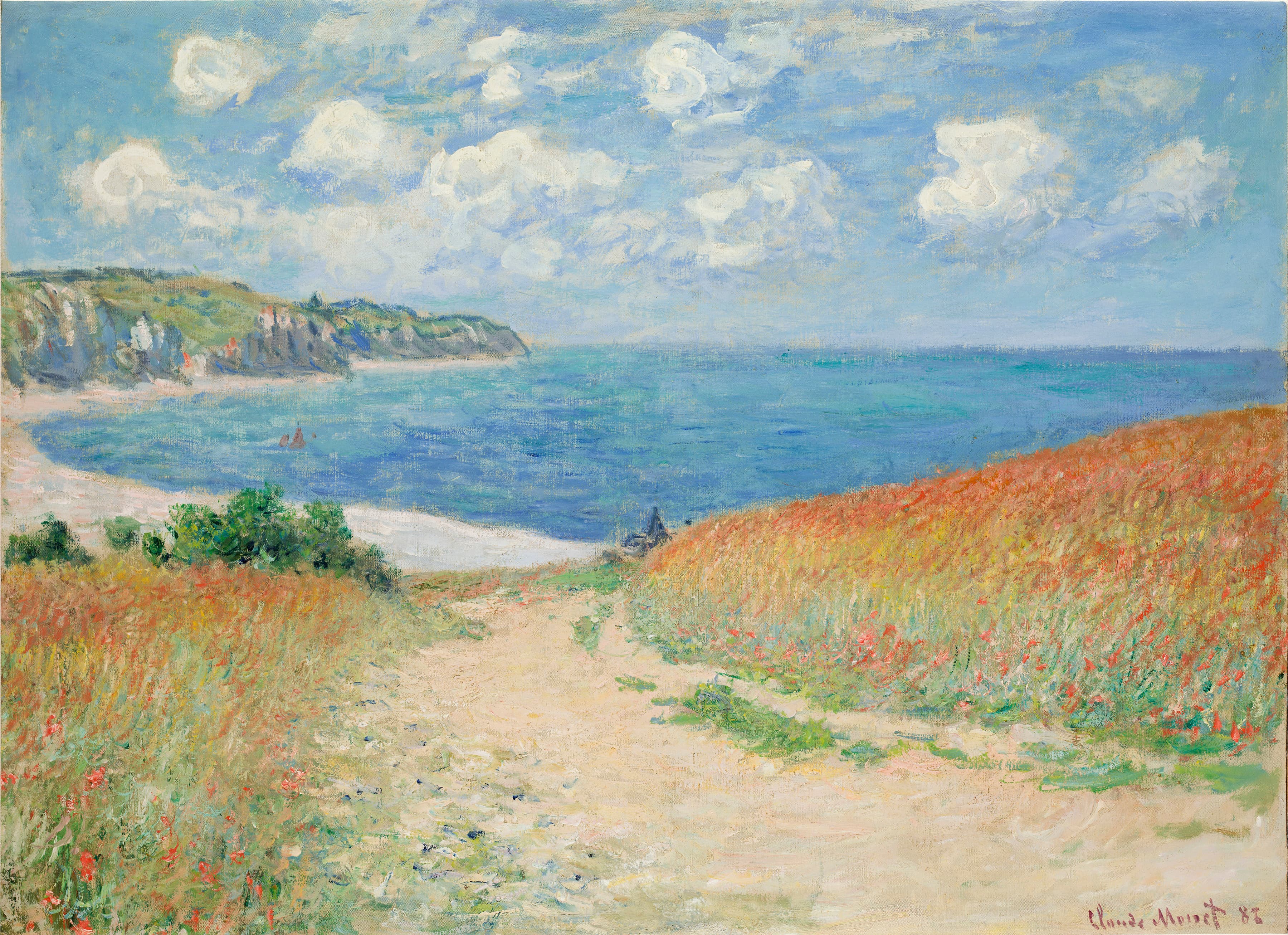
Path in the Wheat Fields at Pourville
Claude Monet · 1882
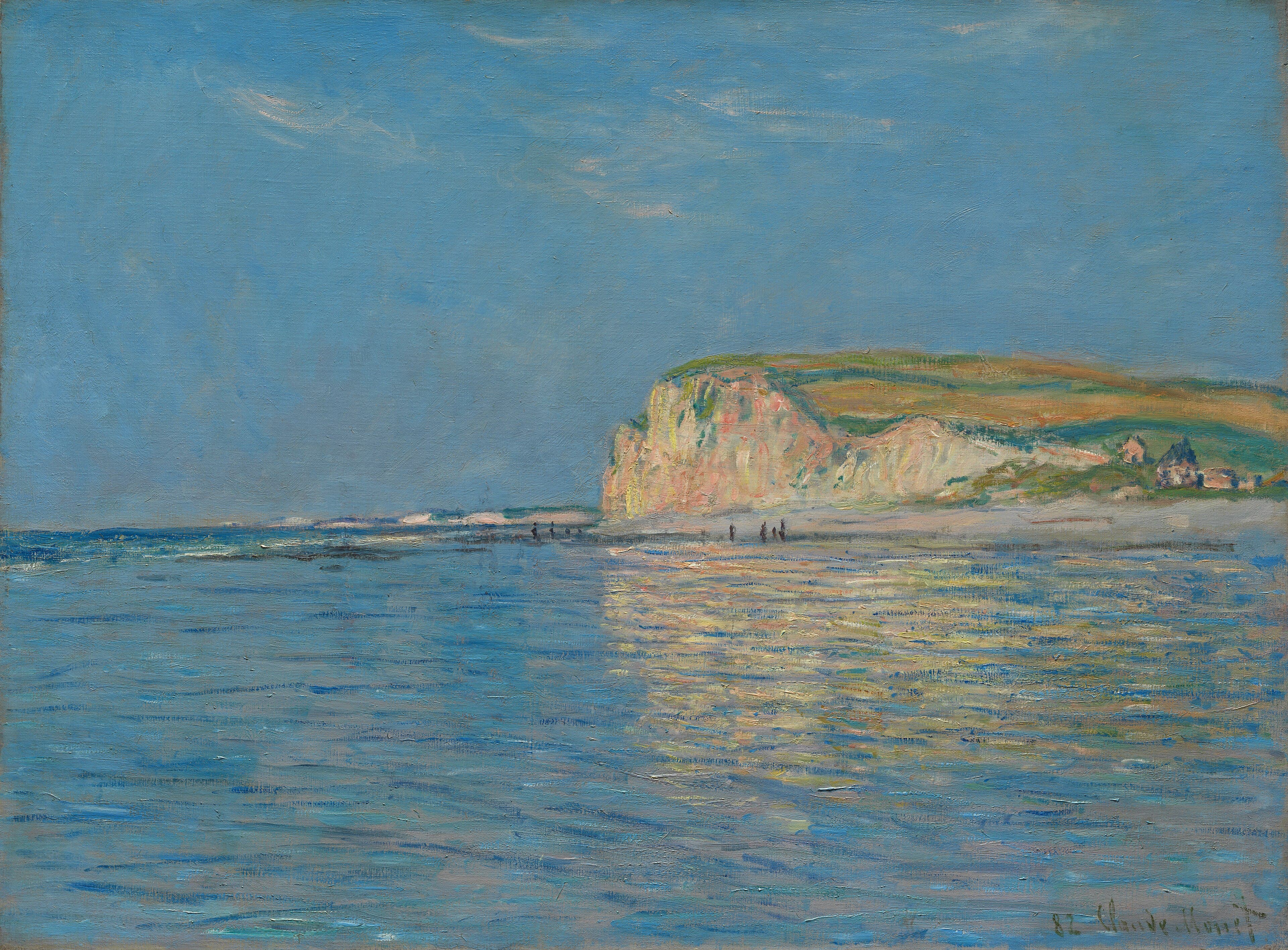
Low Tide at Pourville, near Dieppe
Claude Monet · 1882
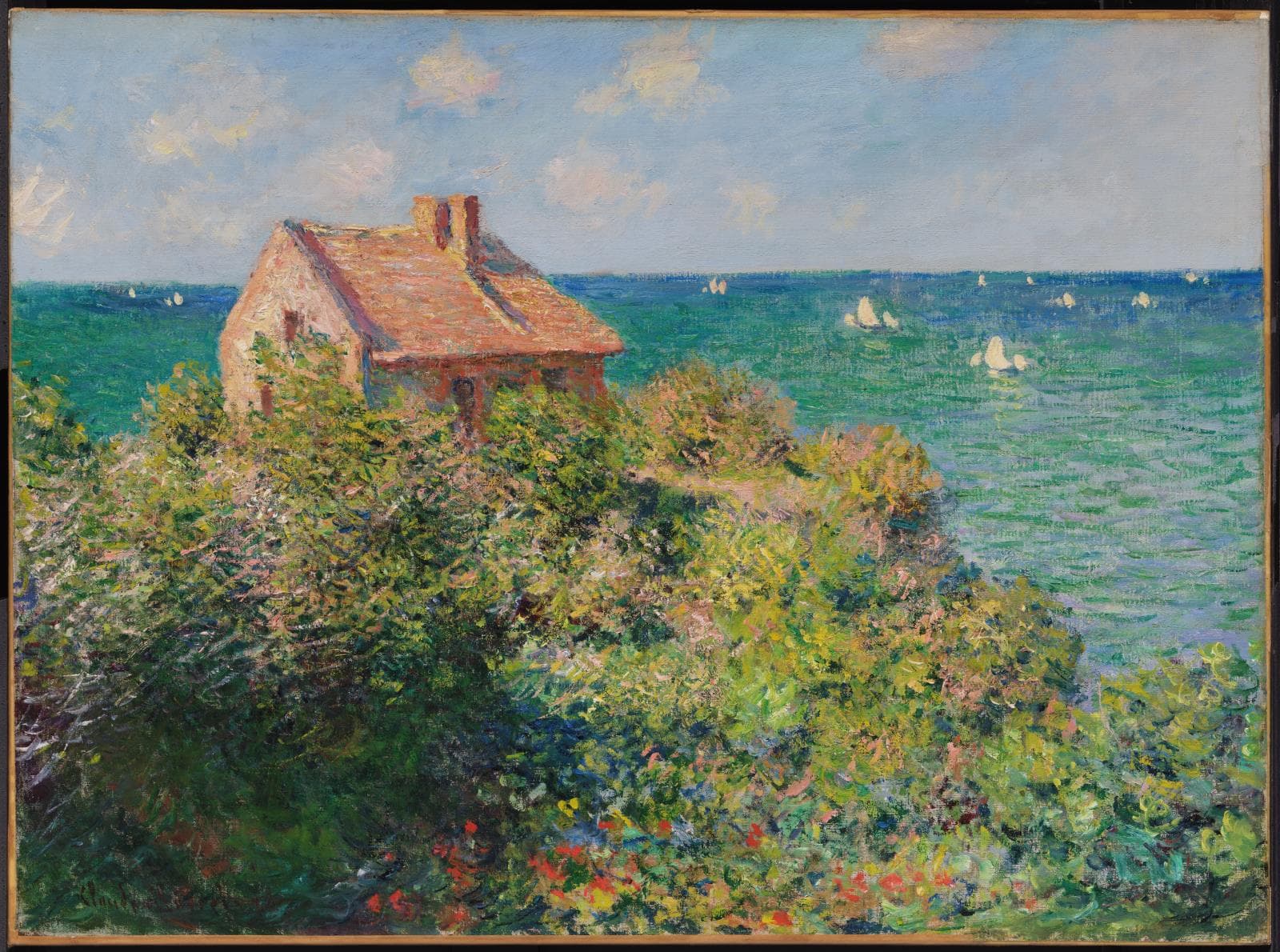
Fisherman's Cottage on the Cliffs at Varengeville
Claude Monet · 1882
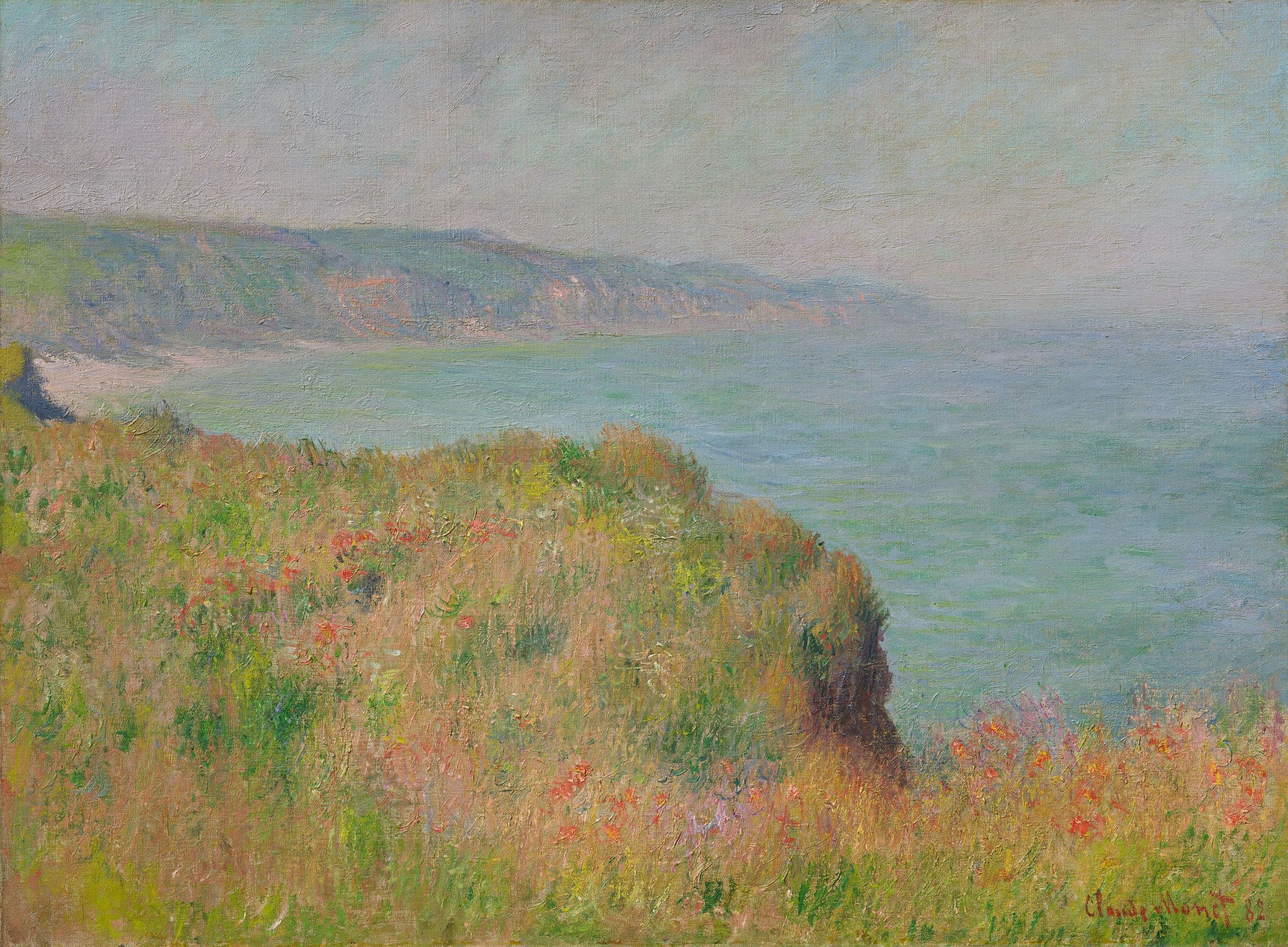
Edge of the Cliff at Pourville
Claude Monet · 1882
Kindred works
You may also study
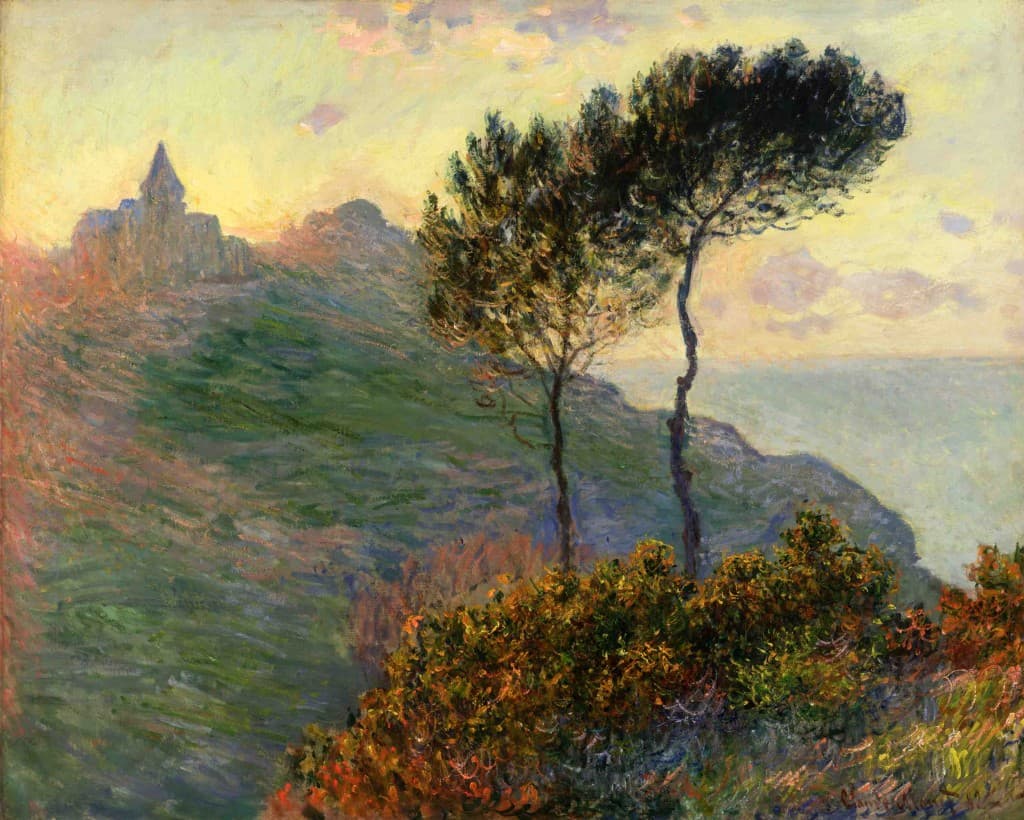
The Church at Varengeville
Claude Monet · 1882
The Customs House, Afternoon Effect
Claude Monet · 1882
Varengeville, Low Tide
Claude Monet · 1882
Edge of the Cliff at Pourville
Claude Monet · 1882
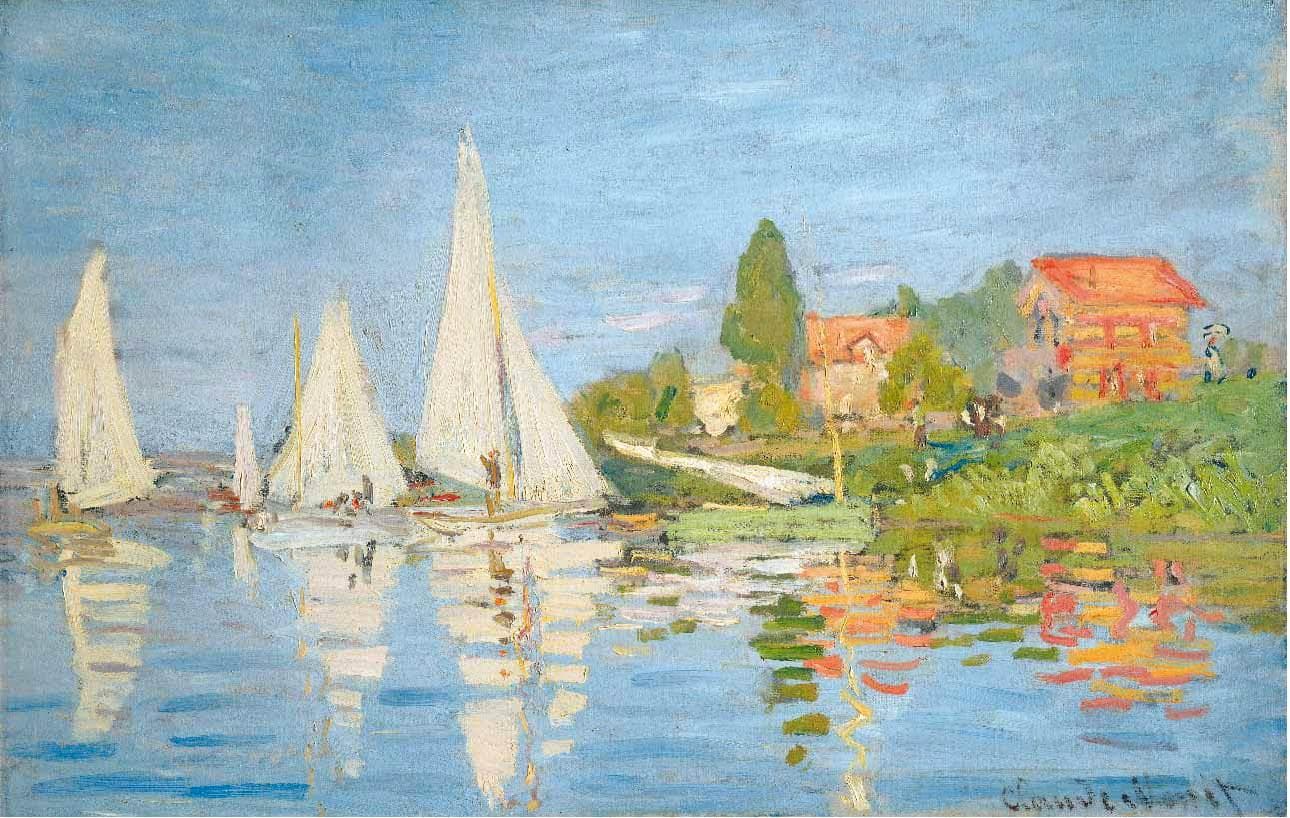
Regatta at Argenteuil
Claude Monet · c. 1872
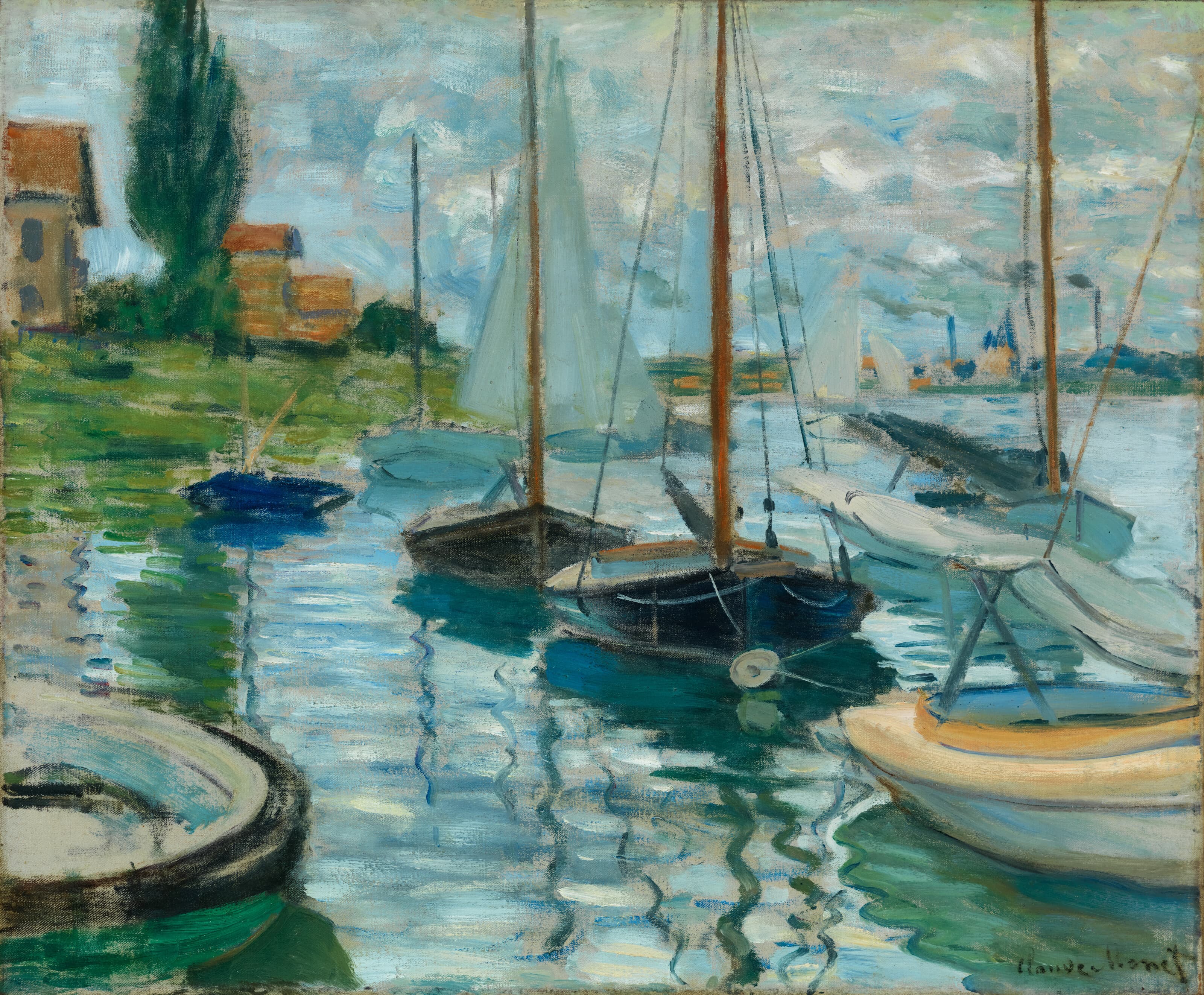
Sailboats on the Seine at Petit-Gennevilliers
Claude Monet · 1874
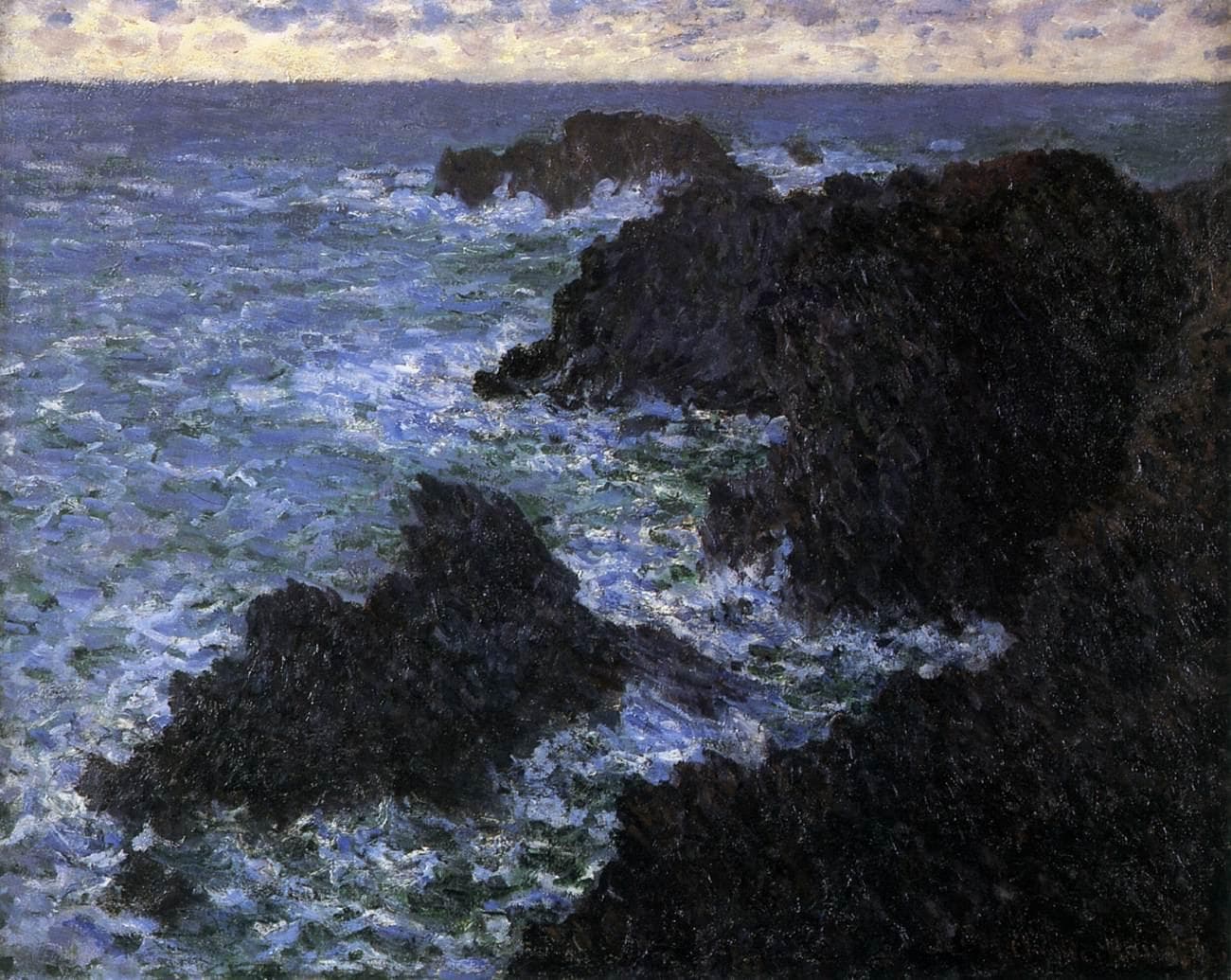
The Rocks of Belle-Île, the Wild Coast
Claude Monet · 1886
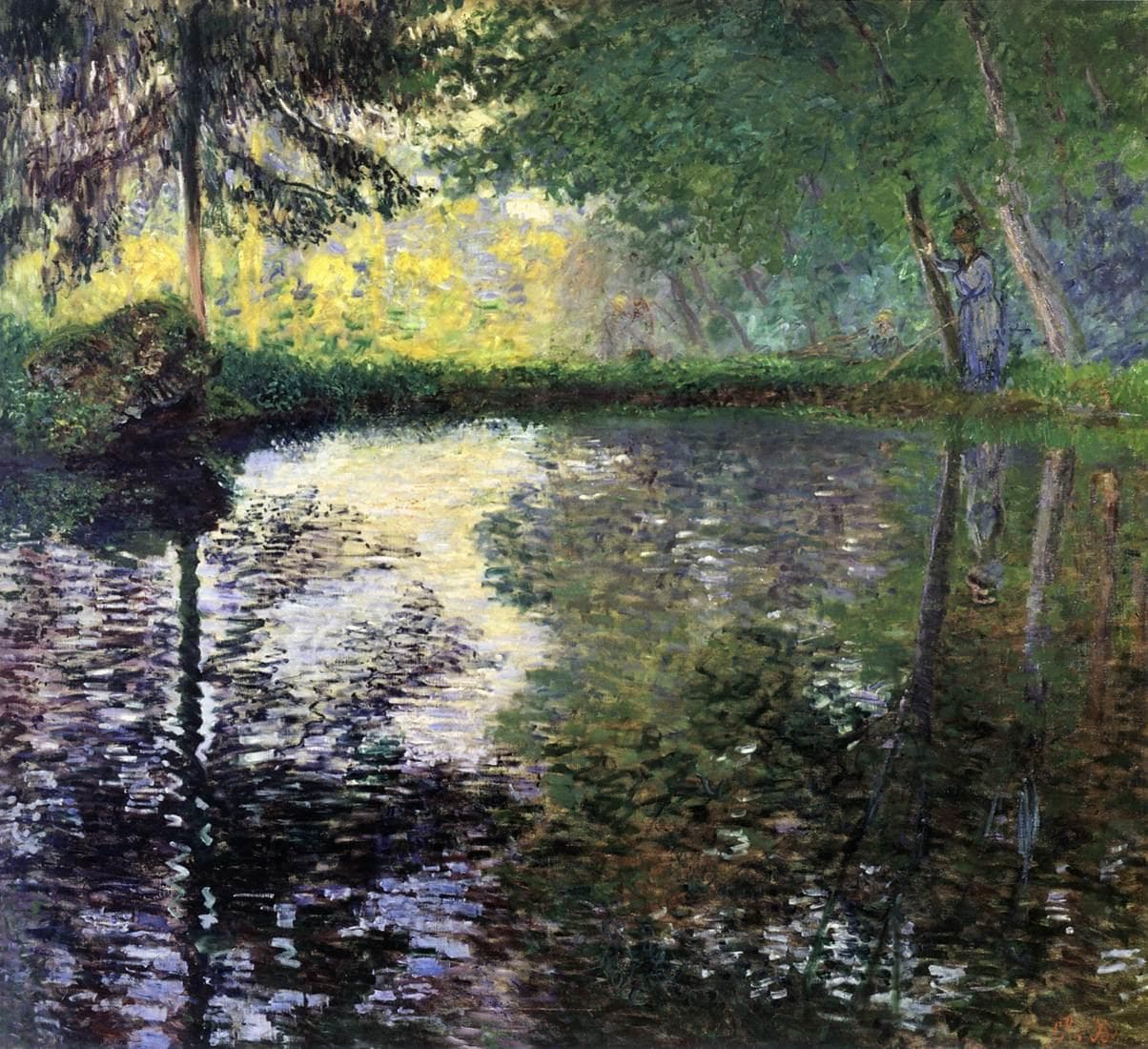
The Pond at Montgeron
Claude Monet · 1876–77