Image: Musée national des douanes (on deposit from the Musée d'Orsay); reproduction via Wikimedia Commons · Public domain · via Wikimedia Commons
The Customs House, Afternoon Effect
Claude Monet, 1882
The Customs House, Afternoon Effect is an 1882 painting by Claude Monet of the old customs officers' hut on the cliffs near Dieppe, glowing orange above a pale, glittering sea. Owned by the Musée d'Orsay, it is shown at the Musée national des douanes, Bordeaux.
- Artist
- Claude Monet
- Date
- 1882
- Medium
- Oil on canvas
- Dimensions
- 54.5 × 80 cm
- Collection
- Musée national des douanes (on deposit from the Musée d'Orsay), Bordeaux, France
- Movement
- Impressionism
- Catalogue
- Wildenstein 737
- Water & Sea
- Nature & Landscape
La Cabane des douaniers. Effet d'après-midi (The Customs House, Afternoon Effect) is one of the many canvases Claude Monet painted in 1882 of a small stone hut perched on the cliffs between Pourville and Varengeville, near Dieppe on the Normandy coast. Catalogued by Wildenstein as no. 737, it entered the French national collections in 1985 as an anonymous gift to the Musée d'Orsay (inventory RF 1985 14), and since then has been on deposit at the Musée national des douanes, the French customs museum in Bordeaux, where it is the star of the collection.
What you're looking at
The hut sits in the lower left of the canvas on a shoulder of cliff, seen from above and slightly behind. Its walls and roof are painted in warm orange, coral and rose, with a squat chimney and a darker side wall in rust and red; a flat gray terrace or path runs off to its right. Around it the clifftop vegetation, in ocher, sage green and dark blue-green, tumbles down toward the bottom of the picture, with tufts of grass and shrubs drawn in quick, curling strokes.
The rest of the canvas, nearly three-quarters of it, is sea. Seen from high up, the water rises almost to the top edge, painted in long, swirling, horizontal strokes of pale blue, mint green, cream and lilac. In the lower right the afternoon sun catches the swell, and the strokes turn yellow-white and thicker, as if the light were bouncing off the waves. A narrow strip of gray-blue sky closes the picture. The signature is at lower left.
The customs house and the summer of 1882
The hut had been built under Napoleon as a lookout post for the customs officers who patrolled the coast against smugglers; by Monet's time it was used by local fishermen to store gear. In 1882 Monet spent long periods at Pourville, a small resort west of Dieppe, first alone in the spring and then for the summer with Alice Hoschedé and the children. He walked the cliffs toward Varengeville daily and painted the hut again and again, from different sides and in different weather, in more than a dozen canvases. They are a prototype for his later series. See Étretat and the Normandy Coast.
How it was painted
The sea is built from long, flowing, slightly curved strokes laid side by side, with very little blending, so the surface seems to move. The hut, by contrast, is blocked in with a few broad, flat planes of warm color. The vantage point, from above with no horizon to speak of, flattens the space and makes the sea read as a vertical wall of color behind the hut, an effect that looks forward to Monet's late water-garden paintings.
How this version differs
The customs-house pictures range from cool and overcast to blazing. In Fisherman Hut, Cloudy Weather the hut is seen from below against a gray sky, and in Fisherman's Cottage on the Cliffs at Varengeville in Boston it is half-buried in flowering shrubs above a green sea dotted with sails. The Orsay–Bordeaux canvas is the one where the sea dominates most completely and where the afternoon sun turns the walls a hot orange. Compare also Edge of the Cliff at Pourville, painted nearby the same year.
Where to see it
The painting belongs to the Musée d'Orsay but is shown at the Musée national des douanes in Bordeaux, a fitting home for a picture of a customs post, where it is the only Monet in a public collection in the region. For Monet's paintings in Paris, see Monet at the Musée d'Orsay.
Questions & answers
Where is Monet's Customs House, Afternoon Effect?
It belongs to the Musée d'Orsay (inventory RF 1985 14), an anonymous gift of 1985, and is on long-term deposit at the Musée national des douanes in Bordeaux, the French customs museum.
Where is the customs house Monet painted?
It stands on the cliffs between Pourville and Varengeville-sur-Mer, west of Dieppe in Normandy. Built as a lookout for customs officers watching for smugglers, it was used by fishermen in Monet's day.
When did Monet paint the customs house?
In 1882, during long stays at Pourville. He painted the hut in more than a dozen canvases, from different angles and in different weather.
What does Customs House, Afternoon Effect show?
It shows a small orange-roofed stone hut on a grassy clifftop seen from above, with a pale blue-green sea filling most of the canvas and afternoon sun glittering on the waves at lower right.
More by the artist
Claude Monet
Portrait of Père Paul
Claude Monet · 1882
Les Tilleuls à Poissy
Claude Monet · 1882
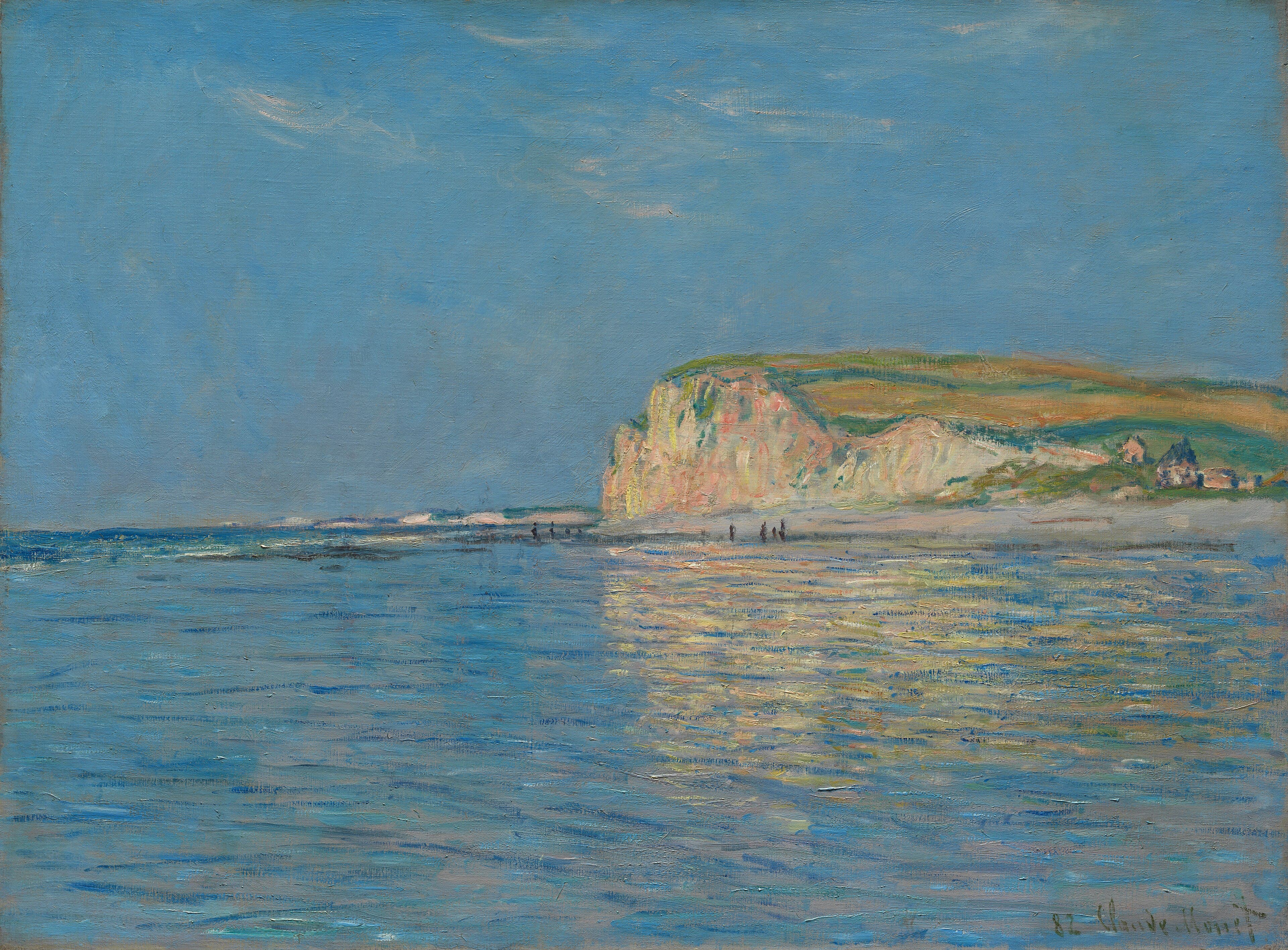
Low Tide at Pourville, near Dieppe
Claude Monet · 1882

Beach in Pourville
Claude Monet · 1882
Vase of Flowers
Claude Monet · c. 1881–82
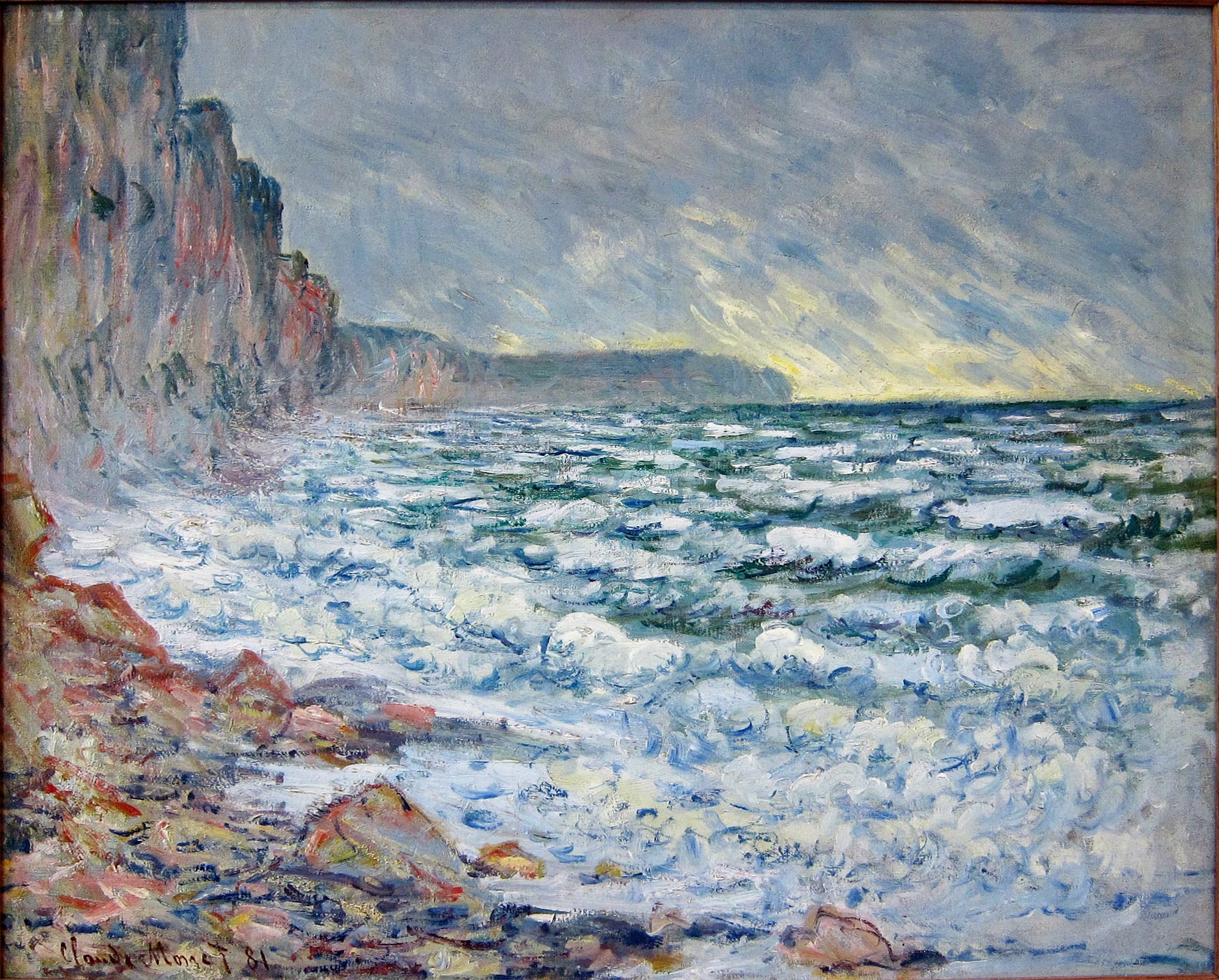
Fécamp, by the Sea
Claude Monet · 1881
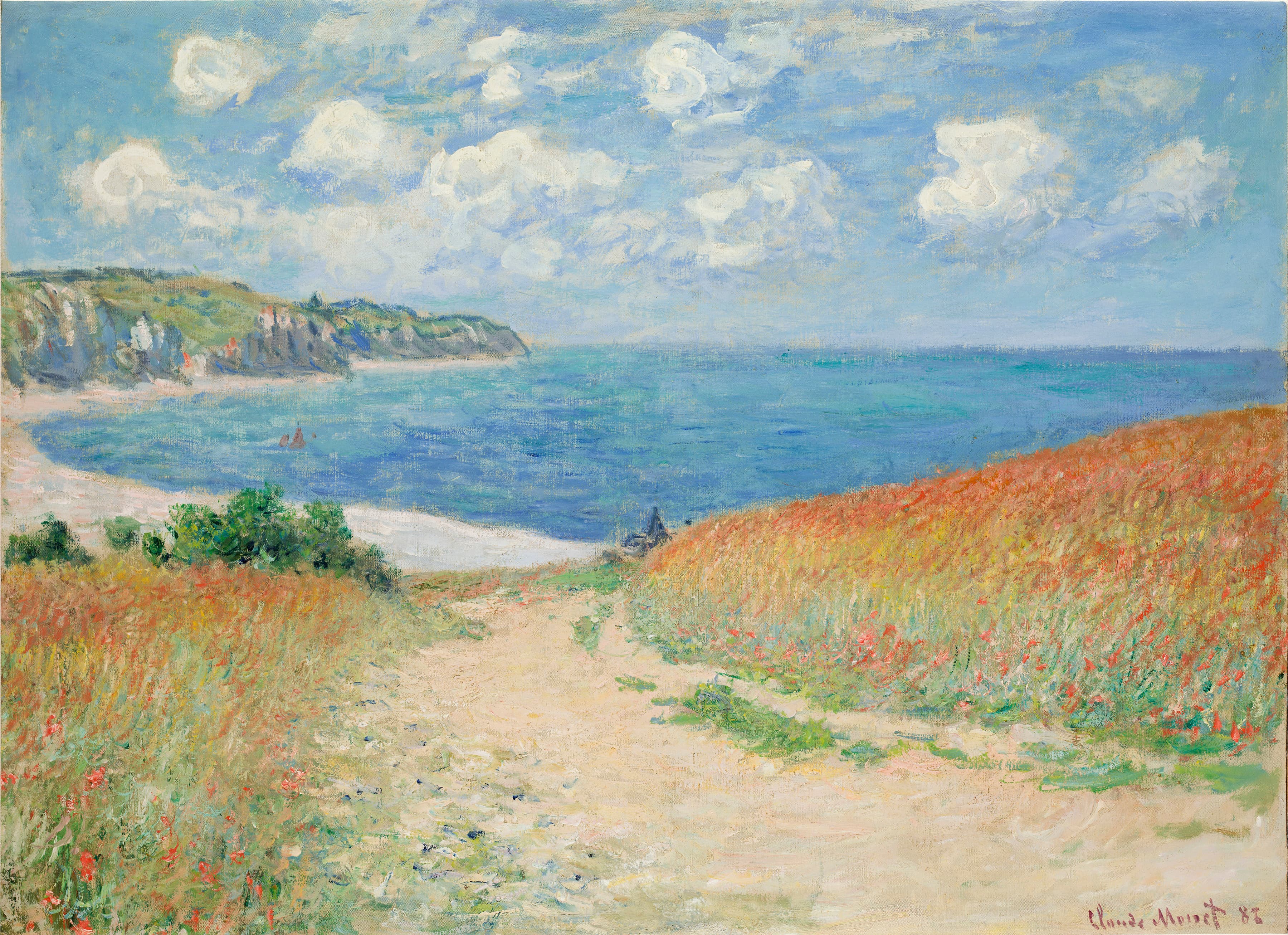
Path in the Wheat Fields at Pourville
Claude Monet · 1882
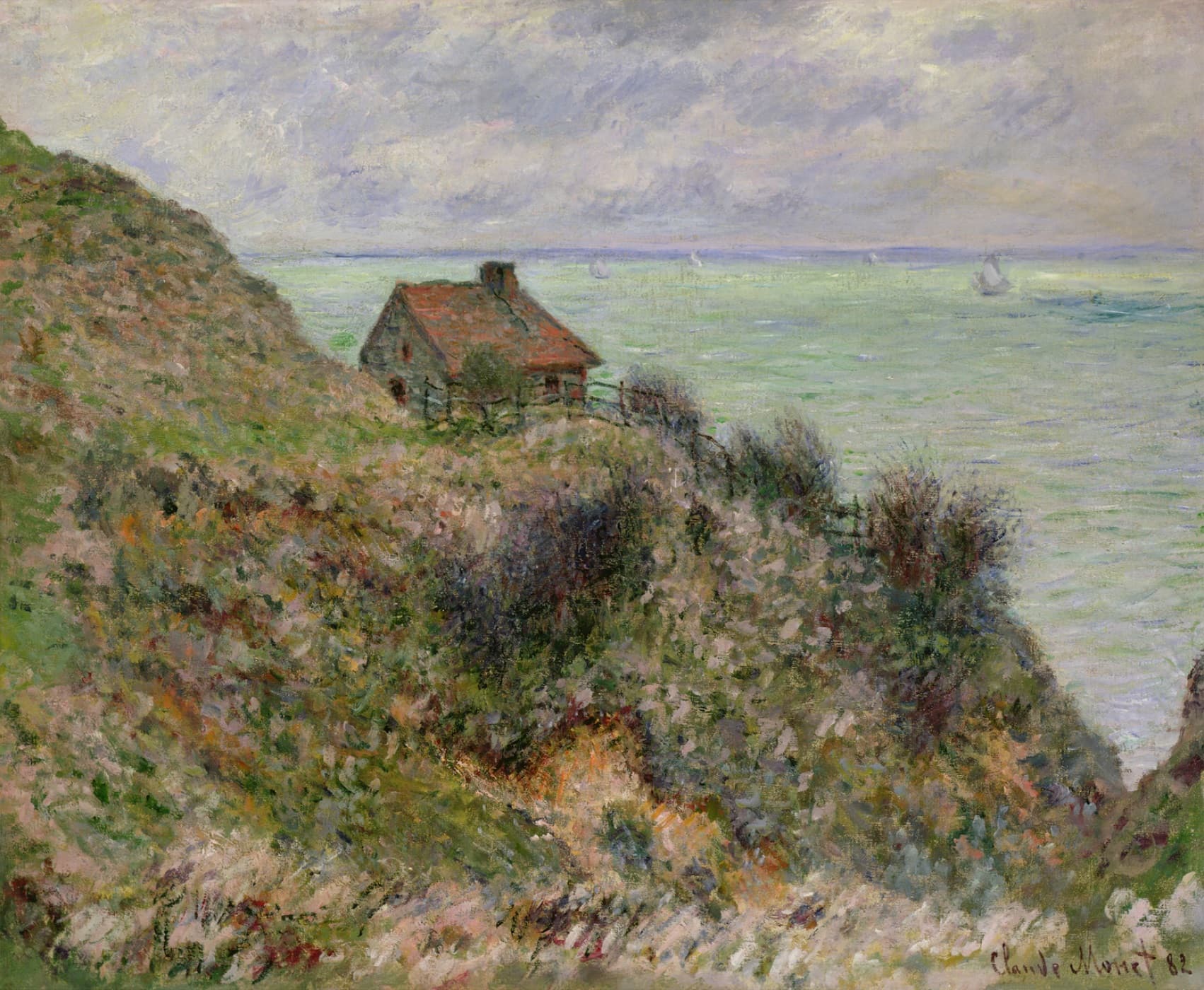
The Fisherman's House, Overcast Weather
Claude Monet · 1882
Also painted in 1882
The same year
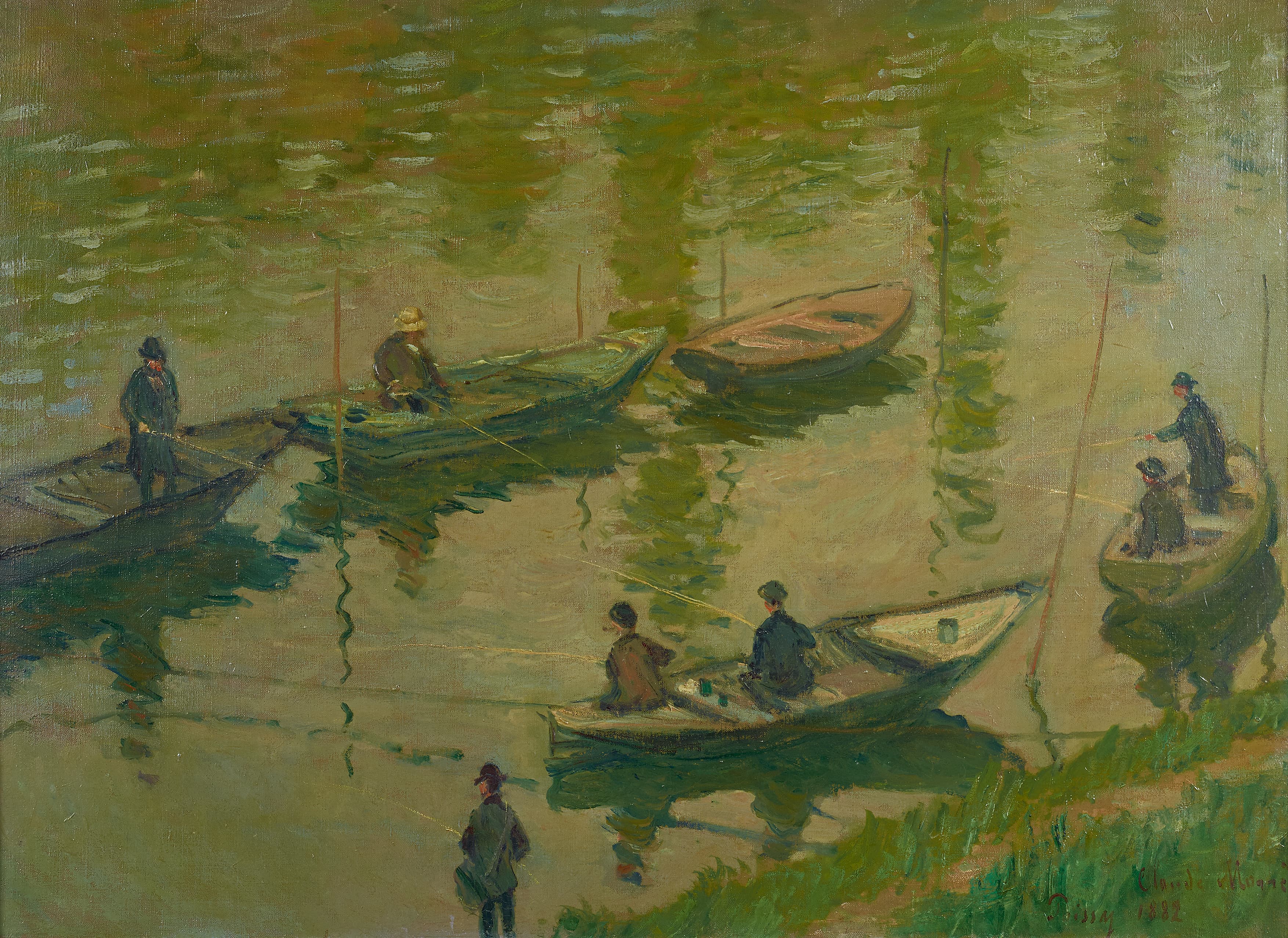
Anglers on the Seine at Poissy
Claude Monet · 1882
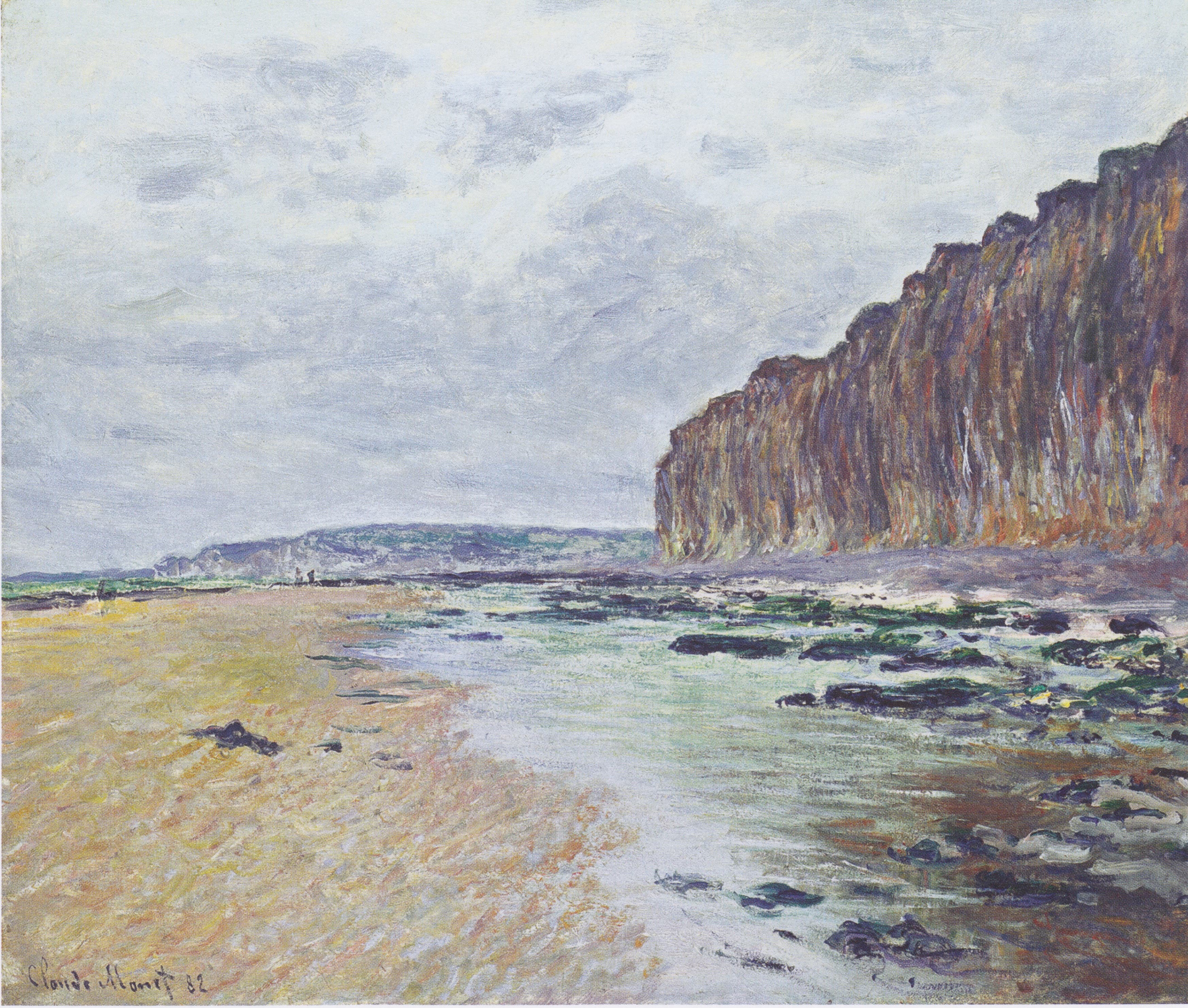
Varengeville, Low Tide
Claude Monet · 1882
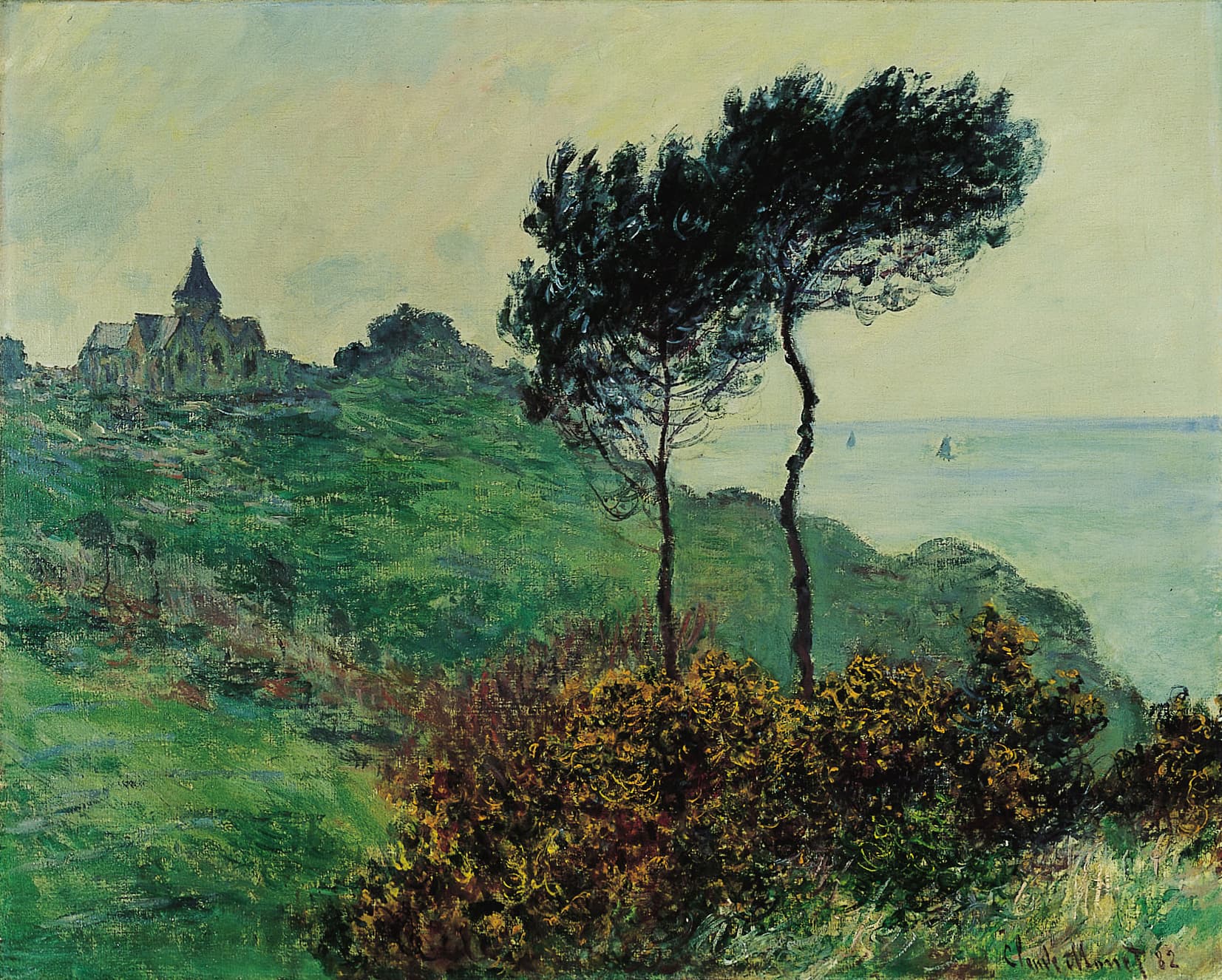
The Church at Varengeville, Grey Weather
Claude Monet · 1882
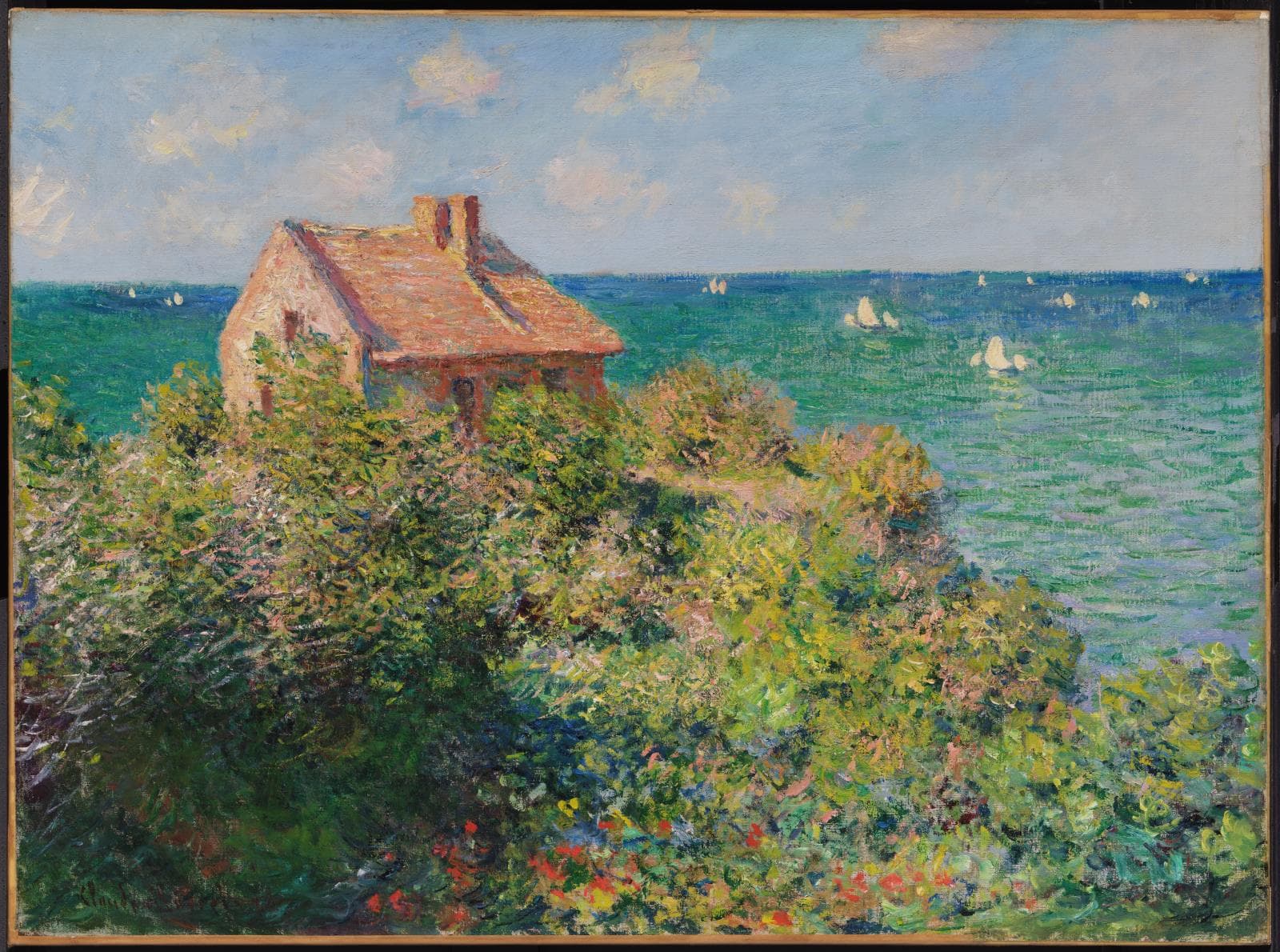
Fisherman's Cottage on the Cliffs at Varengeville
Claude Monet · 1882
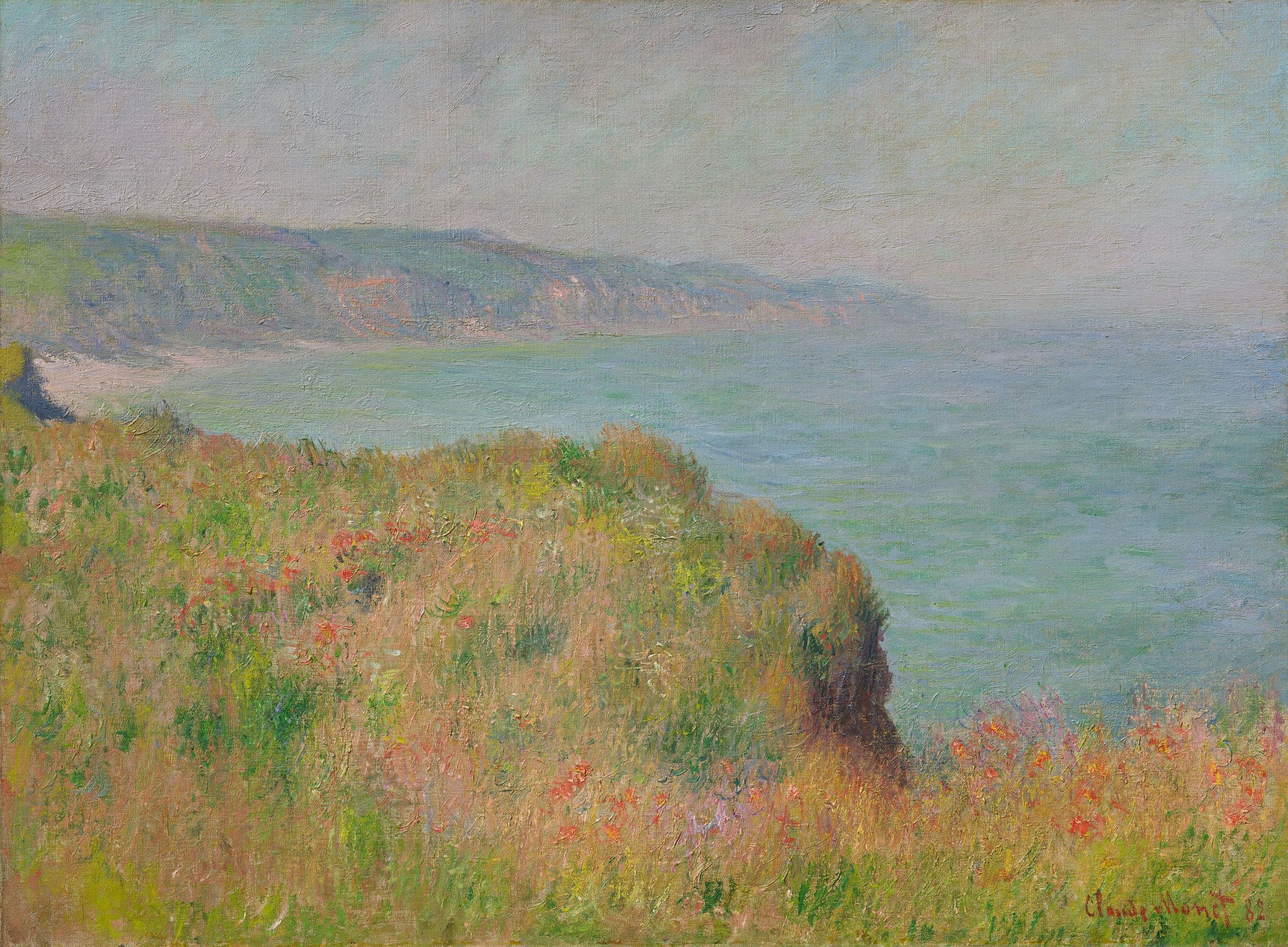
Edge of the Cliff at Pourville
Claude Monet · 1882
The Church at Varengeville
Claude Monet · 1882
The Rocks at Pourville, Low Tide
Claude Monet · 1882
Cliffs near Dieppe
Claude Monet · 1882
Kindred works
You may also study
Fisherman's Cottage on the Cliffs at Varengeville
Claude Monet · 1882
Edge of the Cliff at Pourville
Claude Monet · 1882
Cliff Walk at Pourville
Claude Monet · 1882
The Church at Varengeville, Grey Weather
Claude Monet · 1882
Sunset on the Seine in Winter
Claude Monet · 1880
Arm of the Seine near Giverny
Claude Monet · 1897
Morning on the Seine, Good Weather
Claude Monet · 1897
Poplars, Pink Effect
Claude Monet · 1891