Image: Denver Art Museum; reproduction via Wikimedia Commons · Public domain · via Wikimedia Commons
Path in the Wheat Fields at Pourville
Claude Monet, 1882
Path in the Wheat Fields at Pourville is an 1882 painting by Claude Monet of a sandy path through ripe wheat and poppies down to a blue bay and white cliffs in Normandy. It is in the Denver Art Museum, from the Frederic C. Hamilton Collection.
- Artist
- Claude Monet
- Date
- 1882
- Medium
- Oil on canvas
- Dimensions
- 58.4 × 77.5 cm
- Collection
- Denver Art Museum, Denver, Colorado, United States
- Movement
- Impressionism
- Catalogue
- Wildenstein 753
- Water & Sea
- Nature & Landscape
Chemin dans les blés à Pourville (Path in the Wheat Fields at Pourville) is a summer landscape by Claude Monet in which a pale, sandy path runs down between fields of ripe wheat and red poppies to a deep blue bay, with chalk cliffs curving away on the left. Signed and dated '82 and catalogued by Wildenstein as no. 753, it is in the Denver Art Museum, part of the Frederic C. Hamilton Collection, and is one of the most luminous of Monet's Normandy pictures.
What you're looking at
The path begins wide at the bottom edge of the canvas, in cream, pale ocher and lilac with blue shadows, and narrows as it runs up and to the left toward the sea. On both sides the wheat stands high, painted in quick, upward strokes of gold, orange, rose and green, with poppies scattered through it as single touches of vermilion. On the right the field rises in a long golden slope; on the left a clump of dark green bushes interrupts it.
Below, the bay opens out in a strong ultramarine and turquoise, edged by a crescent of pale beach. One small boat with a red sail floats near the shore, and a figure or a beached boat is just visible where the path meets the sand. On the left, the white cliffs of the coast curve away toward a distant headland, touched with green on top. The sky is a bright, high blue full of round, puffy white clouds, painted in thick, curling strokes. The signature and date are at lower right.
Where and when it was painted
In 1882 Monet spent most of the year at Pourville, a small resort on the coast west of Dieppe: alone in the spring, then with Alice Hoschedé and all the children for the summer and early autumn. Behind the beach the land rises to fields and clifftop paths, and Monet painted the wheat ripening over the bay in high summer. Paul Durand-Ruel bought the picture from him in 1883. See Étretat and the Normandy Coast.
How it was painted
The brushwork is varied and confident: short upward flicks for the wheat, broad, flat strokes for the path, long horizontals for the sea, and thick, rounded swirls for the clouds. Monet relies on the contrast of the warm, sunlit field with the intense blue of the water, and the diagonal path pulls the eye from one to the other. The poppies, unblended red over gold, give the foreground its sparkle.
How it compares
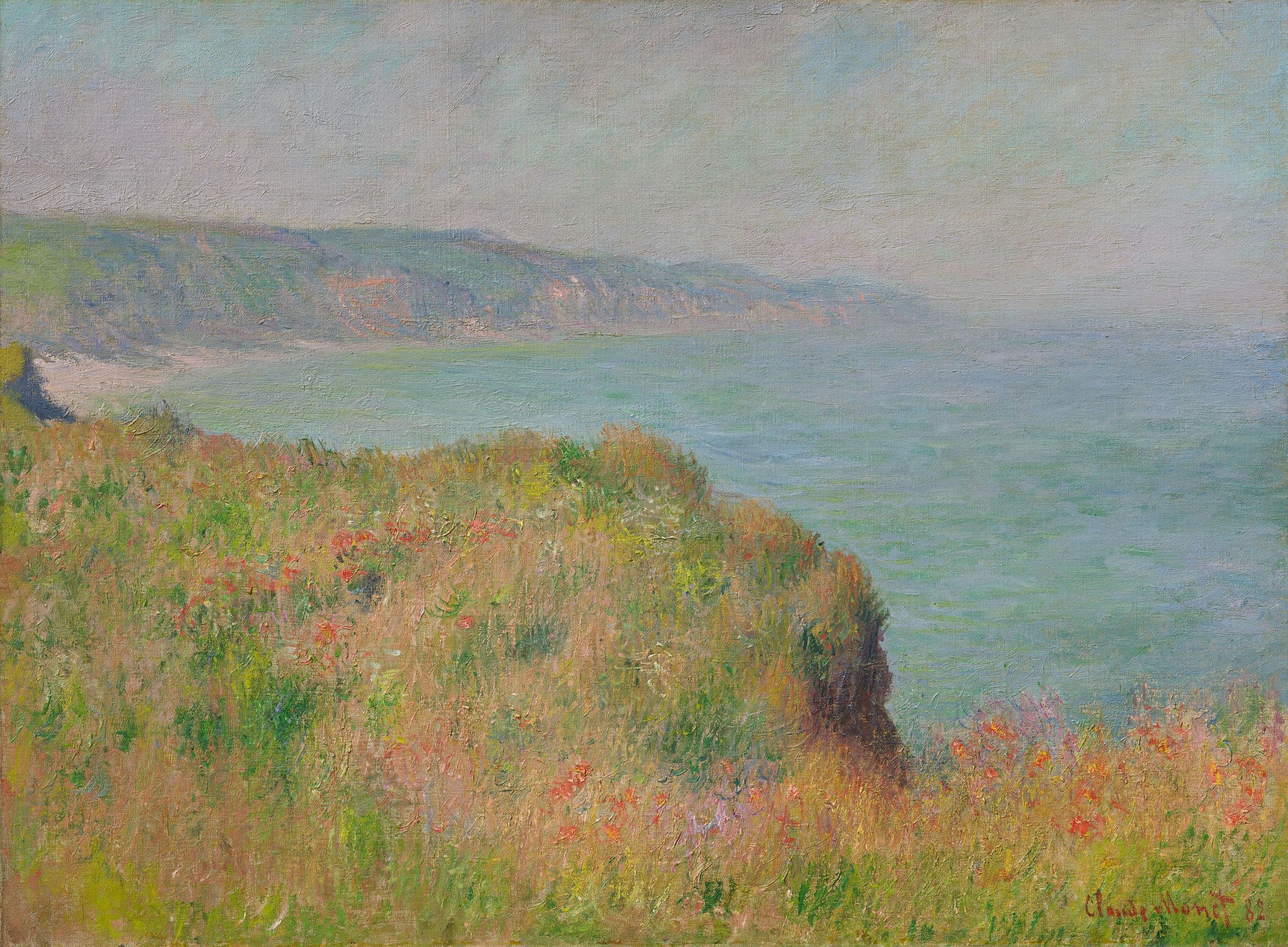
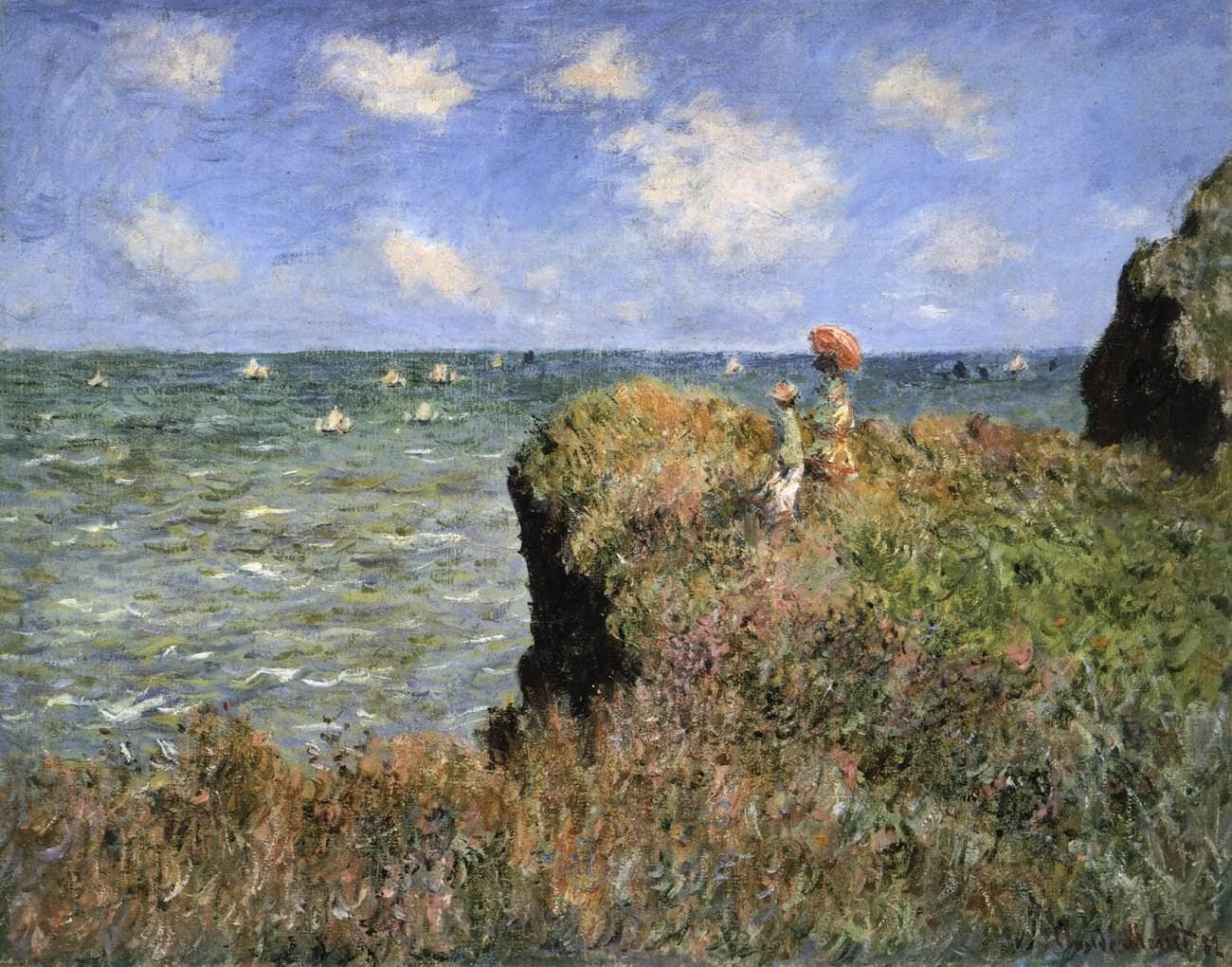
The Pourville pictures range from the beach to the cliff edge. In Edge of the Cliff at Pourville Monet stands at the very rim of the cliff, and in Cliff Walk at Pourville in Chicago two figures stand on the grassy height above the sea. The Denver canvas is the most agricultural of the group, joining the farmland and the sea in one view. For a path through wheat and poppies inland, compare Path on the Island of Saint Martin, Vétheuil, painted the year before.
Pourville in 1882
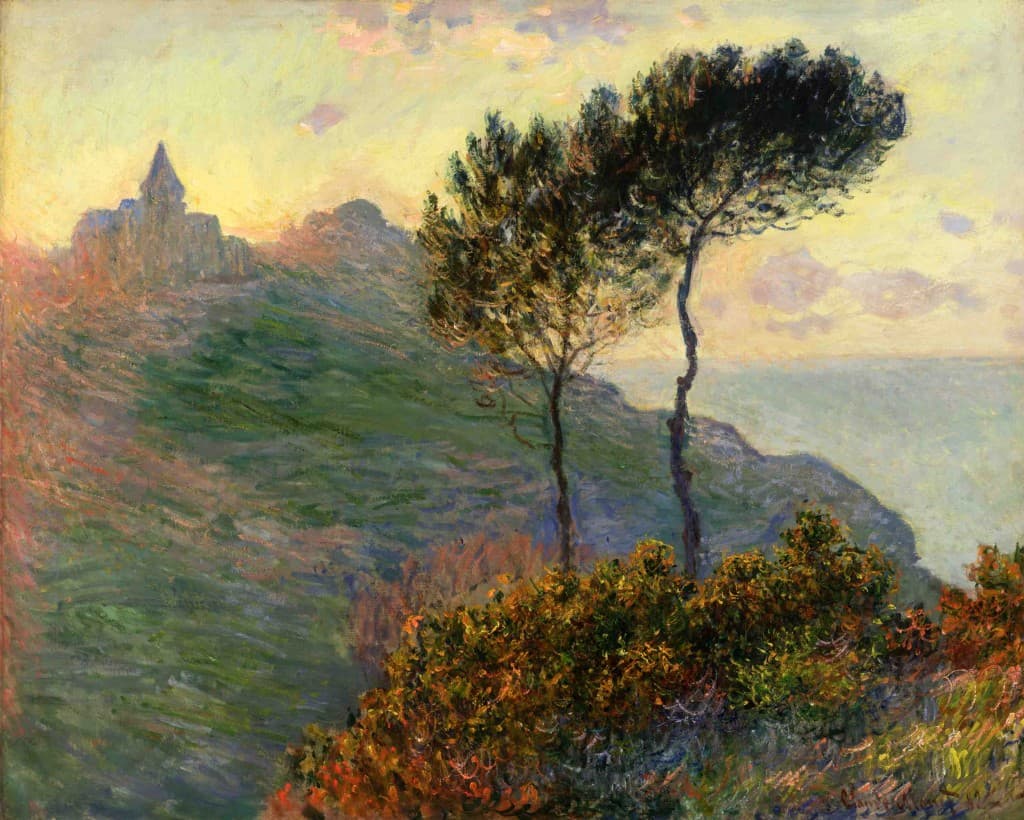
Pourville was then a hamlet with a few villas, a small hotel and a broad beach between cliffs. Monet's letters describe the landscape as one of the finest he had found, and he produced dozens of canvases on the coast that year. The variety of subjects, beach, cliffs, fields, the customs hut and the church at Varengeville, shows him testing how many different pictures one stretch of coast could give.
Ownership and where to see it
According to the Denver Art Museum, the painting passed from Monet to Durand-Ruel in 1883 and through several owners in New York and Boston before entering the collection of the Denver oil executive Frederic C. Hamilton (1927–2016). Hamilton promised his collection of Impressionist paintings to the museum in 2014, and the work entered the museum in 2016 (accession 2016.365). It is usually on view. For other places to see Monet, see where to see Monet's paintings.
Questions & answers
Where is Path in the Wheat Fields at Pourville?
It is in the Denver Art Museum (accession 2016.365), part of the Frederic C. Hamilton Collection, which entered the museum after Hamilton's death in 2016. It is usually on view.
When and where did Monet paint it?
He painted it in the summer of 1882 at Pourville, a small resort on the Normandy coast west of Dieppe, where he spent most of that year. It is signed and dated '82.
What does Path in the Wheat Fields at Pourville show?
It shows a sandy path running between golden wheat and red poppies down to a deep blue bay with a pale beach, a red-sailed boat and white chalk cliffs curving away on the left, under a sky of puffy white clouds.
Where is Pourville?
Pourville-sur-Mer is a small seaside village on the Normandy coast just west of Dieppe. Monet painted its beach, cliffs and fields in 1882 and returned in 1896–97.
More by the artist
Claude Monet
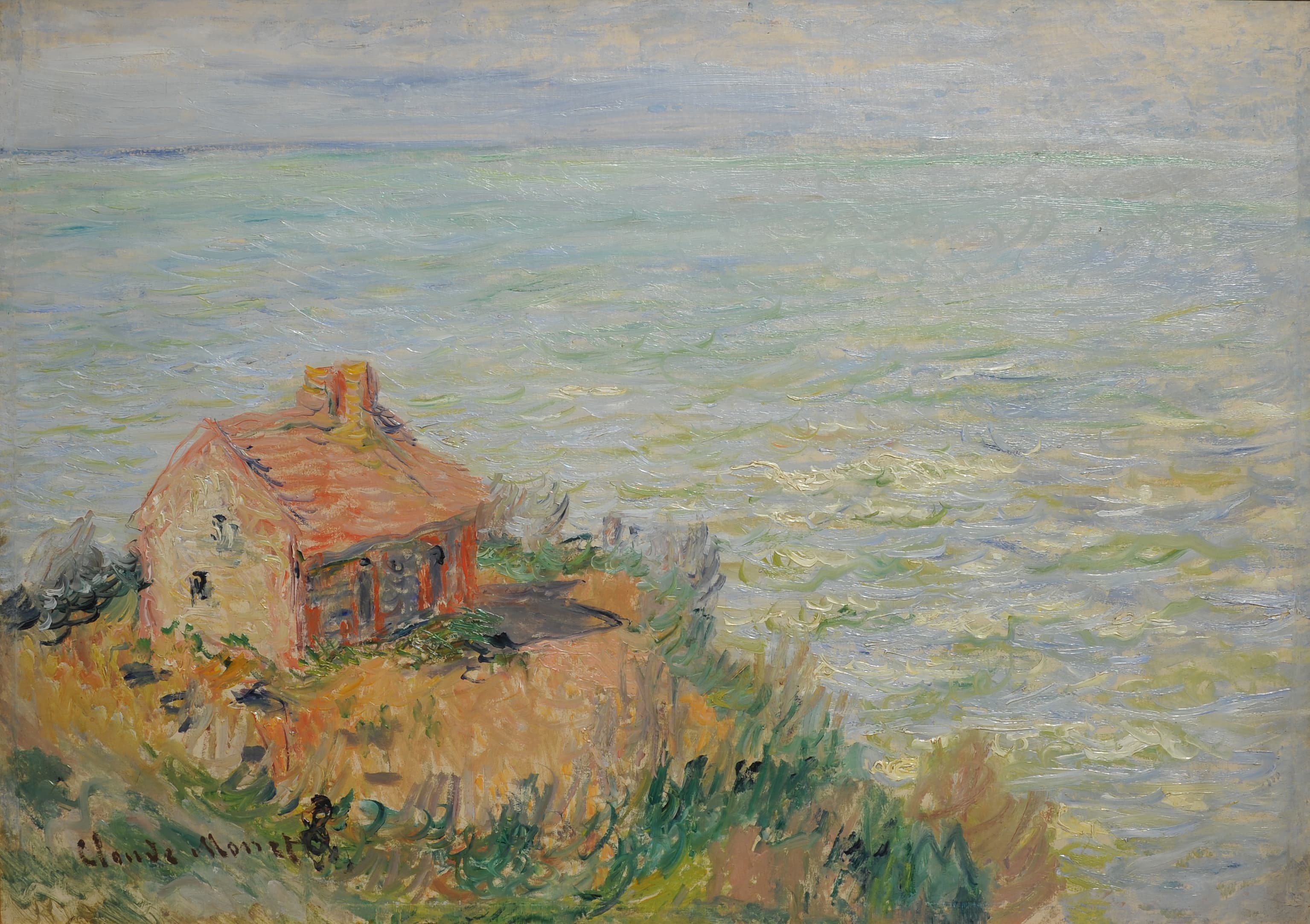
The Customs House, Afternoon Effect
Claude Monet · 1882
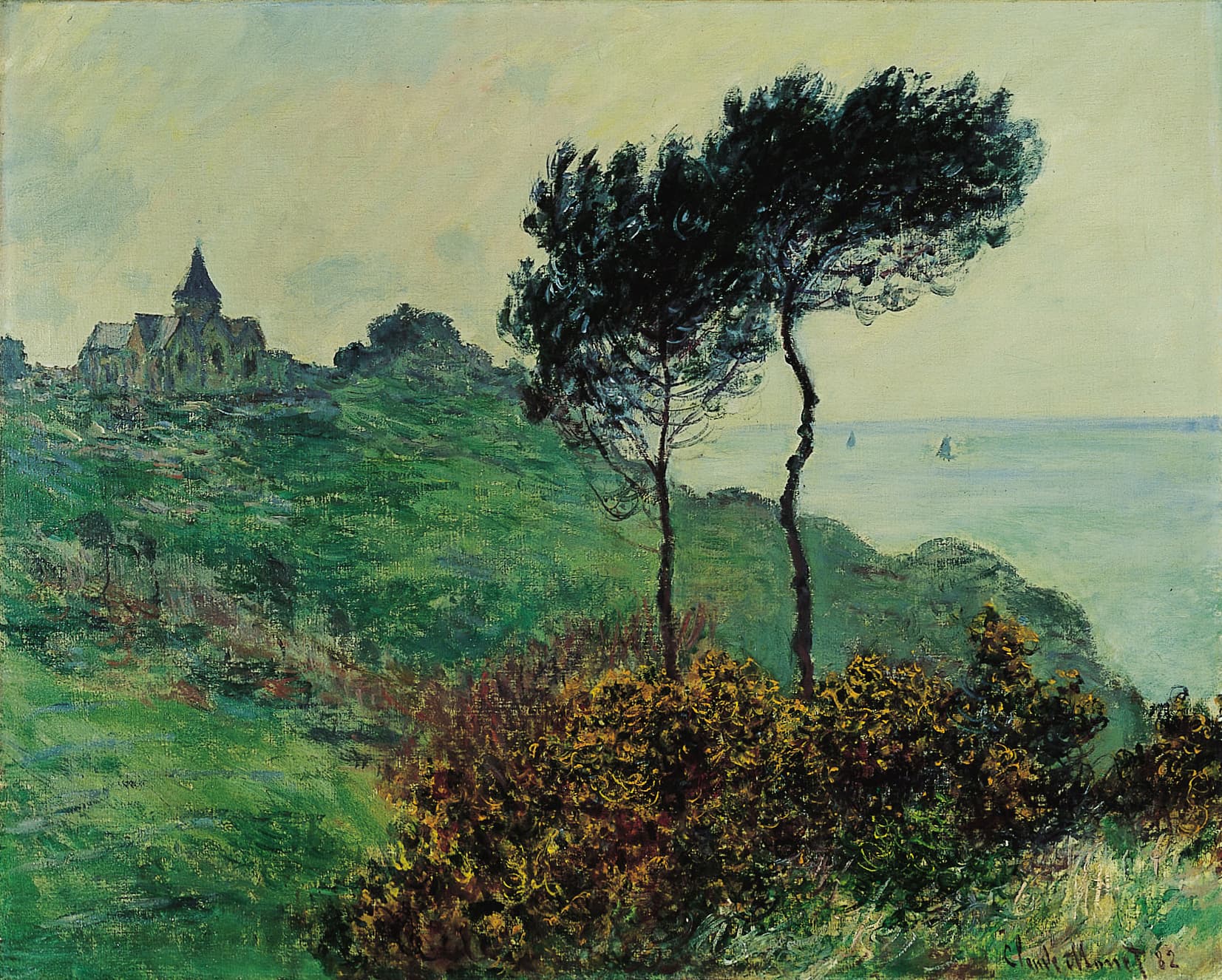
The Church at Varengeville, Grey Weather
Claude Monet · 1882
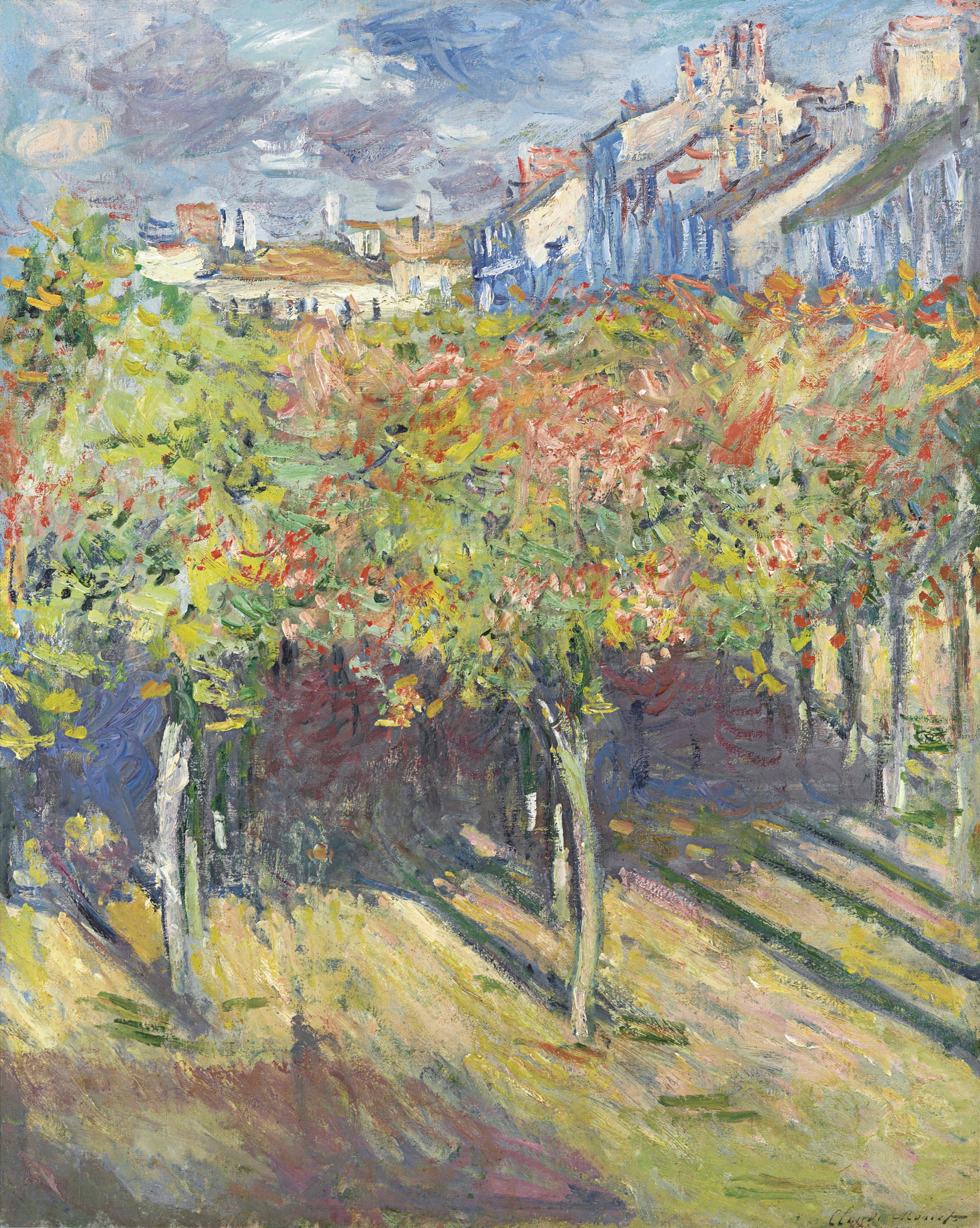
Les Tilleuls à Poissy
Claude Monet · 1882
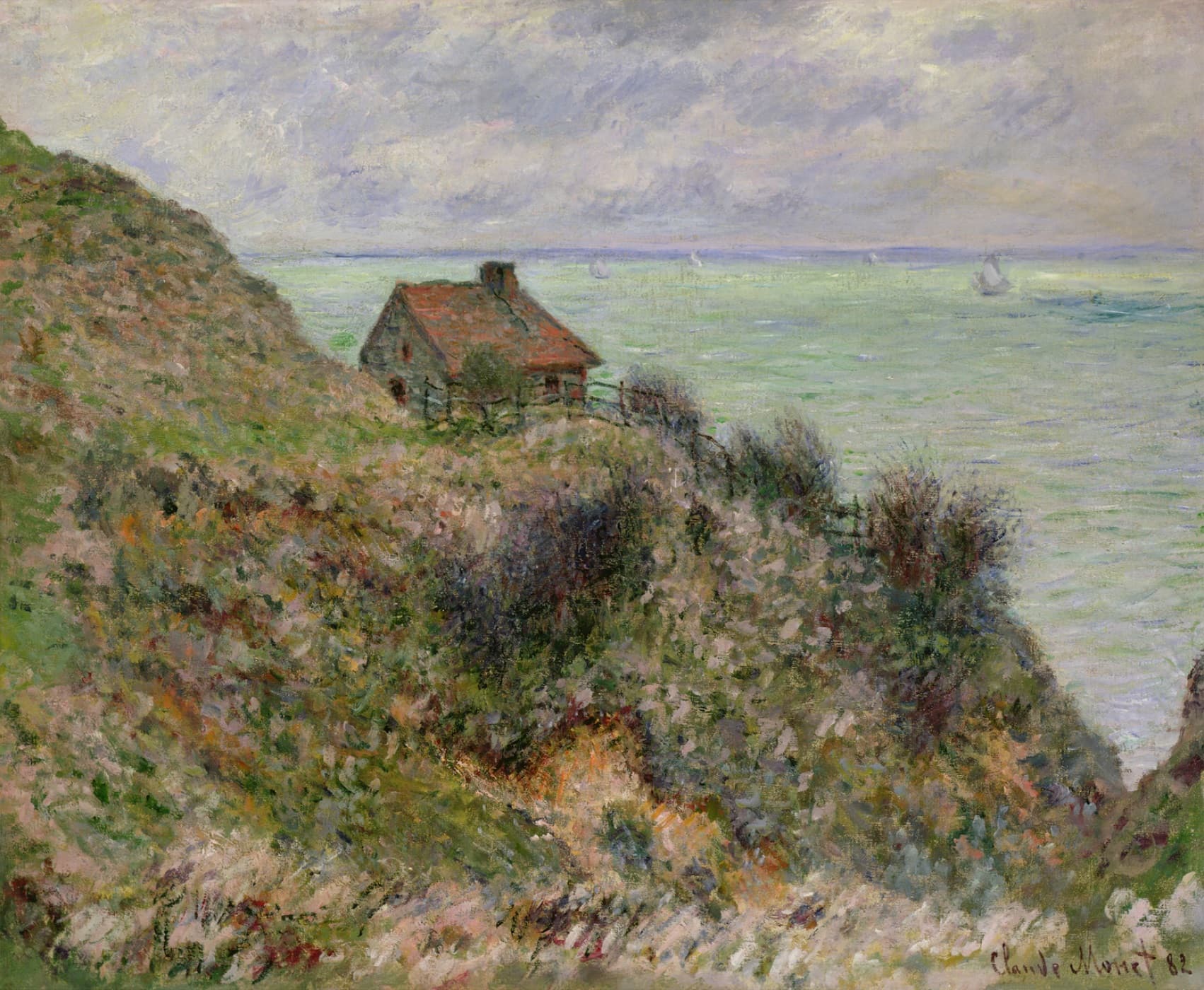
The Fisherman's House, Overcast Weather
Claude Monet · 1882
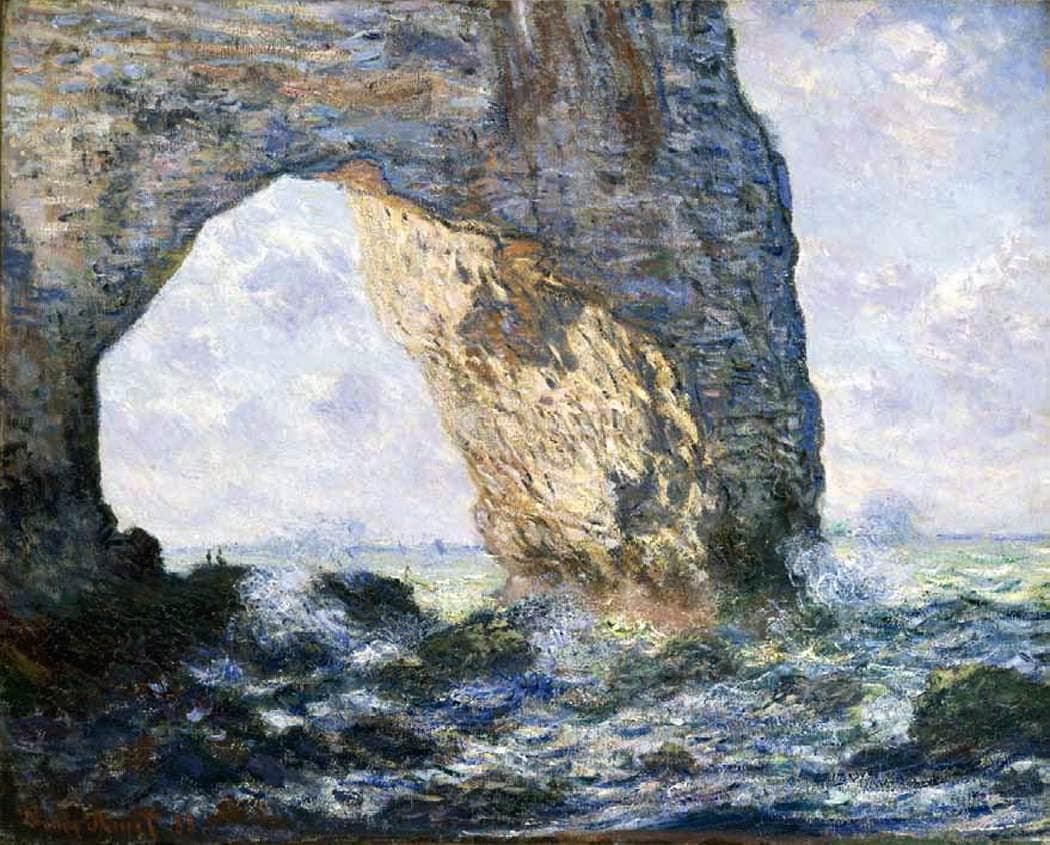
The Manneporte (Étretat)
Claude Monet · 1883
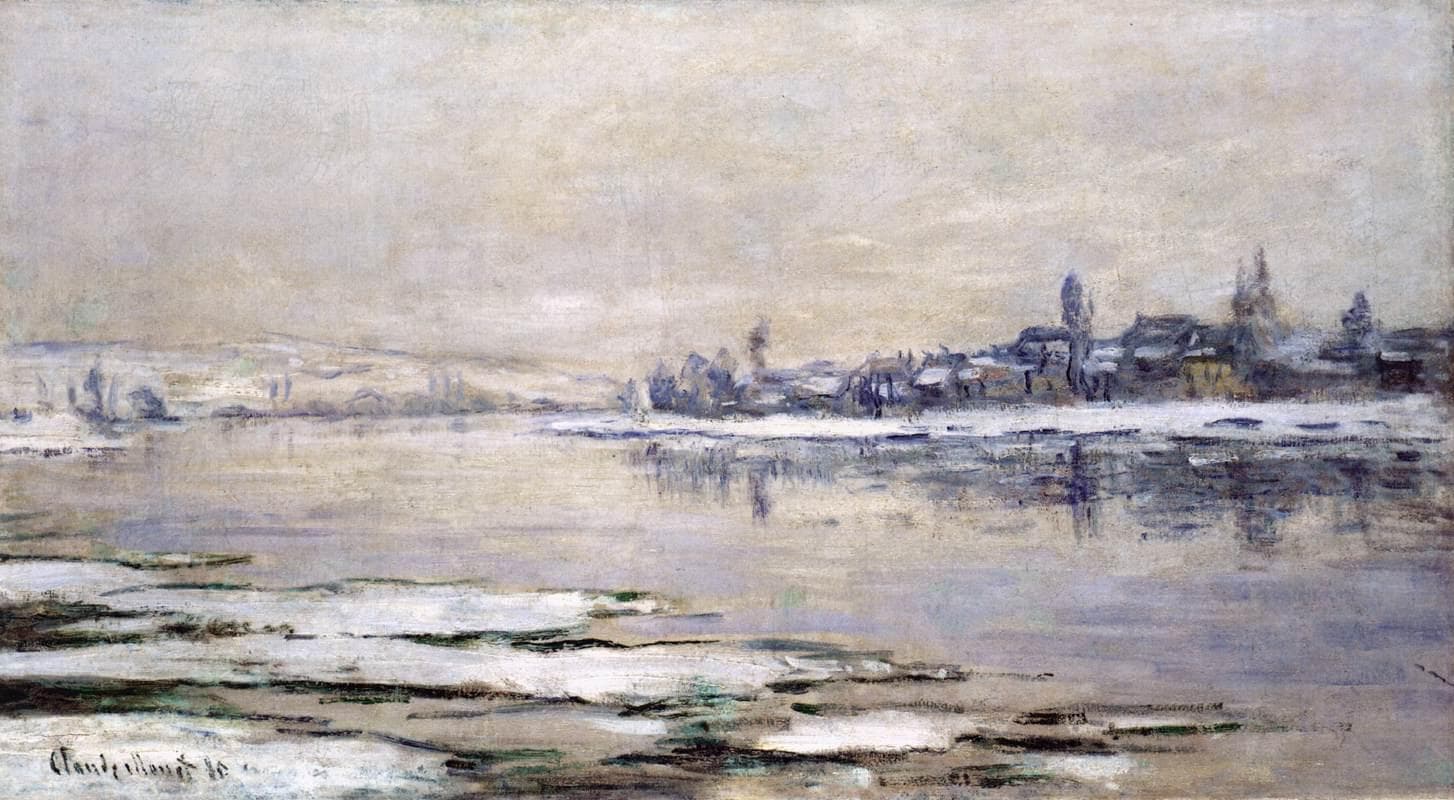
The Breakup of the Ice at Lavacourt
Claude Monet · 1880
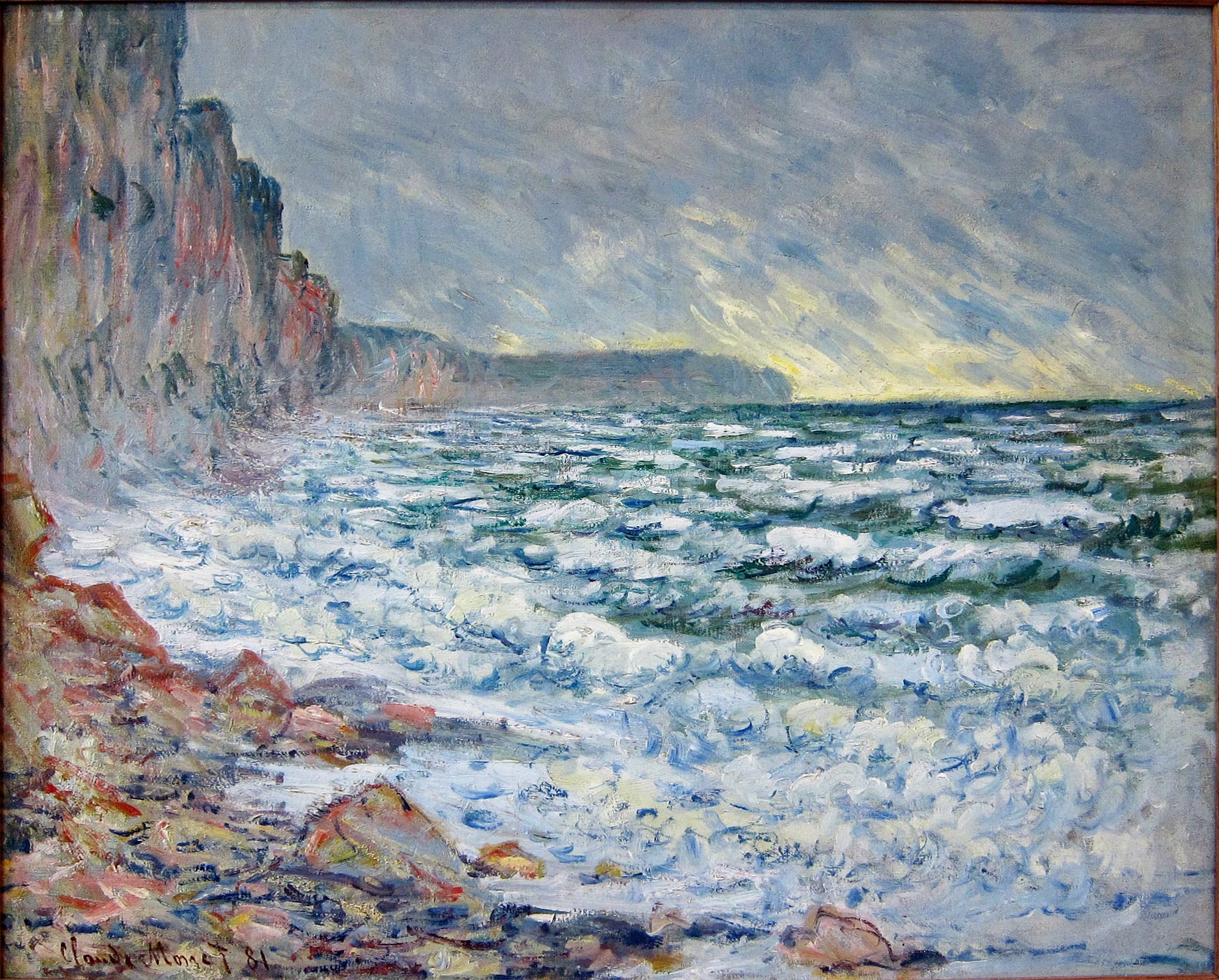
Fécamp, by the Sea
Claude Monet · 1881
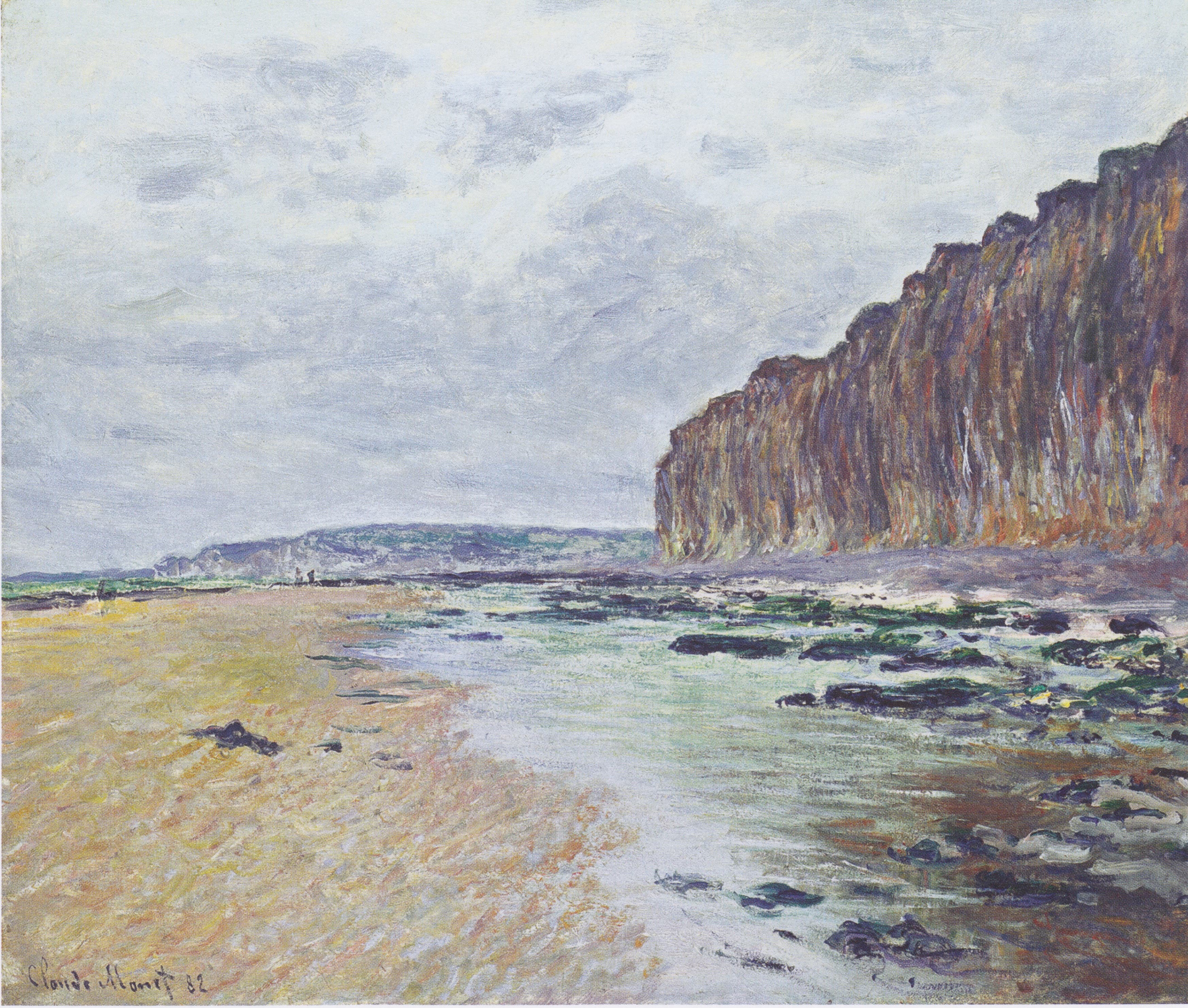
Varengeville, Low Tide
Claude Monet · 1882
Also painted in 1882
The same year

Beach in Pourville
Claude Monet · 1882
Portrait of Père Paul
Claude Monet · 1882
Anglers on the Seine at Poissy
Claude Monet · 1882
Low Tide at Pourville, near Dieppe
Claude Monet · 1882
Fisherman's Cottage on the Cliffs at Varengeville
Claude Monet · 1882
Edge of the Cliff at Pourville
Claude Monet · 1882
The Church at Varengeville
Claude Monet · 1882
The Rocks at Pourville, Low Tide
Claude Monet · 1882
Kindred works
You may also study
Edge of the Cliff at Pourville
Claude Monet · 1882
Cliff Walk at Pourville
Claude Monet · 1882
Low Tide at Pourville, near Dieppe
Claude Monet · 1882
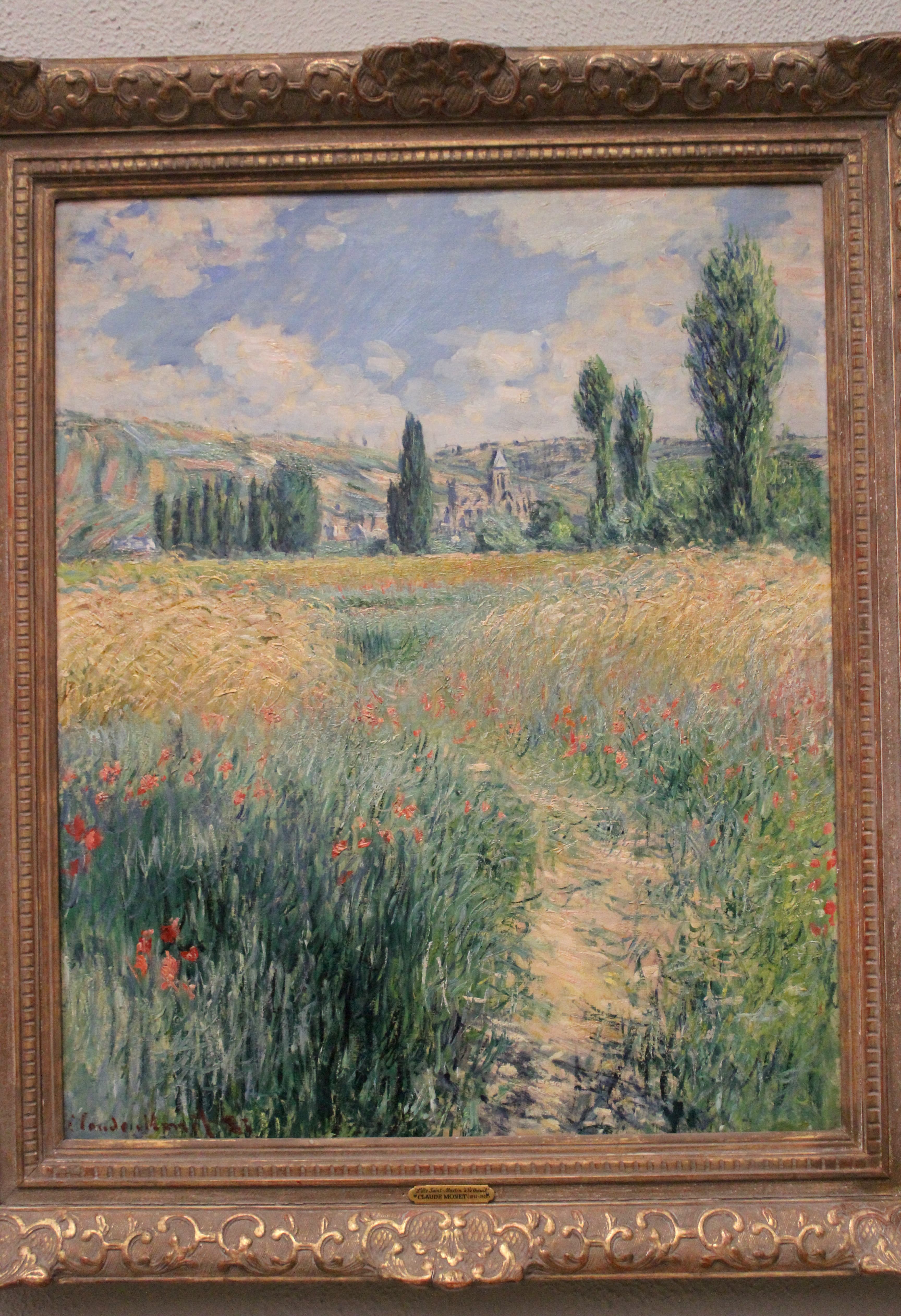
Path on the Island of Saint Martin, Vétheuil
Claude Monet · 1881
Beach in Pourville
Claude Monet · 1882
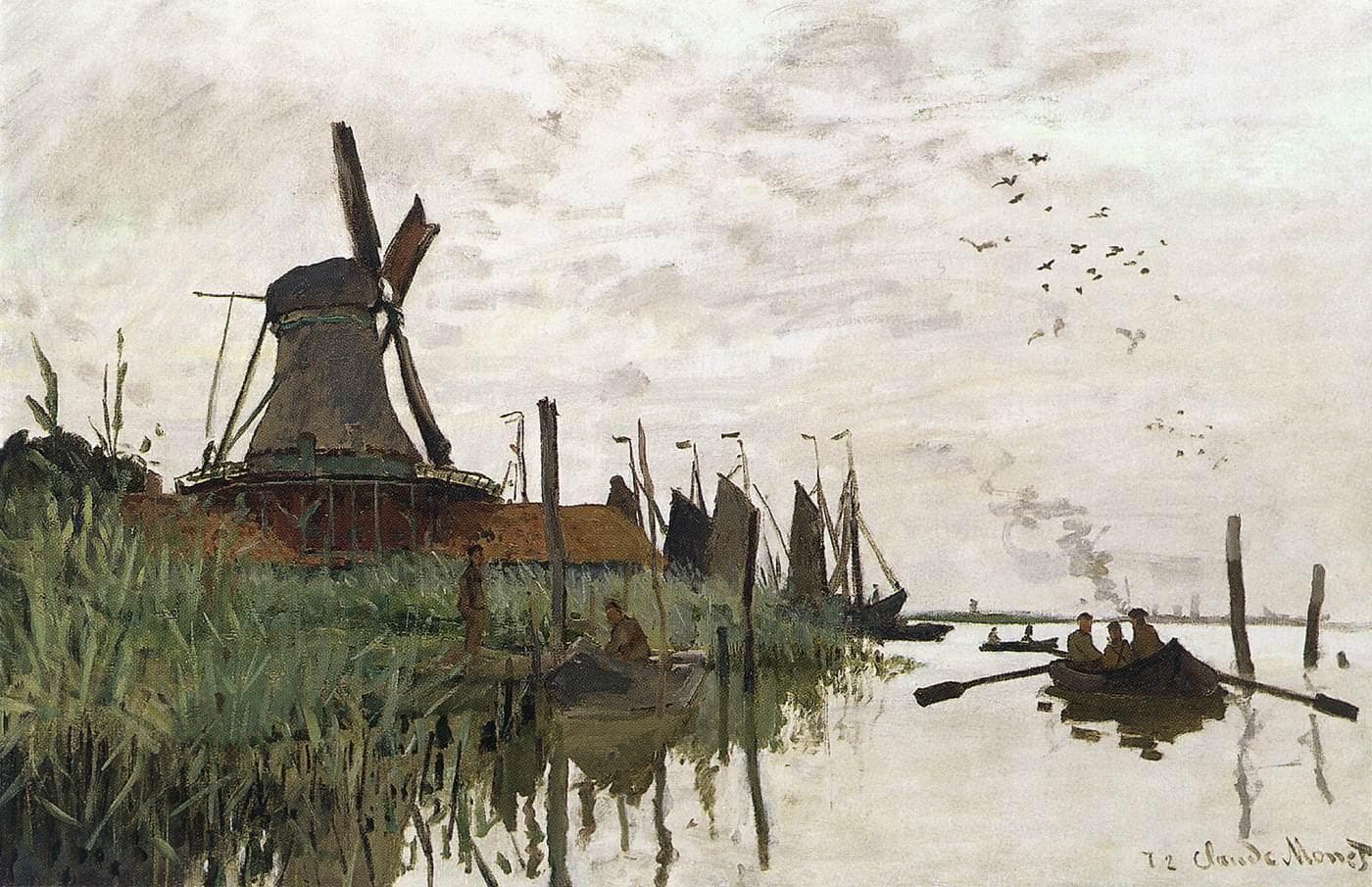
Windmill and Boats near Zaandam
Claude Monet · 1871
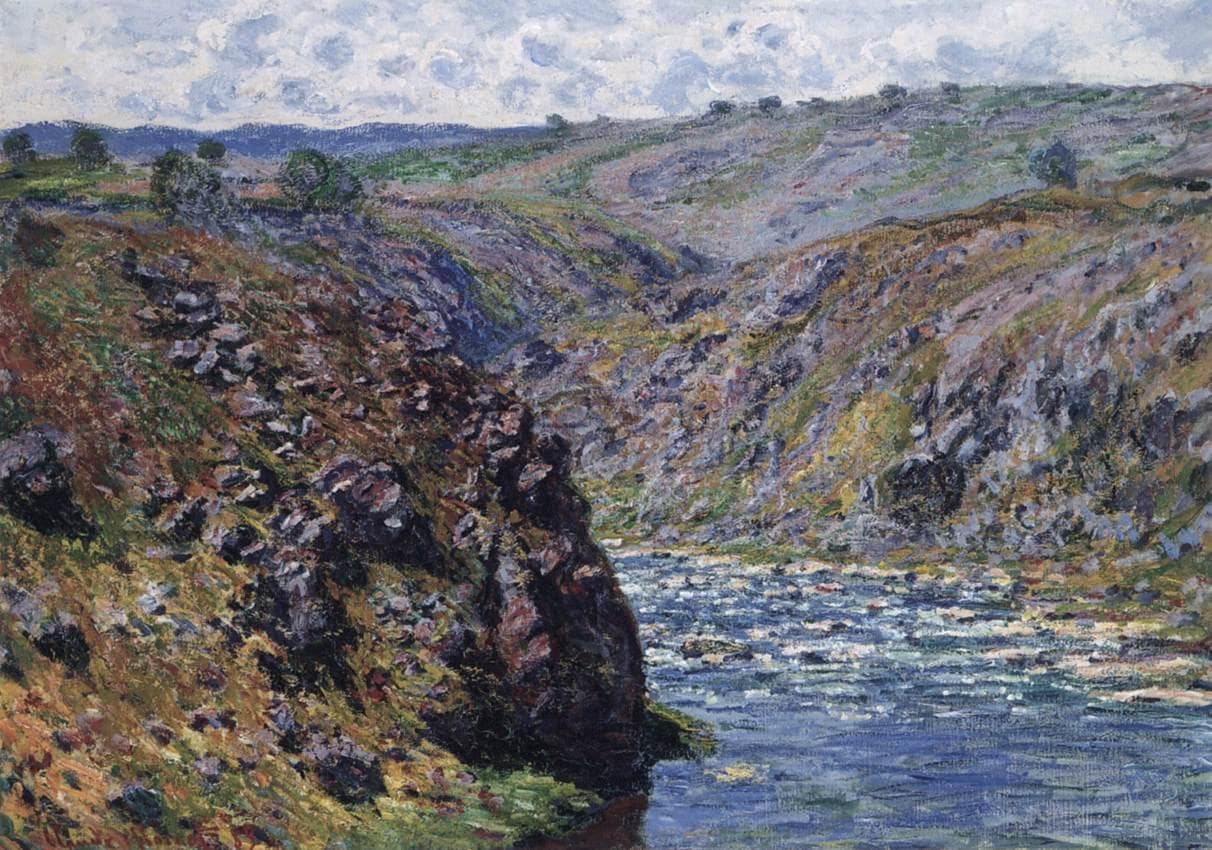
Valley of the Creuse (Sunlight Effect)
Claude Monet · 1889
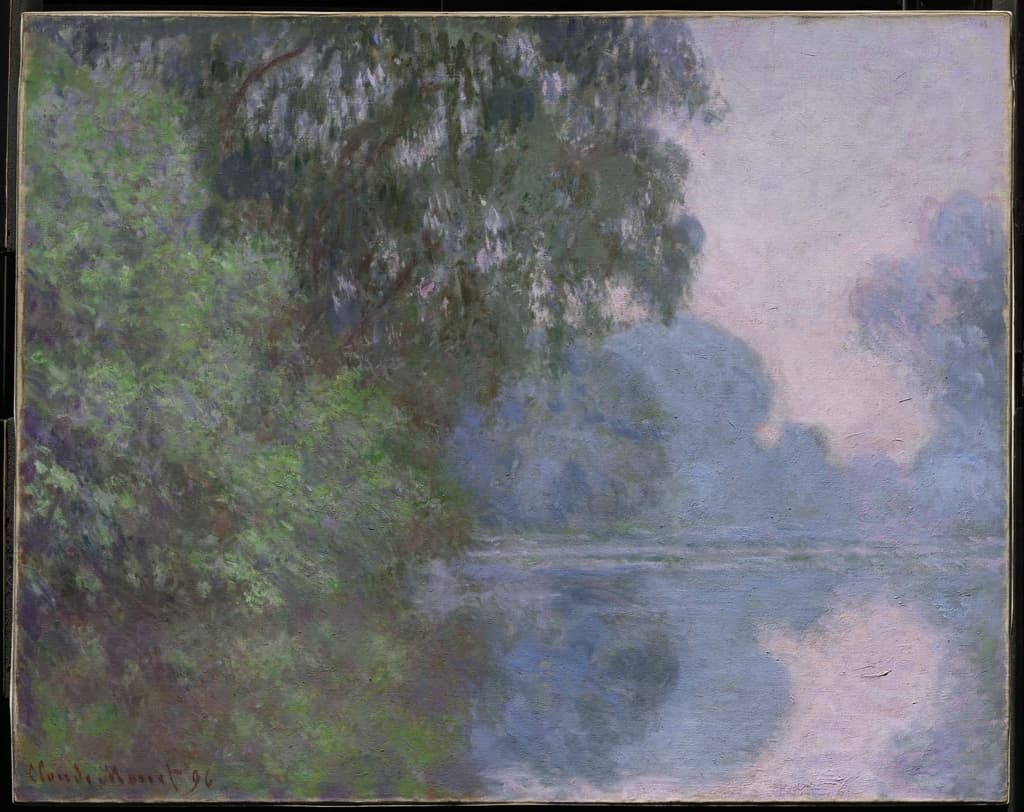
Morning on the Seine, near Giverny (1896)
Claude Monet · 1896