Image: Photo: Wikimedia Commons contributor, CC BY-SA 4.0, via Wikimedia Commons (Museum Barberini (Hasso Plattner Collection)) · CC BY-SA 4.0 · via Wikimedia Commons
Edge of the Cliff at Pourville
Claude Monet, 1882
Edge of the Cliff at Pourville is an 1882 painting by Claude Monet of a grassy, poppy-strewn clifftop above a hazy green sea on the Normandy coast. Formerly in the Met, it is now in the Museum Barberini, Potsdam (Hasso Plattner Collection).
- Artist
- Claude Monet
- Date
- 1882
- Medium
- Oil on canvas
- Dimensions
- 60.5 × 81.5 cm
- Collection
- Museum Barberini (Hasso Plattner Collection), Potsdam, Germany
- Movement
- Impressionism
- Catalogue
- Wildenstein 752
- Water & Sea
- Nature & Landscape
Bord de la falaise à Pourville (Edge of the Cliff at Pourville) is a view by Claude Monet from the very rim of a cliff on the Normandy coast, looking across a hazy bay to the cliffs beyond. Signed and dated '82 and catalogued by Wildenstein as no. 752, it belonged to the Metropolitan Museum of Art from 1956 until 2014, and is now in the Hasso Plattner Collection at the Museum Barberini in Potsdam.
What you're looking at
The lower half of the picture is the clifftop itself, a rounded mound of grass and wildflowers that swells up from the bottom edge and ends abruptly at the right, where a sliver of dark rock shows the cliff face dropping to the sea. The grass is painted in thick, multicolored strokes of yellow-green, ocher, rose and sage, with scattered red and orange poppies and, at the lower right, a few lilac and pink flowers.
Beyond the edge, there is nothing in between: the eye jumps straight to the sea, pale jade and blue-green, calm and hazy. Across the bay a long line of cliffs runs from the left toward the center, painted in soft greens, pinks and blue-grays with a pale strip of beach at their foot, fading as they recede. The sky is a milky, hazy blue-gray, almost without clouds, which merges into the sea at the horizon. The signature and date are at lower right.
Where and when it was painted
Monet spent much of 1882 at Pourville, a small resort west of Dieppe, and walked the cliffs above it daily. The Barberini's commentary points out that he did not seek out famous sights like the arches at Étretat, but chose a marginal, unspectacular motif, a grassy cliff edge, and gave it drama through perspective. The near ground is sharp and close, like a photograph taken from the edge, while the sea, sky and distant cliffs blur into haze. See Étretat and the Normandy Coast.
How it was painted
The two zones are handled completely differently. The grass is thick and tactile, built from short, crossing strokes that suggest the wind moving through it; the sea and far cliffs are thin, smooth and soft-edged. That difference in focus is what makes the drop feel steep: there is no middle ground to measure the distance, just near and far.
How it compares
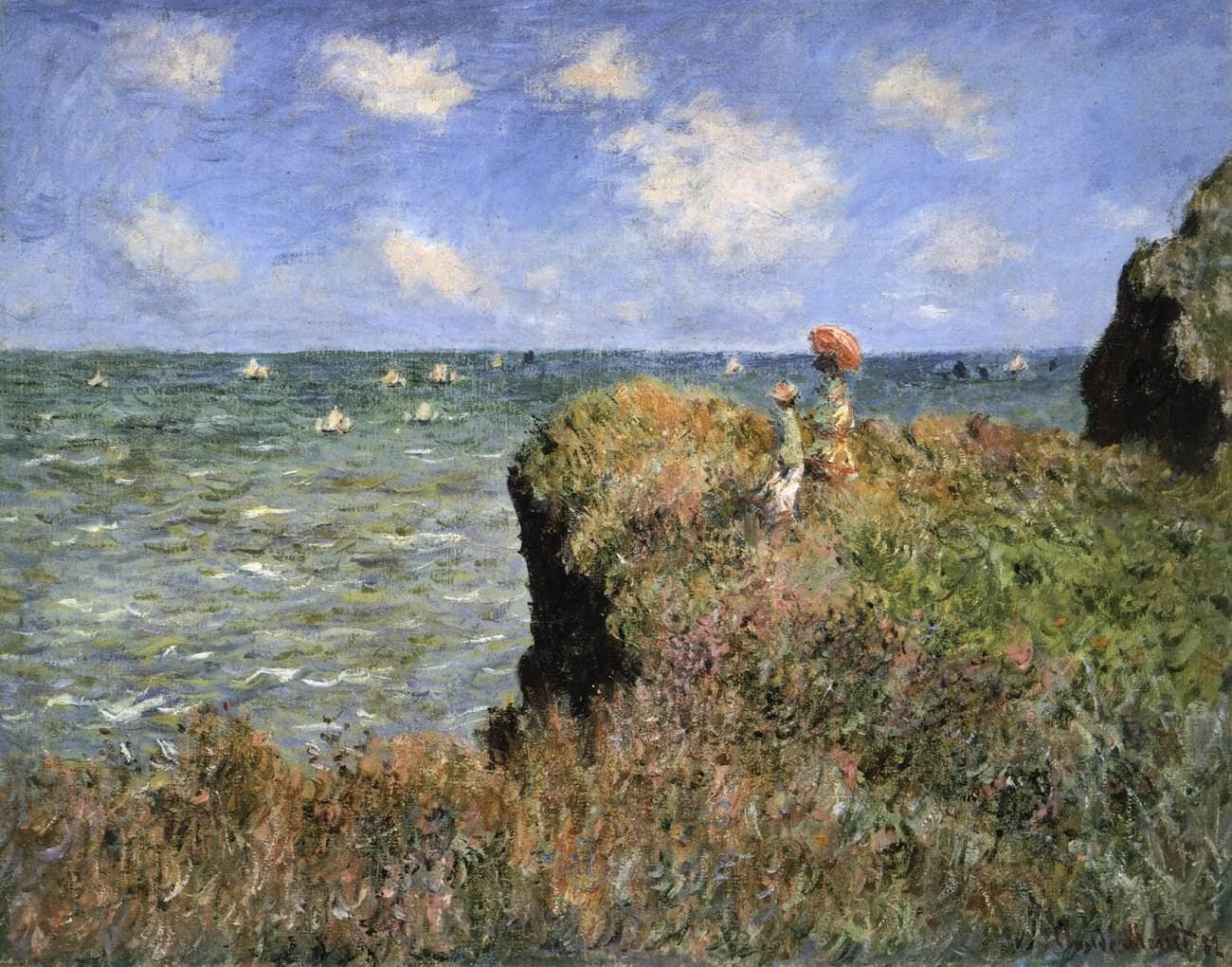
Among the cliff pictures of 1882, Cliff Walk at Pourville in Chicago places two figures on a similar grassy edge, and Path in the Wheat Fields at Pourville in Denver leads down through fields to the bay. The Barberini canvas is the emptiest of them, with no figures, boats or buildings. For the hut on the next cliffs west, see Fisherman's Cottage on the Cliffs at Varengeville.
Hasso Plattner and the Barberini
The software entrepreneur Hasso Plattner built one of the largest private collections of Impressionist painting of recent decades and opened the Museum Barberini in Potsdam in 2017, in a reconstructed eighteenth-century palace. Since 2020 the museum has shown his Impressionist collection permanently, with dozens of Monets ranging from the 1860s to the late Giverny years. This canvas returned to Europe through that collection after more than a century in America.
Ownership and where to see it
According to the Barberini's provenance, the painting was probably bought from Monet by Durand-Ruel in December 1883, sold in 1886 to William H. Fuller of New York, and bought back by Durand-Ruel at Fuller's sale in 1903. It then belonged to Arthur B. Emmons of New York and Newport and his widow Julia, who bequeathed it to the Metropolitan Museum of Art in 1956. The Met deaccessioned it at Sotheby's, New York, on 7 May 2014, and it entered the collection of Hasso Plattner, whose Impressionist paintings, including a large group of works by Monet, are shown at the Museum Barberini in Potsdam. See where to see Monet's paintings.
Questions & answers
Where is Monet's Edge of the Cliff at Pourville?
It is in the Museum Barberini in Potsdam, Germany, part of the Hasso Plattner Collection (inventory MB-Mon-12). It was formerly in the Metropolitan Museum of Art, which sold it at Sotheby's in 2014.
When was it painted?
Monet painted it in 1882 on the cliffs at Pourville, west of Dieppe in Normandy. It is signed and dated '82 at lower right.
What does Edge of the Cliff at Pourville show?
It shows a grassy clifftop dotted with poppies ending abruptly at the right, with a calm, hazy green sea and a long line of distant cliffs across the bay under a pale sky.
Why did the Met sell Edge of the Cliff at Pourville?
The Metropolitan Museum of Art had owned it since Julia Emmons's bequest in 1956 and deaccessioned it at Sotheby's New York on 7 May 2014. It then entered Hasso Plattner's collection, now shown at the Museum Barberini.
More by the artist
Claude Monet
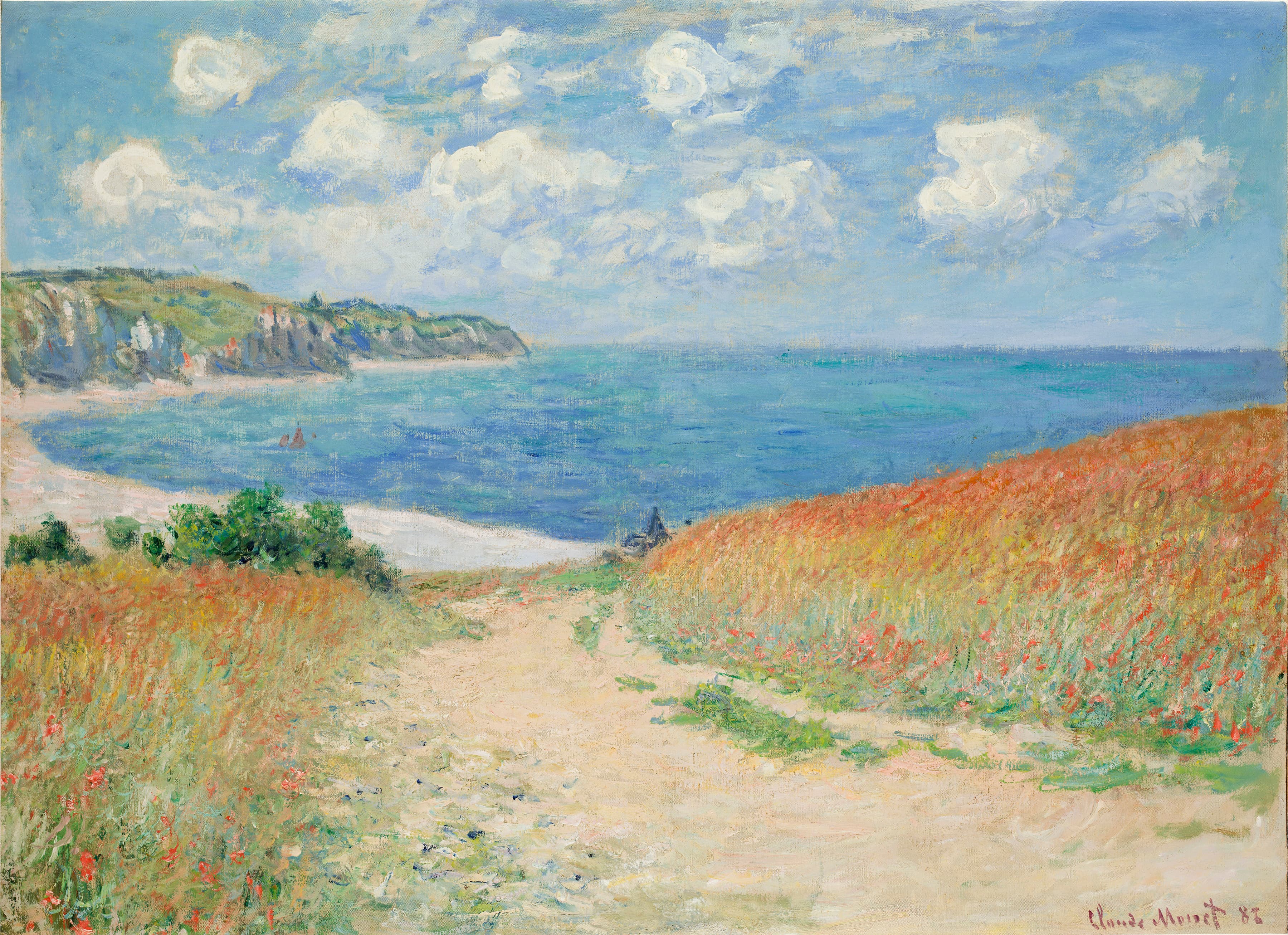
Path in the Wheat Fields at Pourville
Claude Monet · 1882
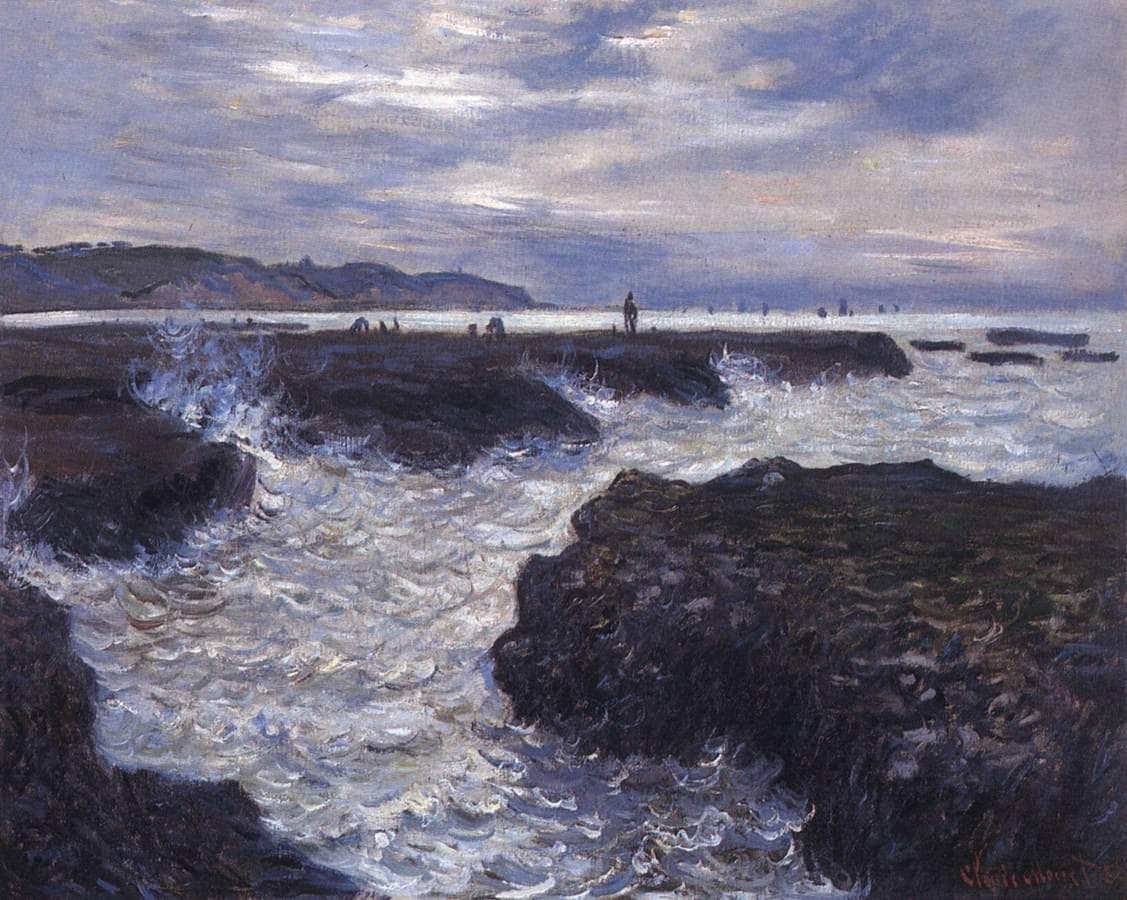
The Rocks at Pourville, Low Tide
Claude Monet · 1882
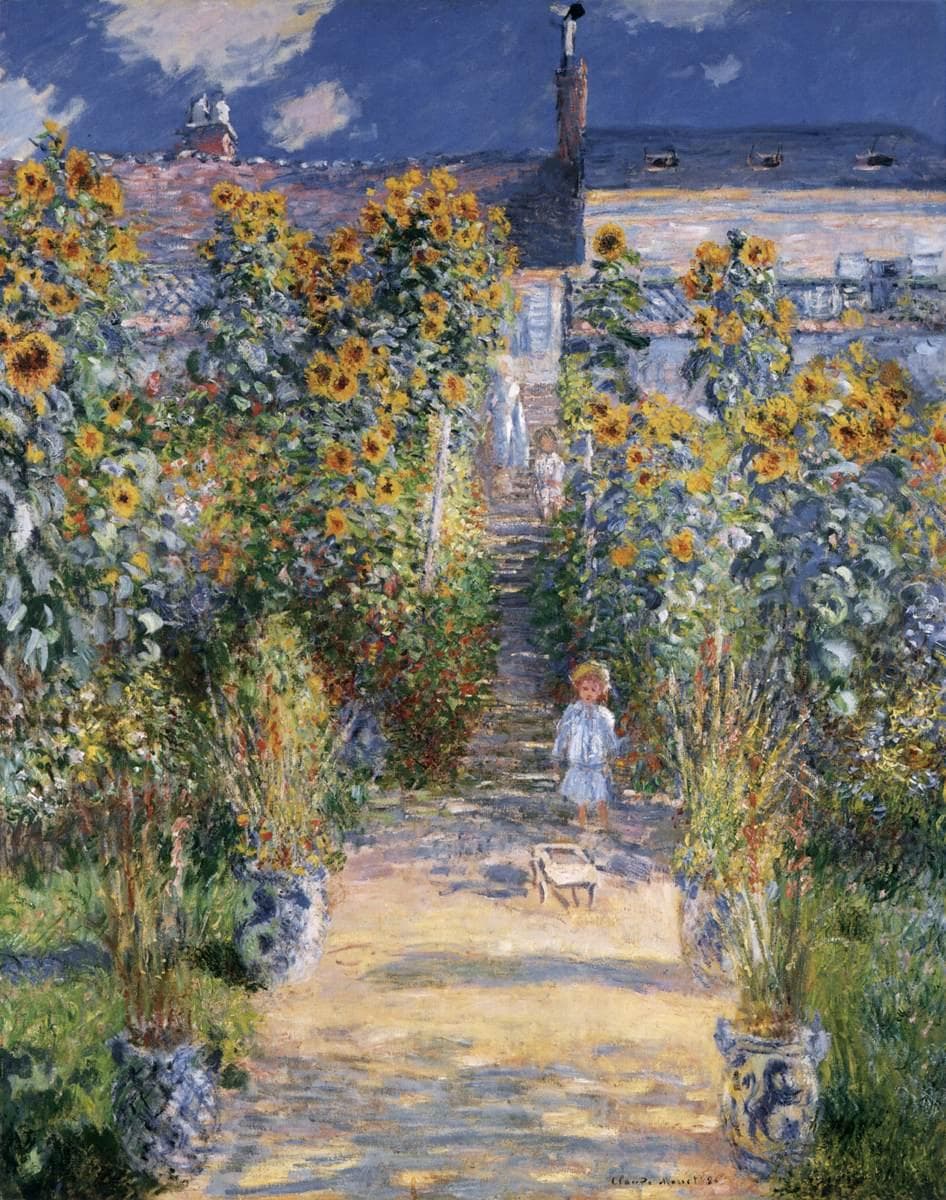
The Artist's Garden at Vétheuil
Claude Monet · 1881
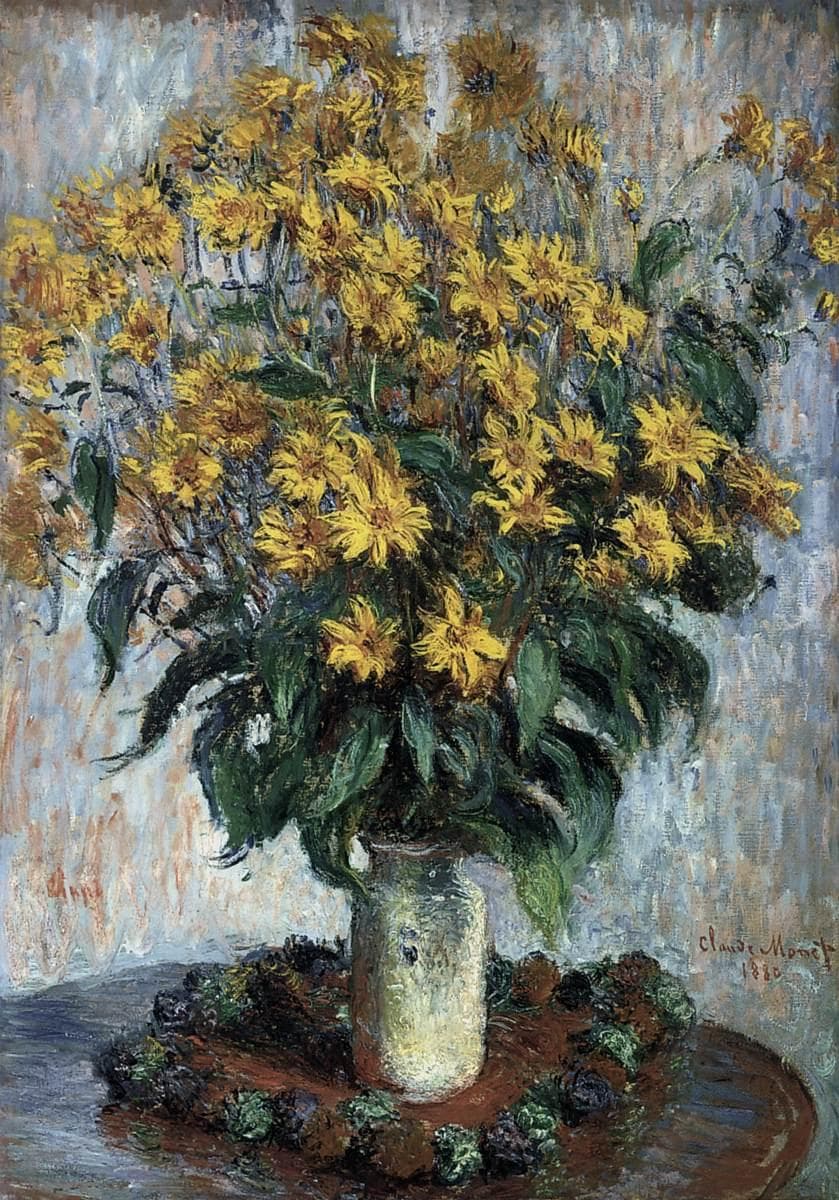
Jerusalem Artichoke Flowers
Claude Monet · 1880
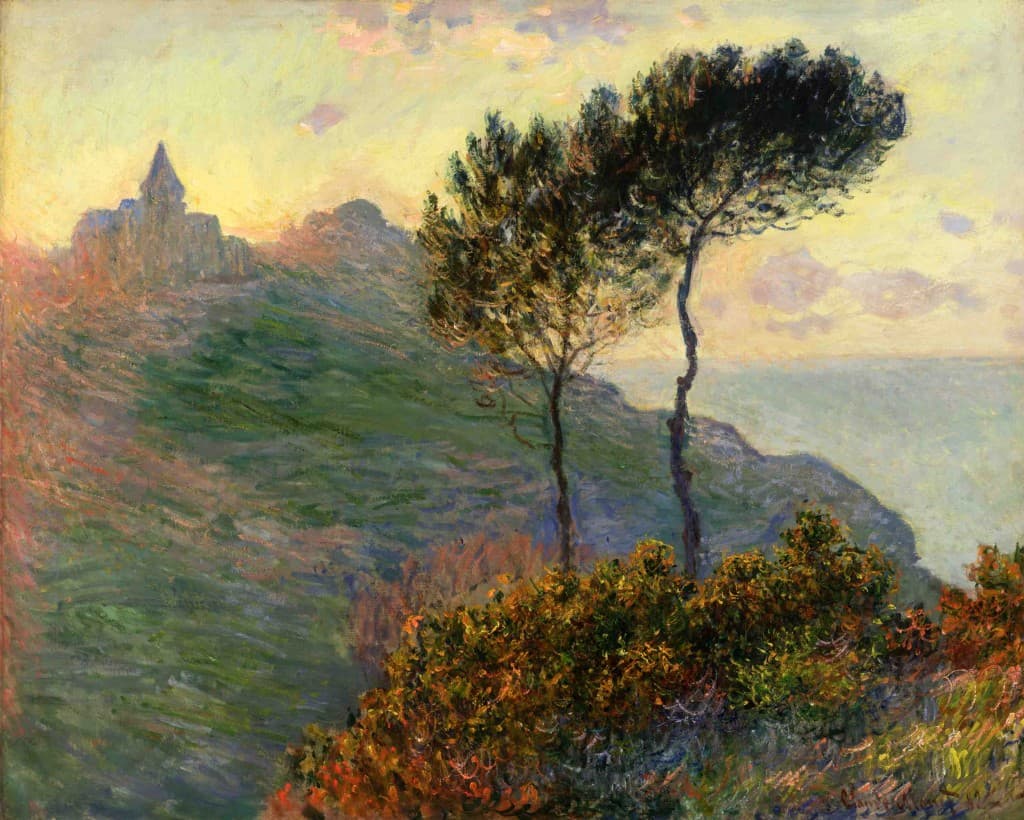
The Church at Varengeville
Claude Monet · 1882
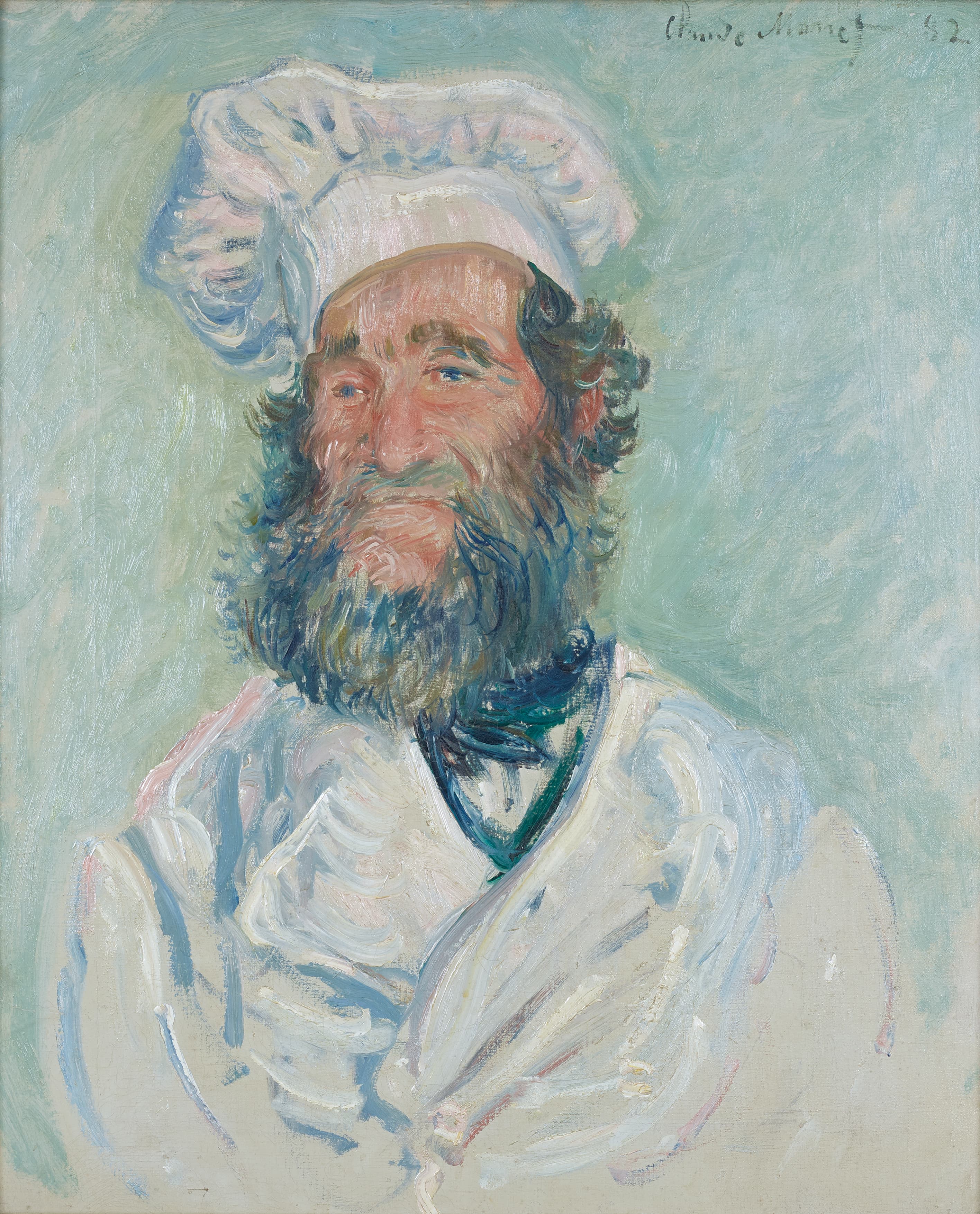
Portrait of Père Paul
Claude Monet · 1882
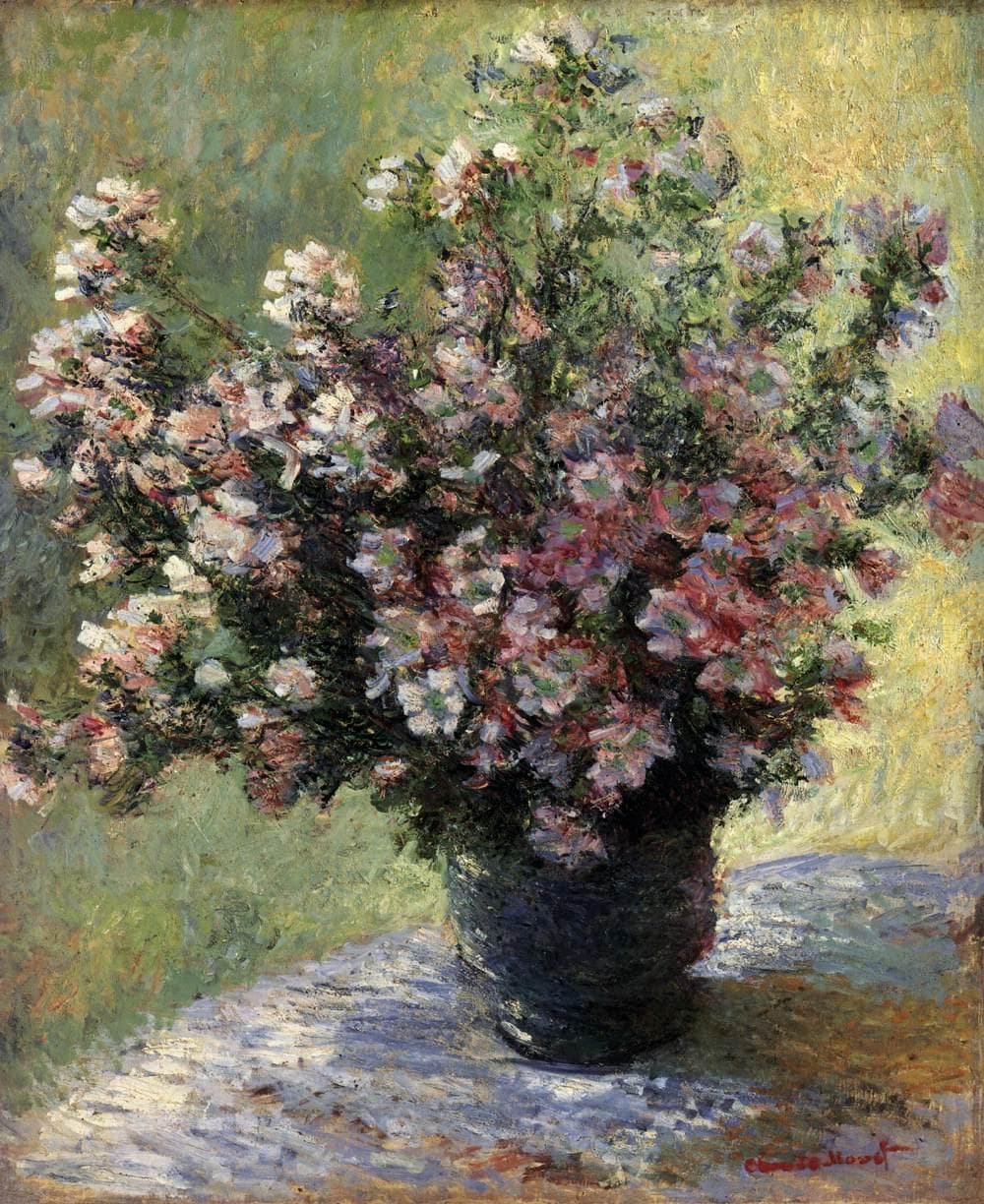
Vase of Flowers
Claude Monet · c. 1881–82
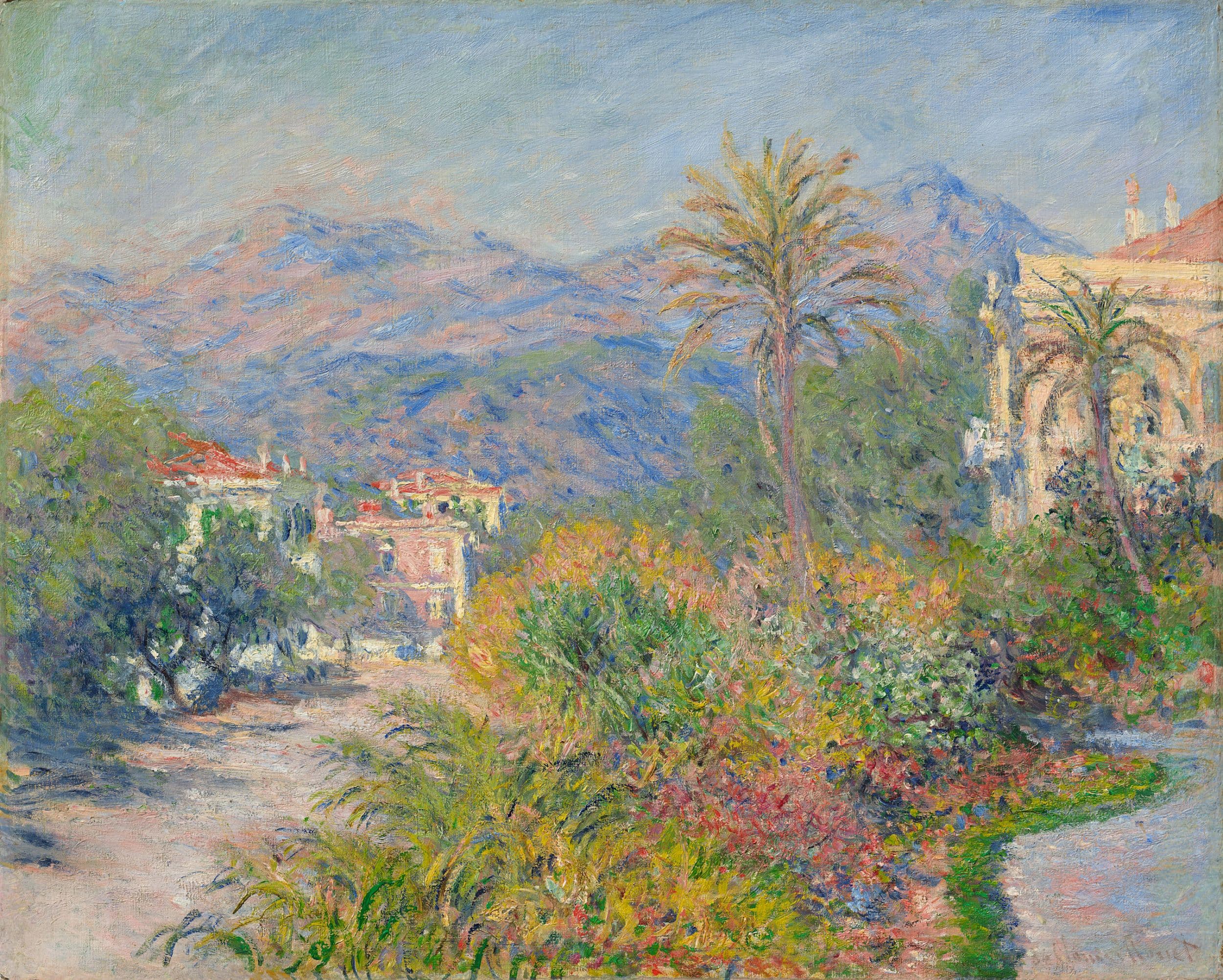
Strada Romana in Bordighera
Claude Monet · 1884
Also painted in 1882
The same year

Beach in Pourville
Claude Monet · 1882
Anglers on the Seine at Poissy
Claude Monet · 1882
Les Tilleuls à Poissy
Claude Monet · 1882
The Customs House, Afternoon Effect
Claude Monet · 1882
The Fisherman's House, Overcast Weather
Claude Monet · 1882
Varengeville, Low Tide
Claude Monet · 1882
The Church at Varengeville, Grey Weather
Claude Monet · 1882
Low Tide at Pourville, near Dieppe
Claude Monet · 1882
Kindred works
You may also study
Cliff Walk at Pourville
Claude Monet · 1882
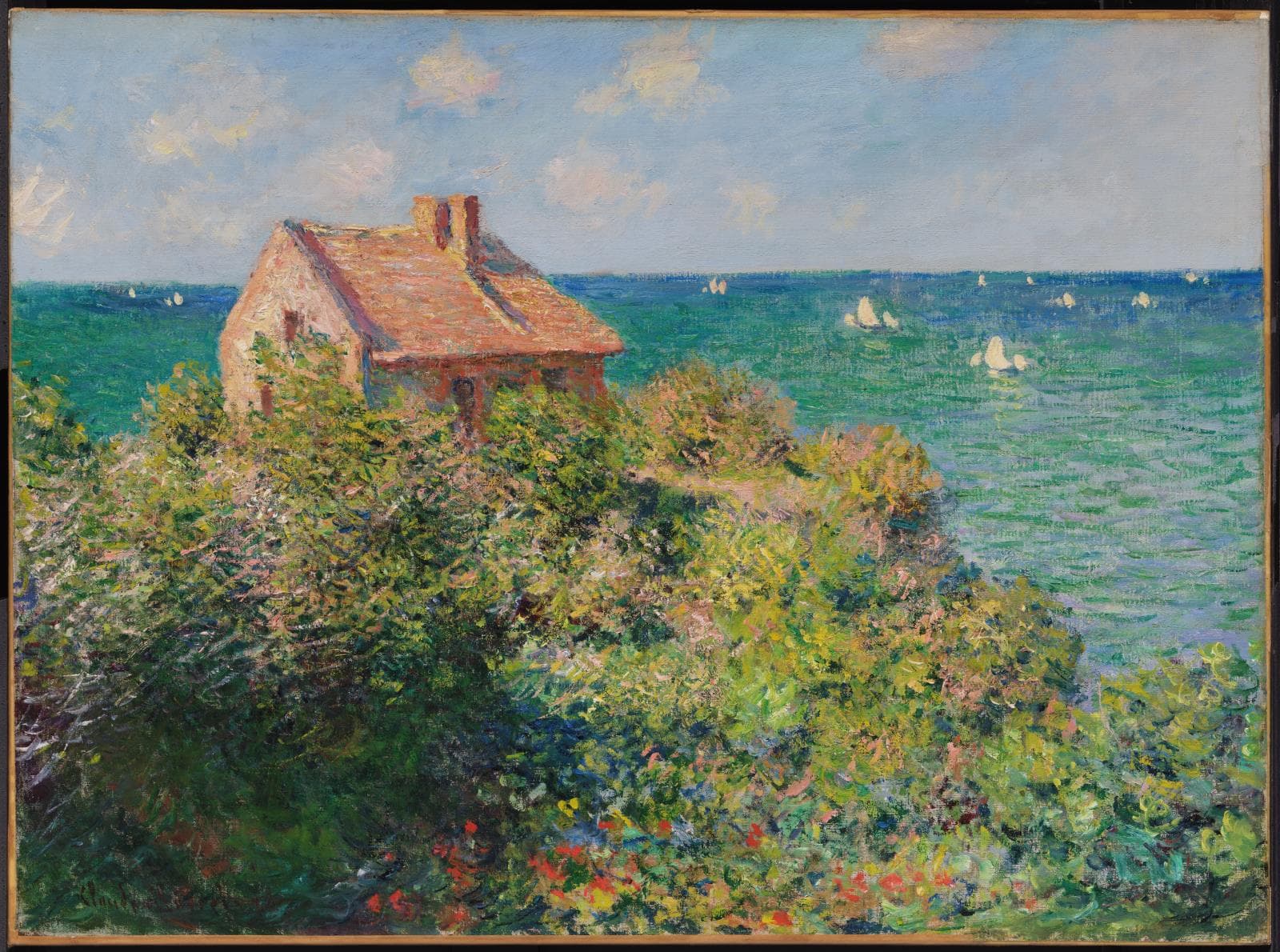
Fisherman's Cottage on the Cliffs at Varengeville
Claude Monet · 1882
The Customs House, Afternoon Effect
Claude Monet · 1882
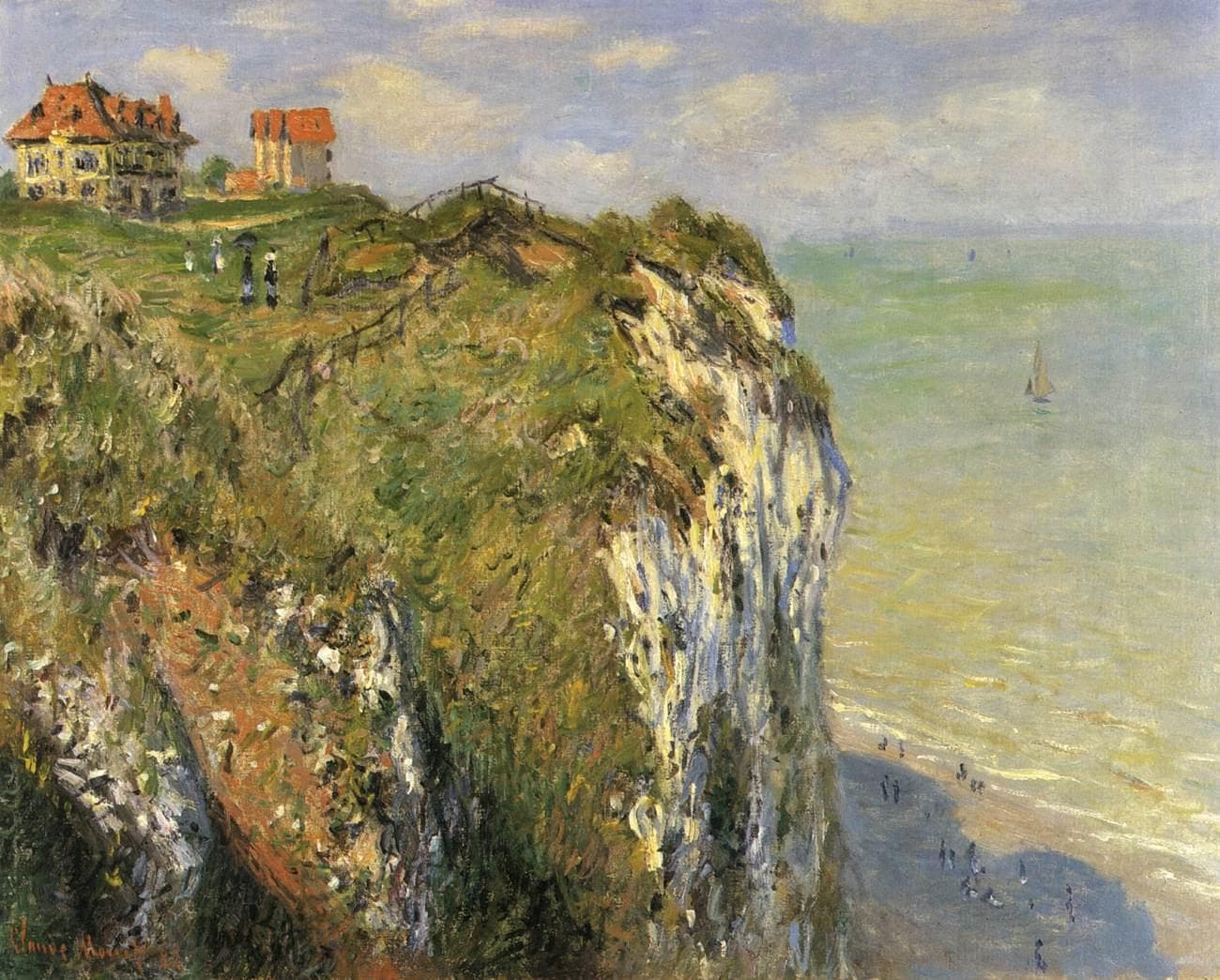
Cliffs near Dieppe
Claude Monet · 1882
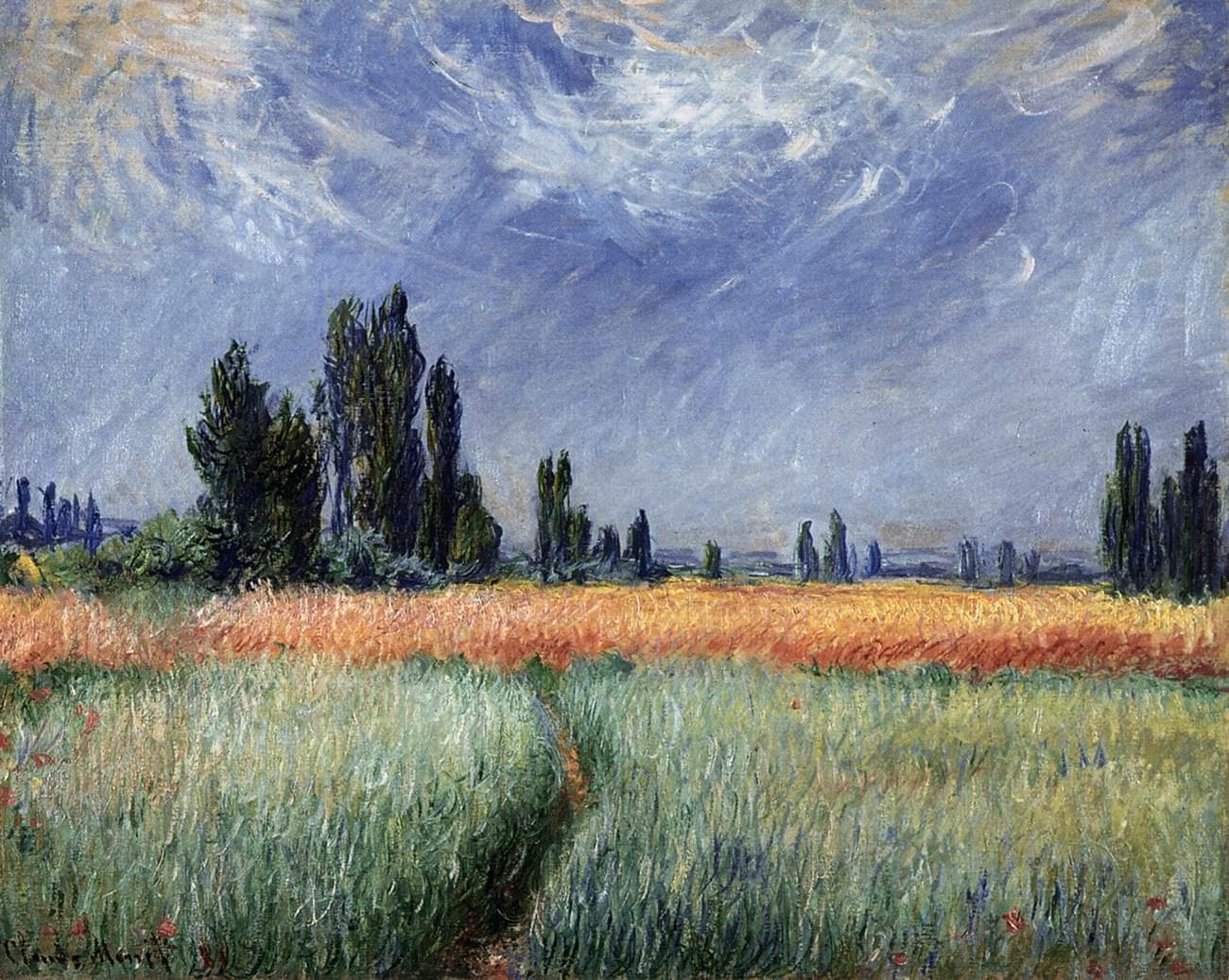
Wheat Field
Claude Monet · 1881
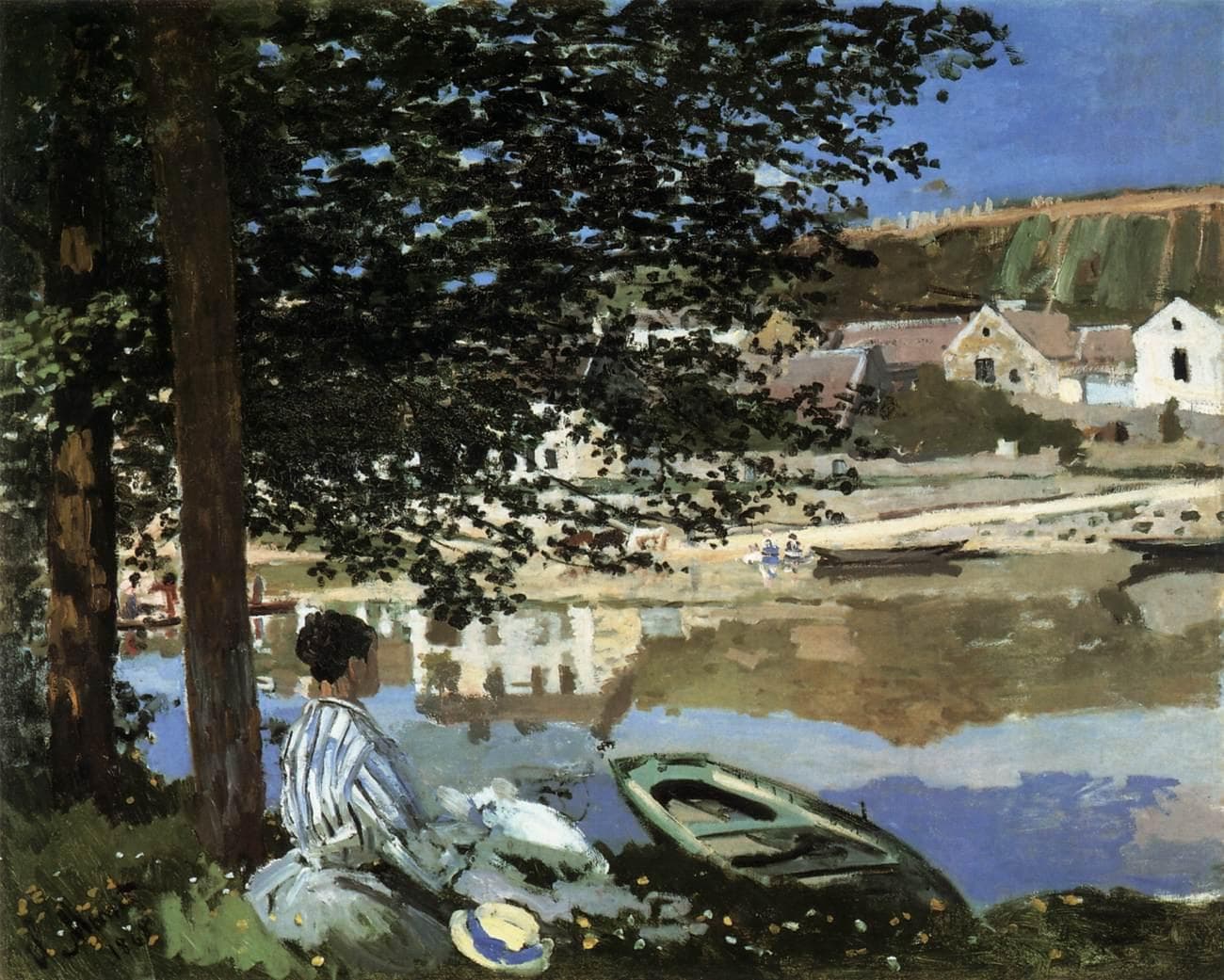
On the Bank of the Seine, Bennecourt
Claude Monet · 1868
Bend in the Epte River near Giverny
Claude Monet · 1888
The Seine at Giverny
Claude Monet · 1897