Image: Philadelphia Museum of Art · CC BY-SA 4.0 · via Wikimedia Commons
Waterloo Bridge, Morning Fog
Claude Monet, 1901
Waterloo Bridge, Morning Fog is a 1901 Claude Monet painting of the bridge and the chimneys of the south bank dissolved in lilac and pink morning fog, with a barge below. It is in the Philadelphia Museum of Art.
- Artist
- Claude Monet
- Date
- 1901
- Medium
- Oil on canvas
- Dimensions
- 65.7 × 100.2 cm
- Collection
- Philadelphia Museum of Art, Philadelphia, United States
- Movement
- Impressionism
- Catalogue
- Wildenstein 1559
- The City
- Water & Sea
Waterloo Bridge, Morning Fog is one of Claude Monet's views of the Thames from the Savoy Hotel, dated 1901. It measures 65.7 × 100.2 cm and is number 1559 in the Wildenstein catalogue raisonné. Anne Thomson of Philadelphia bought it from Durand-Ruel in 1905 and bequeathed it to the Philadelphia Museum of Art in 1954, in memory of her parents Frank and Mary Elizabeth Clarke Thomson (1954-66-6).
What you're looking at
The palette is almost a single color: a lilac-pink haze that covers sky, bridge and river. Within it, everything is present but softened. On the far bank stand the chimneys and towers of the south bank, painted in slightly darker violet, with a puff of smoke rising from one of them. At the left, a brighter pink-white glow catches the morning sun through the fog.
The bridge crosses the middle in a band of violet-blue. Its arches are clearly shaped, each opening a lighter crescent of pale lilac and white, where the brighter water beyond shows through. Along the deck run small touches of darker color, traffic dimly seen.
In the foreground, a barge with a dark sail and a smaller boat sit on the water, painted as soft, dark smudges. The river is the same pale lilac as the sky, broken only by faint horizontal strokes.
This version's distinction lies in its evenness. Unlike the sunlit canvases, there is no glittering path of light; unlike the gray-day pictures, there is no cold green. Instead, a soft, rosy fog makes every element, industrial chimneys included, delicate.
Where and when it was painted
Monet's third and last London campaign ran from January to April 1901. He painted Waterloo Bridge in the mornings from his room at the Savoy, often in fog, which he valued above all London weather. Durand-Ruel bought the canvas in May 1904, immediately after the Paris exhibition of the Thames series.
How it was painted
The paint is applied in a dense mesh of small strokes, with lilac, pink, blue and cream laid side by side and over each other. The value range is tight, so forms emerge only through slight shifts of tone. Monet reworked the London canvases in his Giverny studio, and the even, finely woven surface here suggests careful revision.
How this version differs
In the Waterloo Bridge series, it sits between the clear, green-grey Waterloo Bridge, Gray Weather in Chicago and the bright lilac Waterloo Bridge, Sunlight Effect. Its closest match is the Hugh Lane's Waterloo Bridge, Overcast Weather, with the same chimneys, but in warm amber rather than rose. The Hermitage's Waterloo Bridge, Effect of Fog pushes the same fog into deep violet.
A detail to look for
In the upper left, a brighter patch of pinkish white glows behind the chimneys, suggesting the sun trying to break through the fog. It is the only point of real brightness in the canvas, and it is placed close to the darkest verticals, the chimneys, which makes it shine more. Below it, under the first arch, a faint warm tint touches the water. Monet often marked the source of light in a fog picture with just such a soft patch, rather than painting the sun itself. Here, it gives the picture a direction: morning light coming from upstream left, filtered through the haze of the industrial south bank.
Where to see it
The Philadelphia Museum of Art has a large Impressionist collection, but the painting is not always on view. It was lent to the Courtauld Gallery's Monet and London: Views of the Thames in 2024–25. See Monet in London, where to see Monet's paintings and Claude Monet.
Anne Thomson, who bought the painting from Durand-Ruel's New York branch in June 1905, was the daughter of Frank Thomson, president of the Pennsylvania Railroad. She bequeathed her collection to the Philadelphia Museum of Art in 1954, and the painting has been there since, one of several Monets in the museum.
Questions & answers
Where is Waterloo Bridge, Morning Fog?
It is in the Philadelphia Museum of Art (1954-66-6), a bequest of Anne Thomson in memory of her parents, Frank and Mary Elizabeth Clarke Thomson, in 1954. It is not always on display.
When was it painted?
It is dated 1901, the year of Monet's last London campaign (January–April). He painted it from the Savoy Hotel and finished it at Giverny; Durand-Ruel bought it in May 1904.
What does the painting show?
Waterloo Bridge, the chimneys of the south bank, and a barge on the Thames, all seen through a lilac-pink morning fog, with a brighter glow of sun at the left.
Why did Monet love London fog?
He said London would not be beautiful without its fog, which gave the city its breadth and turned solid buildings into color and atmosphere. The fog let him paint light itself.
More by the artist
Claude Monet
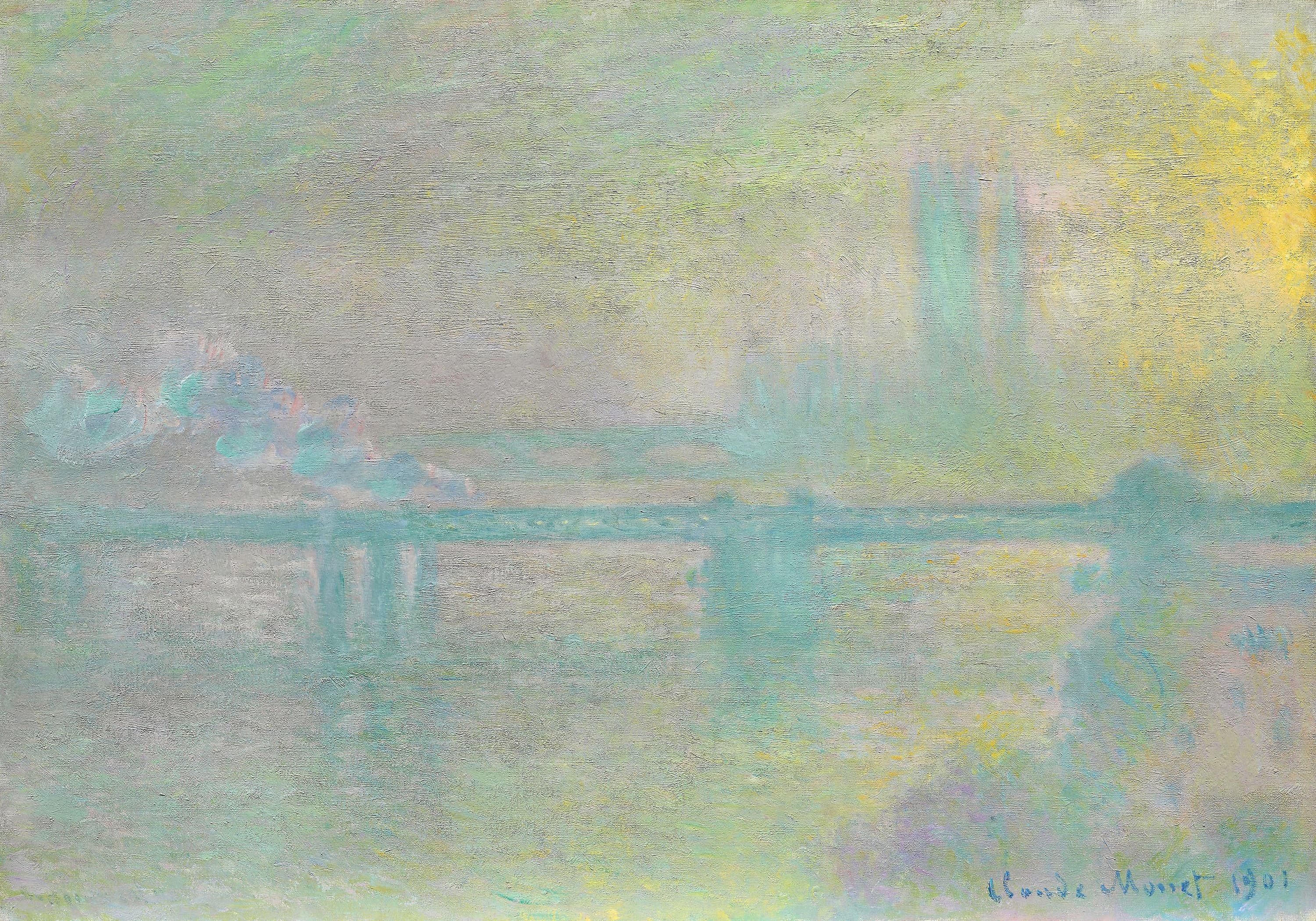
Charing Cross Bridge, London
Claude Monet · 1901
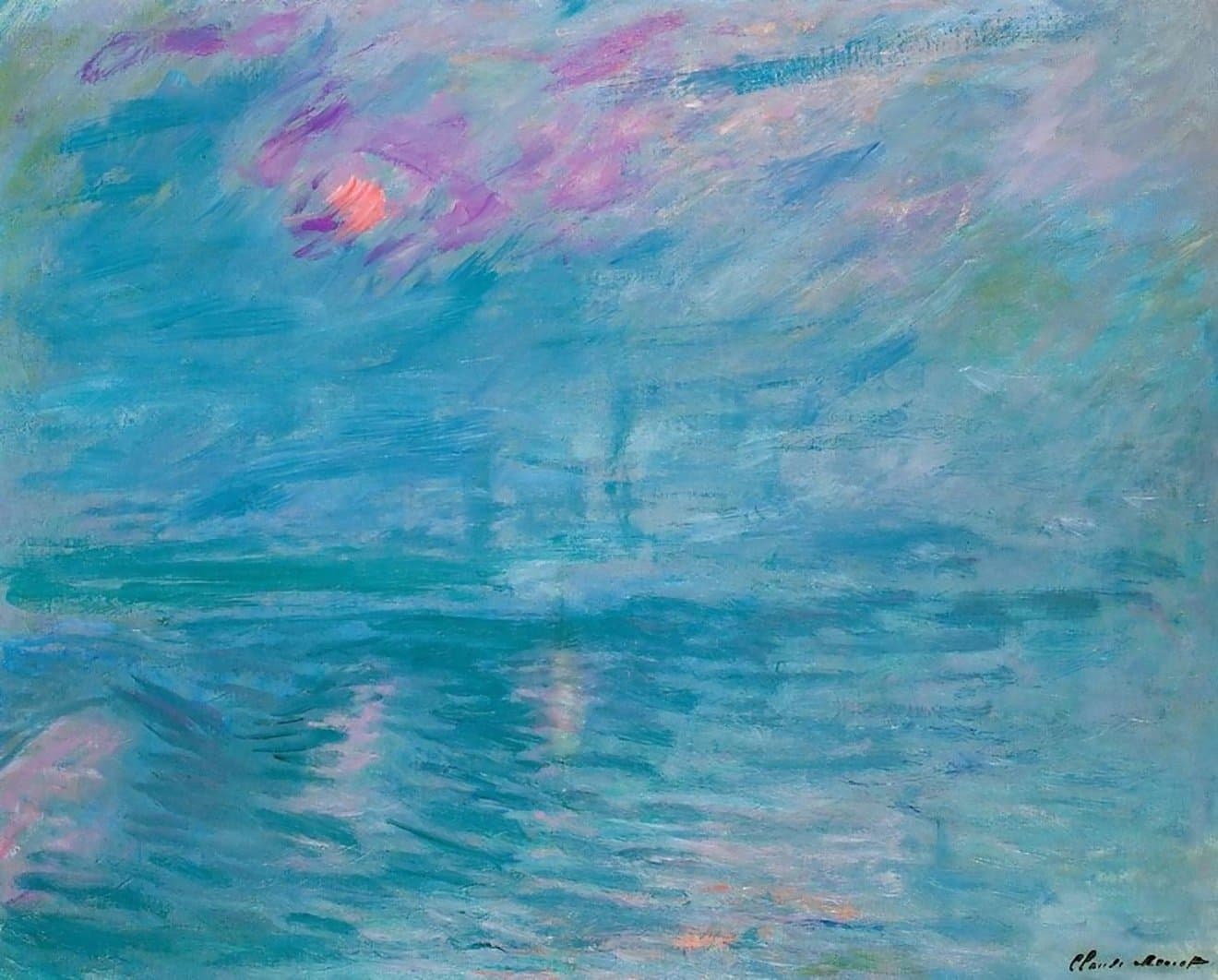
Waterloo Bridge (Davis Museum)
Claude Monet · 1899–1903
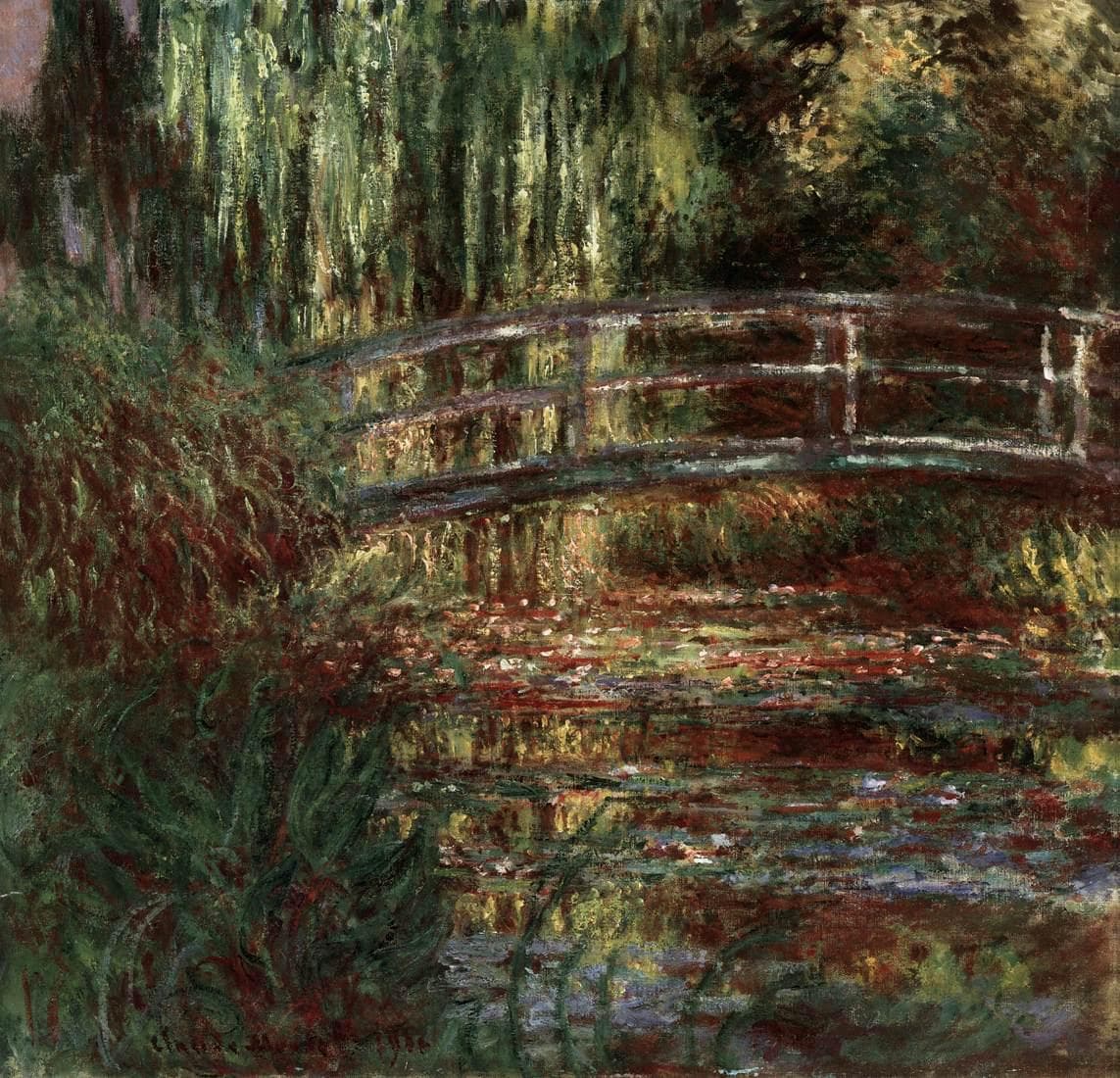
The Water Lily Pond
Claude Monet · 1900
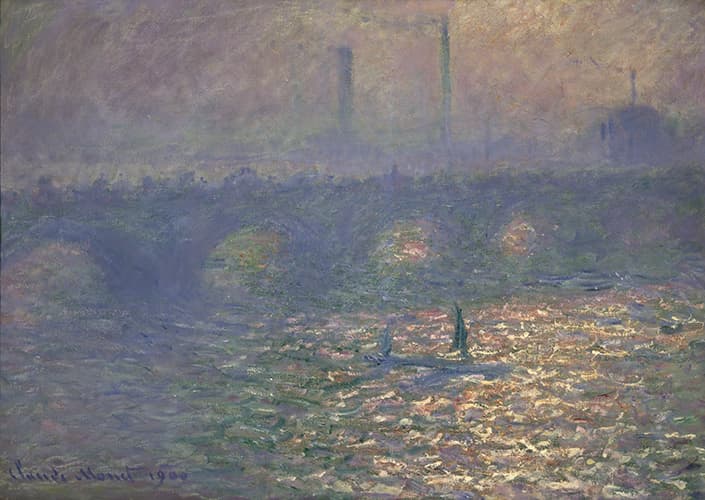
Waterloo Bridge (Santa Barbara Museum of Art)
Claude Monet · 1900
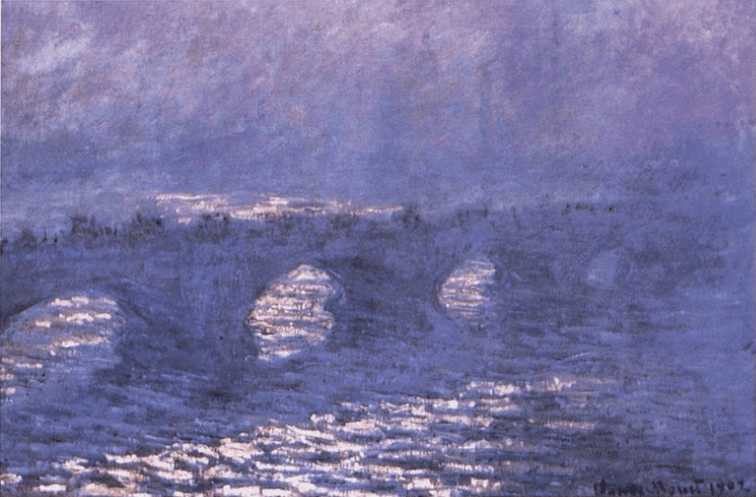
Waterloo Bridge, Effect of Sun in the Mist
Claude Monet · c. 1900–03
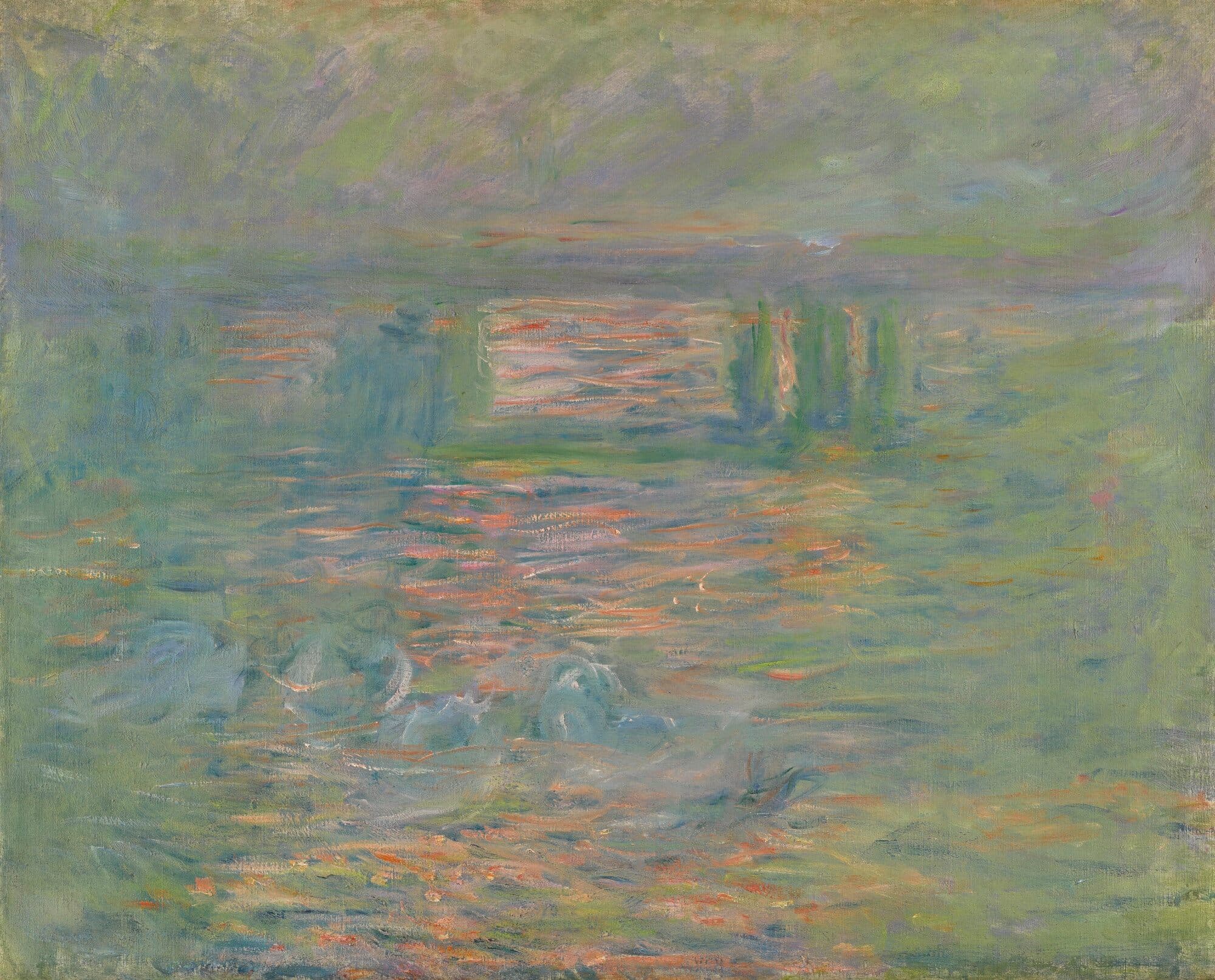
Charing Cross Bridge (private collection, c. 1900)
Claude Monet · c. 1899–1901
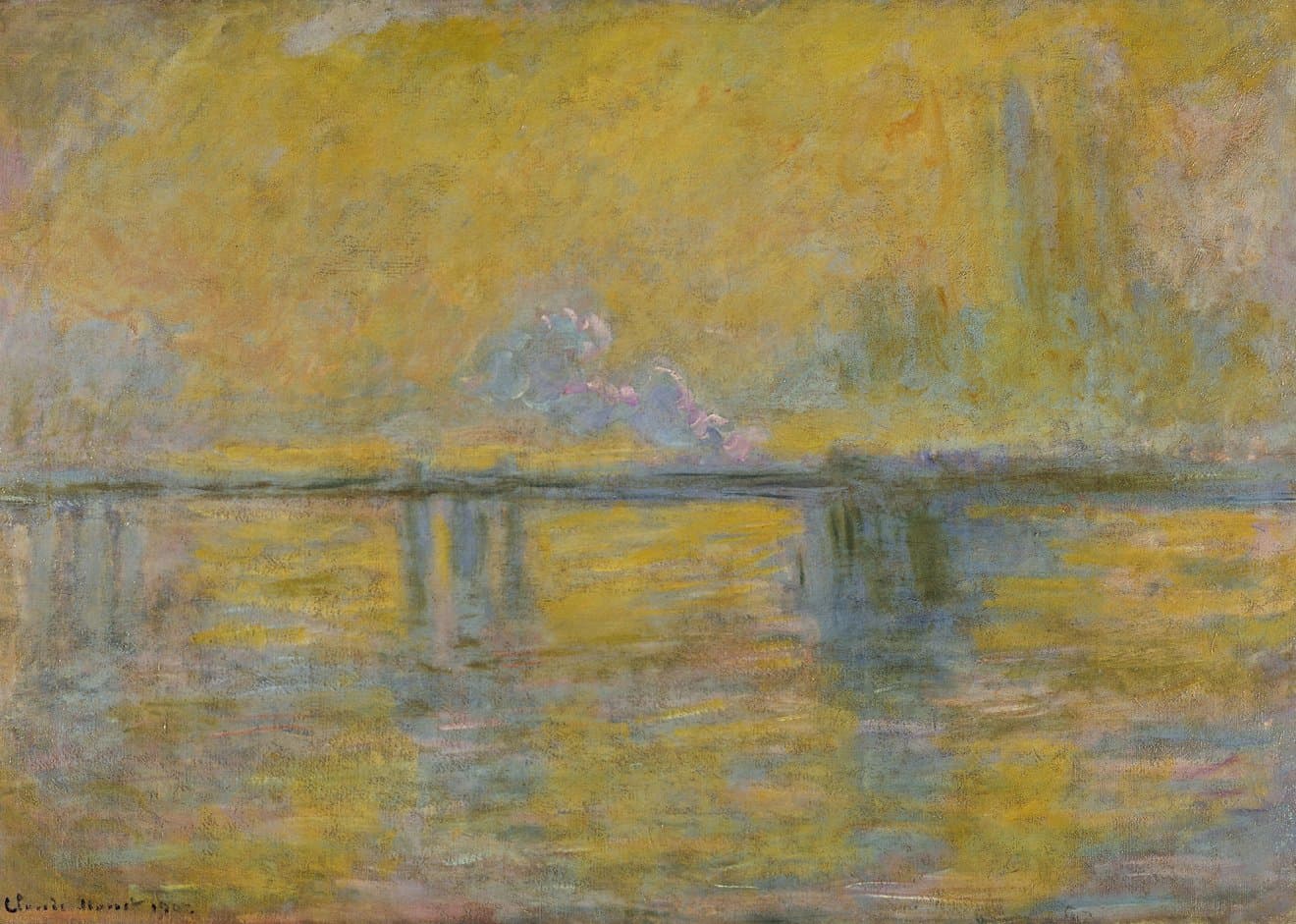
Charing Cross Bridge (Chartwell)
Claude Monet · 1899–1902 (dated 1902)
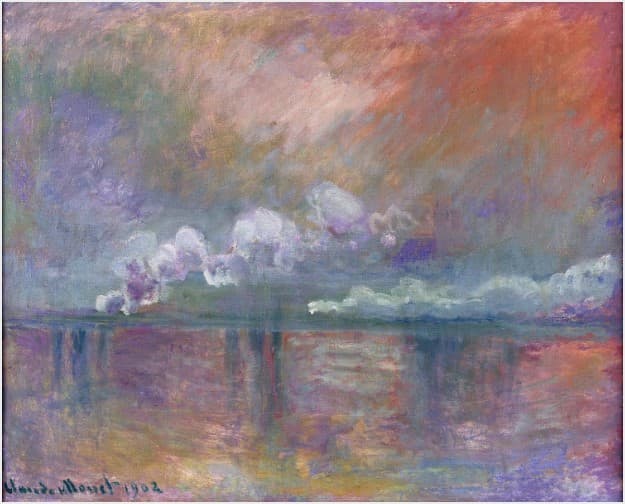
Charing Cross Bridge, Smoke in the Fog, Impression
Claude Monet · 1902
Also painted in 1901
The same year
Kindred works
You may also study
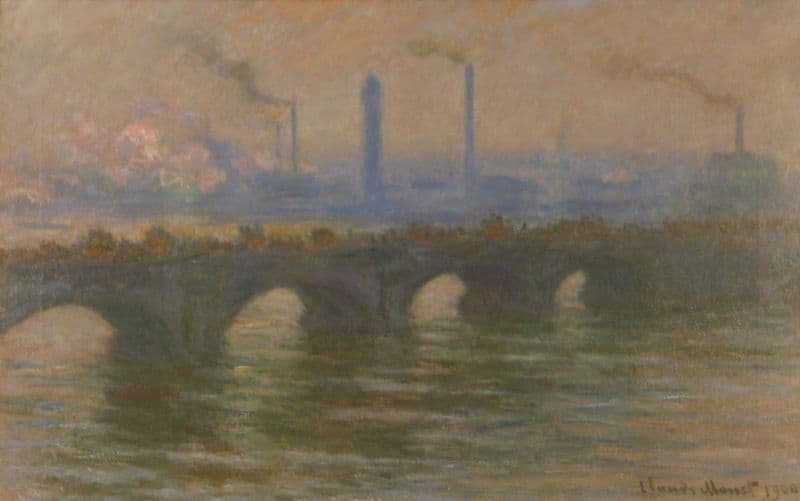
Waterloo Bridge, Overcast Weather
Claude Monet · 1900
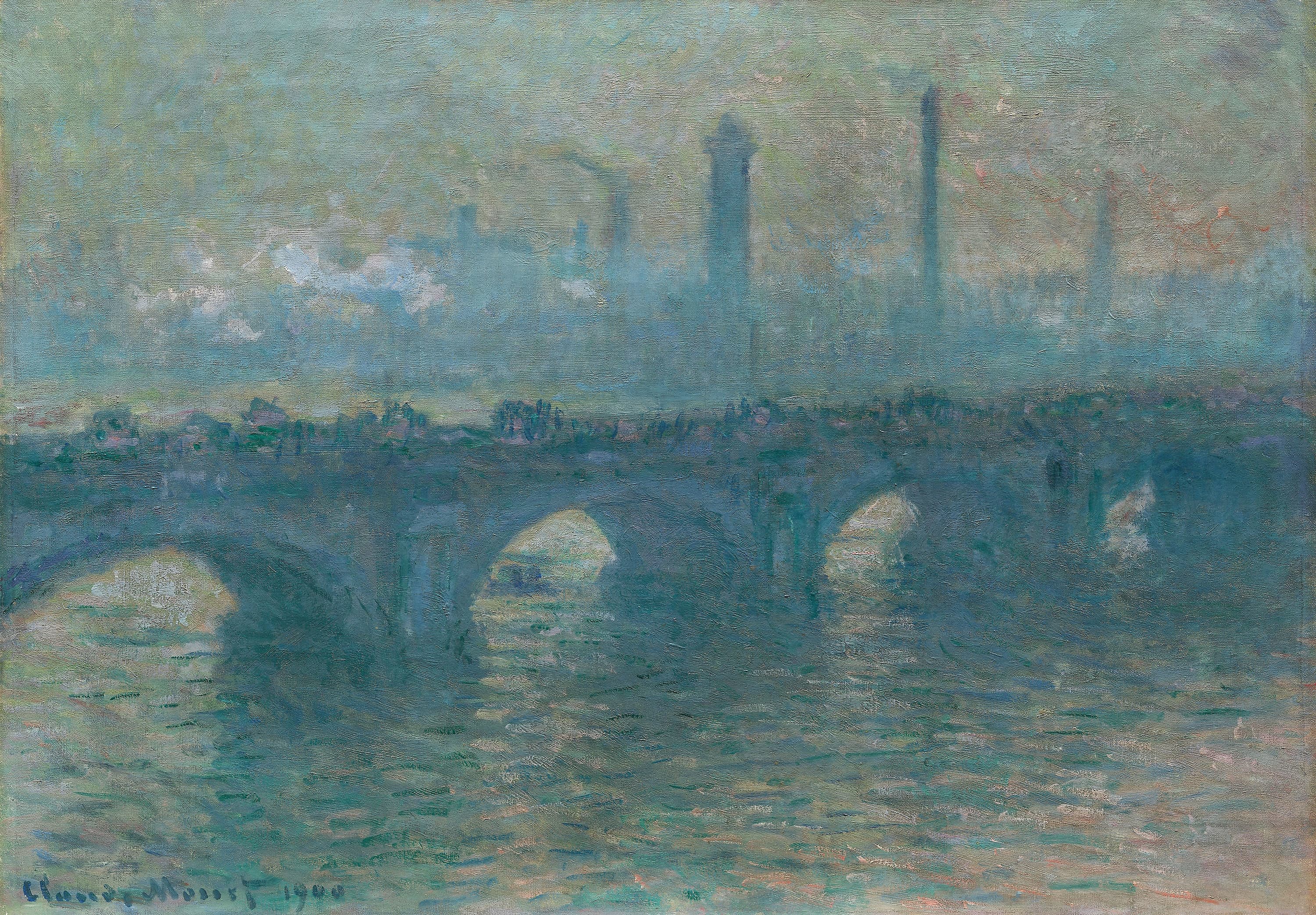
Waterloo Bridge, Gray Weather
Claude Monet · 1900
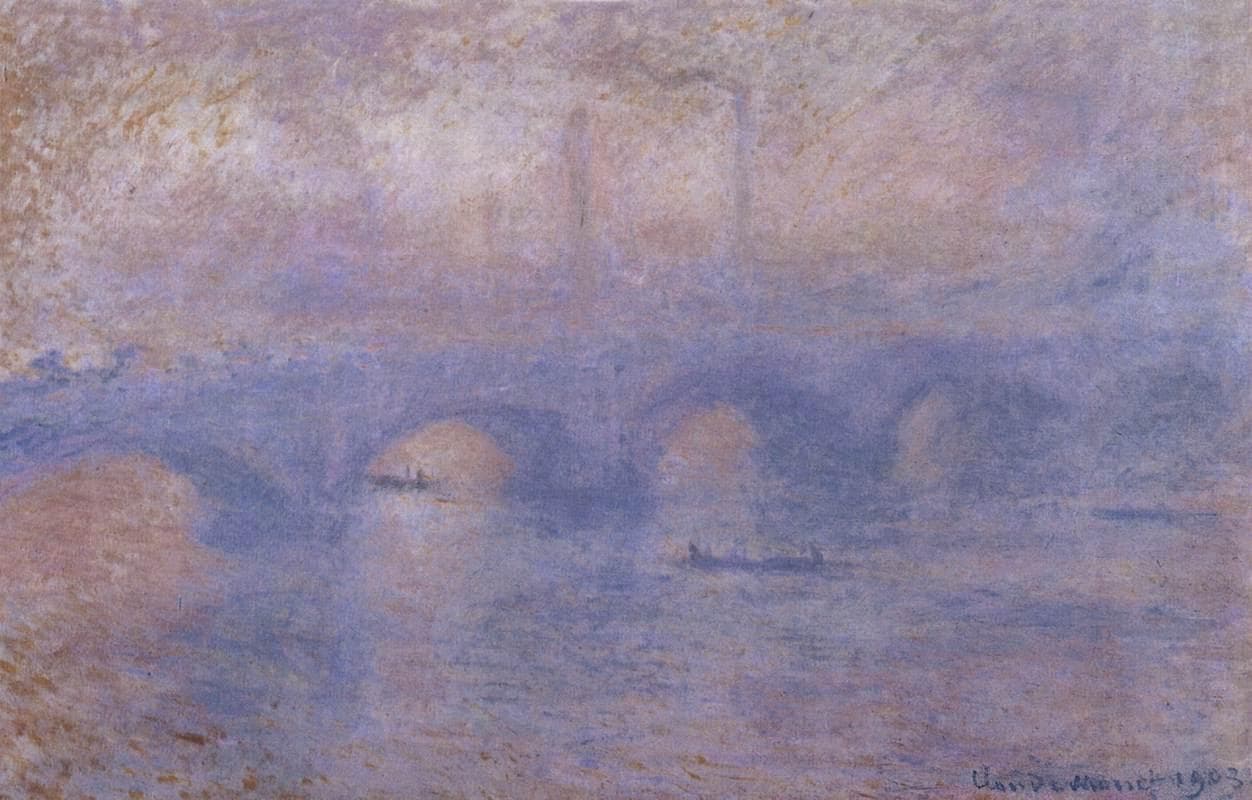
Waterloo Bridge, Effect of Fog
Claude Monet · 1903
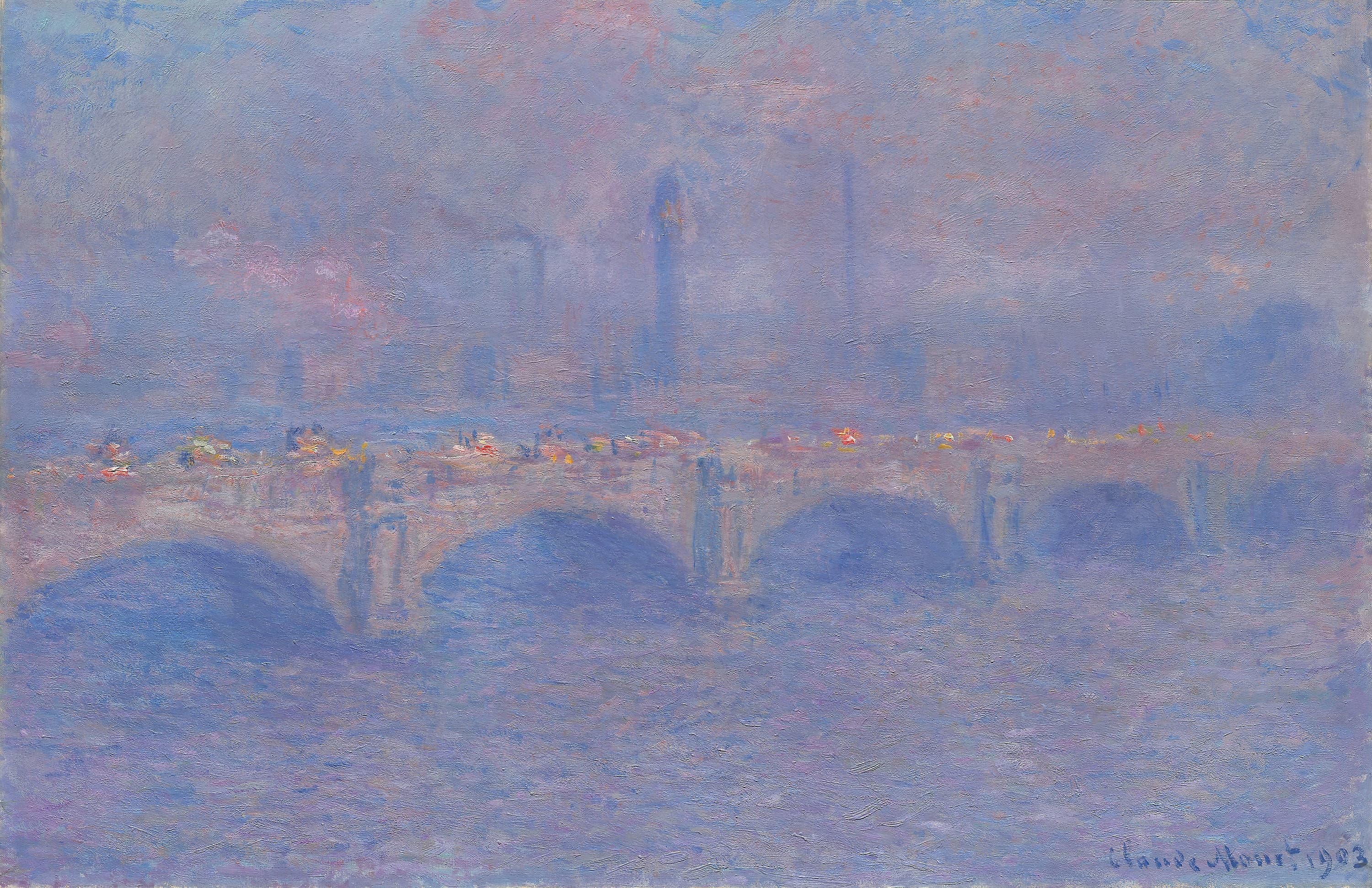
Waterloo Bridge, Sunlight Effect
Claude Monet · 1903
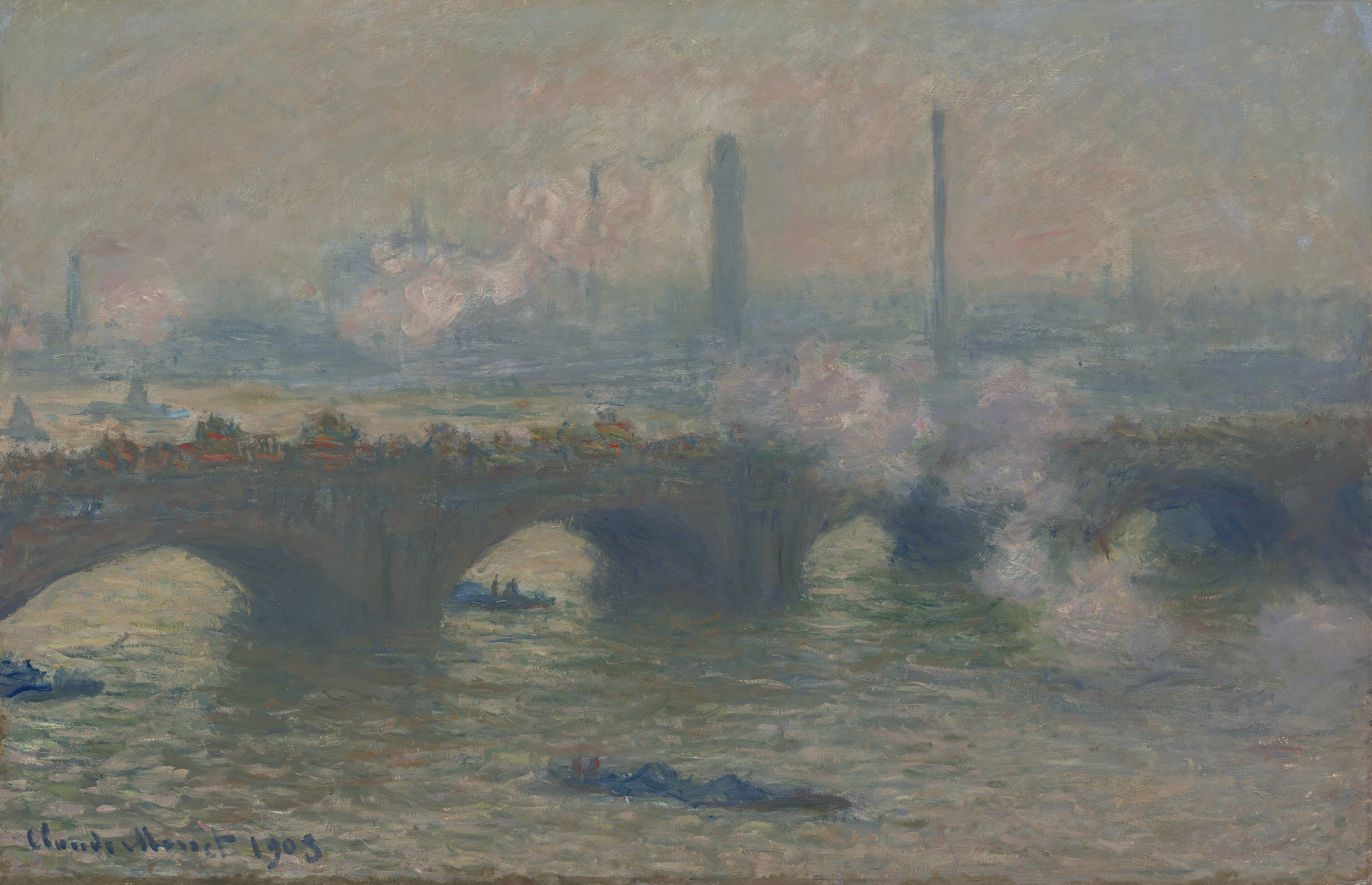
Waterloo Bridge, Gray Day
Claude Monet · 1903
The Grand Canal, Venice
Claude Monet · 1908
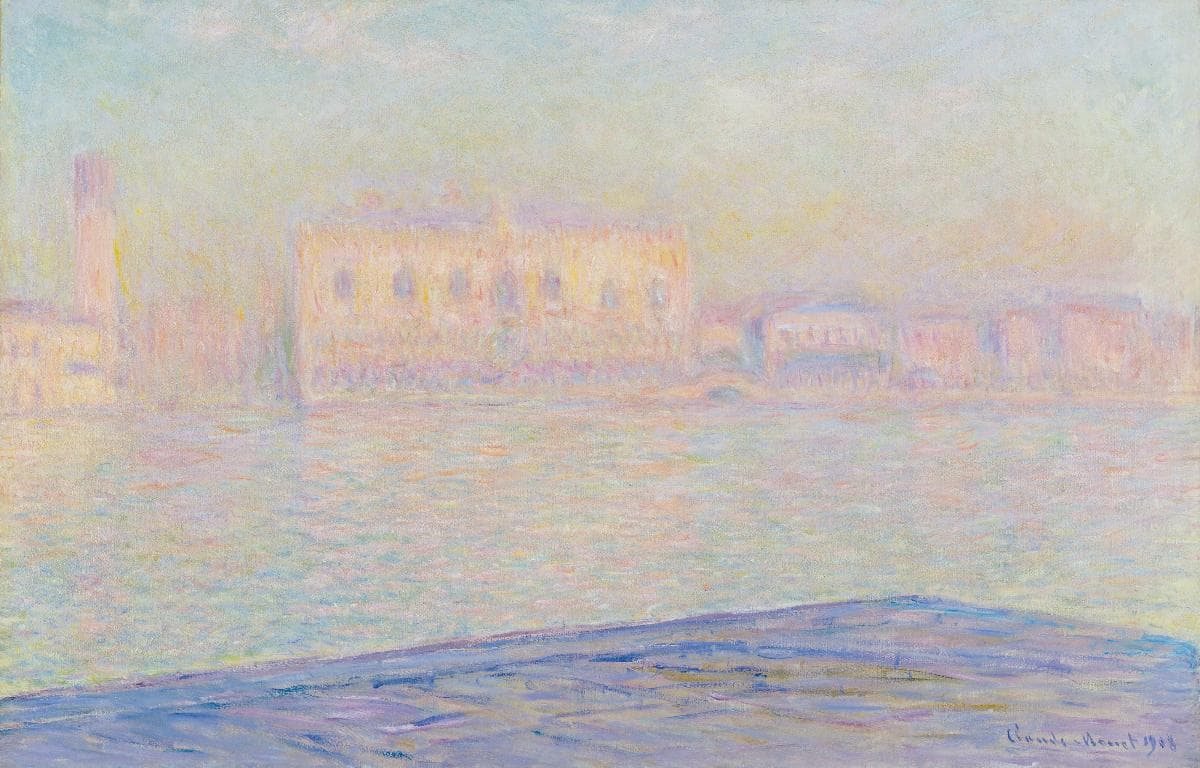
The Doge's Palace Seen from San Giorgio Maggiore (Zürich)
Claude Monet · 1908
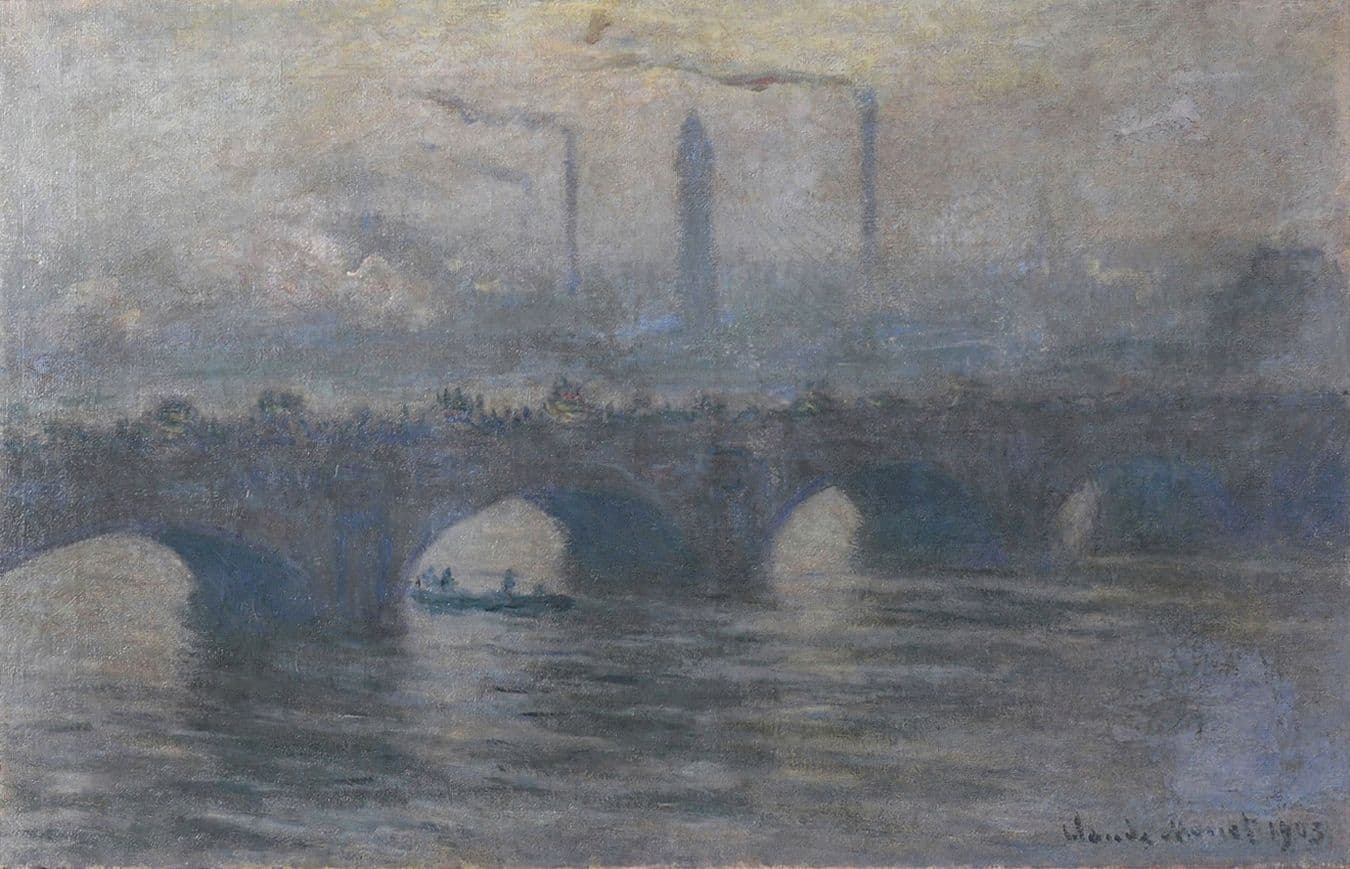
Waterloo Bridge, Gray Weather (Gurlitt Bequest)
Claude Monet · 1903