Image: Private collection · Public domain · via Wikimedia Commons
Grainstacks at Giverny, Morning Effect
Claude Monet, 1889
Les Meules, Giverny, effet du matin (1889) is Claude Monet's view of two grainstacks in rosy morning light and frost, one of three 1888–89 prototypes of his Haystacks series. Signed and dated '89', it is in a private collection.
- Artist
- Claude Monet
- Date
- 1889
- Medium
- Oil on canvas
- Dimensions
- 65 × 92 cm
- Collection
- Private collection
- Movement
- Impressionism
- Catalogue
- Wildenstein 1214
- Nature & Landscape
Les Meules, Giverny, effet du matin (Grainstacks at Giverny, Morning Effect) is one of three canvases of 1888–89 in which Claude Monet painted the same two grainstacks from the same spot in the fields near his house, each in a different light. In this one, early morning sun tints everything pink: the stacks' frosted roofs shine rose and lilac, their bases glow brick red, and a haze of pink and gold hangs over the hills and the sky. Signed and dated Claude Monet 89, it is in a private collection.
What you are looking at
The composition is almost identical to its two companions. A larger stack stands at left with a tall, pointed roof over a squat, cylindrical base; a smaller stack sits at right, slightly further back. The roofs are crusted with frost, painted in white, pink and violet, and the bases are a deep, warm red-orange, as if the low sun were striking them from the front.
What sets this version apart is the color of the air. The whole upper half is a haze of rose and apricot, with patches of gold, pink and pale violet scrubbed across the sky. The hills behind are almost lost in it, shown only by a slightly darker band of mauve and lilac with a few pale shapes of houses and trees at their foot. The field is a frosty carpet of lavender, blue, white and pink touches, with long blue shadows from the stacks. The signature and date are at lower left.
Where and when it was painted
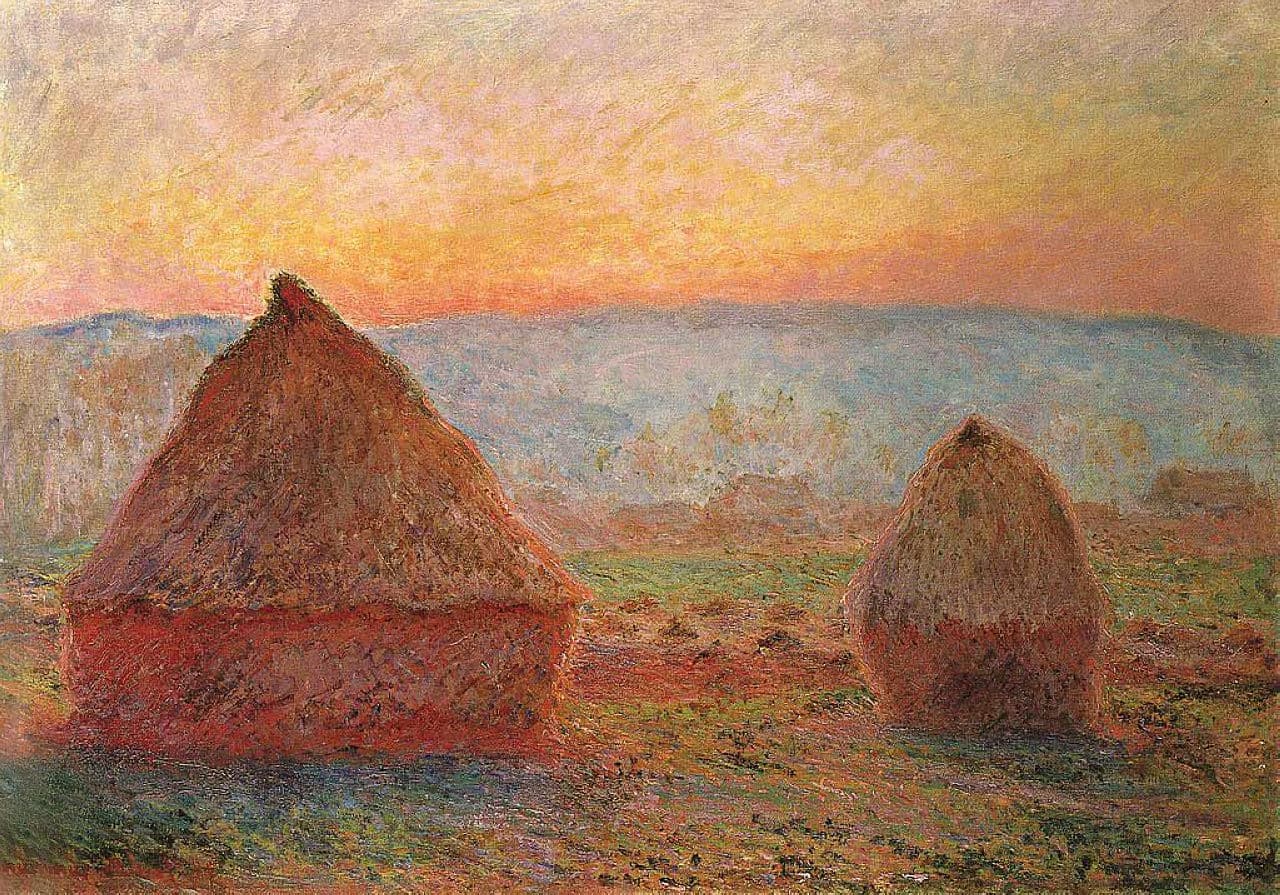
In the autumn and winter of 1888–89 Monet painted a small group of grainstack pictures in the fields next to his property at Giverny. Three of them (Wildenstein 1213–1215) show the same two stacks from the same viewpoint at different times: the Evening Sun, now in Saitama; White Frost Effect, at the Hill-Stead Museum in Connecticut; and this morning effect. Together they are the clearest prototypes of the Haystacks series of 1890–91. See our Giverny hub for the place.
How it was painted
Monet unified the canvas around a single dominant hue, rose, and modulated every other color toward it. Even the blue shadows lean toward lilac, and the frost is pink rather than white. The brushwork is dense and fine in the field, looser and more sweeping in the sky. The stacks are firmly built, with a clear line between roof and base, but their edges soften where they meet the hazy air.
This approach, a colored atmosphere wrapping every object, was what Monet would later call the enveloppe. It became the governing idea of the 1890–91 series and of his later Rouen Cathedral and London pictures.
How this version differs
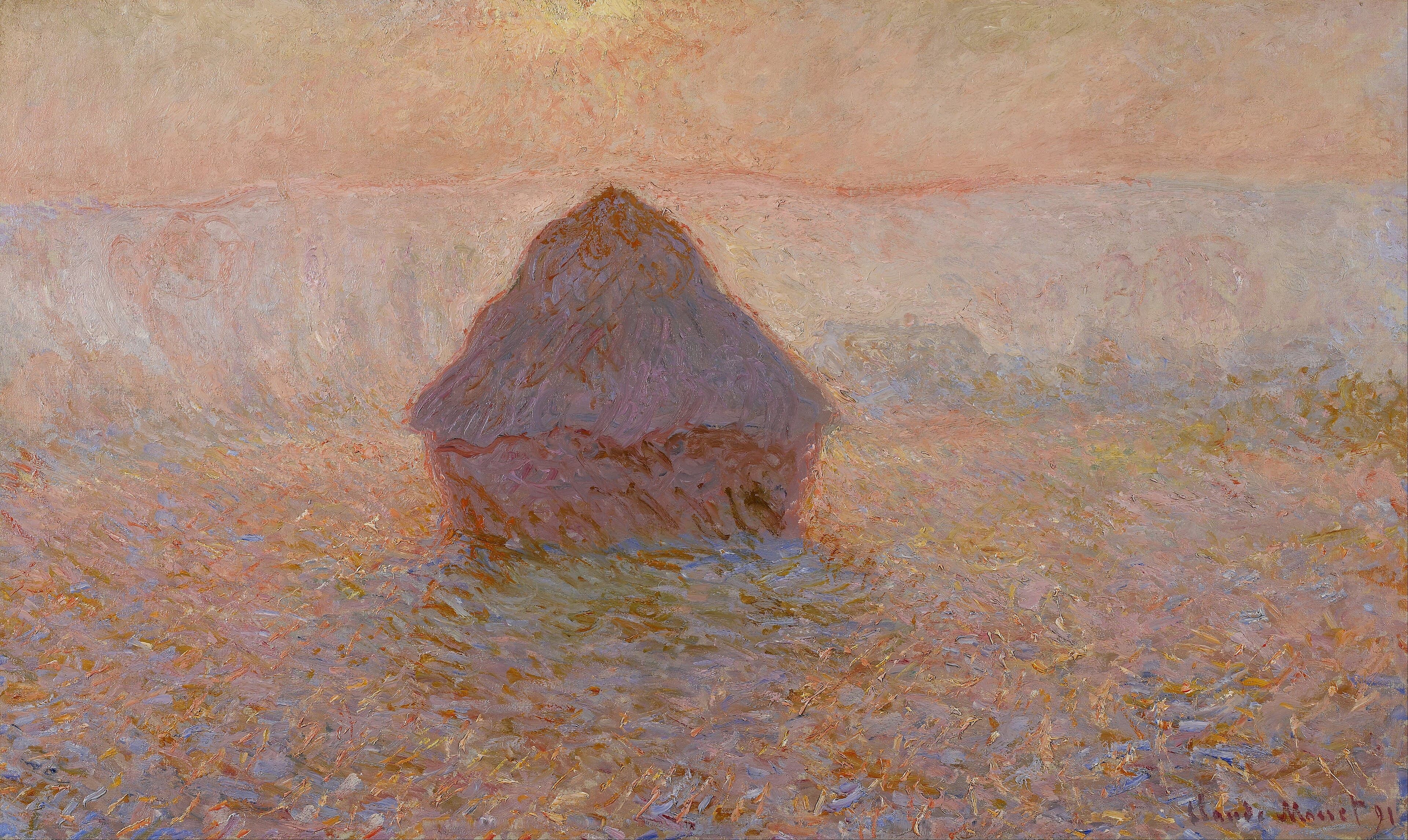
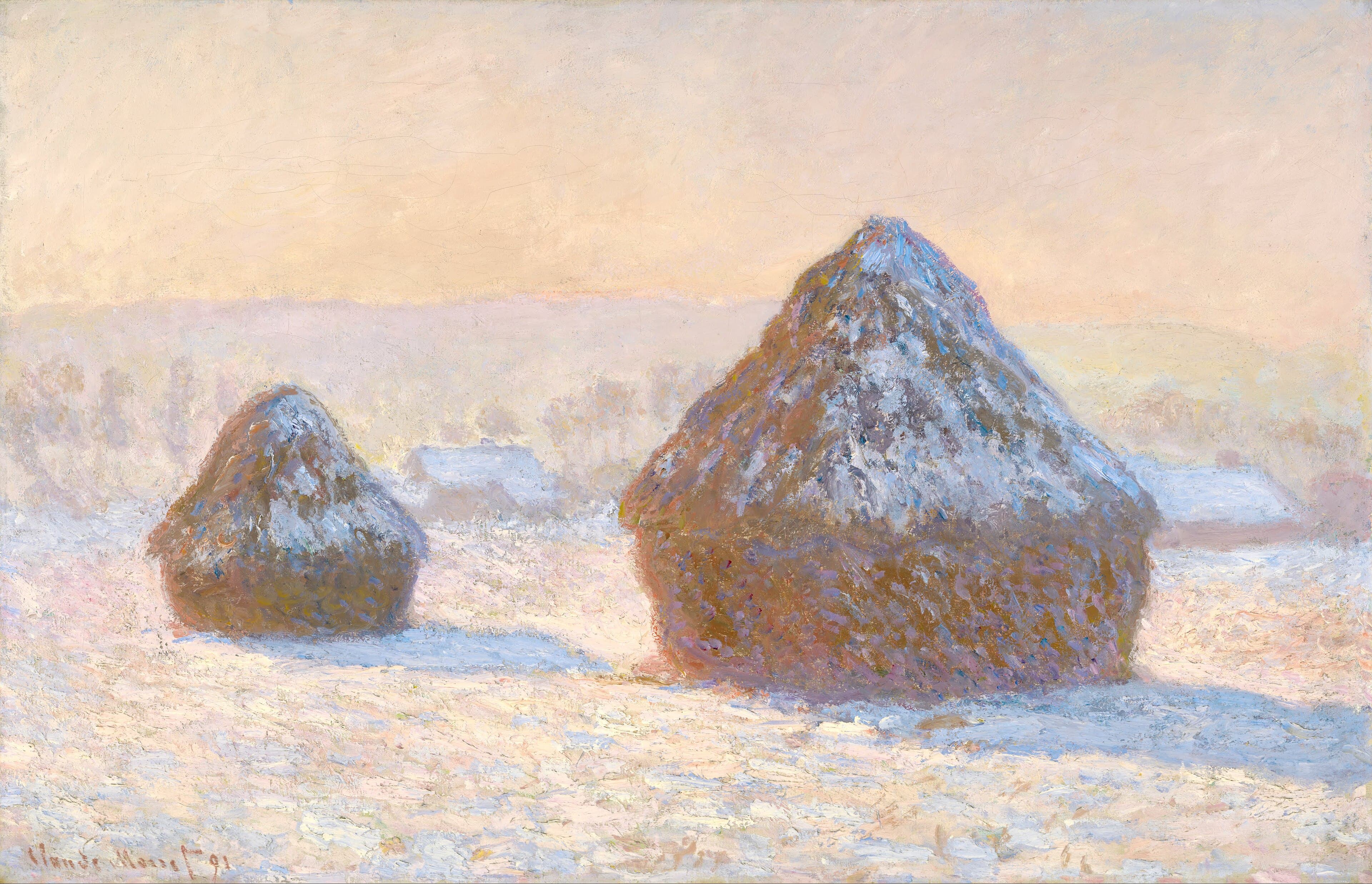
Set beside its companions, the morning picture is the softest and most veiled. The Saitama evening canvas is hotter and more contrasted, with an orange sky; the Hill-Stead frost picture is colder, with a white field and a clearer sky. Here sky, hills and field merge into a single pink haze. In the 1890–91 series, compare Grainstack, Sun in the Mist in Minneapolis, where morning fog plays a similar role, or Wheatstacks, Snow Effect, Morning at the Getty.
Why three versions?
Painting the same view three times allowed Monet to test whether the light itself, rather than the objects, could be the subject of a picture. The stacks hardly change from canvas to canvas; the color of the world around them changes completely. That experiment, made quietly in 1888–89, was what he took up on a much larger scale two years later.
Ownership
Its two companions are in public museums, one bought by Alfred Pope as early as 1889 and the other now in Saitama. This canvas is in private hands, which is why it is the least known of the three.
Where to see it
The painting is in a private collection and not on public view. Its two companions are in the Museum of Modern Art, Saitama, and the Hill-Stead Museum. For haystack pictures on public view, see the Haystacks hub and where to see Monet's paintings.
Questions & answers
Where is Monet's Les Meules, Giverny, effet du matin?
It is in a private collection and not on public view. Its two companion pictures of 1888–89, painted from the same spot, are in the Museum of Modern Art, Saitama (evening) and the Hill-Stead Museum, Connecticut (white frost).
When was it painted?
In the winter of 1888–89 at Giverny. It is signed and dated 'Claude Monet 89' at lower left.
What does the painting show?
Two grainstacks with frosted roofs in a field near Monet's house, bathed in rosy early-morning light, with the hills behind lost in a pink and gold haze.
How does it relate to the Haystacks series?
It is one of three prototypes in which Monet painted the same two stacks at different times of day. Two years later he expanded the idea into the series of about 25 Haystacks, exhibited at Durand-Ruel's gallery in 1891.
More by the artist
Claude Monet
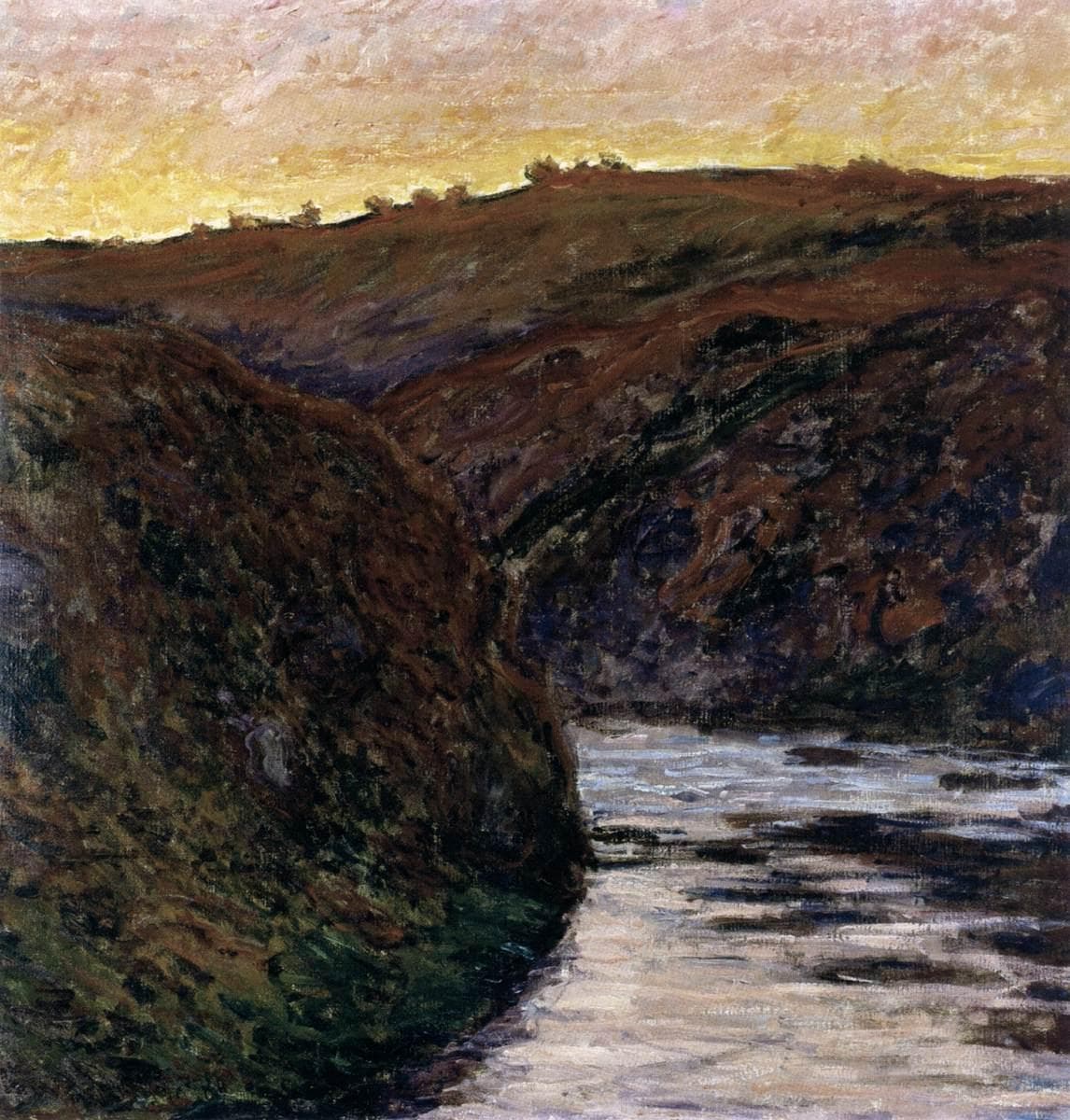
The Creuse, Sunset
Claude Monet · 1889

Boating on the River Epte
Claude Monet · 1890
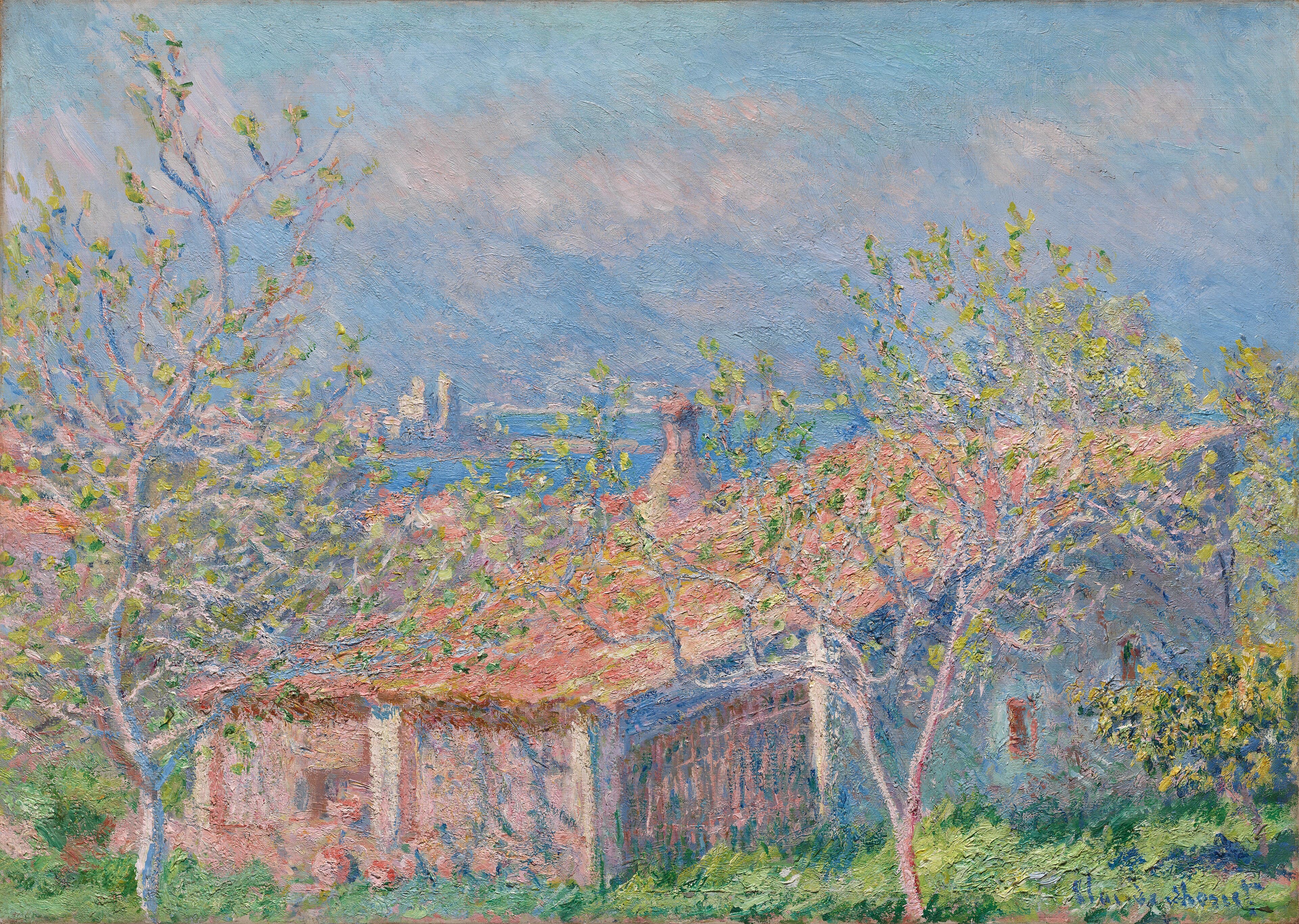
Gardener's House at Antibes
Claude Monet · 1888
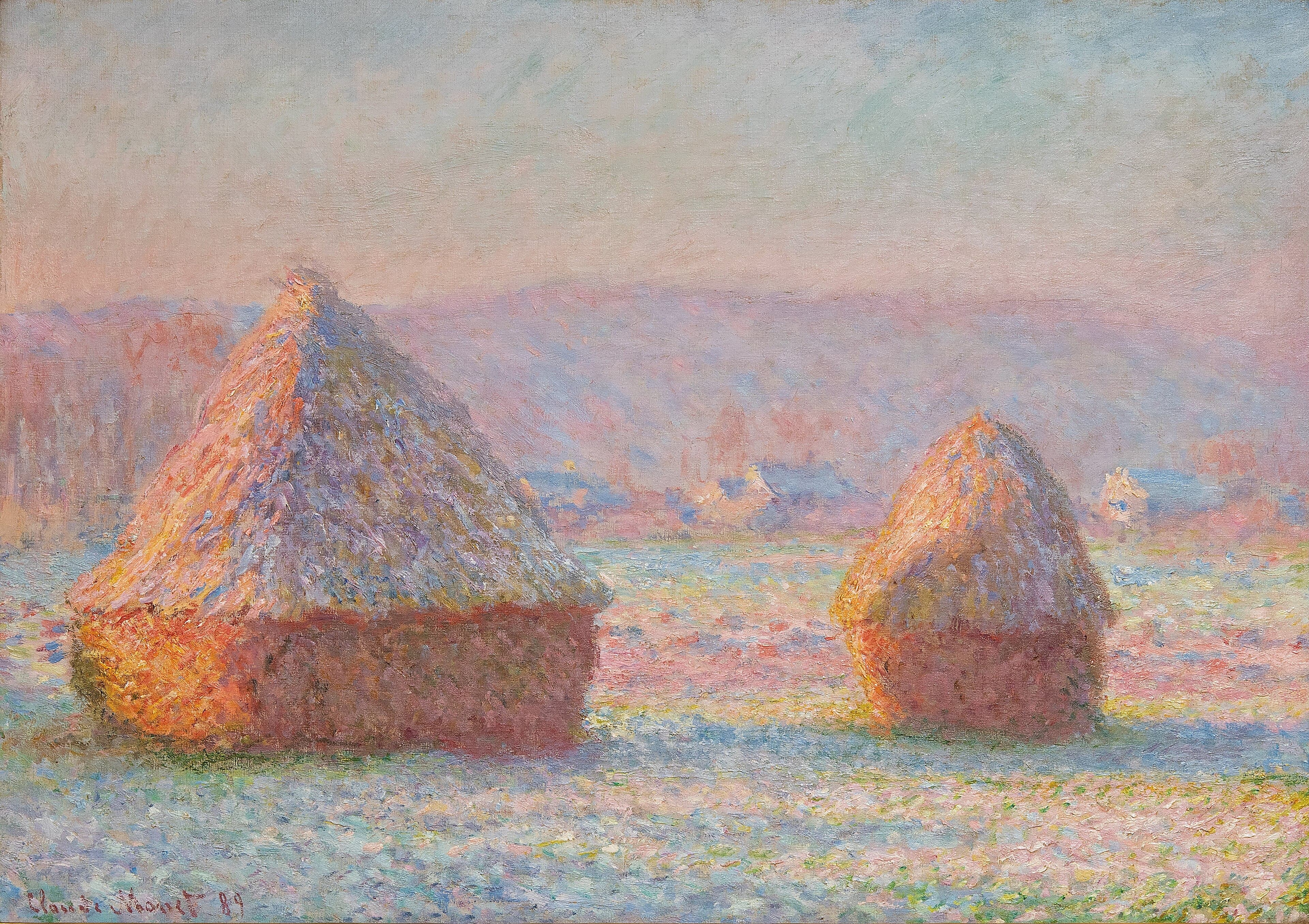
Grainstacks, White Frost Effect
Claude Monet · 1888–89
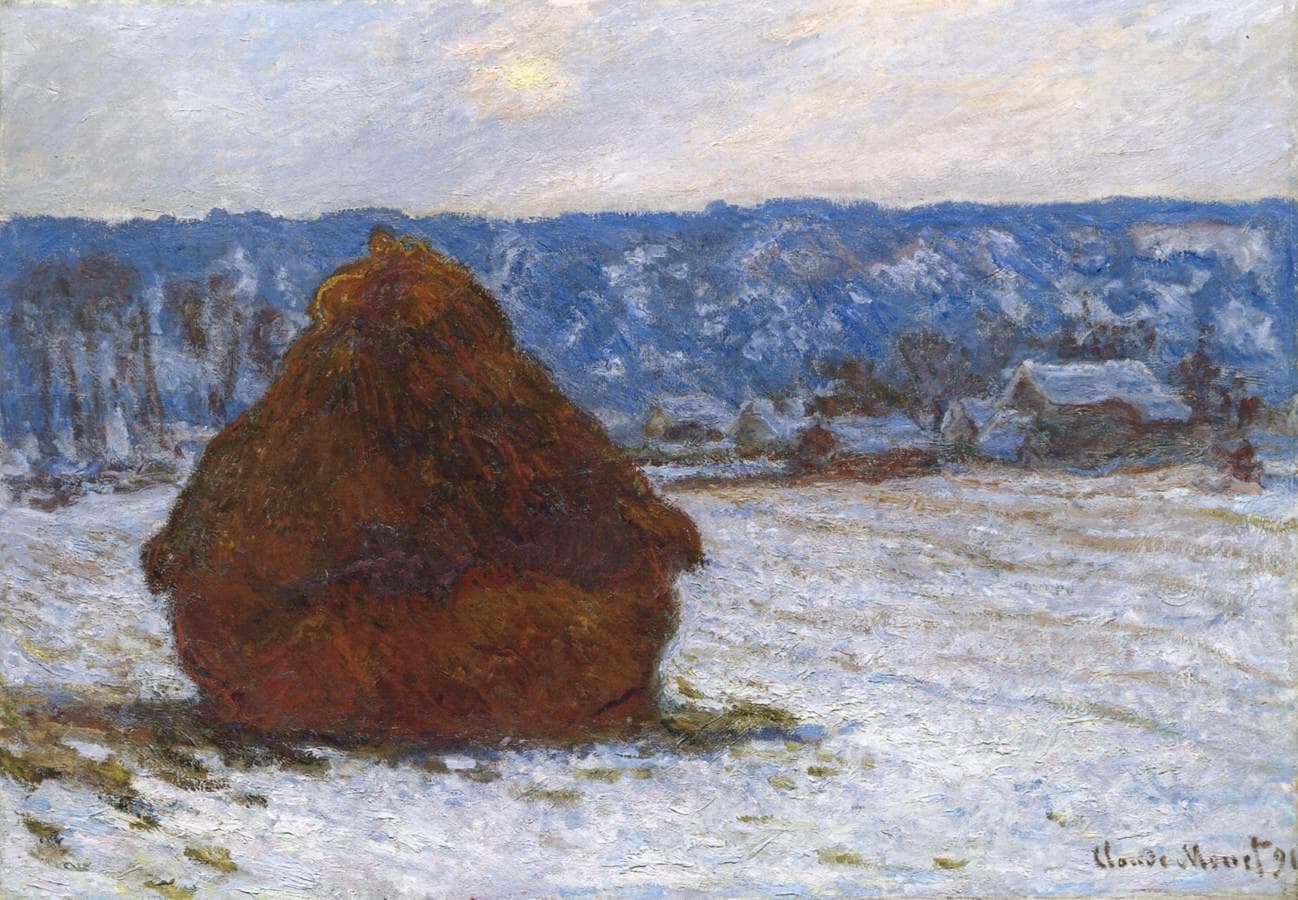
Stack of Wheat, Snow Effect, Overcast Day
Claude Monet · 1890–91
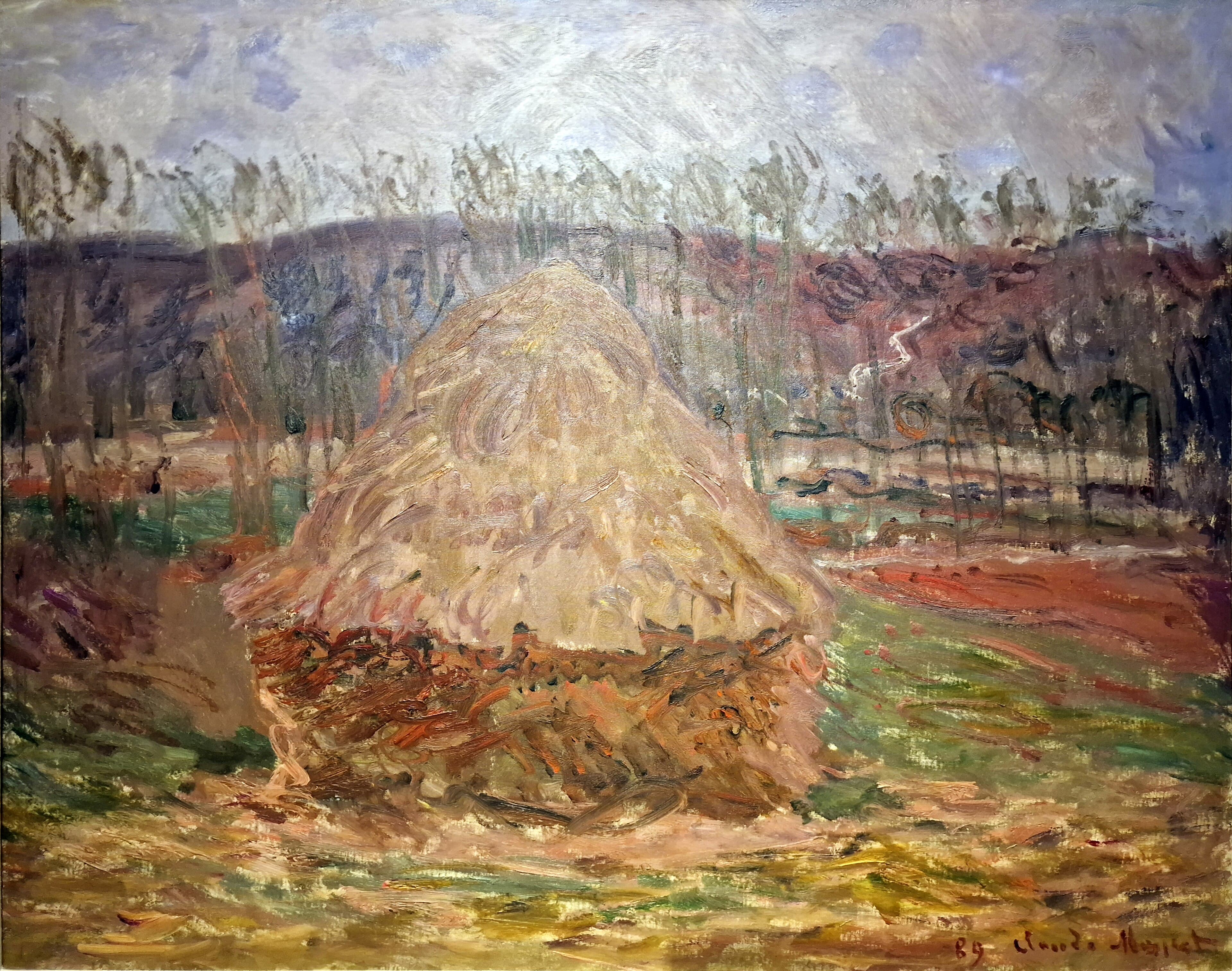
Grainstack at Giverny
Claude Monet · 1889
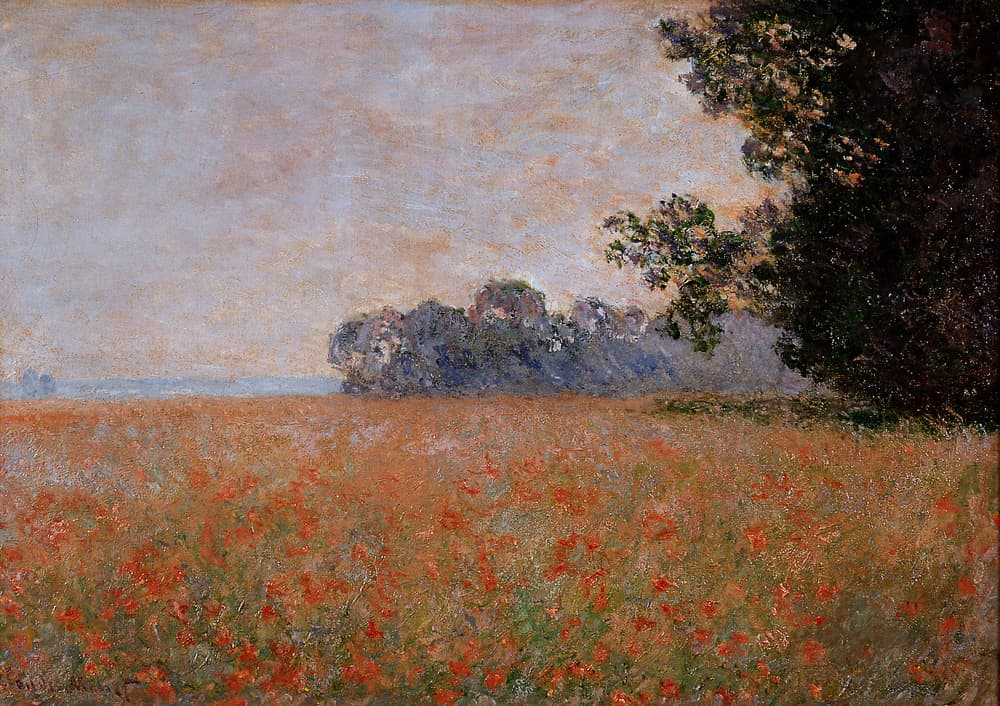
Oat Field with Poppies
Claude Monet · c. 1890
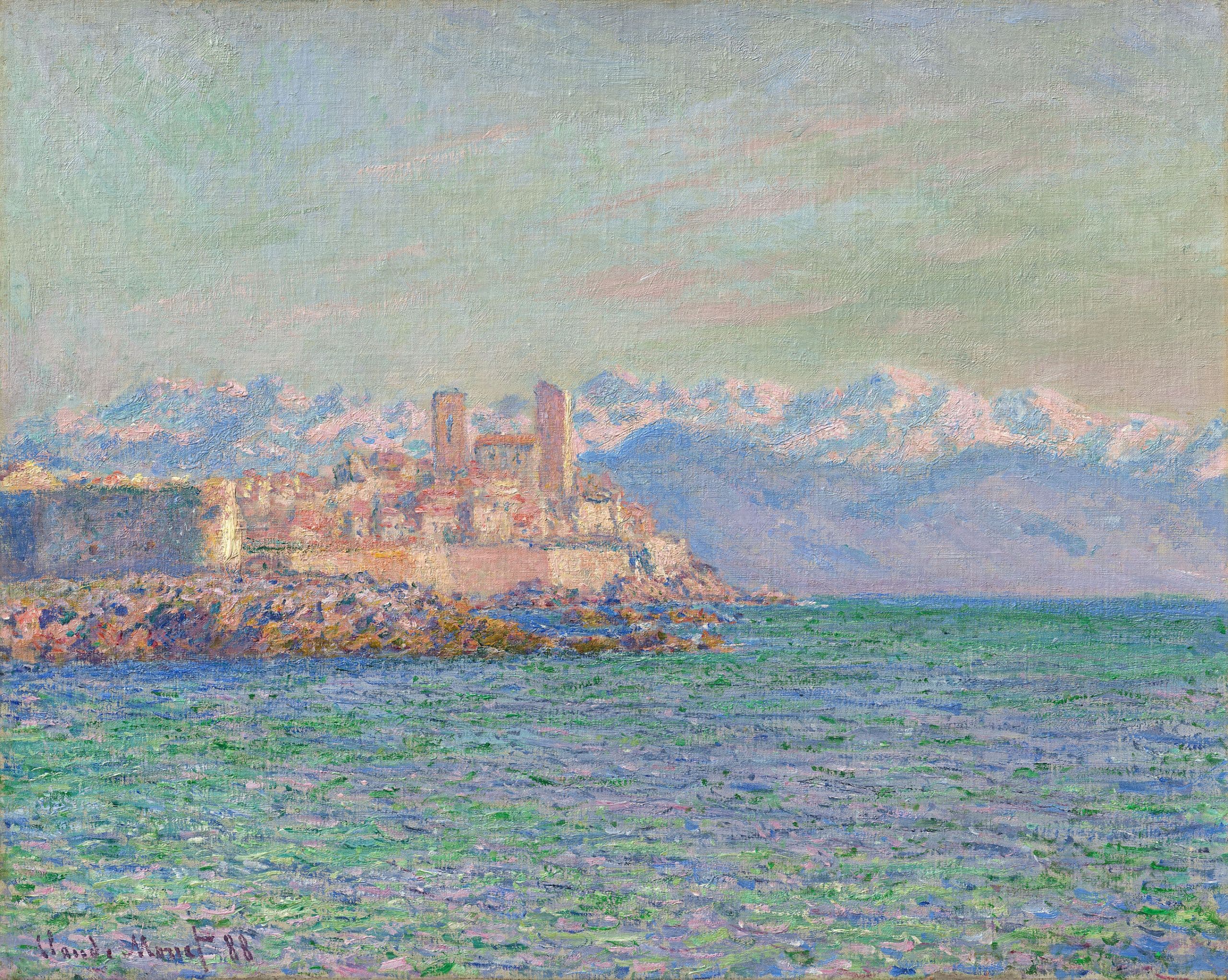
The Fort of Antibes
Claude Monet · 1888
Also painted in 1889
The same year
Kindred works
You may also study
Grainstacks at Giverny, the Evening Sun
Claude Monet · 1888–89
Grainstack, Sun in the Mist
Claude Monet · 1891
Wheatstacks, Snow Effect, Morning
Claude Monet · 1891
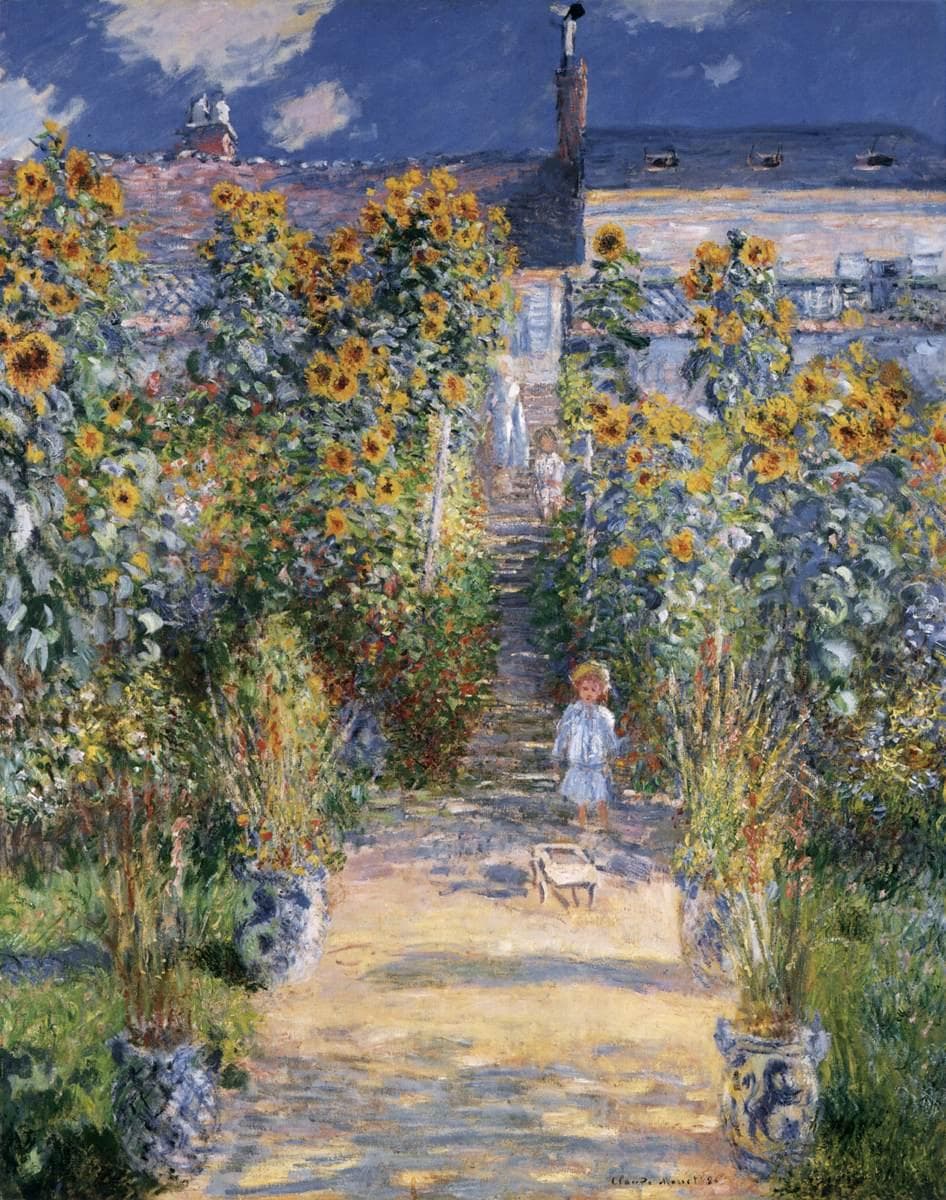
The Artist's Garden at Vétheuil
Claude Monet · 1881
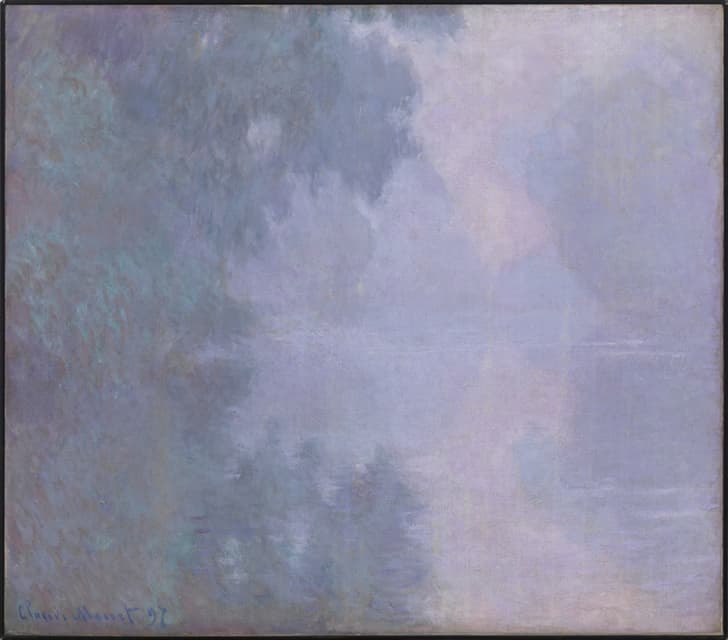
Morning on the Seine, Giverny
Claude Monet · 1897
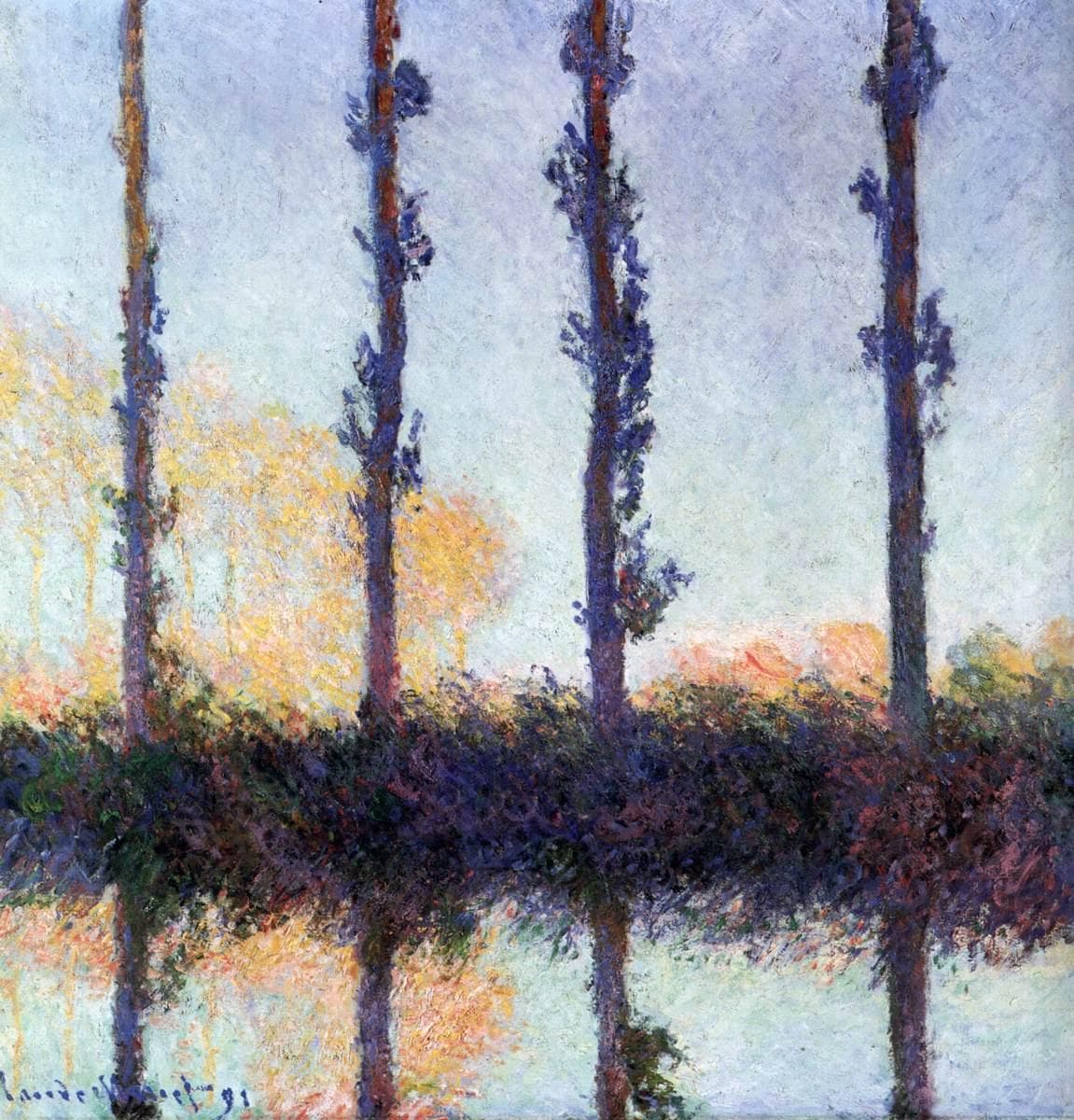
The Four Trees
Claude Monet · 1891
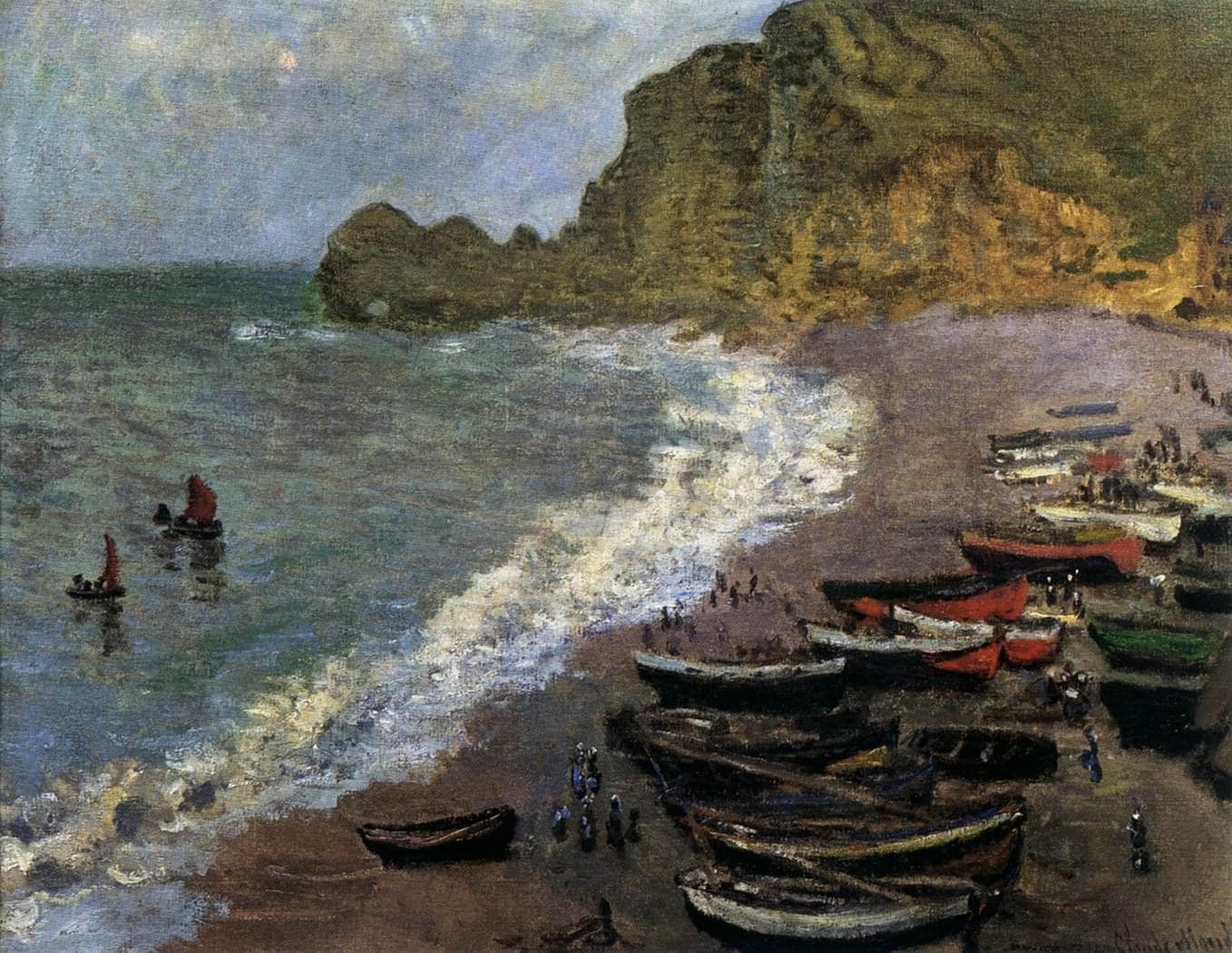
The Beach at Étretat
Claude Monet · 1883
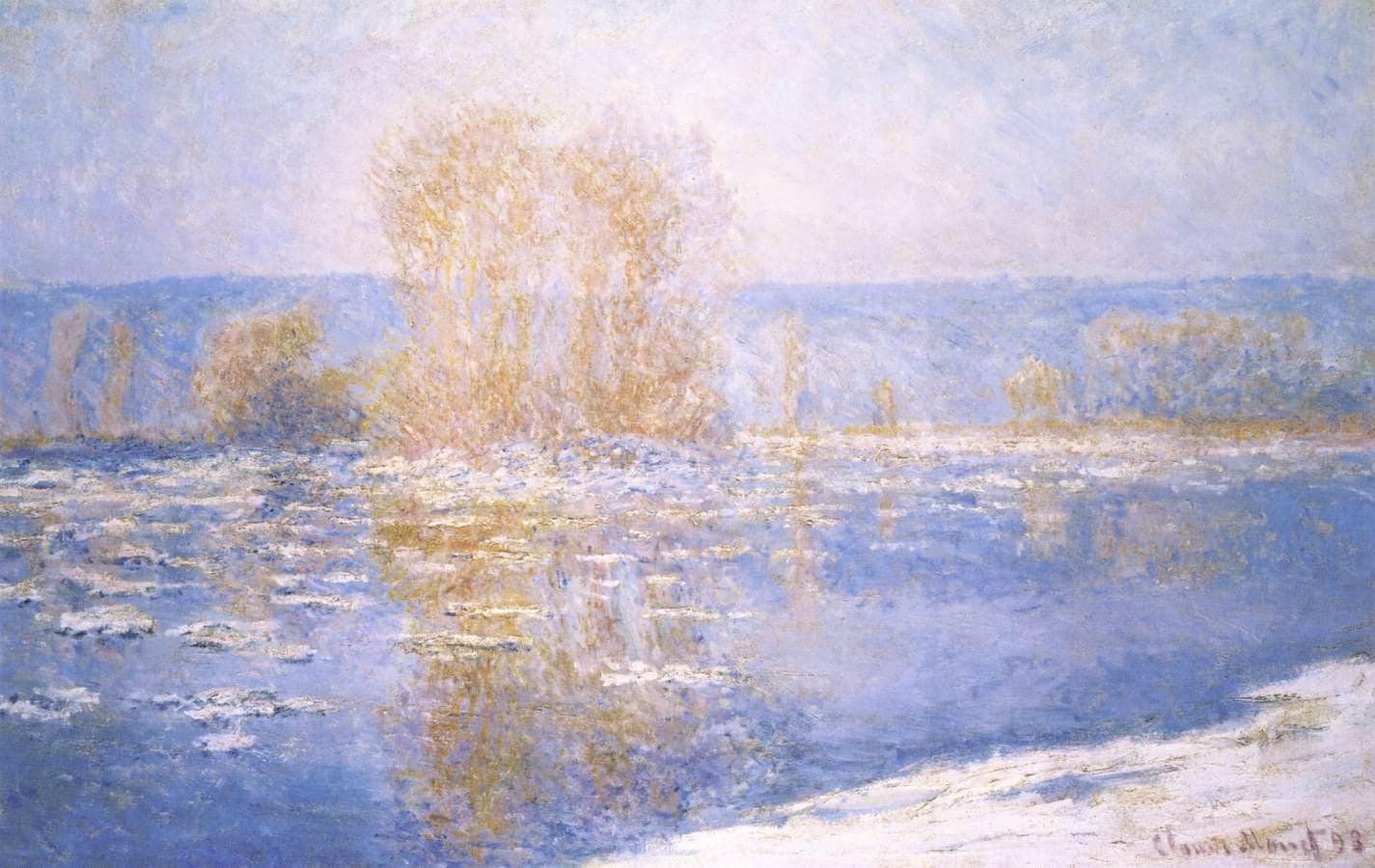
Floating Ice at Bennecourt
Claude Monet · 1893