Image: Art Renewal Center (private collection) · Public domain · via Wikimedia Commons
Pre-Raphaelite
The Soul of the Rose
John William Waterhouse, 1908
The Soul of the Rose, also called My Sweet Rose, is John William Waterhouse's 1908 painting of a red-haired woman in a sunlit walled garden, eyes closed, breathing in the scent of a pink rose. Its title is generally linked to Tennyson's poem Maud. It is in a private collection.
- Artist
- John William Waterhouse
- Date
- 1908
- Medium
- Oil on canvas
- Dimensions
- 88.3 × 59.1 cm
- Collection
- Private collection
- Movement
- Pre-Raphaelite
What you are looking at
A young woman stands in profile against an old garden wall, so close to it that we see almost nothing else. She holds a pink rose to her face with her right hand, eyes closed, breathing it in. Her left hand is pressed flat against the stones, fingers spread, as if she is steadying herself or leaning into the plant. Her auburn hair is pinned up in a loose knot threaded with beads, and she wears a long, wide-sleeved robe of blue-gray silk patterned with gold.
The rose bush climbs the wall in front of her, crowded with pale pink blooms and buds. Behind and above, the garden opens out a little: a red-tiled wall top, a dark cypress, a white building with a pair of arched windows, and at the right a terracotta flowerpot on a stone ledge. The setting is Italianate, closer to a Florentine courtyard than an English garden.
The small things carry the mood. Look at her hands: the right is relaxed, the left tense. Look at the light, which falls warmly on her cheek, neck and the roses while the robe stays cool and shadowed. And look at the signature at the lower right, "J.W. Waterhouse 1908", which settles a date that is sometimes given wrongly as 1903.
The title and the poem
The title is generally thought to come from Alfred, Lord Tennyson's long poem Maud (1855), in the famous section that begins "Come into the garden, Maud". The speaker, waiting for his beloved in a garden at dawn, says that the soul of the rose went into his blood. Waterhouse turns that line into an image: the scent of the flower passing into the woman, love and longing absorbed through the senses.
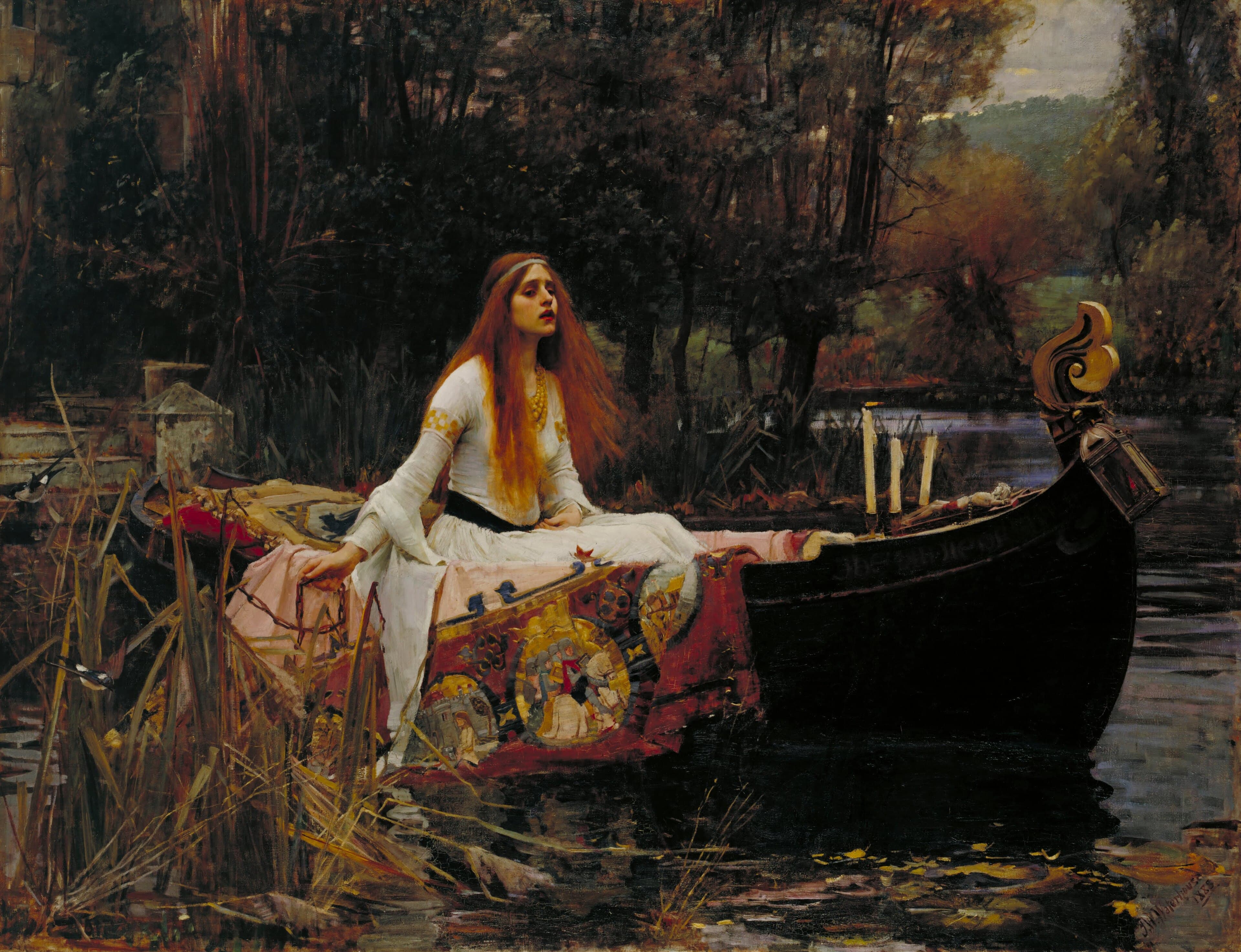
Waterhouse often painted from Tennyson, most famously in The Lady of Shalott. Here, though, there is no narrative scene and no named heroine. The picture is a mood rather than a story, which is why it also circulates under the plainer title My Sweet Rose.
How Waterhouse made it
John William Waterhouse (1849–1917) was nearly sixty when he painted The Soul of the Rose, and it shows the softer, more painterly manner of his late work. The rose leaves and the stones of the wall are laid in with quick, loose strokes; only the face, the hands and the hair are given the polished finish of his earlier pictures. The canvas is of modest size, under a meter high, and its tall, narrow format pushes the figure close to us.
The red-haired, long-necked model is a type that recurs across his late pictures. The robe, with its wide sleeves and woven gold pattern, is the kind of rich, loosely historical costume he liked to use, suggesting the Renaissance without pinning the scene to any period. Waterhouse exhibited the painting at the Royal Academy in 1908.
Many of Waterhouse's late pictures show a single woman in a garden or interior, absorbed in a small action: gathering flowers, reading, looking into a mirror. They sold well to private collectors, which is one reason so many of them, this one included, have stayed out of public museums. Roses run through the whole Pre-Raphaelite tradition, from Rossetti's women framed by blossoms to Burne-Jones's Briar Rose paintings, and Waterhouse's picture inherits that language.
What does The Soul of the Rose mean?
The painting is about the senses and about longing. The rose is the oldest symbol of love in European art, and the woman's closed eyes and pressed hand suggest that the scent is calling up something absent: a lover, a memory, a feeling she wants to hold on to. The enclosed garden adds another layer. In medieval and Renaissance imagery, the walled garden, the hortus conclusus, was a symbol of purity and private, protected love. Waterhouse uses the setting to make the moment feel intimate and slightly secret.
These readings come from the tradition of flower symbolism and from the Tennyson connection rather than from any statement by Waterhouse. On its own terms, the picture is simply one of the most direct images in Victorian and Edwardian art of the pleasure of a smell.
Reception and legacy
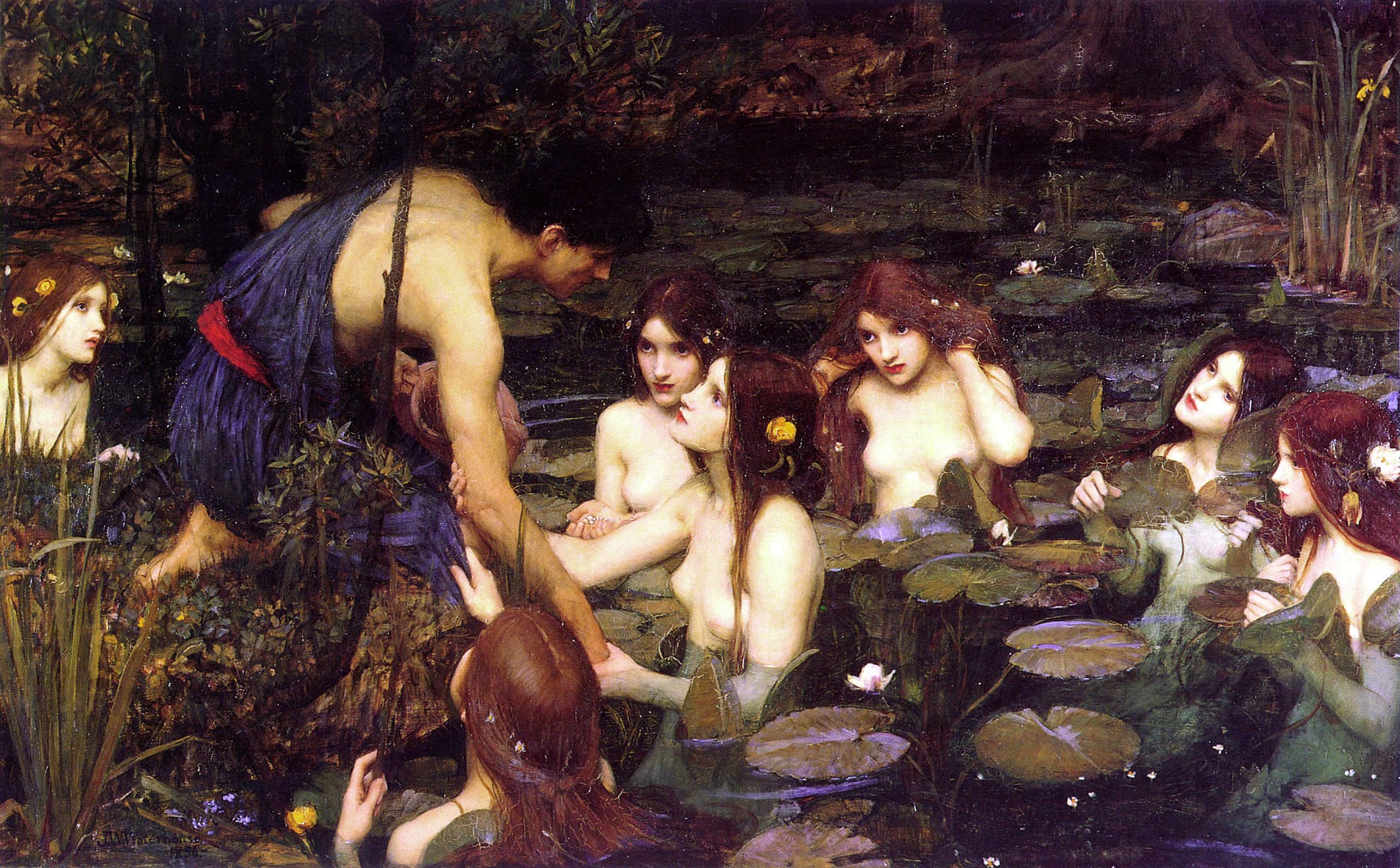
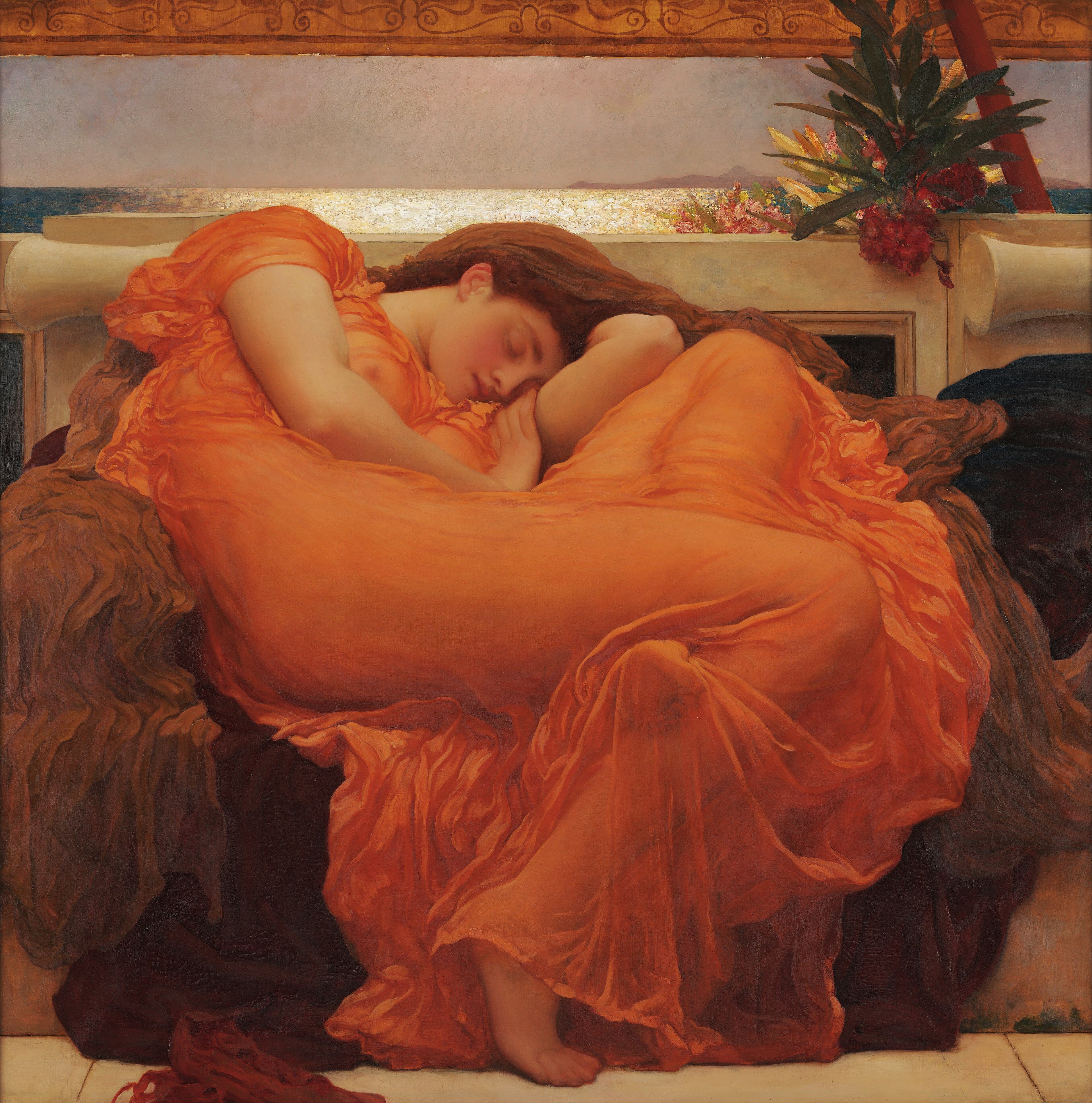
The Soul of the Rose is one of Waterhouse's most popular late works and among the most widely reproduced of all Pre-Raphaelite-style images. It is a natural companion to Leighton's Flaming June, another painting of a woman absorbed in a private sensation, and to Waterhouse's own Hylas and the Nymphs. Its sunlit garden, flowers and quiet reverie make it a favorite image of light academia, and it belongs firmly to the later Pre-Raphaelite tradition.
Where is The Soul of the Rose today?
The painting is in a private collection and is not on public display. It was sold at Christie's in London in 1981 and again in 2007. Because Waterhouse died in 1917, the image is in the public domain.
Questions & answers
Where is The Soul of the Rose by Waterhouse?
The Soul of the Rose is in a private collection and is not normally on public view. It was exhibited at the Royal Academy in 1908 and has passed through Christie's in London, most recently in 2007.
What does The Soul of the Rose mean?
It shows a woman lost in the scent of a rose, an image of love, longing and the senses. The title is generally linked to Tennyson's poem Maud, in which the speaker says the soul of the rose went into his blood. The walled garden suggests private, protected love.
Is The Soul of the Rose the same as My Sweet Rose?
Yes. Waterhouse's 1908 painting of a woman smelling a rose against a garden wall is known both as The Soul of the Rose and as My Sweet Rose. It is sometimes misdated to 1903, but it is signed and dated 1908.
When was The Soul of the Rose painted?
Waterhouse painted it in 1908, late in his career, and signed and dated it at the lower right. It was shown at the Royal Academy summer exhibition that year.
More by the artist
John William Waterhouse
Kindred works
You may also study
Flaming June
Frederic Leighton · 1895

La Belle Dame sans Merci
Sir Frank Dicksee · 1901
Lady in the Garden
Abbott Fuller Graves

Bridge over a Pond of Water Lilies
Claude Monet · 1899

Venus de Milo
Alexandros of Antioch · c. 150–125 BC

The Scream
Edvard Munch · 1893

The Thinker
Auguste Rodin · Modeled 1880–82; enlarged 1902–03; this cast 1904
The Creation of Adam
Michelangelo · c. 1511–12