Image: Bristol Museums, Galleries & Archives, via Google Arts & Culture · Public domain · via Wikimedia Commons
Pre-Raphaelite / Victorian Romanticism
La Belle Dame sans Merci
Sir Frank Dicksee, 1901
La Belle Dame sans Merci is Frank Dicksee's 1901 painting of John Keats's ballad: an armored knight gazes up, spellbound, at a red-haired woman leaning down to him from his horse at sunset. It belongs to Bristol Museum & Art Gallery.
- Artist
- Sir Frank Dicksee
- Date
- 1901
- Medium
- Oil on canvas
- Dimensions
- 137.2 × 188 cm
- Collection
- Bristol Museum & Art Gallery, Bristol, United Kingdom
- Movement
- Pre-Raphaelite / Victorian Romanticism
What you are looking at
A young knight in silver plate armor walks beside a great dark horse, his helmet hanging from the saddle. He has turned his face up and stretched his arms out behind him, as if he has let go of everything to look at her. On the horse sits a woman in a rose-pink gown with a wreath of small flowers in her long red hair.
She leans far down out of the saddle, one hand on the reins and one on the pommel, bringing her face close to his. Her expression is calm and intent. His is helpless.
The setting is a hillside at evening. Behind them, the light is going: the sky at the upper left glows pink and gold above a valley and a distant lake, and the hills are turning purple. In the foreground at the right, a wild rose bush with pale pink flowers pushes into the picture, and a tree branch frames the top right corner.
Dicksee lavishes attention on surfaces. The armor reflects the green of the grass and the pink of her dress. The horse's red leather harness is studded with brass bosses. The detail people miss is how the composition locks the two together: the knight's outstretched arm runs parallel to the horse's neck and the reins, so that he looks already harnessed, led rather than leading.
The poem
The subject comes from "La Belle Dame sans Merci" (The Beautiful Lady Without Pity), a ballad written by John Keats in 1819. A knight is found alone and pale by a lake where "the sedge has withered". He tells how he met a lady in the meads, "full beautiful, a faery's child", made her a garland for her head, set her on his pacing steed and was led by her to her "elfin grot". There she lulled him to sleep, and he dreamed of pale kings and warriors who cried that the beautiful lady without pity had him in thrall. He woke alone on the cold hillside, where he still wanders.
Dicksee paints the moment of enchantment, before the dream. The garland in her hair is the one the knight has made; the horse is his "pacing steed". The sunset and the coming dark hint at what will follow.
Keats wrote the ballad in April 1819, copying it into a long letter to his brother George, in the same spring as his great odes. A revised version was printed in Leigh Hunt's journal The Indicator in 1820. Dicksee came to it eighty years later, when the poem was firmly established as one of the best-loved short lyrics in English and a favorite source for painters looking for medieval romance with a dark edge.
How Dicksee made it
Frank Dicksee (1853–1928) came from a family of painters and trained at the Royal Academy Schools. He specialized in romantic literary and historical subjects painted with high finish and strong color, among them Romeo and Juliet. He later became President of the Royal Academy in 1924 and was knighted in 1925.
Painted in 1901, La Belle Dame sans Merci is a late flowering of the Pre-Raphaelite romance with the Middle Ages, but its technique is that of the Royal Academy: smooth, highly finished flesh and fabric, convincing armor, a dramatic sky. It is a large canvas, nearly two meters wide, built to be read from across a gallery.
What does La Belle Dame sans Merci mean?
Keats's poem has been read many ways: as a fairy story, as a picture of the destructive power of love or desire, and, by some critics, as a reflection of Keats's own illness and his love for Fanny Brawne. The lady is one of the great femmes fatales of English poetry, a figure of beauty that gives nothing back and leaves the lover wasted.
Dicksee's version leans toward the romance. His lady is not monstrous; she is lovely, and the knight goes to her willingly. The danger is in the details: her steady gaze, his surrendered pose, the fading light. Around 1900 the femme fatale was everywhere in art, from Waterhouse's own Hylas and the Nymphs to Symbolist sirens, and Dicksee's picture belongs to that moment while staying faithful to Keats.
Reception and legacy
The poem was a favorite of Victorian painters; Waterhouse, Arthur Hughes and Walter Crane all painted it. Dicksee's version is now the best known, a staple of posters, book covers and the moody, literary imagery of dark academia. It sits well beside Waterhouse's The Lady of Shalott and other romantic subjects in our Pre-Raphaelites collection.
Where is La Belle Dame sans Merci today?
The painting is in Bristol Museum & Art Gallery in Bristol, England (accession K328), given by Mrs Yda Richardson in 1913. It is in the public domain; the high-resolution image here comes via Google Arts & Culture.
Questions & answers
Where is La Belle Dame sans Merci by Frank Dicksee?
Frank Dicksee's La Belle Dame sans Merci (1901) is in Bristol Museum & Art Gallery in Bristol, England. It was given to the museum in 1913 by Mrs Yda Richardson. Check the museum's website to confirm it is on display before visiting.
What is La Belle Dame sans Merci about?
It illustrates John Keats's 1819 ballad, in which a knight meets a beautiful fairy woman, puts her on his horse and is lured to her grotto. He falls asleep, dreams of her earlier victims, and wakes alone and wasting on a cold hillside, still in her thrall.
What does La Belle Dame sans Merci mean?
The French title means 'The Beautiful Lady Without Pity'. The lady is a femme fatale whose beauty enchants and destroys. The poem is often read as an image of the destructive side of love and desire, and sometimes connected to Keats's own illness and unhappy love.
Who else painted La Belle Dame sans Merci?
Many Victorian artists painted Keats's ballad, including John William Waterhouse (1893), Arthur Hughes and Walter Crane. Frank Dicksee's 1901 version, with the woman leaning down from the knight's horse at sunset, is the best known today.
More by the artist
Sir Frank Dicksee
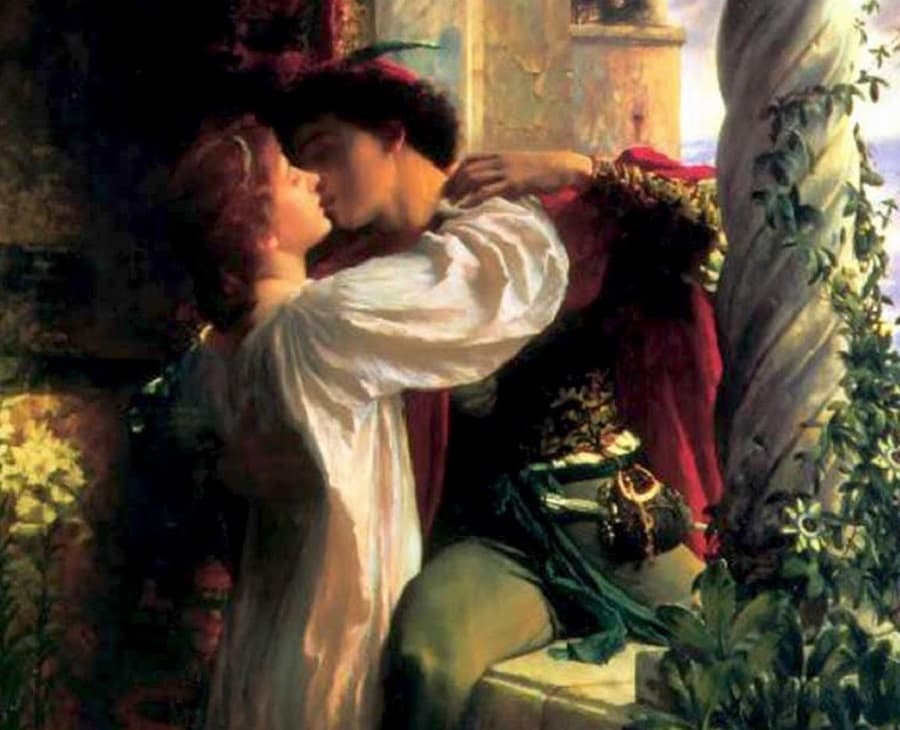
Kindred works
You may also study
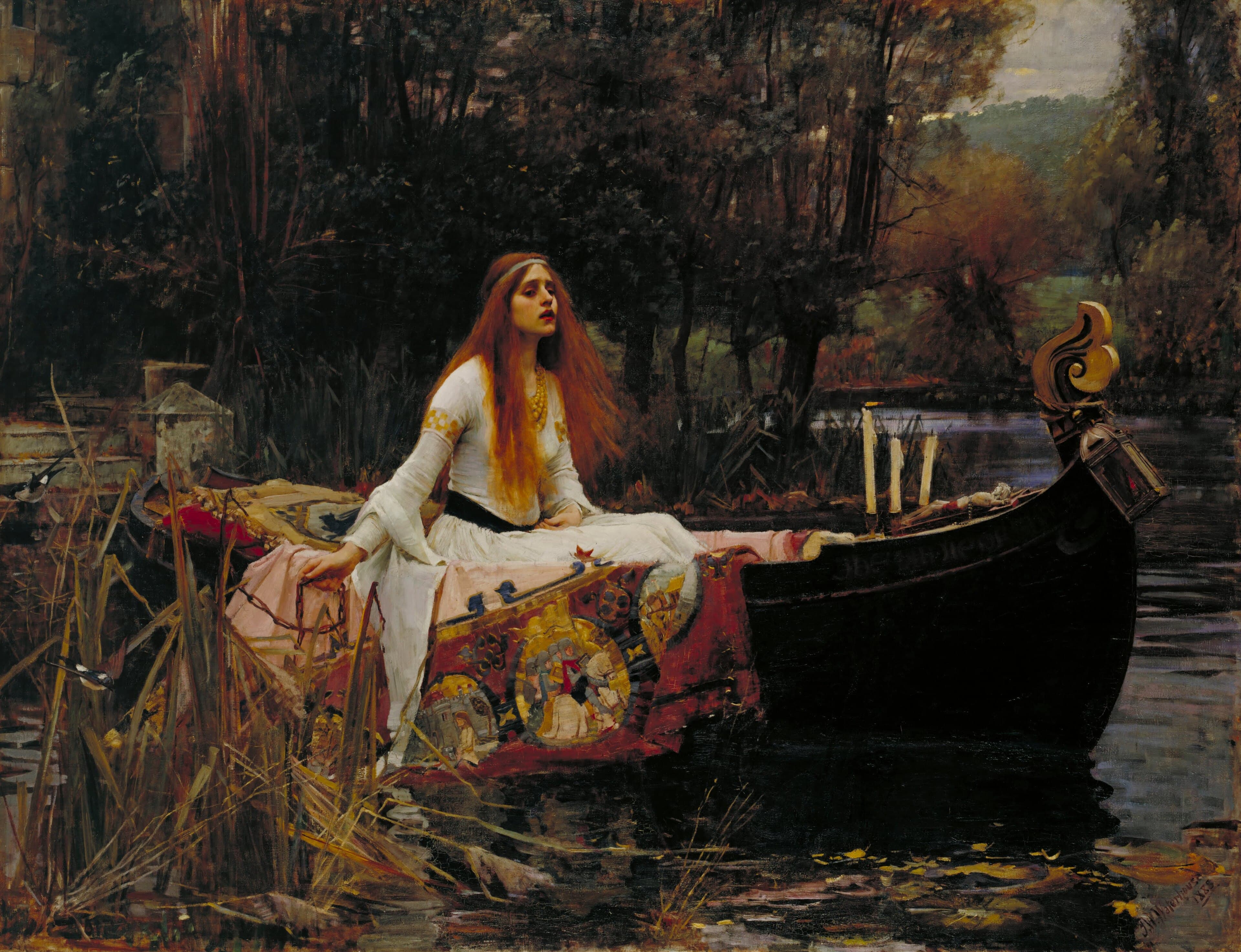
The Lady of Shalott
John William Waterhouse · 1888
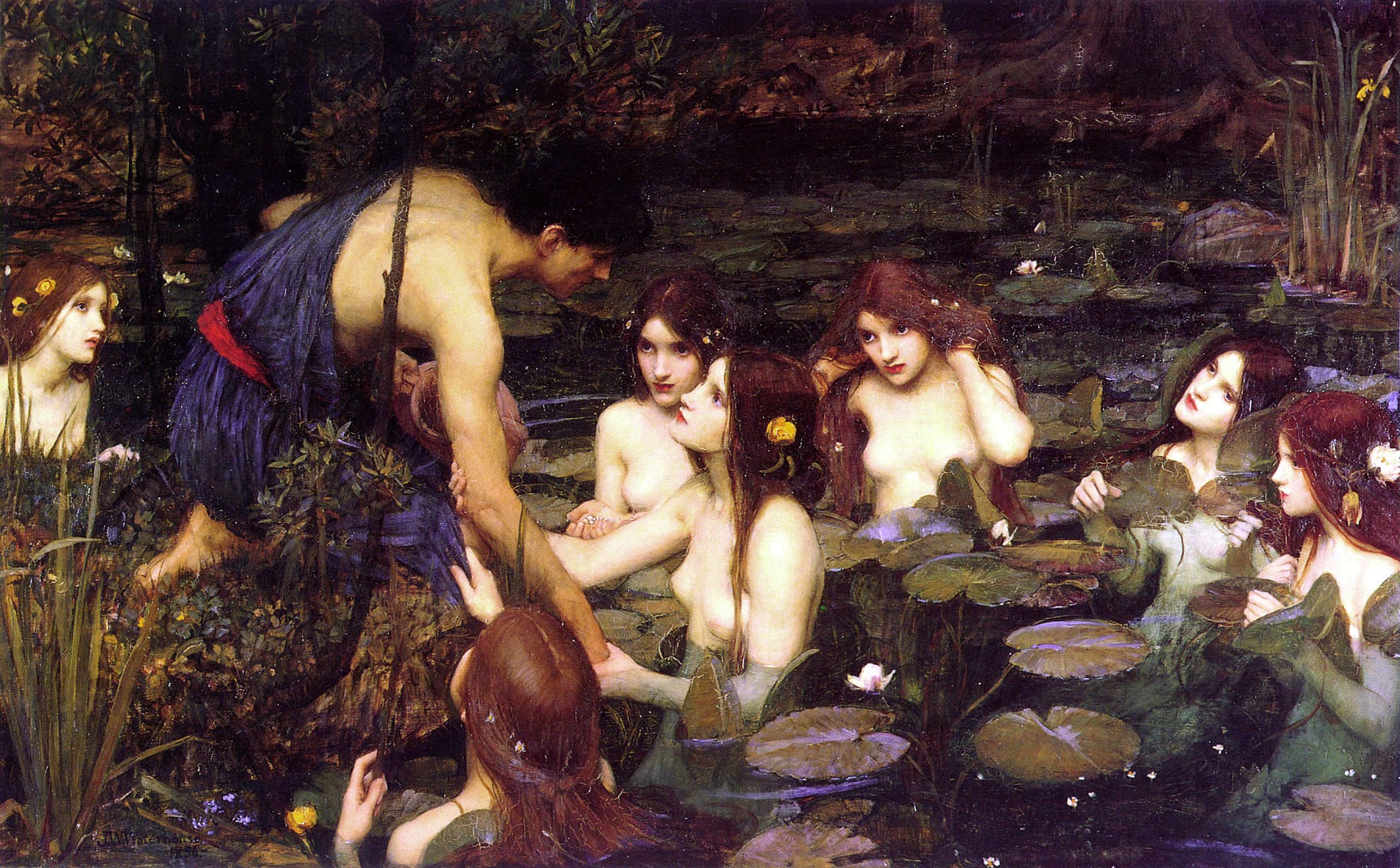
Hylas and the Nymphs
John William Waterhouse · 1896
The Soul of the Rose
John William Waterhouse · 1908

Ophelia
John Everett Millais · 1851–52

Bridge over a Pond of Water Lilies
Claude Monet · 1899

Venus de Milo
Alexandros of Antioch · c. 150–125 BC

The Scream
Edvard Munch · 1893

The Thinker
Auguste Rodin · Modeled 1880–82; enlarged 1902–03; this cast 1904