Dutch Golden Age
Lucretia
Rembrandt, 1664
Lucretia, often called The Suicide of Lucretia, is a 1664 painting by Rembrandt of the Roman noblewoman about to stab herself after her rape by Sextus Tarquinius. It is in the National Gallery of Art, Washington.
- Artist
- Rembrandt
- Date
- 1664
- Medium
- Oil on canvas
- Dimensions
- 120 × 101 cm
- Collection
- National Gallery of Art, Washington, D.C., United States
- Movement
- Dutch Golden Age
Lucretia is a late painting by Rembrandt, dated 1664, showing the legendary Roman heroine in the moment before she stabs herself. The oil on canvas, about 120 by 101 centimeters, is in the National Gallery of Art in Washington, D.C., part of the Andrew W. Mellon Collection. Rembrandt painted the subject again two years later, in 1666, in a canvas now at the Minneapolis Institute of Art that shows the moment just after the blow. The two are often confused online under the title The Suicide of Lucretia.
The story
The source is the Roman historian Livy. Lucretia, wife of the nobleman Collatinus, was raped by Sextus Tarquinius, son of Rome's last king, Tarquinius Superbus. The next day she summoned her husband and father, told them what had happened, made them swear vengeance, and killed herself with a dagger. Her death sparked the revolt led by Lucius Junius Brutus that expelled the Tarquin kings and founded the Roman Republic, traditionally in 509 BC. Lucretia is a figure of legendary history rather than mythology, and from antiquity on she was held up as an exemplar of virtue.
What you are looking at
Rembrandt shows Lucretia alone, standing, at roughly life size from the knees up, against a dark, featureless background. She wears a rich gown of gold brocade over a white chemise that has been pulled open at the breast. Pearls hang at her ears and throat. One arm is raised with the hand open, a gesture that may be read as a farewell, a plea, or an appeal to witnesses we cannot see. The other hand grips a short dagger, its point turned toward her own body.
Her face is the heart of the painting. Her eyes are wet and red-rimmed, her lips slightly parted, her expression not frenzied but exhausted and resigned. Rembrandt paints the moment of decision rather than the act: the dagger has not yet struck.
The handling is typical of his last decade. The gold of the gown is built up in thick, almost sculpted layers of paint, scraped and dragged with the brush handle and possibly the palette knife, so that the surface catches light like real metal thread. The face, by contrast, is modeled in softer, thinner paint. Look at the hand holding the dagger: the fingers are laid in with a few broad strokes, yet the grip reads as tense and deliberate.
How it differs from earlier Lucretias
Renaissance and Baroque painters, from Titian to Guido Reni, usually showed Lucretia either at the moment of the rape or as a half-nude figure plunging the dagger into her breast, often with an erotic charge. Rembrandt strips away the drama and the nudity. There is no Tarquin, no family, no setting. What remains is an inner state: a woman isolated in her decision.
Context: Rembrandt in the 1660s
By 1664 Rembrandt was in his late fifties, declared insolvent, living in a smaller house on the Rozengracht in Amsterdam. His companion Hendrickje Stoffels died in 1663. Some writers have linked the two Lucretias to that loss, or to the public shame Hendrickje had suffered when she was censured by the church for living with him unmarried. These are later readings, not documented intentions; Rembrandt left no writings about the picture.
Meaning and interpretation
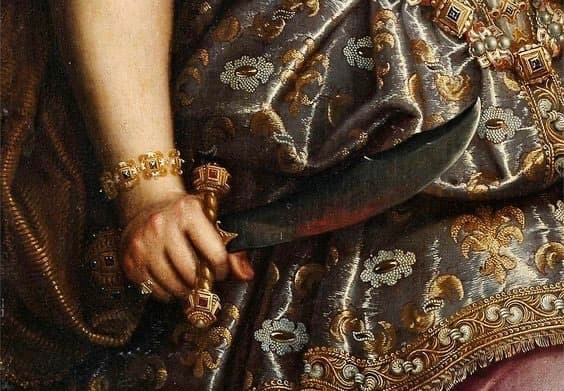
Lucretia was traditionally a symbol of chastity and of the fight against tyranny, used in republican Holland as a civic as well as a moral example. Modern viewers often read the story differently, as one of sexual violence and the burden of shame placed on its victim. Rembrandt's painting can hold both readings, because it gives Lucretia herself, rather than the men around her, the whole canvas. Its theme links it to other images of women with weapons in the catalogue, such as Fede Galizia's Judith with the Head of Holofernes and Artemisia Gentileschi's Judith.
The two Lucretias compared
Placed side by side, the two late canvases read like two pages of one story. In Washington, Lucretia stands upright and composed, the dagger still clean, her raised hand open in a gesture of farewell. In Minneapolis, painted in 1666, she has already struck: a dark stain of blood spreads across her white chemise, and she steadies herself by gripping a bell-pull, perhaps to summon her family as Livy describes. Her face there is paler, her eyes half closed. Together they move from decision to consequence, and both refuse spectacle. Rembrandt never shows the blade entering the body, and he never shows the attacker.
Where to see it
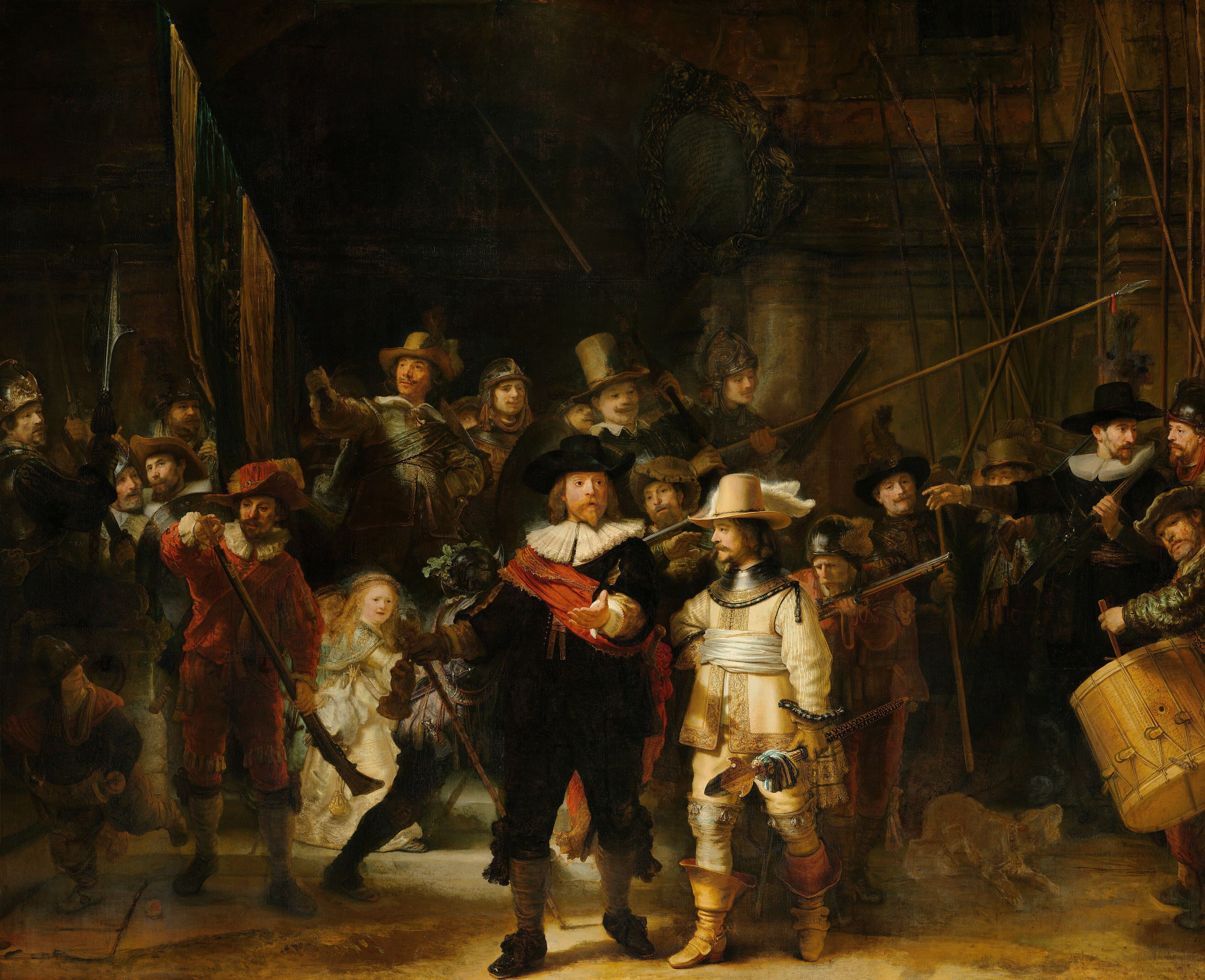
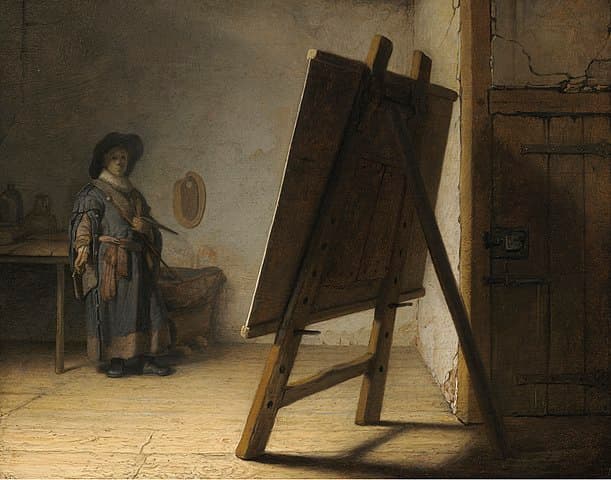
The 1664 Lucretia is in the West Building of the National Gallery of Art in Washington, D.C. The 1666 version is on view at the Minneapolis Institute of Art. For more of Rembrandt's work, see The Night Watch, Self-portrait with Beret and our guide to Baroque art.
Questions & answers
Where is Rembrandt's Lucretia?
Rembrandt painted Lucretia twice. The 1664 version, showing her about to strike, is in the National Gallery of Art in Washington, D.C. The 1666 version, showing her already wounded and holding a bell-pull, is in the Minneapolis Institute of Art.
What is the story of Lucretia?
According to the Roman historian Livy, Lucretia was a virtuous noblewoman raped by Sextus Tarquinius, son of Rome's last king. She told her family, demanded vengeance and stabbed herself. The uprising that followed ended the monarchy and founded the Roman Republic.
What does Rembrandt's Lucretia mean?
Traditionally Lucretia stood for chastity and resistance to tyranny. Rembrandt focuses on her inner state rather than the violence, showing a resigned woman in the moment of decision. Modern readers also see the painting as an image of a victim bearing the shame of a crime committed against her.
Why did Rembrandt paint Lucretia twice?
Rembrandt did not explain it. The 1664 and 1666 canvases show two moments, before and after the blow. Some historians connect them to the death of his companion Hendrickje Stoffels in 1663, but that link is an interpretation rather than a documented fact.
More by the artist
Rembrandt


Kindred works
You may also study
Judith with the Head of Holofernes
Fede Galizia · 1596
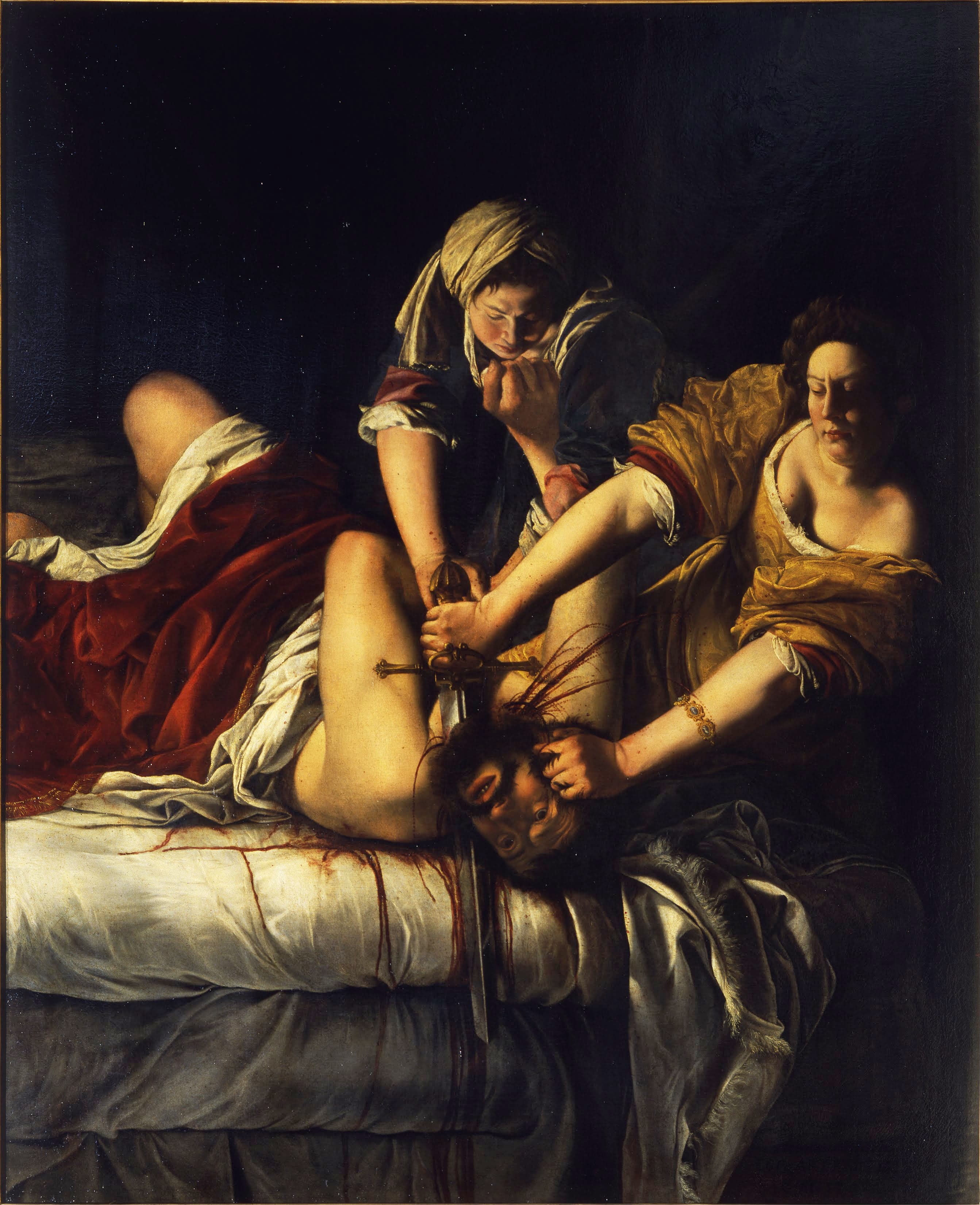
Judith Slaying Holofernes
Artemisia Gentileschi · c. 1620
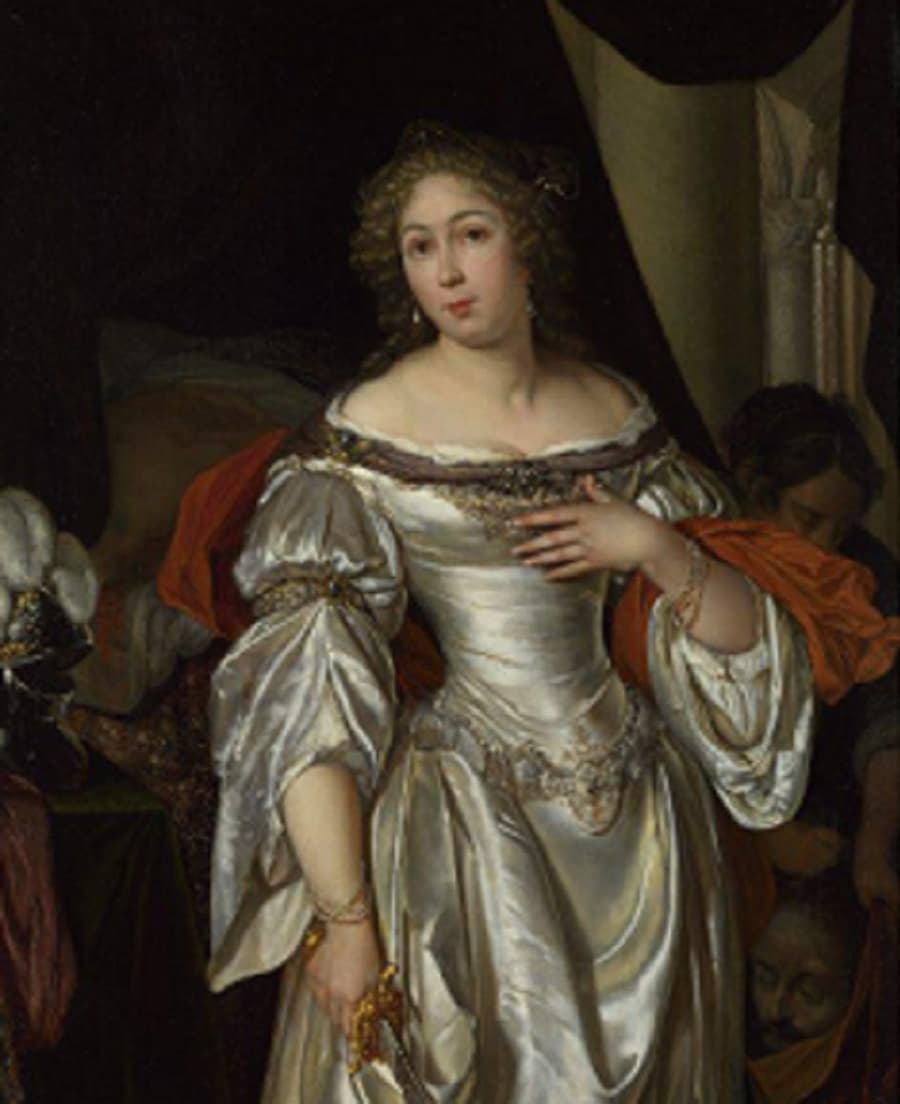
Judith
Eglon van der Neer · c. 1678

Venus de Milo
Alexandros of Antioch · c. 150–125 BC

The Scream
Edvard Munch · 1893

Saturn Devouring His Son
Francisco Goya · c. 1819–1823

Ophelia
John Everett Millais · 1851–52

Woman with a Parasol – Madame Monet and Her Son
Claude Monet · 1875