
Movement
Pre-Raphaelite Paintings: Truth, Poetry and Jewel Color
Seven young rebels in 1848 London, a drowned Ophelia, a cursed Lady of Shalott, and the long afterglow of the most literary movement in British art.
Pre-Raphaelite paintings are the works of the Pre-Raphaelite Brotherhood, a group of young London artists founded in 1848 by John Everett Millais, Dante Gabriel Rossetti and William Holman Hunt, and of the many painters who followed them. They are instantly recognizable: brilliant, jewel-like color, every leaf and petal painted with microscopic care, and subjects drawn from Shakespeare, Tennyson, Keats, Dante and Arthurian legend, often centered on a pale, long-haired heroine.
The Brotherhood's name was a provocation. They believed that art had gone wrong after Raphael, and that the Royal Academy's rules, based on his example, had smothered honest looking. Their most famous picture, Millais's Ophelia, now hangs in Tate Britain, and their influence runs through Victorian art to John William Waterhouse at the end of the century. This page tells their story, explains how to recognize their work, and introduces the paintings in the collection below.
Ophelia
John Everett Millais · 1851–52
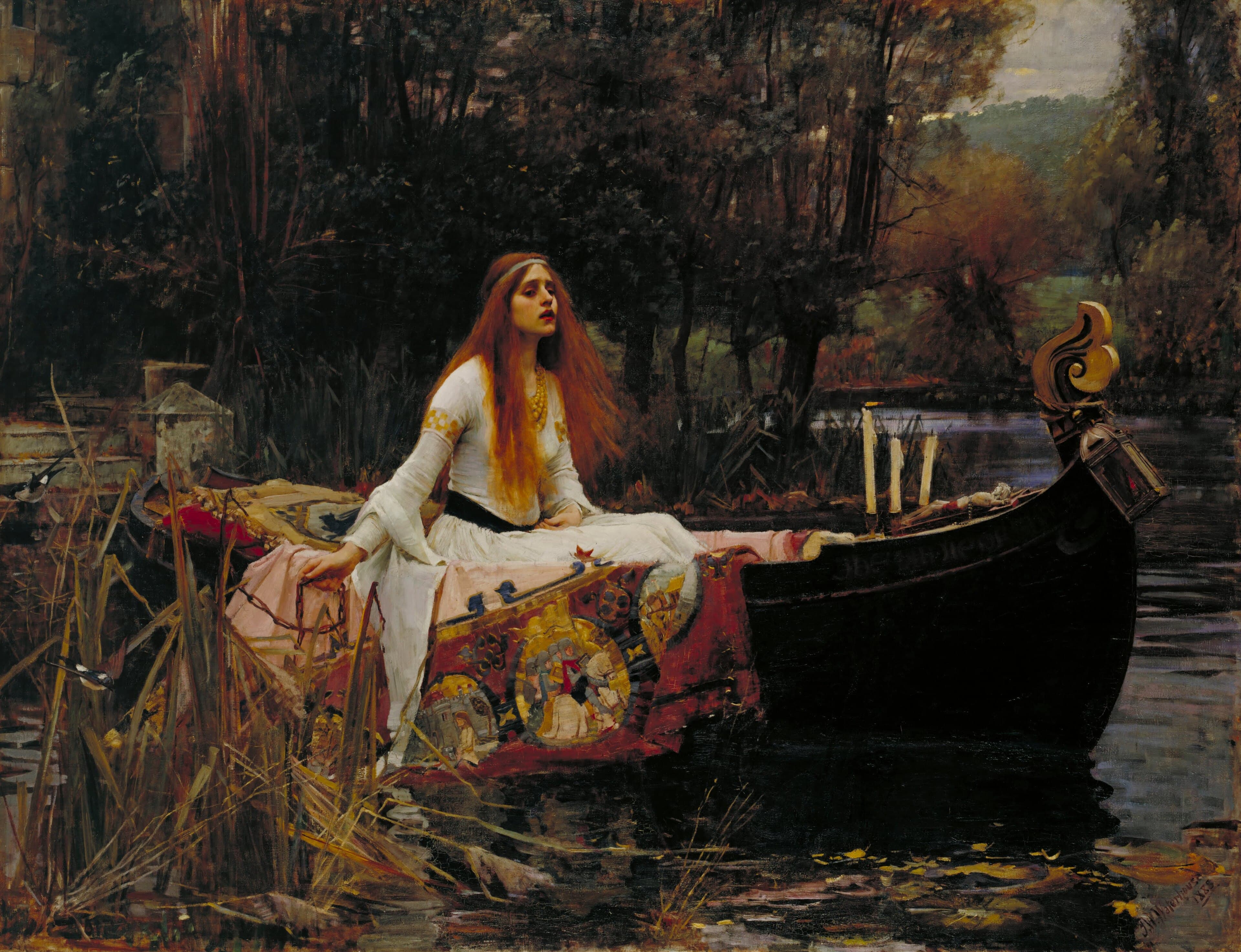
The Lady of Shalott
John William Waterhouse · 1888
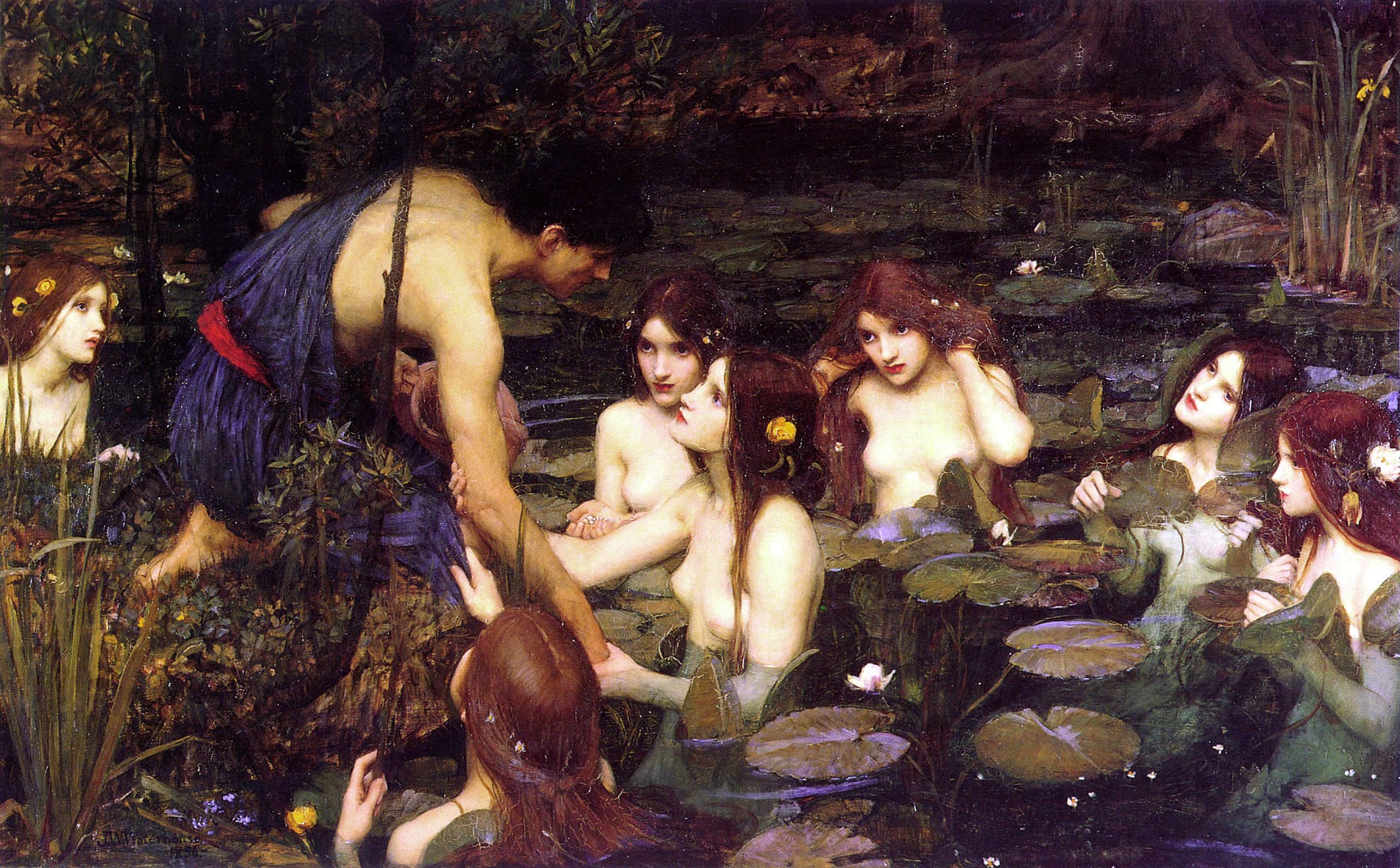
Hylas and the Nymphs
John William Waterhouse · 1896
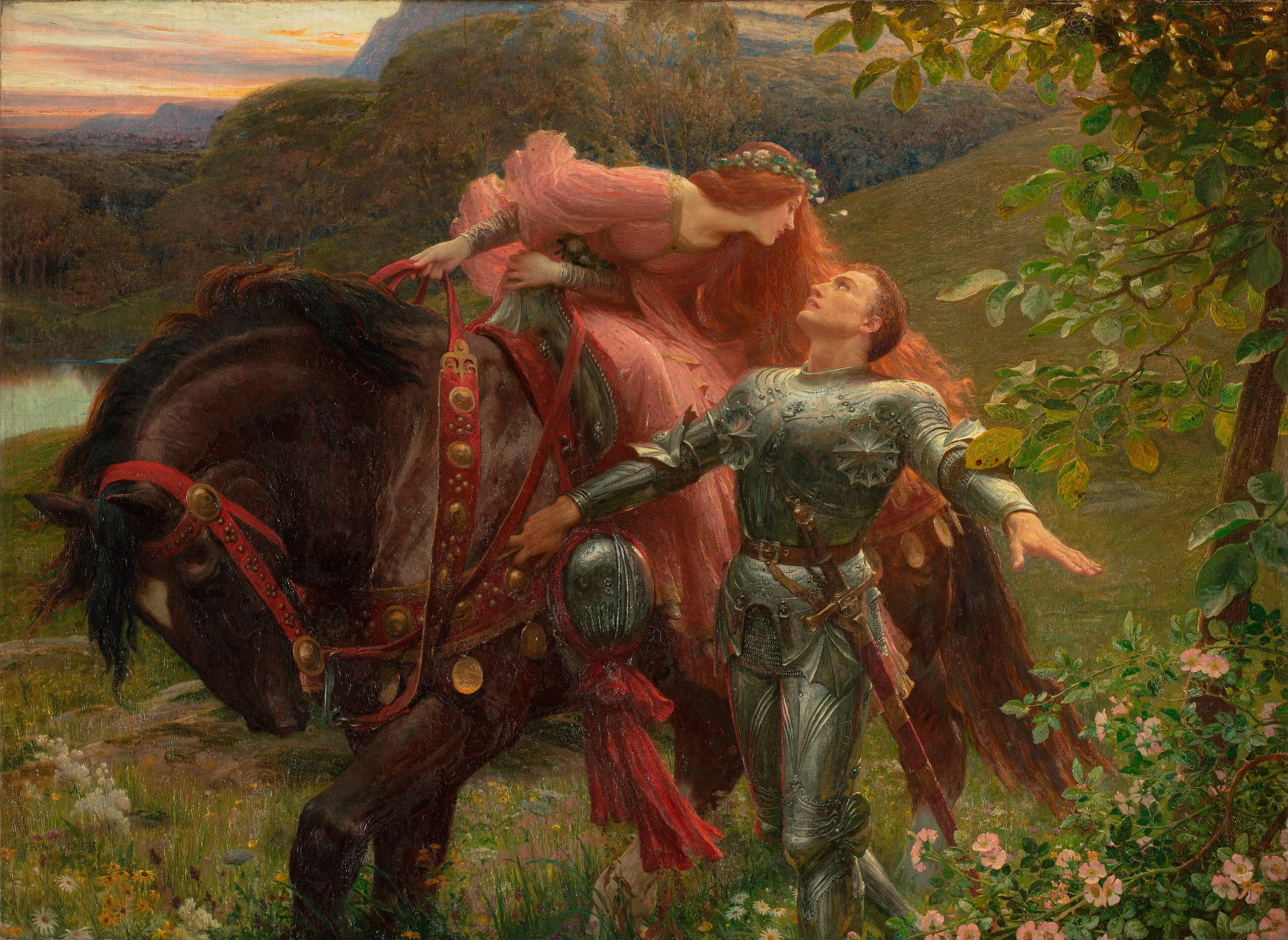
La Belle Dame sans Merci
Sir Frank Dicksee · 1901
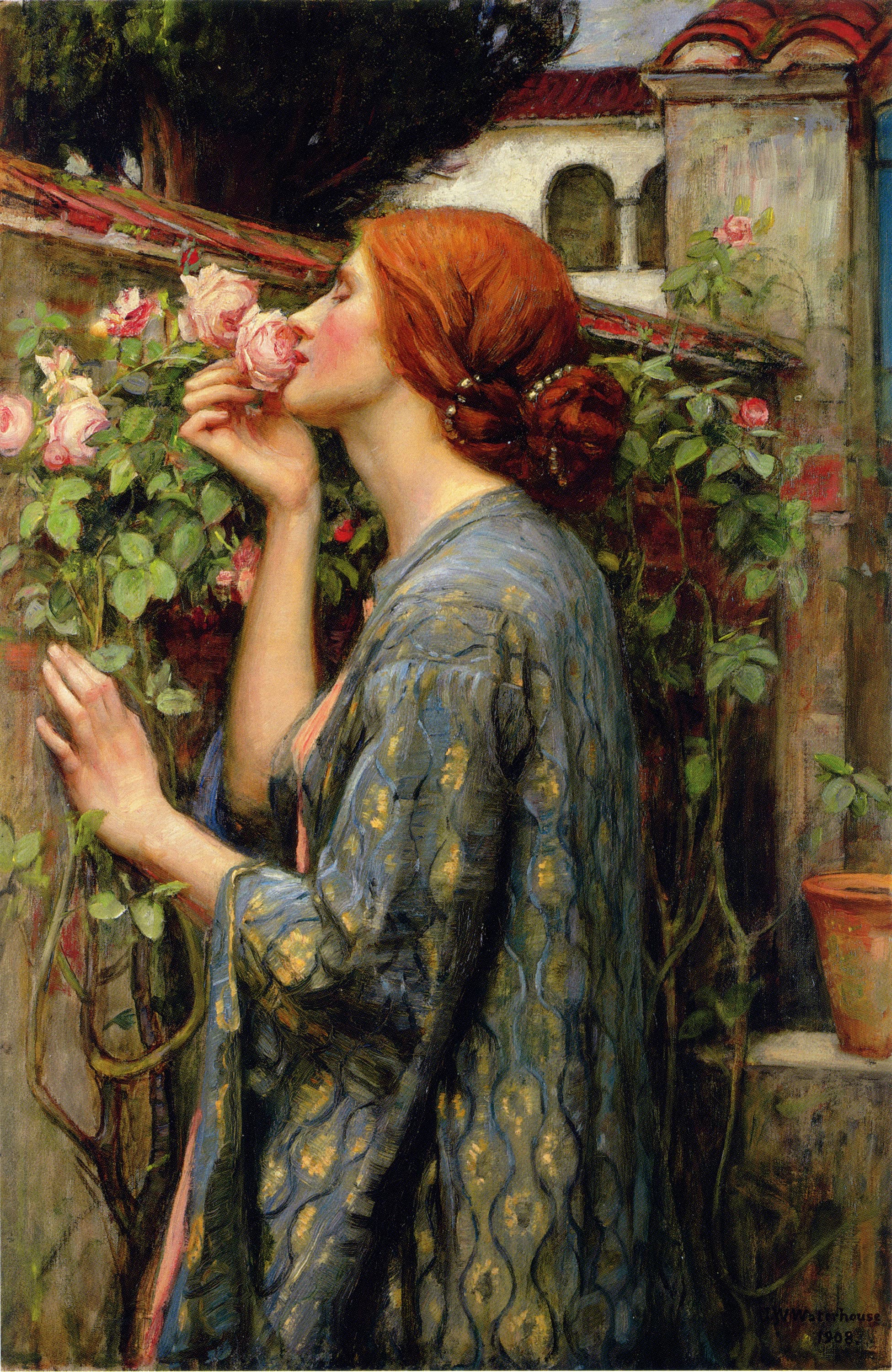
The Soul of the Rose
John William Waterhouse · 1908
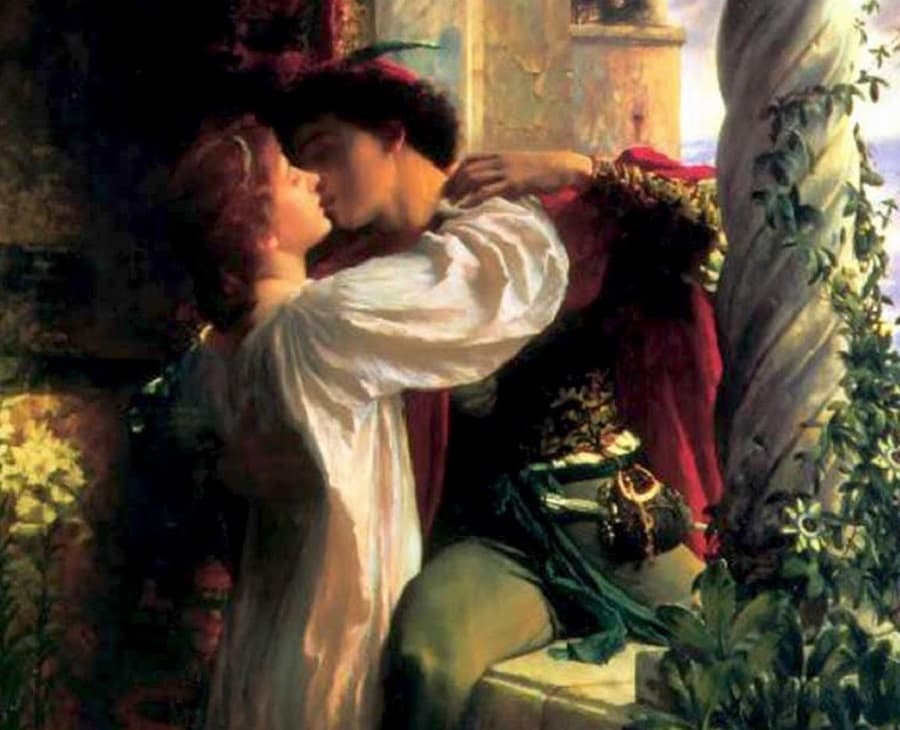
Romeo and Juliet
Sir Frank Dicksee · 1884
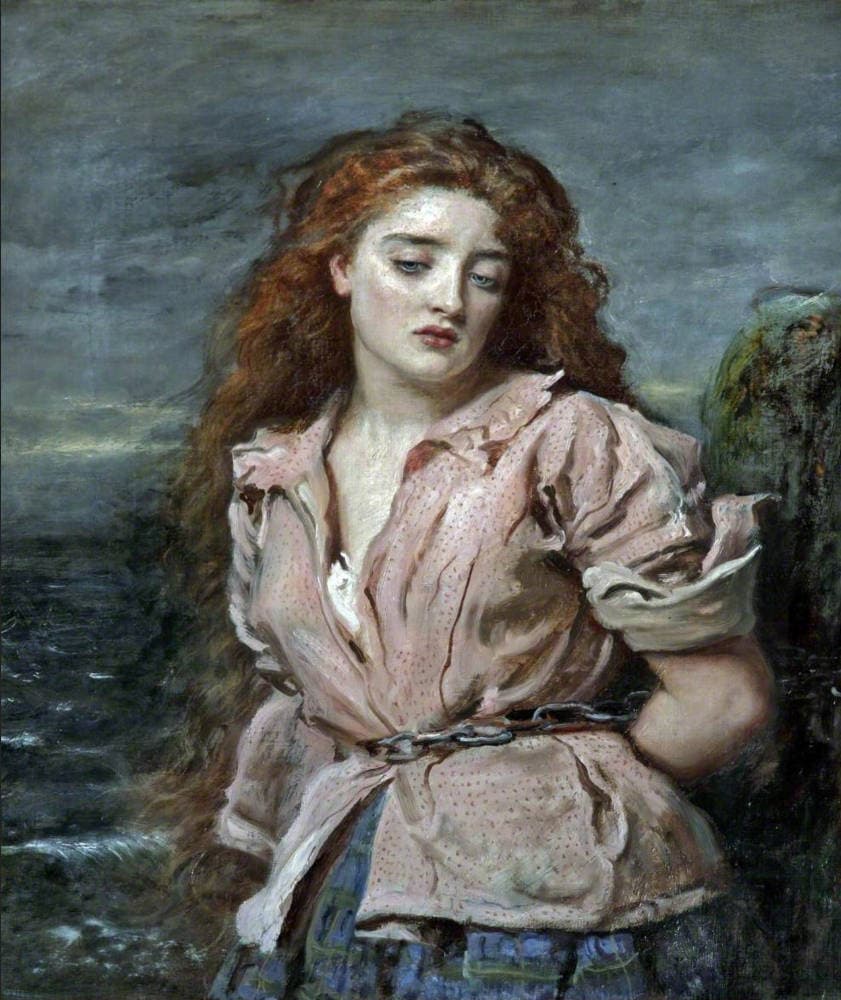
The Martyr of the Solway
John Everett Millais · 1871
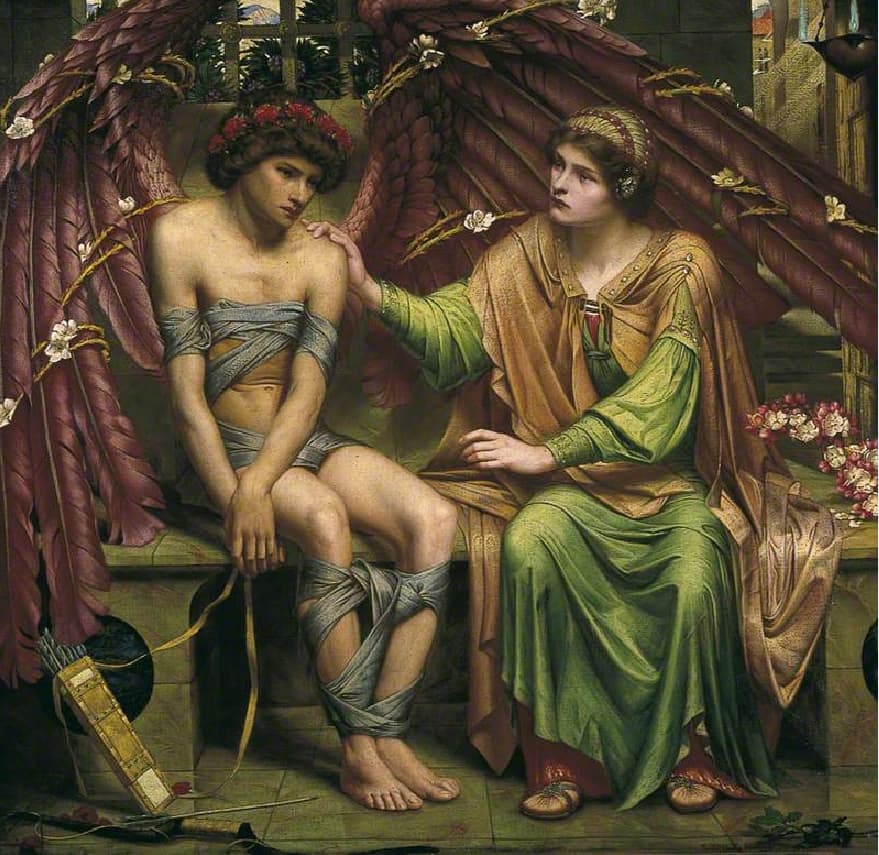
Hope Comforting Love in Bondage
Sidney Harold Meteyard · 1901
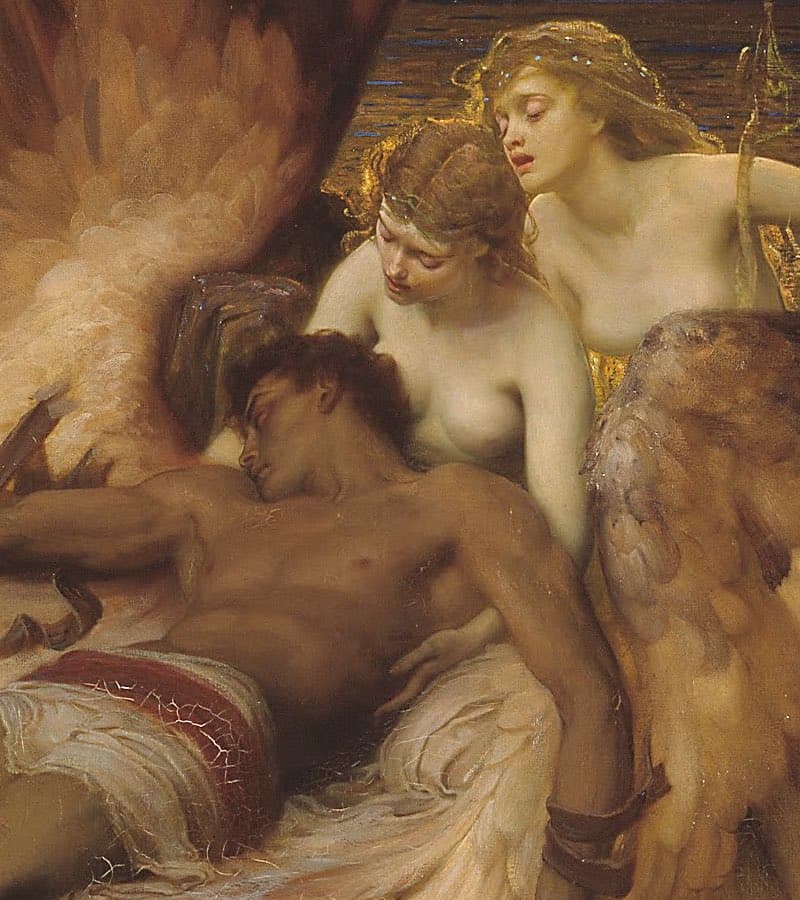
The Lament for Icarus
Herbert James Draper · 1898
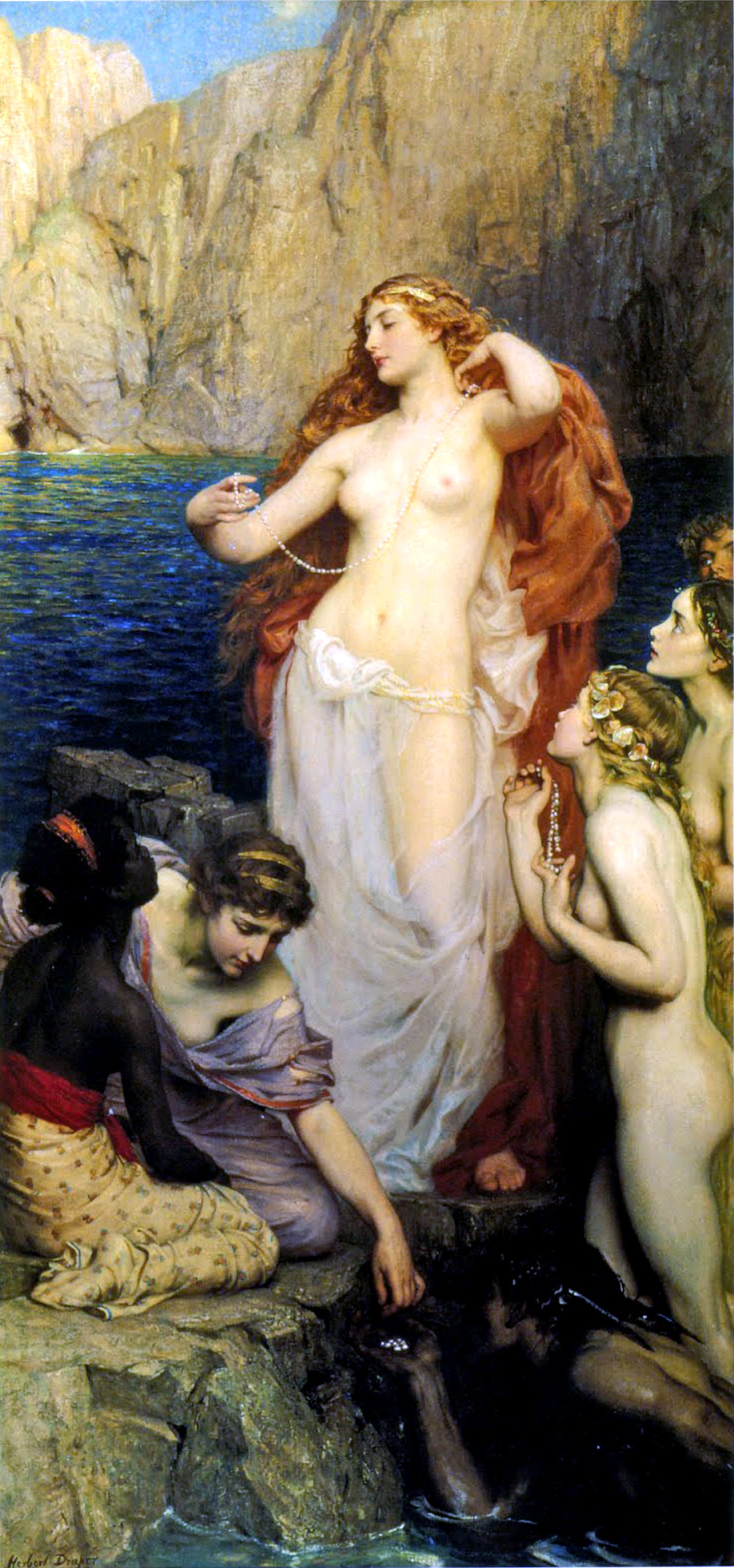
The Pearls of Aphrodite
Herbert James Draper · 1907
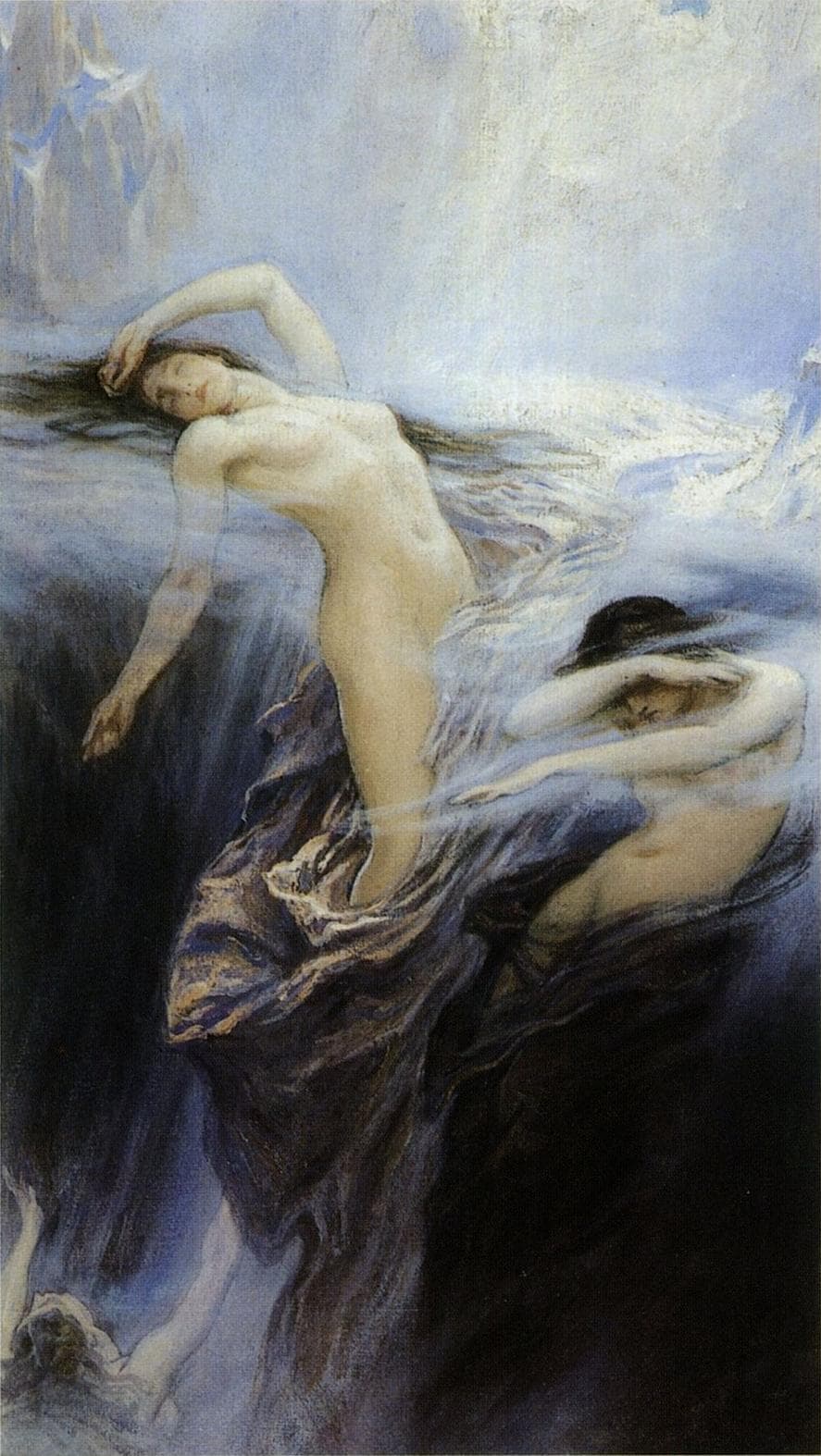
Clyties of the Mist
Herbert James Draper · 1912
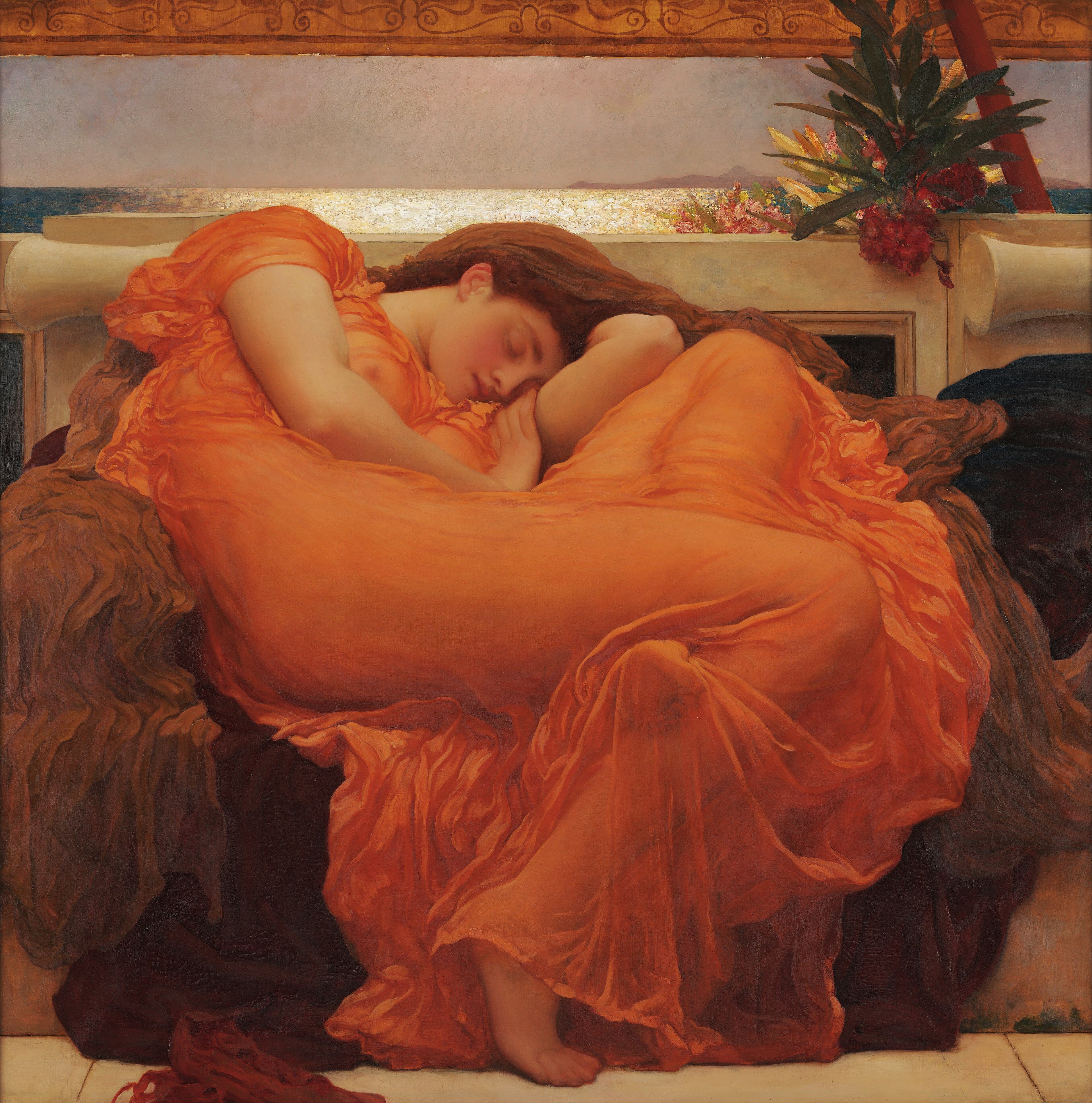
Flaming June
Frederic Leighton · 1895
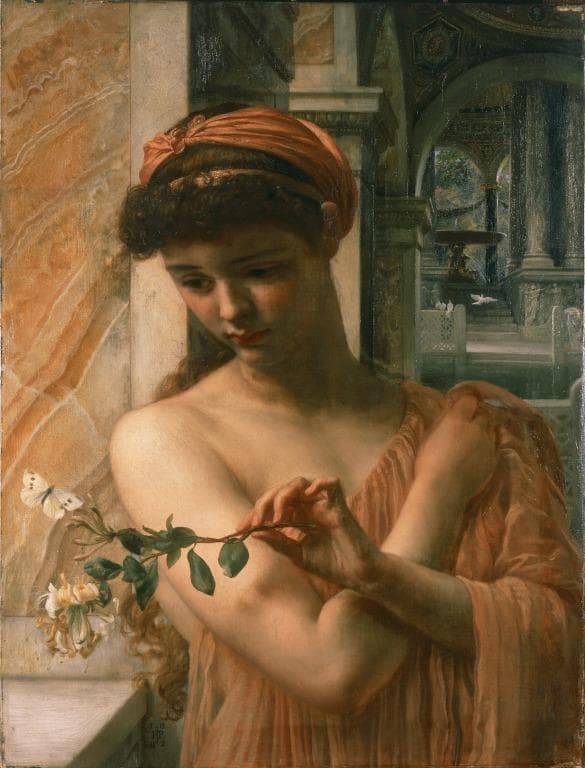
Psyche in the Temple of Love
Edward John Poynter · 1882
Who were the Pre-Raphaelites?
In September 1848, in the Millais family house on Gower Street in London, three Royal Academy students formed a secret society. John Everett Millais was nineteen and already a prodigy; Dante Gabriel Rossetti, the son of an Italian political exile, was twenty and more poet than painter; William Holman Hunt, twenty-one, was the most earnest of the three. They recruited four more members, the sculptor Thomas Woolner, the painter James Collinson, the critic Frederic George Stephens and Rossetti's brother William Michael, who kept the group's journal. They began signing their pictures with the mysterious initials "PRB."
Their target was the academic tradition laid down by Sir Joshua Reynolds, first president of the Royal Academy, which taught students to idealize nature according to the example of Raphael and the Old Masters. The young men called him "Sir Sloshua" for his broad, brown, varnished handling. They wanted instead to return to the sincerity they saw in Italian and Flemish painting before Raphael: bright color, sharp detail, and direct observation of nature.
What the Brotherhood believed
Truth to nature. Paint what is actually there, leaf by leaf, ideally outdoors and from life. The critic John Ruskin, who became their champion, had urged artists to go to nature "rejecting nothing, selecting nothing."
Brilliant color. Instead of dark grounds and brown shadows, they painted thin layers of pure color over a white ground, sometimes still wet, so that the light reflects back through the paint like stained glass.
Serious subjects. Religion, morality, modern social problems and, above all, poetry. Their sources were the Bible, Shakespeare, Dante, Keats, Tennyson and Malory's tales of King Arthur.
Symbolic detail. Every flower, animal and object in a Pre-Raphaelite painting may carry meaning, inviting slow reading.
Scandal and rescue
When the Brotherhood's meaning leaked in 1850, critics were furious. Charles Dickens attacked Millais's Christ in the House of His Parents in his magazine Household Words, describing the young Jesus as a "wry-necked, blubbering, red-headed boy." The Brotherhood was saved in May 1851, when Ruskin wrote two long letters to The Times defending them. Within a few years they were selling well and the style was everywhere.
Ophelia and the masterpieces of the first phase
Ophelia (1851–52, Tate Britain) is the movement's defining image. Millais spent months in the summer and autumn of 1851 painting the background on the bank of the Hogsmill River near Ewell in Surrey, working outdoors for up to eleven hours a day. Then, in his London studio, he posed Elizabeth Siddal in a bath of water kept warm by lamps underneath. The often-repeated story says the lamps went out, Siddal caught a severe cold and her father demanded that Millais pay the doctor's bill.
The flowers floating around Ophelia are both botanically precise and symbolic: poppies for death, a garland of violets for faithfulness and early death, a pansy for love in vain, daisies for innocence. A robin perches on the willow branch at upper left, perhaps recalling the song Ophelia sings in her madness. Holman Hunt's The Light of the World (1851–53) and The Awakening Conscience (1853), in which a kept woman rises from her lover's lap at a sudden moral realization, show the other side of the movement: devotional and modern moral subjects painted with the same intensity.
Rossetti and the second phase
The Brotherhood as a formal group lasted barely five years. Millais was elected an associate of the Royal Academy in 1853 and drifted toward a broader, more popular manner, as in his much later The Martyr of Solway (1871, Walker Art Gallery, Liverpool), which shows the young Scottish Covenanter Margaret Wilson tied to a stake to drown in the rising tide in 1685.
Rossetti, meanwhile, took Pre-Raphaelitism somewhere new. From the late 1850s he painted sensual, half-length women surrounded by flowers, jewels and musical instruments, with heavy-lidded eyes and masses of hair, modeled on Siddal (whom he married in 1860), Fanny Cornforth and Jane Morris. His Beata Beatrix (c. 1864–70, Tate), painted after Siddal's death from an overdose of laudanum in 1862, shows her as Dante's Beatrice in a trance, as a red bird drops a poppy into her hands. With Edward Burne-Jones and William Morris, Rossetti led a second wave that flowed into the Aesthetic Movement and the Arts and Crafts movement.
The women of Pre-Raphaelitism
The movement is often remembered through its models, but several were artists in their own right. Elizabeth Siddal painted and wrote poetry, and Ruskin paid her a stipend for her work. Marie Spartali Stillman and Evelyn De Morgan developed long careers, De Morgan painting allegories of the soul's struggle well into the twentieth century. Recent exhibitions have done much to restore their place.
The late Pre-Raphaelites: Waterhouse and his generation
By the 1880s a new generation had absorbed Pre-Raphaelite subjects and combined them with the looser brushwork of French academic painting. The greatest was John William Waterhouse. The Lady of Shalott (1888, Tate Britain) illustrates Tennyson's poem of a woman cursed to see the world only through a mirror: having looked directly at Lancelot, she drifts downriver toward Camelot and death, two of the three candles on the prow already blown out.
Hylas and the Nymphs (1896, Manchester Art Gallery) shows the young Argonaut drawn into a lily pond by seven identical water nymphs. In 2018 the gallery took the painting down temporarily, as part of an artwork by Sonia Boyce, to provoke a debate about how such images present women, and the reaction made national headlines. In The Soul of the Rose (1903), a woman in a garden presses her face to a climbing rose, illustrating a line from Tennyson's Maud.
Frank Dicksee painted the great romances: Romeo and Juliet (1884, Southampton City Art Gallery) on Juliet's balcony at dawn, and La Belle Dame sans Merci (c. 1901, Bristol Museum and Art Gallery), after Keats's ballad of a knight bewitched by a fairy woman. Herbert James Draper painted sea nymphs and Icarus. In Birmingham, Sidney Harold Meteyard's Hope Comforting Love in Bondage carries the Burne-Jones manner into the new century. Frederic Leighton and Edward Poynter, though classicists rather than Pre-Raphaelites, painted alongside them in the same exhibitions and share their love of beauty for its own sake.
How to recognize a Pre-Raphaelite painting
- Saturated, luminous color, especially emerald greens, deep blues and coppery reds.
- Hyper-detailed nature: you can identify the species of each plant.
- Literary or medieval subjects, frequently from Shakespeare, Tennyson, Keats, Dante or Arthurian legend.
- A central female figure with long, often red or auburn hair and an intense or dreamy gaze.
- Flattened, crowded compositions with little deep space, like a medieval manuscript.
- Symbolic flowers and objects that reward slow reading.
Pre-Raphaelites and dark academia
Few historical movements have found a second life online like this one. Pre-Raphaelite heroines are central to the dark academia aesthetic because they are literally paintings of poems: drowned maidens, cursed ladies and doomed lovers, painted with an obsessive care that feels like devotion.
Where to see Pre-Raphaelite paintings
Tate Britain in London has the largest public collection, including Ophelia, The Lady of Shalott and Beata Beatrix. Birmingham Museum and Art Gallery holds a superb Pre-Raphaelite collection, especially Burne-Jones. Manchester Art Gallery, the Walker Art Gallery in Liverpool and the Lady Lever Art Gallery at Port Sunlight are also essential, and the Delaware Art Museum has the largest collection outside Britain.
Questions & answers
What are the most famous Pre-Raphaelite paintings?
The most famous include John Everett Millais's Ophelia, Dante Gabriel Rossetti's Beata Beatrix and Proserpine, William Holman Hunt's The Light of the World and The Awakening Conscience, and, from the later generation, John William Waterhouse's The Lady of Shalott and Hylas and the Nymphs.
Who were the founding members of the Pre-Raphaelite Brotherhood?
The Brotherhood was founded in London in 1848 by John Everett Millais, Dante Gabriel Rossetti and William Holman Hunt. Four more joined soon after: the sculptor Thomas Woolner, the painter James Collinson, the critic Frederic George Stephens and William Michael Rossetti, who kept its records.
Why were they called Pre-Raphaelites?
They believed that European art had become formulaic after Raphael, whose example dominated the teaching of the Royal Academy. By calling themselves Pre-Raphaelites, they declared their preference for the sincerity, bright color and close observation of art made before him, in late medieval and early Renaissance Italy and Flanders.
Is Waterhouse a Pre-Raphaelite?
John William Waterhouse was born in 1849, a year after the Brotherhood was founded, so he was never a member. He is usually called a late Pre-Raphaelite or a follower, because he took up their literary subjects and heroines, combining them with the looser brushwork of French academic painting.
Where can I see Pre-Raphaelite art?
Tate Britain in London has the largest collection, including Ophelia and The Lady of Shalott. Birmingham Museum and Art Gallery, Manchester Art Gallery, the Walker Art Gallery in Liverpool and the Lady Lever Art Gallery are also major holdings, and the Delaware Art Museum has the biggest collection in the United States.