Impressionism
View of Vétheuil
Claude Monet, 1880
View of Vétheuil is an 1880 painting by Claude Monet of a summer meadow full of red poppies, with tall poplars and the church tower of Vétheuil in the distance. It is in the Metropolitan Museum of Art, New York.
- Artist
- Claude Monet
- Date
- 1880
- Medium
- Oil on canvas
- Dimensions
- 80 × 60.3 cm
- Collection
- Metropolitan Museum of Art, New York, United States
- Movement
- Impressionism
- Catalogue
- Wildenstein 592
Painted at Monet at VétheuilMore at Monet at the Met
What you are looking at
The canvas is upright, which is unusual for a Monet landscape. Its lower half is a meadow of long summer grass, olive, gold and green, scattered with red poppies that are thickest in the lower left. On the right, a tall, feathery poplar and a mass of shrubs and young trees rise almost to the top edge. Through a gap in the middle, we see the village of Vétheuil on its hillside: a dark, columnar tree, a few white houses and, at the center, the square tower of the church. Above, a deep blue sky is crowded with brilliant white clouds.
It is high summer, around midday, with a breeze moving the clouds. The meadow runs right up to the bottom edge, so we seem to be standing waist-deep in it.
Vétheuil, 1878–81
In the summer of 1878 Claude Monet, in serious financial trouble, moved with his wife Camille, their two sons, and Alice Hoschedé and her six children into a shared house at Vétheuil, a village on the Seine about sixty kilometers northwest of Paris. Camille died there in September 1879. In the months that followed, Monet painted the village and the river constantly, often from the islands and meadows across the water. The whole Vétheuil period is gathered on our Monet at Vétheuil page.
This canvas is listed as W.592 by Wildenstein. The Met owns several Vétheuil pictures from 1880, including Vétheuil in Summer, The Seine at Vétheuil and Île aux Fleurs near Vétheuil, and together they show how thoroughly Monet worked a few motifs within a short walk of home.
How it was painted
The upright format gives the clouds and the poplar real height and makes the church small and far away. Monet uses this to set up a contrast of scales: the tall tree in the foreground, the low distant village, the vast sky.
The poppies are the first thing people notice, but look at how they are painted. Each one is a single dab of red or orange, often with a darker touch beside it, placed on top of the grass strokes after they were laid in. They thin out toward the middle distance, which creates depth without any drawn perspective. The grass itself is a weave of upright and diagonal strokes in ocher, green and violet, with flecks of blue for cornflowers or shadow.
The clouds are thick, creamy white, laid on with a loaded brush, and the blue between them is intense, almost ultramarine. The poplar at right is built from small, flickering touches of green and yellow that let the sky show through, so it seems to shiver. A darker, denser shrub at its foot casts a shadow toward us, telling us the sun is high.
Vétheuil from the meadows and how this view differs
Most of Monet's Vétheuil pictures are horizontal views across the Seine, with the church tower reflected in the water, as in the Met's own Vétheuil in Summer. Another 1880 View of Vétheuil is in the Alte Nationalgalerie, Berlin. This one turns its back on the river. The village is a distant glimpse, framed by trees, and the subject is the meadow and the weather above it.
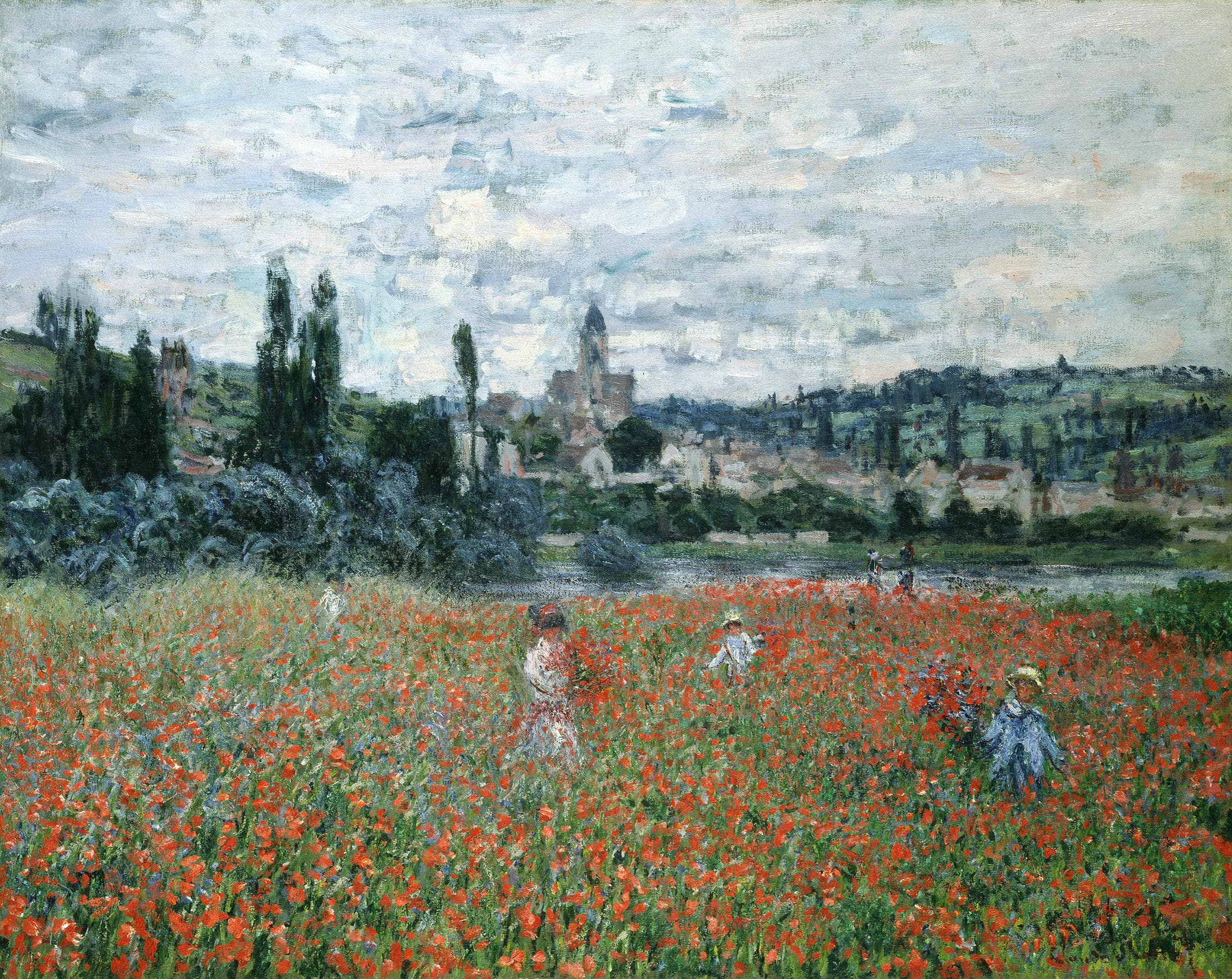
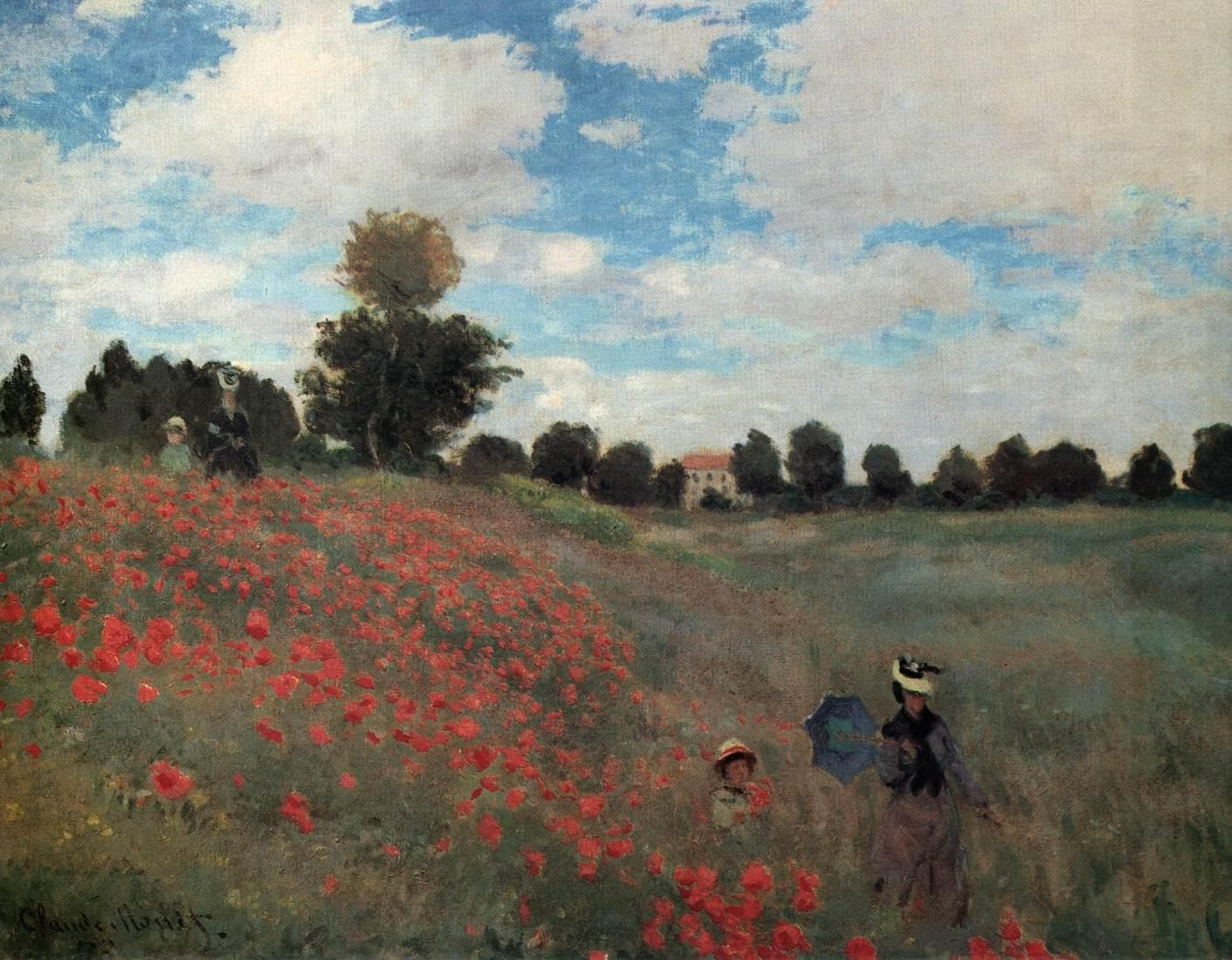
In that, it belongs with the poppy pictures Monet painted around Vétheuil in 1879–80, such as Poppy Field near Vétheuil in the Bührle collection, and with the figure in the grass of Woman Seated under the Willows. It also looks back to the famous A Field of Poppies of 1873 at Argenteuil. After the grief of 1879, these sunny meadow pictures were also the paintings that sold. Monet badly needed buyers in 1880, the year he submitted to the official Salon for the last time and held a small solo show at the offices of the magazine La Vie moderne, and bright, accessible summer landscapes like this one helped him through.
Where to see it
The painting is in the Metropolitan Museum of Art, New York (56.135.1), bequeathed by Julia W. Emmons in 1956. The Met's large Monet collection is described on Monet at the Met.
Questions & answers
Where is Monet's View of Vétheuil?
This upright 1880 canvas, 80 by 60.3 centimeters, is in the Metropolitan Museum of Art in New York (56.135.1), bequeathed by Julia W. Emmons in 1956. The Met also owns other Vétheuil paintings by Monet, including the horizontal river view Vétheuil in Summer.
When and where was it painted?
In the summer of 1880 in the meadows near Vétheuil, the village on the Seine about sixty kilometers northwest of Paris where Monet lived from 1878 to 1881 with his family and the Hoschedé family. Wildenstein catalogues it as W.592.
What flowers are in View of Vétheuil?
Red field poppies scattered through long summer grass. Monet painted each as a single dab of red or orange laid over the grass, thick in the foreground and thinning toward the distance, which gives the meadow depth. Poppies appear in several of his summer landscapes of these years.
How is this different from Monet's other views of Vétheuil?
Most of his Vétheuil views are wide, horizontal pictures looking across the Seine at the church and its reflection. This one is upright and turns away from the river: the village is a small glimpse through trees, and the meadow and sky fill the canvas.
More by the artist
Claude Monet

Bridge over a Pond of Water Lilies
Claude Monet · 1899

Woman with a Parasol – Madame Monet and Her Son
Claude Monet · 1875

Sunset in Venice
Claude Monet · 1908–12

La Grenouillère
Claude Monet · 1869

Beach in Pourville
Claude Monet · 1882

Springtime
Claude Monet · 1872

Boating on the River Epte
Claude Monet · 1890

The Seine at Asnières (Hermitage)
Claude Monet · 1873
Also painted in 1880
The same year
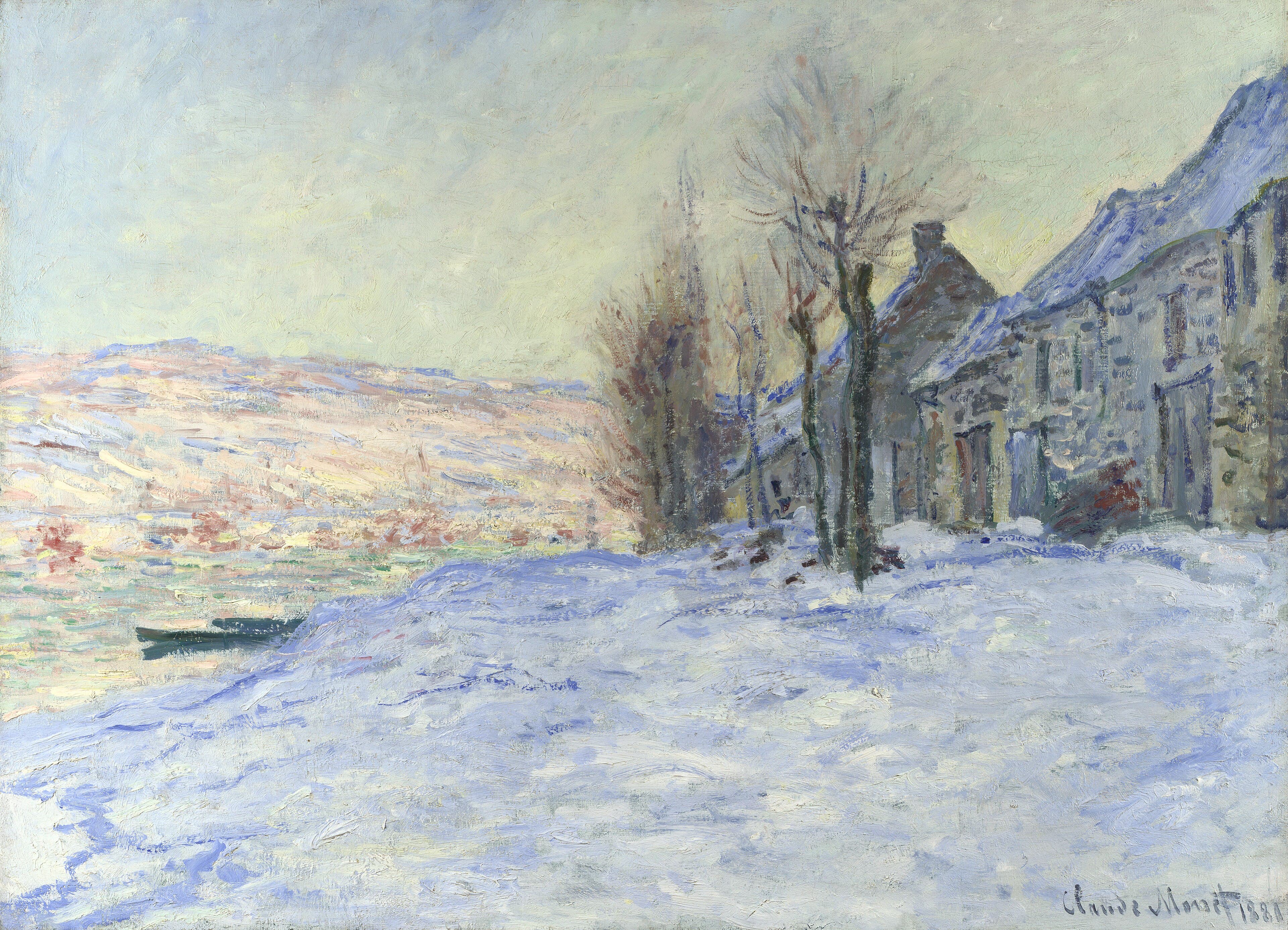
Lavacourt under Snow
Claude Monet · c. 1878–81
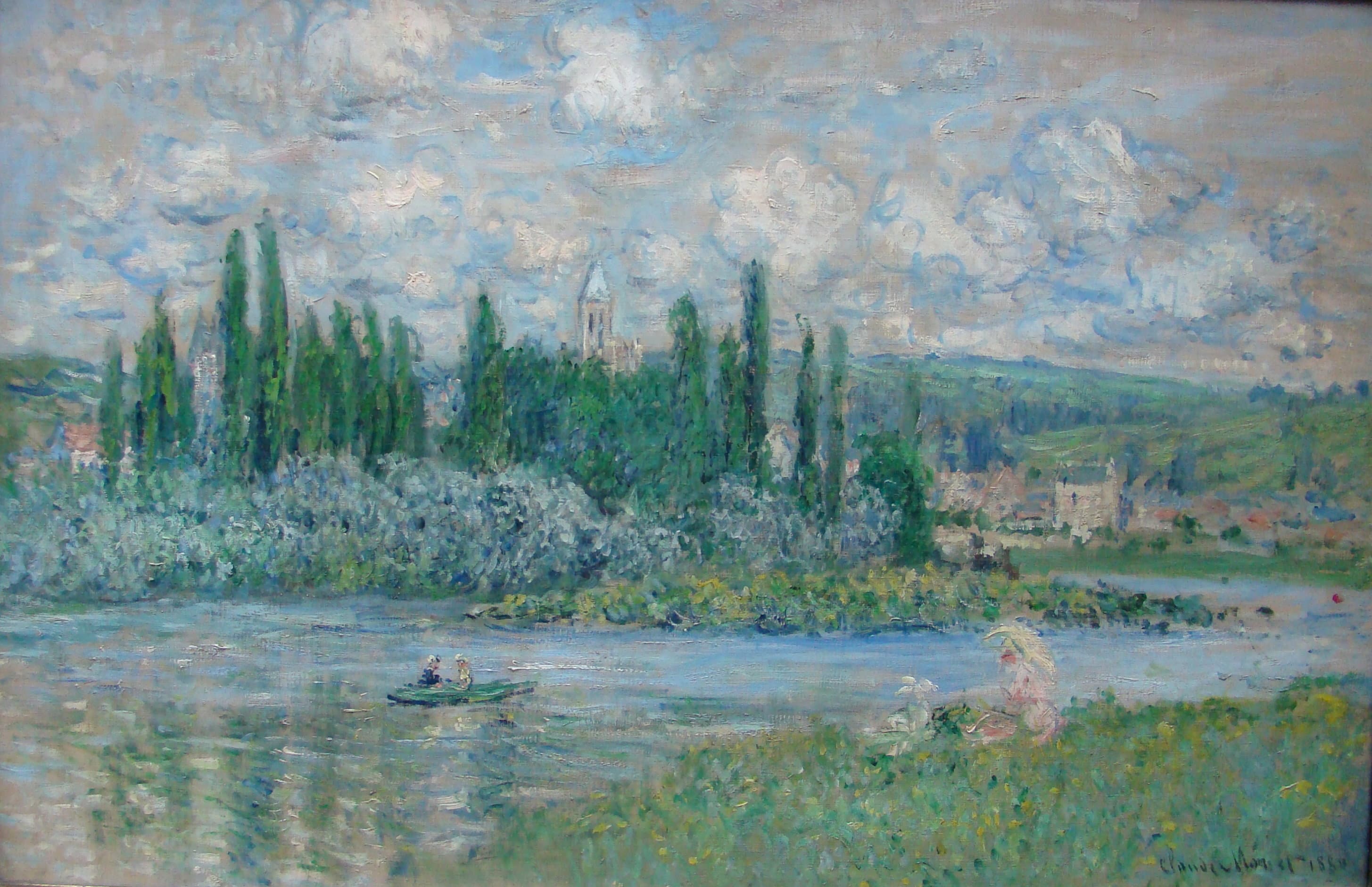
View of Vétheuil
Claude Monet · 1880
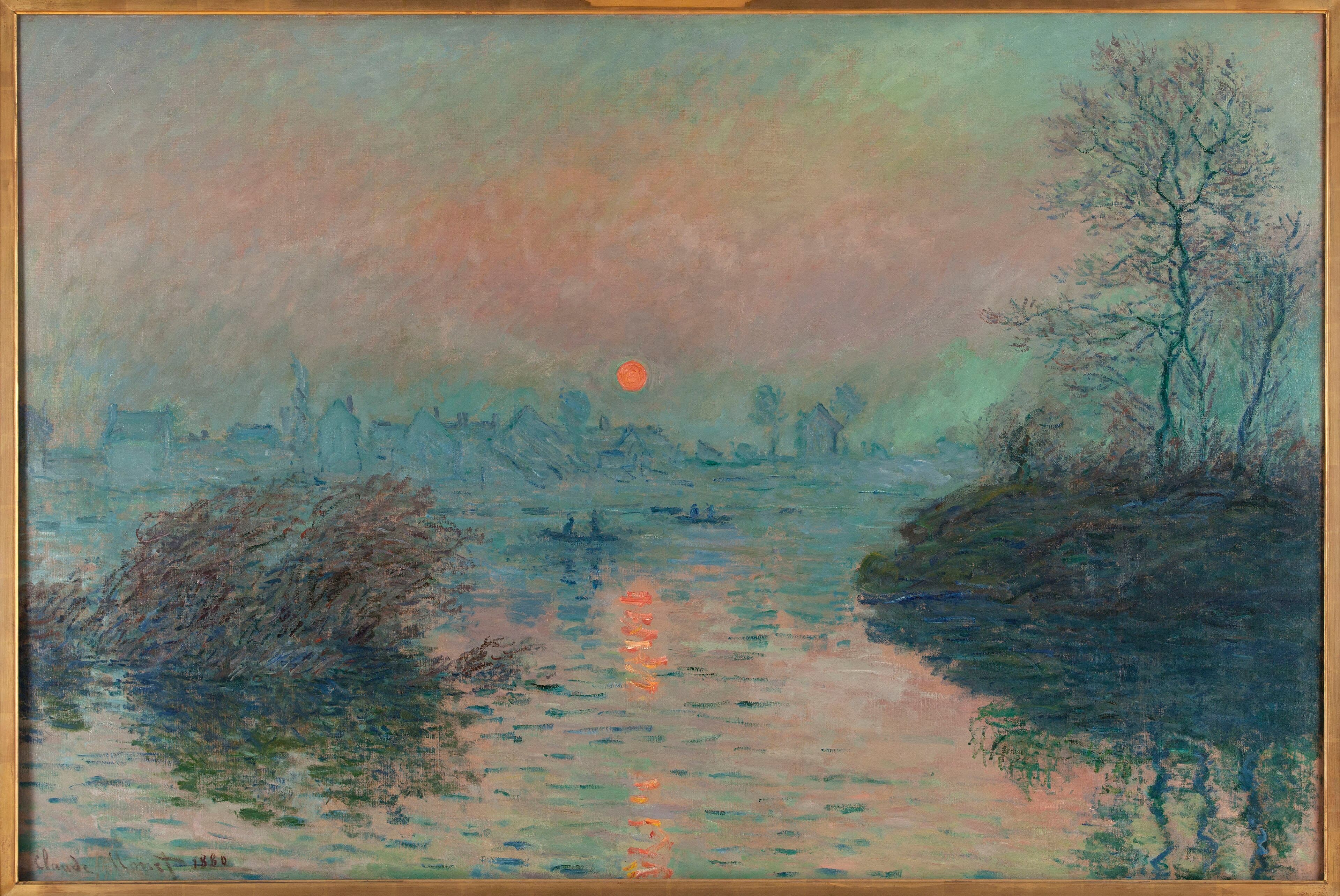
Sunset on the Seine at Lavacourt, Winter Effect
Claude Monet · 1880
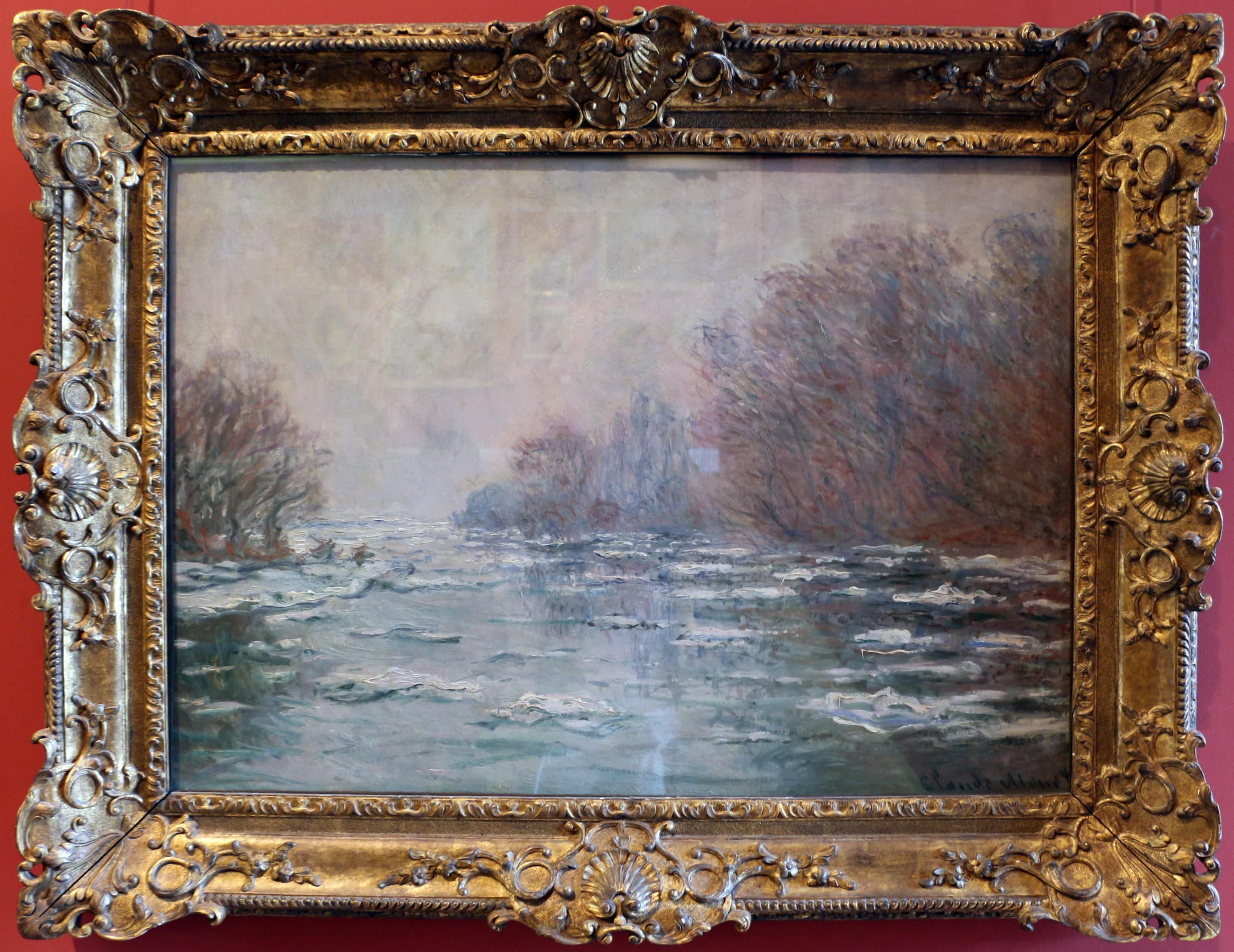
The Breaking Up of the Ice near Vétheuil
Claude Monet · c. 1880
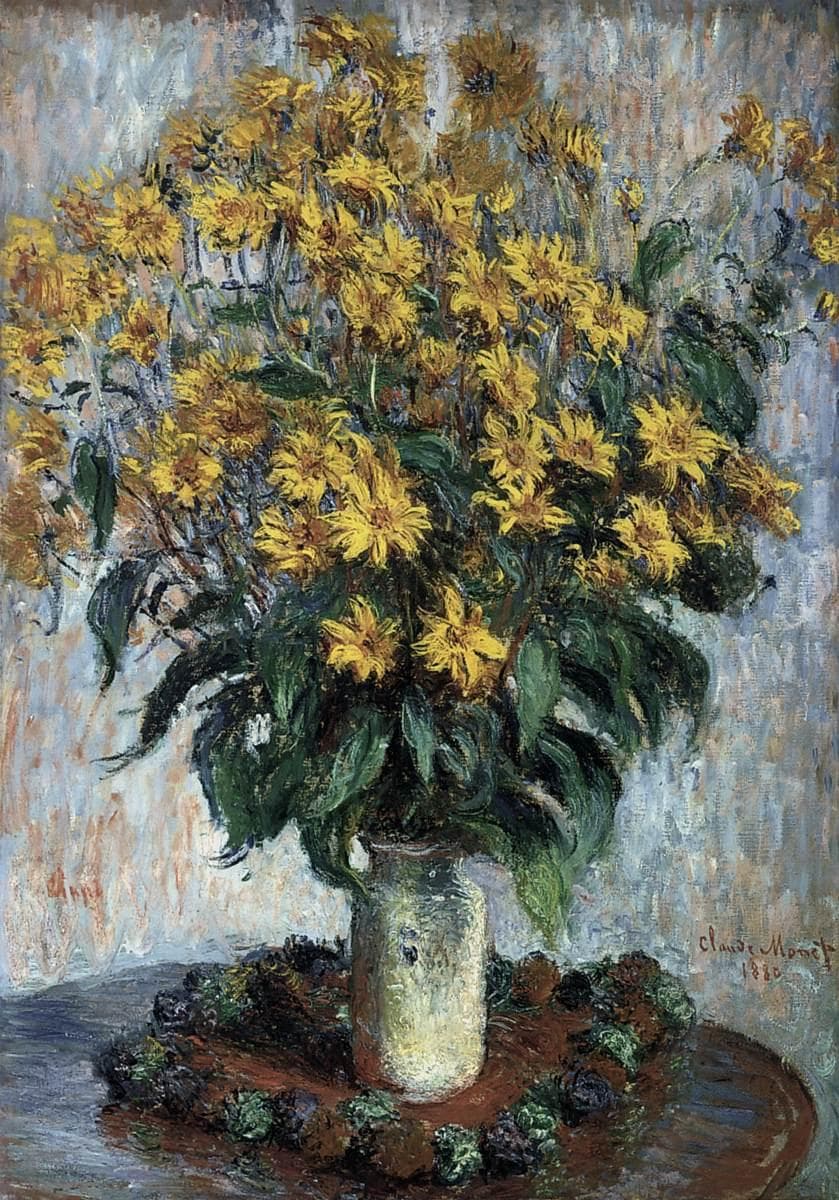
Jerusalem Artichoke Flowers
Claude Monet · 1880
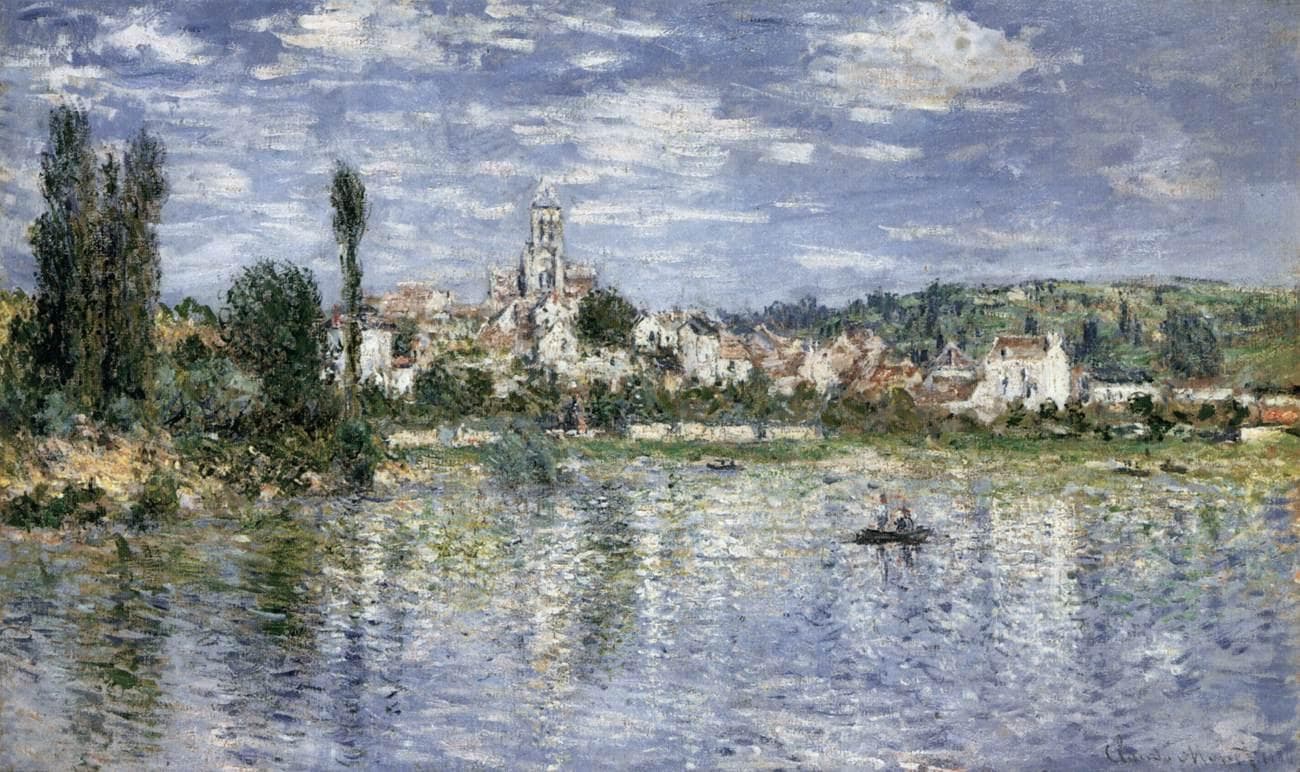
Vétheuil in Summer
Claude Monet · 1880
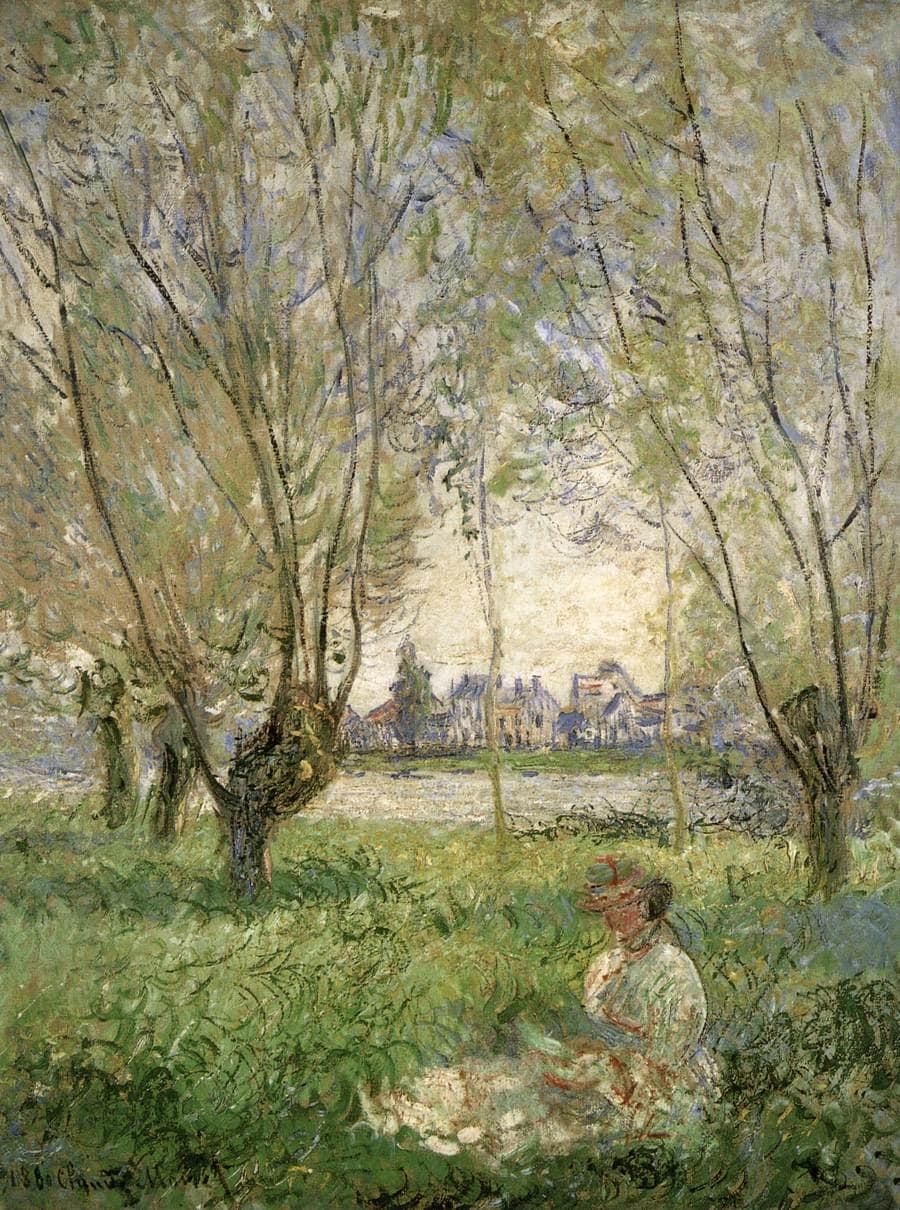
Woman Seated under the Willows
Claude Monet · 1880
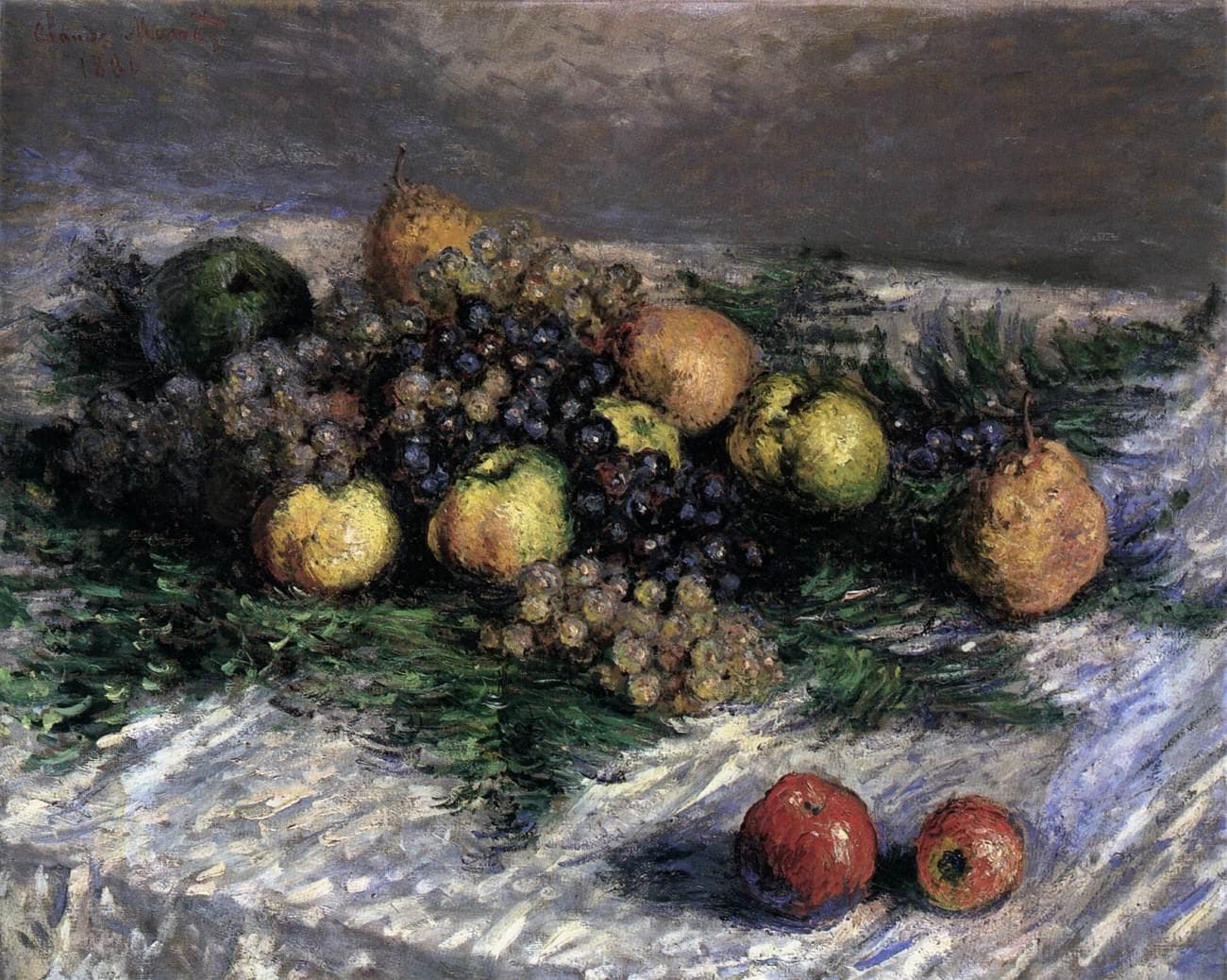
Still-Life with Pears and Grapes
Claude Monet · 1880
Kindred works
You may also study
Vétheuil in Summer
Claude Monet · 1880
Woman Seated under the Willows
Claude Monet · 1880
Poppy Field near Vétheuil
Claude Monet · c. 1879
View of Vétheuil
Claude Monet · 1880
Poppy Field (Poppies at Argenteuil)
Claude Monet · 1873
The Artist's Garden at Vétheuil
Claude Monet · 1881

The Scream
Edvard Munch · 1893

Ophelia
John Everett Millais · 1851–52