Realism
Corner of the Studio
Claude Monet, 1861
Corner of the Studio (Coin d'atelier) is a large early still life by Claude Monet, dated 1861, showing a carved table with a paint box, books and weapons before a tapestry. Painted when he was about twenty, it is in the Musée d'Orsay, Paris.
- Artist
- Claude Monet
- Date
- 1861
- Medium
- Oil on canvas
- Dimensions
- 180 × 130 cm
- Collection
- Musée d'Orsay, Paris, France
- Movement
- Realism
- Catalogue
- Wildenstein 6
More at Monet at the Musée d'Orsay
What you are looking at
A heavy wooden table with dark, turned legs stands on a red patterned carpet. On it lies a painter's clutter: an open paint box with its lid propped up and a palette resting across it, brushes, a crumpled red cloth, a stack of leather-bound books, and a pair of small boxes, one red, one dark. Behind the table hangs a large tapestry woven with a wooded landscape, foliage, a waterfall and a pale blue stream. Against it, a sword and a pistol hang crossed, with a long gun leaning at an angle. At the top right, the bottom edge of a framed painting cuts into the picture.
This is Coin d'atelier, a still life painted by Claude Monet, dated 1861 when he was about twenty. It is a big canvas, catalogued by the Musée d'Orsay at 180 by 130 centimeters (some older lists give 182 by 127), and it is in the Orsay's collection in Paris.
Looking closely
The painting is dark, rich and densely described, the opposite of what most people expect from Monet. The table is painted with solid, brownish-black shadows and crisp highlights along the curves of its legs and stretchers. The carpet's red and blue pattern is laid in with careful, saturated strokes. The books show the wear of their spines and the softness of their pages.
The tapestry is the most interesting passage. Monet paints a picture within a picture: a woven landscape of trees, a cascade and a river, rendered with enough looseness that the threads seem to blur into brushwork. Its greens and blues are the only cool notes in the canvas, and they push forward the warm reds and browns of the table and carpet. Some viewers see in it a hint of the landscapes Monet would soon paint outdoors.
Look too at the objects that signal the studio. The palette, still loaded with color, and the brushes laid on the box tell us the painter has just stepped away. The crossed weapons are more puzzling: they were typical studio props of the period, used for history paintings and costume pieces, and here they lend the corner a faintly romantic, collector's air.
Monet at twenty
In 1861 Monet was not yet an Impressionist, or anything like one. He had grown up in Le Havre, where the landscape painter Eugène Boudin had introduced him to painting outdoors. In 1859 he went to Paris, where he studied at the Académie Suisse, a free studio where he met Camille Pissarro, and visited the Salon, admiring painters such as Charles-François Daubigny and Constant Troyon. In 1861 he was called up for military service and sent to Algeria with a regiment of light cavalry, the Chasseurs d'Afrique, returning the following year because of illness.
Corner of the Studio belongs to this formative moment. Its subject and handling look back to the realist still lifes of the period and, beyond them, to Dutch and Spanish painting of the seventeenth century, with its tables of objects in deep shadow. The influence of Gustave Courbet, whose dark grounds and solid paint Monet admired, is often noted. The size of the canvas is ambitious for a beginner, and suggests Monet was trying to prove what he could do.
Why it matters
The painting is valuable precisely because it is unfamiliar. It shows that Monet learned the traditional craft of describing objects, surfaces and textures before he set it aside. When he later broke form into strokes of pure color, it was a choice, not a limitation. Seen next to Women in the Garden (1866), painted only five years later in full sunlight, it measures how fast and how far he traveled.
It also belongs to a small group of early Monet still lifes. Compare the later, lighter Still-Life with Apples and Grapes and Still-Life with Melon, where the dark ground of the 1860s gives way to clearer color.
A wartime history
The canvas has an unusual past. According to the Musée d'Orsay, it was found in Germany after the Second World War and entrusted to the French national museums in 1950. Works in this situation, recovered after the war but not yet claimed by an identified owner, are designated MNR (Musées Nationaux Récupération) and are held by the state pending restitution to rightful heirs. Their provenance is published so that claims can be made. The painting's earlier history is therefore not fully documented, and researchers continue to study it.
Where to see it
Corner of the Studio is in the Musée d'Orsay in Paris, where it hangs with works from the decade before Impressionism. It is worth seeking out as a counterpoint to the famous Monets upstairs. For the full arc of his career, see our guide to famous Monet paintings, and for other dark, book-strewn interiors, our Dark Academia collection.
Questions & answers
Where is Monet's Corner of the Studio?
It is in the Musée d'Orsay in Paris. The museum records that the painting was found in Germany after the Second World War and entrusted to the French national museums in 1950, as one of the works designated MNR held pending restitution to an identified owner.
When did Monet paint Corner of the Studio?
It is dated 1861, when Monet was about twenty and still learning his craft in Paris after his early training with Eugène Boudin in Le Havre. That year he was called up for military service in Algeria.
Why does Corner of the Studio look so different from Monet's later work?
Monet painted it before he developed Impressionism. Its dark ground, solid modeling and careful textures follow the realist still life tradition and the example of Courbet and older Dutch and Spanish painting, rather than the light, broken color of his outdoor landscapes.
What objects are in Corner of the Studio?
A carved wooden table on a red carpet holds an open paint box with a palette and brushes, books, small boxes and a red cloth. Behind it hang a landscape tapestry, a crossed sword and pistol, a long gun and the edge of a framed painting.
More by the artist
Claude Monet

Bridge over a Pond of Water Lilies
Claude Monet · 1899

Woman with a Parasol – Madame Monet and Her Son
Claude Monet · 1875

Sunset in Venice
Claude Monet · 1908–12

La Grenouillère
Claude Monet · 1869

Beach in Pourville
Claude Monet · 1882

Springtime
Claude Monet · 1872

Boating on the River Epte
Claude Monet · 1890

The Seine at Asnières (Hermitage)
Claude Monet · 1873
Kindred works
You may also study
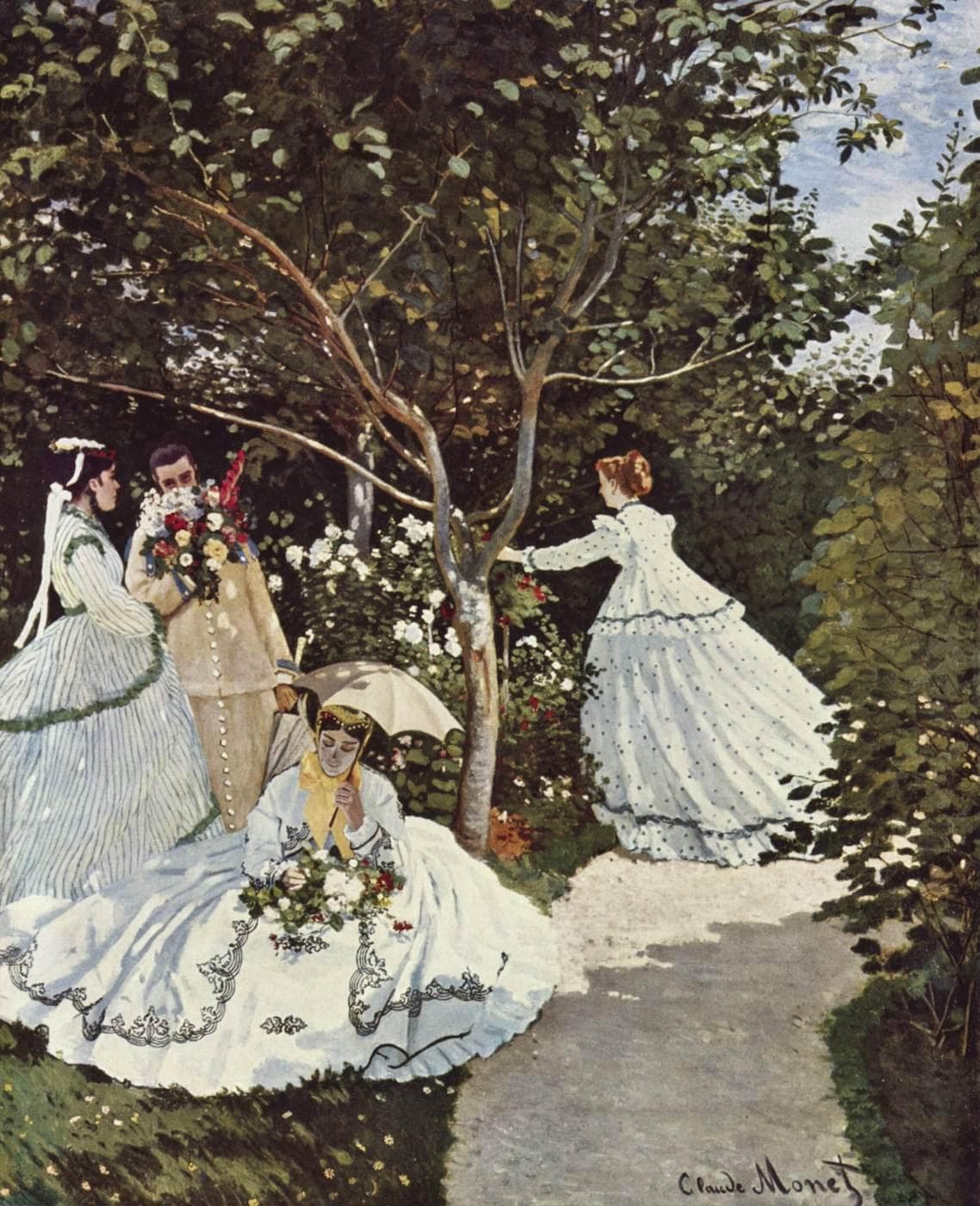
Women in the Garden
Claude Monet · 1866–67
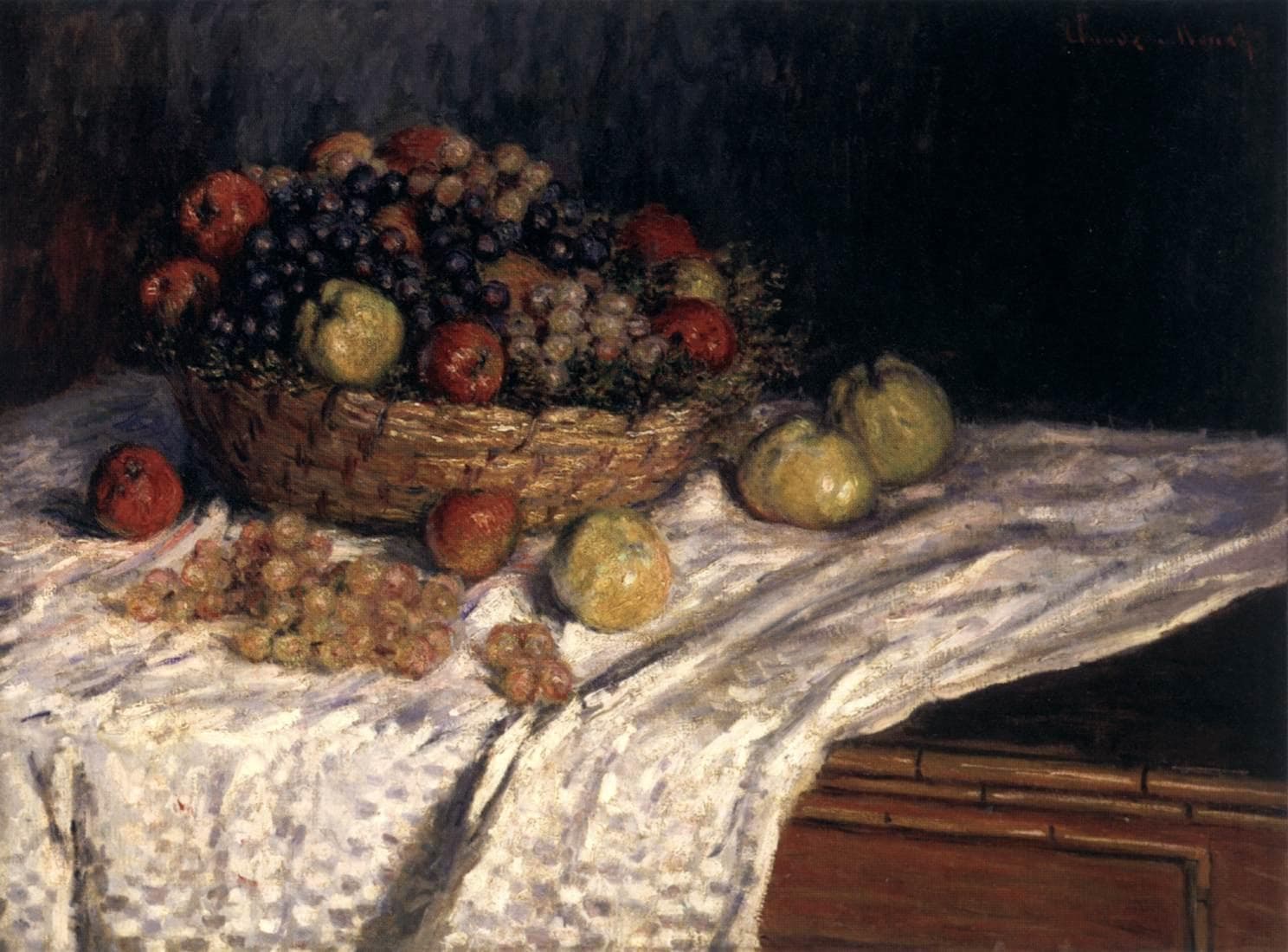
Still-Life with Apples and Grapes
Claude Monet · 1879–80
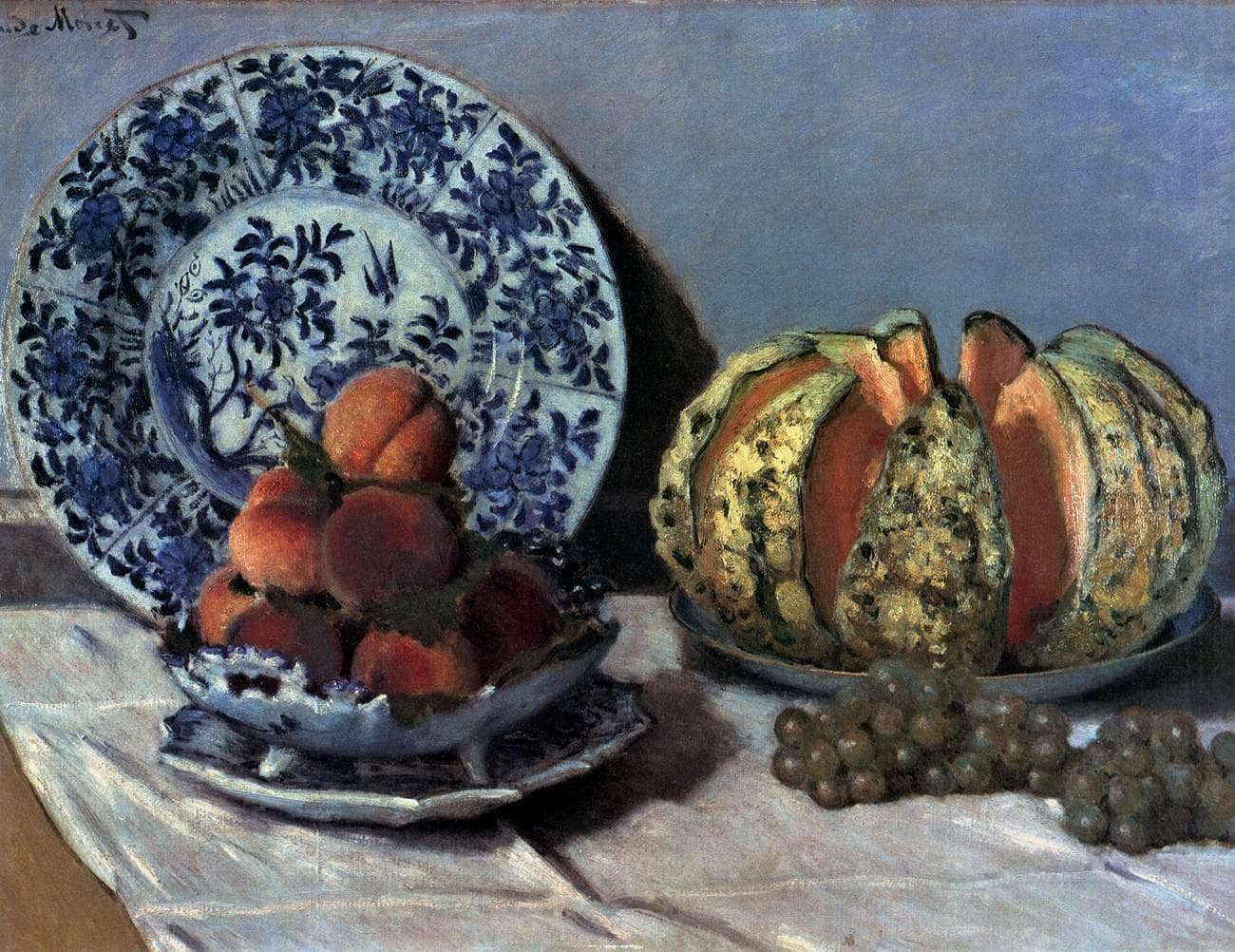
Still-Life with Melon
Claude Monet · c. 1872
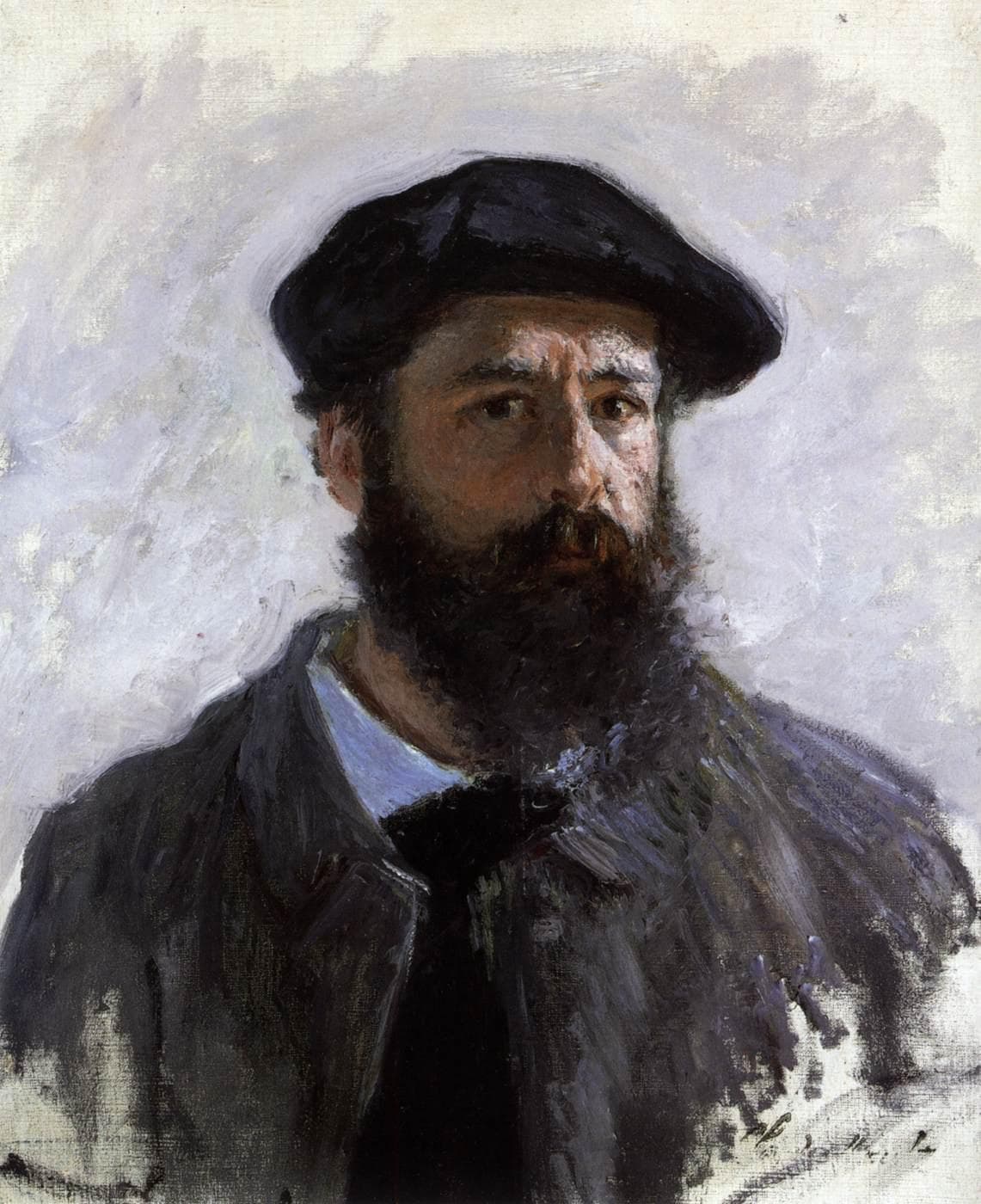
Self-Portrait in Beret
Claude Monet · 1886
Madame Louis Joachim Gaudibert
Claude Monet · 1868

The Scream
Edvard Munch · 1893
The Thinker
Auguste Rodin · Modeled 1880–82; enlarged 1902–03; this cast 1904

Saturn Devouring His Son
Francisco Goya · c. 1819–1823