Image: Claude Monet; Musée d'Orsay · Public domain · via Wikimedia Commons
Rouen Cathedral, the Portal, Morning Sun (Harmony in Blue)
Claude Monet, 1893–94
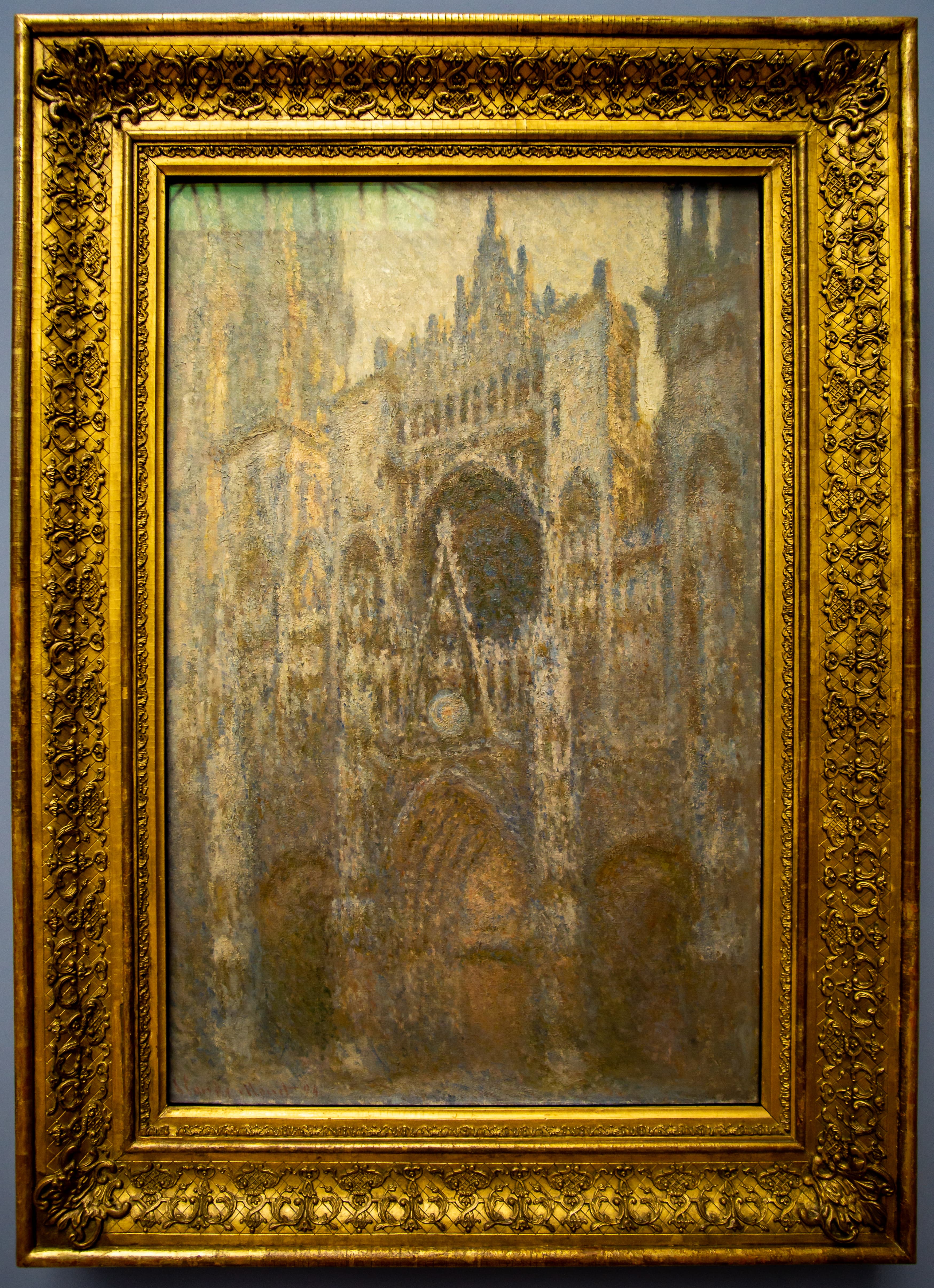
Rouen Cathedral, the Portal, Morning Sun (Harmonie bleue) is an 1893 Claude Monet from the Rouen Cathedral series: the façade in pale blue and cream as early sun begins to reach it. It is in the Musée d'Orsay, Paris, from the Camondo bequest.
- Artist
- Claude Monet
- Date
- 1893–94
- Medium
- Oil on canvas
- Dimensions
- 92.2 × 63 cm
- Collection
- Musée d'Orsay, Paris, France
- Movement
- Impressionism
- Catalogue
- Wildenstein 1355
- Architecture & Ruins
- Religion & Saints
What you are looking at
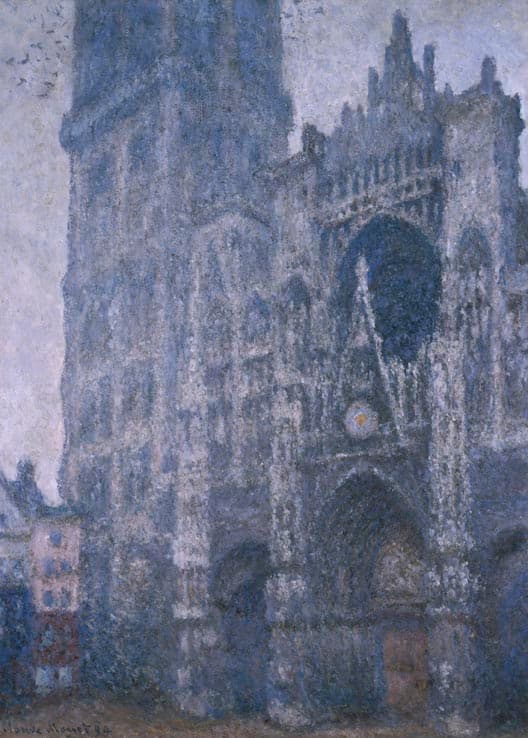
The west front of Rouen Cathedral stands close and frontal, cut off by the edges of the canvas, under a sky of pale, cool blue. The morning sun has only just begun to touch the stone. Most of the façade is in shadow, and Monet paints that shadow not as darkness but as a luminous field of blue, blue-gray and cream, crusted with small touches of ocher where light strikes a pinnacle or a buttress. The great rose window above the central portal is a dark, smoky oval of blue-gray, the deepest tone in the picture, and the gable in front of it rises as a pale, thin triangle.
The warm notes are all at the bottom. The three doorways glow in orange, rust and ocher, like embers in the cool stone, the central door the strongest. They are where the eye ends up. Everything else is held in a narrow range of blues and off-whites that gives the canvas its alternative title, Harmonie bleue, Harmony in Blue.
The signature, Claude Monet, is at lower right.
Rouen, 1893
Claude Monet painted the cathedral during two stays in Rouen, from February to April 1892 and again in early 1893, working from rented rooms opposite the façade. He kept dozens of canvases going, each assigned to a particular light, and painted the morning pictures first thing each day. The Orsay dates this canvas to 1893. Monet then reworked the whole series at Giverny through 1894.
Twenty canvases from the Rouen Cathedral series were exhibited at Durand-Ruel's gallery in May 1895. They sold well, and several, including this one, had already found a buyer before the exhibition opened.
How it was painted
This canvas is slightly smaller than most of the series, about 92 by 63 centimeters against the usual 100 by 65. The surface is deeply textured, built up from countless short, dry strokes, so that the façade has the rough, porous look of limestone. Monet uses the texture itself to suggest light: the raised ridges of paint catch real light in the gallery, so the stone seems to glitter.
The drawing is pared to a minimum. Verticals mark the buttresses; a few pointed shapes mark the gables; the portal is a dark arch over three warm doorways. Everything else is color.
How this version differs
The Orsay hangs five cathedrals, and this is the coolest of them. The Portal and Tower in Full Sunlight (Harmonie bleue et or) shows the same building at midday, the stone gold and the shadows deep blue. The Morning Effect (Harmonie blanche) is another early-morning picture but includes the tower and is whiter and mistier. The Portal, Grey Weather has no sun at all. Here the sun is present only as a promise: a touch of warmth in the doors and on the pinnacles, the rest still waiting in blue shade.
Looking closely
The ocher touches on the pinnacles and buttresses are small, dry flecks laid on top of the blue, as though the first sun were catching only the highest points of the carving. In the doorways the orange is applied more thickly, in short, overlapping strokes that build a warm glow. The signature at lower right is in dark blue.
Ownership and where to see it
Count Isaac de Camondo, the Paris banker and collector, bought the canvas in 1894, one of four cathedrals he acquired. He bequeathed his collection to the French state in 1911, and the painting entered the Louvre before moving to the Musée d'Orsay in 1986 (inventory RF 2000). Catalogued as Wildenstein 1355, it is usually shown with the museum's other Rouen Cathedrals in the Impressionist galleries. See our guide to Monet at the Musée d'Orsay.
Questions & answers
Where is Monet's Rouen Cathedral, Harmony in Blue?
It is in the Musée d'Orsay in Paris, inventory RF 2000. It came to the French state with the bequest of Count Isaac de Camondo in 1911 and was transferred from the Louvre to the Orsay in 1986. It usually hangs with four other canvases from the series.
When was it painted?
The Orsay dates it to 1893, during Monet's second campaign in Rouen. Like the rest of the series it was reworked in his studio at Giverny in 1894, the year Camondo bought it. The cathedrals were exhibited in Paris in 1895.
What does the painting show?
The west portal of Rouen Cathedral early in the morning, the façade still mostly in cool blue shadow, with the first sun catching the pinnacles and the doorways glowing orange at the bottom. The alternative title, Harmonie bleue, names its dominant color.
How many Rouen Cathedrals are at the Musée d'Orsay?
Five. Four came from the Camondo bequest of 1911, and the fifth, the brownish Portal, Front View, was bought by the state from Monet in 1907. Together they show morning mist, morning sun, full midday sun, gray weather and a darker harmony.
More by the artist
Claude Monet
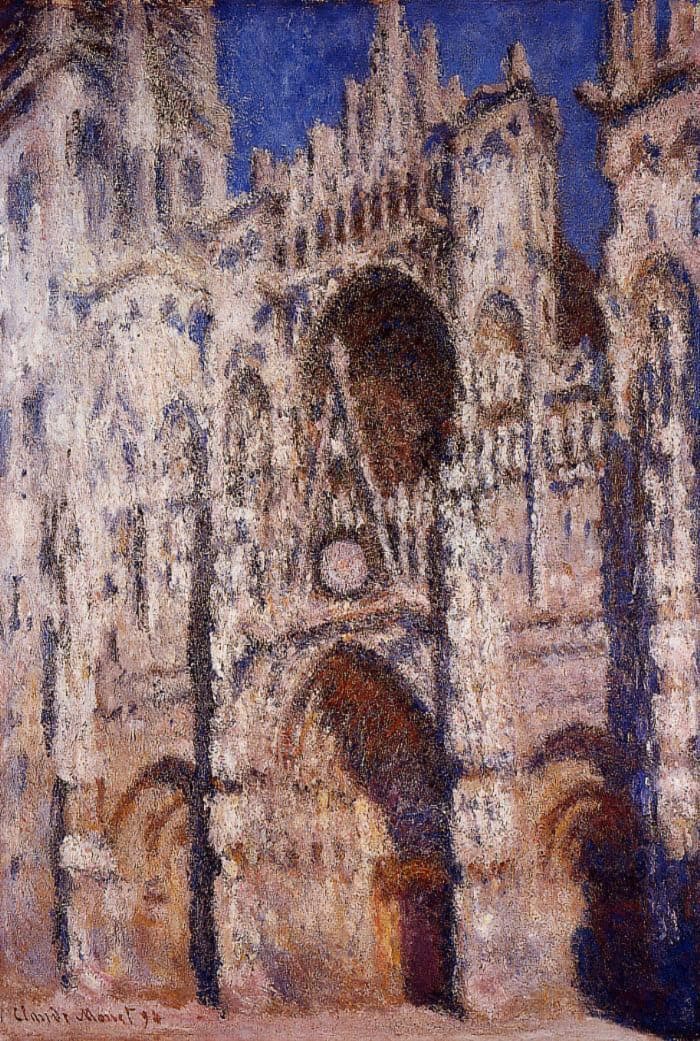
Rouen Cathedral (W 1361)
Claude Monet · 1893–94
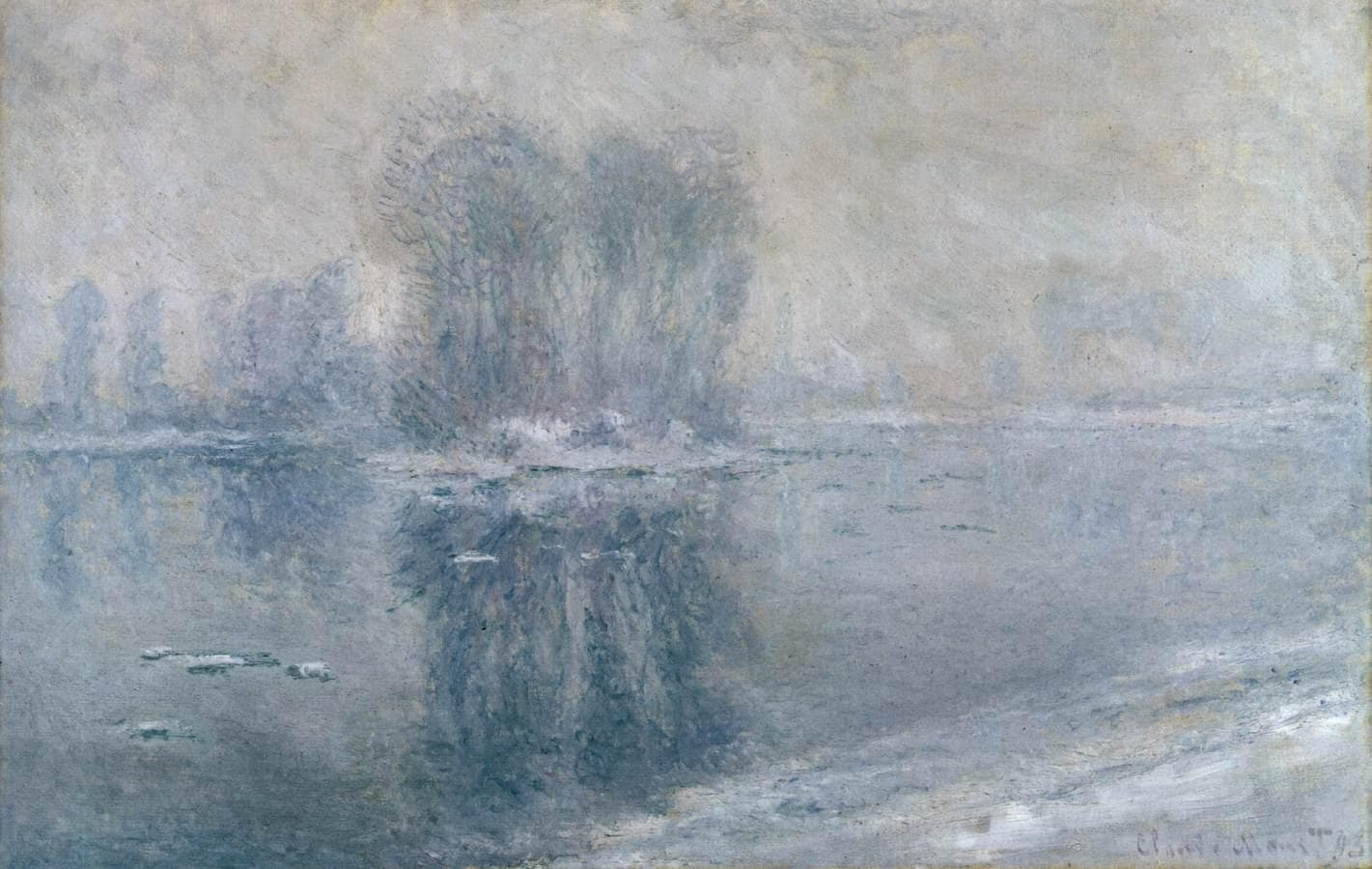
Ice Floes
Claude Monet · 1893
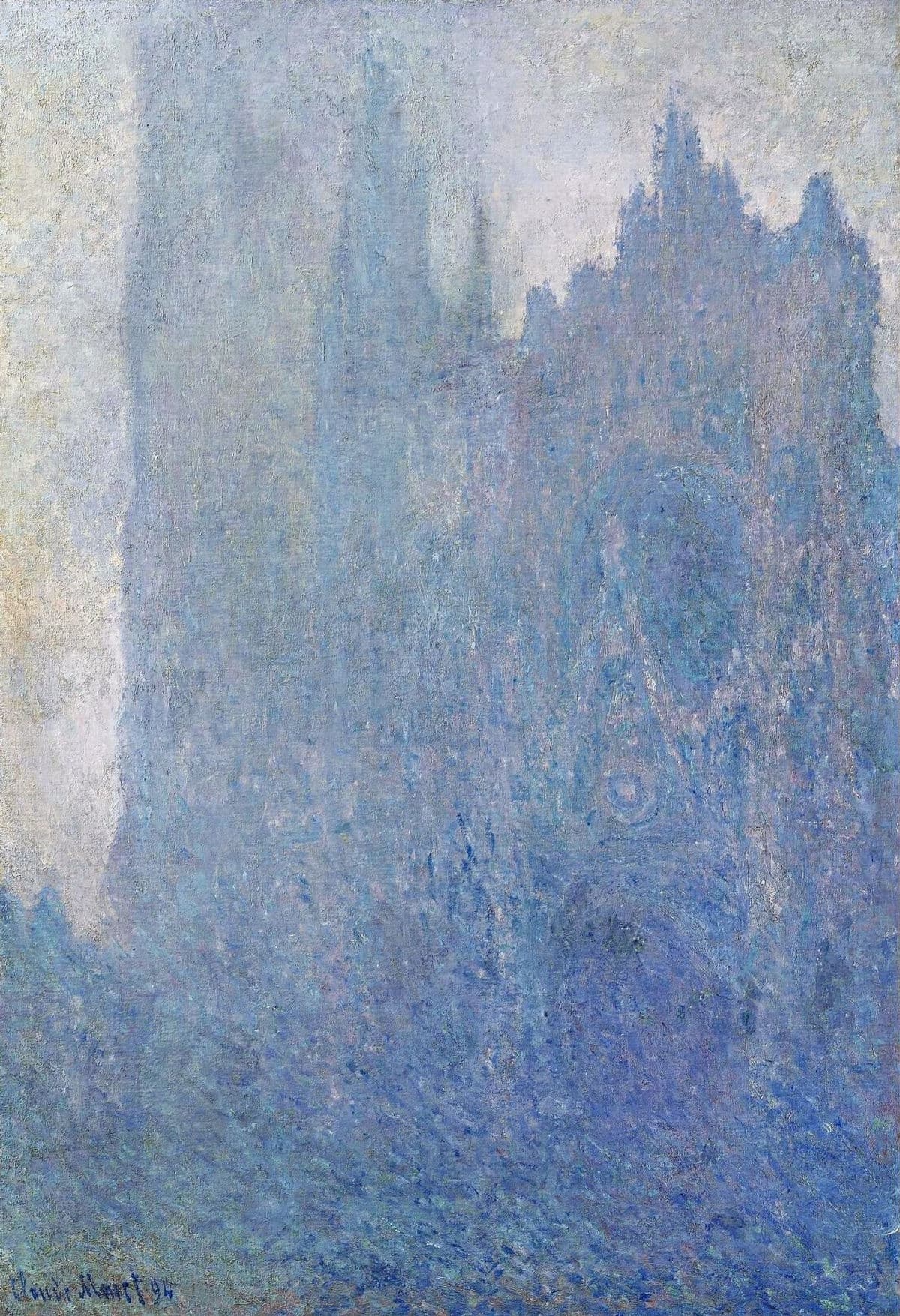
Rouen Cathedral, Fog
Claude Monet · 1893–94
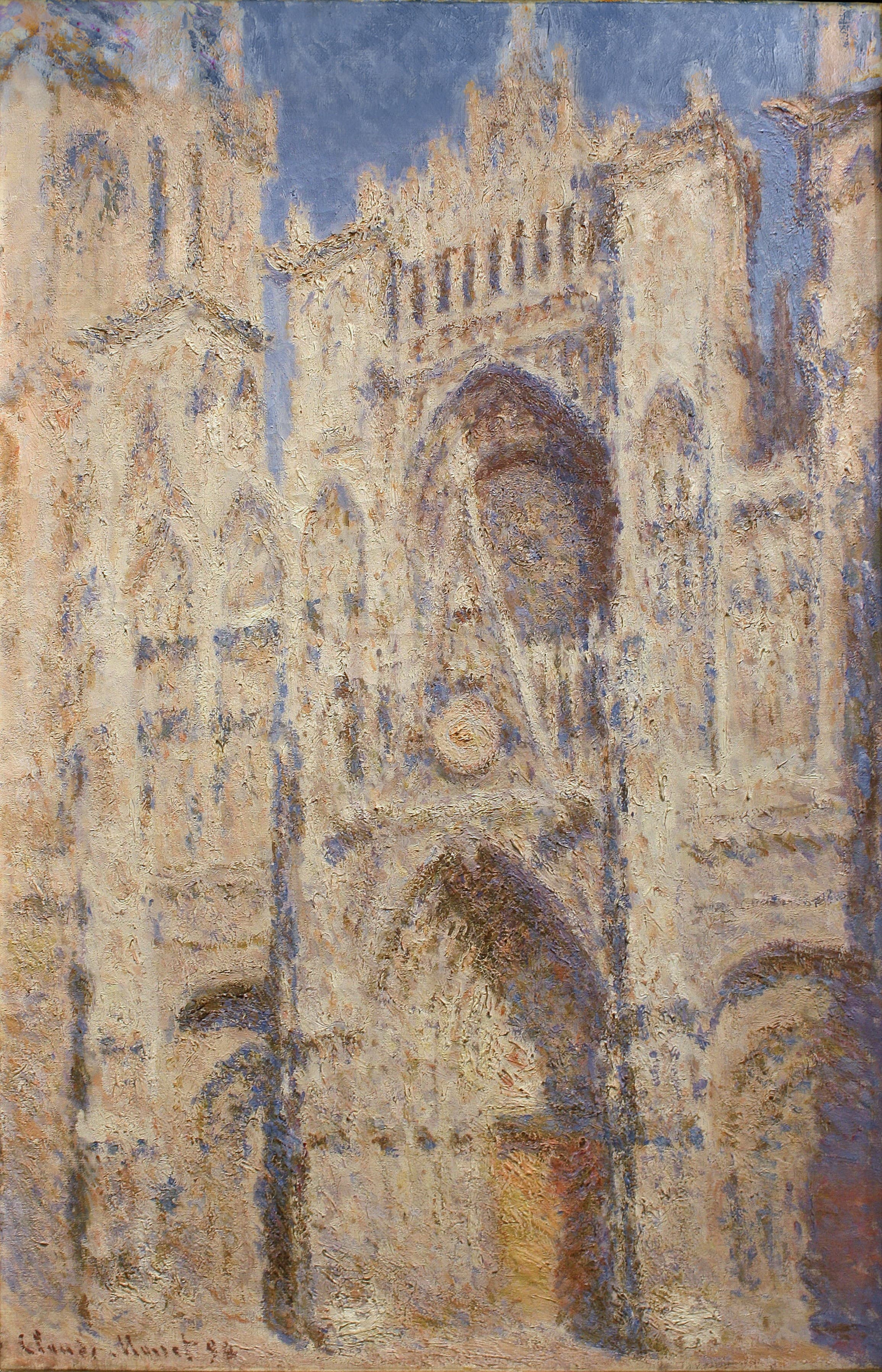
Rouen Cathedral: The Portal (Sunlight)
Claude Monet · 1892–94
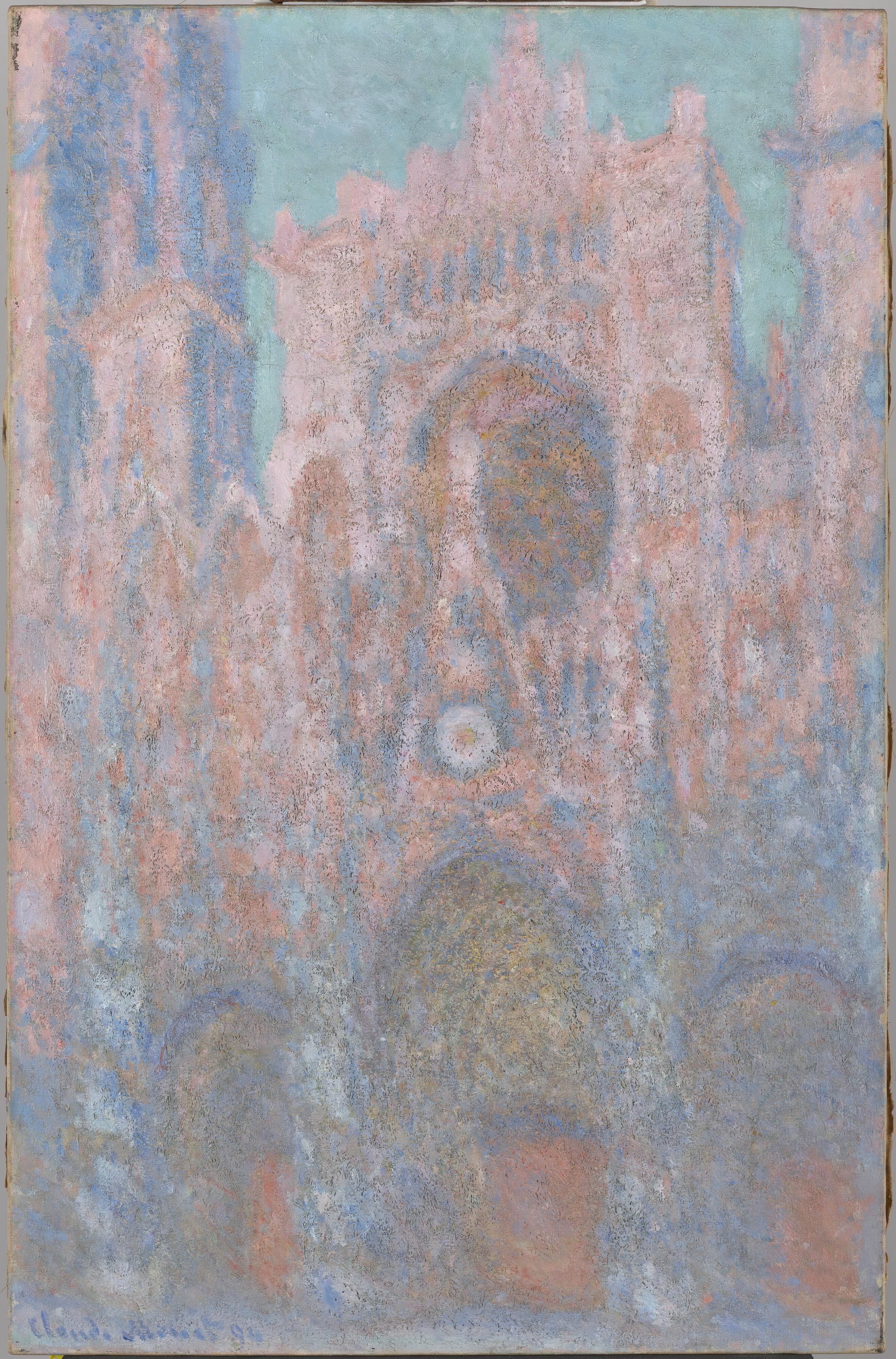
Rouen Cathedral: Setting Sun (Symphony in Pink and Grey)
Claude Monet · 1892–94
Meadow at Giverny
Claude Monet · 1894
Grainstack (Sunset)
Claude Monet · 1891
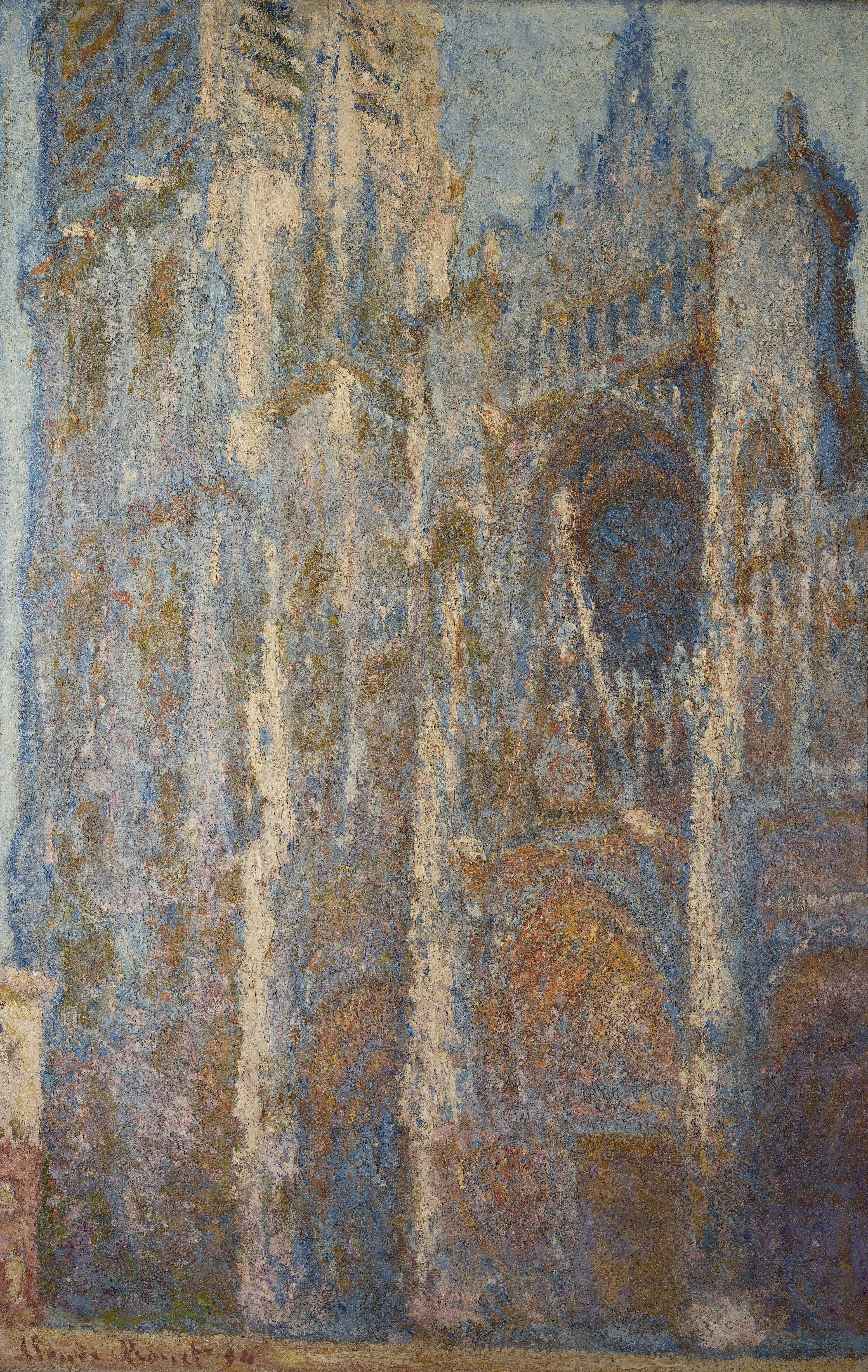
Rouen Cathedral, Portal and Tower d'Albane, Midday
Claude Monet · 1893–94
Also painted in 1893
The same year
Rouen Cathedral, Portal
Claude Monet · 1893–94
Ice Floes at Twilight
Claude Monet · 1893
Grainstack
Claude Monet · 1893
Rouen Cathedral, Portal (W 1359)
Claude Monet · 1893–94
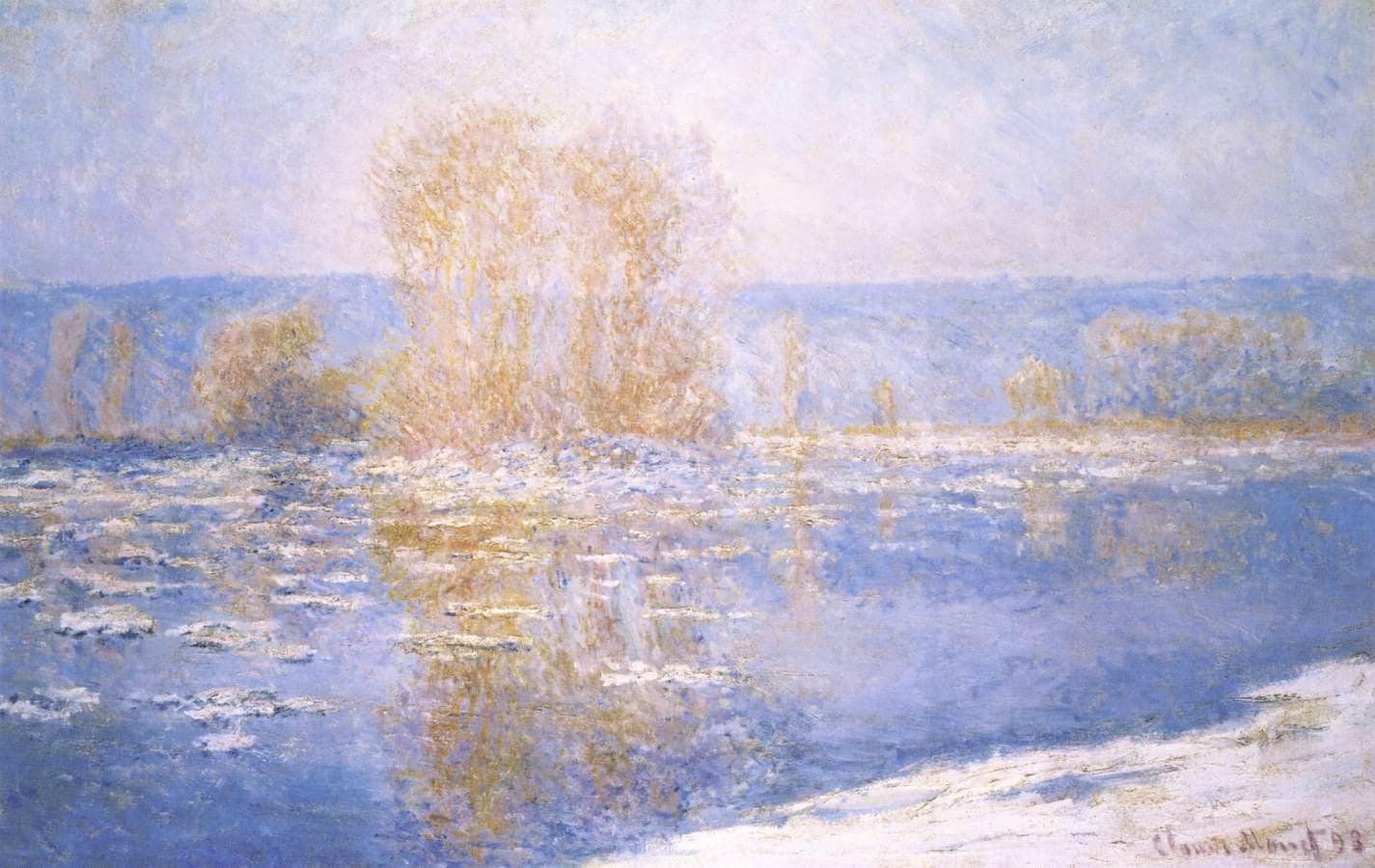
Floating Ice at Bennecourt
Claude Monet · 1893
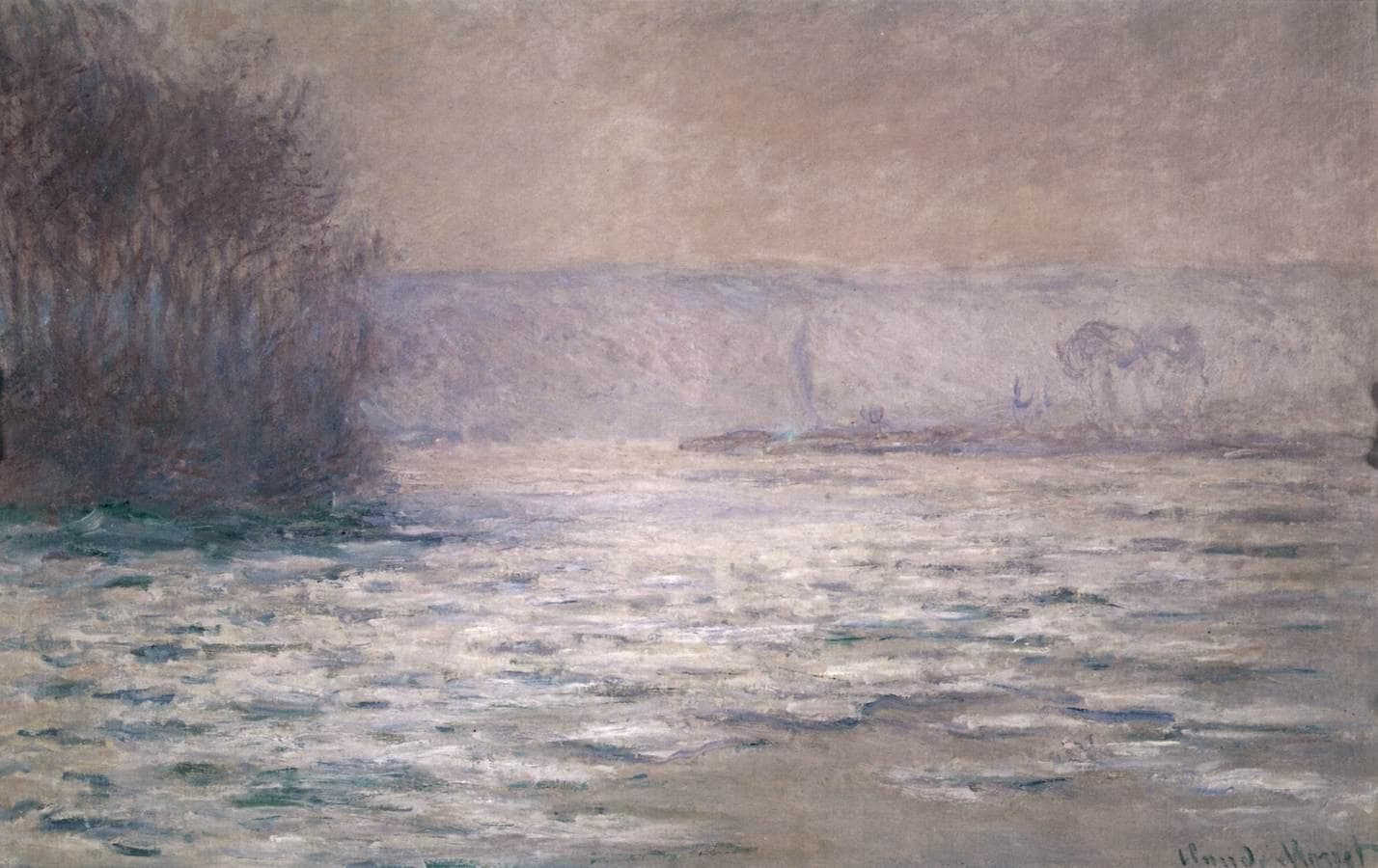
Ice Floes on the Seine near Bennecourt
Claude Monet · 1893
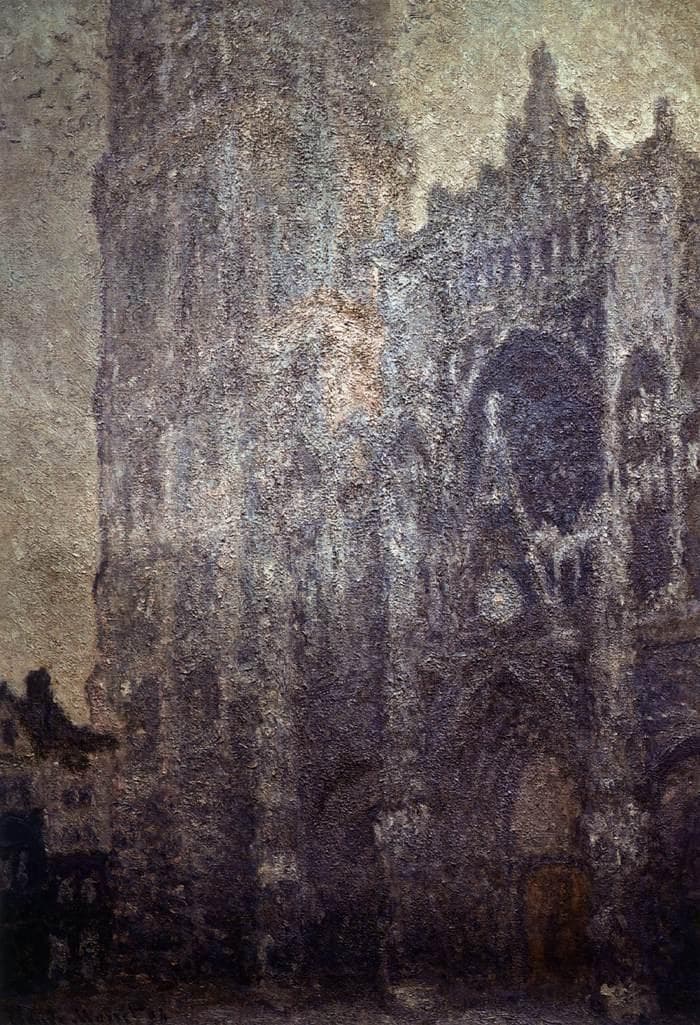
Rouen Cathedral, Effects of Morning Light
Claude Monet · 1893
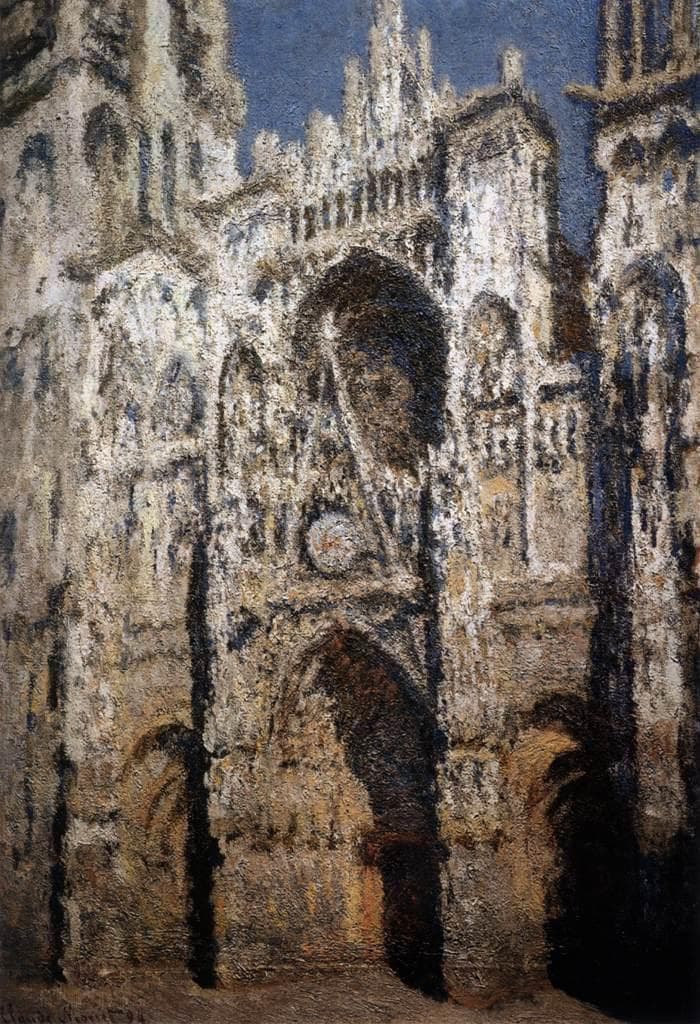
Rouen Cathedral in Full Sunlight
Claude Monet · 1893
Kindred works
You may also study
Rouen Cathedral in Full Sunlight
Claude Monet · 1893
Rouen Cathedral, Effects of Morning Light
Claude Monet · 1893
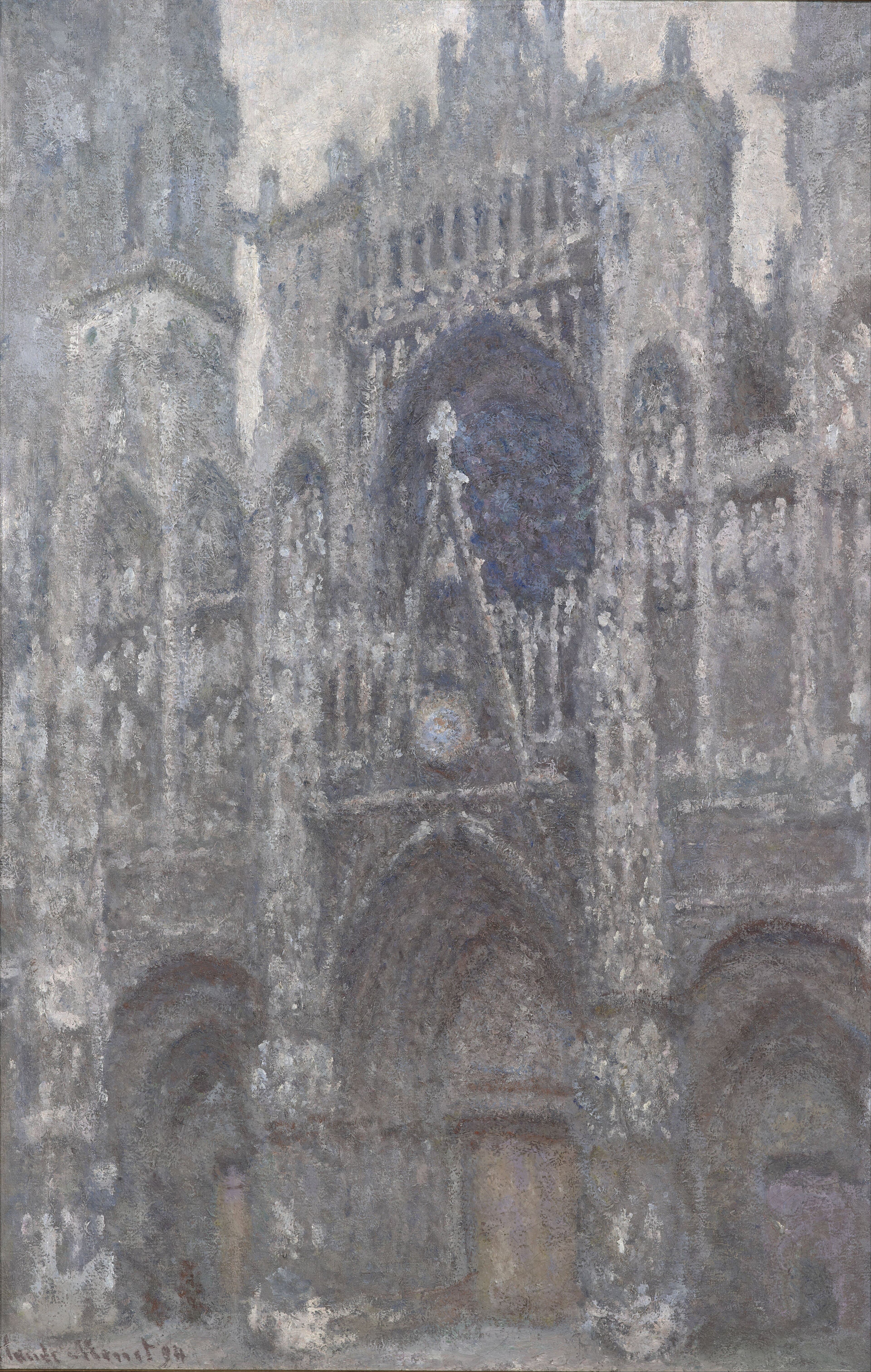
Rouen Cathedral, the Portal, Grey Weather
Claude Monet · 1892–94
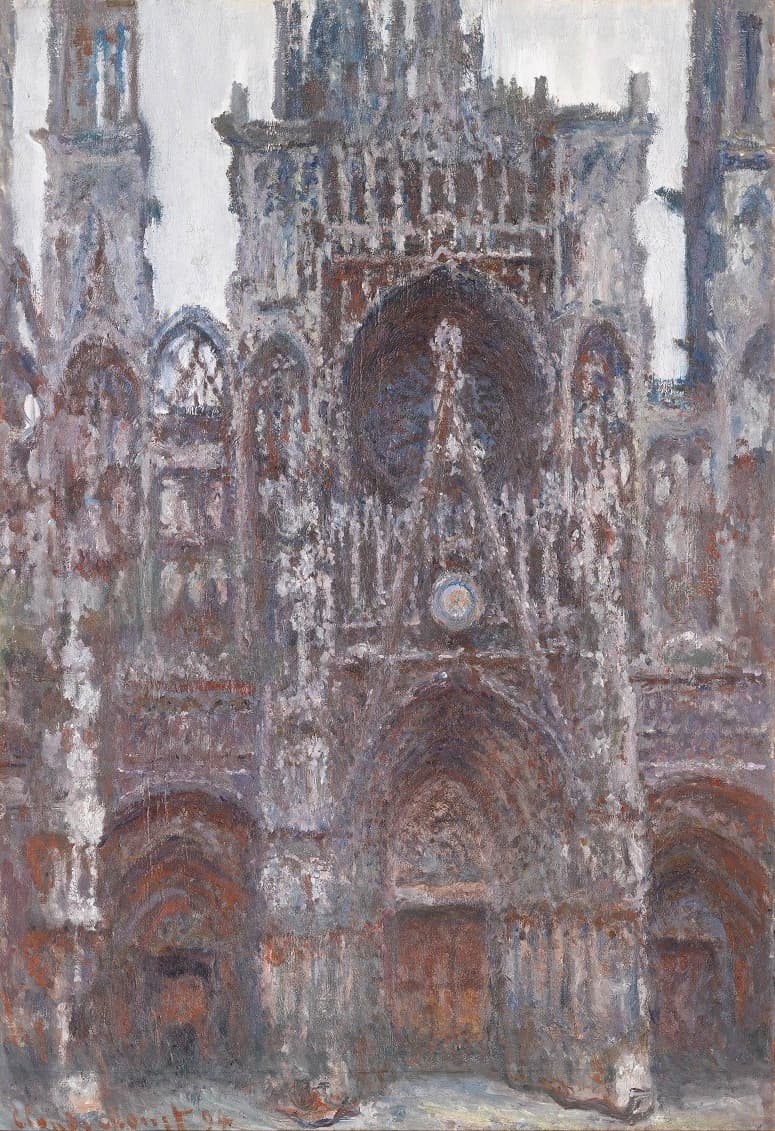
Rouen Cathedral, the Portal, Front View (Harmony in Brown)
Claude Monet · 1892–94
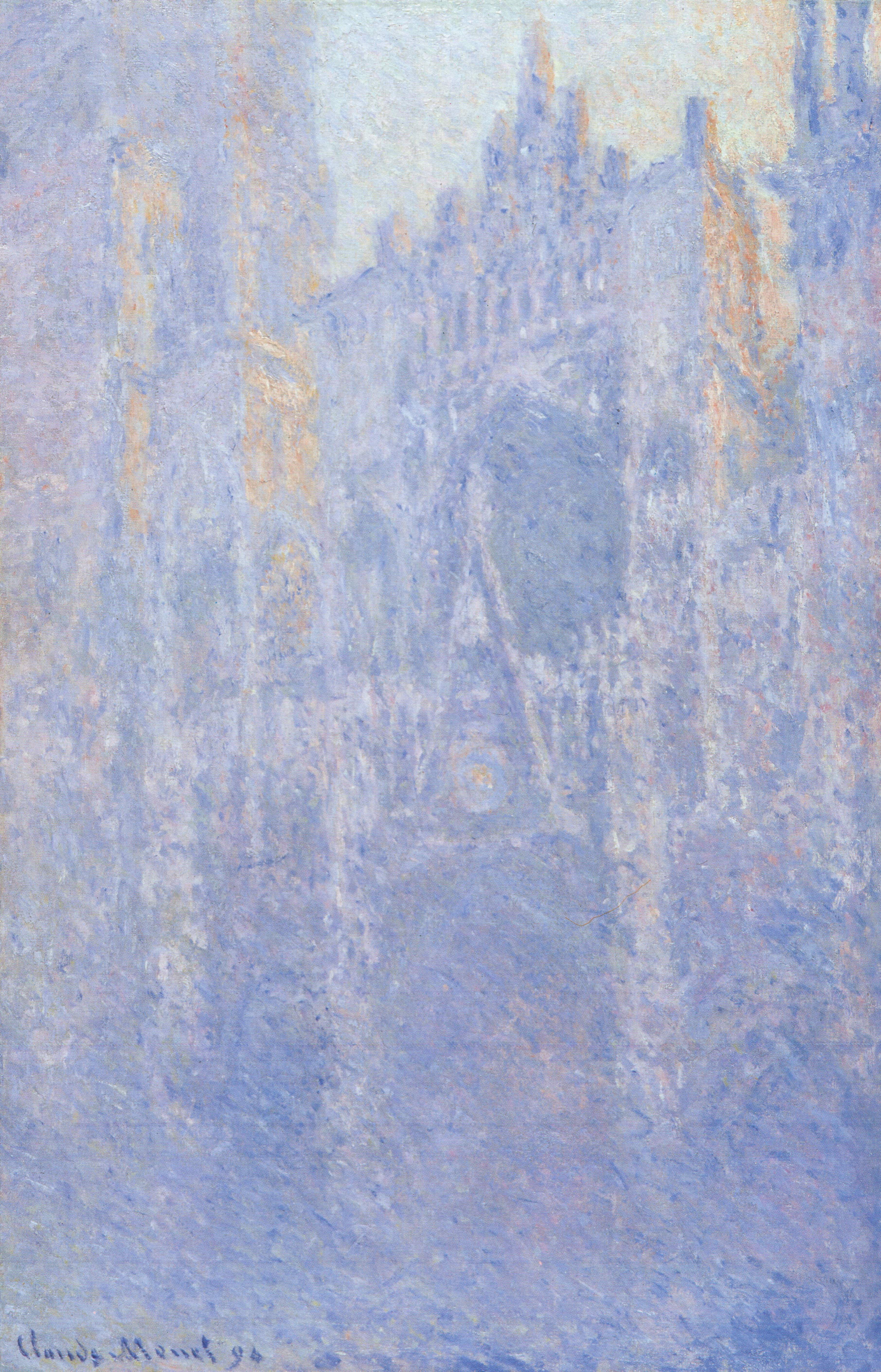
The Portal, Morning Fog
Claude Monet · 1893–94
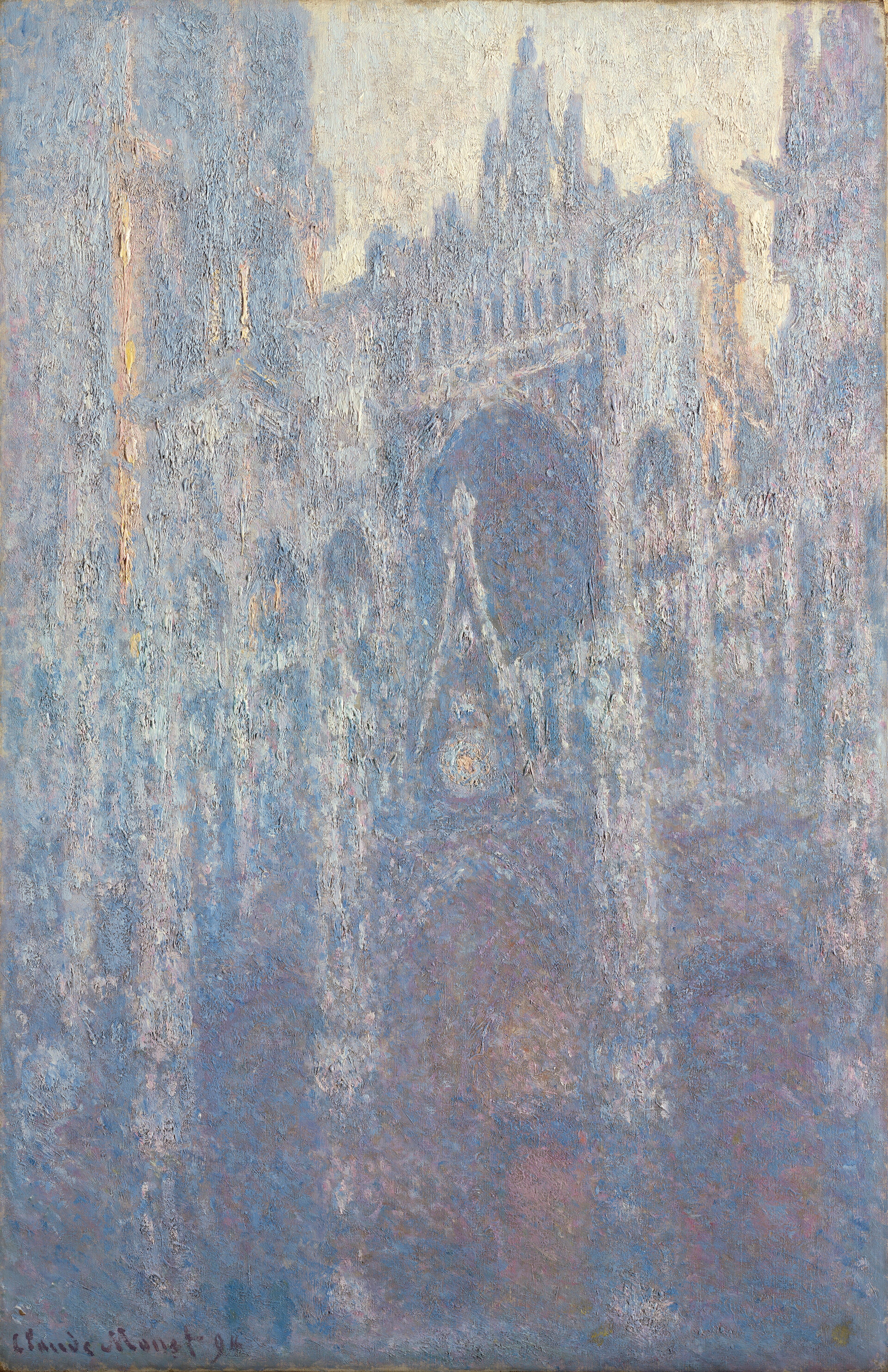
The Portal of Rouen Cathedral in Morning Light
Claude Monet · 1894
Rouen Cathedral, the Portal and the Tour d'Albane, Grey Weather
Claude Monet · 1893–94
La Cour d'Albane, Rouen
Claude Monet · 1892–94