Image: Claude Monet (source: http://poulwebb.blogspot.fr/2013/11/claude-monet-part-20-1891-1893-1894.html) · Public domain · via Wikimedia Commons
Rouen Cathedral, Portal (W 1359)
Claude Monet, 1893–94
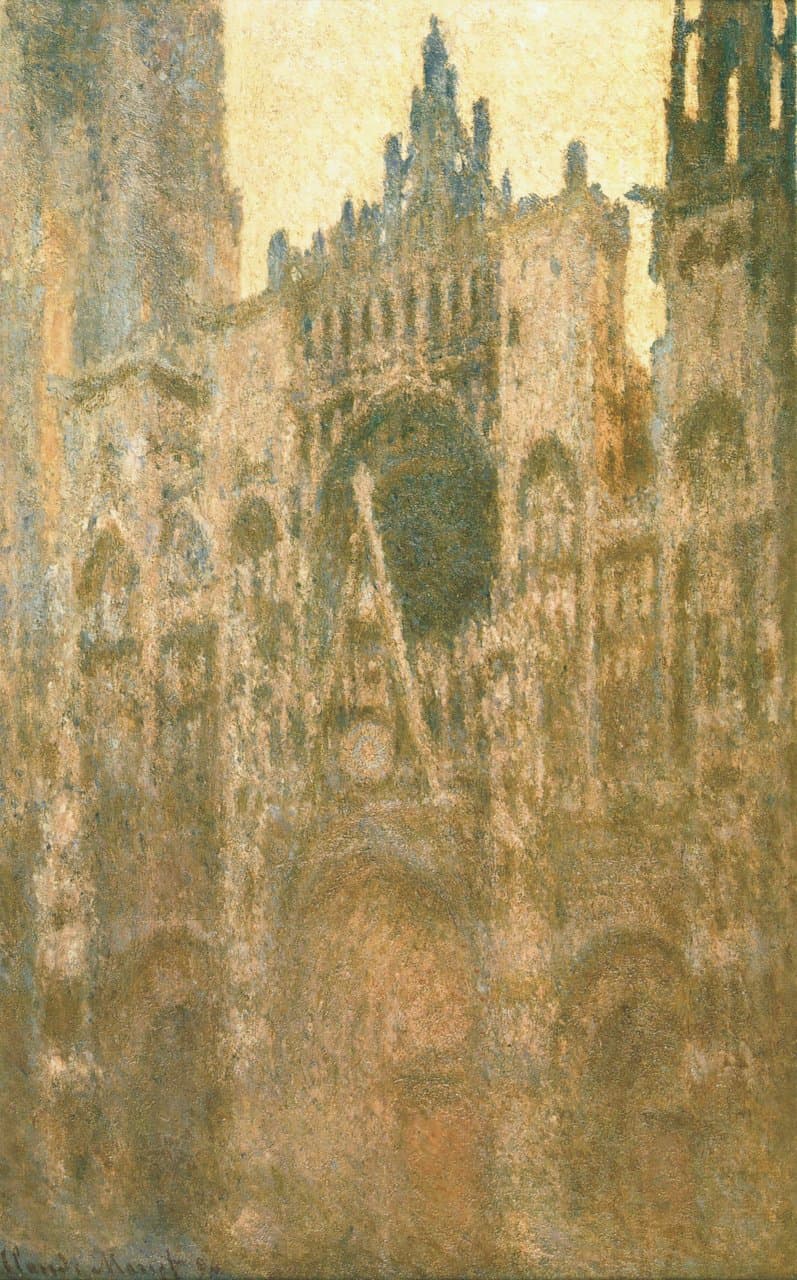
Rouen Cathedral, Portal (Wildenstein 1359) is a Claude Monet painting from the Rouen Cathedral series, begun in 1893: the west front in warm gold and rust under a deep blue sky, the portals in deep reddish shade. It is in a private collection.
- Artist
- Claude Monet
- Date
- 1893–94
- Medium
- Oil on canvas
- Collection
- Private collection
- Movement
- Impressionism
- Catalogue
- Wildenstein 1359
- Architecture & Ruins
- Religion & Saints
What you are looking at
The west front of Rouen Cathedral rises edge to edge in hot, saturated color. The sun is strong and comes from the side, catching the vertical ribs of the buttresses, the pinnacles and the gables in gold, honey and pale yellow, while everything set back from that light falls into warm brown, rust and violet. Above, a deep, intense blue sky shows between the spires, the strongest cool note in the picture.
The contrasts are sharper than in most of the series. The great rose window above the central portal is an almost black hollow of plum and brown, and the pointed gable in front of it stands out as a clear, pale triangle. At the bottom the three doorways are filled with deep red and red-brown, nearly the color of brick, so the base of the façade looks heavy and dark beneath the glittering upper stories. Short blue strokes run down the lit surfaces like reflected sky.
The signature is at lower left. Note that reproductions of this canvas differ in color, and the version most often circulated may exaggerate its oranges.
Rouen, 1893
Claude Monet painted the cathedral during two stays in Rouen, in early 1892 and early 1893, from rooms facing the façade. He kept many canvases going, returning to each as its light came back day after day, and finished them at Giverny in 1894. Wikidata dates this canvas to the 1893 campaign. See the Rouen Cathedral series for the whole group.
How it was painted
The surface is heavily built, with lit passages in thick, crusty paint and shadows in denser, smoother color. Monet uses complementary pairs throughout: blue strokes laid into orange stone, violet laid into gold. That interplay gives the sunlit parts their vibration. Drawing is minimal; the architecture is defined by the alternation of bright verticals and dark recesses.
How this version differs
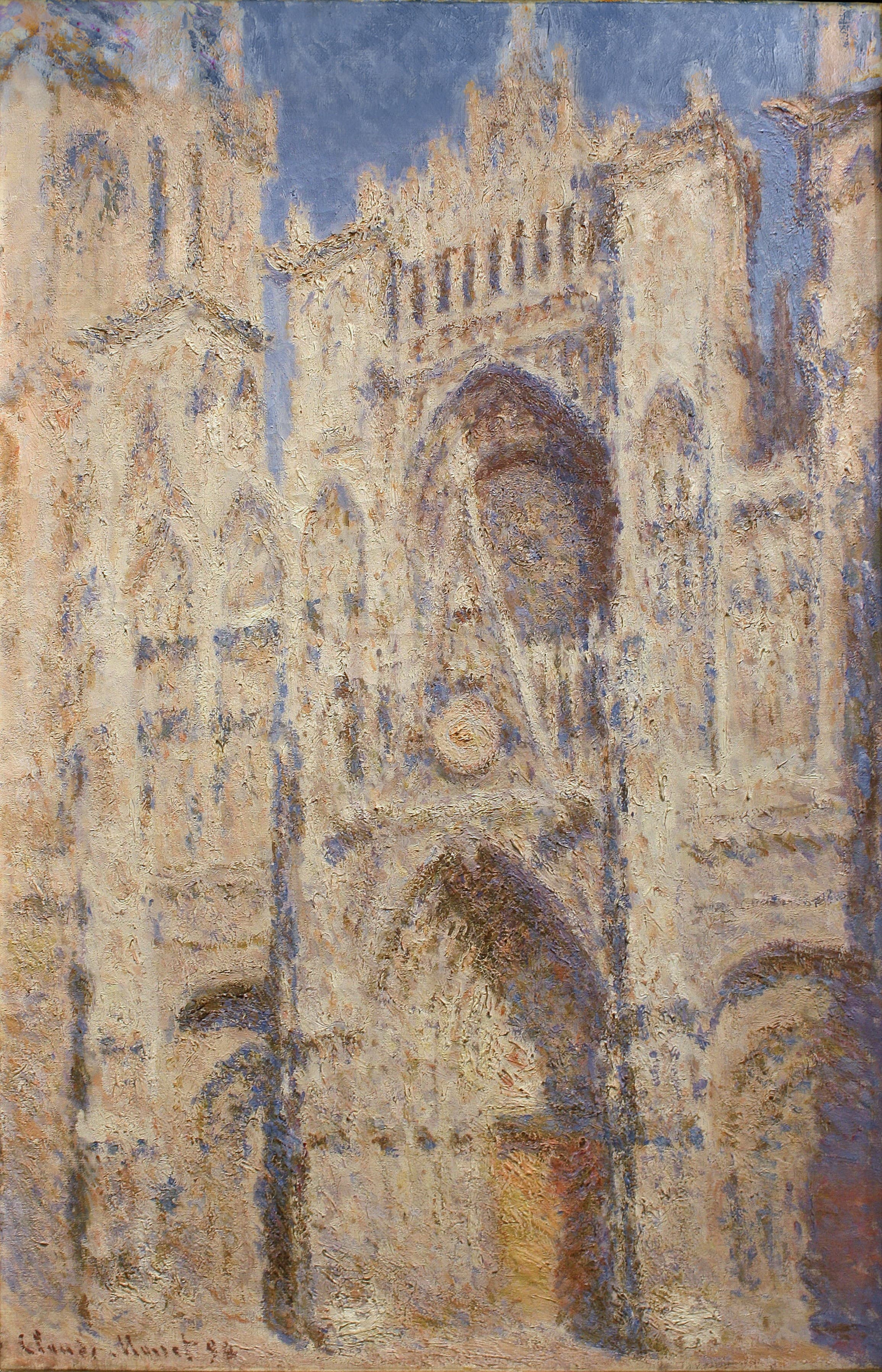
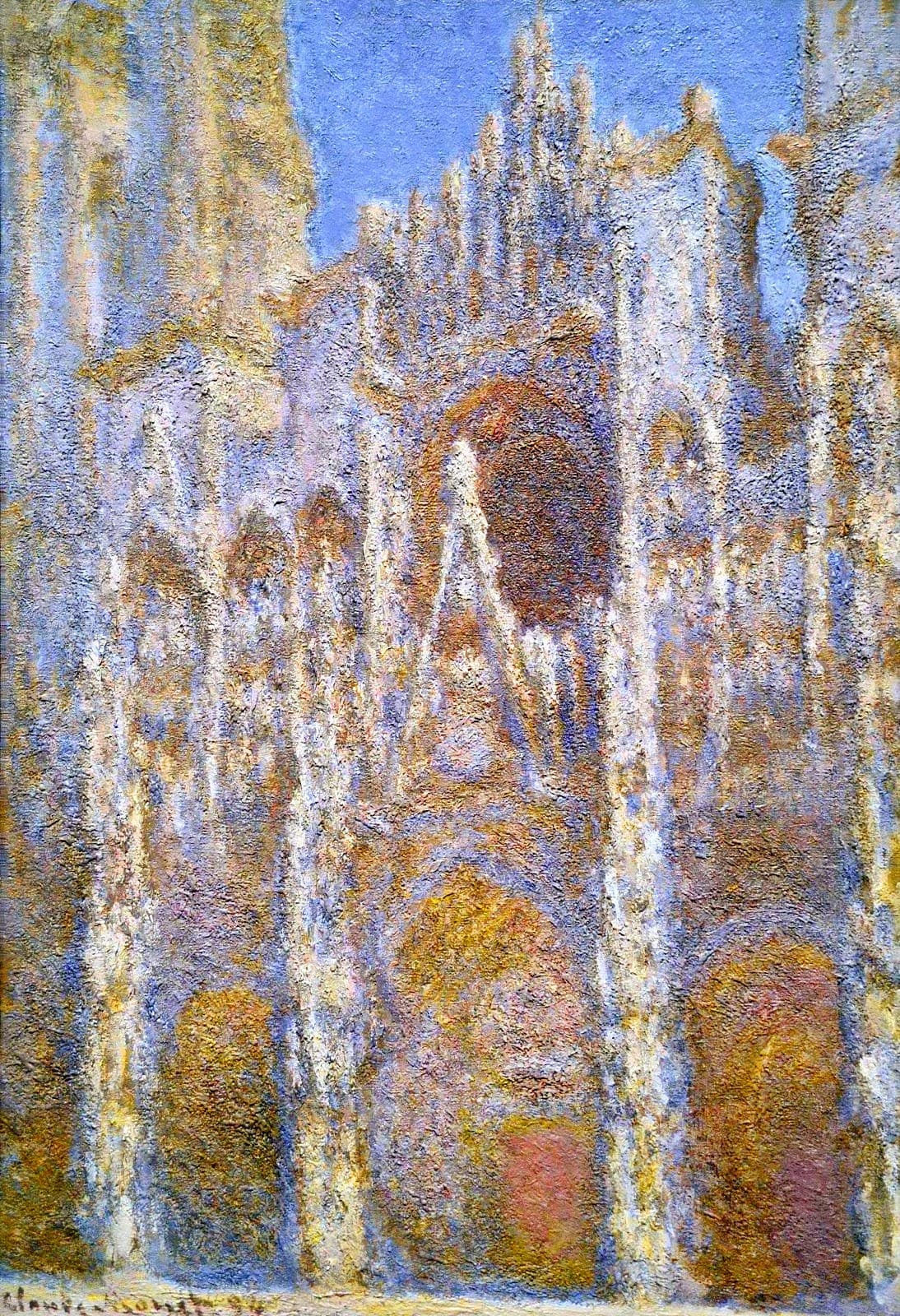
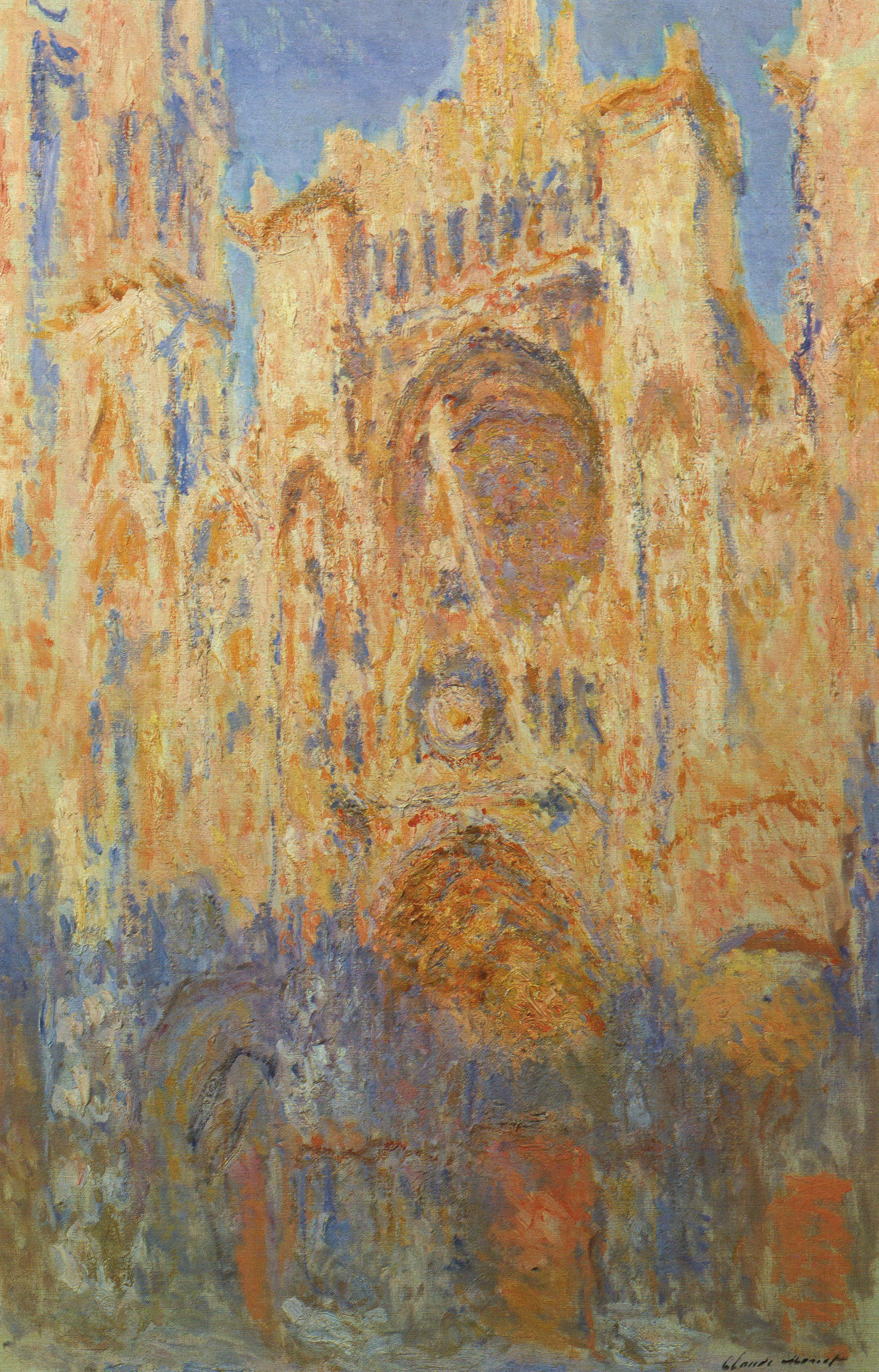
It belongs with the strongly sunlit canvases, but it is the warmest and most contrasted of them. The Met's The Portal (Sunlight) and the MFA Boston's Rouen Cathedral, Façade show similar sun with paler stone. The Pushkin Museum's Portal and Tower, Midday has comparably deep shadows from an angled view. And the Marmottan's Sunlight Effect, End of the Day shows gold light later in the day, when it no longer reaches the portals at all.
Looking closely
Notice the short blue strokes that run down the sunlit buttresses. They are Monet's way of showing reflected sky in the shadows, and they keep the hot gold of the stone from becoming flat. In the portals, the deep red is built from many layers, with violet and brown underneath showing through in places.
Why so many cathedrals are private
Several of the thirty or so Rouen canvases remain in private hands. Many were sold in the 1890s and early 1900s to American and European collectors through Durand-Ruel, and some have changed hands at auction since. Such pictures surface only occasionally, in sales or loan exhibitions, which is why their catalogue details are often less complete than for the museum versions.
Ownership and where to see it
Catalogued as Wildenstein 1359, the painting is in a private collection, and its size and ownership history are not published in accessible sources. To see comparable sunlit portals, visit the Met, the MFA Boston, the National Gallery of Art in Washington or the Musée d'Orsay. Our guide to where to see Monet's paintings lists more.
Questions & answers
Where is this Rouen Cathedral painting by Monet?
It is in a private collection and is not on public display. It is catalogued as Wildenstein 1359. Comparable sunlit portals can be seen at the Metropolitan Museum, the MFA Boston, the National Gallery of Art in Washington and the Musée d'Orsay.
When was it painted?
Wikidata places it in Monet's second campaign in Rouen in 1893. Like the rest of the series, it was completed in his studio at Giverny in 1894. The cathedral series was exhibited at Durand-Ruel's gallery in Paris in May 1895.
What does the painting show?
The west portal of Rouen Cathedral in strong sun: gold and honey-colored stone, deep rust and plum shadows in the rose window and doorways, and an intense blue sky between the spires. It is among the most contrasted canvases in the series.
Why do Monet's cathedrals look so different from one another?
Each canvas records one light effect, a time of day or a kind of weather, on the same façade. Monet worked on many at once and painted each only when its light returned, so the stone appears blue at dawn, white at noon, gold or red in late sun and gray under cloud.
More by the artist
Claude Monet
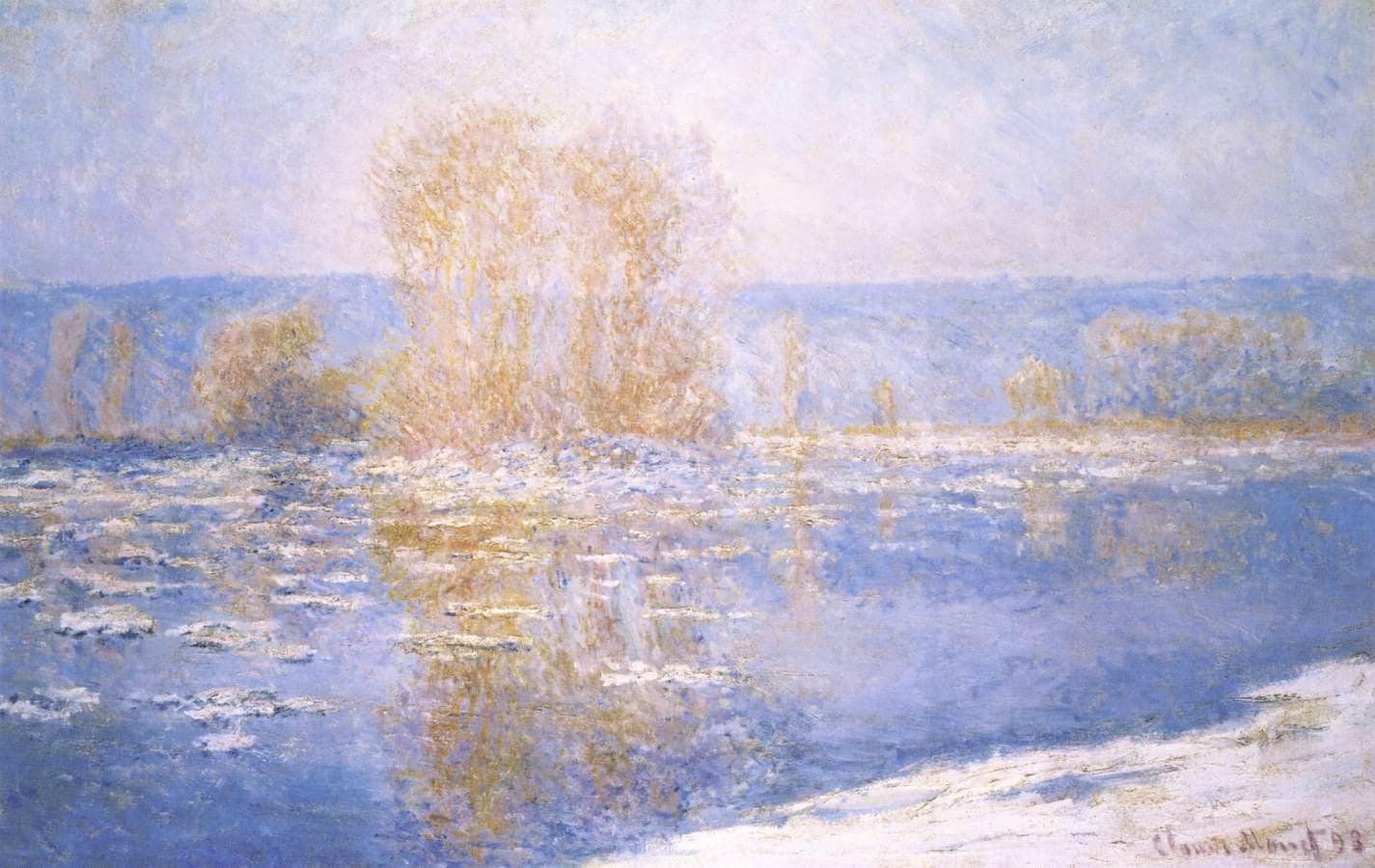
Floating Ice at Bennecourt
Claude Monet · 1893
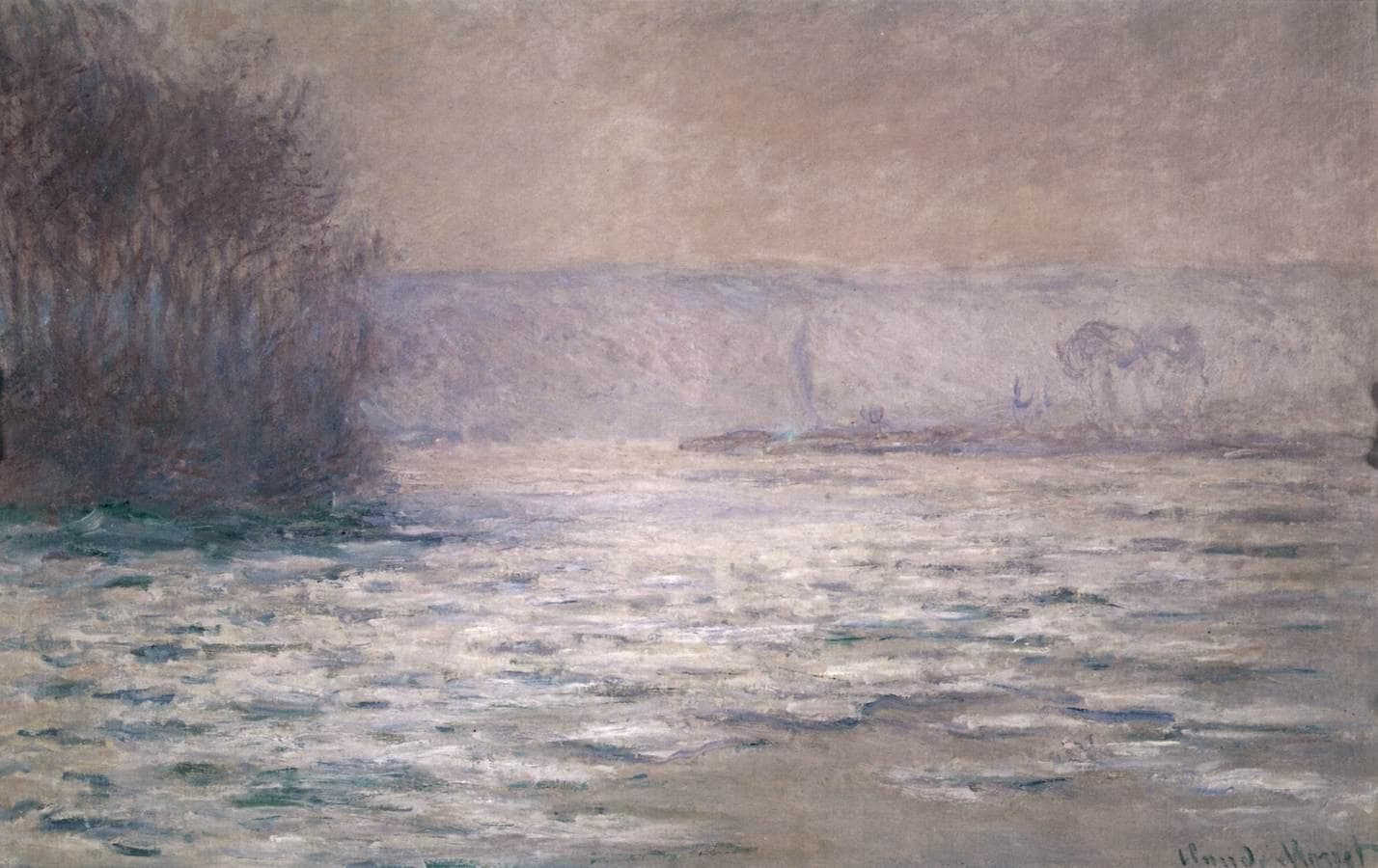
Ice Floes on the Seine near Bennecourt
Claude Monet · 1893
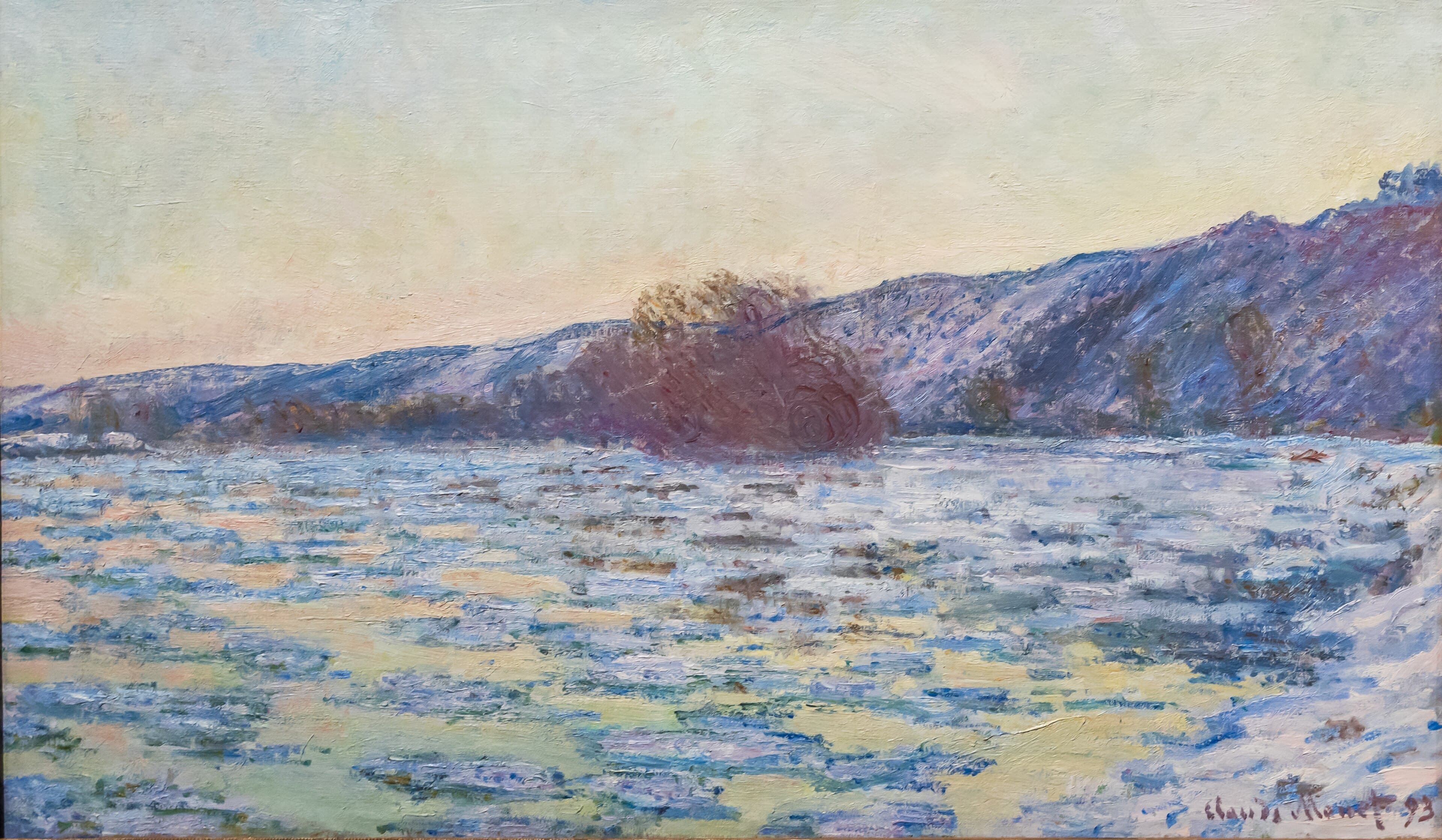
Ice Floes at Twilight
Claude Monet · 1893
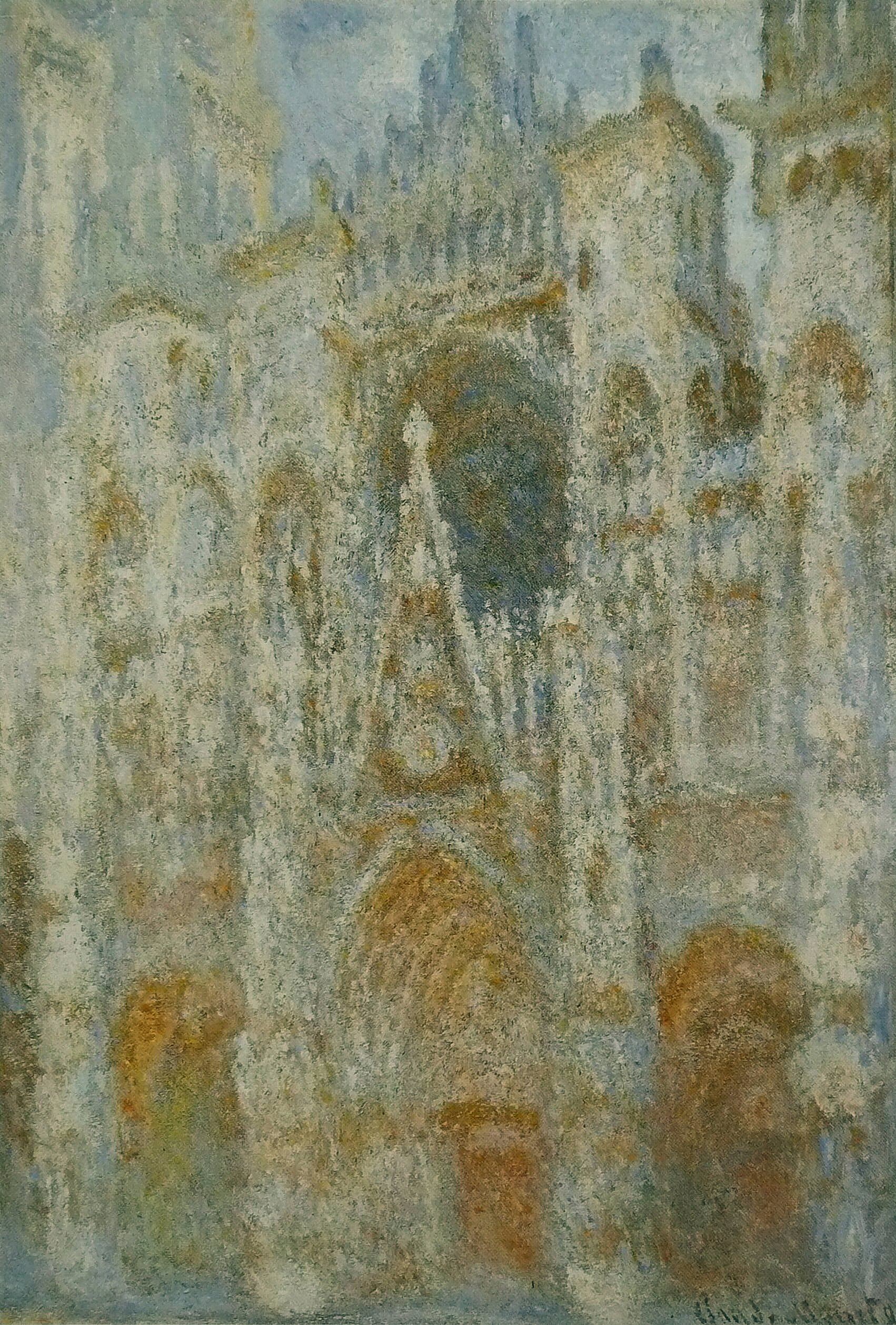
Rouen Cathedral, the Portal, Morning Sun (Harmony in Blue)
Claude Monet · 1893–94
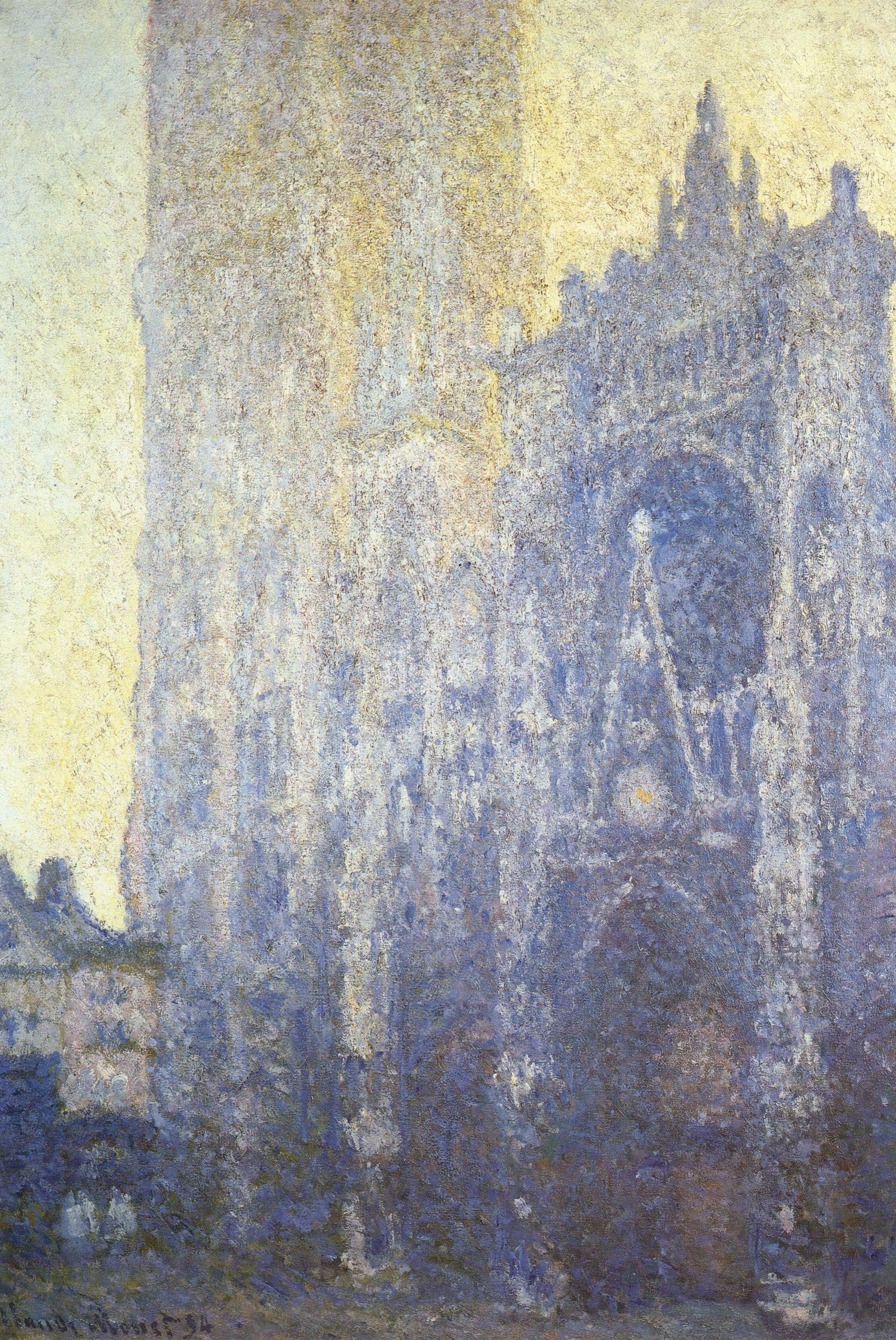
Rouen Cathedral, the Portal, Morning Effect
Claude Monet · 1893–94
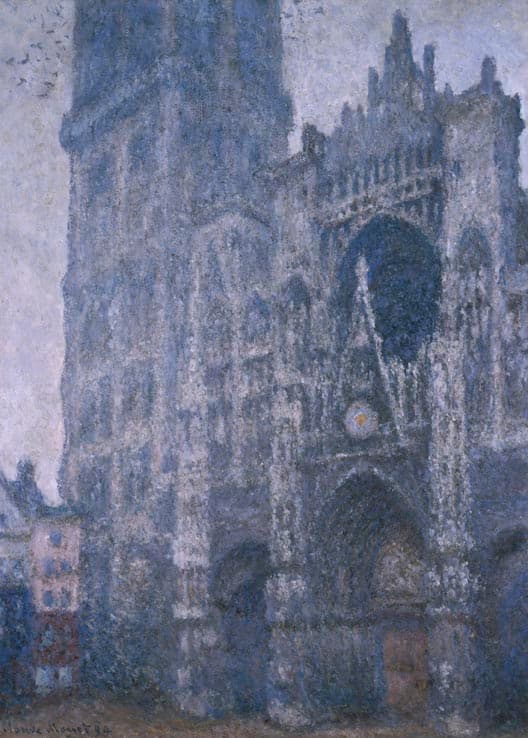
Rouen Cathedral, the Portal and the Tour d'Albane, Grey Weather
Claude Monet · 1893–94
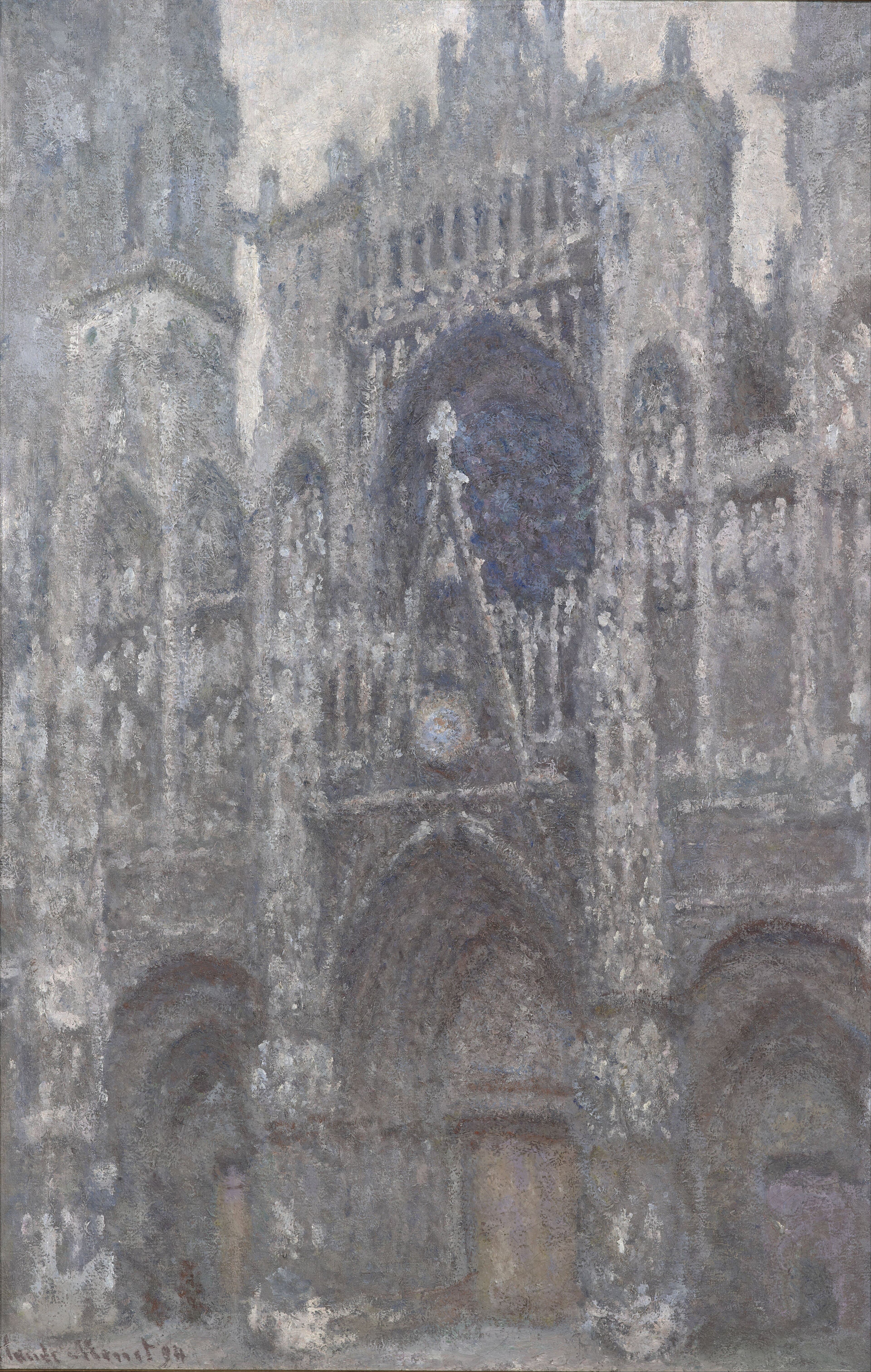
Rouen Cathedral, the Portal, Grey Weather
Claude Monet · 1892–94
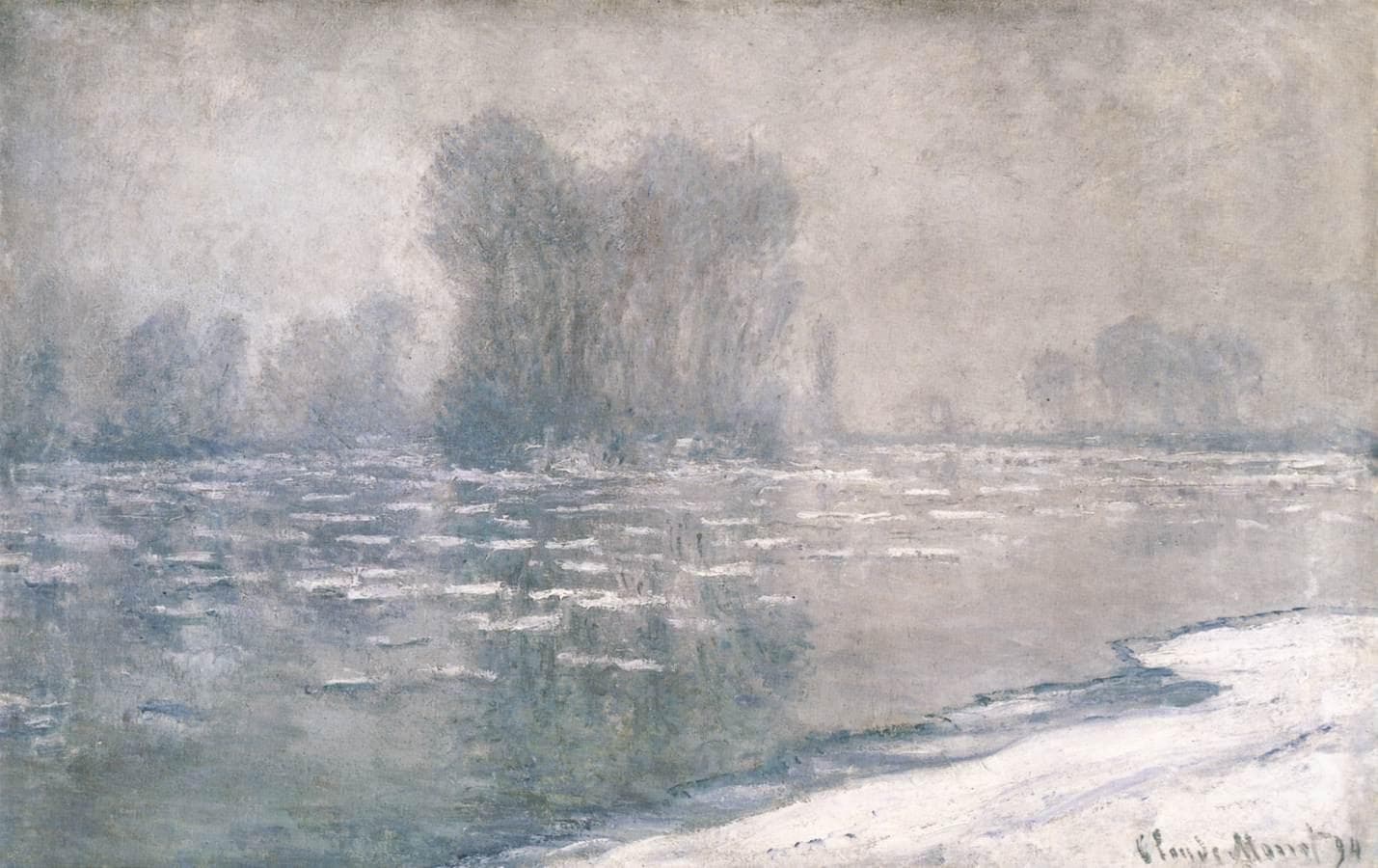
Morning Haze
Claude Monet · 1894
Also painted in 1893
The same year
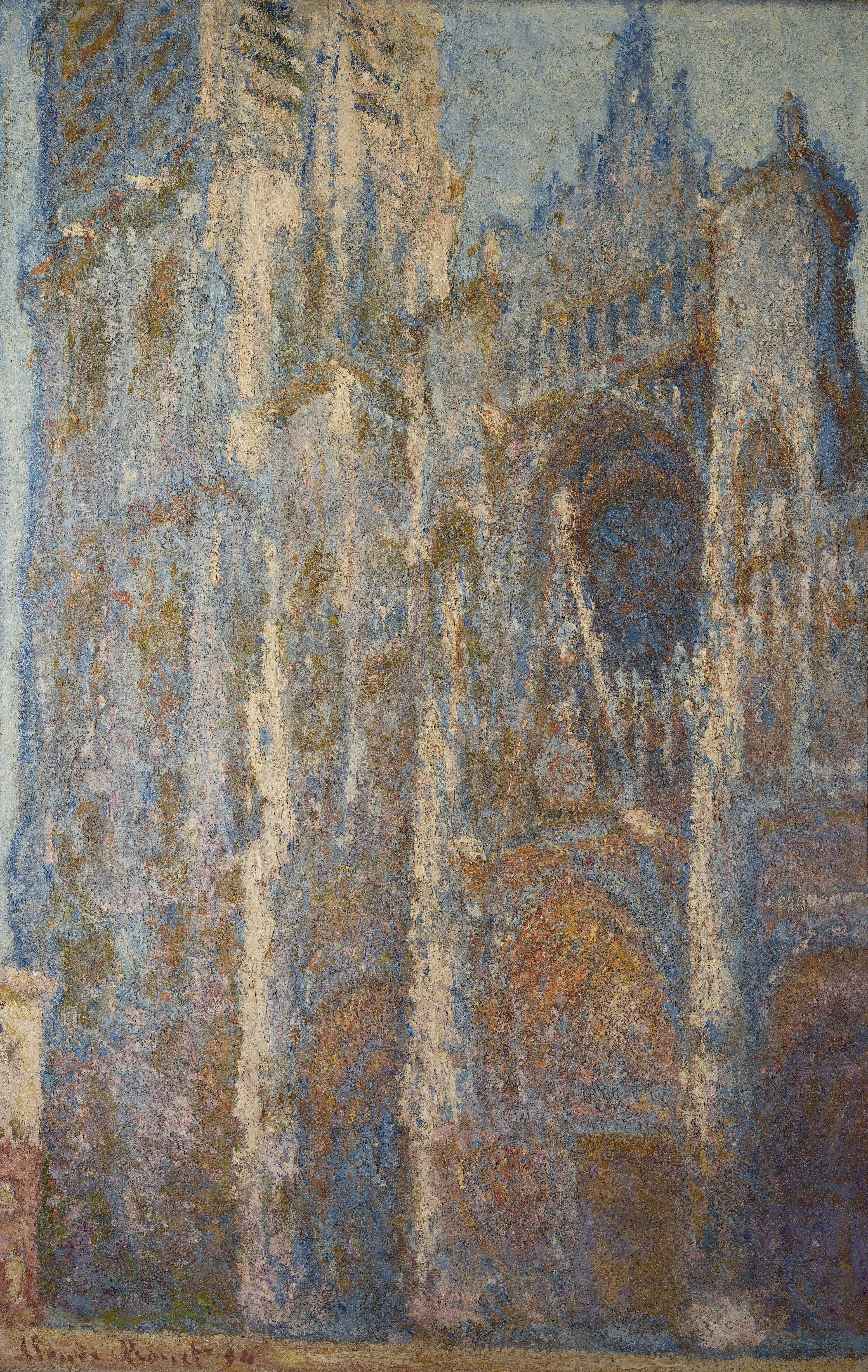
Rouen Cathedral, Portal and Tower d'Albane, Midday
Claude Monet · 1893–94
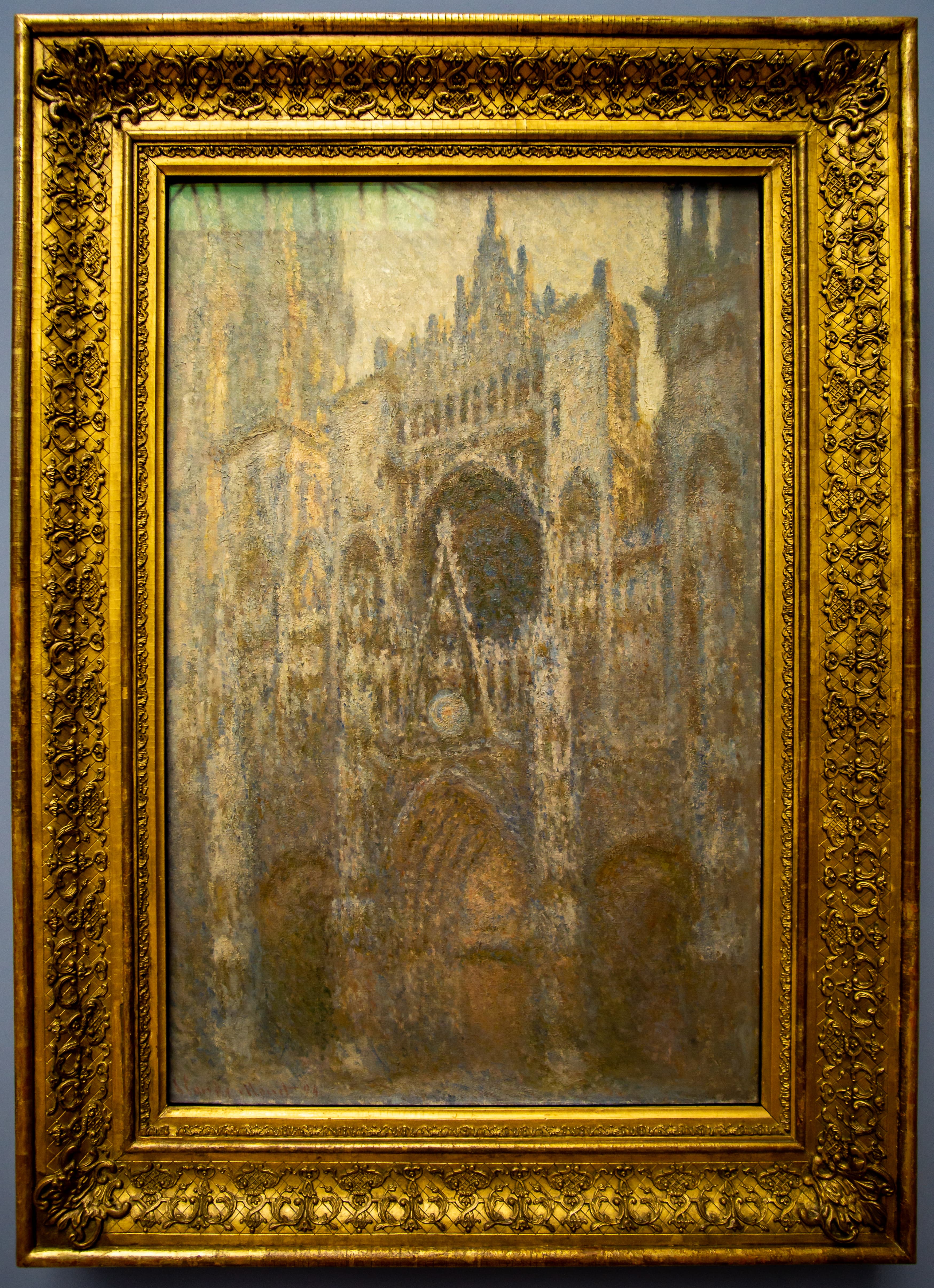
Rouen Cathedral, Portal
Claude Monet · 1893–94
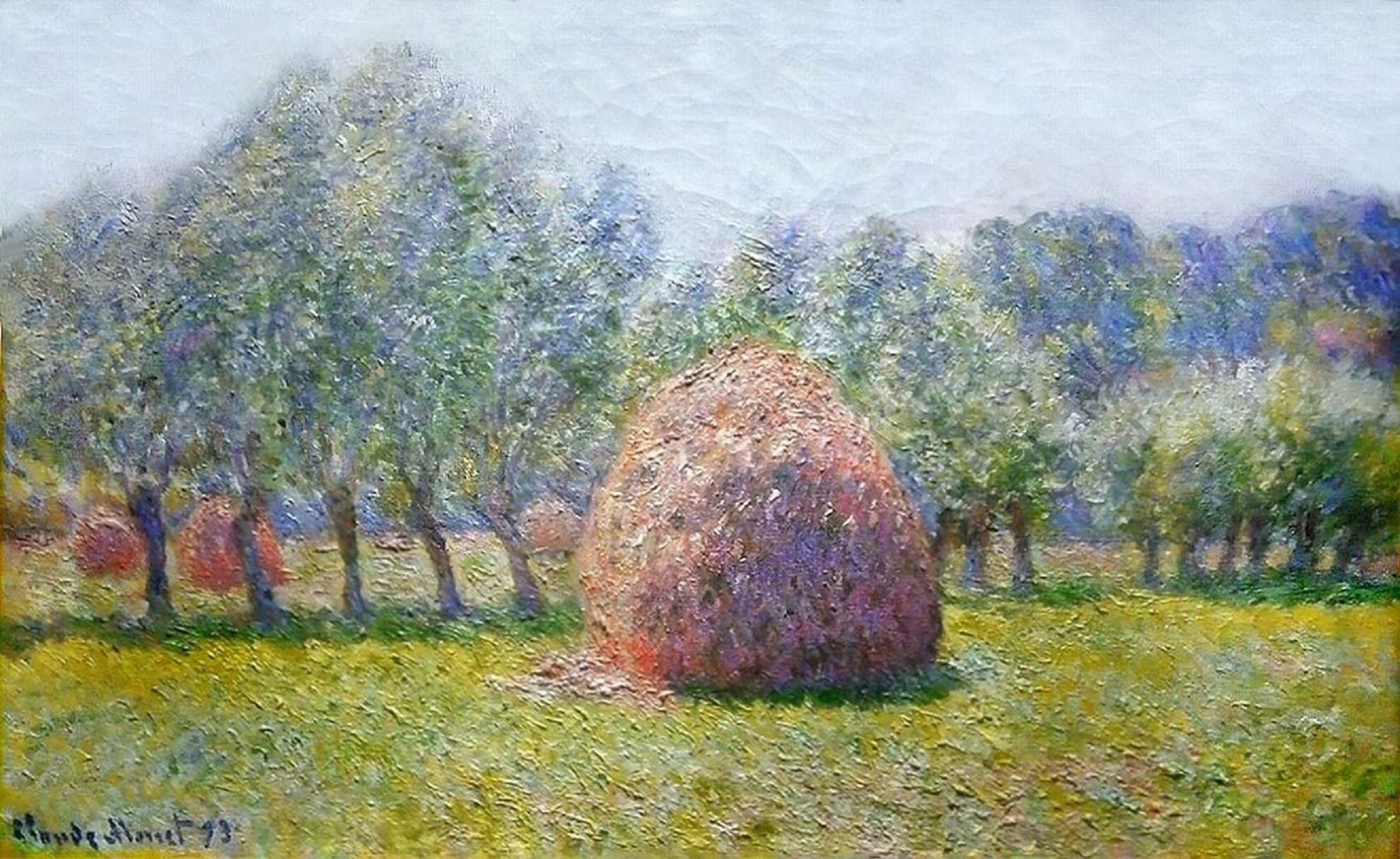
Grainstack
Claude Monet · 1893
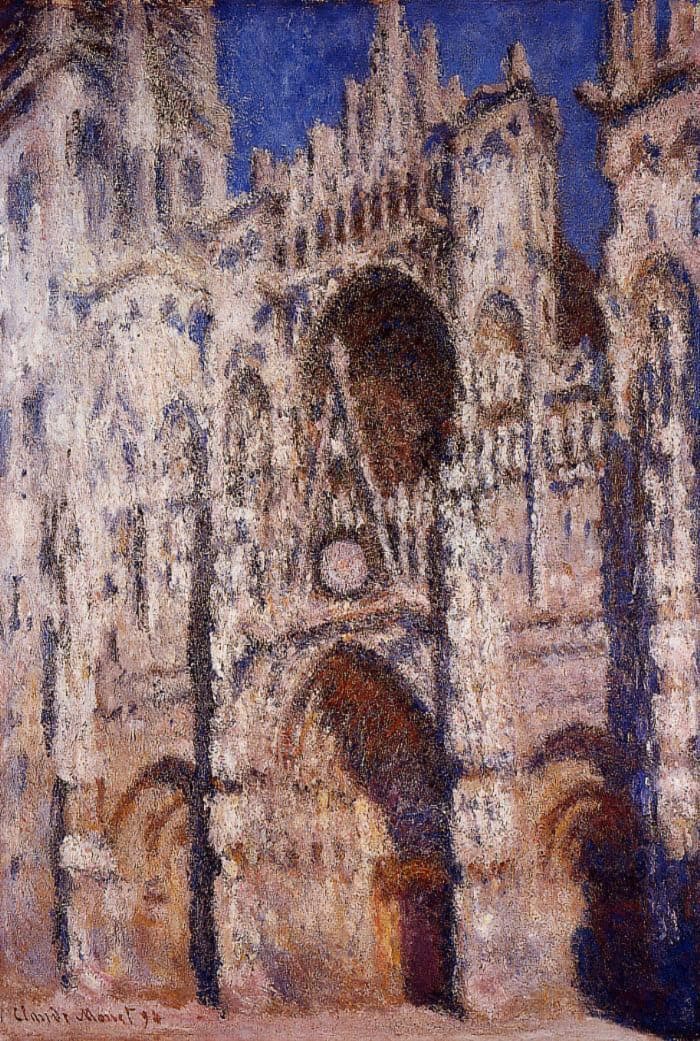
Rouen Cathedral (W 1361)
Claude Monet · 1893–94
Rouen Cathedral, Fog
Claude Monet · 1893–94
Ice Floes
Claude Monet · 1893
Rouen Cathedral, Effects of Morning Light
Claude Monet · 1893
Rouen Cathedral in Full Sunlight
Claude Monet · 1893
Kindred works
You may also study
Rouen Cathedral: The Portal (Sunlight)
Claude Monet · 1892–94
Rouen Cathedral, Façade
Claude Monet · 1893–94
Rouen Cathedral, Portal and Tower d'Albane, Midday
Claude Monet · 1893–94
Rouen Cathedral, Sunlight Effect, End of the Day
Claude Monet · 1892
Rouen Cathedral (W 1361)
Claude Monet · 1893–94
The Church of Saint-Germain-l'Auxerrois
Claude Monet · 1867
Rouen Cathedral in the Morning (Pink Dominant)
Claude Monet · 1893–94
The Portal of Rouen Cathedral in Morning Light
Claude Monet · 1894