Post-Impressionism
Irises (Vase with Irises Against a Yellow Background)
Vincent van Gogh, 1890
Irises is a still life by Vincent van Gogh of a large bouquet of irises in a vase against a yellow wall, painted in May 1890 at the asylum in Saint-Rémy-de-Provence. It is in the Van Gogh Museum in Amsterdam.
- Artist
- Vincent van Gogh
- Date
- 1890
- Medium
- Oil on canvas
- Dimensions
- 92.7 × 73.9 cm
- Collection
- Van Gogh Museum, Amsterdam, Netherlands
- Movement
- Post-Impressionism
What you're looking at
An earthenware vase on a tabletop holds an enormous, overflowing bunch of irises. The flowers burst outward in every direction, far wider than the vase that contains them; several stems have broken loose and hang over the rim, and at the lower right a whole cluster spills down onto the table. Long green leaves shoot out like blades, some crossing the canvas almost corner to corner. Behind it all is a wall of hot, saturated yellow, and the table and vase are painted in deeper yellows and ochres.
Van Gogh paints the background as carefully as the flowers. Look closely and the yellow is not flat at all: it is worked in short, crisscrossing strokes that ripple around the bouquet like a halo, while a thin dark line marks the edge of the table. The petals are drawn with dark blue contours and filled with thick, curling strokes of paint that stand up from the surface. The leaves, by contrast, are laid in with long, smooth strokes of a single green, which makes them read almost like cut paper against the wall.
Why are the irises blue?
Van Gogh painted these irises purple. He mixed his violets from blue and a red lake pigment that is sensitive to light, and over time the red has faded, leaving the flowers bluer than he intended. The original contrast was sharper still: violet against yellow, the two colors that sit opposite each other on the color wheel. Some petals that now look brownish or muddy also carried more red when the paint was fresh.
When and why Van Gogh painted it
Van Gogh had been a voluntary patient at the asylum of Saint-Paul-de-Mausole in Saint-Rémy since May 1889. A year later, in May 1890, he was preparing to leave for Paris and then Auvers-sur-Oise, and in his last days at the asylum he painted a burst of flower still lifes, including two large canvases of irises cut from the garden. He described them to his brother Theo in a letter: one bouquet set against a pink background for a soft, harmonious effect, and this one, a violet bouquet against a lemon-yellow ground, which he said produced an effect of strongly opposed complementary colors that reinforce each other. The contrast was the point of the picture.
The pink-ground companion is now in the Metropolitan Museum of Art in New York (its pink has also faded, to near white). Together the two show Van Gogh treating the same flowers as an experiment in color, months after his breakdowns and only weeks before his death in July 1890.
What do the irises mean?
Van Gogh associated irises with Japan, which he idealized as a land of artists living close to nature, and the bold outlines, cropped forms and flat areas of color here owe much to the Japanese woodblock prints he collected. The theme, however, is not symbolic in any documented way. His letters talk about color, not about meaning, and the safest reading is his own: a study of how two complementary colors can make each other blaze.
That said, it is hard not to see energy in the composition. The bouquet does not sit still in its vase; it explodes. Writers have connected that restlessness with the artist's state of mind as he left the asylum, though such readings are interpretations rather than anything Van Gogh recorded.
The other Irises: the Getty painting
When people talk about Van Gogh's Irises, they often mean a different picture: the garden scene painted a year earlier, in May 1889, in his first weeks at Saint-Rémy. That painting shows irises growing in a flower bed, with a single white iris among the blue, and it is now in the J. Paul Getty Museum in Los Angeles. In November 1987 it sold at Sotheby's in New York for $53.9 million, then the highest price ever paid for a painting at auction. The buyer, Alan Bond, could not complete the payment, and the Getty acquired it in 1990.
The Amsterdam still life, by contrast, has never been on the market in the modern era: it stayed with Van Gogh's family and belongs to the Vincent van Gogh Foundation, which lends its collection to the Van Gogh Museum. If you came looking for Claude Monet's iris paintings from Giverny, those are a separate series: see Monet's Irises.
Looking for Van Gogh's smoking skeleton?
Many visitors to this page are searching for a very different Van Gogh: the small, darkly funny picture of a skull with a lit cigarette clamped between its teeth. He painted it in the winter of 1885–86 as a student at the art academy in Antwerp, and it also belongs to the Van Gogh Museum. It has its own page in our catalogue: Head of a Skeleton with a Burning Cigarette.
Where to see Irises
The painting is in the Van Gogh Museum on Museumplein in Amsterdam, usually on display with the works from Saint-Rémy and Auvers. It hangs among other late masterpieces such as Almond Blossom, painted in Saint-Rémy a few months earlier. For more of the artist's major works, see Famous Van Gogh Paintings and our page on Vincent van Gogh.
Questions & answers
Where is Van Gogh's Irises in a vase?
The still life of irises in a vase against a yellow background is in the Van Gogh Museum in Amsterdam, which displays the collection of the Vincent van Gogh Foundation. A companion version against a pink background is in the Metropolitan Museum of Art, New York, and the 1889 garden painting Irises is at the Getty Museum in Los Angeles.
When did Van Gogh paint Irises?
He painted this vase of irises in May 1890, in his last days at the asylum in Saint-Rémy-de-Provence before he left for Paris and Auvers-sur-Oise. His better-known garden picture, also called Irises, was painted a year earlier, in May 1889, shortly after he arrived at the asylum.
Why are Van Gogh's irises blue instead of purple?
Van Gogh painted them violet, mixing blue with a red lake pigment. That red is sensitive to light and has faded over the decades, so the flowers now look blue. The original effect was a stronger clash of complementary colors: purple flowers against a yellow wall.
How much did Van Gogh's Irises sell for?
The record sale was the 1889 garden painting, not this still life. It sold at Sotheby's New York in November 1987 for $53.9 million, then a world record, and went to the J. Paul Getty Museum in 1990. The Amsterdam vase of irises has stayed with the Van Gogh family foundation and has never been sold.
Did Van Gogh paint a skeleton smoking a cigarette?
Yes, but it is a different work. Head of a Skeleton with a Burning Cigarette is a small oil from the winter of 1885–86, painted while he studied at the Antwerp academy. It belongs to the Van Gogh Museum in Amsterdam and has its own page in our catalogue.
More by the artist
Vincent van Gogh
Head of a Skeleton with a Burning Cigarette
Vincent van Gogh · 1886
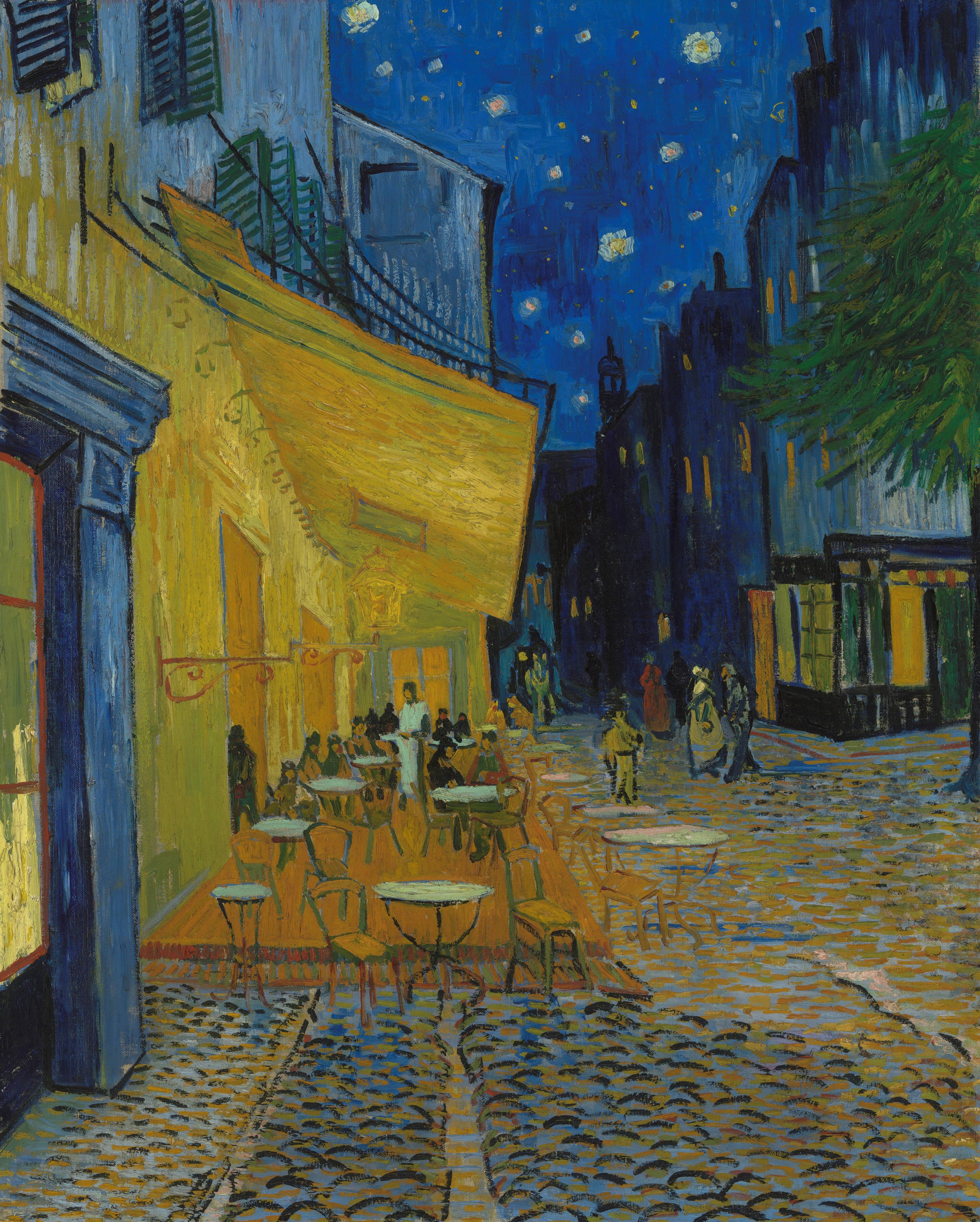
Café Terrace at Night
Vincent van Gogh · September 1888
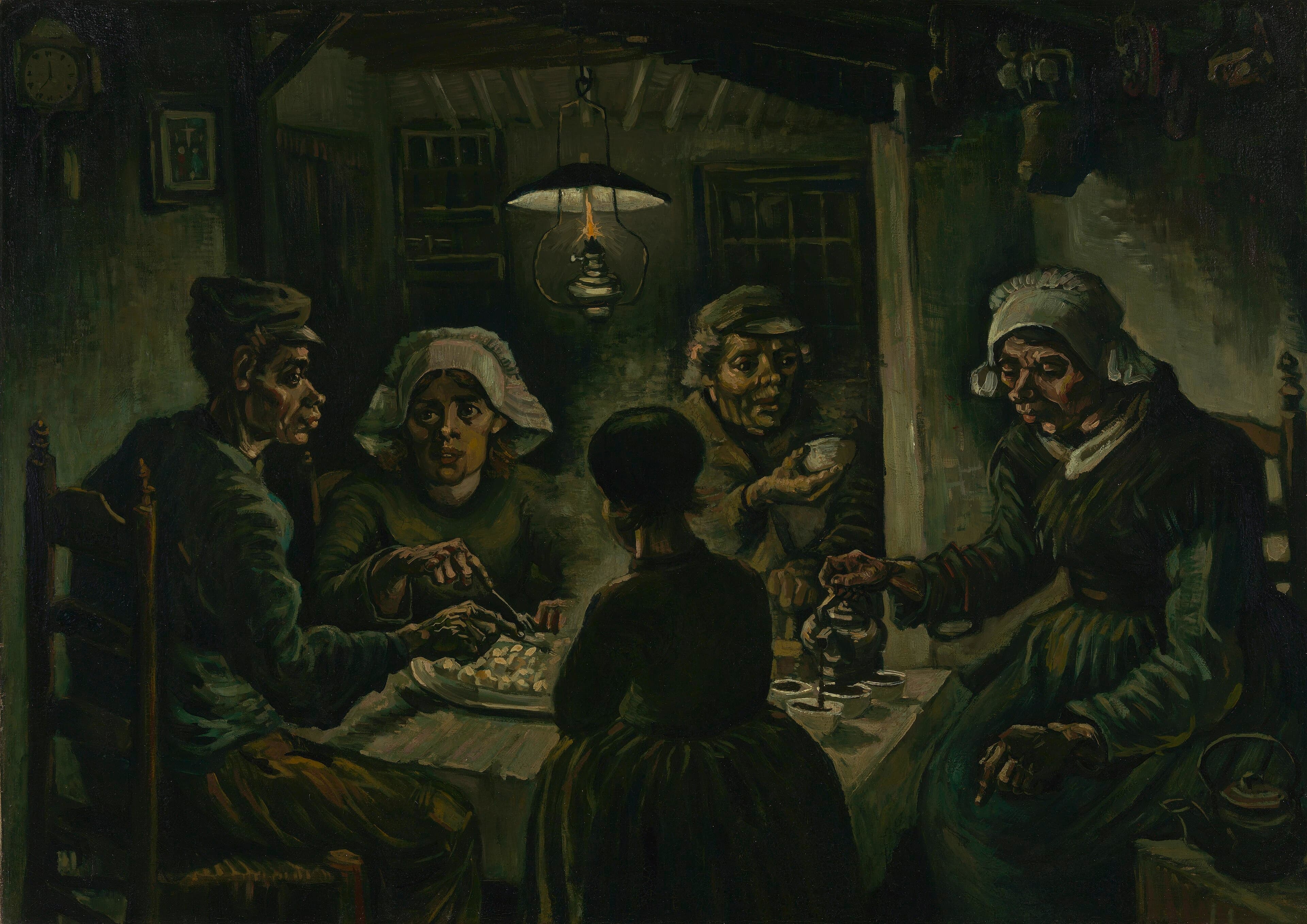
The Potato Eaters
Vincent van Gogh · April–May 1885
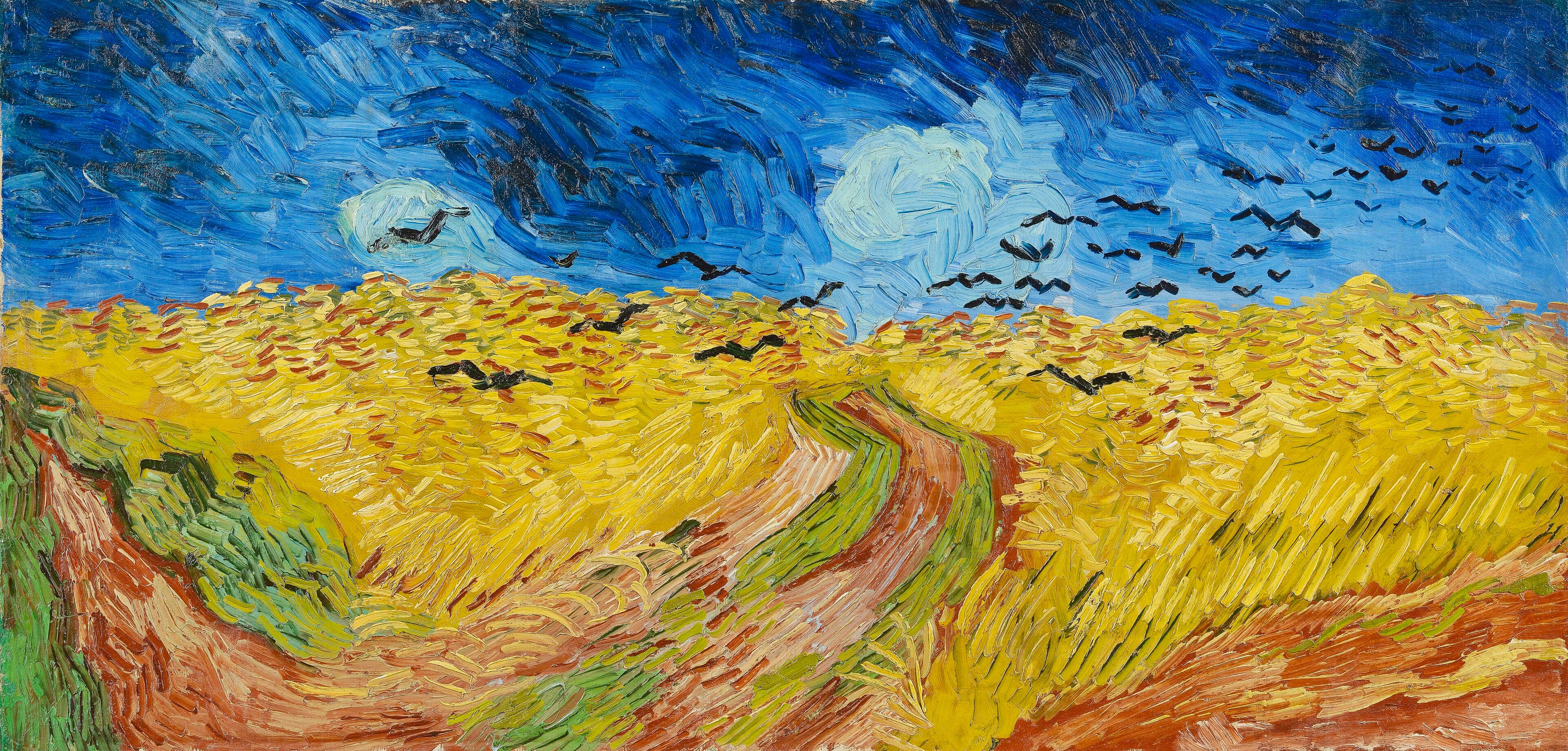
Wheatfield with Crows
Vincent van Gogh · July 1890
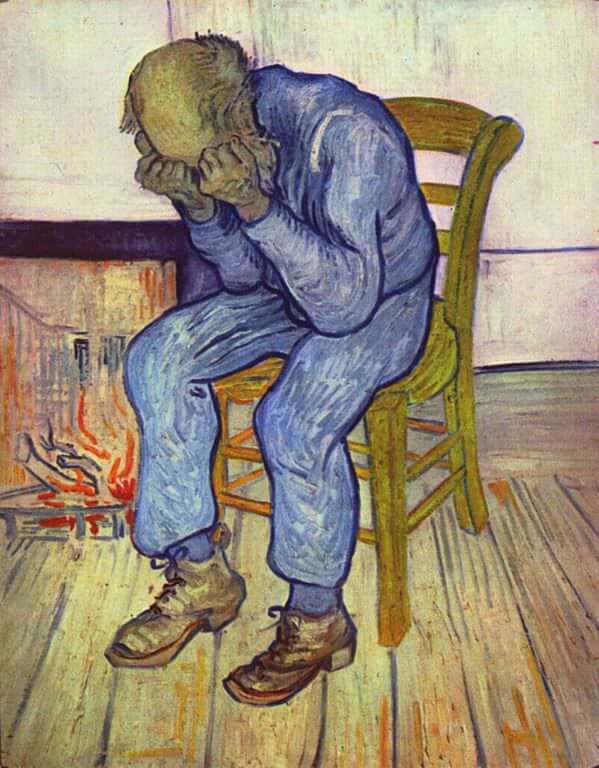
At Eternity's Gate
Vincent van Gogh · 1890
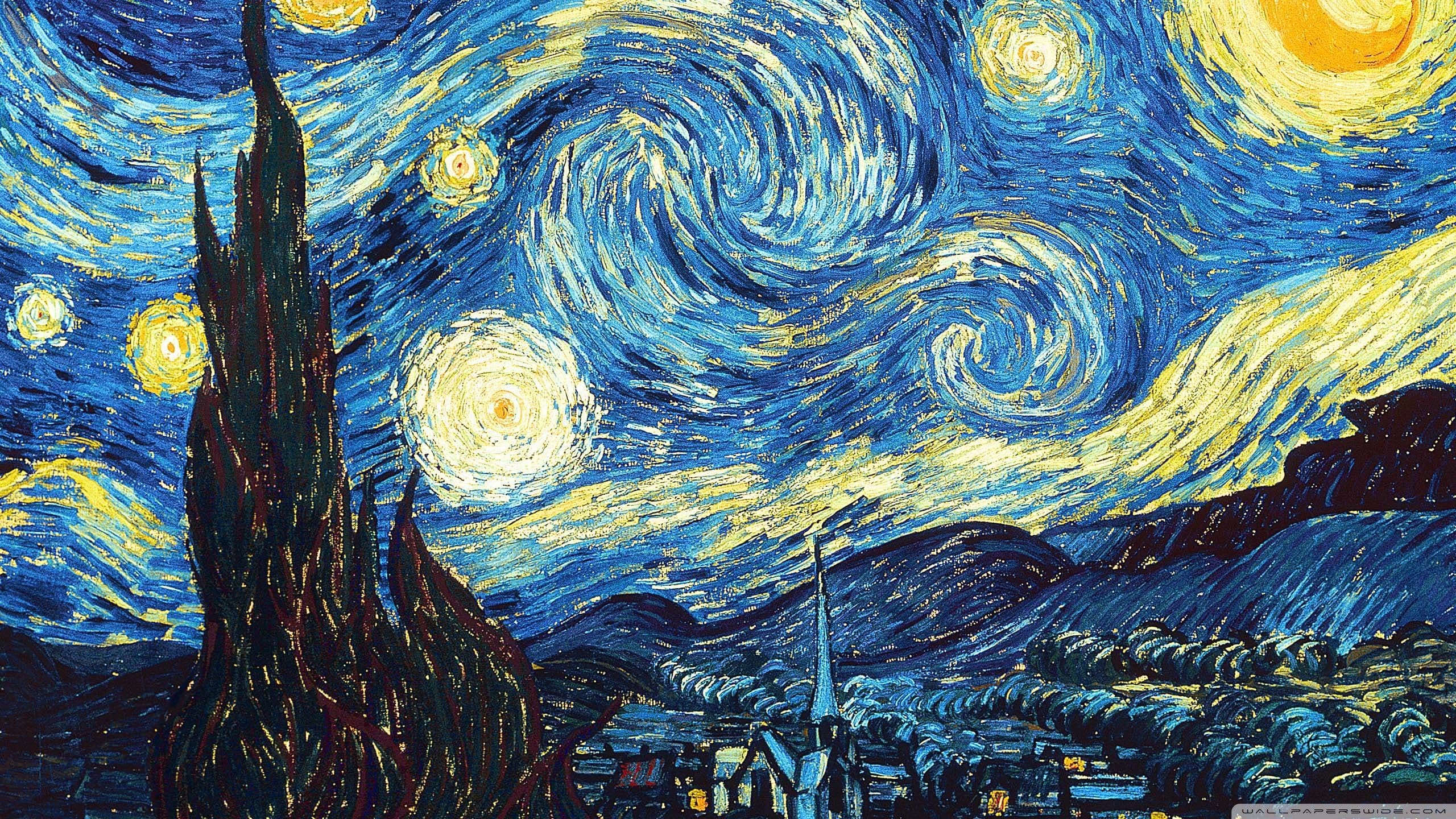
The Starry Night (van Gogh)
Vincent van Gogh · 1889
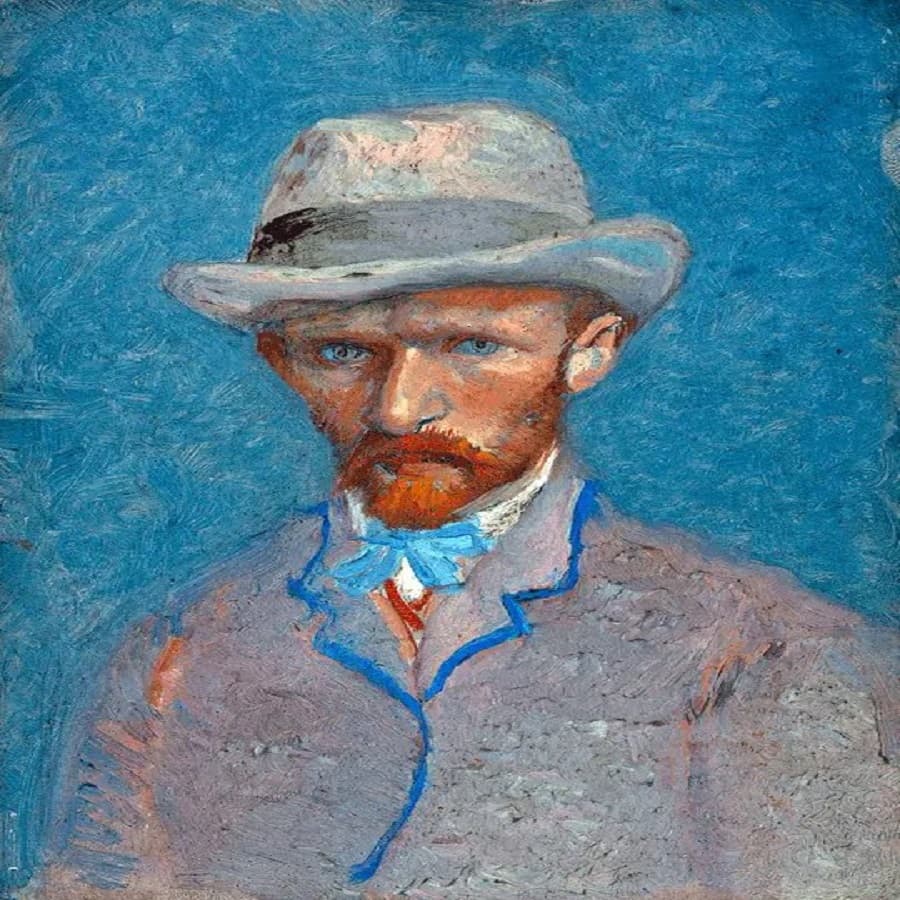
Portrait of Theo van Gogh (Self-Portrait with Grey Felt Hat)
Vincent van Gogh · 1887
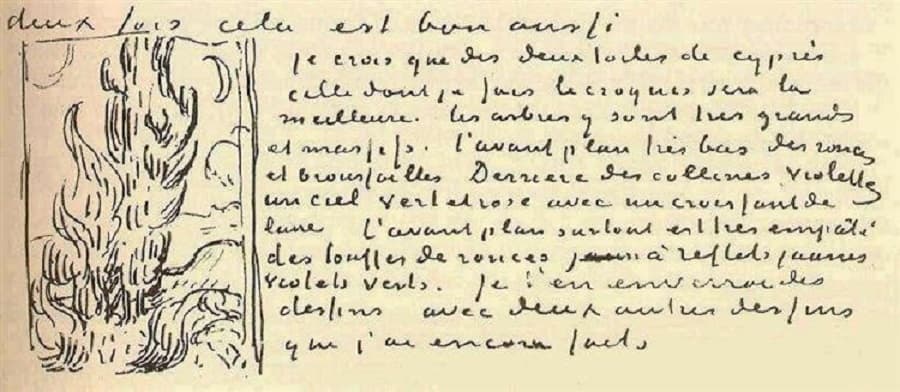
The Letters of Vincent van Gogh
Vincent van Gogh · 1872–1890
Also painted in 1890
The same year
Kindred works
You may also study
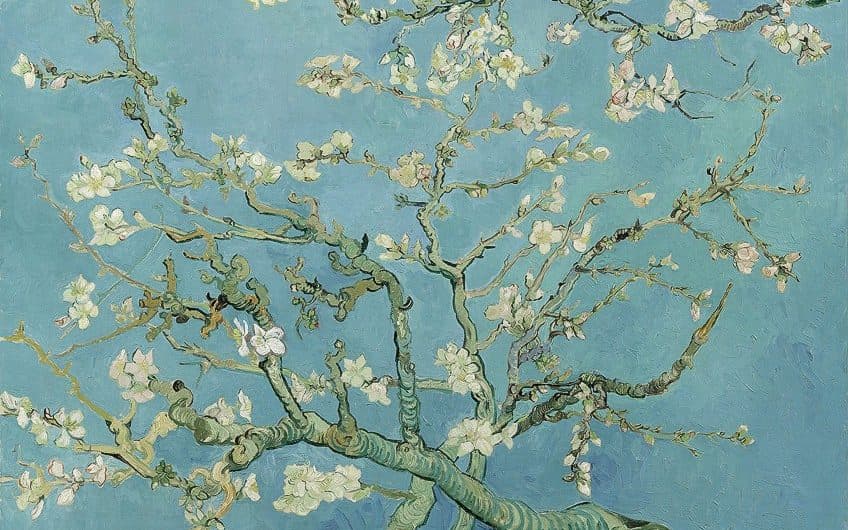
Almond Blossom
Vincent van Gogh · 1890
Sunflowers
Vincent van Gogh · 1888–89
Irises by the Pond
Claude Monet · c. 1914–17

Bridge over a Pond of Water Lilies
Claude Monet · 1899

The Scream
Edvard Munch · 1893

Ophelia
John Everett Millais · 1851–52

Woman with a Parasol – Madame Monet and Her Son
Claude Monet · 1875

The Great Wave off Kanagawa
Katsushika Hokusai · c. 1830–32