Image: Mauritshuis, The Hague / Wikimedia Commons · Public domain · via Wikimedia Commons
Dutch Golden Age
Girl with a Pearl Earring
Johannes Vermeer, c. 1665
Girl with a Pearl Earring is Johannes Vermeer's painting of a young woman in a blue and yellow turban, glancing over her shoulder, c. 1665. It is in the Mauritshuis in The Hague and is not a portrait of a known sitter but a tronie, a study of a face.
- Artist
- Johannes Vermeer
- Date
- c. 1665
- Medium
- Oil on canvas
- Dimensions
- 44.5 × 39 cm
- Collection
- Mauritshuis, The Hague, Netherlands
- Movement
- Dutch Golden Age
Girl with a Pearl Earring is an oil painting on canvas by the Dutch artist Johannes Vermeer, painted around 1665 in Delft. It is small, just 44.5 by 39 centimeters, and has been in the Mauritshuis in The Hague since 1902. It is often called the "Mona Lisa of the North." Despite the many stories told about her, nobody knows who the girl was, and the picture was probably never meant as a portrait of a particular person.
What you're looking at
A young woman turns her head over her left shoulder toward us, as if we had just called her name. Her lips are parted, moist, with a tiny white highlight on the lower lip. Her large eyes catch the light from a window to the left. She wears a plain yellow-brown jacket with a white collar and, unusually for a Dutch woman of the period, a turban: an ultramarine-blue band wrapped around her head, with a yellow cloth hanging down behind.
From her left ear hangs a large, pear-shaped pearl, glowing against the shadow of her neck. The background is dark, almost black.
The composition could hardly be simpler: a head, a shoulder, a turban and a pearl. Its power lies in the light and in the glance. She seems to be both arriving and leaving, a moment caught rather than posed.
The details most people miss
The famous pearl is barely painted at all. It consists of two strokes: a thick, bright white highlight at the top left, reflecting the window, and a soft reflection at the bottom, picking up the white collar below. There is no outline and no hook attaching it to the ear. The rest is the viewer's eye completing the shape. Some researchers have suggested that a pearl this size would have been nearly impossible to obtain and that it may represent polished tin or varnished glass; the question cannot be settled from the painting.
The background was not always black. A major technical study of 2018, Girl in the Spotlight, carried out by the Mauritshuis with international scientists, found that Vermeer originally painted a green curtain behind her, with folds still traceable under magnification; the translucent glaze has degraded and darkened over time. The same study found tiny eyelashes around her eyes, invisible to the naked eye, and confirmed that the brilliant blue of the turban is natural ultramarine, made from lapis lazuli mined in Afghanistan, then more costly than gold.
Is it a portrait? What is a tronie?
Girl with a Pearl Earring is a tronie, the Dutch term for a study of a head, a character type or an expression, often in exotic costume. Tronies were popular in seventeenth-century Holland and were sold on the open market rather than commissioned by sitters. Rembrandt painted many. The turban signals fantasy and exoticism, perhaps inspired by "Turkish" dress, which fascinated Dutch audiences.
So the girl is not a known individual. Suggestions that she was Vermeer's eldest daughter Maria, about twelve or thirteen in 1665, or a servant, have no supporting evidence. Tracy Chevalier's 1999 novel Girl with a Pearl Earring, in which the model is an invented maid named Griet, and the 2003 film starring Scarlett Johansson are fiction.
What does Girl with a Pearl Earring mean?
Because it is a tronie, the painting does not carry a fixed narrative or allegorical meaning. Interpretations instead focus on what it makes us feel. The over-the-shoulder glance creates a sense of intimacy and immediacy, as if the viewer had interrupted her. The parted lips suggest she is about to speak. The pearl, in Dutch art, often signified purity, but also vanity and worldly wealth; here it is primarily a demonstration of how light behaves.
In this sense the painting is about seeing: about how a few touches of paint, placed exactly, can make the eye believe in a face, a gaze and a jewel. That is why it is so often compared with the Mona Lisa.
How it was made
Vermeer worked slowly, producing perhaps two or three paintings a year; only about 35 of his paintings survive. He built the picture in thin layers over a ground, using expensive pigments generously, especially ultramarine. He blended edges softly, with almost no hard outlines, so that the face seems to emerge from the shadow. Some scholars believe he used a camera obscura to study optical effects such as the soft highlights; this is debated, and there is no documentary proof.
History and reception
The painting was sold at auction in The Hague in 1881 for just two guilders and thirty cents to the collector Arnoldus Andries des Tombe, who, according to the usual account, had agreed with the art official Victor de Stuers not to bid against each other. At his death in 1902 he bequeathed it to the Mauritshuis. Vermeer, almost forgotten after his death in 1675, had only been rediscovered in the 1860s by the French critic Théophile Thoré-Bürger. Today the girl is one of the most recognized faces in art and the emblem of the Mauritshuis.
Where to see it
Girl with a Pearl Earring is in the Mauritshuis in The Hague, in a room on the first floor along with Vermeer's View of Delft. Since a world tour in 2012–14 the museum has not lent it abroad. For other famous faces, see the Mona Lisa, our selection of famous paintings of women, and two more great mirrors of Northern painting, The Arnolfini Portrait and Las Meninas.
Questions & answers
Where is Girl with a Pearl Earring?
It is in the Mauritshuis museum in The Hague, Netherlands, where it has been since 1902, when the collector Arnoldus Andries des Tombe bequeathed it. After an international tour in 2012–14, the museum decided not to send it abroad again; it left The Hague only briefly for the Rijksmuseum's 2023 Vermeer exhibition in Amsterdam.
Who is the Girl with a Pearl Earring?
Nobody knows. The painting is a tronie, a Dutch study of a head in costume, not a commissioned portrait. Theories that she was Vermeer's daughter Maria or a maid have no evidence; the maid Griet in Tracy Chevalier's novel and the 2003 film is fictional.
What does Girl with a Pearl Earring mean?
As a tronie, it has no fixed story or symbolism. Its meaning lies in its effect: the over-the-shoulder glance and parted lips create an intimate, fleeting moment, and the pearl, made of just two strokes, shows Vermeer's mastery of light.
Is the pearl in Girl with a Pearl Earring real?
It is painted with only two strokes and has no hook. Its size led some researchers to suggest it represents glass or polished tin rather than a real pearl. The 2018 Mauritshuis study found no outline for it at all, so the question remains open.
Why is the background of Girl with a Pearl Earring black?
It was originally a green curtain. The 2018 Girl in the Spotlight study showed that Vermeer painted a green drapery with a translucent glaze that has since changed chemically and darkened, leaving the background almost black.
Kindred works
You may also study
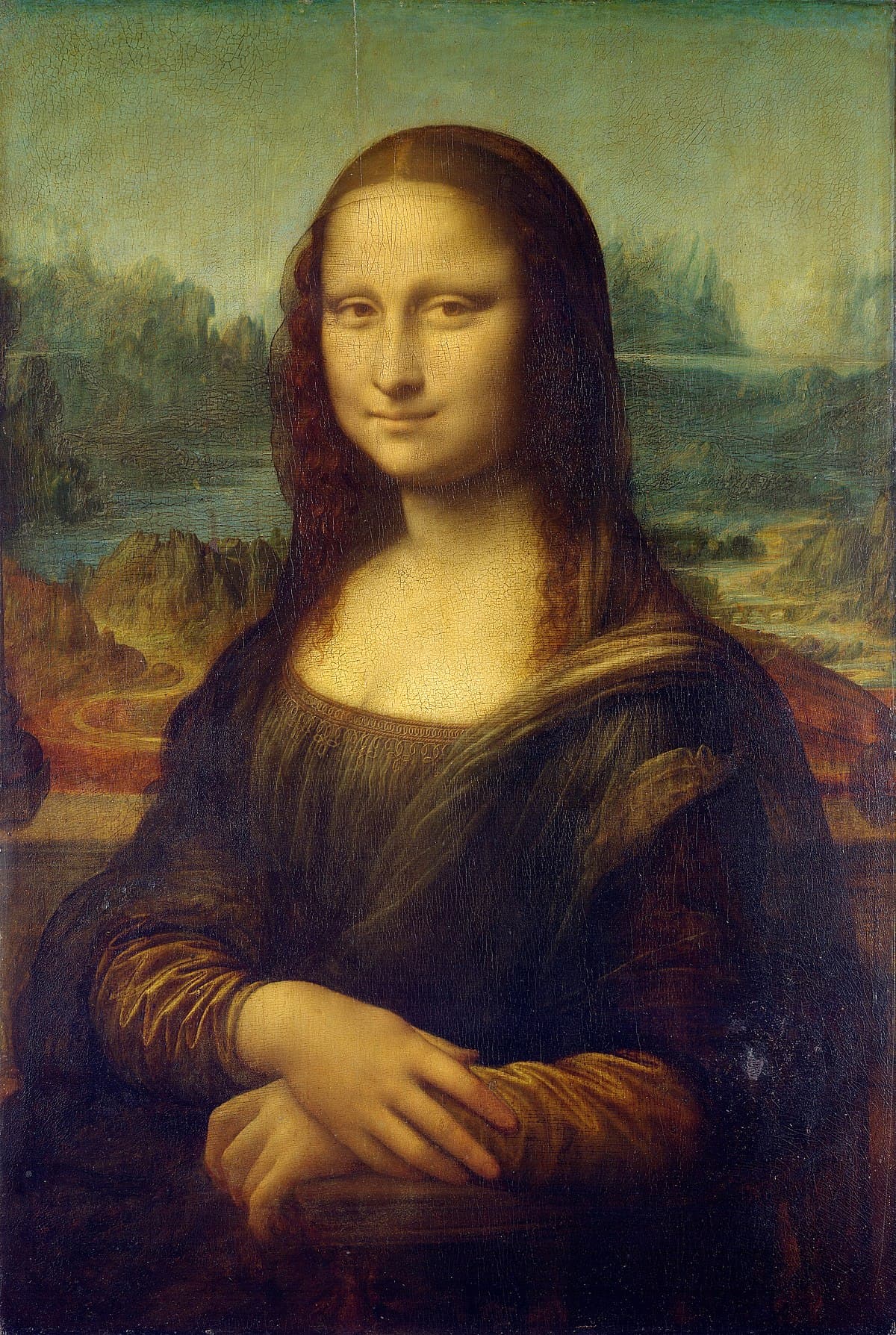
Mona Lisa
Leonardo da Vinci · c. 1503–1519
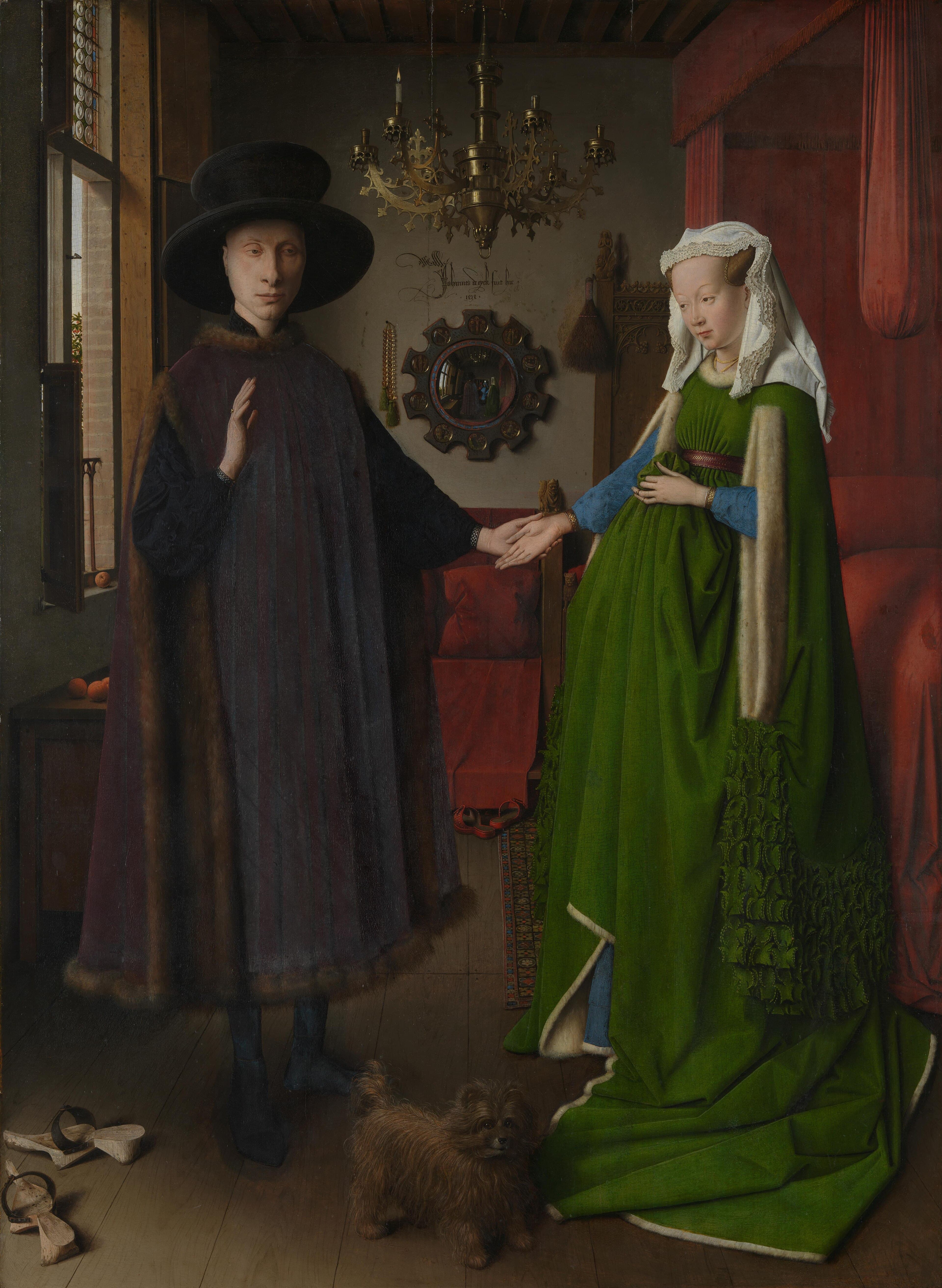
The Arnolfini Portrait
Jan van Eyck · 1434
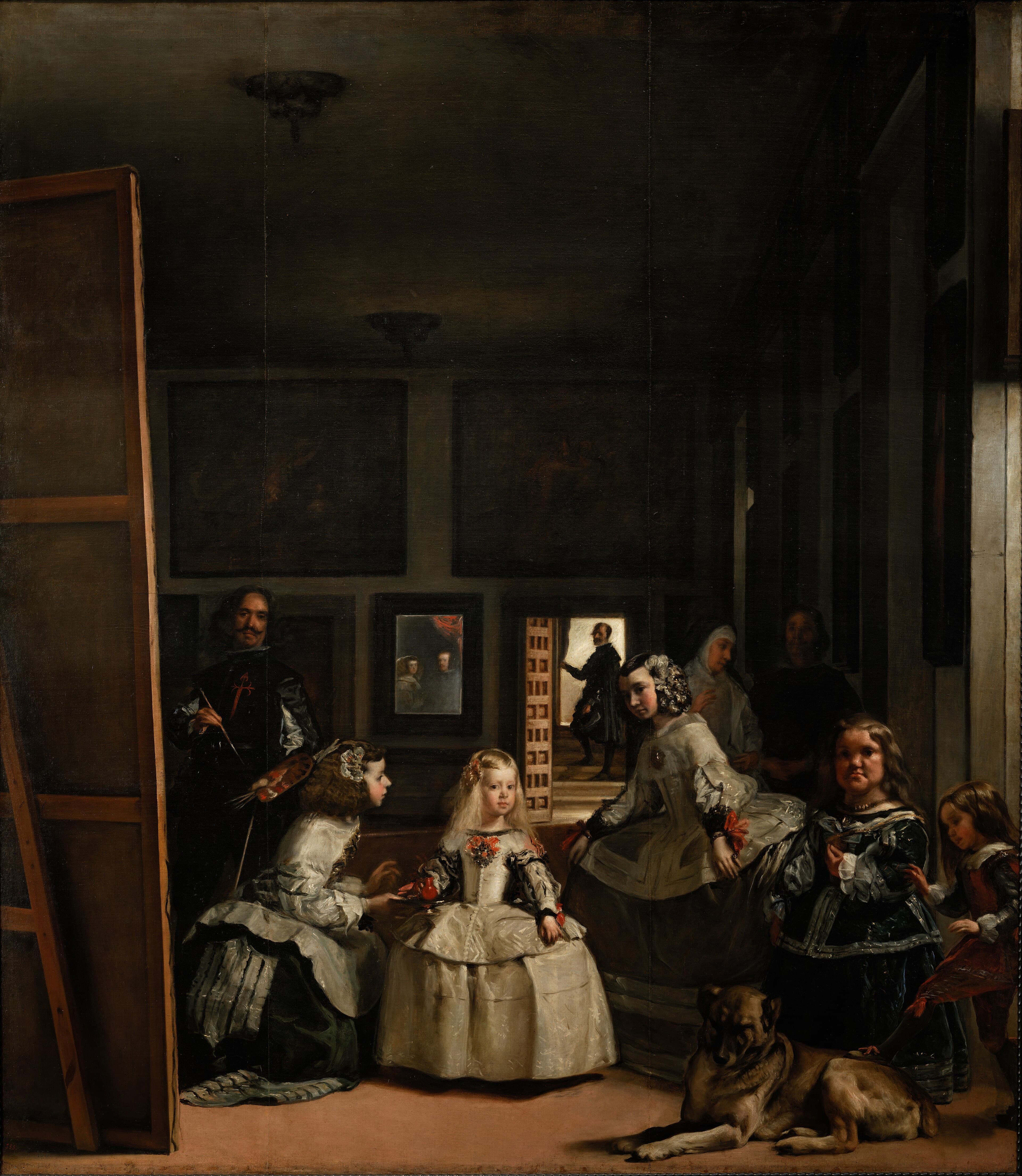
Las Meninas
Diego Velázquez · 1656
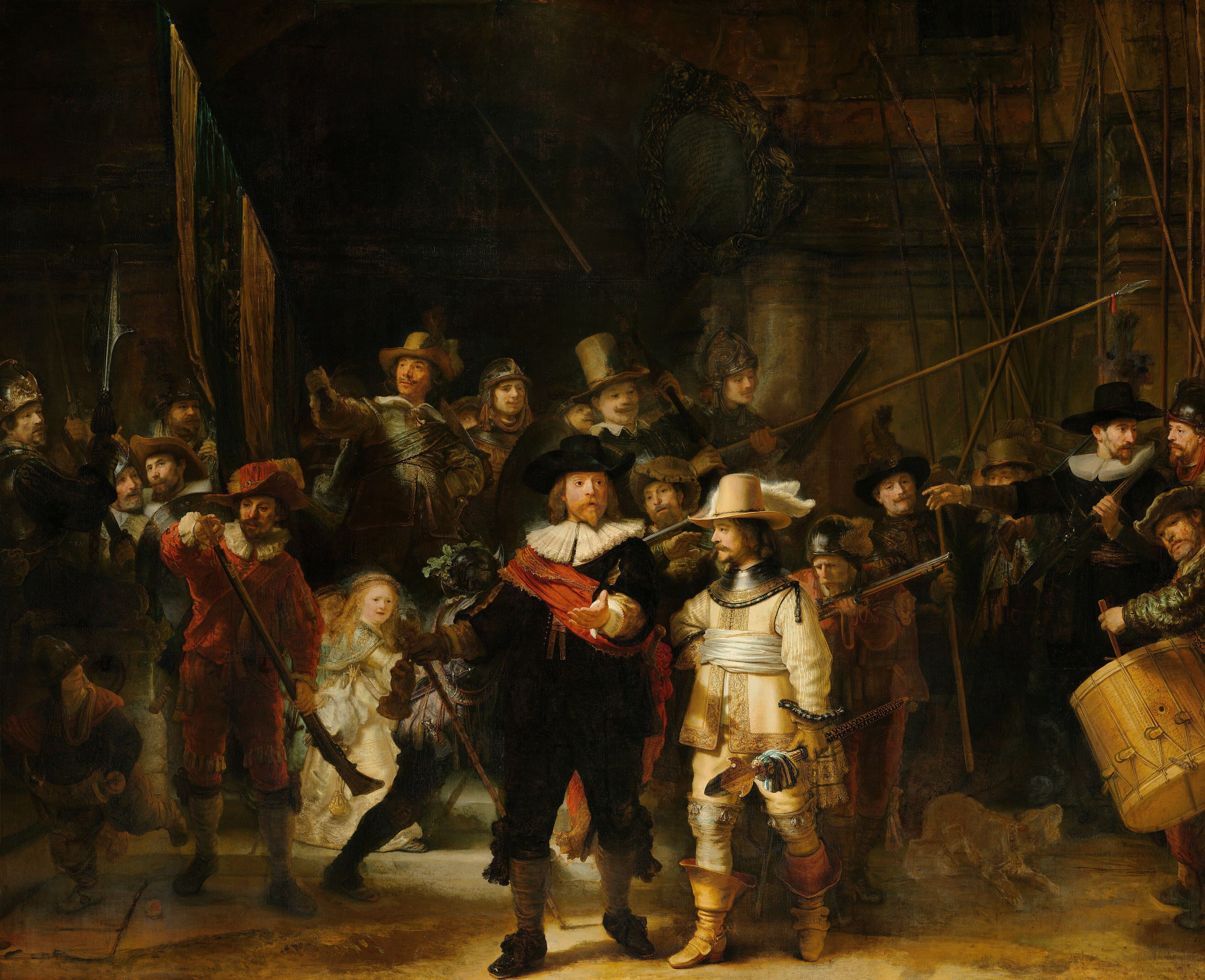
The Night Watch
Rembrandt · 1642
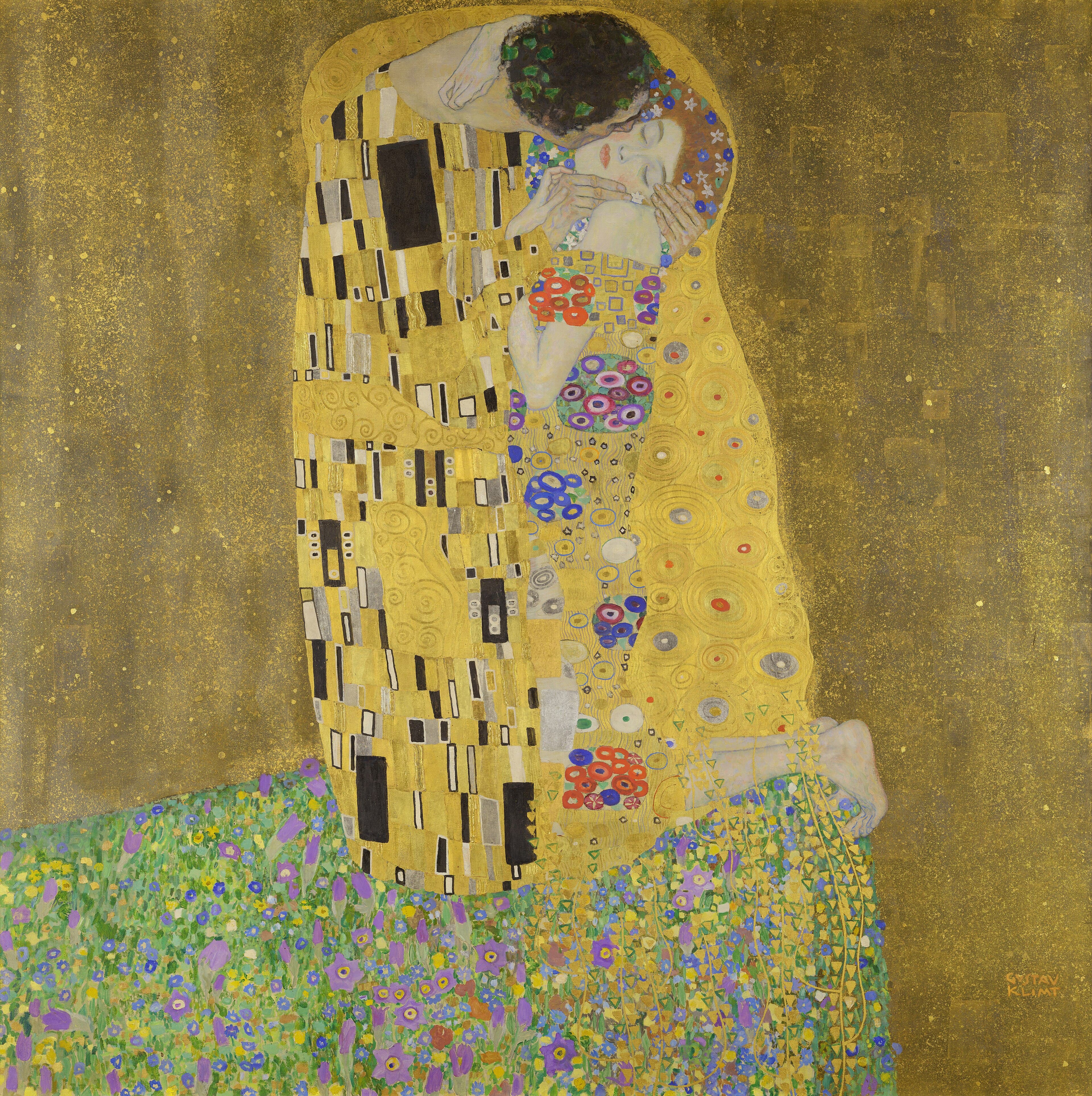
The Kiss
Gustav Klimt · 1907–08

Bridge over a Pond of Water Lilies
Claude Monet · 1899

Venus de Milo
Alexandros of Antioch · c. 150–125 BC

The Thinker
Auguste Rodin · Modeled 1880–82; enlarged 1902–03; this cast 1904