Movement
Academic Art: The Classical Paintings of the Salon
Flawless flesh, gods and heroes, and invisible brushstrokes: the official art of the nineteenth century, its fall from favor and its remarkable return.
Academic art is the polished, classical style of painting and sculpture taught by Europe's official art academies, above all the École des Beaux-Arts in Paris, and celebrated at the annual Salon in the nineteenth century. Its masters, William-Adolphe Bouguereau, Alexandre Cabanel, Jean-Léon Gérôme, Frederic Leighton and their peers, produced many of the classical paintings people now picture when they think of "beautiful old art": luminous nudes, mythological scenes, history paintings and idealized figures with skin like porcelain and no visible brushstroke.
For decades after 1900, academic painting was dismissed as the enemy of modern art, the stuffy establishment the Impressionists rebelled against. Today it is back in museums, auction rooms and online moodboards. This page explains how the academies trained artists, what makes an academic painting, who its great names were, why it fell out of fashion and why it returned. The collection below gathers the strongest examples in our catalogue.
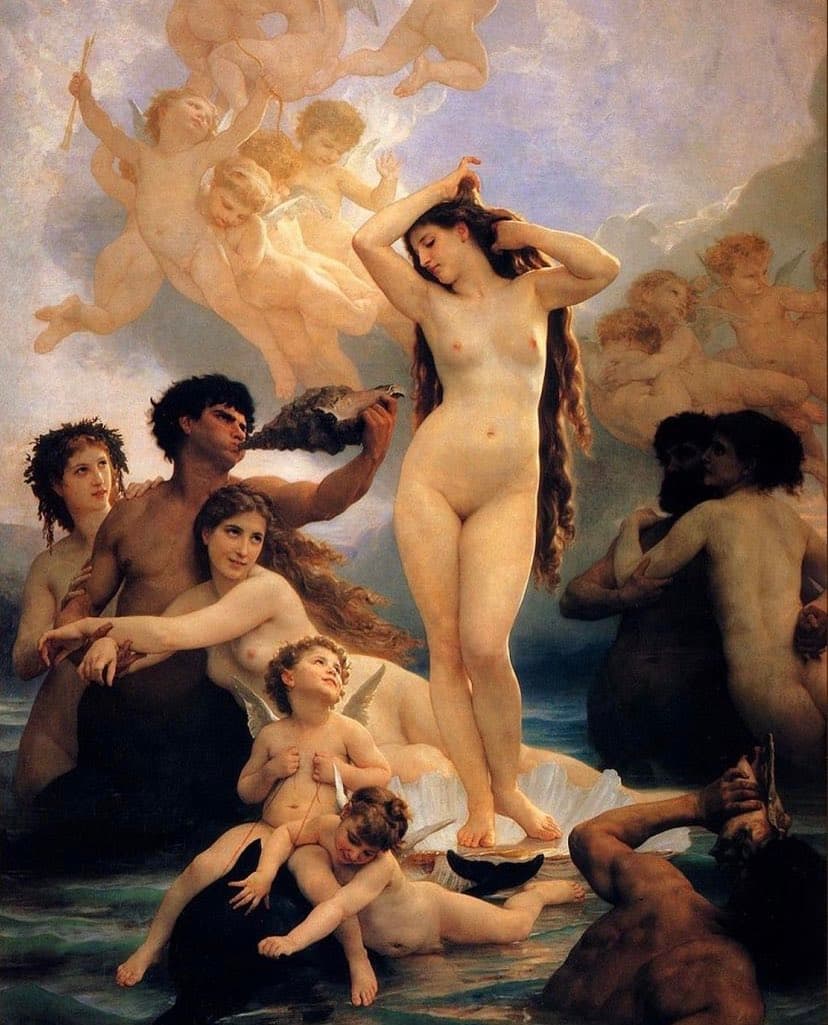
The Birth of Venus
William-Adolphe Bouguereau · 1879
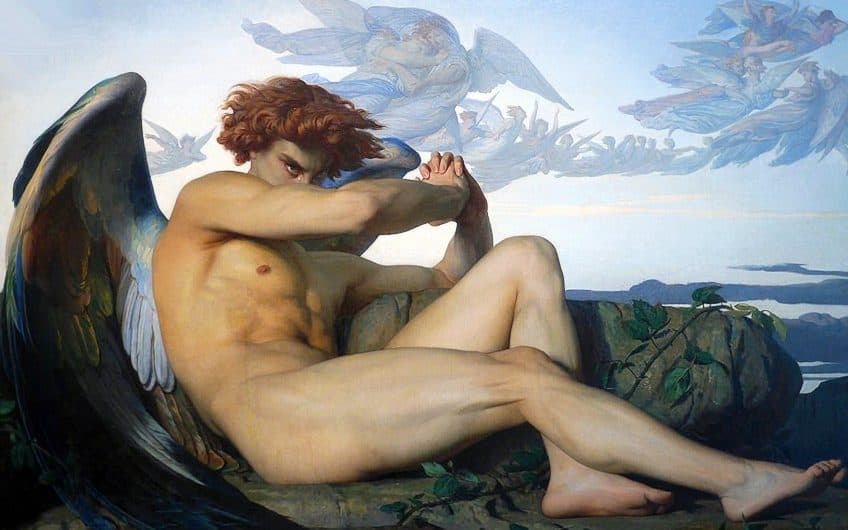
Fallen Angel
Alexandre Cabanel · 1847
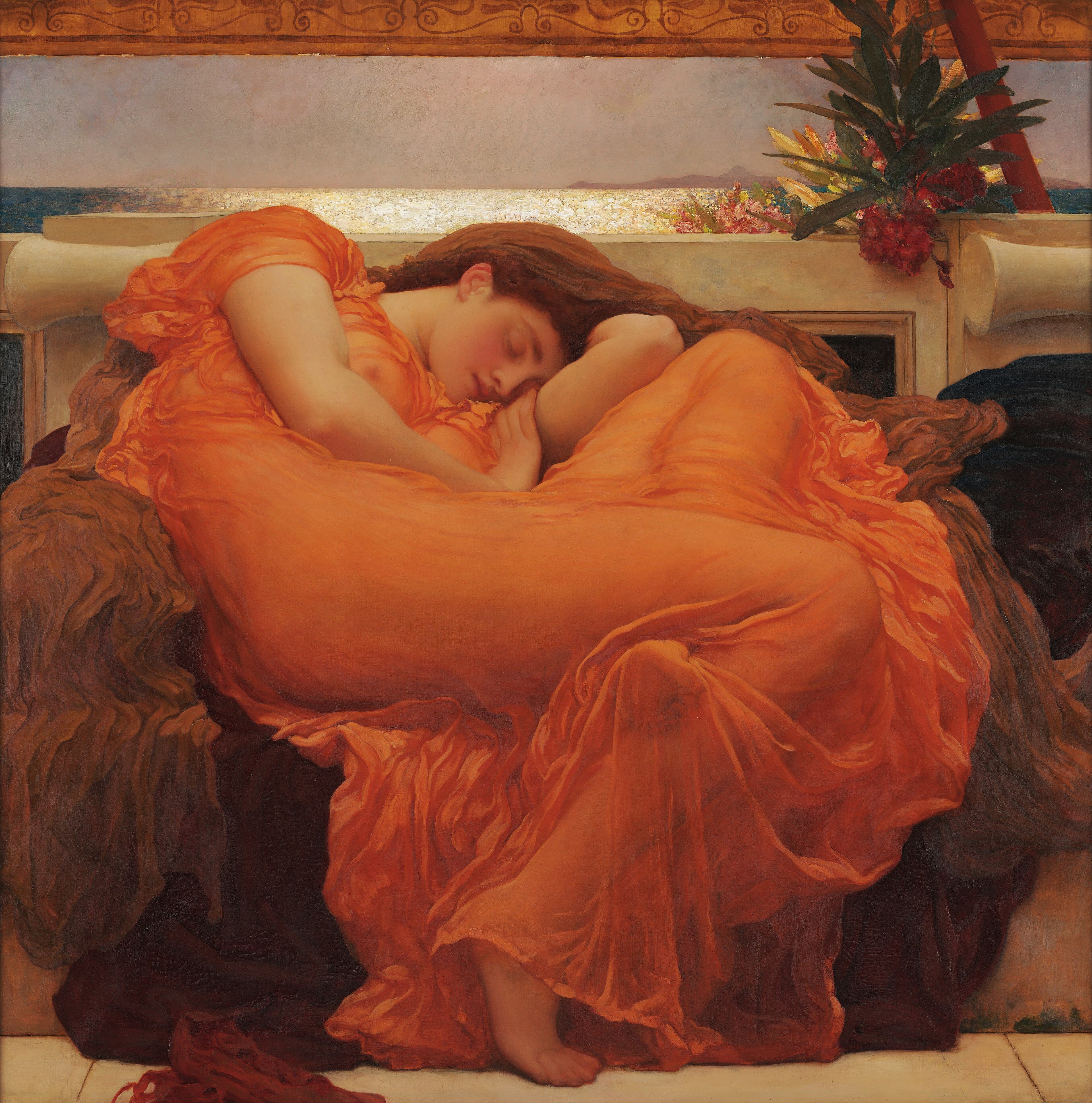
Flaming June
Frederic Leighton · 1895
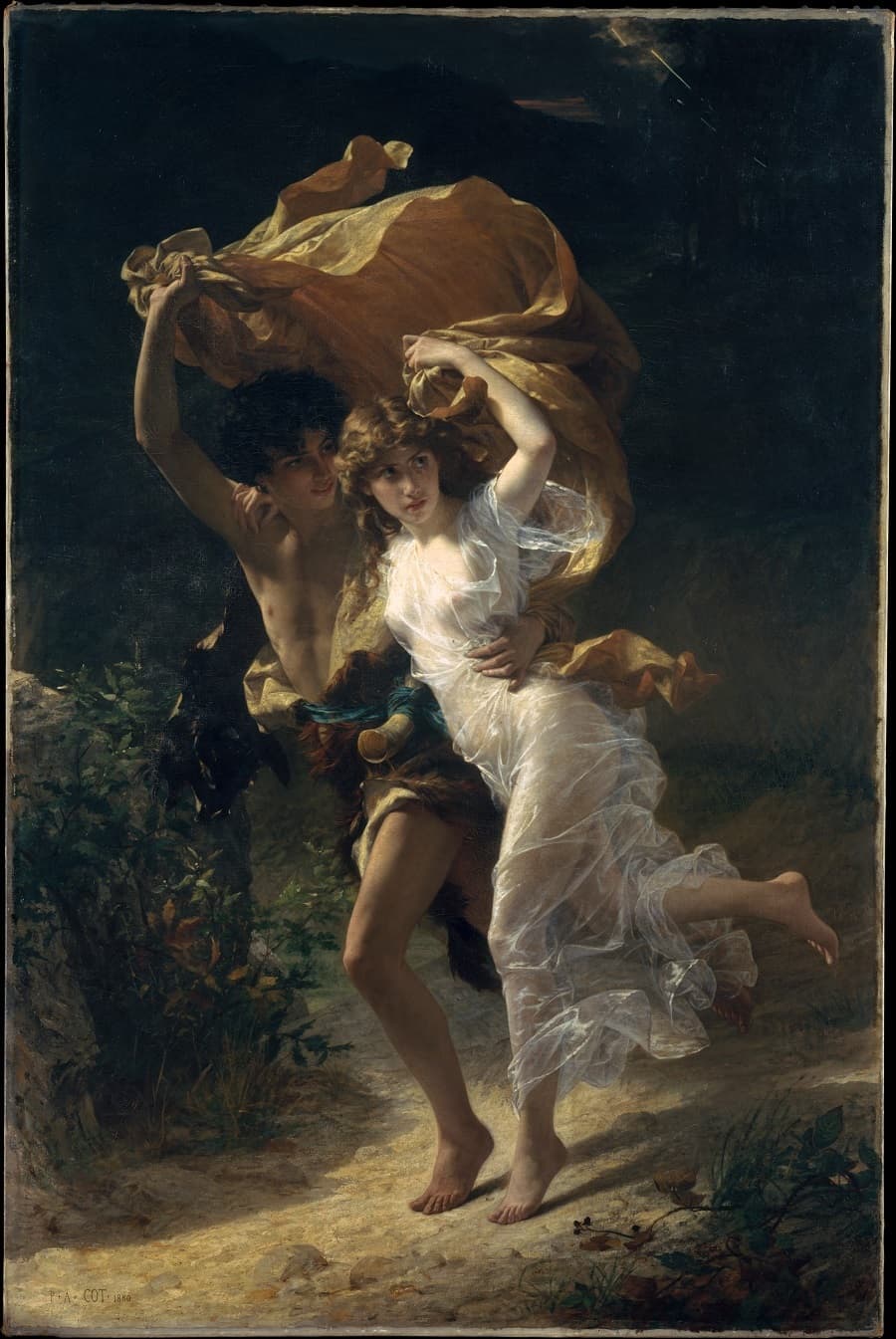
The Storm
Pierre Auguste Cot · 1880
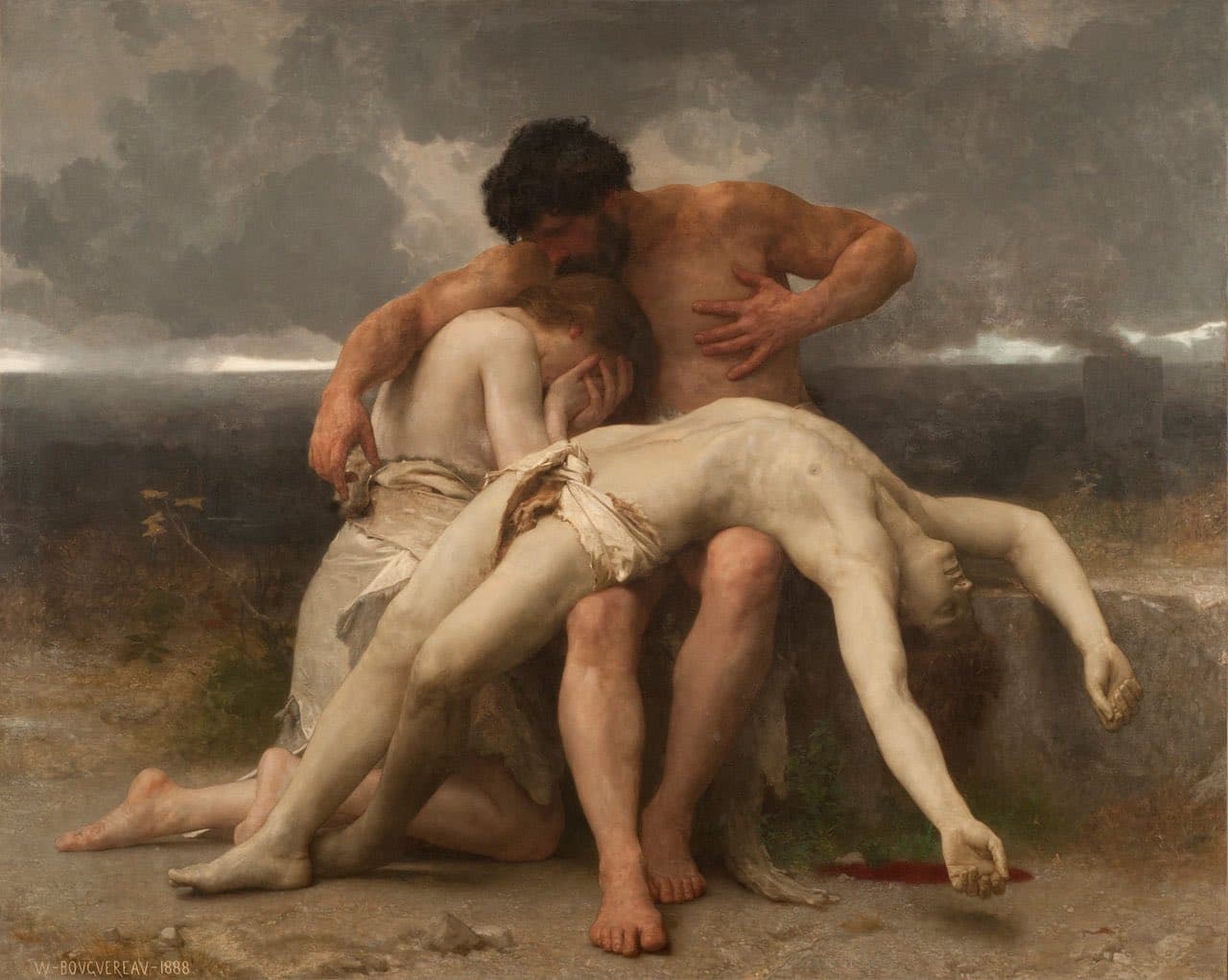
Premier Deuil
William-Adolphe Bouguereau · 1888
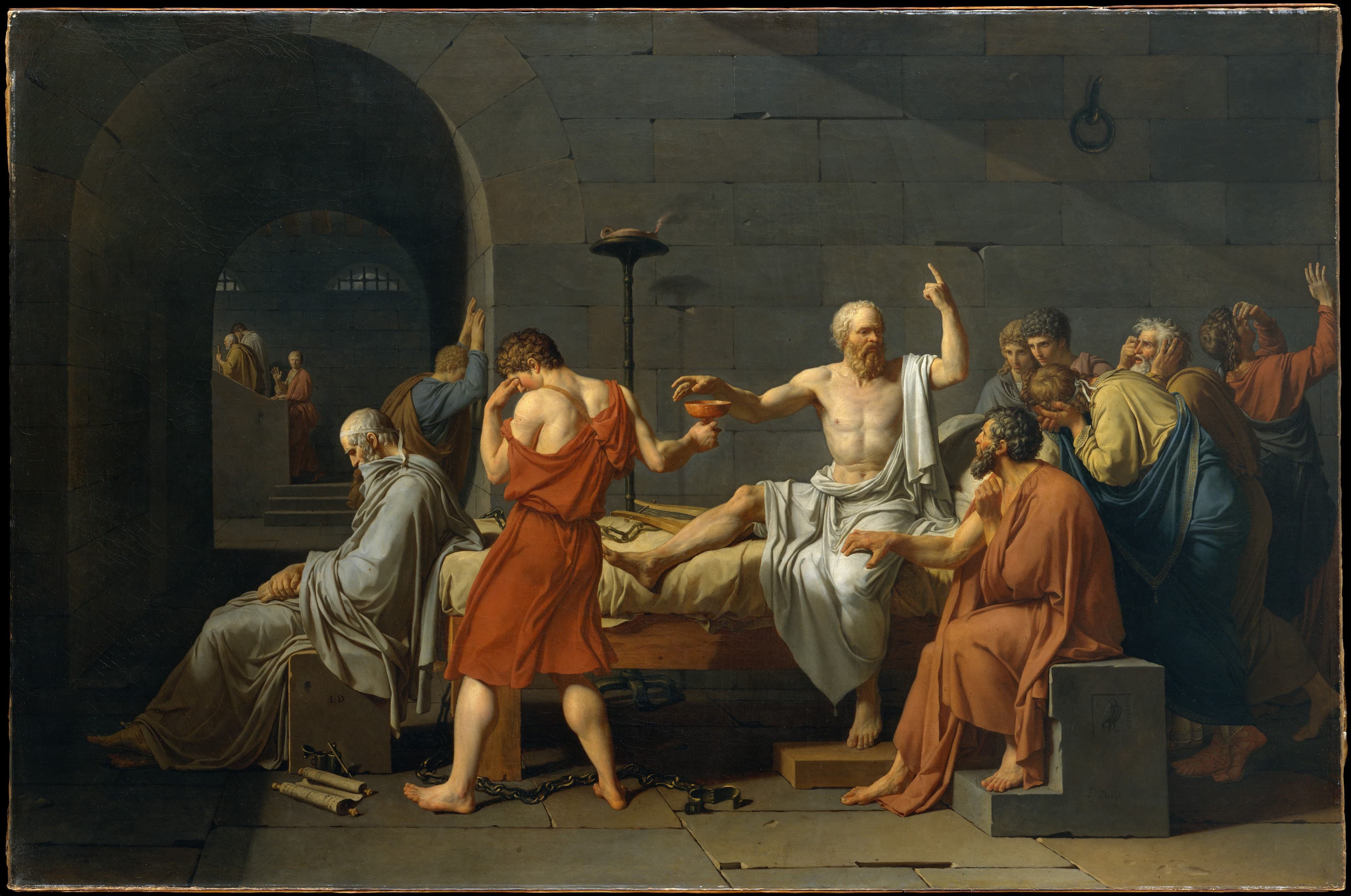
The Death of Socrates
Jacques-Louis David · 1787
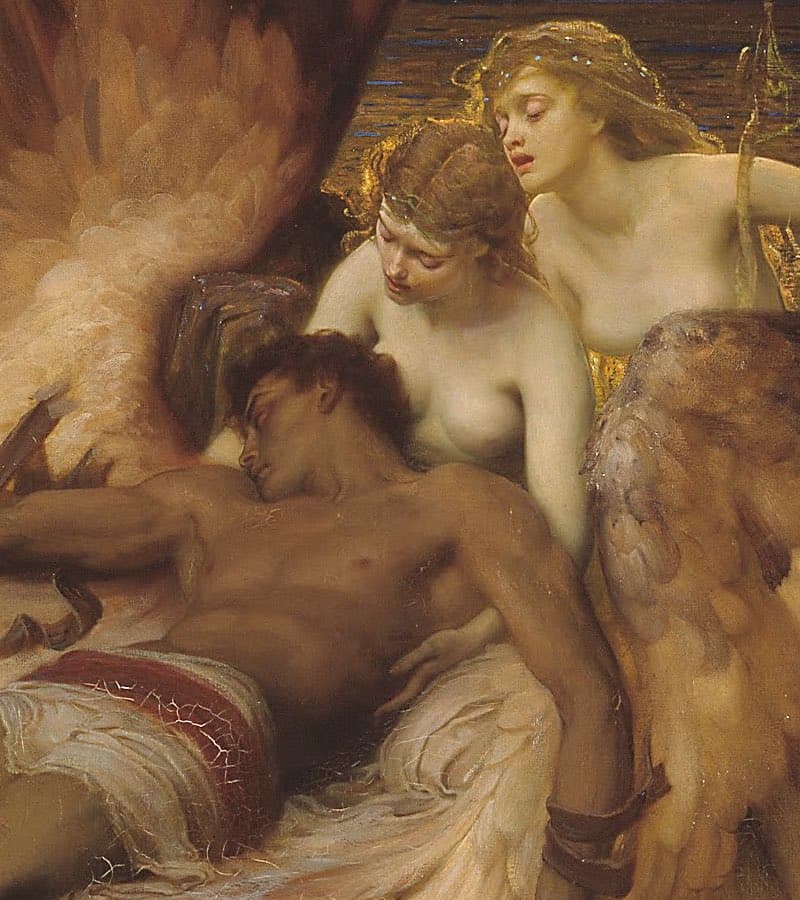
The Lament for Icarus
Herbert James Draper · 1898
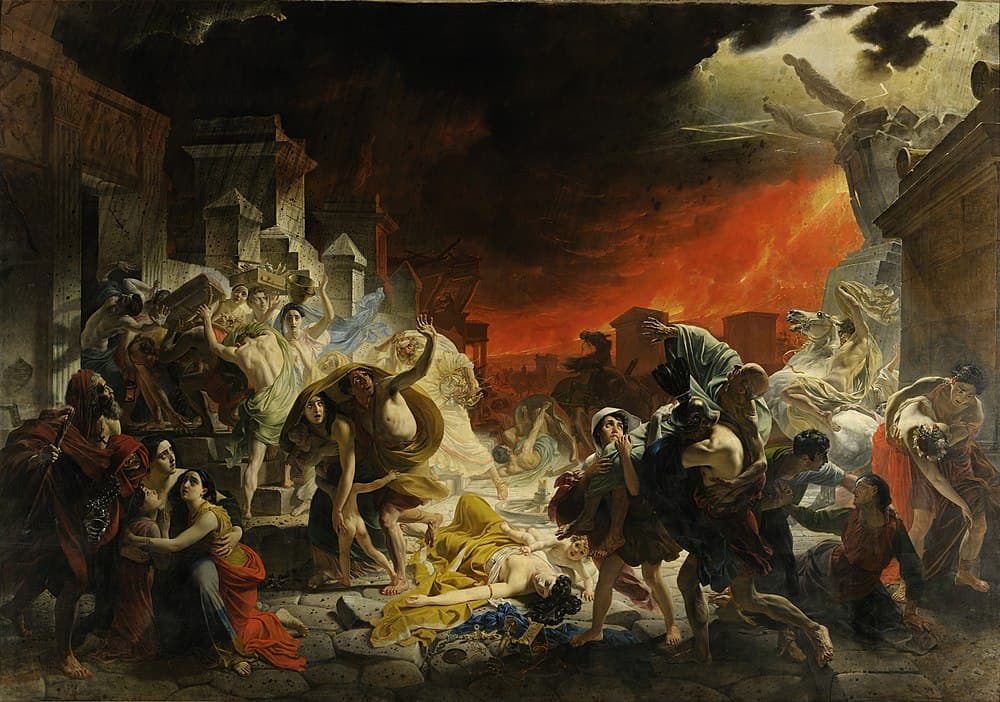
The Last Day of Pompeii
Karl Bryullov · 1830–33
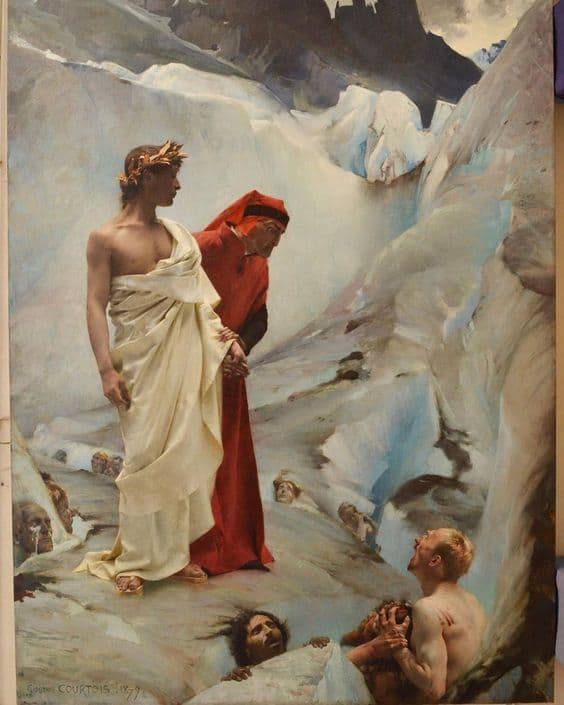
Dante and Virgil in Hell
Gustave Courtois · 1879
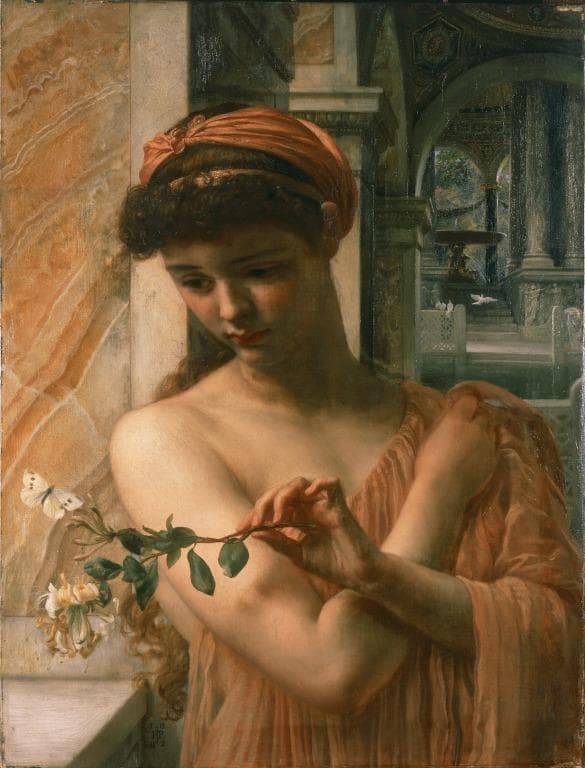
Psyche in the Temple of Love
Edward John Poynter · 1882
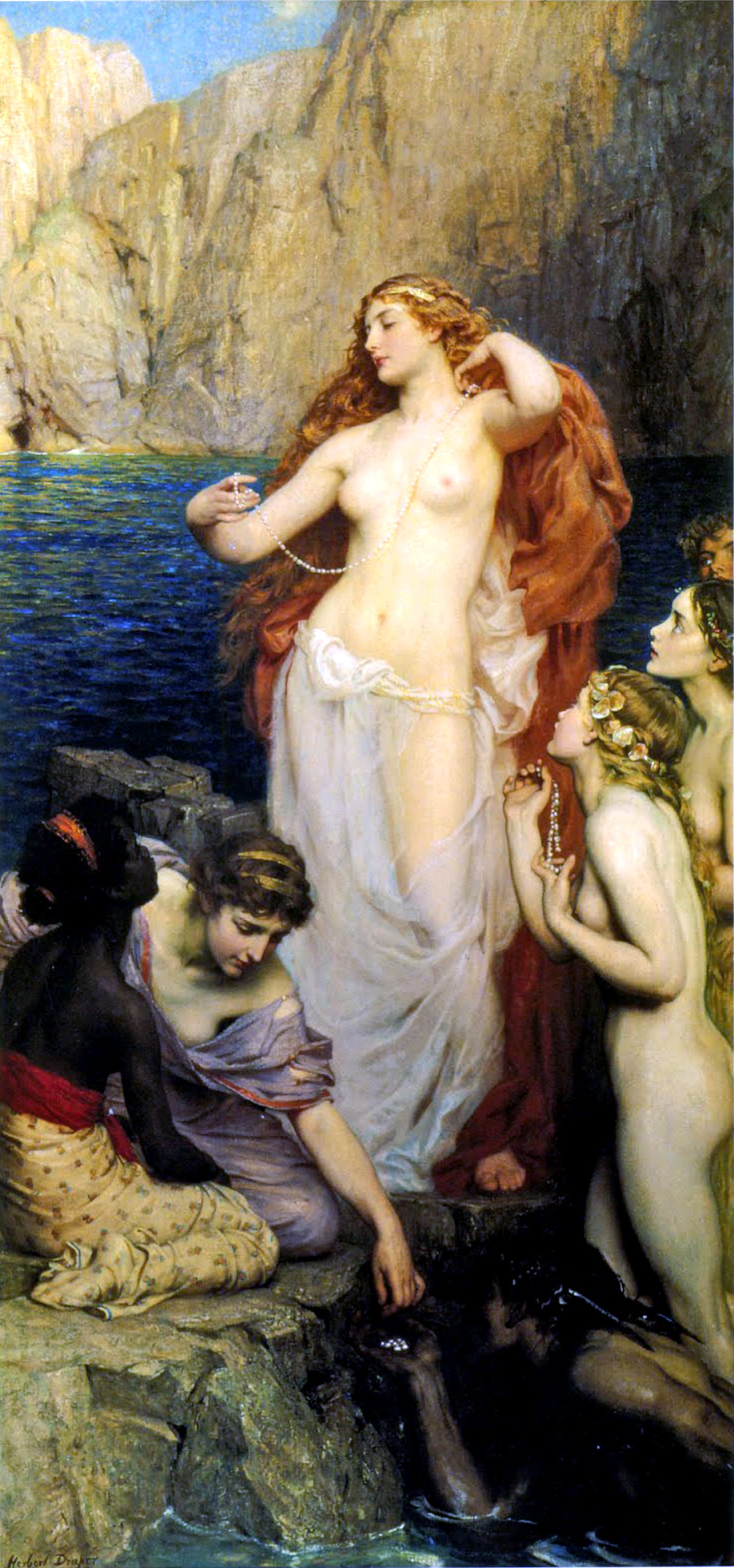
The Pearls of Aphrodite
Herbert James Draper · 1907
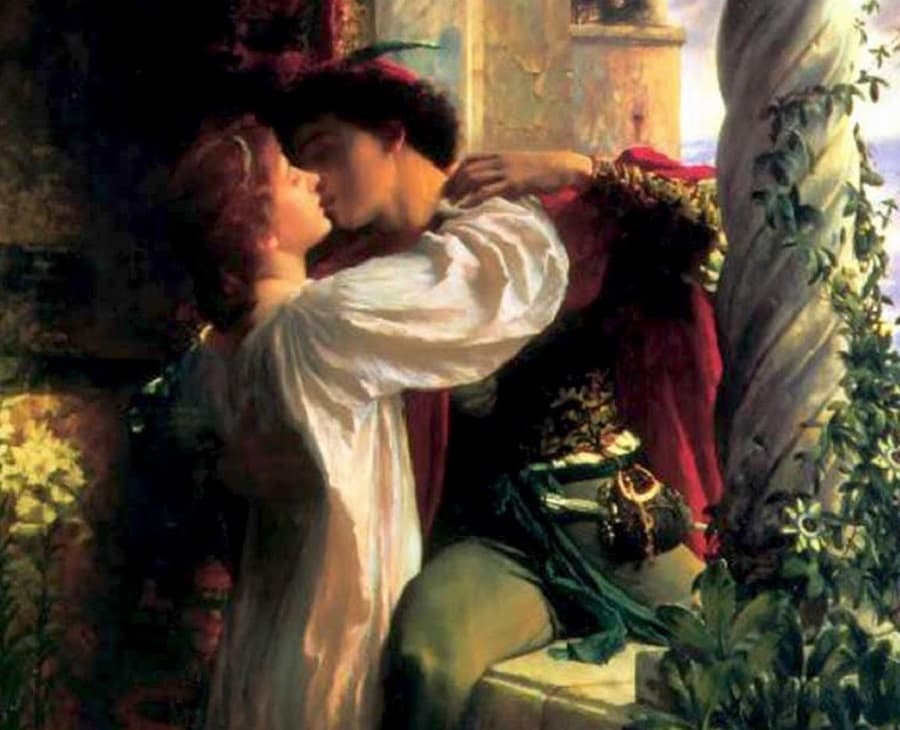
Romeo and Juliet
Sir Frank Dicksee · 1884
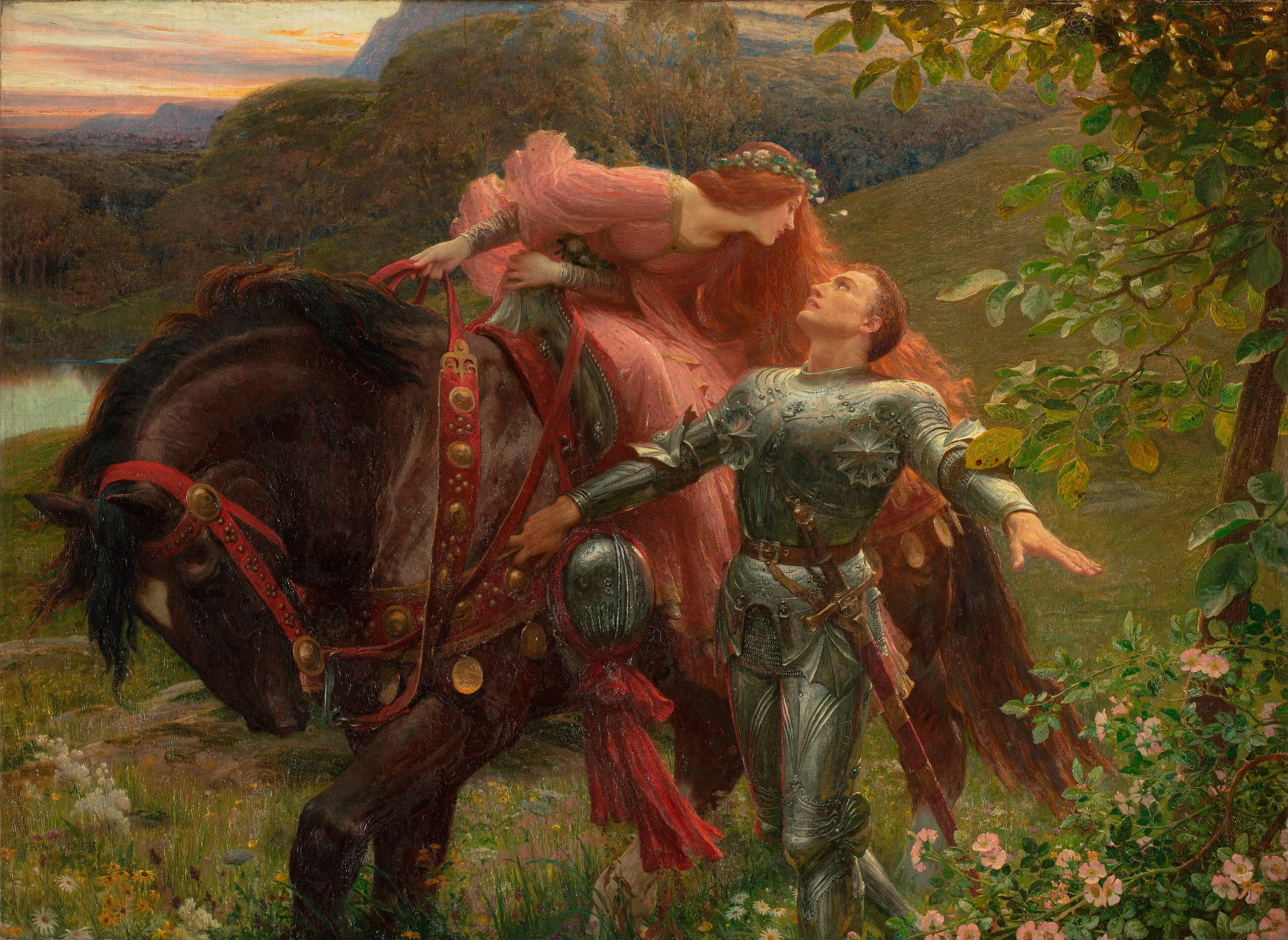
La Belle Dame sans Merci
Sir Frank Dicksee · 1901
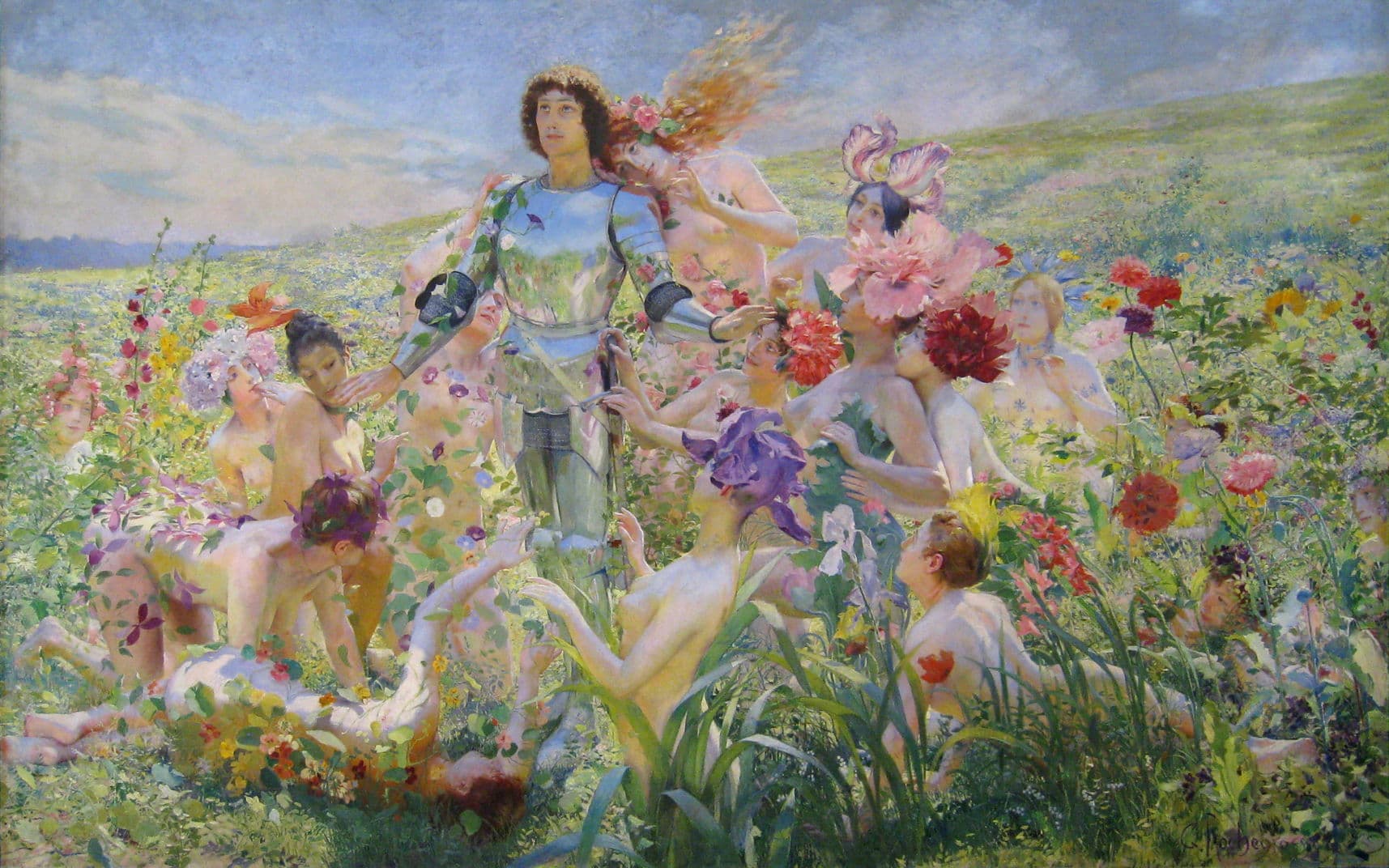
The Knight of the Flowers
Georges Rochegrosse · 1894
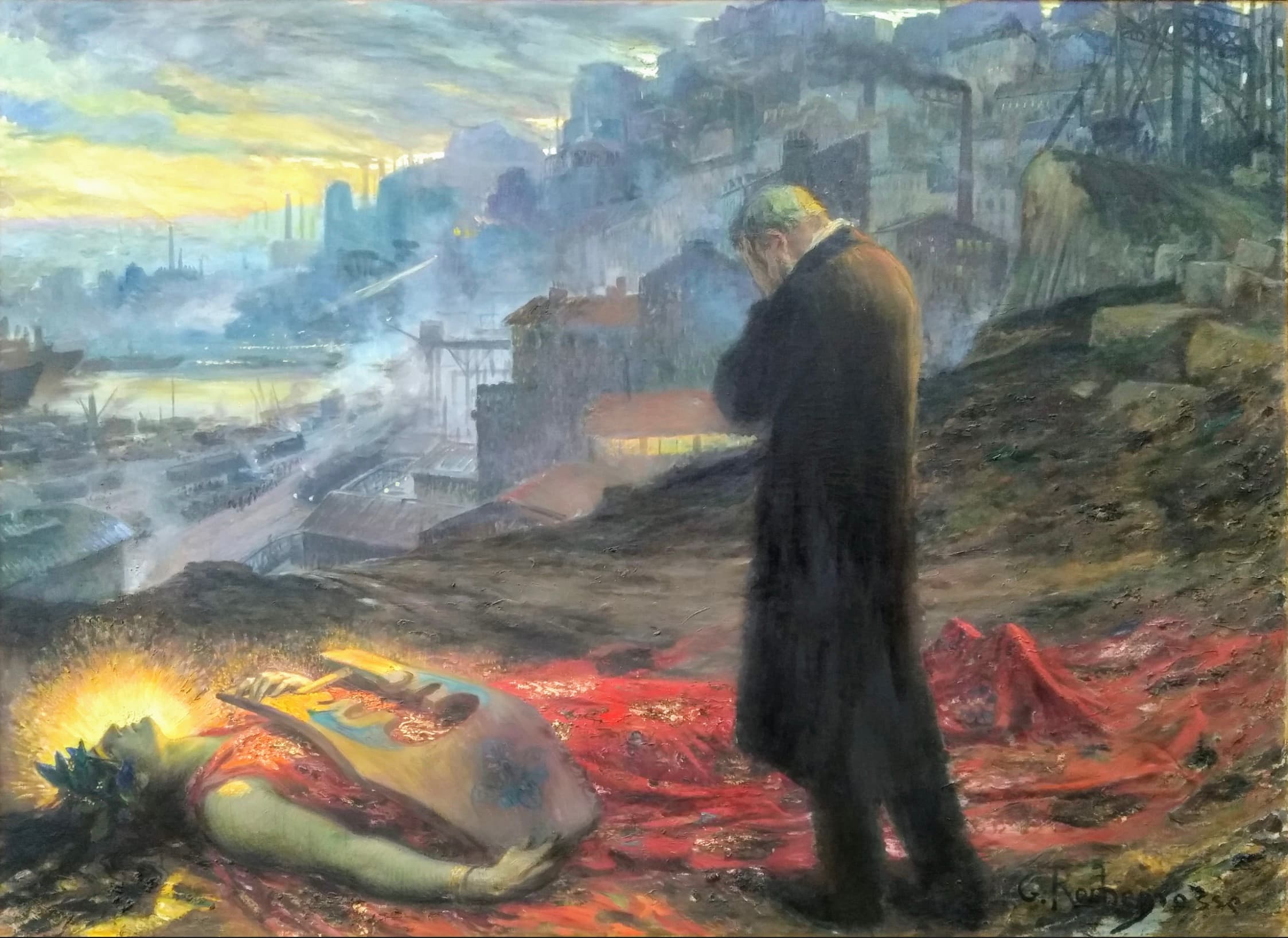
La Mort de la pourpre
Georges Rochegrosse · 1914
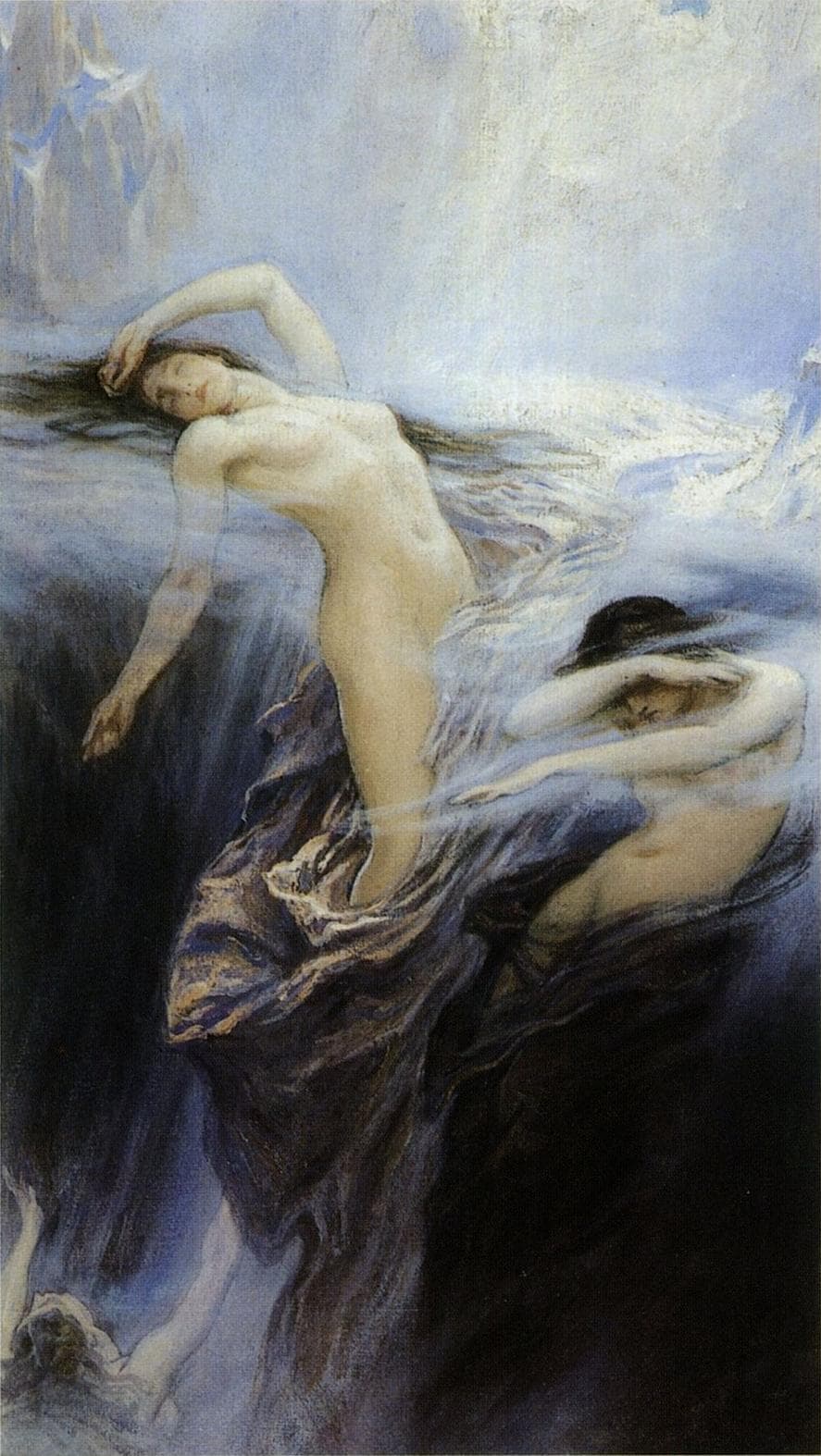
Clyties of the Mist
Herbert James Draper · 1912
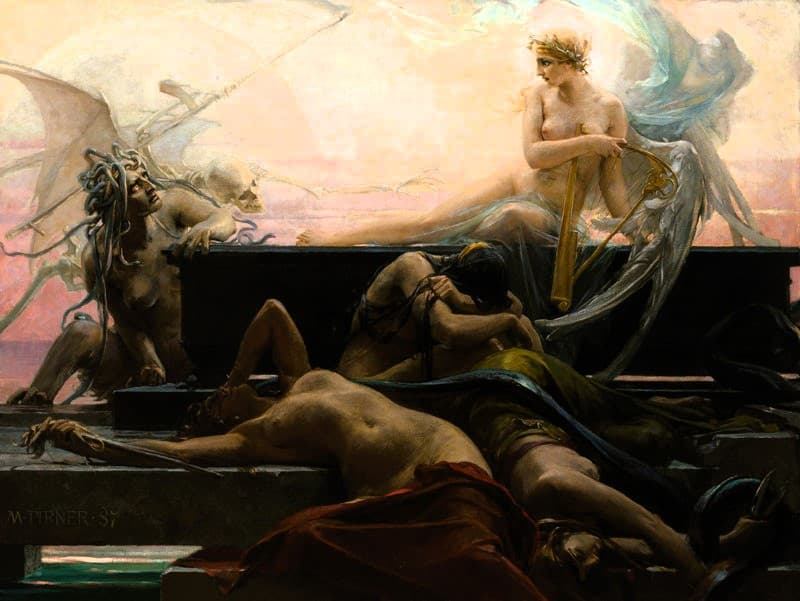
Finis (The End of All Things)
Maximilian Pirner · 1887
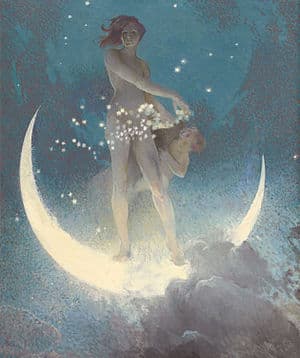
Spring Scattering Stars
Edwin Howland Blashfield · 1927
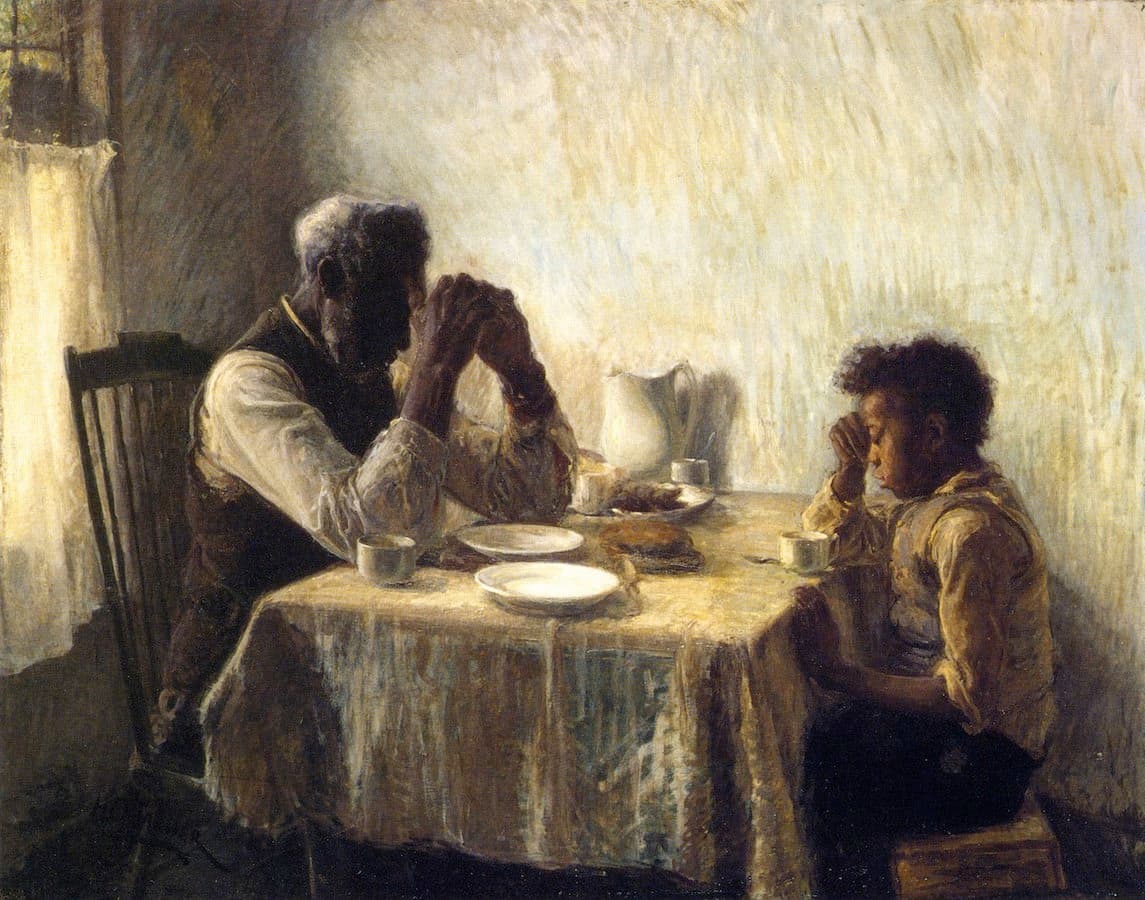
The Thankful Poor
Henry Ossawa Tanner · 1894
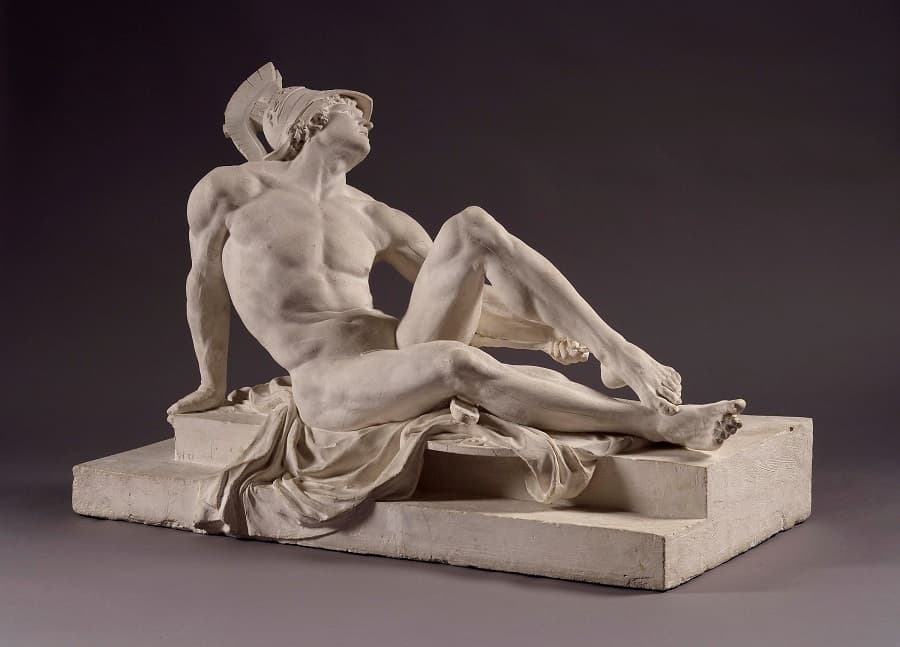
Dying Achilles
Jean-Baptiste Giraud · c. 1788–89
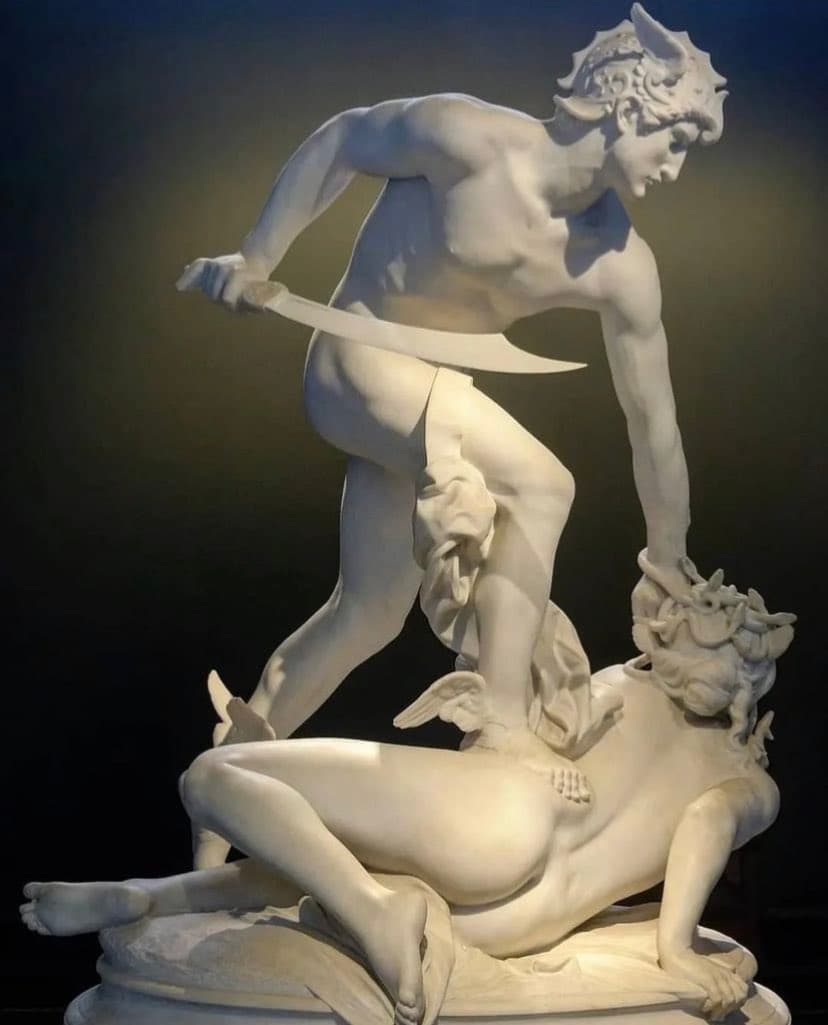
Perseus and the Gorgon
Laurent Marqueste · 1875–1903 (series); marbles 1890 and 1903
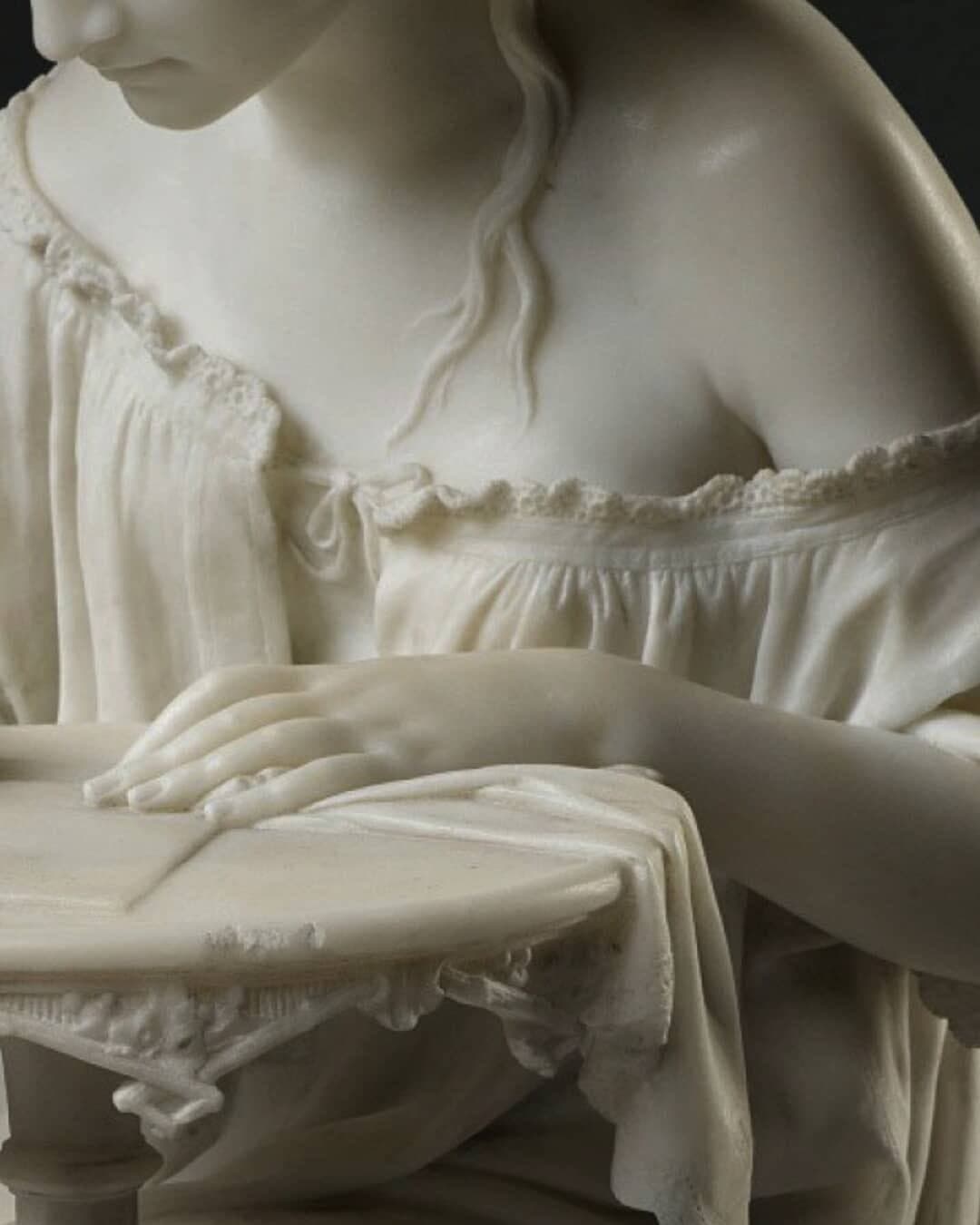
Girl Writing (La scrittrice)
Giovanni Spertini · 1866
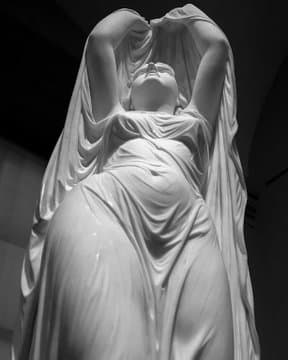
Undine Rising from the Waters
Chauncey Bradley Ives · 1880
Where academic art came from
Art academies began in Renaissance Italy. Giorgio Vasari helped found the Accademia delle Arti del Disegno in Florence in 1563, partly to raise artists from craftsmen to learned professionals. The model that mattered most was French. The Académie royale de peinture et de sculpture, founded in Paris in 1648 under Louis XIV, laid down rules for what art should be and how it should be learned, and after the Revolution its teaching passed to the École des Beaux-Arts. London's Royal Academy followed in 1768, with Sir Joshua Reynolds as its first president, and academies opened from St. Petersburg to Philadelphia.
The ideal they taught was classical: the balance and dignity of Greek and Roman sculpture, filtered through Raphael, Poussin and, from the 1780s, the stern Neoclassicism of Jacques-Louis David. The Death of Socrates (1787, Metropolitan Museum of Art), with its frieze-like row of figures, sculptural anatomy and moral seriousness, is a founding image of the tradition that academic painters inherited.
How an academic painter was trained
The training was long and rigorous. Students first copied engravings and drawings, then drew from plaster casts of ancient statues, and only after years were admitted to draw from the live nude model. A finished study of a nude figure was itself called an académie. Anatomy, perspective and the history of art were taught alongside.
The highest prize was the Prix de Rome, which sent winners to study for several years at the French Academy in the Villa Medici in Rome. From there they sent back regular works, called envois, to show their progress. Alexandre Cabanel's Fallen Angel (1847, Musée Fabre, Montpellier) was one of them. Lucifer lies against a rock beneath a band of rejoicing angels, his arms folded across his face so that only his eyes show, burning with resentment. Look closely and you will see a single tear.
The rules of academic painting
The hierarchy of genres. In 1667 the academician André Félibien ranked subjects by prestige: history painting (biblical, mythological and historical scenes) at the top, then portraits, scenes of everyday life, landscape and finally still life. Ambitious painters aimed for history.
Drawing first. Line and form, dessin, came before color. Compositions were built from dozens of preparatory drawings and oil sketches.
The idealized body. Figures were based on careful study from life but corrected toward classical perfection.
The finish. The surface was smoothed until brushstrokes vanished, a quality called le fini. Critics who disliked it called it léché, "licked."
Clear storytelling. Gestures, expressions and props should make the subject legible to an educated viewer.
The Paris Salon
For most of the nineteenth century, the Salon was the center of the art world. Held in the Louvre and later in the Palais de l'Industrie, it showed thousands of works each year to huge crowds. A medal there meant commissions, state purchases and a career. In 1863 the jury rejected so many works that Napoleon III ordered a separate Salon des Refusés, where Édouard Manet's Le Déjeuner sur l'herbe caused a scandal. That same year the official Salon's triumph was Cabanel's Birth of Venus, which the emperor bought for his own collection.
The masters of academic art
William-Adolphe Bouguereau was the most celebrated and most attacked of them all. His The Birth of Venus (1879, Musée d'Orsay) shows the goddess standing on her shell, wringing out her hair, in a whirl of nymphs, tritons and cupids; the composition revisits Raphael's Galatea in the Villa Farnesina. In The First Mourning (1888, Museo Nacional de Bellas Artes, Buenos Aires), Adam and Eve grieve over the body of Abel, the first human death. Bouguereau's technique was nearly flawless, and that was exactly what his modernist critics held against him.
Jean-Léon Gérôme painted ancient Rome and the Orient with photographic precision, including Pollice Verso (1872), the gladiator scene that inspired the film Gladiator. Ernest Meissonier painted tiny, obsessively detailed military scenes and was among the best-paid artists of his age. Pierre Auguste Cot, a pupil of Cabanel and Bouguereau, painted The Storm (1880, Metropolitan Museum of Art), in which two young lovers run from a downpour under a billowing veil.
Britain and Russia
In Britain, academic classicism took the form of the "Olympians": Frederic Leighton, Edward Poynter and Lawrence Alma-Tadema, who painted antiquity as a world of marble terraces and languid summer heat. Leighton, president of the Royal Academy from 1878 and the first painter ennobled as a lord, painted Flaming June (1895, Museo de Arte de Ponce, Puerto Rico), a sleeping woman in transparent orange. Its later fate is a parable of the style's reputation: by the 1960s it could not find a buyer in London, and it was purchased for the new museum in Ponce. Herbert James Draper's The Lament for Icarus (1898) was bought for the nation through the Royal Academy's Chantrey Bequest and hangs in Tate Britain.
In Russia, the Imperial Academy of Arts produced Karl Bryullov, whose huge The Last Day of Pompeii (1830–33) was a European sensation, and in America academic training shaped painters such as Edwin Blashfield and Henry Ossawa Tanner, both of whom studied in Paris.
Academic sculpture
The academies trained sculptors in the same way, from casts to the live model to the Prix de Rome, and the Salon gave them pride of place. Their marbles and bronzes filled the public squares, cemeteries, opera houses and town halls of the century. Jean-Baptiste Carpeaux's Ugolino and His Sons (1865–67), a father gnawing his fists among his starving children, is Dante seen through Michelangelo. From Jean-Baptiste Giraud's dying Achilles, carved at the end of the eighteenth century, to Laurent Marqueste's Perseus a hundred years later, academic sculptors returned again and again to the heroes and monsters of myth, and in Italy the academies of Milan and Florence produced tender, highly finished marbles of everyday life, like Giovanni Spertini's girl bent over her writing.
Why academic art fell from favor
Academic art was the art of the establishment, and when the establishment lost its grip, so did the style. The Impressionists, Post-Impressionists and later modernists defined themselves against the Salon, and the critics and historians who championed them wrote the story of nineteenth-century art as a battle in which the academy was the villain. French critics called academic painting art pompier, "fireman art," supposedly after the shiny helmets of classical heroes that looked like firemen's. By the mid-twentieth century, Bouguereau and Cabanel were removed from museum walls and their prices collapsed.
The return of academic art
The revival began in the 1970s and accelerated when the Musée d'Orsay opened in 1986, hanging academic paintings alongside the Impressionists rather than pretending they never existed. Scholars began studying the Salon as it actually was, and exhibitions reassessed Bouguereau, Gérôme and Alma-Tadema. Today classical realist ateliers teach academic drawing methods again, and the style's luminous figures are a mainstay of online aesthetics, from light academia to dark academia.
How to recognize an academic painting
- An invisible, glass-smooth surface with no visible brushwork.
- Idealized, anatomically precise figures, often nude, with porcelain skin.
- Subjects from mythology, the Bible, ancient history or literature, sometimes from exotic or Orientalist settings.
- Balanced, carefully staged compositions built on classical models.
- Precise drawing and soft, even modeling of light.
- Large scale, designed to compete for attention on crowded Salon walls.
Where to see academic art
The Musée d'Orsay in Paris has the finest collection, including Bouguereau's and Cabanel's Birth of Venus. Montpellier's Musée Fabre, Nantes's Musée d'Arts, London's Tate Britain and Leighton House, Manchester Art Gallery and New York's Metropolitan Museum of Art are also rich in academic painting, and the Museo de Arte de Ponce has Flaming June.
Questions & answers
What is academic art?
Academic art is the style of painting and sculpture taught and promoted by official European art academies, especially the École des Beaux-Arts in Paris and the Royal Academy in London, and exhibited at the Salon. It emphasizes classical ideals, precise drawing, idealized figures, a smooth finish and subjects from history, myth and religion.
Who are the most famous academic painters?
The best-known academic painters are William-Adolphe Bouguereau, Alexandre Cabanel, Jean-Léon Gérôme, Ernest Meissonier, Paul Delaroche and Thomas Couture in France; Frederic Leighton, Edward Poynter and Lawrence Alma-Tadema in Britain; and Karl Bryullov in Russia. Jean-Auguste-Dominique Ingres was their great forerunner.
Are classical paintings the same as academic art?
Not exactly. Classical paintings is a loose term for art inspired by ancient Greece and Rome, or simply for old, realistic paintings in general. Academic art is a specific tradition taught by official academies, chiefly in the nineteenth century. Much academic art is classical in style, but classical painting is older and broader.
Why did academic art fall out of favor?
From the late nineteenth century, Impressionism and later modernism defined themselves against the academy, and critics came to see its polished finish and traditional subjects as conservative and empty. By the mid-twentieth century many academic paintings had left museum walls. Reassessment began in the 1970s and gained momentum with the Musée d'Orsay in 1986.
What is the Prix de Rome?
The Prix de Rome was a scholarship awarded by the French academy, from 1663 until 1968, to the most promising young painters, sculptors, architects and engravers. Winners spent several years at the French Academy in Rome, from 1803 based at the Villa Medici, copying ancient art and sending works back to Paris.