Academic art
The Storm
Pierre Auguste Cot, 1880
The Storm (La Tempête) is an 1880 painting by the French academic artist Pierre Auguste Cot of a young couple running barefoot from a storm under a billowing cloth. It is in the Metropolitan Museum of Art, New York.
- Artist
- Pierre Auguste Cot
- Date
- 1880
- Medium
- Oil on canvas
- Dimensions
- 234.3 × 156.8 cm
- Collection
- Metropolitan Museum of Art, New York, United States
- Movement
- Academic art
What you are looking at
A boy and a girl run toward us out of the dark. They are barefoot on a sandy path, and the wind is behind them. The girl, in a white shift so sheer it is almost transparent, holds one corner of a great saffron-colored cloth over their heads; the boy, bare-chested, in a skin tied at the waist, holds the other and keeps an arm around her. The cloth balloons above them like a sail. She looks back over her shoulder at whatever is coming, eyes wide. He looks at her.
The background is nearly black, a storm-dark sky with a crack of light at the upper right, and a bank of foliage on the left. All the light falls on the two figures and the cloth.
Commission and the Salon of 1880
The Storm was commissioned in 1880 by the New York collector Catharine Lorillard Wolfe, advised by her cousin John Wolfe, one of Cot's main patrons. John Wolfe already owned Cot's Springtime (1873), another life-size young couple, this time on a swing; the success of that picture at the Salon of 1873 led directly to the new commission. The two canvases are close in size and are often seen as a pair. Catharine Wolfe bequeathed The Storm to the Metropolitan Museum in 1887.
What story is it?
Cot gave no explanation, and visitors to the Salon of 1880 argued about the source. Two texts were proposed. One is Bernardin de Saint-Pierre's novel Paul et Virginie (1788), in which two children raised together on Mauritius run through the rain sheltered by Virginie's skirt, "laughing together in the shelter of this umbrella of their own invention." The other is Longus's ancient Greek romance Daphnis and Chloe, about two young goatherds discovering love. The billowing cloth matches the Paul et Virginie scene closely, but the pastoral costume fits Daphnis and Chloe, and the ambiguity may be deliberate.
Close looking
Cot, a pupil of Bouguereau and Cabanel, paints with the smooth, invisible finish of the academic tradition. The tour de force is the girl's dress: through it you can read her legs and hips, yet it is painted as a pale glaze of white and gray over flesh tones. Notice the clean soles of her feet and the small stones of the path, picked out one by one. The picture flirts with eroticism while keeping a story as cover, which was exactly what made it popular. An 1899 cartoon even reused the composition to show Peace fleeing from War.
Compare it with the idealized nudes of William-Adolphe Bouguereau, such as La Naissance de Vénus, and browse more in Academic Art and Light Academia.
Questions & answers
Where is The Storm by Pierre Auguste Cot?
The Storm is in the Metropolitan Museum of Art in New York. Catharine Lorillard Wolfe commissioned it in 1880 and left it to the museum in her bequest of 1887. It is a large canvas, about 234 by 157 centimeters, so the figures are close to life size.
What is the story behind The Storm?
Cot never said. Salon visitors in 1880 linked it to Paul et Virginie, a 1788 novel in which two young lovers run through rain under a skirt held over their heads, and to Daphnis and Chloe, an ancient Greek pastoral romance. The billowing cloth echoes the Paul et Virginie scene most closely.
Is The Storm related to Cot's Springtime?
Yes. Springtime (1873), showing a young couple on a swing, was bought by John Wolfe after its Salon success. His cousin Catharine Lorillard Wolfe then commissioned The Storm. The two pictures are similar in size and subject and are often treated as companion pieces.
Kindred works
You may also study
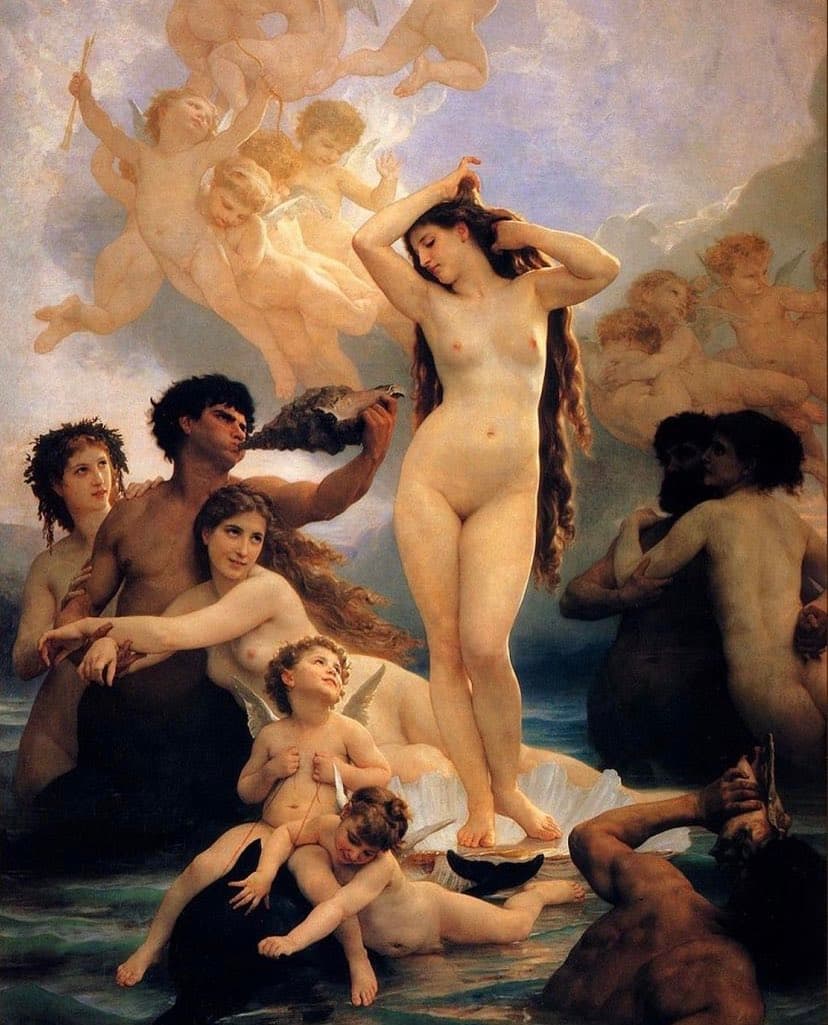
The Birth of Venus
William-Adolphe Bouguereau · 1879
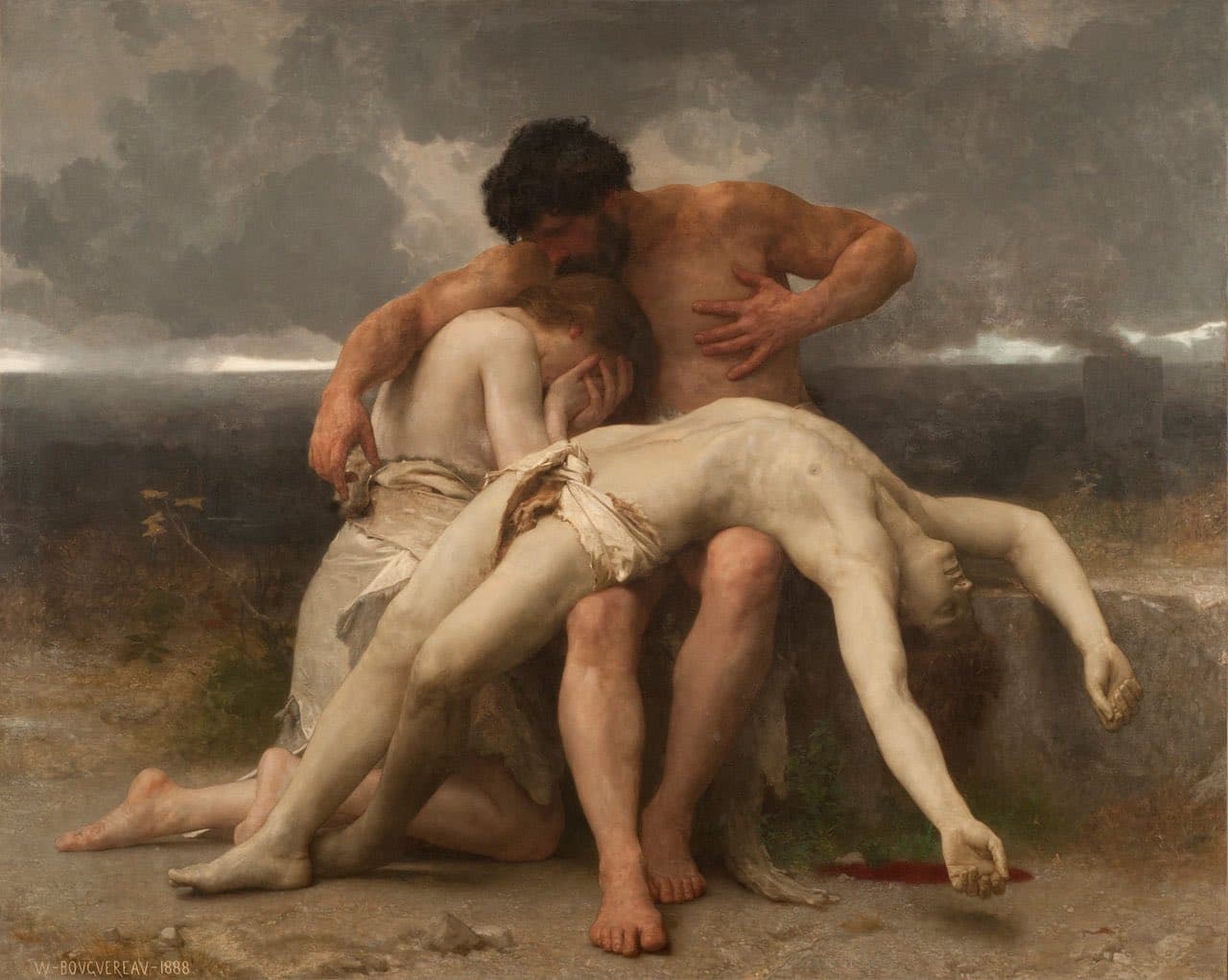
Premier Deuil
William-Adolphe Bouguereau · 1888
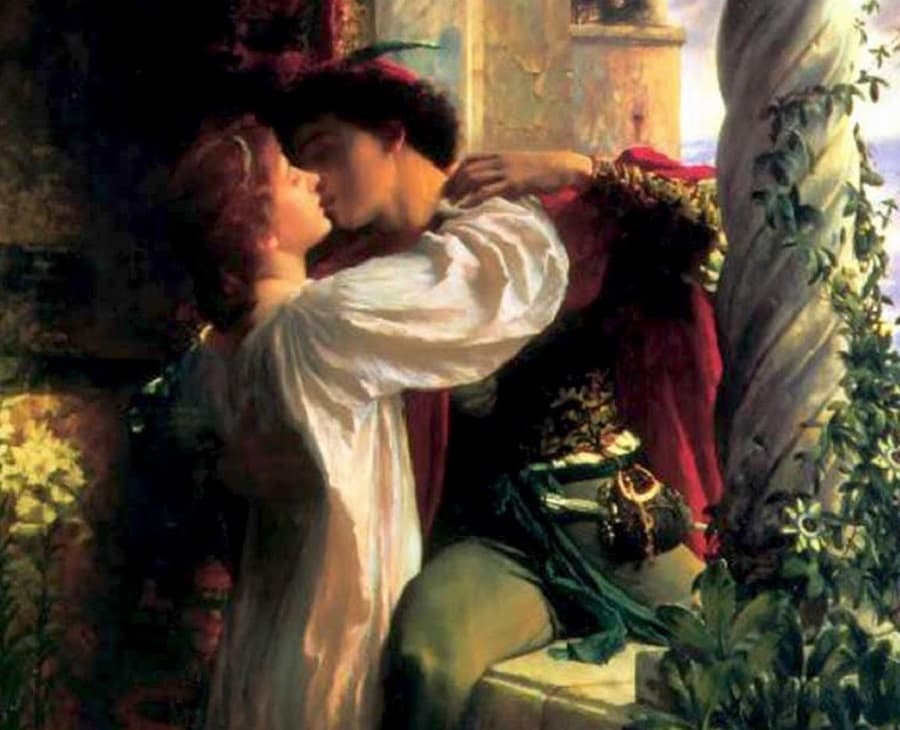
Romeo and Juliet
Sir Frank Dicksee · 1884
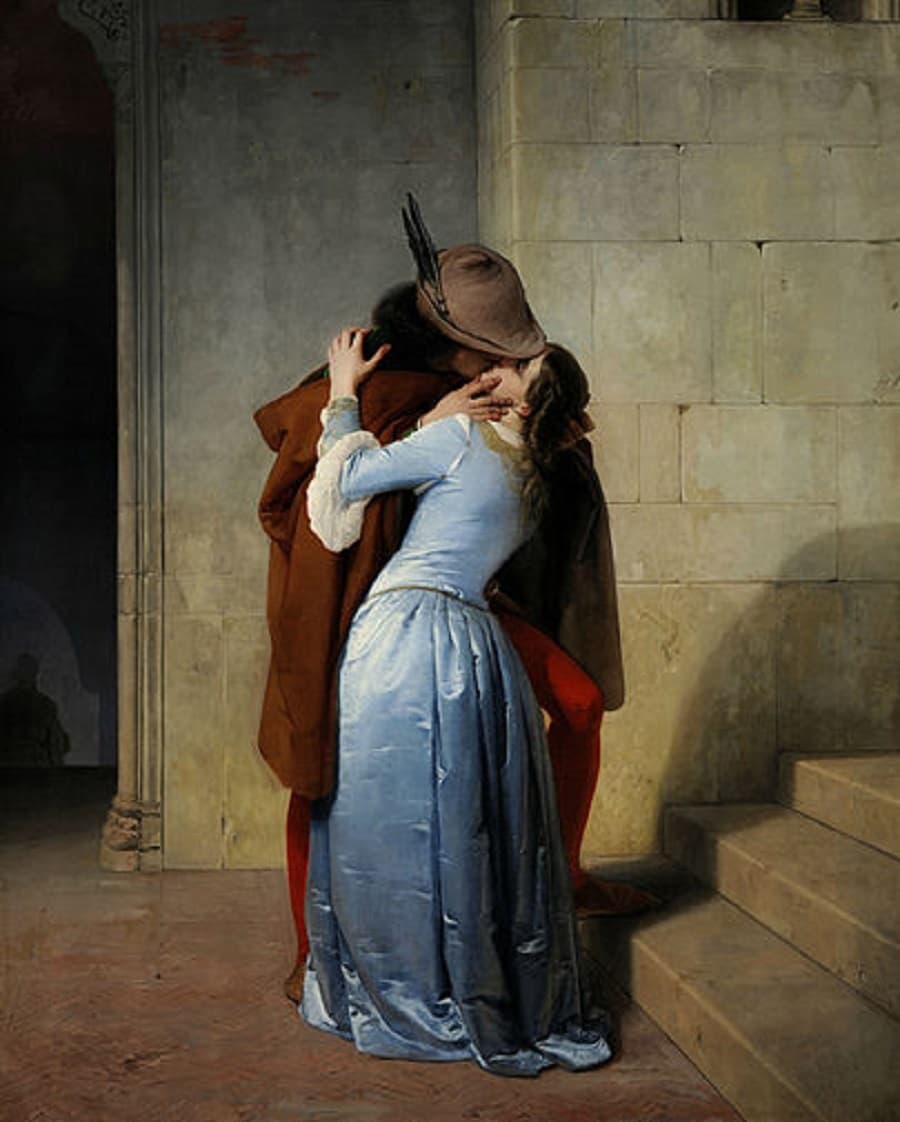
The Kiss
Francesco Hayez · 1859

Bridge over a Pond of Water Lilies
Claude Monet · 1899

Venus de Milo
Alexandros of Antioch · c. 150–125 BC

The Scream
Edvard Munch · 1893

The Thinker
Auguste Rodin · Modeled 1880–82; enlarged 1902–03; this cast 1904