Image: Unknown web scan (private collection) · Public domain · via Wikimedia Commons
Academic art / Late Victorian classicism
The Pearls of Aphrodite
Herbert James Draper, 1907
The Pearls of Aphrodite is Herbert James Draper's 1907 painting of the Greek goddess of love standing on a sea rock, admiring a string of pearls, while sea nymphs and attendants bring her more from the water. Its present location is not publicly recorded.
- Artist
- Herbert James Draper
- Date
- 1907
- Medium
- Oil on canvas
- Movement
- Academic art / Late Victorian classicism
What you are looking at
The canvas is tall and narrow, almost twice as high as it is wide, and Draper uses the height to stack the scene like a column. At the center, on a rock at the edge of a deep blue sea, stands Aphrodite. Her long red-gold hair is held by a gold band and streams down her back; a red cloak falls from her shoulders, and a white, transparent veil is knotted loosely at her hips. With her right hand she lifts a long string of pearls looped over her shoulder, looking down at it with half-closed eyes, absorbed in its glow.
Below and around her, others are busy bringing her treasure. At the lower left a dark-skinned attendant in a patterned wrap sits on the rock beside a young woman in lilac drapery, who reaches down toward the water. There, half submerged in the shadowy sea, a figure holds up a handful of pearls. On the right, sea nymphs rise from the water, one with a wreath of flowers in her hair holding up another strand of pearls toward the goddess. Behind everything, sheer golden cliffs rise into a strip of blue sky.
The detail worth finding is the way Draper handles the light. The goddess's skin is painted in pale, cool tones that make her seem lit from within, while the figures below her sink into the warmer shadows of the rock and sea, so she appears to rise out of them.
The myth and the subject
In Greek myth Aphrodite was born from the foam of the sea, and art since antiquity has linked her to shells, pearls and the ocean, as in Botticelli's The Birth of Venus. No ancient story describes this exact scene. Draper invented it, imagining the goddess receiving the treasures of the sea as tribute, an idea that fits her role as a sea-born deity of beauty and desire.
How Draper made it
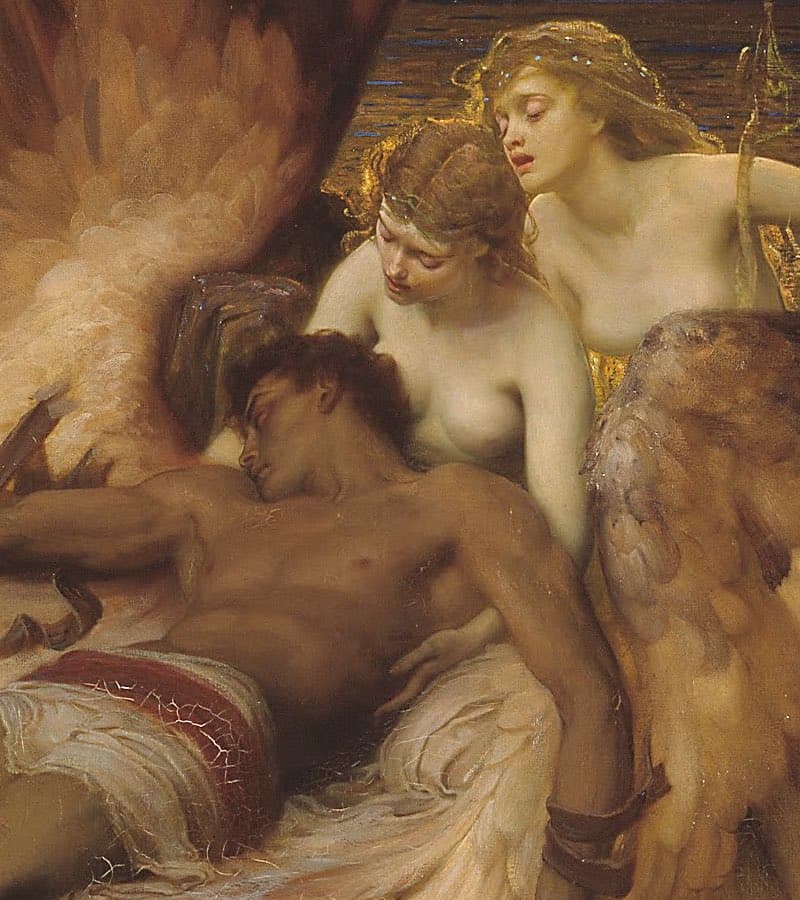
Herbert James Draper (1863–1920) trained at the Royal Academy Schools and in Paris and Rome, and made his name with mythological pictures of the sea and its creatures, such as The Lament for Icarus (1898) and Clyties of the Mist. He combined academic figure drawing with a fascination for water, rock and light, and he often painted sea nymphs emerging from the waves. The Pearls of Aphrodite, dated 1907, belongs to the height of his career, and a separate oil study for the composition survives.
What does it mean?
The painting is a celebration of beauty in the late Victorian classical manner, more decorative than narrative. Pearls, formed in the sea and prized for their luster, were natural attributes for Aphrodite, and Draper multiplies them through the picture: the goddess's strand, the nymph's offering, the handful rising out of the water. The image can be read as a meditation on beauty admired and adored, with Aphrodite as both the object of everyone's devotion and absorbed in her own reflection.
Where is it today?
The present whereabouts of The Pearls of Aphrodite are not publicly recorded, and it is generally assumed to be in a private collection. Because Draper died in 1920, the image is in the public domain. For related works, see our mythology paintings and academic art collections.
Questions & answers
Where is The Pearls of Aphrodite by Herbert Draper?
The current location of The Pearls of Aphrodite (1907) is not publicly recorded, and it is thought to be in a private collection. It is not on regular public display. Draper's related sea pictures, such as The Lament for Icarus, are in public museums.
What is happening in The Pearls of Aphrodite?
Aphrodite, goddess of love, stands on a rock by the sea admiring a long string of pearls. Around her, an attendant, a kneeling woman, a figure in the water and sea nymphs gather more pearls from the sea and offer them to her as tribute.
Why are pearls associated with Aphrodite?
In Greek myth Aphrodite was born from the sea foam, so art has long linked her to the treasures of the sea: shells, coral and pearls. Pearls, formed in the sea and prized for their luster, suit a goddess of beauty.
Who was Herbert James Draper?
Herbert James Draper (1863–1920) was an English painter of mythological subjects, trained at the Royal Academy Schools. He is best known for sea-themed pictures such as The Lament for Icarus (1898) and for images of water nymphs.
More by the artist
Herbert James Draper
Kindred works
You may also study
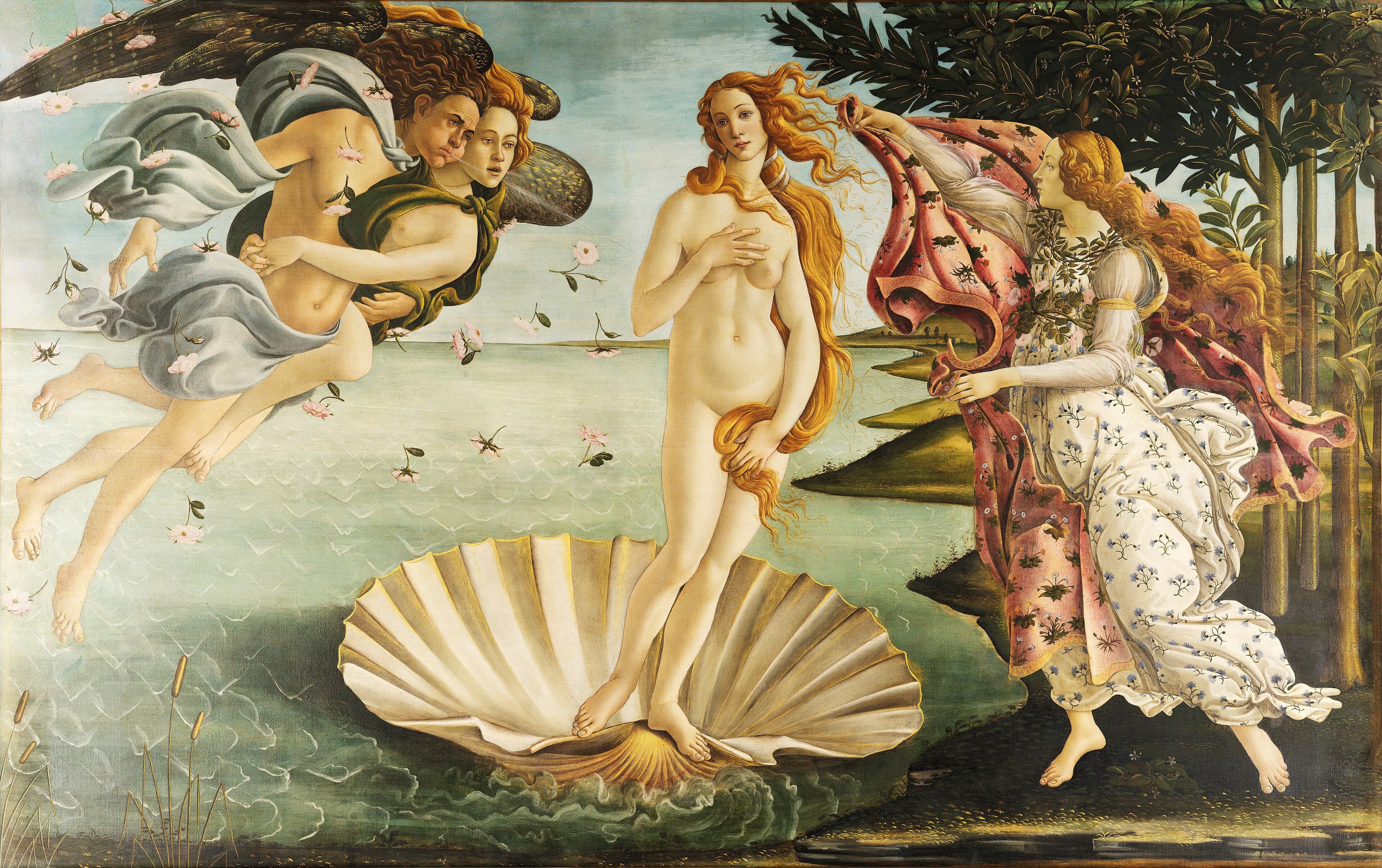
The Birth of Venus
Sandro Botticelli · c. 1484–1486
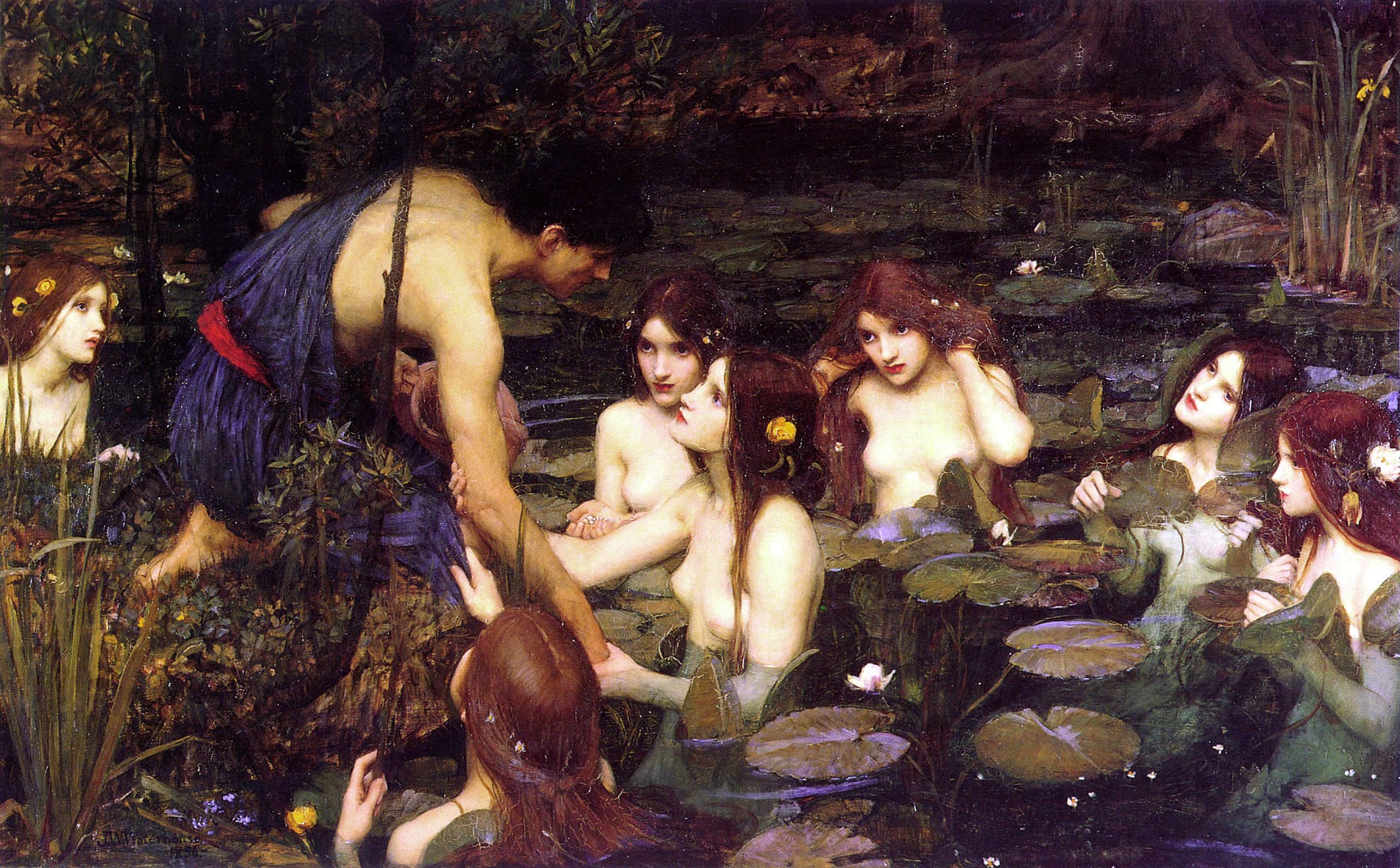
Hylas and the Nymphs
John William Waterhouse · 1896
The Birth of Venus
William-Adolphe Bouguereau · 1879

Bridge over a Pond of Water Lilies
Claude Monet · 1899

Venus de Milo
Alexandros of Antioch · c. 150–125 BC

Nymphs Dancing to Pan's Flute
Joseph Tomanek

The Thinker
Auguste Rodin · Modeled 1880–82; enlarged 1902–03; this cast 1904

Saturn Devouring His Son
Francisco Goya · c. 1819–1823