Academic art / Classicism
Psyche in the Temple of Love
Edward John Poynter, 1882
Psyche in the Temple of Love is an 1882 oil painting by Edward John Poynter showing Psyche, the mortal beloved of Cupid, gazing at a butterfly on a sprig of honeysuckle. It is in the Walker Art Gallery, Liverpool.
- Artist
- Edward John Poynter
- Date
- 1882
- Medium
- Oil on canvas
- Dimensions
- 66.3 × 50.7 cm
- Collection
- Walker Art Gallery, Liverpool, United Kingdom
- Movement
- Academic art / Classicism
What you are looking at
A young woman stands half-turned in a marble interior, looking down at a sprig of honeysuckle she holds by its stem. A small white butterfly has settled on one of the leaves, and the flowers, cream and pale yellow, droop at the end of the stem. Her chestnut hair is bound in an orange-red turban; a loose rose-colored robe slips from her shoulders, and her left arm folds across her body. Her expression is quiet and absorbed, the faint smile the old description of her as amused tries to capture.
Behind her, the setting does a lot of work. To the left rises a column of veined pink and amber marble, painted with the care of a geologist. To the right, beyond an opening, are arcades, a fountain basin and white doves, the birds of Venus. The palette is warm and narrow: apricot, rose, honey and stone, with the white butterfly as the coolest note in the picture.
How it was painted
Edward John Poynter (1836–1919) trained in Paris under Charles Gleyre and became one of the pillars of the Victorian art establishment: first Slade Professor at University College London, director of the National Gallery and, from 1896, President of the Royal Academy. His manner is precise and finished, with tight drawing and smoothly blended flesh. The meticulous marble shows his taste for archaeological detail, which he shared with Lawrence Alma-Tadema.
What does the painting mean?
The story of Cupid and Psyche comes from the Metamorphoses of Apuleius, written in the 2nd century AD. Psyche, a mortal so beautiful that she provokes the jealousy of Venus, is carried off to a palace where an unseen lover, Cupid, visits her only by night. Here she seems to wait in that palace, or in a temple of the goddess.
The butterfly is the key. In Greek, psyche means both the soul and the butterfly, and ancient art often gave Psyche butterfly wings. Poynter turns the symbol into an incident: the soul looks at its own emblem without knowing it. Honeysuckle, which twines around other plants, was a Victorian emblem of devoted love, and the doves place the scene under Venus.
The picture belongs to the Aesthetic taste of the 1880s for single, inward-looking female figures, beauty for its own sake rather than drama.
Where to see it
The painting is in the Walker Art Gallery, Liverpool, part of National Museums Liverpool. For the myth in sculpture, see Canova's Cupid and Psyche and Pietro Tenerani's Psyche in a Faint; for a parallel Victorian heroine, see Starlight and our collection of famous paintings of women.
Questions & answers
Where is Psyche in the Temple of Love?
Edward Poynter's painting of 1882 is in the Walker Art Gallery in Liverpool, part of National Museums Liverpool. It is a fairly small oil on canvas, about 66 by 51 centimeters, painted in Poynter's precise, highly finished classical manner at the height of his career.
Why is there a butterfly in Psyche in the Temple of Love?
The Greek word psyche means both soul and butterfly, and ancient artists often showed Psyche with butterfly wings. Poynter places a white butterfly on the honeysuckle she holds, so the heroine unknowingly contemplates her own emblem, the human soul she personifies.
Who is Psyche in mythology?
In Apuleius's Metamorphoses, Psyche is a mortal princess whose beauty angers Venus. Cupid falls in love with her and visits her only in darkness. After she breaks his rule and endures trials set by Venus, she is made immortal and married to Cupid.
Kindred works
You may also study
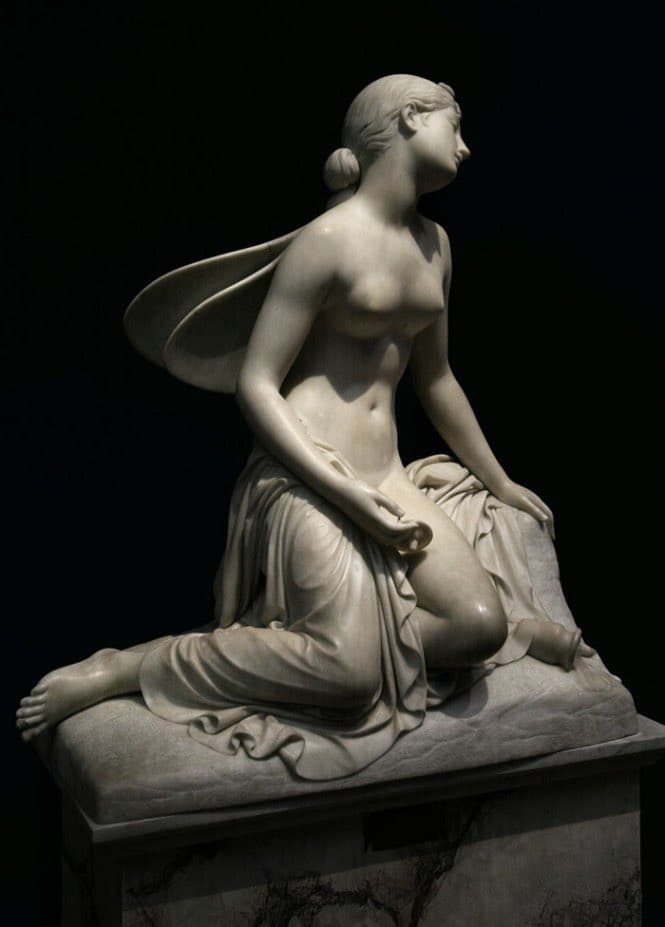
Psyche in a Faint
Pietro Tenerani · composition c. 1822
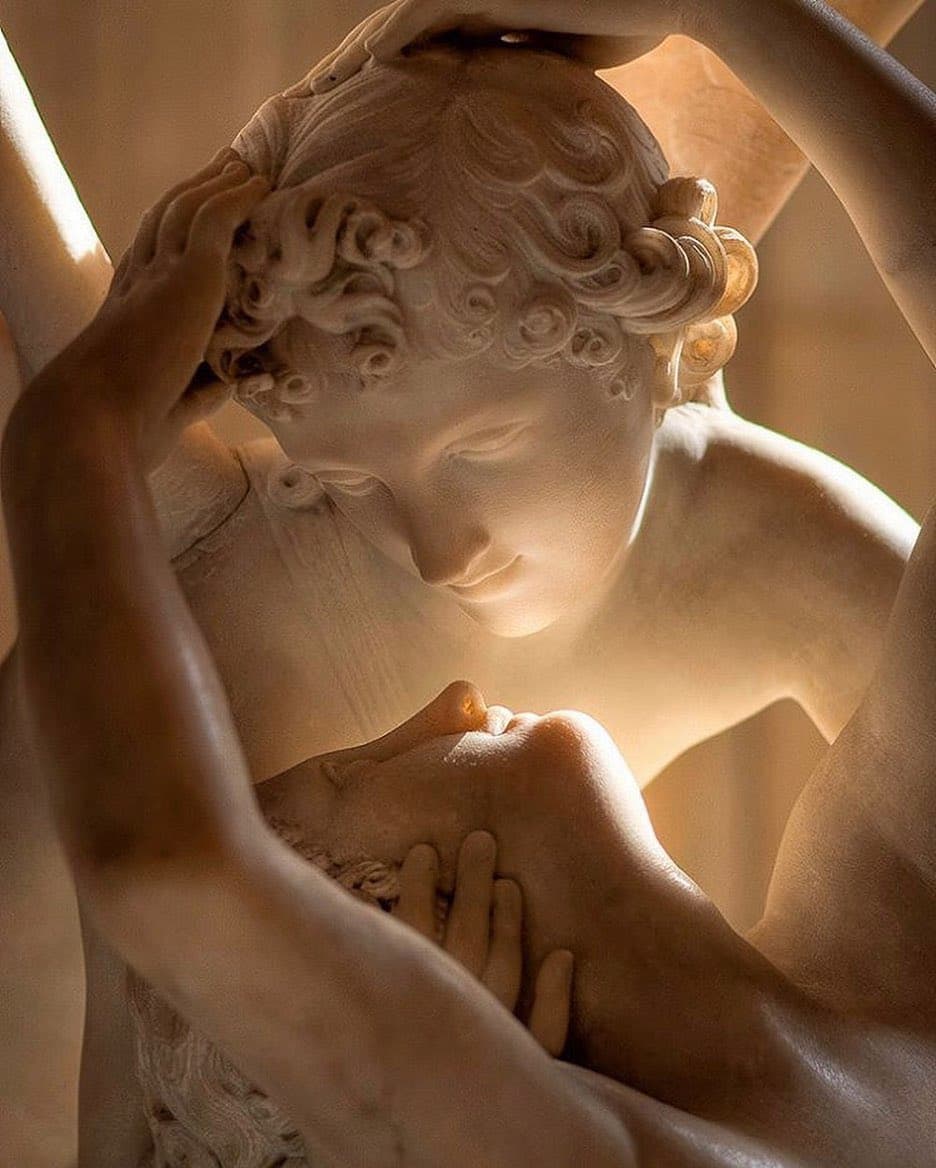
Psyche Revived by Cupid's Kiss
Antonio Canova · 1787–1793
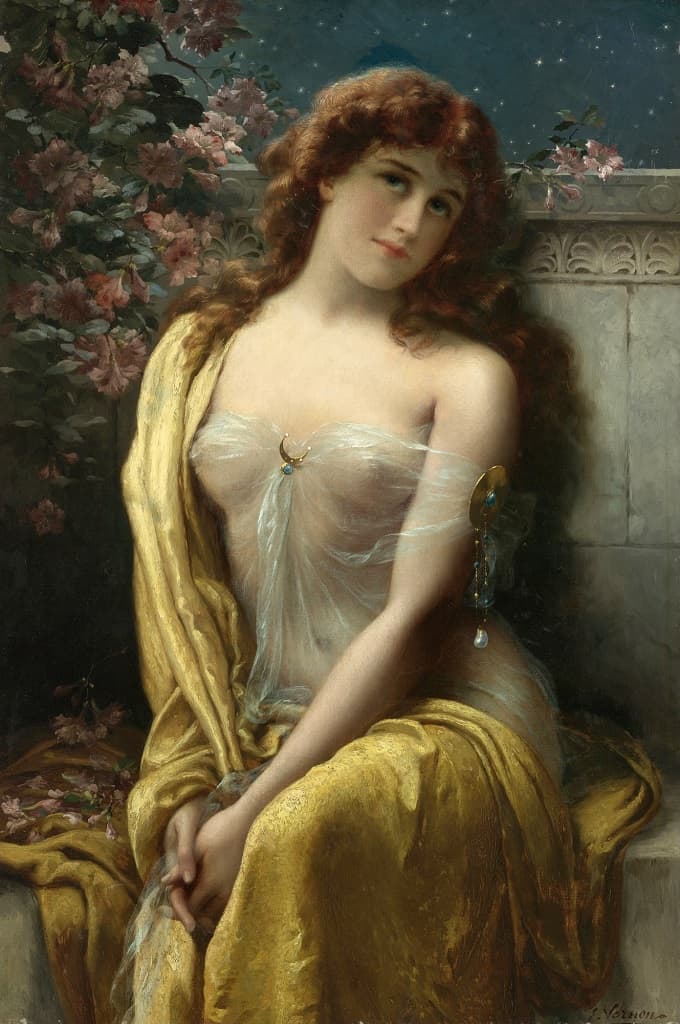
Starlight
Émile Vernon

Bridge over a Pond of Water Lilies
Claude Monet · 1899

Venus de Milo
Alexandros of Antioch · c. 150–125 BC

Nymphs Dancing to Pan's Flute
Joseph Tomanek
The Thinker
Auguste Rodin · Modeled 1880–82; enlarged 1902–03; this cast 1904

Saturn Devouring His Son
Francisco Goya · c. 1819–1823