Academic art
Clyties of the Mist
Herbert James Draper, 1912
Clyties of the Mist is a 1912 painting by the British artist Herbert James Draper in which morning mists are personified as nude nymphs rising and swirling toward the sun over a mountain gorge. It is in a private collection.
- Artist
- Herbert James Draper
- Date
- 1912
- Medium
- Oil on canvas
- Dimensions
- 220 × 122 cm
- Collection
- Private collection
- Movement
- Academic art
Clyties of the Mist is a large mythological painting by the British artist Herbert James Draper, dated 1912. It personifies the mists of a mountain valley as a group of pale, nude nymphs drifting upward toward the sun. The tall canvas, recorded at about 220 by 122 centimeters, is in a private collection; an oil study for it is also known.
What you are looking at
The format is tall and narrow, like a gorge. In the upper half, a nymph with long dark hair floats on her back, her body arched, one arm thrown up behind her head and the other trailing. Her flesh is luminous and pale, caught in the light pouring down from above. Wisps of white and grey vapor wrap around her hips and stream behind her like drapery.
Below and to the right, a second figure huddles in shadow, her face hidden in her arm, a dark cloak of mist around her. Lower still, other figures are half dissolved in cloud, and the rock walls of the valley loom grey-blue on either side. At the very top, a glimpse of cold blue sky and snowy peak marks where the sun is breaking through.
The myth of Clytie
In Ovid's Metamorphoses, Clytie is a water nymph who loved the sun god Helios (Sol). Abandoned by him, she sat on the ground for nine days without food or drink, turning her face to follow his chariot across the sky, until she was transformed into a flower that always turns toward the sun, traditionally the heliotrope, later often identified with the sunflower.
Draper turns the myth into a poetic image of weather. His Clyties, in the plural, are mists that rise from the valley each morning, drawn toward the sun, and vanish in its warmth: longing for the light that destroys them. The idea is Draper's own; there is no ancient story of mist nymphs by this name.
Draper and the late Victorians
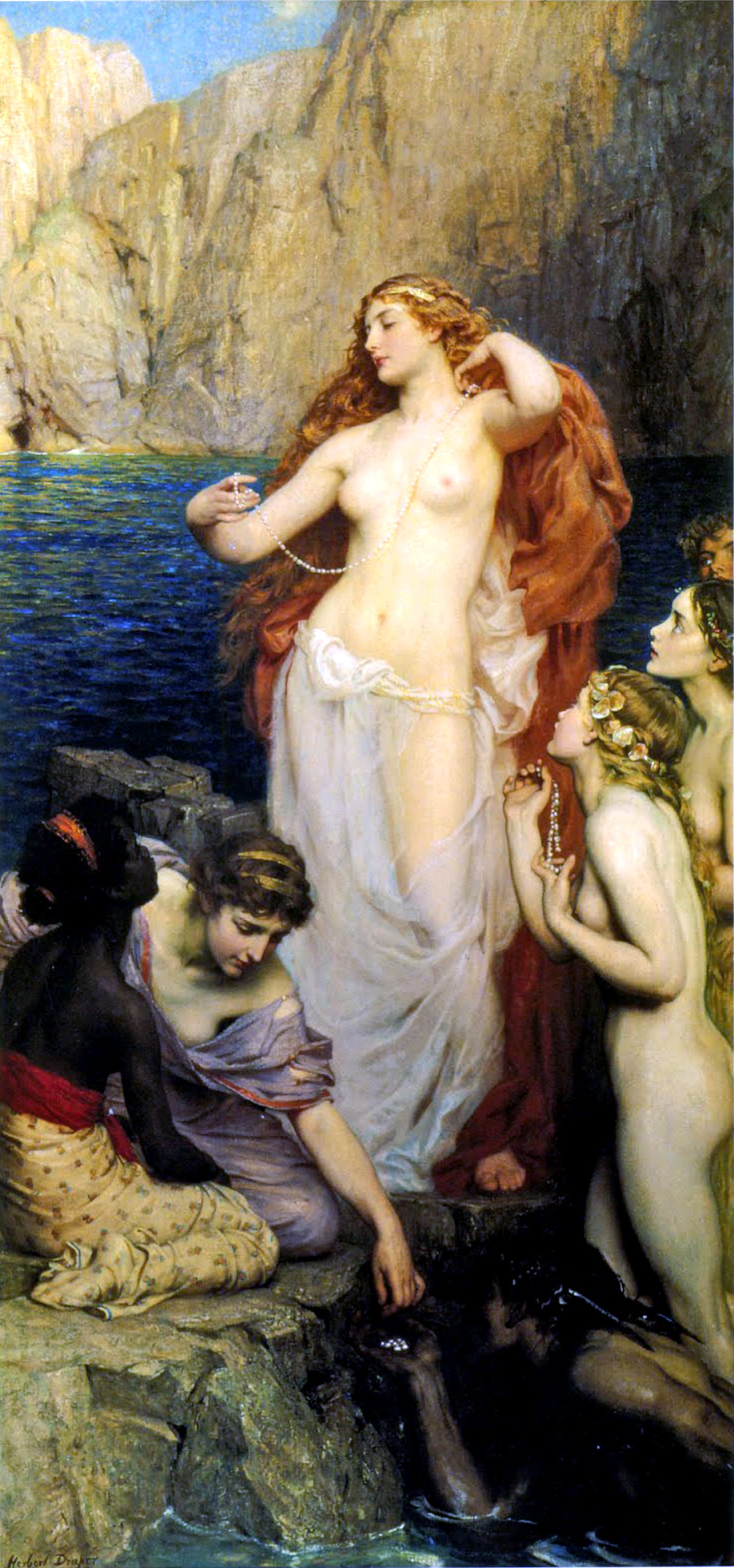
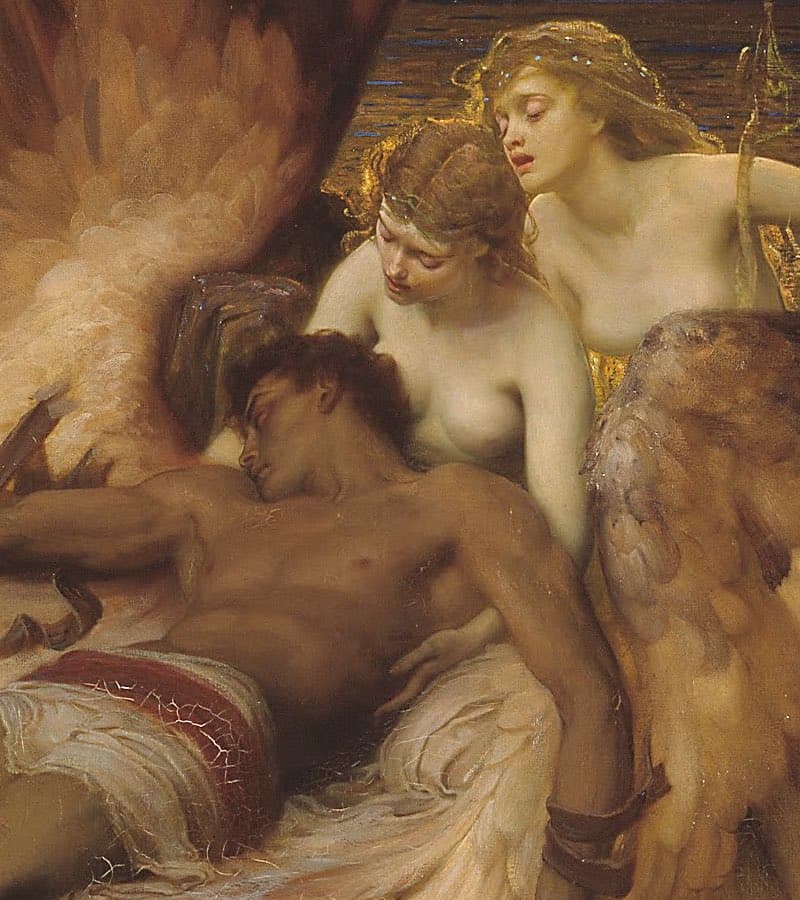
Herbert James Draper (1863–1920) was one of the last painters of the Victorian classical tradition, known for sensuous mythological subjects such as The Lament for Icarus (1898), bought for the nation by the Tate, and The Pearls of Aphrodite. By 1912, with modernism advancing, his kind of painting was falling out of fashion, which gives this late, dreamlike work a valedictory quality.
Where to see it
The painting is privately owned. Draper's work is best seen in British public collections, above all Tate Britain. Related pages include Herbert James Draper and mythology paintings.
Questions & answers
Who was Clytie in Greek mythology?
Clytie was a nymph who loved the sun god Helios. When he abandoned her, she pined for nine days, gazing at the sun as it crossed the sky, and was turned into a flower that follows the sun, usually identified as the heliotrope or sunflower. Her story is told in Ovid's Metamorphoses.
What does Clyties of the Mist mean?
Draper imagines the morning mists of a mountain valley as nymphs who, like Clytie, yearn for the sun. They rise toward its light and dissolve in it, an image of longing and transience. The plural title and the idea of mist nymphs are Draper's own poetic invention rather than an ancient myth.
Where is Clyties of the Mist by Draper?
The painting, dated 1912, is in a private collection, and an oil study for it also survives. Draper's best-known works on public view are in Britain, especially The Lament for Icarus of 1898, which hangs at Tate Britain in London.
More by the artist
Herbert James Draper
Kindred works
You may also study
The Birth of Venus
William-Adolphe Bouguereau · 1879
Spring Scattering Stars
Edwin Howland Blashfield · 1927
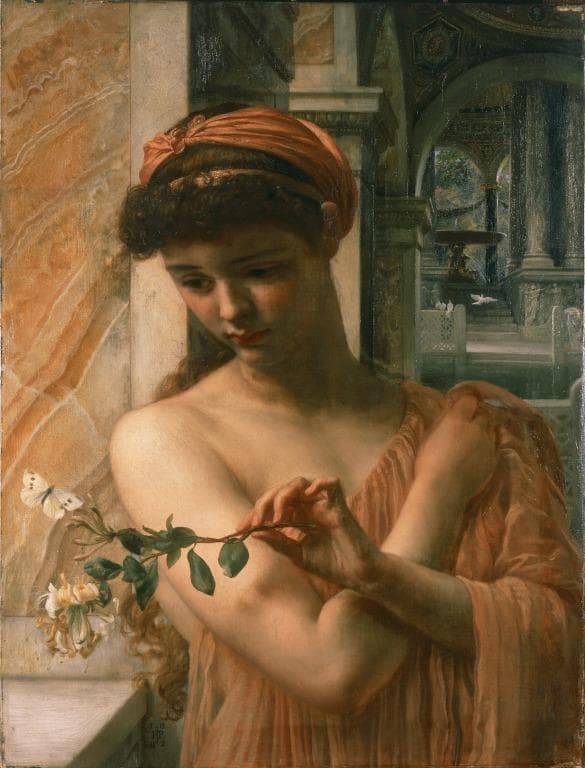
Psyche in the Temple of Love
Edward John Poynter · 1882

Bridge over a Pond of Water Lilies
Claude Monet · 1899

Venus de Milo
Alexandros of Antioch · c. 150–125 BC

Nymphs Dancing to Pan's Flute
Joseph Tomanek

The Scream
Edvard Munch · 1893
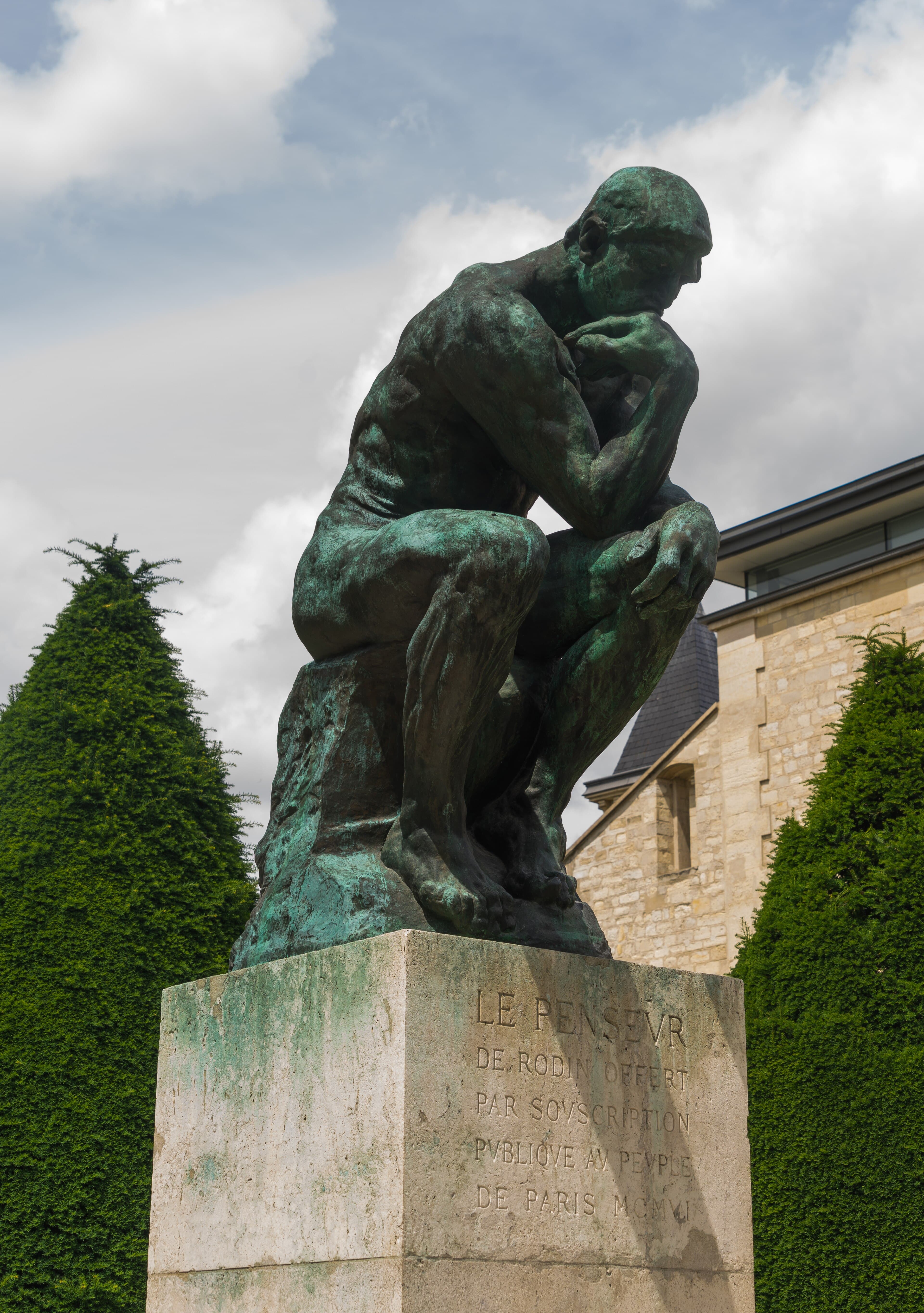
The Thinker
Auguste Rodin · Modeled 1880–82; enlarged 1902–03; this cast 1904