Neoclassicism
Dying Achilles
Jean-Baptiste Giraud, c. 1788–89
Dying Achilles (Achille mourant) is a Neoclassical sculpture by the French sculptor Jean-Baptiste Giraud of the Greek hero reclining, mortally wounded in the heel. Dated about 1788–89, it is associated with the Musée Granet in Aix-en-Provence.
- Artist
- Jean-Baptiste Giraud
- Date
- c. 1788–89
- Collection
- Musée Granet, Aix-en-Provence, France
- Movement
- Neoclassicism
Dying Achilles (Achille mourant), also recorded as Achille blessé ("Wounded Achilles"), is a sculpture by the French sculptor Jean-Baptiste Giraud (1752–1830), dated about 1788–89. It shows the Greek hero of the Trojan War sinking back on a rocky base, reaching toward the wound in his heel that will kill him. A version is associated with the Musée Granet in Giraud's native city of Aix-en-Provence. Giraud exhibited at the Paris Salon of 1789, and the subject is connected with his acceptance at the Royal Academy of Painting and Sculpture.
What you are looking at
Achilles reclines diagonally across a stepped, rectangular base. He props himself on his right arm, his torso twisted, his head thrown back and turned upward. He wears only a crested Greek helmet, and a cloak spills from beneath him over the edge of the base. One leg is drawn up sharply, and his left hand reaches toward that foot, the vulnerable heel.
The anatomy is idealized and powerful: broad chest, clearly defined abdominal muscles, long limbs. Yet the pose is one of collapse. The upturned face and parted lips express pain and resignation rather than rage. The contrast between the heroic body and its helplessness is the subject.
Look at the hand near the foot. It does not grasp the wound but hovers, as though Achilles cannot quite bring himself to touch it. The arrow itself is not shown.
The myth
Achilles, son of the sea nymph Thetis and the mortal Peleus, was the greatest Greek warrior at Troy. According to a later tradition, his mother dipped him as a baby in the river Styx to make him invulnerable, holding him by the heel, which remained unprotected. Paris, guided by the god Apollo, shot him there with an arrow. Homer's Iliad ends before his death; the story of the heel comes from later authors, notably the Roman poet Statius.
Context
The late 1780s were the high point of Neoclassicism in France. Jacques-Louis David had exhibited The Death of Socrates in 1787, and artists were turning to the heroes of antiquity as models of virtue and stoic death. Dying heroes, from ancient sculptures such as the Dying Gaul to new subjects, were a favorite test of an artist's command of anatomy and emotion. Giraud, who had trained in Rome and collected casts of ancient sculpture, belonged to that movement.
Meaning
The dying Achilles was a lesson in mortality: even the greatest hero, nearly invulnerable, is undone by one small weakness. The phrase "Achilles' heel" still carries that meaning. For Romantic and Neoclassical audiences, the image also balanced physical perfection with pathos, inviting admiration and pity at once.
Where to see it
The sculpture is associated with the Musée Granet in Aix-en-Provence; check the museum's collection before visiting. For related works, see Jacques-Louis David's The Death of Socrates, Laocoön and His Sons and our collection of Greek mythology in art.
Questions & answers
Who made the Dying Achilles sculpture?
Dying Achilles, or Achille mourant, was made by Jean-Baptiste Giraud (1752–1830), a French Neoclassical sculptor born in Aix-en-Provence. He trained in Rome, collected casts of ancient sculpture, and exhibited at the Paris Salon of 1789. Little else of his work is widely known.
Where is Giraud's Dying Achilles?
A version is associated with the Musée Granet in Aix-en-Provence, Giraud's native city, which holds material connected with his Achilles and his reception at the Royal Academy. Its display status is not confirmed, so check the museum's collection before visiting.
How did Achilles die?
In later Greek and Roman tradition, Achilles was shot in the heel by Paris, with Apollo guiding the arrow, during the Trojan War. His mother Thetis had dipped him in the river Styx to make him invulnerable but held him by the heel, leaving that one spot unprotected.
What does the Dying Achilles symbolize?
It shows that even the greatest hero has a fatal weakness, the origin of the phrase Achilles' heel. In Neoclassical art, dying heroes also expressed stoic courage and the pathos of physical perfection brought low, inviting both admiration and pity.
Kindred works
You may also study
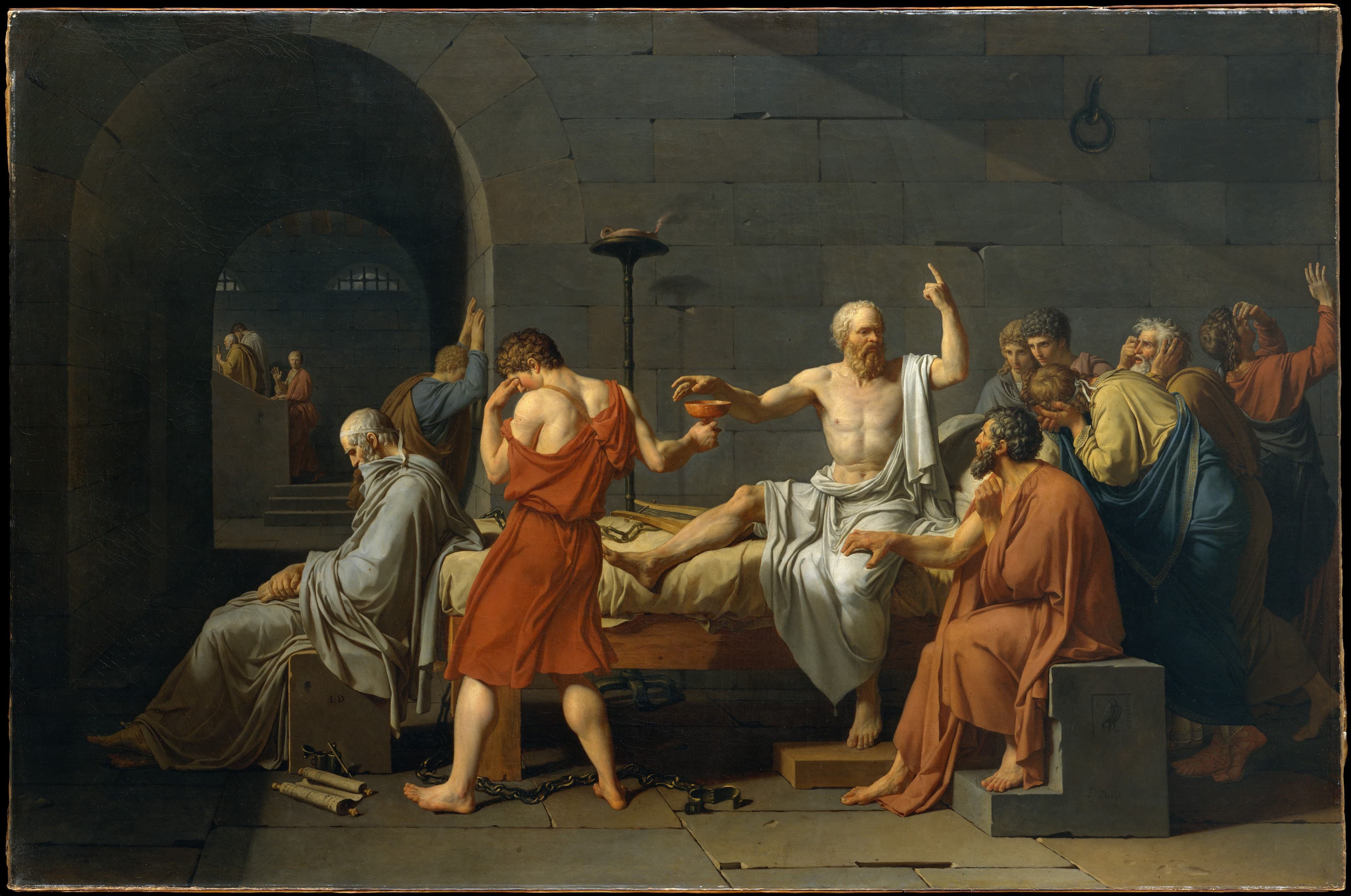
The Death of Socrates
Jacques-Louis David · 1787
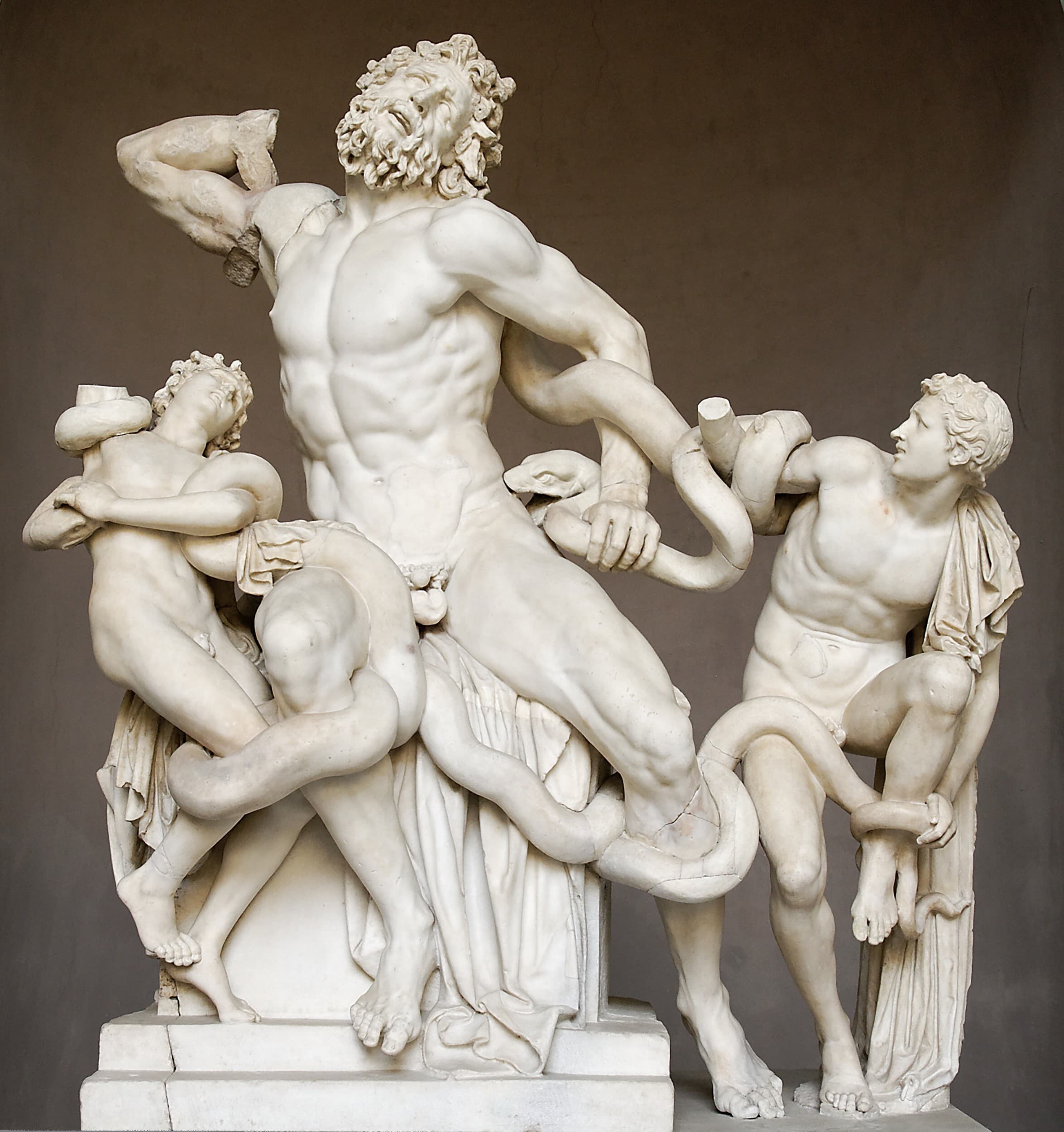
Laocoön and His Sons
Agesander of Rhodes & Athenodoros of Rhodes & Polydorus of Rhodes · c. 200 BC – AD 70 (date debated); excavated 1506
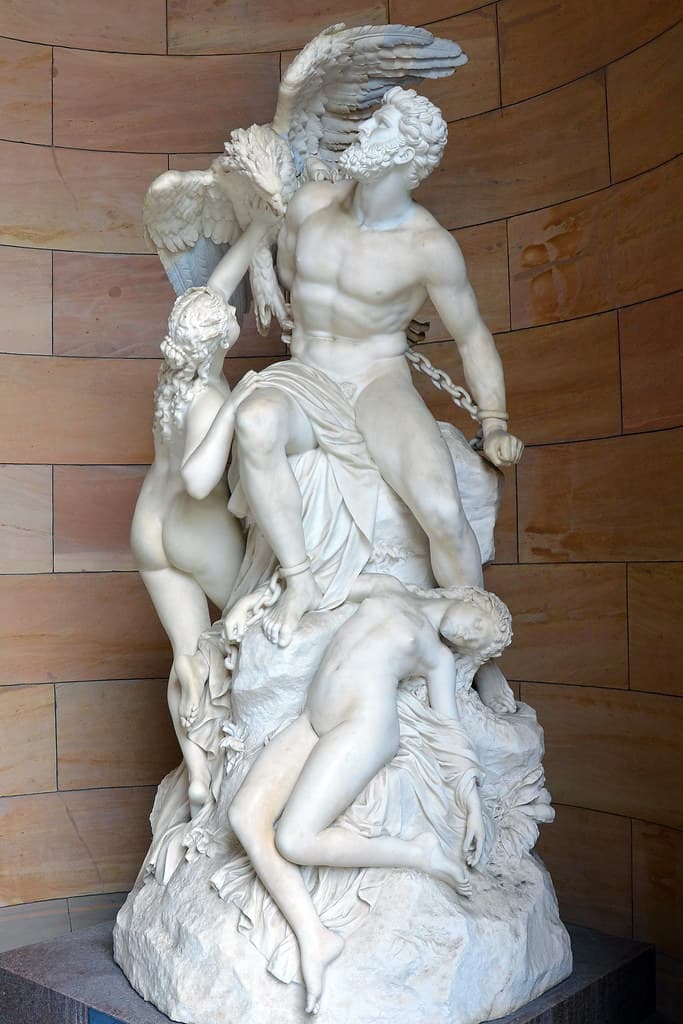
Prometheus Bound and the Oceanids
Eduard Müller · 1872–79
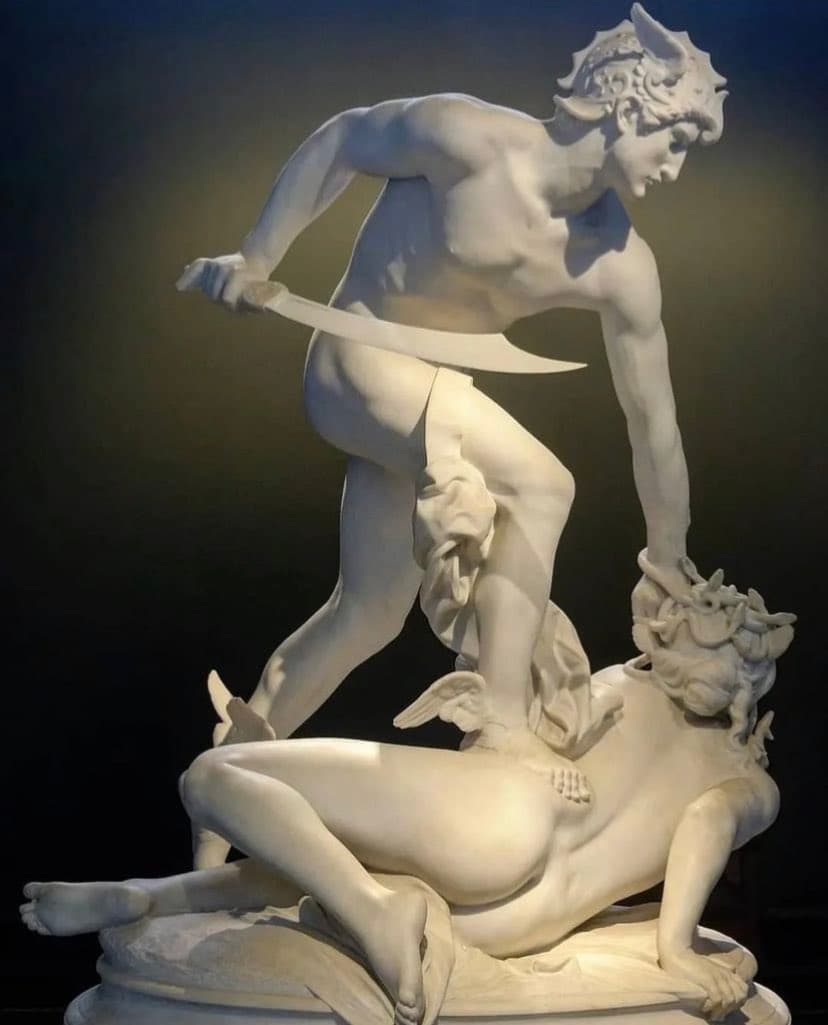
Perseus and the Gorgon
Laurent Marqueste · 1875–1903 (series); marbles 1890 and 1903

The Thinker
Auguste Rodin · Modeled 1880–82; enlarged 1902–03; this cast 1904

Venus de Milo
Alexandros of Antioch · c. 150–125 BC

Nymphs Dancing to Pan's Flute
Joseph Tomanek

The Scream
Edvard Munch · 1893