American Renaissance / Academic
Spring Scattering Stars
Edwin Howland Blashfield, 1927
Spring Scattering Stars is a 1927 painting by the American muralist Edwin Howland Blashfield, an allegory in which a nude figure of Spring stands on a crescent moon and scatters stars across the night sky. The canvas, 50 × 42 inches, is in a private collection.
- Artist
- Edwin Howland Blashfield
- Date
- 1927
- Medium
- Oil on canvas
- Dimensions
- 127 × 107 cm (50 × 42 in)
- Collection
- Private collection
- Movement
- American Renaissance / Academic
What you are looking at
A young woman with long red-gold hair stands upright on the lower curve of a huge crescent moon, its horns pointing upward around her like a bowl. She is nude, her body pale and softly lit by the moon beneath her. With her right hand she draws a garland or a trail of tiny white stars and blossoms from the crook of her left arm and lets them fall, and more stars drift across the deep blue-green sky around her. Behind her, half hidden, a small winged child or putto leans against her legs. At lower right, a bank of grey cloud rolls up against the moon.
The palette is almost entirely cool: teal, turquoise and slate blue, warmed only by the figure's skin and hair and the glow of the moon. Blashfield paints the sky with a fine, granular texture, like spattered paint, so the whole surface seems to sparkle.
The wet moon
The moon's position is a deliberate detail. When the crescent lies on its back with its horns pointing up, folklore calls it a "wet moon," a cup that holds water, or alternatively a dry one that will spill no rain. Blashfield uses it as a pedestal, a cradle from which Spring sends out new life, linking the moon's cycle to the cycle of the seasons.
The artist
Edwin Howland Blashfield (1848–1936) trained in Paris under Léon Bonnat and became one of the leading muralists of the American Renaissance, the movement that decorated public buildings in the decades around 1900 with classical allegories. His murals include the dome of the Library of Congress reading room in Washington and numerous state capitols and courthouses. Allegorical female figures representing ideas, seasons or virtues were his stock in trade, and this easel painting, made late in his career, distills that public style into an intimate, decorative image.
Meaning
Spring traditionally scatters flowers; Blashfield has her scatter stars, merging the renewal of the earth with the night sky. The image is a poetic personification rather than a myth with a fixed text, belonging to the same symbolic world as Victorian and Symbolist paintings of night and the seasons.
Where is it now?
The painting appeared at Heritage Auctions from the estate of the collector Charles Martignette and is in a private collection. For other night skies in the catalogue, see Starlight, Munch's Starry Night and Light Academia.
Questions & answers
What does Spring Scattering Stars mean?
It is an allegory. Spring, personified as a young woman, stands on the crescent moon and scatters stars across the night, linking the renewal of the season with the cycles of the moon and sky. Blashfield often painted such female personifications of ideas and seasons.
Where is Spring Scattering Stars today?
The 1927 painting is in a private collection. It was sold through Heritage Auctions from the estate of the collector Charles Martignette. The canvas measures about 50 by 42 inches (127 by 107 centimeters) and is not on public display.
What is a wet moon in Spring Scattering Stars?
A wet moon is a crescent lying on its back with its horns pointing up, so it looks like a bowl. Folklore links its shape to holding or spilling rain. Blashfield uses this upturned crescent as the pedestal on which Spring stands.
Kindred works
You may also study
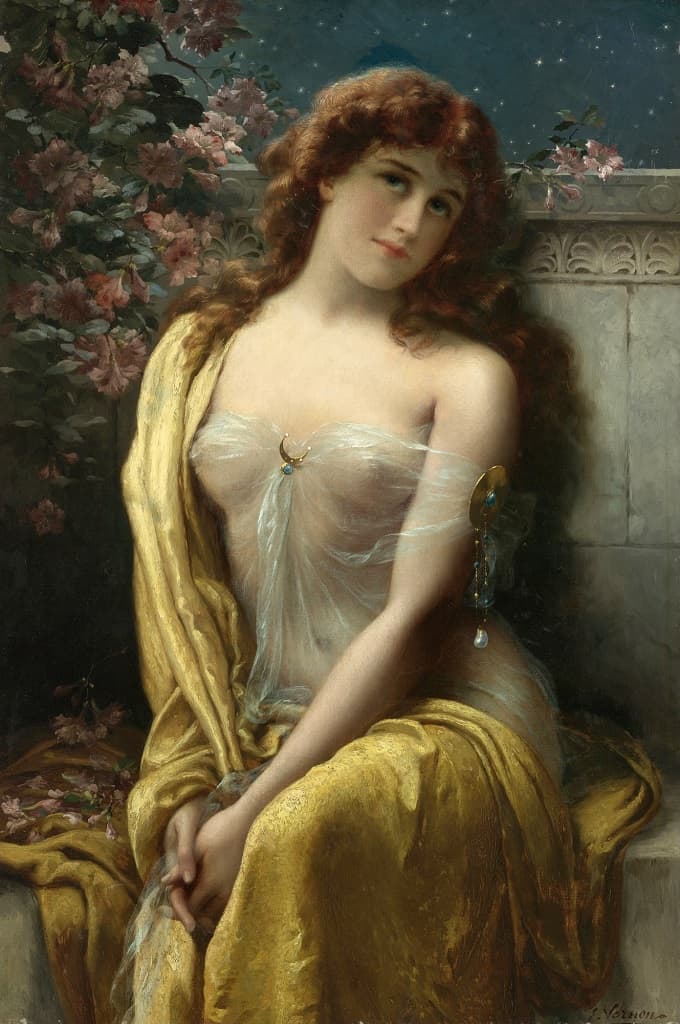
Starlight
Émile Vernon
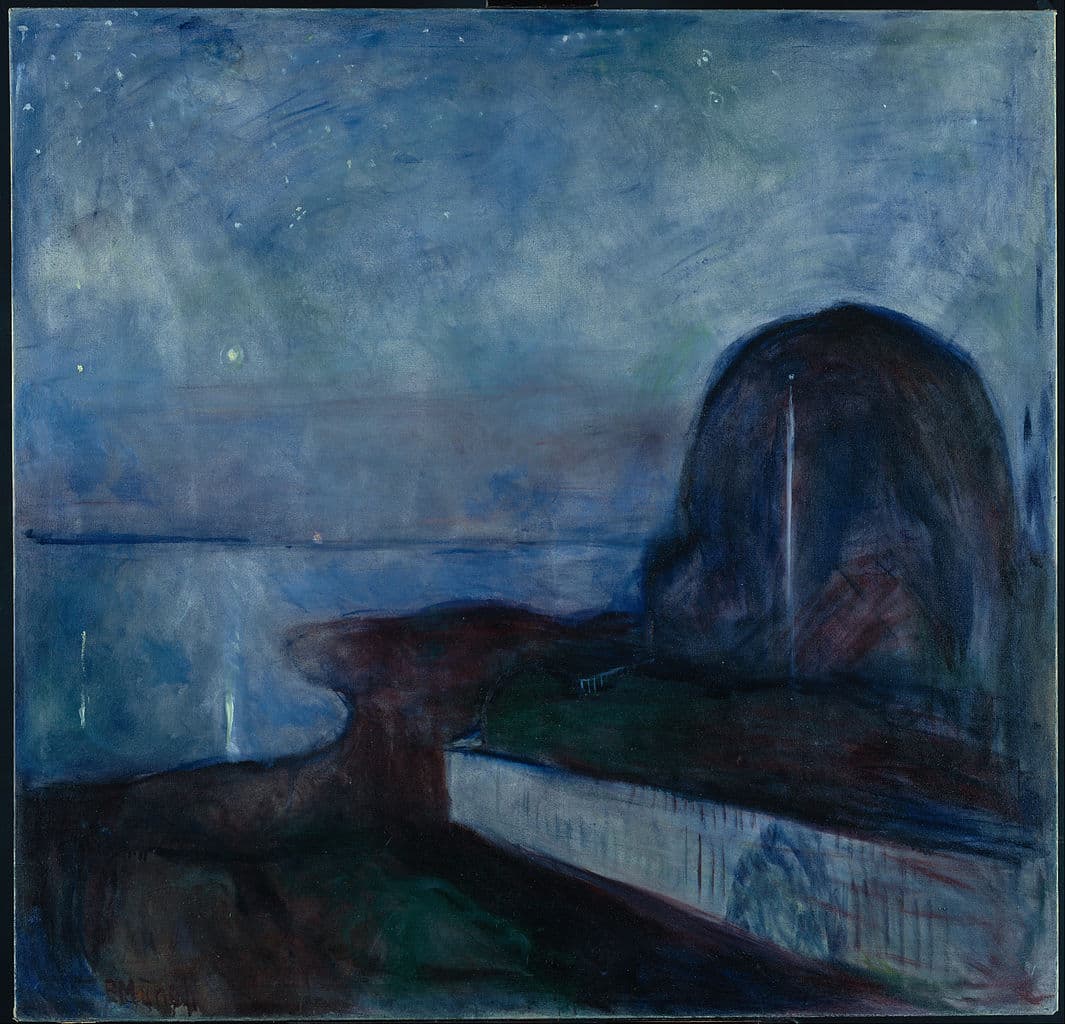
Starry Night (Munch)
Edvard Munch · 1893
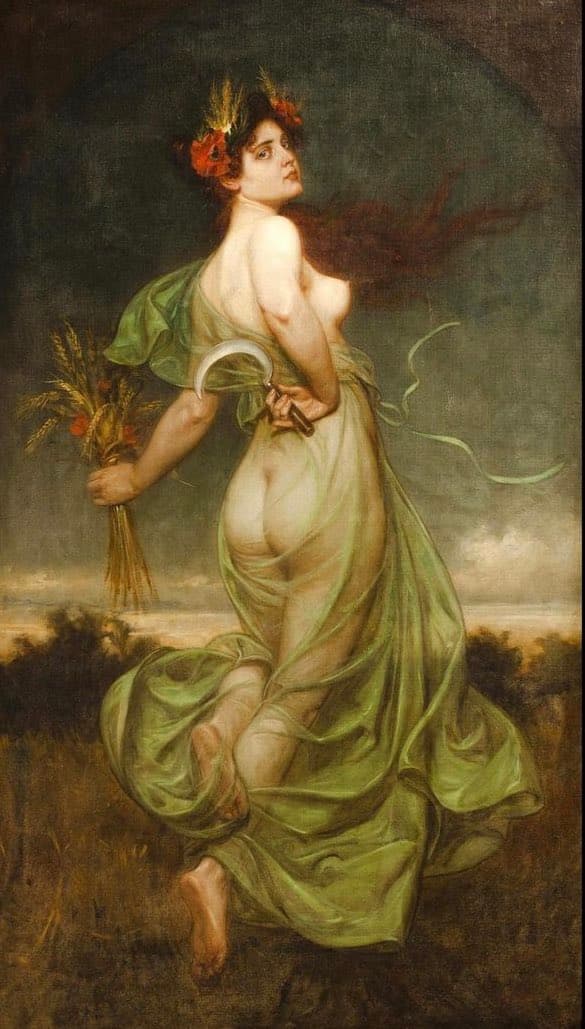
Allegory of Summer
František Bohumil Doubek · c. 1905
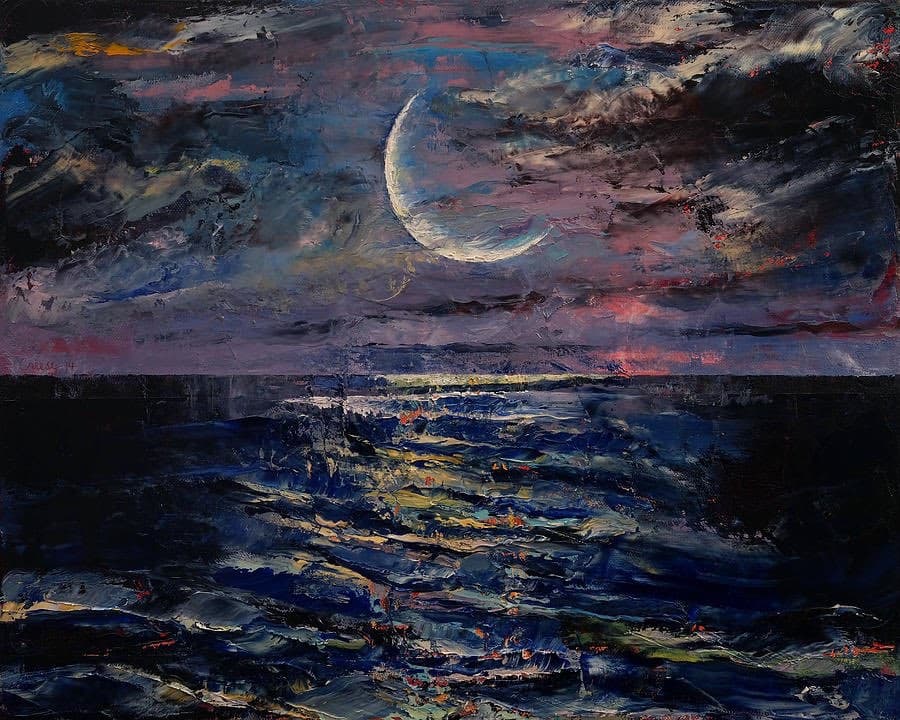
Moon
Michael Creese · 2015

Bridge over a Pond of Water Lilies
Claude Monet · 1899

Venus de Milo
Alexandros of Antioch · c. 150–125 BC

Nymphs Dancing to Pan's Flute
Joseph Tomanek

The Scream
Edvard Munch · 1893