Image: The Israel Museum, Jerusalem (Google Arts & Culture) · Public domain · via Wikimedia Commons
The Young Ladies of Giverny, Sun Effect
Claude Monet, 1894
The Young Ladies of Giverny, Sun Effect is an 1894 painting by Claude Monet of a field near Giverny dotted with golden sheaves of grain, whose skirted shapes give the picture its playful title. It is in the Israel Museum, Jerusalem.
- Artist
- Claude Monet
- Date
- 1894
- Medium
- Oil on canvas
- Collection
- Israel Museum, Jerusalem, Israel
- Movement
- Impressionism
- Catalogue
- Wildenstein 1384
- Nature & Landscape
Claude Monet's The Young Ladies of Giverny, Sun Effect (Les Demoiselles de Giverny, effet de soleil) was painted in the summer of 1894 in the fields around his home. Despite its title, there are no people in it. The "young ladies" are sheaves of harvested grain, stood upright in a meadow, their flared bases and pinched waists looking like girls in full skirts. The canvas (Wildenstein 1384) is signed at lower right and is in the Israel Museum in Jerusalem.
What you are looking at
A bright, flat field fills most of the canvas, painted in pale yellow-green, cream and white, as if bleached by strong sun. Across it stand about a dozen sheaves of grain in a loose row that runs back toward a line of trees. They are golden-orange, each a tapering cone with a tufted top, slightly different in size and lean. The three nearest are large and placed almost like figures in a dance: one at left, one at center, one at the far right edge, partly cut off. The others recede in a jagged line, getting smaller and paler.
Behind them, a dark band of blue-green trees closes the field, with a soft green hill at the far left. The sky is a fresh, pale blue streaked with white clouds. In the lower left corner, a dark, shadowed bank of grass and flowers in violet, blue and green cuts across the bottom of the field, a cool frame for the hot, sunlit space beyond.
The detail that gives the picture its charm is the title. Seen with it in mind, the sheaves really do look like young women in wide summer dresses, standing in a field. The pun is gentle, and Monet does nothing to push it in the painting; it is the shapes that make it.
Where and when
Monet had lived at Giverny since 1883, and the farmland around the village was one of his constant subjects. Between 1888 and 1891 he made his most famous series from the big grain stacks in a field near his house; see Haystacks. In 1894, after finishing his Rouen Cathedral canvases, he returned to the fields and painted the smaller harvest sheaves in a short group of pictures, of which this is the sunlit version, as its subtitle announces.
How this version differs
The big grainstacks of 1890–91 are massive, solid and almost architectural, each one a block of color modeled by the light. The Demoiselles are much lighter in every sense. They are many instead of one or two, small, and arranged in a rhythmic line across the field, and the effect is decorative and playful rather than monumental. The "sun effect" here is a high, bleaching midday sun, very different from the low, raking light of works like Stacks of Wheat (End of Summer) in Chicago or Grainstack (Sunset) in Boston.
The same year Monet also painted the meadows near his house in spring, as in Meadow at Giverny at Princeton.
How it was painted
The field is painted with short, crisp, slightly thick strokes of pale color laid side by side, almost like a pattern. The sheaves are built up more thickly, with touches of orange, yellow and pink, and a few strokes of blue for the shadowed sides. The trees and the shadowed corner are the darkest areas, and Monet uses them to frame the light. Almost every stroke is visible.
For Monet's paintings of the countryside around his home, see Giverny: Monet's House and Garden.
Where to see it
The painting is in the Israel Museum in Jerusalem, which also holds Monet's The Cliff of Aval, Étretat and works by other Impressionists. See Where to See Monet's Paintings and Claude Monet.
Questions & answers
Where is Monet's The Young Ladies of Giverny, Sun Effect?
It is in the Israel Museum in Jerusalem, which also holds Monet's The Cliff of Aval, Étretat. It is catalogued by Wildenstein as number 1384.
Who are the young ladies in Monet's painting?
There are no people in it. The 'young ladies' (demoiselles) are upright sheaves of harvested grain standing in a field near Giverny. Their flared bases and tufted tops look like young women in wide skirts, which gives the painting its playful title.
When and where was it painted?
Monet painted it in 1894 in the fields near his home at Giverny in Normandy, the same countryside where he had painted his Haystacks series a few years earlier.
How is it related to Monet's Haystacks?
Both show harvest stacks in the fields at Giverny, but the Haystacks of 1890–91 focus on one or two massive stacks in changing light. The Young Ladies of Giverny shows many small sheaves in a rhythmic line under bright midday sun.
More by the artist
Claude Monet
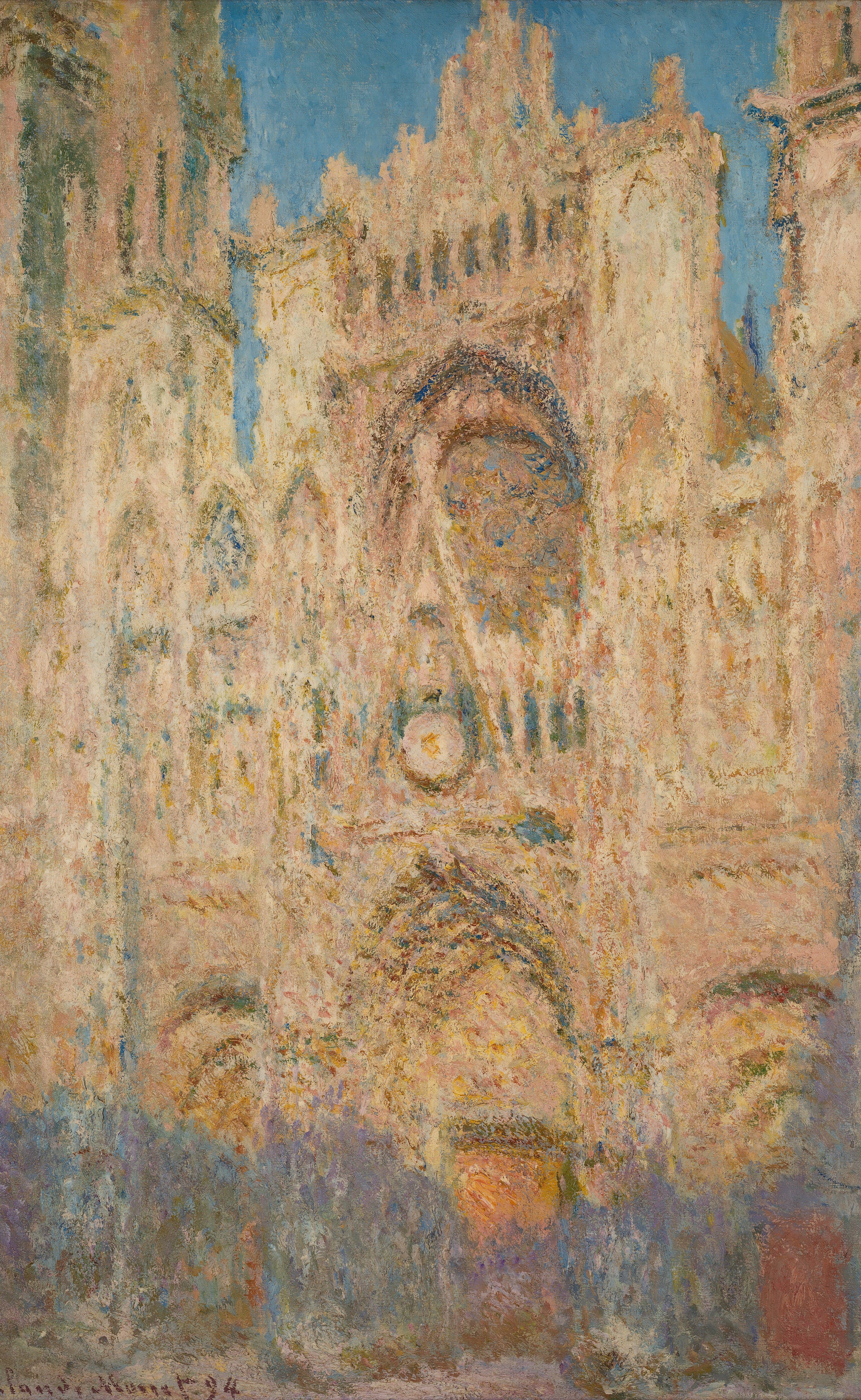
Rouen Cathedral, Evening
Claude Monet · 1894
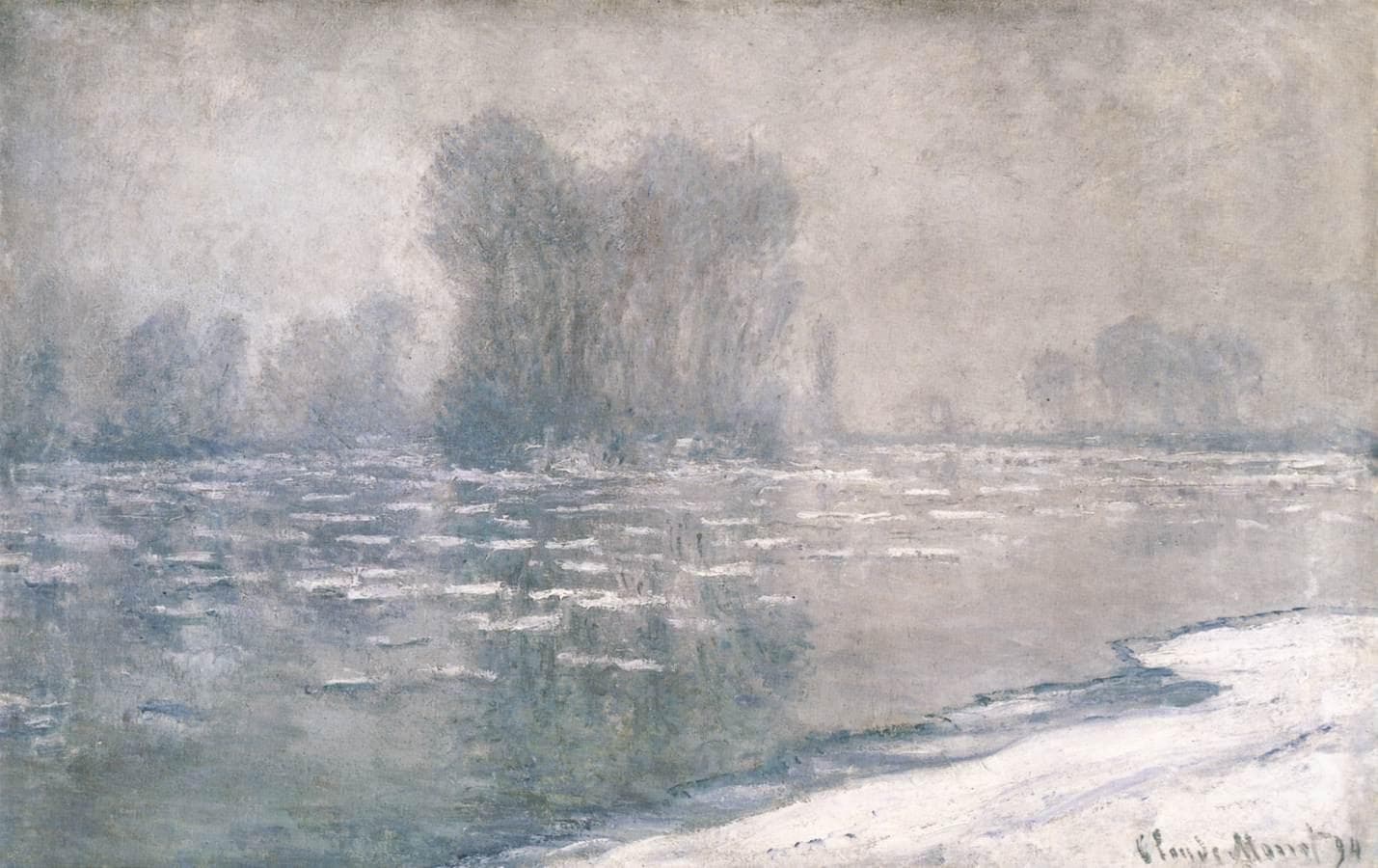
Morning Haze
Claude Monet · 1894
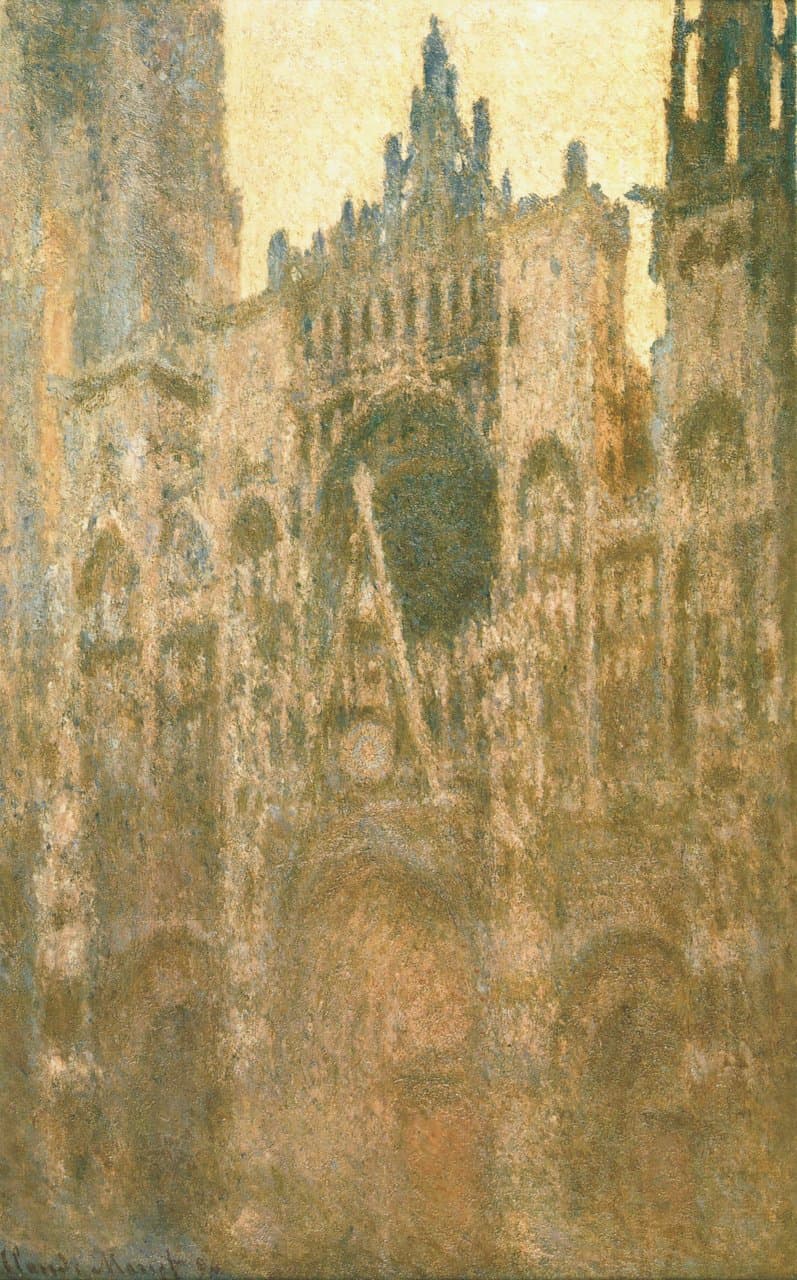
Rouen Cathedral in the Morning (Pink Dominant)
Claude Monet · 1893–94
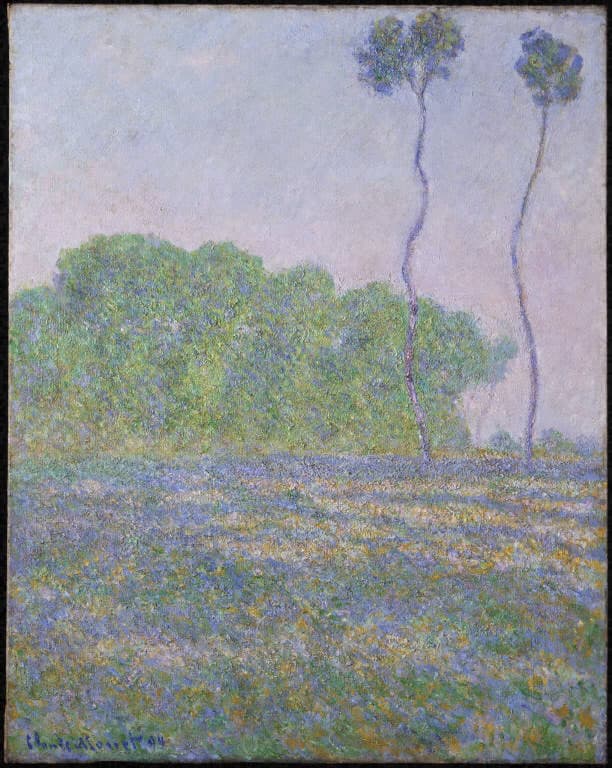
Meadow at Giverny
Claude Monet · 1894
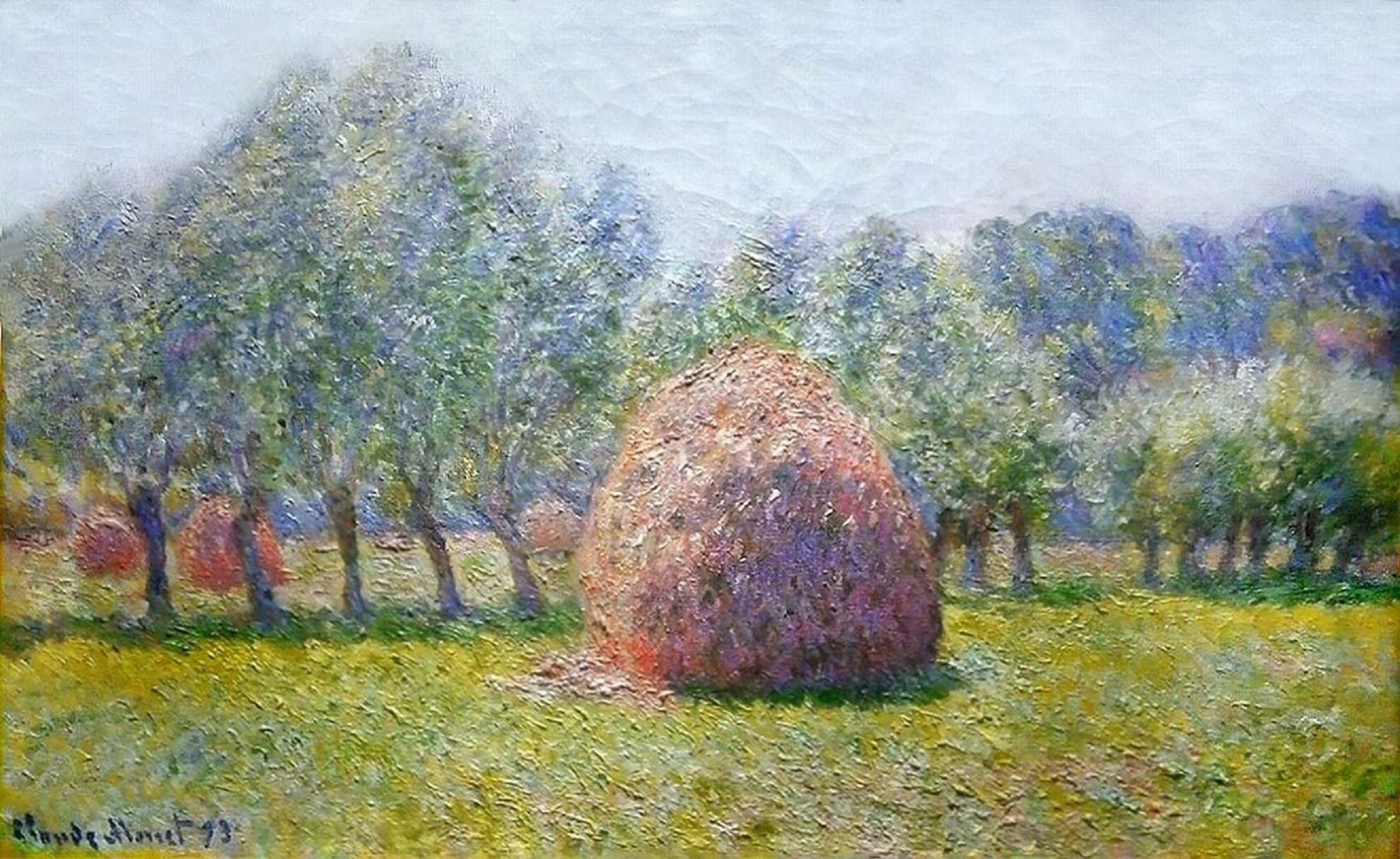
Grainstack
Claude Monet · 1893
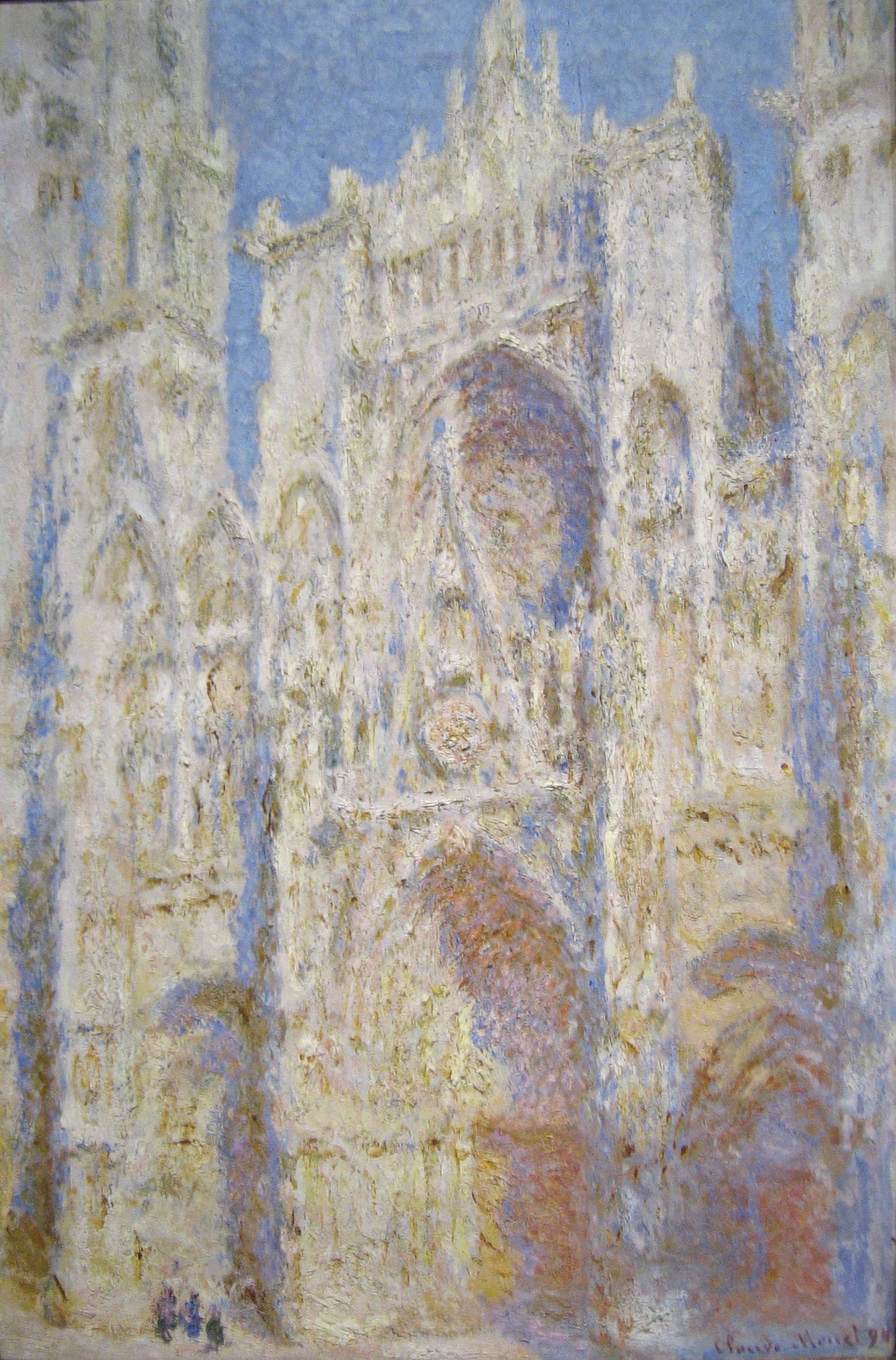
Rouen Cathedral, West Façade, Sunlight
Claude Monet · 1892–94
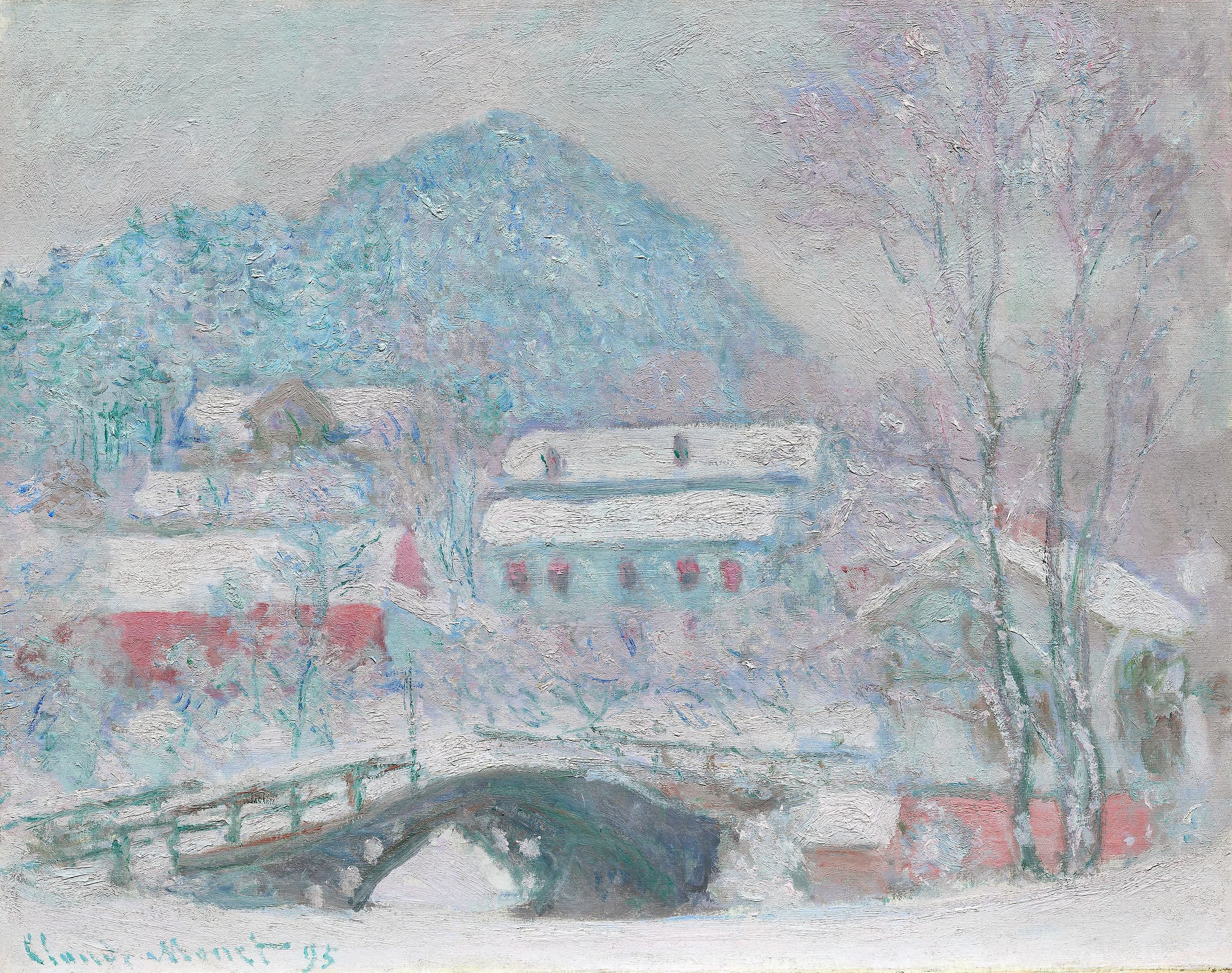
Sandvika, Norway
Claude Monet · 1895
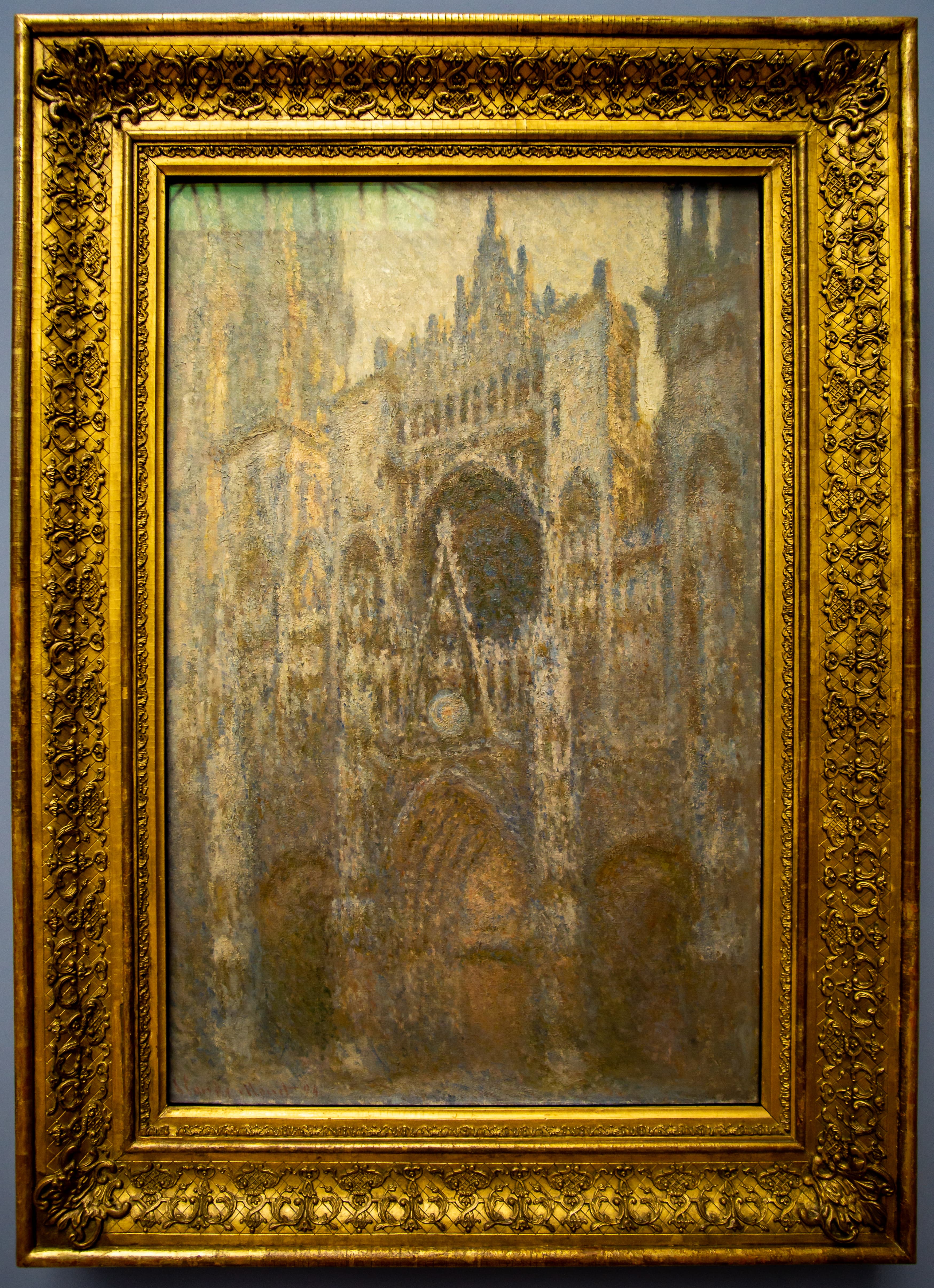
Rouen Cathedral, Portal
Claude Monet · 1893–94
Also painted in 1894
The same year
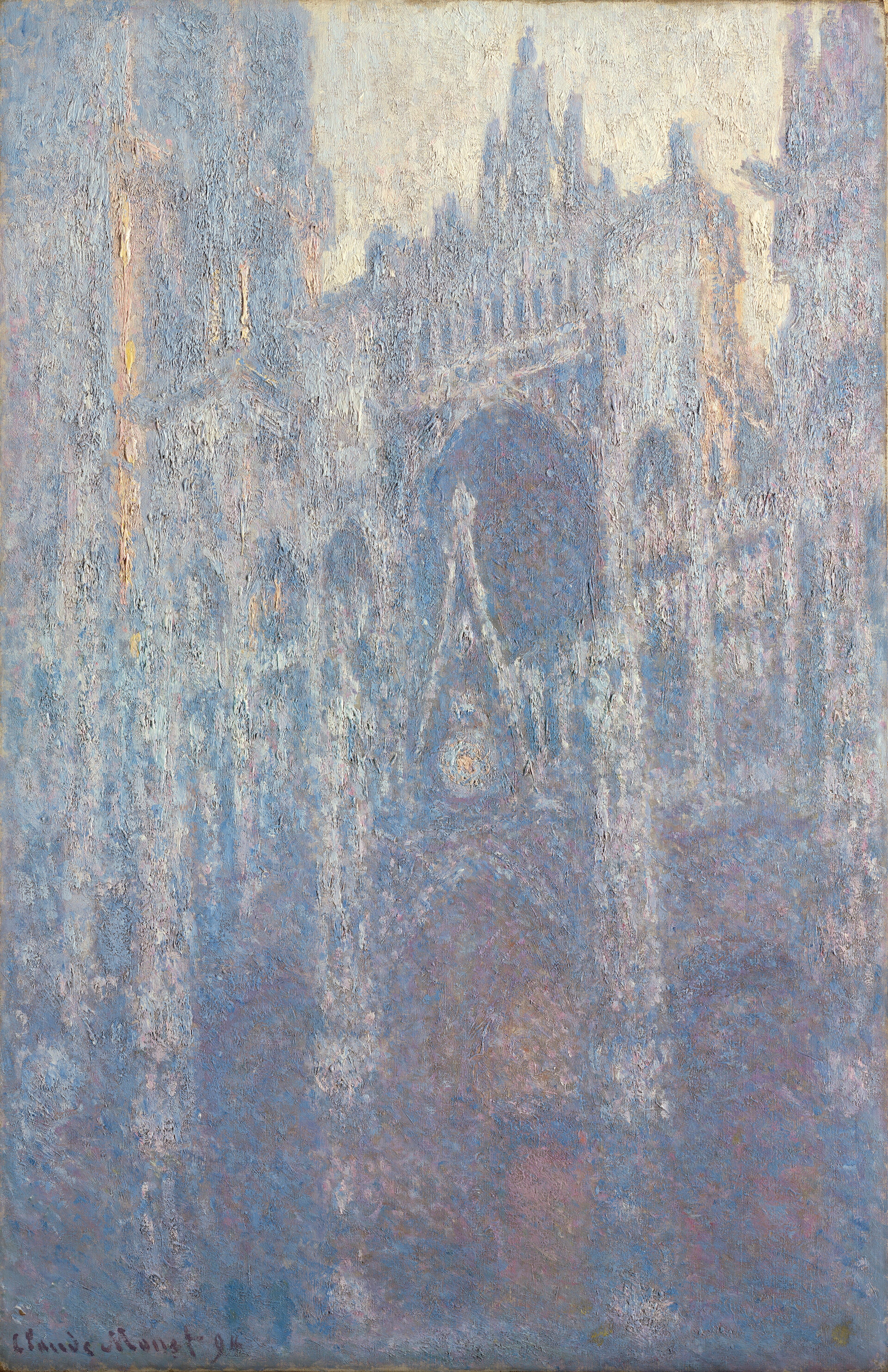
The Portal of Rouen Cathedral in Morning Light
Claude Monet · 1894
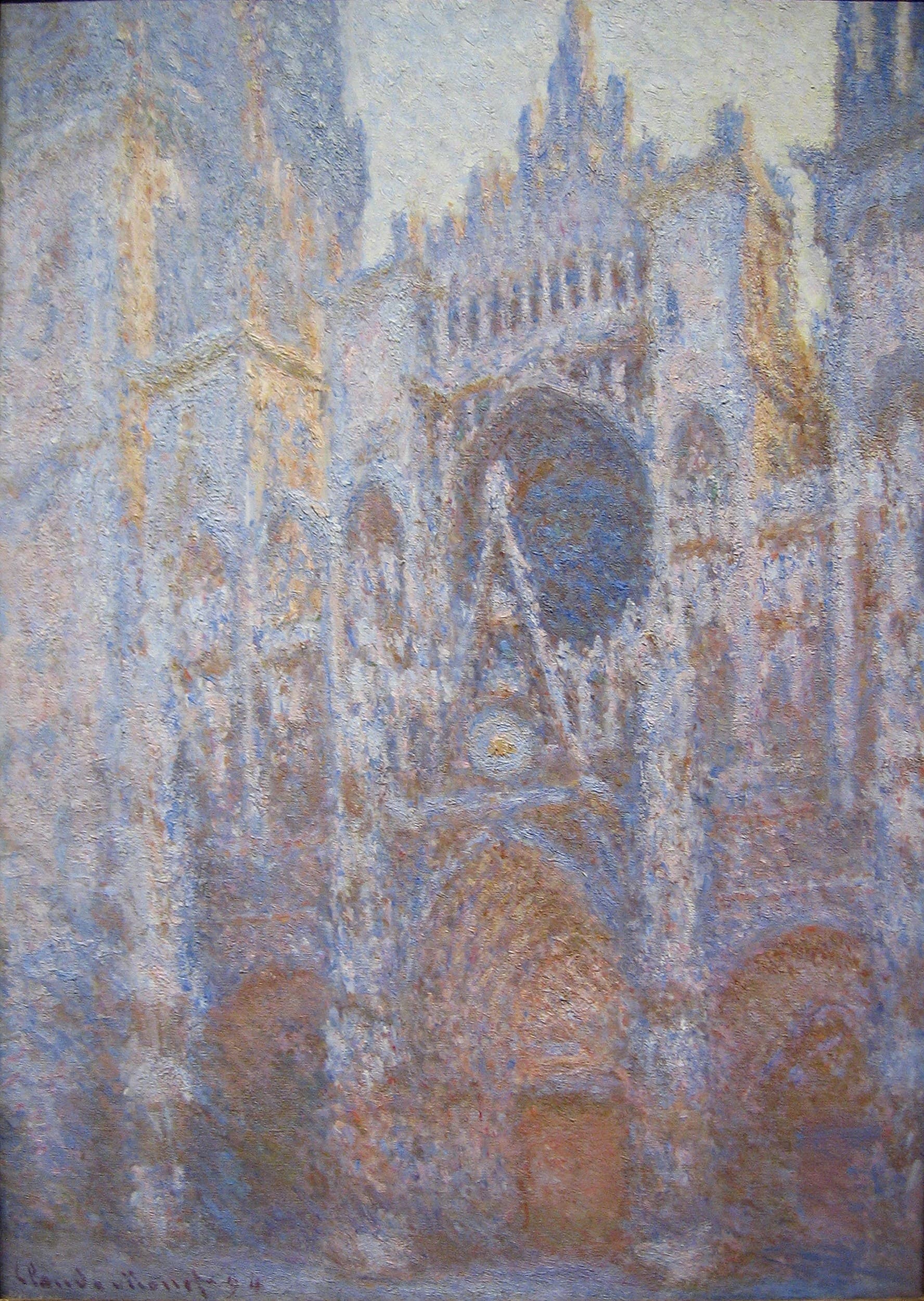
Rouen Cathedral, West Façade
Claude Monet · 1893–94
The Seine at Port-Villez
Claude Monet · 1894
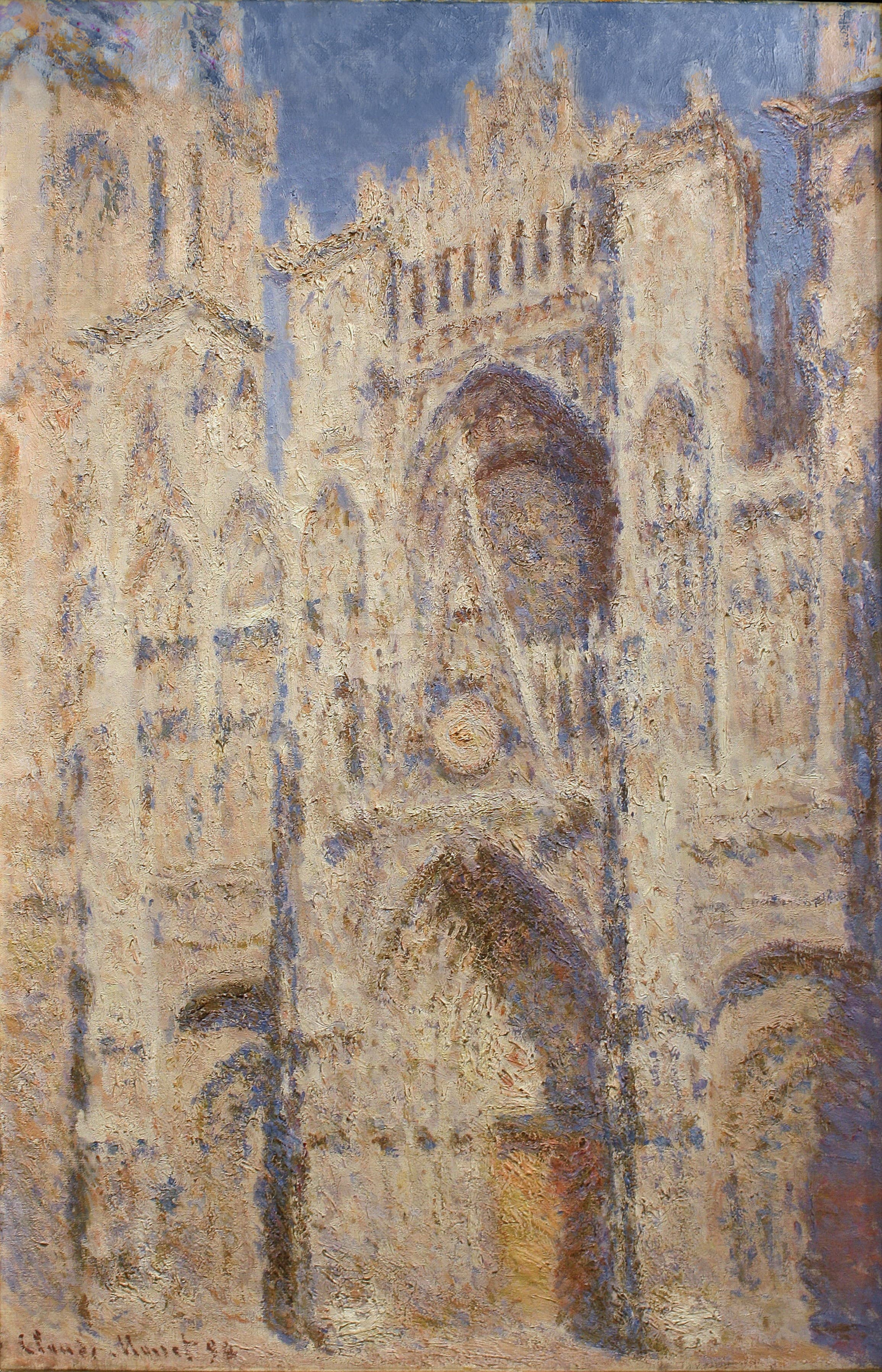
Rouen Cathedral: The Portal (Sunlight)
Claude Monet · 1892–94
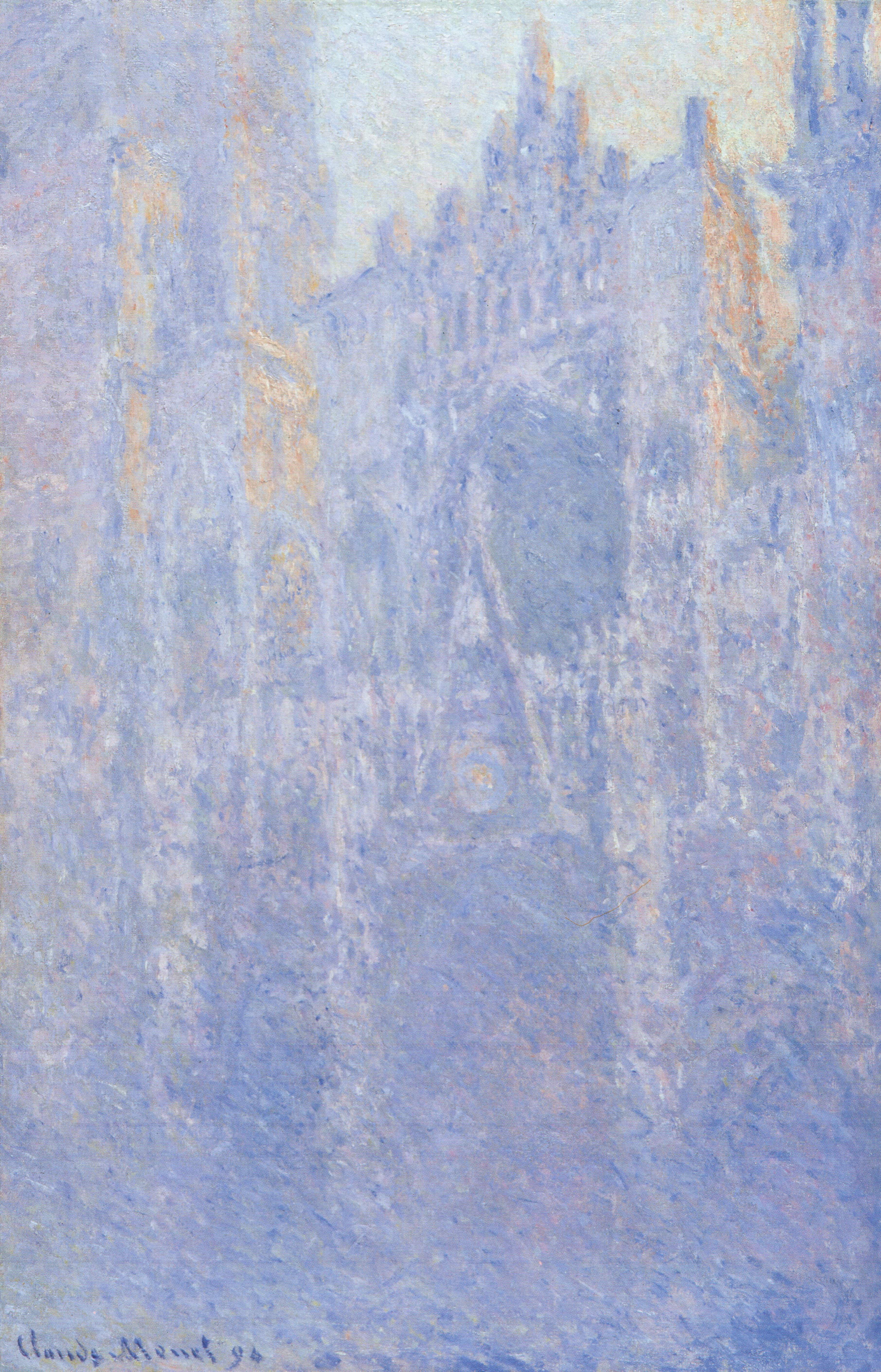
The Portal, Morning Fog
Claude Monet · 1893–94
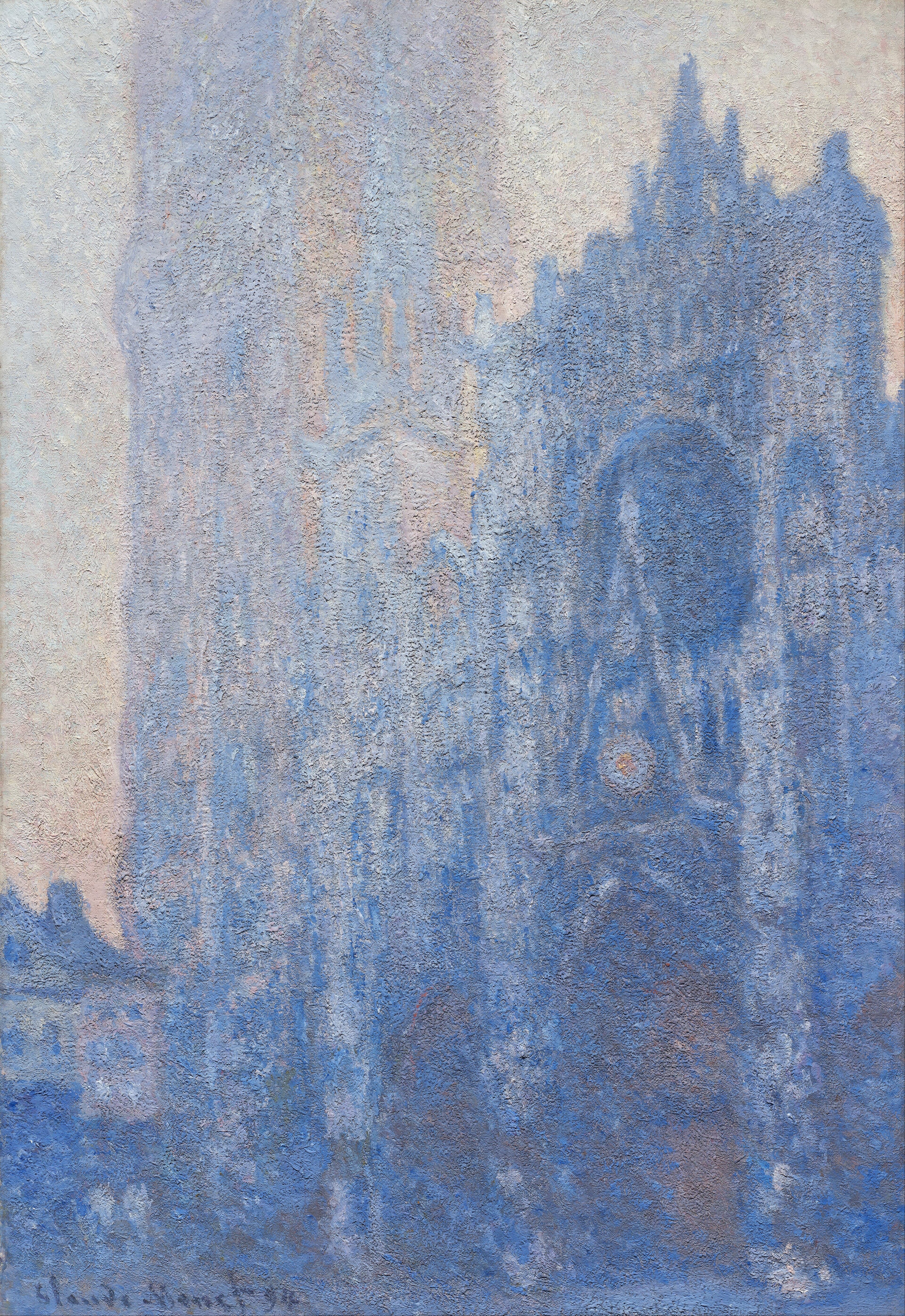
Rouen Cathedral Façade and Tour d'Albane (Morning Effect)
Claude Monet · 1893–94
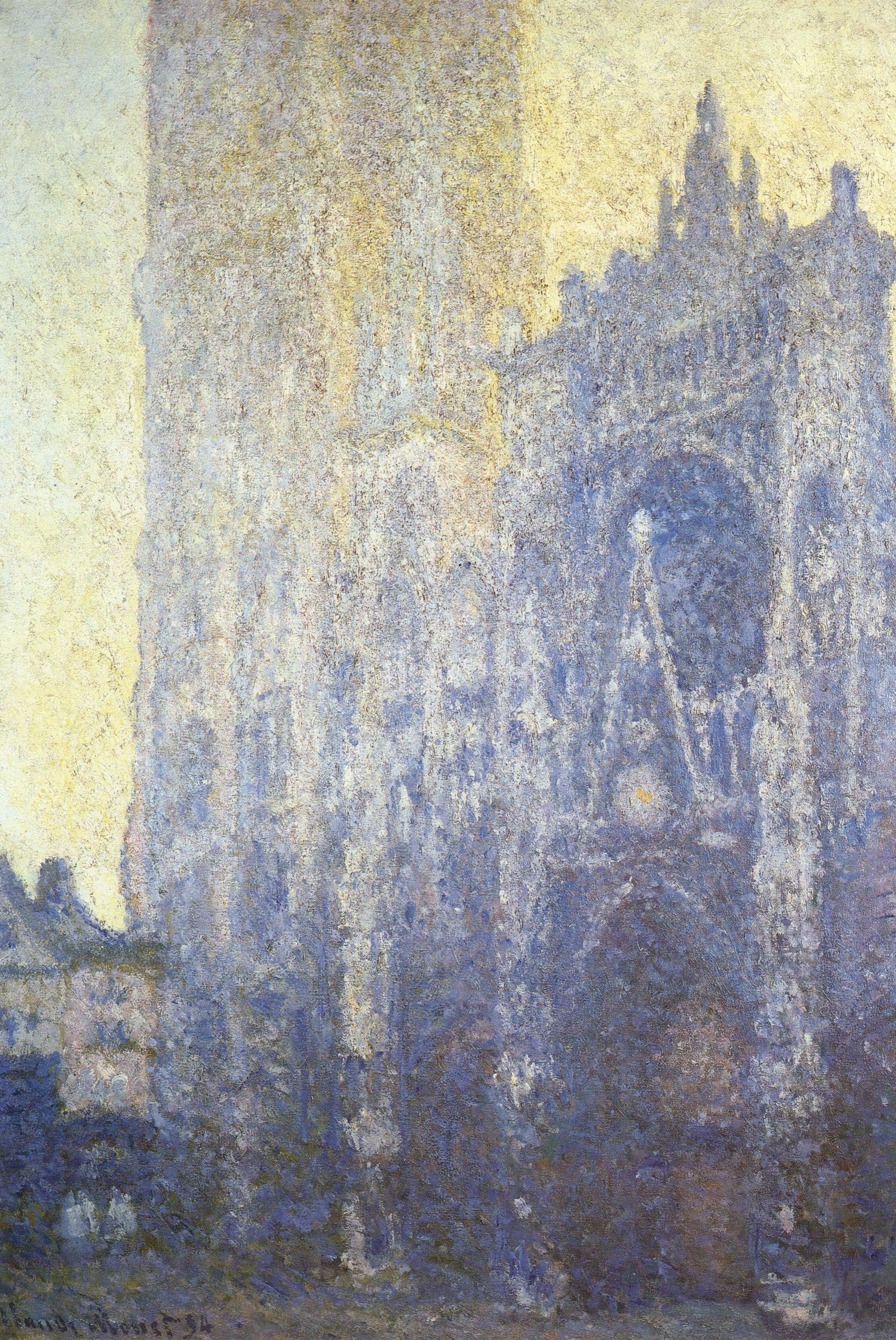
Rouen Cathedral, the Portal, Morning Effect
Claude Monet · 1893–94
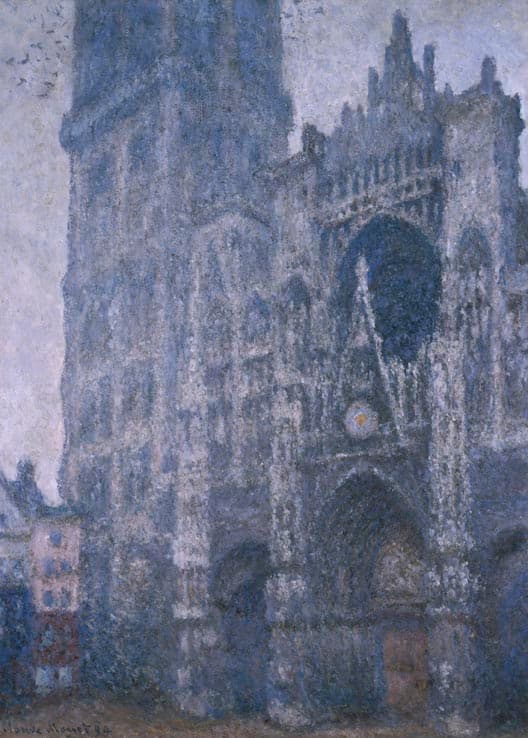
Rouen Cathedral, the Portal and the Tour d'Albane, Grey Weather
Claude Monet · 1893–94
Kindred works
You may also study
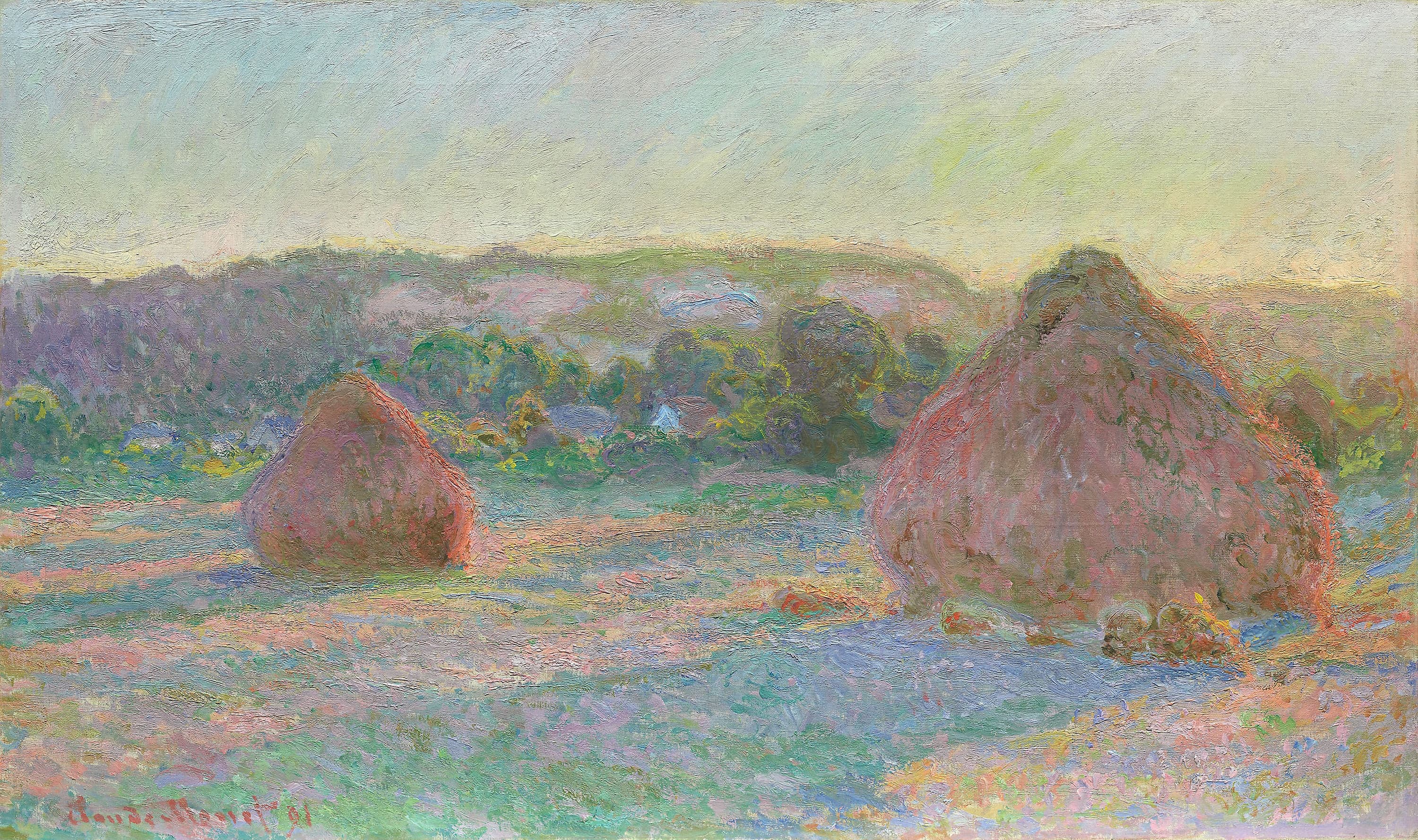
Stacks of Wheat (End of Summer)
Claude Monet · 1890–91
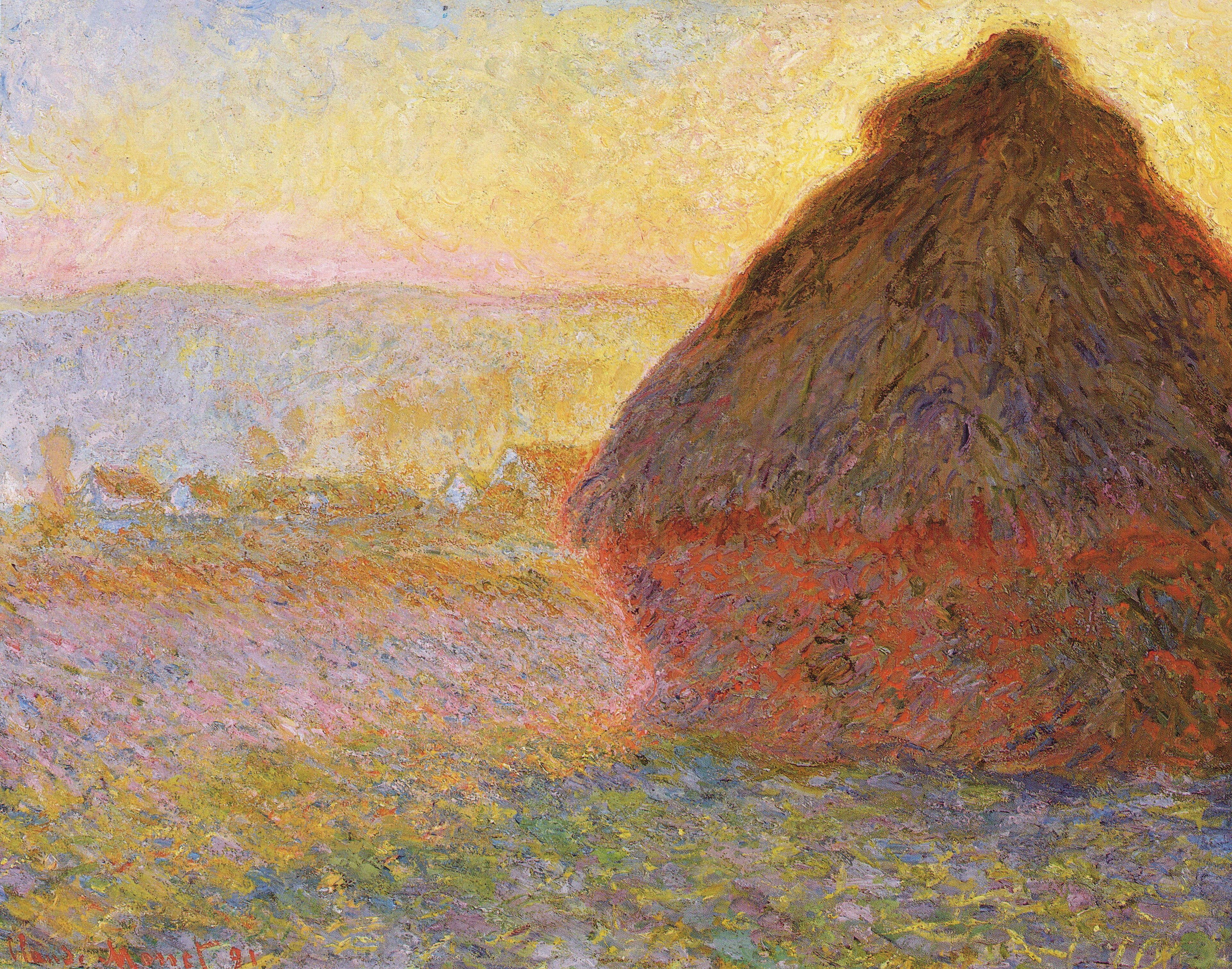
Grainstack (Sunset)
Claude Monet · 1891
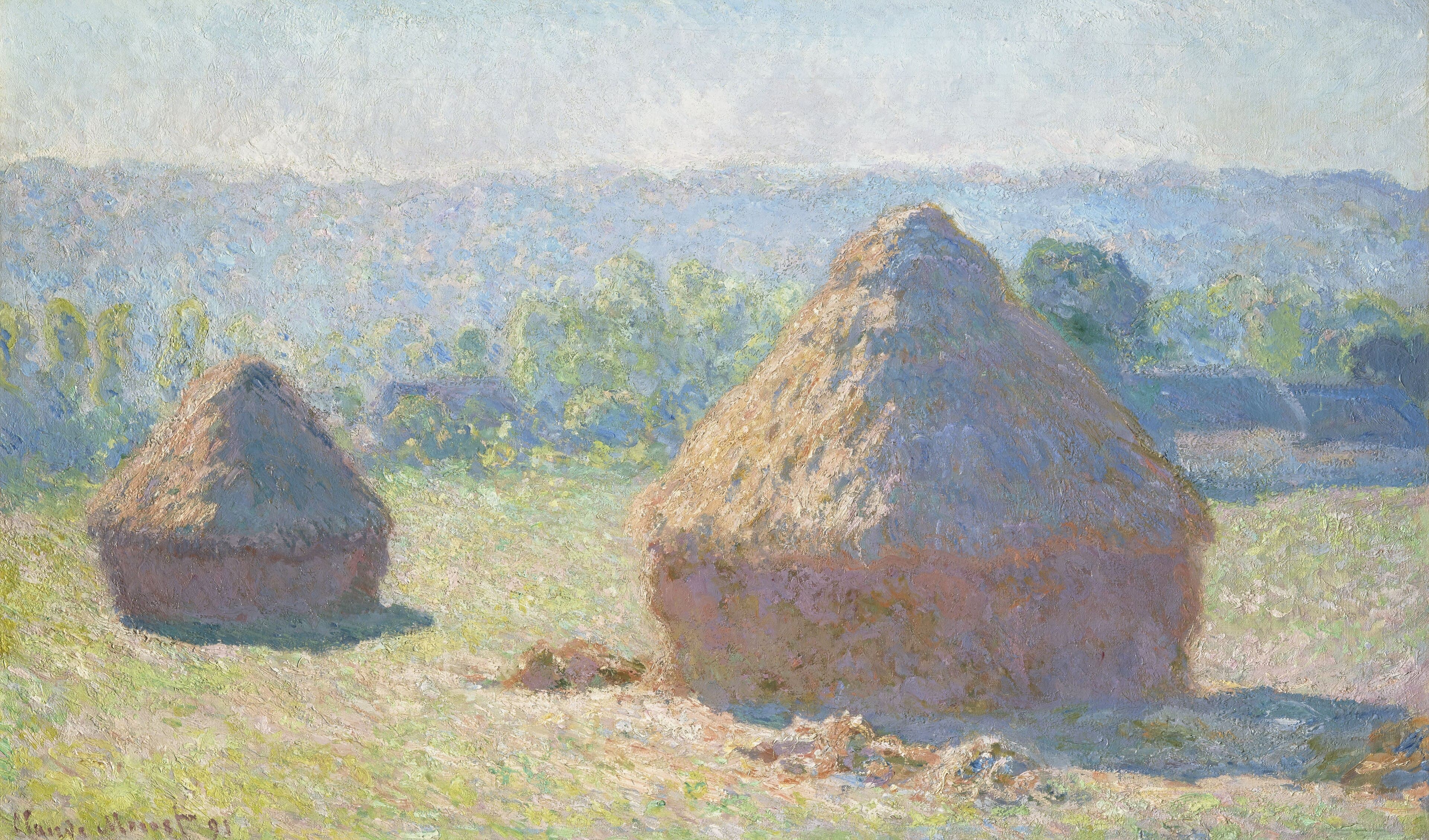
Haystacks, End of Summer
Claude Monet · 1891
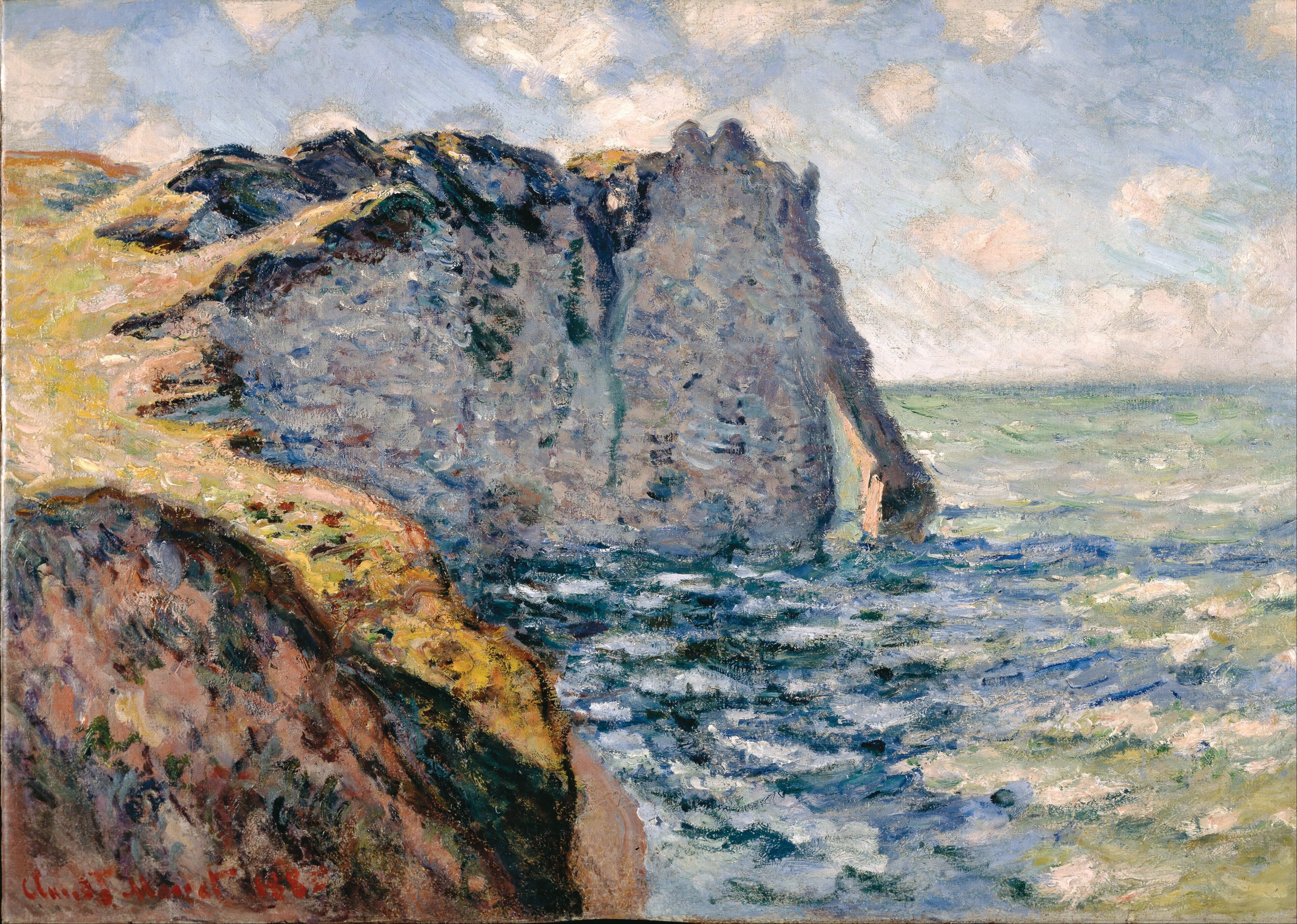
The Cliff of Aval, Étretat
Claude Monet · 1885
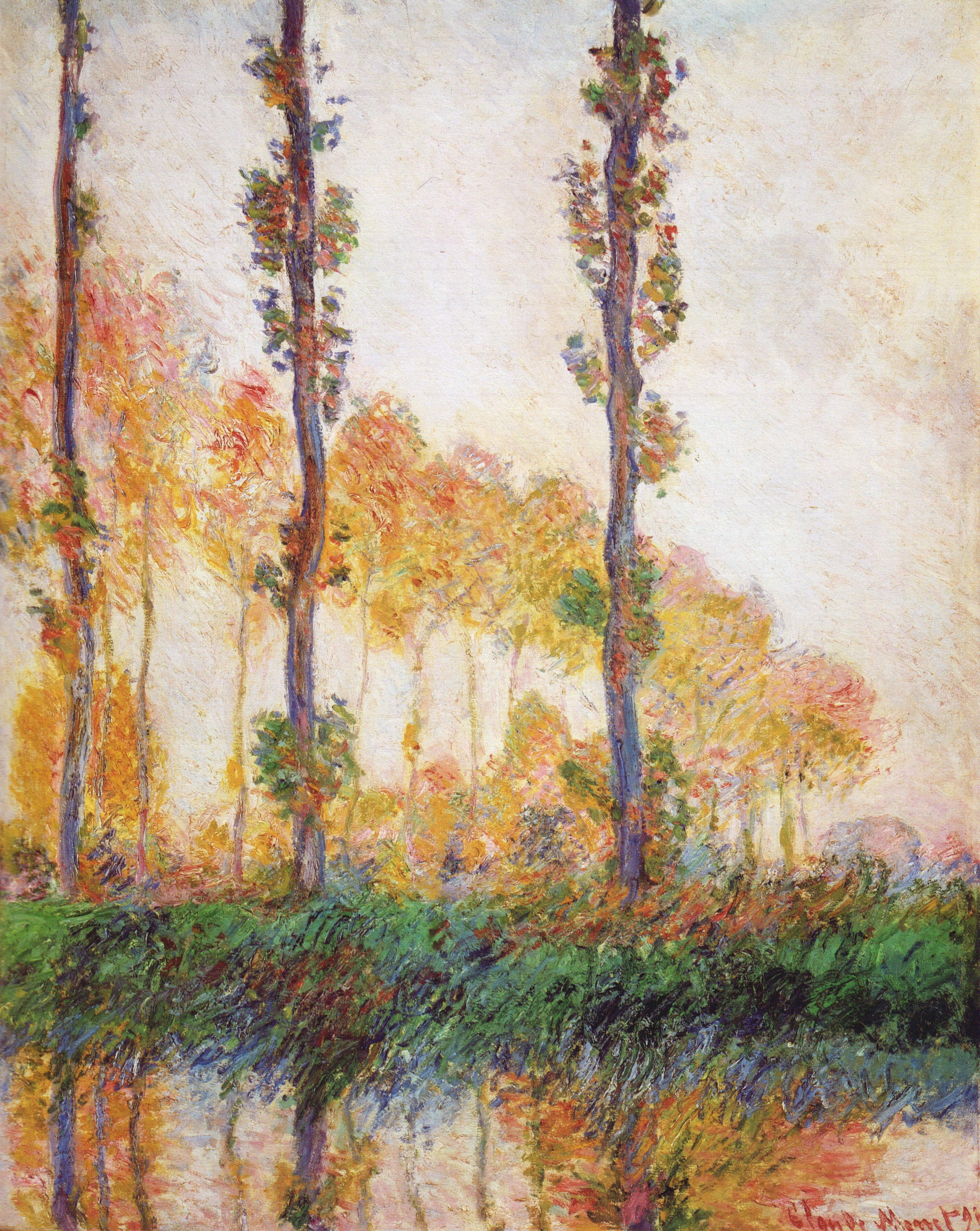
Poplars (Autumn)
Claude Monet · 1891
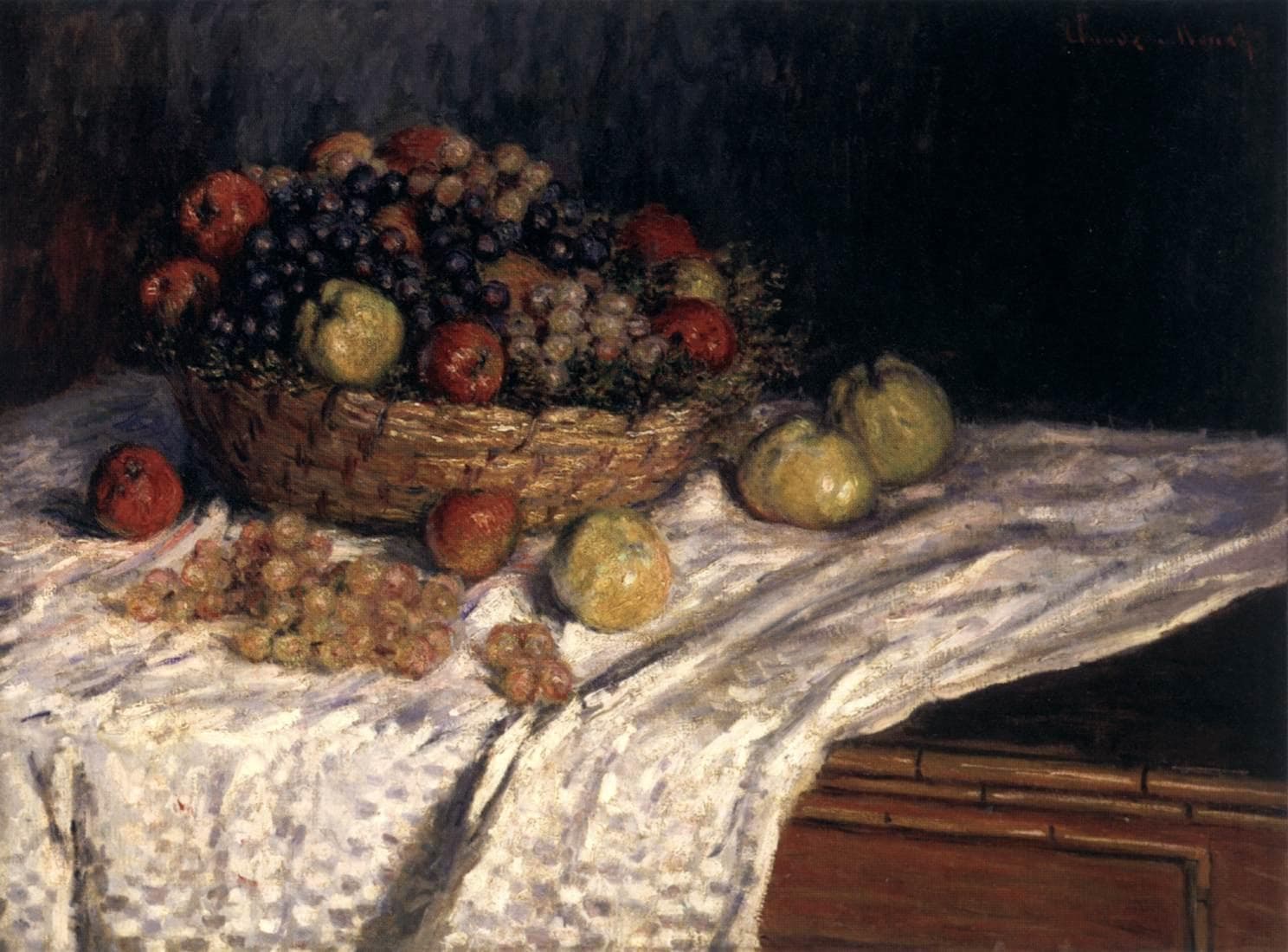
Still-Life with Apples and Grapes
Claude Monet · 1879–80
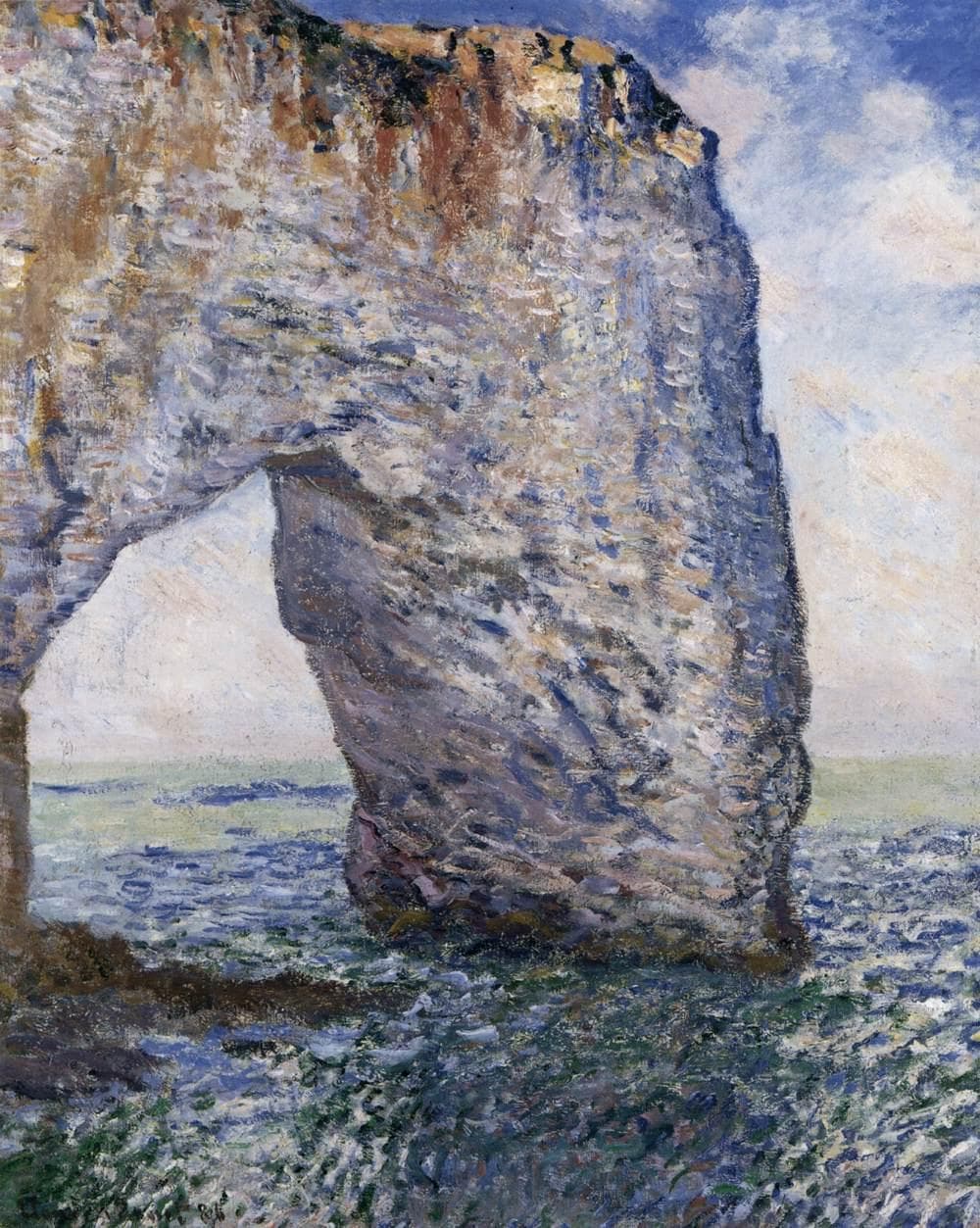
The Manneporte near Étretat
Claude Monet · 1886
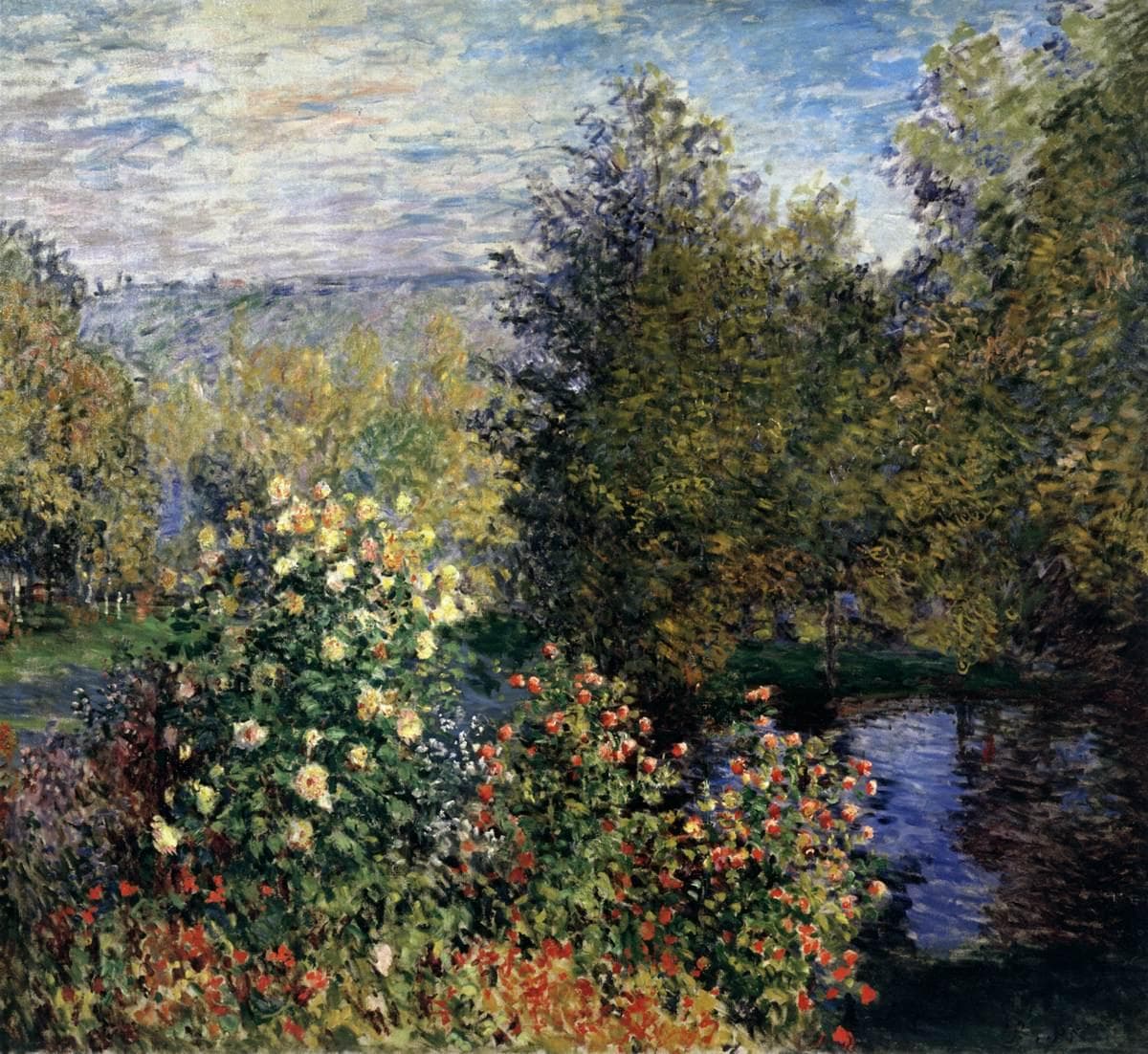
Corner of the Garden at Montgeron
Claude Monet · 1876–77