Image: Claude Monet; Museum of Fine Arts, Boston (source: pwHmZEyzDplQIw at Google Cultural Institute maximum zoom level) · Public domain · via Wikimedia Commons
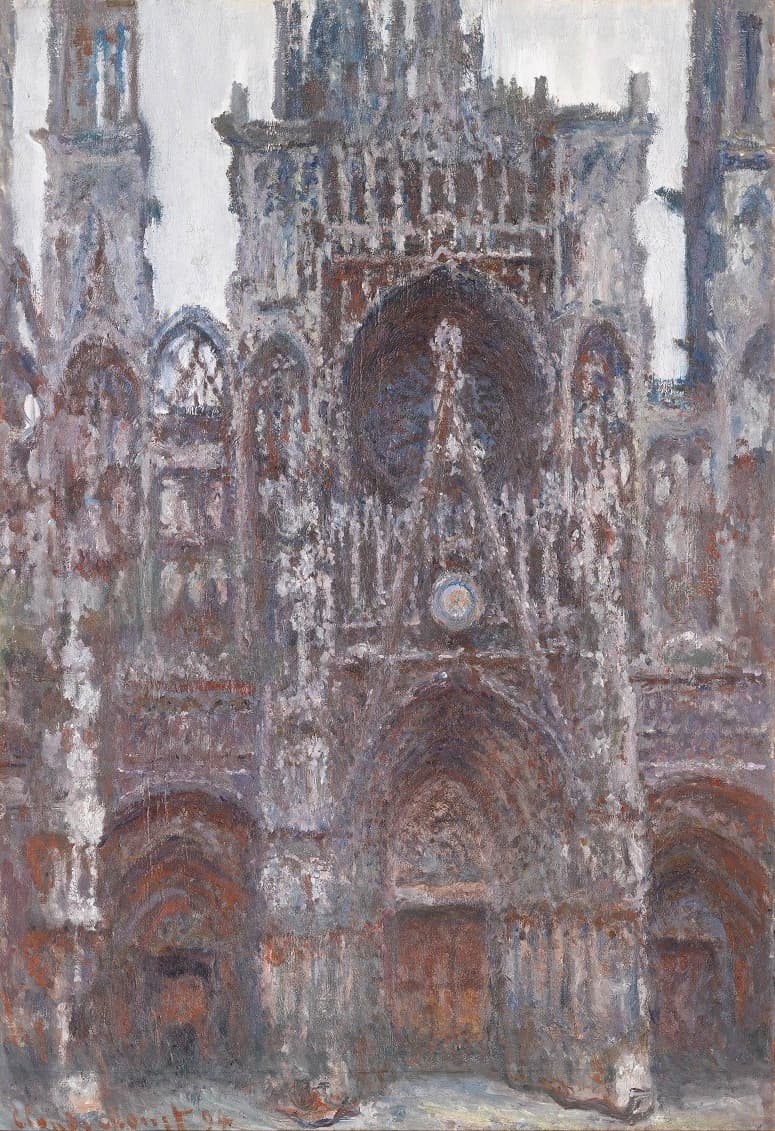
Rouen Cathedral Façade and Tour d'Albane (Morning Effect)
Claude Monet, 1893–94
Rouen Cathedral Façade and Tour d'Albane (Morning Effect) is a Claude Monet painting from the Rouen Cathedral series, begun in 1893 and dated 1894: the portal and tower in deep blue shadow against a pale dawn sky. It is in the Museum of Fine Arts, Boston.
- Artist
- Claude Monet
- Date
- 1893–94
- Medium
- Oil on canvas
- Dimensions
- 106.1 × 73.9 cm
- Collection
- Museum of Fine Arts, Boston, Boston, United States
- Movement
- Impressionism
- Catalogue
- Wildenstein 1348
- Architecture & Ruins
- Religion & Saints
What you are looking at
This is a different view of the cathedral from the frontal portals. Monet stands to one side, so the west front is seen at an angle, pushed to the right half of the canvas, while the massive square tower at left rises out of the top edge. Between them, and to the far left, the dawn sky shows as a pale field of cream, pink and lemon. Against it the whole building is a silhouette in blue: ultramarine, cobalt, lavender, laid on in a dense, crusty layer.
The sun is not yet up, or has only just risen behind the cathedral, which means the façade we see is entirely in shadow. Monet makes that shadow glow. The tower's upper stories catch a faint warmth, pinks and peach showing through the blue, and in the façade the small clock dial below the rose window carries a single orange dot, the one hot note in the picture. At lower left the roofs of houses on the square appear as a low, dark blue mass.
The signature and date, Claude Monet 94, are at lower left.
Rouen, 1893–94
Claude Monet first painted the cathedral in 1892 from rooms that gave a nearly frontal view. When he came back in February 1893 he also rented rooms above a novelty shop at 81 rue du Grand-Pont, near the southwest corner of the square. From there the view took in more of the tower on the north side of the façade, which Monet's catalogue raisonné calls the Tour d'Albane; many scholars identify the tower in these pictures as the Tour Saint-Romain. The Getty Museum counts eleven canvases that Monet began from those rooms.
Monet finished the series at Giverny in 1894 and exhibited twenty canvases at Durand-Ruel's gallery in Paris in May 1895. For the full group, see the Rouen Cathedral series.
How it was painted
The canvas is larger than most in the series, 106 by 74 centimeters. The paint surface is heavily worked: layer over layer of short, dry strokes, so thick in the sky that it looks almost stuccoed. The blues are mixed and broken with violet, white and touches of pink, which keeps the shadow transparent rather than dead. The building is barely drawn. The tower is a tall, pale-edged rectangle; the gables of the façade are a jagged silhouette against the sky.
The asymmetry is the composition's strength. The tall tower on one side and the lacy façade on the other set up a contrast between mass and openwork that the frontal views do not have.
How this version differs
The MFA owns a second cathedral, Rouen Cathedral, Façade, a frontal view in warmer light, so Boston is a good place to compare the two viewpoints. Among the angled views, the Musée d'Orsay's Morning Effect (Harmonie blanche) shows the same composition a little later, the blue giving way to white. The Beyeler's Portal, Morning Light has a yellower sky, and the Rouen museum's Portal and Tower, Grey Weather records the same view under cloud. The Boston canvas is the bluest and earliest of them, the building still asleep in shadow.
Looking closely
The dawn sky is painted in thick, dry strokes of cream, pink and lemon that leave a rough, granular surface, much like the stone. In the blue of the façade, flecks of pink and violet keep the shadow alive. The houses at the lower left, a dark blue mass with a few pale windows, give the scale of the cathedral, which towers over them.
Ownership and where to see it
Catalogued as Wildenstein 1348, the painting entered the Museum of Fine Arts, Boston, in January 1924 (accession 24.6), purchased through the Arthur Gordon Tompkins Fund. It is part of one of the largest Monet collections in the United States. The MFA lends it from time to time; in 2025 it was shown at the Wadsworth Atheneum in Hartford. See our guide to Monet at the MFA Boston.
Questions & answers
Where is Monet's Rouen Cathedral Façade and Tour d'Albane?
It is in the Museum of Fine Arts, Boston, accession 24.6, Tompkins Collection, purchased through the Arthur Gordon Tompkins Fund in 1924. The MFA also owns a second, frontal canvas from the series, Rouen Cathedral, Façade.
When was it painted?
Monet began it in Rouen in early 1893, when he worked from rooms at 81 rue du Grand-Pont that gave an angled view of the façade and its north tower. He finished it at Giverny and dated it 'Claude Monet 94'. It belongs to the series exhibited in Paris in 1895.
What is the Tour d'Albane?
The name Monet's catalogue raisonné gives the tower on the left of these angled views. Many scholars and the Musée d'Orsay identify the tower shown as the Tour Saint-Romain, the oldest part of the cathedral's west front; the Albane name survives in the traditional titles.
What makes this version different?
It is the earliest moment of the day in the angled group: the façade and tower are entirely in blue shadow against a pale cream and pink dawn sky, with a single orange spark on the clock dial above the portal. Later versions of the same view turn white, yellow or gray.
More by the artist
Claude Monet
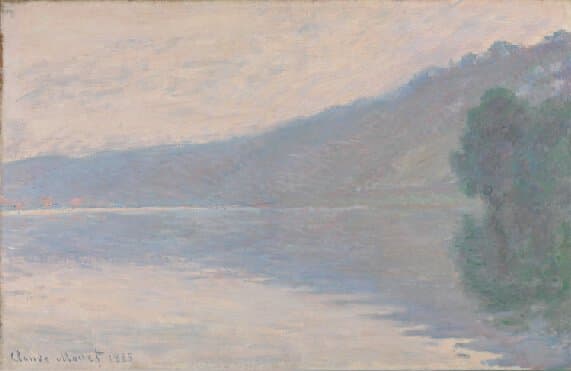
The Seine at Port-Villez
Claude Monet · 1894
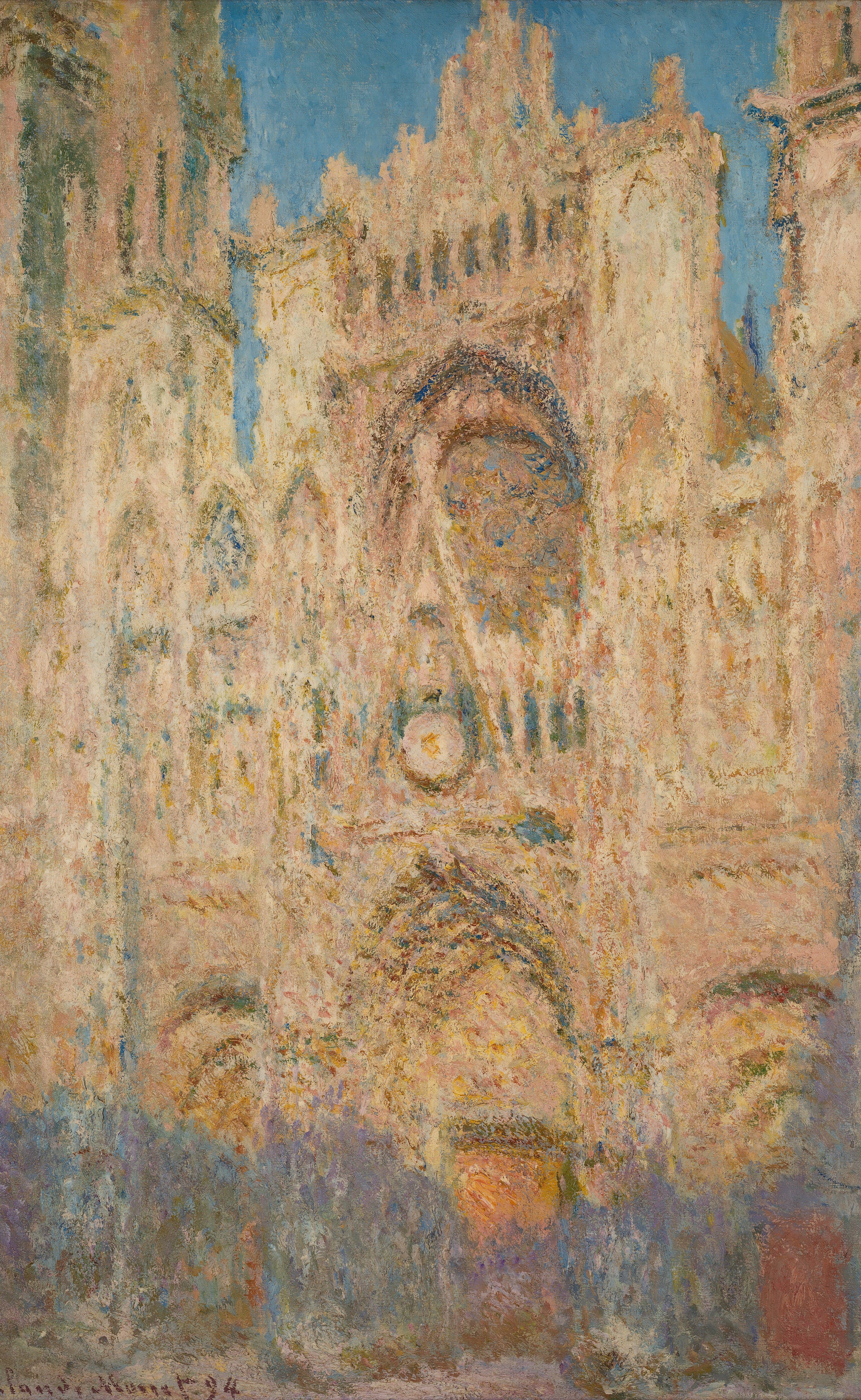
Rouen Cathedral, Evening
Claude Monet · 1894
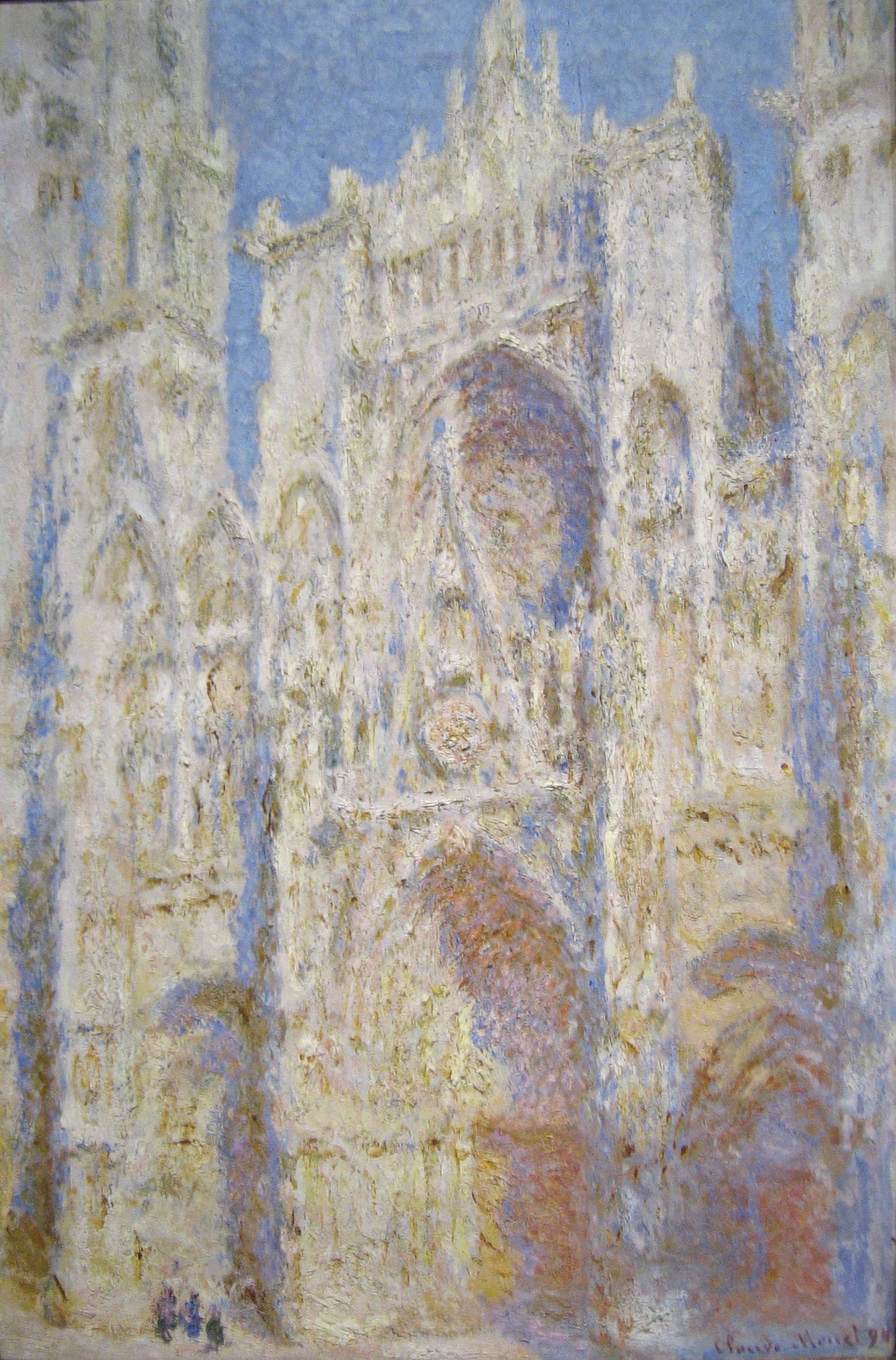
Rouen Cathedral, West Façade, Sunlight
Claude Monet · 1892–94
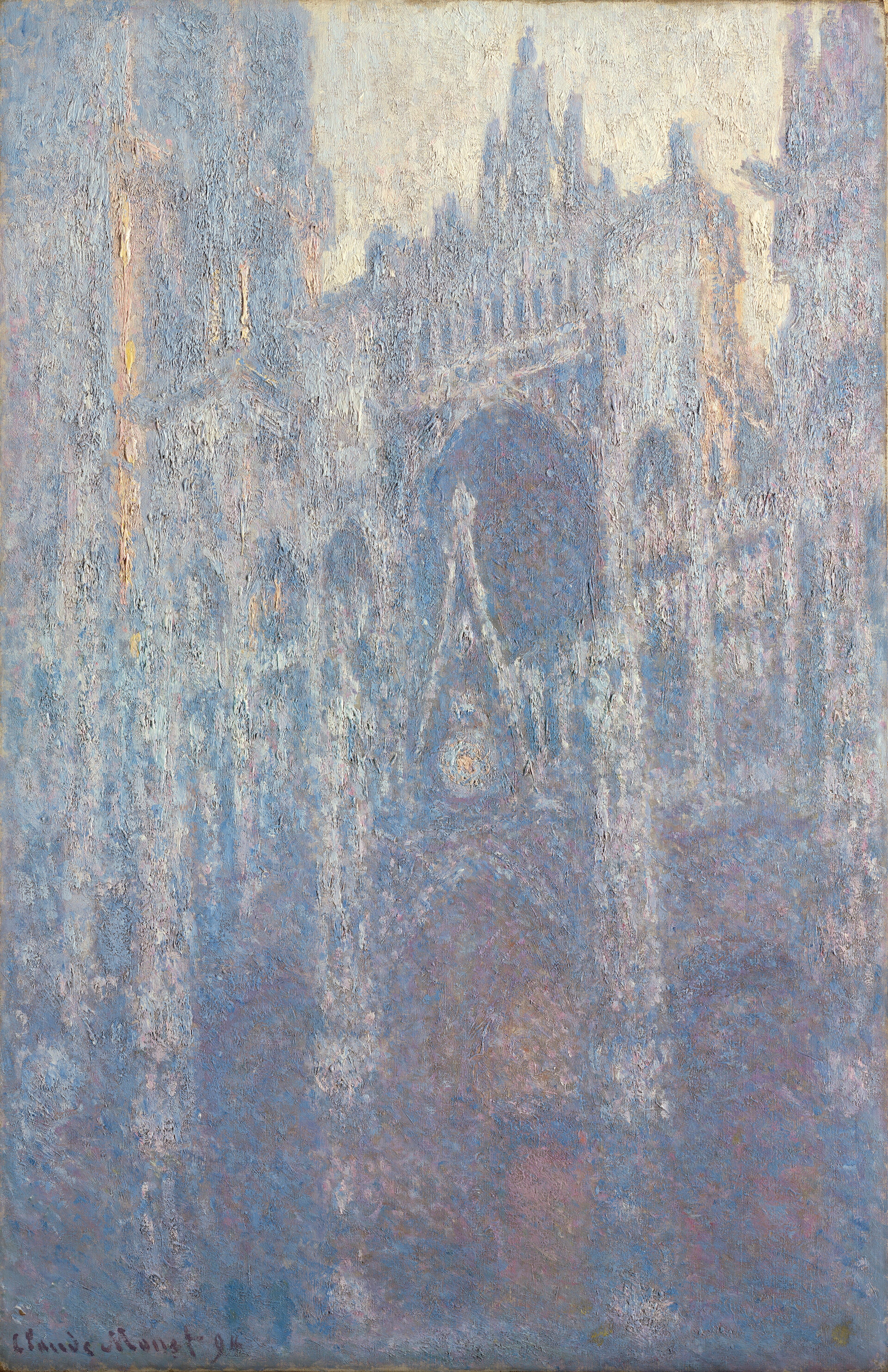
The Portal of Rouen Cathedral in Morning Light
Claude Monet · 1894
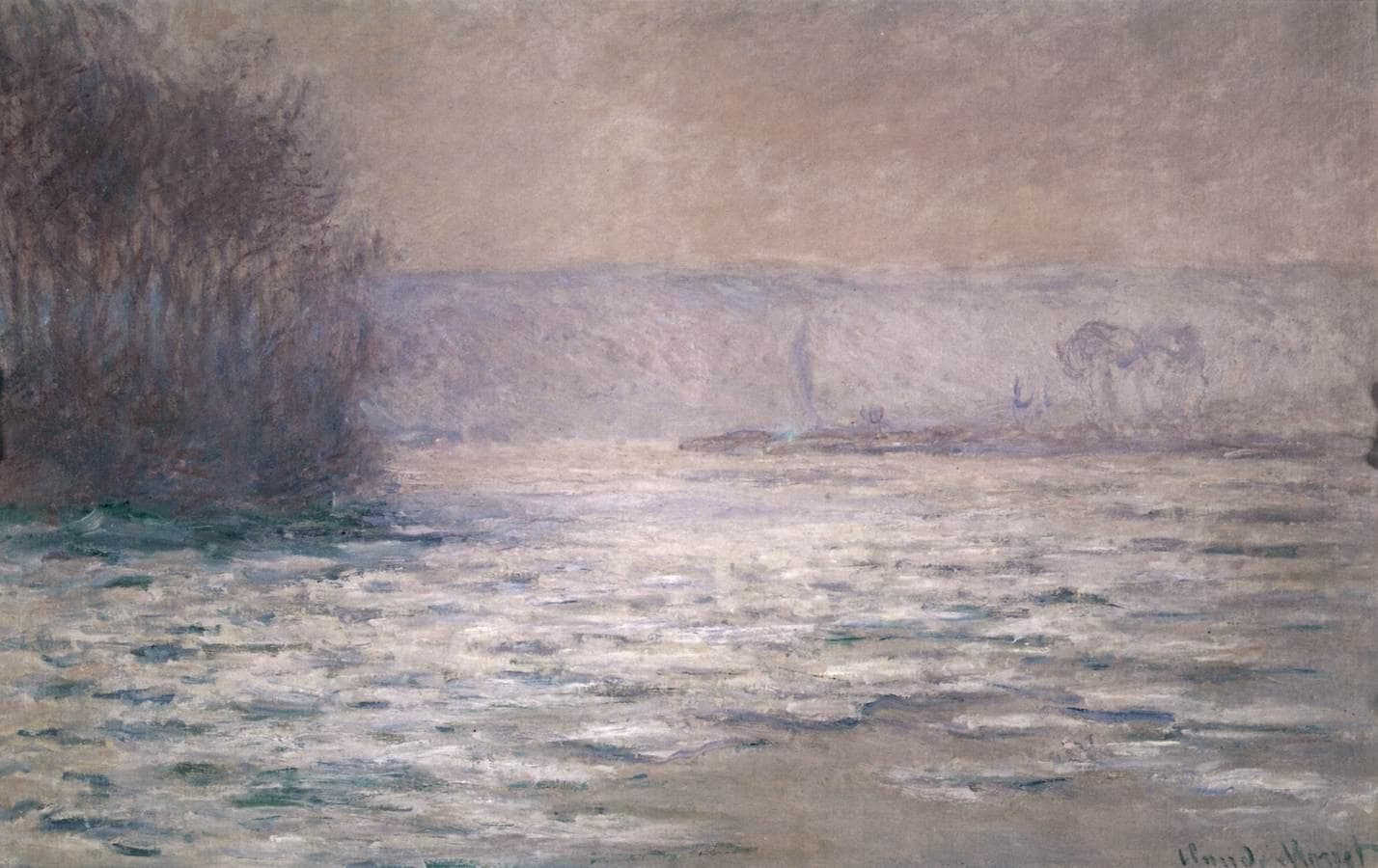
Ice Floes on the Seine near Bennecourt
Claude Monet · 1893
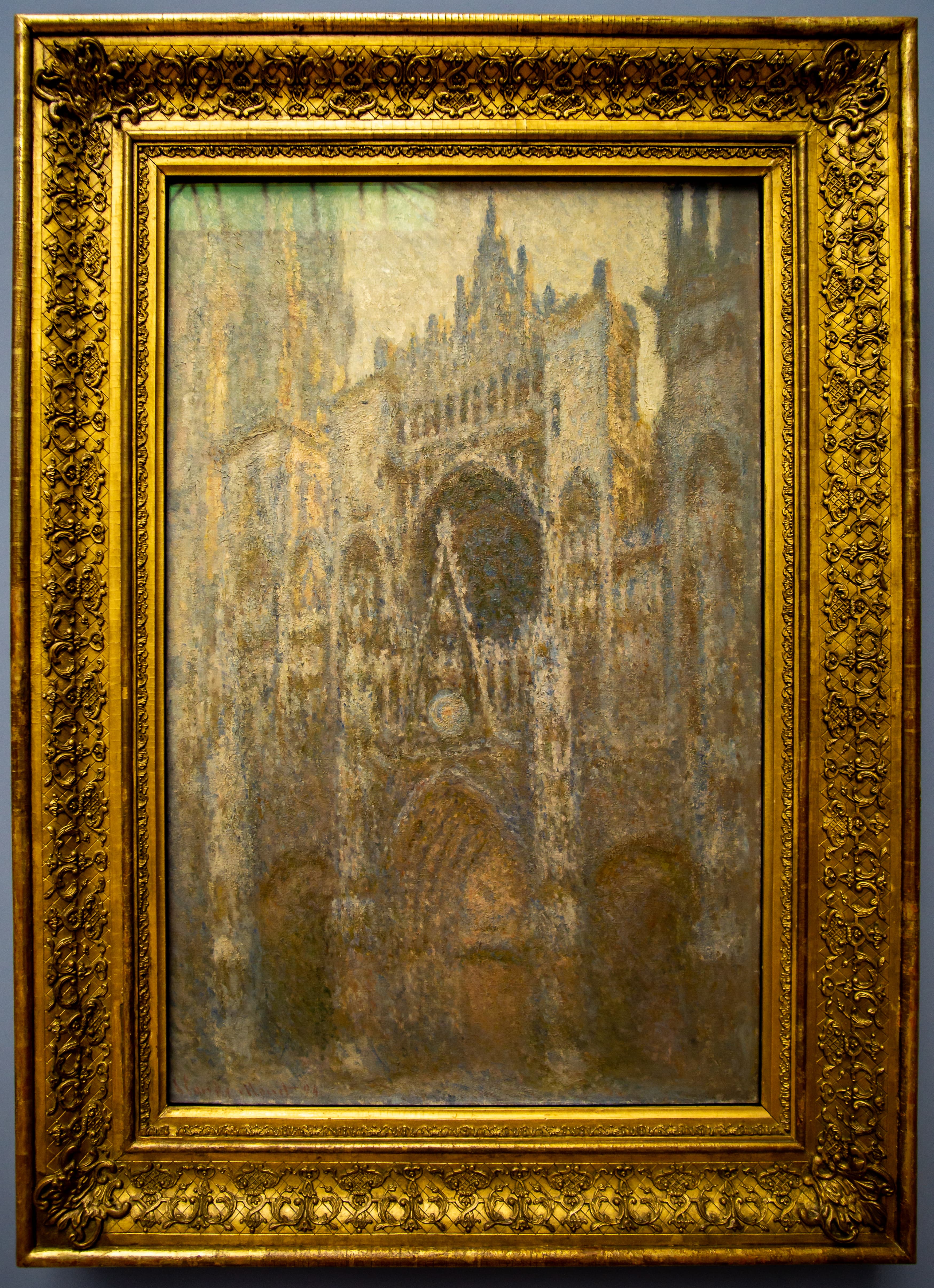
Rouen Cathedral, Portal
Claude Monet · 1893–94
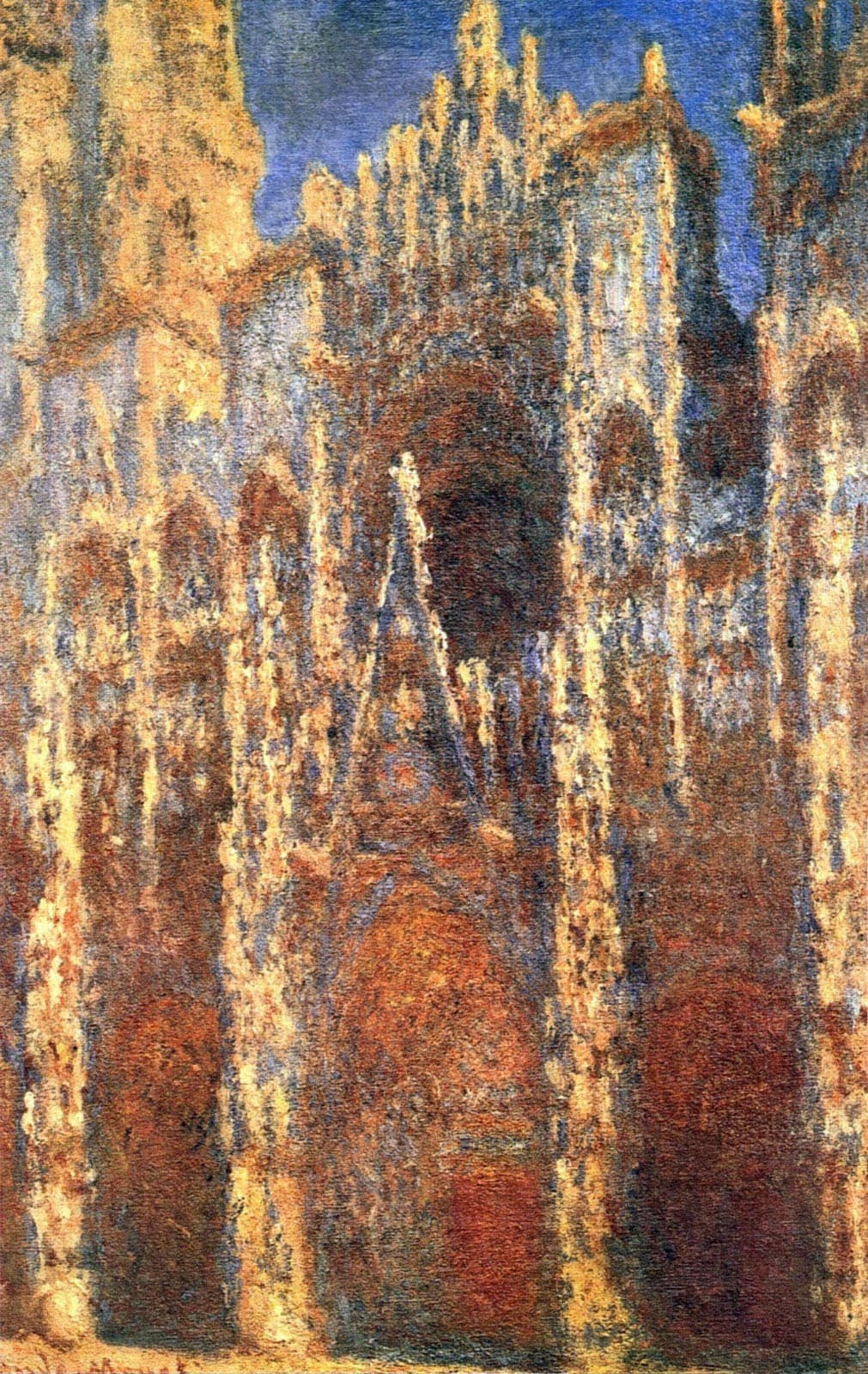
Rouen Cathedral, Portal (W 1359)
Claude Monet · 1893–94
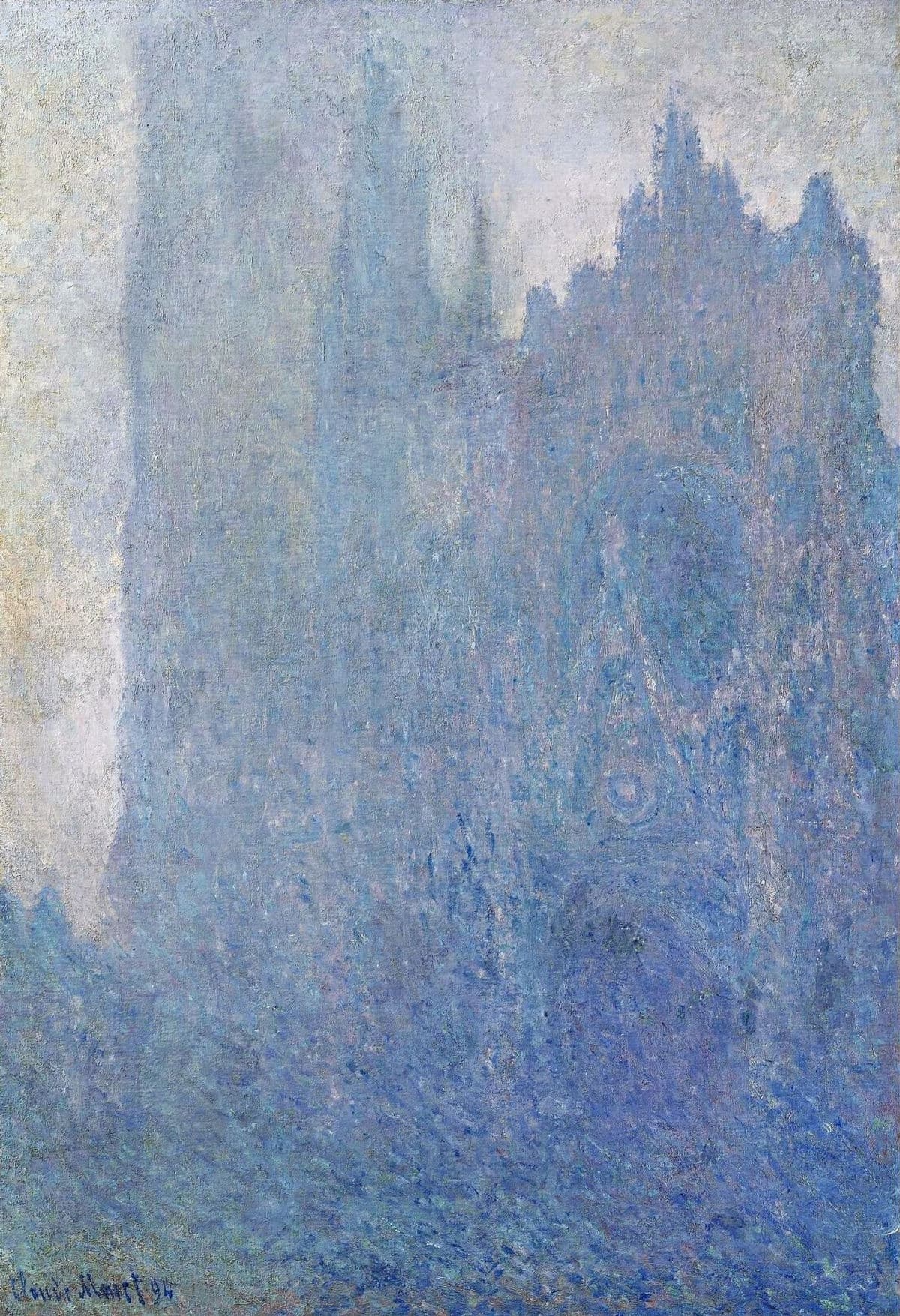
Rouen Cathedral, Fog
Claude Monet · 1893–94
Also painted in 1894
The same year
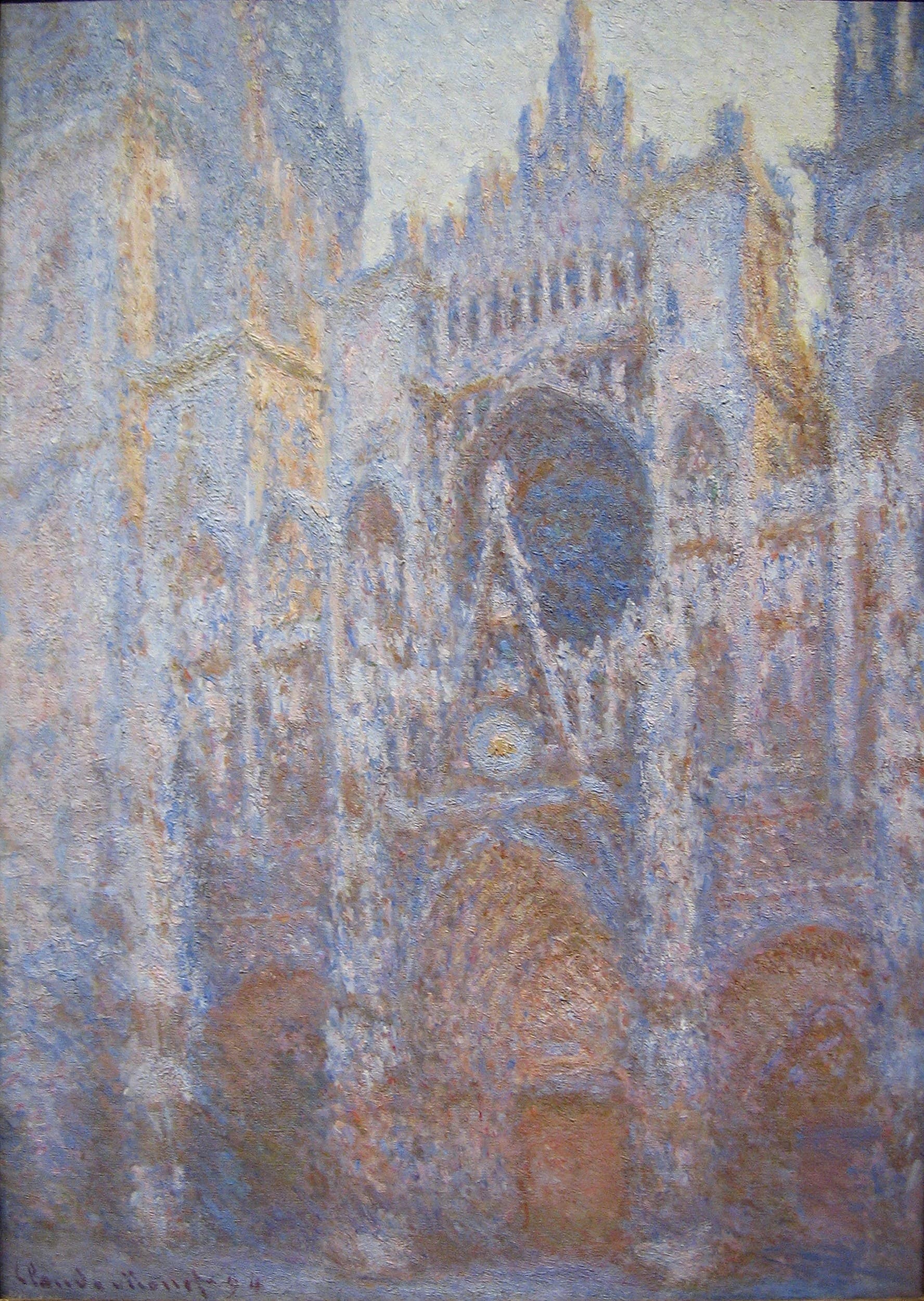
Rouen Cathedral, West Façade
Claude Monet · 1893–94
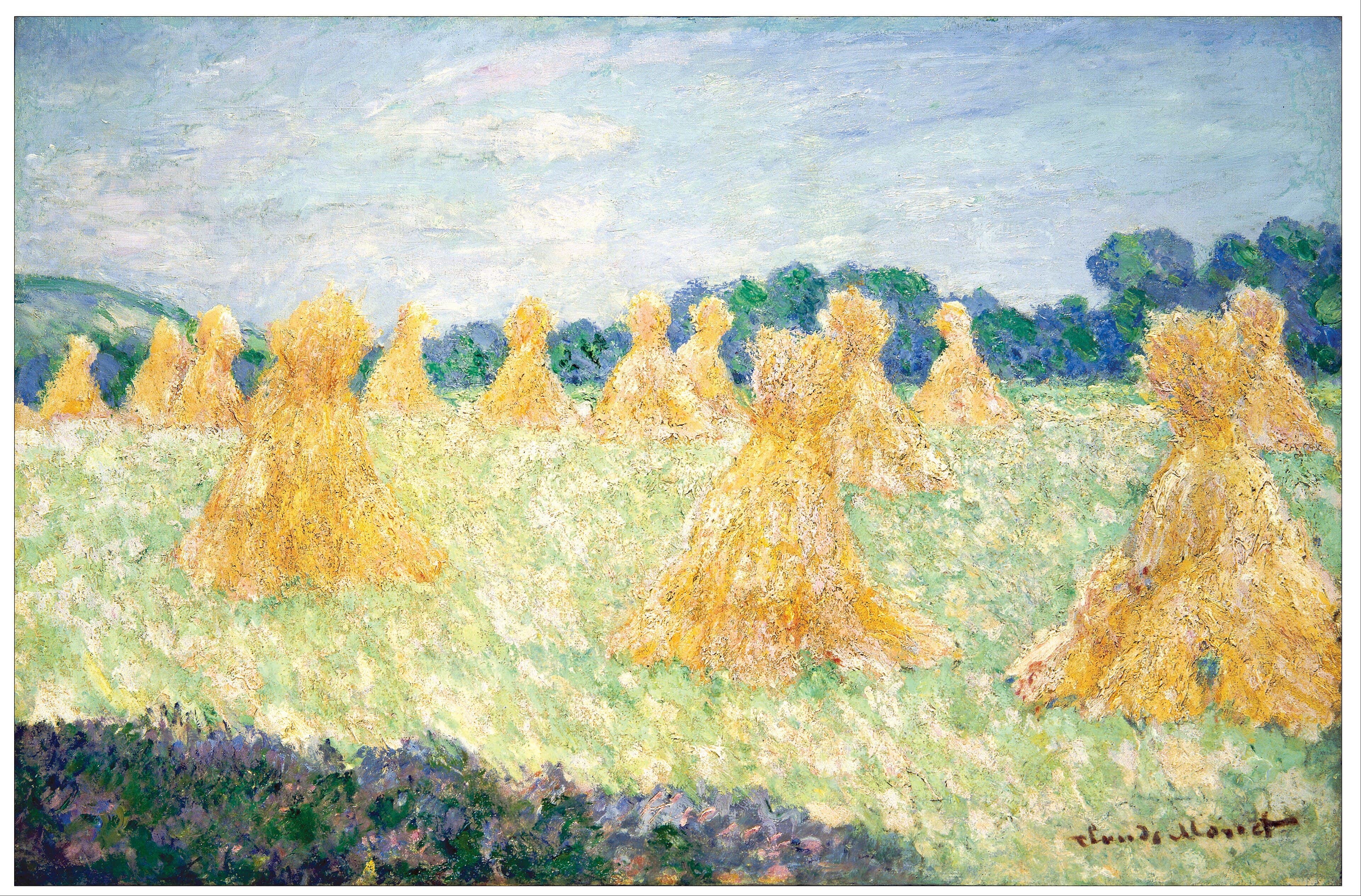
The Young Ladies of Giverny, Sun Effect
Claude Monet · 1894
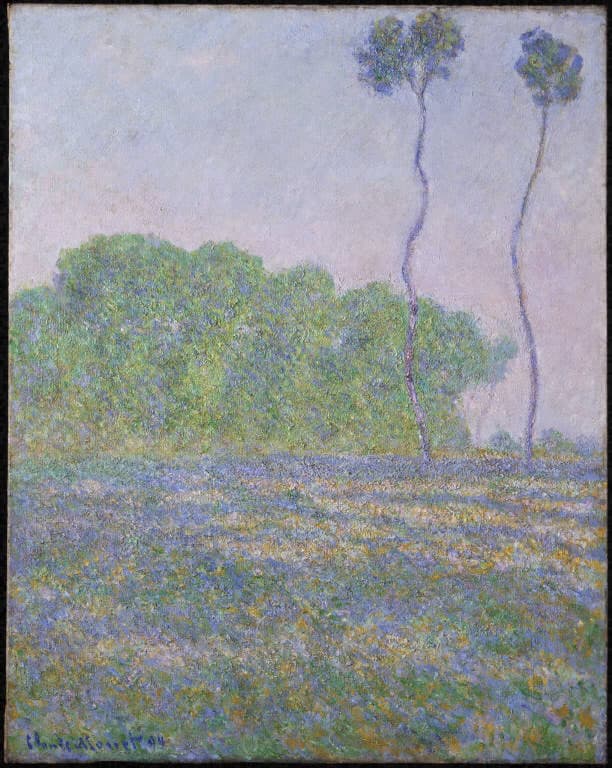
Meadow at Giverny
Claude Monet · 1894
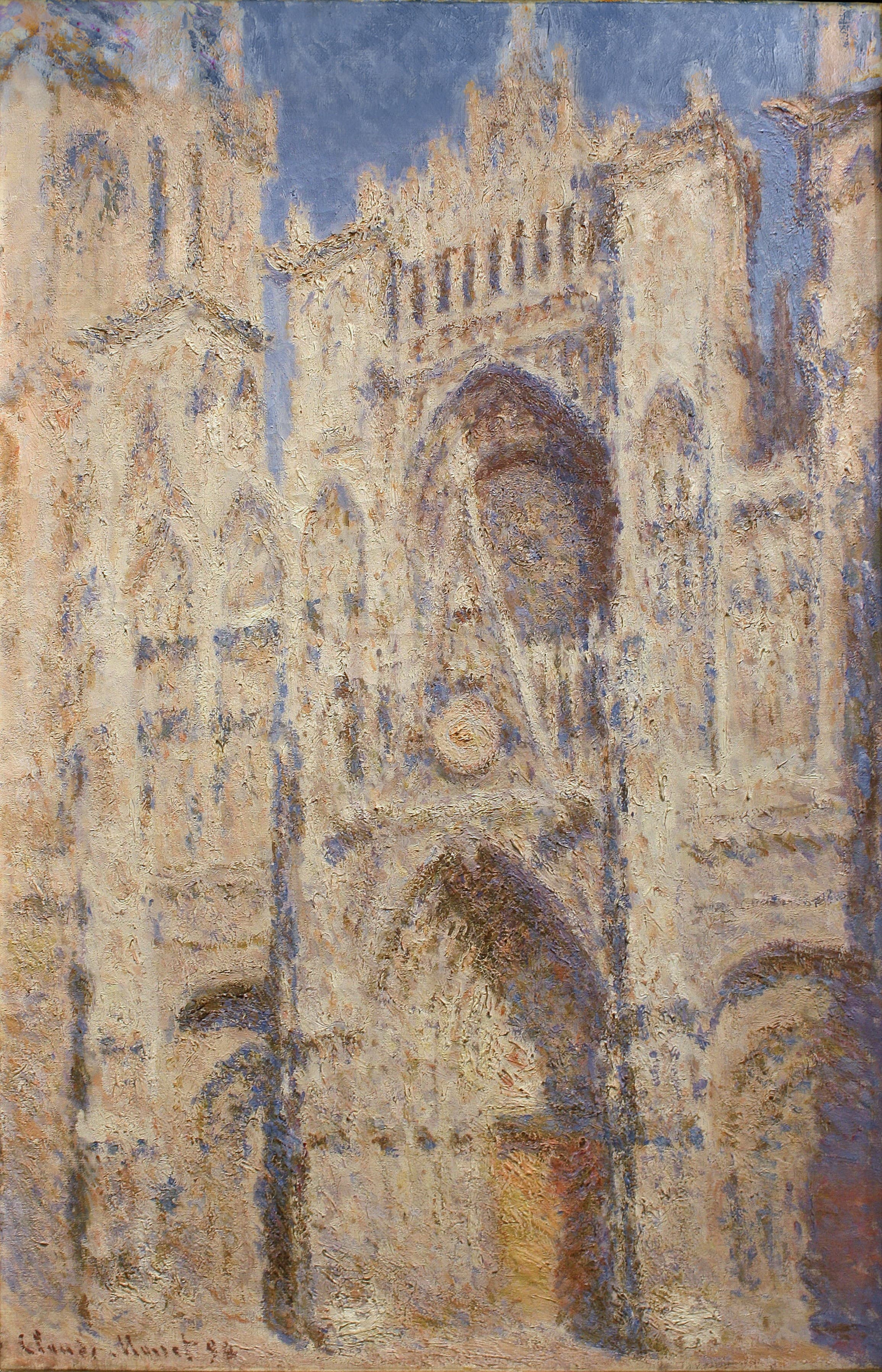
Rouen Cathedral: The Portal (Sunlight)
Claude Monet · 1892–94
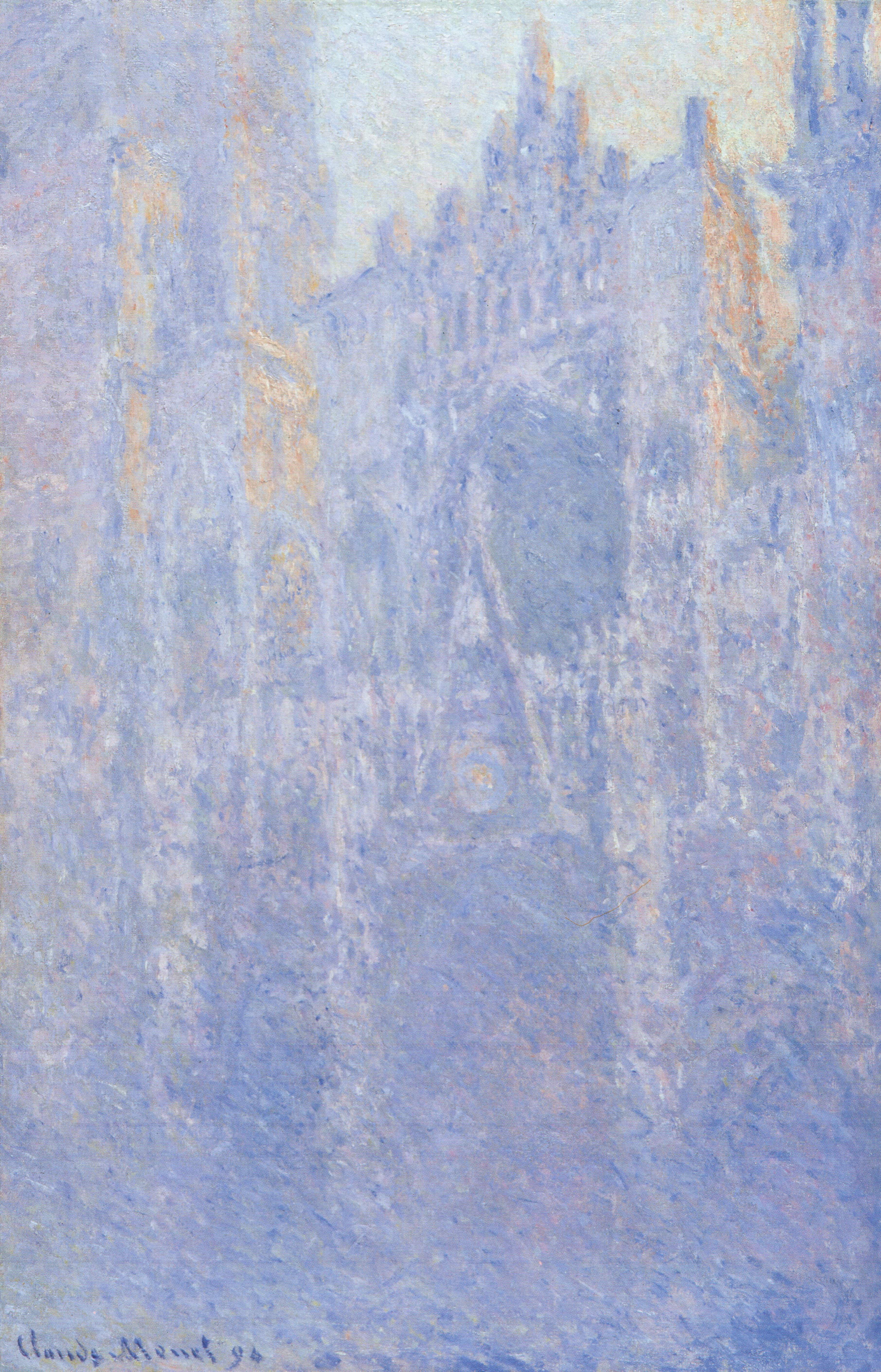
The Portal, Morning Fog
Claude Monet · 1893–94
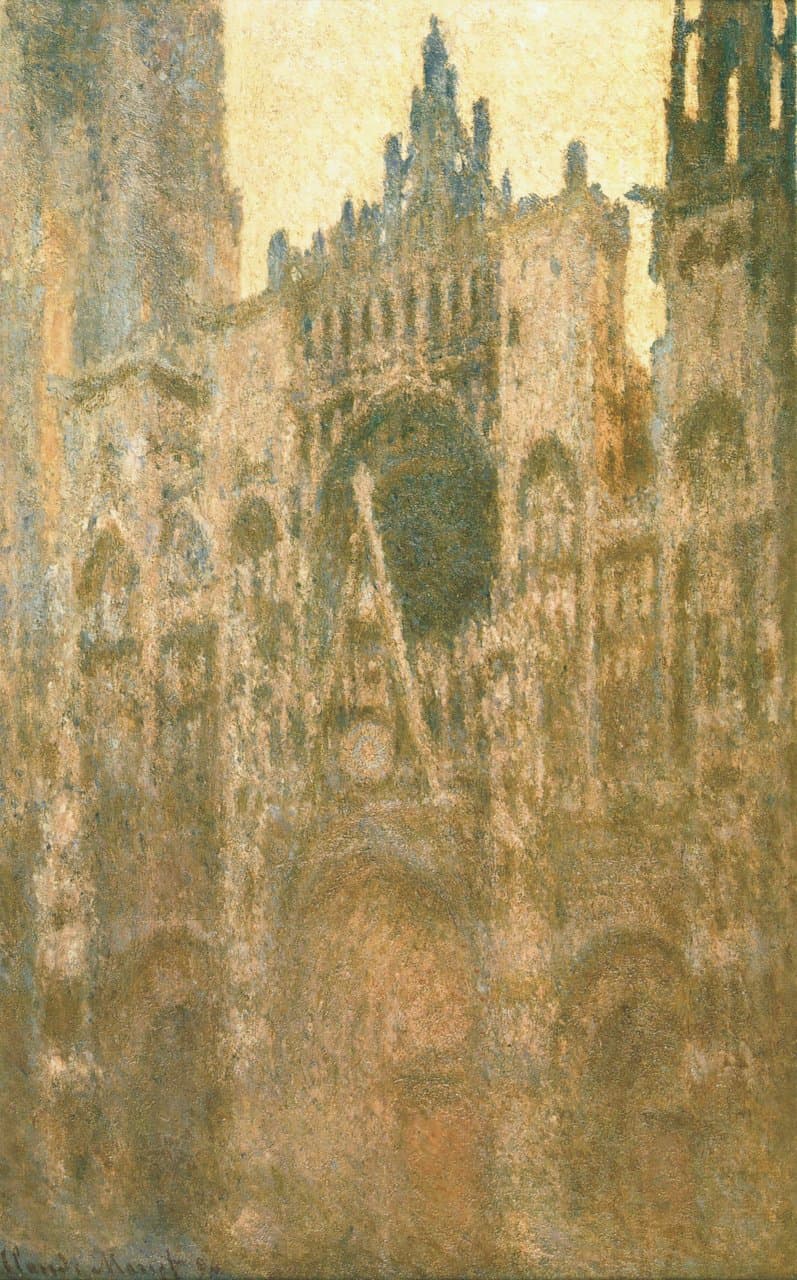
Rouen Cathedral in the Morning (Pink Dominant)
Claude Monet · 1893–94
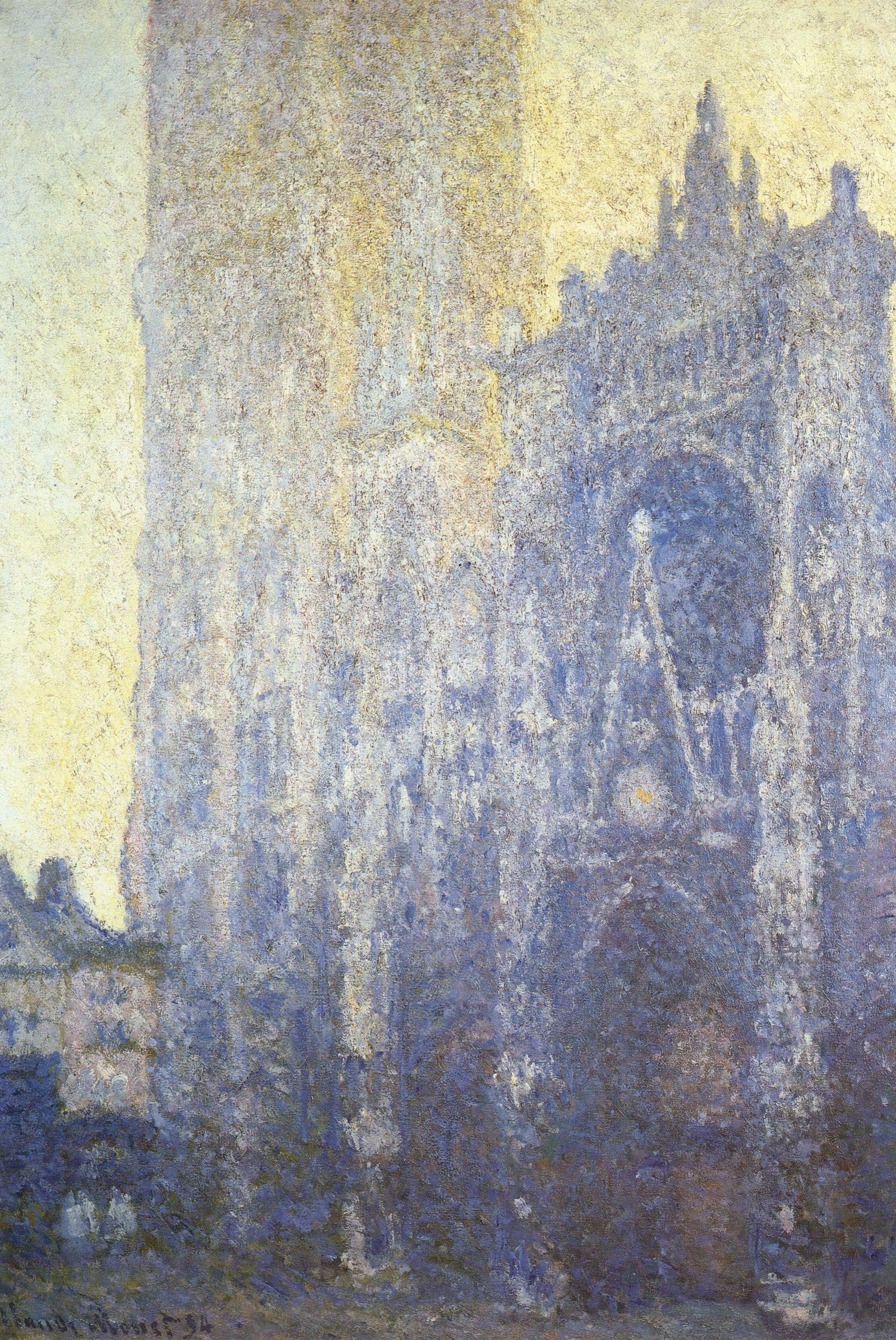
Rouen Cathedral, the Portal, Morning Effect
Claude Monet · 1893–94
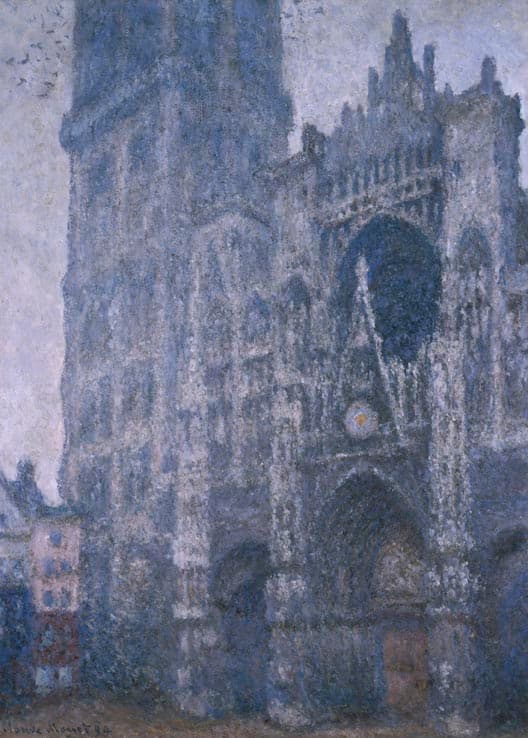
Rouen Cathedral, the Portal and the Tour d'Albane, Grey Weather
Claude Monet · 1893–94
Kindred works
You may also study
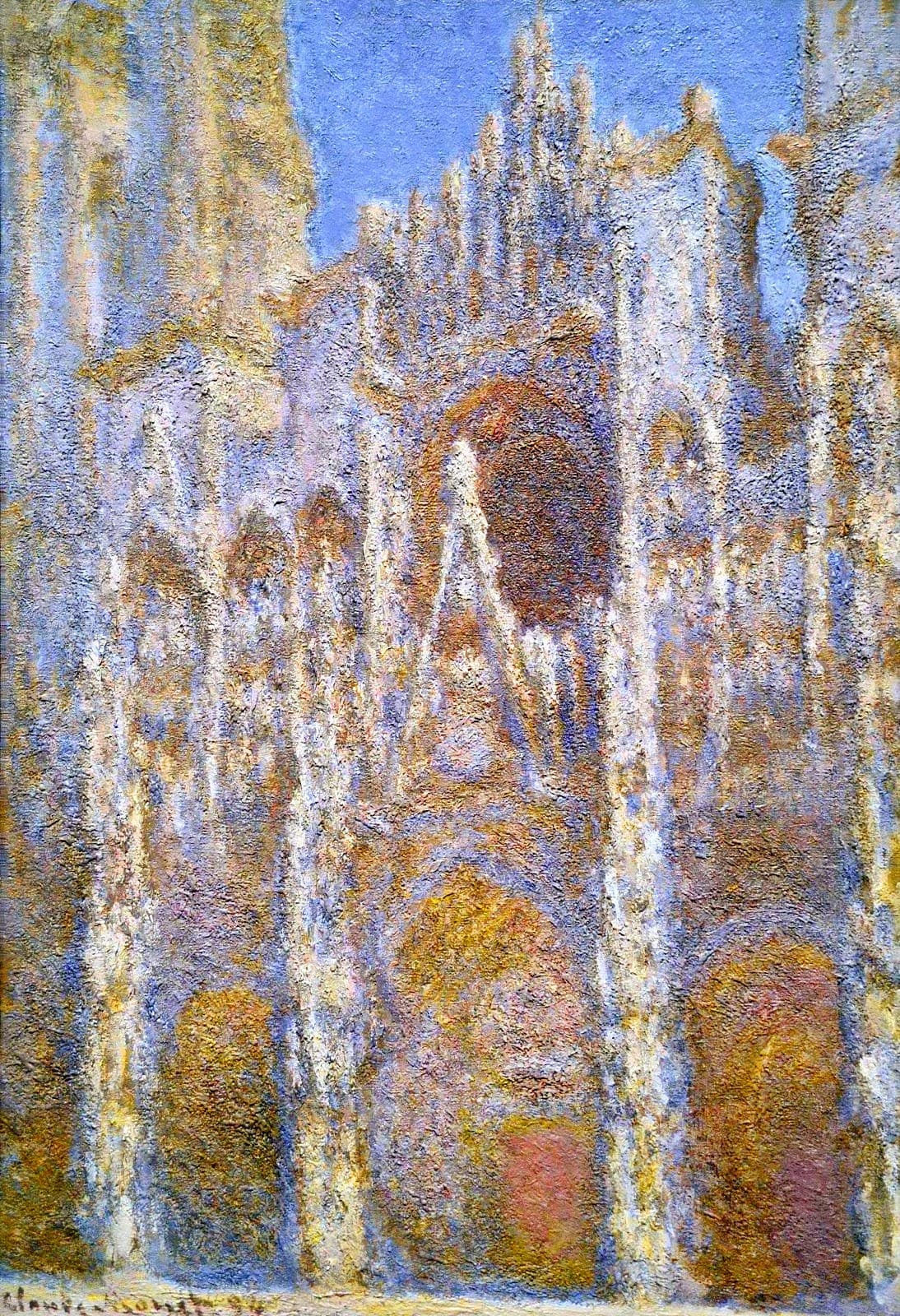
Rouen Cathedral, Façade
Claude Monet · 1893–94
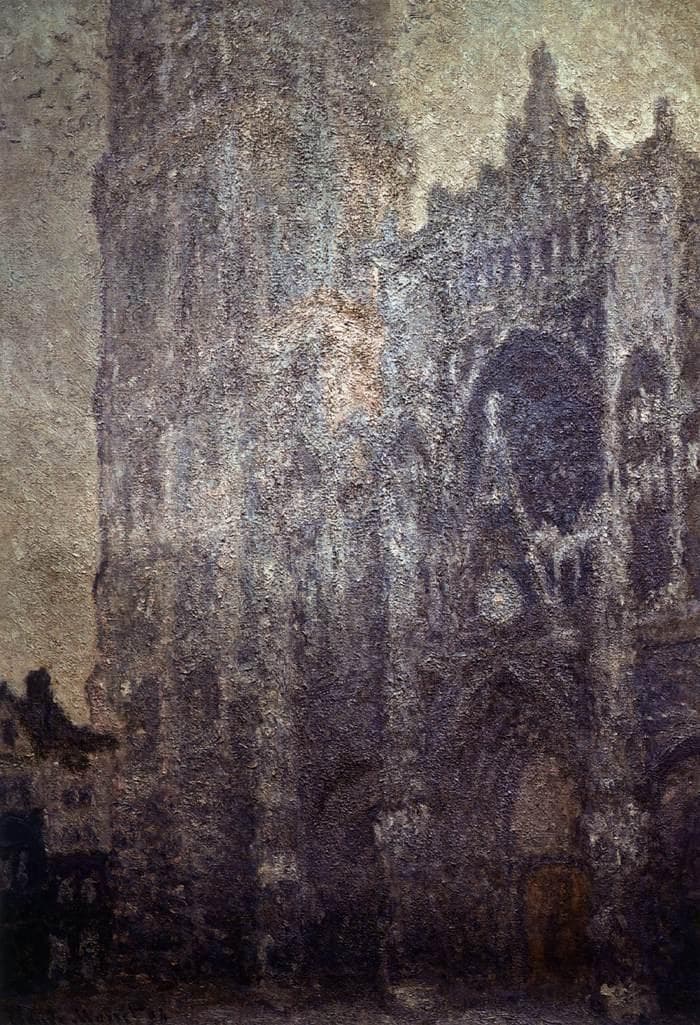
Rouen Cathedral, Effects of Morning Light
Claude Monet · 1893
Rouen Cathedral, the Portal, Morning Effect
Claude Monet · 1893–94
Rouen Cathedral, the Portal and the Tour d'Albane, Grey Weather
Claude Monet · 1893–94
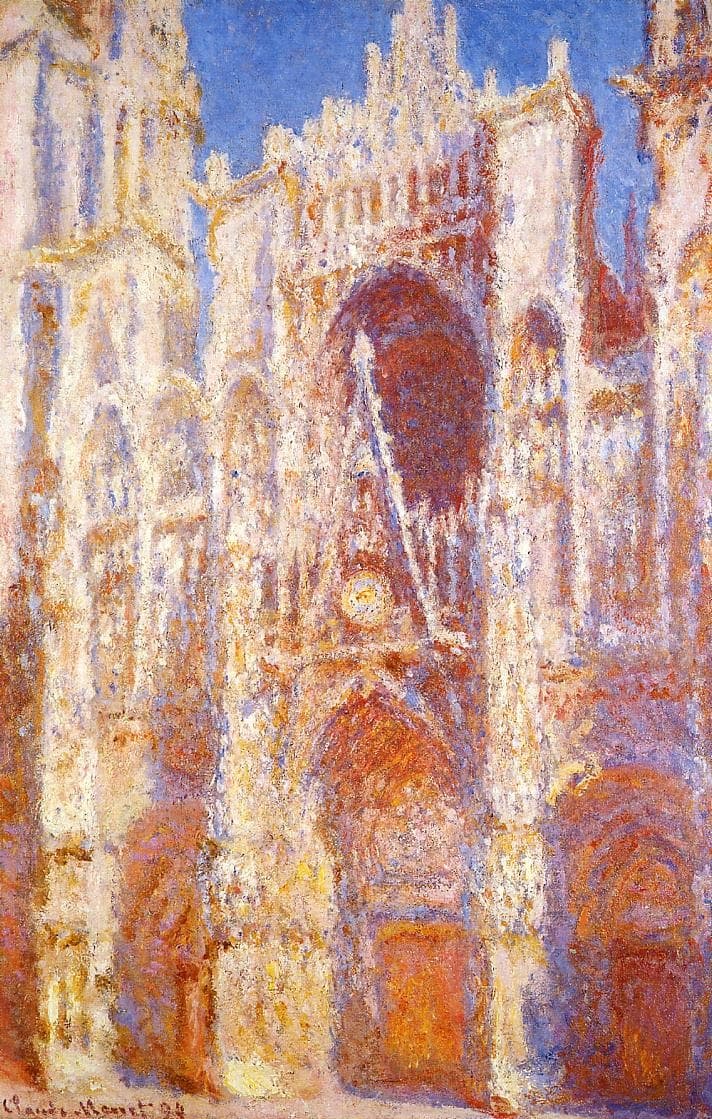
Rouen Cathedral, Portal, Sunlight (W 1322)
Claude Monet · 1892–94
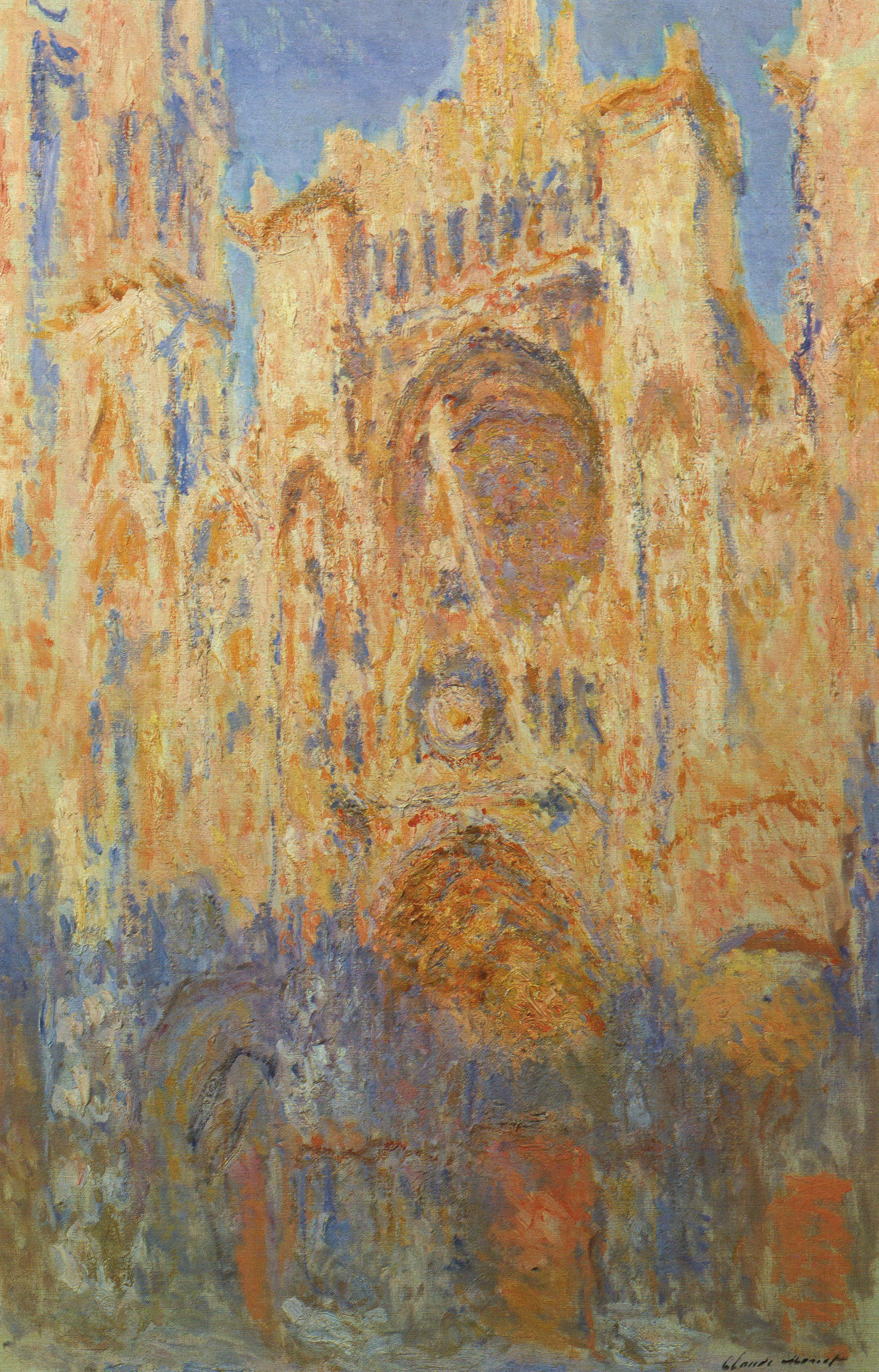
Rouen Cathedral, Sunlight Effect, End of the Day
Claude Monet · 1892
Rouen Cathedral, the Portal, Front View (Harmony in Brown)
Claude Monet · 1892–94
The Portal, Morning Fog
Claude Monet · 1893–94