Image: Claude Monet; National Gallery of Art (source: Digital photo by User:Postdlf) · Public domain · via Wikimedia Commons
Rouen Cathedral, West Façade, Sunlight
Claude Monet, 1892–94
Rouen Cathedral, West Façade, Sunlight is a Claude Monet painting from his Rouen Cathedral series, begun in 1892 and dated 1894: the Gothic front bleached almost white by full sun under a blue sky. It is in the National Gallery of Art, Washington, Chester Dale Collection.
- Artist
- Claude Monet
- Date
- 1892–94
- Medium
- Oil on canvas
- Dimensions
- 100.1 × 65.8 cm
- Collection
- National Gallery of Art, Washington, D.C., United States
- Movement
- Impressionism
- Catalogue
- Wildenstein 1324
- Architecture & Ruins
- Religion & Saints
What you are looking at
The west front of Rouen Cathedral fills the canvas from edge to edge, so close that the towers are cut off at the sides and the spires at the top. The stone is drenched in sun. Monet paints it in creams, chalky whites and pale butter yellow, with shadows not of gray or brown but of clear sky blue and lilac. Above the gables a strip of strong blue sky shows through the openwork pinnacles. In the center, the great rose window holds a soft mauve and rose, and just below it the clock dial is a small round knot of pale paint.
At the bottom, the three doorways are flushed with warm pink and orange, the deepest color in the picture, because the sun has not yet reached into the recesses. Look at the lower left corner: three tiny dark figures stand at the foot of the façade, a few flicks of blue-black paint. They are almost the only reminder of scale, and they make the cathedral feel enormous.
Monet signed and dated the canvas Claude Monet 94 at lower right.
Rouen, 1892–93
Claude Monet went to Rouen in February 1892 and again in February 1893, renting rooms in buildings on the square opposite the cathedral's west front. He worked on many canvases at once, switching as the light moved across the façade, and returned to Giverny with the pictures unfinished. Through 1894 he reworked them in his studio, which is why so many, including this one, bear the date '94.
The result was the Rouen Cathedral series, some thirty canvases. Twenty were shown at Durand-Ruel's gallery in Paris in May 1895, where Georges Clemenceau praised them in print as a revolution in painting, and Pissarro and Cézanne went to see them.
How it was painted
The surface is the famous Rouen crust: paint laid on in thick, dry, overlapping touches, then dragged and scumbled so that each new color catches on the ridges of the layer beneath. Up close it resembles weathered stone more than a picture of stone. Monet keeps the drawing loose. The tracery of the gables is a row of pale vertical dabs, the statues of the portal a ripple of blue and white.
The color logic is that of full sun. Light surfaces become nearly white and lose their local color; shadows take on the blue of the sky that fills them. Monet used no black. Even the deepest accents, the figures and the cracks in the stone, are dark blue.
How this version differs
There are several sunlit portals in the series. The Met's Rouen Cathedral: The Portal (Sunlight) is warmer, with apricot stone and a deeper blue sky. The Marmottan's Portal, Sunlight, End of the Day turns the façade orange and gold. The Musée d'Orsay's Rouen Cathedral in Full Sunlight shows the portal with the tower and harder midday shadows. The Washington canvas is the palest and coolest of these, the stone almost dissolved into white light, and it is one of the few to include figures.
The National Gallery of Art owns a second canvas from the series, Rouen Cathedral, West Façade, a softer, grayer view hung in the same collection, which makes Washington one of the best places to compare two moments of light side by side.
Reading the light
The west front of Rouen Cathedral faces roughly west, so in late winter it receives direct sun only from early afternoon. The bleached stone here therefore points to a fairly late hour, when the sun was high enough in the southwest to strike the whole façade but not yet low enough to turn it gold. The figures at the bottom, already in the shade of the portal, confirm that the lowest part of the façade has not yet been reached.
Ownership and where to see it
Catalogued as Wildenstein 1324, the painting is in the National Gallery of Art in Washington, D.C. (accession 1963.10.179), as part of the Chester Dale Collection, bequeathed by the New York collector Chester Dale in 1962. It is usually on view in the West Building's French galleries. For other versions, see our guide to where to see Monet's paintings.
Questions & answers
Where is Monet's Rouen Cathedral, West Façade, Sunlight?
It is in the National Gallery of Art in Washington, D.C., accession 1963.10.179, part of the Chester Dale Collection. The gallery also owns a second Rouen Cathedral canvas, a softer and grayer view of the same façade, so the two can be compared in the same collection.
When was it painted?
Monet began it in Rouen in 1892, worked on the series there again in 1893, and finished the canvases in his studio at Giverny, signing and dating this one '94'. It was part of the series shown at Durand-Ruel's gallery in Paris in May 1895.
What does the painting show?
The Gothic west front of Rouen Cathedral in full sun, the stone painted in creams and whites with blue and lilac shadows under a strip of blue sky. Three tiny figures at the lower left give the scale of the building. The subject is the light on the façade rather than its architecture.
How many Rouen Cathedral paintings did Monet make?
About thirty canvases, most of the west façade seen from rooms across the square, plus a few of the side court. Twenty were exhibited in Paris in 1895. They are now spread across museums in Europe, North America and Japan, with five at the Musée d'Orsay.
More by the artist
Claude Monet
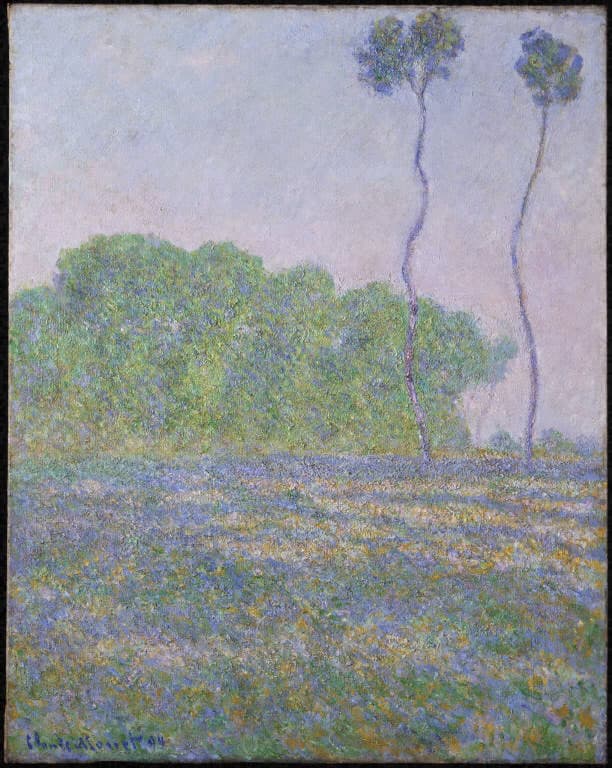
Meadow at Giverny
Claude Monet · 1894
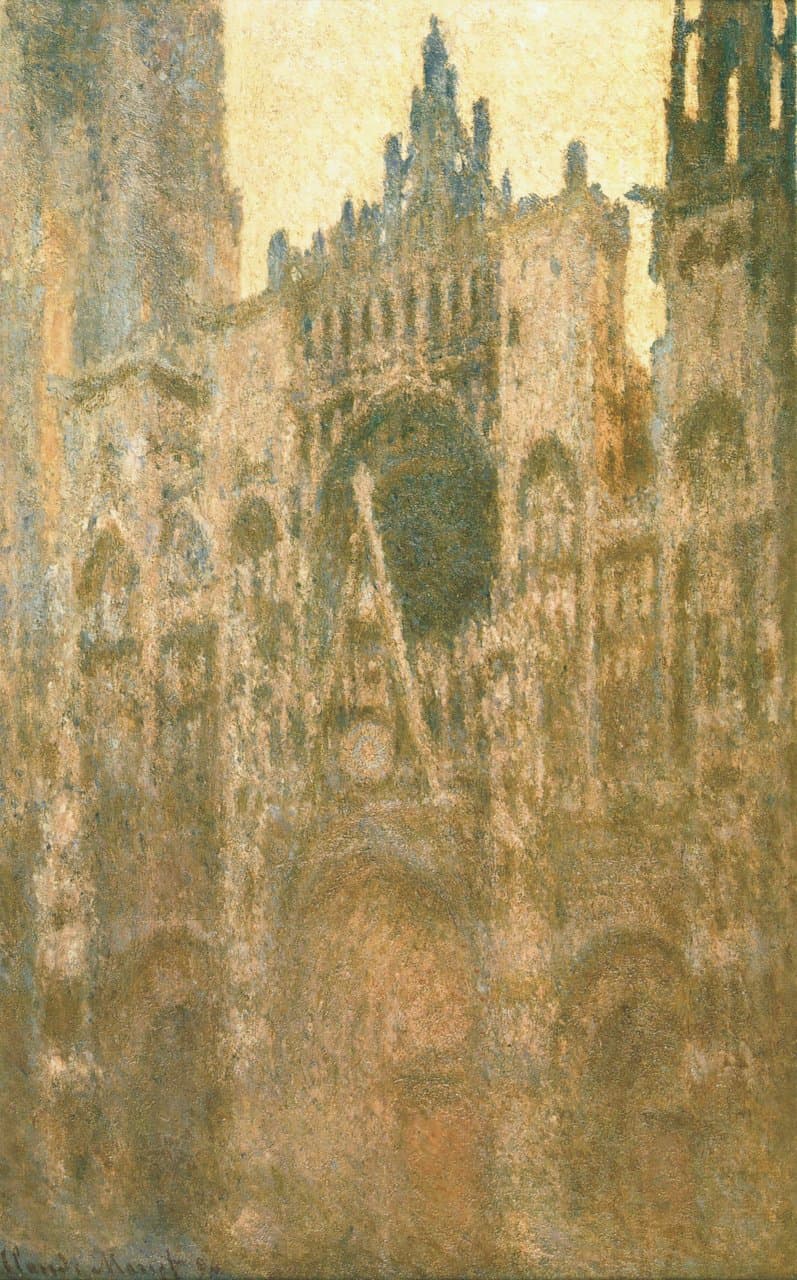
Rouen Cathedral in the Morning (Pink Dominant)
Claude Monet · 1893–94
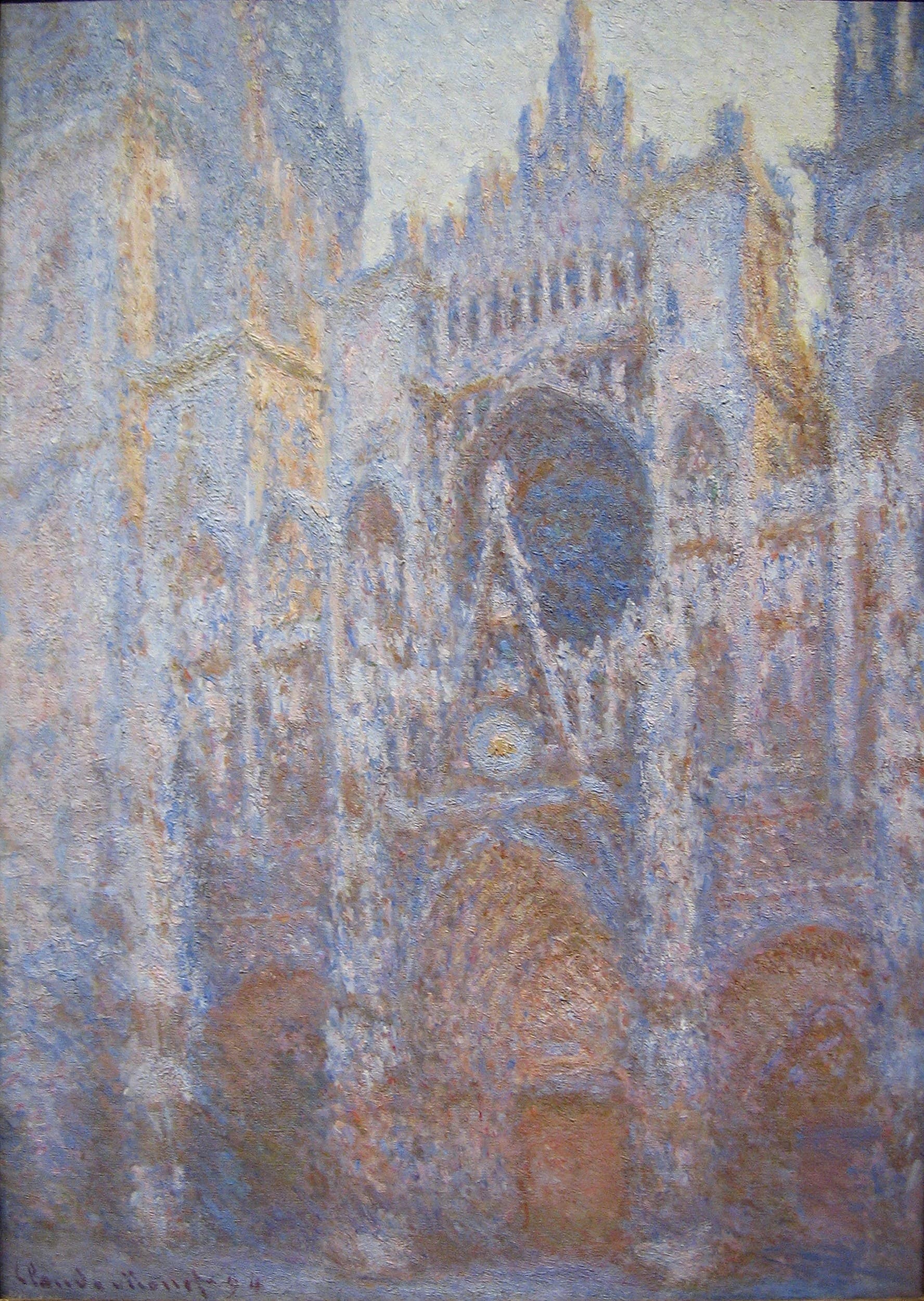
Rouen Cathedral, West Façade
Claude Monet · 1893–94
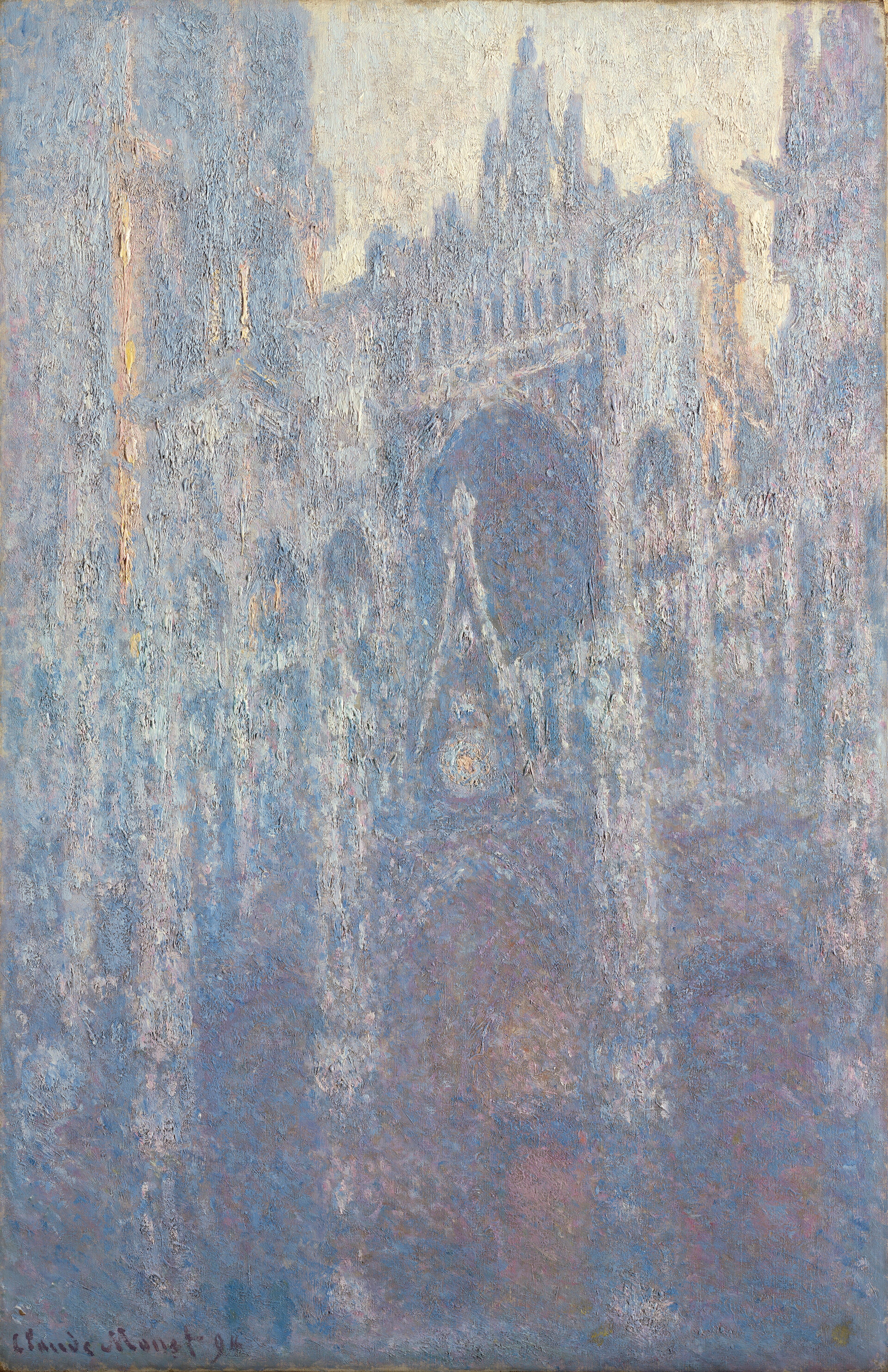
The Portal of Rouen Cathedral in Morning Light
Claude Monet · 1894
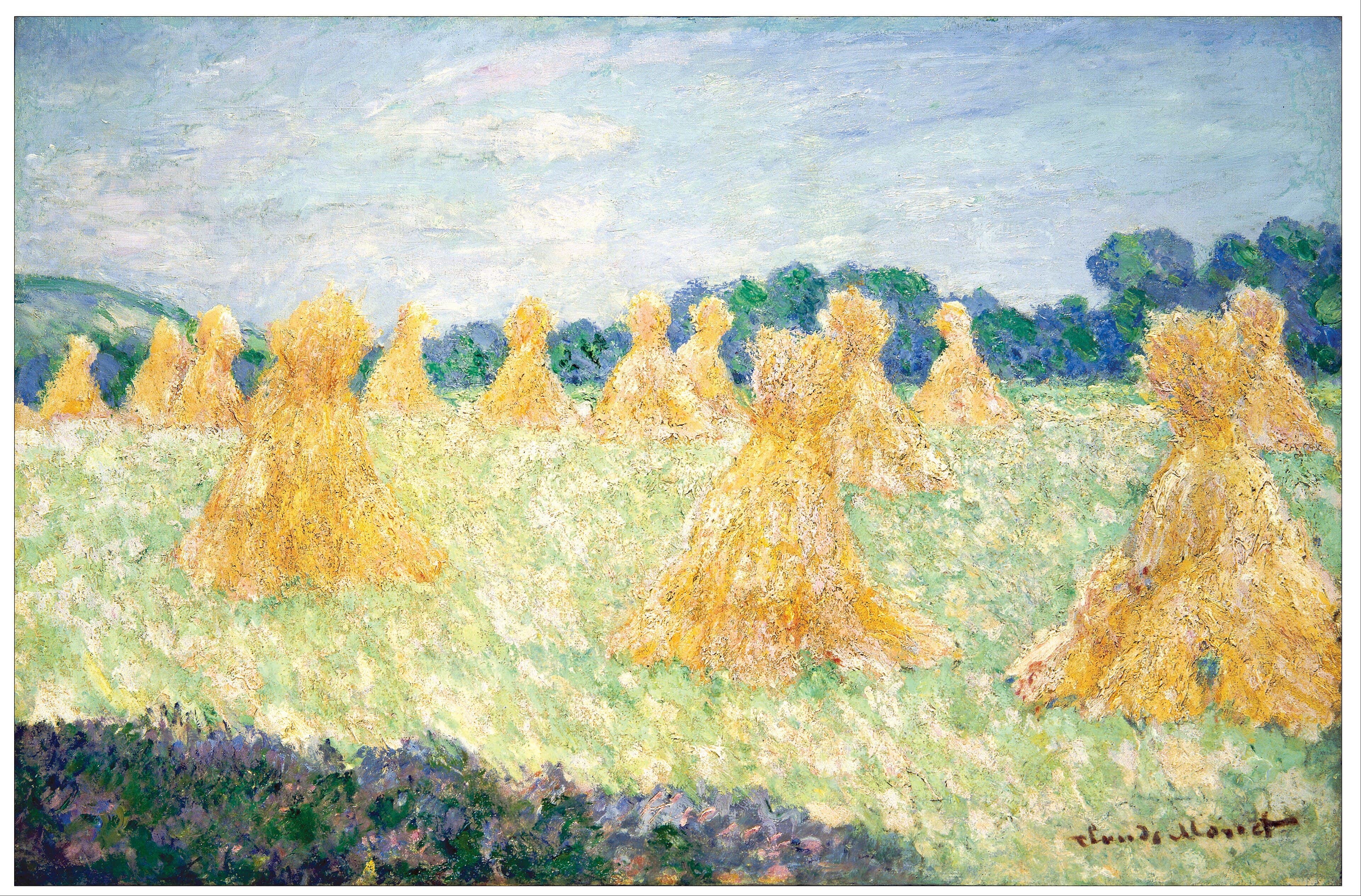
The Young Ladies of Giverny, Sun Effect
Claude Monet · 1894
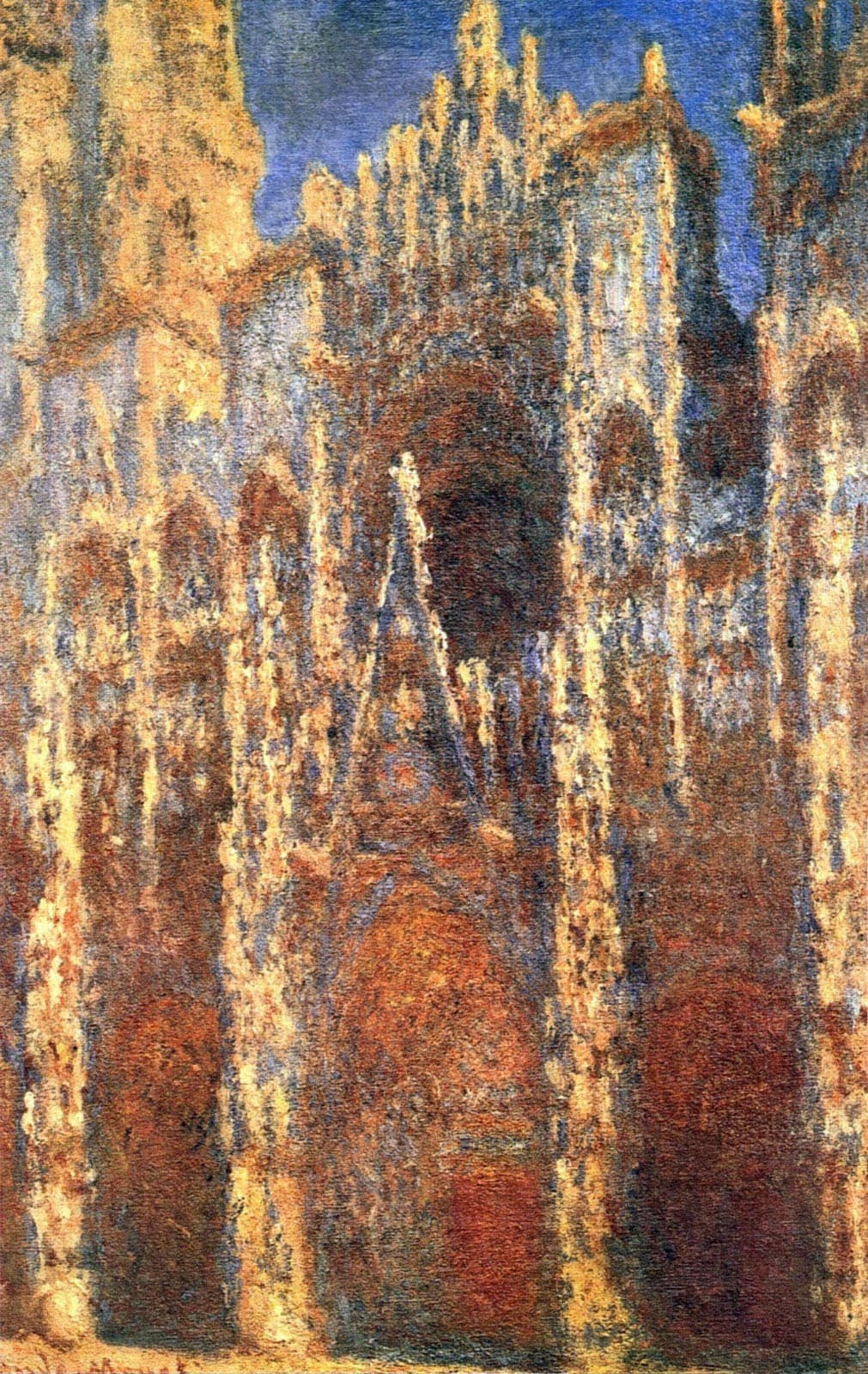
Rouen Cathedral, Portal (W 1359)
Claude Monet · 1893–94
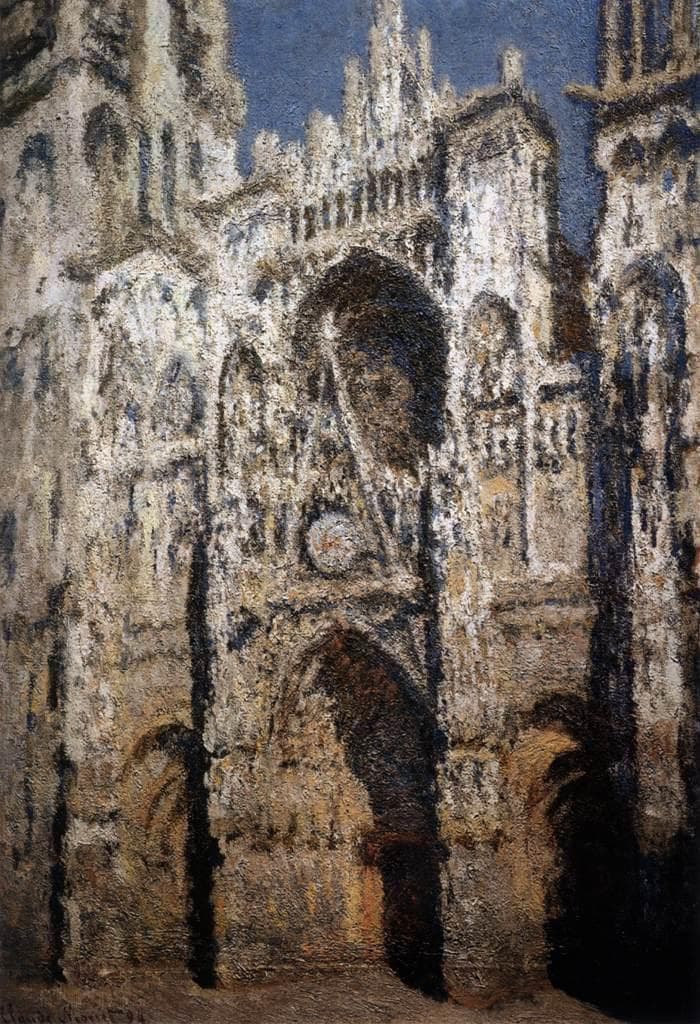
Rouen Cathedral in Full Sunlight
Claude Monet · 1893
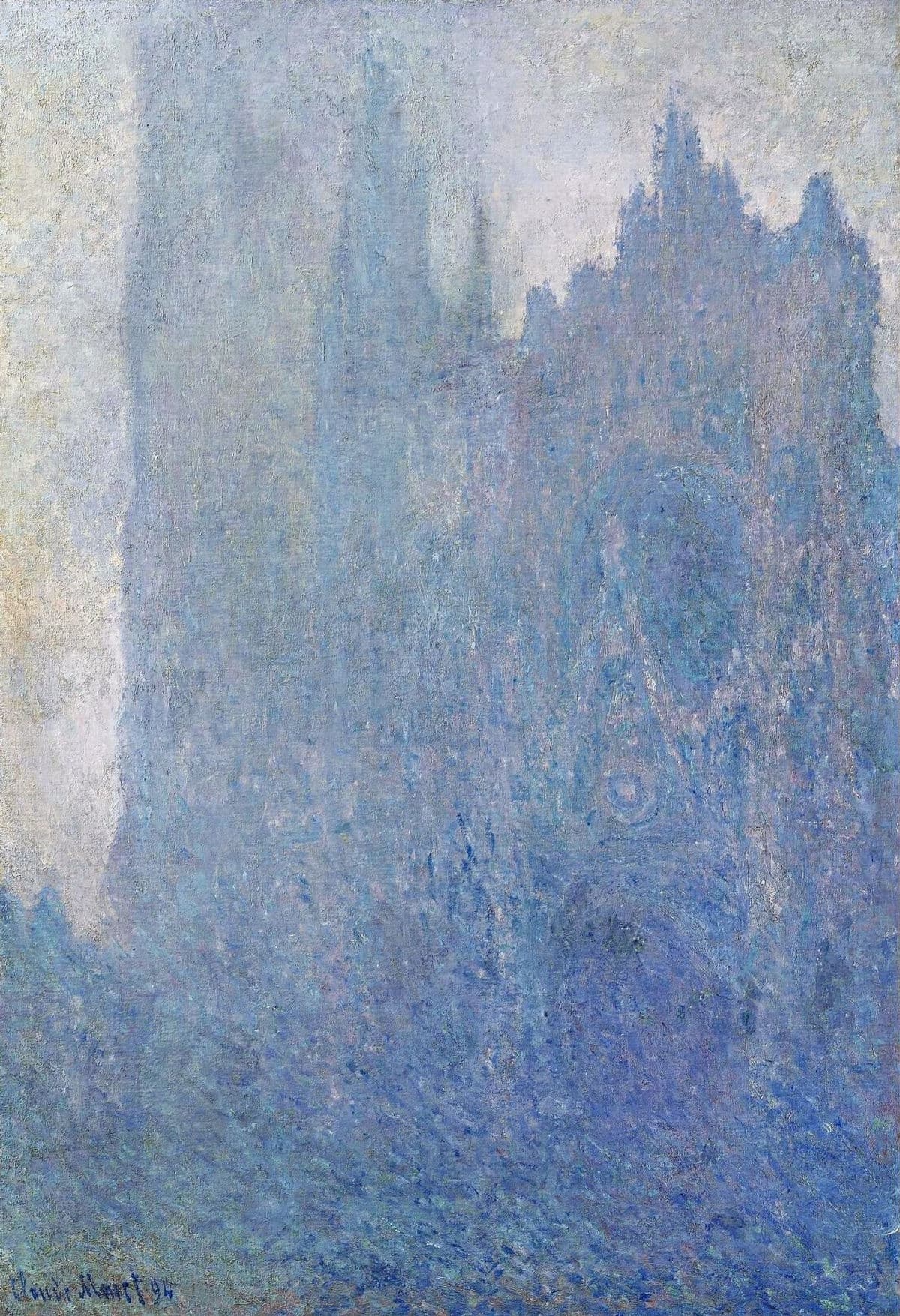
Rouen Cathedral, Fog
Claude Monet · 1893–94
Also painted in 1894
The same year
The Seine at Port-Villez
Claude Monet · 1894
Rouen Cathedral: The Portal (Sunlight)
Claude Monet · 1892–94
The Portal, Morning Fog
Claude Monet · 1893–94
Rouen Cathedral Façade and Tour d'Albane (Morning Effect)
Claude Monet · 1893–94
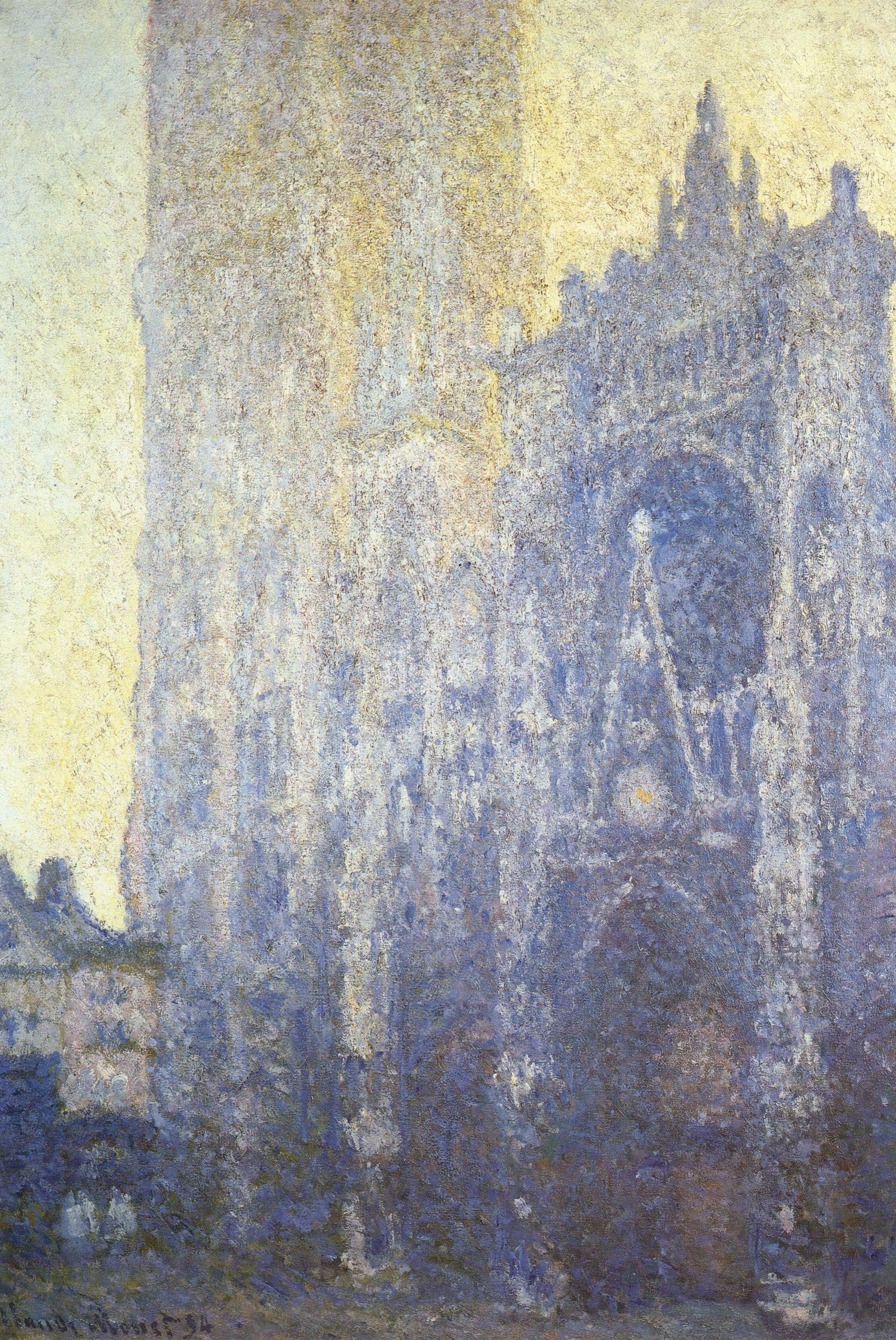
Rouen Cathedral, the Portal, Morning Effect
Claude Monet · 1893–94
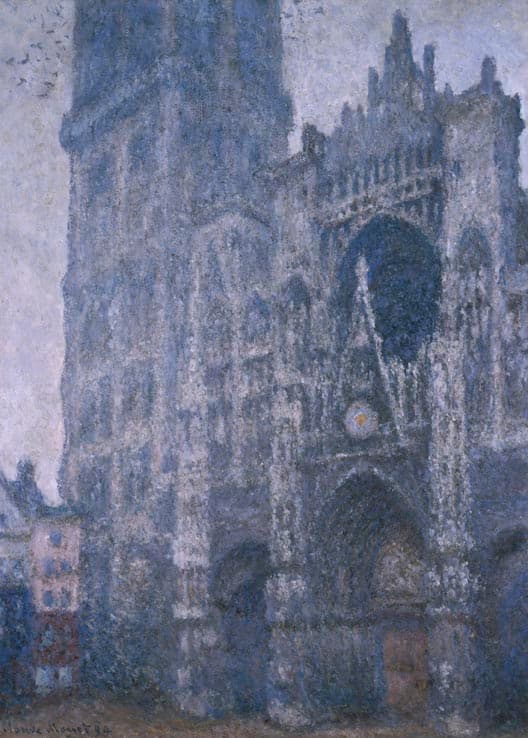
Rouen Cathedral, the Portal and the Tour d'Albane, Grey Weather
Claude Monet · 1893–94
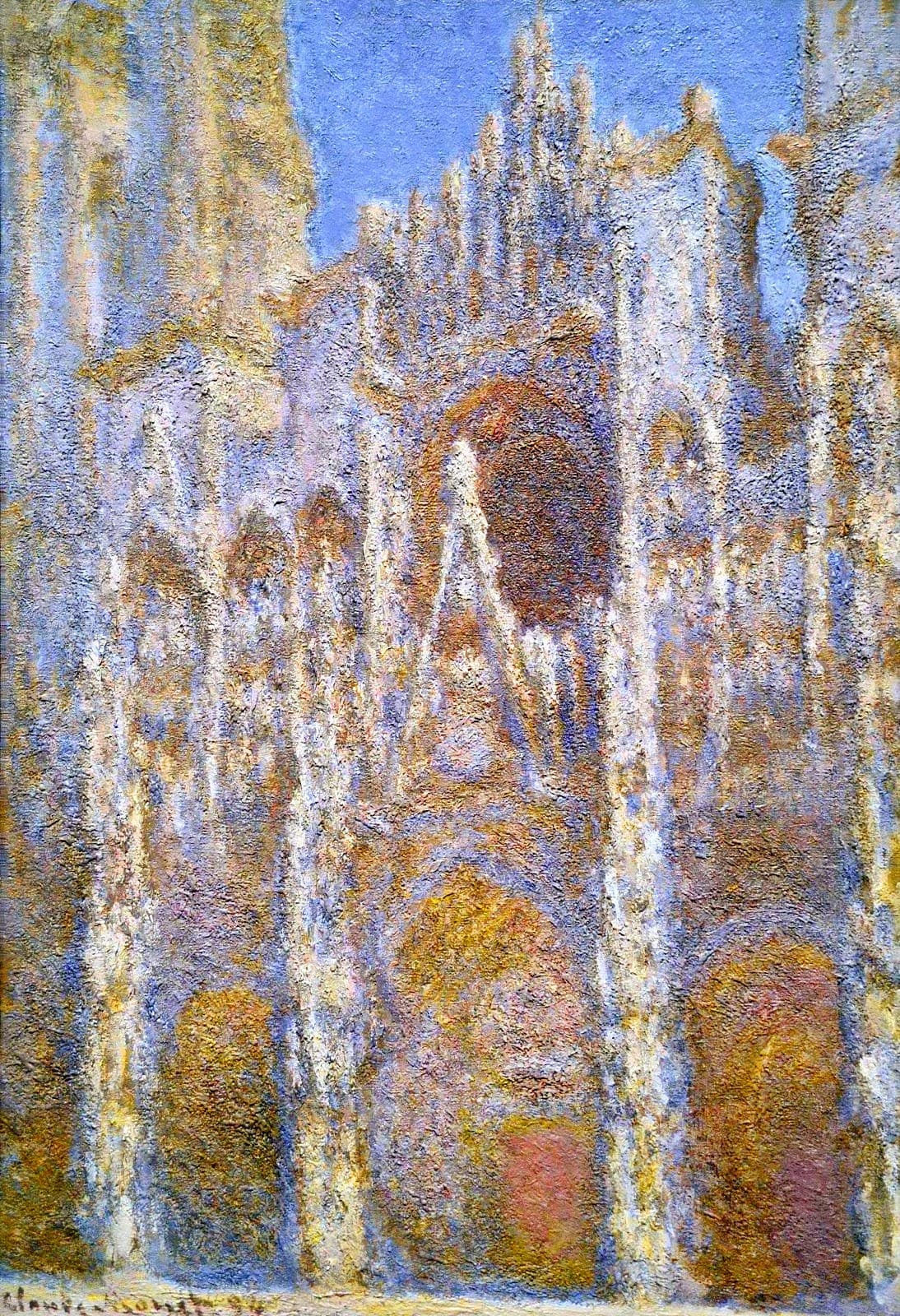
Rouen Cathedral, Façade
Claude Monet · 1893–94
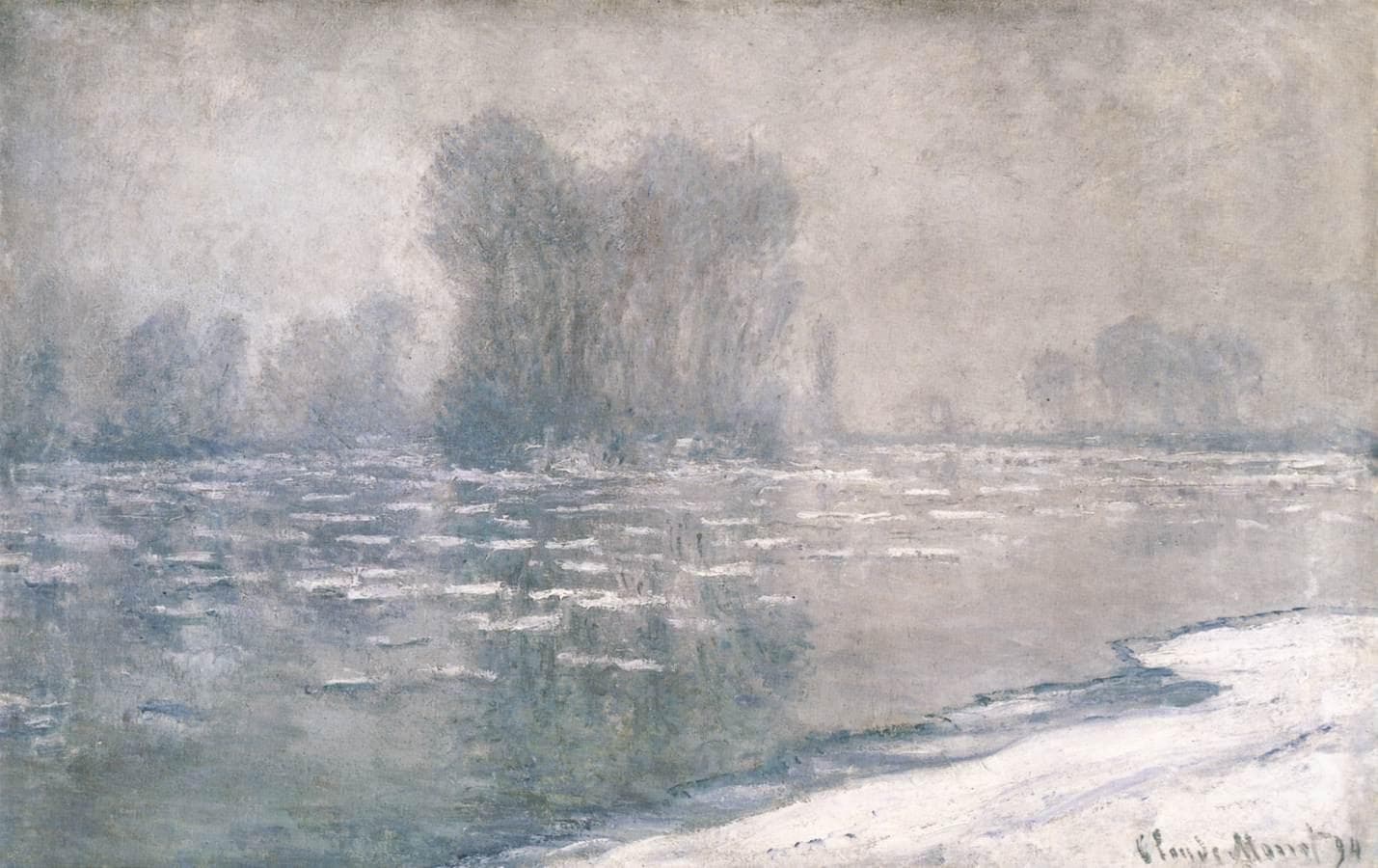
Morning Haze
Claude Monet · 1894
Kindred works
You may also study
Rouen Cathedral: The Portal (Sunlight)
Claude Monet · 1892–94
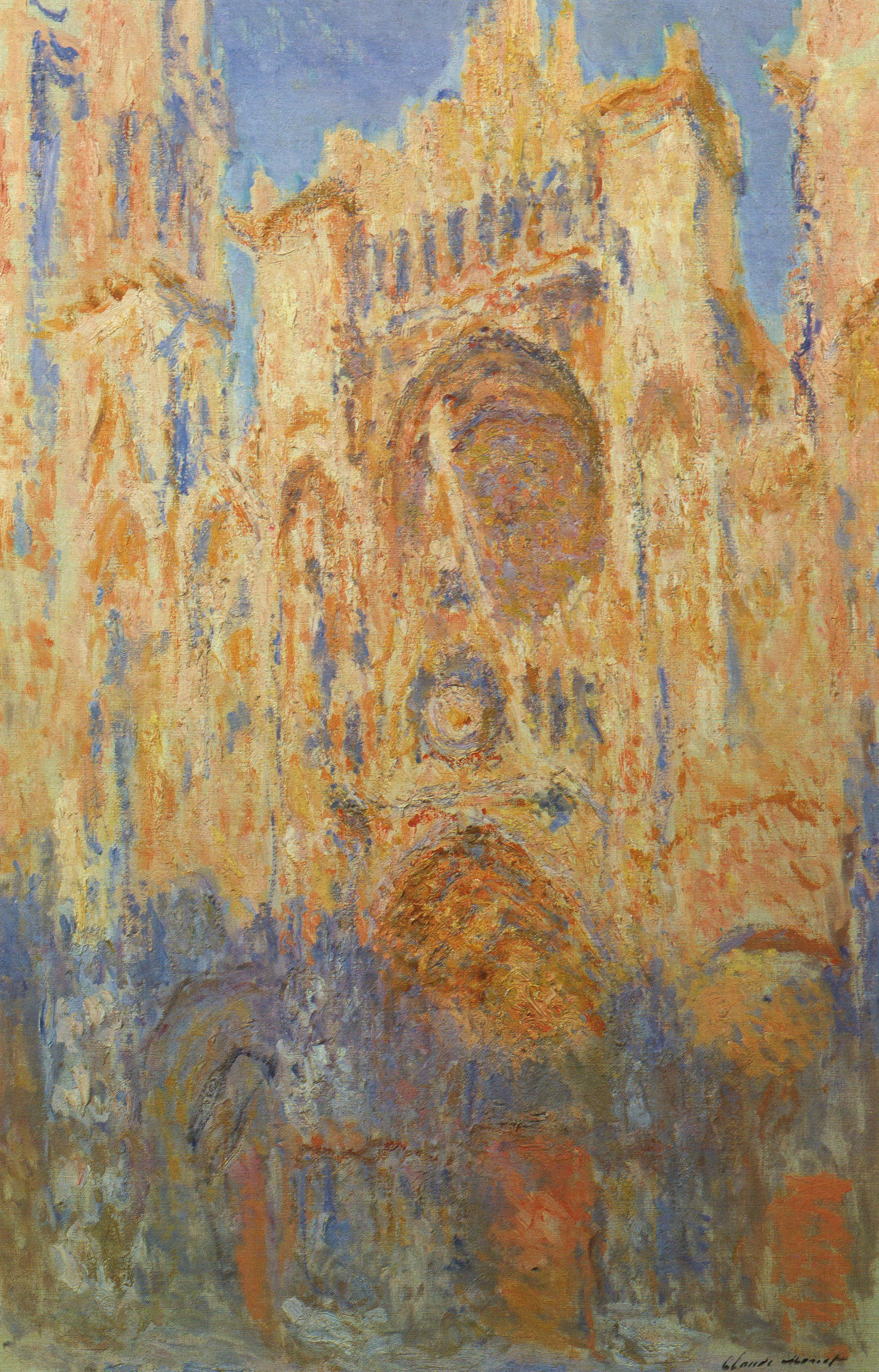
Rouen Cathedral, Sunlight Effect, End of the Day
Claude Monet · 1892
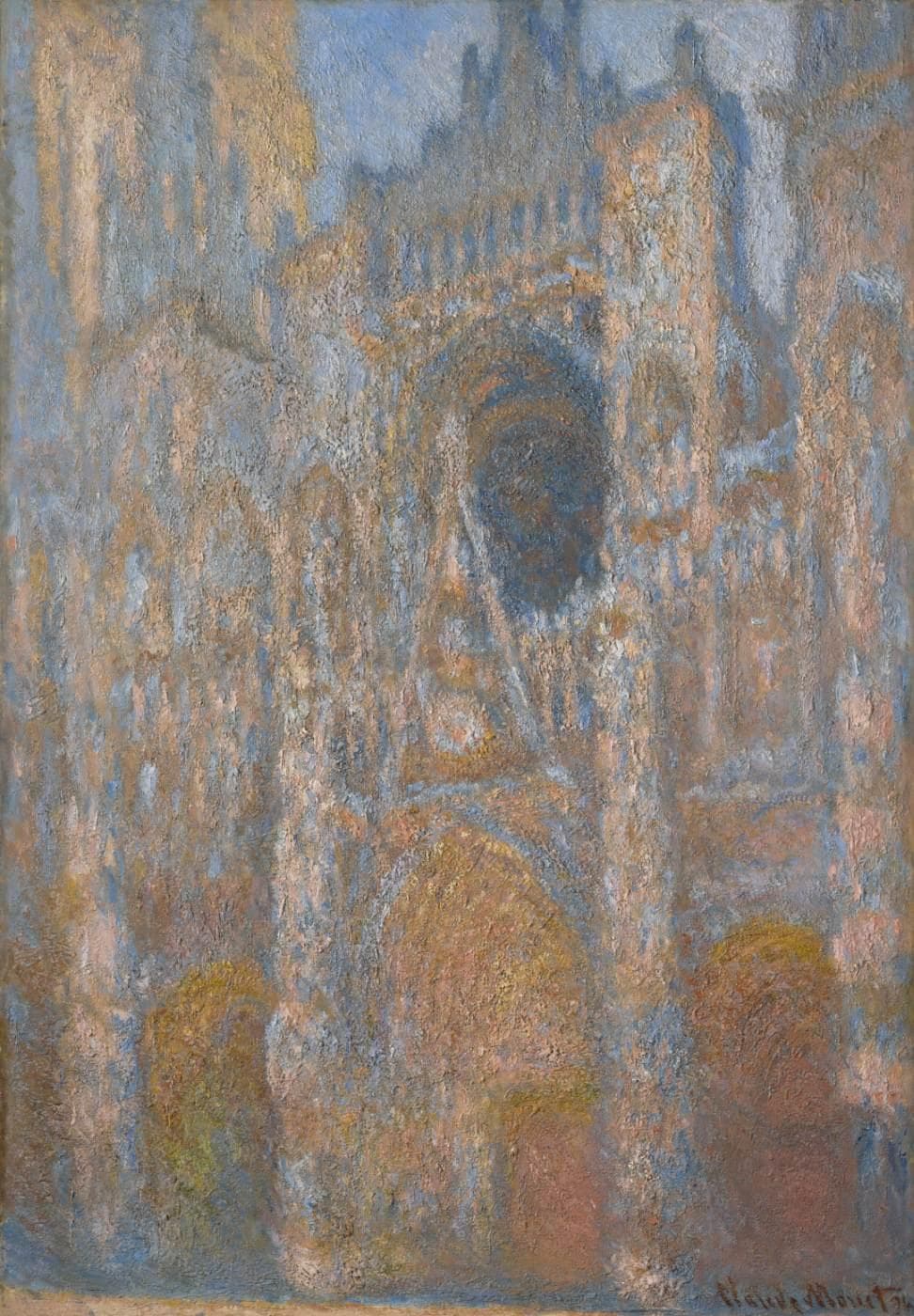
Rouen Cathedral in Sunlight
Claude Monet · c. 1892–94
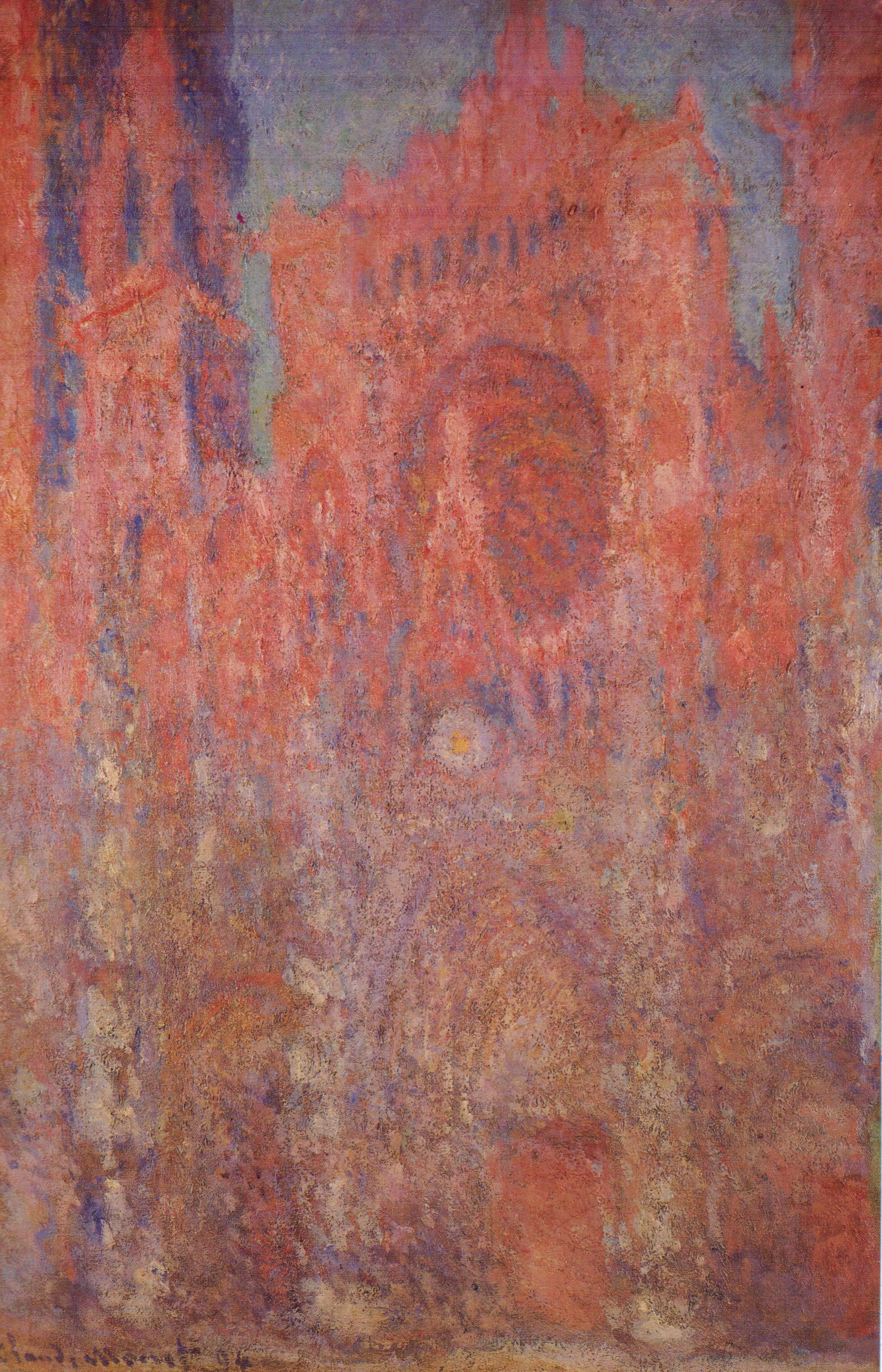
Rouen Cathedral, Portal
Claude Monet · 1892–94
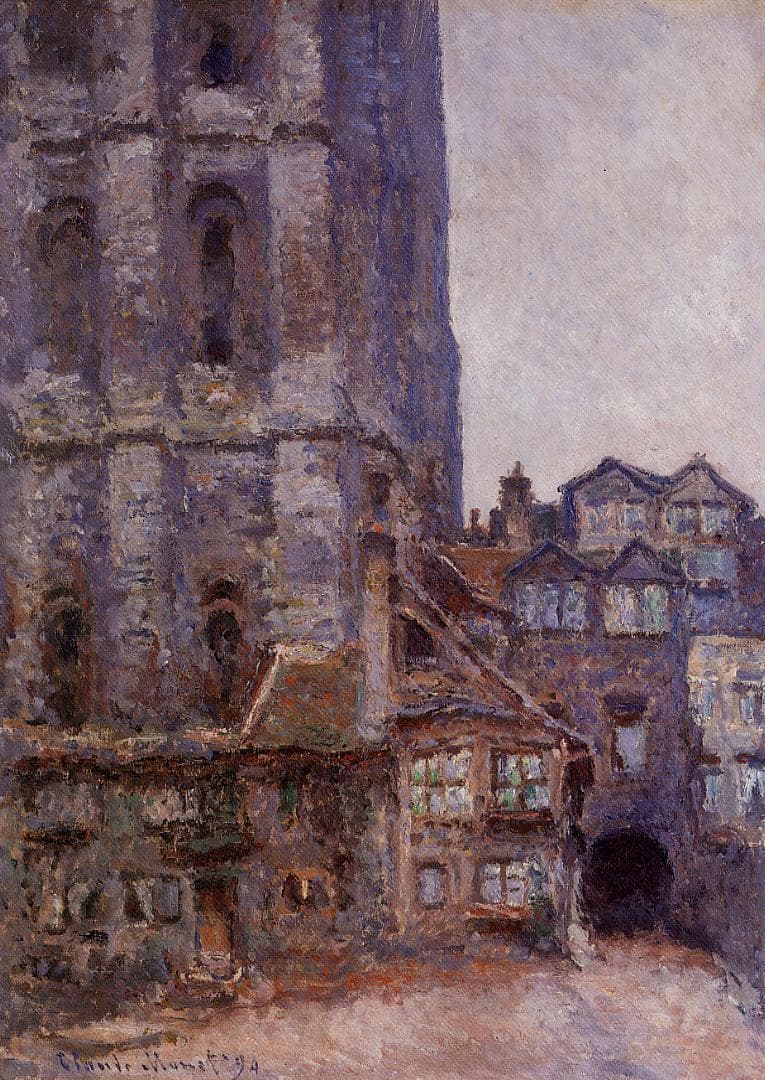
La Cour d'Albane, temps gris
Claude Monet · 1892–94
Rouen Cathedral, Effects of Morning Light
Claude Monet · 1893
Rouen Cathedral, the Portal, Grey Weather
Claude Monet · 1892–94
Rouen Cathedral: Setting Sun (Symphony in Pink and Grey)
Claude Monet · 1892–94