Impressionism
Still-Life with Melon
Claude Monet, c. 1872
Still-Life with Melon is a painting by Claude Monet from about 1872: a sliced melon, peaches, grapes and a blue-and-white porcelain plate on a white cloth. The 53 × 73 cm canvas (Wildenstein 245) is in the Calouste Gulbenkian Museum in Lisbon.
- Artist
- Claude Monet
- Date
- c. 1872
- Medium
- Oil on canvas
- Dimensions
- 53 × 73 cm
- Collection
- Calouste Gulbenkian Museum, Lisbon, Portugal
- Movement
- Impressionism
- Catalogue
- Wildenstein 245
What you are looking at
On a table covered with a white cloth, Monet arranges three groups against a plain grey-blue wall. At the left a large blue-and-white porcelain plate stands on its edge, decorated with flowering branches, scrolling panels and, at its center, a small bird. In front of it a pyramid of ripe peaches, with a few dark green leaves tucked among them, sits in a footed porcelain bowl, itself resting on a matching fluted saucer. At the right a whole melon has been cut into wedges that are pulled slightly apart to show the salmon-orange flesh, and it stands on a pale plate. A loose bunch of green grapes lies on the cloth in the foreground.
This is a more carefully finished picture than Monet's later still lifes. The melon's rind is built from greens, ochers and yellows, its netted skin suggested by small dabs, and the cut faces are a clean, glowing orange. The peaches have soft rose and gold modeling, with a dark red flush where they turn away from the light. The grapes are painted one by one, each with a small highlight.
Look at the shadows: the standing plate casts a broad, soft grey-blue shadow onto the wall to its right, so the light is coming from the left. The fruit throws violet-grey shadows onto the cloth, early signs of the colored shadows that became an Impressionist habit. The signature runs across the top left corner.
Argenteuil, about 1872
Around 1872 Monet had just returned from London and Holland and settled at Argenteuil on the Seine, a few kilometers from Paris. The porcelain reflects the fashion for East Asian ceramics and prints in Paris at the time, an interest Monet shared; he later collected Japanese prints and painted his wife in a kimono in La Japonaise. The table arrangement also recalls the French still-life tradition of Chardin, updated with brighter, cooler light.
How it was painted
The canvas is about 53 by 73 centimeters. Monet works with smooth, opaque paint and clear contours, especially in the plate, whose pattern is drawn with a fine brush in cobalt over white. The wall is laid in as a single field of grey-blue, against which the warm fruit stands out. The cloth is the loosest passage, its folds and creases brushed in long, broken strokes.
The composition is built on circles and arcs: the round plate, the dome of peaches, the segmented globe of the melon, the curve of the fruit bowl. Monet sets them in a shallow space, close to the picture plane, with the table edge cutting across the bottom at a slight angle. The left edge of the table, visible as a brown wedge at lower left, is the only hint of depth. The effect is almost frieze-like, three objects presented side by side for inspection, with the grapes as a link between the two halves.
Monet's still lifes
Claude Monet painted still lifes at intervals throughout his career. Earlier examples, like Jar of Peaches of 1866 in Dresden, are darker and closer to Courbet; the same year as this canvas he painted The Tea Service, another table piece with porcelain. The still lifes of around 1880, such as Still-Life with Apples and Grapes and Still-Life with Pears and Grapes, are looser and more broken in touch. Setting them beside this canvas shows how quickly his handling changed during the decade of Impressionism.
Meaning
There is no allegory here. The picture is about the meeting of textures and colors: rough rind and soft flesh, glossy glaze and matte linen, warm fruit and cool porcelain. The blue-and-white plate, standing up like a backdrop, also gives the composition its structure, a circle against which the rounded fruit is set.
Where to see it
Still-Life with Melon hangs in the European painting galleries of the Calouste Gulbenkian Museum in Lisbon, part of the collection formed by the Armenian oil magnate Calouste Sarkis Gulbenkian. For other museums, see where to see Monet's paintings.
Questions & answers
Where is Monet's Still Life with Melon?
It is in the Calouste Gulbenkian Museum in Lisbon, Portugal. The painting, catalogued as Wildenstein 245 and measuring 53 by 73 centimeters, came from the collection of Calouste Sarkis Gulbenkian, the oil magnate whose art collection forms the core of the museum.
When did Monet paint Still-Life with Melon?
It is generally dated to about 1872, the year Monet settled at Argenteuil after his stay in London and Holland. It is one of his earlier still lifes and is more carefully finished than the fruit pieces he painted at Vétheuil around 1879–80.
What is in Monet's Still Life with Melon?
A melon cut into wedges, a footed bowl of peaches, a bunch of green grapes and a large upright blue-and-white porcelain plate decorated with branches and a bird, all on a white tablecloth against a grey-blue wall. The plate reflects the period's taste for East Asian ceramics.
How is this still life different from Monet's later ones?
It is smoother and more carefully drawn, with clear contours and modeled fruit, in the tradition of Chardin and Courbet. His still lifes of around 1880 use broken, flickering brushwork and colored shadows, treating a tablecloth with the same freedom as a landscape.
More by the artist
Claude Monet

Bridge over a Pond of Water Lilies
Claude Monet · 1899

Woman with a Parasol – Madame Monet and Her Son
Claude Monet · 1875

Sunset in Venice
Claude Monet · 1908–12

La Grenouillère
Claude Monet · 1869

Beach in Pourville
Claude Monet · 1882

Springtime
Claude Monet · 1872

Boating on the River Epte
Claude Monet · 1890

The Seine at Asnières (Hermitage)
Claude Monet · 1873
Also painted in 1872
The same year
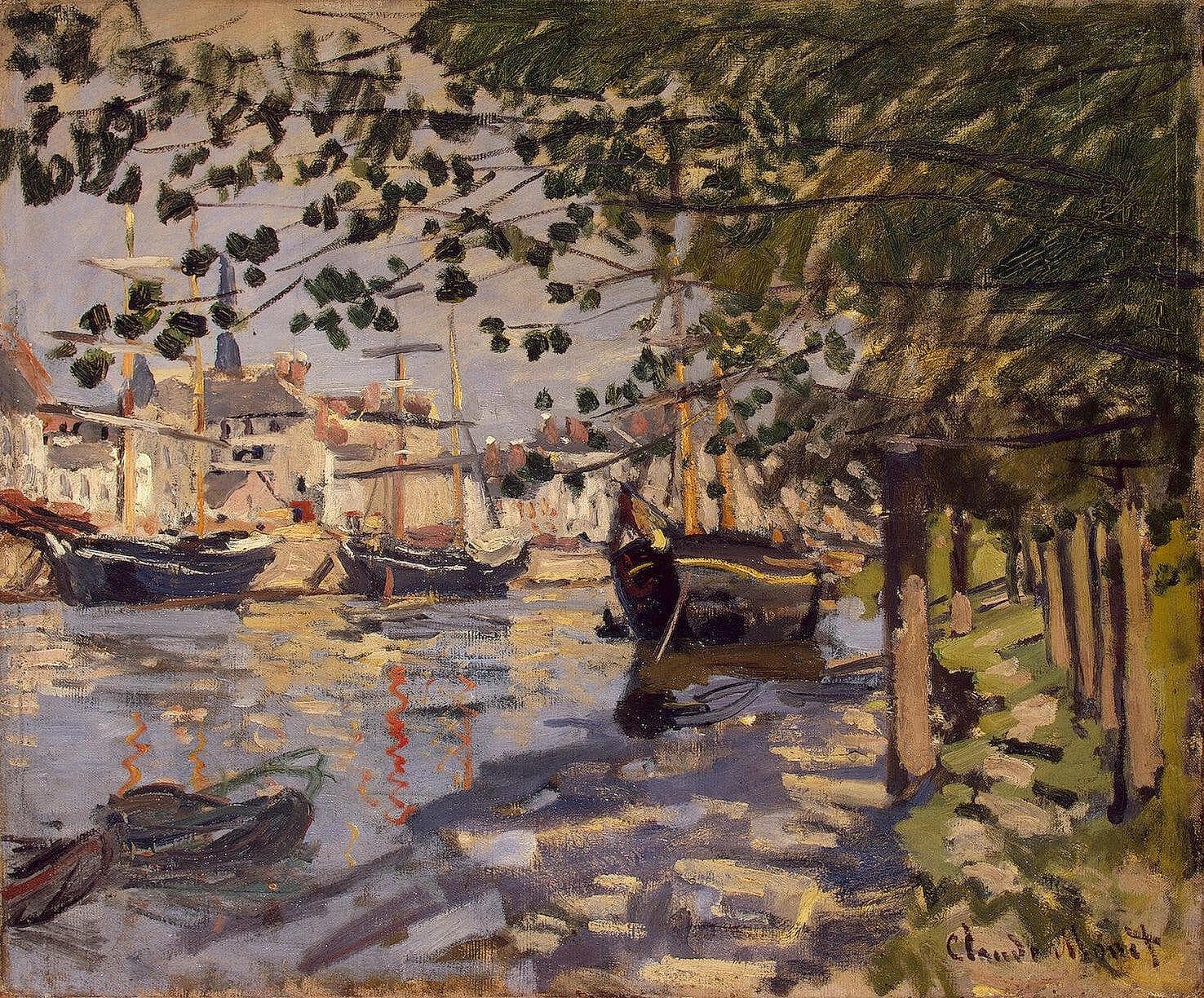
The Seine at Rouen
Claude Monet · 1872
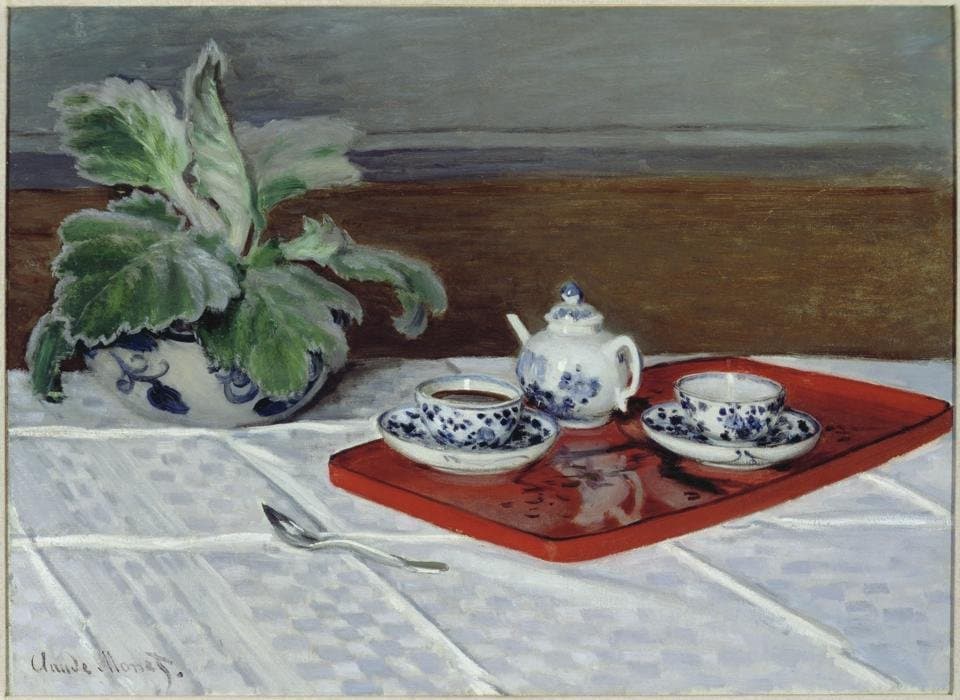
The Tea Service
Claude Monet · 1872
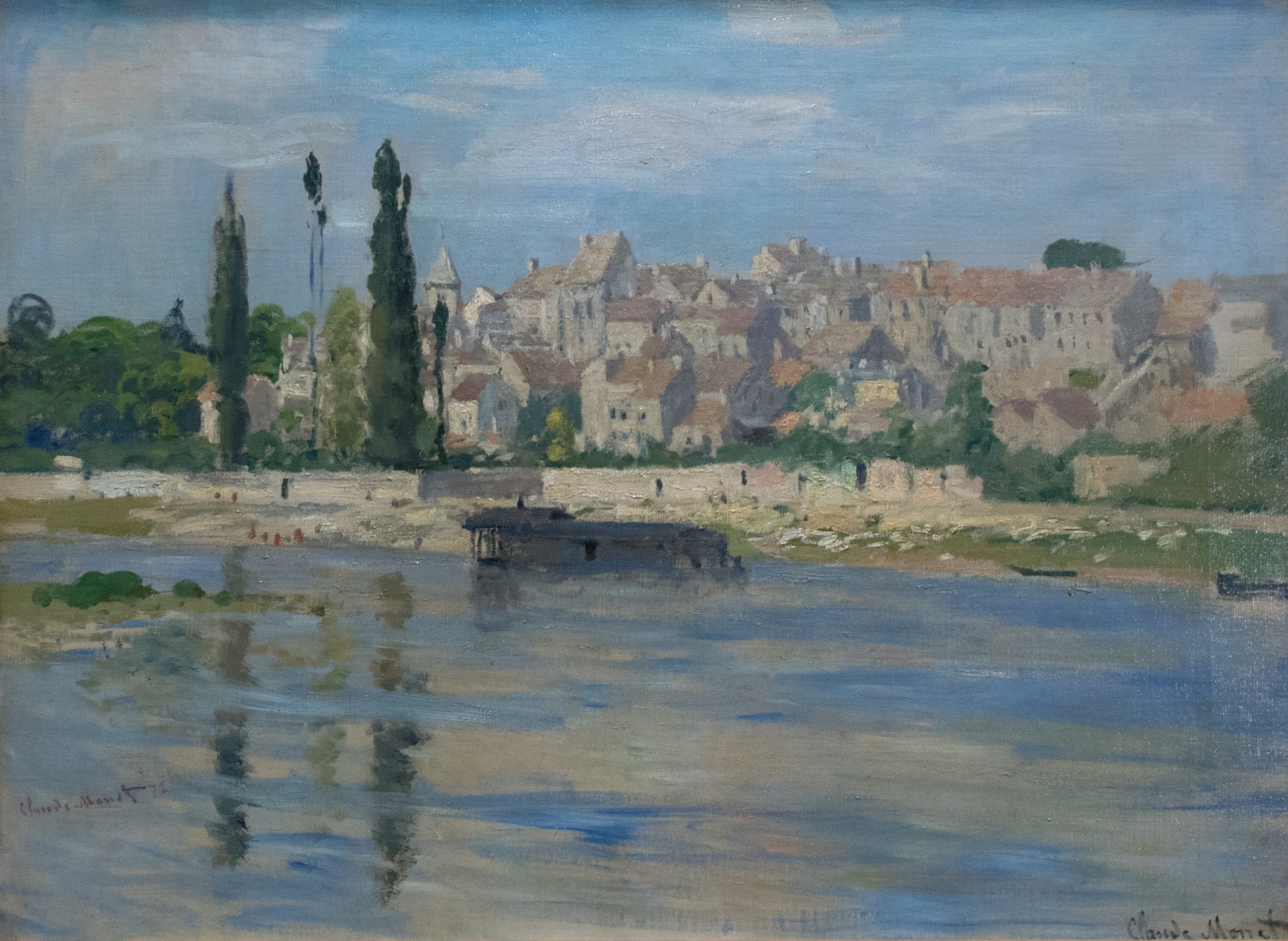
Carrières-Saint-Denis
Claude Monet · 1872
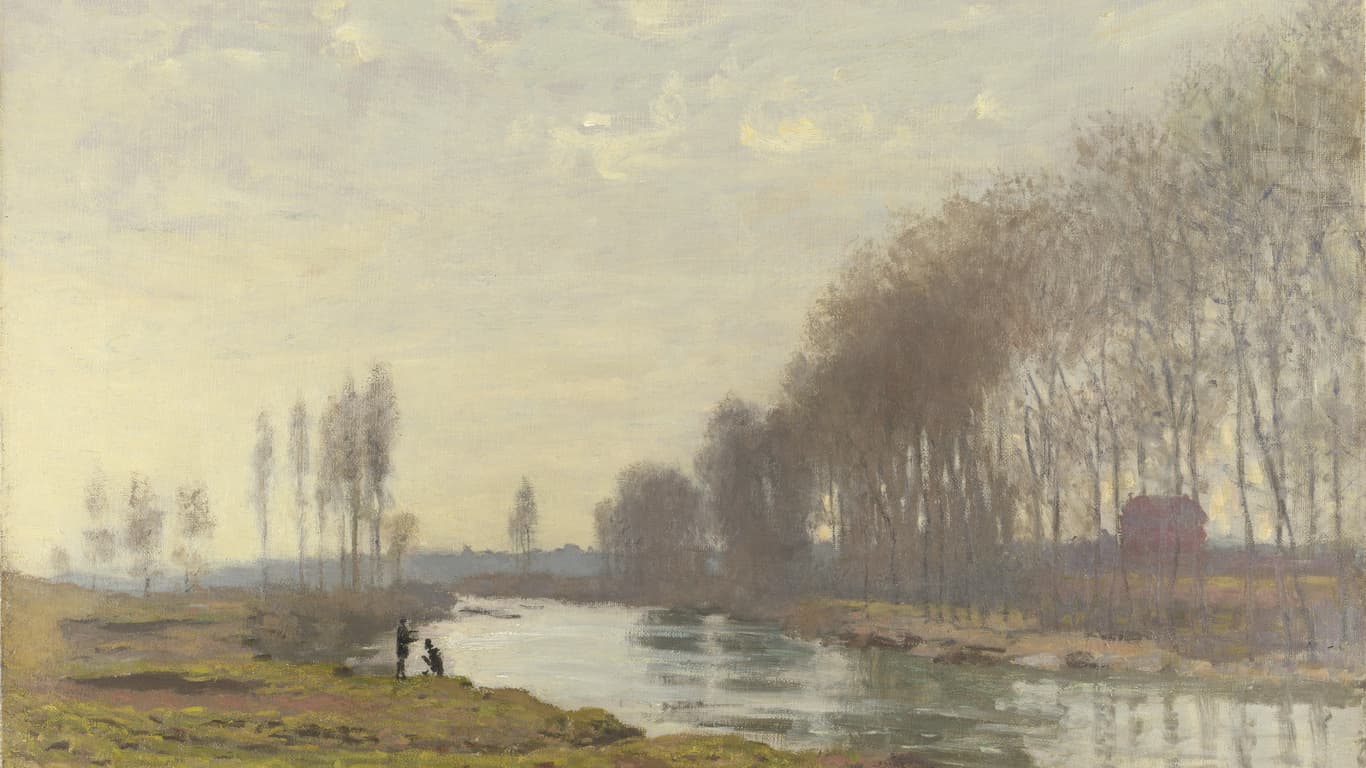
The Petit Bras of the Seine at Argenteuil
Claude Monet · 1872
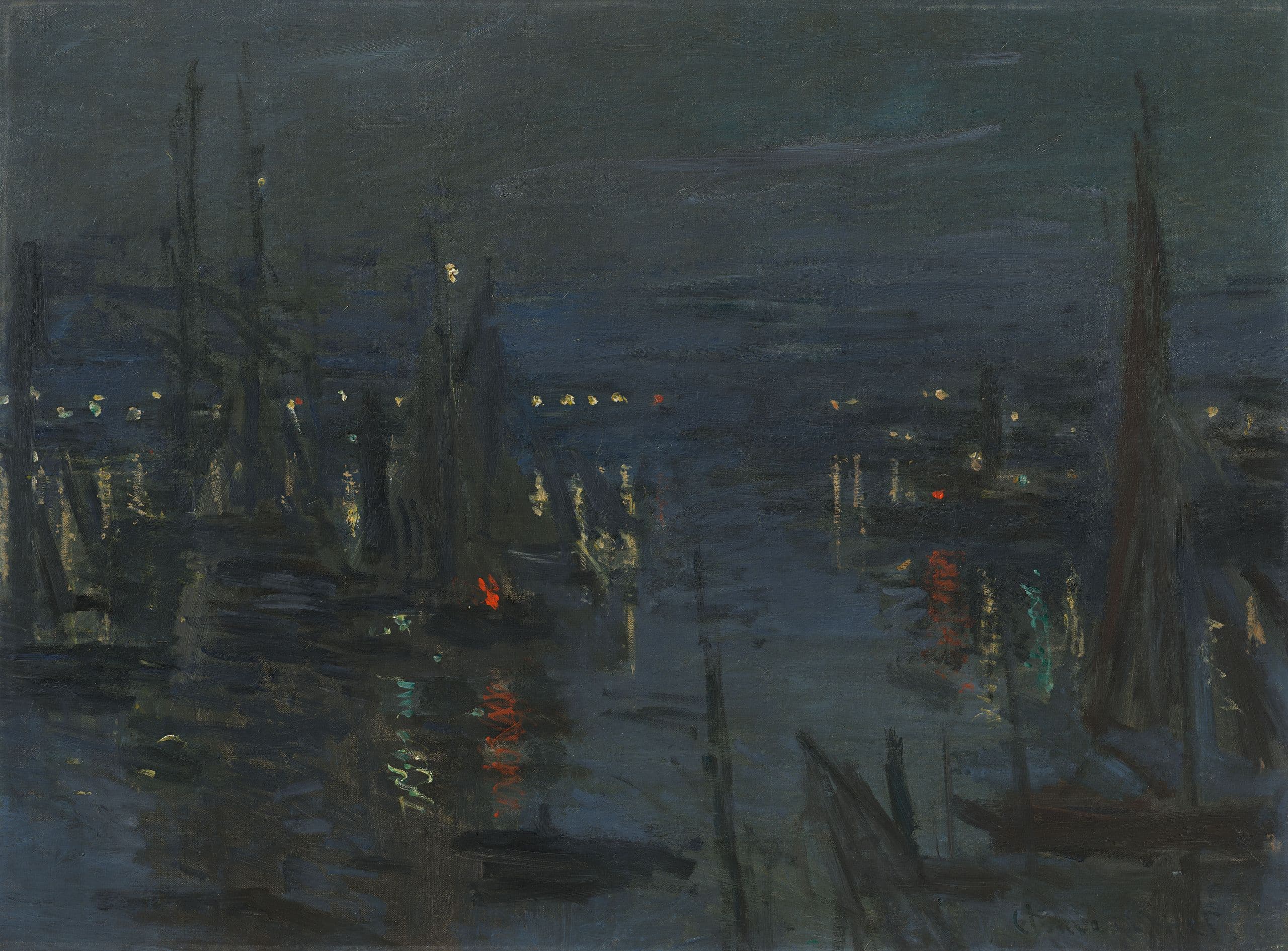
The Port of Le Havre, Night Effect
Claude Monet · 1872
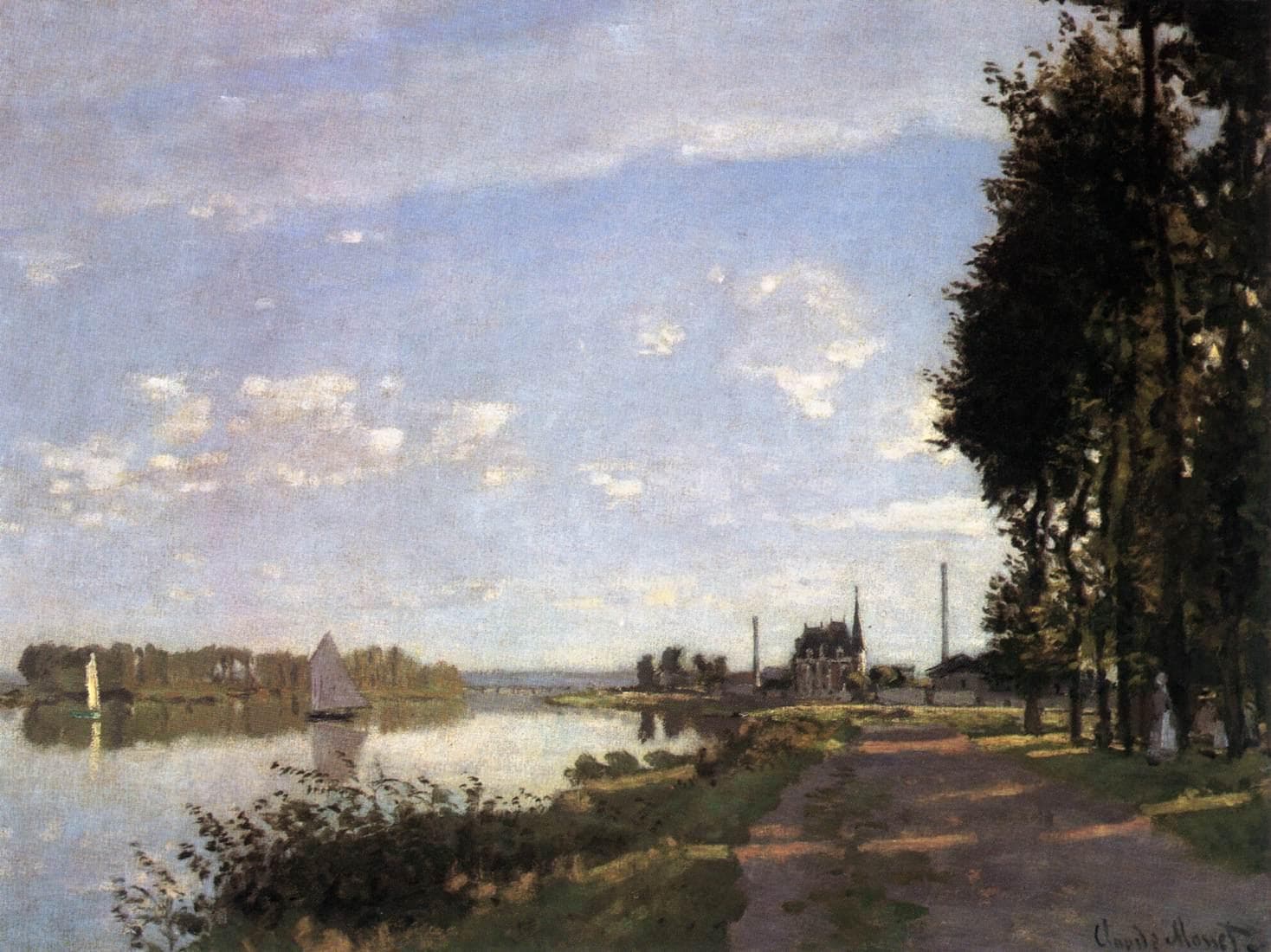
Riverside Path at Argenteuil
Claude Monet · c. 1872
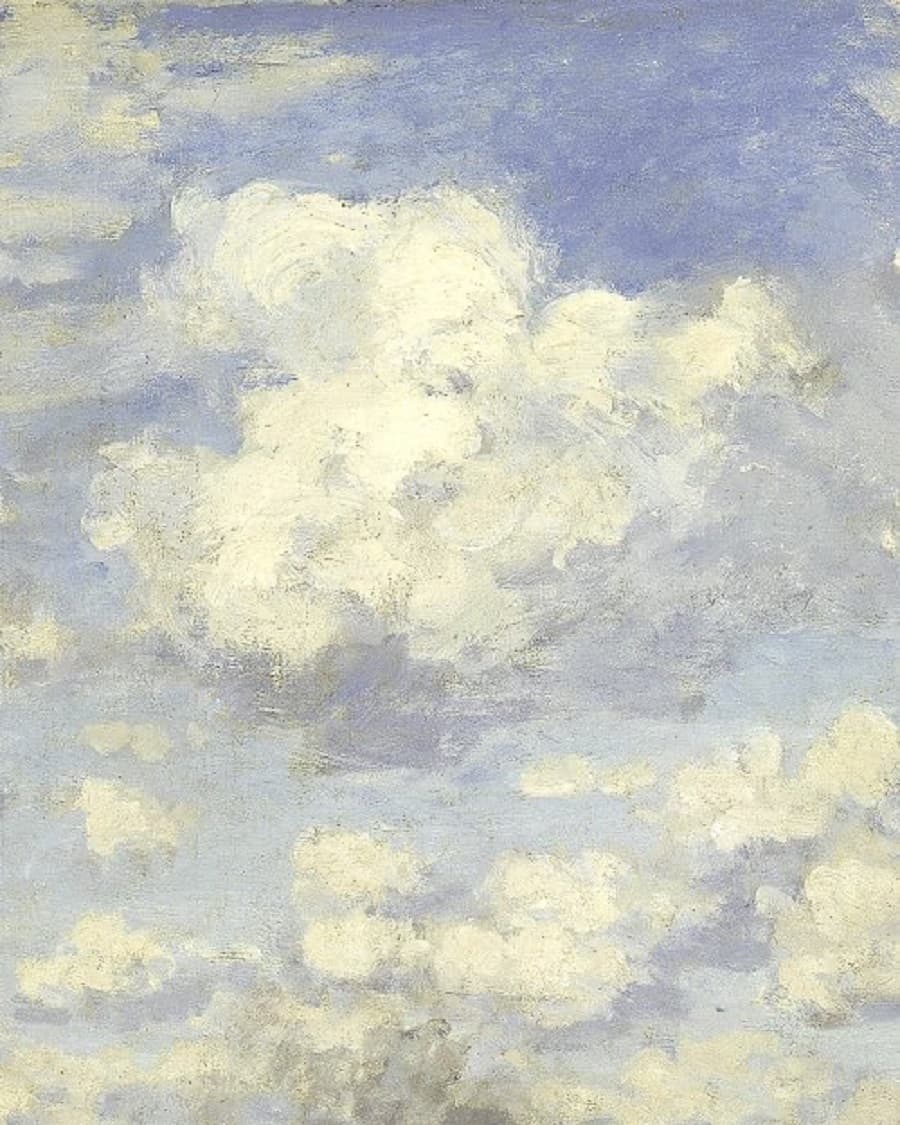
The Basin at Argenteuil
Claude Monet · 1872
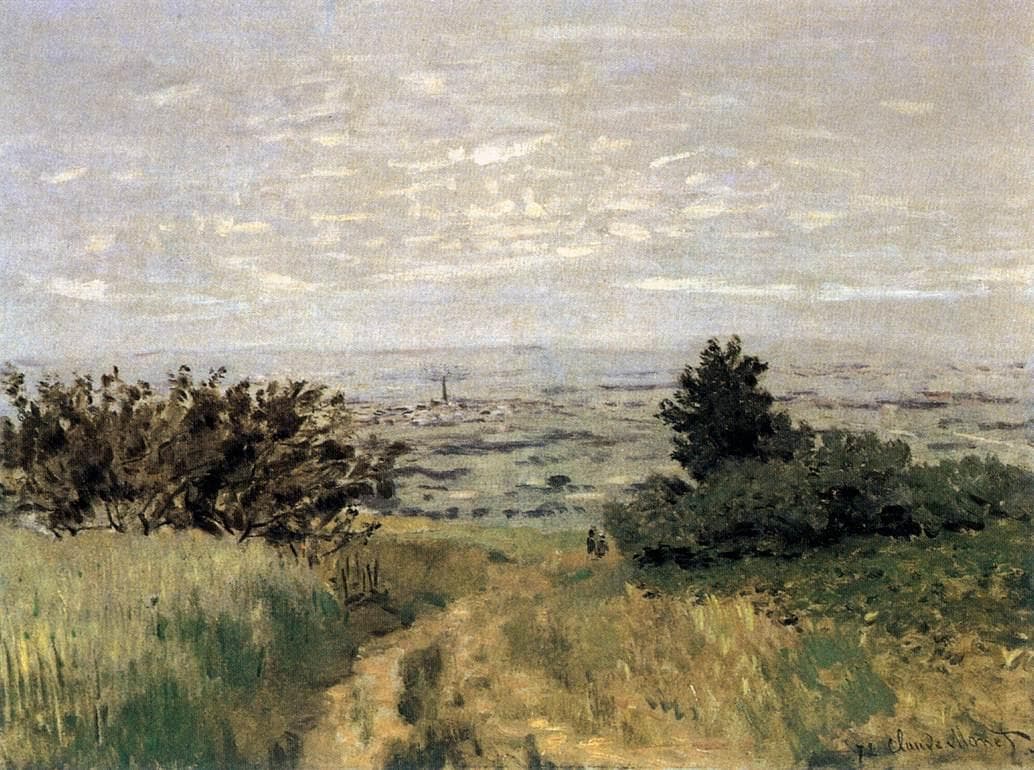
The Plain of Sannois at Argenteuil
Claude Monet · 1872
Kindred works
You may also study
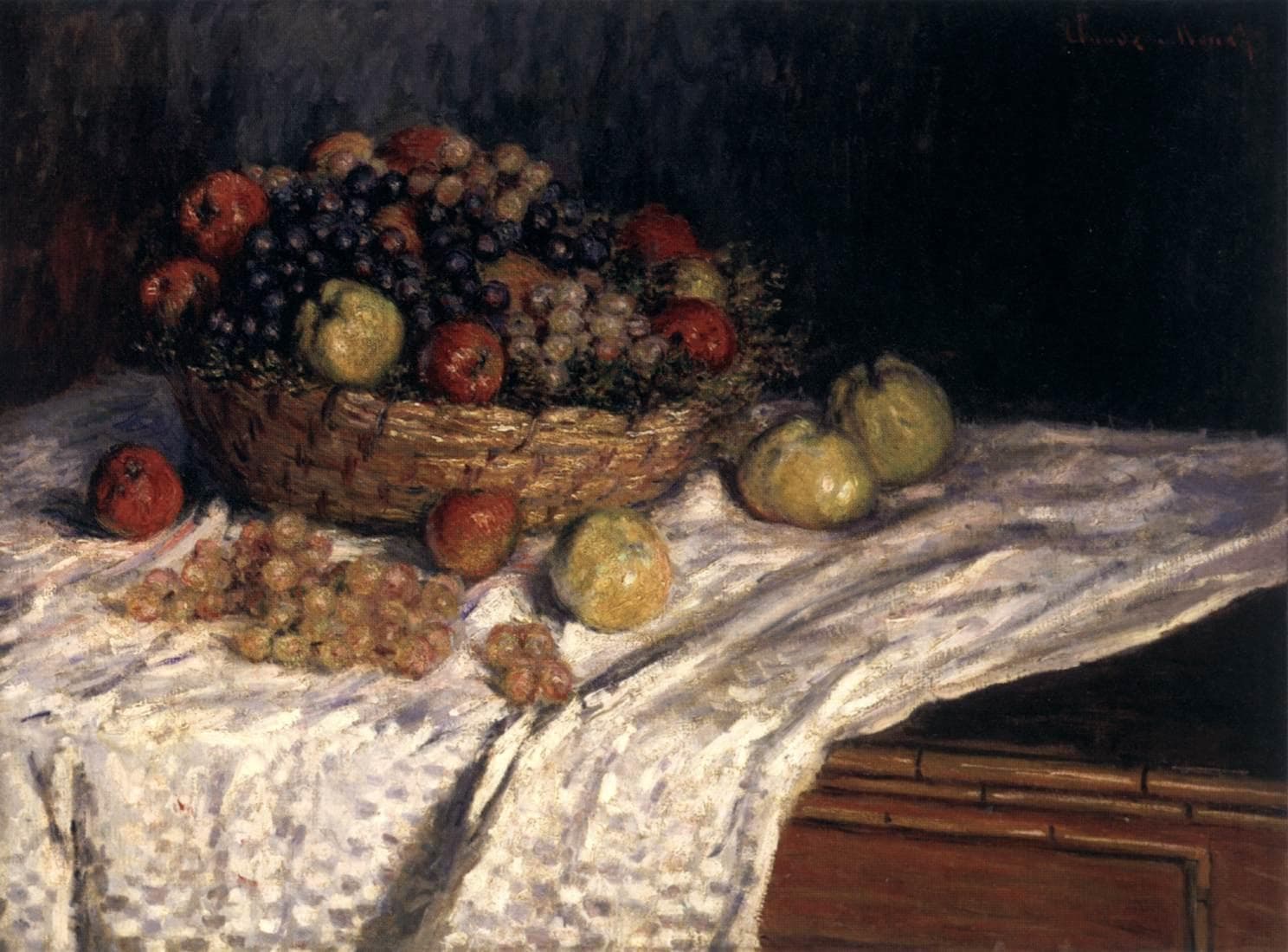
Still-Life with Apples and Grapes
Claude Monet · 1879–80
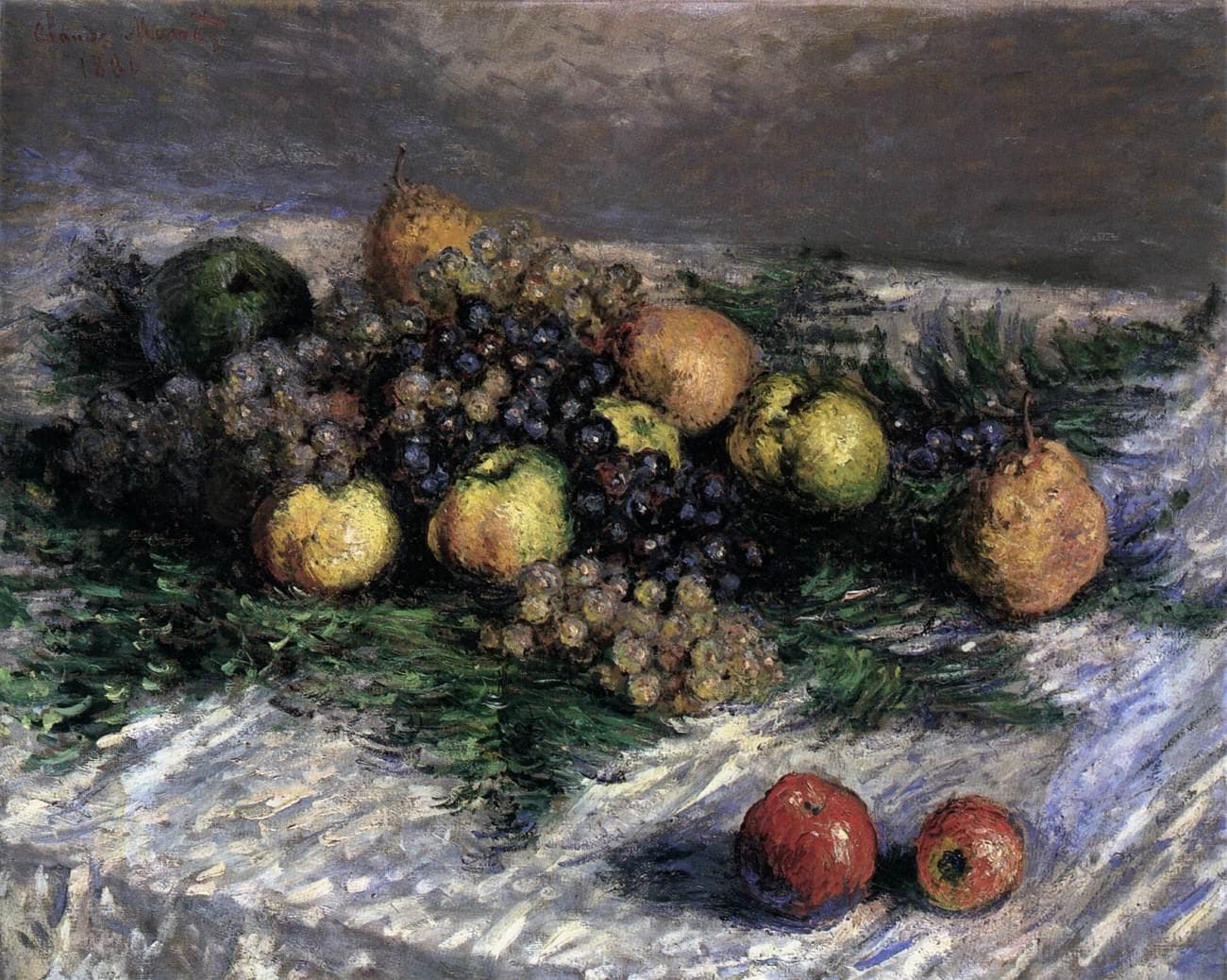
Still-Life with Pears and Grapes
Claude Monet · 1880
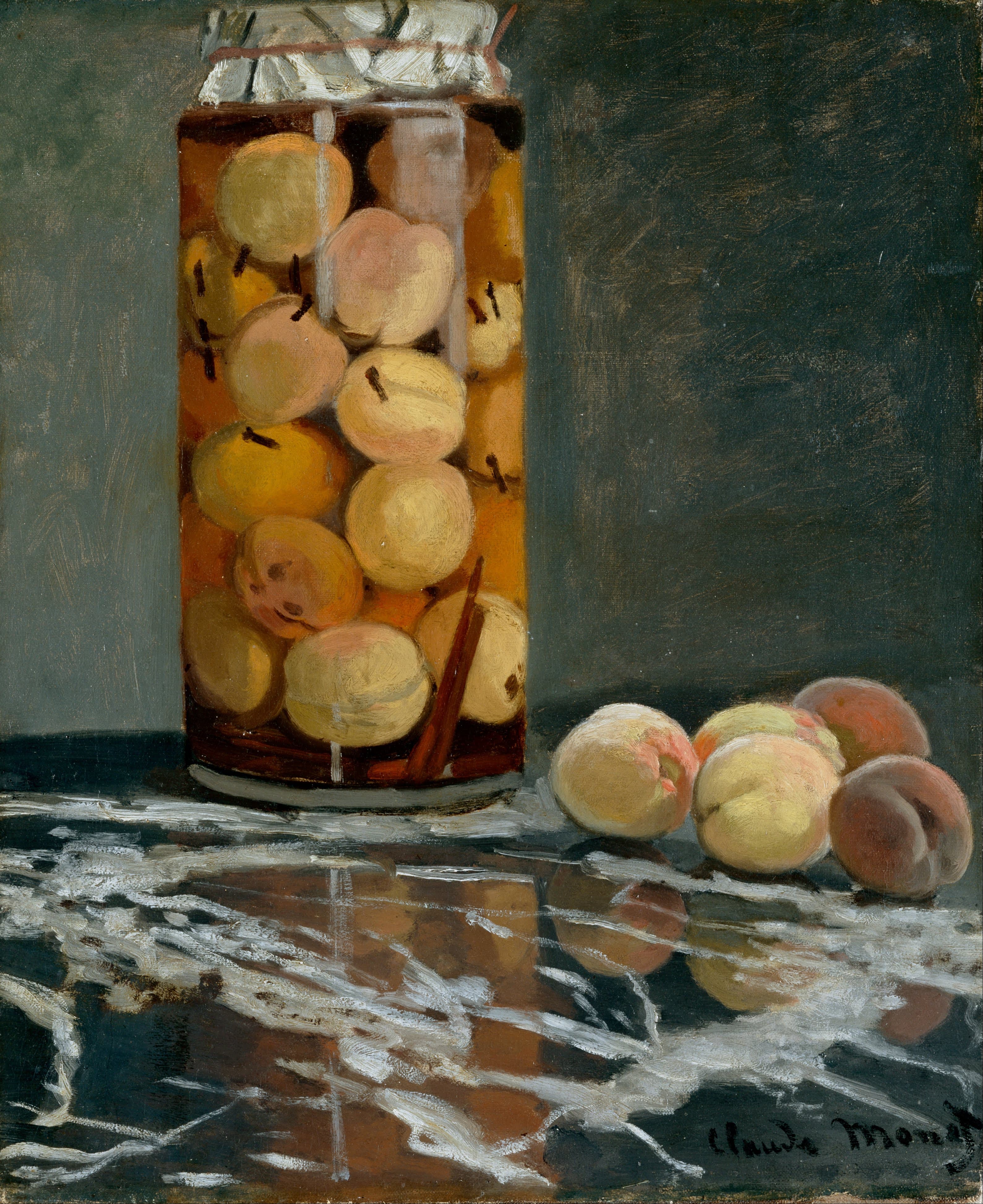
Jar of Peaches
Claude Monet · c. 1866
The Tea Service
Claude Monet · 1872
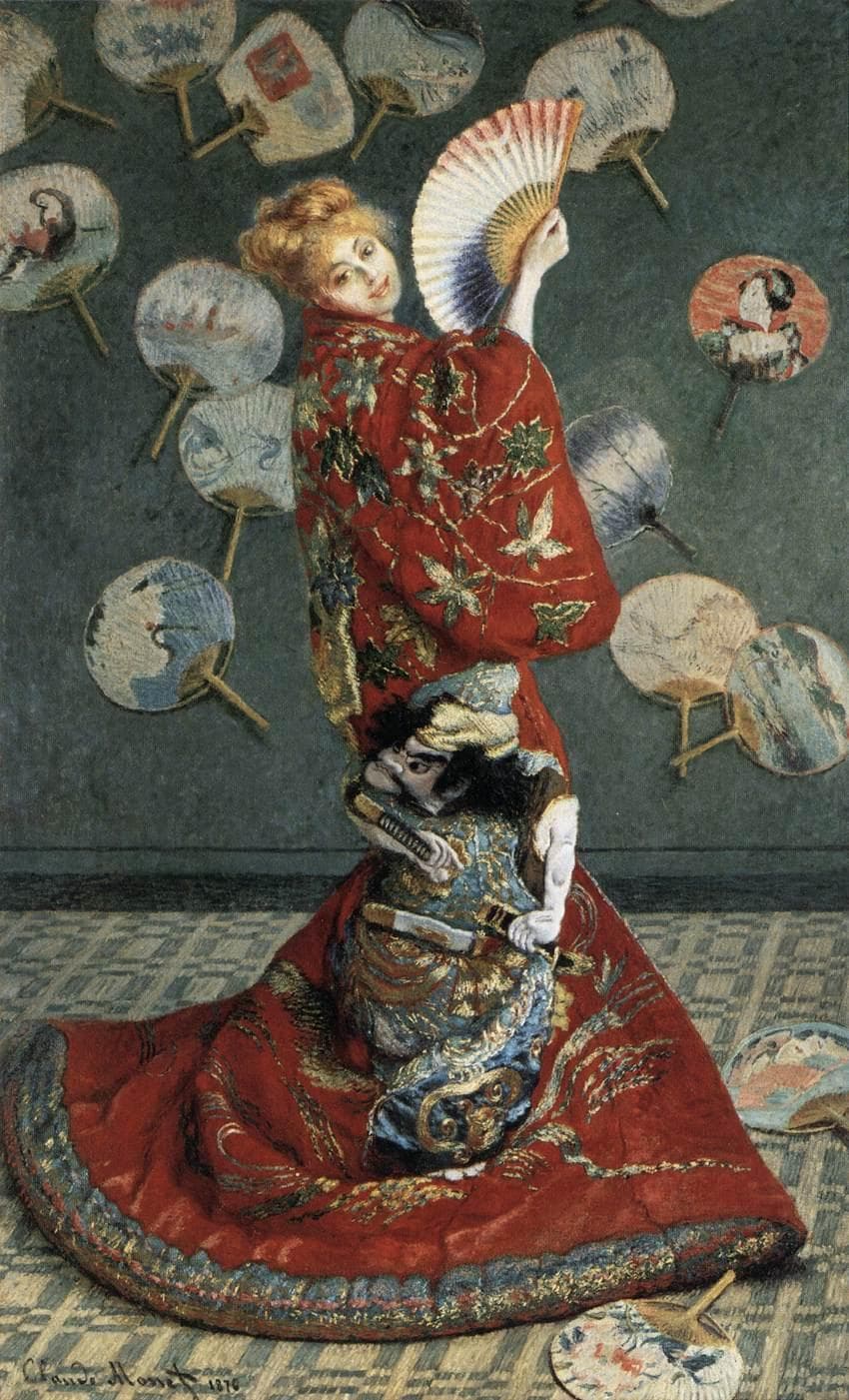
La Japonaise (Camille Monet in Japanese Costume)
Claude Monet · 1876

The Scream
Edvard Munch · 1893

Ophelia
John Everett Millais · 1851–52

The Great Wave off Kanagawa
Katsushika Hokusai · c. 1830–32