Image: Galleria Nazionale d'Arte Antica, Rome / Wikimedia Commons · Public domain · via Wikimedia Commons
Baroque
Narcissus
Caravaggio, c. 1597–99
Narcissus is a painting attributed to Caravaggio, c. 1597–99, in the Galleria Nazionale d'Arte Antica at Palazzo Barberini, Rome. A youth leans over a dark pool, locked in a loop with his own reflection.
- Artist
- Caravaggio
- Date
- c. 1597–99
- Medium
- Oil on canvas
- Dimensions
- 110 × 92 cm
- Collection
- Galleria Nazionale d'Arte Antica, Palazzo Barberini, Rome, Italy
- Movement
- Baroque
Caravaggio's Narcissus shows the young hunter of Greek myth kneeling at the edge of a spring, gazing at his own face in the water. The canvas, 110 by 92 centimeters, is usually dated about 1597–99 and hangs in the Galleria Nazionale d'Arte Antica in Palazzo Barberini, Rome. Its attribution to Caravaggio, first proposed by the art historian Roberto Longhi in the early twentieth century, is accepted by most scholars but has never been documented, and a few still give it to one of his followers.
What you're looking at
The composition is one of the simplest he ever made, and one of the strangest. A young man in a richly patterned brocade doublet leans forward on both hands at the water's edge. Below him, in the dark pool, his reflection mirrors him upside down, so the two figures, real and reflected, form a closed circle of arms. The shape has often been compared to a playing card, or to a figure joined to its own image like a pair of hands clasped.
At the center of the circle, right at the middle of the canvas, is his bare knee, thrust forward into the light. It is the brightest thing in the picture, and the eye lands on it before it finds the face. There is no landscape, no sky, no flowers, no nymph Echo. The background is pure black, and the water is almost black too, so that the reflection seems to float in nothing.
Look at the faces. The real Narcissus is lit and solid, his lips slightly parted. The reflected face is dimmer, murkier, as if seen through tea. Caravaggio has painted the gap between the lover and what he loves: the image is always a little less real.
The myth of Narcissus
The story comes from Ovid's Metamorphoses, Book III, the main classical source for Renaissance painters. Narcissus, a beautiful youth who scorned all who loved him, including the nymph Echo, was cursed to fall in love with his own reflection in a clear pool. Unable to embrace it, unable to leave, he wasted away, and where he died a flower grew in his place: the narcissus.
Caravaggio takes the moment of fascination, before tragedy, when Narcissus still reaches for the image he cannot touch. One hand already brushes the water's surface.
How it was made
The painting is built on light and dark more starkly than his earlier pictures of boys, such as Boy Bitten by a Lizard or Bacchus, and it shows him moving toward the dramatic shadow of his mature work. The doublet, a cream-and-silver silk patterned with floral motifs, is the one passage of luxury: an expensive, contemporary garment rather than classical dress, typical of his habit of costuming models from his own day. The paint in the water is thin and dark, the reflection painted lower in tone and with softer edges than the figure.
The attribution question
No early source mentions a Narcissus by Caravaggio, and the painting has no documented history before the twentieth century. Roberto Longhi attributed it to him in 1916, and the composition, the use of a contemporary model and the dramatic lighting are in his manner. But some scholars have proposed other painters from his circle, notably Giovanni Antonio Galli, called Spadarino, and the picture's relatively thin, flat handling in places leaves room for doubt. The museum displays it as Caravaggio, and it is usually included in catalogues of his work.
What does Narcissus mean?
The obvious reading is moral: self-love is fatal. Renaissance and Baroque commentators on Ovid treated Narcissus as a warning against vanity and against loving appearances instead of truth.
The Renaissance theorist Leon Battista Alberti gave the myth another meaning in his treatise On Painting (1435), calling Narcissus the inventor of painting, because painting is nothing but embracing the surface of a pool by art. A painter of Caravaggio's period, working from models and very likely using mirrors, would have felt this sharply. Read through Alberti, the picture is about painting itself: the artist, like Narcissus, falls in love with an image he has made, which can never be touched.
Modern writers have also read it in terms of desire between men, connecting it with the youths who populate his early work. All three readings are interpretations; Caravaggio left no statement about the picture.
Reception and legacy
Because of its stark design, Narcissus became one of the most reproduced images associated with Caravaggio in the twentieth century, a favorite of psychoanalytic writing on narcissism, of posters and of book covers. It is also a key image for anyone interested in the theme of the mirror and the double, alongside paintings like Picasso's Girl Before a Mirror.
Where to see it
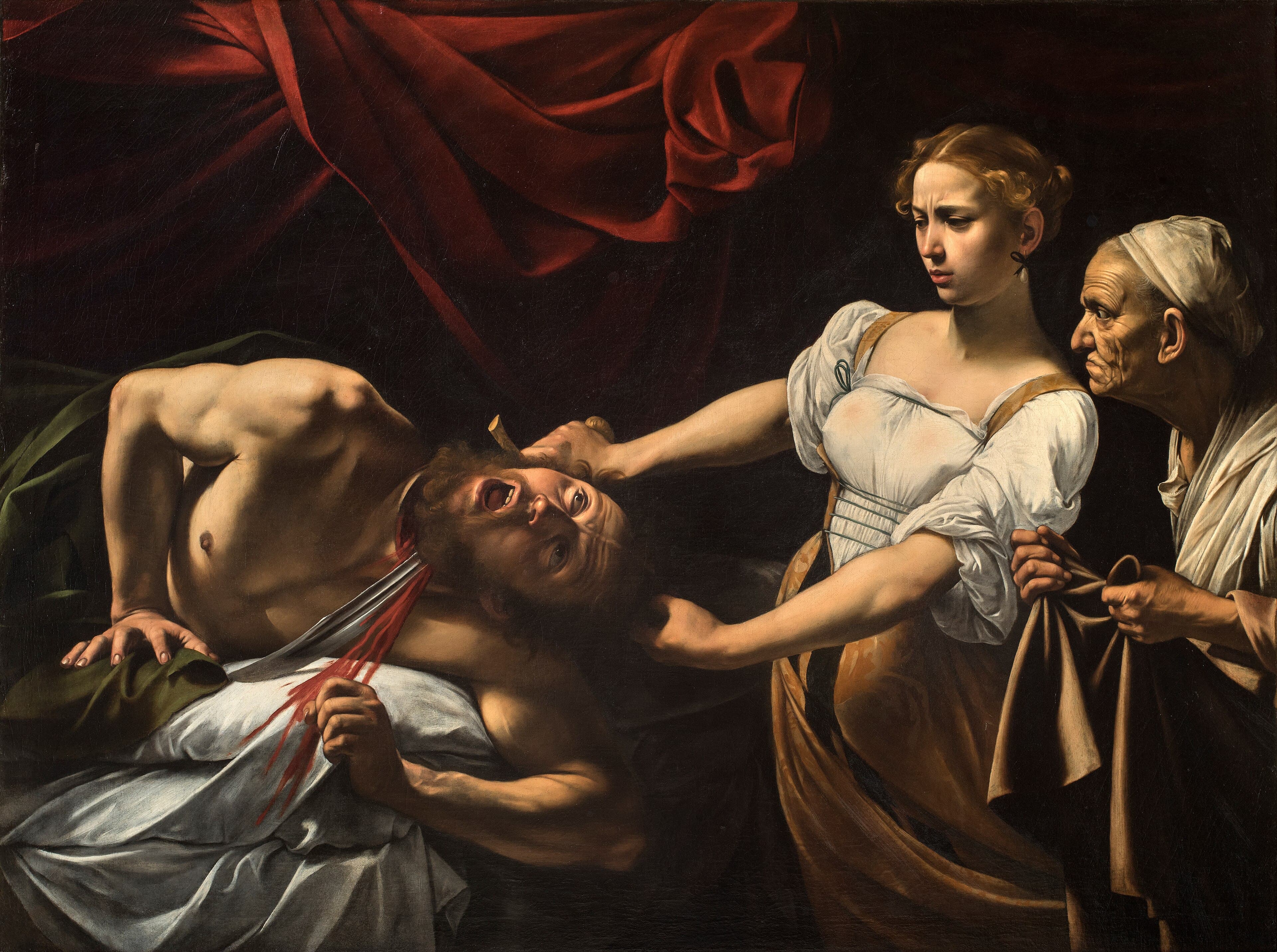
The painting hangs in Palazzo Barberini (Galleria Nazionale d'Arte Antica) on Via delle Quattro Fontane in Rome, in the same museum as Caravaggio's Judith Beheading Holofernes and Saint Francis in Meditation. See Judith Beheading Holofernes, our guide to Caravaggio's paintings and more mythology in art.
Questions & answers
Where is Caravaggio's Narcissus?
It is in the Galleria Nazionale d'Arte Antica at Palazzo Barberini in Rome, which also owns Caravaggio's Judith Beheading Holofernes. The painting belongs to the Italian state collections and is on permanent display.
Did Caravaggio really paint Narcissus?
Most scholars accept it, following Roberto Longhi's attribution of 1916, but it is not documented in any early source. A minority have proposed followers such as Spadarino. The museum and most catalogues present it as Caravaggio's work, painted around 1597–99.
What does Caravaggio's Narcissus mean?
It illustrates Ovid's myth of the youth who fell in love with his own reflection and wasted away. It warns against vanity, but it has also been read, following Alberti, as an image of painting itself: an artist in love with an image he can never touch.
Why is the knee so prominent in Narcissus?
Caravaggio placed the bare, lit knee at the exact center of the canvas, where the arms of Narcissus and his reflection form a closed loop. It anchors the circular composition and draws the eye before the face does.
More by the artist
Caravaggio
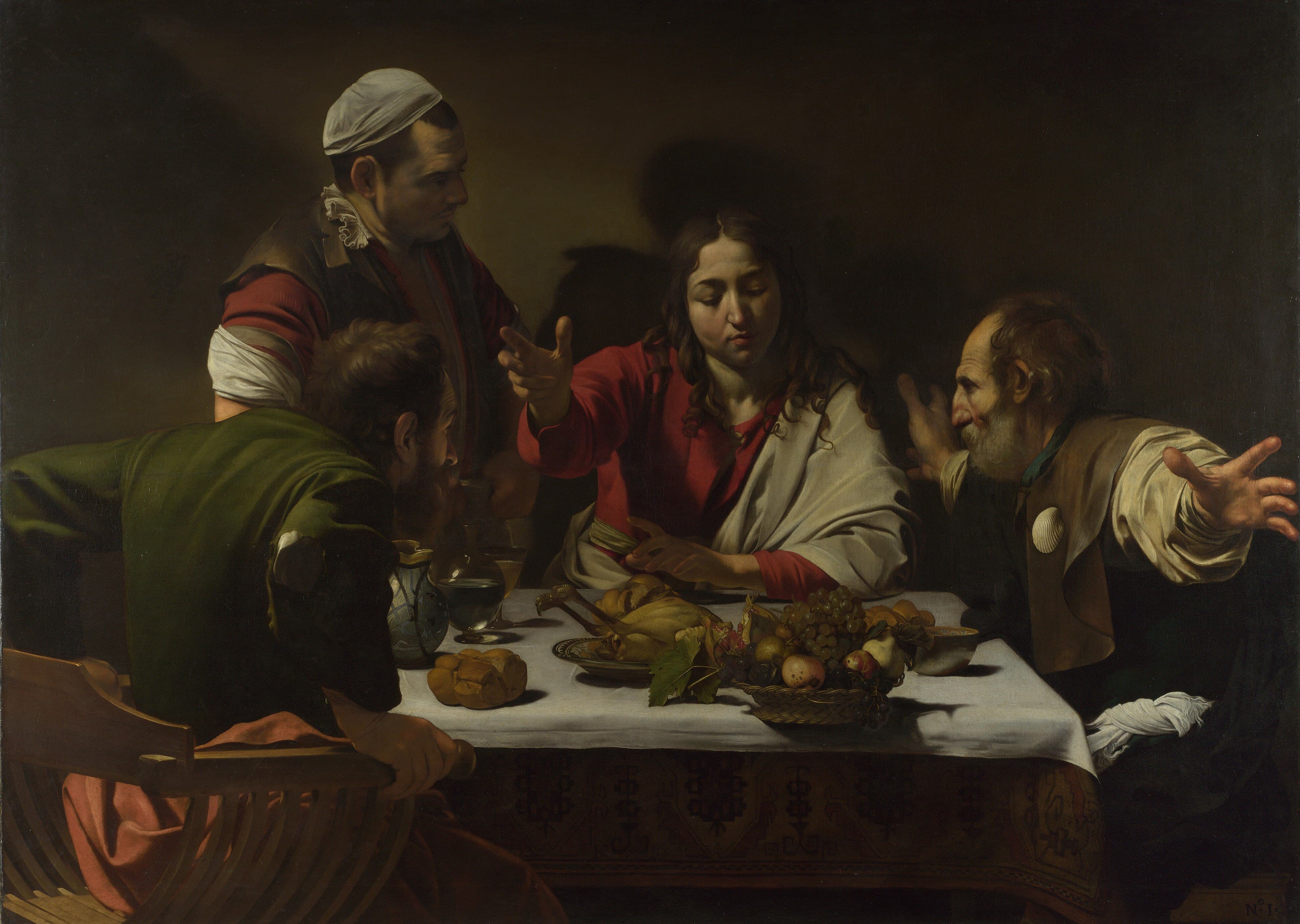
Supper at Emmaus
Caravaggio · 1601
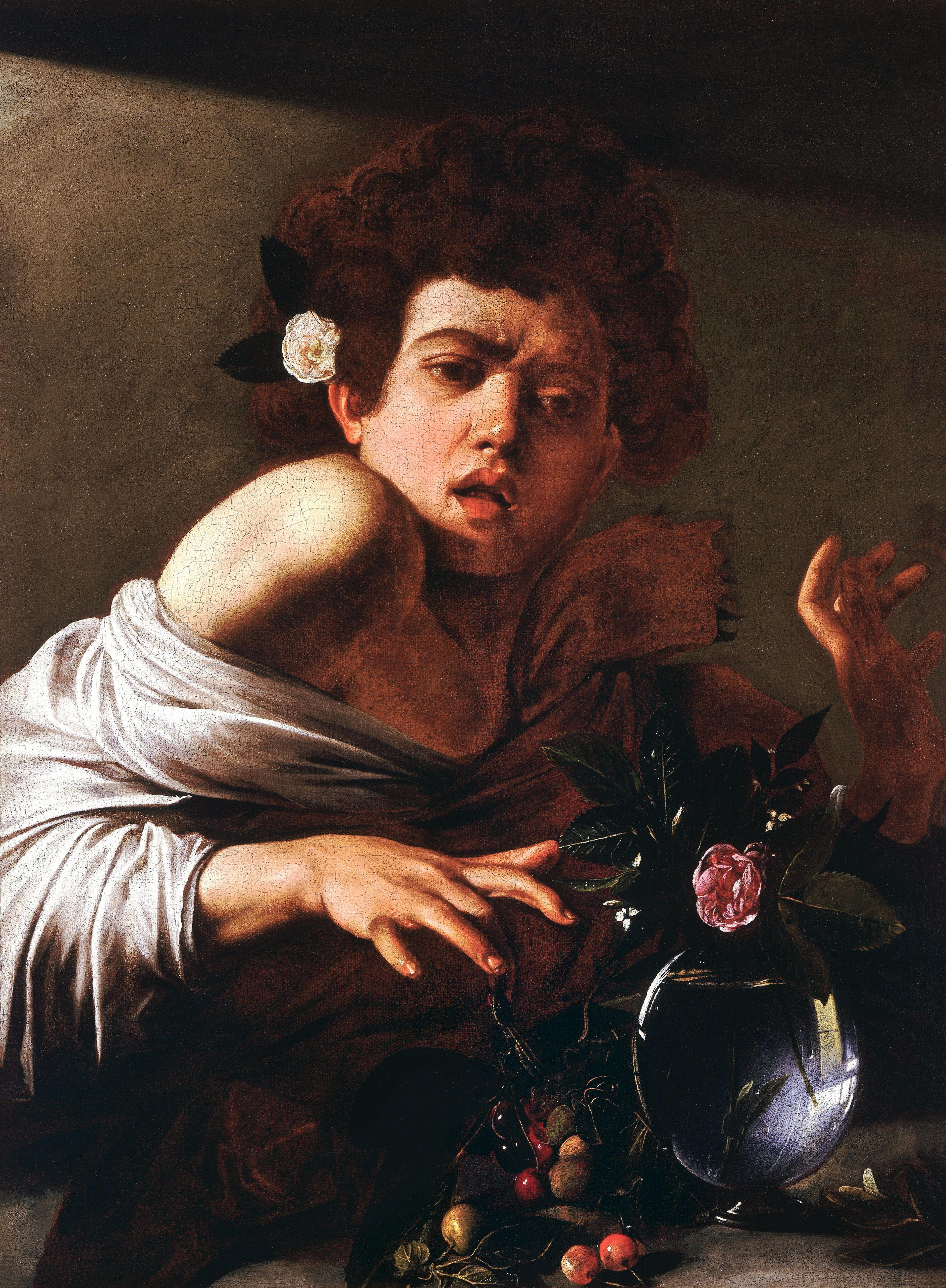
Boy Bitten by a Lizard
Caravaggio · c. 1594–95
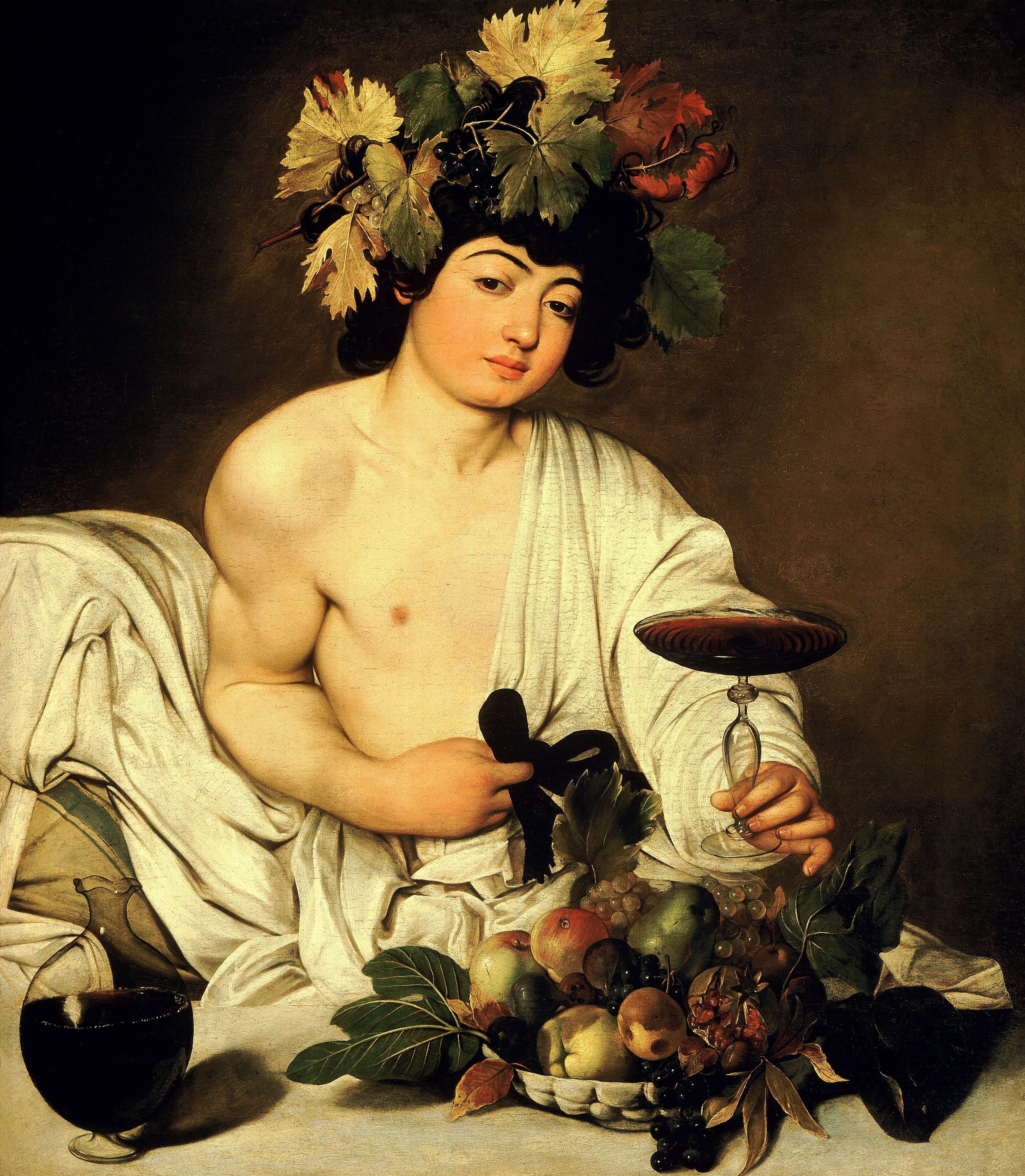
Bacchus
Caravaggio · c. 1596–98
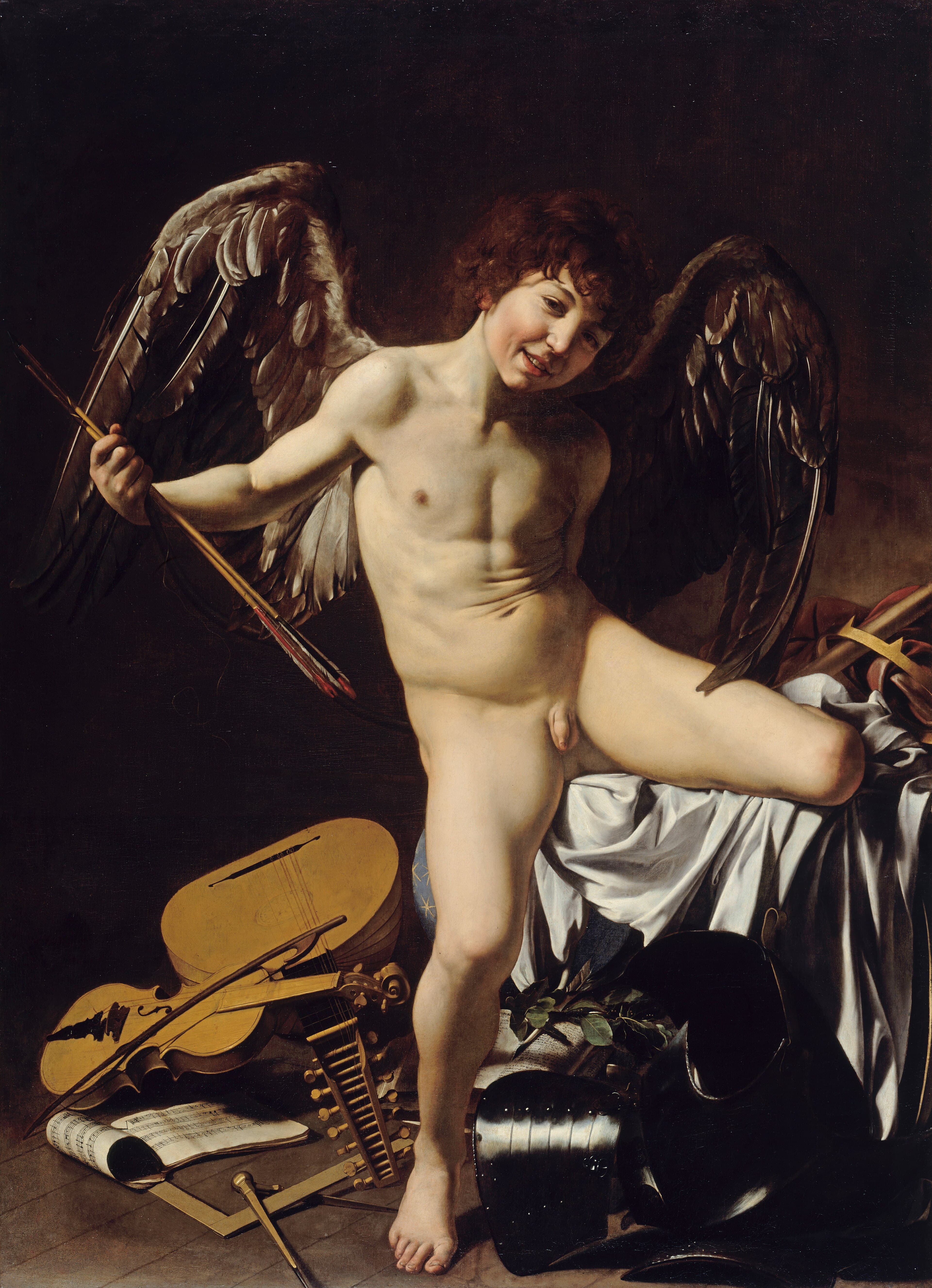
Amor Vincit Omnia
Caravaggio · 1601–02
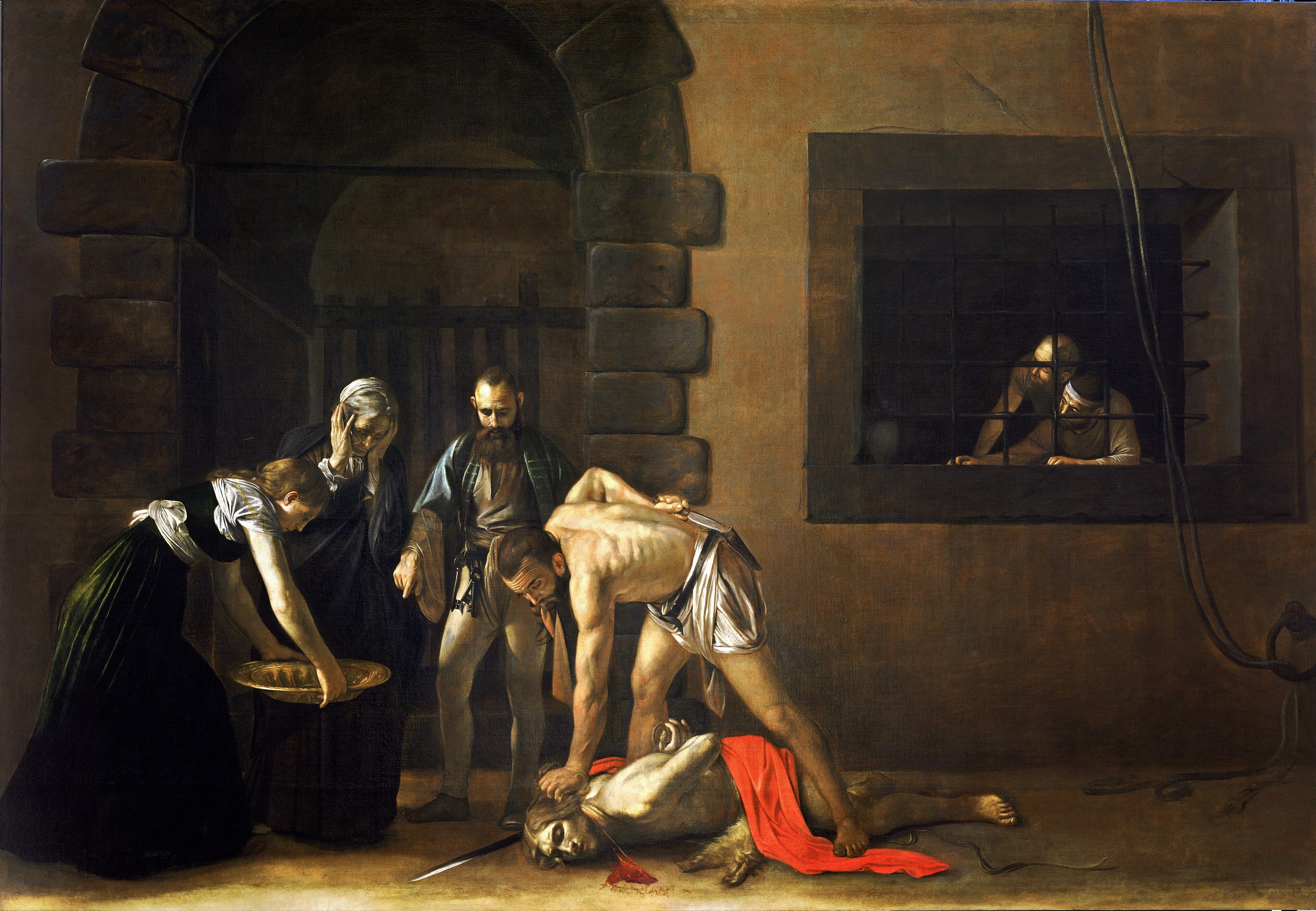
The Beheading of Saint John the Baptist
Caravaggio · 1608
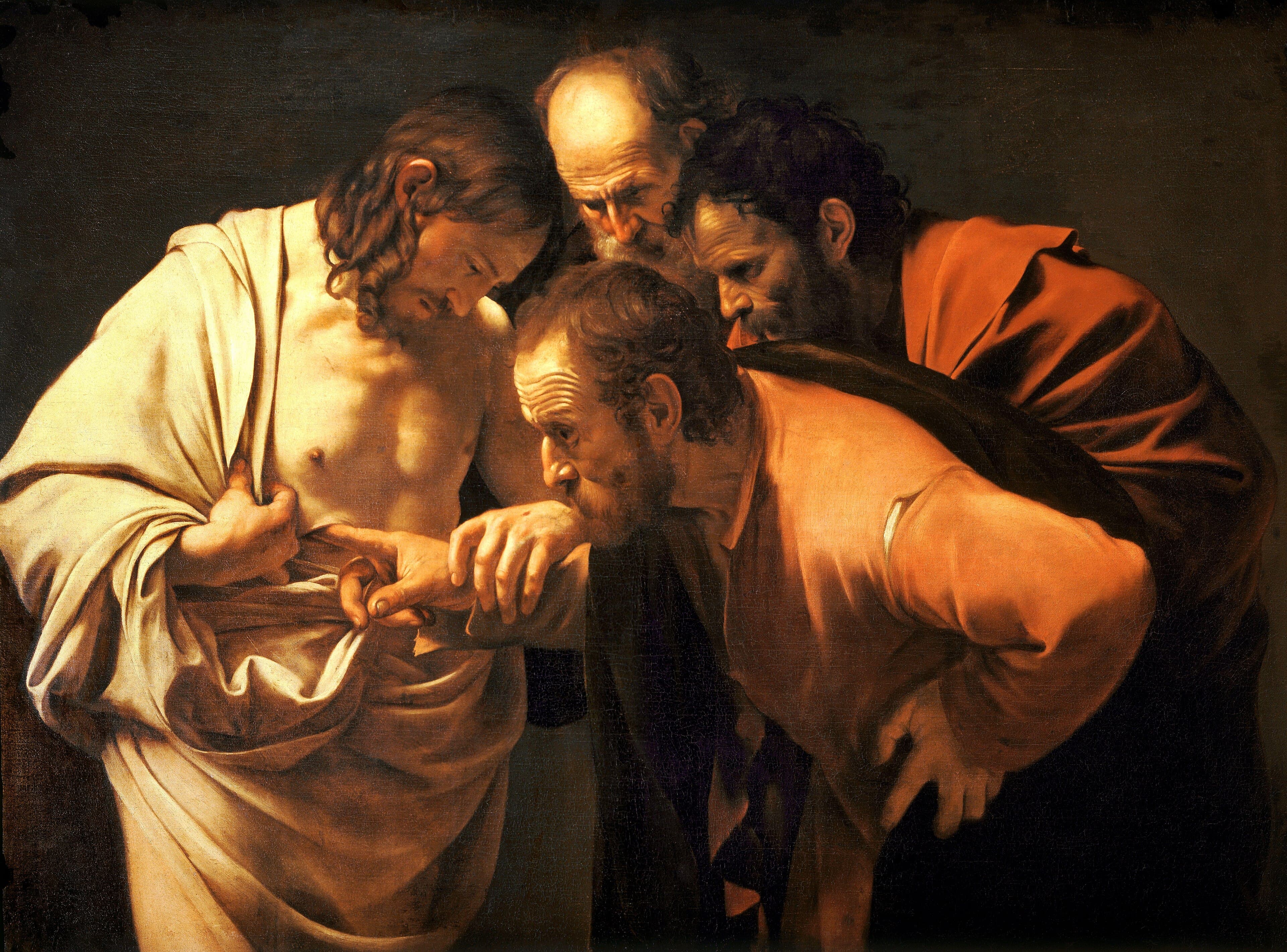
The Incredulity of Saint Thomas
Caravaggio · c. 1601–02
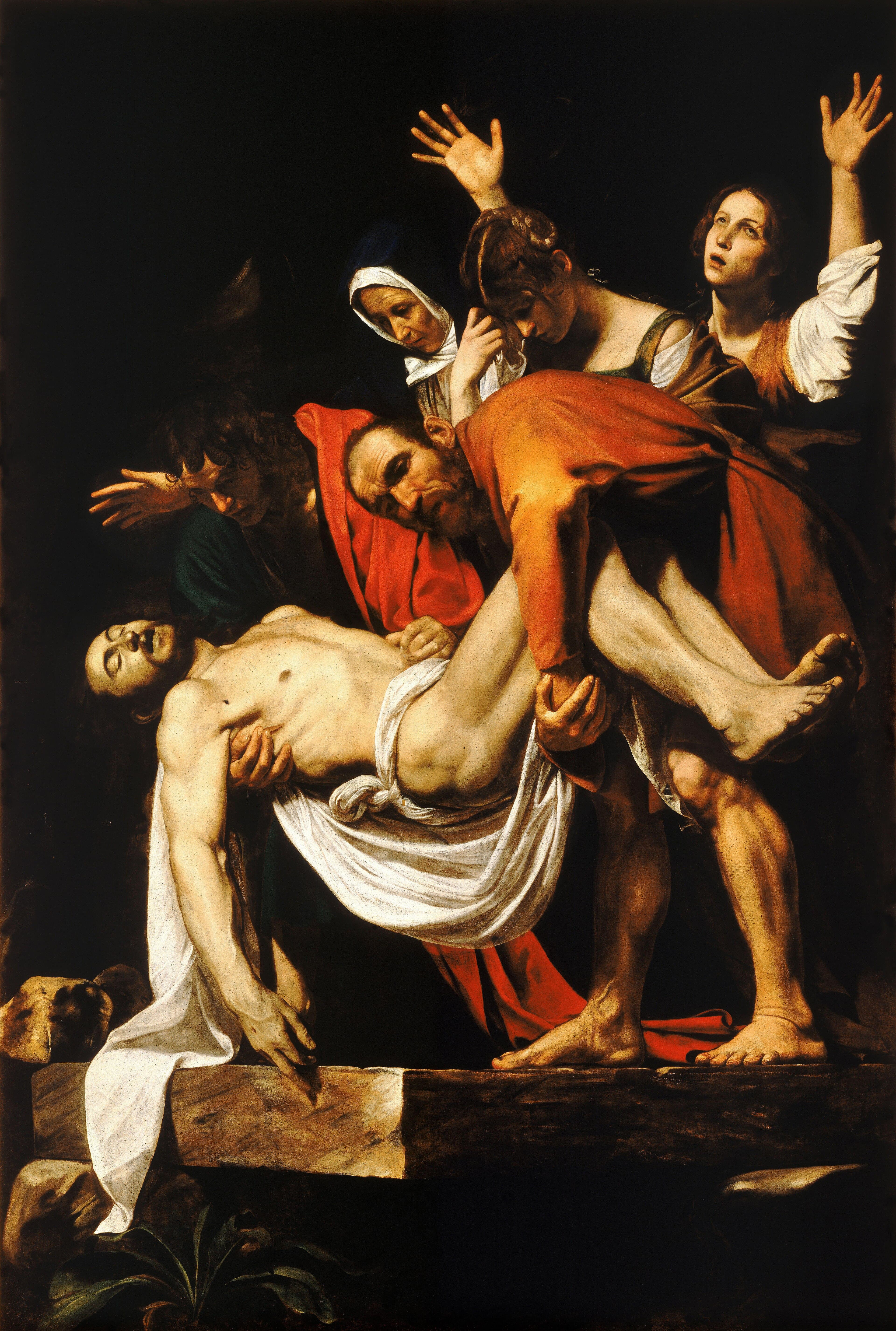
The Entombment of Christ
Caravaggio · 1603–04
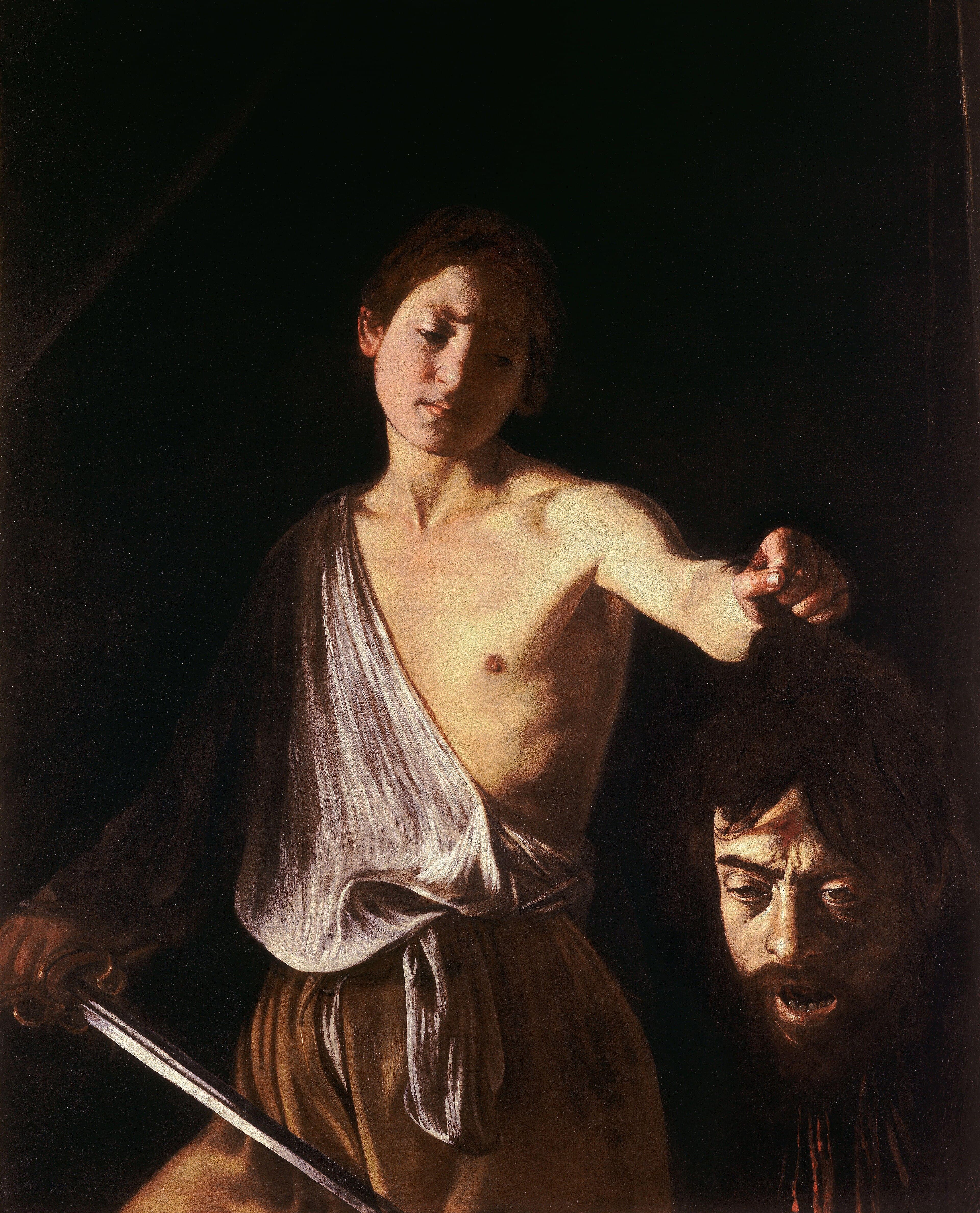
David with the Head of Goliath
Caravaggio · c. 1609–10
Also painted in 1598
The same year
Kindred works
You may also study
Judith Beheading Holofernes
Caravaggio · c. 1598–1599
Medusa
Caravaggio · c. 1597–98

Bridge over a Pond of Water Lilies
Claude Monet · 1899

Venus de Milo
Alexandros of Antioch · c. 150–125 BC

Nymphs Dancing to Pan's Flute
Joseph Tomanek

The Scream
Edvard Munch · 1893

The Thinker
Auguste Rodin · Modeled 1880–82; enlarged 1902–03; this cast 1904

Saturn Devouring His Son
Francisco Goya · c. 1819–1823