Image: Uffizi Galleries, Florence / Wikimedia Commons · Public domain · via Wikimedia Commons
Baroque
Bacchus
Caravaggio, c. 1596–98
Bacchus is an oil painting by Caravaggio, made in Rome around 1596–98 and now in the Uffizi Galleries in Florence. A soft-faced youth dressed as the wine god offers us a glass, beside a bowl of fruit that is already starting to rot.
- Artist
- Caravaggio
- Date
- c. 1596–98
- Medium
- Oil on canvas
- Dimensions
- 95 × 85 cm
- Collection
- Uffizi Galleries, Florence, Italy
- Movement
- Baroque
Caravaggio's Bacchus shows a young man costumed as the Roman god of wine, reclining on a couch and holding out a shallow glass of red wine toward the viewer. It was painted in Rome around 1596–98, when the artist lived in the household of his patron Cardinal Francesco Maria del Monte, and it measures 95 by 85 centimeters. Since its rediscovery in a Uffizi storeroom in 1913 it has been one of the most visited pictures in Florence.
What you're looking at
The god is not a god. He is a Roman boy of the 1590s with a farm lad's hands, his skin flushed at the cheeks and dirty under the fingernails, wearing a bedsheet tied like a toga and a wreath of grape leaves that sits a little too carefully on his dark curls. He leans on one elbow on a striped mattress, the kind of studio prop Caravaggio used again and again.
His left hand lifts a wide, flat-bowled goblet, filled almost to the brim. The wine surface tilts: look closely and you can see concentric ripples, as if his hand has just trembled. His right hand fingers the black bow of the cord that holds his robe, an ambiguous gesture that could be read as an invitation to untie it.
In front of him on the table sit a glass carafe of wine, half full and bubbling at the top, and a ceramic bowl of fruit: pomegranate split open, grapes, figs, a quince, an apple. The fruit is the painting's sermon. The apple has a wormhole, the pomegranate is overripe, several leaves are brown and curling. Pleasure is offered, and in the same picture it is shown going bad.
Bacchus by Caravaggio: the hidden self-portrait
The detail almost nobody sees with the naked eye is in the carafe. Reflected on its curved glass is a tiny figure of a man at an easel, apparently the painter himself at work. It was noticed after a cleaning in the twentieth century and confirmed by reflectographic study in 2009. In a painting about appearances, Caravaggio hid his own reflection in a wine bottle.
There is another quiet clue to how the picture was made. Bacchus holds the glass in his left hand. Many scholars think Caravaggio worked with a mirror to paint posed models, which would reverse them, and the left-handed god is often cited as evidence.
How it was made
Caravaggio painted directly from the model, without the drawings and studies other artists used. The light here is brighter and more even than in his later dramatic works; the background is a plain, warm grey-brown wall. Everything depends on surfaces: the oily sheen of the grape leaves, the transparency of the glass, the dull bloom on the figs, the slightly chapped skin of the knuckles. This attention to still life came from his early training in Lombardy and his years painting fruit and flowers in Rome. Cardinal del Monte's circle prized exactly this kind of exactness.
Who commissioned it?
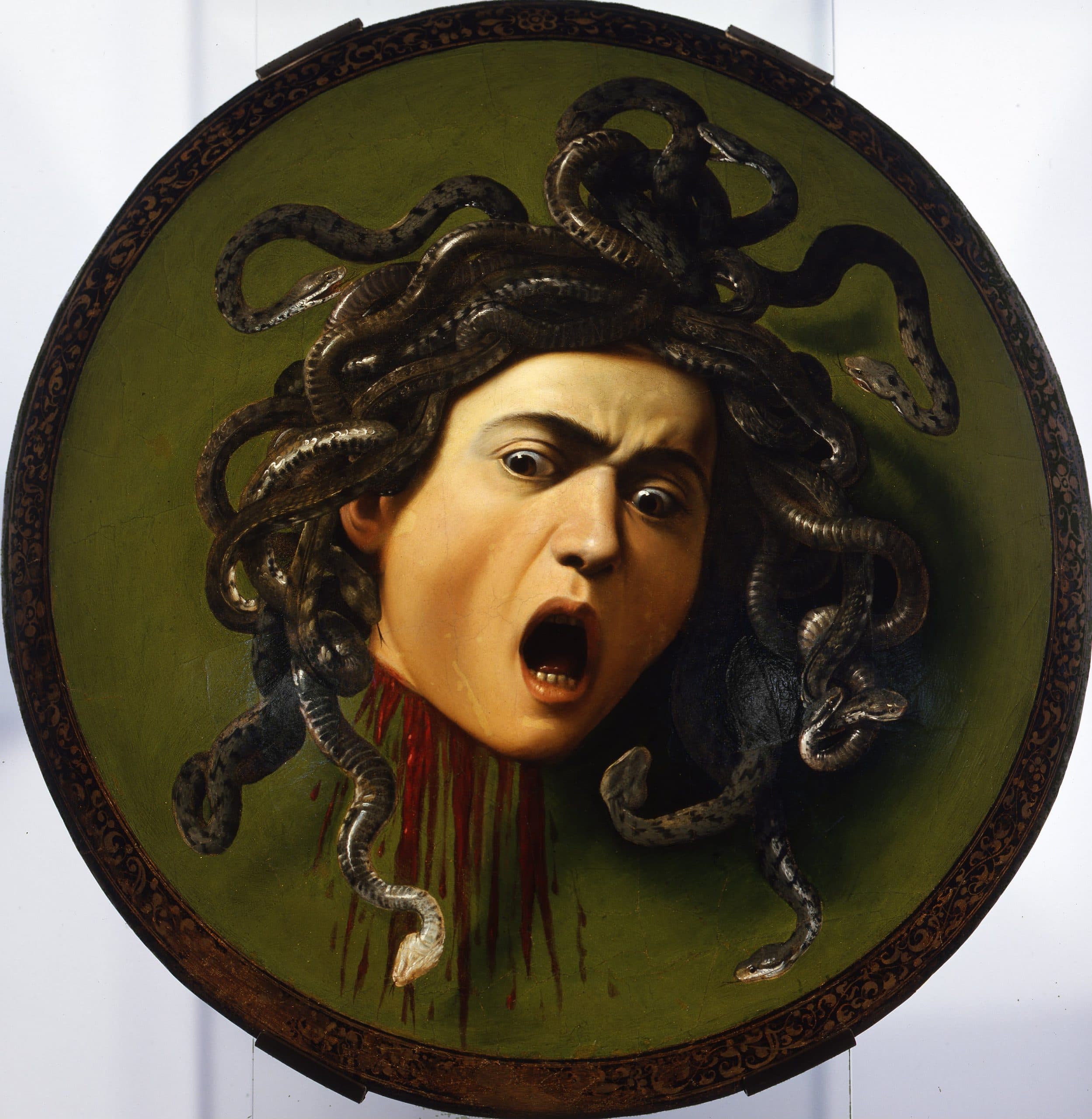
The commission is not documented. The most widely accepted theory is that Cardinal del Monte, an agent and friend of the Medici, had it painted as a gift for Ferdinando I de' Medici, Grand Duke of Tuscany, perhaps on the occasion of the marriage of his son. That would explain how it reached Florence. Caravaggio had already painted the shield of Medusa for the same grand duke around the same years.
What does it mean?
Two readings run side by side, and the painting holds both.
The first is a moral one, rooted in the still-life tradition: the rotting fruit and wormy apple are a vanitas warning that youth, wine and pleasure all decay. Seen this way, Bacchus is an image of temptation, and the viewer is the one being tempted.
The second concerns desire. The model's frank, heavy-lidded gaze, the half-loosened robe and the offered glass have led many modern writers to read the picture as homoerotic, a reading tied to the all-male household of del Monte and to Caravaggio's other paintings of boys, such as Boy Bitten by a Lizard. What Caravaggio intended is not recorded. A third, scholarly reading links the offered wine to the Eucharist, but that is a minority view.
The model's identity is also unknown. He is often said to be Mario Minniti, Caravaggio's Sicilian friend and studio companion, who modeled for several early pictures; the resemblance is suggestive rather than proven.
How it compares with the Sick Bacchus
A few years earlier, around 1593, Caravaggio painted himself as a sickly Bacchus with greenish skin, a picture now in the Galleria Borghese in Rome. That one is a raw, almost mocking self-portrait. The Uffizi Bacchus is its polished opposite: healthy, confident, made for a princely collection. The comparison shows how quickly the young painter developed in Rome.
Reception and legacy
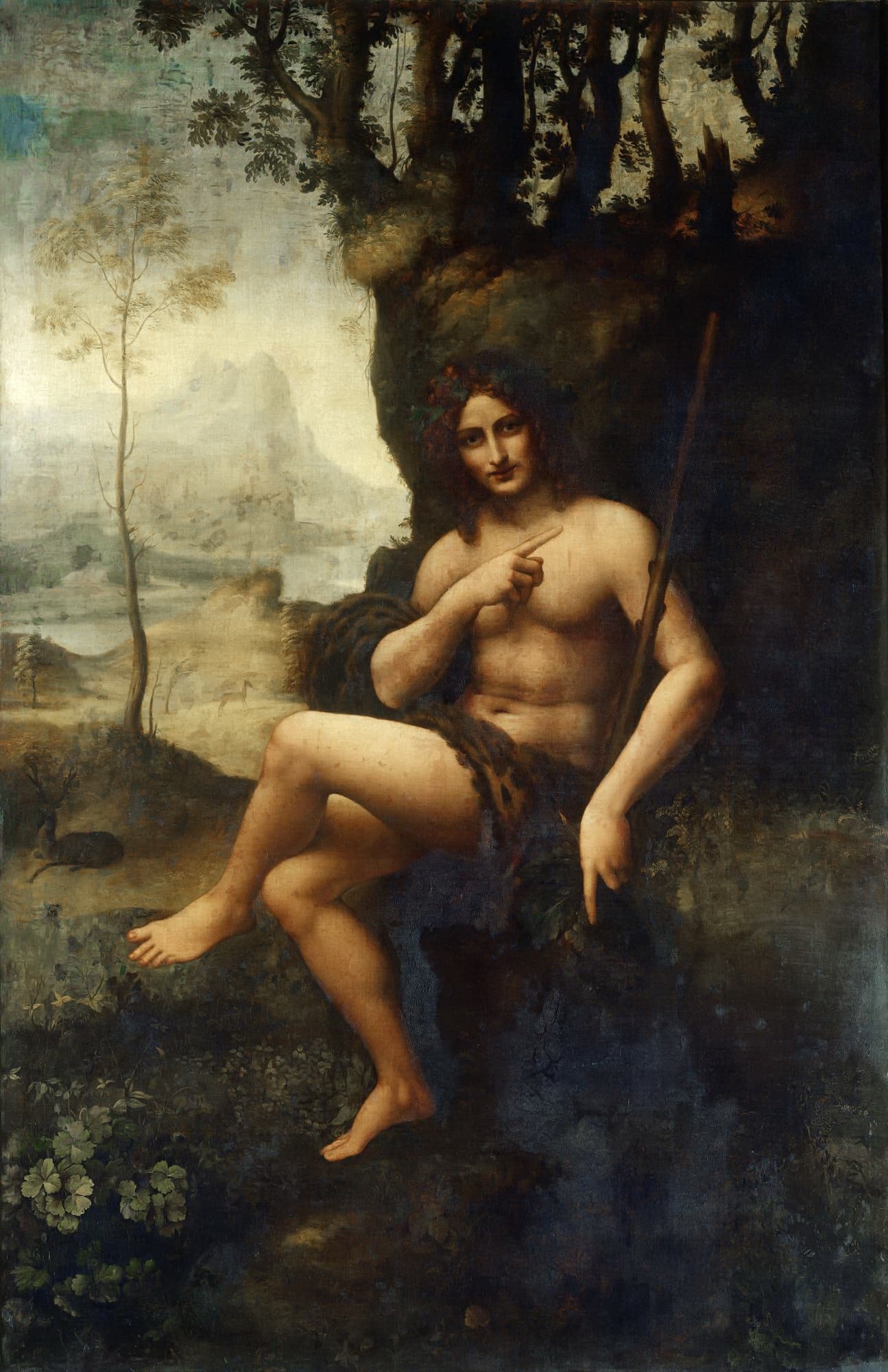
The painting dropped out of sight for centuries and was found in the Uffizi storerooms in 1913, then recognized as Caravaggio's own work. Since then it has become one of the defining images of his early career, a regular in exhibitions and a favorite of writers on Caravaggio's sexuality. It also stands in an older line of Bacchus images; compare the very different, Leonardesque Bacchus attributed to Leonardo's workshop.
Where to see it
Bacchus hangs in the Uffizi Galleries in Florence, in the Caravaggio room alongside his Medusa and the Sacrifice of Isaac. For more early works, see our guide to Caravaggio's paintings and the wider mythology paintings collection.
Questions & answers
Where is Caravaggio's Bacchus?
It is in the Uffizi Galleries in Florence, shown in the Caravaggio room next to his painted shield of Medusa. The painting was rediscovered in the Uffizi storerooms in 1913. Caravaggio's earlier Sick Bacchus, a self-portrait, is a different painting in the Galleria Borghese, Rome.
What does Caravaggio's Bacchus mean?
It mixes temptation and warning. The young god offers wine and pleasure, while the fruit beside him is bruised and worm-eaten, a vanitas reminder that youth and enjoyment decay. Many modern writers also read the half-undressed, inviting figure as homoerotic.
Is there a self-portrait hidden in Caravaggio's Bacchus?
Yes. A tiny reflection of a man at an easel appears on the glass carafe at lower left, believed to be Caravaggio painting the picture. It was noticed after cleaning and confirmed by reflectographic study in 2009; it is barely visible to the naked eye.
Who was the model for Bacchus?
The model is not documented. He is often identified as Mario Minniti, Caravaggio's Sicilian friend who posed for several early works, but that identification rests on resemblance and is not certain.
When was Caravaggio's Bacchus painted?
Around 1596–98, in Rome, while Caravaggio lived in the household of Cardinal Francesco Maria del Monte. It was probably a gift from del Monte to Ferdinando I de' Medici, which is how it came to Florence.
More by the artist
Caravaggio
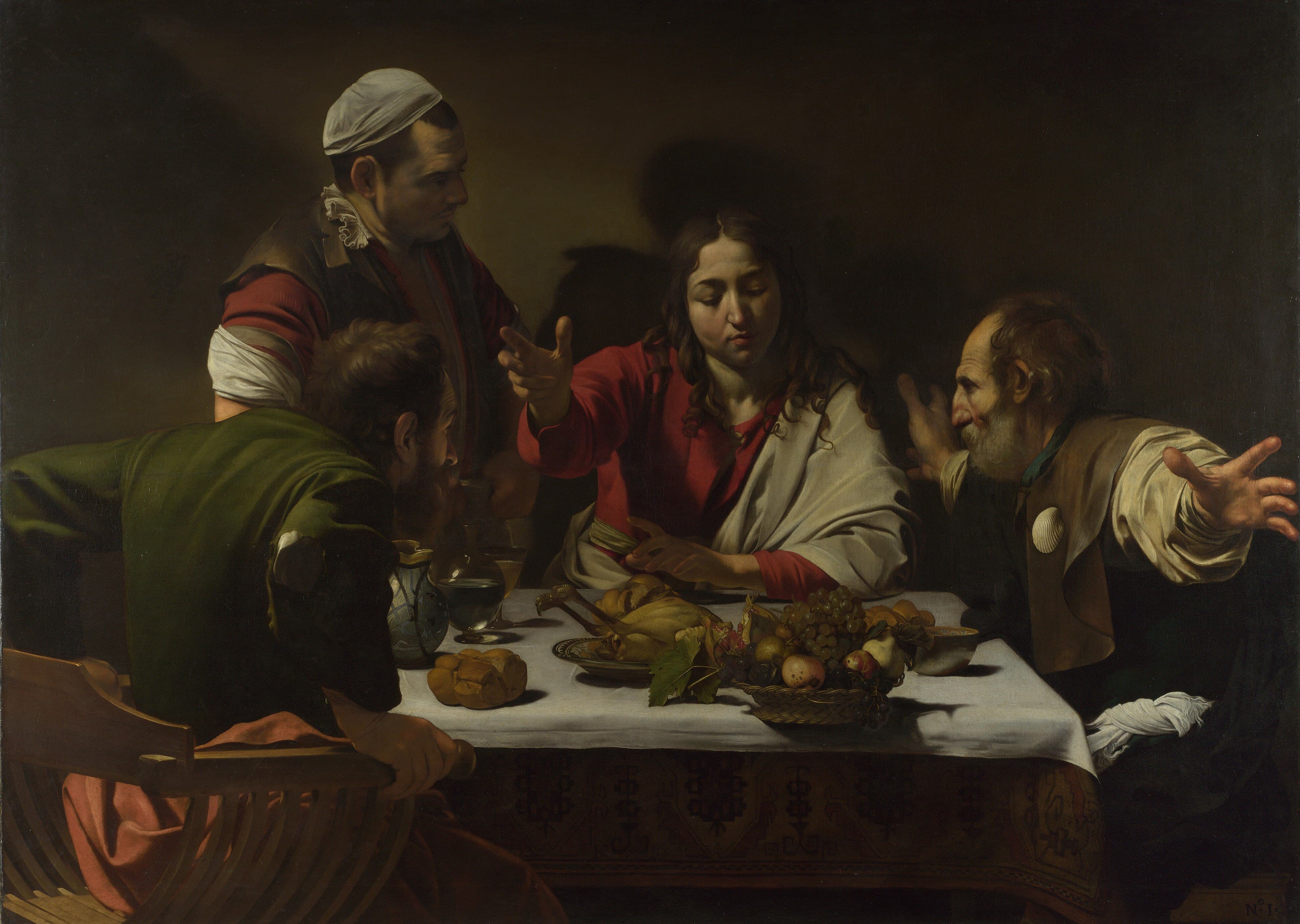
Supper at Emmaus
Caravaggio · 1601
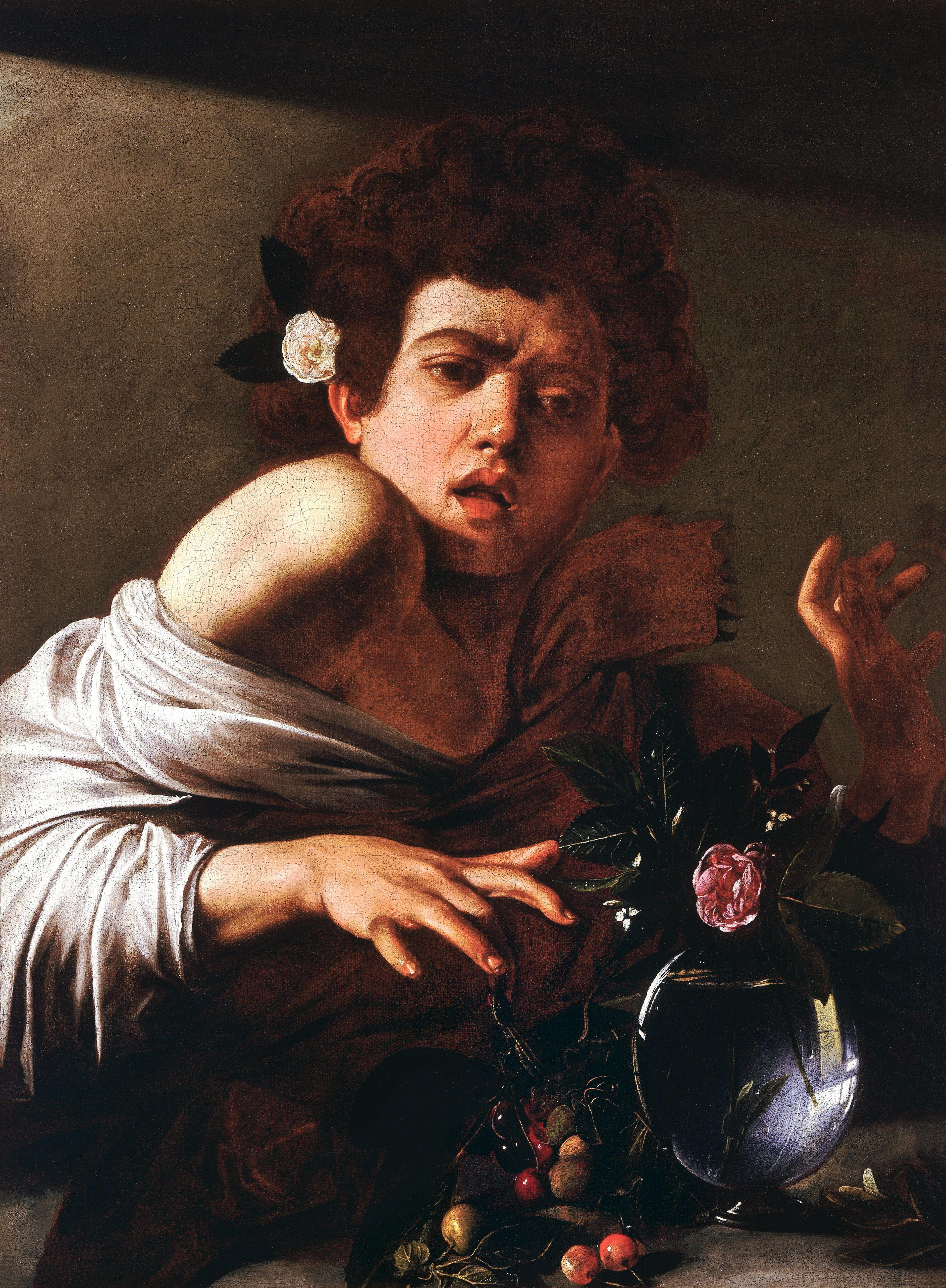
Boy Bitten by a Lizard
Caravaggio · c. 1594–95
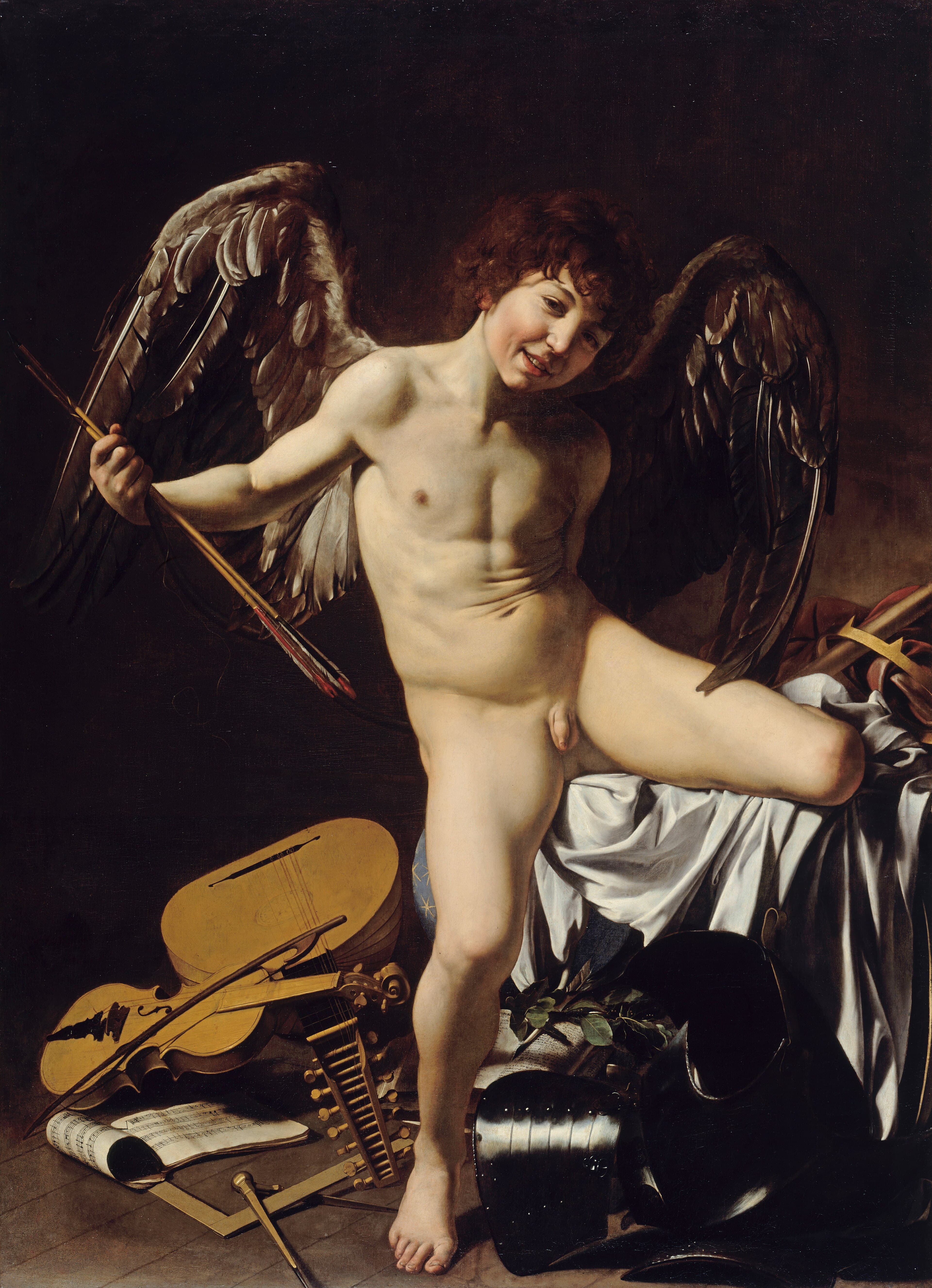
Amor Vincit Omnia
Caravaggio · 1601–02
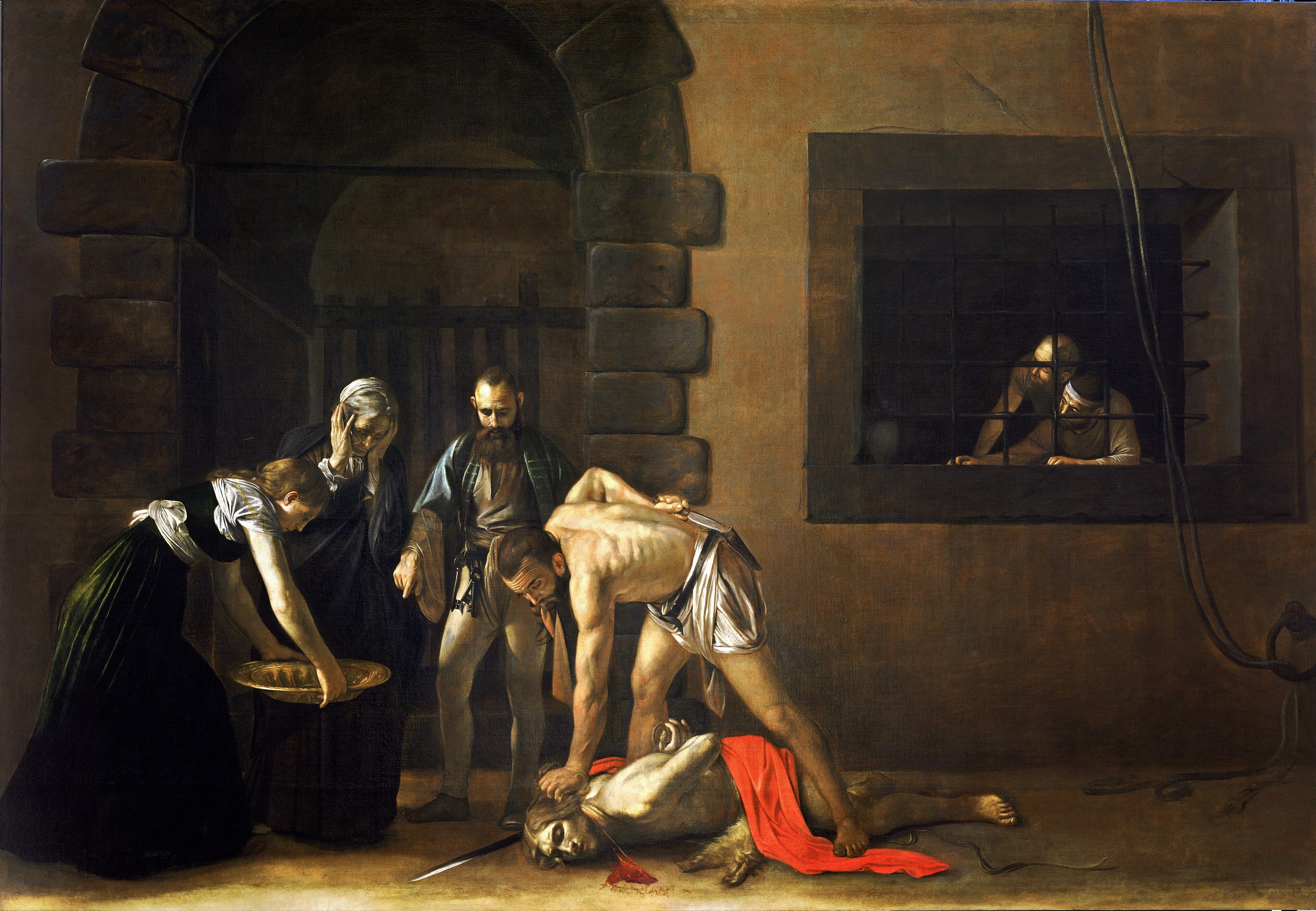
The Beheading of Saint John the Baptist
Caravaggio · 1608
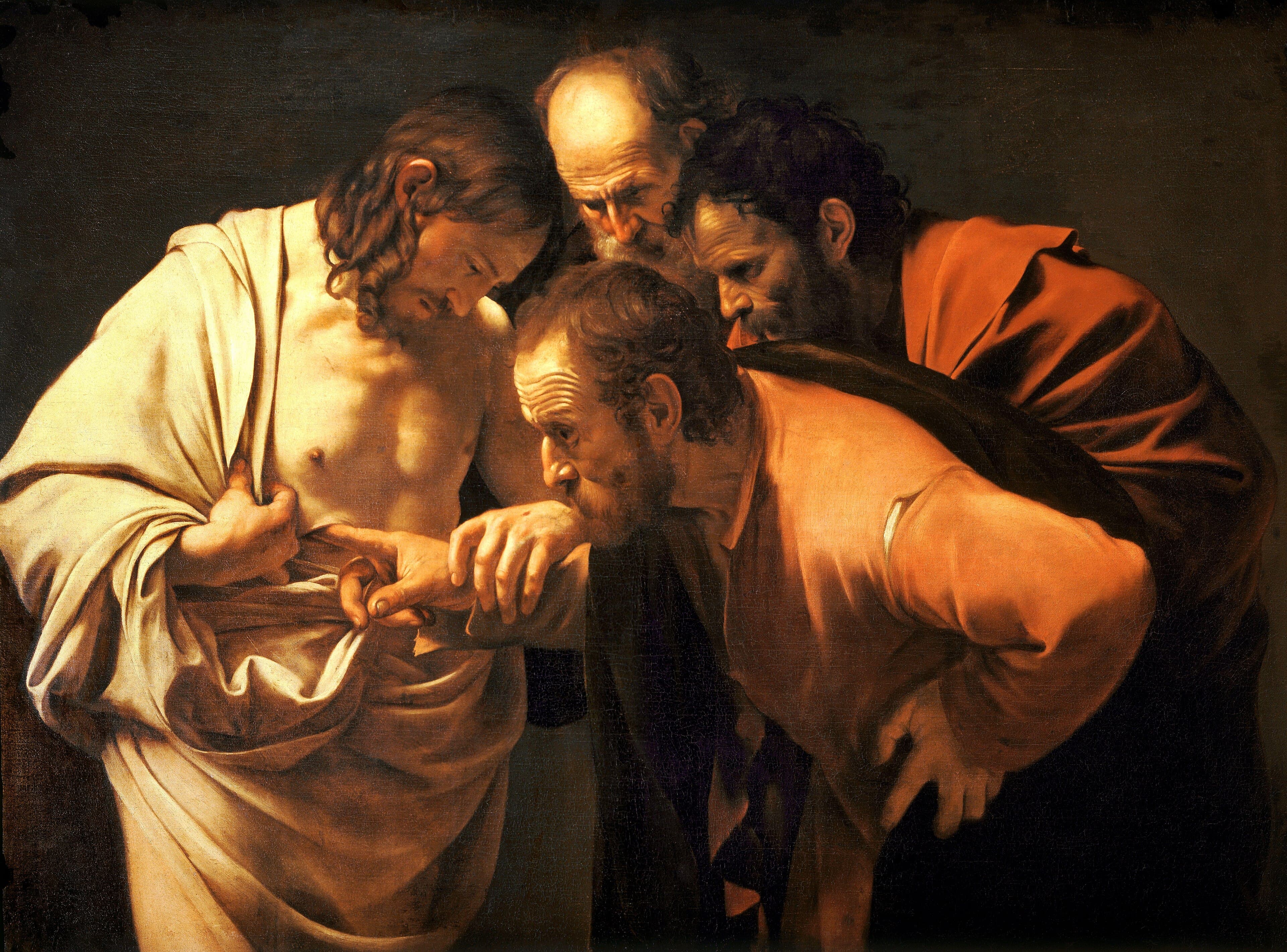
The Incredulity of Saint Thomas
Caravaggio · c. 1601–02
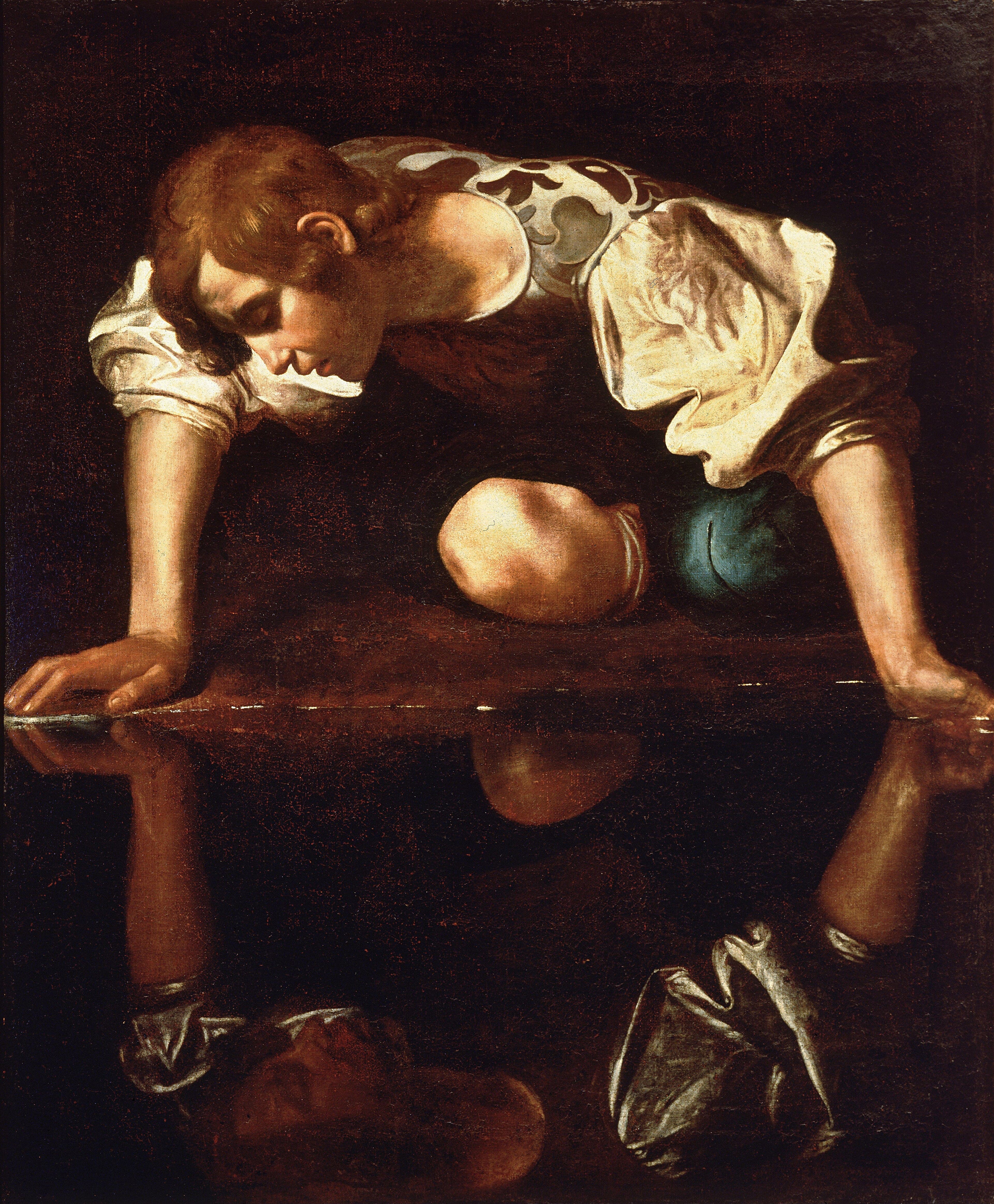
Narcissus
Caravaggio · c. 1597–99
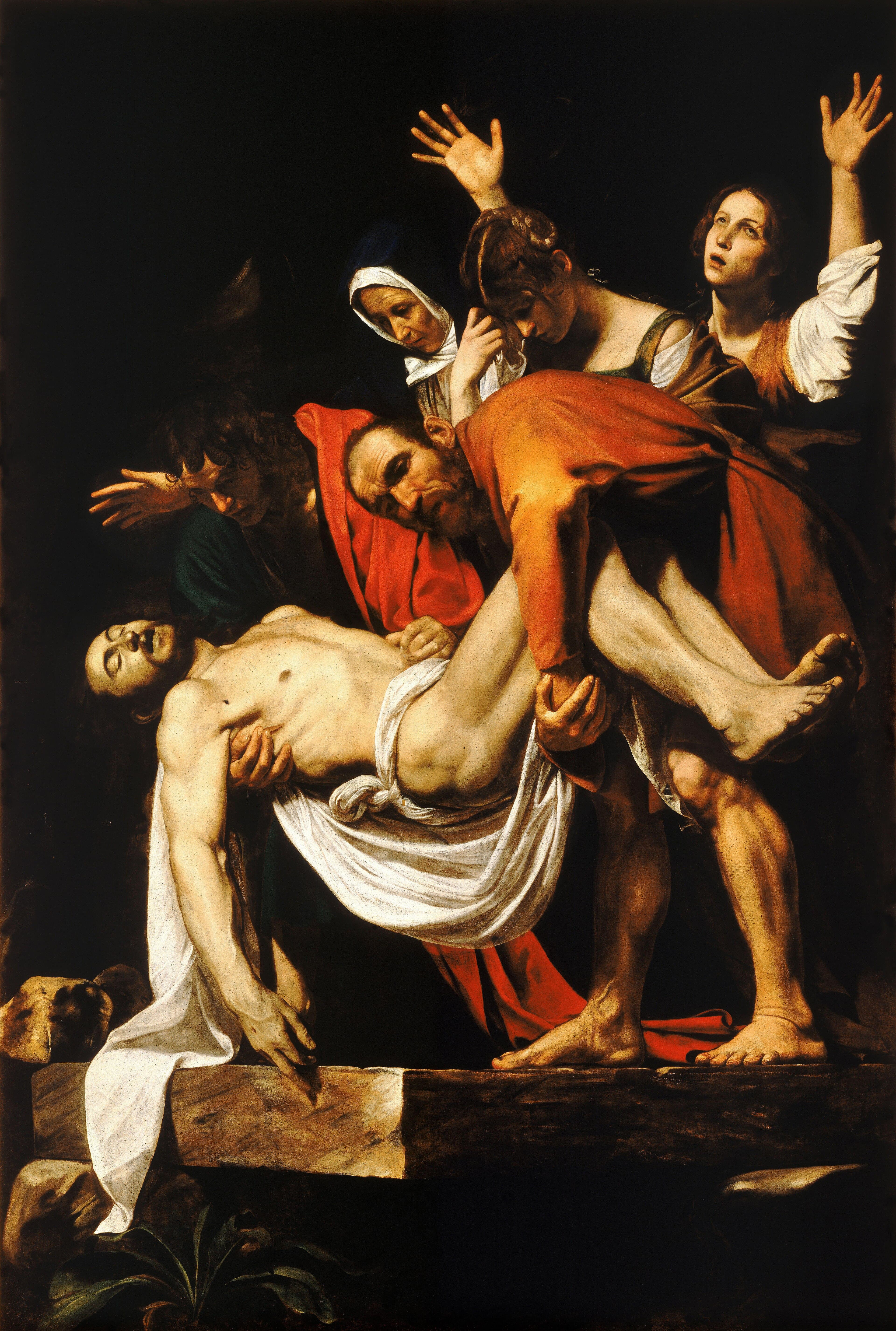
The Entombment of Christ
Caravaggio · 1603–04
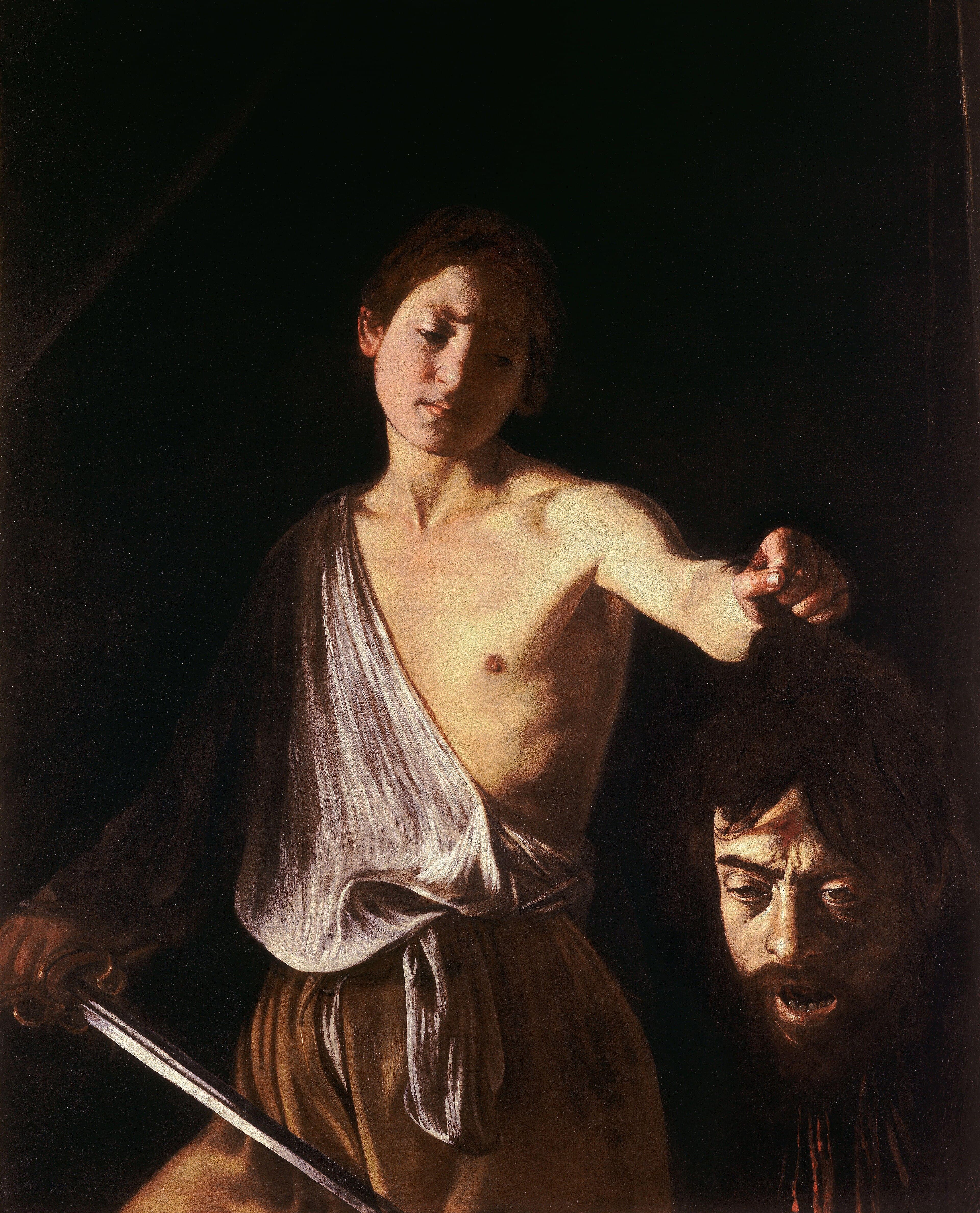
David with the Head of Goliath
Caravaggio · c. 1609–10
Also painted in 1597
The same year
Kindred works
You may also study
Medusa
Caravaggio · c. 1597–98
Bacchus (Saint John the Baptist)
Leonardo da Vinci · c. 1510–15; altered 1683–93

Venus de Milo
Alexandros of Antioch · c. 150–125 BC

Nymphs Dancing to Pan's Flute
Joseph Tomanek

The Scream
Edvard Munch · 1893

Saturn Devouring His Son
Francisco Goya · c. 1819–1823

Ophelia
John Everett Millais · 1851–52

Woman with a Parasol – Madame Monet and Her Son
Claude Monet · 1875