Collection
Caravaggio Paintings: The Works That Changed Baroque Art
Dirty feet, real faces and a light that cuts like a blade: how one violent painter remade European art in fifteen years.
Caravaggio paintings are the roughly sixty to eighty surviving works by Michelangelo Merisi da Caravaggio (1571–1610), the Italian painter who brought raw realism and dramatic light into religious and mythological art. Working mostly in Rome between the early 1590s and 1606, and then on the run in Naples, Malta and Sicily, he painted saints with peasants' faces, biblical scenes lit like a stage at night, and moments of violence frozen at their peak.
His best-known works include The Calling of Saint Matthew, Judith Beheading Holofernes, The Supper at Emmaus, David with the Head of Goliath and the shield-shaped Medusa in the Uffizi. This page explains how to recognize a Caravaggio, follows the paintings through his short career, and tells you where to see them today.
01
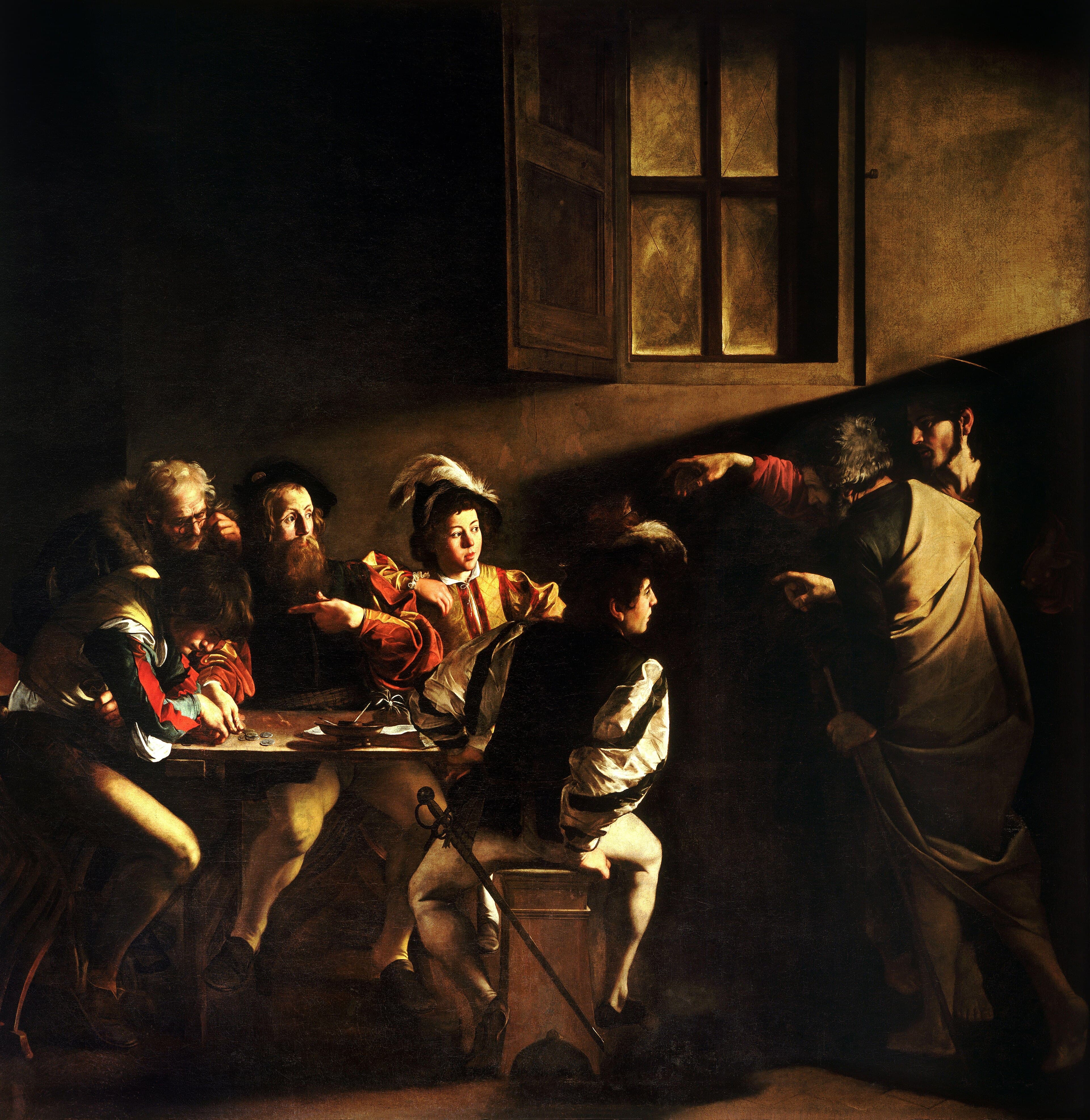
The Calling of Saint Matthew
Caravaggio · 1599–1600
The Calling of Saint Matthew is a painting by Caravaggio, made in 1599–1600 for the Contarelli Chapel in San Luigi dei Francesi, Rome, where it still hangs. Christ points at the tax collector Matthew as a beam of light crosses the room.
02
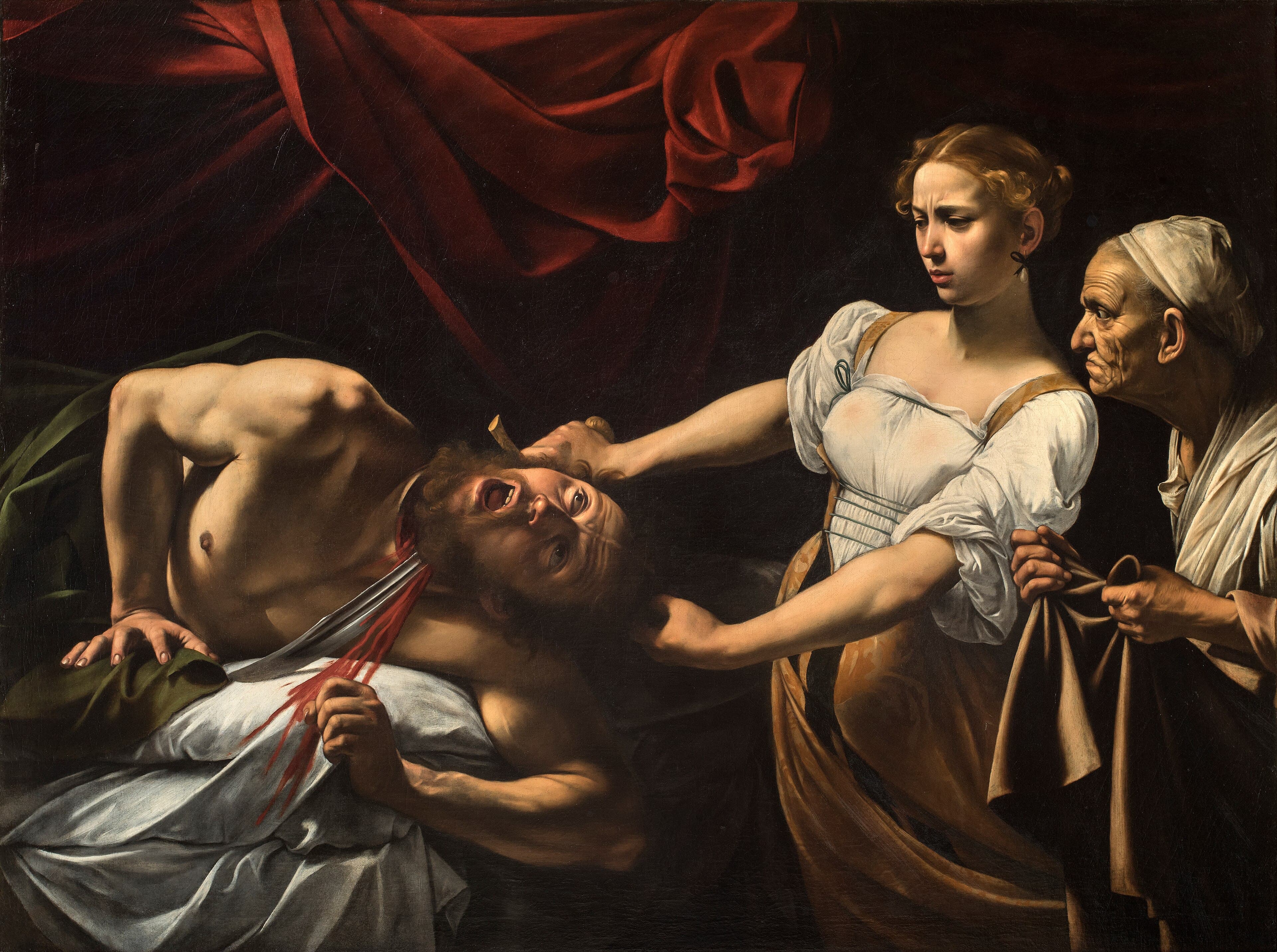
Judith Beheading Holofernes
Caravaggio · c. 1598–1599
Judith Beheading Holofernes is a painting by Caravaggio, made around 1598–1599, showing the biblical widow Judith cutting off the general's head as her maid waits. It hangs in the Galleria Nazionale d'Arte Antica, Rome.
03
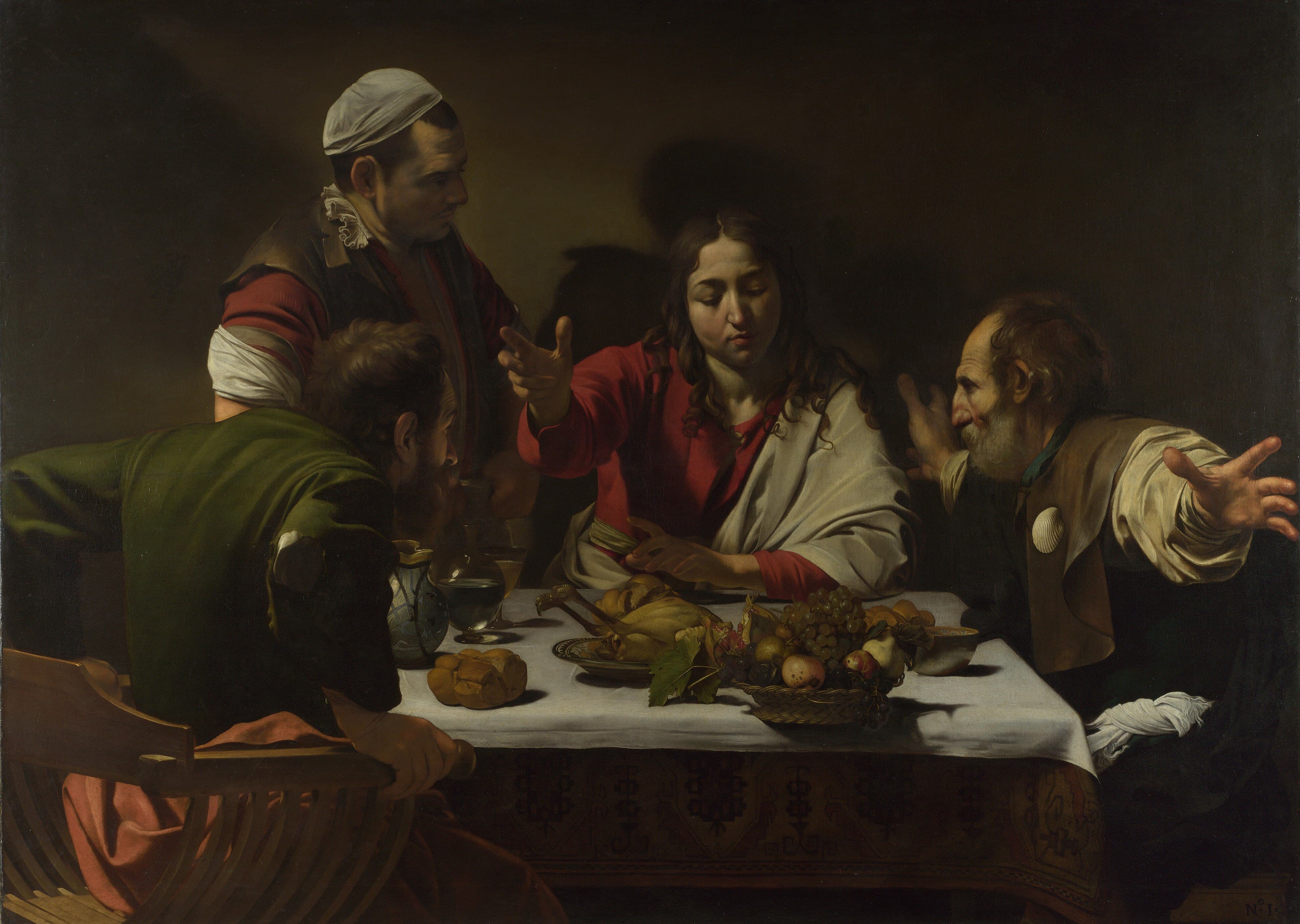
Supper at Emmaus
Caravaggio · 1601
Supper at Emmaus is a painting by Caravaggio, made in 1601, showing the risen Christ revealing himself to two disciples as he blesses the bread. It is in the National Gallery, London; a later 1606 version is in Milan.
04
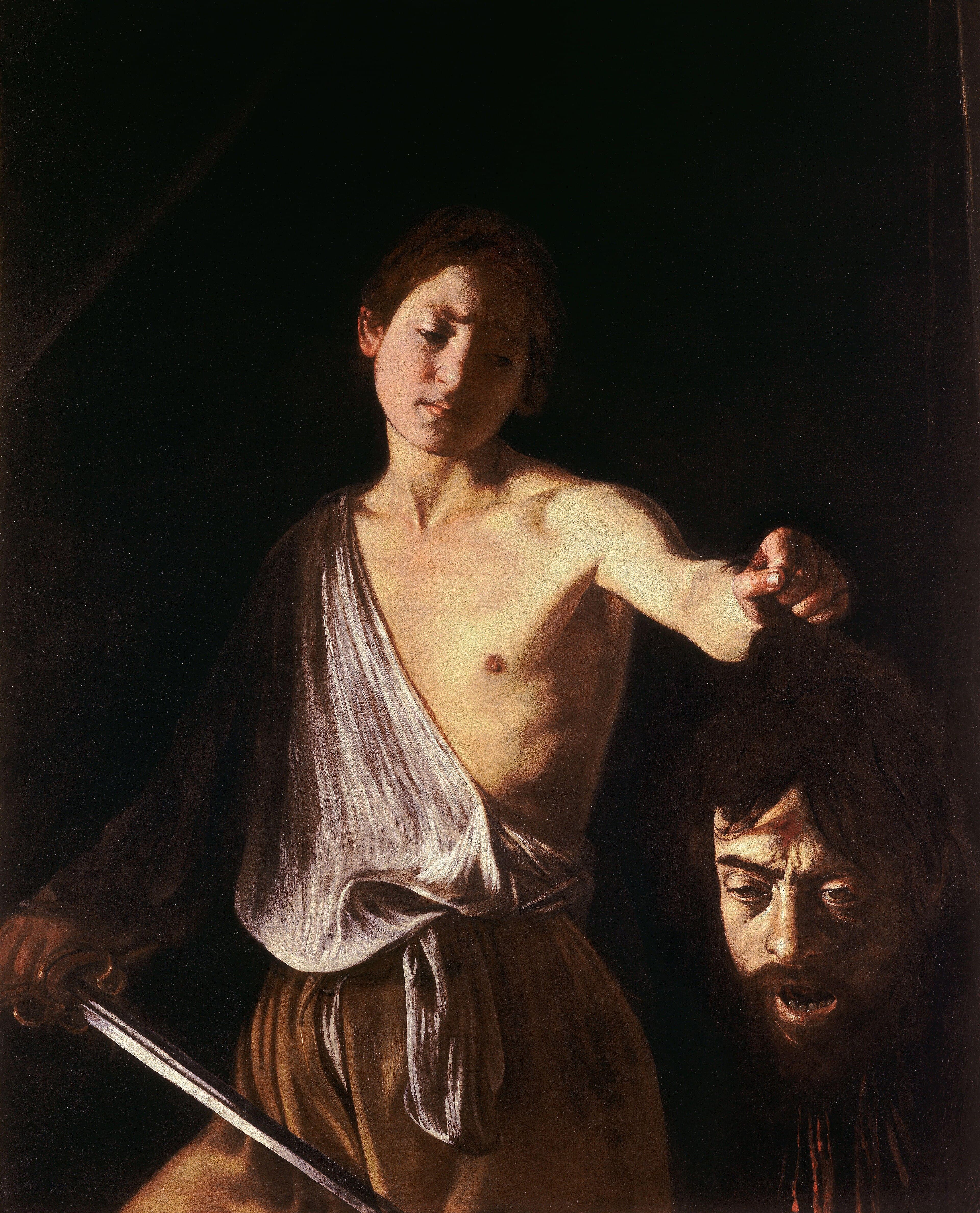
David with the Head of Goliath
Caravaggio · c. 1609–10
David with the Head of Goliath is a late oil painting by Caravaggio, usually dated c. 1609–10, in the Galleria Borghese in Rome. The severed head of Goliath is widely read as the painter's own self-portrait.
05
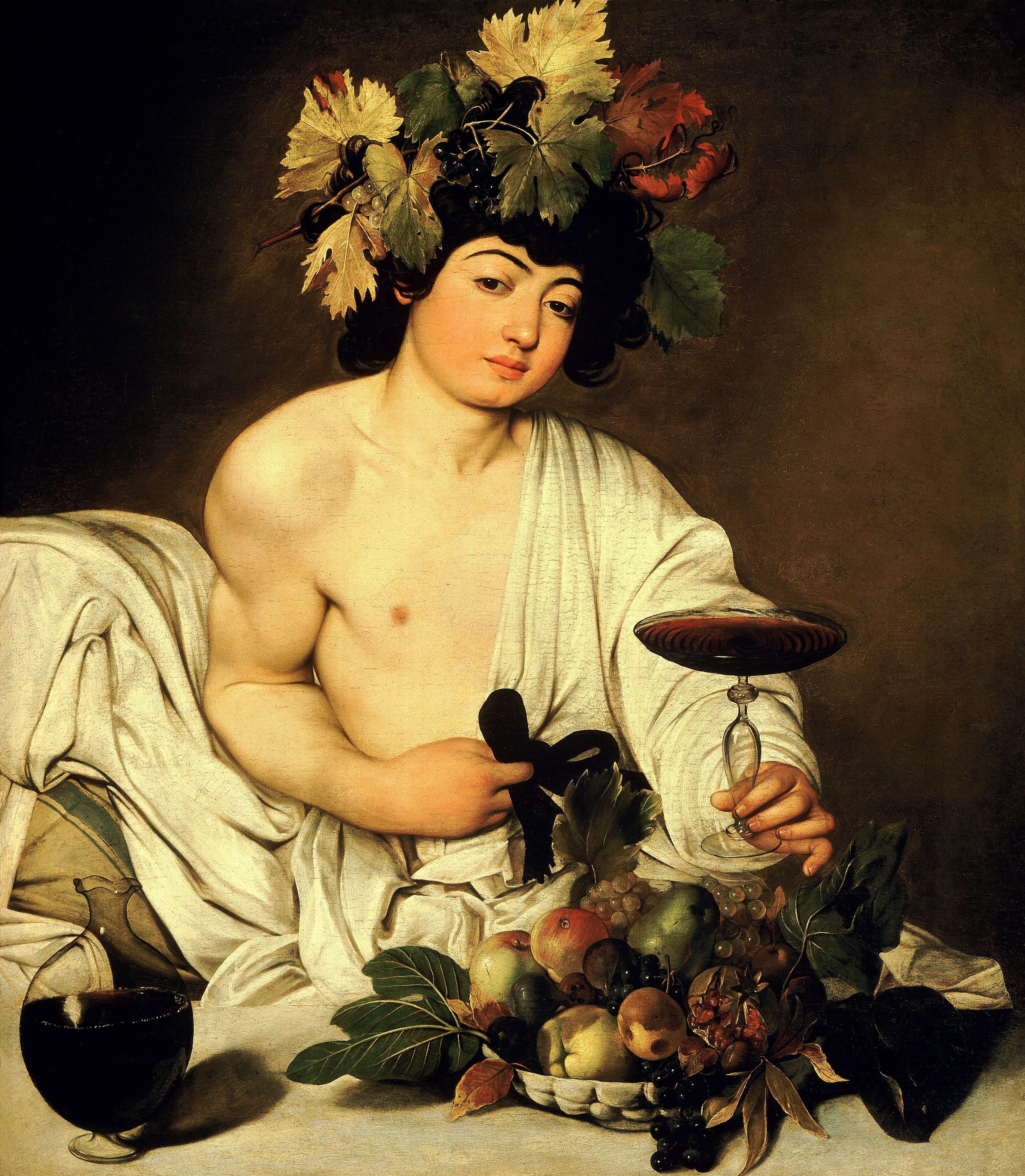
Bacchus
Caravaggio · c. 1596–98
Bacchus is an oil painting by Caravaggio, made in Rome around 1596–98 and now in the Uffizi Galleries in Florence. A soft-faced youth dressed as the wine god offers us a glass, beside a bowl of fruit that is already starting to rot.
06
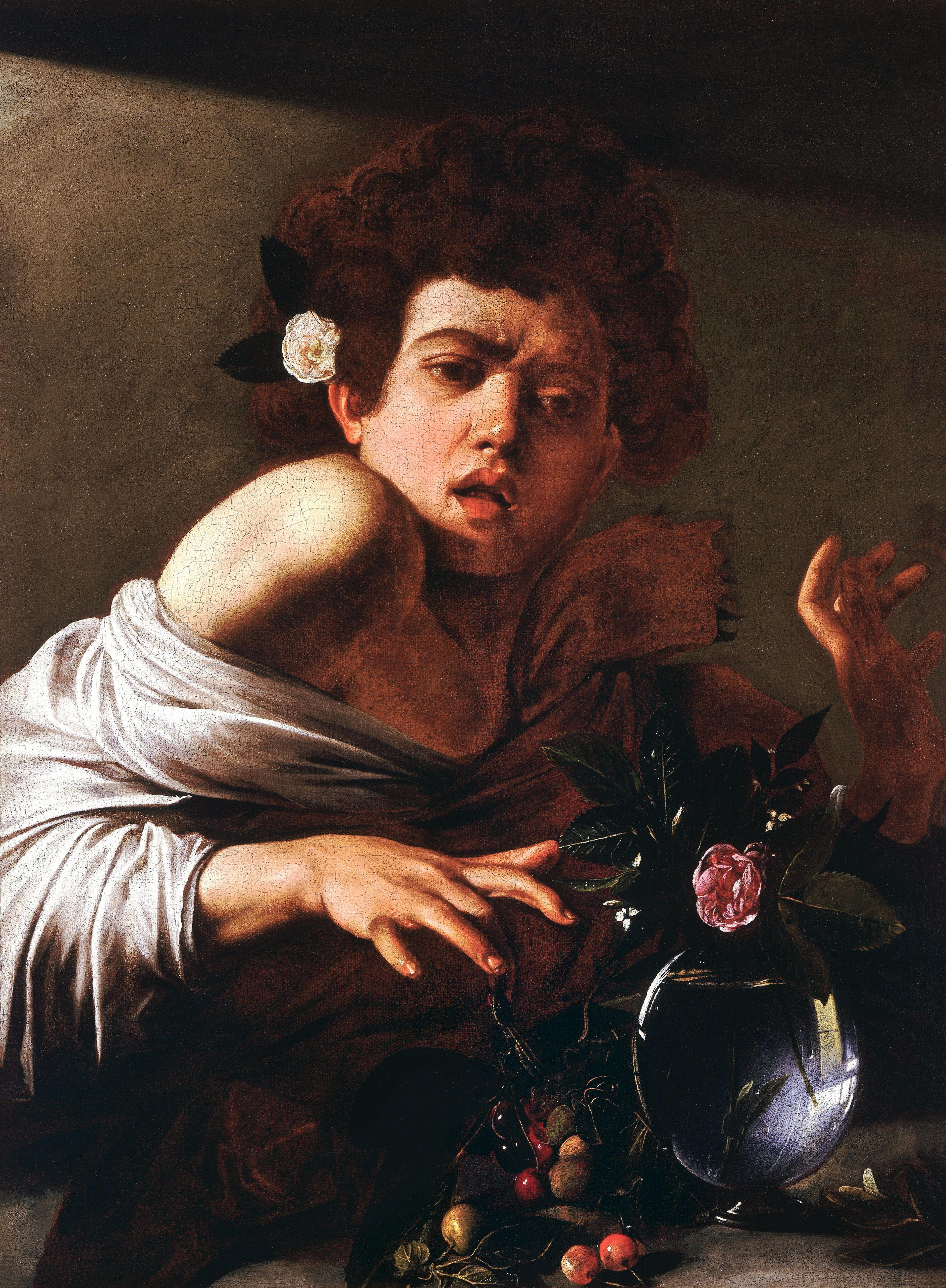
Boy Bitten by a Lizard
Caravaggio · c. 1594–95
Boy Bitten by a Lizard is an early painting by Caravaggio, made in Rome around 1594–95. Two versions survive: one in the National Gallery, London (shown here), the other in the Fondazione Roberto Longhi, Florence.
07
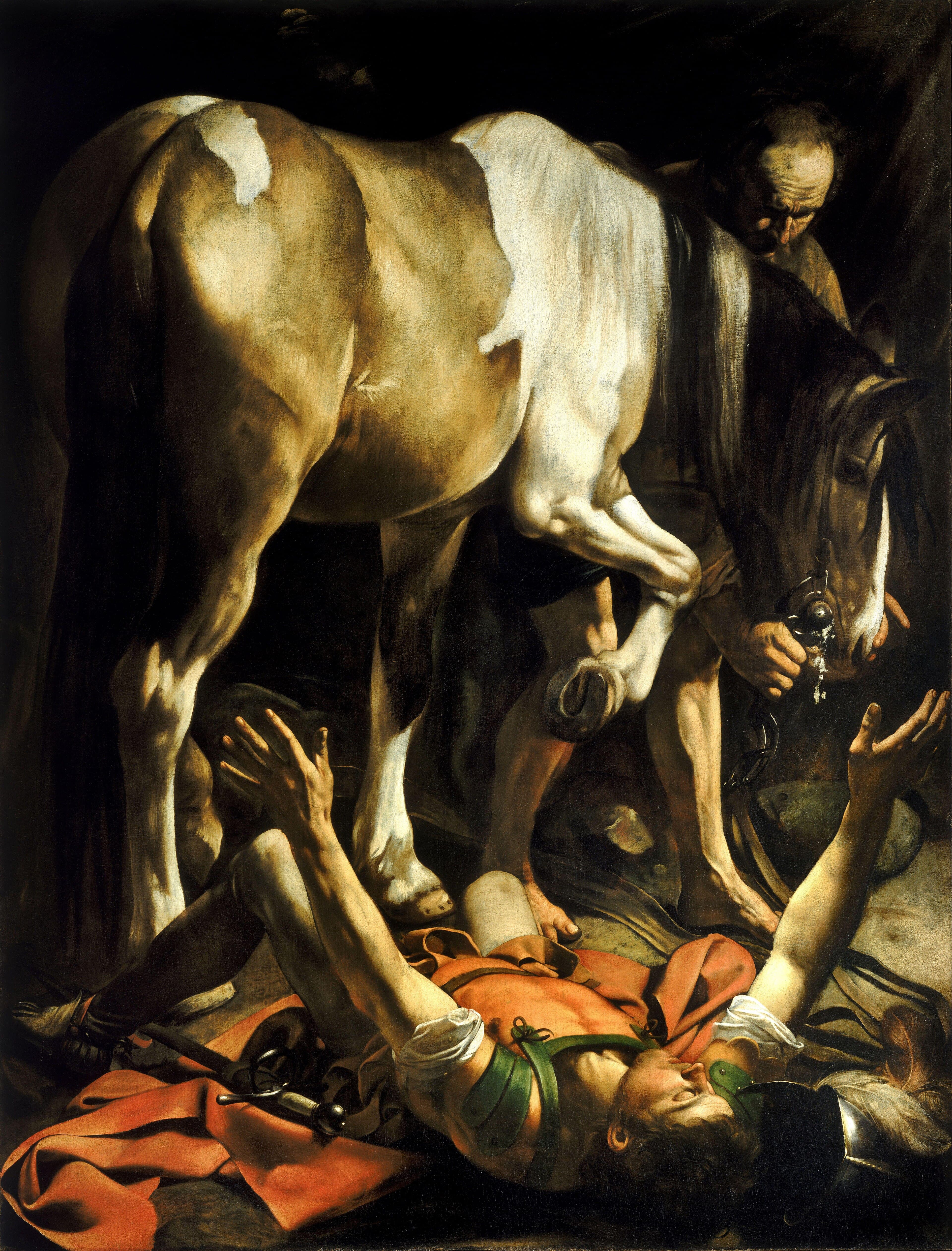
The Conversion of Saint Paul
Caravaggio · 1600–01
The Conversion of Saint Paul (Conversion on the Way to Damascus) is Caravaggio's 1600–01 altarpiece in the Cerasi Chapel of Santa Maria del Popolo, Rome, where it still hangs. Paul lies blinded on his back beneath his horse.
08
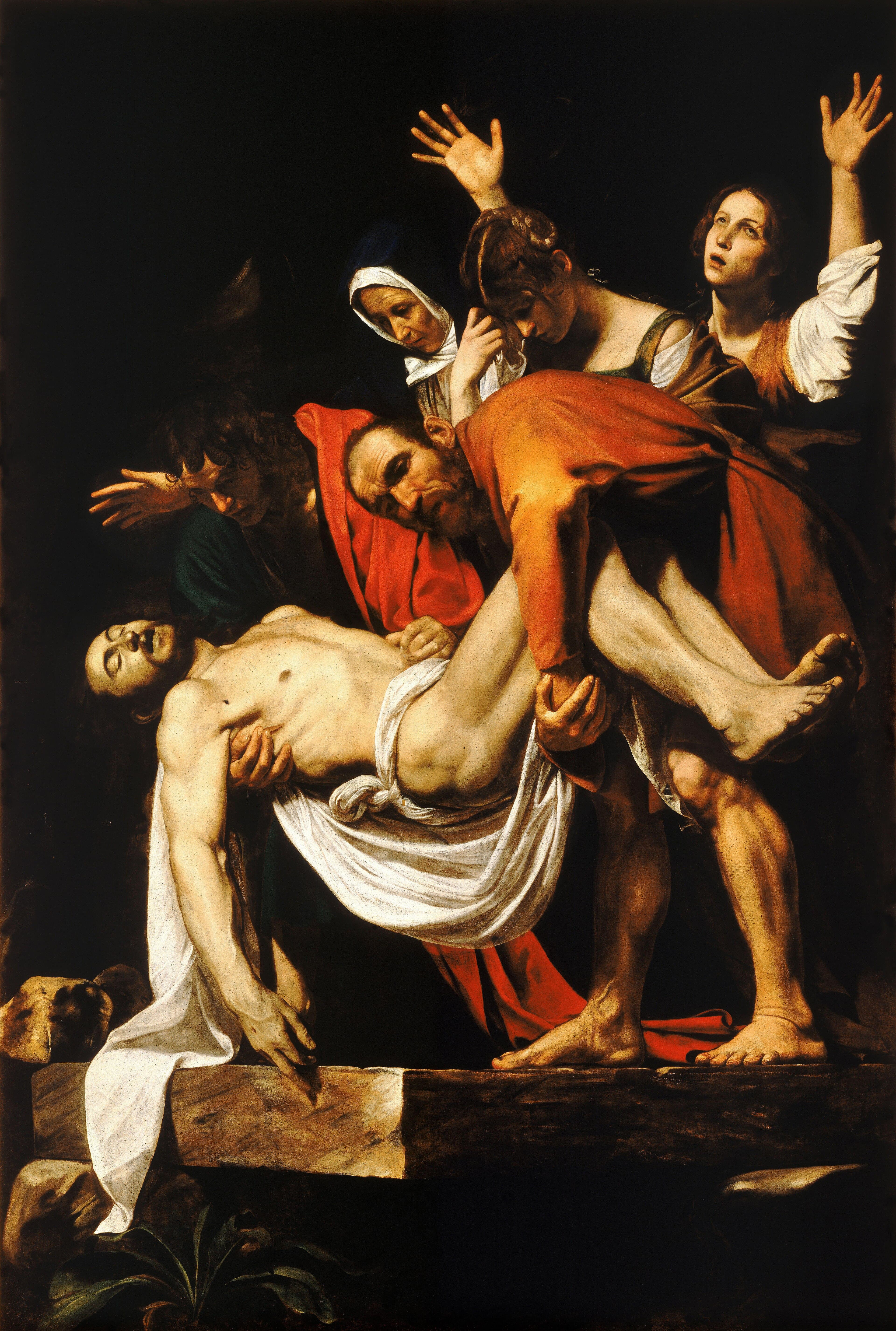
The Entombment of Christ
Caravaggio · 1603–04
The Entombment of Christ is Caravaggio's altarpiece of 1603–04, painted for the Chiesa Nuova in Rome and now in the Pinacoteca Vaticana. Christ's body is lowered onto a stone slab that juts out toward the viewer.
09
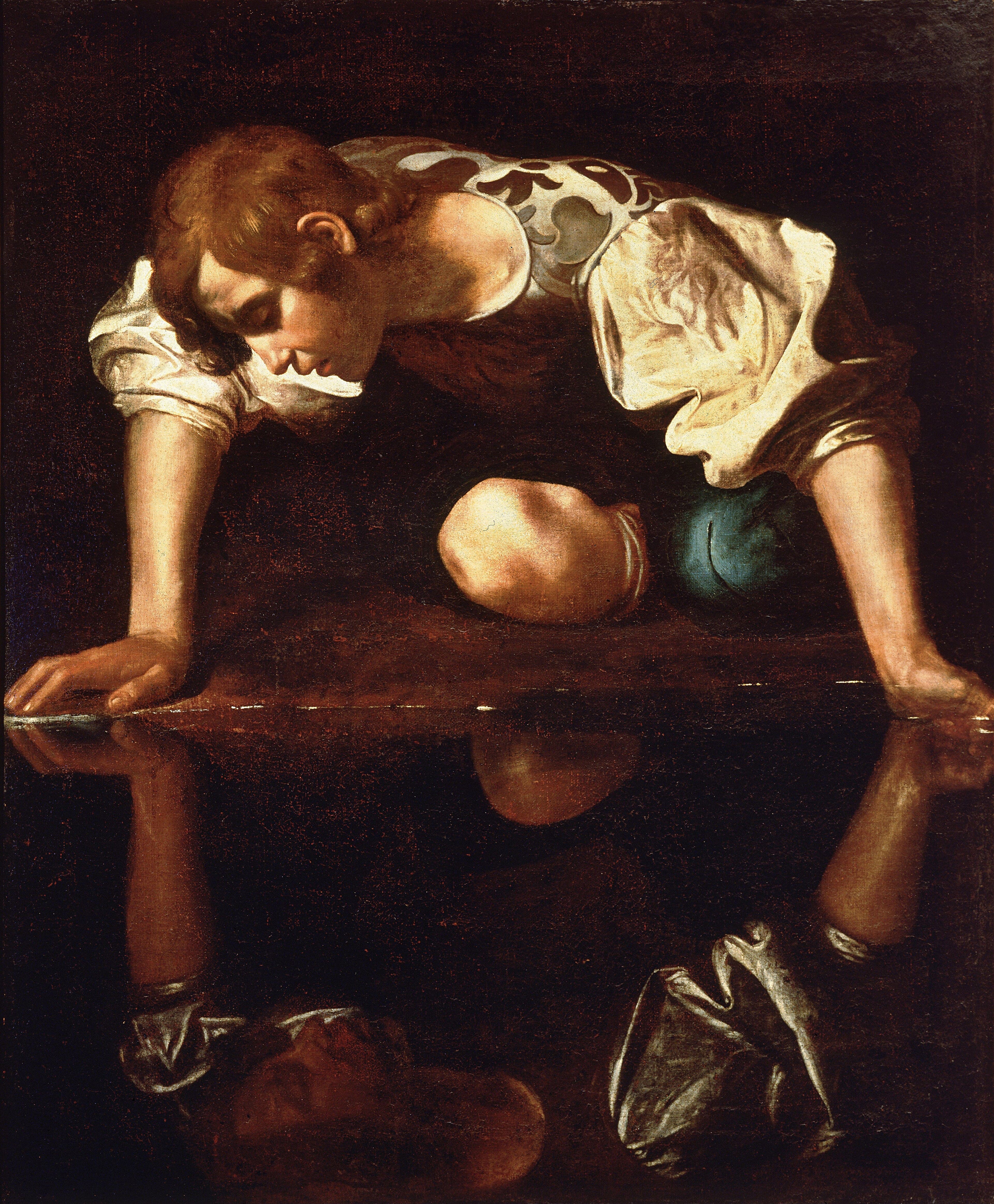
Narcissus
Caravaggio · c. 1597–99
Narcissus is a painting attributed to Caravaggio, c. 1597–99, in the Galleria Nazionale d'Arte Antica at Palazzo Barberini, Rome. A youth leans over a dark pool, locked in a loop with his own reflection.
10
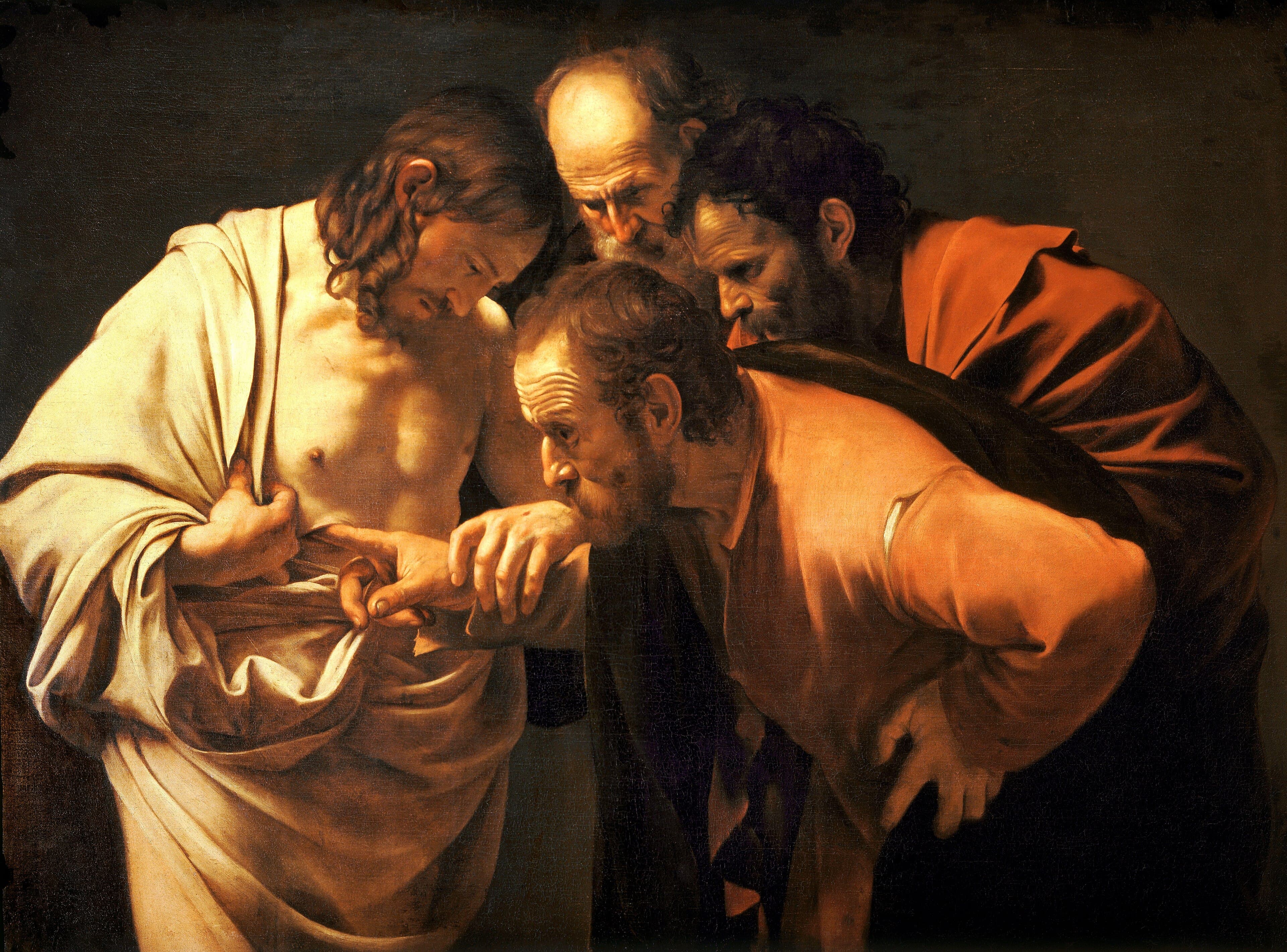
The Incredulity of Saint Thomas
Caravaggio · c. 1601–02
The Incredulity of Saint Thomas is a painting by Caravaggio, c. 1601–02, in the Picture Gallery at Sanssouci, Potsdam. Doubting Thomas pushes his finger into the wound in the risen Christ's side while two apostles lean in to watch.
11
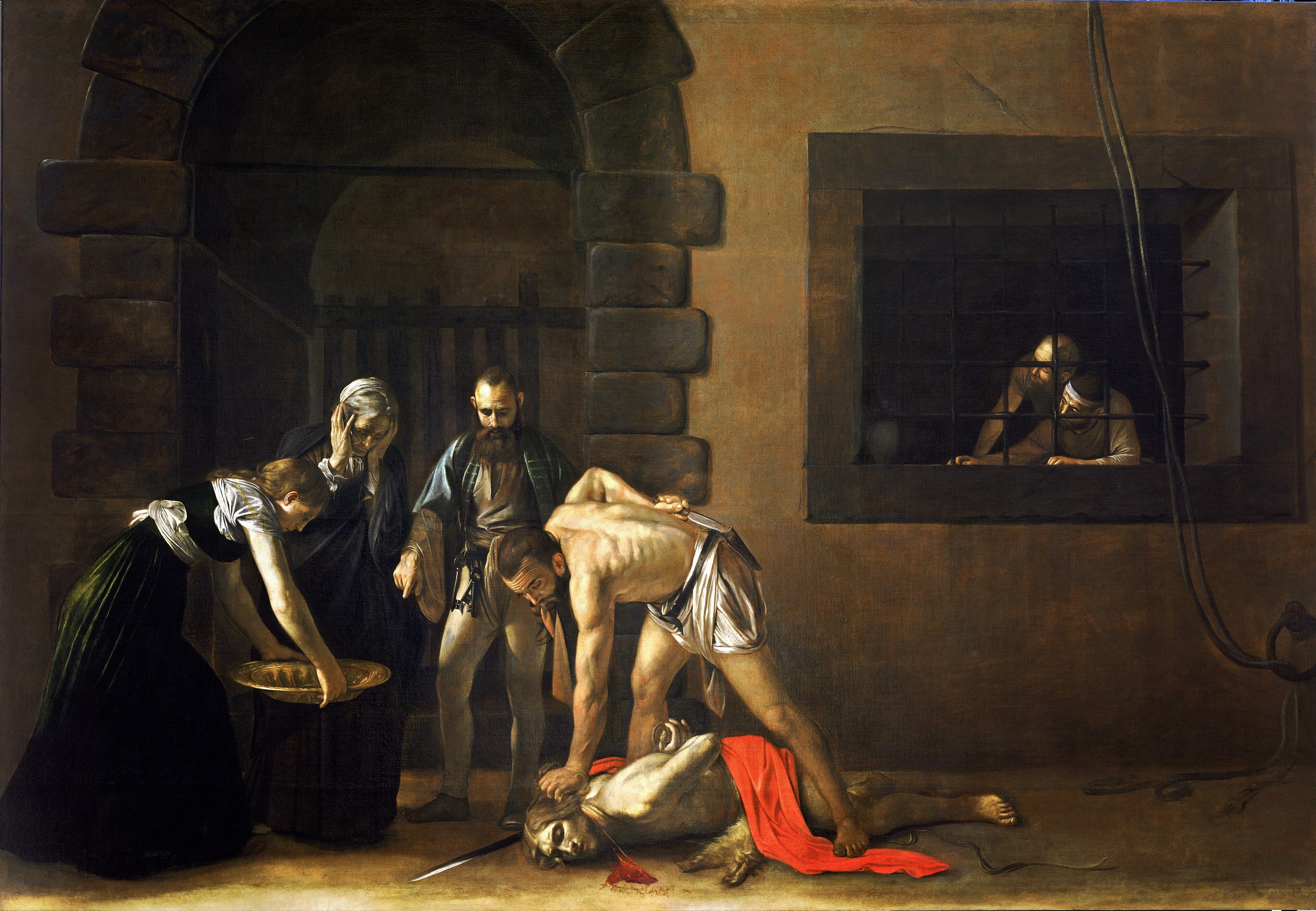
The Beheading of Saint John the Baptist
Caravaggio · 1608
The Beheading of Saint John the Baptist is Caravaggio's largest painting and the only one he signed, made in 1608 for the Oratory of St. John's Co-Cathedral in Valletta, Malta, where it still hangs.
12
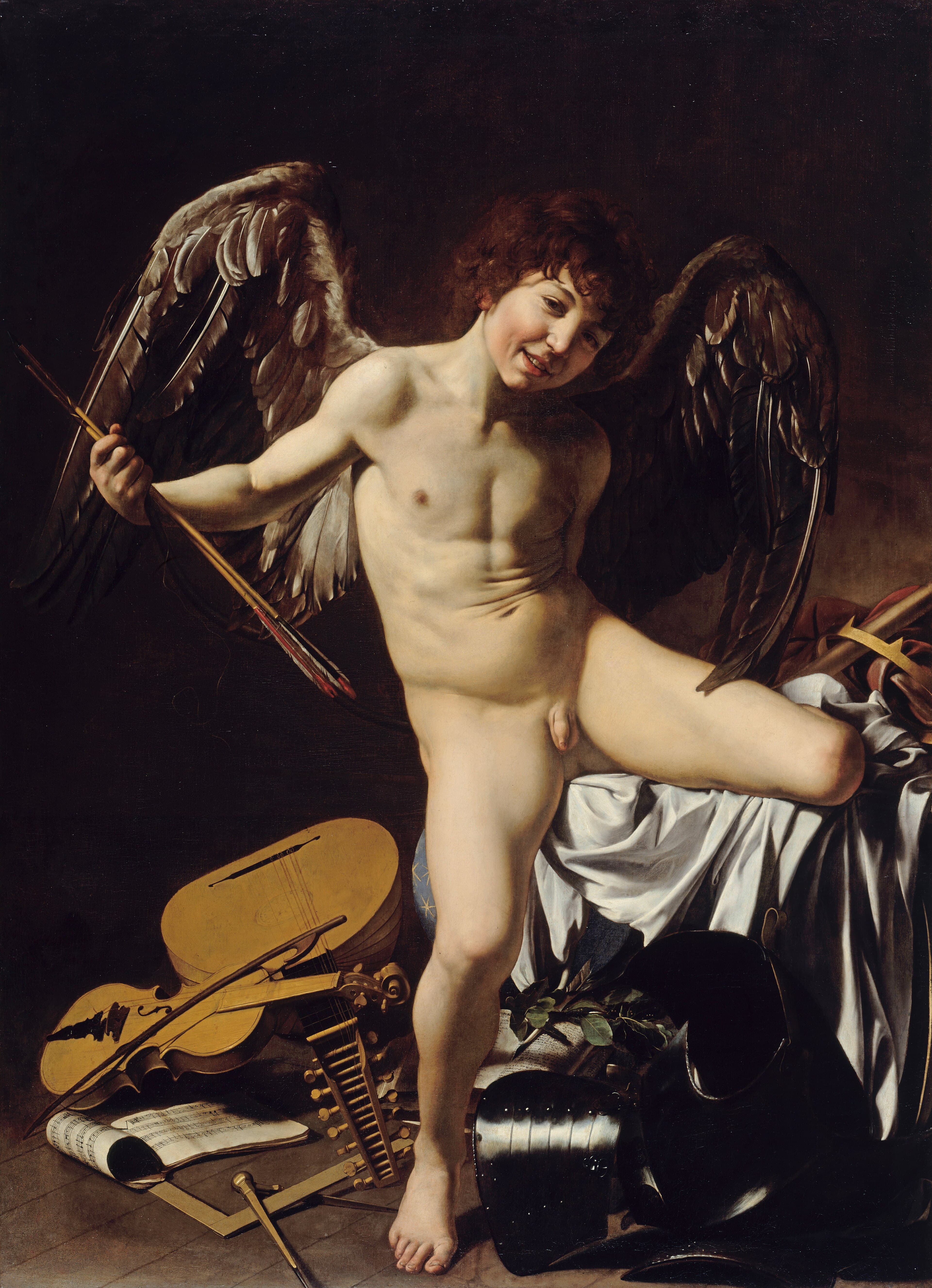
Amor Vincit Omnia
Caravaggio · 1601–02
Amor Vincit Omnia (Love Conquers All) is Caravaggio's painting of a grinning, naked Cupid trampling the symbols of human achievement, made in 1601–02 for Vincenzo Giustiniani and now in the Gemäldegalerie, Berlin.
13
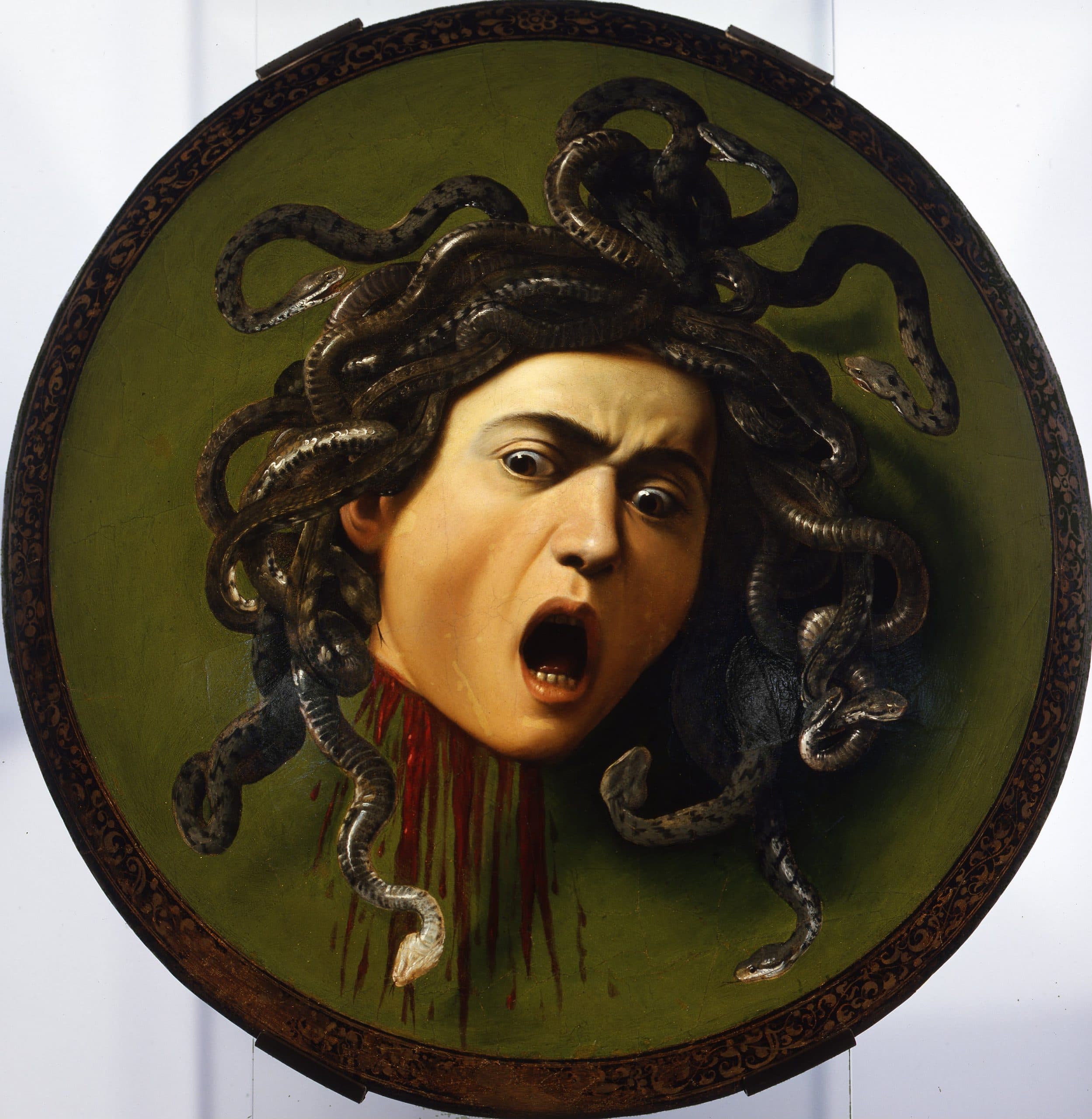
Medusa
Caravaggio · c. 1597–98
Medusa is Caravaggio's painting of the screaming severed head of the Gorgon on a round wooden parade shield, made around 1597–98 as a gift for the Medici Grand Duke Ferdinando I. It hangs in the Uffizi, Florence.
14
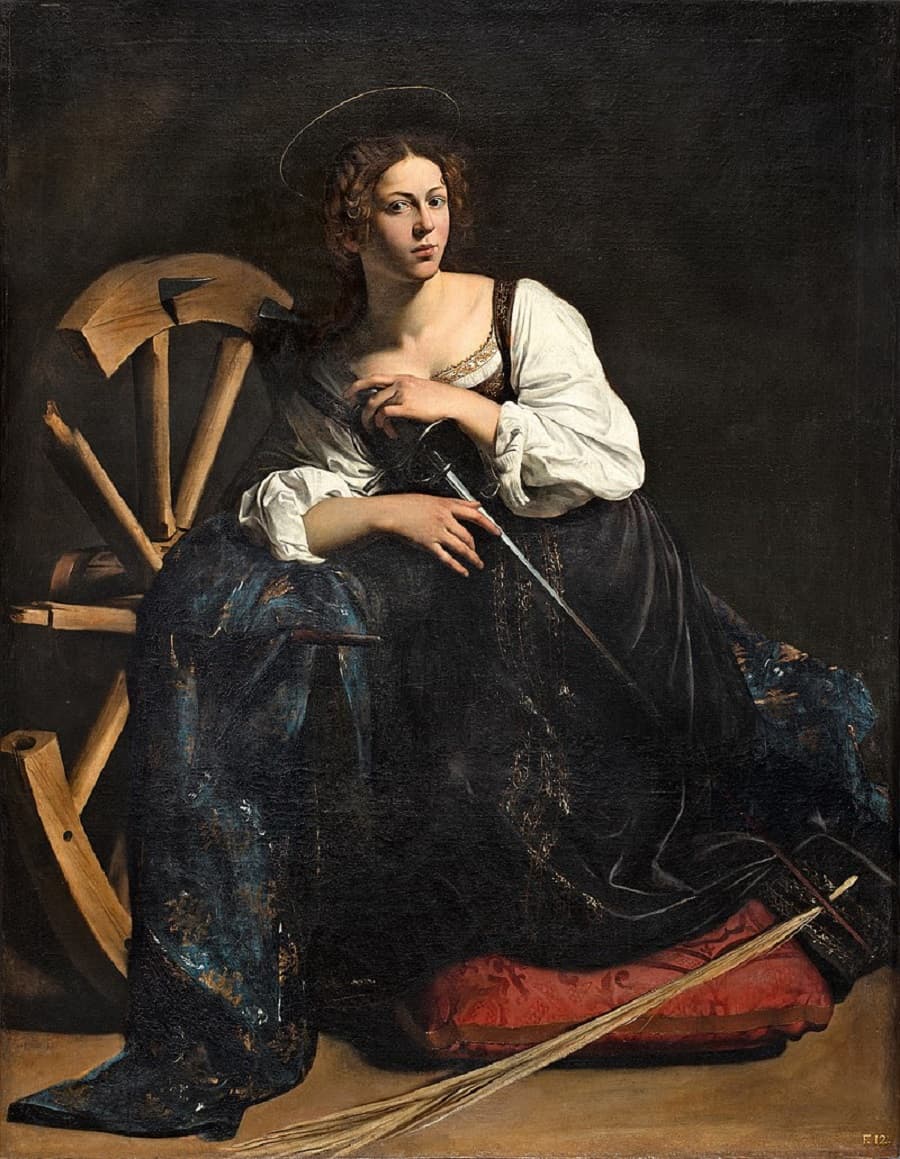
Saint Catherine of Alexandria
Caravaggio · c. 1598
Saint Catherine of Alexandria is a painting by Caravaggio, c. 1598, showing the virgin martyr kneeling beside the broken spiked wheel and the sword of her execution. Painted for Cardinal Francesco Maria del Monte, it is in the Museo Nacional Thyssen-Bornemisza, Madrid.
15
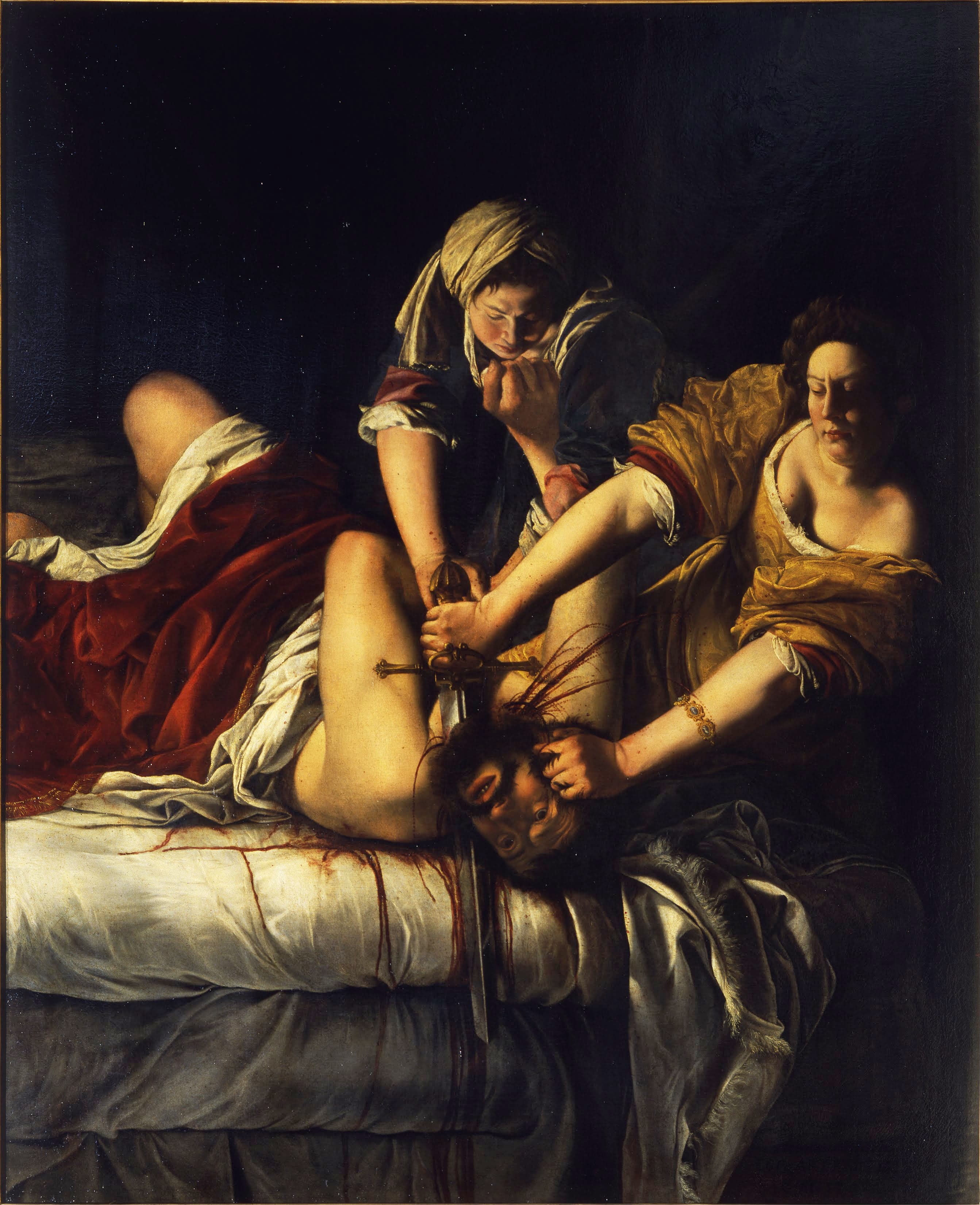
Judith Slaying Holofernes
Artemisia Gentileschi · c. 1620
Judith Beheading Holofernes (Judith Slaying Holofernes) is Artemisia Gentileschi's painting of about 1620, showing the biblical widow and her maid holding down the Assyrian general as Judith saws through his neck. This version is in the Uffizi, Florence; an earlier one is in Naples.
How to recognize a Caravaggio
Tenebrism. Caravaggio's figures emerge from deep, almost flat darkness, struck by a single raking light from high on one side. The technique, later called tenebrism, does more than add drama. It edits the scene: whatever the light touches matters, and everything else drops away.
Models from the street. He painted from life, using people he knew in Rome as saints, apostles and Madonnas. The same faces recur from picture to picture, and his contemporaries were scandalized by the dirty feet of pilgrims and the swollen body of a drowned woman used for the Virgin.
The decisive instant. Caravaggio chooses the split second when everything turns: Matthew pointing at himself in disbelief, the blade halfway through Holofernes's neck, the disciples at Emmaus starting up from their chairs. Hands and arms often break the picture plane toward the viewer.
Few drawings. No drawings by him are securely known. He seems to have composed directly on the canvas, scoring outlines into the wet ground with the end of his brush. Those incisions are visible in raking light and help experts with attribution.
The early Roman years (c. 1592–1599)
Caravaggio trained in Milan with Simone Peterzano and arrived in Rome around 1592. His first successes were small half-length pictures of boys, fruit and street life: the Boy with a Basket of Fruit, the Sick Bacchus (often read as a self-portrait), The Cardsharps and The Fortune Teller. Their sharp still-life detail, down to wormholes in leaves, impressed his first major patron, Cardinal Francesco Maria del Monte.
In del Monte's circle he painted Medusa, the severed head of the Gorgon on a convex wooden shield, mouth still open in a scream; the version in the Uffizi was sent as a diplomatic gift to Ferdinando I de' Medici. From the same years comes Saint Catherine of Alexandria (c. 1598, Museo Nacional Thyssen-Bornemisza, Madrid), in which the saint kneels beside her broken spiked wheel, a sword across her lap. The model is thought to be Fillide Melandroni, who also sat for other Caravaggio heroines.
Public fame: San Luigi dei Francesi and the great altarpieces (1599–1606)
In 1599 Caravaggio received his first public commission, the side paintings for the Contarelli Chapel in San Luigi dei Francesi in Rome. The Calling of Saint Matthew and The Martyrdom of Saint Matthew made him famous overnight. In the Calling, a shaft of light enters above Christ's outstretched hand, which echoes Michelangelo's Adam on the Sistine Chapel ceiling, and falls across a table of tax collectors in contemporary clothes. The pictures are still in the chapel, where they can be seen for a coin in the light box.
A run of masterpieces followed: The Conversion of Saint Paul and The Crucifixion of Saint Peter for the Cerasi Chapel in Santa Maria del Popolo; The Supper at Emmaus (1601, National Gallery, London); The Entombment of Christ (1603–04, Vatican Pinacoteca); and the Madonna of Loreto in Sant'Agostino. Judith Beheading Holofernes (c. 1599, Palazzo Barberini, Rome) shows the act at its most clinical, with the young widow pulling away from the spurting neck even as she saws.
Several altarpieces were rejected by the clergy who commissioned them. The Death of the Virgin (1606, Louvre) was refused because the Virgin, bare-legged and bloated, was rumored to have been modeled on a drowned prostitute. Collectors bought the rejected works immediately, which says much about the gap between official taste and the connoisseurs who championed him.
Exile: Naples, Malta, Sicily (1606–1610)
Caravaggio's police record in Rome includes assaults, insults and the carrying of illegal weapons. In May 1606 he killed Ranuccio Tomassoni in a brawl and fled Rome under a death sentence. The paintings of his last four years are darker, emptier and quicker in execution.
In Naples he painted The Seven Works of Mercy for the Pio Monte della Misericordia, where it still hangs. In Malta, briefly made a Knight of Saint John, he painted The Beheading of Saint John the Baptist (1608) for the co-cathedral in Valletta; it is his largest work and the only one he signed, his name traced in the red of the Baptist's blood. After another violent quarrel he was imprisoned, escaped and moved through Sicily, leaving altarpieces in Syracuse and Messina.
His last years produced David with the Head of Goliath (Galleria Borghese, Rome), in which the severed head is generally accepted as a self-portrait, possibly sent as a plea for a papal pardon. He died at Porto Ercole in July 1610, aged 38, while traveling back toward Rome to receive it.
The Caravaggisti and his legacy
Within a decade of his death, painters across Europe were imitating him. Orazio Gentileschi and his daughter Artemisia, whose Judith Slaying Holofernes answers Caravaggio's version with a far more physical struggle, carried his style in Italy. The Utrecht Caravaggisti took it north, and through them his light reached the young Rembrandt. Ribera in Naples, Zurbarán and the young Velázquez in Spain, and Georges de La Tour in France all owe him a debt.
His reputation then sank for two centuries, and he was dismissed as a vulgar naturalist. The rehabilitation came only in the twentieth century, above all through Roberto Longhi's 1951 exhibition in Milan. Today he is seen as the founder of Baroque painting's realist strand, and his tightly lit, close-cropped scenes have influenced filmmakers as much as painters.
Where to see Caravaggio paintings
Rome holds the largest concentration, much of it free to see in the churches it was painted for: San Luigi dei Francesi, Santa Maria del Popolo and Sant'Agostino. The Galleria Borghese owns six paintings, including the Sick Bacchus, Boy with a Basket of Fruit and David with the Head of Goliath. The Uffizi in Florence has the Medusa and the Bacchus; the Vatican, the Entombment. Outside Italy, look for the National Gallery in London, the Louvre, the Metropolitan Museum in New York, the Thyssen-Bornemisza in Madrid, and the co-cathedral of Saint John in Valletta. Church altarpieces can be hard to see in dim chapels, so go in the morning and bring coins for the lights.
Questions & answers
What is Caravaggio's most famous painting?
The Calling of Saint Matthew (1599–1600), in the Contarelli Chapel of San Luigi dei Francesi in Rome, is usually considered his most famous work. Judith Beheading Holofernes, The Supper at Emmaus, Medusa and David with the Head of Goliath are close rivals.
How many paintings did Caravaggio make?
Somewhere between about 60 and 80 paintings are generally accepted as his, depending on the scholar. He worked for under twenty years, painted directly on canvas without surviving drawings, and several attributions remain disputed, so no fixed number exists.
What style did Caravaggio paint in?
Caravaggio was an early Baroque painter. His style is defined by tenebrism, strong light against deep shadow, and by naturalism: he painted ordinary people from life as saints and biblical figures, choosing the most dramatic instant of each story.
Where can I see Caravaggio paintings in Rome?
Three churches hold Caravaggios in their original settings: San Luigi dei Francesi (the Saint Matthew cycle), Santa Maria del Popolo (Saint Paul and Saint Peter) and Sant'Agostino (Madonna of Loreto). The Galleria Borghese, Palazzo Barberini, the Capitoline and the Vatican Pinacoteca hold more.
Why did Caravaggio flee Rome?
In May 1606 Caravaggio killed Ranuccio Tomassoni during a fight in Rome and was sentenced to death. He fled to Naples, then Malta and Sicily, and died in 1610 at Porto Ercole while trying to return to Rome for a papal pardon.