Image: Musée Marmottan Monet; reproduction via Wikimedia Commons · Public domain · via Wikimedia Commons
Walk near Argenteuil
Claude Monet, 1875
Walk near Argenteuil (En promenade près d'Argenteuil) is an 1875 painting by Claude Monet of Camille, Jean and a companion walking through a windy flowering meadow. It is in the Musée Marmottan Monet, Paris.
- Artist
- Claude Monet
- Date
- 1875
- Medium
- Oil on canvas
- Dimensions
- 61 × 81.4 cm
- Collection
- Musée Marmottan Monet, Paris, France
- Movement
- Impressionism
- Catalogue
- Wildenstein 379a
- Nature & Landscape
- Women in Art
En promenade près d'Argenteuil (Walk near Argenteuil) is a summer landscape by Claude Monet in which three small figures, his wife Camille, their son Jean and an unidentified man, walk through a meadow full of wildflowers outside Argenteuil. Painted in 1875 and catalogued by Wildenstein as no. 379a, it was given to the Musée Marmottan Monet in Paris by Nelly Sergeant-Duhem in 1985.
What you're looking at
A wide field fills the lower two-thirds of the canvas, thick with tall grasses and flowers: dabs of red and coral poppies at the left, cornflower blue and violet scattered everywhere, and touches of yellow and white. A path seems to run diagonally through the grasses from the lower left toward the center.
On it walk two adults. The man, on the left, wears a gray suit and a light hat and holds a dark green parasol; next to him Camille, in a long white dress and a white hat with a pink ribbon, also shelters under a dark green parasol, her skirt blown out sideways by the wind. Further right and a little behind, Jean, in a straw hat and dark clothes, is half-submerged in the grass. A tall tree with blue-green and silver foliage fills the right side of the picture, its leaves flickering. Behind, a low line of dark trees marks the horizon, and the sky above is crowded with white and gray clouds broken by patches of blue. The signature is at lower right.
Where and when it was painted
In the summers at Argenteuil, Monet often walked out with Camille and Jean into the fields around the town and painted them there. The Marmottan's notice describes how the intimate scenes of mother and child gave way to broader compositions like this one, in which the figures are reduced to accents in the landscape. The same year he painted Woman with a Parasol, where Camille and Jean are seen close up against the sky, and two years earlier Poppy Field, whose descending figures are the best-known image of these walks. See Monet at Argenteuil.
How it was painted
The museum singles out the work's typical Impressionist traits: a study made on the spot, forms with soft edges, a light palette and touches of pure color. The flowers are laid in as separate dabs of unmixed red, blue and yellow; the figures are only a few strokes each, the faces left unmodeled. The open parasols and Camille's wind-filled skirt carry the sense of a gusty day, and the tree's foliage at right is painted in quick, broken touches that seem to move.
How it compares
Set beside Poppy Field (1873, Musée d'Orsay), the composition is similar, with figures wading through a flowering field under a cloudy sky, but here the figures walk across the field rather than down a slope toward us, and the tree on the right gives the picture a firmer frame. Compared with the bold silhouette of Woman with a Parasol, Camille here is one element of the landscape among many. The unidentified man has sometimes been taken for a family friend; the museum leaves him unnamed.
Figures in the landscape
In the 1860s Monet had wanted to make his name with large figure paintings, such as the life-size Luncheon on the Grass and Women in the Garden. At Argenteuil the balance shifted. His family still appears constantly, but more and more as part of the scenery, carried along by wind and light. Walk near Argenteuil is a clear example: the figures give the meadow scale and movement, but the real subject is the field of flowers and the weather over it.
Where to see it
The painting is in the Musée Marmottan Monet, in Paris's 16th arrondissement, which holds the world's largest collection of Monet's work, largely from the bequest of his son Michel. This canvas came separately, as a gift from Nelly Sergeant-Duhem in 1985 (inventory 5332). See the Musée Marmottan Monet for other works there, including the museum's Argenteuil pictures.
Questions & answers
Where is Walk near Argenteuil?
It is in the Musée Marmottan Monet in Paris (inventory 5332). It was given to the museum in 1985 by Nelly Sergeant-Duhem.
Who are the people in Monet's Walk near Argenteuil?
The woman in white is Monet's wife Camille and the child in the straw hat is their son Jean. The man with the parasol has not been identified.
When was it painted?
Monet painted it in 1875 in the countryside around Argenteuil, northwest of Paris, where he lived from 1871 to 1878.
What does Walk near Argenteuil show?
It shows a windy summer meadow full of poppies, cornflowers and grasses, with Camille in white and a man under dark green parasols, Jean half-hidden in the grass, a large tree at right and a cloudy sky.
More by the artist
Claude Monet
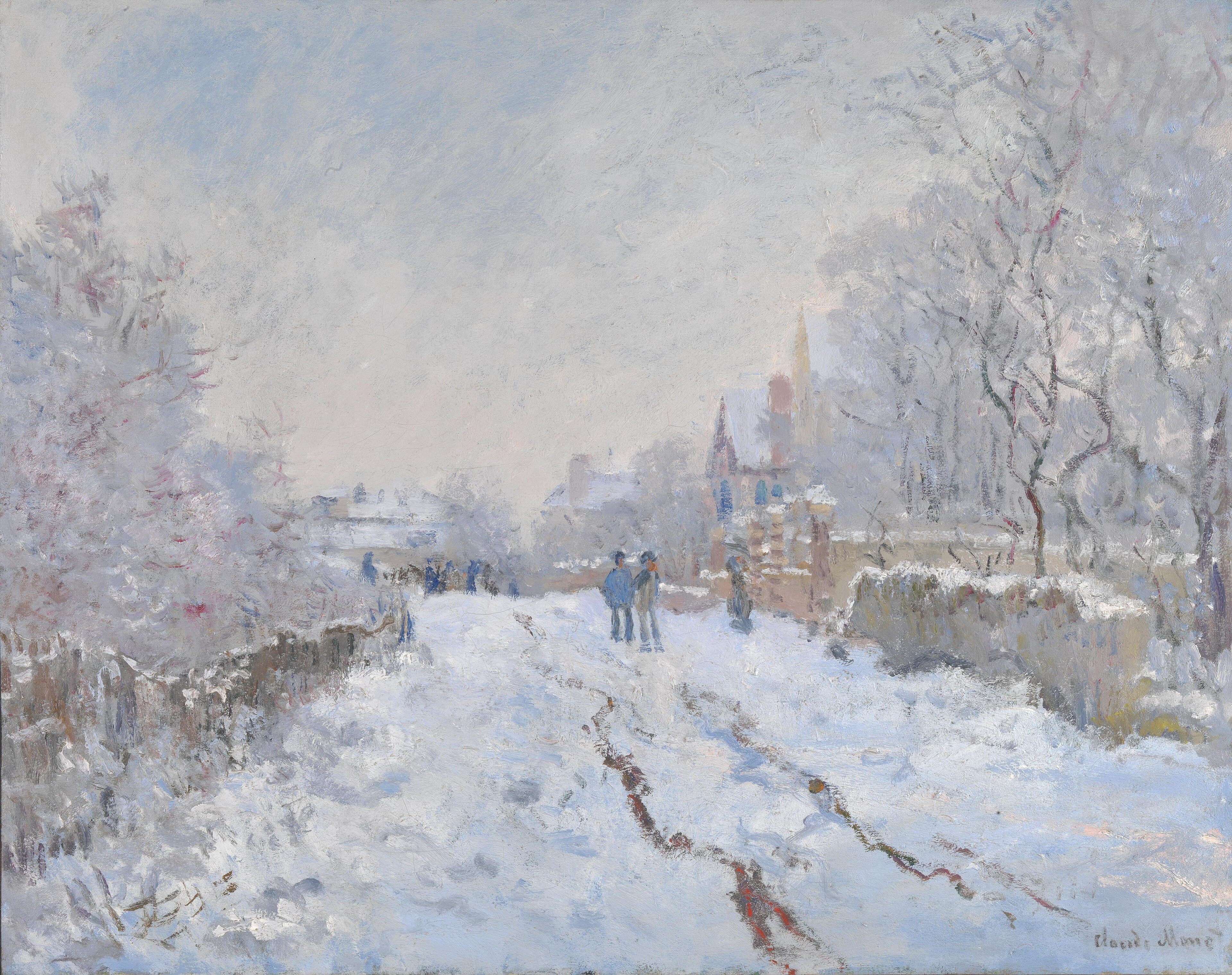
Snow Scene at Argenteuil
Claude Monet · 1875
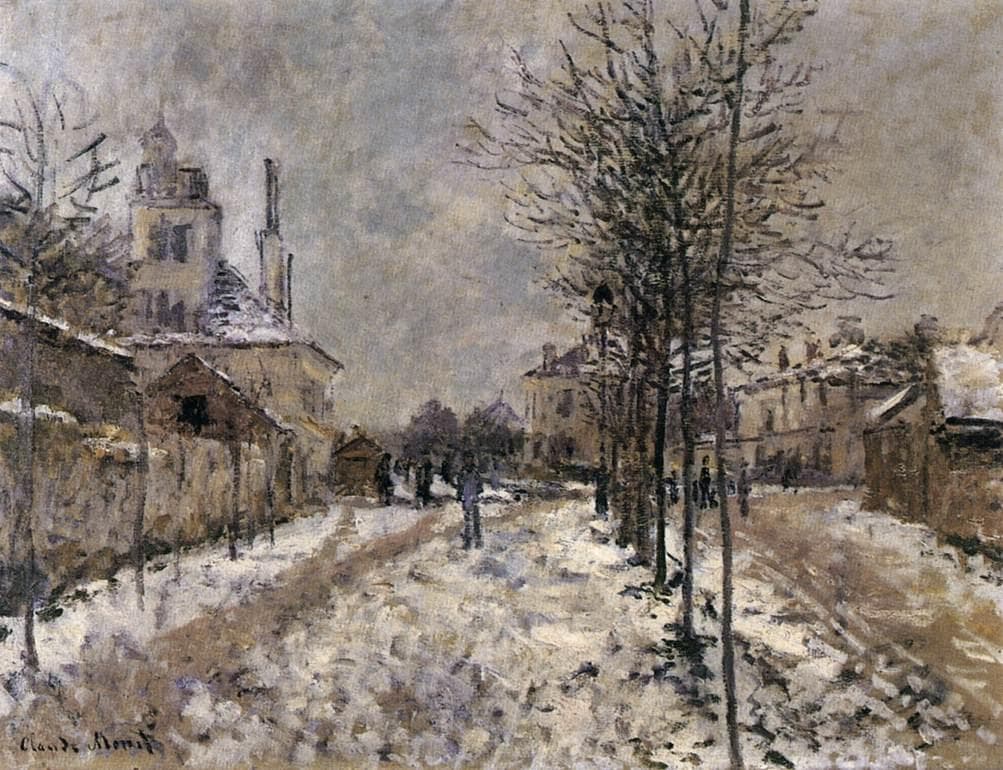
The Boulevard de Pontoise in Argenteuil under Snow
Claude Monet · 1875
Bords de la Seine à Argenteuil
Claude Monet · 1870s (inscribed 1875 on the frame)
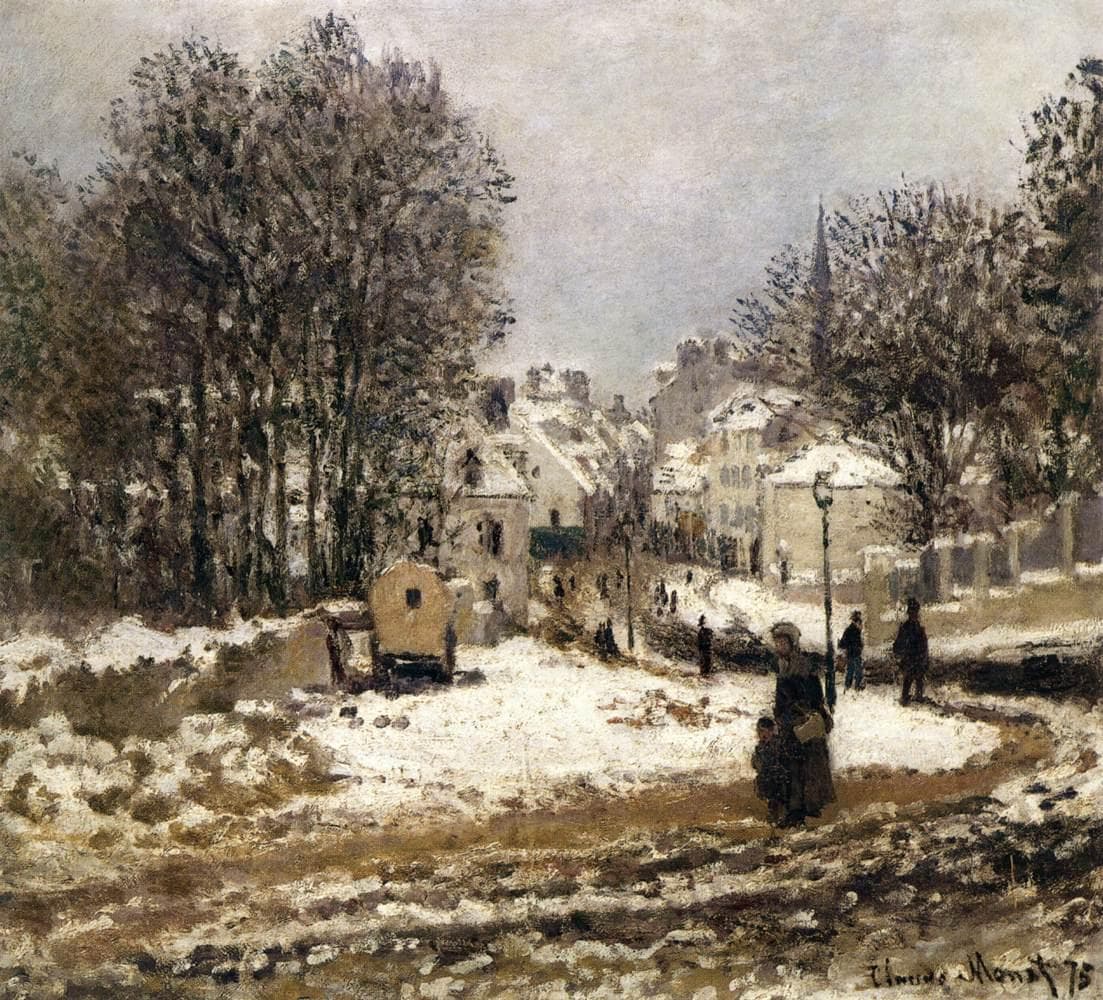
Entrance to the Grande Rue at Argenteuil, Winter
Claude Monet · 1875
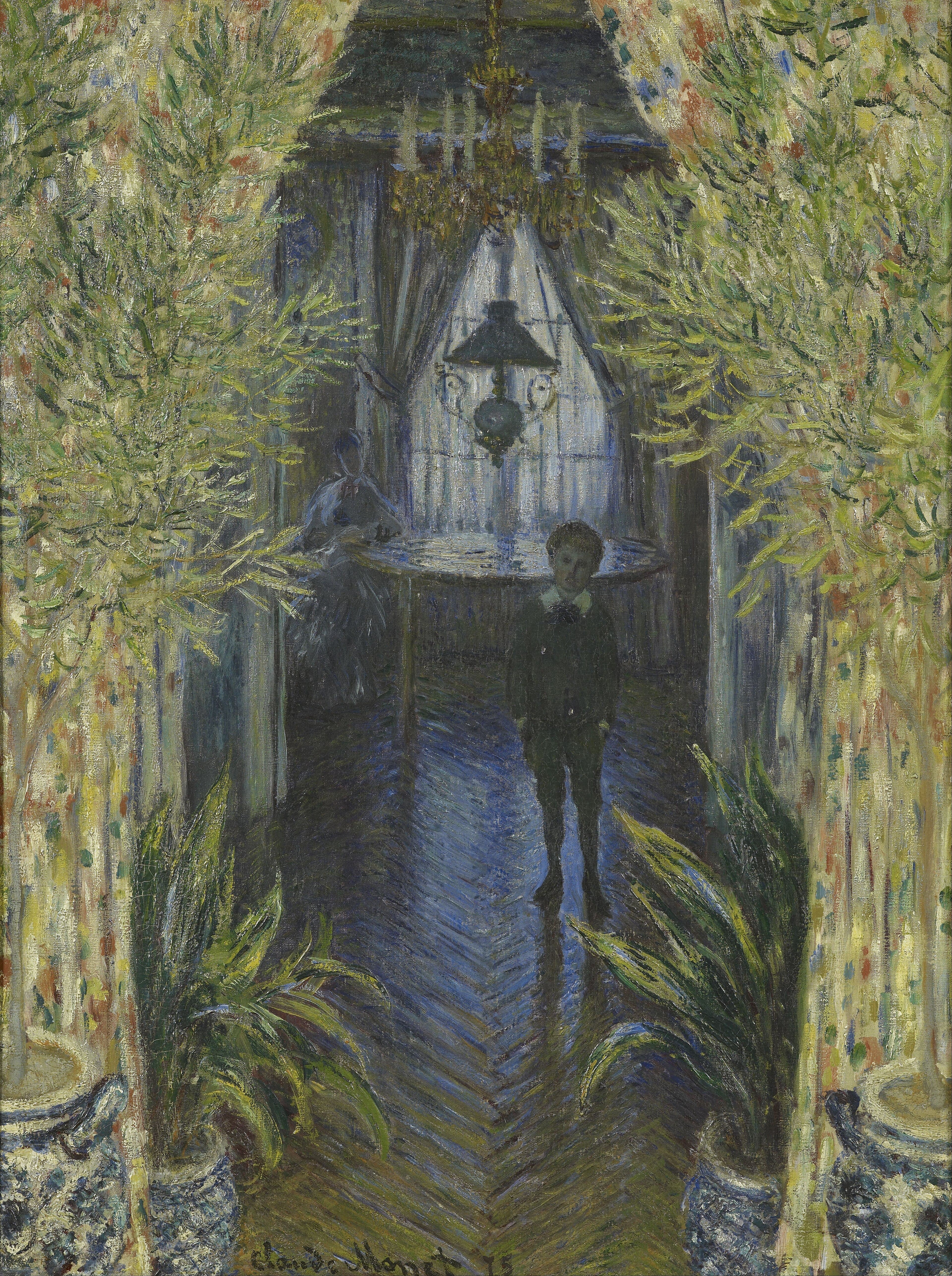
A Corner of the Apartment
Claude Monet · 1875
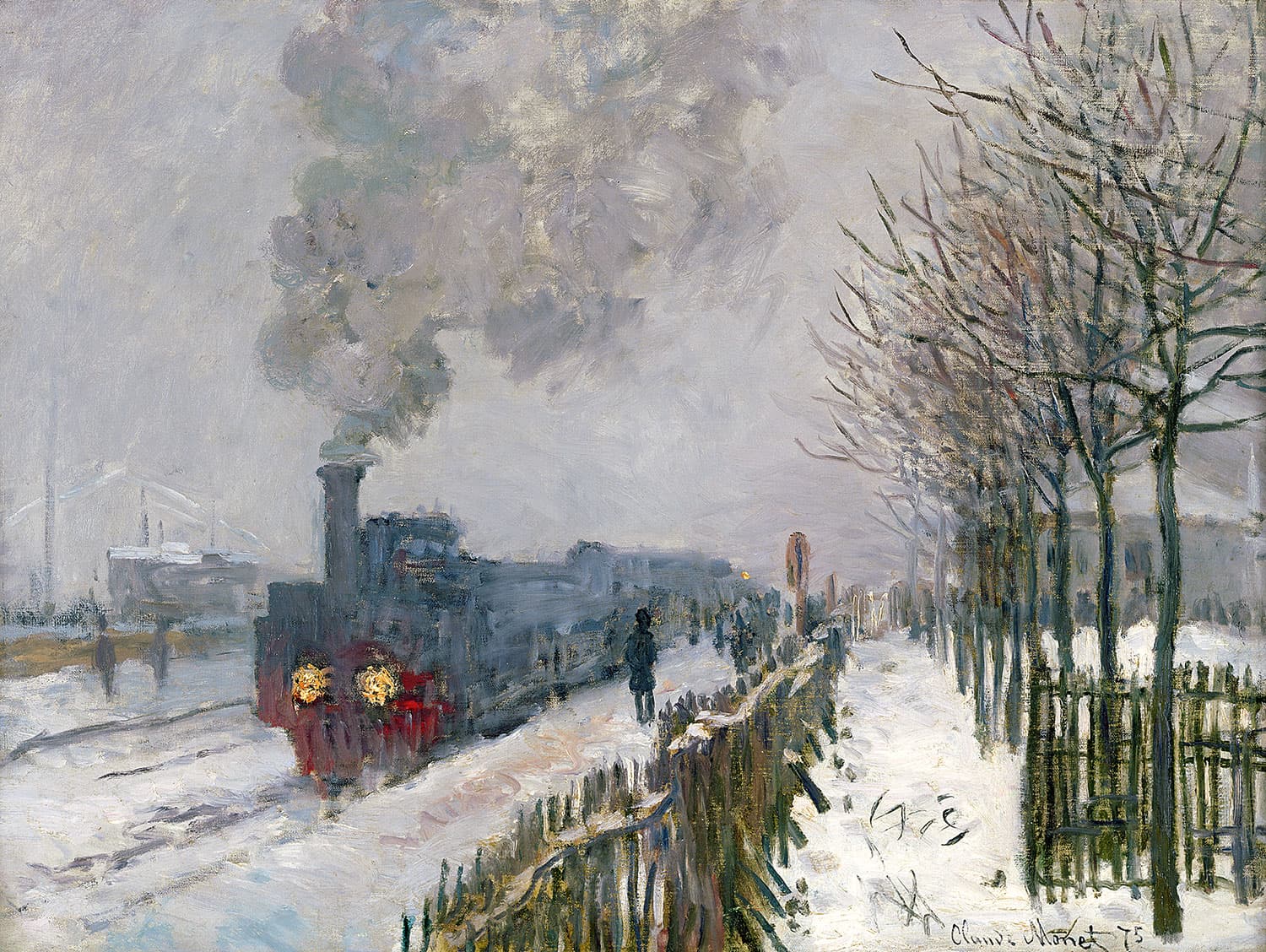
Train in the Snow (The Locomotive)
Claude Monet · 1875
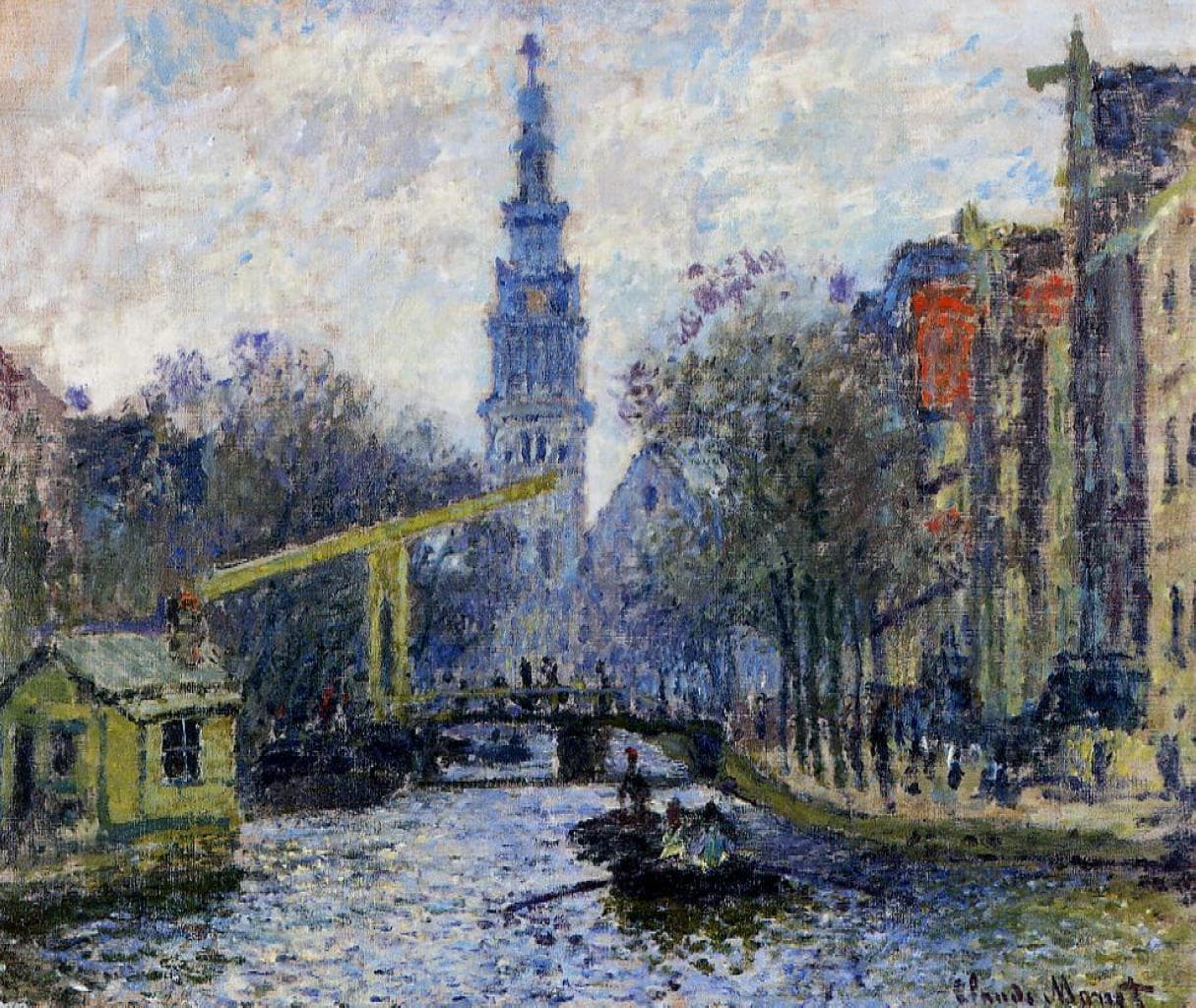
Canal in Amsterdam
Claude Monet · 1874
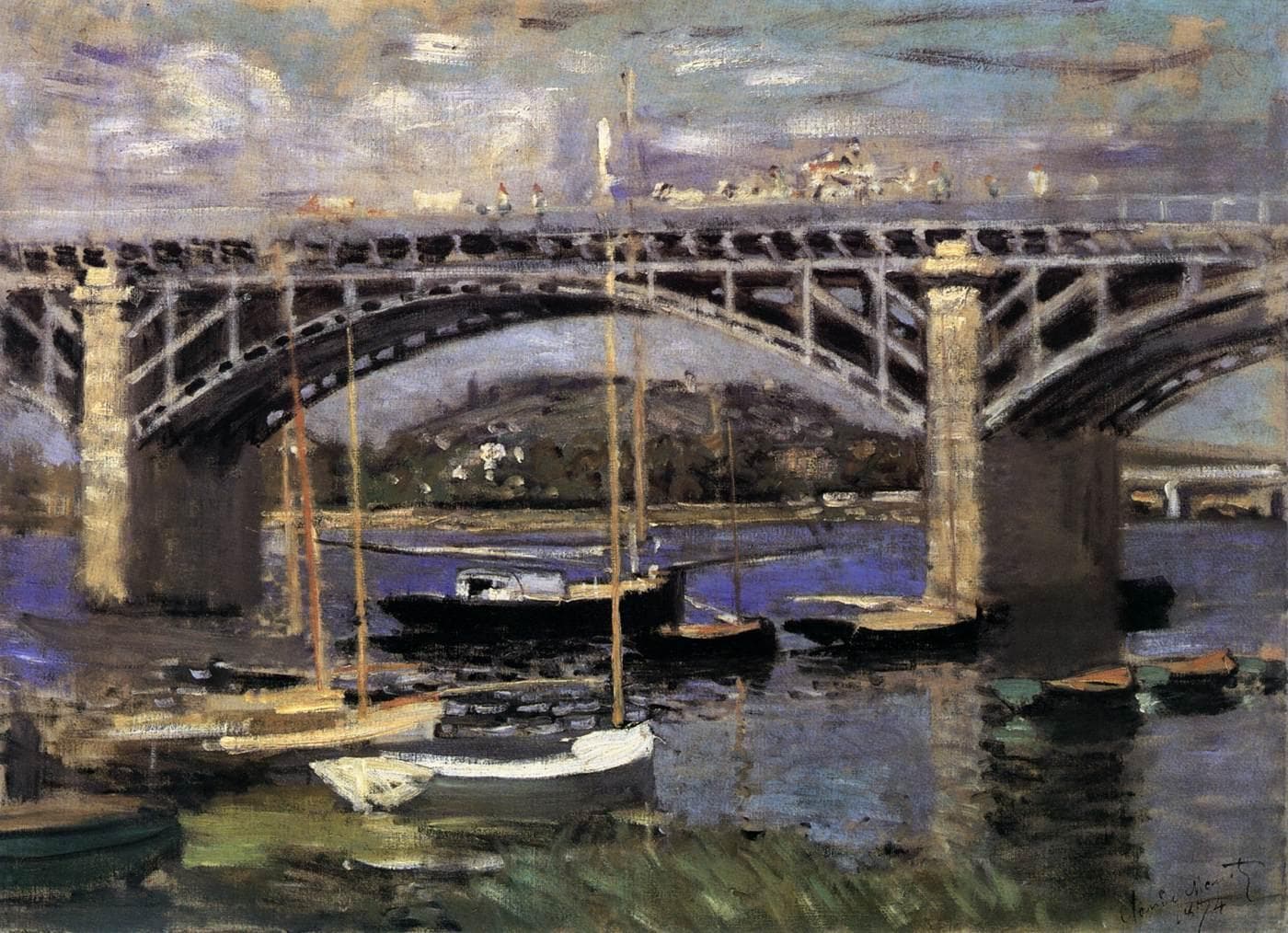
The Bridge at Argenteuil
Claude Monet · 1874
Also painted in 1875
The same year

Woman with a Parasol – Madame Monet and Her Son
Claude Monet · 1875
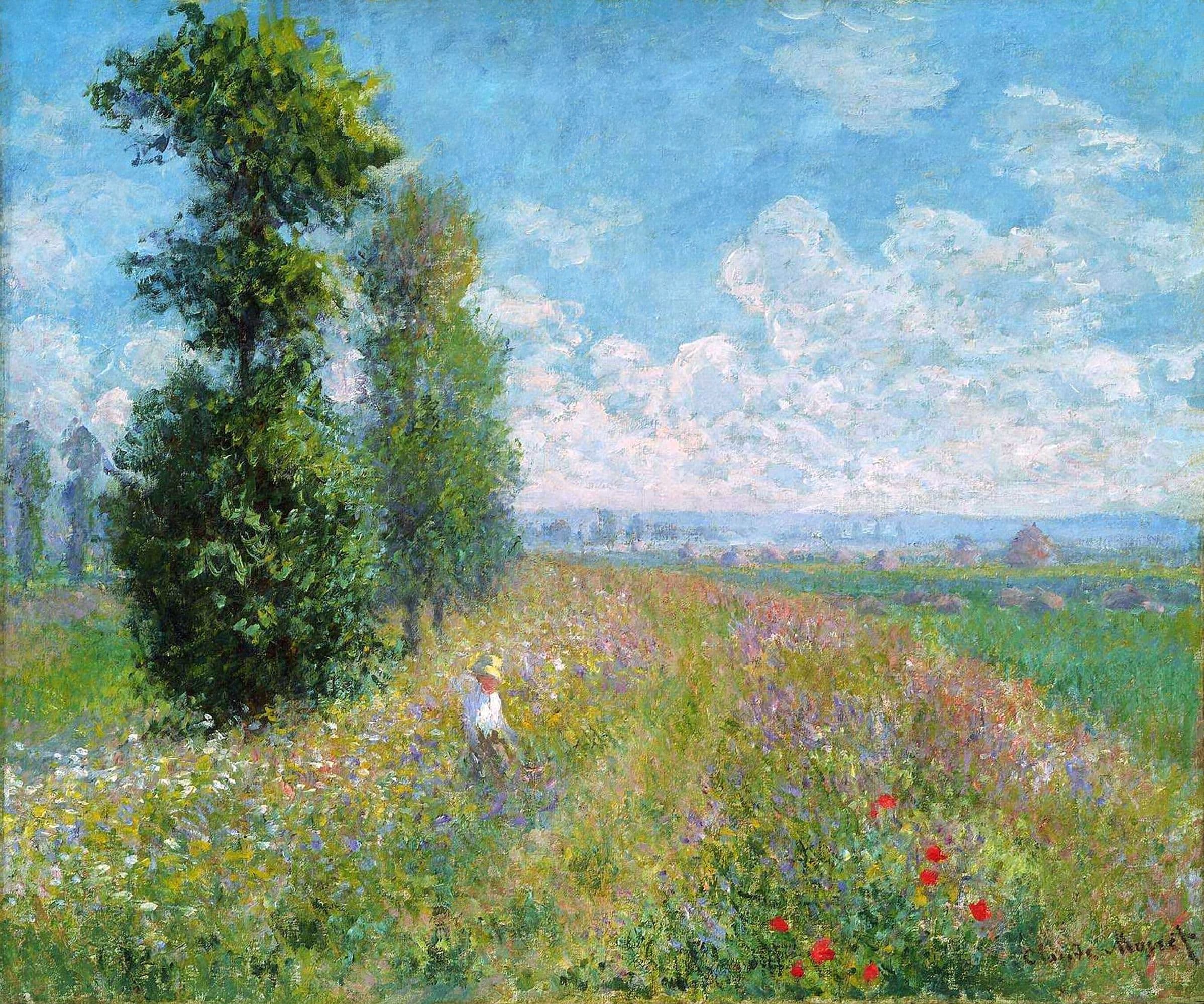
Meadow with Poplars
Claude Monet · c. 1875
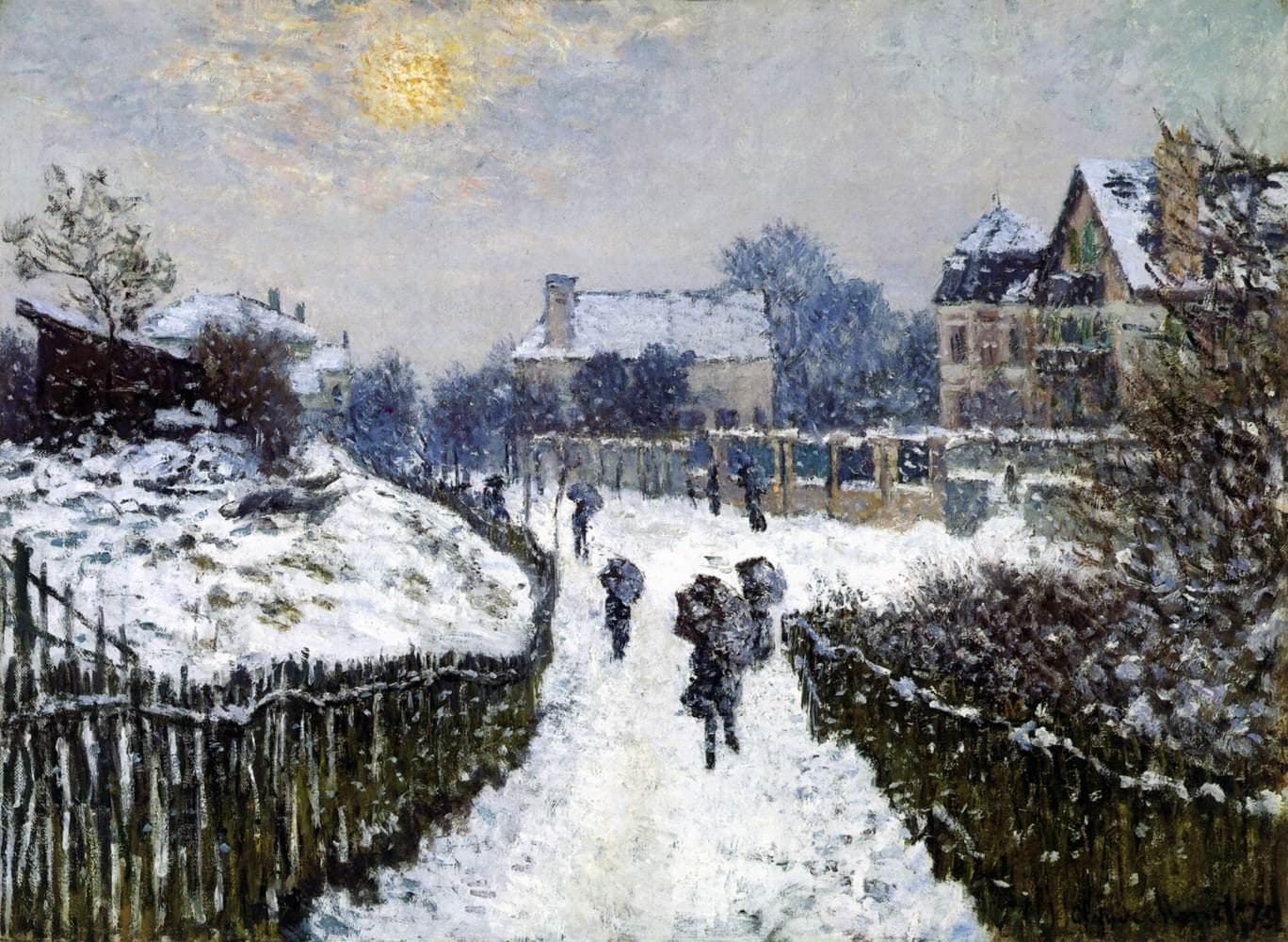
Boulevard Saint-Denis, Argenteuil, in Winter
Claude Monet · 1875
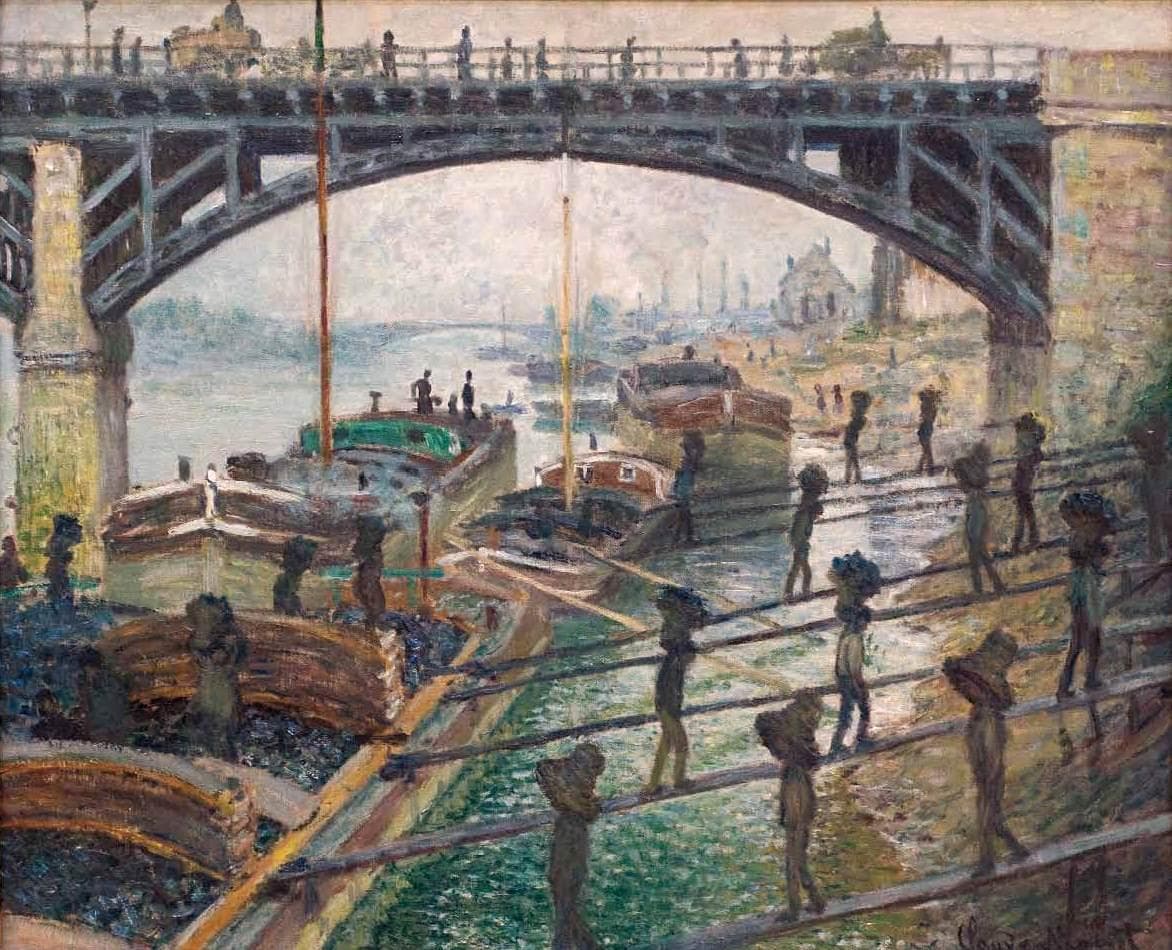
The Coal Workers
Claude Monet · c. 1875
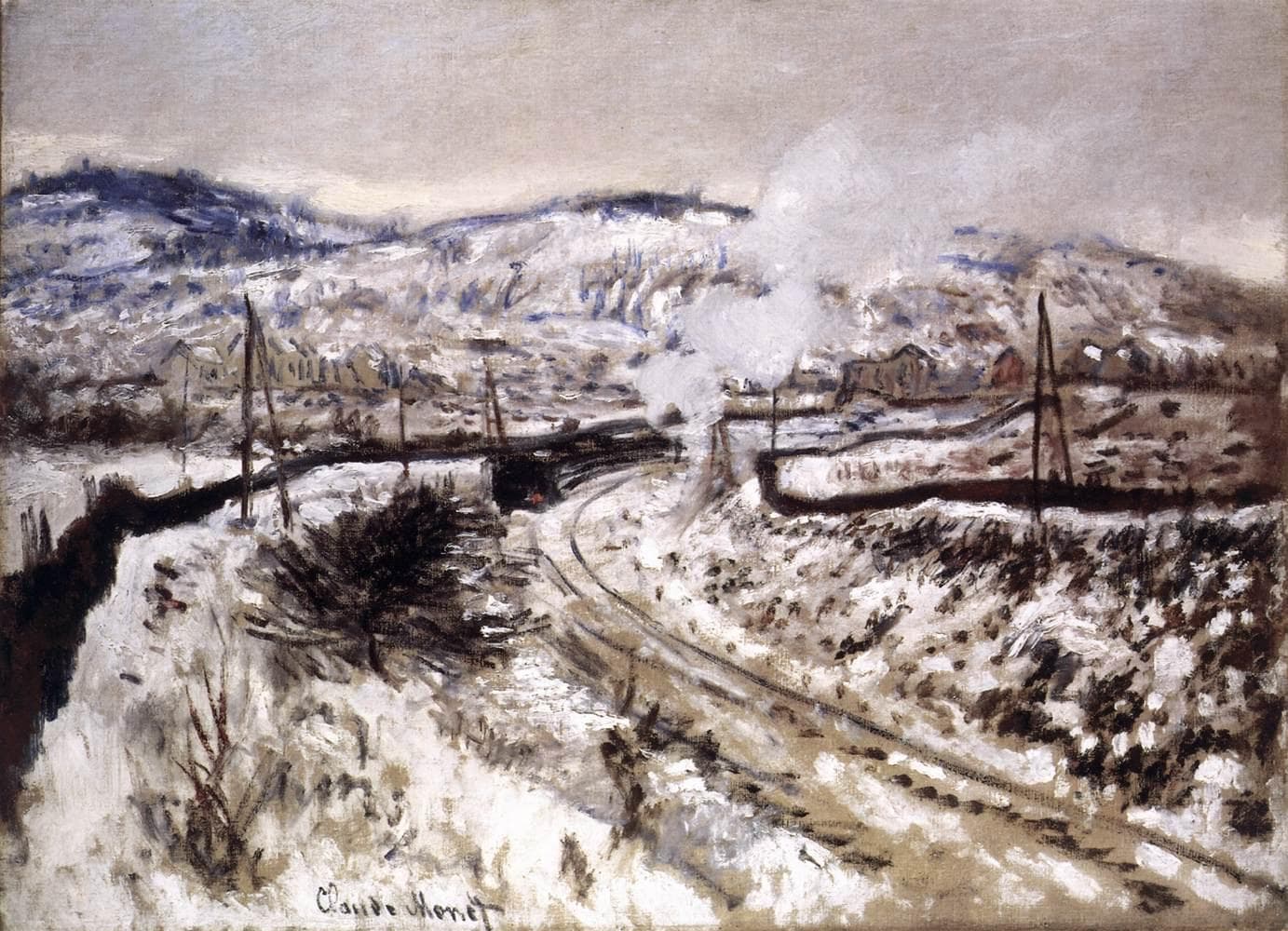
Train in the Snow at Argenteuil
Claude Monet · 1875
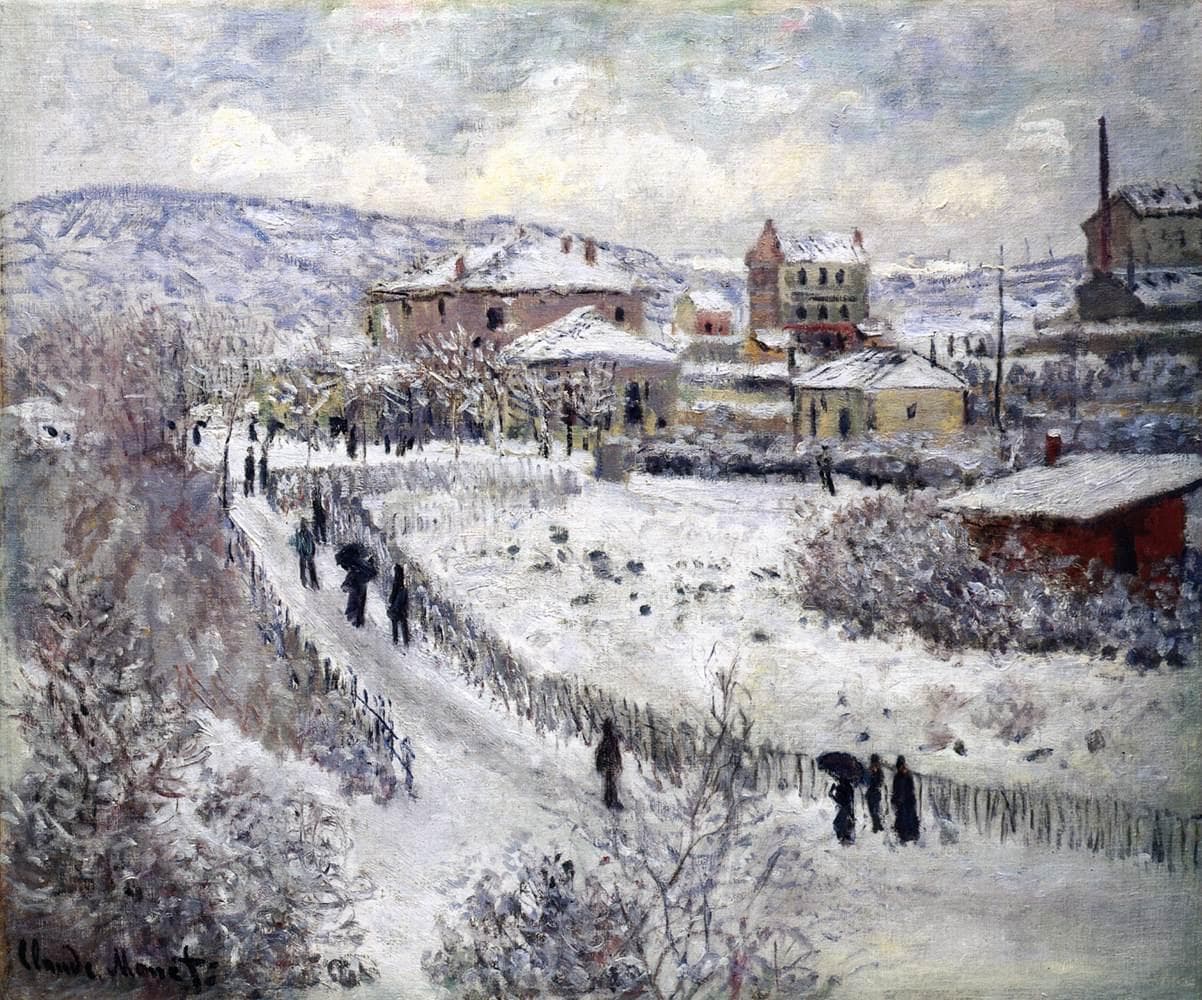
View of Argenteuil in the Snow
Claude Monet · 1874–75
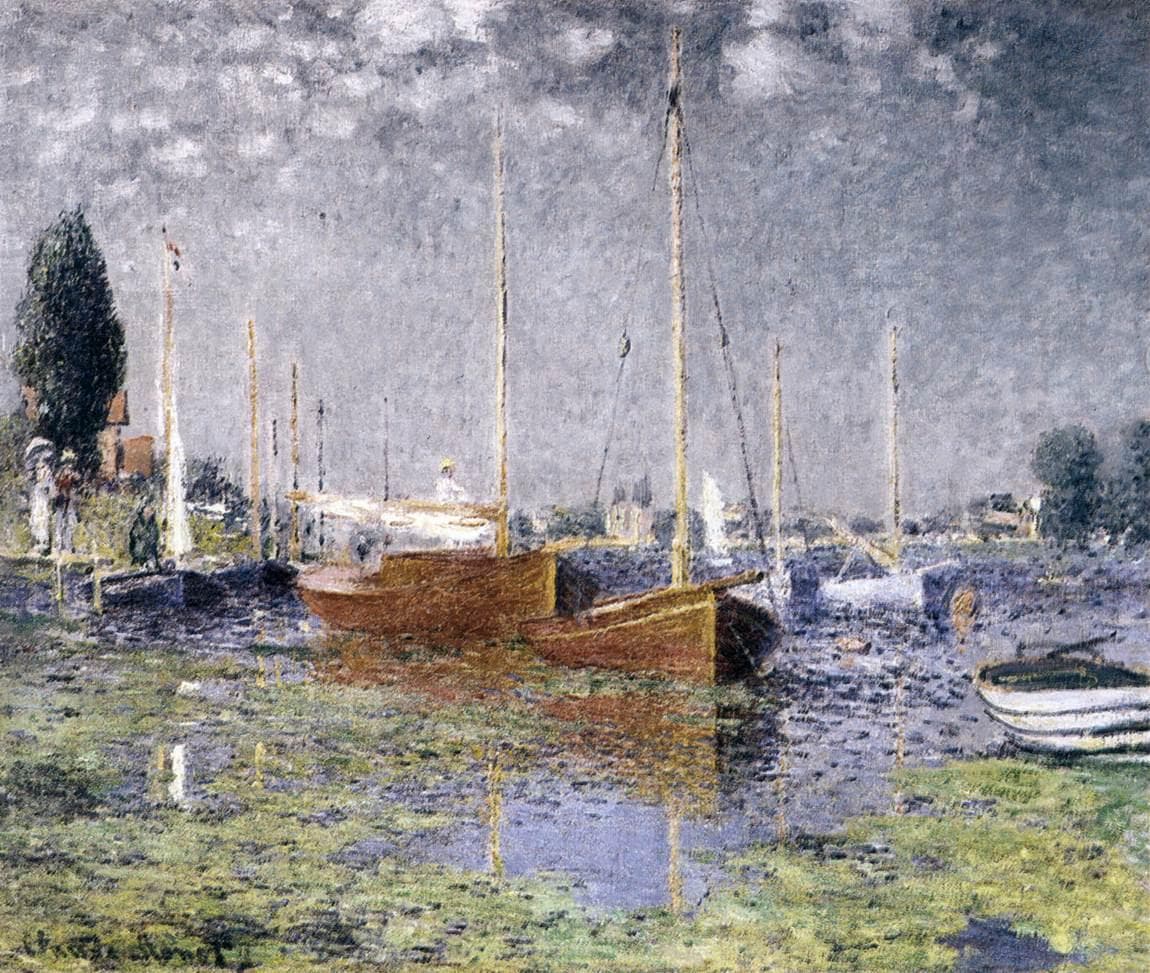
Red Boats at Argenteuil
Claude Monet · 1875
Kindred works
You may also study
Woman with a Parasol – Madame Monet and Her Son
Claude Monet · 1875
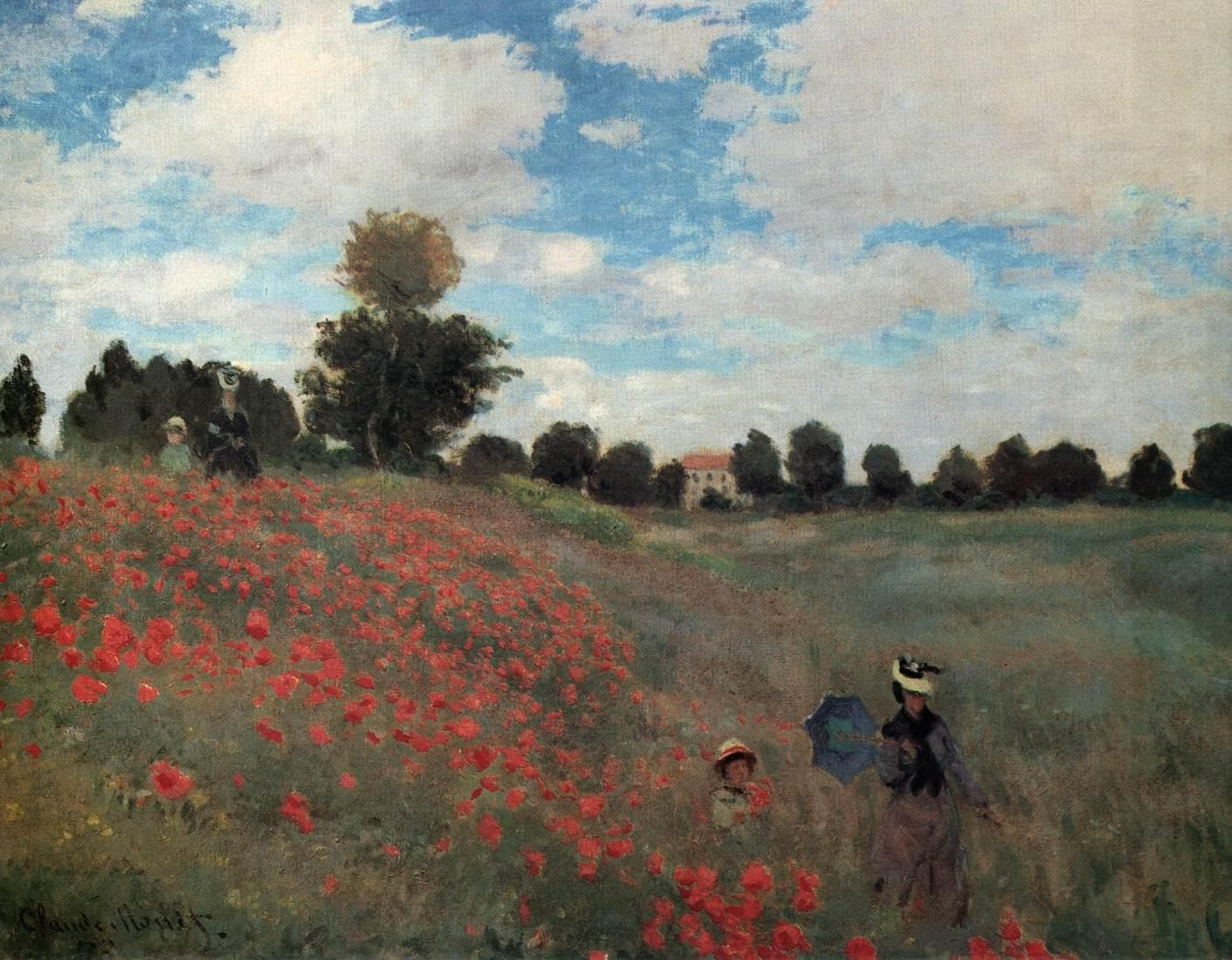
Poppy Field (Poppies at Argenteuil)
Claude Monet · 1873
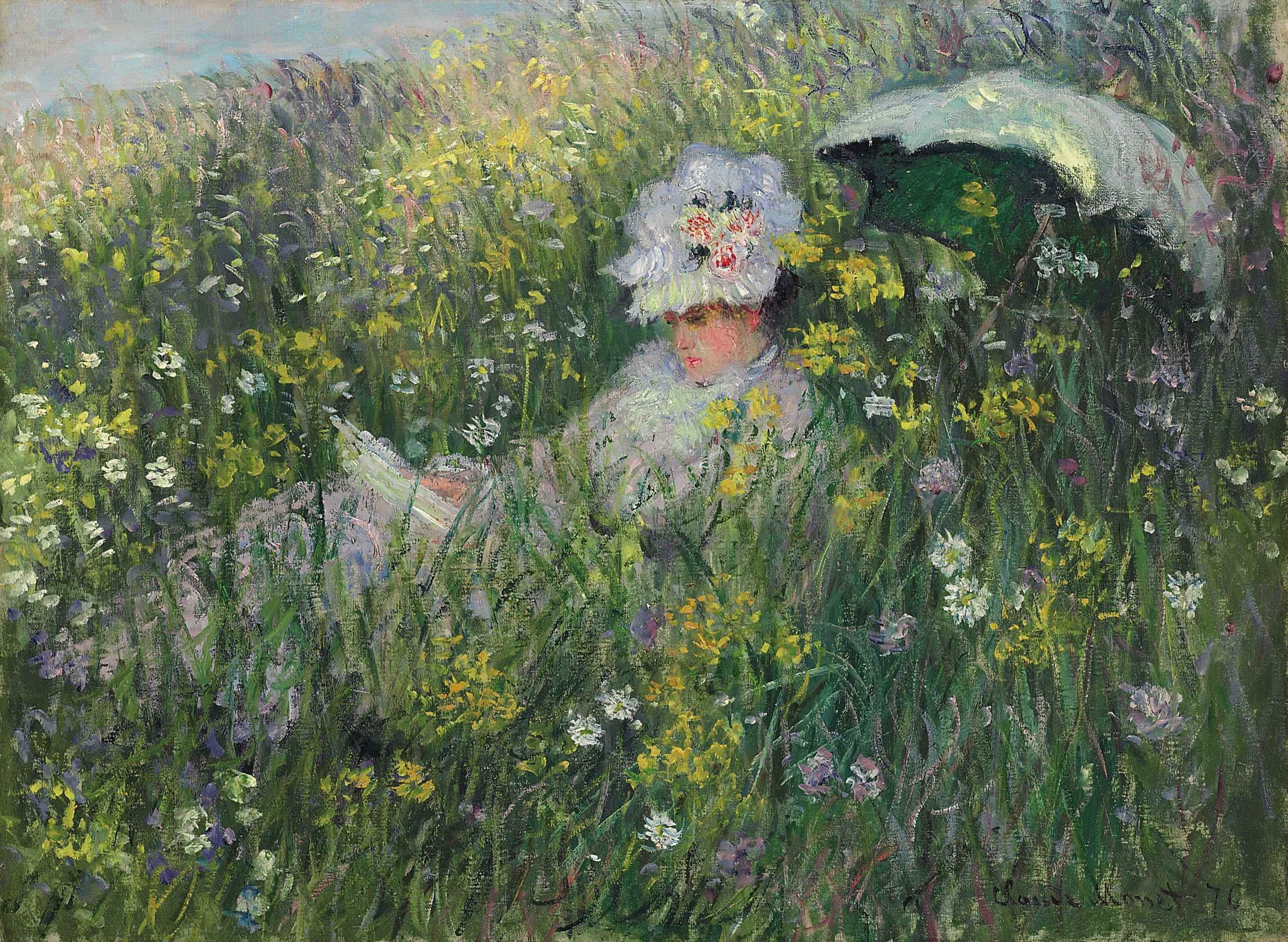
In the Meadow (Dans la prairie)
Claude Monet · 1876
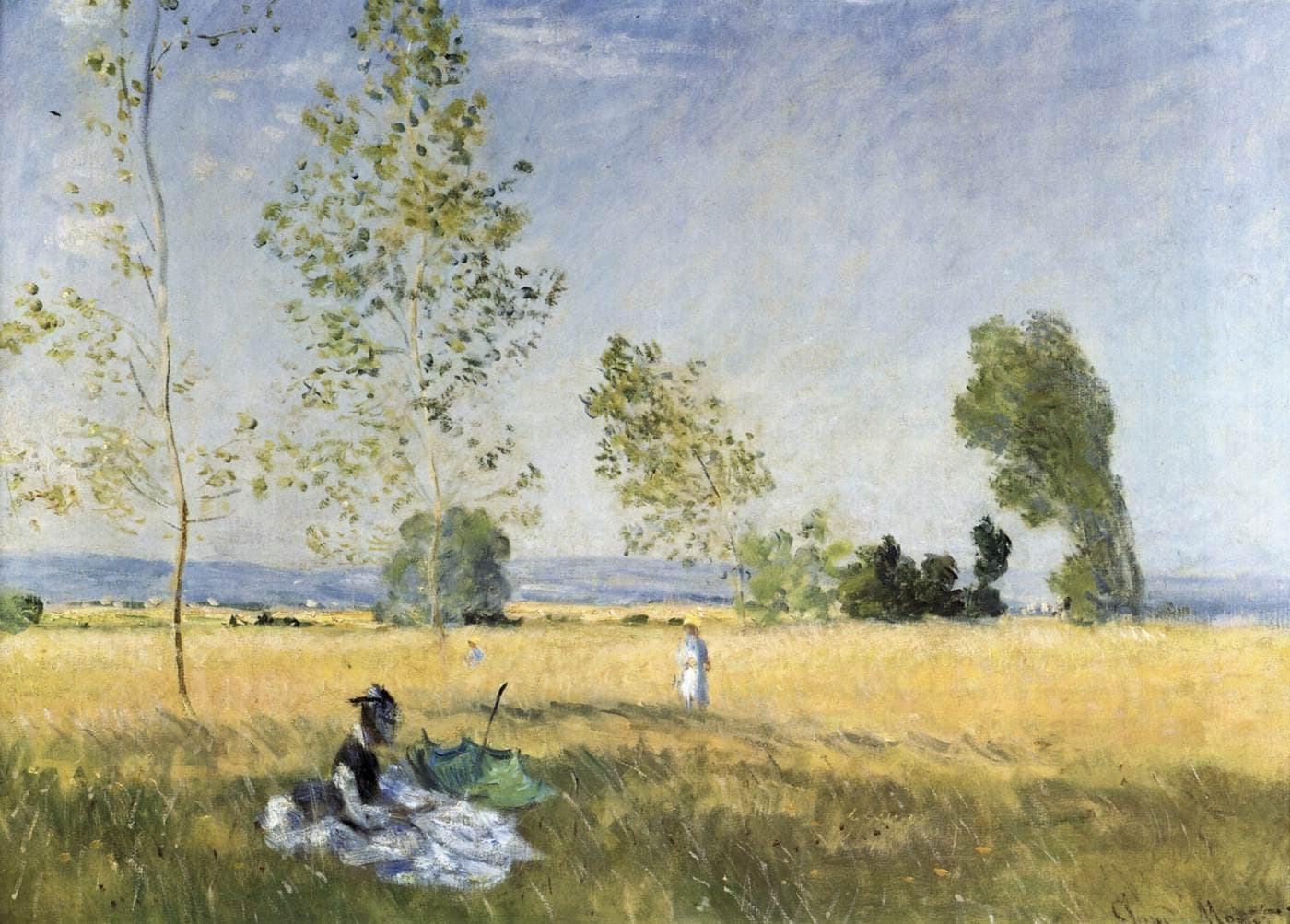
Summer (Meadow at Bezons)
Claude Monet · 1874
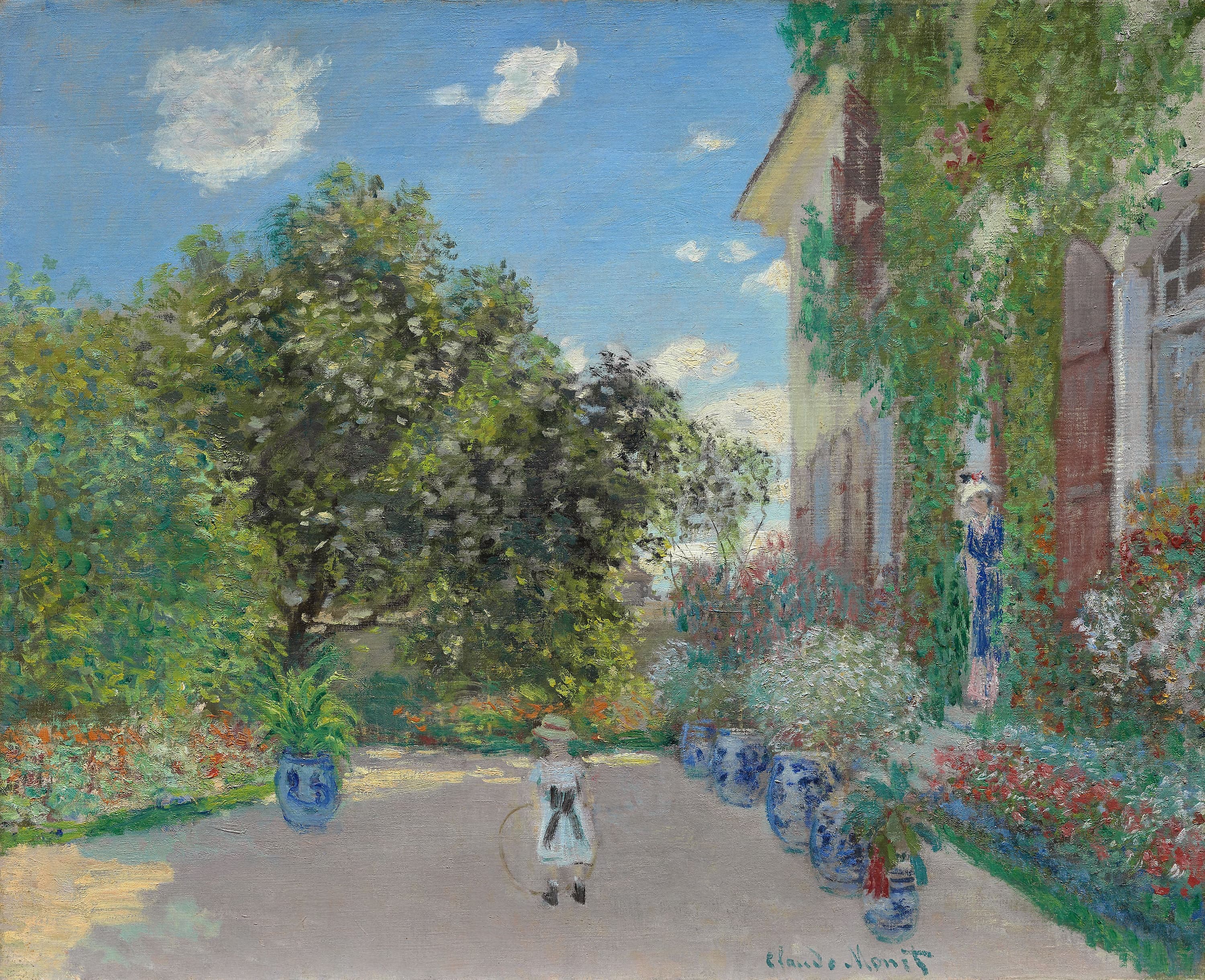
The Artist's House at Argenteuil
Claude Monet · 1873
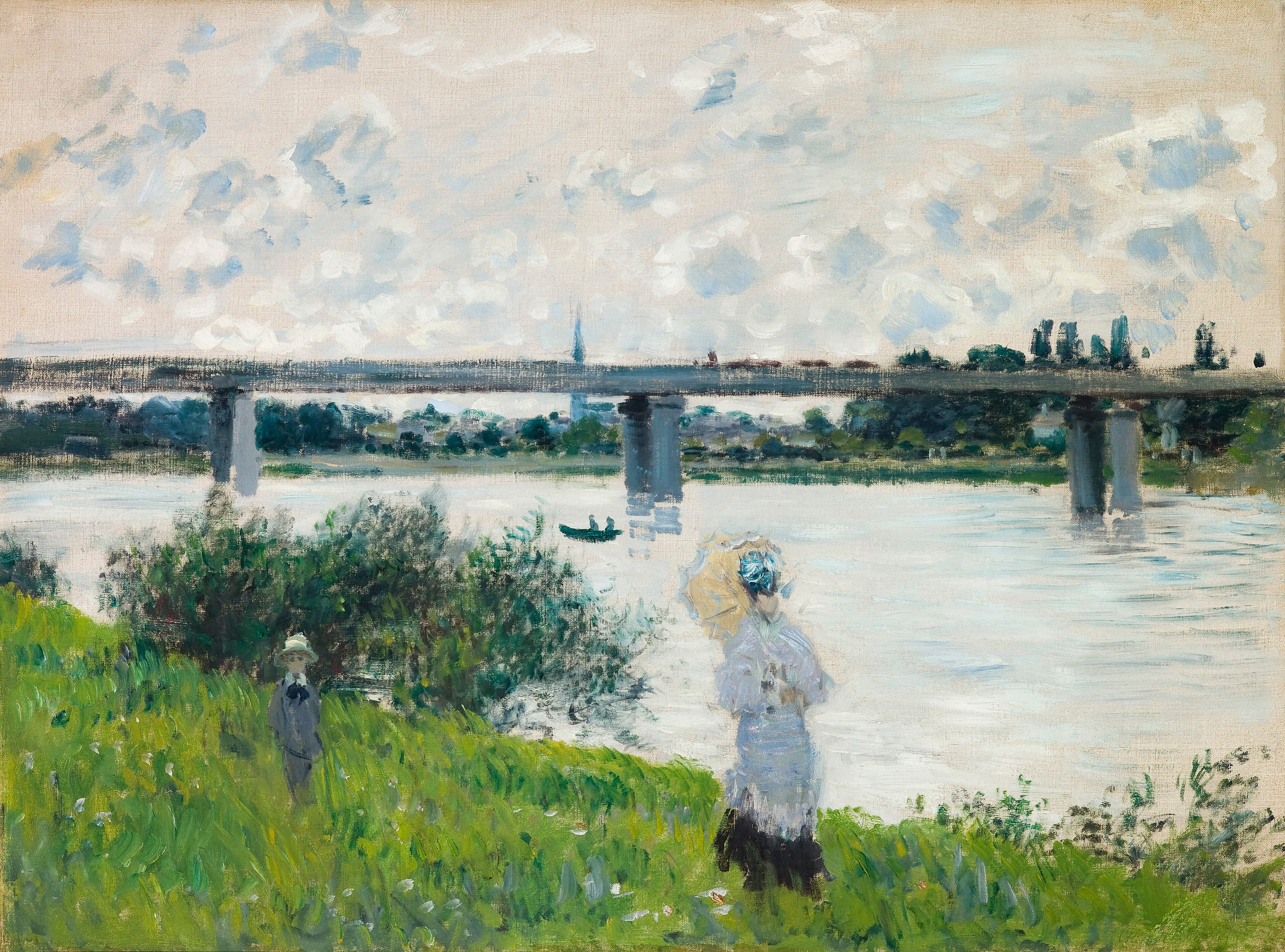
The Promenade with the Railroad Bridge, Argenteuil
Claude Monet · 1874
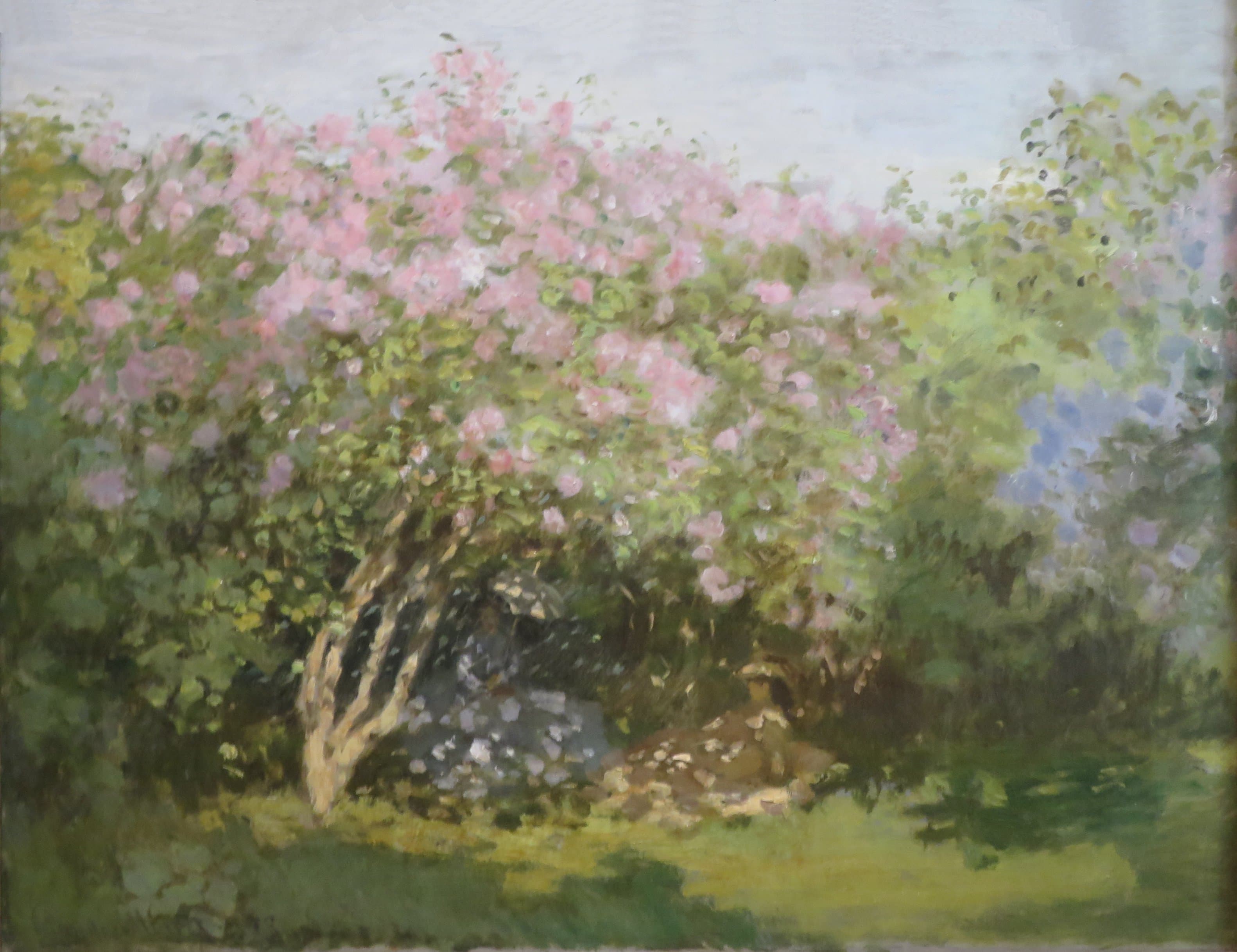
Lilac in the Sun
Claude Monet · 1873
On the Bank of the Seine, Bennecourt
Claude Monet · 1868