Impressionism
The Sea and the Clouds
Claude Monet
The Sea and the Clouds is a small seascape attributed to Claude Monet: a bank of violet-gray cloud over a calm strip of sea, worked in soft, chalky color that looks like pastel. Its date and present owner are not documented here.
- Artist
- Claude Monet
- Movement
- Impressionism
What you are looking at
Almost the whole sheet is sky. A long, heavy cloud, mauve-brown and solid, drifts in from the right, its top edge lit with a rim of cream as if the sun stands just behind it. Smaller scraps of the same cloud trail off to the left, and one tiny wisp at far left is little more than two strokes. Above, the sky is a pale wash of blue and lemon; below the cloud it warms to pink and buff. At the bottom, a flat band of blue-gray sea runs edge to edge, darker along the horizon and paler near us.
There is nothing else: no boat, no shore, no figure. The picture is about one cloud and the light it catches, at a moment that would have lasted only minutes.
Medium and attribution
The surface has the soft, dry, slightly powdery look of pastel on toned paper rather than oil paint. Color is laid in broad sideways strokes with the paper showing through, and the sea is rubbed rather than brushed. Claude Monet made pastels of exactly this kind early in his career, in the 1860s and around 1870, when he was working along the coast near Le Havre and Honfleur alongside Eugène Boudin, whose quick sky studies taught him to watch weather.
We have not been able to match this image to a specific catalogued work. Monet's pastels are catalogued separately from his oil paintings, and many small sky studies have passed through the market under descriptive titles. Its date, size and owner are therefore left open here, and the title may have been given later. Treat the attribution and dating as provisional until a catalogue entry is found.
Close looking
The best passage is the edge of the big cloud. The artist lays a thick, wavy line of cream along its upper rim and then drags violet down from it, so the cloud reads as a solid mass lit from behind. That rim is not even: it thickens over the cloud's highest bulge at right, exactly where the backlight would be strongest, and thins to nothing at the trailing end.
Notice how few colors are used, essentially violet, cream, pale blue, pink and gray, and how the same violet reappears faintly in the sea, tying water to sky. A thin, darker line marks the horizon, and just beneath it the pastel is pressed harder, so the far sea looks denser than the near.
The horizon is set very low, about a quarter of the way up, which gives the cloud enormous space. That choice anticipates later seascapes by Monet in which the sky does most of the work, such as Impression, Sunrise and Setting Sun (Nightfall).
Boudin, pastel and the habit of the sky
Boudin was famous for his pastel skies; Baudelaire praised them at the Salon of 1859 as studies of clouds made on the spot, each noted with time and wind. The young Monet, who met Boudin in Le Havre in the late 1850s, absorbed that habit: go outdoors, look at the sky first, work fast. Small studies like this one are the training ground of Impressionism. They record a condition of light that will be gone in minutes, and they free color from the obligation to describe solid things.
Seen next to finished canvases from the same coast, like The Beach at Trouville or the evening Sunset, they show the habit of looking that the larger pictures rely on. The coast where that habit was formed is the subject of our Étretat and the Normandy Coast page.
Where is it?
Its present owner is not recorded in the sources we checked, and we have not linked it to a public collection. Monet's works on paper are rarely on permanent display because light damages them. For the museums where his paintings can be seen, consult Where to See Monet's Paintings.
Questions & answers
Who painted The Sea and the Clouds?
It is attributed to Claude Monet. The image shows a soft, chalky seascape that looks like pastel, the kind of quick sky study Monet made on the Normandy coast in the 1860s under the influence of Eugène Boudin. We could not match it to a specific catalogue entry, so the attribution should be treated as provisional.
Where is The Sea and the Clouds today?
Its current owner is not documented in the sources we checked, and we have not linked it to a museum collection. If you know the catalogue number or collection of this sheet, the work can be identified precisely; until then its location is listed as unknown.
What does the picture show?
A single bank of violet cloud, lit from behind so its upper edge glows cream, hanging over a calm strip of blue-gray sea. With the horizon set very low, the sky fills most of the picture. There are no boats, figures or shoreline, only cloud, light and water.
Why did Monet make sky studies like this?
Eugène Boudin, his first mentor at Le Havre, taught him to work outdoors and to study the sky above all. Rapid pastel or oil sketches let Monet record a passing effect of light in minutes. That discipline underlies his later Impressionist seascapes and, eventually, his series paintings.
More by the artist
Claude Monet

Bridge over a Pond of Water Lilies
Claude Monet · 1899

Woman with a Parasol – Madame Monet and Her Son
Claude Monet · 1875

Sunset in Venice
Claude Monet · 1908–12

La Grenouillère
Claude Monet · 1869

Beach in Pourville
Claude Monet · 1882

Springtime
Claude Monet · 1872

Boating on the River Epte
Claude Monet · 1890

The Seine at Asnières (Hermitage)
Claude Monet · 1873
Kindred works
You may also study
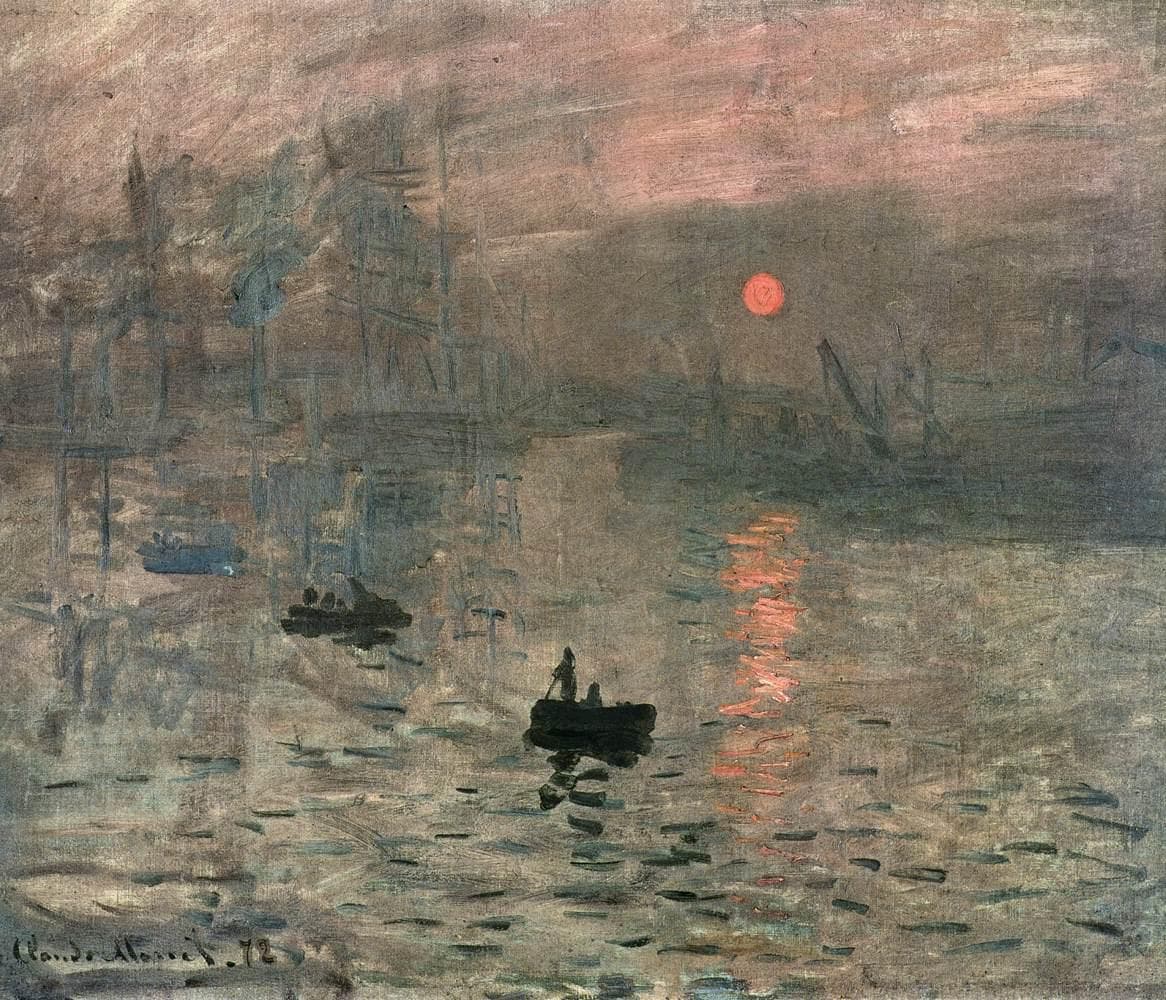
Impression, Sunrise
Claude Monet · 1872
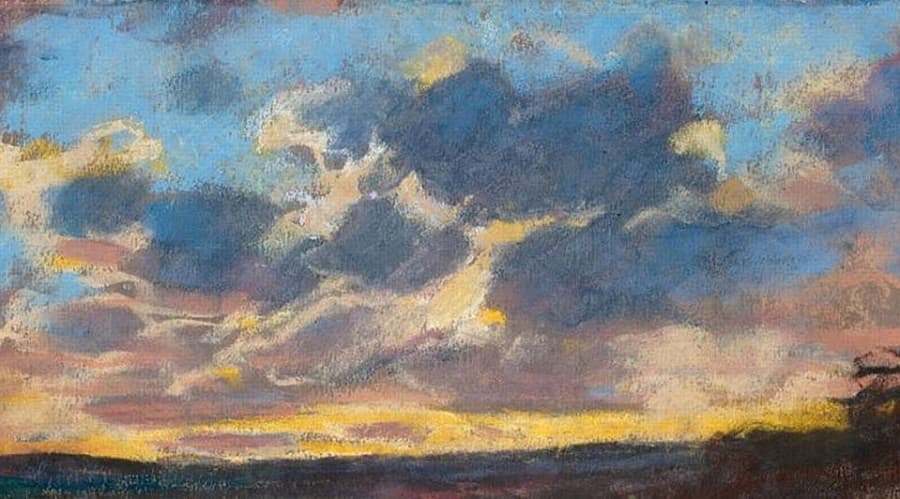
Setting Sun (Nightfall)
Claude Monet · c. 1865
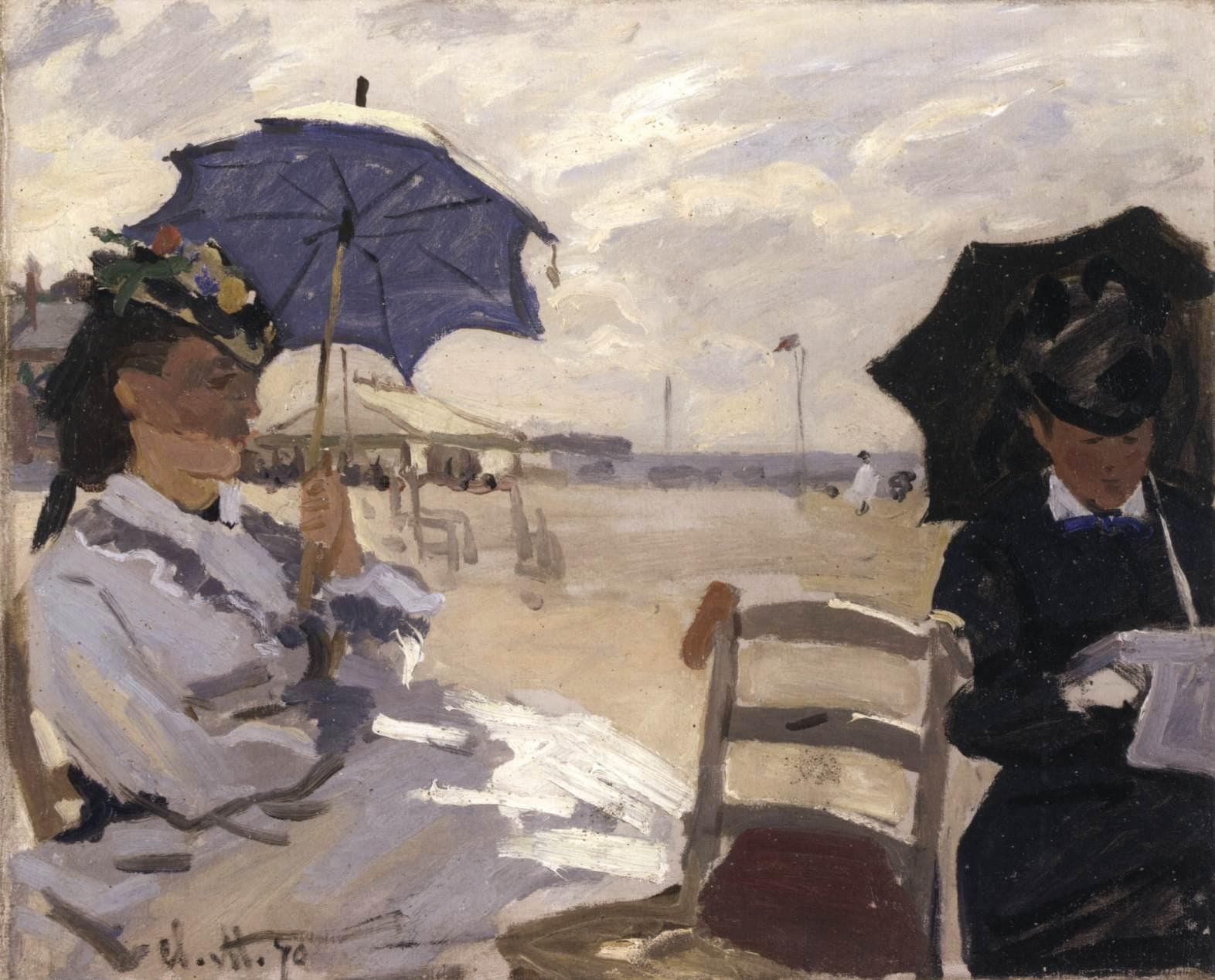
The Beach at Trouville
Claude Monet · 1870
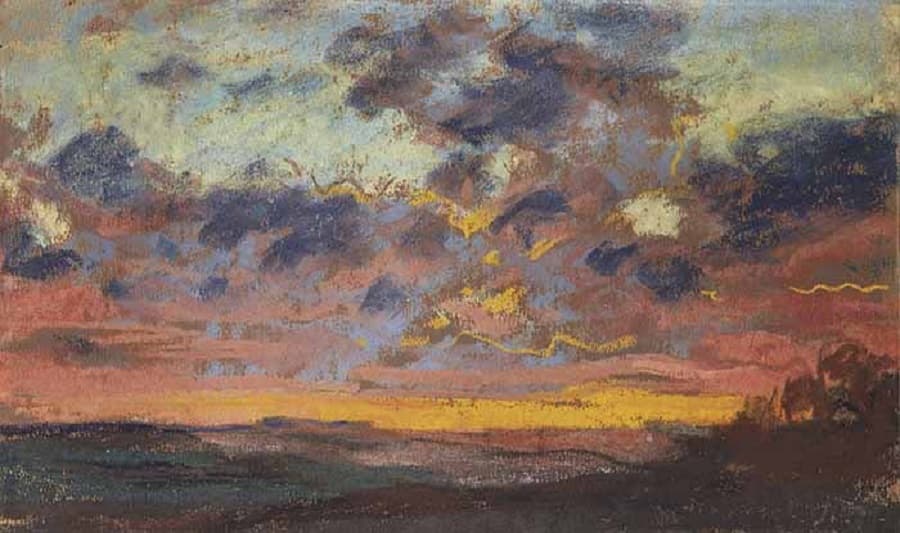
Sunset (Coucher de soleil)
Claude Monet · c. 1868
Stormy Sea
Claude Monet · c. 1881–84

The Scream
Edvard Munch · 1893

Ophelia
John Everett Millais · 1851–52

The Great Wave off Kanagawa
Katsushika Hokusai · c. 1830–32