Image: Galleria Nazionale d'Arte Moderna e Contemporanea, Rome; photo Rlbberlin / Wikimedia Commons · Public domain · via Wikimedia Commons
Water Lilies (Pink Water Lilies), 1898
Claude Monet, c. 1898
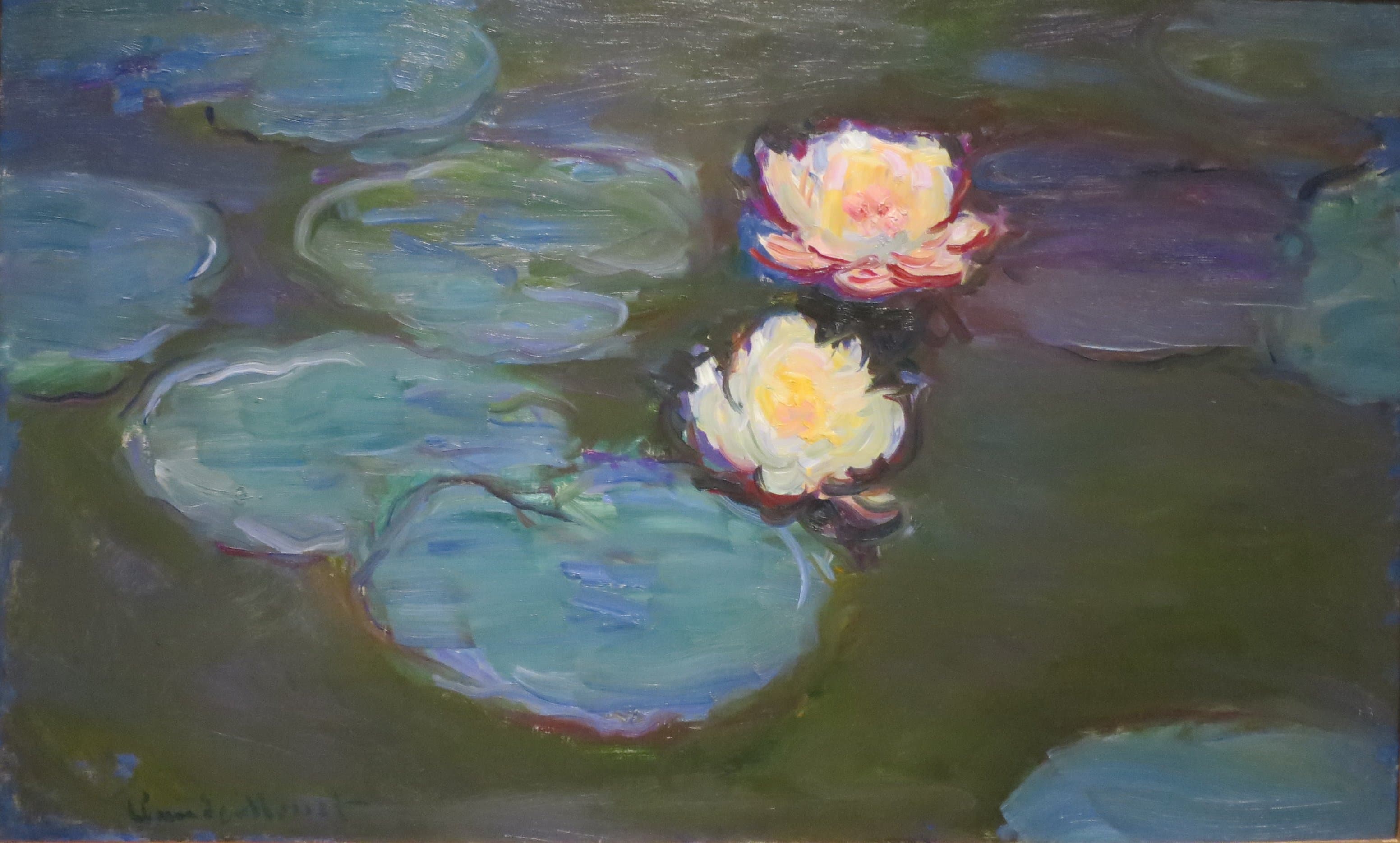
Water Lilies, known in Italian as Ninfee rosa (Pink Water Lilies), is an early close-up of Claude Monet's lily pond at Giverny, painted about 1898: large pale pads and pink blooms on dark violet water. It is in the Galleria Nazionale d'Arte Moderna, Rome.
- Artist
- Claude Monet
- Date
- c. 1898
- Medium
- Oil on canvas
- Dimensions
- 81 × 100 cm
- Collection
- Galleria Nazionale d'Arte Moderna e Contemporanea, Rome, Italy
- Movement
- Impressionism
- Catalogue
- Wildenstein 1507
- Nature & Landscape
- Water & Sea
Water Lilies, called Ninfee rosa (Pink Water Lilies) in Rome, is one of Claude Monet's very first paintings of the lily pond in his garden at Giverny, dated to about 1898. The canvas, 81 by 100 centimeters, is in the Galleria Nazionale d'Arte Moderna e Contemporanea in Rome, one of the few Monets in an Italian public collection. It comes from the small group of close-up lily pictures that opened what became a thirty-year series.
What you're looking at
There is no bank, no bridge, no sky. Monet looks down at a patch of water from close range, and the pads are large: flat, rounded leaves in pale celadon green and gray-white, each with its little notch, drifting across the canvas at different angles. Some overlap; one in the upper right is tinted rose and violet underneath. Three blossoms open among them, two near the top right and one at the upper left, painted as cups of white and pale pink with yellow hearts.
The water between them is dark and cool, a mixture of violet, slate blue and gray-green, worked with long, slightly curving strokes that suggest the stems and reflections beneath the surface. In the center, a soft rosy smudge may be a flower below water or a reflected patch of light. The signature, Claude Monet, is at the lower right.
The contrast with the later lily pictures is immediate. Here the pads are drawn as objects, with clear outlines and their own shadows, and the water is still a dark ground behind them. Over the next decade Monet would pull back, let the reflections take over, and dissolve the outlines.
The pond in the late 1890s
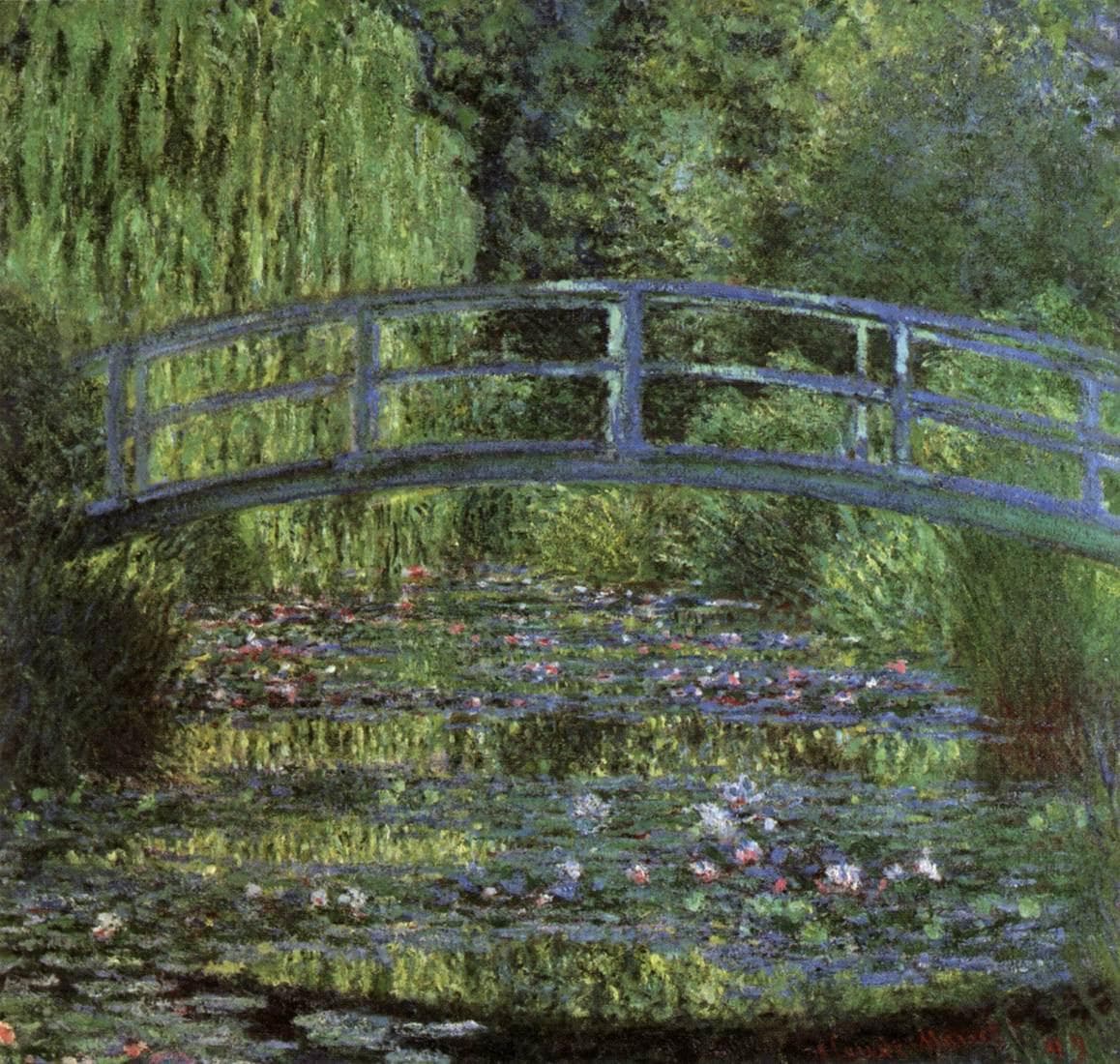
Monet had rented the house at Giverny since 1883 and bought it in 1890. In 1893 he acquired a strip of marshy land across the road and railway, and received permission to divert a small arm of the Epte to feed a pond, which he stocked with hardy and tropical water lilies and crossed with a wooden bridge in the Japanese manner. For several years the garden was a place to look rather than to paint. Monet's first canvases of it date from 1897 to 1898: a handful of close studies of lilies on dark water, of which this is one, together with evening views such as the Marmottan's Water Lilies, Evening Effect and the Los Angeles Nymphéas. In 1899 he turned to the footbridge, in the series that includes the Met's Bridge over a Pond of Water Lilies.
How it was painted
The pads are laid in with flat, opaque strokes of pale green mixed with white, their edges defined by a darker line of the surrounding water. The flowers are thicker, built up in a few loaded touches of white and pink. The water is darker and thinner, with violet and green worked wet into one another in long strokes. The overall harmony is cool and restrained, with the pink of the blossoms as the only warmth, which is why the painting is known in Italy as Pink Water Lilies.
The series and this version
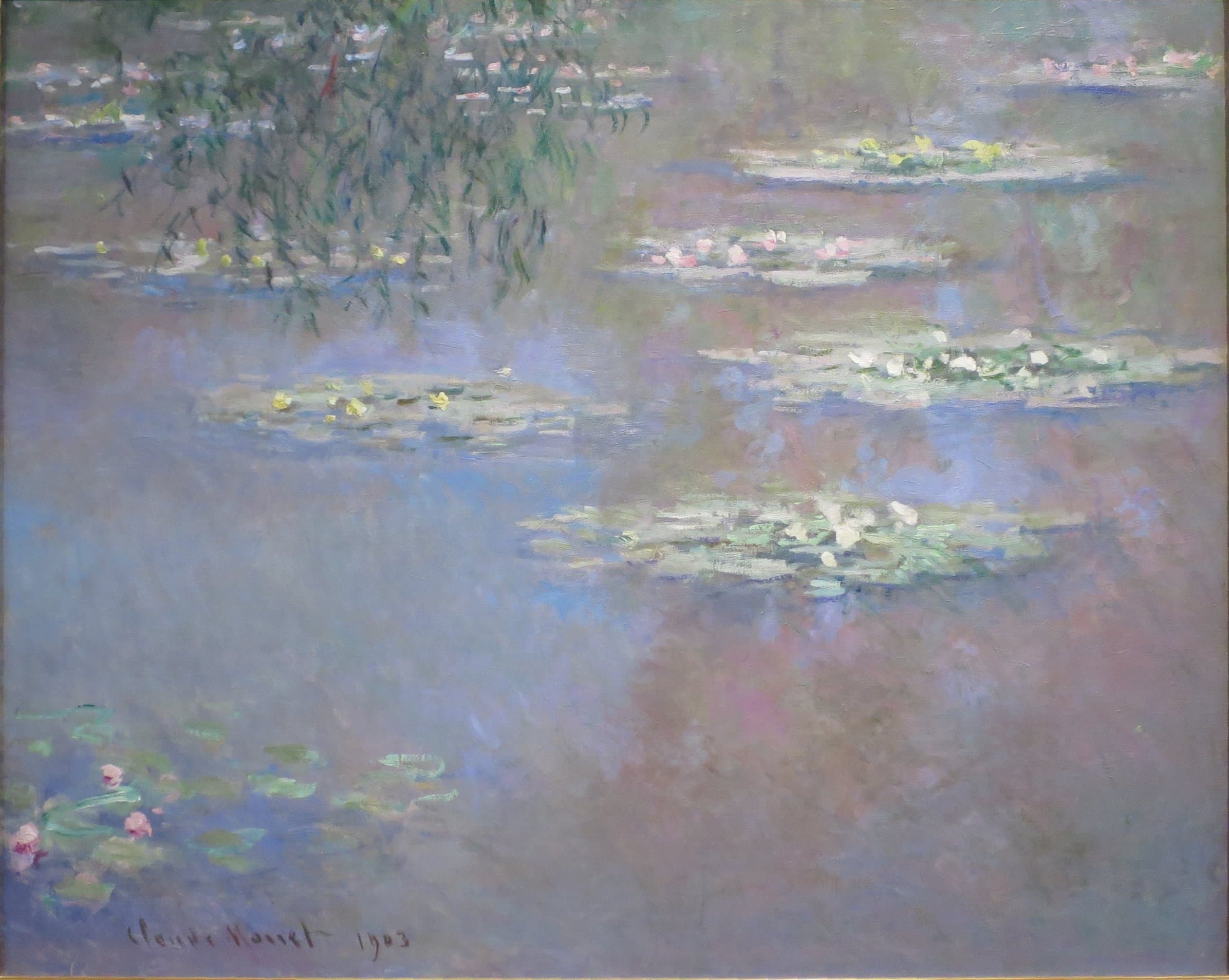
Monet painted about 250 water-lily canvases between 1897 and his death in 1926. The 1897–98 close-ups are the smallest and earliest group, and they show him trying a decorative, almost Japanese approach: few elements, a high viewpoint, no horizon. This canvas is notable for its scale of pad, its silvery palette and its dark water, closer in mood to the evening pictures than to the luminous lily paintings of 1903–08 such as Dayton's Waterlilies.
Where to see it
The painting is in the Galleria Nazionale d'Arte Moderna e Contemporanea in Rome, in the Villa Borghese gardens. For the whole series see Monet's Water Lilies, for the garden itself Giverny: Monet's House and Garden, and for other Monet collections, Where to See Monet's Paintings.
Questions & answers
Where is Monet's Pink Water Lilies (Ninfee rosa)?
It is in the Galleria Nazionale d'Arte Moderna e Contemporanea in Rome, in the Villa Borghese park. It is one of the few paintings by Monet in an Italian public collection.
When was it painted?
About 1898, in Monet's garden at Giverny. It belongs to the first small group of water-lily paintings he made in 1897–98, before the footbridge series of 1899 and the larger water landscapes of 1903–08.
What does the painting show?
A close view of the lily pond from above: large pale green pads and three pink and white blossoms floating on dark violet and slate-blue water, with no bank, sky or horizon.
How is it different from Monet's later water lilies?
The pads are drawn as distinct objects with clear outlines on dark water. In the later paintings Monet steps back, the reflections of sky and trees take over and outlines dissolve.
More by the artist
Claude Monet
Charing Cross Bridge
Claude Monet · 1899
Sur la falaise de Dieppe
Claude Monet · 1897
Charing Cross Bridge
Claude Monet · 1899
Steep Cliffs near Dieppe
Claude Monet · 1897
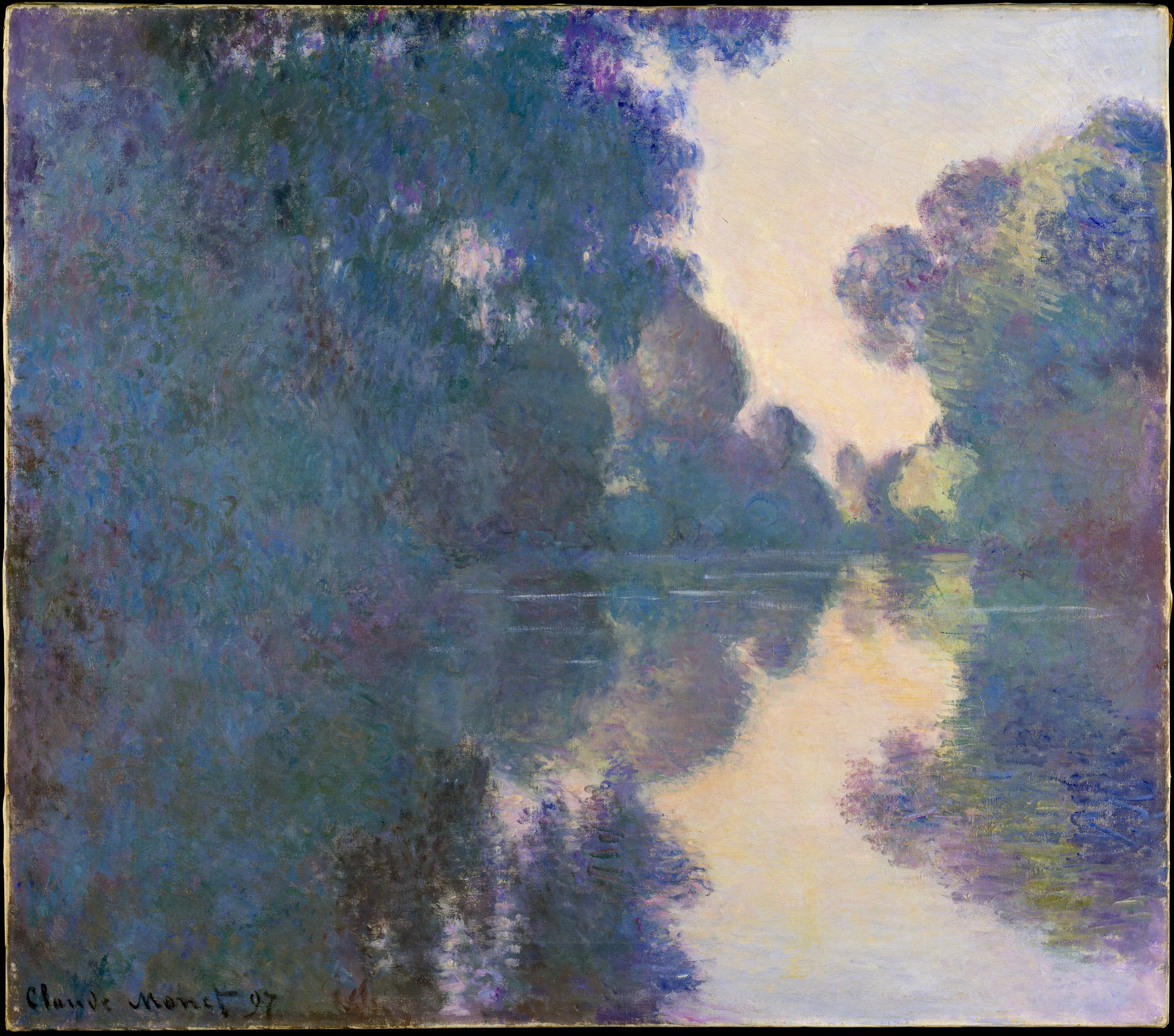
Morning on the Seine near Giverny
Claude Monet · 1897
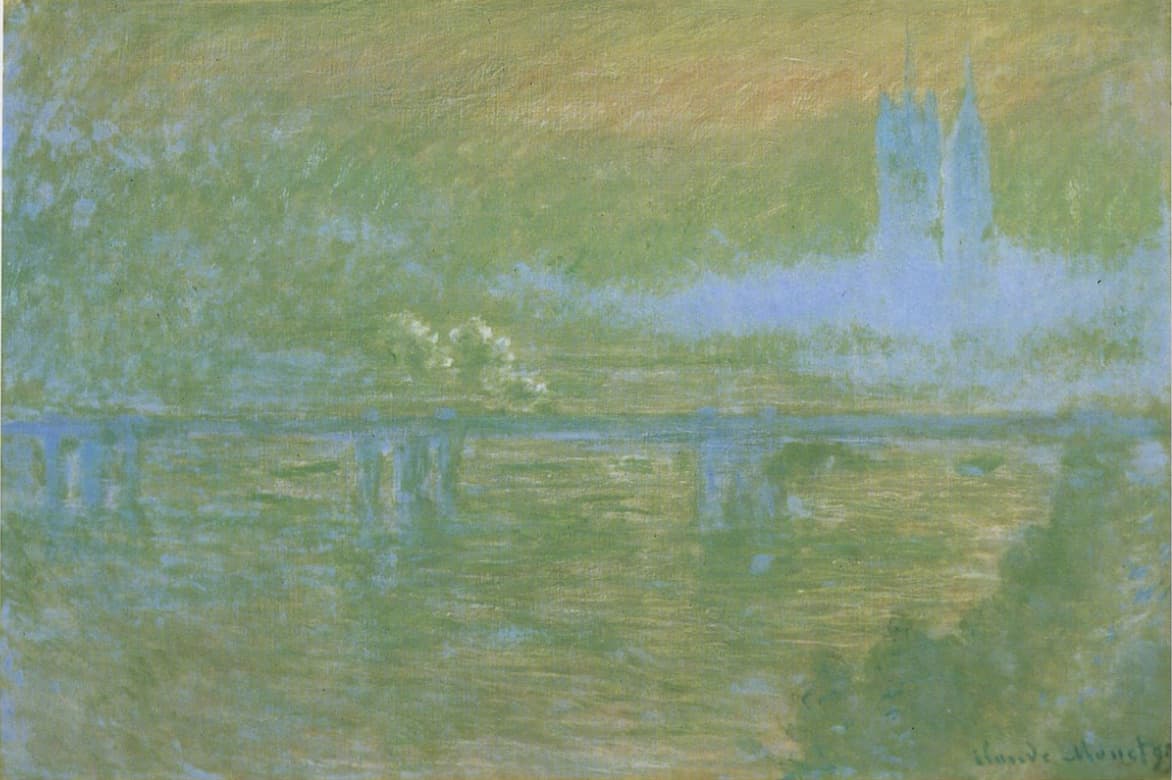
Charing Cross Bridge
Claude Monet · c. 1899
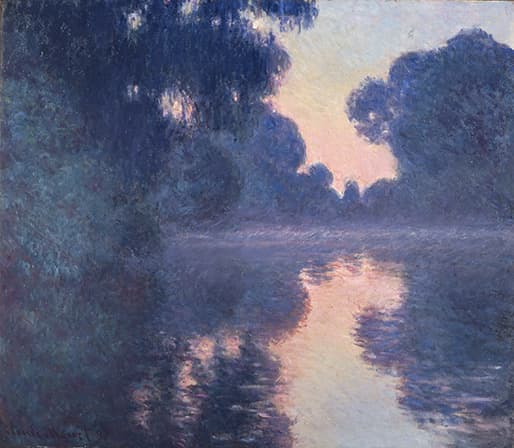
Morning on the Seine
Claude Monet · 1897
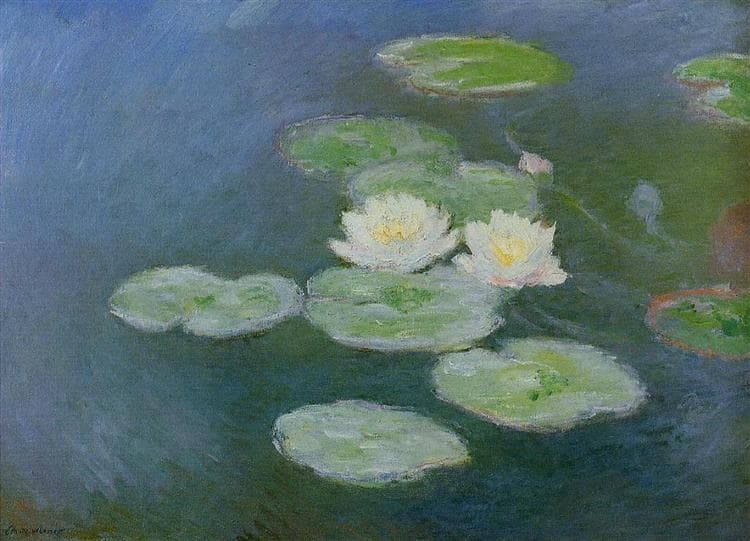
Water Lilies, Evening Effect
Claude Monet · 1897
Also painted in 1898
The same year
Kindred works
You may also study
Nymphéas (Water Lilies), c. 1897–98
Claude Monet · c. 1897–98

Bridge over a Pond of Water Lilies
Claude Monet · 1899
Waterlilies (1903, Dayton Art Institute)
Claude Monet · 1903
Water Lily Pond, Green Harmony
Claude Monet · 1899
The Seine at Port-Villez
Claude Monet · 1894

Poplars on the Banks of the Epte, Autumn
Claude Monet · 1891
The Studio Boat (Le Bateau-atelier)
Claude Monet · 1876
Row of Poplars in Autumn
Claude Monet · 1891