Post-Impressionism
Portrait of Theo van Gogh (Self-Portrait with Grey Felt Hat)
Vincent van Gogh, 1887
This small 1887 oil on cardboard by Vincent van Gogh shows a red-bearded man in a grey felt hat against bright blue. The Van Gogh Museum calls it a self-portrait; in 2019 the scholar Sjraar van Heugten argued it actually portrays Vincent's brother Theo.
- Artist
- Vincent van Gogh
- Date
- 1887
- Medium
- Oil on cardboard
- Dimensions
- 19 × 14 cm
- Collection
- Van Gogh Museum, Amsterdam, Netherlands
- Movement
- Post-Impressionism
What you are looking at
A man's head and shoulders fill a little panel of cardboard, not much larger than a postcard. He wears a light grey felt hat with a dark band, pushed slightly back. His beard and mustache are a fiery orange-red, his skin built from strokes of orange, pink and ocher.
Pale, grey-blue eyes look out with a level, guarded expression. He wears a lilac-grey jacket whose lapels are outlined in a bright cobalt line, a pale blue bow tie, and a hint of red at the throat. Behind him, the background is a saturated sky blue, worked in short, crisscrossing strokes that seem to vibrate around the head.
The painting belongs to the Van Gogh Museum in Amsterdam, which catalogues it as a self-portrait made in Paris in 1887. The question this page answers is why it is also known as a portrait of Theo van Gogh.
Two little portraits, two hats
In 1887 Vincent was living in Paris with his younger brother Theo, an art dealer who supported him financially, in an apartment on the rue Lepic in Montmartre. That year he painted dozens of small self-portraits, partly because he could not afford models. Two of them are identical in size, about 19 × 14 cm, and were clearly made as a pair: in one the sitter wears a yellow straw hat, in the other, this one, a grey felt hat.
Both were long assumed to show Vincent. In 2011 the Van Gogh Museum announced that its researcher Louis van Tilborgh had concluded that the straw-hat portrait showed Theo, pointing to differences in the shape of the ear and the color of the beard. It was hailed as the only known painted portrait of Theo, and the museum retitled it. The felt-hat picture remained a self-portrait.
In 2019 Sjraar van Heugten, a former head of collections at the Van Gogh Museum, argued for the exact reverse in the exhibition Van Gogh's Inner Circle: Friends, Family, Models at the Noordbrabants Museum in 's-Hertogenbosch. His case: Vincent, who dressed casually and painted outdoors, is far more likely to be the man in the summer straw hat, while Theo, a well-dressed dealer on the Boulevard Montmartre, fits the respectable felt hat. A family member reportedly recalled that Vincent did not own a felt hat in Paris.
And the eyes matter: Theo's eyes were a light grey-blue, while Vincent painted his own as green. The man here has grey-blue eyes. The Noordbrabants Museum labeled this painting Portrait of Theo van Gogh.
The Van Gogh Museum has since accepted that van Heugten may be right about the straw-hat portrait, but it continues to list this felt-hat picture as a self-portrait. The question is open, and that is why the painting is published under both names.
Close looking
Whoever the sitter is, this is Van Gogh at the moment he was turning into the painter we know. A year earlier, newly arrived from the Netherlands, he was painting in dark browns. Here, after a year of looking at Impressionist and Neo-Impressionist pictures in Paris, he works with complementary colors: the orange beard against the blue background, the lilac jacket against touches of yellow-orange in the face. The brushstrokes are separate and directional, laid like hatching around the head, a technique adapted from Seurat and Signac's dots into something more restless.
Look at the cobalt line around the lapels and down the jacket front. It is a pure, unmixed blue drawn like an outline, an early sign of the bold contours Van Gogh would use in Arles. Look too at the hat: its brim is painted in thick, creamy grey with pink and lilac in it, and its shadow cuts across the forehead, so the eyes seem to look out from under it.
Vincent and Theo
Theo van Gogh (1857–1891) was four years younger than Vincent and his lifelong supporter. As a manager at the Paris gallery of Boussod, Valadon & Cie, he sent Vincent a monthly allowance and paint, and he was the recipient of most of Vincent's more than 650 surviving letters, now published as The Letters of Vincent van Gogh. Vincent died in July 1890; Theo, already ill, died six months later, in January 1891. Theo's widow, Jo van Gogh-Bonger, devoted her life to building Vincent's reputation, and the brothers now lie side by side in Auvers-sur-Oise. Whether or not this small panel shows Theo, it was painted in the one period when the two lived under the same roof.
The skeleton with a cigarette
Many people searching for Van Gogh portraits are looking for a very different picture: the skull smoking a cigarette. That is Head of a Skeleton with a Burning Cigarette, painted in Antwerp in the winter of 1885–86 as a student joke about the academic drawing of skeletons, and also in the Van Gogh Museum. You can see it on its own page: Head of a Skeleton with a Burning Cigarette.
Related works
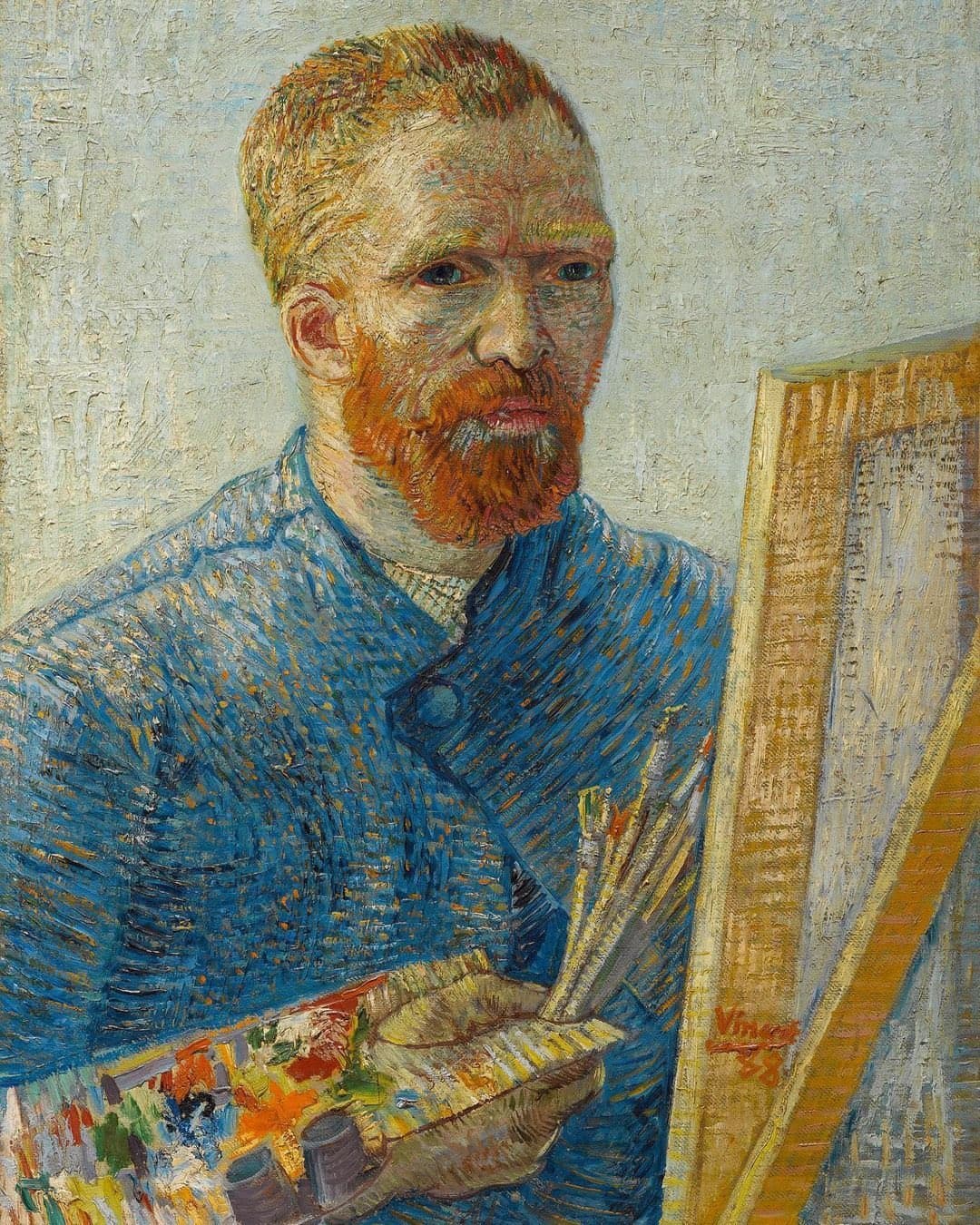
For Vincent's self-portraits from the same Paris period, see Self-Portrait as a Painter and Van Gogh Self-Portrait, and the wider selection in Famous Van Gogh Paintings.
Where to see it
The painting is in the Van Gogh Museum, Amsterdam, which owns the largest collection of Van Gogh's work, much of it from Theo's family. Small works rotate on display, so check the museum's site before visiting.
Questions & answers
Is this painting Vincent or Theo van Gogh?
It is disputed. The Van Gogh Museum catalogues this grey felt-hat portrait of 1887 as a self-portrait of Vincent. In 2019 the scholar Sjraar van Heugten argued it shows Theo, citing the respectable hat and the grey-blue eyes, which match Theo rather than Vincent.
Where is the portrait of Theo van Gogh?
Both small 1887 portraits connected with Theo, the felt-hat picture shown here and its straw-hat companion, are in the Van Gogh Museum in Amsterdam. Each is painted in oil on cardboard and measures about 19 × 14 cm.
Did Van Gogh paint a skeleton smoking a cigarette?
Yes. Head of a Skeleton with a Burning Cigarette was painted in Antwerp in the winter of 1885–86, probably as a joke about academic anatomy studies. It is also in the Van Gogh Museum and has its own page in our catalogue.
How did Vincent and Theo van Gogh look alike?
The brothers shared red-blond coloring, a long face and strong cheekbones, which is why their portraits are confused. Researchers distinguish them by ear shape, beard color and eye color: Theo had grey-blue eyes, while Vincent painted his own as green.
When did Theo van Gogh die?
Theo died on 25 January 1891 in Utrecht, about six months after Vincent's death in July 1890. He was 33. He was later reburied beside Vincent in the cemetery at Auvers-sur-Oise in France.
More by the artist
Vincent van Gogh
Head of a Skeleton with a Burning Cigarette
Vincent van Gogh · 1886
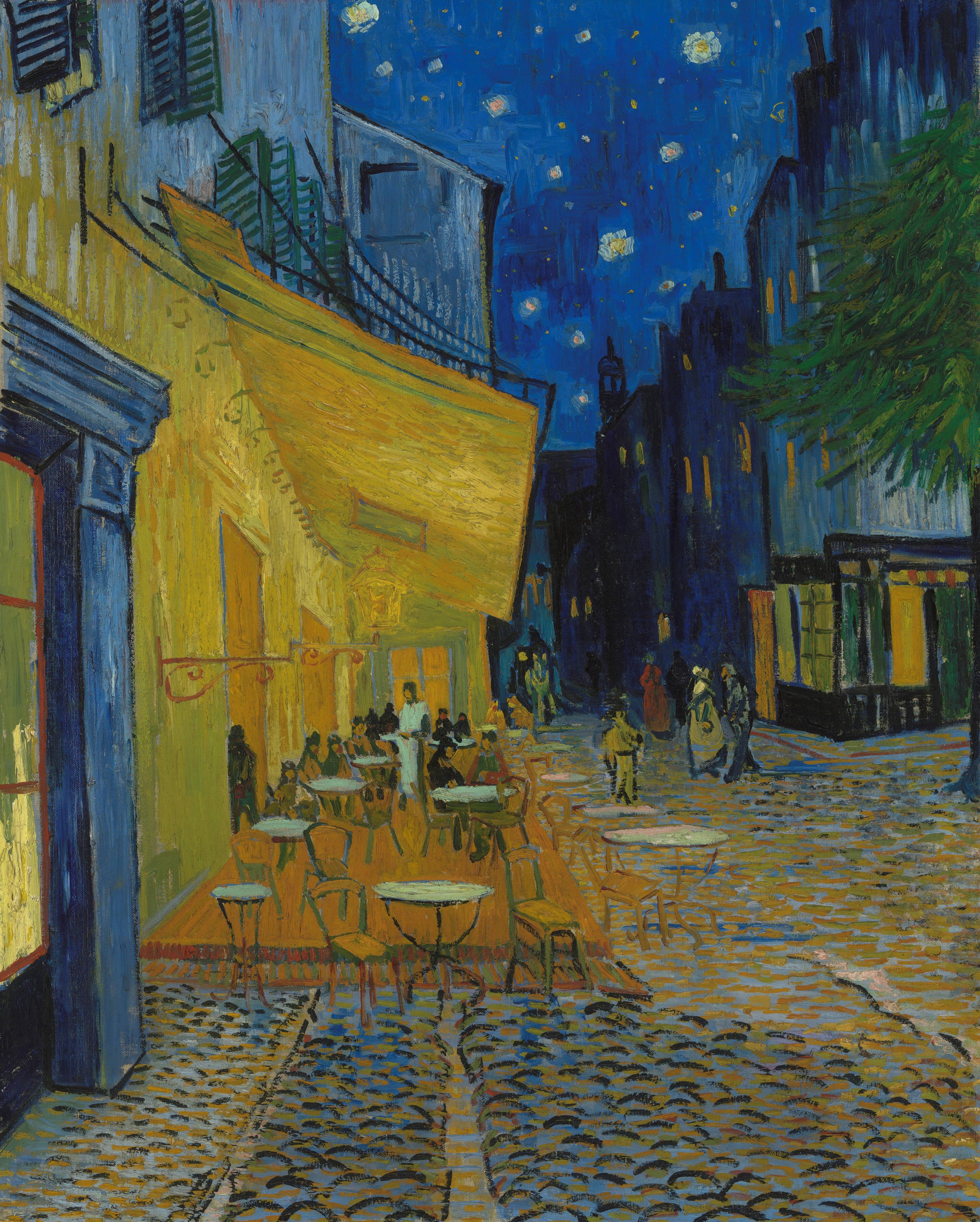
Café Terrace at Night
Vincent van Gogh · September 1888
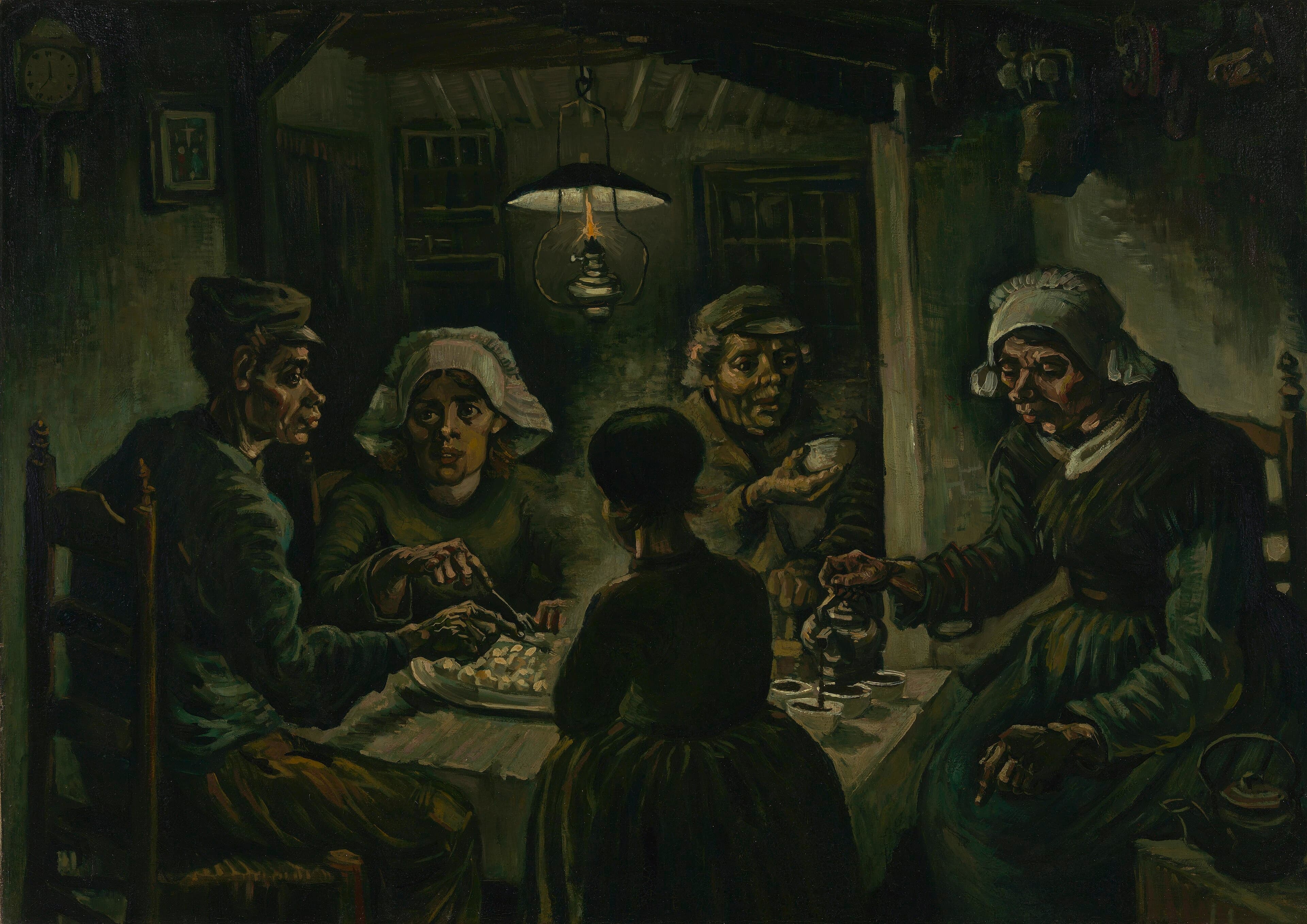
The Potato Eaters
Vincent van Gogh · April–May 1885
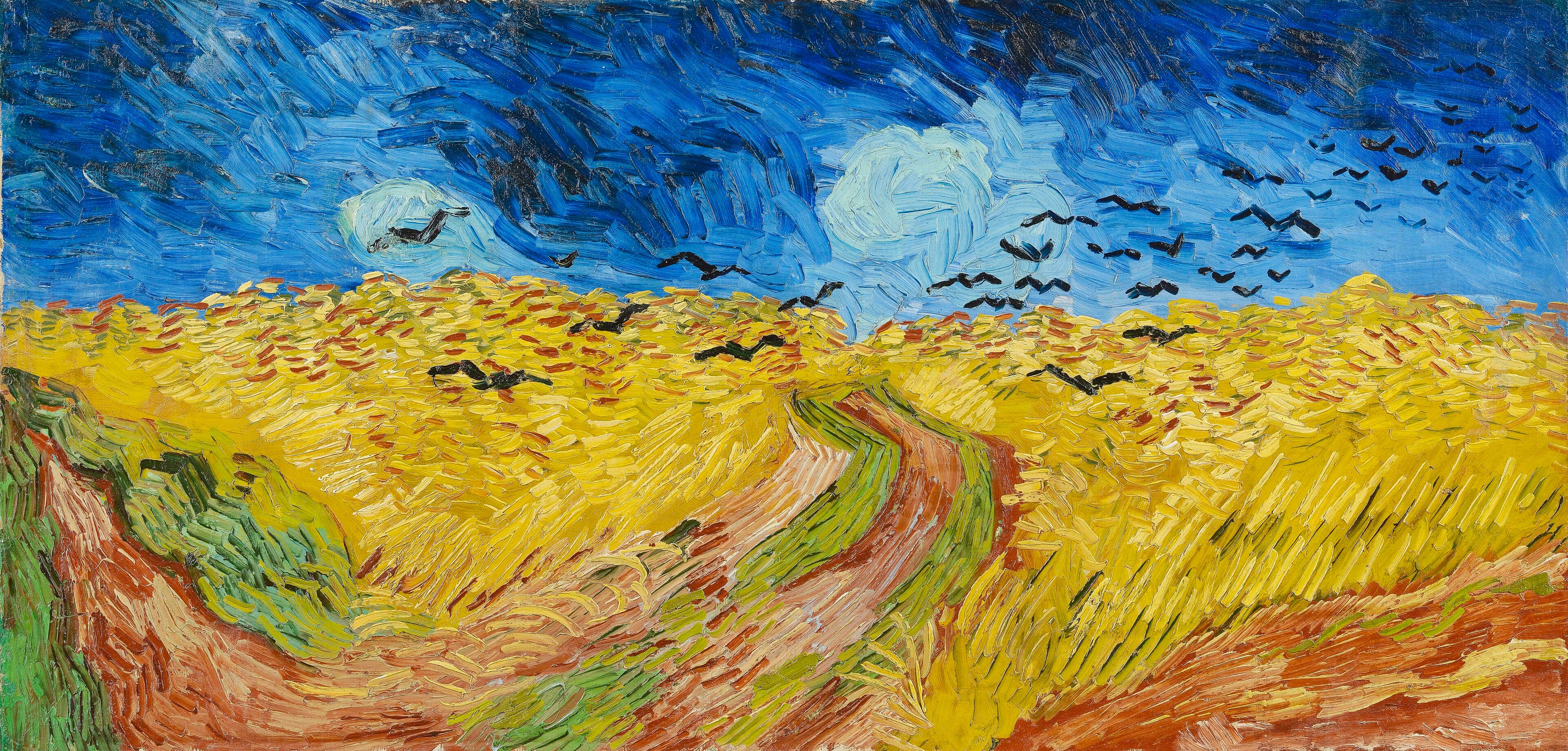
Wheatfield with Crows
Vincent van Gogh · July 1890
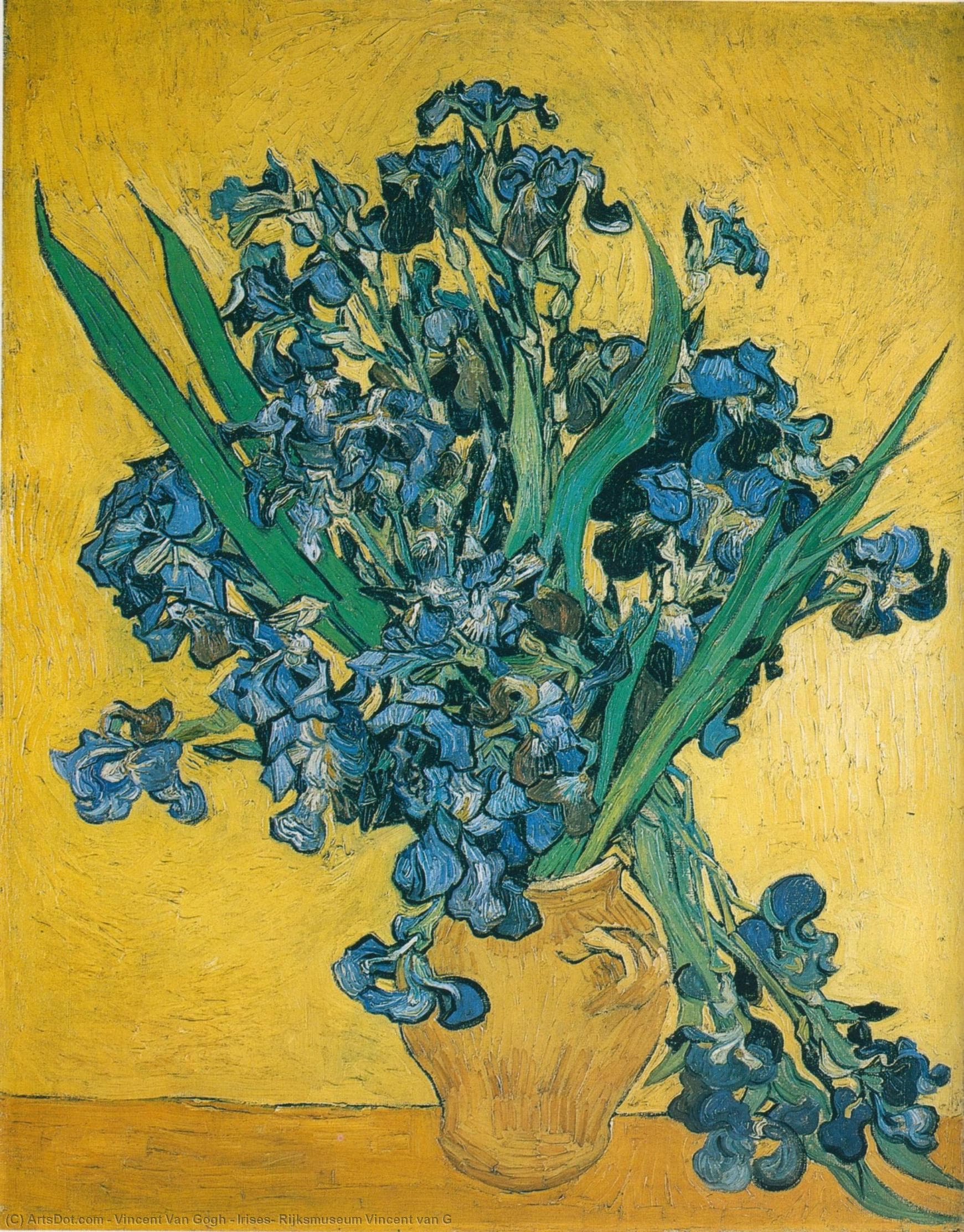
Irises (Vase with Irises Against a Yellow Background)
Vincent van Gogh · 1890
At Eternity's Gate
Vincent van Gogh · 1890
The Starry Night (van Gogh)
Vincent van Gogh · 1889
The Letters of Vincent van Gogh
Vincent van Gogh · 1872–1890
Kindred works
You may also study
Self-Portrait as a Painter
Vincent van Gogh · 1887–88
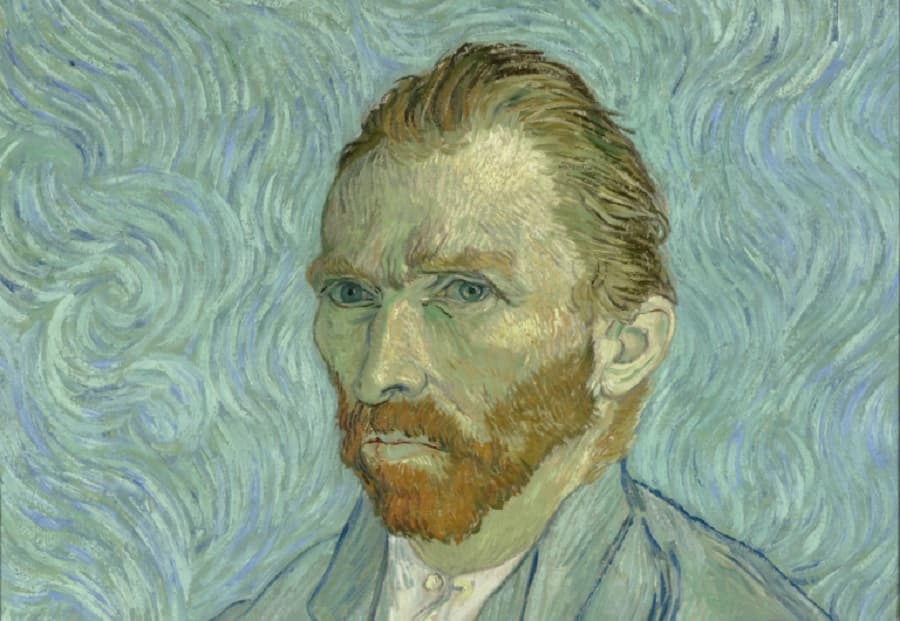
Self-Portrait (1889, Musée d'Orsay)
Vincent van Gogh · 1889

Woman with a Parasol – Madame Monet and Her Son
Claude Monet · 1875
Las Meninas
Diego Velázquez · 1656
The School of Athens
Raphael · 1509–1511
Girl with a Pearl Earring
Johannes Vermeer · c. 1665
The Night Watch
Rembrandt · 1642
The Death of Marat
Jacques-Louis David · 1793