Collection
Famous Van Gogh Paintings: The Starry Night, Sunflowers and More
Ten years, some 860 oil paintings and a single unmistakable way of seeing.
The most famous Van Gogh paintings are The Starry Night (1889), the Sunflowers (1888–89), Café Terrace at Night (1888), his self-portraits, Irises (1889), Almond Blossom (1890) and The Potato Eaters (1885). Vincent van Gogh (1853–1890) painted for only about ten years, and most of the works people know were made in the last two and a half, in Arles, Saint-Rémy and Auvers-sur-Oise.
This list ranks his paintings in the catalogue by fame, from the icons to the works that explain how he got there. Below is a guide to his career, his technique and his letters, and where to see his paintings today.
01
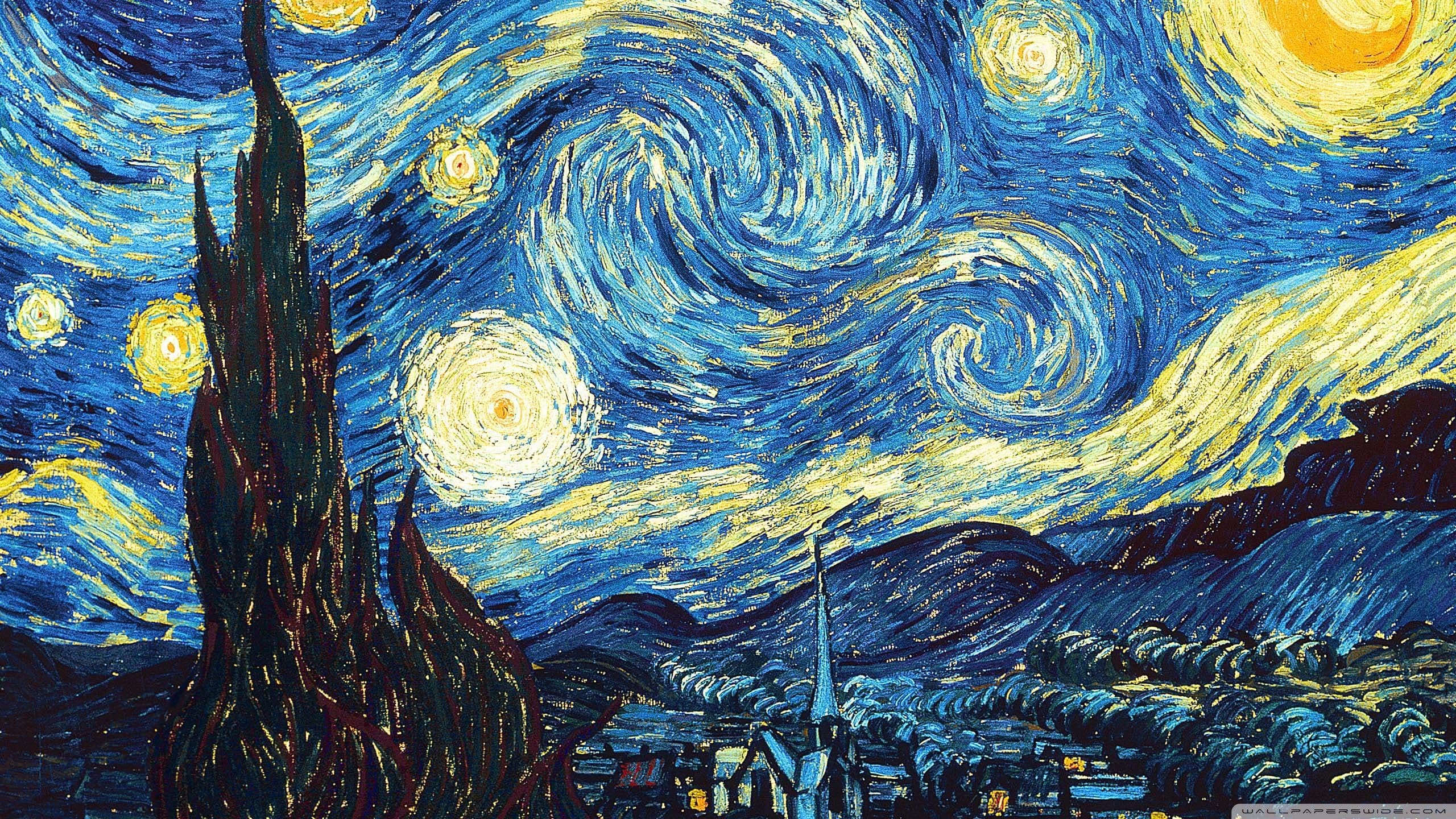
The Starry Night (van Gogh)
Vincent van Gogh · 1889
The Starry Night is a painting by Vincent van Gogh, made in June 1889 at the asylum in Saint-Rémy-de-Provence: a swirling night sky over a village and a flame-like cypress. It is in the Museum of Modern Art, New York.
02
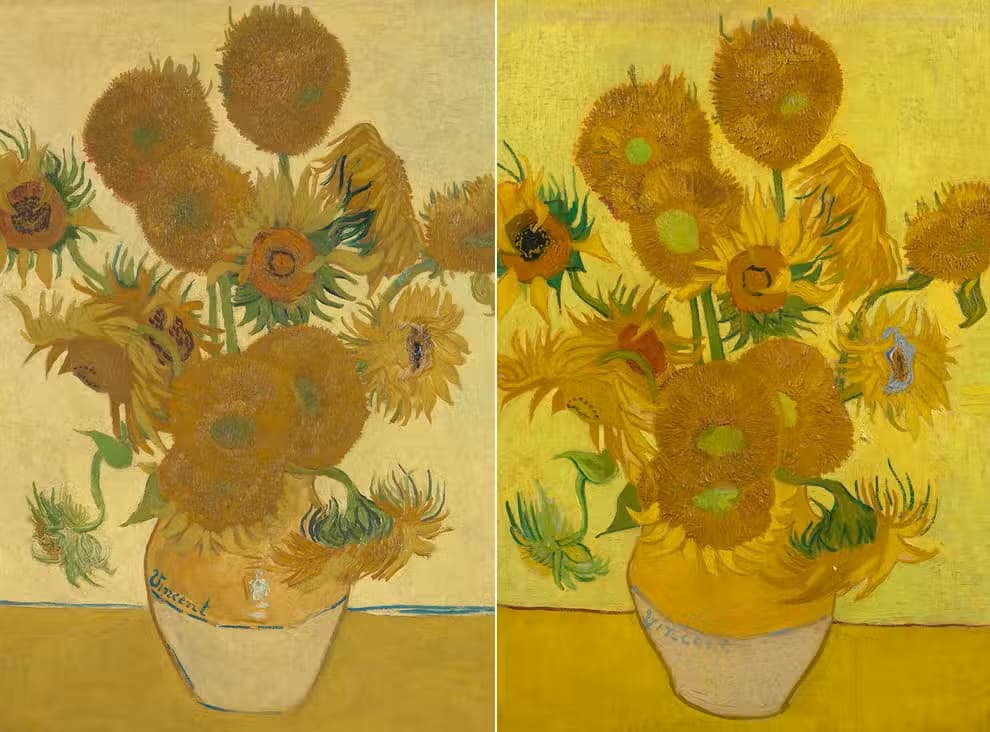
Sunflowers
Vincent van Gogh · 1888–89
Sunflowers is a series of still lifes of sunflowers in a vase painted by Vincent van Gogh in Arles in 1888–89. The best-known version, from August 1888, is in the National Gallery, London; a January 1889 repetition is in the Van Gogh Museum, Amsterdam.
03
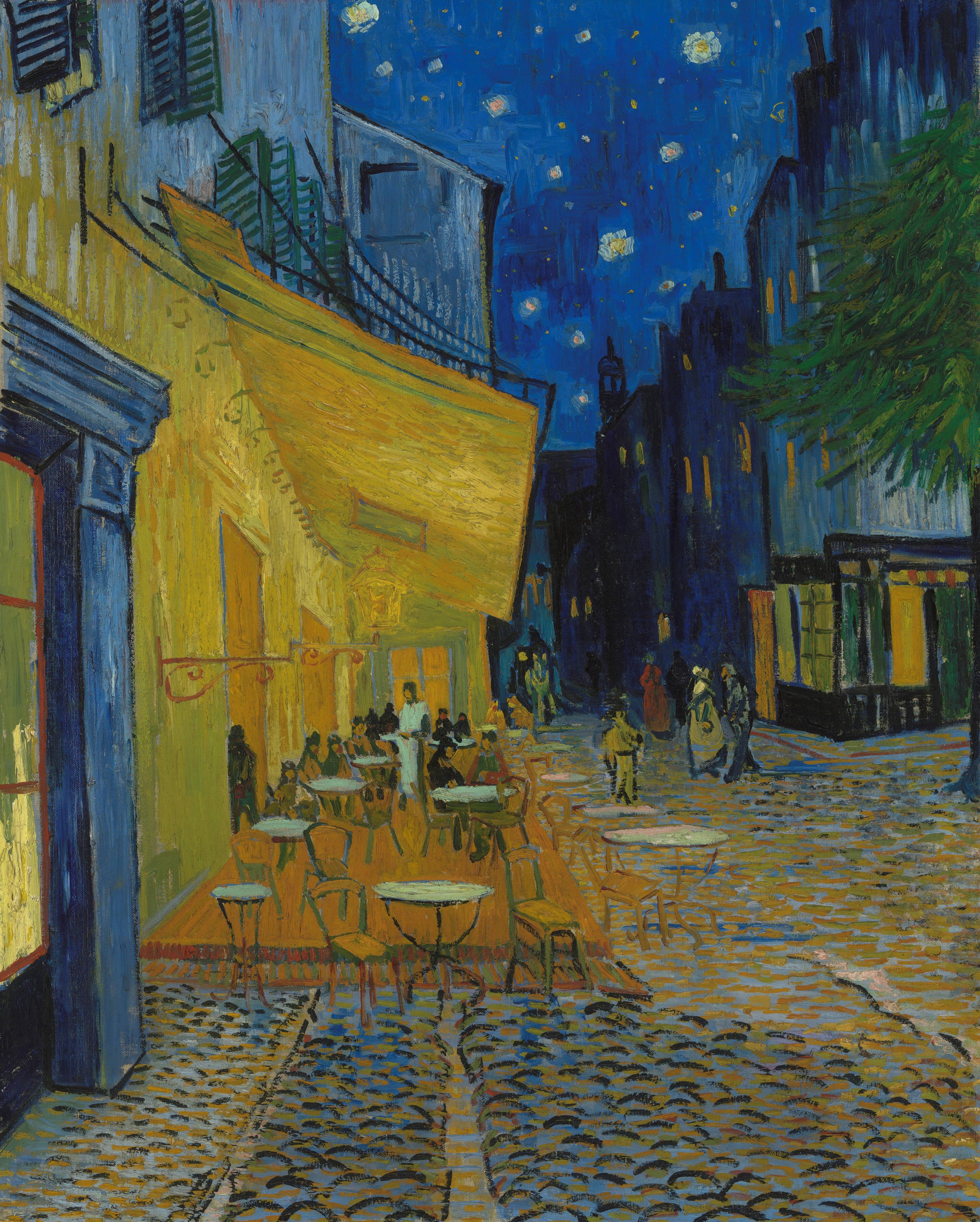
Café Terrace at Night
Vincent van Gogh · September 1888
Café Terrace at Night is Vincent van Gogh's September 1888 painting of a gaslit café on the Place du Forum in Arles under a starry sky, his first canvas with stars. It is in the Kröller-Müller Museum in Otterlo, the Netherlands.
04
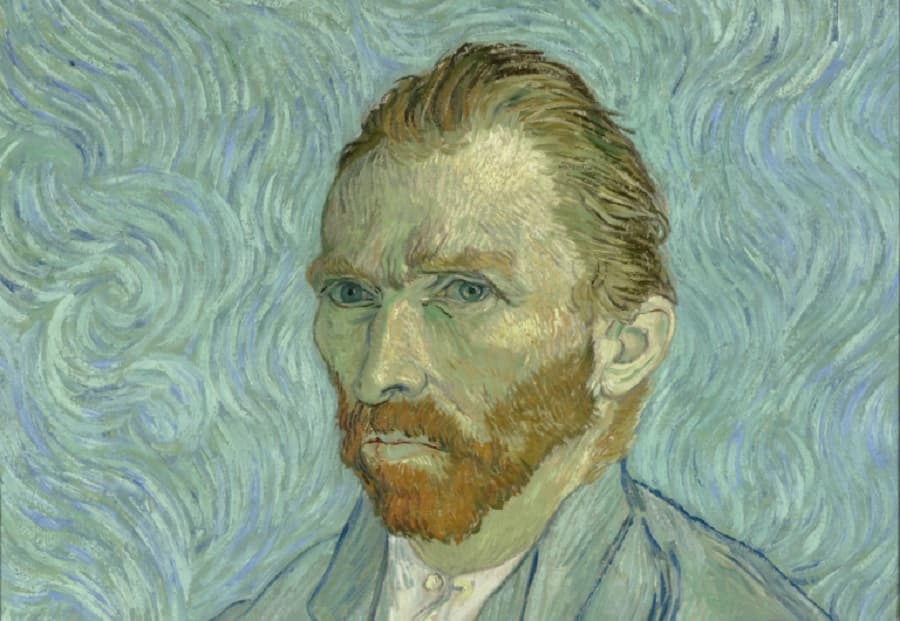
Self-Portrait (1889, Musée d'Orsay)
Vincent van Gogh · 1889
This Self-Portrait is a painting Vincent van Gogh made in September 1889 at the asylum in Saint-Rémy-de-Provence, showing himself in a blue suit against a swirling blue background. It is in the Musée d'Orsay, Paris.
05
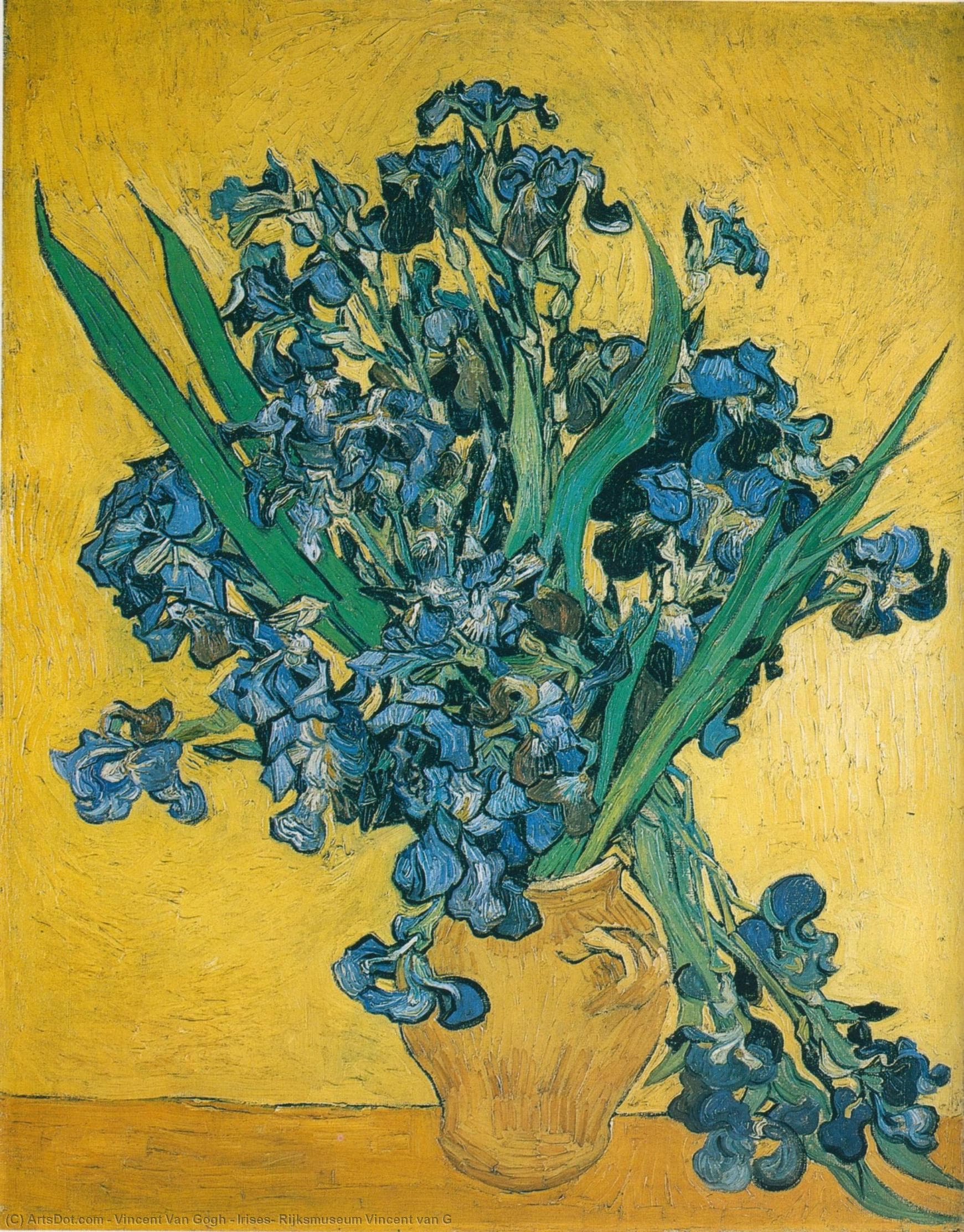
Irises (Vase with Irises Against a Yellow Background)
Vincent van Gogh · 1890
Irises is a still life by Vincent van Gogh of a large bouquet of irises in a vase against a yellow wall, painted in May 1890 at the asylum in Saint-Rémy-de-Provence. It is in the Van Gogh Museum in Amsterdam.
06
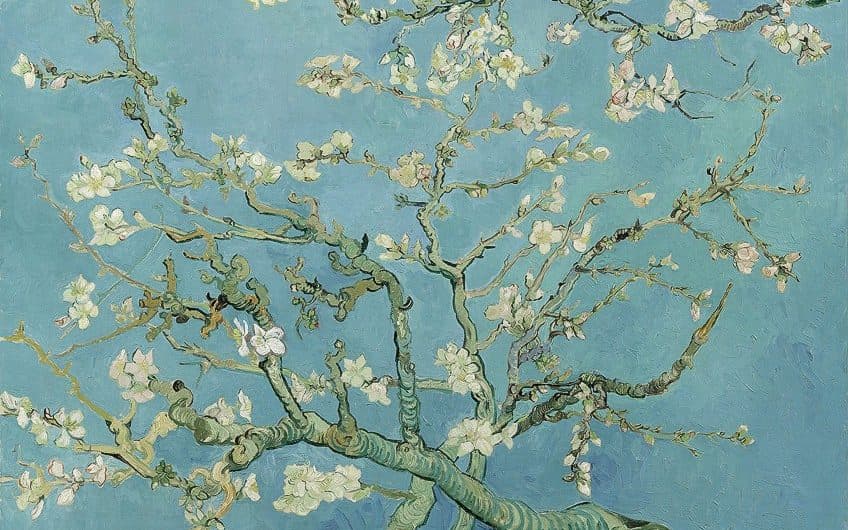
Almond Blossom
Vincent van Gogh · 1890
Almond Blossom is a painting by Vincent van Gogh from February 1890 of white almond branches against a blue sky, made at Saint-Rémy to celebrate the birth of his nephew. It is in the Van Gogh Museum, Amsterdam.
07
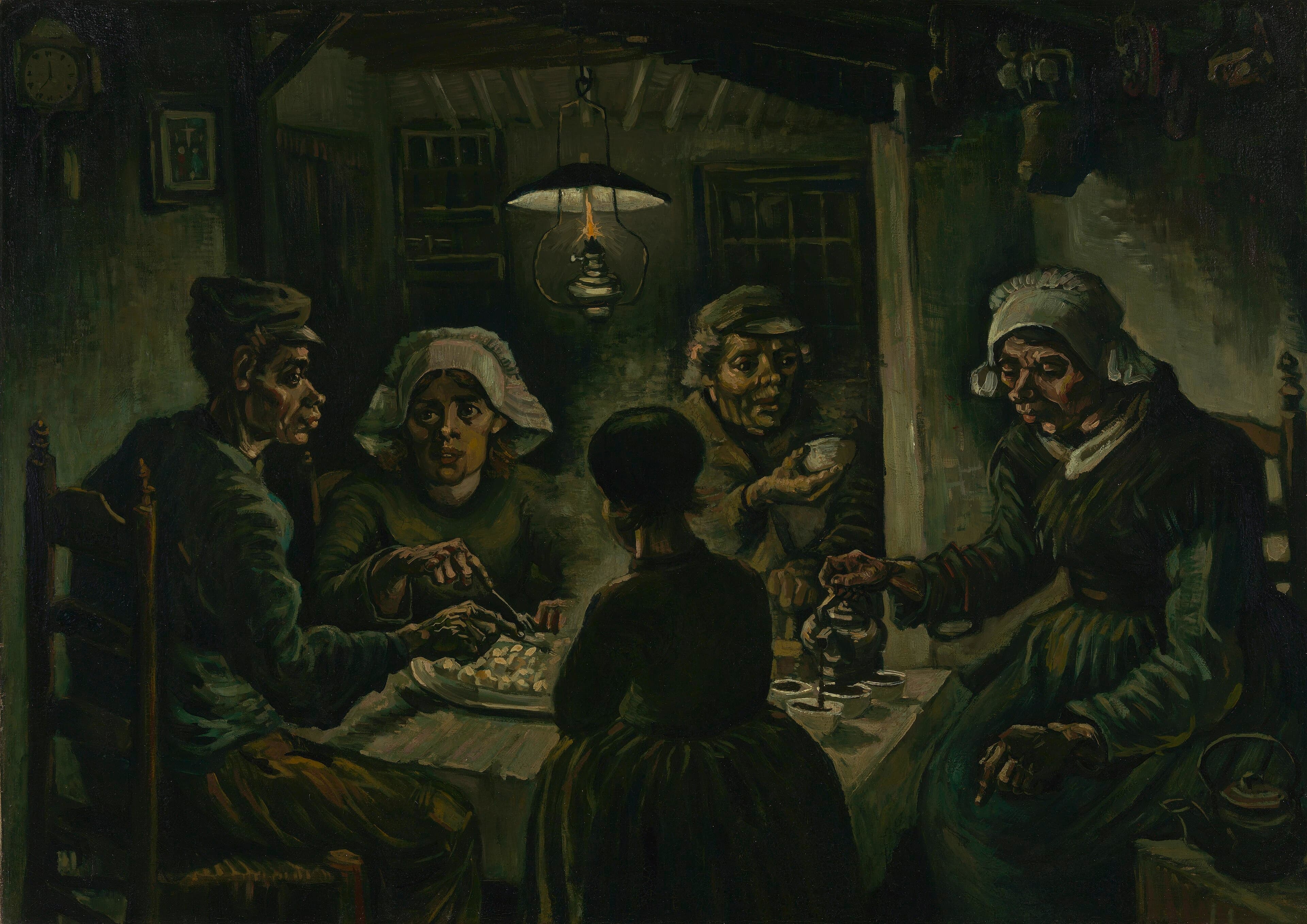
The Potato Eaters
Vincent van Gogh · April–May 1885
The Potato Eaters is Vincent van Gogh's 1885 painting of a peasant family sharing a meal of potatoes by lamplight in Nuenen, the Netherlands, his first ambitious figure composition. It is in the Van Gogh Museum in Amsterdam.
08
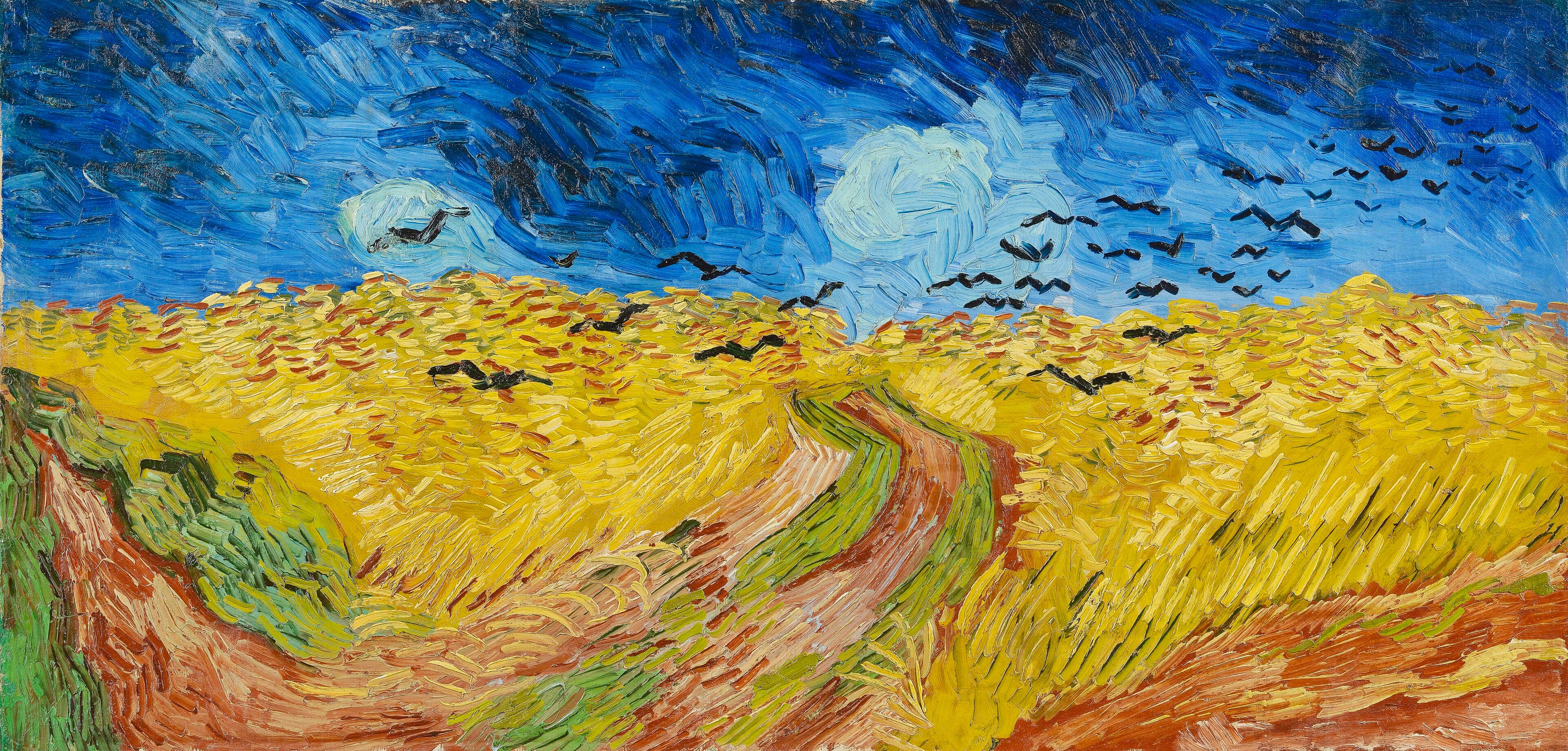
Wheatfield with Crows
Vincent van Gogh · July 1890
Wheatfield with Crows is a painting by Vincent van Gogh made in July 1890 at Auvers-sur-Oise, weeks before his death, showing a stormy sky and black crows over a golden wheat field. It is in the Van Gogh Museum in Amsterdam.
09
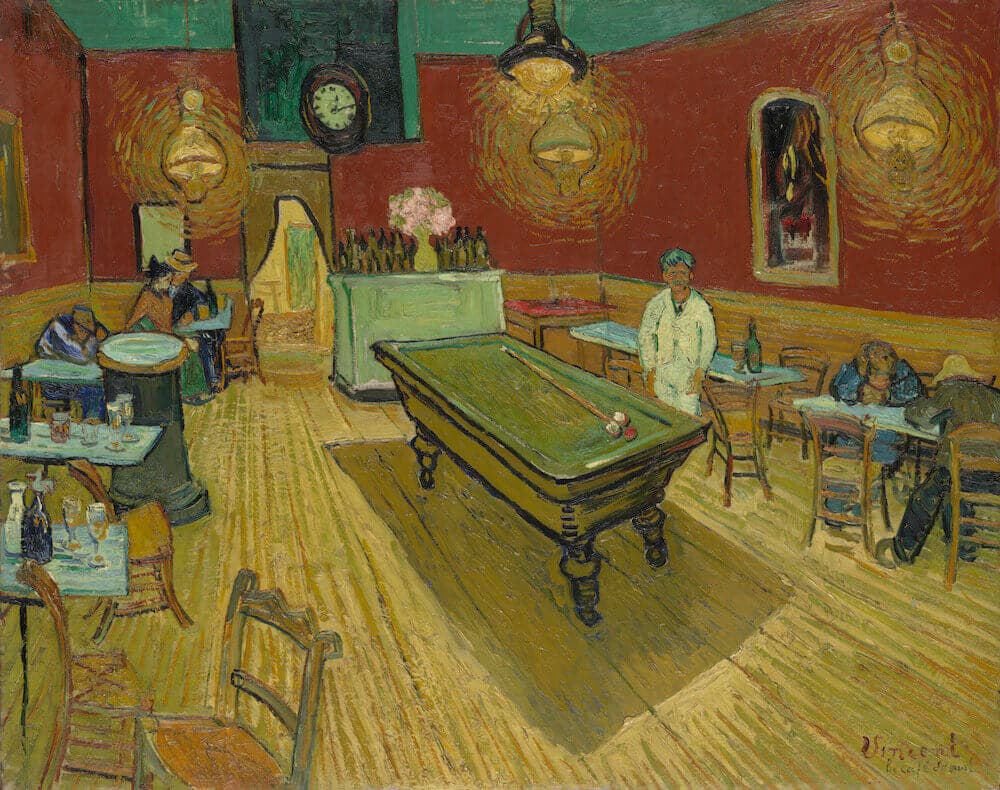
The Night Café
Vincent van Gogh · 1888
The Night Café (Le Café de nuit) is a September 1888 painting by Vincent van Gogh of an all-night café in Arles, its red walls and green ceiling lit by gas lamps. It is in the Yale University Art Gallery, New Haven.
10
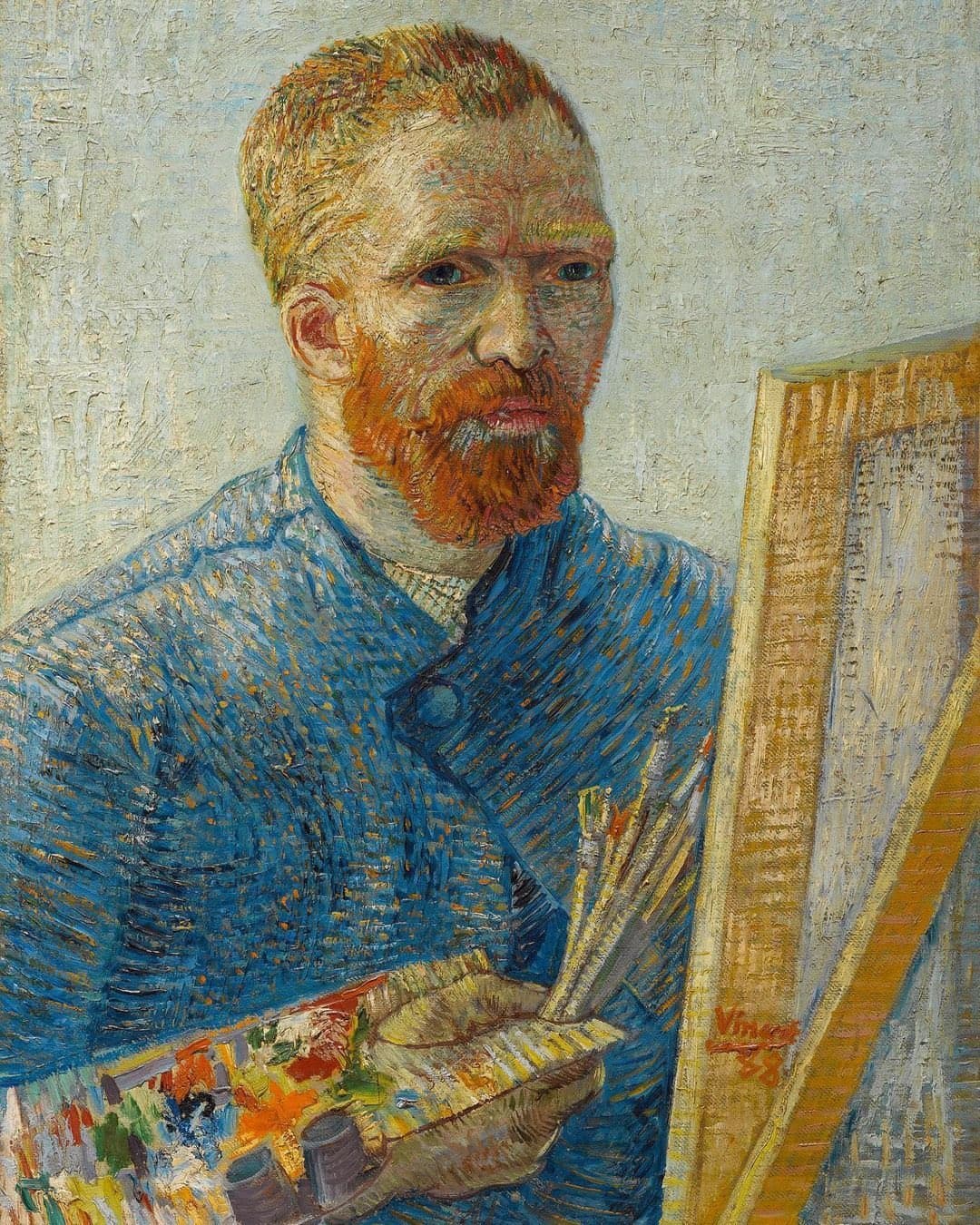
Self-Portrait as a Painter
Vincent van Gogh · 1887–88
Self-Portrait as a Painter is Vincent van Gogh's image of himself at the easel, palette and brushes in hand, painted in Paris between December 1887 and February 1888. His last Paris self-portrait, it is in the Van Gogh Museum, Amsterdam.
11
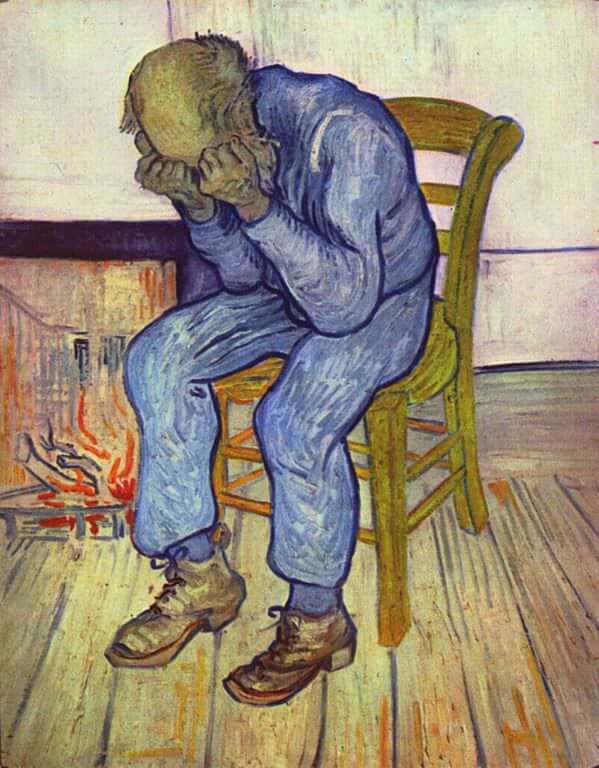
At Eternity's Gate
Vincent van Gogh · 1890
At Eternity's Gate, also called Sorrowing Old Man, is an oil painting Vincent van Gogh made at Saint-Rémy in early May 1890, reworking a drawing of 1882. It is in the Kröller-Müller Museum, Otterlo, Netherlands.
12
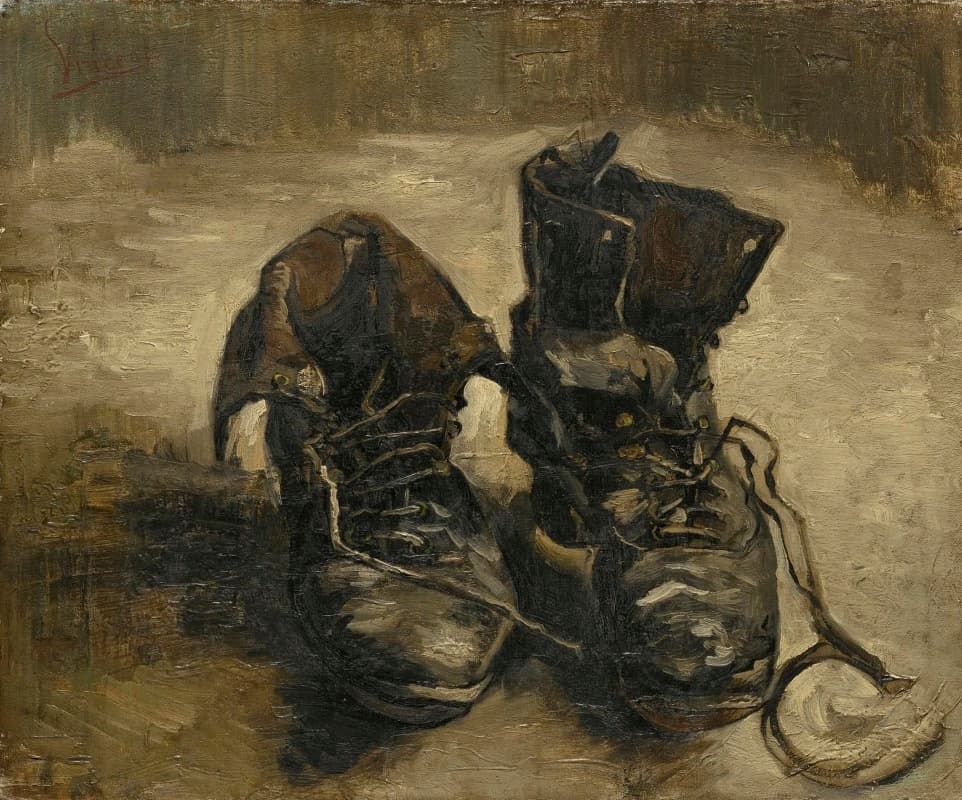
Shoes
Vincent van Gogh · 1886
Shoes (A Pair of Shoes) is Vincent van Gogh's 1886 still life of a battered pair of work boots, painted in Paris. Later made famous by the philosopher Martin Heidegger's essay, it is in the Van Gogh Museum, Amsterdam.
13
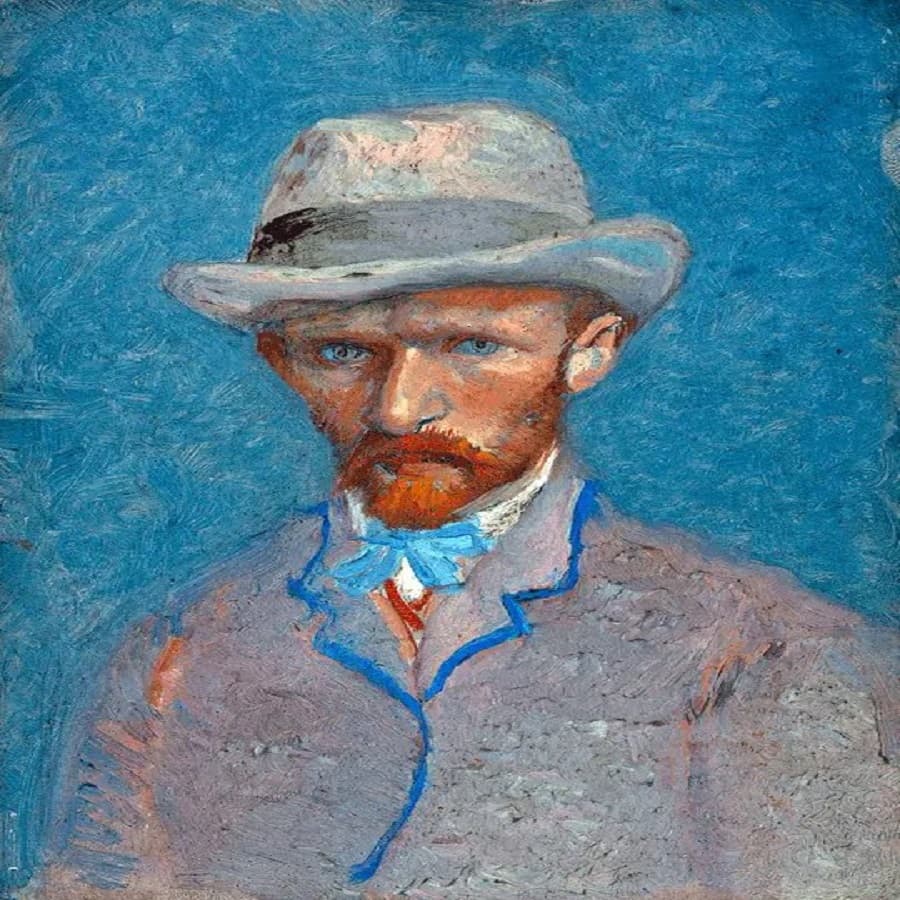
Portrait of Theo van Gogh (Self-Portrait with Grey Felt Hat)
Vincent van Gogh · 1887
This small 1887 oil on cardboard by Vincent van Gogh shows a red-bearded man in a grey felt hat against bright blue. The Van Gogh Museum calls it a self-portrait; in 2019 the scholar Sjraar van Heugten argued it actually portrays Vincent's brother Theo.
14
Head of a Skeleton with a Burning Cigarette
Vincent van Gogh · 1886
Head of a Skeleton with a Burning Cigarette is a small oil painting by Vincent van Gogh, made in Antwerp in early 1886 while he studied at the art academy there. It is in the Van Gogh Museum, Amsterdam.
15
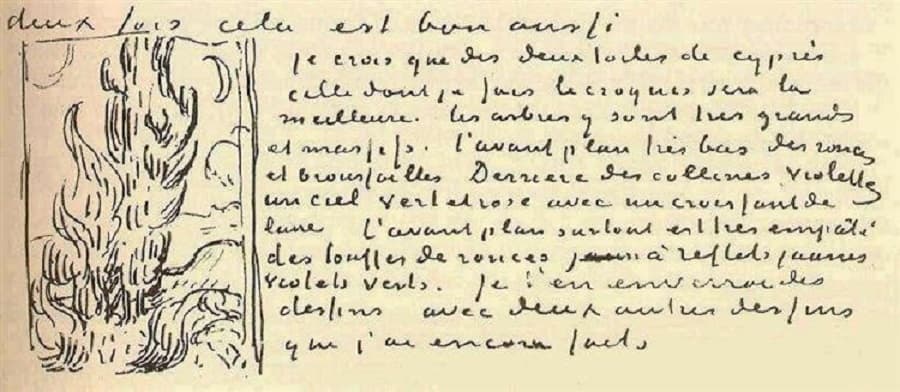
The Letters of Vincent van Gogh
Vincent van Gogh · 1872–1890
The letters of Vincent van Gogh are the roughly 820 surviving letters he wrote between 1872 and 1890, most to his brother Theo, many illustrated with sketches of his paintings. Most originals are in the Van Gogh Museum, Amsterdam. The page shown sketches his cypresses of June 1889.
How Van Gogh became a painter
Van Gogh came to art late and by a winding road. Born in Zundert in the southern Netherlands, he worked for the art dealers Goupil & Cie in The Hague, London and Paris, then tried to become a preacher among the coal miners of the Borinage in Belgium. In 1880, aged 27, he decided to be an artist, supported financially by his younger brother Theo, an art dealer in Paris.
His early work is dark and earthy. In Nuenen, in Brabant, he painted weavers and peasants, culminating in The Potato Eaters (1885, Van Gogh Museum), a family eating potatoes by lamplight. He wrote to Theo that he wanted to show people who had dug the earth with the same hands they were putting into the dish. The colors, he said, were those of a dusty potato, unpeeled.
Paris: color arrives (1886–1888)
In Paris, living with Theo, Van Gogh met the Impressionists and Neo-Impressionists and discovered Japanese woodblock prints. His palette brightened in months. He painted more than two dozen self-portraits there, partly because he could not afford models; Self-Portrait as a Painter (1887–88, Van Gogh Museum) shows him at his easel with a palette of the pure colors he now used. Works from this period, like the worn boots of A Pair of Shoes (1886), still have the weight of his Dutch years.
Arles: the yellow years (1888–1889)
In February 1888 he moved to Arles in Provence, looking for southern light. In fifteen months he made around 200 paintings. He rented the Yellow House, hoping to found a community of artists, and painted the Sunflowers to decorate the room of his friend Paul Gauguin. There are five large surviving versions of the vase of sunflowers against a yellow ground, in London, Amsterdam, Munich, Philadelphia and Tokyo; a sixth was destroyed in Japan in 1945.
Café Terrace at Night (1888, Kröller-Müller Museum, Otterlo) was his first painting with a starry sky, painted on the spot with no black at all: blue, violet and green for the night, yellow and orange for the gaslit terrace. The Night Café, painted the same month, uses clashing reds and greens to make a room where, he wrote, one could ruin oneself, go mad or commit a crime.
Gauguin arrived in October. Their partnership ended on 23 December 1888, when Van Gogh, in a mental crisis, cut off part of his left ear.
Saint-Rémy: the asylum (1889–1890)
In May 1889 he admitted himself to the asylum of Saint-Paul-de-Mausole at Saint-Rémy-de-Provence. Between attacks he painted the garden, the olive groves, the cypresses and the view from his window. Irises was one of the first works there. The Starry Night (June 1889, Museum of Modern Art, New York) combines that view east toward the Alpilles hills with an invented village and a flame-like cypress, under a sky of swirling stars, a crescent moon and the morning star. Van Gogh himself was unsure of it; in a letter to the painter Émile Bernard he counted it among his failed experiments in painting from imagination.
In early 1890, news that Theo had a son, named Vincent after him, led to Almond Blossom, branches of white blossom against a blue sky in the manner of a Japanese print, painted for the baby's room.
Auvers-sur-Oise: the last seventy days (1890)
In May 1890 Van Gogh moved to Auvers, north of Paris, under the eye of Dr. Paul Gachet. He painted about seventy works in seventy days, among them the portrait of Gachet, the church at Auvers and Wheatfield with Crows. On 27 July he was wounded by a gunshot, generally believed to be self-inflicted, and he died two days later, aged 37, with Theo beside him. Wheatfield with Crows is often called his last painting; it was not, but its storm-dark sky and three paths that lead nowhere have made it the image of his end.
Illness, myth and the paintings
Van Gogh's illness has been diagnosed after the fact as epilepsy, bipolar disorder, the effects of absinthe and many other conditions; no diagnosis is certain. What the letters make clear is that he did not paint during his attacks, which left him unable to work for weeks. The paintings were made in the lucid periods between them, often with great deliberation, and he wrote about color choices and compositions with complete clarity.
That matters, because the popular image of Van Gogh as a mad genius painting in a frenzy can get in the way of the work. At Eternity's Gate (1890, Kröller-Müller Museum), an old man sitting by a fire with his face buried in his fists, is a painted copy of a lithograph he had made in The Hague in 1882. It shows grief, but it is also the work of an artist carefully revisiting his own earlier composition.
How to recognize a Van Gogh
Look at the paint. Van Gogh laid it on thickly, in visible, directional strokes, so that a sky or field seems to move. He outlined forms in dark blue, used complementary colors side by side, blue against orange, red against green, and exaggerated color for emotional effect. He also drew constantly, and his reed-pen drawings use the same rhythm of dots and dashes.
The letters
More than 800 of Van Gogh's letters survive, most of them to Theo. They are one of the great documents of an artist's life, full of descriptions of paintings in progress, color theory, books and doubts. Theo died six months after Vincent, and it was Theo's widow, Jo van Gogh-Bonger, who published the letters in 1914 and built her brother-in-law's reputation. See The Letters of Vincent van Gogh.
Where to see Van Gogh's paintings
The Van Gogh Museum in Amsterdam holds the largest collection, about 200 paintings, much of it from the family. The Kröller-Müller Museum in Otterlo has the second largest. The Starry Night is at MoMA in New York, Irises at the Getty in Los Angeles, The Night Café at Yale University Art Gallery, and versions of the Sunflowers at the National Gallery in London, the Neue Pinakothek in Munich and the Philadelphia Museum of Art.
Questions & answers
What is Van Gogh's most famous painting?
The Starry Night (1889), at the Museum of Modern Art in New York, is Van Gogh's most famous painting. The Sunflowers series, Café Terrace at Night and his self-portraits are almost as widely recognized.
How many paintings did Van Gogh paint?
Van Gogh made about 860 oil paintings and more than 1,200 drawings and watercolors, some 2,100 works in all, in roughly ten years. Most of his famous paintings date from his last two and a half years, from 1888 to 1890.
Did Van Gogh sell any paintings in his lifetime?
Very few. The Red Vineyard is often said to be the only painting he sold, bought in Brussels in 1890 by the painter Anna Boch, though records suggest a few other sales and exchanges. He was supported throughout by his brother Theo.
Where is the largest collection of Van Gogh paintings?
The Van Gogh Museum in Amsterdam has the world's largest collection, around 200 paintings, 500 drawings and most of his letters. The Kröller-Müller Museum in Otterlo, in the Netherlands, holds the second largest.
Is Wheatfield with Crows Van Gogh's last painting?
No, although it is often described that way. Wheatfield with Crows was painted in July 1890, in the final weeks of his life, but scholars believe Tree Roots, also in the Van Gogh Museum, was his last work.