Italian Renaissance
The Baptism of Christ
Andrea del Verrocchio & Leonardo da Vinci, c. 1470–75
The Baptism of Christ is a painting from Andrea del Verrocchio's workshop in Florence, c. 1470–75, showing John the Baptist baptizing Jesus in the Jordan. The young Leonardo da Vinci painted the kneeling angel at left and much of the landscape. It is in the Uffizi, Florence.
- Date
- c. 1470–75
- Medium
- Oil and tempera on panel
- Dimensions
- 177 × 151 cm
- Collection
- Uffizi Gallery, Florence, Italy
- Movement
- Italian Renaissance
What you are looking at
Christ stands at the center, ankle-deep in the clear, shallow river Jordan, wearing only a striped red loincloth. His hands are pressed together in prayer and his head is bowed. To the right, John the Baptist, gaunt and weathered, in a camel-hair tunic under a pale cloak, reaches up to pour water from a small bowl over Christ's head. He holds a tall, thin cross-staff, and a scroll curling around it reads Ecce Agnus Dei, "Behold the Lamb of God." At the top of the picture, the hands of God the Father emerge from the sky, and the dove of the Holy Spirit descends in a burst of golden rays.
On the left, two angels kneel on the riverbank holding Christ's garments. Behind them a tall palm tree rises; on the right, dark rocks and a stand of trees enclose the scene. Between them, beyond the figures, opens a misty river valley stretching to distant blue mountains. A black bird swoops down at the upper right.
The painting, made for the Vallombrosan monastery of San Salvi outside Florence, is now in the Uffizi Gallery. It measures about 177 by 151 centimeters and was painted in tempera and oil on wood panel in the workshop of Andrea del Verrocchio, in the early to mid 1470s.
Who painted the Baptism of Christ?
The commission was Verrocchio's. He was a leading Florentine sculptor, goldsmith and painter, and his workshop trained some of the best artists of the next generation. Among them was the young Leonardo da Vinci, who entered the workshop in his teens.
According to Giorgio Vasari's Lives of the Artists (1550), Leonardo painted one of the angels, and it was so much better than anything else in the picture that Verrocchio resolved never to touch color again. The story is almost certainly exaggerated; Verrocchio did not give up painting. But technical study has confirmed that the angel at far left, seen in profile turning to look over its shoulder, is Leonardo's work, painted in oil over the earlier tempera. Leonardo is also credited with the hazy landscape behind the angels and with reworking parts of Christ's body. Some scholars have suggested that another workshop member, possibly the young Sandro Botticelli, painted the second angel, though this is debated.
Looking closely: two hands, two styles
Put your eye close to the two angels and the difference is clear. The right-hand angel, gazing up at Christ with wide eyes, is crisp and linear: its curls are drawn individually, its face lit evenly. Leonardo's angel at the left is softer and more alive. The face turns in three-quarter view, the light falls gently across it, and the edges dissolve into shadow. The blue drapery over its kneeling legs falls in deep, heavy folds, modeled with a subtlety unlike anything else in the panel.
The landscape behind it shows the same hand. Instead of the sharp, detailed rocks on the right side, the left background melts into atmospheric haze, water and distant hills fading to blue. This is an early example of the effect Leonardo later called sfumato, the soft gradation of tone that would become his signature in works such as the Mona Lisa.
Compare the figures of Christ and John. Their bodies are lean and anatomically studied, with veins and tendons visible in John's arm and legs, a sculptor's attention to structure. These parts are largely Verrocchio's, though Leonardo appears to have retouched Christ's torso. The palm tree and the rocks on the right are drier and more decorative, typical of tempera workshop painting of the 1460s and 70s.
The meaning of the scene
The Baptism is described in the Gospels of Matthew, Mark and Luke. As Jesus came up out of the water, the heavens opened, the Spirit of God descended like a dove, and a voice from heaven proclaimed him the beloved Son. The painting shows all three persons of the Trinity: the hands of the Father above, the dove of the Spirit, and the Son below. The bowl, the river and the bowed head mark the beginning of Christ's public ministry.
The angels holding the garments are a traditional detail, preparing to clothe Christ when he steps out of the water. The scroll's Ecce Agnus Dei quotes John's words in the Gospel of John (1:29), identifying Christ as the sacrificial Lamb, a foreshadowing of the Passion. The palm tree may allude to victory and martyrdom, though such readings are traditional rather than documented intentions.
Why it matters
The Baptism is one of the most important documents of Leonardo's beginnings. It shows a teenage or early-twenties painter working within a collaborative workshop, adding a figure and a landscape that already look forward to his mature work. It also shows the shift in Florentine painting from egg tempera to oil, which Leonardo exploited for its soft transitions and depth of shadow.
For other early Leonardo works on this site, see the Benois Madonna, the drawing Study of Hands and his later The Last Supper. Our guide to Renaissance paintings places the panel in its wider context.
Where to see it
The Baptism of Christ hangs in the Uffizi Gallery in Florence, in the rooms devoted to Leonardo and his circle, near his Annunciation and the unfinished Adoration of the Magi. It passed into the Florentine public collections after the religious houses of Tuscany were suppressed in the early nineteenth century, and has long been one of the Uffizi's most studied panels.
Questions & answers
Where is the Baptism of Christ by Verrocchio and Leonardo?
It is in the Uffizi Gallery in Florence, Italy, displayed in the rooms dedicated to Leonardo da Vinci and his circle alongside his Annunciation and Adoration of the Magi. It was originally painted for the monastery of San Salvi near Florence.
Which part of the Baptism of Christ did Leonardo paint?
Leonardo painted the angel at far left, seen in profile turning its head, as well as much of the hazy landscape behind it. He also appears to have retouched Christ's body. The rest is largely by Andrea del Verrocchio and his workshop.
Did Verrocchio stop painting after seeing Leonardo's angel?
That is the story told by Giorgio Vasari in 1550, who said Verrocchio vowed never to paint again because his pupil had surpassed him. Historians regard it as an exaggeration, since Verrocchio continued to take painting commissions, but it reflects how striking Leonardo's angel was.
When was the Baptism of Christ painted?
It was painted in Verrocchio's Florentine workshop around 1470–75, probably over several years. The earlier parts are in egg tempera, and Leonardo's later contributions are in oil, which is why the panel is described as oil and tempera.
What does the Baptism of Christ symbolize?
It shows the moment from the Gospels when Jesus is baptized by John in the Jordan and the Holy Spirit descends as a dove. With the hands of God the Father above, the painting represents the Trinity and the start of Christ's ministry.
More by the artist
Andrea del Verrocchio
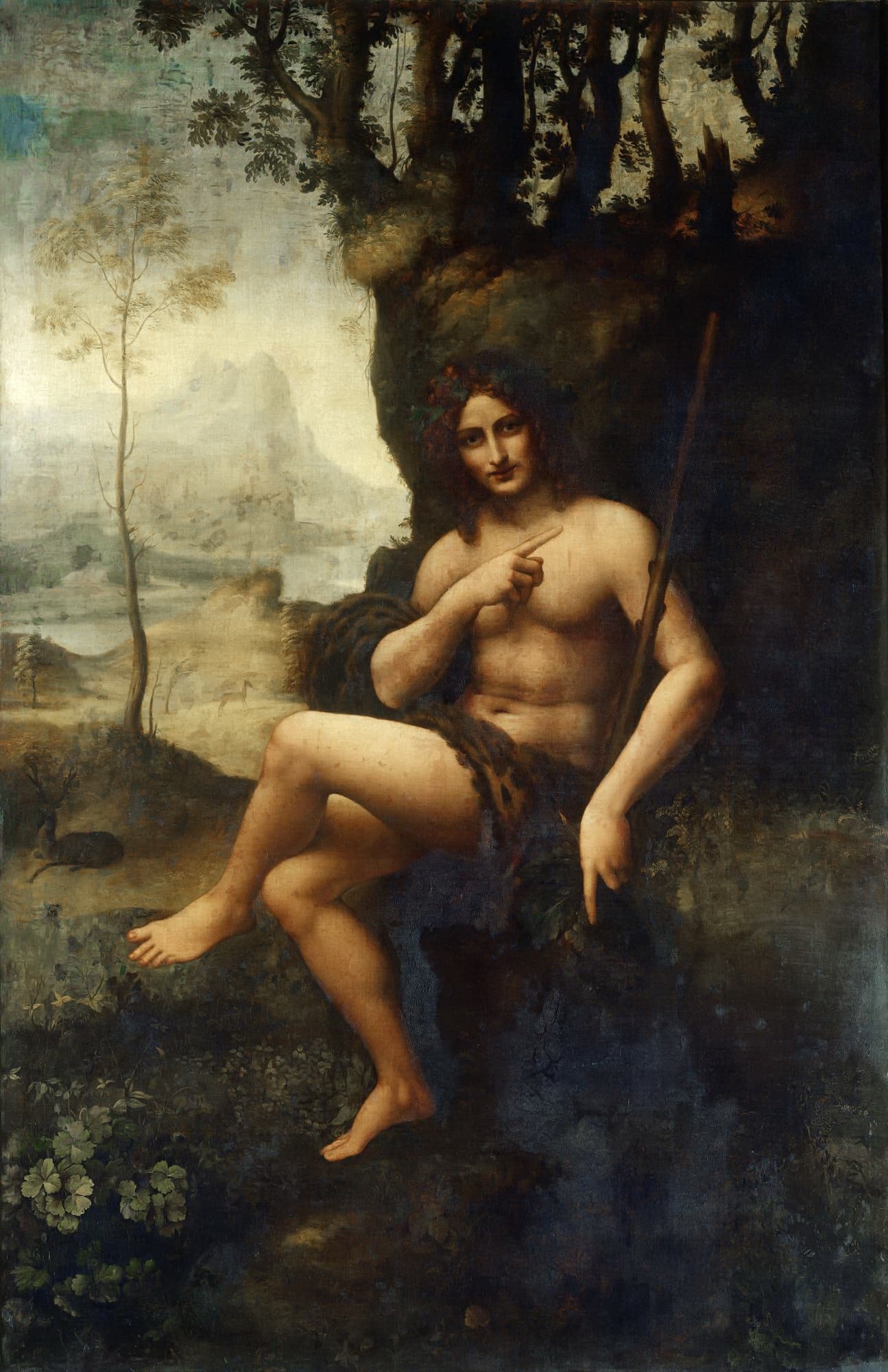
Bacchus (Saint John the Baptist)
Leonardo da Vinci · c. 1510–15; altered 1683–93
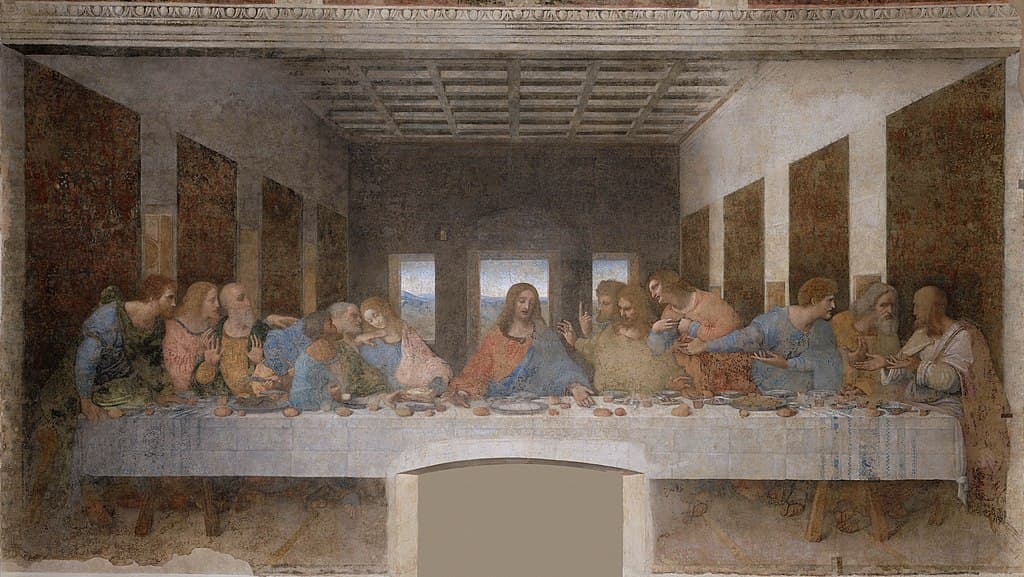
The Last Supper
Leonardo da Vinci · c. 1495–98
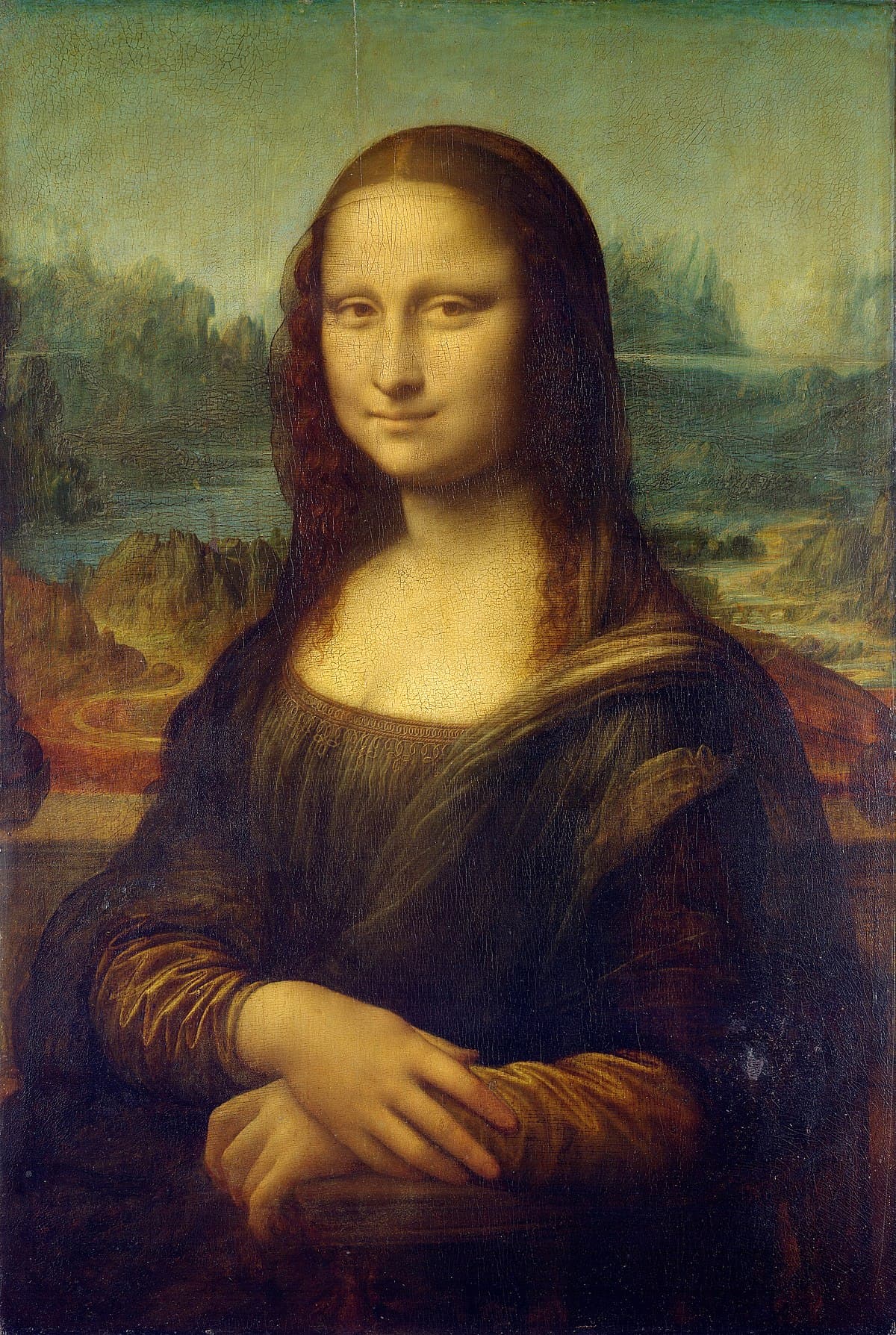
Mona Lisa
Leonardo da Vinci · c. 1503–1519
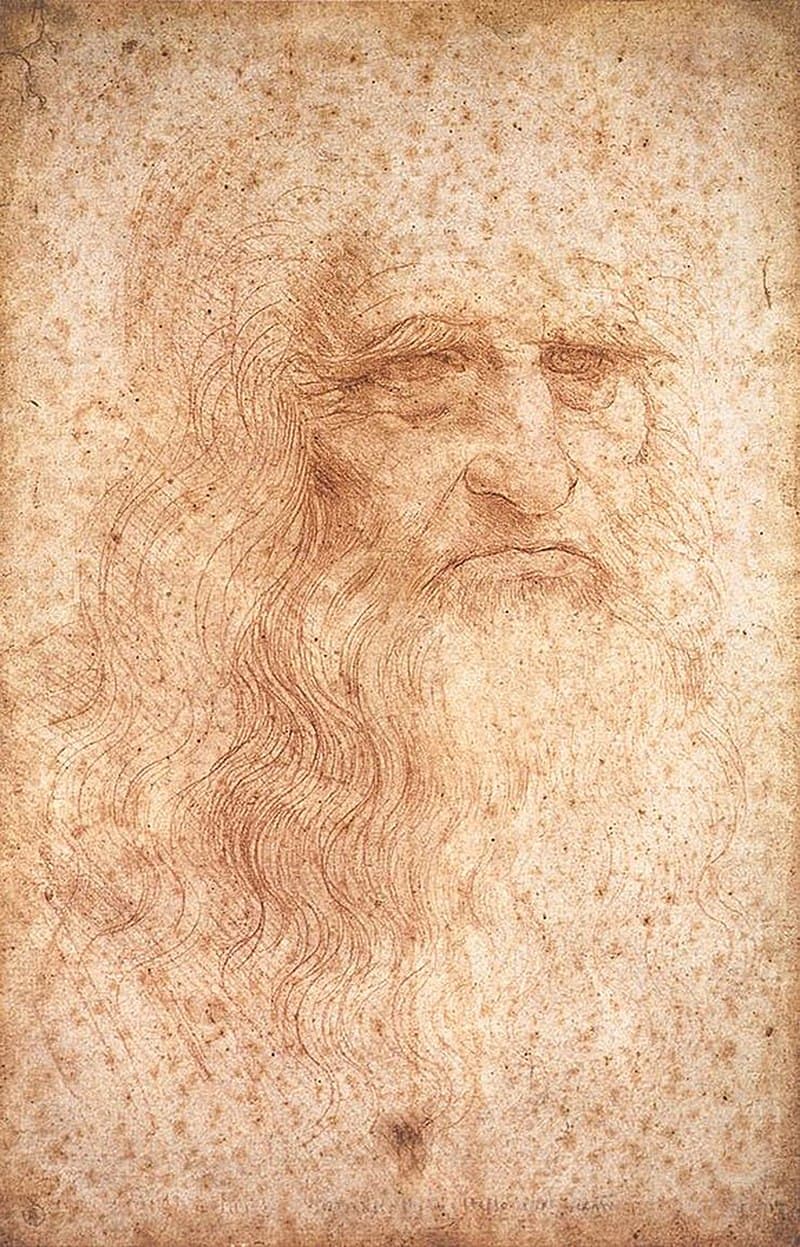
Portrait of a Man in Red Chalk
Leonardo da Vinci · c. 1512
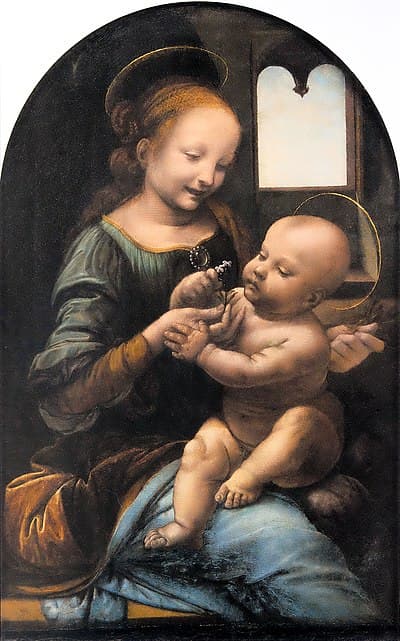
Benois Madonna
Leonardo da Vinci · c. 1478–80
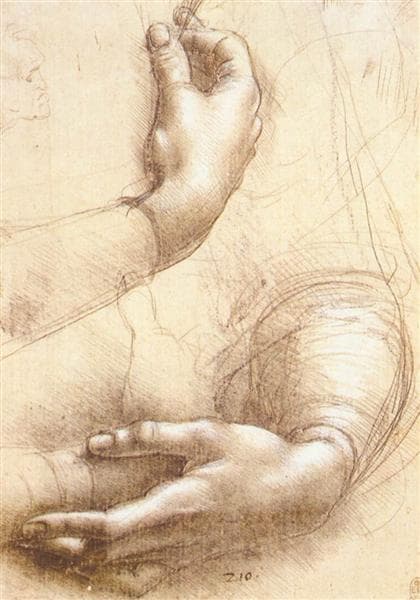
Study of Hands
Leonardo da Vinci · c. 1474–76
Kindred works
You may also study

Bridge over a Pond of Water Lilies
Claude Monet · 1899
The Creation of Adam
Michelangelo · c. 1511–12

Ophelia
John Everett Millais · 1851–52

The Great Wave off Kanagawa
Katsushika Hokusai · c. 1830–32
Lucifer
Franz von Stuck · 1890
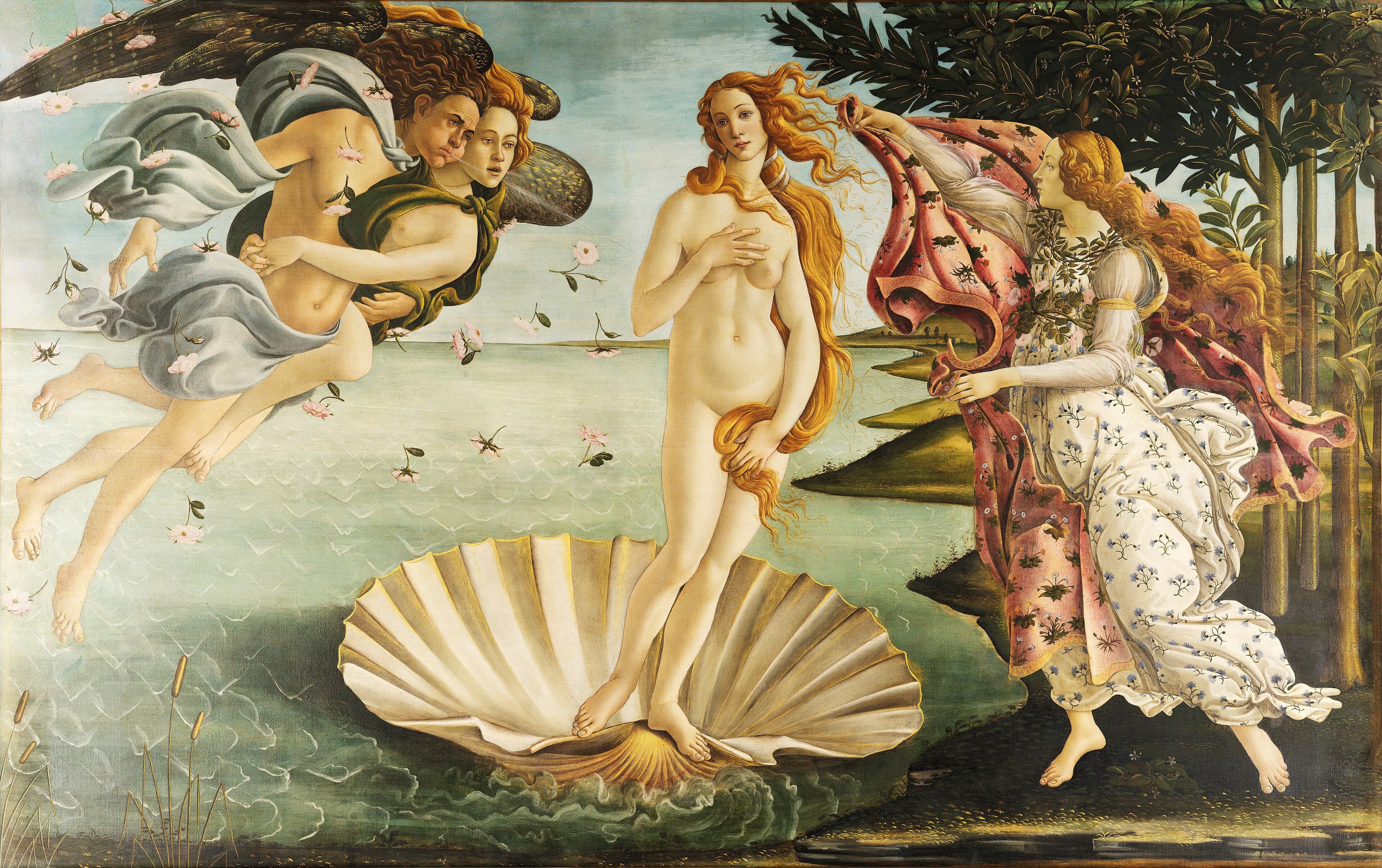
The Birth of Venus
Sandro Botticelli · c. 1484–1486
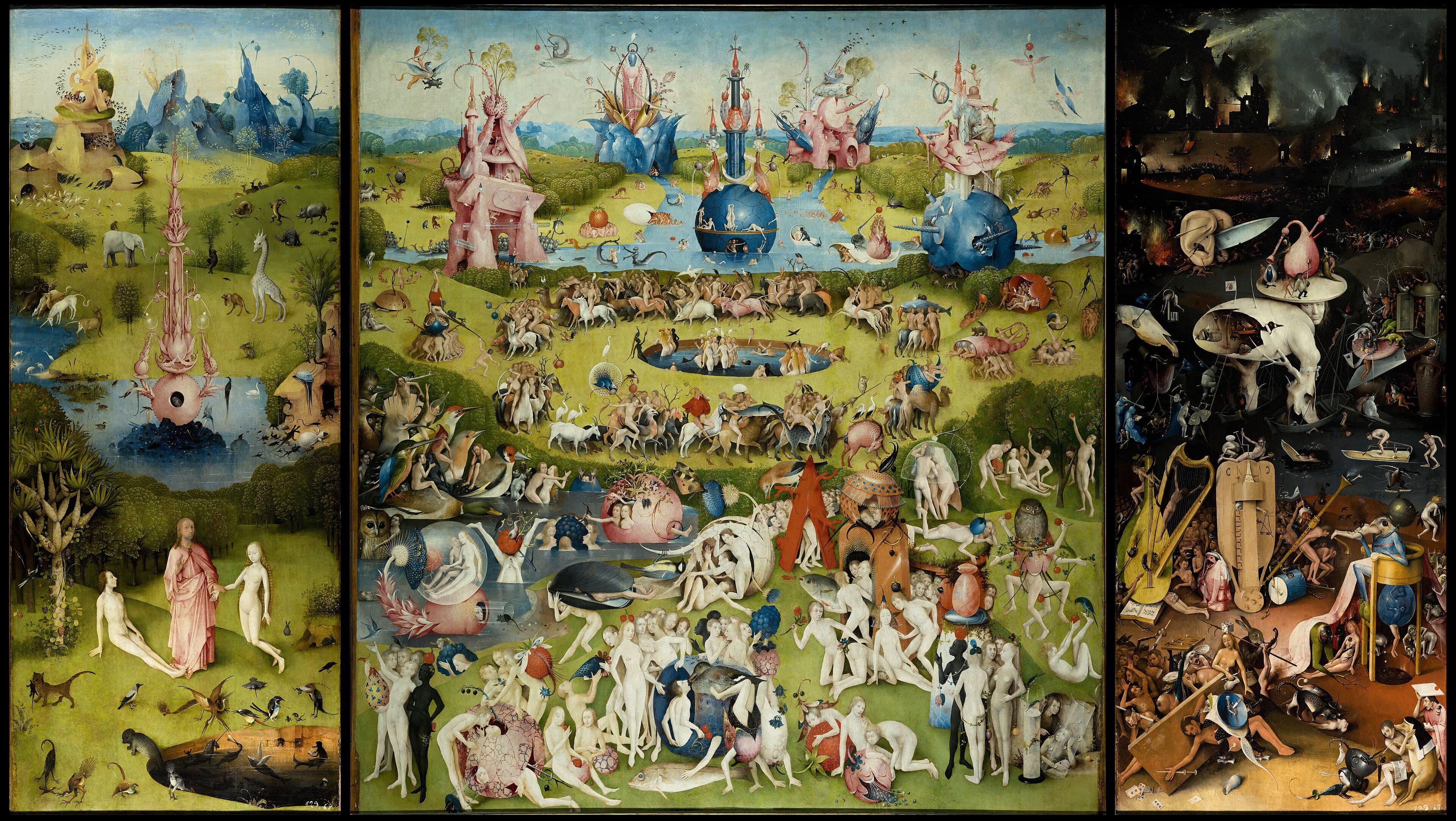
The Garden of Earthly Delights
Hieronymus Bosch · c. 1490–1510
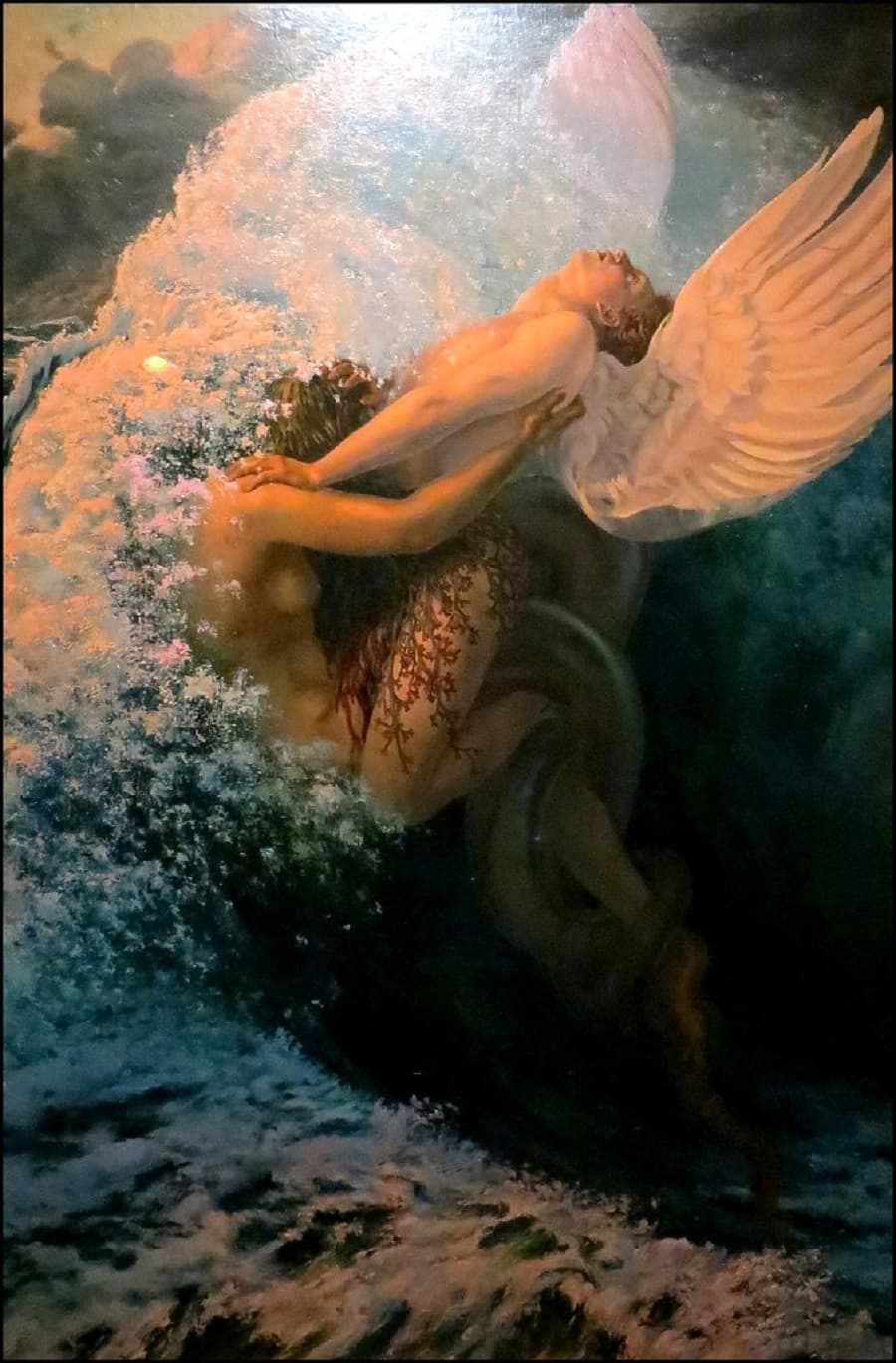
Spleen et Idéal
Carlos Schwabe · 1907