Italian (Florentine) · High Renaissance · Renaissance
Leonardo da Vinci
b. 15 April 1452, Vinci, Republic of Florence — d. 2 May 1519, Amboise, France
Leonardo da Vinci (1452–1519) was the Florentine painter, draftsman and scientist of the High Renaissance who painted the Mona Lisa and The Last Supper. The Louvre's Bacchus comes from his workshop and began as a Saint John the Baptist.
7 works in the collection
Works by Leonardo da Vinci
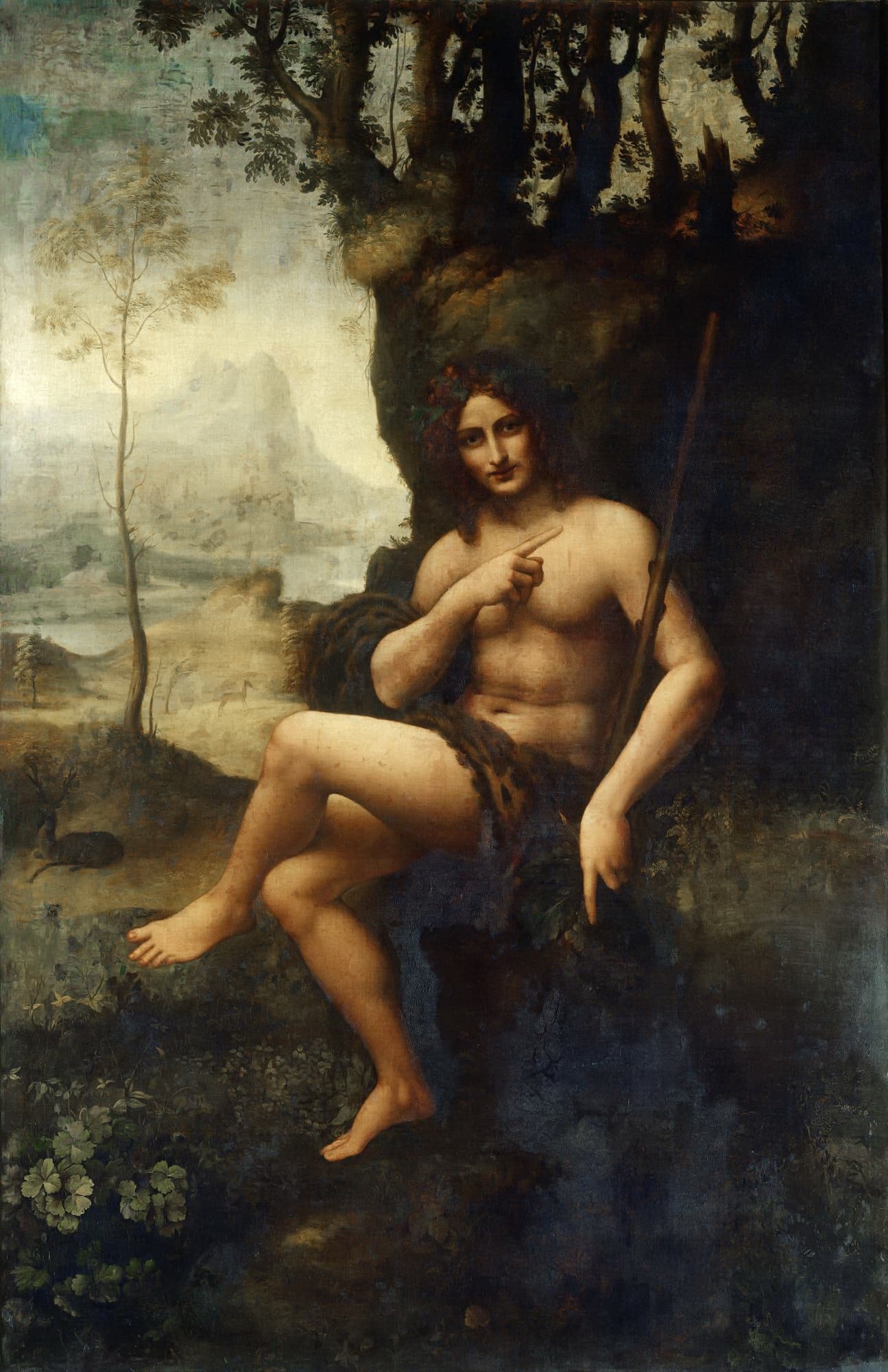
Bacchus (Saint John the Baptist)
Leonardo da Vinci · c. 1510–15; altered 1683–93
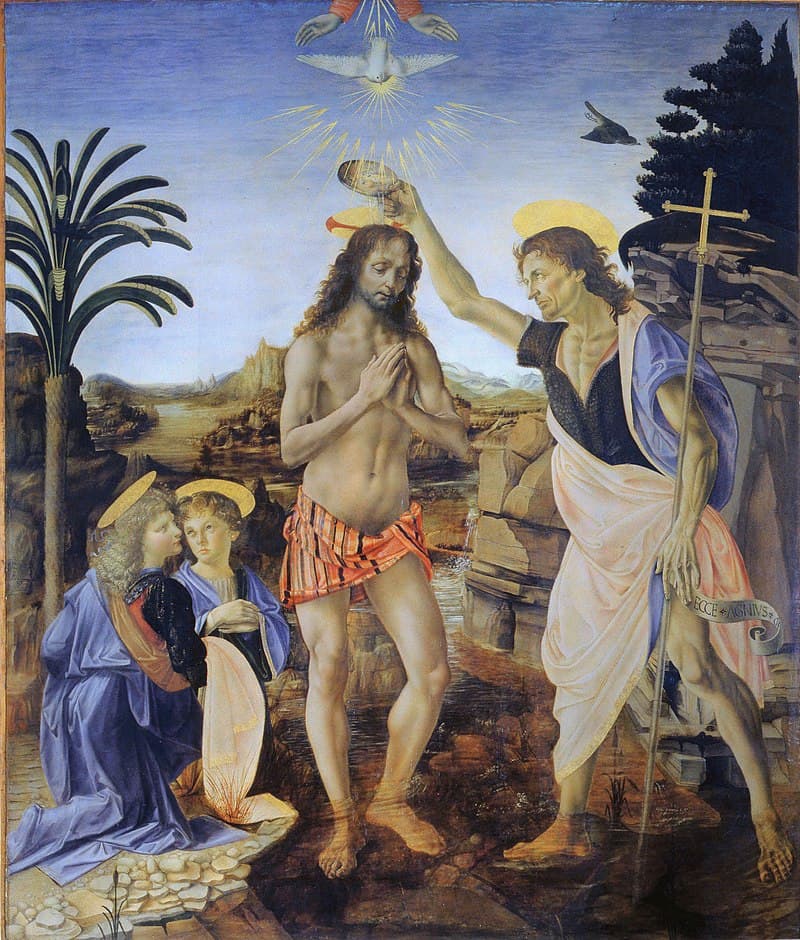
The Baptism of Christ
Andrea del Verrocchio & Leonardo da Vinci · c. 1470–75
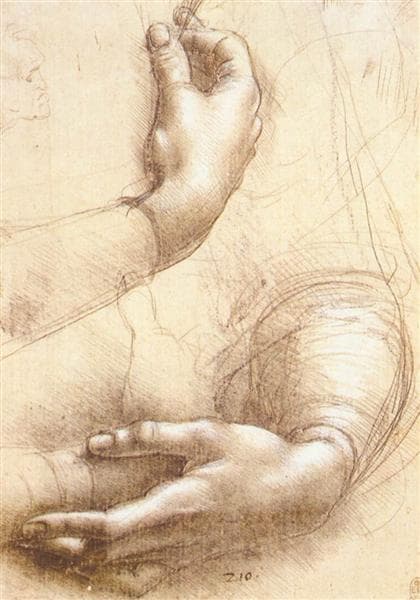
Study of Hands
Leonardo da Vinci · c. 1474–76
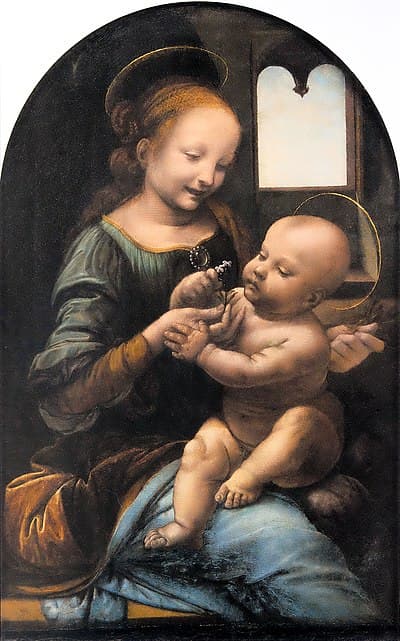
Benois Madonna
Leonardo da Vinci · c. 1478–80
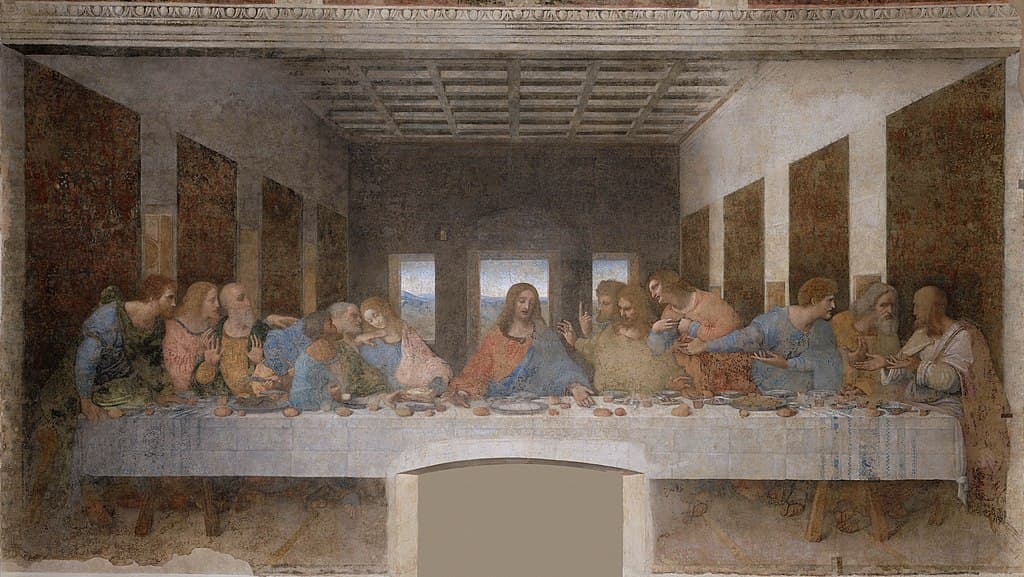
The Last Supper
Leonardo da Vinci · c. 1495–98
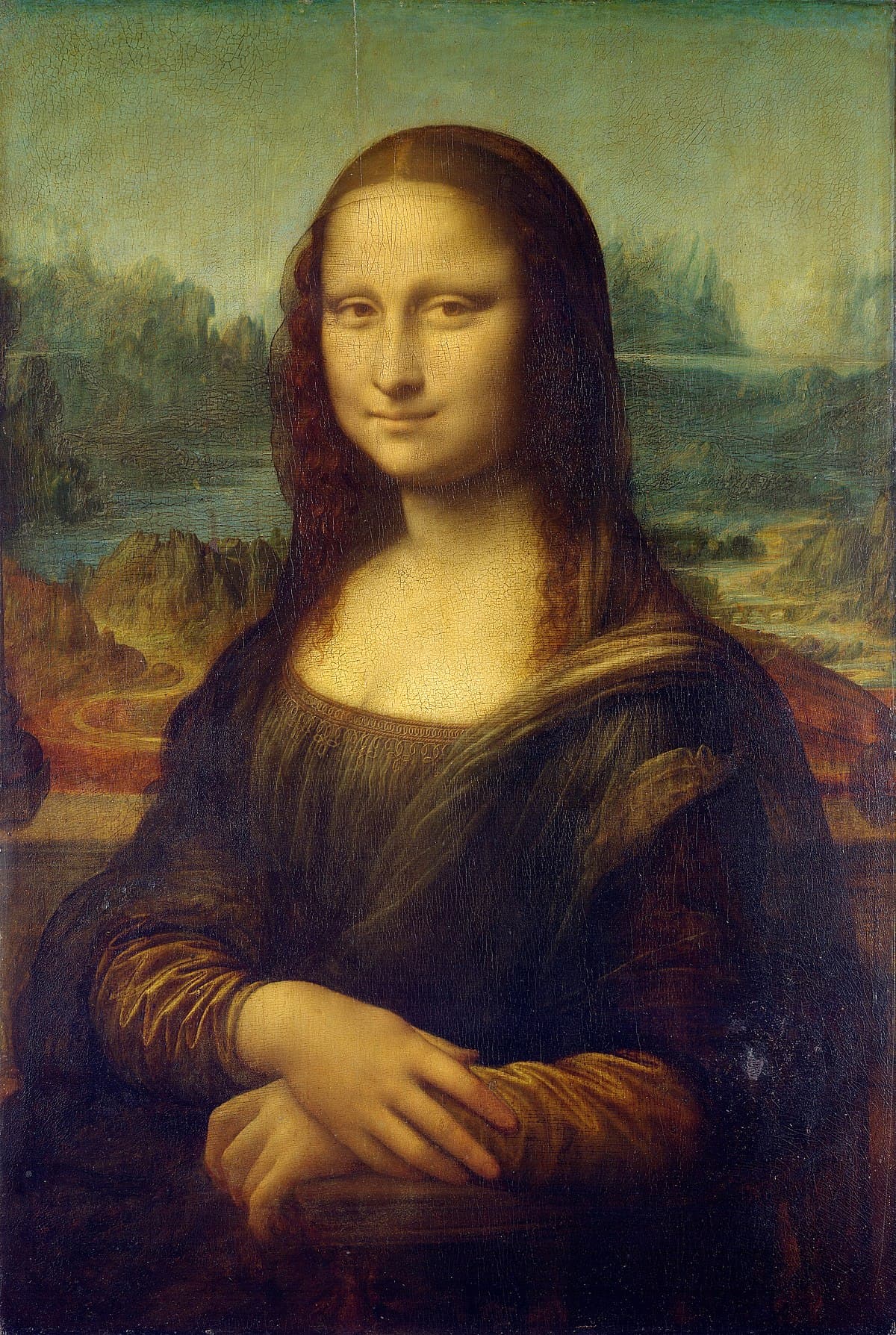
Mona Lisa
Leonardo da Vinci · c. 1503–1519
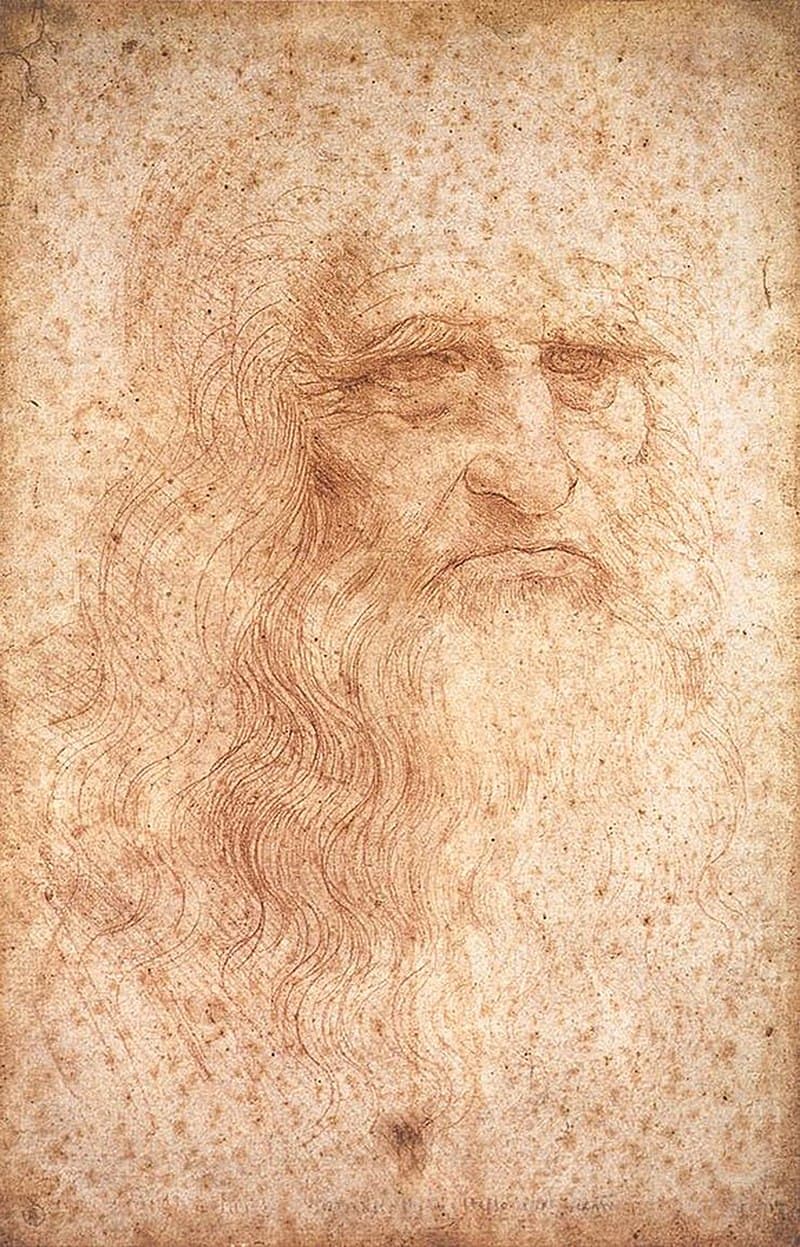
Portrait of a Man in Red Chalk
Leonardo da Vinci · c. 1512
Leonardo da Vinci was a Florentine painter, draftsman, engineer and investigator of nature whose handful of surviving paintings includes the Mona Lisa and The Last Supper. Fewer than twenty paintings are generally accepted as his, yet together with thousands of notebook pages they made him the model of the Renaissance universal genius.
Life in brief
Leonardo was born on 15 April 1452 in or near the Tuscan town of Vinci, the illegitimate son of the notary Ser Piero da Vinci and a young woman named Caterina. Around his mid-teens he entered the Florentine workshop of Andrea del Verrocchio, a sculptor, painter and goldsmith, and in 1472 he was registered in the painters' guild of St Luke.
In about 1482 he moved to Milan to serve Duke Ludovico Sforza, presenting himself as much as a military engineer as a painter. He stayed until the French invasion of 1499, painting The Last Supper and Lady with an Ermine, designing a colossal bronze horse that was never cast, and filling notebooks. Back in Florence from 1500 he began the Mona Lisa and the lost Battle of Anghiari mural. A second Milanese period under the French followed, then a stay in Rome (1513–16) under the patronage of Giuliano de' Medici. In 1516 he accepted the invitation of Francis I of France and settled at Clos Lucé, near the royal château of Amboise, where he died on 2 May 1519.
Style and technique
Leonardo's painting rests on close observation. He studied how light falls on a curved surface, how shadows soften at their edges, and how distant hills turn blue in the air, and he painted those effects. Two terms are tied to his name. Sfumato, "smoky," describes the imperceptible transitions of tone that dissolve outlines, especially around the eyes and mouth. Chiaroscuro, the modeling of form through light and dark, he pushed further than anyone before him.
He worked slowly and experimentally, in thin oil glazes built up over months or years. That method produced the luminous faces of his panels, but on a wall it was disastrous: The Last Supper, painted in tempera and oil on a dry plaster ground rather than in true fresco, began flaking within decades. Many projects were left unfinished, partly because his interests were never only artistic. His notebooks, written in mirror script, cover anatomy, optics, botany, geology, hydraulics and flight.
Drawing
Leonardo was one of the great draftsmen of all time, and drawing was his way of thinking. He used metalpoint, pen and ink, black chalk and red chalk, often on tinted paper. The early Study of Hands (c. 1474–76), in the Royal Collection at Windsor, may be connected with his portrait of Ginevra de' Benci. The famous Portrait of a Man in Red Chalk (c. 1512), in the Biblioteca Reale in Turin, has traditionally been taken as his self-portrait, though some scholars doubt it.
The key works
- The Baptism of Christ (c. 1470–75, Uffizi). A Verrocchio workshop painting in which the young Leonardo painted the kneeling angel at left and much of the landscape. Vasari's story that Verrocchio gave up painting after seeing it is probably a legend.
- The Benois Madonna (c. 1478–80, Hermitage, Saint Petersburg). A playful, intimate Madonna in which the Christ Child studies a small flower held by his very young mother.
- The Last Supper (c. 1495–98), on the refectory wall of Santa Maria delle Grazie in Milan. It captures the instant after Christ says one of the apostles will betray him, and the shock runs through the table in groups of three.
- The Mona Lisa (begun c. 1503), in the Louvre. The portrait of the Florentine Lisa Gherardini, which Leonardo kept and reworked for years, is the most famous painting in the world.
- Other accepted paintings include the Annunciation, Ginevra de' Benci, Lady with an Ermine, the two versions of The Virgin of the Rocks, The Virgin and Child with Saint Anne and Saint John the Baptist.
Did Leonardo paint Bacchus?
Many searches about Leonardo concern the Bacchus in the Louvre. The short answer is: not entirely, and it did not begin as Bacchus. The painting, of about 1510–15, comes from Leonardo's workshop and was probably painted by an assistant or follower from his design. It started as Saint John the Baptist seated in a landscape. Between 1683 and 1693, while in the French royal collection, it was overpainted to turn the saint into the Roman god of wine: a vine wreath was added to his head, a leopard skin to his lap, and his cross-staff became a thyrsus. The pointing gesture and the soft, smiling face still echo Leonardo's late Saint John the Baptist, also in the Louvre.
Influence
Leonardo's pupils and followers in Milan, the so-called Leonardeschi, spread his types and smiles across Lombardy. Raphael learned from his compositions in Florence; his younger rival Michelangelo answered him in the competition of the battle murals in the Palazzo Vecchio. His notebooks, largely unpublished for centuries, made him a hero of science as well as of art when they were studied in the nineteenth and twentieth centuries.
Where to see his work
The Louvre in Paris has the largest group of his paintings, including the Mona Lisa, The Virgin of the Rocks, Saint John the Baptist and The Virgin and Child with Saint Anne, as well as the workshop Bacchus. The Last Supper is in Milan, viewable only by timed booking. Other paintings are in the Uffizi (Florence), the Hermitage (Saint Petersburg), the National Gallery (London), the Czartoryski Museum (Kraków) and the National Gallery of Art (Washington), and the largest collection of his drawings is in the Royal Collection at Windsor. For the wider period, see our guide to Renaissance paintings and famous paintings.
Questions & answers
Did Leonardo da Vinci paint Bacchus?
Not in its current form. The Bacchus in the Louvre, c. 1510–15, was made in Leonardo's workshop, probably by a follower working from his design. It began as Saint John the Baptist and was overpainted in 1683–93 with a vine wreath, leopard skin and thyrsus to become the god of wine.
What are Leonardo da Vinci's most famous paintings?
His most famous paintings are the Mona Lisa (begun c. 1503) in the Louvre and The Last Supper (c. 1495–98) in Milan. Others include Lady with an Ermine, The Virgin of the Rocks, The Virgin and Child with Saint Anne and the Benois Madonna.
How many paintings did Leonardo da Vinci make?
Only about fifteen to twenty surviving paintings are generally accepted as wholly or largely by Leonardo, and scholars still debate several attributions. He left many works unfinished, but thousands of his drawings and notebook pages survive.
Where can I see Leonardo da Vinci's paintings?
The Louvre in Paris holds the largest group, including the Mona Lisa. The Last Supper is in Santa Maria delle Grazie, Milan. Others are in the Uffizi, the Hermitage, the National Gallery in London, Kraków's Czartoryski Museum and Washington's National Gallery of Art.
Where is Leonardo da Vinci buried?
Leonardo died at Clos Lucé near Amboise in 1519. His remains are believed to lie in the Chapel of Saint-Hubert at the Château d'Amboise, where they were reburied in the nineteenth century after his original church was destroyed.