Symbolism
Spleen et Idéal
Carlos Schwabe, 1907
Spleen et Idéal is a 1907 oil painting by the Swiss Symbolist Carlos Schwabe, named after the first section of Baudelaire's Les Fleurs du mal. A winged male figure and a woman entwined by a serpent embrace inside a breaking wave.
- Artist
- Carlos Schwabe
- Date
- 1907
- Medium
- Oil on canvas
- Dimensions
- 146 × 97 cm
- Movement
- Symbolism
Spleen et Idéal (Spleen and Ideal) is a large Symbolist painting of 1907 by Carlos Schwabe (1866–1926), the German-born Swiss artist best known as an illustrator of poetry. Its title comes from "Spleen et Idéal," the long opening section of Charles Baudelaire's Les Fleurs du mal (1857), a book Schwabe had illustrated a decade earlier. The canvas measures about 146 × 97 cm; its present location is not securely documented in published sources.
What you're looking at
The whole picture is a single wave rearing up from a dark sea. Inside its curling crest, two figures are locked together. Above, a youth with great white wings arches backward, his face tipped up to the light, eyes closed. Below him a woman, her face hidden in a mass of reddish hair, clasps him around the back and pulls him down. Her body is wound with what looks like dark trailing seaweed and, lower down, the thick coils of a serpent, which disappear into the shadowed water.
Schwabe paints the spray as a dense froth of white, pink and pale blue flecks, almost like blossom, so the wave reads at once as water and as a kind of flowering. The upper left is lit by a low sun or moon behind clouds; the lower part of the canvas is cold, deep blue-green. The figures sit exactly on the boundary, half in light and half in the dark.
The image is sensual and, by the standards of its time, explicit: the embrace is unmistakably erotic. But the detail most viewers miss is the direction of movement. The angel's wings still lift upward, while the woman and serpent drag downward; the painting holds the moment before one force wins.
Baudelaire's "spleen" and "ideal"
In Baudelaire, spleen means more than bad temper. It names a crushing, modern melancholy: boredom, guilt, physical decay and the sense of being trapped. The idéal is its opposite pole, the longing for beauty, love and spiritual elevation. The poems swing between the two, and erotic love appears on both sides, sometimes as a route to the ideal, sometimes as a fall into spleen.
Schwabe's painting compresses that oscillation into one emblem. A common reading sees the winged figure as the ideal and the serpent-bound woman as the pull of flesh and melancholy, in the tradition of the femme fatale so popular in Symbolist art. The painting does not settle the question, and it is just as possible to see the embrace as mutual: two halves of one divided self.
Schwabe and Les Fleurs du mal
Schwabe made a celebrated set of illustrations for Les Fleurs du mal, completed in the mid-1890s and published in a luxury edition in 1900. About ten years later he returned to some of those designs as independent paintings, and Spleen et Idéal is one of them. The move from page to canvas made the imagery larger, more physical and more openly erotic than the book plates.
Schwabe had been part of Parisian Symbolism since the early 1890s; his poster for the first Salon de la Rose + Croix (1892) is one of the movement's defining images. His work often joins sharp, almost botanical detail with visionary subject matter, a combination visible here in the wave's foam. For the wider movement see Symbolism, and compare the airborne couples and fallen spirits in Fallen Angel by Alexandre Cabanel and Tamara and Demon.
Where is it today?
Published sources disagree. One auction catalogue links the 1907 oil to the Gillion Crowet collection of Art Nouveau and Symbolist art in Brussels, while other references list its location as unknown. Until a museum record confirms it, the painting's current home should be treated as unverified.
Questions & answers
What does Spleen et Idéal mean?
The title comes from the first section of Baudelaire's Les Fleurs du mal. 'Spleen' is a crushing modern melancholy; 'Idéal' is the longing for beauty and spiritual elevation. Schwabe's painting embodies the tension between them in a winged figure pulled down into a wave by a woman bound with a serpent.
Who painted Spleen et Idéal?
Carlos Schwabe (1866–1926), a Swiss Symbolist painter and illustrator born in Altona, Germany, painted it in 1907. He had illustrated Baudelaire's Les Fleurs du mal in the 1890s and later turned several of those designs into large oil paintings, including this one.
Where is Spleen et Idéal by Carlos Schwabe?
Its location is not securely documented. An auction catalogue associates the 1907 oil with the Gillion Crowet collection in Brussels, but other sources list it as location unknown. We have not been able to confirm the painting in any museum's published collection records.
Kindred works
You may also study
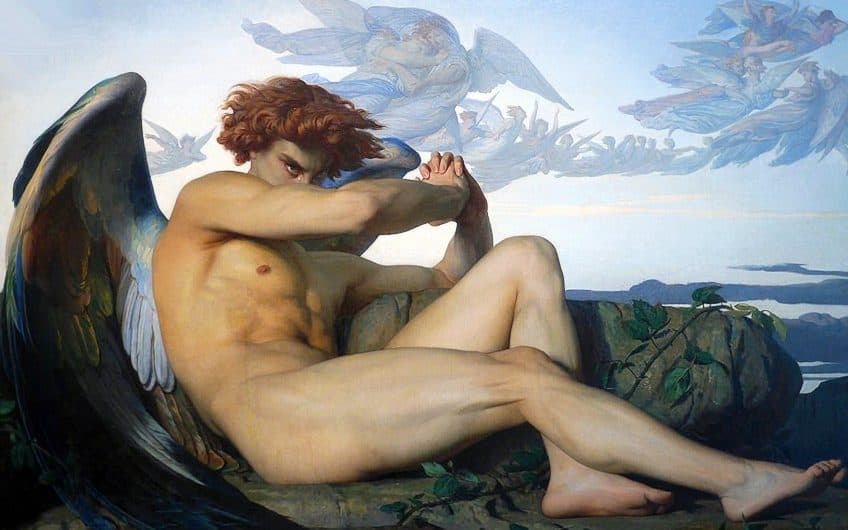
Fallen Angel
Alexandre Cabanel · 1847
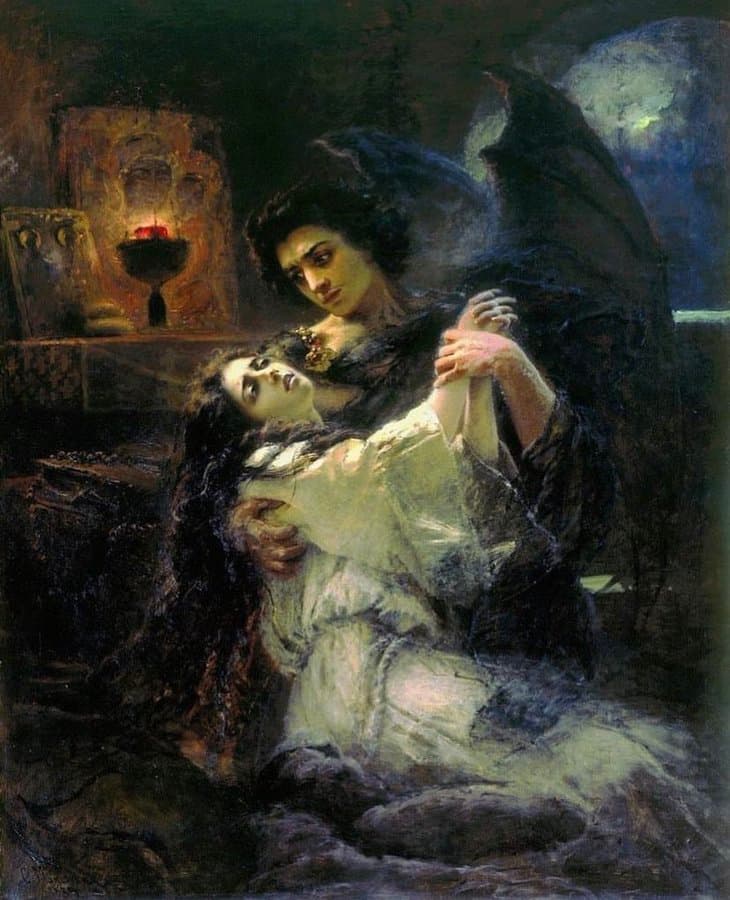
Tamara and Demon
Konstantin Makovsky · 1889
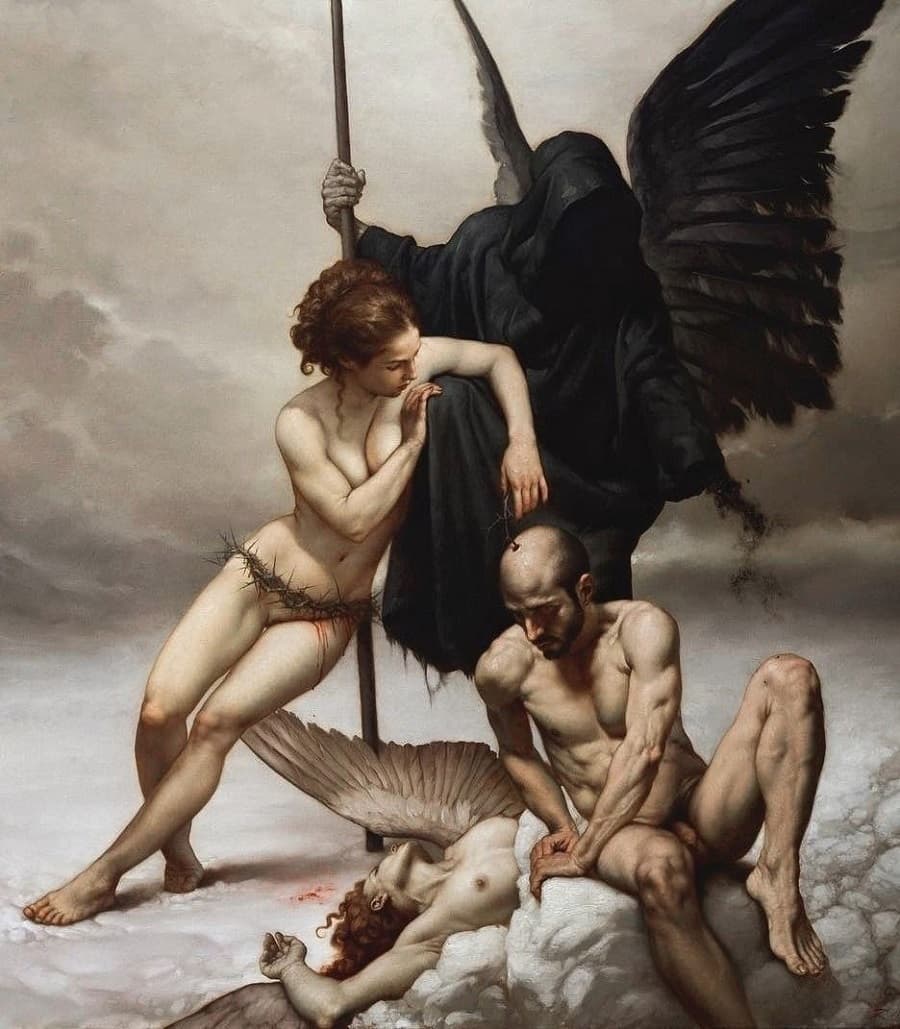
The Angel, the Death, and the Devil
Roberto Ferri · 2018
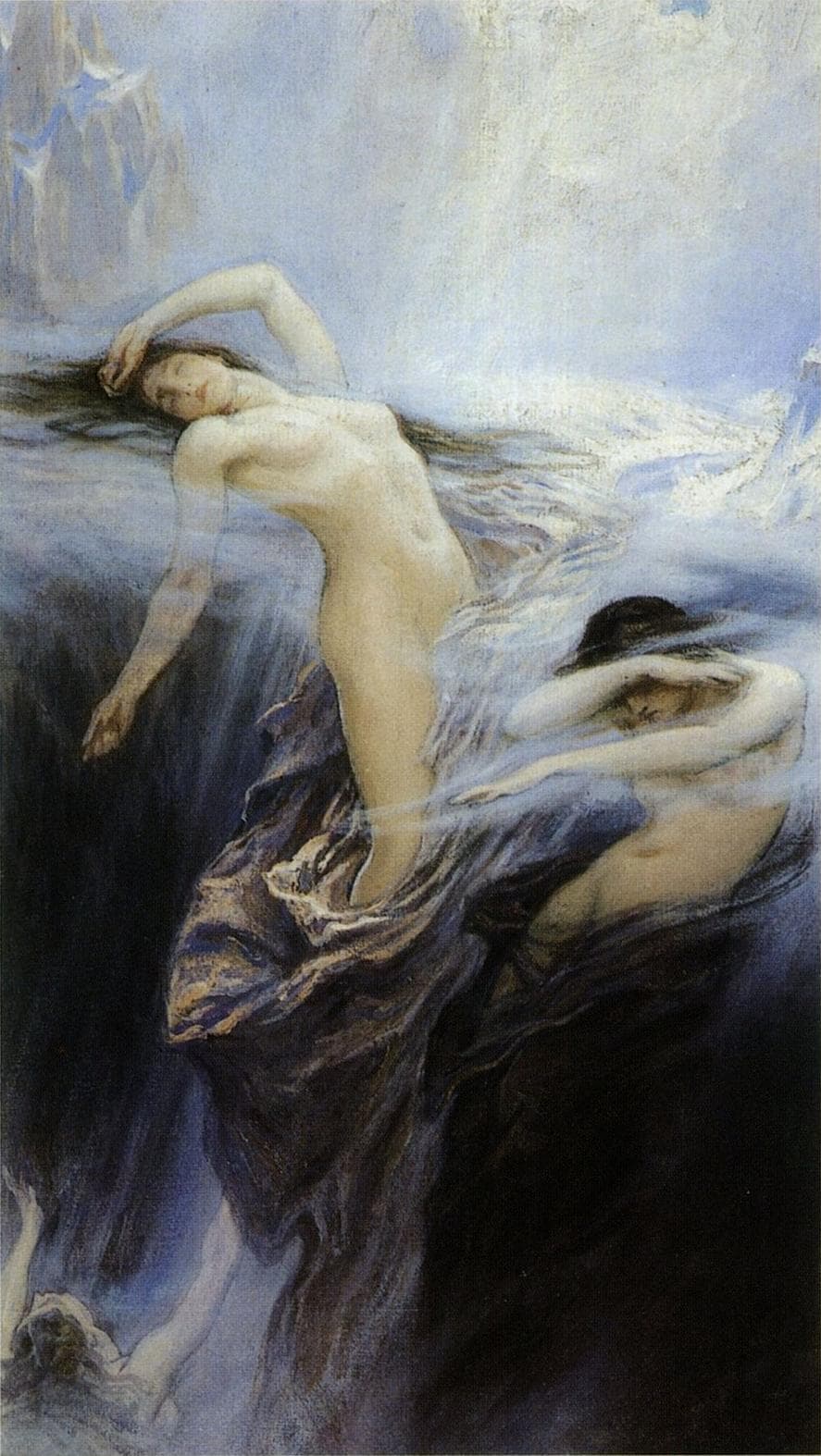
Clyties of the Mist
Herbert James Draper · 1912
The Kiss
Francesco Hayez · 1859

Bridge over a Pond of Water Lilies
Claude Monet · 1899

Venus de Milo
Alexandros of Antioch · c. 150–125 BC

Nymphs Dancing to Pan's Flute
Joseph Tomanek